
FEATURE:
The Modern Age
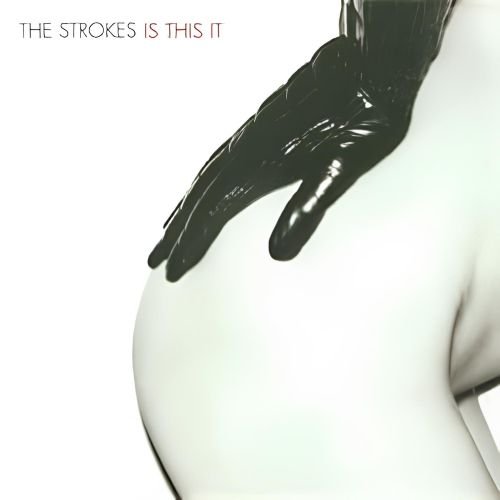
The Strokes’ Is This It at Twenty-Five
__________
THIS might be…
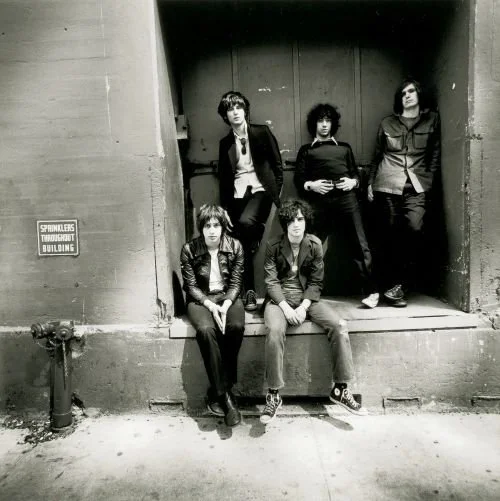
PHOTO CREDIT: Colin Lane
one of the most significant and impactful debut albums of this century. It arrived on 30th July, 2001. The Strokes are still recording to this day. However, the New York band released Is This It at a time when nothing like it was around. Seen as a musical watershed moment, and crucial in the reinvention of post-millennium guitar music, Is This It reached number two in the U.K. and thirty-three in their native U.S. Is This It – a statement more than a question – won absolutely immense reviews. One of the best-reviewed albums of its time. Is This It is seen to be to be one of the most influential albums of all time, and has appeared in many publications' lists of the best albums of the 2000s. I do want to go inside Is This It ahead of its twenty-fifth anniversary. I want to start off with an interview that appeared in NME in May 2001. The excitement and buzz already building around the quintet:
“The first punch is throw 30 seconds into The Strokes’ first NME photo session. Their five skinny, leather-clad frames are milling about on a street corner in the heart of Manhattan’s Lower East Side, when someone yells out: “Hey motherfuckers, you’re blocking the whole sidewalk.”
Everyone turns around. There are three kids in hoods, obviously wired up on something, facing the band. A few seconds earlier, they randomly tried to attack a school bus driving down the street. Now they’re staring at us, so guitarist Nick Valensi opts for a spot of diplomacy. He flicks them his middle finger and mutters, “Fuck you, man”.
Everything happens at once. A fist swings through the air and catches him in the chest. Drummer Fabrizio Moretti and singer Julian Casablancas enter the fray immediately, quickly joined by bassist Nikolai Fraiture and guitarist Albert Hammond. There’s shoving and stray punches fly all over the place. Fabrizio catches one square between his shoulders. People strolling down the sidewalk grind to a halt and form a ring around the scuffle. Before anyone’s had time to work out what’s happening, police sirens blare out, and the NYPD hits the scene.
Then the pandemonium really breaks out. Everyone starts shouting and swearing and jabbing their fingers into each other. The police pull the two groups apart and, after quizzing a handful of passers-by, decide that The Strokes are the injured party. Do they want to press charges? Nick, rubbing his jaw, sighs, “Forget it. I just want to get some ice.” The melee breaks up, and the band head off down the street. Julian turns to NME and smiles, “Welcome to New York…”
It’s been said before, and we’re guessing it’s going to be said again: The Strokes are so New York, it hurts. They look New York (skinny ties, black leather, subway tans, that classic late-’70s punk look in full), they sound New York (The Velvet Underground, Talking Heads, Television) and they sure as hell act New York (when we ask Nick whether they get into many fights, he turns and grins: “Oh no, that was the first one… for about a week”. A few days after we leave, they start another one in Philadelphia.)
In the five months since their first EP, The Modern Age’, arrived at NME, they’ve become the most talked-about rock band since Oasis. That’s partly because the clipped, pulsating swagger of that first single marked it out as the best debut for about a million years, and partly because the last time they were in England, their gigs were a revelation. Here was a band that had everything – the look, the sound, the attitude, the whole thing. Since then, of course, everything’s gone crazy. They’ve been besieged by major record companies (eventually signing to Rough Trade in Britain and RCA in the rest of the world), they’ve recorded a magnificent debut album (“Is This It”) and it’s rumoured that Oasis want them as a support band. Now they’re on the verge of returning to the scene of their triumph.
This month sees them undertaking an already sold out 16-date tour, climaxing at London’s 1200 capacity Heaven nightclub.
“New York riqht now reminds me of how it was about eight years ago, in the early-’90s. There was that same kind of tension in the streets then as well. New York is meant to be cleaned up, but it’s getting tenser again. Lately, when I’m walking around the street, I really feel it.”.
He might be right. Eight years of strict ‘zero tolerance’ under Mayor Rudolph Giuliani might have temporarily altered the complexion of the city, but right now you can feel it swinging back to the brash and sleazy place it always was under the surface. It’s surely no coincidence that the most popular T-shirt design of the moment reads, “Fuck you, you fucking fuck”, while outrageously sick magazines like Vice (Julian: “I love that magazine. They did a feature on what people look like on drugs. My friend was in it on hash and his wife on heroin. That was pretty cool. People we know in Vice, all fucked-up and strung out.”) are becoming ever more popular. New York’s reverting to type, and The Strokes are just the most obvious outward sign of it..
Right now, though, the band are checking their watches. Tomorrow, they’re playing a gig in Boston – a five-hour drive up the East Coast. It’s 3am, so we bid them goodnight and promise to be waiting for them outside our hotel the next morning. Julian yawns, and turns back to the mixing desk..
It’s hardly surprising that The Strokes have got the New York thing so well covered when three of them were born and bred there, and a fourth, Fabrizio, moved here from Rio De Janeiro soon after his birth. Only Albert hasn’t got the city in his blood. He’s from LA and relocated here in September 1998.
At their heart of their New York state of mind, though, is frontman Julian Casablancas. He writes the songs and supplies the attitude – something he may well have inherited from his father. That’s John Casablancas, the man who founded the pre-eminent Elite Modeling Agency back in 1971 and who quit in February last year, spewing vitriol about models in general and Naomi Campbell and Heidi Klum in particular (memorably describing the latter as “talentless German sausage”). Julian doesn’t talk about him much, and you get the impression that they aren’t particularly close. When asked whether his father was responsible for getting The Strokes played on the catwalks of Europe, Julian just shrugs and says, “I doubt it.”.
Whatever their relationship, there’s no doubt that Julian enjoyed a nomadic adolescence. At the age of 13, he was packed off to L’lnstitut Le Rosey in Switzerland, a private international school whose website warns of its “clear code of discipline”. As 11 of us squeeze into The Strokes’ tiny van and prepare to crawl our way out of Manhattan, Julian recalls his time there with disgust. “It was just this snobby school. My dad had gone there and I was fucking up in school and for some reason they thought going to Switzerland would help me. It was a bad experience – even if I did meet Albert there.” What was so bad about it? “It was just terrible,” he reiterates. “I was punished all the time. I had to wake up at six in the morning to jog around the school. I’d get caught for smoking or whatever. It sucked. There were a lot of Turkish people there. They were nice, but you know… they all wore Versace jeans. It was the biggest culture shock of my life.”.
Albert was there for six months, Julian for two years. It wasn’t until he got back and started attending the Dwight School on Manhattan’s Upper West Side that his musical interests started to take shape. There, he met Nick and his friend Fabrizio, and later, Nikolai. Gradually, The Strokes drifted into existence..
They played their first gig in front of 15 girls at a party thrown by Nick’s older sister in 1996, but it wasn’t until Albert’s arrival in autumn ’98 that things started to get serious. They spent six months locked away in a rehearsal studio in the Hell’s Kitchen district of Manhattan, until September 14 1999, when they were ready to play their first public gig, at a club called Spiral. There were only six people there, but Julian, stricken with nerves, still puked just before he went onstage..
From there, their progress was steady, but not spectacular – only gaining real momentum when they started playing a downtown club called the Mercury Lounge (New York’s equivalent of London’s Camden Monarch) in the autumn of 2000. There they acquired a new manager (Ryan Gentles) who also happened to be the club’s booking agent. He began sending out their demo to record companies. That’s how Geoff Travis at Rough Trade got to hear it. He agreed to put it out. The Strokes came over to England and things just went off the scale. When they got back to America, the music industry was ready to pounce. A year ago they’d been playing to 50 people, now A&R execs were rumoured to be offering seven-figure cheques.
When we get to Boston, eight grueling hours after we left New York City, everyone piles into a bar around the corner from tonight’s venue (the evocatively named TT: The Bear’s Place), and NME asks what the reaction to their success has been like in New York.
“Our friends have all been pretty cool,” nods Julian, nursing a neat (medicinal) whisky. “And people who don’t know us? Well, it’s amazing how jealous they are. We walk into places and people say, ‘Yeah, we’ve heard of The Strokes, they’re a bunch of fucking assholes.’ They’ll say it to your face and then they’ll want to hang out with you. Two days later, they’ll be round asking to hear the album. Fucking dipshits.”
“I was sitting in a bar the other day,” adds Nick, “and some girl said to me, ‘Do people actually come to your shows or is it just people from magazines?’ That was pretty funny.”
It’s certainly true that magazines have lost their minds for The Strokes. Not just NME, but style mags, fashion mags, guitar mags, everyone.
Julian: “It’s just the way we fucking dress, man. I remember having a conversation with Nick one day soon after we started playing shows. I used to get dressed up for shows, but it didn’t feel right. So Nick said, ‘What’s your problem? Just dress every day like you’re going to play a show.’ That became my motto. I get funny looks if I’m in a weird neighbourhood, but so what?”
You’re sex symbols in Britain now, too. “Yeah,” smiles Nick, a man fully aware of his own good looks. “Well, what people don’t realise is that we’re all homosexuals.” “That’s a joke, man,” laughs Julian. “It’s funny, though, because although we really like girls, it’s almost as if we like each other better. We’ll definitely go get laid, but we won’t hang out with the qirl and be like, ‘Oh I love you’, we’ll go straight back to the band.” He pauses.
“That’s fucking ridiculous,” snaps Julian later on when we’re back at the hotel. “I’ll tell you straight up, there are a lot of much better bands than us. New bands? I’m not talking about that shit, but there’s a lot of good music out there. A lot of this hype is bullshit. I think we’re pretty good and I want us to be successful. That’s about it, though.” It’s been said that you’re the new Oasis. Julian: “That’s great, but we have to keep moving up. We have to get better songs. Just get better full stop. If we believe too much of this shit, we’re going to crash and burn so fucking fast. We need new songs. It’s a short life, man, you’ve got to pack it in.”
“As soon as you start believing what people are writing about you,” agrees Nick, “that’s when you start to suck.”
“I’m not full of shit,” rasps Julian, stabbing his finger in NMFs general direction. “If we don’t get better, I don’t want to do this any more. I don’t want to just hit some kind of fame. I just want to do something good. That’s the only way I’m going to be satisfied.”
Are you satisfied with what you’re doing at the moment? “No way,” he concludes. “Hell, no, baby. People might think it’s perfect right now, but next week, they’re going to want to hear something else. I want to provide that something else.”
He lights another cigarette and stares off into the distance. He needn’t worry. At this exact moment. The Strokes really are perfect. Without doubt the greatest band to emerge from New York for two decades. That they’re intent on getting better is a frightening prospect. By the time you read this, they’ll be back in Britain for one of the most fantastic tours you’ve seen in your life.
A band like The Strokes only comes along once in a lifetime. You should be grateful that they’ve come along in yours”.
It is no understatement to say that Is This It changed music instantly. It was released at a turbulent time in U.S. politics. I always define 2001 by the terrorist attacks of 11th September. A couple of months after Is This It was released (less in fact), The Strokes’ city was hit. It was a moment when they a city they wrote about was changed instantly. I do wonder how we will mark twenty-five years of 9/11. How it changed the world. Anyway, I want to focus on positives. In 2021, marking twenty years of Is This It, GRAMMY had an album roundtable. Impressions about one of the most significant albums of this century:
“It was the beginning of a new millennium and people were ready for something new and The Strokes fit the bill. They were cool, from New York which is attractive, especially if you are stuck in suburbia, and they were different from everything else going on at the time. To top it off, they wrote great songs which, while buzzing with energy, were accessible. It was time for a reboot and The Strokes provided it and broke the door open for all the bands that followed.
Jim Merlis (former publicist for The Strokes): The band had a huge impact on New York’s culture, and it wasn’t just their music. The band really gave back to the scene by taking New York bands/artists like The Moldy Peaches, Regina Spektor, Longwave, and The Realistics on the road with them. No two of these bands sound alike, yet they all made sense opening for The Strokes.
Robert Schwartzman (film director and bandleader of Rooney): When I moved to New York and went to college there, for that first semester, The Strokes were playing shows in New York, and they were the "it" band, I guess you could say. But it wasn't all over pop radio, they were the "cool" guys showing up at parties in New York, and I started to become close with those guys because my cousin Roman [Coppola] directed their music videos early on. By proximity to knowing people in their circle, I just got to hang out and spend time with them. They were almost like big brothers, where I really looked up to them musically,
Gordon Raphael (producer of Is This It): As soon as the first songs from The Strokes were released there was a visceral and palpable change in youth culture and music culture, pretty much worldwide. An entire generation that grew up hating their older brothers’ rock and roll, suddenly went out to purchase their first leather jackets and guitars, then formed their own bands.
Marc: There was already a burgeoning scene in NYC before The Strokes came along but with their emergence, they became the focal point of something that had been bubbling under the surface for a while. It’s not like there wasn’t already an alternative/garage rock scene before The Strokes came along but they were the ones who brought it to the masses. They brought a sense of excitement, energy and danger that was missing in music at the time. Most of the alternative music pushed by the labels at the time was fairly dreary to be honest, "dad rock" as it was called at the time, and The Strokes were definitely an antidote to that.
Ian Devaney (lead vocalist of Nation of Language and member of machinegum): My parents spent their young adult years going to see bands like Talking Heads, The Clash and Blondie. For my friends and me, [with The Strokes,] it felt like this was a chance to have our own version of that. There was a sense that, whatever magic those older bands had that could still capture young imaginations decades later, The Strokes were carrying a bit of that magic with them as well. Being a teenager in suburbia, pop-punk and emo really felt ascendant around that time, but none of that ever resonated with me. The Strokes allowed me to see something else happening in music that felt like it was worth aspiring to.
Merlis: Not only was their music great, it sounded cosmopolitan and very New York City. There hadn’t been much of a music scene in New York over the twenty years prior to them with a handful of good bands here and there. The city was desperate for something cool, especially as [Mayor] Giuliani was turning the City into a safe, Disney-themed town. The band sounded cool and looked it. It also certainly helped that most of the national media is based here.
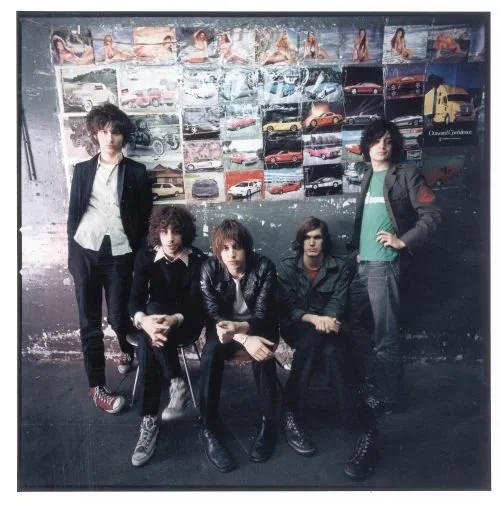
PHOTO CREDIT: Colin Lane
Jake Faber (drummer for Sunflower Bean): The Strokes came into my life right as the band was starting. I was at a crazy point in my life where I was trying to do a semester of college at SUNY Purchase, while rehearsing almost every day of the week in Long Island with Sunflower Bean, on top of the beginning of new romance and friendship in my life in Brooklyn. As you can imagine there was a lot of driving around the New York metro area, [and] Is This It soundtracked almost every minute of it. [It] sonically brought it back home for me as it was kind of like The Velvet Underground, but rockier and so poppy. It totally filled the void that one can feel when driving around New York every day for months on end, tending to the most exciting things that have ever happened in my life (at that point) all while wondering "is this it?"
The Strokes Were Polarizing: You Either Loved Or Despised Them
Eric Ducker (writer and editor; wrote the band’s first-ever cover story in 2001): When it comes to the New York rock revival, The Strokes weren’t the best band (that would be TV on the Radio), or the best live band (that would be Yeah Yeah Yeahs), or even the first band (that would arguably be Jonathan Fire*Eater or The Mooney Suzuki), but at least initially they were the best at making it seem like being in a band with your friends was the most fun thing in the entire world. In the years that immediately preceded them, a ton of people in rock bands — from nu-metal mooks to post-Fugazi indie rockers and British gloomsters — seemed totally miserable.
Devaney: Their music just makes it so much easier to put up with everything about living in New York that is irritating and tedious. It's like a kind of urban mindfulness — reminding you that you chose to live here for a reason, and the filth and the difficulty are actually character-building and romantic.
People still move to New York from very pleasant places that are very far away specifically to place themselves inside the world that exists in these songs. Play a song from Is This It in a crowded dive bar late at night and people lose their minds — it's the apex of their notion of what New York life would be.
Ducker: Part of the reason The Strokes became a great New York band was because you either loved them or despised them. Or, you pretended to despise them but secretly loved them. For such an argumentative city where everyone thinks they know best and are always happy to tell you why you’re wrong, a band you can be super passionate about holds a lot of appeal.
The Strokes Created A Template For Bands In The Early Aughts
Schwartzman: They were a part of this new world of this cool, edgy slice of music that they had injected into the young music scene like on the alternative rock side of things that was a breath of fresh air, in a way, for that genre of music. At that time, alternative music didn't have a real identity. The whole world they built just had this great consistency: They knew what they were and they stuck with it, and people, I think, really appreciated that.
[The Strokes] were this British sensation. It was amazing. They conquered the music scene overseas, so they brought with them this amazing kind of cred from having won over that side of music fans and magazines. All those bands out of England that followed, you could hear direct influences: the vocal style and the same kind of sound and sonic approach to how they produce those records.
On the radio at that time, it was like P.O.D., Linkin Park, Puddle of Mudd—that stuff all over the radio—and then you had the strokes, paving this new road, amongst all these bands that were very, very different musically. I thought that was just so cool, to be young and aspiring in that whole alt-rock world, and see how they were kind of shaking up that whole scene. They really turned alt-radio on its head because they were this odd-band out. But they really brought in a whole new wave of influencing a lot of bands. I remember when we were out touring, you would hear all these bands, and you would be like, "This feels like a Strokes-clone band." There are indie bands that followed that were straight-up cut from the same, old cloth. They sang like Julian, all low and droney [with] those prickly guitar parts that were kind of bouncy.
Marc: It would be safe to say The Strokes broke down the doors for not just fellow NYC artists such as the Yeah, Yeah, Yeahs, LCD Soundsystem, Interpol, The Rapture and the whole "garage" revival. That fact alone helps cement The Strokes’ legacy.
Ducker: In the years after Is This It, some of the acts that would become the biggest rock bands in the world were able to replicate what The Strokes did, but with their own specific twist. To reduce it to the most basic level, Kings of Leon were the Southern Strokes, The Killers were the Las Vegas Strokes, Vampire Weekend were the "Ivy League Strokes," Phoenix became the "sophisticated French Strokes," and so on. The Strokes reformatted a template that other acts built off of, even as The Strokes themselves seemed to pretty quickly lose interest in it.
Is This It Left Lasting Impressions On Artists And Music Industry Professionals
Ducker: When the promo for Is This It came in (original artwork, leather glove on naked butt), I think I had heard The Modern Age EP already, but I hadn’t gone to any of their Mercury Lounge residency shows. At that time there wasn’t social media or blogs to drive buzz for artists. For The Fader’s staff, much of that buzz came from what London-based culture publications like The Face were into, and they were already fully on-board for The Strokes. I was vaguely anticipating Is This It, but it wasn’t until I heard the advance that I quickly realized that this was a group and an album that I could, and would, love intensely. That CD didn’t get pulled from the office stereo for a long time”
The ascent of The Strokes was wild. On 30th July, Vice published an oral history of Is This It. I was eighteen when the album came out. I was instantly blown away by The Strokes and Is This It. Anyone who might not have heard this album needs to right away. It is transformative:
“Whether it was bloated nu metal or tuneless indie strumming, 2001’s alternative music scene felt stagnant and colourless. Enter: The Strokes. Five guys from New York with immaculately dishevelled haircuts and names like Fabrizio Moretti and Nikolai Fraiture who, in 2001, released their seminal debut album Is This It and blew everything out of the water. Its impact was cataclysmic. As Geoff Travis, the head of Rough Trade Records, put it in Lizzy Goodman’s Meet Me in the Bathroom: “The Strokes’ arrival was a bomb in the middle of a plastic pool.”
But this was not an overnight success. The band struggled to get anyone to take notice for the better part of two years. Famously, the tide changed when Travis agreed to release their scuzzy debut EP The Modern Age, after listening to it for just 15 seconds down a transatlantic telephone line.
From then on, the brakes were off – the hype breathless and frantic. This was a band who were here to save rock’n’roll, dressed in ripped jeans and Converse. They appeared on the cover of NME twice in the three months leading up to the release of Is This It, with the frenzy growing every day.
After a series of exhilaratingly wild live shows and six weeks in producer Gordon Raphael’s Transporterraum studio (which Casablancas said “sucked out my soul…”), Is This It appeared in Australia on the 30th of July, before dropping in the UK on the 27th of August.
Immediately, it was greeted as the perfect record. In fact, it was so good it had two different covers – the iconic UK version of a leather gloved hand; and the US version, depicting subatomic particles. Despite all the hype, the album only entered the UK charts at number two – but it’s no exaggeration to say it left an indelible mark on the music scene and culture in general.
Two decades later, Is This It’s 36 minutes still sound thrillingly flawless – ragged yet taut, the swagger of its question mark-less title mirrored by the cocksure 11 songs. In Meet Me In The Bathroom, which tells the story of the New York scene from 2001 to 2011, LCD Soundsystem’s James Murphy says “Is This It was my record of the decade. Whenever people pooh-pooh it, I’m like, ‘You’re saying that now, but I guarantee you, you’re going to have a barbecue in ten years, play that shit, and say, ‘I love this record.’”
20 years on from its release, I spoke to the people around the album: the producer, the record label, their UK press, journalists and the man who took that cover shot, to reflect on the hysteria around the release, how the album came together and its longstanding indie rock legacy.
HOW MUSIC SOUNDED AND LOOKED BEFORE THE STROKES
Tim Jonze (NME journalist between 2003 and 2008): The indie scene seemed quite dead. It was the turn of the millennium and there were all these acoustic bands like Turin Brakes and Starsailor making incredibly whiny, tuneless records.
Jakub Blackman (UK PR for Is This It): Let’s face it, that time was pretty lame. The bands that were big looked like they worked for IT companies, or were coming over to do some plumbing round your house.
Kim Taylor Bennett (first journalist to interview the band face-to-face in the UK): As much as I think Turin Brakes or Coldplay had some hummable songs, they weren’t sexy and exciting. They were a little grey, damp UK. Indie rock fans were bored.
Blackman: It was a pretty desperate time in British music.
Jonze: There was a band called Arnold, which tells you a lot about the lack of effort involved. A lot of these bands wore ill-fitting jeans and baggy t-shirts and generally looked like some random table from the student union bar.
Taylor Bennett: Nu-Metal was happening back then, and pop was huge. But if you weren’t super into JLo, or Britney, or Limp Bizkit, there wasn’t a lot for you.
Jonze: It’s not like there weren’t any good bands around. And You Will Know Us By The Trail Of Dead were incredible live and Godspeed! You Black Emperor felt monumental. But 13 minute instrumentals about the apocalypse aren’t the sound of frenetic youth culture. It didn’t feel like there was any unifying scene for young indie fans to call their own.
Gordon Raphael (producer for Is This It): In New York, it seemed like guitar music was on the way out. It was mostly house, jungle, drum n bass, hip hop. I remember an article in the New York Times celebrating the death of rock and roll – “the old man”. That was the feeling in town.
Blackman: When The Strokes came along, they captured everyone’s imagination; this band that were the whole package.
Taylor Bennett: They were the total opposite of safe, which was how guitar music felt at the time.
THE STROKES: THE EXTREMELY EARLY YEARS
Raphael: I went to a show at Luna Lounge in New York and there were two new bands playing. The second band that played was The Strokes. Because I had my own studio, and I was a relatively fresh producer, I had a business card and I approached them after the show. The first band, which I actually liked a little better, didn’t call me. But [Strokes guitarist] Albert [Hammond Jnr] came to look at my studio.
As they’re playing their music in the studio, I’m going, “Wait a minute, this is really good”. I didn’t get that feeling when I saw them live. But in the studio it came together. “Whoa, how does that drummer keep such a steady beat? Aren’t those chord changes interesting?” Then when Julian started singing: what a voice.
James Endeacott (A&R at Rough Trade): It ticked every single box for me about great rock’n’roll. It sounded like The Stooges, the Velvet Underground, Television, Blondie. All the great music out of New York. [Their debut EP was] called The Modern Age, yet it was somehow retro, but also sounded like the future. And they had this weird production…
Jonze: If you knew your rock history then it was familiar – Velvet Underground, Television – but it was also completely alien to what was around at the time. Bands hadn’t sounded so effortlessly cool and full of attitude since Oasis.
Raphael: They told me in very cryptic form what sound they wanted – like: “Imagine taking a trip into the future and finding a band from the past that you’ve never heard before. What would that sound like?” I drew a bit of a blank on that.
Taylor Bennett: It felt very stripped back and raw and weird. The vocals were like Julian was singing through a transistor radio.
Raphael: [When we were recording The Modern Age EP,] one of the band said: “You know what’s happening in every studio in New York right now?” “Yeah.” “Well, that’s what we don’t want to do”. That gave me a clue, because we were just in the age of Pro Tools. So instead I put a mic in front of the guitar, a couple of mics in front of the drums, and they played. When they heard that sound, they said, “That’s what we’re talking about. That sounds cool.”
Blackman: They were this New York City band that harked back to the Golden Age in the 70s, but they were largely completely blissfully unaware of most of those bands. I know they’d never heard Marquee Moon. They liked Guided By Voices and Pearl Jam. They had this thing thrust on them by the way they looked – and, I suppose, by the way they sounded, as well.
Raphael: When they left my studio with the EP done, I thought, “You know, nothing I’ve ever done has really made a mark and this is very unlikely to as well.” So I didn’t think about it. I thought – I love it, but, “Oh, man, how sad that these young people are doing this already unpopular form of music”. Just 20 years too late, you know?
INTRODUCING: ‘THE COOLEST MOTHERFUCKERS YOU’VE SEEN IN YOUR LIFE’
Endeacott: There was a guy called Matt Hickey who worked at the Mercury Lounge and who Geoff Travis was really good friends with. He said, if you come across anything to send it over. I walked into the Rough Trade offices one day, Geoff was always in early and he said, “James, listen to this.” Geoff gets very excited about music anyway, but he seemed even more effervescent than normal. He put on The Modern Age and I was literally speechless.
Raphael: When Albert told me Rough Trade were going to release these demos as an EP, my first impression was “Do you want to come back and fix them up? Shall we mix it properly?” “Oh, no, they like it this way.” Once I understood a label was going to put out the music, I realised, “Wow, something’s happening here”.
I am going to end with a feature from NME. A decade after Is This It was released, they argued how the New York City five-piece changed music for the better. Even if they may seem a little overrated – this is a guitar band still at the end of the day -, the seismic impact of their 2001 debut resonates to this day:
“It’s easy to forget, ten years on, quite what an impact The Strokes had when they strutted into our collective consciousness in mid-2001. The band, now a by-word for style-over-substance generic retro-rock on the constant point of collapse, branded rock’s bare behind with an indelible mark that year and would prove to be the catalyst for a seismic shift in popular music.
Whenever we deal with The Strokes, and their debut in particular, we have to peel back the baggage they come with nowadays, hose them clean of the backlash, put ‘Juicebox’ to the back of our minds, and focus on the summer of 2001. To return to that year and reappraise ‘Is This It’, you need to close your eyes and ears to the hubbub and really relive those dark days.
Any way you slice it, music was in the doldrums after the turn of the millenium. Of course the charts were full of pop shit (Shaggy and Hear’Say had the biggest selling tracks of the year) but guitar music was at a low point too. It was the year of Alien Ant Farm, Amen and Alfie, Staind, Stereophonics and Starsailor, (three of which formed that year’s NME tour with JJ72). Music was going through its ‘Teenage Dirtbag’ phase.
We put Travis on the cover in June 2001. It wasn’t much of an accolade; Badly Drawn Boy, Limp Bizkit, Kelly Jones, Ali G, Ken Livingstone and Terris (Terris!) were all gurning out from the front page in the year leading up to that point. There was literally fuck all to get excited about. Britpop had died its last gasps, Mogwai had lost their bite, Ultrasound had broken up, no-one was emerging, and we were left with Gay Dad. Nu metal and Gay Dad.
Enter The Strokes – five impeccably dressed shaggy-haired guys who looked like they’d rolled out of bed with some model, oozing cool, doing the whole talk the talk, walk the walk thing with panache but importantly bowling in with the tunes to back it up. ‘The Modern Age EP’ started popping up in record shops round the country like manna from heaven. Ears pricked. DJs, who’d been on their knees, gasping for something decent to play for months on end, were no longer an endangered species. They lapped it up like dogs in the desert and before long a wave of likeminded bands followed while gig nights and indie clubs started popping up everywhere.
And then there was the proactively-wrapped (and banned in the US) album itself. NME’s John Robinson gave ‘Is This It’ a perfect 10/10, calling it “a truly great statement of intent, one of the all-too-infrequent calls to arms that guitar music can provide, one of the best and most characterful debut albums of the last 20 years” and likening it to ‘Definitely Maybe’. He went on to declare it “a document of a group seizing a moment and making it entirely their own. Like any indispensable invention, you’re forced to wonder how you got by without it”, essentially calling it the best thing since sliced bread.
Was it new? Not really. Their love of – and repackaging of – their NYC forefathers (Television, Ramones, New York Dolls), as well as everyone from Tom Petty to Iggy Pop, is well-documented and a reliable weapon for the anti-Strokes brigade. Sure, they took bits and pieces of other bands and musicians they liked – as all groups do – but the end result was something that sounded resolutely Strokes-esque. They made it their own.
The list of bands influenced by The Strokes is as long as it is obvious, but their legacy extends beyond copycats. By blazing a fresh (at the time) garage rock trail – and succeeding – they gave record companies, magazines, and radio playlist people confidence to seek out, invest in, and back a new wave of artists.
Are they overrated? Probably. They’re just five dudes with guitars doing their thing in a post-millenial, post-innovative decade. They’re not exactly The Beatles. While the noughties gave us innumerable bands to love, the decade has nothing on the previous five in terms of innovation. Nevertheless, it had its moments. The garage rock revival of The Strokes, the grot-punk scene that came with The Libertines, and Klaxons’ neon “new rave”. They weren’t exactly three year zeroes, but they were the closest the 00s had to any kind of musical revolutions. Love, hate, lust after or loathe The Strokes, we’re still talking about them. You don’t hear anyone eulogizing Crazy Town ten years on”.
I can imagine The Strokes will post something to Instagram to mark twenty-five years of Is This It. Did anyone in 2001 think that this band would still be going twenty-five years later?! So many of the bands from that time have split. Reality Awaits is out on 24th July. A double celebration. The band’s first album in six years comes five days before the twenty-fifth anniversary of their debut. We think about The Strokes now and the fact that they are playing at a time when other, younger bands have bigger pull and punch. Is This It cannot be forgotten. We need to remember its impact and…
HOW important it was.