FEATURE:
Get Out of My House!
Kate Bush’s The Dreaming at Forty-Four
__________
I will get to…
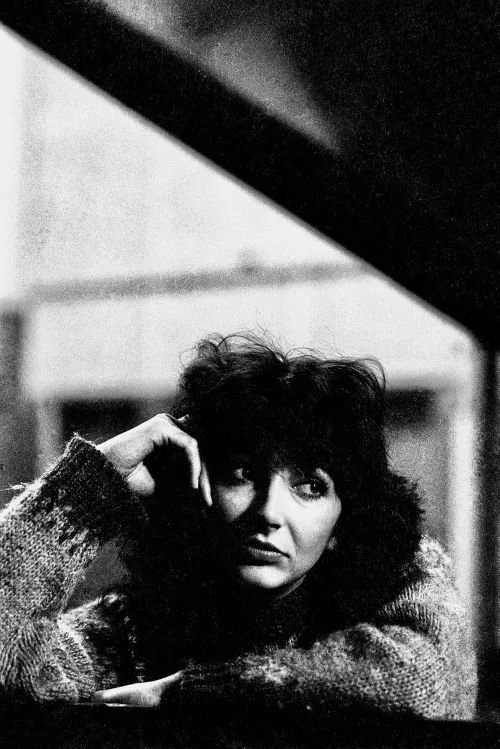
IN THIS PHOTO: Kate Bush at Abbey Road Studio 2 in 1982/PHOTO CREDIT: Steve Rapport
some interviews with Kate Bush from 1982. Talking about her then-new album, The Dreaming. Released on 13th September, 1982, this was a very different album to what fans were used to. 1980’s Never for Ever was a step from her first couple of albums (1978’s The Kick Inside and Lionheart); The Dreaming was a massive step. In terms of the production and the denseness of the compositions. Murkier and more layered than Never for Ever. Even though the album reached number three in the U.K., EMI were close to handing the album back to Kate Bush. There were no obvious singles and it was seen as a commercial risk. Luckily, they did not give the album back to her and it was released. It did get some mixed reviews, though it is now seen as one of Kate Bush’s best albums. It has inspired so many artists. This album was where Bush produced solo. It was her chance to do exactly what she wanted to do. In part, break away from that stereotyped image the press had of her. The high-voiced singer who was lightweight and airy-fairy. Bush’s voice is noticeably lower and gravelled through the album. There are a few exceptions, though there is a depth – or maybe an emotional maturity – that gives The Dreaming a masculine energy. The percussion and importance of beats too. A heavy album in so many senses. It was an edgier and more propulsive album. I am going to get to the Kate Bush Encyclopedia for some reviews published around the release of The Dreaming. I will get to some contemporary reviews to end:
“Quaint, admirable, unclassified, Kate Bush goes her own sweet way… production hard to fault… ranges from the ethereal to the frankly unlistenable.
Sunie, Record Mirror, 1982
It’s the sort of album that makes me want to kidnap the artist and demand the explanation behind each track.
Melody Maker, 1982
A work of pure inventive genius… intriguing heady stuff. One of the most powerful and unique vocalists in contemparary music.
Tarin Elbert, Music Express (Canada), 1982
Kate Bush shouldn’t be an unknown quantity very much longer. The Dreaming is her masterpiece, a perfect blend of romantic poetic imagery and daring musical approach. Bush’s ace-in-the-hole is her ability to fuse differing musical influences (jazz, classical, folk) and nest them comfortably within the boundaries of conventional pop song writing. (…) She’s the only female rocker out there doing anything original (or experimental).
Nick Burton, Record (USA), 1982
A mad record… with only two antecedents, the historic ‘Sergeant Pepper’ by the Beatles and the extraordinary ‘Dark Side of the Moon’. Of the first in its extraordinary character and creative spirit; of the second in its technical perfection.
Jean-Marc Bailleux, Rock And Folk (France), 1982”.
There were some positives in there, as you can see. If some felt Bush had gone mad and this was an inaccessible and career-suicide album, there were though who praised her evolution and the fact that she was pushing away from commercial and traditional Pop. She would include something more commercial for the follow-up, Hounds of Love (1985), though there is the same ambition and sense of invention on this album. Bush creating something much more elevated, deep and interesting than normal Pop. There are a lot of interviews from 1982. I want to highlight a few, as we get some interesting perspectives from Kate Bush. I am going to start out with Melody Maker and Paul Simper’s conversation with Kate Bush:
“Her new LP, The Dreaming, should keep the vultures at bay however. Drawing on far greater depths of emotion and a much wider range of cultural references from Australian art to forties B-movies - it is an indication of her coming of age, both artistically and professionally.
"I think it's the album I'm most happy with that I've completed. I went through all the problems and depression during the album and then ended up feeling quite pleased with it. In the past it's worked the other way around."
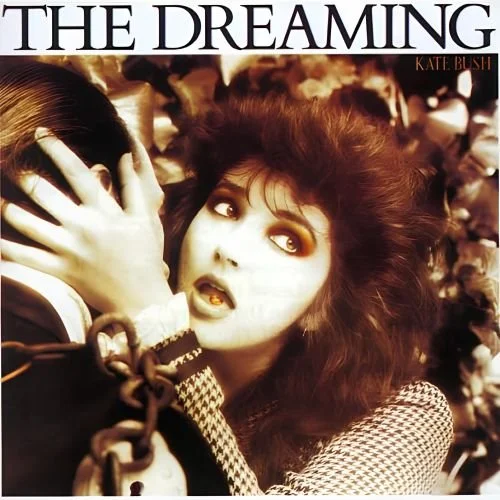
In every way it is a much more sharply focused and arresting LP. The cover, shot in autumnal shades of brown and gold, shows Kate clasping the head of a man bound in chains. In her mouth lies a tiny gold key.
"The idea of that image and the phrase on the back of the album, 'with a kiss I'd pass the key', is very much connected to the song "Houdini." That song is taken from Mrs. Houdini's point of view because she spent a lot of time working with him and helping with his tricks. One of the ways she would help was to give him a parting kiss, just as he was off into his watertank or whatever, and as she kissed him she'd pass a tiny little key which he would then use later to unlock the padlocks.
"I thought it was both a very romantic and a very sad image because, by passing that key, she is keeping him alive - she's actually giving him the key back into life."
The LP differs greatly in presentation to the fairytale ghouls and ghastlies of Never For Ever. What was the starting point this time?
"The last album was very much the starting point for this one. Perhaps the art work and some of the idea of Never For Ever were misconstrued because although they are very fairytale; on the cover they are meant to depict positive and negative emotions that are very much a part of human beings - that's really what a lot of my songs are about."
Was the title track the actual cornerstone of the LP?
"No. The thing about all my album titles is that they're usually one of the last things to be thought of because it's so difficult just to find a few words to sum the whole thing up.
"I've got this book which is all about Aborigines and Australian art and it's called The Dreaming. The song was originally called 'Dreamtime', but when we found out that the other word for it was 'The Dreaming' it was so beautiful - just by putting 'the' in front of 'dreaming' made something very different - and so I used that.
"It also seems to sum up a lot of the songs because one of the main points about that time for the Aborigines was that it was very religious and humans and animals were very closely connected. Humans were actually living in animal's bodies and that's an idea which I particularly like playing with."
Have you ever been to Australia?
"Yes, but not recently. I have contact with a few Australians and it seems that at the moment Aboriginal art is becoming very fashionable so the young Australians are starting to take a lot more serious notice of what's happening to them. Also, happily, the Aborigines seem to be growing in number again."
The Dreaming is an LP that mutates at an alarming rate. One minute you're playing walkabout in the outback, the next it's Vietnam and you're fighting for your life. But through the images are diverse and at times oblique, the sound - principally driven by menacing, pounding drums - is more consistent. It certainly owes much to Peter Gabriel's third LP which housed such resounding nightmares as "Biko" and "No Self Control".
"I'd been trying to get some kind of tribal drum sound together for a couple of albums, especially the last one. But really the problem was that I was trying to work with a pop medium and get something out of it that wasn't part of that set-up."
"Seeing Peter working in the Town House Studio, especially with the engineers he had, it was the nearest thing I'd heard to real guts for a long long time. I mean, I'm not into rhythm boxes - they're very useful to write with but I don't think they're good sounds for a finished record - and that was what was so exciting because the drums had so much power."
Another influence you're quoted before is Pink Floyd's The Wall, did you see the film?
"Yes. I've been very much influenced by The Wall because I like the way that the Floyd get right into that emotional area and work with sounds as pictures. I think the problem with the film though is that, although as a piece of art it is devastating, it isn't real enough. The whole film is negatively based. No once during Pink's life is there a moment of happiness which I know in every human's life there is. Even if you have the shittiest life of all there is always one little moment where you smile for a second or you fall in love with someone and feel happy - maybe only for ten minutes.
"In The Wall there is no compassion and no objectivity at all and I actually think that certain areas of that are destructive."
Although you've often written romantic songs - "Babooshka", "Wuthering Heights", "The Wedding List" [romantic??] - they've never been happy boy-meets-girl-and-lives-happily-ever-after affairs. Is that because of some private perversity?
"For me that's how real situations are? Whenever I've experienced a relationship, or the people around me have, it's always ended up being incredibly complicated because that's the way human beings are. Nothing is simple, it always ends up being something else or dying and that's what I find so interesting - the drive behind human beings and the way they get screwed up."
Like "Get Out Of My House"?
"The idea with that song is that the house is actually a human being who's been hurt and he's just locking all the doors and not letting anyone in. The person is so determined not to let anyone in that one of his personalities is a concierge who sits in the door, and says 'you're not coming in here' - like real mamma."
Listening to The Dreaming and Never For Ever the night before my interview with Kate the two LPs gradually revealed many lyrical similarities - the anti-war theme of "Breathing" and "Army Dreamers", which is continued on "Pull Out The Pin", for instance. One track, though, left me utterly bewildered - "Suspended In Gaffa"...
"Lyrically it's not really that dissimilar from "Sat In Your Lap" in saying that you really want to work for something. It's playing with the idea of hell. At school I was always taught that if you went to hell you would see a glimpse of God and that was it - you never saw him again and you'd spend the rest of eternity pining to see him. In a way it was even worse if you went to purgatory because you got the glimpse of God and you would see him again [??? but you] didn't know when. So it was almost like you had to sit here until he decided to com back.
"I suppose for me in my work, because it's such a sped up life and so much happens to you and you analyse yourself a lot, you see the potential for perhaps getting to somewhere very special on an artistic or a spiritual level and that excites me a lot. And it's the idea of working towards that and perhaps one day, when you're ready for that change, it's like entering a different level of existence, where everything goes slow-mo... it's almost like a religious experience. That's basically what the song's about."
Are you very religious or do you simply have a strong belief in yourself?
"I think I very much believe in the forces and energies that humans and other things which are alive can create. I do feel that what you give out sincerely then karmically you should get it back."
Time seems to have changed your thirst for knowledge. While in "Rolling The Ball" [sic - "Them Heavy People] you were overbrimming with the joys of gathering wisdom, on a track like "Sat In Your Lap" you appear a lot more impatient - "I want to be a lawyer. I want to be a scholar./But I really Can't be bothered, ooh just/Gimme it quick..."
"I think it's also about the way you try to work for something and you end up finding you've been working away from it rather than towards it. It's really about the whole frustration of having to wait for things - the fact that you can't do what you want to do now, you have to work toward it and maybe, only maybe, in five years you'll get what you're after.
"For me there are so many things I do which I don't want to - the mechanics of the industry - but I hope that through them I can get what I really want. You have to realise that, say, you can't just be an artist and not promote. If you're not a salesman for your work the likelihood is that people won't realise that it's there and eventually you'll stop yourself from being able to make something else. There's no doubt about it that every album I make is really dependant on the money I made from the last one”.
I have sourced Kris Needs’s 1982 chat before. For ZigZag, he showed his appreciation for an album that was far more colourful and interesting than so much of the music around The Dreaming. I think this is why the album resonates and resounds today. It is the antithesis of TikTok Pop and something throwaway and samey:
“We started delving deeper into the album. And as usual, Kate's been delving already. A subject grabs her, so she'll research it until there's enough soaked in to be spewed out as a song.
"Yeah, delving, definitely. A few of the ideas for the songs have been in my head for a couple of years, but I didn't feel I could do them. I wanted to do the Australian one on the last album but I hadn't written it. I just knew I wanted the sound. It's probably as well it didn't manifest till this album, because it never would have sounded the same."
Good example of this and a centrepiece of the album is Houdini. Normally titles like this get the Boney M treatment ('Hoo-hoo-hoo Houdini, master of escaperee!' or some such bollocks). Not Kate. Her immersion in the story of the legendary escapologist must've equalled that of the actress taking on a character. In the song, she emerges as Mrs. Houdini.
There's a mysterious quote on the sleeve: "With a kiss I'd pass the key..." It comes from this song, and there she is on the sepia sleeve embracing a chained man, key on tongue.
"It's a little depiction from the song. I didn't even know he was married, but apparently she used to help him out quite a lot. As he used to go into his tank or jump in the river, she'd give him a parting kiss and pass a tiny silver key into his mouth. He'd wander off, then take it out and unlock the thing. That started that side of things because I didn't realise she'd been involved with his tricks.
"He used to be involved with spiritualists--go round exposing them because they were hurting a lot of people. I think he tried to get in contact with his mother, and had some bad experiences. He and his wife made a code together so that if he or she died and the other came back through a medium or something, they would know it was them, not a fraud. When he died, she started going to all these seances, all frauds, but she went to one guy and he really had come through. The code was given; so far as she was concerned, it was him.
"It's such a beautiful image: for this guy, who'd been escaping all his life, to escape death and come back to her. But I didn't know if he had come back, because the other stories said he hadn't, so I rang up Psychic News, and this nice lady got all these papers from the 1920s and read me this apparently official declaration from Mrs. Houdini that this had happened. I feel that they were terribly in love because of the whole story. She was saving his life every time. It's such a great story, I couldn't resist it."
Kate recalls the legend of his last escape, where they had to smash the tank with an axe to free Houdini. Shiver at the stage possibilities! "Terrifying," says Kate.
The song itself, which Kate would like to be the next single but isn't sure if it's obvious enough--"I feel under pressure to go with the obvious one"--is a masterpiece. Kate's handling of potentially dodgy subject matter proves her talent is beyond any law. The most haunting refrain here (love) turns to parched despair (grief) as she coos, then cracks over dark brown strings.
Pull Out the Pin is a great contrast. Kate is a Vietnamese soldier going to fight. A ringing piano motif is the only rope ladder to grasp as the slow beat sprawls through a jungle of helicopter flutterings and creature sounds taken from a cassette recording drummer Preston Hayman made in deepest Bali. "I love life!" she screams in defiance.
"I saw this incredible documentary by this Australian cameraman who went on the front line in Vietnam, filming from the Vietnamese point of view, so it was very biased against the Americans. He said it really changed him, because until you live on their level like that, when it's complete survival, you don't know what it's about. He's never been the same since, because it's so devastating, people dying all the time.
"The way he portrayed the Vietnamese was as this really crafted, beautiful race. The Americans were these big, fat, pink, smelly things who the Vietnamese could smell coming for miles because of the tobacco and cologne. It was devastating, because you got the impression that the Americans were so heavy and awkward, and the Vietnamese were so wbeautiful and all getting wiped out. They wore a little silver Buddha on a chain around their neck and when they went into action they'd pop it into their mouth, so if they died they'd have Buddha on their lips. I wanted to write a song that could somehow convey the whole thing, so we set it in the jungle and had helicopters, crickets and little Balinese frogs."
The conversation is following. Kate Bush's music has this curious effect, where I go babbling streams of thoughts and queries and she sometimes has to fight to get a word in. I won't go on about her toes like a recent paper ("That really pissed me off"), but I love this elfin creature perched on the floor, bursting to explain the dreams she's making.
From its title, All the Love could've been The Dreaming's only straight love song, but the doleful remorse swamping the verse/chorus sections is suitable for what Kate describes as a lack of love song. She cites this one when I ask if any of the songs are about herself.
"Some of them are definitely parts of me. I think All the Love definitely says something...Not necessarily the negative side of me but the self-pitying side. The way you look at human beings and yourself, and think we're just a heap of shit. If we weren't so scared of saying what we meant, it would be so much better. All the times you didn't say things to people, either because of pride, or rejection fears--that sort of thing. That may not be an example of my own life, but I felt it nearly happening.
"It's just a terrible feeling, the thought of people having gone without the right amount of feedback. I think that really fucks people up. There are loads of people who spend all day saying, "What do you think?" I get an awful lot of feedback; even if it's negative it's better than nothing."
Night of the Swallow flits from calm to a torrent of pipes and fiddles courtesy of Irish band Planxty. When Kate sent a cassette of the song to arranger Bill Whelan in Ireland he was back on the blower in no time with an arrangement, which he played there and then through the cables. Kate then went over to Ireland for the recording:
"They were incredible: the energy and attitude towards recording music. We worked from five in the afternoon till eight the next morning, then went straight to the airport.
"The whole idea of the song was that the choruses were this guy flying off. He's a pilot who's been offered a load of money if he doesn't ask any questions. He really wants to do it, for the challenge as well, but his wife is really against it because she feels he's going to get caught. The verses are her saying 'Don't do it!" and the choruses are him saying "Look, I can do it, I can fly like a swallow". We used the idea of the ceilidh band taking off."
But The Dreaming goes out on a nightmare. Get Out of My House sends shivers up the old flagpole. It's inspired by the book of The Shining and the film of Alien. The scares prompted Kate to pen a suitably seat-clutching extravaganza which eventually mutated into the rolling torture of the closing track. Basically the haunted house one, but in Kate's hands anything can happen--and does! She becomes an old black landlady shrieking her throat off at the entity; the wind; a bird; and finally, a venomous donkey when she turns and faces the evil. Voices everywhere, not to mention a sinister clattering backdrop. It took a week just to mix.
I tell Kate that the space between my ears felt like pale jelly after first exposure to this one on the Walkman. She is pleased!
"Oh, good! It's meant to be a bit scary. It's just the idea of someone being in this place and there's something else there... You don't know what it is.
"The track kept changing in the studio. This is something that's never happened before on an album. That one was maybe half the length it is now. The guitarist got this really nice riff going, and I got this idea of two voices--a person in the house, trying to get away from this thing, but it's still there. So in order to get away, they change their form--first into a bird trying to fly away from it. The thing can change as well, so that changes into this wind, and starts blowing all icy. The idea is to turn around and face it. You've got this image of something turning round and going "Aah!" just to try and scare it away."
Time was running out. Two more...
Do you think you've changed much, Kate?
"I think I've definitely changed a lot since it all started happening, the last three years. You can't not change. I think in some ways I don't worry about things so much, but in other areas I probably worry much more. I can't work it out. Maybe I'm a bit harder..."
When are you going to play live again?
"Oh, I don't know. It's probably going to take six months to work it out, but I really want to. Now's the time, because I really wanted a new album before I could do another show again, so I could just work on these two albums and forget the two before. It's different stuff, so it wouldn't mix. I feel the new stuff is more suited to the kind of stage thing I'd like to do. The last show was really like a big experimental thing, to see what could work and what we could do, but it turned out a bit like a circus, all happy with a heavy bit here and there. I feel these two albums can make something more intense, but it's going to be so hard..."
And that was about it.
I don't care what they say, Kate Bush is a technicolour lighthouse in all the murky covers and boring crap. She deserves more from many quarters. Maybe you”.
I will end with a recent (well, fairly) review of The Dreaming. This NME interview is pretty interesting. She was being asked some good questions in 1982. Maybe critics who were not fans or felt she was not for them coming around and more engaged. This might be a case here:
“There're so many females that don't fit in any category at all. There're a lot of people that would love to pin them in those categories. When an image is created around a person--especially a female--there're so many presumptions thrown in. There are a lot of of female artists who are stereotypes, and who nearly fall into those niches people talk about, but there're a lot who don't. When you mention traditional females it sounds as though they have nothing within them--epitomes of a situation. Any singer is a human being working inside and letting all kinds of different energies come out.
"The labelling that comes with the creation of an image is always a disadvantage. When someone has done something very artistic, it won't be let out when they've been packaged. When a female is attractive--whether she emphasises it or not--she's automatically projected with sexual connotations. I don't think that happens so readily with me.
"When I started, it seemed that a lot of singers were singing as if they weren't even related to the lyrics. They'd sing about heartbreak, and keep a big smile on their faces. For me, the singer is the expression of the song. An image should be created for each song, or at least each record; the personality that goes with that particular music. But I don't think that will ever be seen by the majority of people who look at the pictures and see the so-called images come out.
"When I was first happening, the only other female on the level I was being promoted at was Blondie. We were both being promoted on the basis of being female bodies as well as singers. I wasn't looked at as being a female singer-songwriter. People weren't even generally aware that I wrote my own songs or played the piano until maybe a year or so after that. The media just promoted me as a female body. It's like I've had to prove that I'm an artist inside a female body. The idea of the body as a vehicle is...just one of those things. But I'm someone who talks about music and songs.
Wuthering Heights
"You gauge by feedback as to whether your voice inside is right. It says 'Do this,' and you have to see what other people say about it. The barrier against self-indulgence has to come from within yourself. You have to see other people's criticism to be able to do anything about it. You can get a different anwswer to a problem from everyone you know." <This is a subject about which Kate has often shown conflicting attitudes, as in the preceding statements, which seem to contradict each other several times.>
Do you try too hard for mystery?
"I don't sit down and try to express mystery. I worry that I try too hard to create spontaneity. I can be singing a song of a calm person who suddenly becomes aggressive, and I try and reflect that vocally. Different ideas come across in different accents."
Is it worth playing a "message" song like Breathing in a medium which normally trivialises anything of issue status?
"There was a point in people's lives when the imminent prospect of war was scaring the shit out of them, and that resulted in a lot of anti-war songs. At that time it was worthwhile. When I wrote Breathing it seemed like people were sitting waiting for a nuclear bomb to go off. Nuclear power seemed like...Someone was getting set to blow us up without our consent. I felt I wanted to write a song about it.
"If it was something that was bothering so many people then yes, I think it was worthwhile. Songs or films or little individuals don't do anything on a big level. Big things need bigger things to change them.
"There're loads of things I think about writing songs about which are too negative. There wouldn't be any point. They'd be too destructive and negative. And there're things which are too personal. <This is a direct contradiction of a statement Kate made in another interview.> I get loads of ideas that don't make me go, 'Ugh!', so I don't write about them.
"If I hear something I like, and I wish that my work could be like that because it sounds better, then it does influence me. Everything I like and respect I suppose I move towards. It's hard to be specific when we don't know what pop music is. 'Pop' is just short for popular--it could even be popular classical music.
"But I realise how lucky I am. I realised, making The Dreaming, when I was able to get Eberhard Weber to play on one track, that I was so lucky because people you like and respect will want to work with you.
Sat In Your Lap
"Recovering from a brilliant start...? Recovering is quite a good word. Since it all started for me, it hasn't stopped. I'd no idea what was going to happen. I've no regrets in starting that way, in getting through so quickly--because you have to keep fighting anyway, and it made things quicker, not easier. If I hadn't got the encouragement I did...I don't know. I might not have had so much faith, really. Less confidence in getting involved. But it gets harder. Each time you do something you have all the knowledge and mistakes behind you, so you know more: you have more to think about.
"I have to create time to write now. I don't stop working. I haven't really stopped since I began. If this album hadn't sold well, I'd still carry on in this direction. If I made a record which I didn't much like and it sold well, I'd still want to change the direction. When you're making an expression of yourself, you have to be happy with it. To do it and keep getting better--that's so hard.
"I travelled constantly for the first two years of my career. Much of it was incredibly sheltered, in that I only saw hotels, TV studios and aeroplanes. The few times that I've travelled on a social level have brought me minimal knowledge, really, about other places. I think I've learned more from the people than from the places.
"When I was about six, my parents took me and my brother to Australia. <If this was correctly transcribed, it would indicate that John, the eldest child, already twenty years old when Kate was six, did not travel to Australia with the rest of the family.> We stayed there a couple of months, and I'm sure a lot of stimulus came through. I suppose it's a very receptive age, isn't it?
Dreaming...dreaming
"I suppose I'd count myself an old-fashioned person. I like to think I'm open-minded, but when it comes down to basic codes, I am old-fashioned. Everyone has vices. I have vices, but I don't think I've got any...glaring ones--is that what they're called?
"It would really worry me if I thought my art was being untruthful. Being true to something is the closest way to express things. But then in another way, the whole thing is untruthful--I'm being someone I'm not; I'm writing about situations I'll probably never be in. Behind it there has to be sincerity. Insincerity doesn't ring right; it has a nasty taste.
"The worst thing? The pressures, I suppose. They come in from so many different levels--from so many people--that they feel destructive towards me as a human being. Although it happens very rarely. And I have so little time to do things I want to."
Are you ever worried that you are absent from your art?
"Oh, no. I am expressing myself, but it's also something else--it's something that's coming through me. My intentions are to put across situations that aren't that close to me but which are more interesting”.
In 2019, Pitchfork provided their review of The Dreaming. People talk of Hounds of Love as being the masterpiece and the influential album. Though I have said how I hear artists today more and more take from The Dreaming. Forty-four years after its release, it still sound utterly engrossing. A masterpiece that EMI were so close to handing back to Bush! How would her career have recovered it that happened?! One of the greatest mic-drops in music history was her following The Dreaming with Hounds of Love. Proof she was a genius producer and knew what she was doing:
“The Dreaming really is more a product of the 1970s—which actually sort of began in the late ’60s and extended through most of the ’80s—when prog rock musicians sold millions, had huge radio hits, and established fan bases still rabid today. But the album also came out in 1982, and it only cemented the sense of Bush as a spirited, contrarian of Baroque excess in a musical moment defined largely in reaction to prog’s excess. It’s exactly that audacity to be weird against the prevailing trends that made Kate Bush a great feminist icon who expanded the sonic (and business) possibilities for subsequent visionary singer-songwriters. While name-checking Emerson, Lake & Palmer or Yes is relatively unheard of in today’s hip hop, indie, or pop landscapes, Kate Bush’s name was and is still said with respect. Perhaps it’s because unlike all those prog dudes of yore, she’s legibly, audibly very queer, and very obviously loves pop music, kind of like her patron saint, David Bowie.
On The Dreaming, Bush’s self-proclaimed “mad” album, her mind works itself out through her mouth. Her cacophony of vocal sounds—at least four on each track—pushed boundaries of how white pop women could sing. Everything about it went against proper, pleasing femininity. Her voice was too high: a purposeful shrilling of the unthreatening girlish head voice; too many: voices doubled, layered, calling and responding to themselves, with the choruses full of creepy doubles, all of them her; too unruly: pitch-shifted, leaping in unexpected intervals, slipping registers until the idea of femme and masculine are clearly performances of the same sounding person; too ugly: more in the way cabaret singers inhabit darkness without bouncing back to beauty by the chorus in the way that female pop singers often must.
All this excess is her sound: a strongly held belief that unites all of the The Dreaming. Nearly half of the album is devoted to spiritual quests for knowledge and the strength to quell self-doubt. Frenetic opener “Sat in Your Lap” was the first song written for the album. Inspired by hearing Stevie Wonder live, it serves as meta-commentary of her step back from the banality of pop ascendancy that mocks shortcuts to knowledge. A similar track, “Suspended in Gaffa,” laments falling short of enlightenment through the metaphor of light bondage in black cloth stagehand tape. It is a pretty queer-femme way of thinking through the very prog-rock problem of being a real artist in a commercial theater form, which is probably why it’s a fan favorite.
“Leave It Open” is a declaration of artistic independence hinging on the semantic ambiguity of its pronouns (what is “it” and who are “we”?). Here’s the one solid rock groove of the album, and it crescendos throughout while a breathy, heavily phased alto Bush calls and high-pitched Bush responds in increasingly frantic phrases. “All the Love” is the stunning aria of The Dreaming—a long snake moan on regret. Here she duets with a choirboy, a technique she’d echo with her son on 2011’s 50 Words for Snow. The lament trails off with a skipping cascade of goodbyes lifted from Bush’s broken answering machine, a pure playback memento mori.
The other half of the album showcases Bush’s talent for writing narratives about historical and imagined characters placed in unbearable moral predicaments. This is often called her “literary” or “cinematic” side, but it is also her connection to character within the Victorian-era British music hall tradition, a bawdy and comic form of working-class theatre that borrowed from American vaudeville traditions and became the dominant 19th- and early 20th-century commercial British pop art. As much as she’s in prog rock’s pantheon, she’s also part of this very-pre rock‘n’roll archive of cheeky musical entertainment.
When it works, her narrative portraits render precise individuals in richly drawn scenes—the empathy radiates out. In “Houdini” she fully inhabits the gothic romance of lost love, conjuring the panic, grief, and hope of Harry Houdini’s wife Bess. Bush was taken by Houdini’s belief in the afterlife and Bess’s loyal attempts reach him through séances. Bush conjured the horrified sounds of witnessing a lover die by devouring chocolate and milk to temporarily ruin her voice. Bess was said to pass a key to unlock his bonds through a kiss, the inspiration for the cover art and a larger metaphor for the depth of trust Bush wants in love. We must need what’s in her mouth to survive, and we must get it through a passionate exchange among willing bodies.
In her borrowing further afield, her characters are less accurately rendered. This has been an unabashedly true part of Bush’s artistic imagination since The Kick Inside’s cover art, vaguely to downright problematic in its attempts to inhabit the worlds of Others. On “Pull Out the Pin” she uses the silver bullet as a totem of one’s protection against an enemy of supernatural evil. In this case, the hero is a Viet Cong fighter pausing before blowing up American soldiers who have no moral logic for their service. She’d watched a documentary that mentioned fighters put a silver Buddha into their mouths as they detonated a grenade, and in that she saw a dark mirror to key on the album cover. While the humanizing of such warriors in pop narrative is a brave act, it’s also possible to hear her thin arpeggiated synth percussion and outro cricket sounds as a part of an aural Orientalism that undermines that very attempt.
Then there’s “The Dreaming,” a parable of a real, historical, and contemporary group of Aboriginal people as timeless, noble savages in a tragically ruined Eden that lectures the center of empire about their (our) political and environmental violence. Bush narrates in a grotesquely exaggerated Australian accent over a thicket of exotic animal sounds, both holdovers from music hall and vaudeville’s racist “ethnic humor” tradition, a kind of distancing that suggests that settler Australians are somehow less civilized and thus more responsible for their white supremacist beliefs than the Empire that shipped them there in the first place. In telling this story in this way—without accurate depictions of people, and without credit, understanding, monetary remuneration, proper cultural context, or employment of indigenous musicians—she unfairly extracts cultural (and economic) value from Aboriginal suffering just as the characters in the song mine their land. As a rich text to meditate on colonial, racial, and sexual violence, it is actually quite useful—but not in the way Bush intended.
The closer “Get Out of My House” was inspired by two different maternal and isolation-madness horror texts: The Shining and Alien. In all three stories, a malevolent spirit wants to control a vessel. Bush does not let the spirit in, shouts “Get out!” and when it violates her demand, she becomes animal. Such shapeshifting is a master trope in Kate Bush’s songbook, an enduring way for her music and performance to blend elements of non-Western spirituality and European myth, turning mundane moments into Gothic horror. It’s also, unfortunately, the way that women without power can imagine escape. The mule who brays through the track’s end is a kind of female Houdini—a sorceress who can will her way out of violence not with language, but with real magic. At least it works in the world of her songs, a kingdom where queerly feminine excess is not policed, but nurtured into excellence”.
I shall leave it there. On 13th September, The Dreaming turns forty-four. A big anniversary next year that we can look forward to. Bush was exhausted and drained after The Dreaming came out and she was promoting it tirelessly. She did need bed rest and time to recover. However, in 1983, she was building a home studio and starting Hounds of Love. Demos and ideas were formed. The music press wrote her off and asked where she was. Hounds of Love came out (on 16th September, 1985) and the rest is music history. If The Dreaming is seen as odd or too weird by some, those who listen and understands know it is a staggering work from a spectacular producer. It showed once and for all that Kate Bush…
WAS a peerless genius.