FEATURE:
Modern-Day Queens
Girls Don't Sync
__________
HERE is…
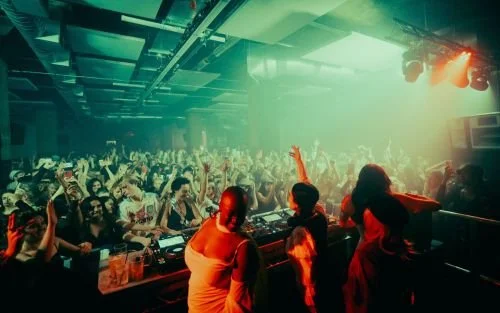
PHOTO CREDIT: Sophia Carey
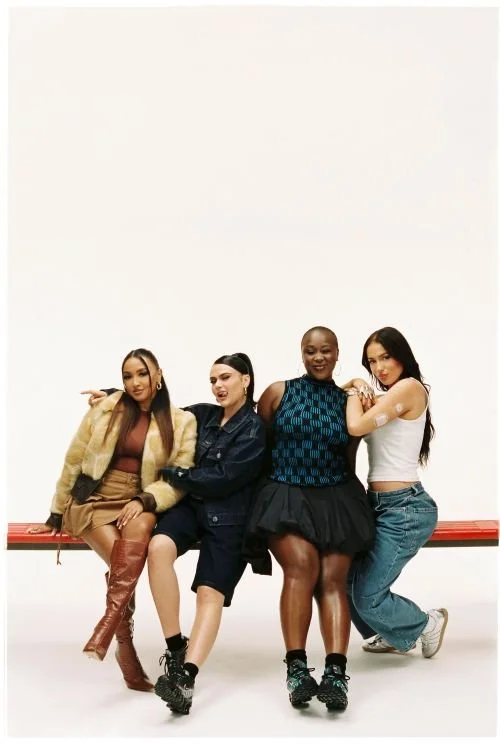
an incredible force of passion, togetherness, power and love. I have featured this heavenly quartet before in terms of including some of their music in a playlist. It does not look as though I have published a full feature. That is remiss of me! I am going to rectify that by bringing together a selection of interviews with Girls Don’t Sync. One from late last year, together with some from this year. Prior to getting to them, I would urge everyone to follow them, as they have released incredible singles like Keep Dancing, and their latest track, U Wanna Party? Their 2025 E.P., Code Orange, is immense. Let’s get to some brief biography prior to moving along:
“Matty Chiabi, Sophia Violet, Hannah Lynch and G33 came together to form Girls Don’t Sync in summer 2021, and exploded onto the scene soon after with one of the most-watched Mixmag Lab’s of the year.
Their fresh take on UKG, house and bass has made them a must-see act at the likes of Glastonbury, Boomtown, Parklife, Lost & Found and many more this year, winning fans around the world for their boundless energy and the unforgettable atmosphere they create with each performance.
In an era of feminine resurgence, Girls Don’t Sync are inspiring a new generation of dance music fans and becoming leaders of their scene”.
There is something so worthy and incredibly inspiring about what Girls Don’t Sync stand for and what they are doing. They are compelling and empowering so many women. I think that they will be breaking down barriers and walls years from now.
Let’s come to some interviews with Girls Don’t Sync. I am going to finish with a live review from last year, as they are at their best when playing to crowds. Creating this incredible energy and unifying and uplifting people. They played Pride on the Park in Brighton on 2nd August, and I wonder if they have many other dates approaching. “With their impeccable knowledge of multiple genres and a knack for skilful edits, the Liverpool collective create an unrivalled atmosphere of unity and celebration, while championing inclusivity and political action”. This is what Rolling Stone UK noted in their header. I have loved researching and discovering more about the queens that are Girls Don’t Sync:
“Unapologetic in their drive for inclusivity, Girls Don’t Sync are redefining the gender balance of lineups and dance floors across the UK and beyond. In their time together, these four friends have evolved from a DJ collective into full-scale artists. With their radical reshaping of ye olde sausage fest, they could well be the Slits of the rave scene, urging the unseen, unheard, misgendered, violated and abused to claim their space. They’re sparking a movement, platforming new talent and mentoring the next generation of women and gender minority DJs to step up to the plate.
Girls Don’t Sync are Matty Chiabi, Sophia Violet, Hannah Lynch and Gaia – aka G33. In their sets, they tear through house, UK funky, dancehall, drum ’n’ bass, techno, UK garage, Afrobeat, Bollywood, Middle Eastern sounds and more. With animated responses to whoever’s on the decks, they challenge each other, trading a full-on dialogue of beats and pieces. It’s an evident testament to the statement that embodies their name – which Chiabi came up with in the shower. It’s a double entendre: an affront to the stereotype that women who DJ rely on the sync button because they can’t beat match. “What we’re saying is that we are skilled DJs,” she says. “But it’s also ironic because as friends, women and as a group, girls do sync: emotionally, creatively, professionally. So we might not ‘sync’ on a technical level, but we do in every other sense, and that’s what’s allowed us to go strong for nearly five years.”
Earlier this year, Girls Don’t Sync released their debut track, ‘Our House’, which featured on their recent Code Orange EP (a second EP with key collaborators is also currently in the works). Lynch tells me that it epitomises exactly this attitude. “It sends a strong message that in our house we’re all the same,” she says.
The track was inspired by a session with Basement Jaxx. “We went into the studio, and they literally threw us into the booth, and were like, ‘Make some whacky sounds. Can you sing? Even if you can’t, just try, go for it, pull in all your identities,’” recalls Chiabi. “It was the maddest experience ever – obviously because we were in the studio with Basement Jaxx, but also because they shoved us into the booth for something that could potentially end up on their album. It was such a unique and special experience that we carried that energy into the session when we made ‘Our House’.”
Girls Don’t Sync have come a long way since 2021, when they first came together as a collective platforming female acts at Liverpool’s iconic District, after venue owner Eric Gooden urged them to start throwing their own nights. GDS embody that naughty north–sexy south connection: Brixton girls Chiabi and G33 spent their teens raving together before landing at District during their uni years. This is where they met Lynch and Violet, who were both DJing at the venue. Lynch’s dad, DJ 2Kind, was part of the rap group Lyrical Compact, while Violet also grew up inspired by her DJ mum and music venue owner dad.
District is one of few Black-owned indie venues and is one of the only ones to survive since Covid. Many of the venues they once all played at have now shut down.
“There’s no funding and the government fails to recognise them as important landmarks that cultivate culture, livelihoods, careers, confidence and oppor-tunities. It’s sad to see, so it’s important for us to advocate for their existence,” says G33.
“This is why we are political – but also by nature because of who we are, as it directly relates to our identities and the cultures we come from. You see this in the crowds we pull,” says Chiabi. “I would say that our message to young people is to stay informed, educated and empathetic, because that’s how change happens – even in the current climate where people are being silenced through punishment for speaking out.”
G33 agrees. “We come from places like Brixton, where music was the product of resistance. Using your artistry to talk about injustice is something we’ve definitely done. Our audience is also very young and mixed, and it’s important to remind them that music has always been political. So we’re encouraging them to galvanise in groups; take the conversation beyond social media. There is strength in numbers, and right now a global uprising is bringing many people together through the power of music”.
Let’s move thing to this year. DJ Mag published their conversation with Girls Don’t Sync in January. Really blowing up after the pandemic, they built their own label and productions off the back of their experience as D.J.s and promoters. Girls Don’t Sync spoke “to Christine Ochefu about their momentous rise, and how they’ve never lost sight of their original goal of uplifting women in the booth and on the dancefloor”. I am a huge fan of theirs and would love to interview them one day:
“Part of GDS’ appeal is making dancefloors fun again. There’s often a sense that to be taken seriously, dance music must be sombre, intense and brooding to be of good taste, resulting in stony-faced selectors and equally immovable crowds. But the Girls Don’t Sync live experience is stirring in the exact way the nightlife space should be; they are DJs who dance, interact and soak up the club joy as much as their audiences do. “Our live shows and how we perform are a massive part of GDS, especially because of where we started putting on our own events. We wanted to create these spaces and places that we would enjoy,” Sophia says.
Each stop is amassed with their favourite DJs — up-and-coming women, people you might not see on other line-ups — all carefully balanced to ensure the flow of the night. They point to their headline show in London, where fans stayed till the early hours to see the likes of Manara, or their recent highlight stop in Amsterdam, where 70% of the crowd were women — one of the most diverse nights the promoter had ever seen. “We set out to build more across Europe and we’ve done so much incredible stuff,” Matty says. “Behind the scenes we’re working on the music and we’ve released the ‘Code Orange’ EP, but in terms of our live presence we’ve had a really strong year.”
‘Code Orange’, their first release, harks back to ’90s house and Eurodance. ‘Our House’ is maybe the unofficial title track; a rallying cry utilising Hannah’s scouse lilt and upbeat vocals — “In our house we’re all the same,” she says, a representation of their real-time politics. Then there’s tracks like ‘Come Get Dis’, combining Matty’s vocals with gritty basslines and euphoric lifts, placing it in the vein of classics by Culture Beat and Snap!. Arriving via their solo label FOURMATION, it’s a natural extension from a group whose sound was born out of remixes, edits and bootleg culture, often riffing off older UK tracks like Beats International’s ‘Dub Be Good To Me’.
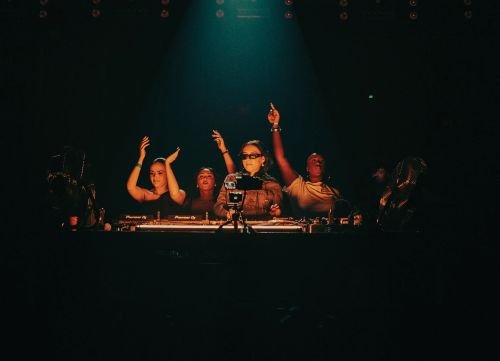
PHOTO CREDIT: Lauren Luxenberg
There’s often debate about whether DJs need to get into producing to solidify their artistry in the wider music space, or reach the next level of their careers. It wasn’t the plan from the beginning, GDS say, but over time the girls have embraced the opportunity to create their own unique, identifiable sound. “The [tracks] feel very DIY and central to Girls Don’t Sync, because it’s literally our voices,” Hannah says. “All our tracks will have a different flavour, but being able to build a catalogue of music and define what our sound is — having people say, ‘That’s so GDS’ — and having our sound as artists recognised the same way our sets are as DJs is the goal,” Gaia adds.
Their background in promoting also affects how they think about building a party: inclusivity is central, as is using their platform to reflect their own tastes while uplifting new talent. They’re intentional about creating a safe space — “Women are always at the front,” they say — and they see themselves as a visual act as much as a musical one. “A lot of the beauty of GDS I don’t think we actually get to physically see. I think it’s experienced between these pockets of people that come to our sets,” Matty says. “You might have the girlies in the front, the boys giving us the nod of approval when it drops. You might have the gays voguing in a circle. That is what I want our dancefloors to look like: having that diversity and inviting a range of people who love to dance, love to be free, love the music, and love what we stand for.”
The background of Girls Don’t Sync speaks to three different geographical locations — Liverpool, Salisbury, Brixton — but also a million more musical lineages wrapped up within that. Hannah grew up in Toxteth, South Liverpool, to a family of Bajan and Malaysian heritage. In her early teen years, much of her music listenership was nurtured by her Dad; she grew up attending teen raves in her area with her father in tow (she couldn’t get in without an adult at the tiny age she was, she says), parties that would play the heavy bass, garage, funky house and local scouse house offshoot. Her Dad had been a hip-hop head, armed with an overwhelming collection of R&B and hip-hop records, and a studio in the home to record music. It was through him she built her skills in DJing, later teaching young people in the area to do the same
GDS are a major reference point in a groundswell of women now taking on the traditional narratives of the dance music industry: headlining their own parties, cross-booking each other for events as well as other under-represented up-and-coming talent, crucially shifting nightlife further away from old-guard, male-only line-ups. And even though things may have improved, there’s still the question of how the industry keeps up the momentum, and whether it is doing so at all. For the group, it’s not just an issue of line-ups, but equally of the quality of the scene for women attendees, and how we continue to encourage inclusive, progressive spaces on dancefloors.
“There has been a little bit of regression recently, especially in certain scenes in terms of who’s on the line-up,” Sophia says. “Crowds reflect the DJs that are on the line-up as well. If you go into a crowd and you can see maybe four girls in a crowd of 200 boys, it’s no fun to be around. What makes going out fun is being around all different people from all walks of life, that’s what enables that sense of freedom and being able to let your hair down.”
In 2025, male-heavy line-ups now seem a bit gauche; with the rise of similarly notable female DJs, many venues and promoters are diversifying line-ups by default, even if simply out of fear of being publicly called out for lack of gender parity. But some efforts, they say, may be inadvertently driving things backwards for new talent. “What has happened is that people are lazy,” Matty says. “They see one name doing well, maybe a woman or a Black woman, and put them on the line-up every single time because they tick that box. That’s not how it should be”.
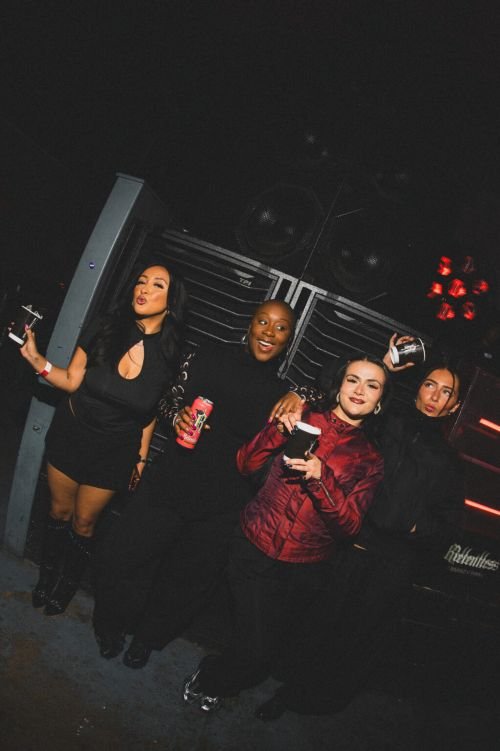
Wonderland. caught up with Girls Don’t Sync at a vital time. “Heading up Relentless’ Local’ initiative, aimed at spotlighting grassroots communities, the quartet talks inception, connection, and reclaiming the dance floor”. Published in May, Girls Don’t Sync were preparing to head into the studio to record more music. You can discover more about Relentless Local here:
“What are some of the struggles that you continue to face?
Sophia: We’re well-versed in dealing with situations, and we have a really good team around us. But online, it never stops. There are always those comments, and they still are going to affect you. Even though you’ve seen so many good comments, even if the crowd is jumping up and down loving it, the sexist comments online never get easier to deal with. They’re always going to stay in your head when that’s there. But again, because we have each other, we can talk these things out and feel the support of each other.
Gaia: A lot of female DJs face that, and they have to go through those emotions alone. The first time we were all launched online was when we did the Mixmag stream, and that definitely welcomed a whole variety of comments – it’s not even just about our DJing, but also personal stuff about what we look like, who we are, what we represent. I feel like that could have really shaken us, but instead, we incorporated it into our brand. Even our name is something that’s used as a stigma against female DJs, but we were able to create an armour through it. It doesn’t necessarily get easier, but I’ve seen so many more female collectives, the likes of Not Bad For A Girl, Sexy Lady Massive, just really taking back that control and that autonomy and using these vessels of hatred as part of their defiance, in their performances and in their ethos. And I think that’s really empowering.
As people flying the flag for nightlife and being really important in the framework of it, how do we get the next, younger generation out to clubs and nights out? How do we build it back up to where it once was
Sophia: By getting them to go to something that they really love once. It’s about the gentle encouragement to just try things out. There’s a big wellness culture that, by all means, is great, but is also killing real human connection and human experience. If we can encourage people to have one great experience, a night where they have that human connection and feel a sense of community through music, then they’ll be encouraged to do it again and again.
Gaia: We’re living in an age where a lot of things exist in a digital space, so encouraging people to actually go out and interact with people, not through the prism of their phone, is also really important. It’s also to do with access in terms of funding and tickets. We’ve had quite a few people message us at times, and they’ve been like, ‘Love you guys, I’d love to come, but I’m a university student, and I can’t quite afford it this month.’ Especially when we’re on bigger lineups, things are getting a lot more expensive. We always try to make a habit of allowing our community to come to our shows that we have control over. We would never want finances to be a barrier for them to come to our shows. So we’ve put a lot of people on that have just sent us really genuine messages who are clearly fans. The fact that the tickets [for the Liverpool headline show] are five quid and it’s in the venue we first did our first event in, as promoters, is a full circle moment. But it’s obviously difficult at times to keep ticket prices low. Where we can, we should encourage it, and encourage people to also invest in this stuff. When me and Matty were really young, and we had no money, we got ourselves to all these festivals because we worked jobs or we’d saved up. There’s a big shift in the younger generation; seeing what is trending at the moment, and maybe going to get a matcha or going to a pilates class is a little bit more attractive to them than going to a warehouse rave. But music, club culture, nightlife – this is something that’s cross-generational. There’ll always be communities and subcultures that flourish from that.
Matty: Clubbing these days feels like a luxury, almost, because it’s so expensive. But when I was younger – when me and Gaia were in our proper rave days – we were outside, Friday, Saturday, every single weekend of the month. It was way more affordable back then, but also the DJs that we wanted to see were a lot more accessible as well. This is why we’re so proud to be doing what we’re doing and doing this Relentless collab at District as well, because the bigger you get as a DJ, the more exclusive it becomes. You’re seeing your favourite DJ at a massive warehouse or a huge venue or when they’re on tour, rather than seeing them at a small local club. It just doesn’t happen as often, which is why doing this at District is such a treat because people haven’t seen us back in a local club for so long”.
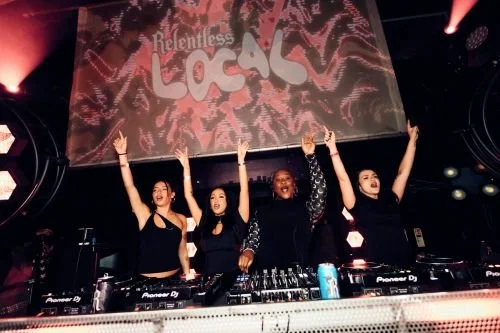
Concluding the interviews section with more discussion around their Relentless Local work, CLASH spoke with Girls Don’t Sync, who discussed a scheme designed to support and discover regional talent. I do feel that there are so many sides and aspects to Girls Don’t Sync. In terms of the amazing work they are doing, combined with their D.J.s sets and their incredible and distinct tracks. They are a force that everyone should salute:
“With the ‘Local’ initiative, what conversations are you hoping to start around regional music communities in the UK?
Matty: What we really want to emphasize is that your success isn’t based on your proximity to London. There are so many things that come with being successful; work ethic, friendship, tapping into communities and cultures, and I don’t think that is based on where you grow up or the fact that you live in a large city like London. It’s based on so many things that aren’t to do with geography. Even if you have the confidence and the drive to do certain things, you still need the access and support, which is why it’s so important that we are giving four collectives a share of £20,000, because you do need tangible things in order to make things happen. We really want to stress that people in regional spaces deserve the recognition and the chance. One of the sets that really put us on the map and allowed us to connect with crowds globally, was filmed in a small venue in Liverpool. That moment really highlighted how regional cities need the access and the spotlight, which we want to emphasize through this scheme.
Hannah: We want to tell people that you don’t have to leave your hometown to be successful and have a career. Through collaboration and working with brands like Relentless, there are opportunities out there that can help you.
Through this partnership with Relentless, you’re giving collectives actual funding, equipment and promotion. Why is tangible support more important than just visibility?
Sophia: I think it’s so nice and encouraging to have a brand like Relentless be getting behind a scheme like this, putting their money where their mouth is.
Hannah: Collectives around the UK definitely have so many amazing ideas and they want to do so much, because we remember our aspirations from when we first started out, but it’s not that easy and it’s just not always feasible. However, having opportunity and the funds gives artists what they need to get to the next level.
Gaia: Anyone can gain visibility online. Visibility is quite an individualistic thing, but having the funding and resources actually gives artists the opportunity to bring people together. It acts as a catalyst, and a stepping stone to further nurture their journey. We obviously understand firsthand how much effort and finances are needed when you’re putting on an event. You don’t get taught this stuff, there’s no online rule book, you learn as you go. You want to make sure that you’re paying people correctly and creating a safe environment. So, it feels like we’re able to pass that baton of knowledge and experience, because we’ve had our fair share of mistakes and difficulties.
Matty: It also gives these collectives the actual experience of running an event; how to interact with whoever’s on the lineup, making sure that crowd safety is under control, the people behind the bar, making sure that DJs are safe, and all the other intricacies that people don’t realize goes into putting on an event”.
I am going to end with a live review from The Courier Online. Playing the third show of their Fourmation Tour, they were reviewed at NX. I wonder what the rest of the year holds for Girls Don’t Sync, as they have this incredible momentum. Maybe an album coming or there is a big international tour. Who knows when it comes to this extraordinary four-piece! A stunning collective that we should all be very proud of:
“Djs Diffrent, Lewis Taylor and Vnee opened for the act. They were all incredible DJs in their own right and were given a chance to shine. This not only helped build anticipation but also allowed for the audience to enjoy a range of genres and styles first. This exemplified the ethos that the girls pride themselves on – bringing community together and embracing their differences. This is truly what sets Girls Don’t Sync apart. It is such a varied and engaging kind of show and this was shown in every aspect of their set; even in the way that we, as the audience, are meant to interact with them.
At the beginning of their set, they urged the crowds to put the phones down, really feel the music and be present with them. While naturally reluctant, giving this a try made the performance so much better. In such a digital age it felt unnatural to put away the phones. However, with this slight change alone you saw the girls reaching out to people and people responding back – it was immersive and infectious.
The girls have said before in their own podcast, that despite understanding why people have their phones out, it is easier to do their part when they can physically see the feedback that they’re receiving from the crowds. Referring to the phones as a “block between us and the audience”, and how no phones encourages the audience to be “present”.
In addition to this, the NX venue allowed for fans to be physically on stage with the girls too. Watching them curate and craft the music was amazing to see. On this mini stage the girls would also again reach out to fans, dancing with them and enjoying their own music too. It was incredible to witness and be a part of.
The collective consists of members Gaia Ahuja, Matty Chiabi, Hannah Lynch and Sophia Violet. All members have different backgrounds which creates their unique sound, as they take turns performing music or collaborating.
It was incredible to see the process behind what I was hearing – especially as they jumped and blended seamlessly form genre to genre. For example, dancehall one second, transitioning smoothly into house the next.
Overall, Girls Don’t Sync were amazing. The music was expertly selected and blended together, it was beautiful to watch their distinct styles work in harmony but also in juxtaposition as they established their own feel. GDS can truly be deemed as trailblazers in their field - talented women infiltrating such a heavily male dominated space and doing it with ease and flare”.
I will finish off now. I am, as I said, a big fans of Girls Don’t Sync. How they are definitely helping to affect progress, change and fuel discussion when it comes to gender equality through Dance music. In terms of D.J.s being booked at festivals, there is still a skew towards men - though there are steps forward happening. Women are dominating through most areas of music. I feel the most engaging, extraordinary and talented D.J.s in the world are women. Few are as awe-inspiring and gifted…
AS Girls Don’t’ Sync.
___________
Follow Girls Don’t Sync