
FEATURE:
Nocturn
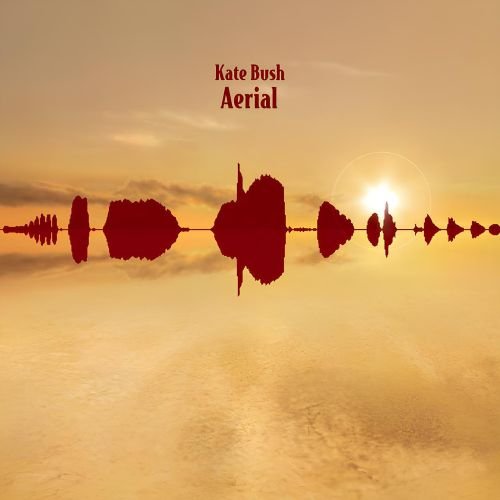
Kate Bush’s Aerial at Twenty-One
__________
I did want to discuss…
PHOTO CREDIT: Trevor Leighton
Aerial ahead of its twenty-first anniversary on 7th November. There is no connecting theme at all. What I want to do is bring in an interview from 2005 with Tom Doyle. I am then go to move to a review of Aerial published in 2005, finishing up with a feature published last year to mark twenty years of her seventh studio album. I have explored this double album from all kinds of angles and brought so many different sources in. I do think there is a book to be written about Aerial. How it was her first album since 1993’s The Red Shoes. How Bush retreated and took a step back, moved and started a family with Dan McIntosh. Bertie, her son, was born in 1998. So much changed between albums. Articles have been written about Aerial, though it does deserve its own book. In an abridged version of a 16-page interview with Kate Bush that appeared in MOJO, for The Guardian, we get exerts of Tom Doyle’s fascinating conversation:
“Can she understand why people build these myths around her?
"No," she begins, apprehensively. "No, I can't. Pffff. I can't really."
You once said: "There is a figure that is adored, but I'd question very strongly that it's me."
There is silence. A stare. You did say it ...
"Well supposedly I said that. But in what context did I say it?"
Just talking about fans building up this image of you as some kind of goddess.
"Yes, but I'm not, am I?"
So, do the rumours bug you? That you're some fragile being who's hidden herself away?
"No," she replies. "A lot of the time it doesn't bother me. I suppose I do think I go out of my way to be a very normal person and I just find it frustrating that people think that I'm some kind of weirdo reclusive that never comes out into the world." Her voice notches up in volume. "Y'know, I'm a very strong person and I think that's why actually I find it really infuriating when I read, 'She had a nervous breakdown' or 'She's not very mentally stable, just a weak, frail little creature'."
This is how 12 years disappear if you're Kate Bush. You release The Red Shoes in 1993, your seventh album in a 15-year career characterised by increasingly ambitious records, ever-lengthening recording schedules and compulsive attention to detail. You are emotionally drained after the death of your mother Hannah but, against the advice of some of your friends, you throw yourself into The Line, the Cross & the Curve, a 45-minute video album released the following year that - despite its merits - you now consider to be "a load of bollocks". You take two years off to recharge your batteries, because you can. In 1996, you write a song called King of the Mountain. You have a bit of a think and take some more time off, similarly, because you can.
Two years later, while pregnant, you write a song about artistic endeavour called An Architect's Dream. You give birth to a boy, Albert, in 1998 and you and your guitarist partner Danny McIntosh find yourselves "completely shattered for a couple of years". You move house and spend months doing it up. You convert the garage into a studio, but being a full-time mother who chooses not to employ a nanny or housekeeper, it's hard to find time to actually work in there. Bit by bit, the ideas come and a notion forms in your mind to make a double album, though you have to adjust to a new working regime of stolen moments as opposed to the 14-hour days of old. Your son begins school and suddenly time opens up and though progress doesn't exactly accelerate ("That's a bit too strong a word"), two years of more concentrated effort later, the album is complete. You look up from the mixing desk and it is 2005.
If the outside world was wondering whether Kate Bush would ever finish her long-awaited album, then it was a feeling shared by its creator. "Oh yeah," she sighs. "I mean, there were so many times I thought, I'll have the album finished this year, definitely, we'll get it out this year. Then there were a couple of years where I thought, I'm never gonna do this. If I could make albums quicker, I'd be on a roll wouldn't I? Everything just seems to take so much time. I don't know why. Time ... evaporates."
There was a story that some EMI execs had come down to see you and you'd said something like: "Here's what I've been working on," and then produced some cakes from your oven. True? "No! I don't know where that came from. I thought that was quite funny actually. It presents me as this homely creature, which is all right, isn't it?"
Even if apocryphal, it's a nugget that reveals something about Bush's relationship with a record label she signed to 30 years ago. For a long time now, she hasn't taken a penny in advances and refuses to play them a note of her works-in-progress. In the latter stages of Aerial's creation, EMI chairman Tony Wadsworth would come down to visit Bush and leave having heard nothing. "We'd just chat and then he'd go away again," Bush says. "We ended up just laughing about it, really."
If the completion of Aerial put paid to one set of anxieties for Bush, then its impending release has brought another - not least, a brace of newspaper stories keen to push the "rock's mystery recluse" angle. It seems the more she craves privacy, the more it is threatened. "For the last 12 years, I've felt really privileged to be living such a normal life," she explains. "It's so a part of who I am. It's so important to me to do the washing, do the Hoovering. Friends of mine in the business don't know how dishwashers work. For me, that's frightening. I want to be in a position where I can function as a human being. Even more so now where you've got this sort of truly silly preoccupation with celebrities. Just because somebody's been in an ad on TV, so what? Who gives a toss?"
A clock somewhere strikes two and the chipper, ever attentive McIntosh arrives with tea, pizza, avocado with balsamic vinegar and cream cake for afters, only to be playfully admonished by his partner, who protests: "I can't eat all this shit!"
If there is perhaps less mystery to Kate Bush than we might have expected, her music remains reassuringly the same ecstatic alchemy of the humdrum and otherworldly. Recalling the hello-clouds wonder of The Big Sky from 1985's Hounds of Love or the frank paean to menstruation that is Strange Phenomena from her debut, The Kick Inside, Aerial finds Bush marvelling in the magic of the everyday: the wind animating a skirt hanging on a clothes line, the trace of footprints leading into the sea, the indecipherable codes of birdsong.
But the one track on Aerial that best bridges the divide between Bush's domestic and creative existences is the haunting piano ballad Mrs Bartolozzi, in which a housewife character drifts off into a nostalgic reverie while watching clothes entwining in her washer-dryer. It's also the one track set to polarise opinion among listeners, with its eerie, unhinged chorus of "washing machine ... washing machine". Bush acknowledges as much.
"A couple of people who heard it early on," she says, dipping a spoon into her avocado, "they either really liked it or they found it very uncomfortable. I liked the idea of it being a very small subject. Clothes are such a strong part of who a human being is. Y'know, skin cells, the smell. Somebody thought that maybe there'd been this murder going on, I thought that was great. I love the ambiguity."
The shiver-inducing stand-out track on Aerial, however, comes at the end of the first disc. A Coral Room is a piano-and-vocal ballad that Bush admits she first considered to be too personal for release, dealing as it does with the death of her mother, a matter that she didn't address at the time in any of the songs on The Red Shoes.
"No, no I didn't," she says. "I mean, how would you address it? I think it's a long time before you can go anywhere near it because it hurts too much. I've read a couple of things that I was sort of close to having a nervous breakdown. But I don't think I was. I was very, very tired. It was a really difficult time."
Kate Bush begins to tidy up the plates and cups and get ready for Bertie's arrival home from school with his dad. Before I go, however, there is one last Bush myth to bust. Apparently, when she attended a music industry reception at Buckingham Palace this year, she asked the Queen for her autograph. Is that true? Instantly a grin spreads across the face of the Most Elusive Woman in Rock. "Yes, I did!" she exclaims, only half-embarrassedly. "I made a complete arsehole of myself. I'm ashamed to say that when I told Bertie that I was going to meet the Queen, he said, 'Mummy, no, you're not, you've got it wrong' and I said, 'But I am!' So rather stupidly I thought I'd get her to sign my programme. She was very sweet.
"The thing is I would do anything for Bertie and making an arsehole of myself in front of a whole roomful of people and the Queen, I mean ... But I don't have a very good track record with royalty. My dress fell off in front of Prince Charles at the Prince's Trust, so I'm just living up to my reputation”.
Her first album in twelve years, there was a lot of interest around it. I am not sure whether I have sourced this BBC review before. Given the scope and size of Aerial, there was this passionate and deep interrogation. I don’t think that the album received anything less than glowing reviews. It definitely stands alongside her finest and most impressive work:
“When EMI invites a group of journalists to the Royal Academy of Music, in London, for a one-off listen to Kate Bush's new album, they are sending a clear signal - this album is not to be dismissed lightly.
Aerial is in two distinct halves - the first side, A Sea of Honey, is a collection of distinct, highly personal, sometimes impenetrably personal, songs.
Side two, A Sky of Honey, is an old-fashioned concept album - complex, layered, perhaps pretentious, but also a dazzling aural masterpiece.
A Sea of Honey has seven wildly different songs which touch on aspects of her daily life, both public and personal.
Single King of the Mountain opens the album full of swelling synthesizers and pounding beats and with its almost cryptic lyrics sets the tone for side one.
All of the songs have a swirling, almost uncontrolled creativity as if Bush has had these songs bottled up for more than a decade.
Her voice escapes, rather than emerges, in that familiar part-piercing, part-haunting tone that uniquely can carry across consonants and vowels with seductive ease.
Folk melody
Bertie, about her young son, has a simple, pleasing folk melody but lyrically feels slightly mundane.
She sings: "Here comes the sunshine, here comes the son of mine. Here comes everything, here comes a song for him."
"You bring me such joy. Then you bring me more joy," she recites, almost unconvincingly.
How to be Invisible is side one's stand out track, with a real sense of menace in its driving beat.
"I found a book on how to be invisible. On the edge of the labyrinth," she sings.
Strangest song
The strangest song on the whole album is Mrs Bartolozzi, a plaintive wail seemingly about domestic chores.
"Washing machine, washing machine, washing machine," she cries. Listening to this, I felt like I was trapped inside the washing machine on the spin cycle.
The final song of side one, A Coral Room, is a deeply moving elegy about her mother's death that is so private it feels almost intrusive to listen in.
Seven songs in and it seems a poor return on a 12-year wait. It also gives little clue to the sheer majesty of side two.
Lyric poem
A Sky of Honey is, in a sense, a lyric poem set to music. Full of lush, fecund melodies which swing from jazz to rock, it is threaded through with bird song and chatter and feels distinctly organic and earthy.
There is also a painterly quality to the nine linked songs, a feeling which is enhanced by the appearance of Rolf Harris who both speaks and sings - thankfully briefly - on two tracks.
Side two is the album Pink Floyd might have made if Kate Bush had been their lead singer and lyricist in 1979.
Many people will hate the concept album feel to the songs and it is an acquired taste but is both sonically and lyrically a fine achievement.
It takes the listener on a journey - from a young boy's innocent statement of "Mummy, daddy, the day is full of birds" to a dynamic conclusion more than 40 minutes later where Kate Bush herself seems to have become the birds and takes flight.
Reaction
"I want to be high up on the roof," she sings.
Often playful, Bush seems aware of the reaction some listeners will have.
"What kind of language is this? Tell me are you singing?" she asks.
Musically the nine songs of side two - which are parts of a whole rather than distinct tracks - are splashes of piano, bass and drums, layered with 1980s synthesizers which give the album a retro quality.
It is a very English album, with the rural feel of a John Betjeman or AE Houseman poem.
'Laughing'
"All of the birds are laughing. Come let's all join in," she sings as her voice emerges from the sound of birdsong.
A Sky of Honey is a celebration of song itself, which has a child's joyful lack of inhibition about it - Kate Bush is heard laughing freely towards the end while a young child, possibly her son, is heard several times.
Wild guitars, pounding drums, dashing across the left and right channels of speakers, carry the album to its conclusion where both bird chatter and the sound of a cuckoo rise and then fade away.
It is difficult to know how successful the album will be - certainly it is not for the iPod generation - but Aerial stands alongside The Hounds of Love and The Kick Inside as her finest work”.
PHOTO CREDIT: Trevor Leighton
Utilising an articles from The Quietus that I have included in another feature, they shared their views on Aerial on its twentieth anniversary last year. Twelve years between The Red Shoes and Aerial, there has now been almost fifteen years between 50 Words for Snow and now. You wonder what Bush will bring us when another album comes along:
“Giving her audience their money’s worth following its long gestation period, Aerial arrived as a fully-formed double album – expanding on the model of 1985’s landmark Hounds Of Love with a disc of seemingly unrelated songs (one would struggle to call Aerial’s first disc, A Sea Of Honey, ‘pop’ in the way you might the first side of Hounds Of Love) and a second disc made up of a conceptual suite. A Sky Of Honey, like The Ninth Wave, tracks a period of time towards daybreak – but, where The Ninth Wave is a dark, nightmarish vision of isolation and fear, A Sky Of Honey delights in the beauty of nature in an altogether more pastoral environment of contentment.
It is telling that an artist with such a keen, critical eye, an artist on a constant quest to “[find] the right atmosphere, the right emotional quality” chose to perform, in their entirety, these two contrasting song suites – terrifying seascape and sun-kissed elegance – as part of Before The Dawn, an artist revelling in bringing to live performance two of her most fully-realised creations.
Aerial, then, clearly cut the mustard in Bush’s esteem. Contemporary reviews were largely positive – “a remarkable surprise” (Entertainment Weekly), “it isn’t perfect, but it is magnificent” (Stylus), “it is filled with things only Kate Bush would do” (The Guardian) – but some critics missed the point somewhat and contributed to a vague perception of Aerial as a record about, and generated by, the mundanity of everyday life – of school runs, hoovering the house, washing your husband’s socks. It was as if Bush, known for songs of such supernatural extravagance as ‘Wuthering Heights,’ for singing about illicit gay love (‘Kashka From Baghdad’), nuclear fallout from the perspective of an unborn foetus (‘Breathing’), or obtaining emotional nourishment from a computer program (‘Deeper Understanding’), had settled into a disappointingly dull malaise, the shrinking of a world where she now sang about washing machines – literally – and her lovely son.
Reductive seems too mild a word for such an interpretation – anyone familiar with the Kate Bush oeuvre will know she was always one for finding beauty in the everyday, that gleam of light in the ordinary used as a jumping-off point (“you bump into a friend you haven’t seen in a long time,” she sang on ‘Strange Phenomena’), She always recognised and celebrated the beauty in simplicity, and elevated it with complex arrangements, daring melodies, and subtle poetry. The domesticity of motherhood and home life of course informs (and even enhances) Aerial – to disregard it as inessential or lesser because it lacks the perceived vigour and intensity of vision of prior works is demeaning.
If anything, the more homespun feel of Aerial beautifully illuminates its themes of birdsong, daylight, and the natural world. For all Bush’s perceived perfectionism, there is a relaxed, unfussy feeling to the material – some of the vocal takes are audibly imperfect in comparison to some of her past recordings and you get the sense of that search for the “right emotional quality” taking absolute precedence. She told Rolling Stone France in 2006 that she “[doesn’t] believe in perfection. For instance, in ‘Mrs. Bartolozzi’ the voice plays with the piano. There’s a part I really hate. But as part as the whole song, I couldn’t get the same emotional quality on the other takes. This version is a bit out of tune, I don’t pronounce the words the way I wished but the emotion I was looking for is there.”
‘Mrs. Bartolozzi’ is one of the songs on the first disc, A Sea Of Honey, and one of its most divisive. It’s the one with the repeated chorus of “washing machine” that so troubled some critics two decades ago; far from being a song about a washing machine, though, the washing machine is a device through which Bush can explore ideas of lost identity, the renewing properties of water, and the power of daydreams to break through the humdrum mundanity of daily life. “What I wanted to get was the sense of this journey, where you’re sitting in front of this washing machine, and then almost as if in a daydream, you’re suddenly standing in the sea,” she told the BBC in 2005.
Is ‘Mrs. Bartolozzi’ herself the “washing machine”? She drifts off into a reverie with the “slooshy-sloshy / get that dirty shirty clean” segment, which always reminded me of a ‘50s radio advert, or the mopping scene in Disney’s Cinderella. Is she not only getting lost in the everyday but trying to erase it? “Clothes are such a strong part of who a human being is,” she told Mojo in 2005. “Y’know, skin cells, the smell. Somebody thought that maybe there’d been this murder going on, I thought that was great. I love the ambiguity.”
One of Bush’s most powerful skills is to capture the essence of a particular period of time in musical form – the autumnal The Sensual World a prime example – but don’t ‘Prologue’ and ‘An Architect’s Dream’ just sound like a sunny afternoon in the garden? Doesn’t the oceanic pulse of ‘Nocturn’ (“a sea of honey, a sky of honey”) capture that chill of a moonlight night? Isn’t the ebullient joy of ‘Sunset’ evocative of those burning colours, “where sands sing in crimson, red, and rust,” the poignant pull of an ending and a beginning all at once?
“What kind of language is this?” Bush asks towards the climax of ‘Aerial,’ merging human laughter with the approaching dawn chorus. The language of Aerial is rapture at the beauty of nature, the extraordinary in the everyday; its musical language is as broad, diverse, and beautiful as its subjects would suggest.
“I suppose I was just kind of playing with the idea of how could human language connect with birdsong,” she said. “It is just the natural rhythm.”
Bush’s own natural rhythm led to the twelve-year wait for Aerial; in a remarkable example of our morphing perceptions of time, that gap is now two years shorter than the one since Bush’s last LP, 50 Words For Snow which, to me, at least, feels fairly recent. “I think I did worry about there being such a long gap,” she told Mark Radcliffe in 2005. “I was worried that… without wanting to sound sentimental, I was worried that people would forget about me.”
Not likely – Aerial stands strong in the firmament of the very best Kate Bush records. And surely the only record that could possibly make me think of Kate Bush every time I hear a pigeon cooing (and I know I’m not the only one). There is a real artist’s confidence in its lambent quality, its mature elegance, that rewards repeated listening and, two decades on, still reveals new surprises. So yes, it was definitely worth the wait and I will be playing it again today. “What a lovely afternoon…”
I will finish off now. On 7th November, it is twentyw-one tyearts since Aewrial was released. There was thids massuive wave of exictyment and affection for it when irt came out. Kate Bush had been quiet for a while, so it was this great moment. Bush’s production is staggering. Such an excpansive and ambitious double albgum, I don’t think that it is as explored and discussed as it should be. How much radio play do the songs get? It is a swork of genius from…
A masterful producer and songwriter.