
FEATURE:
In Search of Peter Pan
Kate Bush’s Lionheart at Forty-Eight
__________
IT is annoying…

IN THIS PHOTO: Kate Bush in 1978/PHOTO CREDIT: Gered Mankowitz
that some albums have different release dates attached to them, depending on which source you look at. In terms of Kate Bush’s albums, I have seen Lionheart be associated with three different dates. I think the consensus is that it is 10th November, 1978, though I have seen 13th November and 12th also used. Going by Discogs, I am marking the forty-eighth anniversary of Lionheart ahead of 10th November. Kate Bush’s second studio album, it arrived less than nine months after her debut, The Kick Inside. That would be taxing for any artist to do. But Bush was promoting The Kick Inside around the world. Although I don’t feel Lionheart is as strong as underrated albums like The Red Shoes (1993), it is far stronger than people give it credit for. There is unlikely to be any retrospection ahead of its forty-eighth anniversary. Perhaps there will be something written when it turns fifty in 2028. The only Kate Bush album recorded out of England – at Super Bear Studios in Berre-les-Alpes on the French Riviera -, it is also the first to feature Del Palmer. It seems strange that Palmer was not involved with The Kick Inside. Producer Andrew Powell wanting more experienced musicians at the time. Bush’s boyfriend until the 1990s, Palmer played on all of her albums from Lionheart on, and he also was her engineer on many albums too. He is sadly no longer with us, but I am sure he had happy memories of being with Bush in France. Even if she was pushed for time and could not write any new tracks, there would have been moments of downtime in the sun and by the pool that were idyllic. A picturesque landscape to record an album in, Lionheart has some terrific tracks.
People best know it for Wow. The second single, it followed Hammer Horror. That album-closing track is not an obvious lead single. Released a week before Lionheart on 3rd November, 1978, it reached forty-four in the U.K. Wow reached fourteen. People still listening to The Kick Inside. Bush promoting that album right through the year. I am not sure what the last bit of promotion was for it, though she would not have wanted to record a second album so quickly. EMI saw the success her debut had and wanted a quick follow-up. That pressure and short-sightedness was detrimental. Lionheart not as complete and different to The Kick Inside. There are some tracks that you can see as evolutions and more ambitious in terms of the compositions. Coffee Homeground among them. Natural highlights like Symphony in Blue, Kashka from Baghdad and Wow. Interesting deeper cuts like In Search of Peter Pan, and the wonderful Fullhouse. I do want to come to a promotional interview. One from later in 1978. However, we can see how Bush felt about Lionheart in the years following its release. It is a wonderful album, but it was insane by EMI to push her back into the studio so soon after promoting The Kick Inside:
“I had only a week after we got back from Japan to prepare for the album. I was lucky to get it together so quickly. But the songs seem to me, now, to be somewhat overproduced. I didn’t put enough time into them.
Richard Laermer, Kate Bush Touches the U.S. At Last, Pulse!, 1984
Even on the first two records, I was doing what I’m doing now as a artist, only because I was a lot younger, and I didn’t have the room and the space to be able to truly present my music. I had to work with a producer and within certain kind of set-ups because of the fact that… that’s how it was, I wasn’t powerful enough basically to be able to say, “Look, I’m producing this myself. This is what I do.” And that’s what I do now. I think that if I had been a little older, and if I’d had the experience at the time, I would have done it then, too. But I was – When I was making my first album, I was 18. I had never really worked with a band before, let alone a producer in a studio setup. So I just had – [Laughs] -I mean I just about had the guts, you know, to sing and keep it together. But you learn very quickly what you want. By the time the second album was finished, I knew that I had to be involved. Even though they were my songs and I was singing them, the finished product was not what I wanted. That wasn’t the producer’s fault. He was doing a good job from his point of view, making it sound good and together. But for me, it was not my album, really.
John Dilberto, Britain’s Renaissance of Concept Rock, Keyboard, 1985
It was rushed and that was responsible for me taking as much time as possible over albums. Considering how quickly we made it, it’s a bloody good album but I’m not really happy with it.
John Aizlewood, Love, Trust and Hitler. Sounds (UK), November 1989”.
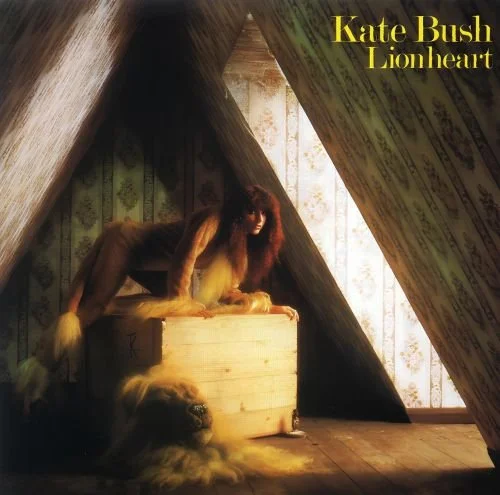
In terms of reviews, there was not a lot of love shown in 1978. As you can see from these two reviews, there was this vitriol, sexism and lack of respect aimed at Kate Bush: “Mature’ lyrics sung in that twee irritating schoolgirl-siren voice… Actually most of the time she’s nearer a vague British lineage – Barbara Dickson to Lynsey de Paul – than a Joni/Janis wonderland (Ian Penman, NME, 25th November, 1978); A product which is at best moderate, lacking and often severely irritating… The feel is often bland and soulless. Strictly MOR with a clever tinge. This is flat conceived silliness. I simply dislike it (Chris Westwood, Record Mirror, 25th November, 1978)”. Quite a few reviews were published on 25th November of 1978. That is over two weeks after Lionheart came out. I wonder why there was this wait. Even fi there has been more retrospective appreciation of Lionheart, I would say this and Director’s Cut (2011) are her most under-appreciated studio albums. There is a lot to love about Lionheart. Its stunning cover by Gered Mankowitz. This is what he recalled about shooting this incredible cover: “By the time Lionheart was finished I’d already shot two or three sessions with her, and we had developed a terrific working relationship. Kate had the idea of a young girl going up into the attic of an old house and finding an animal costume. I decided to build the attic as a set in my studio and we designed it incorporating a dormer type window for the lighting. I rented the lion head from a costumier, and we had the lion suit made to measure. We used the box we’d made for the US version of her first album, The Kick Inside, plus a couple of props and a lot of artificial cobwebs!”. I don’t think I have seen a big music website or magazine write an appreciative thing about Lionheart. That seems staggering! Last year, Classic Rock said this about Lionheart: “For sceptics who reckoned she was all a bit jazz-hands and drama school, this was the one to attack – her one tour ‘visualised’ the narratives – but that fearless voice and fluid piano work woo all but the hardest heart. With its bucolic feel and quests for Peter Pan, its sunlit languor has endured surprisingly well”.
Before getting to an interview around the release of Lionheart, I wanted to counteract the slightly acidic reviews of 1978 with some retrospective acclaim. Drowned in Sound reconsidered Kate Bush’s first four albums – 1978’s The Kick Inside, and Lionheart; 1980’s Never for Ever, and 1982’s The Dreaming -, and gave a perfect ten to The Dreaming. Even though giving The Kick Inside an 8 is very low, they did not slate Lionheart: “One of the funny things about The Before Time when you had to buy music to listen to it is that ropey critical reputations could really put you off ever listing to certain records, even by artists you loved. It took me years to get around to Lionheart. And you know, sure, it’s the weakest Kate Bush record but that doesn’t make it bad. If anything the fact it’s routinely dismissed as a rushed follow up to The Kick Inside means it doesn’t have the pressure to compete with the stronger later records. The luminous ‘Wow’ is obviously the best and most memorable song, but seriously, check out those elaborately layered vocals on opener ‘Symphony in Blue’. The songwriting is a bit hazy compared to the laser-definition of later albums, but musically and texturally it’s a really beautiful record - the only Kate Bush album that is content to be pretty and not ask you to commit to it, and there’s something to be said for that, I think. (7)”. I realise I have sourced some of these features before. It warrants repeating. This feature noted how Lionheart is not a masterpiece, though it is staggering considering time constraints. How it is a remarkable achievement and a gorgeous album: “Elsewhere, things get more eclectic and esoteric. “Coffee Homeground” courts Cabaret and Broadway and elevates both forms. Lead track, “Symphony In Blue” evokes a heavenly cocktail mix of Carol King on ecstasy and helium. On this album, even more than The Kick Inside, Kate takes her voice to its full, death defying limits. Many argue it takes listeners to their limits as well. Like Dylan, Kate’s voice is her signature, money maker, and albatross all rolled into one. One must come to the party prepared to marvel at her athleticism and then dig deep into the music itself. The rewards are there. Kate Bush is not a passive listen. We’ve got Sade for that. No, Lionheart is a three ring circus of emotion, estrogen and technique. And you know what? EMI put it out at just the right time. I’m glad we got two albums documenting Kate’s eloquent, teen dream genius. Soon our little girl would all grow up to be a woman. Lionheart didn’t do anything wrong, it’s just a matter of the paint on her masterpiece hadn’t quite dried yet”.
I do really love Lionheart. Bush spoke with Harry Doherty for Melody Maker. I have definitely sourced this interview before. The Kick Inside saw Bush promote widely. There was not as much with Lionheart. I do find the interviews around the time intriguing. This transition between her amazing debut and 1989’s Never for Ever. Lionheart is an album that shows Bush was so different to her contemporaries. What she was singing and writing about:
“I can understand that as a reaction to a well-mannered chance meeting, but really, had the writer listened attentively to her first album (regardless of liking or disliking it), I don't think he would have come to the same rash and puerile conclusion.
Actually, Kate Bush scares me, for a combination of reasons. The first is the diplomatic pleasantness and awesome logic she displays in interviews, but that is only one dimension--she is, in fact, a "nice" person. It is when that initial impact is paired with the multifarious intensity of her music that I start to quiver.
The contrast is eerie, and frightening. In the studio, living out her imaginative fantasies, kate Bush is strickien by a rush of surrealism, and suddenly a range of weird personalities are displayed. It is a subconsciousness that was evident on her first album, The Kick Inside, and it is captured to an even greater extent on Lionheart, the sequel now released.
"Nice" is not a word I'd turn to to describe the consequences. The songwriting, the singing, the arrangements, the production have the mark of a singular personality. Kate Bush's music is more like a confrontation. At times, it makes the listener feel uneasy and insecure. Kate's approach to her work is marked by an obstinate refusal to compromise in any way, so she does not make it easy for the listener to get into the music. To begin with, it's a challenge.
Because, then, it's difficult to appreciate full Kate Bush's music (and who, after all, is she to make such demands?)--compounded with the fact that she seems to have the Midas touch--she is set up for criticism, which must make it all the more fulfilling to carry off two awards in the MM Poll. Even when told of her performance in the Poll, Kate girlishly enthuses: "That's wonderful! Fantastic! Incredible!"
Nice.
The success of The Kick Inside and its hit singles ( Wuthering Heights and The Man With the Child in His Eyes) was as much a hindrance as a help when the time came for Kate Bush to record a second album. As she has said before, the terms of reference were suddenly overturned. Instead of a rising talent, she is now a risen talent--and anything less than an emulation of the initial success will be interpreted as a failure. It's a pressure, though, that she can live with.
There are similarities to the debut album. Lionheart is produced once more by Andrew Powell and, generally, the musicians who did the honours on The Kick Inside are recalled. Kate wants the connections between her first and second album to stop there.
For instance, her own band makes a slight contribution to the new album, being featured on two of the tracks, Wow and Kashka From Baghdad, and had it not been for a mix-up in the organisation, might have made a heavier contribution. It is, it appears, a sensitive situation, and one that Kate doesn't care to dwell upon, but she's still determined that, eventually, her own band--Charlie Morgan (drums), Brian Bath (guitars), Del Palmer (bass), Paddy Bush (mandolin)--will play a more prominent part in the recording proceedings.
On the subject of producing, it's significant that Kate is accredited as assistant producer and so is acknowledged as playing an active role in mixing the sound as well as performing. She takes an immense interest in recording techniques and states intentions to pursue ambitions in that area. There was, however, a problem in communication when she was involved in the production and her lack of professional lingo for various methods of recording often led to confusion and amusement in the studio.
"I feel I know what I'm talking about in the studio now. I know what I should hear. The reaction to me explaining what I want in the studio was amusement, to a certain extent. The were all taking the piss out of me a bit."
Overall, Bush was concerned that the new album should differ quite radically from her first. &ocq.Maybe I'm a bit too close to it at the moment, but I find it much more adventurous than the last one. I'm much happier with the songs and the arrangements and the backing tracks.
"I was getting a bit worried about labels from that last album: everything being soft, airy-fairy. That was great for the time, but it's not really what I want to do now, or what I want to do, say, in the next year. I guess I want to get basically heavier in the sound sense...and I think that's on the way, which makes me really happy.
"I don't really think that there are any songs on the album that are as close to .bf ital Wuthering Heights .pf as there were on the last one. I mean, there's lots of songs people could draw comparison with. I want the first single that comes out from this album to be reasonably up-tempo. <The first single was Hammer Horror .> That's the first thing I'm concerned with, because I want to break away from what has previously gone. I'm not pleased with being associated with such soft, romantic vibes, not for the first single anyway. If that happens again, that's what I will be to everyone."
She is acutely aware of the danger of being pigeon-holed, and is actively engaged in discouraging that.
"If you can get away with it and keep changing, great. I think it should be done because in that way you'll always have people chasing after you trying to find out what you're doing. And, anyway, if you know what's coming next, what's the point? If I really wanted to, I guess I could write a song that would be so similar to Wuthering Heights . But I don't. What's the point? I'd rather write a song that was really different, that I liked, although it might not get anywhere."
Have you heard her new single, Hammer Horror ? Now that's really different.
The major changes in the preparation for Lionheart was undoubtedly that Kate, over-burdened with promotional schemes for the first album, was for the first time left with the unsavoury prospect of meeting deadlines and (perhaps) having to rush her writing to do that. It was a problem she was having trouble coming to terms with at our last meeting, when she spoke in obvious admiration of bands like Queen--who came up with the goods on time every year, and still found time to conduct world tours.
But Kate insisted that she wasn't going to be rushed, and eventually the songs came along. In all, it took ten weeks to record the twelve tracks (ten are on the album), an indication of the meticulousness shown by Bush herself in exercising as much control as possible over every facet of the work. "I'm not always right, and I know I'm not," she says, "but it's important to know what's going on, even if I'm not controlling it."
I'll be interested to read the reviews of Lionheart . It'll be sad, I think, if the album is greeted with the same sort of insulting indifference that The Kick Inside met, when Kate Bush was pathetically underrated.
Lionheart is, as the artist desired, a heavier album than its predecessor, with Bush setting some pretty exacting tests for the listener. Kate's songwriting is that much more mature, and her vocal performance has an even more vigorous sense of drama.
Musically, the tracks on Lionheart are more carefully structured than before. There is, for instance, a distinct absence of straight songs, like the first album's Moving, Saxophone Song, The Man With the Child in His Eyes and The Kick Inside . Here, only Oh England, My Lionheart makes an immediate impression and I'm not sure that the move away from soft ballads (be it to secure a separate image) is such a wise one. As Bush proved on those songs on The Kick Inside, simplicity can also have its own sources of complication.
There is much about this album that is therapeutic, and often Kate Bush is the subject of her own course. Fullhouse is the most blatant example of that. <There is no evidence that this song is autobiographical.> On of the album's three unspectacular tracks musically (along with, in my opinion, In the Warm Room and Kashka From Baghdad ), it is still lyrically a fine example of ridding the brain of dangerous paranoias. The stabbing verse of "Imagination sets in,/Then all the voices begin,/Telling you things that aren't happening/(But the nig and they nag, 'til they're under your skin)" is set against the soothing chorus: "You've really got to/Remember yourself,/You've got a fullhouse in your head tonight,/Remember yourself,/Stand back and see emotion getting you uptight."
Even Fullhouse is mild, though, when compared to tracks like Symphony in Blue, In the Warm Room and Kashka From Baghdad, which exude an unashamed sensuality. Symphony in Blue, the opening track, is a hypnotic ballad with the same sort of explicit sexual uninhibitiveness as Feel It from the first album. "The more I think about sex,/The better it gets,/Here we have a purpose in life,/Good for the blood circulation,/Good for releasing the tension./The root of our reincarnation," sings Kate happily.
In Search of Peter Pan, Wow (running together on the first side) and Hammer Horror are are examples of Kate's strange ability to let the subconscious mind run amok in the studio. Wow is tantalisingly powerful and Hammer Horror (the single) is most impressive for the way it seems to tie in so many of the finer points of the first album and project them through one epic song.
That leaves three tracks, Don't Push Your Foot on the Heartbrake, Oh England, My Lionheart, and Coffee Homeground . All of them with totally contrasting identieds but all succeeding in areas that many might have considered outside the scope of Kate Bush.
A few months ago, in the paper, Kate said how one of her musical ambitions was to write a real rousing rock'n'roll song and how difficult she found that task. James and the Cold Gun was her effort on The Kick Inside, and with Don't Push Your Foot on the Heartbrake she has tackled the art of writing a roasting rocker on her own terms. Heartbrake (another piece of emotional therapy) might not be considered a rocker in the traditional sense of racing from start to finish but it's still one of the most vicious pieces of rock I've stumbled across in some time. The chorus is slow, pedestrianly slow. The pace is deceiving. It slides into the chorus. Bush moves into a jog. Then the second part of the chorus. It's complete havoc, and when it comes to repeating that second part in the run-up to the end, Kate wrenches from her slight frame a screaming line of unbelievably consummate rock'n'roll power that astounded me. A rather unnerving turn to Kate's music, I think.
Then there's Coffee Homeground, influenced by Bertold Brecht and inspired by a journey with a taxi driver who was convinced that somebody was out to poison him.
For Oh England, My Lionheart, from which the album title is derived, Kate is expecting a barrage of criticism because of the blatant soppiness of the lyric.
Kate's reasons for writing the song are simple enough. She had always liked Jerusalem, and thought that a contemporary song proclaiming the romantic beauty of England should be written.
"A lot of people could easily say that the song is sloppy. It's very classically done. It's only got acoustic instruments on it and it's done...almost madrigally, you know. I daresay a lot of people will think that it's just a load of old slush, but it's just an area that I think it's good to cover. Everything I do is very English, and I think that's one reason I've broken through to a lot of countries. The English vibe is very appealing”.
Rather than overlook Lionheart, I did want to mark its anniversary. Turning forty-eight on 10th November, this is a fabulous album that has not received enough love. When Bush produced for the first time on her third album, Never for Ever, she would take this leap. The Fairlight CMI coming in. Her palette, vocally and compositionally, broader and deeper. Though there are many treasures throughout Lionheart. An album that everyone…
NEEDS to listen to.