
FEATURE:
Full English?
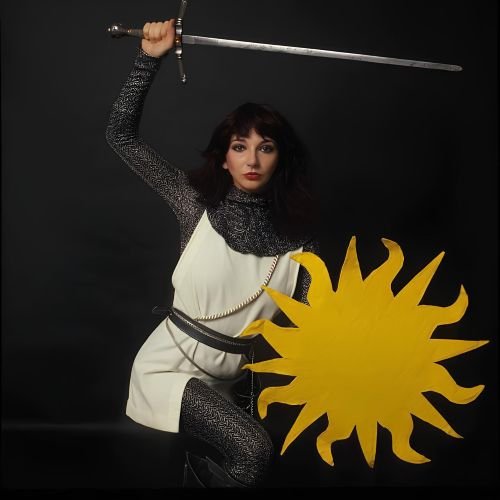
IN THIS PHOTO: Kate Bush in 1980/PHOTO CREDIT: Adrian Boot
Kate Bush and a Particular Kind of Cultural Influence
__________
I have touched on this before…
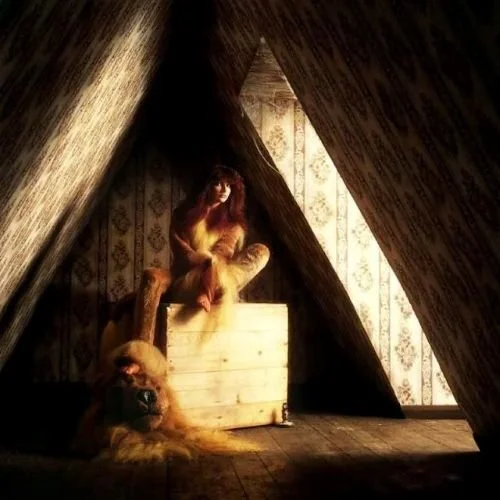
IN THIS PHOTO: Kate Bush in an outtake from the Lionheart (her second studio album) cover shoot of August 1978/PHOTO CREDIT: Gered Mankowitz
but I am coming back to Graeme Thomson’s must-own book, Under the Ivy: The Life and Music of Kate Bush. I am utilising this book for the next two features. Starting from the beginning, I was caught by something that was raised early on. In terms of Kate Bush and the nature of Englishness. Of course, she was born in England (in Bexleyheath, Kent), and she has lived in England her entire life. In many ways, Kate Bush is a quintessential English artist. Most of her influences were born in the country. Her mannerisms, love of tea and so many areas of life do rather define her as n English artist. And yet, there is also this Irish blood running through her. Not literally. More of a connection to her late mother, who was born in Ireland. I don’t think you can say that Kate Bush is 100% English. I always associate her with being half-Irish. When she was growing up and living at East Wickham Farm, she was living in a middle-class household in a nice neighbourhood. I have been there a couple of times, and East Wickham Farm is this rural property surrounded by older houses and more modern builds. It is this jewel in a long street in South East London. Formerly part of Kent, there was not a lot of international exposure. In the sense that her street would be largely composed of English residents. However, she travelled widely and was in London a lot. In terms of the music that was played in the Bush household, there was a lot of English Folk. Irish music and influence from her mother. Her brother Paddy, who played on most of her studio albums, favoured less traditional or obvious music. All sorts of sounds and genres exposed to his sister. That would occur throughout her career. Esoteric and slightly unusual, that extended to instrumentation as well. Though I think that most of the music a young Kate (or Catherine) Bush gravitated towards was English. Elton John a particular hero. She listened to David Bowie and Roxy Music. Though she also brought in Frank Zappa, Captain Beefheart and music beyond the U.K.
In the 1960s, this was a time when The Beatles exploded. The music of that decade defined by incredible English artists. The Rolling Stones and The Kinks among the very best. Into the 1970s, Kate Bush also fell under the spell of Pink Floyd. Graeme Thomson notes some of the literary influences and loves of a young Kate Bush. Works that she treasured into adulthood. J.M. Barrie’s Peter Pan (which was referenced in more than one song; In Search of Peter Pan among them). Kenneth Grahame’s The Wind in the Willows, and Oscar Wilde’s The Happy Prince. That “aching sense of loss and deep-rooted Englishness” exists in so much of her music. Although she would have loved The Kinks and The Small Faces, her music does not have the kitchen-sink vignettes of the former or the impishness of the latter. Bush connected, as Thomson observes, “with a harder, more mythical England, a pre-Christian Celtic land, a deep, green dream of a country that has never truly existed except buried deep within our own minds”. I do love that thought. I could imagine how Bush connected with the grand old gardens she had access to as a child. She would go seeking and search at Hall Place at Old Bexley. Bush was a fan of Ealing comedies, children’s books and cheesy T.V. shows that were very English at their heart. This idea of roaming in wild flowers and rustic climbs. A land of ghouls and phantoms. Even if there was this enormous influence from her mother’s Irish heritage, so much of Kate Bush’s young being and mindset was built around a certain type of Englishness. There was this “yearning to return to uncomplicated, instructive modes of behaviour, an acute sensitivity to the crackle and static of real life”. The early photos her brother John (Jay) took of her at East Wickham Farm. The ivy and tall walls. A decerped barn and leaf-strewn pool. The “open fires and old bellows”.
If Bush grew up in London, perhaps she would have had a more cosmopolitan experience. Life at East Wickham Farm was a treasure trove of discovery and realisation. The cover to Lionheart. It suggests a world of hidden spaces, dark corners with peace and solitude. A little later on, Bush talks about her parents. Her father Robert was born in a village in English. Not from a privileged family, he was very smart and won a place at medical school to train to become a doctor. He served in the army, and when Kate Bush’s eldest brother John was born (in 1944), Dr. Bush served in the army whilst his wife, Hannah (who was a staff nurse), was at home caring for her first child. If Kate Bush was closer in resemblance to her mother, in terms of her mannerisms and personality, her father the dominant force. Bush having that same calm and patience. Her voice and speech more similar to his. There is no doubt that so much of Bush’s earliest work was about England. This older and more mythical view. Something romantic. World away from the realities of cities in the 1970s and 1980s. Not to say that Bush was shielded away as a child. It is true that most of her musical and cultural touchpoints were English. In terms of her Irishness, Bush had this warmth and ability to welcome and embrace everyone. That came from her mother. There are articles that examines English aspects and themes in Bush’s music. When writing about Oh England My Lionheart (from 1978’s Lionheart), Dreams of Orgonon explored the Englishness and Britishness of Bush’s music:
“It’s difficult to imagine Kate Bush heralding from any place except England. It’s certainly easy to understand why she’s popular in countries outside the U.K., but Bush is a uniquely English phenomenon. She came from pastoral England and often sings about British culture. Her work, especially on Lionheart, is full of allusions to English and Irish folklore, and she’s predominantly influenced by British music (glam rock was also a chiefly UK-locked phenomenon). Unlike most British rock singers, Bush doesn’t shy away from singing in an English accent, as she herself has pointed out. Bush is uniquely hard to categorize as an artist, but she’s consistently staked herself out as an English singer.
Even more than most of her albums, Lionheart is cohesively British. This is reflected by such songs as “In Search of Peter Pan” and “Wow,” both of which pile on staples of British culture, and the album’s title. “Lionheart” is a word mostly associated with England, conjuring up images of Richard the Lionheart and British staunchness. Its connotation is of fearlessness and an endless march, of “God Save the Queen” and Trafalgar. Even the cover of Lionheart suggests frigidity: Kate Bush sits in an attic with gold cloth draped around her, perched on top of a wooden chest, with a stuff lion’s face resting on the floor next to her. There’s a standoffishness to it which the anabatic, orientalist cover of The Kick Inside lacks. The cover suggests that this is a more serious album, one that’s placing itself in a lineage of British stalwarts”.
I don’t think that Bush was tipping into nationalism. It could be perceived as that. She was not a political songwriter or someone who was trying to stir up division and controversy. This 2024 article celebrated Kate Bush’s music. With its “haunting mysticism and eccentric charm, offers an unexpected gateway to English identity and culture”. Bush was not someone trying to define herself as English and wave the flag. I feel it was just that so much of her upbringing and tastes was to English cinema, T.V., literature and music. Though she would sing in different accents and weaves instruments from around the world into her music. The article also asks this: “Doesn’t much of the joy of life lie in noticing the small things that make us who we are?”. Fascinating and compelling points to consider:
“Everything I do is very English and I think that’s one reason I’ve broken through to a lot of countries.’ All I had to go on was Lionheart, which contained many clues, several of which, like references to Hammer Film Studios and the TV show The Sweeney, would only, in those pre-internet days, be clearly understood many years later. The melancholy closing track, ‘Oh England, My Lionheart’, is a concentrate of references that would certainly sound familiar to a British person – wassailing, London Bridge, abandoned air-raid shelters ‘blooming clover’, Peter Pan stealing children in Kensington Park, Shakespeare, the timeless poetic course of the river Thames, the ravens in the Tower – but which, to a French person trying to imagine them, sounded wonderfully strange and exotic. There was also a sense of almost post-apocalyptic loss about the song, which spurred me on to find out more about the things Bush appeared to locate in a paradise lost.
Bush’s songbook was to me a primer for learning English and becoming attuned to a British accent, though as Graeme Thomson has pointed out in Under The Ivy, his comprehensive and recently updated biography of the artist, Bush, who enjoys modulating and distorting her pretty voice, has also sung in Australian, Irish, French and German accents and ‘has impersonated a donkey, a witch, a bird and an enchanted house’. Through her songs I, a French outsider, was first shown a glimpse of the cultural landscape that had shaped her.
Bush is a cinematic songwriter. The inspiration for the song ‘Wuthering Heights’ came to her not from the novel but rather from a scene in a 1970 adaptation that showed ‘a hand coming through the window’. The song ‘Hounds of Love’, about the panic nature of love, opens with the thrilling line: ‘It’s in the trees! It’s coming!’ from the 1957 British horror film Night of the Demon and the video pays homage to Hitchcock’s 39 Steps, with a dash of the 1945 supernatural portmanteau film Dead of Night. I was living in England by the time Bush released The Red Shoes in 1993, and I enjoyed the confirmation of her allegiance to the distinctly English films of Powell and Pressburger. With their dreamlike interplay of historical timelines, A Canterbury Tale and A Matter of Life and Death always put me in mind of how, in ‘Oh England, My Lionheart’, Bush compresses thousands of years of national history into the line: ‘Dropped from my black spitfire to my funeral barge”.
This podcast finds Graeme Thomson discussing Kate Bush’s Irish roots. A podcast about artists who are actually Irish. Give Kate Bush Back to the Irish is what the episode is called. To this day, we talk about Kate Bush as a narrowly English artist. I guess that is fair enough, as she herself has so many English qualities and influences. I would be interested to read a book or article that charts Kate Bush’s global connections. In terms of where she travelled and promoted her work. Sounds and instruments from different countries. If a lot of it has its core in England, we find that Bush is not strictly 100% English in that sense. In terms of her fanbase and famous admirers, they come from far and wide. She has a massive following in American now. Australia and Japan. Countries she visited, they understood and connected with her long before the U.S. did. In examining Kate Bush’s upbringing and Englishness, do we also bring in themes such as race and class? Bush was comfortably middle-class, with very few of her songs documenting working-class worlds and characters. In terms of her sound and music tastes, very little in terms of Black influence. Personally, I don’t find this problematic. Bush not being exclusionary or ignorant of other classes and races. It was life in 1950s, '60s and '70s England. Living outside of the city in a suburban street, one can forgive Bush for not having a certain diversity, worldliness or understanding or worlds and people beyond her family home. It brings me to another Dreams of Orgonon article. This one about James and the Cold Gun. Included on Bush’s 1978 debut album, The Kick Inside, Bush’s ideas of England are pastoral and middle-class, rather than the more cosmopolitan and diverse England that was prominent in large cities:
“There is another distinctive element of Genesis that Bush’s work inherits: Englishness. While the predominant trend in British rock was to pluck from American music to make it big, Genesis came from a school of art that looked to its homeland for its stories. There’s a pastoral quality to much of their music that’s more at home in a tradition with As You Like It than The Great Gatsby. English land and politics come into Gabriel-era Genesis songs quite often, and Bush’s nurturing relationship with British mythos bears similarities to this approach (which will come to a crescendo in “O England My Lionheart”).
Furthermore, the Englishness of Bush’s vocals is also similar to Genesis. In a 1985 interview, Bush distinguishes between British artists who sang in English accents (David Bowie and Roxy Music) and those who sang with American voices (she cites Elton John, Robert Palmer, and Robert Plant). Bush expresses a preference for the former tradition, perhaps liking the familiarity of it. Peter Gabriel fits into this tradition well enough, articulating syllable endings that Mick Jagger would spit across the vocal booth. When Bush works in disparate genres, she brings her own English vision to them (Bush’s vision of Englishness is of course deeply middle class and white. There’s a conspicuous absence of working class people in most of her music, although we’ll get to the exceptions soon enough)”.
There have been articles where Kate Bush’s name has been used when talking about English nationalism. This article from The Guardian says this of Kate Bush: “She could not be anything but English”. Rather than Kate Bush ignoring everything other than what is English, I do feel that there was a certain commercial lure to Englishness in the 1970s and 1980s. When Bush spoke with Melody Maker in 1978 and talked about Oh England My Lionheart, she fought back against those who feel the song is sloppy and old slosh. An area she wanted to explore, Bush observed how “Everything I do is very English, and I think that's one reason I've broken through to a lot of countries. The English vibe is very appealing”. One could say that a slightly narrow Englishness to her early work was a reason why Bush never resonated with American audiences. It was not conscious on her part. There is never this feeling of rallying around the flag or anything like this. Bush understood the international lure of Englishness, but this was the world Bush was brought up in. I don’t think her distinct Englishness is something that is a negative or damages her work. So much of her music is about characters and takes from literature, film and T.V., rather than anything strictly or problematically English. And bands like The Kinks could also be seen as extremely English. In terms of the scenes they create and the people they discuss. Bush, I feel, more wide-ranging and worldly. Maybe her earliest work was largely placed in an English world. From The Dreaming onwards, Bush took us to foreign war grounds: Australia, America, Ireland and far beyond. This coincided with her travelling more and being introduced to all kinds of music. As I mention, there is probably a book in this. At sixty-eight, Bush still resides in England and has not drastically changed her life since she was born. Though her work has reached the entire world, I don’t think you could see her entire catalogue as distinctly and rigidly English. Anyway, I was compelled to dig deeper after re-reading Under the Ivy: The Life and Music of Kate Bush and considering her Englishness. Whether it was an issue or something that is charming and intriguing. An English birth and Irish heritage, the divine Kate Bush is an…
INTERNATIONAL icon.