
FEATURE:
Wonderful Teachers, Ready to Teach Me…
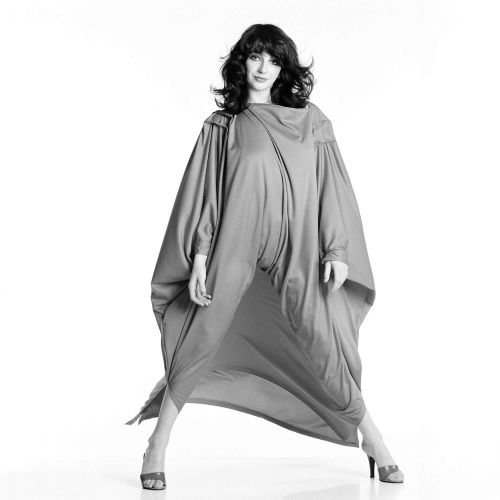
IN THIS PHOTO: Kate Bush in 1979/PHOTO CREDIT: Gered Mankowitz
Those Who Inspired and Shaped Kate Bush’s Connection to Dance
__________
PRIOR to coming to the last features of this year…
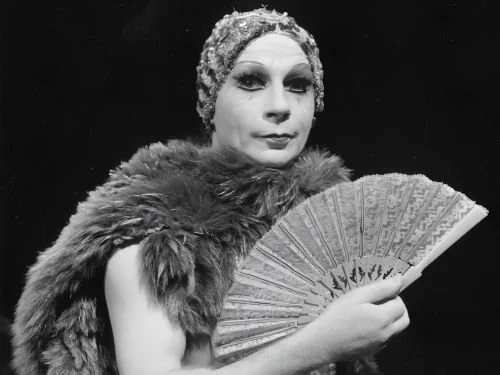
IN THIS PHOTO: Lindsay Kemp onstage in his production, Flowers, in which he played the lead role of Divine (in 1975, Kate Bush saw Kemp for the first time in a performance in Bloomsbury, London)/PHOTO CREDIT: Getty Images
and doing stuff aimed at the Kate Bush Christmas market – gift ideas for new fans -, there are some other features I want to cover off. As I have said in a previous feature, I am exploring once more Graeme Thomson’s Under the Ivy: The Life and Music of Kate Bush. Going from the start to the very end, I am thinking about Kate Bush’s early life and career. Something I have talked about again but wanted to approach from a different slant, her love of dance is something that defined so much of her work. Some of those early Gered Mankowitz photos focusing on Kate Bush as a dancer, rather than a traditional artist. It is not the case that Bush always incorporated dance into her career. However, it was one of her earliest loves. Shy as a child and teenager (and an adult), the idea of committing to dance and expressing herself in quite an exaggerated and uninhabited manner, would have been terrified. So you wonder why she decided to pursue dance. Certainly, a lot of the music she grew up around and admired was by artists who were not necessarily dancers or were defined by dance. When she a student at St. Joseph's Convent Grammar School between 1969-1976, dance was part of her education. Though, like everything, it was quite formal and impersonal. Bush did not get along with her dance teacher. Perhaps because of their contrasting personalities. Bush, even so young, ambitious and someone who was not conventional and did not want to be bound by strictures and conventional teaching. Even though she would have been stimulated and wrote poetry, her experiences at school were largely unhappy and unsatisfying. Not getting the nourishment and inspiration that she would get elsewhere. Graeme Thomson notes how her bedroom at East Wickham Farm allowed her the privacy to work on routines to songs like The Beatles’ Eleonor Rigby. Whilst not the go-to when you think of danceable tracks, she had a wide range of records at her disposal, so I don’t think she was limited to 1960s Pop.
However, that idea of taking this fascinating with movement and dance and bringing it into public. She could dance freely and without shyness at home, only wary that a parent or brother might walk in and catch her. Worried they might laugh or she would be embarrassed. Of course, as she knew that she would have to take classes and be around other people, her first steps into dance were tentative or largely unspectacular. In the sense that she was not an instantly great dancer. The gap between Bush signing with EMI and going into the studio to record her debut, The Kick Inside, in 1977 allowed her time to muse and think about what to do. She thought about her appearances, physicality and her body. Naturally, that would lead her to dance. There would have been moments in the Bush household at East Wickham Farm where the family danced, though it was not part of her day-to-day routine. Her first eye-opening moment was watching a production by a dance teacher who would make an enormous impact. One honoured in the opening song of The Kick Inside, Moving. Lindsay Kemp’s production of Flowers, which was a re-imagining of Jean Genet’s 1943 novel, Notre-Dame-des-Fleurs (Our Lady of the Flowers), played at the Collegiate Theatre in Bloomsbury, London, and then at The Roundhouse. Bush was not exactly a stranger to unconventional or esoteric art. If those are the right words. Her brother Jay’s poetry was often quite dark and unusual. In terms of the books she read and the culture that was in her household, it was different from a lot of her schoolfriends. Though Flowers was a mind-altering moment for Kate Bush. Populated by drag queens, sailors and murderers, it is a production that might raise eyebrows and see backlash today. Showing how we have not really progressed or evolved. I am not sure what the wider reaction to Flowers was when it was staged in 1975. For Bush, it was impactful enough that she would leave school and following her love of physical movement. If you feel her seeing the final gig of David Bowie’s Ziggy Stardust in 1973 was pivotal in terms of pursuing music and that love of live music, Lindsay Kemp was this figure who captivated Kate Bush. In the sense he could communicate so strongly without opening his mouth or using words. Bush knew something was missing. The expression in her music.
You can feel this in The Kick Inside. The person who crushed the lily in her soul, as Kate Bush sings, is Lindsay Kemp. In the sense he unlocked something in her. Brought out this confidence. Fifty years ago, in 1976, Bush took drop-in mime lessons for 50p a session. She couldn’t enrol in a dance school, as she had no formal qualifications and nobody would admit her. David Bowie was one of Kemp’s students, so that also would have appealed and spoke to Kate Bush. Lindsay Kemp’s mime and dance classes was not about “who and what you were; it was about what you could become”. Graeme Thomson notes how “It’s not acting, it’s emotional amplification; finding the right part of her character to accentuate in order to represent the emotions of her songs, dissolving the fixed parameters of the corporeal into the amorphous, ever-changing “moving liquid” alter ego, bursting through boundaries and rolling over obstacles”. When Kemp went to Australia to tour, Bush began studying with American mime artist, Adam Darius. He taught at the Dance Centre down Floral Street in London’s Covent Garden. When Darius moved his classes to Elephant and Castle, Kate Bush followed him. These teachers imparted discipline and routine, but there was the visceral and unconventional, rather than the formal. Aside from Lindsay Kemp and Adam Darius, Robin Kovac was also hugely important. The routine for Wuthering Heights (Bush’s 1978 debut single) was choreographed by Kovac. She was an English Literature, Dance and Drama graduate of Florida State University. Kovac was instantly struck with Kate Bush and loved having her in the class. Bush modestly felt she was useless at the start. She became frustrated and depressed she could not absorb and nail the routines. Kovac said how it does take a decade to become a good dance, Bush was a fluid, astute and dedicated student and soon vastly improved.
“Kovac taught a contemporary style, with touches of jazz, heavily influenced by Martha Graham’s ‘contractions’. Anyone who has seen Bush’s early videos and live performances will immediately recognise the following description: “Contractions begin in the stomach, as if someone knifed you, and you just press back, rounding the back,” says Kovac. “It’s not that you’re getting smaller, you’re actually getting bigger in the back, like a bow, but it’s called contraction because you’re lifting up and away from the legs. The body must flow through that, because you’ve started an impulse, spreading through the body”. Kovac’s classes at The Dance Centre attracted actors. She also taught, as we learn from Graeme Thomson’s book, at Rose Bruford College in Sidcup, not far from Welling. By the time Bush called Robin Kovac to choregraph for her at very short notice, Bush would have been living at 44 Wickham Road with her brothers. This request was for the Wuthering Heights video. Kovac charged £30, and in her flat in Archway Road, this iconic routine was taking shape. Although Bush forgot to credit Kovac when asked who choregraphed the video – she said she was influenced by Lindsay Kemp -, Bush did write a very sincere and sweet letter of apology when learning about her rare lack of manners and accreditation. I want to come to the last teacher, Anthony Van Laast. Adam Darius’s teaching was all about emotional release. Bush was able to overcome inhibitions and a lack of self-confidence. The ability to express her physical side was of paramount importance. Even if the media focused on her voice, looks and mocked her, Bush’s movement and dancing was enhancing her videos and live performances.
The dance side was misunderstood and often ignored. Bush recalled how her father said she used to dance to music on the telly but, after some people walked in, saw her, and then laughed, she was embarrassed and stopped. If there is one missing chapter from Kate Bush’s career that I am desperate to discover and uncover, is what form her reconnection with dance took when she recorded Hounds of Love. I am not sure whether it was Anthony van Laast who worked with her. Her association with Van Laast pre-dates 1979 and The Tour of Life. He appeared in the video for Hammer Horror. That was the first single from her 1978 album, Lionheart. This feature about The Tour of Life talks about Anthony Van Laast:
“But then Bush was big news. Her star had been arcing across the firmament ever since she first appeared on Top Of The Pops just over a year earlier. That memorable performance, playing her first single, Wuthering Heights, had introduced her as an utterly new and fresh talent. There had been an instant clamour for her to play live, though it would be 14 months before she did.
Looking at Nationwide from the vantage point of 2014, it’s amazing how much unguarded access she granted the filmmakers over a six-month build-up. Footage of early production meetings where people are crammed onto chairs and sofas in a tiny dressing room is followed by a clip of a leotard-and-leggings-clad Bush being worked hard by choreographer Anthony Van Laast during three initial weeks of “gruelling exertion” just to prepare her for several weeks of even more intense choreography.
Remarkably, the camera was allowed into Wood Wharf Studio in Greenwich, south London, where the singer was drilling her eight-piece band through Kite and Wow. Here, it’s possible to get a real sense of the pub gigs she’d started out playing just a couple of years before. “I think the main reason they listen to me is because I’m paying their wages,” she says of the rest of the band, her girlish, sing-song voice cut with chewy south London vocals”.
Alongside Lindsay Kemp, Adam Darius and Robin Kovac, Anthony Van Laast was a valuable and incredible teacher. I am curious whether there were any other dance instructors and choreographers that Bush worked with in the 1980s and 1990s. I will come to that thought in a second. However, there is this other article that also discusses Anthony Van Laast and Kate Bush collaborating for The Tour of Life. One of the most intense periods of her creative life in terms of the physicality required, it would have been a real tough period preparing for an international tour:
“Planning for Bush’s tour (known then and during its existence just as the Kate Bush Tour) began at the end of December 1978 with a brainstorming session involving Bush and set designer David Jackson at EMI’s headquarters. Further preliminary meetings were held at East Wickham Farm in January, and shortly afterwards Bush was meeting wardrobe consultant Lisa Hayes. Rehearsals then began in earnest: Bush spent mornings at The Place performance center in Euston, preparing the tour’s dance routines with choreographer Anthony Van Laast (now of Mamma Mia! and Harry Potter fame) and dancers Stewart Avon Arnold and Gary Hurst. These sessions were as collaborative as they were instructive: Bush had worked with Van Laast before, as he’d appeared in the “Hammer Horror” music video as her masked dancing partner. They spent the mornings designing routines for the show, informed by Van Laast’s seasoned dancing skill and Bush’s mime training. It was a positive union: the resulting concerts have notable dancing which is inseparable from the songs it’s set to. As Bush had to both sing and dance onstage, she and Van Laast worked out choreography that would both work as dance and allow her to sing without losing her breath. The minimalism of “Moving” and Bush’s all-limb gesturing during it is one such careful work of planning, as is her most frenetic gun-happiness during the extended bridge of “James and the Cold Gun,” where she doesn’t sing”.
There were definitely periods where Bush let her dance instruction and training lapse. She needed it for The Tour of Life, and you can feel a physicality in videos for 1980’s Never for Ever and 1982’s The Dreaming. It is clear, whilst producing The Dreaming, she ate junk food and there were these exhausting night and days recording. She suffered from nervous exhaustion and, for Hounds of Love, incorporated a healthier diet and a recommitment to dance into her life. In addition to this, rather than record out of multiple expensive studios, Bush had built a bespoke studio at her family’s home at East Wickham Farm. I am interested who she called on for Hounds of Love. I do know that the legendary Diane Grey choregraphed the spellbinding video for Running Up That Hill (A Deal with God). I feel there was a period after Hounds of Love and during The Sensual World (1989) where dance was less at the fore. By the time of The Red Shoes and the Kate Bush-penned/directed/starring short film, The Line, the Cross and the Curve came out in 1993, it seemed that she was once more immersed in dance. Or that the videos and film required a certain physicality. Lindsay Kemp appeared in the film, so I am not sure whether he helped with any of the choreography and provided any training and instruction. Regardless, we can see some incredible people who helped Bush unlock this immense and profound physicality and expression.
From her eyes being opened by Lindsay Kemp’s Flowers and the friendship they enjoyed (Kemp sadly died in 2018), through to the underrated importance of Robin Kovac, the connection Bush forged with Adam Darius, to the brilliant Anthony Van Last and Diane Grey, these passionate and impactful teachers helped take Kate Bush from this shy but eager student to this captivating and world-class dancer. Her videos and live work immeasurably enhanced and enriched. I have not even talked about George Gurdjieff (who she name-checks in The Kick Inside’s Them Heavy People (“They open doorways that I thought were shut for good/They read me Gurdjieff and Jesu/They build up my body, break me emotionally/It's nearly killing me, but what a lovely feeling”) and The Fourth Way: “Gurdjieff taught that most people live in a state of "waking sleep"—acting on mechanical habits, conditioning, and automatic reactions without true self-awareness. To break this sleep, traditional paths required leaving the world to practice as a fakir (focusing on the physical body), a monk (focusing on emotion and faith), or a yogi (focusing on the mind)”. I will close here. I am going to write a lot more features around Graeme Thomson’s Under the Ivy: The Life and Music of Kate Bush, as there are things that I wrote about a while ago but wasn’t to reapproach, reassess and reframe. And things I missed or briefly alluded to at other times. It has been a pleasure discussing dance, movement and incredible people who brought something almost spiritual and transcendent out of Kate Bush. To them, fans around the world…
OFFER eternal thanks.