
FEATURE:
Excursions
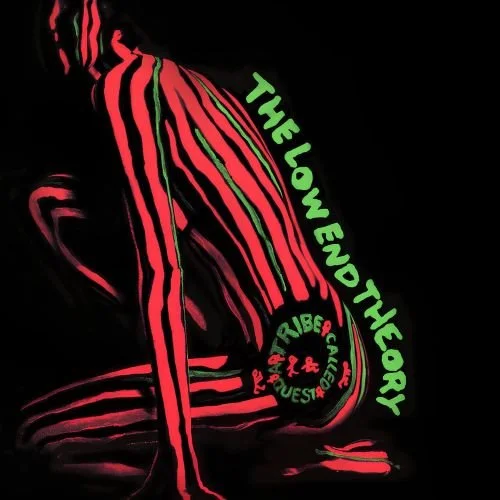
A Tribe Called Quest’s The Low End Theory at Thirty-Five
__________
ALTHOUGH A Tribe Called Quest…
put out a wonderful debut album with 1990’s People's Instinctive Travels and the Paths of Rhythm, their second album, I feel, is their strongest. The Low End Theory is one of the greatest albums ever. Released on 24th September, 1991, I am marking its thirty-fifth anniversary. This is one of those classic albums that did not get the same acclaim upon its release as subsequent years. Maybe critics wanted a repeat of the group’s debut or were not hot on it. In years since it came out, The Low End Theory is ranked alongside the all-time best albums. I did want to get to some features and reviews around it. Upon its release, The Low End Theory did not make the top forty in the U.S. or U.K. Maybe the more minimalist approach confused critics who felt that The Low End Theory would be fuller and harder-hitting. I want to start with The Ringer and their fascinating dissection and examination of a masterpiece. There were a lot of features around this album in 2021 as it turned thirty:
“Hip-hop is said to be the music of drums and I think that is true, though not in the way that is commonly meant. Rap has, since its creation, relied on rhythm and the sonic possibilities it forms. And yet what most links the genre to the sound at its core is the fact that hip-hop, more than than any other American art form, uses the past to reflect the present. It’s music made possible by melding together other kinds of music into something different, something new. (What doesn’t change helps form what is constantly in flux.) Released 30 years ago Friday, nothing in the history of rap music embodies that ethic quite like A Tribe Called Quest’s The Low End Theory.
The meaning of the album’s title is still a trick question of sorts. The rapper and producer Q-Tip—who joined DJ Ali Shaheed Muhammad, the late, great Phife Dawg (friends with Tip since childhood), and sometimes-Y member Jarobi in the group—has long said its thesis is twofold. First, The Low End Theory refers to the low end of the sound spectrum, the bass frequencies, and the consistent and delicious fashion in which they are employed throughout the project. Second, it refers to Black people, and how, as he once told Netflix’s Hip-Hop Evolution, they are at “the low end of the totem pole” in U.S. society. This, though, is where things get sticky. Because, although The Low End Theory does veer at times into political concerns, it is not really a political album. There are spates of social critique on the project that have aged decently in some instances (see: “Show Business”) and less decently in others (see: “The Infamous Date Rape”); and there is a strain of early-’90s Pan-Africanism that surges through the tracks—but The Low End Theory is never just, or even mainly, that.
Over the years, because of its sample-heavy sound and Ron Carter feature, folks have taken to calling it a love letter to jazz, a claim that is kind of true (I can’t imagine the record without the influence of jazz music), but also a takeaway that its creators have rebutted. (“Just say A Tribe Called Quest makes good fuckin’ music,” Ali told Spin in 1991, when asked about being labeled “jazz-rap.”) And yes, the record worships at the altar of the low end of the sound spectrum, but it revels just as much in brotherhood and laughter and braggadocio and “Vibes and Stuff.” The truth—the thing that really makes the album what it is—is that there isn’t just one answer. The Low End Theory uses jazz, particularly its bass frequencies, to communicate something that was a certain kind of political but also a bit undefinable and entirely unique. In other words: A Tribe Called Quest.
Bob Power is here and he was there for The Low End Theory too. I ask the esteemed producer and sound engineer what Tribe were like in their youth, and he’s got to be real with me. Bob worked with Erykah on Baduizm, laced D’Angelo’s Brown Sugar. Bob’s been around the block. Bob doesn’t bullshit. “I just saw a bunch of kids—literally—coming in the door who happened to be really good people, really nice people, straightforward, not stiff, funny,” he recalls, a touch of nostalgia in his voice. “I was fascinated by it.”
They weren’t supposed to work together. In 1990 Power was an engineer at a studio in New York called Calliope. He’d picked up a job there a couple of years earlier after a few decades that included a career as a jazz musician, bouts in academia (undergrad at Webster College in St. Louis, a master’s at Lone Mountain College in San Francisco), and a couple of years scoring TV shows. Tribe was working out of Calliope when their sound engineer had to leave town for a few weeks and Power filled in. He was old enough that he didn’t worry about trying to be buddies. “You’re there to make their thing work well,” Power says, erudite as always. He struck a bond with the group and helped engineer and mix the rest of their first album, People’s Instinctive Travels and the Paths of Rhythm.
The record was a launching pad to an era. In 1990 the industry was at the precipice of an inflection point. The titans of late-’80s rap—LL Cool J, Run-DMC, Public Enemy, and N.W.A—were all, to varying degrees, still potent forces in the game. (A week before People’s Instinctive Travels was released, PE dropped their seminal Fear of a Black Planet.) The hot winds of change were starting to rise, though. Ice Cube had just gone solo. LL was about to go on a two-and-a-half-year break. The first golden age couldn’t continue forever. People’s Instinctive Travels didn’t outsell any of rap’s ruling powers, but along with fellow Native Tongues member De La Soul’s debut, 3 Feet High and Rising, it did usher in a new sound. The album was light and airy, with hits as smooth as soft serve. A track like “Bonita Applebum,” luscious and flirty, or “Can I Kick It?,” with its hypnotizing Lou Reed sample, portended a different kind of rap, one built as much on melody and vulnerability as gusto and brute strength.
What Tribe was trying to do on The Low End Theory was at once hip-hop at its essence and, invariably, unheard of. When I ask Power how the group pulled it off, he points to the members themselves—the people behind the music. “There’s an intangible thing that happens at a place and a time and with certain people, and you can’t bottle it and you can’t re-create it. You can try—what happens as a professional is [as] your chops get better, as your skill set gets better, you can get closer to faking it—but magic happens at its own speed.”
And magic is what they called it. The reception to The Low End Theory was, at least within the walls of hip-hop, rapturous. The Source awarded the album five mics, hailing it as a classic. The album peaked at no. 13 on Billboard’s Top R&B/Hip-Hop Albums chart, and reached no. 45 on the Billboard 200, but sales were never the optimal measuring point for Tribe’s reach. There are children, like myself, who have been raised on it and have spent their whole lives bathed in it and an entire strain of music it birthed. When Dr. Dre, years later, discussed his sonic inspiration for The Chronic with Q-Tip, he cited The Low End Theory. When Kanye, speaking at Phife Dawg’s 2016 memorial service, revealed the first album he ever purchased, he didn’t hesitate: The Low End Theory.
We’ve known the record for so long that it’s easy to forget what it sounded like on first listen. How Phife’s “YO!” at the top of “Buggin’ Out” resembles the arrival of some mighty and celestial being. The way that Q-Tip speaks in triplets over the xylophonic shuffling of “Vibes and Stuff.” The tenor of love coursing through “Check the Rhime,” every handoff between the two showmen at its head (“Yo, Phife, you remember that routine” … “Yo, Tip, do you recall when we used to rock”) melding the song into a whomping stew. “Stern firm and young with a laid-back tongue,” Tip lulled us on “Jazz (We’ve Got)” with its modal funk, and we never questioned the veracity of the message, because over those horns, how could anyone disagree with anything? By the time the album-closing posse cut “Scenario” arrived—with Phife breaking the track’s orbital bone and Busta engulfing it in flame—there was no choice but to swoon. What The Low End Theory did—what it still does to this day whenever it’s played—is make listeners feel like they are in league with someone at once familiar and unlike anyone they have ever known before”.
I am coming to an article that was originally published in 2011 to mark twenty years of The Low End Theory; it was republished in 2021. I wonder if there will be any retrospectives published to celebrate thirty-five years of The Low End Theory. The Quietus went inside an album that I feel still sounds so current. It has not dated and reveals new layers. One of the best-produced albums ever:
“While it’s surprising today to hear The Low End Theory described as "commercial", it wasn’t a very common reaction 20 years ago either. Certainly, next to People’s…, its reliance on a primal hip hop blend of hard rhymes and harder bass made it sound at first almost austere. The New York group’s debut had found Q-Tip, Ali-Shaheed Muhammad, Phife and satellite member/spirit guide Jairobi positioned as the first post-De La Soul rap act, its cartoonish, brightly coloured sleeve helping imbue the record’s eclectic samplescape with a similarly psychedelic atmosphere. ‘Can I Kick It?’s Lou Reed lift and breezy amiability turned Tribe into minor global pop stars, yet it was the nearest to the mainstream the group ever got. Just as 3 Feet High & Rising wasn’t all dayglo hippy hop, and De La would prove themselves to be formidable true-school innovators, so Tribe emerged here as purist rap paragons, makers of music of much rawer shading than the accessible, melodious debut had led some to expect.
Yet The Low End Theory took Tribe to that fabled "next level" hip hop acts always bang on about by performing the trick every authenticity-obsessed artist most dearly wants to execute. They crossed over without selling out – in fact, they crossed over while retrenching. Contrary to what Weiss and colleagues thought at the time, …Low End… is harder-edged, darker, and, in terms of its adherence to established hip hop codes, actually a little bit conservative. (Not that that’s a bad thing, of course.) The record became beloved of fundamentalist b-boys because it rooted itself firmly in the music’s core sonic, conceptual, lyrical and artistic values, yet managed to increase the band’s appeal to listeners who generally shunned rap for sonic or ideological reasons. Here was a group from a still outsider genre, uniting hardcore fans and curious outsiders by making music that worried more about integrity, commitment, creativity and resolve than it did appealing to the mainstream. Who’da thunk it?
Even after 20 years it’s difficult to work out quite how they did it: the music makes no concessions to outsiders – meaning, essentially, anyone outside the group and their immediate circle of creative associates – and, a couple of half-decent jokes aside, neither do the lyrics. There are formal and aesthetic changes from the first LP, but they’re slight: even the much-vaunted coup of landing the input of jazz bass icon Ron Carter has minimal impact on the album as a whole (he only appears on one song, so the notion that Carter’s appearance somehow validated hip hop as jazz’s heir – which was claimed in all apparent seriousness at the time – doesn’t really hold water). Compare the boom and thwack of the mighty ‘Buggin’ Out’ with ‘Can I Kick It?’, and they’re really not all that dissimilar – both are snapping, fairly sparse drum loops underpinned by cyclical bass lines. What’s changed is implied rather than overtly stated: the use of ‘Walk On the Wild Side’ is a deliberate reference the listener is expected to get, while the bassline from ‘Minya’s the Mooch’ by Jack Dejohnette’s Directions – which to start with is an album track released on an experimental jazz label rather than a global radio staple – has been chopped up and reconstructed in a sequence so different even its makers might struggle to recognise it. It surely ought to be the more "difficult" track to listen to – less accessible, less direct – but the opposite is true: the bounce is infectious, the melody drilled into the music from the bass simply thrilling, and it leaves ‘…Kick…’ trailing in the dust, clearly the work of a band yet to find their own unique voice. If it’s tracks like this that made the Jive staffers feel the record was more commercial, you can sort of see why, yet it’s beyond counterintuitive: this is a kind of universality that can only be achieved by doing the polar opposite of dumbing down”.
There is one more feature that I want to bring in before finishing off. SLANT explained how The Low End Theory “remains a stellar execution of hip-hop methodology”. It is interesting where Sophia Ordaz writes how “A Tribe Called Quest’s 1991 breakthrough album, The Low End Theory, is as much a totem to today’s youth of color as it was when it came out, which is equally a testament to its significance as the unshakeable hold that the album has on hip-hop past and present”:
“The Low End Theory is a jazz-rap touchstone through and through, powered by the vitality and chemistry between Q-Tip and Phife Dawg, who truly go head-to-head here. Both rappers subverted the figure of the hyper-masculine rap god: Q-Tip was the bespectacled loverboy and front-stoop poet with a nasal but mellowed-out flow, while Phife was the high-pitched Five-Foot Assassin, the charmingly self-deprecatory Funky Diabetic with a potty mouth. Together they were a union of soul and mind, the concrete and the abstract, the lowbrow and the highbrow, the worm’s eye view and the bird’s eye view, the feet on the ground and the head in the clouds, with Muhammad, overseen by Q-Tip and assisted by engineer Bob Power, orchestrating from the DJ booth, dishing out the blood, flesh, and muscle that composed the Tribe corpus.
No track better encapsulates Q-Tip and Phife’s chemistry than “Check the Rhime,” which contains the most famous call and response in all of hip-hop: “You on point, Phife?” “All the time, Tip.” As you’ll know if you’ve seen Michael Rapaport’s controversial documentary Beats, Rhymes & Life, it was rare for Q-Tip and Phife’s relationship to be that effortlessly harmonious. Childhood friends turned embittered business partners, they were driven apart by misaligned goals and motivations, thankfully reconciling to record the group’s stupendous swan song, We Got It From Here… Thank You 4 Your Service. (Phife sadly passed away from diabetes-related complications before the album’s release in 2016.)
Hip-hop has no shortage of iconic duos: Pete Rock and C.L. Smooth, Andre 3000 and Big Boi, Talib Kweli and Mos Def, Method Man and Redman, Prodigy and Havoc, Pimp C and Bun B. But Q-Tip and Phife may be the greatest because they complemented and completed each other. In Shadow and Act, Ralph Ellison wrote, “Each true jazz moment…springs from a contest in which each artist challenges all the rest, each solo flight, or improvisation, represents…a definition of his identity: as individual, as member of the collectivity and as link in the chain of tradition.” Like Ellison’s jazzmen, Q-Tip and Phife defined their individual identities by reviving traditional materials and playing off of one another. And it’s fair to say that each MC found himself in the other, even if that meant losing a piece of his individuality along the way.
The Low End Theory’s sequencing stimulates without requiring the listener to exert great effort to engage with it; like cruising on a skateboard through an urban landscape, it elicits a pleasant alertness and awareness of the present. On “Buggin’ Out,” dueling percussion samples, drums from Lonnie Smith’s “Spinning Wheel” and Jack Dejohnette’s Directions’s “Minya’s the Mooch,” make for a harmonious though slightly off-kilter union. When the drums drop out altogether, the spotlight is solely on Phife delivering one of his most self-possessed performances. “Vibes and Stuff,” “Skypager,” and “What?” are jazz-rap concoctions that go down smooth and easy, the latter song composed of a catalog of questions. And on the showstopping “Butter,” Phife bemoans the trials and tribulations of being a player, accompanied by an electrifying saxophone lick from a Gary Bartz tune.
Though “Show Business” and Q-Tip’s coinage of Industry Rule #4080 (“Record company people are shadyyyy”) still rings true in today’s music business, other moments on The Low End Theory, like the cringe-y “Infamous Date Rape,” feel antiquated in retrospect. There’s a tendency to look back on the album as sacred hip-hop doctrine, but the group’s members were by no means enlightened prophets or model adherents to progressive politics, though some of Q-Tip’s early verses are very much begging you to see them that way.
The Low End Theory has often been called the Sgt. Pepper’s of hip-hop. And, undoubtedly, it’s as influential to its respective genre. But the album is more of an organic progression of hip-hop, rather than a rupture from it. Where the Fab Four aimed to conquer new frontier, looking to English vaudeville, Indian classical music, and psychedelic drugs for inspiration, A Tribe Called Quest recontextualized and reinvented old into new—which was the ethos of rap from its inception—drawing inspiration not from some exterior entity, but from experiential and inherited knowledge, acquired from coming of age on Linden Boulevard and poring over their parents’ old Minnie Riperton and Roy Ayers records. The album is a stellar execution of hip-hop methodology, proving just how ripe with potential it was and continues to be.
Inspired by a beat that he heard Pete Rock working on, “Jazz (We’ve Got)” uses a slowed-down clarinet sample from Jimmy McGriff’s “Green Dolphin Street,” molding it into a plaintive wail that seduces the listener, urges us to stay immersed in the sonic soup of the song. Jazz is A Tribe Called Quest’s lodestar, but I suspect that they’re referring to more than just the musical tradition when they recite over and over, “We got the jazz.”
For A Tribe Called Quest, jazz is an outlook, an ability to improvise when life throws you curveballs, to adapt and create even as the forces around you would suppress or silence you. Q-Tip has said that The Low End Theory’s title refers to the album’s bass-loaded sound as well as the status of the black man at the low end of the social hierarchy. Living life in the way of jazz, being able to roll with the punches and innovate against all odds, is A Tribe Called Quest’s response to that struggle. Decades later, that positive jazz-inspired outlook on life is The Low End Theory’s enduring legacy”.
I will wrap it up here. On 24th September, it will be thirty-five years since the release of A Tribe Called Quest’s The Low End Theory. This is an album that you need to own on vinyl. Ahead of its thirty-fifth anniversary, I did want to explore one of the most important albums ever. It is a shame that some critics were underwhelmed in 1991. Since it came out, The Low End Theory transformed and reshaped Hip-Hop. It created a blueprint for Alternative and conscious Rap. This is an album that everyone needs to hear in their lifetime, as The Low End Theory is…
A hypnotic listen.