
FEATURE:
Groovelines
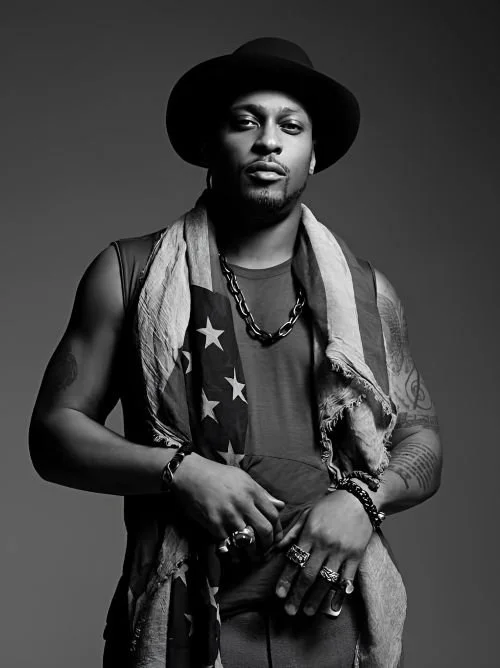
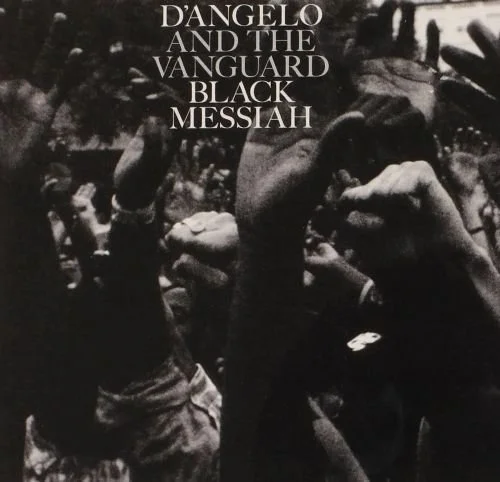
focusing on this song is because D’Angelo died on 14th October last year. Marking a year since his untimely death, I did want to spend some time with one of the standout songs from his 2014 album, Black Messiah. I understand he was working on a new album when he died. Perhaps we will get a posthumous album. Really Love is one of the best songs from his catalogue. It features a truly sublime introduction. Really Love as the first single from Black Messiah. That album is credited to D’Angelo and The Vanguard. It came out on 15th December, 2014, the same day as the album. I want to start with an interview with Gina Figueroa. As Remezcla say: “She’s not only the woman behind the spoken word introduction that opens the honey-sweet ballad, she also both inspired and co-wrote the song”. This interview was published in 2016. That year, Really Love won the GRAMMY for Best R&B Song. Figueroa discussed “for the first time the explosive history of her relationship with D’Angelo, her collaboration on the song, and her attempt to be credited as an official songwriter”:
“Figueroa reveals that there’s something else to the introduction, found in an inaudible, hushed murmur between the song’s beginning syllables. “I’m telling him, ‘What are you doing with that cigarette, my love?’ Mi vida. One of my biggest battles with him was to quit smoking. It was the thorn in my side.”
Then, one midnight hour in mid-December, Black Messiah arrived at last. It was only then that Gina found out her intro was part of the finished version of “Really Love.” Upon listening to it for the first time, she remembers, “It was utterly bittersweet. It was painful as hell. Very painful. But very emotional, very beautiful, and I loved it.” Critics agreed; “Really Love” was hailed as a standout album cut, offering up the unbridled vulnerability and gut-wrenching intimacy D’Angelo embraced in his previous works, all over a lilting, virtuosic jazz-funk groove.
But what these reviews left out was any textual analysis of Gina’s spoken introduction. Enter Remezcla. In January of 2015, our Managing Editor Andrea Gompf published a piece engaging with Gina’s contribution to the song, and chronicling her attempt to track Figueroa – who is credited in the album’s liner notes simply as “Spoken Vocal: Gina” – down. “I wrote the article partly out of frustration that all the other reviews of ‘Really Love’ I’d seen completely glanced over this important introduction,” Gompf says. “I thought it was lazy journalism that no one engaged with the intro just because it was in another language – and if you take the time to listen to what [Gina] says, it gives the song a totally different reading. This is why music outlets need diverse editorial staffs – if you don’t have someone on your team who can speak Spanish in 2016, you’re losing.”
Gompf’s article eventually made its way to Gina, and helped prompt her to seek out a proper songwriting credit. As D’Angelo set out on the Second Coming Tour, the two agreed to collaborate on getting Gina credited as a co-writer, which entitles Figueroa to claim status as a nominee for Best Record of the Year and Best R&B Song at the 2016 Grammys. According to National Academy of Recording Arts and Sciences (NARAS) policy, in order to submit a correction and claim status as a nominee, “an executive (CEO, president, EVP, SVP A&R, or GM—only) at the nominated recording’s label [must] submit the correction, specifically detailing what was inaccurately submitted or omitted, along with an explanation as to why the error took place and what steps are being taken by the company to correct the mistake.”
The process was laborious, but in collaboration with several members of D’Angelo’s management and legal team, Figueroa and her lawyer submitted her claim. The strict deadline means that Gina’s name will not be read at the telecast tonight, and per NARAS’ restrictive policy, “all official changes to be made will be done after the awards telecast.”
“I’m very thankful to D’Angelo. He creates this incredible musical environment that was able to uplift me.”
Trade publications and official metadata files must recognize her as a co-writer after the correction is made. Though her name will not be read at the ceremony, Figueroa is grateful for the opportunity she had to make her mark on the album, and for D’Angelo’s artistry. “It’s very bizarre and surreal. Very surreal, and I’m very thankful to D’Angelo. He creates this incredible musical environment that was able to uplift me.”
Over a year after its release, and on the eve of its reckoning at the Grammys, Black Messiah remains a timeless and swirling exercise in political and romantic introspection. Perhaps “Really Love” should be read as the pièce-de-résistance of this triumphant romp in jittery folk-blues and jangly R&B. At a moment when the politics of black self-love (see: the black feminine gospel of Beyoncé’s “Formation,” or the manic cockiness of Kanye West) seem poised to muddle 2016’s pop cultural conversation with half-baked hot takes, “Really Love” rears its head again, almost begging us to remember the deceptive simplicity of love. As Gina intimates when our conversation comes to a close, the story behind “Really Love” is quite pure, despite the song’s searing intro. “There’s that thing of the heart – when hearts love each other, there’s no ocean that could separate them”.
I want to move to some reviews for Really Love. The Mix Review had their say about one of D’Angelo’s greatest tracks. If some see it as quite slight or not to his golden standard, others see it as a work of wonder. I do think that it is one of D’Angelo’s best moments:
“As a mix engineer, most of the time you’re endeavouring to deliver a product that’ll work well at a wide variety of listening levels. It’s not uncommon, however, for mainstream pop mixes in particular to be mixed specifically for lower-volume playback, pushing the lead-vocal/hook levels, mix compression, and general brightness to ensure maximum brand-recognition even for listeners hoovering an Afghan hound — the penalty being a blisteringly fatiguing listen at anything like party-grade volumes. This D’Angelo song, however, is the polar opposite, a mix that only really offers up its riches once your windows are beginning to rattle, and which’ll blow out your subwoofer long before it ever gets abrasive.
And once you do crank the dial there’s so much to enjoy — not just great basic sounds for the intimate chamber-music strings, improvisatory spanish guitar, and gossamer harp glissandi, but also tons of lovely background details which give a sense of fresh discovery with each new playback: the subliminal tremolo guitar at 1:34; the french-horn and clarinet licks at 2:22-2:38; the damped snare flam at 2:59; the electric-piano fill at 3:11; and the mad string slides at 4:01. It may demand concerted listening, but there’s no question that it rewards your efforts handsomely”.
I will come to The Delete Bin and their analysis of the stunning Really Love. It is sad that D’Angelo is not around to see the impact his song made. He would have been aware in the aftermath of the release of Black Messiah. Though I feel it has gained new light and legacy:
“This song “Really Love” is a sublime and impressionist neo-soul concoction, full of warm upright bass undercurrents, a smattering of richly arranged strings, snippets of spoken word, flamenco-style guitar, and D’Angelo’s densely (that word again) multitracked vocals that play with the threads of a melody and of words rather than outline them in sharp relief. Somehow too, despite the density that’s gone into the production, there is still a sense of airiness, of space. This song on this album provides a sense of balance, as other tracks pull the listener further in to its center where there is far less space, where those same stylistic textures represent colors, tones, and textures that makes this one of those albums that delivers rewards on repeated listens as well as initial ones. This is too big a landscape to explore all at once. No wonder it took so long to create.
For all of the meticulous attention to detail that went into the making of the record, and the personal upheavals he went through while realizing it, it was the external political climate that made D’Angelo affect a shorter timeline as far as the release. Originally, it was intended to be launched in 2015. But, it was pushed out in December of 2014 as the Ferguson riots and the murder of Eric Garner were inflaming public discourse about institutionalized racism, the worth of black lives, and the nature of black identity in a culture that doesn’t always welcome it. Several of the songs touch on political themes like this, albeit often in an impressionistic, and experimental space. But, often not as well.
Yet, even if it was current events that sparked the expedient release of this long-awaited record, the sad fact is that these issues seem to be the same as they’ve been for decades. They are at least as current as the many strains of classic American music referenced on this song, and on the rest of the album. Even if the release of this record, or any record, doesn’t solve the problems that those specific events of 2014 have made more visible for so many, what it does do is frame the artistry of those coming out of various black communities all over the United States, where lives seem so cheap and insignificant to so many who hold positions of power. In many instances, songs on the record evoke soundbites that communicate an important sense of rage around all of this, designed to help continue vital conversations happening in disenfranchised black communities all over the nation.
In addition to the social discontent reflected in the lyrics on many songs on the record, even the musical references on “Really Love”, a radio-friendly love song rooted in classic traditions, remind us that some of the greatest artists and cultural icons America has ever produced, many of whom can be thanked for a rich global cultural legacy that we all enjoy, would be subject to the same suspicion, discrimination, and violence that Michael Brown and Eric Garner were subject to, were they caught in the wrong place at the wrong time in America today”.
I will finish off with two articles. The Guardian collated D’Angelo’s best ten tracks last year following D’Angelo’s death. Really Love was in there. If you have not heard Black Messiah, then you do need to check it out, as it is one of the best albums ever:
“He’ll always be a lover and a fighter. Black Messiah’s grand romance track, Really Love, wears its cinematic ambitions on its sleeves with spoken word opening verses delivered in Spanish by Boricua artist Gina Figueroa. Cue the swirling strings and let Figueroa do her thing with a short, biting monologue (“Yeah, you love me? I love you very much … I did not want to fight you. I only wanted to love you. But you are very jealous”). The greatest falsetto singer of his generation is all about the determined serenade here, taking the playful sensual route to win this woman back into his arms with Latin guitar licks creating a delicate tapestry for our suitor. With dashes of melodrama and romcom energy, Really Love conjures the spirit of Prince on any one of his please baby, baby, please, you’re-so-hard-to-get anthems, delighting in the act of supplication; D’Angelo, like his idol, knows how to turn tender passivity into blue flirtation”.
In another feature, Rolling Stone Australia - https://au.rollingstone.com/music/music-lists/dangelo-12-essential-songs-list-85710/really-love-85722/ - put together their thoughts on the twelve essential D’Angelo songs. I do hope that there are other reviews and takes on Really Love soon. As we mark a year since the passing of D’Angelo:
“The sweet and gentle “Really Love” was one of the first songs D’Angelo wrote for Black Messiah, and eventually it became its first single. Above a lush string arrangement, guest Gina Figueroa speaks in Spanish, chastising a possessive lover. But as the slow-burner opens up, D’Angelo tells a different tale: He’s mesmerized by how deep his love is for his partner, intoxicated by their connection on every level. His soft falsetto declares “I’m in really love with you” on the chorus. D’Angelo wrote the song as early as 2007, when Questlove leaked some demo snippets to Australian radio. The single would go on to be nominated for Record of the Year at the 2016 Grammy Awards, and it took home Best R&B Song. – Brittany Spanos”.
A romantic, towering and incredible song from Black Messiah, I feel Really Love is a track that showcases D’Angelo’s gifts as a singer and writer. I feel it is up there with his very best songs. You listen to Really Love and are transported. It is a wonderful work of brilliance that will…
STAY in the heart.