FEATURE:
The Sound of the Crowd
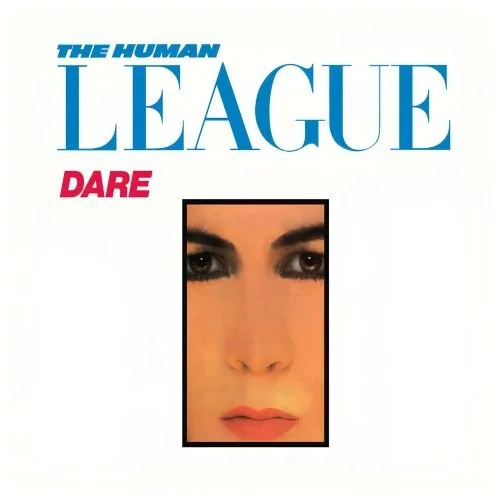
The Human League’s Dare at Forty-Five
_________
THE third studio album…
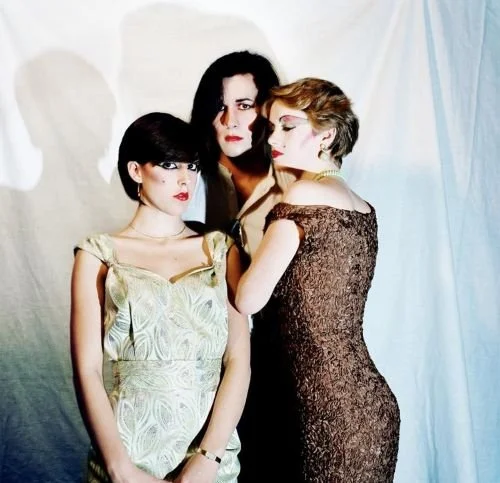
IN THIS PHOTO: The Human League in August 1981 in Sheffield/PHOTO CREDIT: Jill Furmanovsky
from The Human League, Dare, turns forty-five on 16th October. To mark that anniversary, I am featuring some articles written about the album. One of the very best from the 1980s, Dare was a more Pop-friendly move from their previous album, 1980’s Travelogue. Not that the Sheffield band compromised anything. The album reached number one in the U.K. Dare is credited with kickstarting the Second British Invasion. This was the name given to a movement that saw the popularity of British Synth-Pop in the U.S. I did want to start out with Louder Than War and their 2012 feature about Dare. The making of this classic album. Neil Mason with the key players involved with Dare. “Studios with leaking roofs, trips to new romantic clubs in a little Hillman Imp, and a heavy metal single recorded between sessions. They’re all part of the behind-the-scenes story of the 1980s synthpop masterpiece that is THE HUMAN LEAGUE’s Dare album”:
“I’d had arguments internally, admits Draper. ‘Because of the recession in the early 80s, we knew we had to cut back and Nik Powell [co-founder of Virgin Records] wanted me to drop The Human League. Richard [Branson] backed me when I refused and fortunately I was vindicated quite quickly.
‘We couldn’t have got through all this and ended up with Dare without someone at the record company who carried a lot of weight, believes Last. ‘Simon Draper had complete faith from day one. Would I have blamed him for dropping us? It would have been a perfectly reasonable position. His faith was crucial.
Phil Oakey once claimed of The Human League Mk1 that ‘only lads in long coats liked usâ€. It was clear, to him at least, that they needed to broaden their appeal. How he did that is not only one of pop folklore’s most famous tales, it was a masterstoke of a decision. No matter how good their songs were, how great their records sounded, it wouldn’t have mattered a jot if the League had been fronted by boys.
‘When Phil called me up and said he’d got these girls, I was… less than convinced, says Bob Last of Oakey’s trip to a Sheffield nightclub, where he found teenagers Joanne Catherall and Susan Ann Sulley and asked them to join the group on the spot. ‘I don’t recall what I said. I think there was probably an interesting silence.
What The Human League were doing musically was dramatically different, radical even, but on its most basic level, Dare tapped into the cultural climate perfectly. It would be embraced by the high street, in particular by girls in slingbacks going to town on a Saturday night a factor that proved pivotal to their success.
The Oakey/Wright-penned Mk2 debut Boys And Girls failed to dent the Top 40 on its release in February 1981. In order to sustain interest, the band needed to re-establish themselves. And quick. But Virgin’s verdict on the demo of the song that the band wanted as their next single was inauspicious.
‘When Sound Of The Crowd was delivered, it just didn’t sound good enough, says Simon Draper. ‘It just seemed to me they had to make a more credible musical record and Phil suggested Martin Rushent would be the prefect producer. Based on what? I don’t know. It didn’t seem all that likely to me.
Martin Rushent had made his name as a producer working with the likes of The Stranglers, The Buzzcocks, Dr Feelgood and Generation X. He’d also produced 999’s Seperates album in 1978. More new wave than punk, 999 sounded properly tight: the drums were crisp and sharp, the bass deep and full. It turned out Oakey was a bit of fan. Asked who he’d like to work with, Rushent was top of his list.
Martin Rushent, meanwhile, had been busy setting up Genetic Studios at his newly acquired Wood Cottage home in Streatley. He loaned Midge Ure and Rusty Eagan the fledgling studio to record the first Visage album. When Virgin called up to see if he would drop in for a chat, he’d already soaked up the lessons learned from watching Visage work and arrived clutching a record he’d made with Buzzcocks frontman Pete Shelley, who was about to return to the fray as solo artist with his electronic based debut, Homosapien.
‘Martin said you must come to my studio, says Dave Allen, who engineered Dare and who first met Rushent when he produced Allen’s band, Pinpoint. ‘We arrived expecting this amazing country studio, and it was a building site. The original studio was in this ramshackle bungalow down the hill from where the main studio was being built.
Allen’s band didn’t work out but, getting along well with Rushent, he found himself hired as an extra pair of hands in the studio, taking on everything from programming to heating up meals for the bands. Yes, along with the famous imported Linn Drum, Genetic also had one of the UK’s first microwave ovens.
Work on Dare started in Sheffield, with Phil Oakey and Adrian Wright joined by Ian Burden and Jo Callis. Burden came via Graph, a Sheffield band who had appeared on a Fast Product compilation. Callis was from Edinburgh and was a former member of The Rezillos, who had been managed by Bob Last.
‘It was this derelict building that at some point had been a veterinary surgery, says Jo Callis of the League’s optimistically named Monumental Studio in Sheffield that they shared with Heaven 17.
‘It was mostly falling down and used to leak constantly, confirms Last. ‘I still have a recurring nightmare about trying to fix the roof of that studio.
Callis was hired for his songwriting expertise, but he was essentially a punk guitarist masquerading as a glam rocker, and his knowledge of keyboards was patchy at best. But when he first arrived in Sheffield, the new boy was helped out by an unlikely ally.
‘Martin Ware of Heaven 17 actually showed me round, says Jo. ‘He showed me the basics of how a synth worked, how to programme it, how to get different sounds out of it.
Once they had a few songs demo-ed, the band would decamp from Monumental to Genetic, where Martin Rushent and Dave Allen set about meticulously recreating the tracks. The first fruit of the sessions was a new version of The Sound Of The Crowd that peaked at Number 12. With Rushent and the girls on board, The Human League finally had pop potency. Rushent’s PA, Carri Mallard, remembers the band’s regular trips to Genetic.
‘I used to pick Susan and Joanne up from the train station, says Mallard. ‘They’d be sat in the back of my little red Hillman Imp, all northern accents. They were wonderfully down to earth and excited about the whole thing. We’d go off round the clubs in the area, the new romantic nights. They wouldn’t have been able to do that a few months later.
‘I still feel the girls weren’t appreciated enough for the sort of spirit and the input they provided, offers Jo Callis. ‘It was just as important as anything anyone else did.
‘The band used to stay in a pub called the Miller Of Mansfield in Goring, just across the river from Genetic, says Mallard. ‘Philip would wander round the village with his asymmetrical hairstyle, no shirt, tight black drainpipe jeans, high-heeled women’s shoes and red lipstick. You can imagine. Philip was the most charming guy, but to the little old ladies in this sleepy village it was like, ‘Who is this person?’.
The last piece in the Dare jigsaw, the very final decision, revolves around a song that, if it hadn’t been written, may have left the album flat on its face and the League’s career looking similarly deflated. As a single, it would be Number One on both sides of the Atlantic and a Top 10 hit in a dozen more countries, selling over 2.5 million copies.
‘It wasn’t like there was this big pool of material waiting to be recorded, recalls Callis. ‘We were almost recording as we went. Adrian had this little book of instructions about how to turn all the equipment on and how to work the studio. So we’d get the studio working and kind of potter about. Don’t You Want Me came from such pottering. I was thinking along the lines of Coati Mundi and Kid Creole & The Coconuts, strangely enough, and then Phil had the idea of the Pygmalion lyric and it all developed organically from there.
‘Phil was quite visionary in his own way, says Dave Allen. ‘When we were doing Don’t You Want Me, we didn’t have a chorus, so we had to wait two or three days for Phil to knock one up, which is small beer in my subsequent experience. Eventually Phil came in and said, ‘I’ve got the chorus, I’ve got the chorus ‘Don’t you want me baby, don’t you want me, oh-oh-oh/Don’t you want me baby, don’t you want me, oh-oh-oh-oh…â€.’ Me and Martin both looked round and went, ‘You’re having a fucking laugh… fuck off’. And Phil was like, ‘No, no, no, it’ll be great’”.
This article from last year took us inside Dare and its legacy. It turned The Human League into a globe-conquering Synth-Pop act. They redefined Pop music for sure. Such is the importance of this amazing record.
“You could dance to it”
The fractious splintering of the original Human League line-up into the Phil Oakey-led collective and Heaven 17 was a difficult hangover the group had yet to recover from.
The Travelogue and Reproduction albums had started to build some momentum for the band, but the subsequent messy split and Oakey’s seemingly left-field decision to recruit two inexperienced teenage girls to bolster the lineup surprised critics and threatened to derail the League’s credibility.
But new sessions with producer Martin Rushent suggested there was a method to the apparent madness. 1981’s “Boys And Girls” hinted at a sound that fused contemporary dance appeal with the fresh New Romantic movement, and this standalone single finally helped the band crack the UK Top 50. With their record label intrigued enough to allow further sessions to continue, “The Sound Of The Crowd” was the first big Human League success and set the template for Dare. “When we first heard it, it was just thump-crash-thump-crash,” said recent band recruit Suzanne Sully. “But we knew it was a definite hit. You could dance to it.”
High-street glamour and kitchen-sink creativity
Follow-up “Love Action (I Believe In Love)” intensified the dance dynamic still further and made it all the way to the UK Top 3 in the summer of 1981, with The Human League finding themselves Top Of The Pops regulars. It was perfect timing – the UK music scene was in a freshly confident mood. Magazines like Smash Hits and The Face were helping telegraph a soap-opera narrative of high-street glamour and kitchen-sink creativity, also shaped by the growing reliance on pop promos to help sell a song. The Human League had a strong look that played perfectly into that.
With “Open Your Heart,” released that October, the band perfected its sharpest image to date in a striking video, which dovetailed with the launch of Dare, on October 16. This was perhaps the first time a video had ever so explicitly launched the visual identity of an album, but the work of designer Ken Ansell also echoed some classic covers of fashion bible Vogue.
Across Dare’s ten tracks, you find those effervescent pop singles but also a starker, colder set of songs far removed from the mid-market gloss of the contemporary teen scene. “Seconds” is a brutal narrative of assassination (then largely assumed to reference the recent death of John Lennon, but actually written about John F. Kennedy’s murder in 1963), while “Darkness” offers some melodic uplifts but is a brooding epic about the terrors of the night. “I Am The Law” is a stark, synth chiller taking its inspiration from the 2000 AD comic character Judge Dredd… It’s about as far removed as you can imagine from the fluffy pop compositions being created for chart contemporaries like Shakin’ Stevens.
“Do Or Die” is a hypnotic, dance-focused cut that lifts the mood midway, but, to be clear, it would be wrong to say that Dare is a gloomy listen. The lighter touches come fast and furious, and, in essence, the album is almost a perfect exercise in how to balance a pop record.
The greatest party record of all time
But Dare is also an album forever overwhelmed by those magnificent singles, which briefly threatened to turn The Human League into the biggest band in the world. Over the festive holidays that year, “Don’t You Want Me” sat at No. 1 for five weeks (helped by the innovative Steve Barron video) and the Dare album inevitably topped the UK charts, staying on the listings for more than 70 weeks. International success soon followed, with “Don’t You Want Me” reaching the top of the US charts the following summer, and Love And Dancing – an early example of the remix album, featuring new versions of some Dare highlights – hitting the shops at the same time.
Almost four decades on, it’s a little easier to unpick the winning formula here: the sharply-crafted pop singles that built momentum; glossy, evergreen production magic from Martin Rushent (he would go on to many other great things but did he ever really surpass this?); slick visuals; a near-perfect band line-up (with ex-Rezillo Jo Callis on synths, adding so much musical ballast); and that song. A cut that will outlive an album even as classic as this, “Don’t You Want Me” arguably remains the greatest party record of all time.
Even if you don’t agree with that entirely, it will see you on the dancefloor again very soon…”.
In 2021, when Dare turned forty, Albumism provided a retrospective. In terms of its legacy, it is pretty sizeable: “Dare has appeared on several lists of the greatest albums of all time. Sounds magazine ranked it the 81st-best album of all time in 1986 and the 44th-best album of the 1980s three years later. In 1990, Dare was listed by Rolling Stone as the 78th-best album of the previous decade. Q placed the record at number 69 on its 2000 list of the "100 Greatest British Albums Ever"; the same magazine, in 2006, ranked Dare the 19th-best album of the 1980s”:
“On Dare, Oakey's gloomy baritone punches through sawing synth lines and grounds each song in real human emotion and the desire for connection. This is present on album opener "The Things That Dreams Are Made Of" and against the shunting drum pattern of "Open Your Heart," where Oakey's vocals strain with an aching for more over a melody run that rivals the catchiness of melodic maestros ABBA.
With a stalking euphoria, "The Sound of the Crowd" builds to a climax that gives birth to the sound of synthpop, and best reflects the burgeoning (albeit short-lived) New Romantic era. It's an uplifting track that, despite its sparseness, feels plush and full. Such an approach would be a mainstay of Dare—creating a sense of warmth and fullness in a bleak and sparse setting.
Dare's decidedly gloomy mid-point still offers little glints of sheen in the moody paranoia of "Darkness," the frantic rhythms of "Do or Die" and the eerie, nightmare-inducing reworking of the film score "Get Carter" twisted into an airy, high pitch call out that would feel right at home in today's Squid Game landscape.
The oppressive fog of "I Am The Law" settles around you as cascading synths trickle down and Oakey's authoritarian narrative plays out. It's a beautiful moment of dread and allows Oakey's limited vocal range to come into its own.
An unexpected highlight of the album is "Seconds," with its recounting of the Kennedy assassination with a commentary on Lee Harvey Oswald. Against a pulsing countdown beat and histrionic synths, the track is totally captivating and powerfully expressive. As a kid, I used to listen to this track over and over, drawn in by the visual picture it painted. It is Dare's crowning achievement in terms of production and its most stacked and layered. Purely magnetic.
Out of the darkness comes two of Dare's most pop-focused tracks, including the dance-inspired "Love Action (I Believe in Love)" with its fluttering main riff and shape-shifting soundscapes capped off by a rousing spoken word middle eight.
The other track is, of course, the track for which The Human League is best known for, the obsessive tail of rejection "Don't You Want Me." With its A Star Is Born narrative of a spurned Svengali, "Don't You Want Me" is instantly iconic. The ticking sequencing, the heavy bass melody, the catchy as hell singalong chorus, and the at-odds duet between Oakley and Sulley. Despite initial misgivings over its strength as a single, "Don't You Want Me" became the cornerstone for Dare's success and influence as it topped charts worldwide.
The beauty of Dare is that it sounded unlike anything else on the radio, and to this day, has its own unique sound and place in music history. It created the space through which music from that point on would filter through, with an increased incorporation of synths into pop and rock’s landscape and a shift toward more drum machine-driven grooves. The sounds created on Dare continue to reverberate through pop and hip-hop. It is detached and distinctly cool. And despite being 40 years old, Dare still feels like a message from the future”.
The mighty Dare turns forty-five on 16th October. One of the most influential albums ever released, I am not sure if there will be new retrospectives or a new release of the album. It still sounds fresh to this day. The hypnotic and utterly wonderful Dare remains…
A timeless classic.