
FEATURE:
Let the Weirdness Out
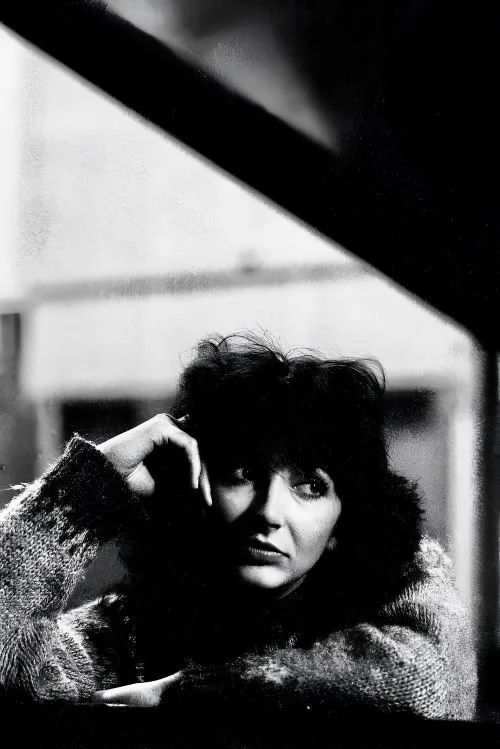
IN THIS PHOTO: Kate Bush in Abbey Road’s Studio 2 in 1982/PHOTO CREDIT: Steve Rapport
Why That Word Does Kate Bush a Disservice
_________
I have been thinking again…
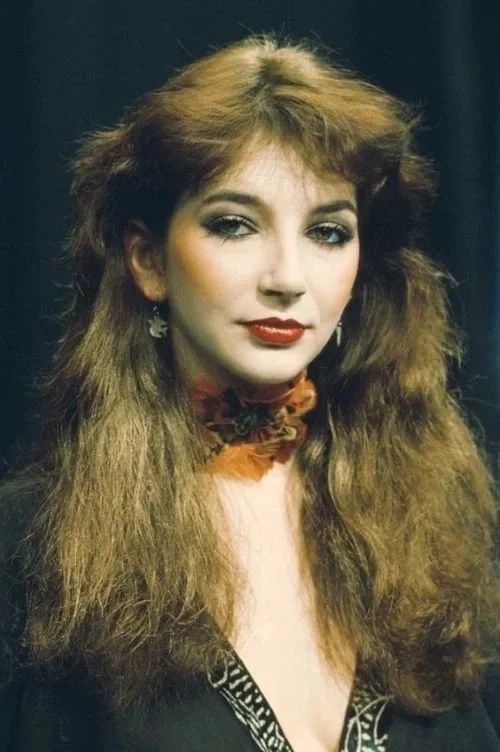
IN THIS PHOTO: Kate Bush in 1978/PHOTO CREDIT: Alamy
of Kate Bush’s The Kick Inside. I am already excited about its fiftieth anniversary. That is on 17th February, 2028. More than a year away, there is going to be a lot of new attention coming its way. However, I have been considering how the album has been getting some new focus. A few months or so back, Billie Eilish said she was appreciative of Kate Bush’s earlier albums. Like her debut, The Kick Inside. How she like the ‘weirder’ Kate Bush. Fiona Apple is a fan of the album and she would frequently sit at her piano to play and sing along to tracks such as Feel It, Moving, and Wuthering Heights. In recent months and years, there have been artists shining a light on Kate Bush’s earliest work. Bush herself said that she went a bit mad on her 1982 album, The Dreaming. On one of its tracks, Leave It Open, she sings “We let the weirdness in”. Maybe some see it is a compliment to call her earlier work weird. That word gets applied to The Kick Inside. How it is perhaps not quite as commercial or grounded as some of her other albums. They may be picking up on her vocal gymnastics and subject matter. That would continue through Lionheart (1978) and Never for Ever (1980). The Dreaming is an album where Bush produced solo. On all of these albums, she is distinctly herself and like nobody else. I have been struggling with words such as odd and weird. That would suggest her work is inaccessible or outcast. It was singular and magnificent. When her debut came out, Punk had been around for a year or two. In the Pop mainstream, there were few artists doing anything radical or too inventive. Bush did not really have any female peers writing like she did. If the likes of Carole King and Joni Mitchell, who she was often lumped in with, were writing more confessional and personal albums, Bush was going beyond that. She was not submissive or heartbroken.
The idea that her tracks were somehow impenetrable or strange. ‘Weird’ is what we would say to someone or something that we do not understand or is out of the ordinary. Kate Bush’s music was not ordinary, though I don’t think it is fitting or respectful to see it as weird. Almost fifty years since her debut album was released, it is picking up new recognition and love. Perhaps making it seem less fringe or unusual, I feel we need to reframe things. Cliches still swirl around Kate Bush. That she is this recluse or some odd figure who does not go out. When articles come out, she is often labelled as reclusive or weird. I feel this kind of sexism is applied to women in music whose music goes beyond the banal and routine. Today, there are some great Pop artists around. Though there are few who stand out in terms of their originality. Songs that do not make you think as much as listening to Kate Bush. Today, we have Pop artists who blend genres and are very much doing something exciting. COBRAH and Slayyyter are among those who are blending different genres to make something unique. You might find their music darker or heavier than most Pop. It is deep and inventive, though we would not – or should not – label them as weird. FKA twigs is a fan of Kate Bush and she goes beyond the ordinary. It would be sexist to label these women as odd or weird. Even if we apply those words to Kate Bush affectionately, I still think that it is alienating and unintentionally reductive. That she was niche and albums such as The Kick Inside are for a certain group of people. When it came out in 1978, it had layers that were not seen in Punk. More emotive and substantial, I do worry that younger listeners might be put off if they think that her music is somehow weird or outsider.
Billie Eilish is a major artist and respects her music. Though if we use words like ‘weird’ or ‘eccentric’, you paint Kate Bush as this strange myth of an artist. Or that her music is for certain people. Albums such as The Kick Inside and The Dreaming are definitely unconventional, though there is nothing in these albums that will repel or is for those who prefer experimental or freakier music. Kate Bush’s individuality should be championed and given greater weight. Rather than see her earlier work as weird, it needs to be discussed in different terms and tones. I did want to bring in this article that does address some eccentricity and strangeness in her music. Though we can only see that as a negative from the industry’s viewpoint. How women who were distinct and refused to be pigeonholed were insulted and mispresented. “Bush refused to make sense in the ways the industry wanted her to. Too strange, too theatrical, too literary, too female in the wrong ways — she became a problem that brilliance often becomes when it wears a woman’s face”. I think this is why a lot of younger artists are coming to albums like The Kick Inside, The Dreaming and the pre-Hounds of Love (1985) work:
“In the lexicon of feminist theory, Kate Bush is an aberration of the symbolic order. Her voice — that wraithlike soprano, sharp as glass, elastic as breath — does not obey grammar or gender. Julia Kristeva wrote of the semiotic chora, that primal rhythm of language before it becomes law; Bush sings from there. Each shriek, whisper, or howl is a refusal of linguistic domestication. The body leaks into the song — uncontainable, holy, strange.
To listen to her 1982 masterpiece, The Dreaming, is to watch an artist shatter every polite convention of pop. It is postmodern chaos rendered divine: voices stacked like broken mirrors, rhythms dissolving, accents mutating, machines sighing with human ache. She produced it herself — the first woman in British pop to do so — and in that act, Bush entered the masculine sanctum of authorship, claiming the studio as a body of her own. What the critics of the time heard as hysteria or excess was, in truth, a rebellion against patriarchal syntax. “Every old structure,” she seemed to say, “is a cage.”
And yet, she never needed to declare this politics outright. It was written into the architecture of her sound. Her eccentricity was her feminism — not as banner or doctrine, but as a refusal to simplify the self.
To call this concept “ambitious” is an insult; ambition is what men are praised for when they try to build worlds. What Bush built was a mythic interior — a female odyssey through fear, faith, and the thresholds of the self.
What makes Kate Bush so radical is not her eccentricity alone, but her commitment to the odd as sacred practice. Every culture has its oracles — those who speak truth through strangeness. Bush’s oddity is not a costume; it is her method. Through it, she dismantles the binaries of intellect and intuition, male and female, art and artifice.
To trace Kate Bush’s albums is to follow a spiritual cartography of womanhood — from the mythic girl to the sovereign creator, from body to cosmos. She did not rise through the male canon; she built a different one, full of wind and ghosts and the laughter of things unseen.
In her strangeness, she offered women a new way to exist: not as symbol or saint, but as process. The Dreaming, The Drowning, The Dancing, The Singing — each phase a form of becoming. The industry called her eccentric, witch, recluse — the usual names for women who do not explain themselves. But perhaps Toni Morrison said it best in another tongue: “If you surrender to the air, you can ride it.”
Kate Bush has been riding the air for forty years now. And somewhere between myth and motherhood, madness and divinity, she became what the world could not name — a woman entirely her own invention”.
Few artists in history have had the same impact as Kate Bush. Whilst some still label her as weird, we could say the same about David Bowie and his earlier incarnations. He is not so easily dismissed or marginalised. He is seen as a pioneer and visionary. This is what we need to say instead of Kate Bush. Drop tired and inaccurate labels. Although you can say Joni Mitchell is a one-off, Kate Bush’s uniqueness is nothing like that. I feel she is a much more fascinating and compelling artist. Classic Rock ran a feature earlier in the year that celebrated the fact that Bush is one of the most influential artists of the past fifty years:
“Kate Bush is now established as both a national treasure and an enduring enigma. In a career in which she has usually done the opposite of the rational thing, she has maintained stellar status as a much-loved musical pioneer, transcending her initial pigeonhole as a kooky hippie girl with a high-pitched voice. An imperishable influence on subsequent female artists, sure, and then some, yet Bush has primarily been significant beyond gender, her art and attitude a nudge to all idiosyncratic creative types who don’t follow formulae.
She remains her own entity, and we grant her the awe – and occasionally forgiveness – afforded to the truly unique. She has even survived describing then-Conservative Prime Minister Theresa May as “wonderful”. The rules, and common sense, go out of the window in Kate Bush World. How did she pull this off?
Kate Bush was always something of a prodigy. Forty years ago this January, Wuthering Heights, the first ever British No.1 self-written by a female singer, brought a fresh and candid voice to music. Her debut album The Kick Inside followed a few weeks later. She had written most of the songs on it in her mid-teens. They were rich with pretentious references (in this case a good thing), mentioning Brontë and Gurdjieff with that manner of unselfconscious earnestness exhibited by young people who haven’t read many books but have therefore reacted really intensely to the ones that they have. Which is how most of us reacted to Bush’s music.
There was, at the time, a striking novelty to her upfront expressions of lust and eroticism through the female gaze. You can sweat the details, cite Bessie Smith and Joni Mitchell, but it wasn’t yet the norm. And in an era when punk was on the rise, she was – at least technically – its very antithesis. Her moods, chords and theatricality (mentored by Pink Floyd’s David Gilmour) had more in common with prog. Her songs swooned and sighed with romance and yearning – not a current hot ticket. What she did share with punk was a free spirit, a doing-her-own-thing drive – the same young generation who queued to get gobbed on at Damned gigs embraced her.
Gilmour was thrilled by his young protégé’s success. “Kate is a complete one-off,” he said. “I can’t think of anyone like her. Joni Mitchell was also a one-off, an original, but Kate is nothing like that.”
That debut was averse to self-editing; it was both unfettered and rhapsodic. Urges, fevers, visions, unfiltered. She somehow transcended the mundane categories of the here and now. She was atypical, not topical. Pansexual. We all know what an impressive musical career she’s gone on to have, keeping that differentness, that individualism. Along the way she’s evolved from TV light-entertainment regular and accidental sex symbol to arguably the most enigmatic recluse in the business, one who marches to her own eccentric drum beat.
“Every female you see at a piano is either Lynsey de Paul or Carole King,” Bush told Melody Maker in 1977. “And most male music – not all of it, but the good stuff – really lays it on you. It really puts you against the wall. And that’s what I like to do. I’d like my music to intrude. Not many females succeed with that.”
Her ‘intrusions’ are often Trojan horses, dark themes hosted by sweet melodies, a charm of charisma. She has become one of the most invaluable figures in British music, and has done so chiefly by being herself. Or, in earlier years, by being herself while inhabiting various characters. Then hiding herself away and letting us project on to the indelible impression she had made already. Bowie, to name the most blatant example, used a similar sleight of image, but it’s a tightrope act, this blend of striking personae and blank canvas”.
As we get closer to the fiftieth anniversary of The Kick Inside, I think we need to shift and evolve the lexicon. When artists discover that album and other earlier albums, they need instead to describe it in more passionate and respectful tones. Not to say ‘weird’ is a bad thing, though it does somewhat paint Kate Bush as an oddness. Someone whose records you need to be in a certain mood for. That is unfair to a genius and groundbreaking marvel. Someone who has inspired artists who have a legion of fans. What their music does is speak to those who seek something more meaningful. The incredible Kate Bush is someone whose work is…
ANYTHING but weird.