
FEATURE:
An Urgent Issue

PHOTO CREDIT: MART PRODUCTION/Pexels
Will Music Ever Get Its #MeToo Reckoning?
_________
I have written about this…
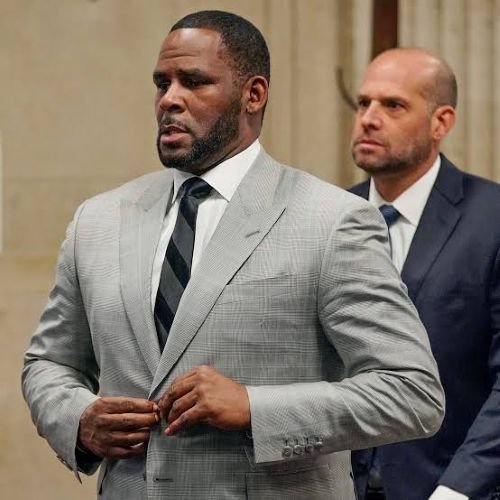
IN THIS PHOTO: R. Kelly/PHOTO CREDIT: E. Jason Wambsgans
a few times before, but I do wonder whether music will ever get its #MeToo movement. Hollywood did experience that, and there was change. You think about all the men accused of sexual assault and those who have been called out. So few of them brought to justice. However, it did feel that there was some progress in Hollywood. Music has never had that moment. I would say that it is as needed now than ever. Not many male artists imprisoned for their crimes. Diddy (Sean Combs) is currently in prison, as is R. Kelly. Think about all the other male artists who have been accused of rape, sexual assault and abuse, and there does not seem to be this reckoning. Where the industry has come together and we are seeing these figures face justice. I guess it is quite hard, as it relies on those in power to join that fight. It seems that women in music alone are calling for activism and action. There is relatively little allyship from men throughout the industry. It is also not a thing that has gone away. In terms of statistics and what women face, there is this continuing problem. That sounds too mild a word. From festivals to within the industry itself, artists and concert-goers are reporting cases of abuse and assault. Whilst the police can investigate individual cases, there is not this greater outcry and condemnation. Again, women in music are raising their voices. Yet there is not this modern #MeToo movement that is so needed. Throughout various sectors of music, there are reports of harassment and assault. In a study published this year that was led by the University of Glasgow, they highlighted the extent of sexual harassment and abuse through the Scottish Folk scene. The study noted that 78% of participating women experienced multiple incidents, with 72% identifying peers or colleagues as responsible. There are high-profile artists that bring the problem to the fore. So many other make artists who are accused and do not face imprisonment or justice.
It does seem that the problem has become more widespread and urgent. No sign of anything like #MeToo that tackles the rise in sexual assault and harassment. I do want to bring in an article from The Guardian, where Cheyenne Roundtree was interviewed. She is “an investigative reporter at Rolling Stone, was as shocked as anyone when allegations of rape and sexual abuse were made against the music mogul”. She was talking about Sean Combs. Cassie Ventura accused Combs of a decade of physical abuse, rape, and forced sex trafficking in a 2023 civil lawsuit and 2025 court testimony:
“Combs’s inner circle and Ventura’s testimony describe the control he had over every part of her life – her diary, clothes, hair, nails. Even her medical records went directly to Combs’s email and he tracked her menstrual cycle. Her career stalled. Though Ventura recorded hundreds of tracks, her boss – Combs – didn’t release them. “She was his ‘wife partner’ for 10 years publicly,” says Roundtree. “One of the most surprising things to see was that, behind the scenes, she never lived with him, she never spent Christmas with him.”
The relationship described by Ventura was dominated by “freak-offs” – coerced, multi-day-long, drug-fuelled sexual encounters with male sex workers, held in hotel rooms. Every aspect was micromanaged, choreographed, directed, watched and filmed by Combs. According to Ventura, she was 22 when Combs first raised the idea, and she “had no concept of how it would be a turn-on”. But she wanted to please him. After the first, she felt “dirty” but glad Combs was “happy” with her, that she “did something right”.
Hundreds more took place around the world with unvetted men she didn’t know. Ventura says she felt “disgusting”, “humiliated”. When she attempted to leave Combs, he threatened to share the videos. (In one exchange between them, she talks of showing the world photos of her beaten face and body. “Release the videos also,” Combs shoots back.) Her life became preparing for “freak-offs”, enduring them and recovering afterwards. (“That’s why nothing gets done,” she wrote in one message to Combs, in 2017, their final year together. “Always healing.”)
Ventura officially separated from Combs in 2018 and filed her lawsuit five years later. When federal investigators subsequently approached her to build a criminal case, she handed over phones, iPads, video material, the names of sex workers and other witnesses to help corroborate her claims.
The US has no federal laws around coercive control and offences such as rape and assault carry statutes of limitations – legal time limits after which prosecution is not possible. But Combs was charged with racketeering conspiracy, sex trafficking by force, fraud, or coercion, and transportation to engage in prostitution. “Those laws were developed to bring down the mafia, to dismantle criminal networks,” says Roundtree.
Combs’s 2025 trial lasted seven weeks, with the prosecution arguing that Combs used his business empire as a front for a criminal operation, relying on close associates to force and intimidate women into freak-offs and transport and supply drugs to keep them compliant. The defence argued successfully that what took place did not constitute a formal criminal enterprise. Ultimately, he was acquitted of most charges. “He was only found guilty of the clear examples where he paid for the male escorts to travel across a state line,” says Roundtree. “If they’d stayed within their states, they couldn’t have charged him with that.”
The music industry, says Roundtree, is yet to have its “#MeToo fallout”. “Hollywood had this reckoning; music never really has.” R Kelly is the only other high-profile musician now in prison because of abuse uncovered in the me-too fall out. Others have been untouched by swirling rumours and mounting accusations. “Maybe it’s because an artist is so singular,” says Roundtree. “Actors have this whole machine around them, procedures to go through, people to answer to. And we love our music. Those songs are our fondest memories, they take us right back to a place or a time or a person and it’s hard to give that up, to separate the art from the artist. Sean Combs was a producer. Do we give up every song he touched? So we can’t listen to Biggie any more? It’s not realistic”.

IN THIS PHOTO: Cassie Ventura/PHOTO CREDIT: Getty Images
Although it is unlikely and improbable that male artists like Combs will be cancelled and any music with their name attach will be deleted, you do worry that, as soon as he is out of prison, then he will resume his career. There does not seem to be this barrier. Men who are accused or found guilty of abuse can carry as though nothing has happened. So many men in music at the moment are enjoying a normal career when they are faced with allegations. I did want to end with an article from 2022. Writing for The Guardian, Tamanna Rahman spoke to multiple women across music and discovered that abuse was rife. However, speaking out was very difficult. Four years later, I guess many of the same issues and problems faced then apply now:
“So what is the answer? After all, if it is right that people are innocent until proven guilty, then it follows that a person cannot have their livelihood destroyed on the basis of one allegation. It’s certainly tricky for a record label to sack them on that basis.
The problem is that many record labels do not even seem to try. If you are making your way into the industry, the likelihood is that you’ll work for an independent record label. If you’re assaulted by the owner of that company, or the artist, then who can you go to to complain? There are often no HR structures in place, and even where they do exist, which HR person is going to scrutinise their boss, or the person upon whom a sizeable proportion of the business model relies? And it’s a small world. If you rock the boat, women have told me, you’re labelled a troublemaker, and you may even find yourself frozen out of jobs in other companies. This lack of internal recourse can leave women with only two options: calling out their abuser in public, with all the attached risks, or staying quiet.
The responsibility should be even greater for the major record labels and respected music bodies, where there are HR systems in place. But I’ve been told by dozens of women that when they have made complaints to HR staff, the response has ranged from being gaslit, ignored, threatened with lawsuits, required to sign NDAs or quietly let go. In one example, a junior member of staff told me she had revealed that she had been raped the night before by one of the bosses, and the response from her manager was brief sympathy, but nothing more. In another, an investigation was called after allegations of inappropriate touching. The man in question was quietly shuffled out of the building and given a glowing reference in the music press with best wishes for his future. The woman says she was forced to sign an NDA. And so the cycle continues.
It is worth highlighting that all seven of the women who came forward to make allegations about Tim Westwood are black. They allege he abused his position and power to prey upon them – in fact, the subtitle of the film is Abuse of Power. If a white woman feels a lack of support among her peers and seniors when making allegations of sexual misconduct, their testimony suggests the issue is compounded for black and brown women, who often have to work even harder to make it in the industry.
Music may not have had its #MeToo moment, but those in the industry are increasingly coming together to support one another. There are more female execs, more female-owned ventures, and greater awareness of what is and isn’t acceptable behaviour. Last month, former Atlantic A&R executive Dorothy Carvello launched her foundation, Face the Music Now, to provide a safe space for women to report their abuse and to help them find legal counsel. And it’s not just women. Many of the people I’ve spoken to are men fed up of seeing their colleagues experience abuse, only to then be minimised and dismissed.
The music industry has in its midst multiple artists, managers and execs who have been accused of sexual misconduct. It has the tools to investigate and take allegations seriously. It’s time to use them”.
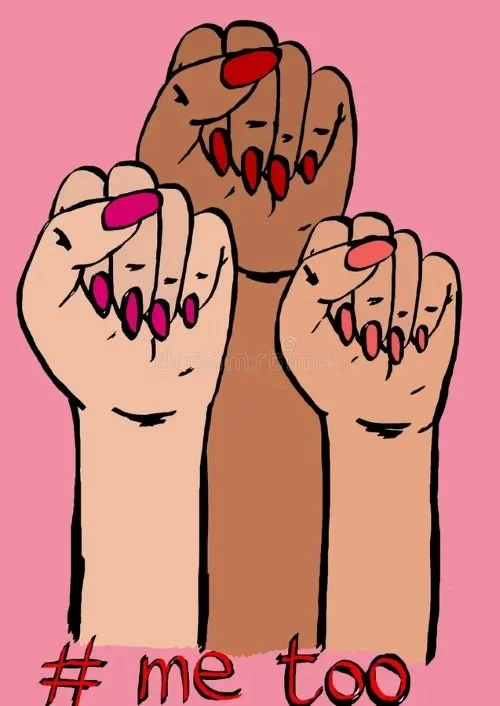
Actually, whilst researching, I did come across the article below from Rolling Stone published earlier this year. If there was sign of a #MeToo fight, it seems to have ended or paused. In an open letter, they asked what happened. Why did this cause not take flight in the same way as it did in Hollywood? They have some interesting thoughts and answers:
“One of the biggest differences between the film industry and the music industry is organization. Hollywood has unions, guilds, and collective bodies that represent workers across the business. When the #MeToo movement began, those structures didn’t lead the charge, but they gave the movement somewhere to land and became vehicles for new codes of conduct, reporting systems, and protections. The music industry doesn’t have those same structures, but that doesn’t mean we’re powerless. It means we have to build differently. You don’t need a union to be unified. You don’t need to collectively bargain to have a collective consciousness. Keeping people safe in the rooms where music gets made is a human rights issue, and it should be something every company in this business can come to the table about.
The last few years have made this impossible to ignore. We have watched the federal prosecution and conviction of one of the most powerful figures in music history on charges tied to the exploitation of people inside his own organization. We have watched survivors come forward publicly, at tremendous personal cost, to tell stories that too many people in this business already knew.
And still, the question remains: what are the companies doing about it? Not the individuals. The companies. The record labels, music publishers, management firms, studios, and agencies. The institutions that fund the careers, expand the platforms, and decide what behavior gets addressed and what gets ignored.
As founder of The 100 Percenters, a nonprofit that aims to transform the standards of the music industry so that every working music creator can build a safe and sustainable career, I’ve watched this industry avoid its reckoning long enough. In response to that reality, The 100 Percenters created the Safe Music Business Pledge. A public commitment from companies across the music business to four straightforward principles: keep your people safe in the workplace and in studio sessions; report harassment and abuse when it happens and take action; refuse to tolerate inappropriate or abusive behavior; and create a safe space for those who don’t feel protected.
That’s it. Four commitments. None of them are controversial.
Organizations like the Recording Academy, BMI, SONA, LVRN, and others have already taken the pledge, and we welcome more support of this very important work. We are seeking record labels, publishers, and management firms with artists, songwriters, producers, and employees on their rosters. Companies that have the resources and the influence to set the standard for the entire industry.
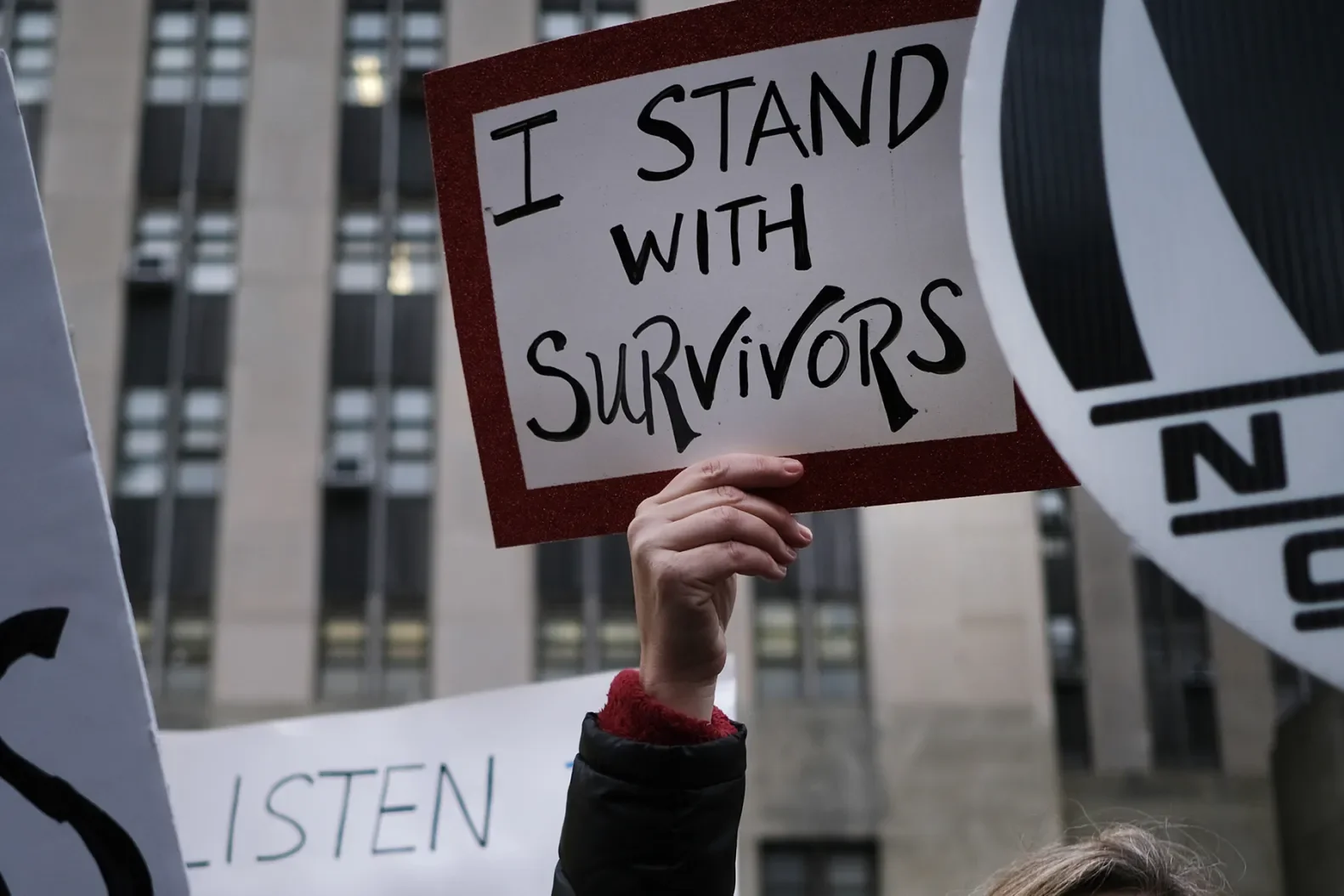
IN THIS PHOTO: Protesters outside Harvey Weinstein's trial in New York in 2020/PHOTO CREDIT: Spencer Platt/Getty Images
Not having signed the pledge doesn’t mean a company is unsafe, and signing it doesn’t automatically make a company safe. But taking the pledge signals something that matters. It tells your artists, your songwriters, your producers, and your staff that you see the problem and you’re willing to do something about it.
The laws are evolving, the culture is shifting, survivors are speaking, and the public is watching. The reckoning this industry has managed to avoid is coming. The question is whether you will be on the right side of it.
If your company hasn’t taken the Safe Music Business Pledge, please visit the100percenters.com and sign it this month. If you’re an artist, songwriter, or producer reading this, I’m asking you to share the pledge with the companies you work with and tell them why it matters to you. We’ve even prepared an outreach template on our site to make that as easy as possible”.
Although there have been steps forward and survivors are bravely speaking out, that long-awaited reckoning has not quite happened. It really needs to. More than any other industry, sexual assault, abuse and harassment is rife throughout music. So few men are brought to justice or face any real loss. The industry still very much set up to serve them. It is interesting how this article points out that when a male artist is accused of abuse or assault, there is not this public outrage and outcry. There is a “negotiation”. People trying almost to separate the art ands artist as they love their music and are very selective about what action they take. The statistics speak for themselves:
“A 2024 global study by MIDiA Research, TuneCore, and Believe surveyed more than 4,100 music creators and professionals across 133 countries and found that three in five women in the music industry have experienced sexual harassment, and one in five have experienced sexual assault. More than 70 percent of those women did not report it, citing fear of retaliation and a belief that nothing would change”. If there are organisations there providing outreach and support and laws are evolving, the responsibility still sits on companies and labels. In terms of effective action, they are still largely silent. And, in 2026, this is not good enough. They all really need to…
DO more.