FEATURE: Morrissey: A Rare Genius

FEATURE:


Morrissey:  

 A Rare Genius

________

THIS will not be a hugely authoritative and biography-heavy…

things but, instead, a loving nod to one of the most extraordinary songwriters who has ever lived. This piece is fuelled by two different occurrences. The first is the fact the biopic, England Is Mine, has been released and met with muted applause. There are a lot of three-star reviews that commended the film’s lead, Jack Lowden, but criticise other aspects of it. The fact we are supposed to be fascinated by that pre-Smiths period; the man of the hour did not approve of the film or provide blessing – one imagines he would rarely crack a smile so it is no surprise – have all gone into the brew. I have not seen the film but, gleaming reviews; it seems to be one reserved for three die-hard fans. It looks like a fascinating glimpse into a clumsy, ambitious and isolated young man and his time growing up in the North – just before he met Johnny Marr and went to form The Smiths. I am not given to over-romanticising Morrissey because he has his flaws and is very outspoken. His stance on animal welfare is passionate but often misguided – to the point hyperbole and righteousness detaches from the ethics and moral reasoning and becomes personal attacks on people who eat flesh. I am not a meat-eater but would never speak about animal cruelty/murder the way Morrissey does. Those kinds of outbursts are not reserved to carnivores: the man has taken shots at the monarchy and large swathes of society. He is, however, refreshingly honest and unfiltered in a time when people are incredibly self-conscious and wary of what they say online. One suspects he does not take to Twitter too often but, in an age where social media is as much a force for bad as it is good – the likes of Morrissey are remnants of a time when there was simplicity and directness. Mancunians (and northerners) are renowned for their wit and humour but also their plain-speaking tongues. There is nothing unusual about Morrissey but, when reading a New Statesman article that suggested the biopic was misguided – and Morrissey does not deserve to be seen as extraordinary – that is where I take umbrage.

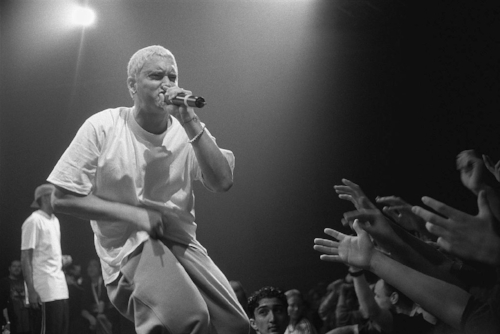
PHOTO CREDIT: Ebet Roberts

One cannot claim The Smiths frontman has not made an immense impact on music. My first encounter with Morrissey was, actually, through his solo album, Your Arsenal. That album arrived after 1991’s Kill Uncle and a rather rough creative period. That album was given poor press and negative reviews. Many felt the album was tired and rehashing previous work. Your Arsenal arrived a year later and was an incredible turnaround. It was sharp, muscular and inspired: Morrissey back to his very best. You’re Gonna Need Someone on Your Side has a swagger and introduction similar to Footloose’s theme – in a strange way – but is a rollicking and riotous cut from the former Smiths man. In-command and at his acerbic best: a track that beautifully kicks off proceedings. The album borrows shades from other artists – Rock ‘n’ Roll Suicide’s riff/sound can be heard on I Know It’s Gonna Happen Someday – but, largely, it is the hungry and talented artist back on top. The National Front Disco addresses right-wing politics and fascism – Morrissey copping heat because of its references to extremism and racism – whereas You’re the One for Me, Fatty is the man at his humorous best. It is a dexterous and all-killer, no-filler album that benefits from the musical impetus of Alain Whyte – and Morrissey feeling the need to regain momentum and relevance. I investigated subsequent solo albums and love Vauxhall and I – the 1994 album that is commonly seen as his pinnacle as a soloist – and 2014’s World Peace Is None of Your Business. Both albums are very different in terms of themes and compositions but Vauxhall and I, I guess, complete that incredibly ripe period – following from Your Arsenal; there was a lot of determination and inspiration in Morrissey’s bones. Spring-Heeled Jim, The More You Ignore Me, the Closer I Get and Lifeguard Sleeping, Girl Drowning are some of my favourite songs from the master. I could vacillate about the solo work and all it holds but I am, like many people, adoring of Morrissey because of The Smiths.

I wanted to avoid using a song title in the title of this piece as it seems rather wasted and tragic. Whilst the actual title is a little vague; one cannot define Morrissey by a single song. The Smiths’ 1984 eponymous debut remains one of the most influential records from all of music. In a period where nothing like The Smiths had ever come about: it was a blast of light witnessing the Manchester band come to music. Formed in 1982 – I shall not get into the background and famous meeting – but feel, at that time in music, The Smiths’ arrival was hugely unexpected. Among the finest albums of 1984 were Sade’s Diamond Life; Bruce Springsteen’s Born in the U.S.A. and Prince’s Purple Rain. Some world-class albums, for sure, but nothing remotely like The Smiths. There were few standout British albums that year so, when the quartet released their debut, few people were prepared for them. There has never been a composer as individual and malleable as Johnny Marr. The way he could create searing guitar stabs and semi-orchestral rushes – almost within the space of a verse – is unprecedented and laid down the mantle from a unique and extraordinary band. Not forgetting the contribution Mike Joyce and Andy Rourke made to the band – their bass and percussion were pivotal elements in the overall sound. As much as I love their impact and talents; the incredible compositions of Marr – it is the wordplay and performances from Morrissey that makes the music stand out. I love the band’s debut but feel they went on to better things. This Charming Man is the standout from that debut and has gone on to be one of the most-respected and best-known songs from the band. Its unforgettable chorus and vivid verses stick in the mind. The hero not going out – not a stitch to wear, as it seems – and the isolated bicycle: that sense of loneliness and incredible magic one gets from the song. It is a rare form of poetry and storytelling from a man who would have been taking from his own life.

One of the reasons I connect with Morrissey is his loneliness and place in society – not feeling like he fits in and being able to connect with other people. Of course, the songs did not all speak of these troubles. The young songwriter ate and devoured literature and culture. Right from their earliest moments; characters and controversy came into the music. Morrissey would address murder, incest and sexual abuse alongside romance, dreams of being killed in a car crash and a girlfriend in a coma. There is that malice and unsettled vibe that sits with immense humour, sardonic wit and personality. In everything is passion and incredible intelligence. The first two albums can, debatable, be argued as less memorable and enduring as their final two. The debut remains essential because it was the first: that arrival and unexpected brilliance. The songwriting is incredible throughout but, apart from the odd number here and there, I do not revisit it a lot. I tend to bond more with The Queen Is Dead and Strangeways, Here We Come. Meat Is Murder contained the phenomenal How Soon Is Now? and remains one of the band’s finest songs – not on the original album but added for the U.S. version. That sense of awkwardness and going to the club: being rejected and standing alone in the corner – whilst being sountracked by that stabbing, epic guitar-playing from Marr. The Headmaster Ritual and Barbarism Begins at Home, between them, contains yelping, corporal punishment and satirising out-of-touch teachers. They are staples and highlights from the band but are not matched by other songs on the album. It got a warm critical response but, in my mind, it was Morrissey’s words and subjects that brought the album to life. Growing in confidence as a songwriter and singer; one could sense changes coming in and a natural evolution. Less reserved (vocally) than the debut: Meat Is Murder is a much more inflamed, boisterous and variegated album – both composer and lyricist pushing themselves like never before. This all reached fever-pitch heights on the follow-up: the band’s hallmark, The Queen Is Dead. Again, 1986 contains no other albums like The Smiths’ third L.P. It is a complete and fantastic work that, like Morrissey’s finest solo works, contains absolutely no filler.
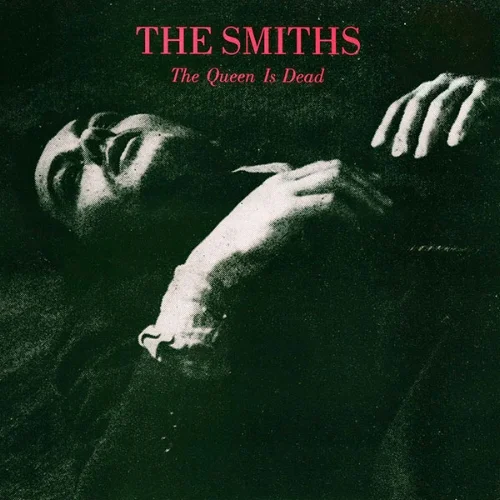
Not only is The Queen Is Dead one of the best albums of the 1980s but the apex of Morrissey’s songwriting. His lyrics were at their sharpest and most emotive. One cannot listen to Cemetry Gates – where the hero reads inscriptions and finds mordant romance in departed poets – and not be encapsulated and entranced by its peculiar narrative. The title track opens proceedings with so much fascinating humour and spit. It is Morrissey’s commentary, insight and wordplay that perfectly matches Morrissey’s rampant and driving composition – one of his finest from the cannon of The Smiths. I Know It’s Over is one of the most striking and stirring from a band who were in no short-supply of emotional offerings. Morrissey’s sense of foreboding and claustrophobia makes the song one of the most unforgeable and haunting from the band. One suspects, like Cemetery Gates, some of the poetic greats were running through Morrissey’s mind when writing this. Bigmouth Strikes Again, turning the focus on himself, is about the outspoken and too-quick-to-speak. It addresses the frustration of being hounded and being forced into a corner – that pressure leads to some misguided comments (where the narrator has to confess he was only joking). Comparing himself to Joan of Arc – where her “the flames rose to her Roman nose” and the Walkman melted – it is a unique and brilliant take on a subject that, at the time, was not as common as it is now. The same can be said of the longing and romantic frustration one hears on There Is a Light That Never Goes Out. Many would rank this song as The Smiths’ finest. It is considered one of the greatest ever songs, and with good reason. One cannot ignore the contribution by Marr: that luscious and symphonic score that perfectly articulates everything Morrissey puts into the lyrics. The doomed-but-humorous combination was Morrissey’s stock-and-trade, but here, it is at its most defined and luminous.
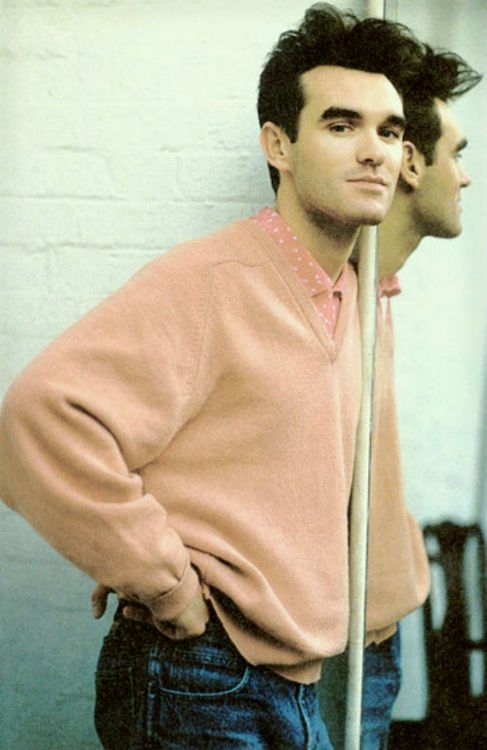
Strangeways, Here We Come completed the band’s career – they would split in 1987 – and is s fitting and fine swansong. Containing Morrissey and Marr’s favourite song, Last Night I Dreamt That Somebody Loved Me, it is a fantastic album that builds on The Queen Is Dead’s eclecticism – even if it does not reach the astonishing heights of that record. There are fantastic moments from Morrissey throughout that album but it is tracks four-through-six that that showcase how fervent and consistent his imagination was. Girlfriend in a Coma is a short-but-not-so-sweet song that finds an ill-fated girlfriend near to death/in a near-death situation – never explained how she got there – and the hero semi-genuine in his terror and upset. It is a perfect distillation of Morrissey’s patented combination of wit and tragedy. Pathos and triumph; sarcasm and doomed romance all within two-and-a-bit-minutes. Stop Me If You Think You’ve Heard This One Before – an album with many long-titled songs – again looks at physical upset and trauma. It is the last track of the trio that, for me, defines Morrissey’s songwriting. That sense of false alarms and being safe from harm: all false, unsettled and unreal. The song title’s literal meanings cannot be misinterpreted but it is the way Morrissey presents that feeling of being alone and sharing his bed with nobody – a song that would have resonated with so many listeners at the time. It is a stark, sad and hugely revealing song that perfectly says goodbye to the band. It proved we would be hearing more from Morrissey’s incredible pen – sadly the band would call it quits before the album hit the shelves. It is not only the writing through The Smiths’ career that fascinated me. Morrissey’s singing remains unique and emotion-rich. The way he phrases lines and twists them to his own means has meant the songs have transcended from the fantastic to the peerless. Few singers have that crooner-like sound that manages to stretch and bend in all sorts of directions.

In looking at the continuing genius and influence of Morrissey; one cannot ignore every facet of his creative personality. From his work with The Smiths through his solo career – there are few that have the same attributes, talents and tells as Morrissey. He is an endlessly fascinating character and, let’s hope, there are more albums arriving from him. Perhaps England Is Mine is not the film he would have wanted to see about himself (one imagines he would have preferred to be left alone altogether) but there is an enormous affection for the Northern poet who, over thirty years since that first album, remains incredibly influential. Even if songwriters are not name-checking Morrissey; it is clear their work, subconsciously or not, derives from that early work. I can hear comparative put-downs, quips and revelations from new songwriters. None match the height and scope of the man but that is not to say they are vastly inferior songwriters. Morrissey is one of those once-in-a-generation artists that cannot be replicated or cloned. One only need listen to an album like Your Arsenal or The Queens Is Dead to witness endless emotions over the course of a few songs. There are few that can take you from laughs to horror; right through to tears and mock-outrage as the man himself. He is a legend of music who feels, like the dearly-departed poets in Cemetry Gates, deserves special real estate in the graveyard of the legendary scribes – not to get ahead of myself or morbid; I think he would approve. There is something unfashionable about loving Morrissey in 2017: he does not fit in with the cool and trendy mainstream and seems like his best days have passed. That said; the music community owes his songwriting brilliance a debt of gratitude. Those too-rebellious-for-school artists and slick-haired bands might be on your side but, you see, the wonderful and endlessly irrepressive Morrissey…

IS on mine.

__________

FEATURE: Upcoming and Rumoured: The Big Albums Approaching...

FEATURE:


Upcoming and Rumoured:  

IN THIS PHOTO: Queens of the Stone Age

The Big Albums Approaching…

__________________

DEPENDING on your musical philosophical bent…

IN THIS PHOTO: Kylie Minogue

you might see this year’s releases as a success or abject failure – perhaps something in the middle. Laura Marling and Sampha have provided exceptional treats in Semper Femina and Process; Lorde has brought is the staggering Melodrama; English Tapas is the latest course from the always-reliable Sleaford Mods. There have been some unexpected disappointments (Royal Blood, Arcade Fire and Gorillaz) but, given there are over four months of the year left to run – a look at the albums that are yet to come…

_________

Rat BoySCUM 

RELEASE DATE: 11th August

Everything EverythingA Fever Dream

RELEASE DATE: 18th August

Ghostpoet - Dark Days & Canapés

RELEASE DATE: 18th August

Grizzly BearPainted Ruins

RELEASE DATE: 18th August

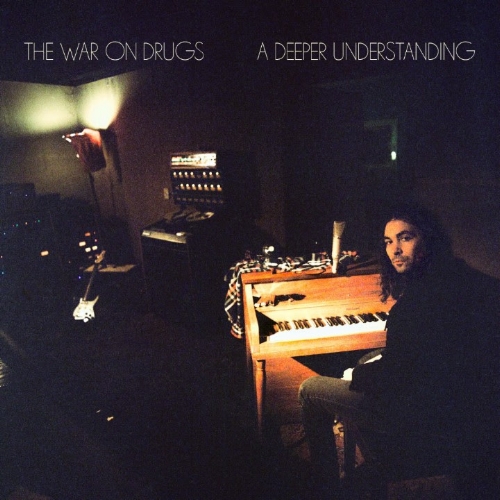
The War on DrugsA Deeper Understanding

RELEASE DATE: 25th August

Queens of the Stone AgeVillains

RELEASE DATE: 25th August

Nadine ShahHoliday Destination

RELEASE DATE: 25th August

Susanne SundførMusic for People in Trouble

RELEASE DATE: 25th August

INHEAVENINHEAVEN

RELEASE DATE: 1st September

PHOTO CREDIT: Ruvan Wijesooriya

LCD SoundsystemAmerican Dream

RELEASE DATE: 1st September

Nothing But ThievesBroken Machine

RELEASE DATE: 8th September

The NationalSleep Well Beast

RELEASE DATE: 8th September

Sløtface - Try Not To Freak Out

RELEASE DATE: 15th September

Foo FightersConcrete and Gold

RELEASE DATE: 15th September

Phoebe BridgersStranger in the Alps

RELEASE DATE: 22nd September

The HorrorsV

RELEASE DATE: 22nd September

Wolf AliceVisions of a Life

RELEASE DATE: 29th September

Benjamin ClementineI Tell a Fly

RELEASE DATE: 2nd October

Alex Lahey - I Love You Like a Brother

RELEASE DATE: 6th October

Liam GallagherAs You Were

RELEASE DATE: 6th October

En VogueElectric Café

RELEASE DATE: T.B.C.

TinasheJoyride

RELEASE DATE: T.B.C.

RUMOURED

Charli XCX 

RELEASE DATE: T.B.A.

Kylie Minogue

RELEASE DATE: T.B.A.

St. Vincent

RELEASE DATE: T.B.A.

PHOTO CREDIT: Matsu

Tired Lion

RELEASE DATE: T.B.A.

FEATURE: The ‘F-Word’: Why Folk Music Deserves Greater Acclaim

FEATURE:


The ‘F-Word’

IN THIS PHOTO: Bon Iver 

 Why Folk Music Deserves Greater Acclaim

________

I will, actually, do another feature like this...

IN THIS PHOTO: Joni Mitchell

where I, without much provocation, launch to the defence of an entire genre. It may seem insane but there comes a point where you can only watch so much undue criticism before one needs get involved. Like a decent yet unspectacular wallflower being sneered at my the jocular, ‘cool’ kids: the headmaster has to get involved and bring about some order. In fact, scrap all of that for I am far too wet to explain myself. I have read article and some reviews who claim, without sufficient evidence, Folk is a genre that seems incapable of modernising and diversifying.

IN THIS PHOTO: Billie Marten

They claim – not naming any offenders; lest they be seen as humans – that Folk is a form of music that has not ascended from the simple and hippy-dippy strummers of the 1960s. Before I take my belt off and birch their bottoms purple; I will leap, rather insincerely, to their defence. In order to play Devil’s Advocate – what an awesome title for a show that would be! – there are a lot of Folk artists who, for some reason or other, are incapable of bringing about reappropriation. Whether you deem mainstream stars like Ed Sheeran as Folk or Pop: there is something about that kind of music that is leading journalists and listeners down the wrong course. Naturally, the majority of today’s Folk stars are not going to be at the same level as legends like Joni Mitchell, Nick Drake and Neil Young – nor will they, necessarily, play the same brand of Folk. The new wave of Folk artists drink in different bars and smoke a different brand of cigarette (no that I am condoning smoking: it does look very cool in the context of a Folk article!). Sure, the artists of today take from the greats of yesteryear: it would be incongruence were they to ignore and refute the legacy and inherence of their betters. Too many assume 2017’s flavour of Folk is either the acoustic-strumming kind one might have experienced during the 1960s –away from the incredible core of Folk legends – or is old-fashioned and outdated.

IN THIS PHOTO: Julia Jacklin (Photo for Happy Mag by Liam Cameron Photography)

The truth is; twenty-first-century Folk is among the most nimble and interchangeable types of music around – I think, only second to Pop. If one listens to artists like Nick Drake and Joni Mitchell, for example, they get to hear some of the best songwriting you could ever imagine. There is variation in their type of Folk but, largely, it tends to be traditional and ‘softer’, let’s say. The lyrics are incredibly rich and poetic but the compositions, perhaps, tend to stick within boundaries. Maybe there is the assumption Folk of now has not evolved from those days – they might love artists like Joni Mitchell but do not want to see that continue forty-or-so-years down the line. I feel there is a divisionism in perception that assumes Folk is rooted too heavily in the 1960s (or before). One of the reasons I wanted to write this piece is to show how far the genre has progressed. In 2017, there are a lot of artists who like to play the more contemplative and calmer variety of the genre. I will come to some examples but there is, on the other side, a whole group of musicians who bring in other genres – from Pop and Electro-Pop right to Alternative avenues.

IMAGE: The album cover for Bon Iver's 22, A Million

Take an album like 22, A Million: the sensational 2016-released wonder-work from Bon Iver. Justin Vernon is, at his heart, a Folk artist; yet he brings, in this album, so many different sounds and ideas. There are a lot of Electronic inspirations and odd vocal samples. He processes sounds and feeds some through machines: reverses them and creates trippy, far-out whispers. It is an invigorating and heady brew that is best left to the initiated – quite a daunting proposition for those unfamiliar. He is not alone in challenging those who feel Folk is too rigid and ‘square’. Even if you take two of my favourite albums from last year: Billie Marten’s Writing of Blues and Yellows and Julia Jacklin’s Don’t Let the Kids Win; you have a couple of modern, yet bygone-nodding works.

IN THIS PHOTO: Laura Marling

The former is actually my standout from last year because it shows huge maturity and worldliness – despite the fact its author is comfortable in her teens right now. Even though a lot of the music relies on the seductive beauty of Marten’s voice: the way she unfurls her imaginative and stunning songs gives one pause for thought. It is not the aimless and mindless amblings one assumes Folk music is about. Those who get confused between mindless Acoustic-Pop and those artists the Antifolk movement rebelled against decades ago – they pick up a guitar and numbingly mumble about broken hearts, unicorn farts and the government nuking them to sh*t. Yeah, we are in 2017 so there is, one hopes, a fervent brand of a protestor who articulates the cracks and frustrations that run through the spine of the country. Maybe there will be the odd artist who does not convey that anger with the same articulacy and passion as a young Bob Dylan – others who will do so with incredible depth and conviction. Marten, on paper, might strike you as a young songwriter who had not really advanced from the same sort of platforms (literally in some cases) one assumes a busker to play on. That is, frequently, covering other people’s songs with the same sort of energy one would associate with a dog that has just overdosed on morphine – with performances that evoke the same sort of shock and boredom. I grant you, it is complicated differentiating between the genuine pioneers and those who seem beholden to bastardize the good name of Folk. Going back to Billie Marten and she, like 2017-examples Fleet Foxes, Laura Marling and Jesca Hoop; produce music that has romance, fire and enormous nuance. The reason I wanted to single Billie Marten and Julia Jacklin for special commendation because they are young and new artists but between them created some of the finest music of 2016. Marten talked about mental illness, travel and escapism; literature, love and hopelessness in a record that brimmed with compositional innovation, sensationally tender vocals and incredible confidence. Jacklin took a more spirited approach when talking about maturity, her position in life and watching others around her ‘grow’ and manifest a more familiar-orientated life. The Australian newcomer is primed for greatness and shows just what variegated and strength there is in Folk.

This year; Mount Eerie’s A Crow Looked at Me collected songs that told the listener about the circumstances of love and loss between Elverum and his late wife, Geneviève Castrée Elverum (and their baby daughter). That is PopMatters’ distillation but it is part of a wider review that heaps praise on a deeply personal and entrancing Folk record. There have been many others this year that demand closer investigation and appreciation. Julie Byrne’s Not Even Happiness and Fleet Foxes’ Crack-Up; Feist’s Pleasure and Aimee Mann’s Mental Illness are very different and unique. Look at each album and, whilst tackling Folk and playing in the genre; they deal with different issues and, actually, sound very different.  I argue there is, not only misconception regarding Folk’s sonics but the lyrics one documents. If you take a few of those albums and it is hard to connect them. Aimee Mann’s record deals with some hard subjects and tackling psychological demands – there is a lot more besides on the L.P. – whereas Fleet Foxes’ Crack-Up is a more luscious and ‘accesible’ work.

The vocals on each differ greatly and, aside from sharing Folk D.N.A., there is nothing that suggests they were born from the same mother. Maybe there is a tangible link between, say, Billie Marten, Laura Marling and newcomers like Phoebe Bridgers: the first two have been compared down to their career trajectory and lyrical gifts; Marten and Bridgers share vocal sounds (even if their lyrics are completely distinct). Even artists who approach Folk with greater tenderness and less energy are doing fantastic things – so far removed from those noxious and lamentable Acoustic-Folk acts that garnered such reaction and approbation. Bridgers is a sensational talent I can see going very far. In fact, after Laura Marling released the incredible Semper Femina (baffled it was not shortlisted for a Mercury Prize); I am looking to Marten, Jacklin and Bridgers to see if they bring out albums this/next year. It is exciting seeing young female Folk artists create such world-class music.

IN THIS PHOTO: Julie Byrne

In fact, when I look at the progressive and established Folk brilliance – most of the names that flood to mind are women. Bon Iver, Fleet Foxes and Richard Dawson (his album, Peasant, is worth your time and money) are exceptions in a list that is largely female – when we think of the best Folk albums of the year so far. That is the same as last year, largely. I shall wrap things up but have been annoyed reading articles that have mooted Folk is past its glory days – if it had any at all! There is so much attention on Pop and mainstream artists that many Folk albums get buried and reserved for smaller audiences. Even if the Mercury shortlist does not include that much Folk; one cannot ignore the sensational and consistent joys one can discover in modern Folk. I did not want to go back in time and see why Folk has always been great – I have addressed that in previous articles. I wanted to demonstrate the fact modern Folk deserves appreciation and investigation on its own merits.

IN THIS PHOTO: Jesca Hoop/PHOTO CREDIT: Piper Ferguson

There is so much range and wonder to be found in a single album. It is a genre that is not chained to a particular sound and sensibility. Maybe it is not as racially diverse as other genres – comparatively few black or Asian Folk artists – but is a lot more balanced when it comes to gender and age. Anyone who thinks contemporary Folk does not merit transition to the mainstream – and proper acknowledgement and respect – needs to get their ears on the best albums of this and last year. I have collected a few songs below – taken from some of the best Folk albums of the past two years – that provides a window into a fabulous genre. Take time to have a listen and realise the ‘’F-Word’…

IN THIS PHOTO: Phoebe Bridgers

IS one we should be teaching everyone!

FEATURE: Go Figure! The Shifting Demographics of British Radio

FEATURE:


Go Figure! 

IN THIS PHOTO: Chris Evans of BBC Radio 2

 The Shifting Demographics of British Radio

________

IT is interesting, a few weeks after it was revealed how much…

PHOTO CREDIT: Unsplash

BBC’s talent was paid (annually), we get a report detailing the figures each of the radio stations has notched up. It is coincident – and, perhaps, not related – but I find it curious in regards the findings. I have written pieces stating how influential radio is when it comes to discovering new music. Streaming services are important but you cannot beat the variation and passion one gets from the radio. Whilst I am normally hooked to BBC Radio 6 Music; it is intriguing looking at the demographics of each station and whether the figures have gone up or down – and whether there is because of the music they play; the talent behind the microphone or changing tastes. Before investigating; let’s have a look at the findings  (presented on the BBC website):

Chris Evans's BBC Radio 2 breakfast show lost almost half a million listeners in the past year, figures show.

It comes just weeks after he was named as the BBC's highest paid star.

The DJ drew 9.01m listeners a week between April and June 2017, down from 9.47m over the same period in 2016, according to figures by audience research body Rajar.

He was paid between £2.2m and £2.25m during that same year.

The figures show Evans lost 370,000 listeners between the first and second quarter of this year - before his salary was published.

It's better news for Nick Grimshaw - whose breakfast show on Radio 1 saw its weekly audience rise by 350,000 listeners on the previous quarter to reach 5.5m.

It is also an increase on the 5.43m listeners who tuned in during the same period in 2016.

Radio 1 as a whole saw its audience jump by nearly half a million between April 3 and July 25 - with 9.6m listeners compared with 9.1m in the first three months of 2017.

The figures show Radio 4's Today programme has increased its weekly listeners to reach a record high - with 7.66m tuning in during the second quarter, compared to 7.13m three months earlier.

 Radio 4 itself also reached its biggest audience since records began in 1999 - with 11.55m listeners every week.

Bob Shennan, director of BBC radio and music, said Radio 4 was "as vital as ever as it approaches its 50th anniversary".

The BBC's figures overall were "fantastic news for radio, illustrating its enduring appeal in a crowded digital marketplace", he added.

LBC's audience also increased, with 2m listeners a week between April and June 2017, compared to 1.7m over the same period in 2016.

The stations parent company Global said it was an all-time high for the station, with presenters Nick Ferrari and James O'Brien both reaching record audiences.

Radio X, which was rebranded from XFM in 2015, also reached its best weekly audience yet with 1.4 million.

Jo.jpg

IN THIS PHOTO: BBC Radio 2 D.J., Jo Whiley

Alan Brazil's breakfast show on talkSPORT lost about 400,000 listeners, with 1.6m a week in the 2016 period down to 1.2m in 2017.

The figures show the morning slot on Kiss saw its weekly audience drop slightly to 2m in the last quarter from 2.1m.

But the programme, hosted by Rickie, Melvin and Charlie, remains the most popular commercial breakfast show in the UK.

Classic FM's symphonies struck the right chords as its weekly audience increased by over 200,000.

And Heart 80s - a new station that launched in March and plays exclusively eighties music - attracted 850,000 listeners in its first Rajar quarter”.

These figures are published regularly and, maybe, one should not read too much into things. What I find interesting- the first thing, at least – is the loss of listeners from Chris Evans’ breakfast show. It is hard reading about that listener drop and ignoring the fact he is the BBC’s highest-paid talent. Not that this should split and bother his loyal listenership. Maybe there is a causal, fair-weather faction who have deemed that huge fortune as a good reason to go elsewhere. It is controversial discussing the pay findings – and why there is a notable gender-gap – but many would have been put off by the fact Evans earns a huge fortune. He has earned this – and been in the industry for years – but I feel one of the reasons his BBC Radio 2 morning show has lost listeners is because of changing tastes.

IN THIS PHOTO: BBC Radio 6 Music's Shaun Keaveny

It is interesting BBC Radio 6 Music were not heavily mentioned in the article. Of course, Evans started shedding listeners long before the furore around his earnings. What the findings show is many more people are listening to the radio. Maybe BBC Radio 6 Music was omitted because it is digital-only but I know it has picked up a lot of listeners. The ‘traditional’ stations are seeing numbers increased and a wider demographic emerge. Streaming services and digital stations pack the market and it is very tempting to listen exclusively to them. What is apparent is people are still bonded to the good old-fashioned radio. It is not a stubbornness or age thing: that combination of great music and entertaining presenters is a potent blend. It is unsurprisingly Nick Grimshaw gained a lot of new recruits. Maybe there are a lot more younger listeners discovering radio: pleasing when one thinks about how digitised and Internet-based a lot of music listener is becoming. Why, then, is radio not only surviving but growing?! Before I give my theories on today’s findings: a look back to a 2011 piece published by The Daily Mail -

IN THIS PHOTO: BBC Radio 1's Nick Grimshaw

But it found that radio had the most mood-enhancing effect, with listeners saying that it lifted their happiness levels 100 per cent and energy levels by 300 per cent, compared to those not using any media at all.

The report said: ‘Radio is chosen as a lifestyle support system, to help people feel better as they go about their daily lives. Rather than the peaks and troughs that people have claimed to experience with TV and the internet, radio provides a consistent environment themed and shaped to suit the listener’s needsat any given time of day, and one that is generally upbeat in tone.’

Viewers said TVs boosted their happiness by 62 per cent and energy by 180 per cent, while those using the internet said their happiness was increased by more than two thirds and energy levels leapt by 220 per cent,  when compared against people consuming no media”.

PHOTO CREDIT: Unsplash

Many might think it is a case of people forsaking digital technology and bonding with something simpler and vintage. That is not the case – as shown in a 2015 piece by The Guardian:

Nearly 40% of radio listening is now on digital with record audiences for digital-only commercial stations including Absolute 80s and Planet Rock.

Absolute 80s pulled in an average of 1.45 million listeners a week with another 1.25 million tuning into Planet Rock, both owned by Bauer Media, in the first three months of this year, according to Rajar listening figures published on Thursday.

Kiss spin-off station Kisstory, another Bauer station, also hit a new high, up 21% to with 1.13 million listeners.

PHOTO CREDIT: Unsplash

Digital listening was also given a boost by record audiences for the BBC’s Radio 4 Extra, which leapfrogged BBC 6 Music as the UK’s biggest digital-only station, with 2.17 million listeners.

Digital platforms made up 39.6% of all radio listening, up from 36.6% in the same period in 2014, including DAB radio, online and via apps.

In the London area, digital listening has now overtaken analogue, with a 46.8% share ahead of FM and AM’s 46.2%”.

Not only is the continued rise and success of radio encouraging: the fact a lot of young people are discovering the form is encouraging to say the least. I feel Chris Evans’ drop in listeners is less personality-driven and more to do with the type of music being played. I have listened to the breakfast slot on BBC Radio 2 and the playlist is not exactly invigorating and uplifting. If one wants to start their day right: you’d think you’d choose a show that had some spirited and fun music. Maybe that is a reach but I do wonder why there has been an exodus from his show to other options – Evans has been at the helm for years and has become no more irritating and unlikeable than before.

IN THIS PHOTO: BBC Radio 4's The Today Show

We know BBC Radio 4 – and stations more suited to ‘older’ tastes – has seen its marketshare increase. One cannot say it is the young vote influencing this change. In Evans’ case; I feel it influenced by the time of day and a growing need to, at that time of day, discover a different type of show/music. Perhaps it is a brief blip but I was surprised to find so many leaving BBC Radio 2’s breakfast show. Are there more compelling reasons radio is seeing a resurgence? A piece by OptiComm Media, published last year, shed some light:

In this exciting age of digital it is easy to overlook the value of radio advertising or wrongly assume that it is less compelling than other channels.  Undeniably, the younger demographic do have a preference for listening to music using online video and streaming services via platforms like Spotify who are significantly increasing their foothold.  However, in the UK 9 out of 10 adults still tune into radio each week – that’s 48.7 million people.   Digital radio has also made radio more accessible to the masses – 58.9% of total radio listening is now via a digital platform with 30 million adults owning a DAB digital radio.

Digital radio also enables advertisers to target much more specifically based on listening preferences, region and age group to ensure the advertiser’s message is reaching its intended audience.  No doubt the day will come when listeners receive personalised ads based on a stored profile but for now, there are still plenty of persuasive reasons for looking at radio.

When was the last time you drove your car without the radio on?

IN THIS PHOTO: Russell Brand of Radio X

People do listen to radio ads and unlike TV where there is a tendency to channel hop, radio listeners do not change stations with the same frequency and are often more loyal to their station of choice.  Radio’s avoidance score is joint-lowest with cinema.  The RAB (Radio Advertising Bureau) estimate that 57% of listeners have checked out a product or service online after hearing about them on the radio while 39% revealed they have been compelled to search for something on the internet after radio prompted them to do so.

The effectiveness of local radio stations should not be overlooked.  These constitute an integral part of the community and businesses advertising on local radio can benefit from making that association and connection.  Listeners often develop an affinity for a particular presenter and think of them almost as a ‘friend.’  This feeling can extend to regular advertiser and sponsors if they get their messaging right.

Radio is a great selling tool because with the right script and voice you can convey emotion and authority and it can also be a very cost effective and speedy option.  With most stations offering excellent packages and deals that include scripting, production and licensing you really can reach more people for less than you may think and get on air in only a matter of day”.

IN THIS PHOTO: Jeremy Vine (BBC Radio 2)

It is not only the U.K. that is seeing its radio economy flourishing: American listeners are backing their stations and discovering new joys from the radio. I am interested in an article published by Forbes:

Instead, it’s all about smartphones and other connected devices for the younger crowds, which should come as no surprise to anybody who knows someone between the ages of 15 and 19. Smartphones are now responsible for 41% of their listening, which is much higher than the average when taking into account all age groups, which is just 18%. There is clearly a lot of room to grow when it comes to streaming platforms and the older generations, which seem to have barely been tapped.

Just because millennials have all but abandoned traditional radio, that doesn’t mean the format is “dead,” and in fact, radio is still doing alright, at least for the time being.

Millennials don’t listen to as much radio as those that came before them because they have much better options these days. Younger millennials are also in a unique position, as many of their parents are young enough to have caught on to streaming or other listening options instead of sticking with radio. The popularity of streaming is growing all the time, and now that so many devices have connected capabilities and wi-fi (including cars, where a lot of radio listening takes place), it’s easy to see why young millennials don’t have the connection to the radio that older generations still do”.

IN THIS PHOTO: Clara Amfo of BBC Radio 1

Is it, then, the case millennials are not only broadening their tastes – maybe some of BBC Radio 4’s new listeners are breaking trends and subverting expectations – and discovering radio through Smartphones and the Internet? It is impossible knowing exactly why certain stations are on the rise; why Chris Evans has lost a lot of listeners – it might be no down to simple factors or sudden realisations. The biggest takeaways from the new findings are radio’s lure and appeal continues to grow. We know how popular it was in 2011/’14/’15 – this looks set to continue for many more years to come. One cannot discount the influence of digital option, though. Maybe listeners are listening to F.M./A.M. stations through devices more? It does not matter how one listens to radio: the fact it is a format in no danger of extinction is wonderful. Unlike film – where there is a social aspect to going to the cinema – one could well imagine why people would forsake radio and choose streaming sites! The traditional and loyal core of radio listeners is not being tempted and distracted by the proliferation of streaming sites. People are still going to concerts but they have plenty of time for the radio. It is a forum one discovers new artists on; finds comfort in and unearths treasures.

PHOTO CREDIT: Unsplash

For me, radio is not only access to the variety of upcoming talent: it is the chance to preserve the finest sounds from the past. I listen to shows like Desert Island Discs (BBC Radio 4, Sundays) and, as a result, have sought-out other shows on the station.  In terms of age groups, and whether certain stations are bringing in younger listeners, it is interesting reading a BBC breakdown. Similar breakdowns will be apparent this year but I am interested how important younger listeners are when it comes to contributing via digital means; how solid the traditional core is (older listeners) – and whether streaming services are actually driving people to radio. Streaming sites have their uses but they cannot cover the same sort of ground as radio. One does not get to listen to a human being via streaming – in the way they hear a D.J. on the radio. The breadth and choices one gets with the radio cannot be easily replicated. Whatever the reasons behind the continuing prosperity of radio are; I am still fascinated by the declining listenership of Chris Evans to other stations. I do not believe it is Evans’ personality and style that is driving people away. Half-a-million lost listeners is a huge dent and one wonders what the real reasons behind that are! Regardless of Chris Evans’ popularity; I am pleased radio remains in rude health – and continues to grow in popularity. It shows people are not only listening for music content but current affairs, comedy and a variety of shows. I, for one, hope radio’s dominance…

CONTINUES for decades to come.

FEATURE: “If Music Be…”

FEATURE:

PHOTO CREDIT: Unsplash

  “If Music Be…”

________

THERE are three reasons I am writing this piece.

IN THIS PHOTO: Björk for Dazed’s autumn 2017 issue/PHOTO CREDIT: Jesse Kanda

I need to keep this short(ish) for a couple of further reasons. The first is, having to compact my writing into an evening, there are inevitable mistakes and rush-provoked mishaps coming in. I yearn to have the entire day writing and not be beholden to the dark embers – pushing myself until the light is extinguished. I shall come to that another time but, ironically, I am writing about reviews and journalistic attention – whether it is useful and how authoritative it is. I mentioned I had a few motives for writing this feature. I wanted to look at other writers and whether they are being forced into brevity: if it is useful when reviewing an album and whether one needs to expend many words. Another reason (why this is here) is Björk (who one can see pictured above) has announced a new album is just around the corner. Her last one – 2015’s Vulnicura – was a pretty good one. Even by her impeccable standards; it was one of her most successful and assured of the decade. She is a consistent artist who does not want to rest between albums for too long. Lord knows what has inspired her upcoming album. Recent efforts have looked at nature and science: she has pushed boundaries and found new ways to create sounds and invent staggering soundscapes. Whether she continues along this line – or adopts a directness one can associate with her early days – I am not sure. Although she says it the album is coming out soon; that could mean a few months – maybe it will be out on Friday. Who knows, eh?! Whatever it is dropped, and whether a single comes out beforehand, it is one of the most-anticipated releases of the year – even though nobody heard about the album (whatever it will be called) until today. The mere suggestion of a Björk is a moment of joy and revelation. Speculation will grow and people will be wondering what is coming...about that word limit thing…!

I wanted to write this piece because, more than anything, I am reading reviews and articles that come out in the mainstream music websites; those we see in the underground sites and the big magazines. Going back to Björk and, without being too distracted, she assessed her forthcoming album, thus:

This is like my Tinder album,” she explains in the feature. “It’s about that search (for utopia) – and about being in love. Spending time with a person you enjoy is when the dream becomes real.”

Elsewhere in the piece, Björk discusses how the rise of right-wing populism helped inspire her new direction: “If we’re gonna survive the situation the world is in today, we’ve got to come up with a new plan. Especially now, this kind of dream is an emergency.” She also talks about reuniting with Vulnicura co-producer Arca for the album, describing it as “the strongest musical relationship I’ve had.”

That snippet is from Dazed - and is a teaser for the question-and-answer/feature she has conducted with the magazine. It is very exciting and it makes me feel, when the album does come out, what kind of reception it gets. I titled the article the way I did because there is a huge irony. We all know that Shakespeare soliloquy/adage and that, as much as anything, should define music. It is a food of love and banquet: a passion that should not be prone to brief curiosity and insincerity. I find a great number of music journalists are tasked with reviewing an album and really not putting in the graft – have to keep this to fewer than two-thousand words! I mentioned how mistakes are creeping into my work – there may be the odd bit here-and-there in this article (that gets missed). It is inevitable there’ll be the odd grammar/spelling error because: A) I do not have a sub-editor and try the best I can and, B) I do better than most – consider the number of words I type a week. My reviews are unique as, simply put, they go pretty deep. Like a well-hung porn star working overtime: I go in hard and plunge deeper than a submarine.

PHOTO CREDIT: Pixabay

Expunge that rather odd nautical-cum-ejaculation image from your mind and you know what I mean. I review new artists and feel I need to be as thorough as possible. I realise accuracy, articulacy and variation are important: if one is lacklustre in one area; are they entitled to judge others?! The reason I put so much effort into every review is down of the work that artist does. They take the trouble to write the song/E.P. and toil endlessly to get the sound right. From there; they embark on production and mixing; pushing it to journalists and hoping people react to it. Few realise how hard and anxiety-provoking recording music can be. There is so much expectation and pressure on an artist: they, in turn, feel rushed into recording music to fulfil a sense of critical expectation. I am not naming any papers/sites but we all read such brief and pointless reviews. If a mainstream artist puts out an album – and ensures it is the best it can be – what use is a review that lasts only a couple of paragraph?! I honestly see mainstream reviews that distil an album into eight lines. Sometimes it can be even worse and you wonder what the journalist is doing during the day – and why they are in such a rush! It comes down to editing guidelines and making something bite-sized and digestible. I was looking at reviews for two recent albums: Dizzee Rascal’s Raskit and Arcade Fire’s Everything Now. Both albums gained different reactions – the former more positive; the latter left many cold – but it was hard getting a genuine consensus. Obviously, different reviewers have different thoughts but I saw few reviews that actually went into any details. Rather than listen to the album itself: how am I meant to get a true sense of an album’s pros and cons from the collection of barely-there reviews?! Arcade Fire’s album got a couple of five-star reviews off the bat. Those were, by-and-large, quite detailed and gave me something to go by. The mediocre/poor reviews – in terms of the quality of Arcade Fire and not the journalist – were punchy to the point of being pointless.

IMAGE CREDIT: Unsplash

They slagged the album off in a couple of sentences and that was it. Because of that, I was so confused as to whether the album was much cop. I had, say, five reviewers saying it was crap and five saying it was good – if two journalists say it is a great record, and put the effort in, does that means I should side with them?! The same was true of Dizzee Rascal’s new one. The Guardian gave it a meaty review and that was quite refreshing. I picked up some good points but felt, before I went out and bought it, I’d read a few more reviews to get a balance. The ones I saw ranged from three-to-four stars: there were few that rated it higher or lower. That lets me know critics like it – if not crazy about it – and they were pleased Dizzee was back to his near-best. Pleasing for me, as a fan, to know he has produced something better than the genuinely bad, The Fifth. I have, so you know, bought the album and heard it on Spotify beforehand – so irritated at the slapdash reviews and complete lack of passion. I have heard Everything Now on Spotify and had to make my own mind up (I will not be buying that album). I mentioned a certain Icelandic artist earlier – and have her as the cover-star – because her as-yet-untitled album will not merely be dropped into shops without it getting into the hands of critics. Maybe she will release a single before; maybe she will have snippets of songs out there – she is not someone we can predict in any way. Being a Björk album; it is going to be full of wonder, invention and the mysterious. It will have big sounds but, as it is a paen to love and hankering for Utopia; it makes me curious how that will manifest itself. I can well imagine but, before the writer graces us with the L.P.’s presence: I need to collate a few reviews and see what people are seeing. For me; passion may compensate (to an extent) for some at-times-sloppy penmanship – scansion, syntax and grammar not always tip-top and rosy – but I acknowledge this.

IN THIS PHOTO: The album cover for Arcade Fire's Everything Now

People pick me up on it and I yearn to be better. My greatest positive, I feel, is the way I approach reviews and how I dissect songs/artists. If I was charged with reviewing Björk’s upcoming album; I would provide some background and contextualise the record. I would ensure the review was thorough, concise and helpful. I worry so many journalists, even if it is a Björk record, will reduce it to a few paragraphs. It makes me wonder how useful modern media is and whether we are compressing articles to suit a short attention-span. There are culpable sites – some are really great and ALWAYS make their reviews detailed – but I want to see consistency across the board. If I am looking for some Björk reviews; I will do a search on Google and see the search results. Clicking on them; it can be quite a frustrating experience. They give the album a star-rating but then, when it comes to explaining the songs and what the album is about, often that is compacted into a few paragraphs. The artist has put her soul into the album so one wonders whether she is offended by the short and punchy reviews. I know sites limit their writers to a word count and do not like to put too many long articles online. Music is a wonderful industry and the greatest albums deserve a proper and passionate review – even so-so records need the right amount of words to justify their rating. One cannot give an album four stars and then write ten lines. What is anyone supposed to do with that?! It is happening more and more and it is making purchasing habits quite erratic. Once was the case we’d look at reviews and get a sense of what an album was about; go out and buy it and that was that. Now, people cannot gauge an album’s validity and quality on the strength of reviews. They stream the odd track and then, when everyone has had their say, will, make their own decision. The music consumer needs education and guidance: I am concerned sites/newspapers/magazines, in their zeal to be accessible and digestible, and taking a calorific approach to writing.

PHOTO CREDIT: Unsplash

They are presenting a sparse and small meal and not providing the public with any real substance and nutrients. Because of this – and follow the diet/food analogy here – there is this anaemic and under-fed reaction. We are being left hungry and maddened by the vast array of stupidly-sized reviews. (I am aware of the irony that is on display here). I have rambled on and exceeding my word limit desires for this piece. There might be errors and omissions but, I feel, in decrying critics and their review culture have, ironically, put more depth in than they would reviewing an album. I want to be one of those mainstream critics but feel I would not be allowed to expend necessary effort and thought. Perhaps that is the way the media is but it makes me sad thinking Björk’s upcoming album will be assessed in so few words – she deserves so much more and is an incredible artist. I will leave this be but wanted to discuss something that is making me quite angry. I see a lot of people rage at the laziness of many journalists and how sites are putting out threadbare reviews. It is not inspiring the new generation of journalists and means, for the artists being reviewed, they are not provided with the attention they deserve. That creates a negative culture and makes them less inclined to make more music. We all know, dears, music IS the food of LOVE. Whether you like the album (or not): it warrants a decent and diligent write-up. For that reason, when faced with an album, there needs to be changed. Do not limit the reviews to so few words. Truly LISTEN to the album; let the imagination conspire and…

PHOTO CREDIT: Unsplash

PLAY on!

FEATURE: Megahertz: The Changing Face of Dance Music

FEATURE:


Megahertz: 

 The Changing Face of Dance Music

________

ONE of the biggest changes I have noticed over…

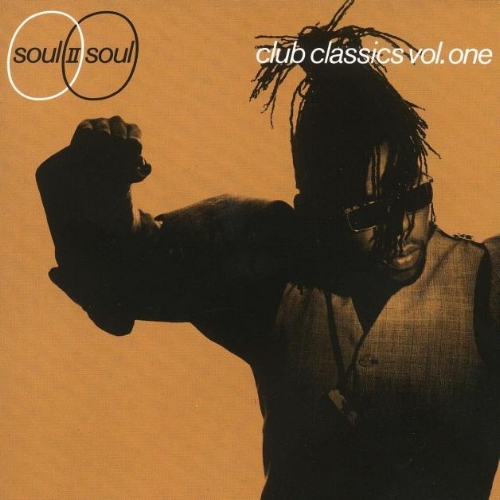
the past few decades is how ‘Dance’ music has evolved. I use that ('Dance') word advisedly as it is hard to define what that really means. I get it is, rather obviously, music one can dance to. I was born in 1983 and remember growing up with a lot of music from the 1960s and '70s. My earliest memories of Dance music, I guess, were formed around the late-'80s. At that time, one was starting to hear those great Club anthems arrive. My fondest recollections of music began as a young child. It is eye-opening thinking about acts like Snap! and Soul II Soul. In broad terms, one sees few comparisons between them but they each made music designed to get people moving. One can quibble regarding genre-terms and terminology but, in its wide remit, there is a lot of flexibility regarding Dance. It was a glorious era – the late-'80s/early-'90s – for transformative and hugely evocative sounds. The clubs were different then: just as sweaty but not quite as ultra-modern as they are today. That seems insane as they can only be as developed as the world around them - but there is a different pulse and sensation today. I will look at today’s market but, flicking back the 1990s and it is, without doubt, one of those decades where music stepped up and changed the world. I won’t chat about the Grunge, Britpop and Alternative sounds that were setting the world on fire – they definitely had an impact and influence on the Dance artists of the time. Most people’s exposure to the floor-bangers of that period is through compilation albums. They hand-pick the ‘greatest’ Dance anthem (or whatever) from the period – in order to give a taste of what it was all about. Actually having grown up in that time meant I, like many people, had a much more tangible and realistic impression of the scene. One of my favourite childhood recollections is hearing The Key The Secret by Urban Cookie Collective. The Eurodance band hardly stuck around long – and the song is horribly dated now – but, in 1993, it was quite something.

PHOTO CREDIT: Unsplash

Again, without sounding like I am scanning down a compilation C.D., I recall the likes of Haddaway (What Is Love) and Dr. Albarn (It’s My Life) light up the charts. I was, perhaps, a little immature to appreciate how they songs translated in the clubs but, marvelling today, I am struck by how innovative and timeless those songs are. Few would have predicted the way Dance transformed from the 1980s. I know there was a sturdy Dance scene in the 1980s but nothing as varied and compelling as the decade that followed. To me, it is the innocence and freedom of the songs that strike. There is sexuality and suggestion in some songs: the music was not as direct and one-minded as it is today. A lot of the tracks dealt with self-determination and expression; surrendering to the rhythm and purity of love - such an exciting, refreshing and moral style of music. Yes, I am not naïve enough to suggest Dance music was attending church and helping the elderly at the weekend. There was plenty of sex and rudeness stuffed in-between the crevices. Towards the end of the 1990s, there was a definite turn towards a more throbbing and hardcore vibe. Maybe, in order to shake off music like Britpop and U.S. guitar music; Dance artists felt they needed to reflect a more edgy and futuristic style of music. It is interesting how fast that transition happened and how the form evolved in the decade. I have a fondness for the Dance music from, say, 1988-1995. That was, in many ways, the first time Dance took a huge role in the mainstream and was translating worldwide. At that time, the finest Dance artists came from Europe: today, there is a greater reliance on U.S. and U.K. artists. It is interesting seeing why there is a nationality/continent change from the 1990s to the current time. There were fewer artists around in the 1990s – getting into the studio meant you probably had a record deal – so the quality-quantity ratio was a lot better.

It was that sense of fun and playfulness that struck my tender mind. I listen to the songs now and many of them have not dated. Those themes of togetherness, losing oneself and feeling good are as relevant now as they were then. If the likes of Dr. Albarn, Baby D and Snap! were ruling the charts in the late-'80s/early-mid-'90s; then it was Fatboy Slim, Underworld and The Prodigy who took over from them. The younger siblings were a lot more intense, dangerous and fuelled-up. If the predecessors were giddy and loveable from being tipsy: the grittier and more experimental Dance that ended the 1990s was sampling everything it had shoved down its throats. Acid, cocaine and heroin mixed with booze and cigarettes. I am not suggesting Dance lost its innocence and become an irascible and undisciplined hell-raiser. Maybe there was a desire for something more ‘mature’, sexualised and bangin’. It was during the late-'90s I was starting to get into artists like The Chemical Brothers, Basement Jaxx and Underworld. There is a need for clarification when we talk about ‘Dance’ as a genre. I have seen Reggae and Pop songs go into that category which is fair enough. It can, in broad terms, be seen as music that makes you move and hit the dancefloor. If we talk in pure terms: the end of the 1990s saw Dance music become more muscular, darker and progressive. The mantle switched from brilliant Eurodance to the new generation of British and American Dance artists. This country, especially, started to make its mark on Dance at the end of the '90s. Basement Jaxx, when writing their album, Remedy, were annoyed at the void that was left in Dance after the real buzz and carnival of the early-mid-'90s. The fun had gone and was replaced by something generic, repetitive and unengaging.

Something had happened between the time those classic '90s anthems were released and the final stages of the decade. There was derivative rehash and a real deflation that seemed to happen – perhaps Dance was becoming more underground and has reached a zenith it was unable to sustain. Basement Jaxx, among others, articulated a desire to push Dance/Electronic music to the next decade. In 1999, when they released their debut, new cultures, sounds and ideas were brought into the music. They added back the fun and ensured songs exploded with colour and huge choruses. Epics like Red Alert signified a return to that classic Dance sound: songs that make you sing loud and flock to the dancefloor. The Brighton duo was not the only artists to breathe life into the spluttering corpse of Dance music. I have mentioned artists like The Prodigy and Orbital. Trip-Hop acts like Massive Attack provided a shadowy, night-crawling sound that beautifully contrasted the bright and cheery Dance of the early-'90s. Thematically, things started to change, too. There was a turn from the universal and celebratory to a more insular and negative tone. Again; that is not the case with all Dance. Maybe there were doubts as we headed into the new century but I definitely detected a harder crust and less optimistic disposition. What was inspiring was how artists were pushing beyond Europe and bringing new sounds to the game. The Prodigy sampled a lot – Nirvana’s Very Ape was used on their hit, Voodoo People – and other artists were fusing elements of the 1980s (New Order was an act that were still being incorporated) and suggesting what the future held. It was a stunning clash of past and present that broadened Dance and took it to new heights. 

IN THIS PHOTO: Basement Jaxx

Basement Jaxx, Daft Punk and LCD Soundsystem were the kinds of artists who were redefining and reshaping Dance/Electronic music of the '00s. Maybe that is just a sign of time and growth but it is interesting seeing how a shift between European and British/American Dance radically transformed the genre. Throwing forward to today and I see Dance acts fusing the harder and bolder sounds of the '00s with the coquettish and spirited anthems of the '90s. The worst thing about that shift was the fact the music was tender and less relaxed: the greatest aspect was it was becoming broader and more experimental. Not as one-note as a lot of the anthems from the 1990s: the finest Dance purveyors of the following decade were unafraid to push forward and bring in new sounds in order to create something incredible. One of the worst things about an open music market is the fact a lot of today’s Dance artists employ basic elements and rely on the machine. Too many songs are processed through laptops and lean on samples and digital intervention. The vocals, often, are processed and the lyrics depend upon clichés and basic language. Maybe music, to an extent, has witnessed too much and there is little room for innovation. One of the good things about modern Dance is the fact it does not remain rooted in the present. I hear a lot of artists nod to the 1990s and that reckless light and smile – mixing it with the of-the-moment technology and demands. Dance, as a genre, is not as big in the mainstream as Pop and Alternative but the genre is still thriving and influencing artists. My big desire is to see a semi-return to the greatest Dance music of all-time: that mid-'90s-cum-early-'00s blend. THAT would be incredible! I know technologies are more advanced and the charts have modernised - I could not see many objecting to a reinvestigation of the older, more fun Dance sounds. I love how Dance music still has a place and can throw up epic tunes. The best and most original Dance songs are those that get out of the mindset of chart positions and disposability and dig deeper.

IN THIS PHOTO: Nicolas Jaar

The more youthful and BBC Radio 1-minded Dance artists tend to go for the easy height and are less concerned with preserving Dance’s ethic and pushing it on – nodding to the past and creating a balance of light and dark. The Dance music (of today) I love most can be distilled into an album like Sirens – released last year; it is the finest work from the Chilean-American producer, Nicolas Jaar. That album – one of the best Electronic Dance Music albums of last year – looks at his home in Chile and the political turmoil it faced after General Pinochet’s junta; how it is coping and the issues it needs to tackle. There is a split between artists like Jaar, Aphex Twin and Björk who represent that innovative, genre-fusing and deeper style of Dance/Electronic that brings in multiple genres and has a much more intelligent and mindful approach. There is that contrasting band of sweaty and juvenile Dance that employs anodyne beats and aimless electronics – designed to get the clubs jumping but not linger in the mind. Dance will always campaign and impress but I feel it is going through cycles. Right now, it is broader and less definable than it has been in decades. It is a wider genre that seems to reflect the cross-pollinating nature of the artists. I do miss the values Dance espoused in the 1990s but realise how extraordinary the artists that picked up its baton contributed so much. I will not put a playlist at the bottom – you can do your own research – but I have touched upon how changes and time have impinged on Dance music. It is a genre I still love but I wonder whether we will see artists embracing the quality and innovative spirit of the late-1980s and early-1990s. I shall put on the childhood bangers I love but keep my ear open to the best of the modern breed. I feel Pop still dominates the mainstream: if Dance were more variegated and consistent, I would like to feel it could have the same vanguard drive it did during its heyday. In a dark and unsettled time; that is a dream we…

PHOTO CREDIT: Unsplash

ALL would like to see realised.

FEATURE: Kate Bush: The Continuing Muse

FEATURE:


Kate Bush: 

PHOTO CREDIT: John Carder Bush  

 The Continuing Muse

________

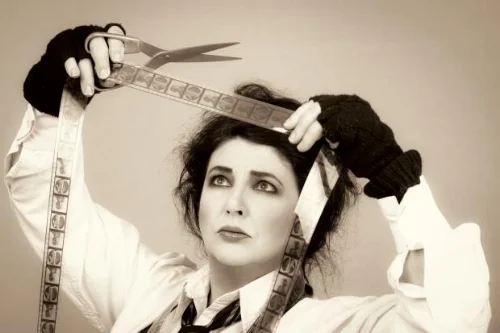
YESTERDAY was the fifty-ninth birthday of Kate Bush and…

a timely reminder of her importance and legacy. It is hard to believe next year she will turn sixty next year! I remember, as a child, being transfixed by music videos of her (in the 1980s). It was a revelatory and unforgettable time that awakened my young senses to one of the greatest figures in music history. Rather than needlessly prattle about my infantile recollections: seeing as this is a (slightly belated) birthday piece for Bush; I wanted to look at the effect she is having on modern musicians and how important she is – and why next year is a particularly special one for her. Not only will she hit the big six-zero – perhaps, not the biggest cause for cheer – but it will be the fortieth anniversary of her debut album, The Kick Inside. I have written pieces about Kate Bush before and, in so much as this will be the last one until next year, want to pay tribute to someone who continues to influence and seduce new artists. It is amazing how many reviews and interviews I take on where Kate Bush’s name is included – cited as an idol and Muse.

If one goes back to that unique and flabbergasting debut album: how many who witnessed it first-hand would imagine the world would be talking about it now?! To me, it is the greatest album ever because it has such a delicate disposition – but is full of contrasts and wonders. I can dissect the album and give a forensic investigation – I won’t, you’ll be thrilled to know – but there is so much intoxicating beauty and delicious flights-of-fancy. I listen to The Kick Inside and notice a mix of girl and woman in that L.P. There are moments when her voice is enraptured and enveloped in delirium and fantasia. Feel It is, perhaps, the fullest exploitation of his child-like persona – a sentient and delightful creature that does not bark but soothes and guides you somewhere magical. The history-making Wuthering Heights broke records – in the sense, it was the first self-penned number one song by a female artist in this country.

PHOTO CREDIT: Fish People/Kate Bush

If that were not enough – to make it a stone-cold classic – then the beguiling, The Man with the Child in His Eyes is, surely, ample proof the then-teenager was destined for legend. What makes the album such a revolution-maker was the individuality and self-belief. There were no nerves and compromises from a songwriter who, still in her teens, felt aggrieved to follow record labels and foster her creative drive and intuition to anyone else. There were arguments as to whether Wuthering Heights should be released as a single – she got her way in the end – and there was an assumption she was your average songwriter. Today, there are so many Pop stars that, one feels, are controlled and dictated-to by record labels and marketing men. In 1978, when The Kick Inside arrived, Kate Bush was not going to be a puppet.

PHOTO CREDIT: John Carder Bush  

She has created the songs single-handed – a staggering achievement then: it seems rare in this day and age – and revealed herself to be a prolific and multifaceted talent. It is important The Kick Inside gets a proper fortieth birthday next year: not meant to feel older or past its best days: as baffling, immaculate and tender as the day it was released. One cannot decay, denounce or ignore the ever-preserved fragility, seduction and curiosity of Bush’s voice. It addresses themes like coincidence and juvenile love: longing and self-investigation in all its forms. If critics were keen on the album – it was not elevated to the same heights as Hounds of Love – it has, in my view, gained immense retrospective relevance and importance. I hear so many modern songs that borrow from the 1978-songbook. If few songwriters can create something as timeless and unexpected as Wuthering Heights: suggestions and flavours of The Kick Inside find their way into many of today’s songs – not only from female artists, you’ll be pleased to hear.

PHOTO CREDIT: Fish People/Kate Bush

Lionheart (1978) and Never for Ever (1980) marked a period of expectation, creative confusion and hurried scheduled. A lot of Lionheart’s songs were compositions recorded before The Kick Inside was released – Never for Ever did not reflect the finest of Kate Bush. It was not until 1985’s Hounds of Love when that peculiar and unbelievable peacock was allowed to spread her wings – that might sound like a poor comparison but it reflects the colour, majesty and pride of the proud artist. Yes, 1982’s The Dreaming was a marked improvement and found Bush more focused, varied and assured. She added raw and almost-masculine elements to her voice; ventured into new songwriting territory and pushed herself as a composer. Hounds of Love, invariably, is the album that will get the most attention.

PHOTO CREDIT: Fish People/Kate Bush

It seemed to come out of nowhere. Few expected something as unbelievable and epic after a run of ‘mixed’ albums. Forcing herself to go away and create the album SHE wanted to create – Hounds of Love is the songwriter hitting her absolute best. Running Up That Hill (A Deal with God), Hounds of Love and Cloudbusting are the standouts. That conceptual second-side is a brave move but one that allowed Bush to create an album of two-halves. It looks at a heroine cast adrift in the ocean: looking for salvation and finding her hope fading in the dark. It is a terrifying, claustrophobic and gripping narrative that one is engrossed in. Not to skip over the remainder of Kate Bush’s albums, but the point of this piece was to highlight what an inspiring and important talent she is. Albums after Hounds of Love continued to push new ground and, aside from the odd critical miss (The Red Shoes being one), the fact Bush could continue to stun and baffle the public (and critics) showed what a unique and peerless talent she was.

PHOTO CREDIT: Fish People/Kate Bush (a promotional shot for her 2011 album, Director's Cut)

One hopes there is plenty more music to come from Kate Bush. She is sixty next year and it is a perfect opportunity for journalists and fans to speculate and predict. Maybe Bush is already working on new material or another tour? Her 2014 shows at London’s Hammersmith Apollo, Before the Dawn, mesmerised the masses. It was a fantastic and year-defining set of shows that proved what a passion there still was for Kate Bush’s music. Female artists like Madonna and, in modern terms, Lady Gaga, have managed to compel and inspire musicians but few have done it in the same was as Kate Bush. There was nobody like her in 1978 and, you can argue, there is nobody like her now. 50 Words for Snow, released in 2011, was the last L.P. we received from Bush. One wonders whether next year will see a fresh album released but, in reality, there is no rush. She is an artist who has never been beholden to deadlines and conforming. She takes her time to craft an album that she wants: given the problems rushing lead to in the early days; she has deliberately chosen to slow and take time for the music to form.

PHOTO CREDIT: Fish People/Kate Bush

She does not have the record labels breathing down her neck (as she runs the label, Fish People) and is not being hounded for new material. I can understand why that happened after The Kick Inside. People could not handle the enormity and singularity that was Kate Bush’s talent. Keen to mine it as readily and expeditious as possible – that had a detrimental effect on her quality and happiness. There is no album as free and revelatory as The Kick Inside: none as epic, sweeping and wondrous as Hounds of Love. From The Dreaming’s stunning heights and Ariel's ’scope and unpredictability – a double-album that was released twelve years after The Red Shoes  - there is so much to Kate Bush, as an artist. Each record (from Kate Bush) is a joy and completely new experience. I long to see more Bush material but treasure what we already have.

The reason I feel The Kick Inside is so pivotal is the fact it redefined what it was to be a female artist. Here was someone who did not take crap from the labels and was not going to be a controlled artist, designed to be a sex symbol. Sure; Kate Bush made the eyes water in 1978 – one of the most striking and sensuous humans one could envisage – and still holds arsenals of charm, allure and beauty. In interviews, she explained how prolific she was as a child. Writing oodles and masses of songs by the night; she would perform them to her family – some songs went on for hours; people would walk out. It was the first suggestions there was something different and wonderful about Kate Bush. This has come to fruition and, through the decades, she has become our most treasured and important female songwriter. It is the way she has translated through the years that really wows me.

PHOTO CREDIT: Fish People/Kate Bush

I feel there is no other artist that has had such a profound and mutating effect on modern music. Artists are influenced by her but redeploy her sounds and shades in strange and impressive ways. They, through her, are pushing Pop music forward and creating some incredible music. Lest we forget how important Kate Bush is to music’s past, present and future. If you are not ready to worship at the altar of Kate Bush a day after her fifty-ninth birthday: you surely must next year. The Kick Inside turns forty – its author, sixty. It is a perfect time to pay tribute to a colossus of music who has made an immeasurable impact. Until then, let us wish (a day late, admittedly) Kate Bush a massive…

HAPPY birthday!

FEATURE: Radio vs. Streaming: The Best Way to Discover Music?

FEATURE:


Radio vs. Streaming:  

 The Best Way to Discover Music?

________

NEXT week, time willing, I will raise a point that has been on my mind…

PHOTO CREDIT: Brooke Cagle/Unsplash

ALL OTHER PHOTOS: Unsplash

for a long time now. It concerns the monetisation of music and whether, in 2017, a music career is even possible. I know a lot of musicians but, unless you are a mainstream act, how easy is it generating reasonable profit and making a genuine career from music? So many of the artists I encounter have to work several jobs and push themselves to the ragged ends. Sure, they love the buzz of gigs but one feels they are working harder than they should be. I will look into the ins-and-outs of streaming and its equity but, putting this debate on the table; which is the most effective marketing tool: the humble radio or modern streaming services? The two are interconnected and one can debate whether there is mutual exclusivity. I am finding many bemoan services like Spotify and how unreliable they are when it comes to financially supporting artists – and promoting the best new music around. I find it is hard for artists getting attention and proper acclaim from streaming/music-sharing sites. If you are a popular chart act; it can be quite easy gaining millions of views for a music video – the latest release racking up serious views in a matter of hours. Promoters, adverts and sponsors ensure money is notched in. Likewise, they can get a pretty healthy amount of money from downloads but, compared to gig money and merchandise, it is not as impressive as one would think. I will get into that more but have realised how little of my latest music crushes from sites like Spotify, SoundCloud and YouTube. Being a journalist; I have an unfair advantage when it comes to new musicians and being exposed to some awesome humans. There is something anhedonic, mechanical and soulless about streaming sites but I recognise how popular they are. I feel it seems like the go-to solution for any musician. They feel by getting their songs on these sites, and sharing on social media, that will get (songs) into the hands of the masses.

Can the digitalisation of music and promotion really rival the tradition and longevity of the radio? The two work with one another. It is debatable whether an artist would be discovered by radio was it not for their music being on streaming sites and social media. How interconnected are the ‘traditional’ and modern in regards music marketing? It seems like they are completely separate but are more connected and bonded than you’d think. I feel there are merits to both but feel one cannot top and knock the importance of radio. I am not talking about local radio – it is good for promoting local artists but complete shite when it comes to other music – but the national options. Most of my discoveries seem to come from BBC Radio 6 Music. Before you get all smart: I know the station is digital-only. It is still a radio station and not a streaming site. Consider BBC Radio 1 and 2. Between them, one can discover so many wonderful musicians – a lot of my reviews and features have stemmed from finding artists on these stations. Perhaps I am being subjective because, when it comes to my reviews and interviews, the vast majority of the artists I feature are emailed to me – P.R. companies and various management companies contact me direct. From there, I will share the article online and it is passed into the world. I sort of avoid both streaming options and radio so it does muddy the water. Essentially, my favourite albums from the past few years have been discovered through radio – hearing a song off the record and then being compelled to investigate the full album afterwards. There is something magical and dependable about radio. It is no secret BBC Radio 6 Music is a lifeblood and sanctuary for me. Listening to the station; I am immersed in the finest sounds from around the world. The station is wonderful unearthing the coolest and most intriguing acts – aimed at a young-middle-aged demographic.

I listen to BBC Radio 1 if I want to stumble upon some fresh Pop and Dance; BBC Radio 2 for Country, Jazz and Folk – that tends to cover all the basis when it comes to genres and tastes. I supplement that banquet with offerings from Spotify and other streaming options. Each week, I collate a playlist that collects together all the singles and new releases from music – and a track from each new album out that week. For this, I get information from the radio but do a lot of exploring on the Internet. I have fallen for many artists this way and realise the ease and convenience of these sites. With the click of a mouse; I find myself in front of a menu of brilliant music. The most effective and practical way for streaming sites/social media to have true influence is bespoke playlists that employ observant algorithms and intelligence. One of the problems with YouTube is the fact it is not compartmentalised enough. There are loads of great videos and tracks but, unless you KNOW what you are looking for, it can be tricky finding great music. There are tracks recommended for you but I find these are either confusingly impersonal or misjudged. YouTube is fantastic and it is the only site I know where one can view brand-new and older videos. It is a fantastic site and does not rely on subscription fees – it is more advert-based and less controversial when it comes to compensating artists. SoundCloud does not really recommend new music and is a more basis portal to host music on – the same can be said of BandCamp. It is left to Spotify, then, to fulfil the role of guru and musical mystic – looking into my heart and taking me around every alleyway and avenue of music. Whereas YouTube could and SHOULD be better organised and lead me to fantastic discoveries: Spotify seems more intent on its playlists and supporting new artists. It is great because you can, with few exceptions, have access to most of the recorded music of the past seven-or-more decades.

Spotify works best when it comes to hosting and backing those new artists. The majority of the new releases I feature and hear come from there. I use Spotify for older music but I find it does not have the mechanism and desire to organise and arrange the best older sounds for a listener – changing upon music from the past that would enrich their lives. It is so focused on the modern and commercial - and getting those streaming figures up – it has forgotten where music came from and what it is all about. There are arguments for and against Spotify (which I will expand upon in my future feature) but I always feel ethically suspect when streaming a song from the site. I am a subscriber but wonder whether I am stealing from an artist. I do not feel that guilt when I listen to BBC radio. The reason I write this is because music needs to be preserved and nourished by future generations. So much of today’s music revolves around the digital. Is it really equipped to ensure new music gets into the marketplace and as available as possible – whilst preserving past music and ensuring it is not devalued and overlooked?! I would debate this: that is where radio comes in. It seems like there is a generational divide but, being a thirty-something chap, I have grown at a time when music and physical formats have changed beyond recognition. I am old enough to remember cassettes – the frustration of having them mangled in a stereo – and the C.D. I used to play vinyl without irony and was glued to stations like MTV and VH1 to discover the best new music around. I am not down on digital means/streaming sites – they are completely essential and indispensable considering what I do – but understand how paramount it is to share old AND new music. The streaming services seem equipped to promulgate sparkling new music but remiss when it comes to classic sounds. If future generations are to have the best music education then they need to know where music came from and how we got to where we are – not only what is around at the moment.

Rsdio2.jpeg

A lot of us do not have the time to listen to the radio and lead busy lives. The Internet and sites like Spotify allow one to dip in and out and put everything on pause. We can look in when we want and compile playlists; have our favourite songs all saved. The problem I have is, when I go to YouTube, I instantly load my saved and recommend videos – those ones I have been playing endlessly. I rarely get out of the rut and actually go searching for new music. It is hard to do so because, as I said, unless you know what you want, there are few helpful suggestions. I mentioned Spotify’s playlists. They have themed lists that range from New Music Friday to summer jams and workout songs. It is, essentially, like those compilation CDs that we all know and enjoy. If you want a particular playlist or set of songs; you are well catered for. Their new music playlist is invaluable but not as expansive as one would hope. I find a lot of songs are omitted and it is a little lacklustre at times. Radio has its faults, of course. It relies on people being in a particular place at a certain time. Unless you are listening at that pivotal moment, a band/song might fly right past. The great thing about the national stations is they will repeat songs from new artists in case that happens. I guess the common solution is a combination of both. I worry digitalisation of music will continue to the extent radio is archived and far less prominent. It would be worrying feeling our mainstream and national stations sacrificed as part of austerity cuts. BBC Radio 6 Music was threatened with closure years ago and, without that station, one wonders whether certain acts would have a career and success – such is the influence and importance of the station.

I will always plump for radio and feel it has always been the easiest and most reliable source for new and old music. If you want to discover the full range of new music; I cannot argue against Spotify, streaming and the Internet – it is far more comprehensive and thorough than radio. One of the issues is the compartmentalisation happening. So many different sites showcase so many different acts – rarely do they coalesce onto a single site/platform. I feel the perfect remedy to the divisions and issues of both methods/realms would be to join them more effectively. Whatever form that takes, I am not sure, but I am concerned about the safety and profitability of new music; the importance and conservation of older music. If some bright spark could create a way of straightening out the creases in digital promotion/streaming sites and combine the best radio stations into a single format, I feel so many of modern music’s issues could be solved. As future-hopeful as I am: we should not lose sight and overlook the great music that inspired generations. We should not be ignorant of new music and how much promise it has. When it comes to settling the question I pose in the header for this feature; I am always going to plump for the…

HUMBLE radio.

FEATURE: Globetrotting (Part One): Ten Artists to Watch

FEATURE:


Globetrotting (Part One): 

IN THIS PHOTO: Laurel

Ten Artists to Watch

________

THE debut offering of a new feature is always hard to get right.

IN THIS PHOTO: Def.sound

One has to make it interesting, to an extent, but modest – if they wish to publish further instalments. That is the aim here and so, as I look at ten artists who have the potential for big things in the coming months, I have hand-picked musicians from around the globe. I have a heavy leaning towards female artists: a few from the U.K. and U.S. in there. I will diversify it for future editions – I hope to put quite a few out – but wanted to recognise some of the amazing talent that is recording music right now. One or two of the artists have been quiet for a bit: I predict they will be back soon and preparing a fresh assault.

It is without further ado I provide a few musical names everyone should be keeping an eye out for…

_________

Snoh Aalegra

SNOH2.jpg

Location: Stockholm, Sweden; Los Angeles, U.S.A.

Genres: Soul; Alternative

Essential Song: In Your River (Don’t Explain)

Reasons to Watch: Boi-1da borrowed her vocals (from her track, Time) for More Life’s closing track, Do Not Disturb. The Swedish-born, L.A.-based artist has that Drake credit to her name but is a stunning artist in her right. Comparisons have been made to Lana Del Rey in terms of her gorgeous, silky vocals and cinematic scores. It only takes a few bars of her album, Don’t Explain, to know she is a unique artist who owes a debt to nobody. A stunning songwriter who is sure to make huge headway in the coming months.

Follow: https://www.facebook.com/Snohofficial/

The Weeks

Location: Mississippi/Nashville, U.S.A.

Genre: Rock

Essential Song: Gold Don’t Rust (Easy)

Reasons to Watch: Like Snoh Aalegra; the boys of The Weeks are not new to the world of music. The brothers have concocted a potent mix of Rock that has Southern cores and a spicy element of foot-stomping and good times. Their recent album, Easy, is defined by its glorious tunes and memorable moments - from an American band who would find a lot of loving fans here in the U.K. I am watching their rise with great interest!

Follow: http://theweeksmusic.com/

Humming House

 PHOTO CREDITMelissa Madison Fuller

Location: Nashville, U.S.A.

Genres: Folk; Bluegrass

Essential Song: Takin’ Over

Reasons to Watch: The Bluegrass is modern but has some vintage touches; the Folk romantic but imbued with a distinct forwardness. Justin Wade Tam leads the band with warming, intelligent and nuanced lyrics. The band comprises a Soul-singer, sociology professor and composer (among others) and, since their eponymous debut album in 2012, the group have built a solid core of fans in the U.S. Another one of those bands who has a fanbase in other nations but not, necessarily, the big festival bookings they deserve. New single, Takin’ Over, shows they are getting stronger and more intent with each track – without compromising the sound that won them so many hearts.

Follow: https://www.facebook.com/humminghousemusic/

REWS

 PHOTO CREDIT: Jonny Finni

Location: London, U.K.

Genres: Alternative; Alternative-Rock

Essential Song: Miss You in the Dark

Reasons to Watch: The London-based female duo, like the guys of Humming House, seem to grow more intent and confident with each song. Miss You in the Dark is the latest epic tune from Collette Williams (Percussion and Vocals) and Shauna Tohill (a Belfast-born musician on Guitar and Lead Vocals) and, together, they are a superb force getting huge gigs and festival bookings. At the root of their music is a sisterhood and shared love that propels their immediate and punchy songs to the next level. One of those acts who is going to ascend to the mainstream and carve up a huge slice of land for themselves – one of the most exciting British acts of the moment.

Follow: https://www.facebook.com/wearerewsmusic/

Billie Black

Location: London, U.K.

Genres: Alternative; Singer-Songwriter

Essential Song: I Don’t Need Another Lover (EP 000100)

Reasons to Watch: It is hard to believe the young London treasure Billie Black is unsigned! There has been some social media dormancy over the past couple of years but, if Instagram posts are to be believed, there could be new music in the works. Music infected her from a young age and she soon got hooked on Jazz – taking part in the Guildhal Jazz Course and gaining entry into the BRIT School. Assimilating underground Electronic tones into that Jazz teaching: she is still putting material together and building her name but I feel this is the year she announces her presence to the world.

Follow: https://www.facebook.com/thisbillieblack/ 

MIYNT

PHOTO CREDIT: Andreas Öhman

Location: Stockholm, Sweden

Genres: Alternative; Rock; Soul

Essential Song: The Deer or the Hunter (EP No. 1)

Reasons to Watch: It is hard to categorise and define someone as varied and cross-pollinating as MIYNT. Her songs range from the affecting romance of The Strangest Game and The Deer or the Hunter to the cool-ass-yet-wary grooviness of Cool – to the Rock-laden sentiments of After the Gold Rush. More work is forthcoming but, on the strength of EP No. 1 alone, it is clear there are no boundaries and confinements for a curious and hungry artist who has a lot more to say.

Follow: https://www.facebook.com/miynt/

Maddy Storm

Location: Manchester, U.K.

Genre: Art-Rock

Essential Song: Tempest

Reasons to Watch: A daring and original songwriter whose reverb-heavy songs are bustling and brimming with passion and intensity. Her debut E.P., To the Sun, was met with acclaim and marked out as an artist to keep an eye on. Her new single, Tempest, is made for dark evenings and contemplation. She makes music, as she claims, that is best heard in the dark – a strange aura and mysticism emanates from her sound. In a music scene that can be quite dull and predictable: there is nothing average or uninteresting about the young British songwriter.

Follow: https://www.facebook.com/maddystormmusic/

Def.sound

Location: Los Angeles, U.S.A.

Genres: Progressive-Rap; Contemporary Art

Essential Song: BLCK . MIRROR (S)

Reasons to Watch: Many have highlighted the impulsiveness of def.sound off the back of recordings like Kings of Neon (2015). He is a polymath and multi-talented poet/songwriter who pours his soul into his work. Documenting turmoil, triumphs and conquests: there is something alluring and captivating about the America. He has the confidence of Kanye West without the ego; the skills of Kendrick Lamar without the acclaim – he is a unique soul but one who warrants future success and worldwide acclaim. 

Follow: http://cargocollective.com/defsound

Laurel

Location: Southampton/London, U.K.

Genres: Alternative; Pop; Soul

Essential Song: Maybe Baby

Reasons to Watch: It is the voice that compels and seduces: few have the gravitas and allure of Laurel. One could compare her to say, Amy Winehouse, but that would be an easy (and lazy) resemblance. What the London-via-Southampton artist does is create her own unification of older-days smokiness and modern-day sexiness. Her earliest recorded were laid down in her East London bedroom studio: one suspects modern studios and big recording spaces await her in years to come. Right now, she embarking on tour dates – she is in Switzerland at the moment – and, one suspects, provide the music world with some fresh sounds. One of our brightest and most intriguing young talents.

Follow: http://www.classiclaurel.com/

JAIN

Location: Toulouse/Paris, France

Genres: Pop; Alterative

Essential Song: Makeba

Reasons to Watch: Like many of the names on this debut list; it only takes a few breaths from JAIN to know she is a very special artist. Her phenomenal album, Zanaka, hopped the globe and introduced a range of sounds into the mix. Few artists are as bold and authoritative when blending so much into a record – it almost seems easy for the French songwriter. Right now, she is performing in France but has dates in the U.S. later in the year. I hope she has chance to come to the U.K. at some point because she is getting into the hearts of critics and music-lovers alike. A loveable, worldly and astonishing talent who is primed for the big leagues.

Follow: http://www.jain-music.com/en/


FEATURE: Transgenderism in the Music Community: The Final Taboo

FEATURE:


Transgenderism in the Music Community: 

IN THIS PHOTO: Aye Nako

 The Final Taboo

________

THERE has not been any major story where a transgender musician…

Rota2.png

IN THIS PHOTO: Rita Ora (one of the artists involved in the video, Celebrities Speak Out Against Donald Trump's Transgender Military Ban)

has rocked the charts: nor has there been a howling execration of the transgender community by anyone. Well, hang on a second…back that up. The most powerful man in the world – God help us all – has imposed a military ban in the U.S. President Trump has banned transgender people joining the armed forces: this was met by a wave of discontent, disagreement and opposition. Singers like Sia, Rita Ora and The Chainsmokers have teamed up to send a message of support to the transgender community – Lady Gaga slammed Trump as did Mia Farrow and Laverne Cox. Of the 150,000 transgender Americas, all of whom are loyal and patriotic, that incongruence and foolhardy declaration is, whilst typical of Trump, against the desires of the American people. In a weird way, it has put the issue of transgenderism under the microscope. This piece is not propelled and stocked by interviews with transgender musicians. In the past, I have reviewed transgender artists – but not as many as I would like. I have featured gay and bi-sexual artists but, again, not quite as many as I would want. The Office for National Statistics does not, at present, hold figures regarding the number of transgender people living in the U.K. It makes a sense of invisibility and prejudice heightened. It might be difficult cataloguing those undergoing gender reassignment and consultation. Roughly, however, around one-percent of the British public identifies themselves as gender non-specific. Pansexual-ism is a new phenomenon but one that acknowledged the fluidity and multifarious rainbow of modern sexual identification. In broad terms; pansexual people do not limit their preference in terms of gender and sexual identity. If the country is starting to open to the fact so many people are identifying themselves as gay, pansexual or bi-sexual: how much tolerance and discussion is taking place regarding transsexual people? The reason I want to raise this corner of modern society is because of music and how there is still prejudice. In many ways, the industry is more open-minded than society as a whole.

In other ways, one feels there are struggles for new artists coming through – those who identify themselves as transgender. Anohni – formerly Anthony Hegarty – is an artist very open about her decision and identity. Sexuality is, not any more, a binary choice. It was the time, not long ago, one had to choose between gay and straight. Now, there is an encyclopaedic variation to sexuality that has a great number of configurations than there has ever been. If one looks to the music industry and there are some fantastic humans who are either transgender or non-binary. Ezra Furman is an artist I have great respect for. Perpetual Motion People, Furman’s current album, boasts raspy vocals and a fearlessness that is not confined to the mainstream and convention. One wonders whether his sexual freedom and lack of confinement influences and infuses his musical direction. Little Waist are a Queercore/Transcore band from Brooklyn, N.Y. whose lead – multi-instrumentalist, Audrey Zee Whitesides – is one of the most impressive and eye-catching artists one can discover in Brooklyn. Maybe cities and areas like that embrace openness and frank sensibilities of liberation. A lot of musicians evolve and move from towns where, in so much as there are fewer opportunities, there is a small-town mentality. I am not suggesting population size is inversely tied to discrimination and tolerance but there is a link. Cities allow one to, whether they like it or not, discover humans in every walk of life and persuasion. One takes a trip through Brighton by night and is aware of a colour and vivacity few cities can project during the hottest summer day. It is an area of the world synonymous with its thriving L.G.B.T.Q. community but its people, inherently, have a greater acceptance than most. The same can be said for London who, alongside Brighton, holds an annual Pride festival/celebration. We have just commemorated the fiftieth anniversary of the Sexual Offences Act.

IN THIS PHOTO: Ezra Furman

In 1967, it was still illegal for two men to express their love in public – not sure whether women were excluded too. It is developments and milestones like this that means there is less stigma attached to sexuality and lifestyle choices than generations-past. I still worry whether artists like Aye Nako – the band address racial fetishisation and sexual identity through their music – and Mel Blum (a New York singer-songwriter whose self-deprecating and honest music has captivated critics) have had to fight harder to enter music. Whether they are afforded the same opportunities as their peers – in terms of gigs and media spotlight – I am not sure. I am cribbing from the hallowed electronic pages of WhatCulture and a piece they put out on the subject of transgender artists. They bring a few other examples together:

Tunde Olaniran, who identifies as genderqueer, has been putting out his playful electronic music for a couple of years now and shows no signs of getting any less theatrical. Every song constantly bounces around between quirky R&B and beats bearing the bawdiness of a buzzsaw. This desire to never settle in a singular musical aesthetic keeps his albums endlessly interesting. There is an allegiance to club music as well as a desire to dismantle it…Against Me! is a punk band from Florida fronted by Laura Jane Grace. Their albums are short bursts of ridiculously anthemic songs that contain darkly humorous lyrics referencing both the personal and the political. The accessibility of the band's anger harkens back to some of the most iconic names in punk. After a public coming out in 2012, followed by the resignation of several of her bandmates (for unrelated reasons), Laura Jane Grace became something of a poster child for the trans* movement (albeit not its spokesperson, to heave the entirety of a movement on a single person or several people is ignorant as all heck). Her deeply personal songs about gender identity on 2014's Transgender Dysphoria Blues provided for the band's most impassioned effort to date”.

IN THIS PHOTO: Tunde Olaniran

What one gleams from the list from WhatCulture is the fact the majority of these artists are American. Also, it seems all of these artists have to justify themselves in a way – proclaim how unafraid and determined they are. That is a courageous and inspiring attitude but, in 2017, should they have to shout so loud and frequently?! I know there are some fantastic underground transgender artists in the U.K. – many seem resigned to the underground through fear they would not be able to assimilate into the mainstream. There are many other frames of reference one can ascribe to the debate but, ironically, their struggle is binary – having to choose between being who they are, and enjoying minor attention and acclaim, or having to compromise. Maybe this is not the case for the artists I have mentioned but, as we know, there is a lot of prejudice and discrimination still rife in music. Is transgenderism still the only taboo in the music industry?! Despite the fact we have Pride celebrations and join together once a year – what is the reality for a gay musician in the modern world? Artists like Billy Tipton, Pete Burns and Wendy Carlos – composer on films like Clockwork Orange and Tron but, unbeknown to many, she is sort of the mother of modern Electronic music. They, in many ways, have helped normalise transgenderism and take away the exotification aspect of it – seeing it as rather fruity and strange. In society, there is taboo attached to coming out: those who decide to choose another gender have to go through so much anxiety and fear. If a musician has had to overcome that: how accepted are they likely to be when it comes to the mass media and charts? I write with authority because I know there are fantastic transgender musician who yearn to assimilate and align with those in the mainstream. Sexuality and gender should not be an issue with regards music. If, in 2017, we are seeing sexism and racism; where on the list of priorities is sexuality and transgenderism?! Whilst those in the music industry crunch numbers and toil over algorithms: how much consideration is being lent to the human beings behind the music.

IN THIS PHOTO: Against Me!

It is dastardly and deplorable seeing such rampant inequality in any sector of society: the fact it is extends to music is quite alarming. Transgender artists, in addition to homosexual musicians, should be allowed to play with unexpurgated relief and freedom. I feel there are alleyways of the music industry that needs to tackled and addressed. There should be no fear in the music industry. It should be an open forum where artists of every sexuality, gender and race should be able to perform and succeed on equal terms. That may sound awfully naïve but it is merely a case of taking action. I am concerned those musicians who are transgender – or non-binary – have enough anxiety in their heart without having to deal with spiked tongues and appalling looks. I know artists here – and around the world – who are exceptional musicians and transgender. They do not want to play to certain clubs and create a particular brand of music. They want to be accepted and have the same platforms as every other musician. If Trump is determined to prohibit transgender people entreating the armed forces: the passionate protest from musicians in the U.S. and U.K. is heartening to see. The focus should turn to music and, as we tackle sexism and racism – and try to affect real change – we need to look at sexuality and transgenderism. These kinds of issues are quiet heavy and, in regards musicians who face discrimination, there is a great weight for them to bear. Because of that, it is incumbent on the rest of us to create dialogue, positive exposure and raise our…

IN THIS PHOTO: Anohni

ARMS to help support them.

FEATURE: The Hyundai Mercury Prize 2017: The Best of British?

FEATURE:


The Hyundai Mercury Prize 2017:  

 The Best of British?

________

I shall keep this short but, seeing as the chatter regarding…

IN THIS PHOTO: Ed Sheeran (his album, %, drew criticism from many who felt it should not be on the Mercury shortlist)

this year’s Mercury Prize shortlist has died down; I wanted to examine it from both sides and ask the question as to why it has quietened down so readily. Last year, as I remember; people were talking about the nominations for a little while longer. Why has this year’s dozen artists not lingered in the attention as long as previous years?! Perhaps I am over-analysing because, as with every awards show; people are only going to be interested a short time – the actual awards are not for a while so it would be illogical being enthused for weeks on end. Many have been debating whether this year’s list of artists is the weakest we have seen in recent memory. Last year, we had the likes of David Bowie and Radiohead on the shortlist: this year, the impressive, but perhaps less-stellar nominations of Sampha and alt-J. I wondered why the panel decided to omit critical favourites such as Laura Marling, Sleaford Mods and Jane Weaver in favour of Ed Sheeran, Blossoms and alt-J – three artists whose most-recent albums were not as popular and well-received as the aforementioned? Someone I know on social media asked whether the Mercury Prize should be about brand-new artists and giving them a platform. To me, it should be a meritocracy: the finest British albums making the cut of twelve. In fact, I am starting to find myself siding with the friend. If we are going to have an award for British artists: should we be dedicating it to underground and hot-off-the-press acts? Sampha and J Hus are two-such artists who would fit the bill; in that sense, Blossoms would also fit – I argue we should substitute them with IDLES to make it more quality-driven. This year’s list of nominees is ethnically diverse and certainly covers a range of genres – from Sampha’s beautiful and soul-searching songs to the extraordinarily unique sounds of The Big Moon and Dinosaur.

In fact, The Big Moon – and their album, Love in the 4th Dimension – is a proper band-made record that gives me hope in Britain we have some of the finest groups around. Dinosaur might be seen as the rank-outsiders for 2017 – seeing as their album, Together, As One, is a Jazz record. The ‘J-word’ might bring about scowling in many but for me, who loves legends like Miles Davis and John Coltrane, can see the same majesty and depth that runs through a record like Kind of Blue (Miles Davis). The Laura Judd-led band might not win the Mercury but are a worthy inclusion. On the other side of the argument; there are lesser albums like Ed Sheeran’s Divide (or %) and Blossoms' eponymous debut. Both albums reflect mainstream sensibilities and seem to address a different market. In the past; the Mercury Prize has been about Indie music and bands: in recent years, there is a sonic and demographical shift to address the changing nature of modern music. I admire an award that recognises a broad demographic but one can argue the BRIT Awards has enough categories for artists like Ed Sheeran and Blossoms: are they encroaching on foreign territory and taking too much focus away from other artists?! I feel there need to be limits when it comes to award ceremonies and the likes of the Mercury Prize. You could say there should be no limits imposed when it comes to celebrating music – if it is good then it deserves to be credited and acclaimed as much as possible. The panel of the Mercury Prize has, especially in the last couple of years, started to recognise Urban acts – those who are more fiery, charged and fast-flowing than their peers. Skepta scooped the award last year for Konnichiwa: this year, we have Stormzy’s incredible debut, Gang Signs & Prayer vying for the gong – it is already tipped as one of the favourites. I love the fact black artists are being given nods: last year, Kano and Michael Kiwanuka were on the list; this year, Sampha and Loyle Carner join Stormzy in that respect. It is clear the organisers and bosses are making positive shifts when it comes to racial equality and recognising genres like Hip-Hop, Rap and Grime.

IN THIS PHOTO: Loyle Carner (his debut album, Yesterday's Gone, is one of the favourites for the prize)/PHOTO CREDITSonny Malhotra 

Is it, therefore, hypocritical criticising a more Pop-driven motive if we are going to celebrate the resurgence and recognition of Urban acts?! That is a fair point because I think, more than anything, the Mercury Prize should not be stifled, homogenised and rigid. Looking at the twelve artists; there are very few women nominated – Kate Tempest, The Big Moon and Dinosaur are overcrowded by a largely male dozen – and that is something that needs to be addressed. If we get it back to new artists and recognising them: is it causing issues cramming mainstream artists and upcoming talent in the same award list? I think an award that limits to a single list of twelve is going to cause splits when you include everyone from British music. Should we, then, make the Mercury Prize solely about the best-established artists are limit it to debut acts and underground musicians? I think there should be an award ceremony that has various categories that is exclusively for unsigned and new acts. I see so many great bands and artists come through the underground: they do not have their own award show and it seems rather strange. Many would say the point of a music award is to celebrate an artist that reaches a certain level/audience. Does that refined assumption mean we are deliberately overlooking artists who, despite their tender experience, are superior to the so-called ‘best’? It is thorny and complicated but we need to establish another award show that goes away from the mainstream and recognises new and unsigned acts. I feel the likes of the BRIT Awards are too focused on the mainstream and less-effecting artists – niche awards like Q, Kerrang! and MOBO caters to certain tastes but are confined to a certain taste/genre. I am aghast BBC Radio 6 Music does not have an award show as they, with their wide remit, would probably cure the malady. Taking it back to quality and, whatever your viewpoint, the Mercury Prize should ONLY represent the twelve BEST British albums of the year. It is not solely about new artists or mainstream; it is not about making things diverse and overhauling old practices. Like film awards; music ceremonies should reflect quality and the absolute finest of the sector.

IN THIS PHOTO: Blossoms (their eponymous album is one of the twelve that has been nominated this year)

The Oscars have been accused of racism and ignoring the best black actors around. Music, in a way, suffers racism and sexism but, as we can see from the list of nominations for the Mercury Awards – the last few years, especially – we are making strides, at the very least (bigger than the Oscars, that is for sure!). I feel the Mercury Awards should solely reflect the very finest British albums of the year. We want to showcase a prestigious award that promotes the absolute pinnacle of British music. Whether that is new musicians (unsigned acts) or mainstream stars: it should be about the sheer quality and critical acclaim. I admire the need to diversify and expand the Mercury nominations and give nods to lesser-known artists. If it weren’t for the Mercury Prize; would the likes of The Big Moon, J Hus and Dinosaur get acclaim and recognition anywhere else? Kate Tempest would do alright elsewhere but one feels she would be overlooked by the looks of the BRIT Awards and other ceremonies. We can create a shortlist that reflects diversity and genre-mix; included a fair balance of black-male-female artists and a sprinkle of bigger albums and underground treasures. If you take British albums in terms of quality/critical acclaim alone, then three albums that should be on the list are Paul Weller’s A Kinder Revolution; Laura Marling’s Semper Femina and Sleaford Mods’ English Tapas. Take away the less-than-effusive reviews accrued for Ed Sheeran, Blossoms and alt-J and, not only would you still keep the genre-spread clean and solid, but would bring in an older artist, a female performer and a consistent duo – not only improving the quality but adding diversity into the mix (the all-male artists all playing mainstream-ready sounds as opposed to the trio that would take their place). Even those small changes would placate the critics of this year’s list and ensure the Mercury Awards recognise the very best British albums – that revised list, surely, would be the absolute cream of the crop?!

In fact, one could remove J Hus (sorry!) and have IDLES take his place. It might be a step too far but it would show we are making cuts based on quality and no other factors. Maybe I am overthinking things but I take music seriously – and feel British music is the very finest in the world. Given the fact there are only a dozen spots on the Mercury shortlist; could we ever please everyone and make it perfect?! Perhaps not but I feel there is, in an attempt to broaden the nominations (genre and sound) a danger it is becoming too broad and less focused. It is clear this year’s shortlisted artists have provoked conversation and debate. There were some definite notable omissions which make me wonder what the criteria was for this year’s line-up. I know the race will come down to Sampha, Kate Tempest and Loyle Carner: it is clear people favour artists who write their own stuff and have a diverse and astonishing palette – not songs with endless credits on them; sallow and generic sounds. I shall leave it there but wonder whether, next year, we need to implement some guidelines or review – ensure the Mercury Award retains its reputation as one of the finest (if not the very best) awards of the music calendar. Whoever wins the award on 14th September – the fact the official site for the Mercury Prize does not mention when it is happening or where it is taking place is quite poor! – should be commended. Put all the arguments and nitpicking aside and this year’s Mercury Prize is going to be…

A hugely memorable evening.

FEATURE: The Marshall Mathers LP: Time for Reinvestigation?

FEATURE:


The Marshall Mathers LP:  

 Time for Reinvestigation?

________

IT might not be the album of his that gets the fond recollections….

of The Slim Shady LP but, in terms of its stature and legacy; I feel The Marshall Mathers LP is a superior listen. Whatever you think of Eminem; you cannot deny what a talent he is. In February 1999, we received The Slim Shady LP and, from its violent and distrusting cover; one knew they were not going to experience an ordinary album. Trailer-park trash and over-the-top violence were all included in this theatrical piece from ‘Slim Shady’ – the alter-ego of Eminem (which, in turn, is the alter ego of Marshall Mathers III). Critics reacted with a mix of mock-horror and genuine amazement: others went for revilement and moral outrage. That album separated and divided critics but, putting retrospective acclaim into the mix, that L.P. was a huge triumph. The lyrics concentrated on domestic violence, anger felt by Eminem and fighting against poverty – the man behind Slim Shady grew up in poorer climbs and had to work his way to success. It is understandable Eminem would spit and rally against an older life – the fact he reserved so much venom for women was baffling to many. At the time, Eminem claimed not to hate women at all – he was angry at them sometimes but it was all part of his persona. Anyone who looks at the album’s reception could see critics reacting to the quality and confidence of the lyrics: the controversy and alarm of the subjects addressed.  Regardless of any negative reactions; The Slim Shady LP has been placed on many critics’ ‘Top 100 Albums Ever’ lists and, at the time, did very well on the end-of-year lists (1999). Standout hit My Name Is won Best Rap Solo Performance at Grammy Awards; the album sold 283,000 copies in its first week – debuting at number two on the Billboard 200 charts (behind TLC’s FanMail). The disaffected youth felt the album articulated their sense of frustration and confusion.

Eminem, through Slim Shady, represented an anti-hero unafraid to vocalise his inner-demons and violent fantasies. Eminem ended the 1990s with a stunning album that created a huge stir and marked him as one of music’s leading lights. Whether you agreed with his attitude and songs; there was no denying how talented he was – and is to this very day. He leapt into the '00s with his record, The Marshall Mathers LP. If Eminem’s earliest albums was the artist known as ‘Eminem’ projecting one persona – and Slim Shady being a cartoonish and exaggerated form of Eminem – then Marshall Mathers was the eponymous album in many ways. Take away the ‘III’ in his name and it is the twenty-seven-year-old Missouri artist at his most personal and electrifying. Two months ago; the album marked its seventeenth anniversary: it seems amazing it was released that long ago. The reason I wanted to write this piece is that Eminem is taking to the stage at Reading and Leeds very soon. He will, no doubt, perform songs from across his career but one wonders how many of The Marshal Mathers LP’s songs will be included. To me, it is the height of Eminem’s career and a record we need to hear more of in this day – THAT is, perhaps, the real reason for creating this feature. Rather than being retrograde and conceding: the American artist strove forward and released an album ever more venomous and urgent than its predecessor. It might seem foolhardy celebrating an album that has so many burdens and issues. One could say The Slim Shady LP was a fictionalised version of Eminem – not someone who would ever realistically espouse the same questionable values of his alter-ego. If that is the case – shady logic from Slim Shady – then how could one rationalise and pardon The Marshall Mathers LP?! In fact, me not doing the maths right, this was Eminem’s third album. One could argue he had not really decided on an identity at that point – three different monikers in as many records. That seems symbolic and appropriate for a young man who, one suspected, as recent as a few years before was moving between towns and homes. If The Slim Shady LP was the promising rapper focused out and attacking: The Marshall Mathews LP was more introspective and investigative.

Having had fame thrust upon him; many would forgive him for creating and creating a ‘safe’ and mainstream album. How could an album that garnered a lot of criticism from certain reviewers have connected so much with the public?! The record sold nearly two-million copies in the U.S. (in the first week) and was, at that point, the fastest-selling studio album by any artist in American history. The album won Best Rap Album at the 2001 Grammy Awards and lost out on the biggest prize to Steely Dan’s Two Against Nature – two more-different albums one cannot possibly imagine! The Marshall Mathers LP has sold over 10 million copies in the U.S. – over 32 million around the world. The second part of The Marshall Mathers LP was released in 2013 and did not perform as well as its 2000 predecessor. What attracts me about The Marshall Mathers LP is its sheer scope and quality. I will address the controversy surrounding the album but the songs themselves are extraordinary. I listen to a song like Kim – a track about his then-girlfriend, Kim – that ends with Marshall Mathers strangling his lover. They argue and shout. Eminem screams throughout and launches a tirade of abuse against her – feeling they would be together forever but knowing she was going to leave him. It is one of the most intense and shocking songs in music history. One can only imagine how Eminem got into the mindset to perform the song in the studio. It would have taken immense mental preparation and rest – the sheer physicality of the track would flaw most singers. Dr. Dre produced most of the album’s first-half. One can hear his touch and guidance on songs like Kill You and Stan. The songs came together through creative binges: Eminem embarked on a two-month-long residency in a studio where he blocked out the rest of the world – keen not to be distracted and feeding off the isolation of the studio.

Songs would often sprout from overheard conversations and chance moments – Kill You was penned when Eminem, heard the track playing in the background as Dre was on the phone; Eminem went away and wrote the lyrics as the two joined to finish the song. Stan is that brilliant story of an obsessed young fan who does not hear back from his idol. Badgering and belittling the star for ignoring his fans and leading him on – a brief nod or conversation warranting harassment, it seemed – that leads to the troubled fan driving his girlfriend into a river. Eminem/Slim Shady was, as he explains, busy, but replies to the fan’s letter. The opening-half is the narrative from the fan as he chides and scorns the singer. That is switched after as Eminem takes to the microphone and offers caution to the fan – who seems suicidal, homicidal and unnervingly attached. It is a brilliantly written and realised song that went to number one in eleven countries. That famous sample of from Dido’s song, Thank You, gives the song its edge and uniqueness. One expects that exert to lead to the chorus of Thank Youthankfully, it is a beautiful bridge between verses. That said; the two work well together despite the fact, one suspects, they were never in the studio together. Skits like Steve Berman sees the artist hauled into a record boss’ office to be eviscerated for the album’s content – and the fact nobody is going to buy the record. The Way I Am and The Real Slim Shady look at identity and authenticity. The former is an unapologetic explanation of Eminem’s raw and untamed vocals; the fact he courts controversy and seen as a pariah among some critics. The latter calls out those who imitate the American rapper – harking back to his previous incarnation – and weak imitations. It was another huge hit and incredible highlight from the album.

Amityville, with its refrain “Mentally ill from Amityville…”, is a hypnotic track which features form the input of the Bass Brothers. Those Trip-Hop beats give the track a real swagger and danger; Eminem’s vocal commanding and astonishing throughout – the lyrics consistently impressive and memorable. The entire album is the commingling and peak of Eminem’s powers. The compositions are inventive and kaleidoscopic: ranging between genres and putting samples in; heavy beats and guitar riffs sitting with more traditional Hip-Hop/Rap sounds. It is an infectious and peerless work from an artist who was venting his frustrations and creating a work of art in the process. Many would say, on the flip-side, how can anyone admire an album that seems to promote violence against women?! On The Marshall Mathers LP; one discovers tales of murder, rape and threats. Nearly every song features some form of brutalism and criminality. It is a stark and black album that spews blood and guts from every verse. One could overlook the weaponry and murder rages – aimed at critics and contemporaries. Hip-Hop has always been marked by a certain songwriting inspiration. It is not unusually discovering heavy and hard-hitting songs in this genre – often, artists would boast and brag about violence. That is a different issue but it is the seeming misogyny and attitude to women that repulsed many at the time. There is homophobia and racism and, in an album that is meant to inspire and represent Rap/Hip-Hop; should we really ignore the obvious flaws?! To exacerbate this; former Senate chairman Lynne Cheney decried the album and the degradation against women. She highlighted songs like Kill You as especially worrying and culpable. That number boasts about rape (against one’s own mother, no less) and murder. Cheney argued there should be an age limit on the album – so it does not find its way into the hands of young and impressionable listener.

That song gathered more approbation as Eminem was scheduled to perform in Canada in 2000. He was banned because of his attitudes to women and advocating violence against women – other suggested he should be allowed to perform and arrested for hate-crime offences. Eminem argued he was being persecuted and merely exercising his right to free speech. Perhaps the morals and tolerance levels differed between the U.S. and Canada – the more polite and moral-heavy nation finding little merit in Eminem’s brand of music. A 2001 and 2004 study by Edward Armstrong discovered the majority of songs on The Marshall Mathers LP contained violent and/or misogynistic values/lyrics. Throat-slitting, drowning and rape; murder, shooting and beating. Maybe, in order to top the competition, Eminem felt it necessary to go full-throttle – never had an album of this kind contained so much hate, violence and bloodshed. Eminem predicted some of the furore that would be generated in cuts like Paul – an exasperated friend leaves a message on Eminem’s answerphone to say he’d heard the album and, lost for words, hangs up – and he knew how it would be received. At a time when we sexism, racism and discrimination are as rife as ever: should we really be talking about an album like The Marshall Mathers LP in fond terms?! Retrospective reviews have heaped praise on the record and stripped some of the self-righteousness and hysteria experienced in 2000. Sure, there are questionable and loose morals throughout the record; the author could have toned down the cuss and disgust on some songs. The fact is that Eminem was not suggesting people go out there and kill. He was not sending subliminal messages and saying everything you hear on the album is his views. It is, like previous albums, a mix of fantasy and truth. Before the album was released – and the years after – Eminem did not commit murder and go out beating women on a nightly basis. He is, as you will see in interviews, quite humble, shy and reserved. A fiercely intelligent man; it is a stark contrast to the man we hear on the album. Albums made by Dr. Dre and his contemporaries, around the time, contained braggadocio and boast: the promotion of a lavish lifestyle and sporting bling. Dre is no more a reviled figure nor is he any less controversial (in person) than Eminem. Both artists are morally aware and conscientious but Eminem chose not to follow the standard path trod by peers at the time. He wanted to project something that reflected the anger he felt in the wake of The Slim Shady LP’s release – and the fame he accrued from that. Depending whether you agree with the lyrical content and themes contained on the album: few can deny what the album was going to sell big and get some great reviews. It has gone on to be one of the most influential records of the time and, according to many at the time, was the most important record of that era. Eminem has, in my view, not topped The Marshall Mathers LP.

It arrived at a time when the young rapper was finding his sound and having to live under the constant scrutiny of the media. Because of that, he either had to step-up or take a step back. Attacking the problem and spewing through the microphone; it is an incredible response from Marshall Mathers III. It is an album I go back to time again and feel we should hear more of today. Aside from artists like Kendrick Lamar and Beyoncé; there are few artists that can throw so much into an album and keep their messages on-point and inspiring. So much of today’s Rap and Hip-Hop is defined by lazy lyricism, clichés and old messages – the boasting and arrogance; bragging about wealth and success. Few albums stand out. Aside from Kendrick Lamar’s DAMN.: I have not heard an album this year that really goes for the throat. The world is in a more perilous and confusing time than ever. We need someone like Eminem to step up and get both barrels out. When he takes to the Reading and Leeds stage next month; it will be interesting to see how many of The Marshall Mathers LP’s songs make it into the sets. Whether Eminem makes another album will be another fascinating consideration. He will never reach the heights he did on his 2000 masterpiece so, because of that, we need to preserve the record and realise what an accomplishment it was. The recurring homophobia and misogyny still causes criticism but, strip away lyrics that certainly were not endorsed by the man behind the album – who is, as we know, not someone who beats women and has, since the album’s release, has stated he is not homophobic – and you have one of the finest albums of the past twenty years. Its sheer range and quality is deserving of a new audience and fresh ears. If one is impressionable enough they will hear the album and follow it to the letter – they should not be let near music and out in the world. The Marshall Mathers LP is a mesmeric album from a man who ensconced himself in the studio and wanted to create something worthy of his hype. He certainly did that but, with it, went on to release one of the most-talked-about and important albums…

IN the history of music.

FEATURE: The Open Diary of a Music Journalist, Aged Thirty-Four-and-a-Sixth

FEATURE: 

PHOTO CREDIT: Sam Liddicott

The Open Diary of a Music Journalist, Aged Thirty-Four-and-a-Sixth

________

THIS piece is a way of updating people on my…

PHOTO CREDIT: Sam Liddicott

approaching articles (or procrastinations) and a little bit of guidance to any fellow/upcoming journalists. In the approaching weeks, I will be putting out a fair few pieces and reviews. I shall update you regarding reviews and interviews when they come back to me – suffice to say; they cover various genres and nations. It is the features that are, perhaps, the most intriguing. At the weekend, I want to come back to the Mercury Prize – having just put a piece out about the shortlisted artists – and whether it has the cachet and true spirit to represent the best of new and established British music. Many are divided over the nominated artists this year and wonder whether the emerging artists included are being overshadowed by the ho-hum ‘more-established’ acts – if you are including bigger acts; the quality needs to be up there and firm. It seems there is a polemic argument and desire to, in a sense, redefine and rebuild the foundations on which the Mercury Prize was built. Also, and perhaps, more controversially – if that is at all possible – I will talk about Eminem’s career-defining (in my view), The Marshall Mathers LP. As Eminem has a prestigious spot at Reading and Leeds very soon: I wanted to evaluate this album and whether, in a way, it is a record that needs to be replicated – given the energy, genius lyrics and huge command. It has controversy: homophobia, misogyny and domestic violence; a terrifying thrill-ride of guys, blood and spit; a chasm of dark and shafts of light – wit, jokes and impressions all throw in. Merely backing and providing laudatory support to such a record will provoke criticism and disapproval – that, in a way, is what Eminem wanted to happen. The album has grown into a teenager and, given the seventeen years since its creation; I argue whether any modern act has reached it dizzying and dangerous heights.

PHOTO CREDIT: Sam Liddicott

Alongside the intense and deeper pieces will be some light and less provocative. It has been a hectic and whirlwind past few months for me. The last weeks, especially, have been really dizzying and rushing. I have put up more articles in this time period than any other time – the productivity rate is huge and the fingers are getting sore! Long-term, I want to develop my Jeff Buckley documentary and start getting that kicked-off. I will launch a Kickstarter campaign and ensure people are recruited – get production staff hired and begin planning. From there, I want to spend time developing my long-planned music website and making that a reality. It will a huge undertaking but one, when done, that draws decades of sensational music to one site; all the software, streaming services and social media a music-lover/musician could want and endless options and avenues. I am pumped imagining it so will ensure there is something more tangible on the plate before too long. Alongside this, time-willing, getting my interview series going, too. It is a filmed series, Acoustic Vinyl, that puts me into a space (I hope to book the Nightjar bar in London) with various artists, music people – D.J.s/producers/writers and creative talent – and launch a relaxed, unique series that digs deeper but has a lot of fun and relaxed vibes in it. These all seem like lofty and expensive realisations and, in a lot of ways, they are. It will take a fair bit of revenue ensuring these visions are made physical: I am prepared to work for it and, where needed, crowd-source and hope the people will assist. I want to write a lot and keep those features, interviews and reviews flowing…

PHOTO CREDIT: Unsplash

The ambition, going forward, it to ensure this work ethic and commitment leads to something. I want to – he says; with his head in the clouds – work as a producer/music news journalist for BBC Radio 6 Music, one day. I think that is the ideal for any self-respecting music-lover. To work for an esteemed and reputable station: one that delivers the hottest new artists and best-quality older sounds has a lure and attraction that one cannot resist. I’d love to balance that with my blog duties – expanding the site and having more filmed/elements; getting a YouTube channel together and looking more into the business side of things. Going back to BBC Radio 6 Music and who wouldn’t want a weekly show there – like Jarvis Cocker’s Sunday Service, perhaps?! This, yeah, is pretty far-off but I feel I am more qualified than I was a couple of years back – maybe a few months ago, in fact! Essentially, London is the first place I want to move to – that need to get to the city and its wonderful, finer humans, is more nagging and desperate than ever! Manchester is attractive and, if I could commute and work in both cities, that would be bliss. Many might scoff and say it is all pie-in-the-sky-thinking and someone with their head somewhere less fragrant and open-aired as the clouds. I have been writing on my blog for almost six years so this has not come overnight! I would urge anyone with an interest in music to start a blog and get something started. Music is one of those industries whose growth will never slow. Unlike ‘normal’ sectors; the employment rate, as it was, will rise without abatement and discipline. More and more folk are coming into music: all of them will need a review and feature at some point!

PHOTO CREDIT: Bigstock

Music journalism is not lucrative and it might take a long time before you can monetise your work. I will touch on this over the weekend – I am writing a piece about money in music and whether survival is guaranteed for musicians/writers – but would always encourage wannabe writers to get a blog started. If you are an aspiring writer; get a blog on WordPress or wherever and start contacting bands/artists you like. It might only be as simple as conducting a small interview – I send questions and type my interviews; which makes it easier and more flexible for me – and that is a good start. You share that on social media and people see it. The musicians’ followers and contemporaries find your work and will, if you are lucky, contact you. I cannot tell you the buzz I get from seeing my inbox full of interview/review requests. Sure, it is a lot of work – and my hands are pretty sore most of the time (joking aside: it is not that bad) – but the rewards outweigh any aches. Bit-by-bit, the reputation builds and you get bigger names coming your way. It may be a while before I ascend the stairs to a desk at BBC Radio 6 Music but I feel, the more work I put out, the more likely something like that will crystallise and focus. You have to start small but that is where I came from: I am not ‘big’ yet but feel I am growing and becoming more confident with every month that passes. I may not get the same rush a musician gets when they are on the stage: conversely; I do not get the same stress when it comes to finding money and sustainability. Journalism is a vital part of music. Without it, musicians could not exist and get their music shared; they would struggle to promote themselves. Making that connection – and building those relationships – is a wonderful thing and can lead to some wonderful opportunities. It has enriched my life and I am sure, anyone who wants to go down the same path, come my way and I can advise. Making a small step is important and, the sooner you do that, the sooner…

PHOTO CREDIT: Unsplash

A wonderful career will begin.

FEATURE: The Hyundai Mercury Prize 2017: The Shortlist

FEATURE:


The Hyundai Mercury Prize 2017: 

IN THIS PHOTO: Kate Tempest 

 The Shortlist

________

THIS morning, the shortlist for this year’s Mercury Prize was…

IN THIS PHOTO: The Big Moon

announced on BBC Radio 6 Music – I will drop the ‘Hyundai’ part as the idea of sponsoring music awards makes me want to barf blood. It is an incredible list and one that, as one would expect, is eclectic and unexpected. I include all the albums that have been shortlisted; the odds they have been given and will end with my favourite from the rundown – the one I feel will scoop the prize on the night.

IN THIS PHOTO: Stormzy

The twelve 2017 Hyundai Mercury Prize judges are: Phil Alexander - Editor-in-Chief, Mojo and Q; Clara Amfo - Broadcaster; Jamie Cullum - Musician and Broadcaster; Ella Eyre - Musician and Songwriter; Harriet Gibsone - Music News Editor, The Guardian/TheGuardian.com; Lianne La Havas - Musician and Songwriter; Will Hodgkinson - Chief Rock & Pop Critic The Times; MistaJam - DJ & Broadcaster; Marcus Mumford - Musician and Songwriter; Jeff Smith - Head of Music, 6 Music and Radio 2; Jessie Ware - Musician and Songwriter; and Mike Walsh - Head of Music, Radio X. The Chair of the judging panel is the music executive, Tony Wadsworth CBE.

The Awards Show will be held at the Eventim Apollo, Hammersmith on Thursday, 14th September, 2017.

_________

alt-J – RELAXER

What the Critics Said:

The Daily Telegraph:

"The inscrutability of lyricists is nothing new in rock culture, though it can be especially frustrating when songs offer tantalising glimpses of meaning obscured by references so abstract they could only resonate with the author. It is this aspect of wilful obscurity that still makes Alt J an intriguing band rather than an essential one. Relaxer dazzles and delights the ears yet still feels like the work of a band who might have something to say, if they weren’t too precious to actually come out and say it".

Current Odds (Ladbrokes): 8/1

Blossoms Blossoms

What the Critics Said:

CLASH:

"Blossoms have a sound that brings garage rock and pop together, and their debut is worth filing alongside Temples, The 1975 and Catfish and the Bottlemen.

Not every track on the record would make as strong a single as ‘Charlemagne’ but with an album that flows so well, its nice to have moments that break up the lively nature of the album. Blossoms have produced an album of perfectly structured songs accompanied by strong lyrics that tell many tales to the large cult they seem to have already acquired".

Current Odds: 16/1

Dinosaur Together, As One

What the Critics Said:

Evening Standard:

"This debut band album features her longstanding quartet, a supergroup of sorts featuring keyboardist Elliot Galvin, bassist Conor Chaplin and Corrie Dick, a revelation on driving, West African-flavoured kit drums.

Ideas and moods jostle through eight originals including the ambient Awakening, the multiple keyboarddriven Steadily Sinking and Extinct, a simmering nine-minute excursion that finds Jurd revelling in her knack for improvisation, deft use of space and elegant, melodic lines".

Current Odds: 22/1

Ed Sheeran - % (Divide)

What the Critics Said:

NME:

"There’s nothing here with the incongruous sex appeal of ‘Sing’, everyman Ed’s saucy 2014 collaboration with Pharrell Williams, and the rap verses on ‘Eraser’ indicate Suffolk’s finest has less than wicked flow. But his latest album is as likeable as he seems in interviews: assured but unassuming and sometimes hard to fathom. There’s probably a mathematical formula to Ed Sheeran’s success, but he’s the only one who can crunch the numbers".

Current Odds: 14/1

Glass Animals How to Be a Human Being

What the Critics Said:

The 405:

"The painstaking planning of this album reminds me of the work process of Guillermo Del Toro, who illustrates storyboards, characters, and scenes before any pre-production. Through this consideration, he creates worlds within cinema much in a way Zaba became a musical universe. There's a reason there is no sequel to Pan's Labyrinth much in the way How to Be a Human Being is not an extension of its predecessor more so an original entity altogether. Although elements remain, the core of humanity and character drive this collection to an equally intriguing effect and leaves a far more immediate impression".

Current Odds: 12/1

J Hus Common Sense

What the Critics Said:

The Guardian:

"While Common Sense finds the Stratford singer/rapper going indulgently long at 17 tracks, the quality is undoubtedly consistent – be it the richly produced Bouf Daddy, the dancehall-inflected, hazy Fisherman or the sun-drenched Good Time, featuring Burna Boy. J Hus imbues an admirable introspection to his bangers, as likely to bring in his Ghanaian heritage or consider his past illicit behaviours as he is to spit wry bars on smoking and partying. This is 2017’s zeitgeist Notting Hill carnival soundtrack".

Current Odds: 9/1

Kate TempestLet Them Eat Chaos

What the Critics Said:

The Guardian:

"Her musical restlessness underpins that message, constantly changing tempo and tone, with the feeling that one could be plunged from a lullaby to a piece of savagely fast-paced satire; a clever reference to Bob Dylan’s A Hard Rain’s a-Gonna Fall, a brilliantly downbeat sampling of Sister Sledge’s Thinking of You. But perhaps Tempest’s greatest achievement is not to fall prey to the pressure for unnecessary revolution; her work sits more comfortably in the tradition of perfecting the groove, not changing it. That perfection might be illusion, but its pursuit can produce wonderful work, as it has right here.".

Current Odds: 6/1

Loyle Carner Yesterday’s Gone

What the Critics Said:

DIY:

"‘Yesterday’s Gone’ might be a humble record, but Loyle Carner doesn’t hold back on quick-smart wit either. “They ask why every fucking song the fucking same,” Loyle quips in ‘Ain’t Nothing Changed’ before turning his focus towards a cutting analysis of stagnation and loneliness. In truth, Loyle’s endlessly inventive…The universe of ‘Yesterday’s Gone’ might be a small one, but Loyle Carner’s scope is far from a tight-knit bunch of arbitrary themes. Letting endless threads unravel, in vivid detail, this album might creep up on you at first, but make no mistake, its creativity and poetry will floor you".

Current Odds: 8/1

Stormzy Gang Signs & Prayer

What the Critics Said:

The Independent:

"‘Overall, Gang Signs & Prayer is a daring debut. Stormzy could have played it safe with this album, but rather challenged himself with gospel. A key factor about this album is the complexities to Stormzy’s character—displaying a multi-dimensional black British man who goes against a simplified image that’s usually portrayed. Balance makes this album beautiful, as Stormzy worships on "Blinded by Your Grace Pt 1 & 2," falls in love on "Velvet" and raps his socks off on "Cold." Gang Signs & Prayer is a multi-faceted masterpiece and a testament to Stormzy’s talent that warrants his phenomenal rise to the top".

Current Odds: 7/2 (Favourite)

The Big Moon - Love in the 4th Dimension

 What the Critics Said:

The Guardian:

"As if recorded on a grotty Camden bar crawl, the quartet’s debut crashes and careens, as romantic as it is ramshackle, with Pixies-style quiet/loud contrasts a staple structure of their songs. Hopeless love story Cupid is a cross between early Libertines and Freakin’ Out-era Graham Coxon, its lyrics berating the sugary-drink-fuelled braggadocio of a misguided lothario (“He said, ‘I’m gonna make the Earth shake tonight’ / Pineapple juice, tropical Rubicon courage!”). There’s a rudimental rock’n’roll quality to its composition, and the soporific vocal style of Juliette Jackson – which recalls Sleeper’s Louise Wener at times – weaves a wry, stoic narrative throughout the chaos. Nostalgia for noughties and Britpop guitar hits echoes throughout – but played by a gang of twentysomethings, its wide-eyed conviction amplifies the emotional carnage".

Current Odds: 18/1 

The xx I See You

What the Critics Said:

NME:

"A blast of synthetic horns gives way to a Burial-esque beat and Oli Sim and Romy harmonising on a shuffling chorus straight from a ’90s garage rave, “You are dangerous but I don’t care/I’m going to pretend that I’m not scared.” The vibrancy continues. ‘Say Something’ is lush and glowing. ‘A Violet Noise’ is Oli singing over a Euro-house backbone and the Hall & Oates sampling lead single ‘Hold On’, come summer, will sound huge in the festival fields…They find a balance with the old xx though. Fragility and self-doubt are still themes. Indeed, the highlight is Romy’s pensive, vulnerable ballad ‘Performance’. “I’ll put on a performance/I’ll put on a brave face,” she confesses, accompanied by a single, guitar and scurrying violins. ‘I See You’ is not simply an album then, but a moment of realisation. The moment where The xx stop glancing shyly at their reflection and confront themselves in the mirror. What they discover is infectious".

Current Odds: 7/1 

MY PERSONAL CHOICE:

Sampha Process

What the Critics Said:

The Guardian:

"There is no such thing as a shoo-in for the Mercury prize, an award whose breadth of reference is admirably erratic. But you can’t help but feel that the debut album by Sampha Sisay, Process, might be the record to beat this year. Distinctly British, sonically restless and emotionally action-packed, Process starts with a bleep and a squawk, and ends with Sampha beating himself up for not visiting his brother. “It’s not all about me,” he mutters mournfully on What Shouldn’t I Be?. He beats himself up fairly regularly. On Timmy’s Prayer it’s a lost love. “I’m on the floor trying to dress my wounds/ Address the fact it was mine to lose…”…Elsewhere, Sampha mourns his mother, who died in 2015 after enduring cancer.(No One Knows Me) Like the Piano is the album’s big ballad, depicting the introverted, youngest child of five who became himself through the instrument. If Sampha’s process sounds like one big downer, it isn’t. Every listen throws up some new, previously unnoticed innovation.".

Current Odds: 4/1 

 IN THIS PHOTO: Laura Marling

I am glad the list includes my favourites – Loyle Carner, Kate Tempest and Sampha – but there are, as many have alluded to, some notable omissions. I was certain, not only would Laura Marling be on the list – there was a good chance she would win it. I am shocked Semper Femina is not there as it is a wonderful Folk record that has no real comparisons on the Mercury list – albums that have a similar flavour. It is a gap that needed to be represented and, in sheer terms of quality, Marling’s latest record was worthy of a spot. Jane Weaver, similarly, is someone everyone felt would make the cut – one of our finest songwriters and most solid talents. IDLES, perhaps, one of the very few genuine and promising new bands of the moment did not see their L.P., Brutalism, represented – many feel this is an attempt to ignore the underground and new acts. I am glad there are bands in the nominations – alt-J and Blossoms – but, in my mind, neither produced an album that gained widespread acclaim – neither solid or memorable enough to warrant a prestigious. My feelings towards Ed Sheeran’s music are well known – the fact his album, %/Divide, made the list has shocked many. It seems the voting panel was trying to reflect a more mainstream and Pop-inclusive tone this year. Dinosaur and The Big Moon are this year’s typical outsider/quirky choices: I feel the latter has a good chance of winning the thing; maybe the former, for that matter...

IN THIS PHOTO: IDLES

In a year when political and social anger has fuelled Mercury nominations – Kate Tempest, Stormzy and Loyle Carner – one would feel there’d be space for the critical hit of English Tapas - from the ever-reliable Sleaford Mods. Their album resonated and connected with critics but perhaps a line needed to be drawn. Marika Hackman is another name that could have made the grade – sad she was not mentioned. I suppose we have some genuine stars and achievers on the list; albums that have helped define British music. I want Sampha to win but feel Kate Tempest and Loyle Carner are both worthy winners. Encouraging to see previous include-es like Tempest and alt-J on the rundown; the newcomers like Loyle Carner and Stormzy being given a boost. Maybe the ignored will draw bigger reactions than those who have actually made the shortlist. If an outside-bet like Ed Sheeran or Blossoms wins the awards: maybe a bookies’ favourite like Sampha will come through – you can never tell with the Mercury Prize. It is going to be fascinating to see who walks away with the gong on 14th September. One thing we do know is that, with the Mercury Prize, one can never guess…

IDLE.jpg

WHAT will happen on the night.

FEATURE: 1987

FEATURE:

IN THIS PHOTO: Pixies (1987) 

1987

________

ONE might ask why the year 1987 should…

IN THIS PHOTO: Aretha Franklin

happen into my consciousness. Well...for one thing; it is thirty years in the past so, in a rather arbitrary way, deserves a commendation – on account of the fact it has reached its thirtieth anniversary. More than that, I want to celebrate the best albums of a decade that, to many, was rather insignificant and cheesy...

In this year, Aretha Franklin became the first women to be inducted into the Rock and Roll Hall of Fame; Bon Jovi’s Livin’ on a Prayer storms the world and Beastie Boys get themselves censored! Throw in the fact The Beatles’ first five albums were released onto C.D.; Fugazi played their first live show and Cher returned to music (following a five-year gap) and it was pretty damned eventful!

More than that; there were some sensational albums that have inspired and endured this far down the lines. I will be featuring the Mercury Prize-nominated acts/albums tomorrow and, one feels, were the Prize around in 1987 – the panel would have a bloody hard choice choosing a shortlist from this rundown (if they included international albums - before you get all smart-arse!)...

________

Michael JacksonBad

Release date: 31st August

Genres: Pop; Rock; Funk; Dance

Standout track: Leave Me Alone

PrinceSign o’ the Times

Release date: 30th March

Genres: R&B; Rock; Funk; Psychedelia; Soul

Standout track: If I Was Your Girlfriend

The SmithsStrangeways, Here We Come

Release date: 28th September

Genres: Alternative-Rock; Indie-Pop

Standout track: Last Night I Dreamt That Somebody Loved Me

WhitneyWhitney

Release date: 2nd June

Genres: Pop; Dance; R&B

Standout track: So Emotional

U2The Joshua Tree

Release date: 9th March

Genre: Rock

Standout track: Where the Streets Have No Name

Guns N’ RosesAppetite for Destruction

Release date: 21st July

Genres: Hard-Rock; Heavy-Metal

Standout track: Sweet Child o’ Mine

George Michael Faith

Release date: 30th October

Genres: Pop; Funk; R&B; Soul

Standout track: Faith

Dinosaur Jr.You’re Living All Over Me

Release date: 14th December  

Genres: Alternative-Rock; Noise-Rock

Standout track: Kracked

Midnight OilDiesel and Dust

Release date: August  

Genre: Alternative-Rock

Standout track: Beds Are Burning

Public EnemyYo! Bum Rush the Show

Release date: 10th February

Genres: East Coast Hip-Hop; Hip-Hop

Standout track: Public Enemy No. 1

R.E.M. Document

Release date: 1st September  

Genre: Alternative-Rock

Standout track: The One I Love

10,000 ManiacsIn My Tribe

Release date: 27th July  

Genres: Alternative-Rock; Folk-Rock

Standout track: What’s the Matter Here?

PixiesCome On Pilgrim

Release date: 28th September   

Genre: Alternative-Rock

Standout track: Caribou

The HousemartinsThe People Who Grinned Themselves to Death

Release date: September   

Genre: Indie-Rock

Standout track: Five Get Over Excited

The Wedding PresentGeorge Best

Release date: 12th October

Genre: Jangle-Pop

Standout track: A Million Miles

Beastie BoysLicensed to Ill

Release date: 15th November

Genres: Rap-Rock; Hip-Hop

Standout track: (You Gotta) Fight for Your Right (to Party!)

Sonic Youth Sister

Release date: June

Genres: Noise-Pop; Art-Rock

Standout track: Stereo Sanctity


FEATURE: Critic-Proof: The Near-Perfect Albums Hard to Fault

FEATURE:


Critic-Proof:

IMAGE CREDIT: Rosabelieve (Deviant Art)/IN THIS IMAGE: Kate Bush (Hounds of Love, 1985)

The Near-Perfect Albums Hard to Fault

________

BECAUSE Arcade Fire are about to unleash to the world…

IN THIS PHOTO: Eminem (The Marshall Mathers LP, 2000)

their already-critically-acclaimed album, Everything Now, it appears that record will get unanimous praise. I find it hard believing many will give it anything less than a five-star review. That is rare in an age when there are so many media sites – could an album ever get THAT much praise?! That sort of universal acclaim, I thought, was normally reserved for albums long ago. It is not that our tastes have changed or music has got worse – the classic, titanic albums rock-up very rarely.

That said, there are a few that, if one looked at Metacritic, would be in the high-nineties. I select a host of albums – from the 1950s to now – that have gained those lofty scores and got the thumbs-up from all (or most, at least) critics.

I take a selection through the decades and, in addition to providing the album itself, select the finest track from it – a chance to discover why that record received such a fantastic reception.

__________

1950s:

Elvis Presley Elvis Presley (March 23rd, 1956)

 STANDOUT TRACK: Blue Suede Shoes

Miles DavisKind of Blue (17th August, 1959)

STANDOUT TRACK: Blue in Green

1960s:

Bob DylanHighway 61 Revisited (30th August, 1965)

STANDOUT TRACK: Like a Rolling Stone

The Beatles Revolver (5th August 1966)

STANDOUT TRACK: Here, There and Everywhere

The Rolling Stones - Beggars Banquet (6th December, 1968)

STANDOUT TRACK: Sympathy for the Devil

1970s:

Carole KingTapestry (10th February, 1971)

STANDOUT TRACKIt's Too Late

Joni MitchellBlue (22nd June, 1971)

STANDOUT TRACK: Carey

Stevie WonderInnervisions (3rd August, 1973)

STANDOUT TRACK: Higher Ground

Led ZeppelinPhysical Graffiti (24th February, 1975)

STANDOUT TRACK: Kashmir

Fleetwood Mac - Rumours (4th February, 1977)

STANDOUT TRACK: Go Your Own Way

BlondieParallel Lines (23rd September, 1978)

STANDOUT TRACKOne Way or Another

Michael JacksonOff the Wall (10th August, 1979)

STANDOUT TRACK: Don't Stop 'Til You Get Enough   

1980s

Talking HeadsRemain in Light (8th October, 1980)

STANDOUT TRACK: Once in a Lifetime

Kate BushHounds of Love (16th September, 1985)

STANDOUT TRACK: Running Up That Hill (A Deal with God) 

The SmithsThe Queen Is Dead (16th June, 1986)

 STANDOUT TRACK: Cemetry Gates

Paul SimonGraceland (25th August, 1986)

 STANDOUT TRACK: Under African Skies

Public EnemyIt Takes a Nation of Millions to Hold Us Back (28th June, 1988)

STANDOUT TRACK: She Watch Channel Zero?!

Soul II SoulClub Classics Vol. One (10th April, 1989)

STANDOUT TRACK: Back to Life (However Do You Want Me) (ft. Caron Wheeler)

Beastie Boys – Paul's Boutique (25th July, 1989)

STANDOUT TRACK: Shake Your Rump

1990s:

Nirvana Nevermind (24th September, 1991)

STANDOUT TRACK: Breed

TrickyMaxinquaye (20th February, 1995)

STANDOUT TRACK: Black Steel

Oasis (What’s the Story) Morning Glory? (2nd October, 1995)

 STANDOUT TRACK: Wonderwall

DJ ShadowEndtroducing….. (19th November, 1996)

STANDOUT TRACKBuilding Steam with a Grain of Sand

BjörkHomogenic  (22nd September, 1997)

STANDOUT TRACK: Hunter

2000s:

EminemThe Marshall Mathers LP (23rd May, 2000)

STANDOUT TRACK: Stan

The Strokes – Is This It (30th July, 2001)

Strokes.jpg

STANDOUT TRACK: Last Nite

The White Stripes Elephant (19th March, 2003)

STANDOUT TRACK: Seven Nation Army

Dizzee Rascal – Boy in da Corner (21st July, 2003)

STANDOUT TRACK: Fix Up, Look Sharp

2010s:

Kanye WestMy Beautiful Dark Twisted Fantasy (22nd November, 2010)

STANDOUT TRACK: Dark Fantasy

Kendrick LamarTo Pimp a Butterfly (15th March, 2015)

STANDOUT TRACK: King Kunta

Nick Cave and the Bad SeedSkeleton Tree (9th September, 2016)

STANDOUT TRACK: Jesus Alone

LordeMelodrama (16th June, 2017)

STANDOUT TRACK: Green Light

FEATURE: Modern Songwriting: All You Need Is Love?

FEATURE: 

PHOTO CREDIT: Unsplash

Modern Songwriting: All You Need Is Love?

________

THAT seems like a question with a rather simple answer but…

IN THIS PHOTO: The Beatles (1967)/PHOTO CREDIT: David Magnus

in terms of music: is the subject of love being run dry?! The reason I raise the point is because, it seems, songwriting is becoming very limited and homogenised - certainty in the mainstream. I know there are plenty of artists who take the focus elsewhere but I feel too many rely on relationships and their own concerns to get people listening. I understand that adage of writing about what you know: if you are too out-there or step into uncharted territory – as a new artist, it can be hazardous and foolhardy. It is depressing seeing so many established artist fail to push beyond the obvious and really engage with the outside world. I am listening to albums at the moment – Dizzee Rascal’s Raskit and Arcade Fire’s Everything Now – that tackles the world at large and issues around society, materialism and the media. There are songs about politics, social media and rivalry – very little concerning relationships and gripes. I guess, genres like Grime and Rap, are more synonymous with social commentary. There is braggadocio and a sense of confidence: songs tend to look outward and are less concerned with traditional themes. Even when the best of the mainstream speak about love; it is done with a lot more wit and originality than most. I am a bit bored seeing the same songs about guilty partners and the sorrow of heartbreak. It sounds heartless but it is one of those subjects that has been exhausted and covered for decades. Go back to the early-1960s and bands like The Beatles presented love in rather charming and innocent terms. Later albums looked at relationships with a mix of the caustic and impassioned. Even when the world’s finest band were at their height; they were never compromising and, when singing of love, brought new dimensions and possibilities to it. Now, these many years down the line, it seems talking of love has reached a sort of plateau. I feel, if you are going to assess a breakup or romance, to be cautious and present it with some sort of variation and new angle. It is all well writing about something that personal but avoiding cliché lyrics and tropes is essential.

PHOTO CREDIT: Unsplash

I guess it is the making of the mainstream and Pop that leads me to this anger. I am willing to embrace these artists but their palette and imagination is so moulded and aimed at the teen market – there is little manoeuvrability for anything apart from love and relations. I feel, if one is going to write about love, at least set your sights a bit wider. Some of the greatest songs have been about love but, in truth, how easy it is mining gold from an area that, over the decades, has been well represented?! I get a little weary when I get sent songs that talk of broken hearts and the imbalance in relationships. The best artists, many I have recently reviewed, take relations and give them new dynamics. From Sasha Brown’s Parallel to Polar Eyes (reviewed today) – it is possible to stick with tradition but sprinkle something unique and interesting in. I find, especially now, some of the best albums hardly touch upon love. Perhaps my inexperience in the area - relationships and writing about them – has created subjectiveness but, if an artist relies too heavily on ‘easy answers’, it creates something stodgy and formulaic. Yes, created a couple of tracks about a relationship – whether good or bad – but move on. The emotion of love is a powerful thing and – to answer the question I set in the header – we should be using it to add colour and passion to problems in the world. I come across artists who are thankful for life and every moment; the good that is out there and how the positive outweighs the negative. Even if one does not have that mindset – and is a glass-half-full type – there are avenues they can explore. If you are coming straight into music, there is that difficulty understanding what the market wants and the type of song that will capture the heart. It is too tempting going to the relationship well and writing about that. Even if you are not going through a split; I am seeing lots of artists still writing about that topic – coming from a fictional viewpoint. It seems the mass market and mainstream is misleading a lot of artists.

PHOTO CREDIT: Unsplash

I feel getting away from that pre-teen demographic is something that needs to be done in order for music to evolve and grow. All the times you get a guitar-wielding act singing about their girl/boy and the pain of being dumped – it can get very angering and plodding. Even when one hears a positive and happy love song: it is still very personal and not that likely to engage and hold many past the initial listener. I agree, if one gets the recipe right, it can lead to something incredible and transformative. For every artist that gets close to something spellbinding: there are dozens that write something asinine, bland and empty. Love, as I said, is a powerful weapon that should not be messed with. I guess everyone has to face the painful sting of a break-up but that does not mean it needs to go down in music. Most people are just as able to relate to any other subject other than love – the assumption being relationships are the most common currency and, therefore, the most profitable. Give the events that have transpired and unfolded the last few months: why not write about them and apply something uplifting and positive to that?! The fact the British people have shown resolve and strong souls – after terrorist attacks and political divisions – is an area that is ripe for representation. Hearing an album like Dizzee Rascal’s Raskit and it appears the Grime king is still not bothered about petty relationships and moaning. His flows are as ice-cool and gifted as back on his debut. He is one of the most assured and talented rappers around. Always intelligent, sharp and on-point. Other genres have different sounds but my point is someone like Dizzee has a broad set of inspirations: the people around him and technology taking over; the competition dissing him and Britain’s changing face. There are moments of humour and savagery: wicked put-downs and moments of genuine introspection. As such, one gets an original and deep album. I mentioned Arcade Fire and their forthcoming, Everything Now. That has a social, political and wide-ranging mentality that, unsurprisingly, is seeing critics drool and hyperventilate with delight.

PHOTO CREDIT: Unsplash

The only way music is going to remain compelling and evolving is it is kept broad and surprising. We need that core of love/relationships but it seems too many mainstream and new artists fall back on it – and rely on it as their staple. The world is a complex, ever-changing and inspiring that provides endless lexicon and seduction for songwriters. Few are getting out their torches and searching beyond their own bedroom. I hardly think it is coincidence the best albums being created right now are talking about what is going on in the world and issues that are much deeper than individual relationship – or, at the very least, showing a more broad-minded and interesting approach to songwriting. Many of those legendary and historic albums – Fleetwood Mac’s Rumours among them – talked of love and its intricacies and complexities. People get it into their head they can create something as profound or the people want to hear that all the time. The world has changed and music is a way of taking people to new places – introducing them to new themes and possibilities. If a songwriter cannot get past the bedroom door and seeks sympathy; stressing and casting blame to their former lovers – it can be quite unnerving and uncomfortable for the listener. The love song is a good way to connect with listeners and display empathy – find common-ground and speak to them. For those, like myself, who have not gone through a break-up; that kind of music can get cloying and overly-familiar. Maybe I cannot understand the pains and fall-out from a split but, to be honest, I don’t really need to. I approach music as a way of learning about an artist and what makes them tick. If that is failed romance or the joys of love then good for them. I want to discover more and have my imagination and mind nourished. The best and most memorable songs are those that take my surprise and take my thoughts in new and wonderful directions. For every God Only Knows there are thousand of wannabe songwriters who are creating songs a-hundredth as affecting and special. I am not down on love but know it is a potent and universal sensation that has a lot more malleability and profitability than most artists give it credit for. Get out of that mainstream quicksand and do not be afraid to take risks with songwriting. Later, I am writing a piece that looks at those critic-proof albums: those near-perfect that are immune to detraction. Most on the list earn this honour because they are original and timeless. If you are too concerned with your own thoughts and relations: how likely will the music succeed and delight years from now?! Love is something destructive and wonderful; it is capable of lifting souls and changing lives. It can be enigmatic and simple; it can take various guises and come when you least expect it. As much as anything, it is a nimble beast that has the eagerness and fuel to tread new ground and venture into wonderful music side-streets. The finest artists understand this but there is a growing mass that seems unwilling to bend against ‘convention’. Love is a very powerful and wonderful thing so, when it comes to songwriting, why don’t we…

PHOTO CREDIT: Unsplas

MAKE the most of every drop?!

FEATURE: The Album Round-Up

FEATURE:

IN THIS PHOTO: Dizzee Rascal/PHOTO CREDIT: Steven M. Wiggins/Inside Slash Out PR 

The Album Round-Up

________

IN an unlikely-to-be-weekly-series; I bring the best albums of the week…

IN THIS PHOTO: Lana Del Rey/PHOTO CREDIT: Kurt Iswarienko (for The New York Times)

into one handy, bite-sized feature. There are some big ones out this week. I bring together Declan McKenna’s What Do You Think About the Car? and Lana Del Rey’s Lust for Life. Included is Paul Heaton and Jacqui Abbot’s Crooked Calypso and Foster the People’s Sacred Hearts Club. A little bit of Dizzee Rascal’s Raskit thrown into the mix.

A sturdy and impressive collection of albums that should, if you delve into each, cater to broad and varied tastes…

__________

Declan McKennaWhat Do You Think About the Car?

Label: Columbia Records

Genre: Alternative; Indie

What Are the Critics are Saying?

The Guardian:

They are protest songs, but sound anything but worthy or world-weary. Instead, they are sun-soaked aural fizz bombs which channel indie rock through his love of David Bowie and Abba. His effervescent anthems are packed with detail, from electro squiggles to children’s voices, and he saves one of his best choruses for The Kids Don’t Wanna Come Home, in which he packs the anger, fear, alienation and glimmering flames of hope of Generation Z into a euphoric, uplifting pop construction”.

NME:

On debut album ‘What Do You Think About The Car?’, there’s swagger to McKenna’s delivery but no cockiness. Instead, he narrates his innermost feelings on everything from politics (‘Isombard’) to the media’s treatment of transgender suicide (‘Paracetamol’) with subtlety and skill. Standout ‘Make Me Your Queen’ is a rare moment of intimacy as he laments the ache of unrequited love, again with a delicacy and wisdom beyond his years”.


DOWNLOAD: Humungous; The Kids Don’t Want to Come Home; Make Me Your Queen; Paracetamol

STANDOUT TRACK: Brazil

Lana Del Rey Lust for Life

Label: Interscope Records

Recorded: 2015-'17

Producers: Lana Del Rey; Ricky Nowels; Benny Blanco; Boi-1da; Emile Haynie

Genres: Alternative/Indie; Rock; Pop

What Are the Critics are Saying?

Variety:

All this positivity is balanced with a healthy, or unhealthy, dose of depressive Del Rey — the old Lana who’s chronically prone to sleeping with ne’er-do-wells and maybe dreaming of sleeping with the fishes, too. The lure of bad boys keeps Del Rey in her tranquilized state in the entrancingly dysfunctional stretch of the album that runs from “Cherry” and “White Mustang” through “In My Feelings”.

The Guardian:

While many of the song titles and clumsy references may have a discerning music fan scoffing at Del Rey’s predictability, there remains an admirably unflinching quality to this record (even if it is five tracks too long). She has evolved elements of her once disturbing narrative, and her ardent fanbase will detect clear leaps made since her debut. But, in the current climate of laborious genre-hopping and guest vocals on throwaway chart tracks, Del Rey has remained a mystery. She is consistent in her aesthetic, adding zeitgeisty elements to her sound without being dictated by them”.

The New York Times:

And she closes the album with “Get Free,” which hints at both old girl-group songs and Radiohead’s “Creep” as she resolves to dump someone: “I was not discerning/and you as we found out were not in your right mind.” The usual melancholy is there, but so is a wink”.

The Independent:

Like The Weeknd’s personal dark brand of R&B; Del Rey’s deliciously twisted pop fuses hip hop beats with her breathy vocal delivery; their mutual power is in their ability to keep things hidden, whilst seeming utterly explicit. It’s a heady mix to be caught up in”.

DOWNLOAD: Love; 13 Beaches; Coachella - Woodstock in My Mind; Beautiful People Beautiful Problems (ft. Stevie Nicks); Get Free

STANDOUT TRACK: Lust for Life (ft. The Weeknd)

Paul Heaton and Jacqui Abbott - Crooked Calypso

What Are the Critics are Saying?

The Guardian:

It’s not all social justice worrying, however. On I Gotta Praise and Love Makes You Happy, the pair prove they can still effortlessly knock out the archly brash and heart-wrenchingly simple love songs that characterised their Beautiful South output. Clearly, the well of witty, interesting pop that Heaton has been drawing from throughout his career has not yet run dry”.

Hot Press:

Stitching kitchen-sink dramas, observational comedy and pub philosopher ruminations together with feelgood music makes for an irresistible listen. Opening strongly with the gospel-steeped ‘I Gotta Praise’ and the witty, disco-flavoured ‘He Wants To’, Crooked Calypso features some of Abbott’s finest vocals (‘He Can’t Marry Her’), and Heaton’s sharpest lines (‘People Like Us’, ‘The Lord Is A White Con’). ‘Blackwater Banks’, though, is sure to be the LP’s most talked-about moment. Calling to mind Billy Joel’s ‘She’s Always A Woman To Me’, it’s a touching love letter to Ireland and destined to become a radio staple”.

DOWNLOAD: She Got the Garden; People Like Us; He Can’t Marry Her; The Future Mrs. Heaton

STANDOUT TRACK: I Gotta Praise

Foster the People - Sacred Hearts Club

Genres: Alternative; Indie

Label: Columbia Records

What Are the Critics are Saying?

A.V. Club:

Overall, Sacred Hearts Club also signals a return to Foster The People’s more electronic origins, but not in the inventive way that was used on Torches. Rather, it comes off as hackneyed copy, full of the predictable EDM/trap beats that every other chart-topper has shoved in somewhere. It’s a deeply disappointing effort that, if there’s any consolation, could be mistaken for just about anyone”.

Evening Standard:

Lotus Eater is three minutes of Strokesy perfection — insouciant yet incendiary. On Static Space Lover, they marry Beach Boys-style harmonies to a chunky bassline. There’s also a hint of hip-hop swagger on this record, as well as a curious club banger that references Sylvia Plath’s suicide. But these risk-taking departures are outnumbered by solidly catchy tunes that never match that breakthrough hit”.

AllMusic:

As if to announce the new direction, they kick things off with the steamy, new wave-cum-hip-hop jam "Pay the Man," which finds Foster diving headlong into a hip-sway-inducing rap. Similarly, cuts like the stadium-sized anthem "Doing It for the Money" and the sparklingly buoyant "Sit Next to Me," with their icicle guitar hits and bubbly keyboards, bring to mind an inspired mix of '80s Tom Tom Club and Prince, with just enough modern EDM flourishes to keep things from getting too nostalgic. Along those lines, we get the spacy electro-Motown of "Static Space Lover," the buzzy, blacklight-drenched house music anthem "Loyal Like Sid & Nancy," and the sexy, crystalline, digital hip-hop and R&B flow of "Harden the Paint." Ultimately, the beauty of Sacred Hearts Club is that it sounds like a Foster the People album without unnecessarily rehashing the sound that made them famous”.

DOWNLOAD: I Love My Friends; Static Space Lover; Loyal Like Sid & Nancy

STANDOUT TRACK: Lotus Eater

Dizzee RascalRaskit

Raskit.jpg

Label: Island Records

Genres: Hip-Hop; Grime; Hip-House

What Are the Critics are Saying?

The Guardian:

For all his assertions that things have changed since the days when he was “running round the manor like a hooligan”, a hint of his famed recklessness remains. Virtually everyone who isn’t Dizzee Rascal gets it in the neck, from the Tories on Everything Must Go, to old mentor turned adversary Wiley – who seems to have incurred Rascal’s wrath by trying to patch things up between them – to grime’s current crop of stars: “Too big for my boots, that’s the truth, no excuse for you new recruits, bunch of dilutes and a few flukes.” This seems a pretty risky move, but then, from its sparse sound to its defiantly un-nostalgic view of the past, Raskit is a risky album. Luckily for the man who made it, he has the skills to make the risk pay off handsomely”.

GQ:

There’s arrogance and defiance on Raskit too. Once a grime MC, always a grime MC at heart, and there's no grime without boastful swagger. In "The Other Side", Dizzee ridicules grime’s bright young things "gassing up the dead rhymes", “fashion MCs [who] think they’re too cute”, enemies (Wiley) who won’t give his name a rest, and – a recurring theme – all the haters “acting like I never made bare grime”. (Fools!) No doubt the same critics who yearn for another Boy In Da Corner – squirming with consistent dirty beats, old-school instrumentals and every bar at 140bpm – will be disappointed by Raskit. But it’s time they stopped picking at the same scab and allowed artists to evolve and diverge from their original sound. Besides, at the core, it’s still the same old Dizzee: angry, cheeky, lonely and confident. A spokesman and an inspiration. The same old rascal”.

Pitchfork:

Of course, if Dizzee wanted to show his affinity with American hip-hop in 2017, then releasing an album so severely need of an edit is a note-perfect move. But grime at its best is defined by its steely economy, which makes Raskit’s rambling length and diluted focus frustrating. As a platform for Dizzee's flashy lyrical dexterity, Raskitdoes more than enough to shift the bitter aftertaste of The Fifth. With more of the laser-eyed focus that marked Boy in Da Corner, it could have been a triumph”.

Clash:

Bloated at 16 tracks, it could have been a genuinely strong EP that formed a platform for Dizzee’s return to the sound he helped birth. Alas, whether fairly or not, he appears to disagree with the notion that he should have to take time in reintroducing himself. He’s done his graft, and wants the new plaudits. But if Skepta’s recent success is anything to go by (let’s not forget that he did his fair share of work in the early days before he went pop too), it’s that you need to do more than a live stream ‘reveal’ and some branded fried chicken boxes to convince people that your heart’s back in it”.

DOWNLOAD: Wot U Gonna Do?; Space; Business Man; Dummy (16 for the Juice); Man of the Hour

STANDOUT TRACK: Everything Must Go

FEATURE: The Summer Playlist: In the Sun...and After Dark

FEATURE:


The Summer Playlist: 

IMAGE CREDIT: Unsplash  

In the Sun...and After Dark

________

OVER the next couple of days…

IMAGE CREDIT: Unsplash

I am keen to explore a number of things through features. For one, I want to talk about my future ambitions and new projects; whether love, the staple of modern (and historic) songwriting is as inspiring, original and popular as once was; whether it is possible for musicians to survive on gigs alone – and the reality for artists in the modern climate. I will also talk about mental health in music and whether more needs to be done. Now, and less serious perhaps, a chance to immerse yourself in a sun-drenched selection of songs. These are tracks, some new and old, that, I hope, beckons the summer and get the warm vibes flowing. It has been a rather unpredictable day and I am wondering whether we will see the sort of temperatures encountered only a week ago. If we don’t, and who knows living in Britain, here is a selection of songs that are guaranteed to warm the body – and get it moving at the same time. In fact; these songs are about when the sun goes down and when the heat still lingers – and all the lights go down…

FEATURE: Declan McKenna: From Brazil…to the World

FEATURE:


Declan McKenna:

 From Brazil…to the World

________

IT might seem strange to focus so heavily on a new songwriter…

and someone so young – putting their debut album out to the world. I will come and talk about the awesomely-titled, What Do You Think About the Car? later on – as it represents a fantastic achievement from a bright and multi-talented young songwriter. There are a lot of solo musicians who write their own material and play their instruments. It is not as common as one would hope and, on Declan McKenna’s debut outing, he pours his personality all over the music. I have heard few young newcomers with such an individual and take-care-of-everything approach to their music. Maybe my 2016-favourite Billie Marten – on her debut, Writing of Blues and Yellows – had that integrity and talented – a couple of co-writes and some help with instrumentation and performance. McKenna is a teen who reminds me a bit of the young Bob Dylan – albeit, a modern and ‘sassier’ version. He reflects on modern life and issues few songwriters touch upon. I will come to that, as I say, but, right now, a bit about where Declan McKenna came from. Born on Christmas Eve, 1998; the Hertfordshire-raised musician started his G.C.S.E. exams in 2015 – makes me feel bloody ancient (I took mine in 1999)! Studying A-levels in English Literature, Philosophy and Ethics (and Sociology): it seems there is an intrinsic and deliberate connection between his academic pursuits and lyrical viewpoints. One can see how those areas of education have gone into a debut album – one that brims with relevant insight, accusation and intelligence. In fact; McKenna had to put the A-levels on hold once his music career started to take off. McKenna signed with Q Prime shortly after a triumphant appearance at Glastonbury in 2015. McKenna put his signature to a Columbia Records contract – after more than forty record labels battled it out to win the heart of the teen. That first single, Brazil, criticised FIFA – the governing body of football – and how they awarded the World Cup to Brazil in 2014 – overlooking the rampant poverty and violence inherent in the country.

PHOTO CREDIT: Emma Swann

Few artists, of his age and background, feel compelled to engage in political discussion and include in in their music. The fact McKenna hails from a working-class background, in a way, makes him more aware of the struggles of the people of Brazil – not that there is any link between his upbringing and theirs (I guess there is a natural empathy and outrage in the young man). Brazil, in addition to being a captivating song, highlighted a poverty and injustice that needed to be unearthed. Through 2015, with the success continuing to build, McKenna played a range of festivals through Ireland and the U.K. Most of these were quite modest – Big Boston Gig festival in Lincolnshire, for instance – but a chance for the songwriter to hone his skills and get his music to new faces. Self-released second single, Paracetamol, looked at transgender teenagers and how they are misrepresented in the media – the idea being that paracetamol is seen as a cure; the fact these teens might be able to be ‘cured’ of an ‘ill’. It is no surprise the song garnered praise and acclaim from the likes of NME. Many, even at that point, were calling Declan McKenna the ‘voice of his generation’. He refutes this claim (with a humorous and profane utterance) but, given the things he is writing about, he is responding to issues that need addressing. In a music scene swimming in mushy love songs, negativity and commercial ambitions. McKenna, as I glean from interviews he has conducted, is as down-to-earth and charming as they come. He rocks a good pair of dungarees – he explained to the BBC they are versatile and have plenty of handy pockets – and finds it condescending people think he should not be addressing such hefty topics at his age.

The fact the E.U. referendum result irked him some – and he, only eighteen now, was too young to cast his vote – compels anger and the need to expose the worst traits of our people; how we are becoming a divided nation – and one that wants to split from the outside world. The cracks in Britain mean we are becoming fragmented: this is something the young McKenna is acutely aware of – and feels a lot of sorrow and annoyance at. McKenna got his record deal at Glastonbury and, seemingly a contract delivered with mud splattered on and people excitedly urging him to sign, there was no fanfare and build-up. The teen signed it, had a big celebration and set to the task of creating his debut album. Let’s back it up a bit because, between here and then, a few things have happened. By late-August of last year; Declan McKenna unveiled Isombard to the world. Rather than bring out another boring song about love and life: this was a song about police brutality in the U.S. and how right-wing stations like FOX sought to justify it. Last year, following success and new material, McKenna secured gigs at Live at Leeds, The Great Escape Festival and Standon Calling. Debuting in North America on 11th March (2016) at Jannus Live in St. Petersburg, Florida; a set at SXSW and European dates took the British hopeful to the international audiences. That potentially poisoned chalice of BBC Music’s ‘Sound of 2017’ nod could have backfired for Declan McKenna. I have seen names on that list, including the winner of that list, who have not (thus far) reached their potential – not as lofty and successful as BBC predicted. McKenna is thankful of any nominations and features but, one suspects, does not want pressure and expectation on his shoulder. For much of last year, he was piecing together his album and working with James Ford – who has helped craft modern masterpieces by Arctic Monkeys and Florence and the Machine. I will finish with a look at the album itself but, for the remainder of this year, McKenna will play Reading and Leeds; other big festivals (he has played Glastonbury again) and plotting his next moves.

PHOTO CREDIT: Andy Hughes / NME

Speaking with NME, promoting What Do You Think About the Car?, McKenna was quizzed about his busking past (“I genuinely hated it”) and the experience of playing the streets of Harrow  (“But I thought if I did it long enough, loads of people would be listening to my music”). If his trademark live move of releasing balloons into the crowd would not work nowadays – he is playing thousand-seater venues – there are few other things that will change. He now has a platform on which he can write about L.G.B.T.Q. issues and the hyperbole that has been thrown his way. McKenna says, and addresses on Humongous, how those labels (being the voice of his generation) are ludicrous and nausea-inducing. People his age are engaged: he is simply articulating their viewpoints. There is a conception the middle and older-aged are the wisest: as election results have shown; should that be an assumption in need of reassessment?! It seems the young are the ones who want the best for the country and the most open-minded – much more tolerant and unified than other demographics. McKenna does not want to accuse his elders and ‘betters’ – merely talk about things important to him. The young master is looking ahead and urging us to watch this space. There is no telling what future albums might discuss: right now, he is rebranding and overhauling the traditional sound of the protest song. Were the music to have a Dylan-esque skin – slightly morbid hues and Folk strings – it might mean McKenna fades into the background – and dismissed as a moody and unoriginal protest artist. Shrewdly, he pens colour and flavour-laden bombs of fizz, fuzz and energy. He is compelled by David Bowie – a hero and someone he aspires to be – but turns his nose at any who suggests he is at Bowie’s level right now. Similarly, one should not ignore the trajectory of Declan McKenna’s career – showing the same originality and innovation Bowie did in his early days.

PHOTO CREDIT: @owenhardiker

If McKenna’s Hunky Dory and Low might be a few years off; he could, as he claims, maybe hit Earthling levels of quality right now – Bowie’s 1997 album that was not considered his best work. This is modesty from a hungry artist whose love of Bowie and ABBA can be detected in his kids’ choruses, vivacious electronics and huge Pop choruses. Many teenagers, growing up in today’s world, would need a lot of time to process what is happening around them. That is true of McKenna who, between the ages of fifteen and seventeen, was dealing with political divisions and facing rising fame. He spoke to Attitude about labelling his sexuality – how he is experimenting and does not want to define himself in binary terms – and refuting the sensationalism the media is providing him. So bright is the spotlight of expectation on McKenna; he is taking a mature and pragmatic approach to it. Rather than rebel and attack the media and the tags they impose on him: he is letting the music speak and taking care of business. We put too much pressure on young musicians and, when they start picking up fans, elevate them to absurd levels. Turning to the subject at hand – and the debut album from Declan McKenna – critics have been vibing and drooling over his car (an answer to that album question). The Guardian assessed the record, thus:

They are protest songs, but sound anything but worthy or world-weary. Instead, they are sun-soaked aural fizz bombs which channel indie rock through his love of David Bowie and Abba. His effervescent anthems are packed with detail, from electro squiggles to children’s voices, and he saves one of his best choruses for The Kids Don’t Wanna Come Home, in which he packs the anger, fear, alienation and glimmering flames of hope of Generation Z into a euphoric, uplifting pop construction…What a cracking debut”.

PHOTO CREDIT: Emma Swann

NME were hardly filled with hate and doubts:

On debut album ‘What Do You Think About The Car?’, there’s swagger to McKenna’s delivery but no cockiness. Instead, he narrates his innermost feelings on everything from politics (‘Isombard’) to the media’s treatment of transgender suicide (‘Paracetamol’) with subtlety and skill. Standout ‘Make Me Your Queen’ is a rare moment of intimacy as he laments the ache of unrequited love, again with a delicacy and wisdom beyond his years”.

The eleven-track album was primarily penned in McKenna’s bedroom. This is a space he feels most relaxed in (and private). I am excited to see where Declan McKenna heads from here but, on the evidence of his debut album, it seems like a long and prosperous future awaits. The songs we already know about – Brazil, Isombard; Paracetamol, The Kids Don’t Want to Come Home and Humungous – are established and exceptional. Intriguing cuts like Make Me Your Queen and I Am Everyone Else are fascinating glimpses into McKenna’s personality and psyche. The entire album is focused, unique and uncompromising. He does not write for the charts, positions and niches: his debut L.P. is from the mind and soul; a young man exploring and growing into the world. This is his musical exploration and growth. Six of the eleven tracks have already been released as singles – one suspects that will probably be it already. There are big tour dates and the chance to get out to even more people. Many musicians might be daunted by such heady expectations from the media. Declan McKenna has no desire to let ego or false ideals define who he is. He’s a curious and lovable soul who is as interesting and complex off-record than he is throughout What Do You Think About the Car? Make sure you hear the album as it is one of the best of the year (so far) and, I think, signals a rare and near-peerless talent in British music. Not that is concerned with such things but Declan McKenna’s debut album more than means the Hertfordshire-born musician more than…

PHOTO CREDIT: Emma Swann

LIVES up to the hype.