INTERVIEW: The Seige

INTERVIEW:

The Seige

___________

IT has been cool speaking with The Seige...

about their latest track, I’m Coming Home, and what its story is. I ask what inspired their album, Duality, and whether there are any tour plans in the works – and whether the L.A.-based duo are coming to the U.K. at any point.

I discover which music memory stands out from the pack and what sort of music the guys are influenced by; whether they get chance to chill away from music and what advice they’d give to artists coming through – they both pick great songs to end the interview with.

____________

Hi, guys. How are you? How has your week been?

Been a good week so far. Can’t complain.

For those new to your music; can you introduce yourselves, please?

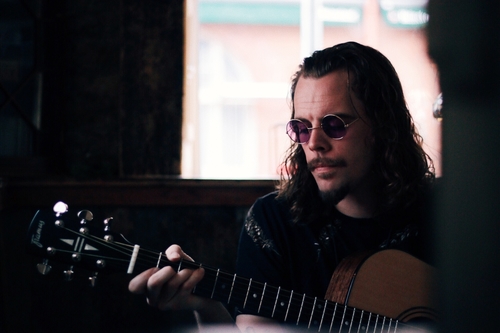
Taz Conley, the rapper and Riley Taylor, the producer. Just two dudes from two different walks of life who love music and create with one common goal: to push our own limits and inspire others to do the same.

How did The Seige begin life? Do you recall the moment you met?

We would frequently be in the same place at the same time due to us having a lot of mutual friends. We never worked together back then; kind of had our own individual sh*t going on but, one day, I (Taz) needed someone to help me flesh out some of the tracks I had been working on…so I reached out to Riley who did such a good job bringing my ideas to life.

We just decided to make a band out of it.

What is your new single, I’m Coming Home, all about? What inspired it?

I’m Coming Home is a story about what an individual will do once they are counted out. It’s a revenge story of sorts with success being the best revenge of all. We pulled inspiration for the song from our past lives and relationships; old girlfriends who did us dirty or friends who weren’t loyal.

It is from the album, Duality. What themes inspired the songs?

I’m Coming Home is on the second half of the album. When we were working on Duality, we were really inspired by techno-cyberpunk themes, science fiction movies like Bladerunner and The Matrix and the duality between that world and the natural world of nature, animals and biology. The ultimate duality; where we are all headed as a human race and playing around with ideas on how the fast movie tech of today will affect us in the future.

Did you both grow up around different artists or do you share musical tastes?

We both grew up on a bunch of different types of music and have very eclectic tastes. We generally gravitate towards the same kinds of music today; from Rock and Rap to Jazz music. Just don’t give us any Country.

Have you got a favourite memory from your time in music so far – the one that sticks in the mind?

A lot of the syncs we have been getting are really somewhat of a dream come true for both of us. We both grew up playing video games and watching sports and always dreamed of having our music on T.V. and in some of our favourite games. So, it has been crazy to watch that unfold in our lives.

We’ve gotten syncs with the NFL, the NBA; big movies like Mission Impossible and in T.V. shows like Cloak & Dagger. Massive games have even used our songs: Fortnite, FIFA and Madden. Seeing something happen that you’ve literally dreamt about since you were a kid is something truly special.

Which one album means the most to each of you would you say (and why)?

Our most recent one, Duality, definitely means the most to both of us because it’s really some of the best music that either of us have made…and it’s a culmination of everything we’ve learned and experienced and accomplished in our lives up to this point. Every song we wrote, every sound we created before was just preparation for this project and it means so much to us.

If you could support any musician alive today, and choose your own rider, what would that entail?

We would love to jump on the road with J. Cole, Kanye West or A$AP Mob. Definitely would have to have lots of fruit and water on the rider. And jerky. Lots of beef jerky.

What advice would you give to new artists coming through?

Stay independent as long as you can - and spend every dollar you earn on making yourself better as an artist. Always create honest, positive material and, most importantly, trust yourself and your own intuition.

Do you have tour dates coming up? Where can we catch you play?

We’re going quiet for the next couple seasons to push out some new sounds and challenge ourselves creatively.

Might we catch you in the U.K. this year?

Wouldn’t that be lovely, mate?

XCC.jpg

Is touring something you both love doing?

We’ve both been playing live shows ever since we were kids, so touring will always hold a nice comfortable place in our hearts. How could you not love it? Nothing beats going to meet real fans of the crazy music you create. That’s exactly us musicians we do what we do.

Are there any new artists you recommend we check out?

No. Just listen to the The Seige and shut everything else out.

xse.jpg

Do you get much time to chill away from music? How do you unwind?

We usually stay working but, whenever we get a chance to just kick it, we might catch up on a good book we’ve been into or chill with friend, our girlfriends or travel and hang out with family. Since we both live in L.A., we really enjoy catching some live shows around town or seeing one of our artist friend’s shows.

Finally, and for being good sports; you can each choose a song and I’ll play it here (not any of your music - I will do that).

Taz: Wu-Tang Clan – Protect Ya Neck

Riley: Michael Jackson – Workin’ Day and Night

___________

Follow The Seige

FEATURE: Sonic Proof: Volume III: Tuesday’s Children: Fantastic Artists to Watch

FEATURE:


Sonic Proof: Volume III

IN THIS PHOTO: Grace Carter/PHOTO CREDIT: ‪SHOT BY PHOX  

Tuesday’s Children: Fantastic Artists to Watch

__________

ON this current outing...

 IN THIS IMAGE: allusinlove/ART CREDIT: Michael Boucher 

I have compiled artists from all around the music globe. These are peeps who are either rising or just under the radar at the moment; some are bigger and more established. In any case, they are all fantastic and deserve a lot of respect. It is amazing how many truly brilliant artists there are away from the mainstream; the sort that is not often featured in the charts – we need to put more focus on these musicians, rather than what is commercial and obvious. Let’s hope that things do change and we get more quality coming through this/next year. This selection of artists, I believe are primed for huge things next year and will be dominating music very soon. I am sure there is loads in this playlist that will tickle your fancy so have a good listen and take in as much as possible. It is an assortment of artists who are perfect as we all make our way…

 IN THIS PHOTO: Marika Hackman/PHOTO CREDIT: Steve Gullick

BACK to work.

FEATURE: Sonic Proof: Volume II: Before the Return to Work: Fantastic Artists to Watch

FEATURE:


Sonic Proof: Volume II

llkl.jpg

IN THIS PHOTO: Another Sky/PHOTO CREDIT: Another Sky

Before the Return to Work: Fantastic Artists to Watch

__________

I am doing a few different segments of...

llkl.jpg

 IN THIS PHOTO: Billie Marten/PHOTO CREDIT: Lauren McDermott

this feature because, so often, there are songs that skim me by and I do not have time to get on top of them. Among the throng today is some beautiful Folk and some tender Soul. It is wonderful mining these great artists and putting them together in a fantastic blend. These are all acts I believe need full attention and will be huge artists very soon. Earlier, I looked at some bright artists that are perfect for the Bank Holiday and, as we prepare to head back to work tomorrow, here is another batch of brilliance that should give you all the necessary sonic and emotional components you need. I think there is so much brilliance and boldness out there in music that, so often, you are overcome by it all. I am going to keep this feature going because there is so much wonderful new stuff popping up. I want to try and get as much as it down as possible! I will do another instalment tomorrow but, for now, here is a playlist to...

 IN THIS PHOTO: Sons of Kemet/PHOTO CREDIT: Pierrick Guidou

GET you jumping.

FEATURE: Sonic Proof: The Bank Holiday Mix: Fantastic Artists to Watch

FEATURE:


Sonic Proof

IN THIS PHOTO: XamVolo/PHOTO CREDIT: XamVolo

The Bank Holiday Mix: Fantastic Artists to Watch

__________

BECAUSE a lot of us have another day off work...

 IN THIS PHOTO: Squid/PHOTO CREDIT: Squid

there is more time to explore music and chill out. It is always hard to know what to do when there is that day off because you are sort of in unfamiliar territory! I have been spending time relaxing but I know I have to go back to work tomorrow! That is a bummer but, with some hours left, I have been checking out some great new acts that you need to check out. Among the assembled playlist are some great Pop and Soul acts; great Rock and Indie artists and a whole assortment of sounds. It is a variegated cocktail that should keep you uplifted and interested. There are so many great acts out there that many are not aware of; some terrific songs that are bubbling in the underground. I am sure I will do a few more editions but, for today, here is a cool playlist of sounds perfect for the Bank Holiday – showcasing some of the hottest rising acts around. Have a gander at these terrific artists and let all the sensational songs…

IN THIS PHOTO: Robinson/PHOTO CREDIT: Grace Pickering

LODGE in the mind.

FEATURE: The Long and Winding Road: The Beatles’ Let It Be at Forty-Nine

FEATURE:


The Long and Winding Road

IMAGE CREDIT: Getty Images 

The Beatles’ Let It Be at Forty-Nine

__________

I think every album from The Beatles...

 IN THIS PHOTO: The Beatles during their final photoshoot on 22nd August, 1969/PHOTO CREDIT: Ethan Russell and Monte Fresco

warrants celebration when it has a birthday. In September, Abbey Road turns fifty and it will be quite a sad occasion. Not only was it the final album the band recorded together but it was a superb way to go out. In fact, Abbey Road was released before Let It Be, of course, but you wonder why that was the case. By the time Let It Be came out on 8th May, 1970 (in the U.K.), the band had already split up and many critics were not so kind. It is understandable that a lot of the tension that was running through the group at the time would bleed into the album. Not only was there stress within the ranks – the increasing presence of Yoko Ono in the studio did not help – but you got the feeling that the band were moving in different directions. This all sounds rather bleak and you might wonder why I am including Let It Be on my site at all. Well, it is a Beatles album and that is reason enough. The fact that it was released after they broke up has a sad tinge but I think, some forty-nine years after its release (Wednesday is the official anniversary), it does get the attention it deserves. Paul McCartney famously was keen to get Let It Be… Naked out: a stripped-back and reworked album that took away a lot of Phil Spector’s production layers.

The fact George Martin had left before the album – after the rather tense experience with The Beatles in 1968 – meant that there was a lot of change regarding production. You can hear that but I think there are a lot of golden moments! The band wanted to go back to a simpler style of recording. Given their move into more complex and experimental territory; Let It Be was a chance to return to a slightly less fussy and boundary-pushing album. One can hear that throughout the record but, as things often go, there were kinks. With a new producer and some tense moments in the studio (George Harrison briefly left the band), there were some challenges to overcome. By late-1968, The Beatles had stopped touring but McCartney wanted the band to hit the road again. The fact that, since 1966, The Beatles had been recording and, often, in separate rooms meant there was a slight split and not the same brotherly bond they had in the early days. Maybe, too, live gigs would help sharpen their material and give them fresh ideas. I do like the suggestion from McCartney and do wonder what would have happened if The Beatles got back on the stage and did some gigs pre-Let It Be. One of the worst decisions was letting cameras into the band’s orbit as they were recording the album. Never a good idea with any artist, that intrusion and sense of expectation further strained an already-frayed band. The band was not keen on McCartney’s idea of touring and, whilst George Martin did offer ideas, he was not a central part of the production.

I shall mention the great songs and the reasons why Let It Be is an album to celebrate but, when the bands were rehearsing the song, the tension that was there during 1968 presented itself. Ever since their eponymous album, The Beatles were drifting apart. John Lennon and Paul McCartney were not the same unit as they were and, with a sense of fatigue creeping in, one could definitely see the band were not long for the world. Lennon was in a rather fragile emotional state and Yoko Ono’s presence in the studio caused some argument. The fact there were cameras filming a lot of these spats and icy moments did not really help the band. There is a film coming later this year I believe that shows some of that rehearsal footage and actually gives us a really deep look at Let It Be and what was happening in the band at that time. The band were quite tired and ragged when recording and rehearsing and McCartney did try to galvanise them and get some energy back in the ranks. During a rehearsal of Two of Us, there was a heated argument between McCartney and George Harrison; Harrison also was annoyed that Lennon seemed detached from the band and less focused – Harrison would leave the band after the anger and tension became too much (he would return). After The Beatles abandoned Twickenham and having their rehearsals recorded, the rest of the filming would be them in the studio getting Let It Be down.

On 30th January, 1969 The Beatles, alongside Billy Preston, took to the roof of the Apple building to perform a famous concert. It would be the last time they performed as a band and whilst it was a bit of a publicity move for the film, the band got up there and performed. The set was cut short when the police intervened by a select group of people got to see The Beatles perform a very unusual gig at a very difficult time. You could sense some sense of harmony and togetherness from the band during the songs, something that had been missing up until that point. Whilst The Beatles were not completely rejuvenated after that gig, you sensed that it was needed and a reminder that they were together and they were incredible. During the recording sessions, countless songs were played – many would find their way onto the band’s last-recorded album, Abbey Road. I often wonder why Get Back was not chosen as the opening track for Let It Be but it actually works really well as a swansong. It is a classic McCartney track and one of the most famous in The Beatles’ cannon. In the opening half, there is the beautiful Two of Us: led by McCartney, one can attribute some of the lyrics to the changing relationship between he and Lennon (“You and me, chasing papers/getting nowehere…”).

zx.jpg

  IN THIS PHOTO: The Beatles during their final photoshoot (in Tilehurst Park) on 22nd August, 1969/PHOTO CREDIT: Ethan Russell and Monte Fresco

Across the Universe is a gorgeous and underrated Lennon song (covered by artists such as Rufus Wainwright) and I Me Mine is actually one of Harrison’s best songs of the period – he would better himself on Here Comes the Sun and Something on Abbey Road, mind. Dig It and Maggie Mae are not essential but they are interesting tracks in their own right. What I also get from Let It Be is a sense of conversation and playfulness that had been absent from previous albums. There are little jokes and spoken word bits that give Let It Be a live feeling and sense of fun. Although the band was not entirely happy throughout, they still managed to turn out some of their best material. Let It Be is a sensational McCartney track and, again, one of the best he ever wrote. Written about his mother, there are visions of her coming to Macca in his sleep and letting him know everything will be okay. I think it should have ended the first side (Maggie Mae does) but it is, in my view, the best track on the album. I’ve Got a Feeling and One After 909 open the second half with aplomb. Although neither track is the best the band came up with the latter, especially, held fond memories for McCartney. Lennon wrote it when he was seventeen and it seemed like this was a special track for both of them. The Long and Winding Road is another McCartney emotion-drainer that is beautiful, sweeping and hugely memorable.

McCartney wanted the track to be quite spare but Phil Spector modified it and, as such, there is a bit too much happening on a song that works best when stripped back. One of the reasons McCartney was eager to put Let It Be… Naked out was so he could finally have The Long and Winding Road in its natural state – he also changed the track order as well so that the album flowed a bit better. For You Blue is another Harrison effort and, at the end, we have the terrific Get Back. There are some weaker moments on Let It Be but, when it really hits fifth gear, the effect is mesmerising. One would forgive The Beatles for splitting at that point but there was a feeling that they had another album in them. Knowing that the end was in sight, they recorded Abbey Road and recaptured their earlier genius. Let It Be is a fascinating album that is more associated with its weaknesses and strains than the actual material. I like the fact there are loose edges and there are some sublime moments of Beatles brilliance. It is a patchy album in places but one that deserves its place. Although some critics in 1970 were a bit cold, there has been ample retrospective acclaim. AllMusic had this to say:

“Although most of the album, then, has a live-in-the-studio feel, the main problem was that the material wasn't uniformly strong, and that the Beatles themselves were in fairly lousy moods due to inter-group tension. All that said, the album is on the whole underrated, even discounting the fact that a sub-standard Beatles record is better than almost any other group's best work. McCartney in particular offers several gems: the gospelish "Let It Be," which has some of his best lyrics; "Get Back," one of his hardest rockers; and the melodic "The Long and Winding Road," ruined by Spector's heavy-handed overdubs (the superior string-less, choir-less version was finally released on Anthology Vol. 3). The folky "Two of Us," with John and Paul harmonizing together, was also a highlight. Most of the rest of the material, by contrast, was going through the motions to some degree, although there are some good moments of straight hard rock in "I've Got a Feeling" and "Dig a Pony." As flawed and bumpy as it is, it's an album well worth having, as when the Beatles were in top form here, they were as good as ever”.

Sputnikmusic provided their thoughts:

“The highlight of Let It Be is its moving center piece, the title track. The track is introduced by Lennon in a high pitched voice saying "That was 'Can You Dig It' by Georgie Wood, and now we'd like to do 'Hark The Angels Come'," before the melancholy cadences of the piano of the main verse welcome in Paul's voice. Soon the piano is met by drums and Spector's trademark orchestral production with some light brass before it bursts into George Harrison's beautifully uplifting guitar work. McCartney's lyrics perfectly complement the somber instrumentation, weaving strong Catholic imagery with the bubbling spirit of hope ingrained in the times. "Let It Be" reaches its moving peak at the final verse when Paul sings "And when the night is cloudy, there is still a light, that shines on me/shine until tomorrow, let it be/I wake up to the sound of music, mother Mary comes to me/speaking words of wisdom, let it be”.

Maybe Let It Be looks better naked but I have a lot of respect for the 1969 version. The band would continue on for Abbey Road but it was clear a lot of the spirit and air was out of the tyres. The best moments on Let It Be – the title track and Get Back among them – are more McCartney-led than anything: Lennon was still a powerhouse but would produce finer work on Abbey Road. When it turns forty-nine on Wednesday, it will be a bittersweet day. On the one hand, marking any Beatles album is great; there are some terrific songs to be found. On the other hand, one feels there is a lot of disconnection and a feeling that things were coming to an end. There is a film coming soon where Peter Jackson gets to grips with all the footage from that time and tries to piece together the story of The Beatles during Let It Be. I have always loved Let It Be and, whether you prefer it dressed up or naked, it is a record that…

POSESSES moments of pure brilliance.

FEATURE: Vinyl Corner: T. Rex – Electric Warrior

FEATURE:


Vinyl Corner

ARTWORK CREDIT: Hipgnosis/ORIGINAL PHOTO: Kieron ‘Spud’ Murphy

T. Rex – Electric Warrior

__________

THERE are few albums that have been part of my life...

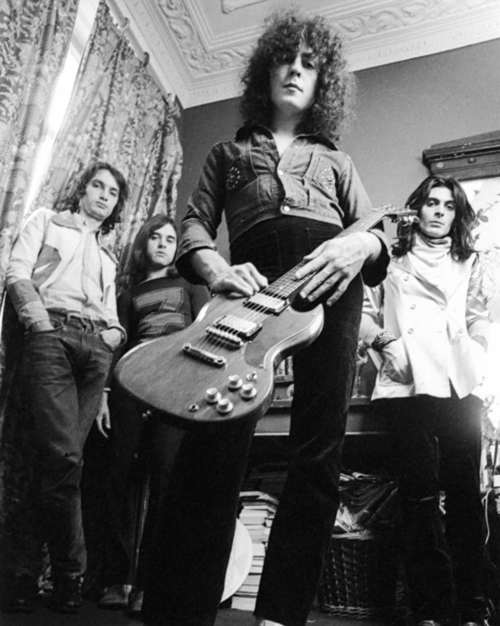
 IN THIS PHOTO: T. Rex (circa 1971)/PHOTO CREDIT: Getty Images

as long as T. Rex’s Electric Warrior. I found T. Rex from a very early age and recall hearing the big hits from the band. Led by the charismatic Marc Bolan, I was inflamed and thrilled by the swaggering Glam-Rock tracks such as Metal Guru and Get It On. I am not sure exactly when T. Rex came into my orbit but I recall playing songs from them on a cassette player me and my friends used to listen to. Before long, the tracks were being chanted gleefully by me and my pals and it was great connecting with these bold and brilliant songs. There are albums that sort of win you over through time and there are others that grab you instantly. Electric Warrior is definitely in that second camp. The second album from T. Rex, this signalled a turn from a more Folk-orientated sound to a full embrace of Glam-Rock. Many might say that they heard a lot of music from Marc Bolan before 1971; the band used to be called Tyrannosaurus Rex: T. Rex was a fairly recent incarnation but, yes, Bolan had been on the scene for a little while. One can argue who pioneered and pushed Glam-Rock to the masses. Certainly, David Bowie would make a big impact around the same sort of time as Electric Warrior with Hunky Dory but, to me, I think about Glam-Rock and T. Rex springs instantly to mind!

Not only did Electric Warrior receive a lot of critical praise but it inspired legions of musicians. Paul Weller claims it is one of his favourite records; John Parish is a big fan of the album whilst songs such as Jeepster have been used in films – Quentin Tarantino used the song in 2007’s Death Proof. The eleven tracks on Electric Warrior are fantastically evocative, fresh and colourful. There is plenty of emotion and tenderer moments but there is ample spark and dance to be discovered. The album kicks off with the terrific Mambo Sun. Bolan has rarely sounded as chilled, cool and snaking as he does on this song. One gets a little touch of The Beatles with some of the guitar work and the lyrics are evocative and trippy. Cosmic Dancer – which one might recognise from Billy Elliot – sees the Glam star describing himself as this eternal dancer; dancing from the womb and into the tomb – a series of wonderfully rich and striking images that definitely get into the bones. The sheer sway, romance and beauty of the song makes it an album highlight. Jeepster is that big hit that I recall from childhood. Whereas the opening two tracks have a relative calm and do not have a huge amount of stomp, Jeepster is a more fired and frantic affair. I am not sure what a ‘jeepster’ is but, as Bolan professes his love and adoration of the subject, you figure it must be a good thing!

The chorus is among the most memorable T. Rex ever produced and I love the guitar work throughout the track – played by Marc Bolan. With production by Tony Visconti and Mickey Finn, Steve Currie and Bill Legend supporting Bolan (alongside some additional musicians), Electric Warrior has so many different textures and flavours. Lean Woman Blues, as the title suggests, is more in the Blues key and is actually one of the most interesting tracks from the album. You might think of T. Rex and assume everything was glitter, Glam and sex. In fact, on albums like Electric Warrior, there are a lot of different twists and turns. Lean Woman Blues is a fantastic example of Bolan’s eclectic songwriting nature; a track that allows him to take his voice in different directions. The album is perfectly programmed and sequenced so, by the end of that track (and the first side) you have been treated to a couple of big hits and a few slightly smaller numbers; each making their mark and providing something unique. If you get Electric Warrior on vinyl then make sure you see what I mean regarding tracklisting. The needle comes up on the first side and, when you put the needle down for the second side, the first track off the mark is Get It On. Maybe this is the definitive and best-known T. Rex track. It is raw, passionate and tough; full of great riffs, confident vocals and memorable lines.

When I was growing up around T. Rex, this was one of the tracks that were constantly on my mind. I would discover Ride a White Swan, Hot Love and Metal Guru later but, right from the off, Get It On was bouncing around my young mind. Although Bowie was already around and shaping up to be one of the most innovative musicians of his time, it is hard to ignore the fact that he incorporated a bit of T. Rex into his work. Maybe that is just me estimating and taking swings but I can definitely hear flecks of T. Rex in Bowie. Planet Queen and Girl calm things down a bit after the explosive Get It On and then, with some similar riffs, The Motivator gets the energy levels back up. Life’s a Gas is a grooving, stunning and underrated gem that boasts some of Marc Bolan’s vocal work. Rip Off ends Electric Warrior with so much heat, yowls and energy that you sort of want it to keep going. Again, if you think of tracklisting, it is the perfect way to end the album. Reviews back in 1971 were positive and, since then, critics have been keen to have their say. Electric Warrior definitely helped bring Glam-Rock to the mainstream and inspired so many other artists. T. Rex, in 1971, were on the cusp of taking over the world.

 PHOTO CREDIT: Getty Images

In a retrospective review, Pitchfork talk about the sheer fun on Electric Warrior and how rich the record is:

“For those hunting down the singles, Electric Warrior does contain the immortal "Bang a Gong (Get it On)", but that's neither the only nor the best reason to pick it up. What makes this record so enduring is its almost accidental emotional depth: When T.Rex is kicking out the jams, they sound like they're having the most gleeful, absurd good time ever committed to wax. There's nothing so glorious in rock and roll as hearing Bolan croon, "Just like a car, you're pleasing to behold/ I'll call you Jaguar if I may be so bold," over his namesake boogie.

The most significant aspect of Electric Warrior isn't its arena rock confidence; it's that Bolan allows his grinning mask to slip. With the incomparable aid of producer Tony Visconti, Bolan sketches a vast, empty room, where, after the party's over, he resides alone, wide-eyed and desperate. On ballads like "Cosmic Dancer", "Monolith" and "Girl", he speaks in the same gibberish as elsewhere, but he's clearly haunted-- by what we can't say. But the gaping, searing question mark that comes at the conclusion of the album-- guitar feedback paired with a string section, holding a shivering and very ambivalent cluster of notes-- is just one of many clues that there's more to Electric Warrior than its surface lets on. This is not simply a man who plays party songs because he wants to: This is a man who plays party songs to fend off darkness”.


MusicOMH had an interesting angle when reviewing Electric Warrior back in 2012:

“Perhaps the key to the album’s apparent lack of age-spots is Marc Bolan’s subdued, hip-shot, sex-crazed vocal delivery, or producer Tony Visconti’s sterile, carefully constructed sound field with its pristine snare drums, psychedelic guitar flourishes, and the occasional saccharine string run or choir-like background vocals. But central to the album’s greatness is the iconic nature of its imagery and the simple manifesto implied by its title: Bolan, silhouetted in yellow on the album’s cover, wields his guitar like a weapon, perched defiantly in front of an outsized guitar amp like a maniac with his twitchy finger testing the limits of the trigger’s resistance. The whole album feels like it’s ready to blow at any point, and it’s mesmerizing to lie between the speakers while Bolan and company maintain the madcap machismo of their rock ‘n’ roll high-wire act”.

I have a love for so many albums but Electric Warrior is a very special one indeed. Maybe it is the sheer confidence and raw energy that runs throughout that captures me. Of course, at such a young age, I was not too aware of all the sex and sweat that was flying from the speakers – probably just as well I guess! I listen to Electric Warrior now and it still sounds completely thrilling and new.

I pick up new aspects and certain songs reveal fresh layers. It was Electric Warrior that got me interested in Glam and artists like Mud, The Sweet and Slade. When celebrating Electric Warrior’s fortieth back in 2011, Westword highlighted its importance regarding the explosion of Glam and what defines the album:

“There were other acts that had a part in glam's birth too -- mainly David Bowie, who's Ziggy Stardust persona was being developed into an concept album and a film (not to mention his preceding 1971 release, Hunky Dory, which moved in this direction as well). Plus, Mott the Hoople's 1972 record All The Young Dudes contained the anthemic hit by the same name, but it too was the work of Bowie, who salvaged the almost broken-up group by writing the title track and producing the full-length.

But what Electric Warrior had within was something more apparent. It had sex inside of it. The whole record, all eleven tracks, were sexy. Its lusty ooze dripped from every bass tremor, every wiggly, Chuck Berry-harkening guitar riff, every gyrating drum beat, and of course, every breath Marc Bolan could produce. In America, the album (and T. Rex's) success was only seen through "Get It On" -- known stateside as "Bang A Gong (Get It On)" to avoid being confused with "Get It On" by Chase. But T. Rex's version, which only reached number ten on the American Billboard singles charts, was far from the best part of Electric Warrior”.

A year after Electric Warrior seduced the world, T. Rex introduced The Slider. With Visconti back on board as producer, hits such as Telegram Sam and Metal Guru made it a huge hit for fans and critics. It seemed, during 1971 and 1972, T. Rex could do no wrong! It would be a couple more years before there was a decline in quality but, in terms of spearheading Glam-Rock and providing this exhilarating and primal sound, T. Rex were innovators and pioneers that captured the public consciousness and inspired their peers. I love Electric Warrior because it seemed like the start of something wonderful and new. It was the album where Bolan and his band switched from acoustic sounds and turned the electricity all the way to eleven! Still completely engrossing and extraordinary almost forty-eight years after its release, Electric Warrior is a true work of genius. We do not really have Glam-Rock now so it seems sad that new generations are missing out on this album. I hope people do pick it up and discover some of the finest and most original songs of the 1970s. There is nobody quite like Marc Bolan, that is for sure! I love how he can transform from the slithering love God to someone with a tender heart and deep soul. Many people associate Bolan with sex and assume there are no other sides to him: Electric Warrior disproves that and possesses so many different emotions and wonderful stories. From the sheer majesty of Cosmic Dancer to the primitive voltage of Get It On, there is so much packed into Electric Warrior. If you have a few pennies and time spare, go order Electric Warrior and discover this colourful, wild; wonderful, striking and…

xxzxz.jpg

PHOTO CREDIT: Getty Images/T. Rex

TIMELESS album.

FEATURE: The Pop Queen’s Start, a Promising New Compilation…and a Lot of Hair! 1983: A Rather Colourful and Interesting Year for Music

FEATURE:


The Pop Queen’s Start, a Promising New Compilation…and a Lot of Hair!

vccxv.jpg

IN THIS PHOTO: Madonna photoed in 1983/PHOTO CREDIT: Deborah Feingold  

1983: A Rather Colourful and Interesting Year for Music

__________

I would not normally write about 1983...

fdddf.png

 IN THIS PHOTO: Spandau Ballet photographed by Michael Putland in London, May 1983

in terms of its music but, as I am another year older on Thursday, it has got me thinking back to the year I was born. In terms of musical events, there were a few things happening then. From the controversial – David Crosby was sentenced to time in jail for drugs and weapons possessions – to the cool – C.D.s went on sale in the U.S. on 2nd March -; there was some big stuff happening in 1983. It was in 1983 when Michael Jackson’s Thriller hit the number-one spot on (26th February); it would remain there for thirty-seven non-consecutive weeks and would go on to become one of the best-selling albums in history. Luckily, there were some events of 1983 that are best left unremembered! It was a year when New Romantic bands like Spandau Ballet and Duran Duran came along and reigned. The day I was born, 9th May, saw Spandau Ballet’s True get to the top of the singles charts. Considering Jacko was starting his regency and there was a lot of different stuff bubbling in music, it was quite an interesting year! One can argue that, in Pop terms, things were pretty great back then. There were some naff New Romantic bits happening but it was a new movement that sort of evolved from Punk. It would not hook everyone in but a lot of the music was actually pretty decent.

As I never back off of a chance to mention Kate Bush; 1983 was a year when big changes informed her best work. She had moved from London and set up a home studio in the countryside. After The Dreaming was released in 1982, she put on weight and was feeling the strain of critical disinterest. There were some great reviews but, after that album was released, there was a tough period that called for reaction. In 1983, she had moved and started putting together motions that would materialise in 1985’s Hounds of Love. If one music treasure was continuing her progress, another was just beginning: Madonna released her debut in 1983. The eponymous album was busy with bounce and juvenile glee and, whilst she would later dismiss the album as being too fluffy and insignificant, it was a fantastic debut. On 27th July, 1983, Madonna’s debut was launched and with it songs such as Borderline and Lucky Star. She would go on to release bolder and more confident albums but there were few artists who sounded like Madonna in 1983. Other great Pop coming out in the year included Culture Club. They released their second album, Colour by Numbers, in October and it spawned the huge hit single, Karma Chameleon. The single came out in September and, to date, it is the thirty-eighth biggest-selling U.K. single ever. It is an infectious burst of Pop and has one of the catchiest choruses ever!

One can bemoan a lack of spark and colour in modern music but, look back to 1983, and there is ample energy and memorability. If we hear an early track from Culture Club or Madonna on the radio, it brings back great memories (for those old enough) and instantly hooks you in. On 14th April, David Bowie released the album, Let’s Dance. It would become Bowie's biggest commercial success, with over ten-million copies sold worldwide. It was one of the last big Bowie albums of that time and he would struggle to find a similarly-popular album in his arsenal for over a decade. Other big albums of 1983 included R.E.M.’s Murmur and Paul Simon’s Hearts and Bones; Tom Waits gave us Swordfishtrombones and there were releases from U2 (War), Talking Heads (Speaking in Tongues); Yes (90125) and Yazoo (You and Me Both). There were a lot of great albums released in 1983 and I do not think the year gets the credit it deserves. Tears for Fears, Sonic Youth and Roxy Music were kicking; so too were Elton John, The B-52’s and Stevie Nicks. There were a lot of great and varied sounds forming and it wasn’t just about the New Romantic Movements and great Pop from the likes of Madonna. Bon Jovi, Bronski Beat; The Flaming Lips and Del Amitiri were formed in 1983. Conversely, The Carpenters, Sly and the Family Stone and The Who disbanded – although we know they are Gang of Four (who also ‘split’ in 1983) are still together.

New Order’s Blue Monday and Prince’s 1999 were big singles that did sterling business in 1983 and, thinking about the range and quality of the year, it makes me think it is a time for music that many overlook and do not take too seriously. So much of the music I was raised on as a child came out in 1983. Included are Billy Joel’s Uptown Girl and Elton John’s I’m Still Standing. One of the most exciting beginnings, sadly, that started in 1983 was the compilation album, Now That’s What I Call Music! Actually, it is not that tragic at all: the first instalment arrived on 28th November and featured hits from the likes of Phil Collins, Heaven 17 and The Cure. I am a huge fan of the compilation series and have followed it for years. I was too young, obviously, to remember the first edition but the first I bought was Now That’s What I Call Music! 24 in the 1990s. I have always gravitated towards the series and think it is a great way of collating all the best music from the year. It is strange looking back some thirty-six years and seeing the music world I was born into. Although the first contemporary sounds I remember were from about 1987, I look back at 1983 as hugely important. If one thinks of 1980s music as a bit rubbish, they’d do well to look back on certain years and realise there was a lot more brilliance out there than they recall.

The fact Madonna released her debut and there was this really interesting time for Pop appeals to me. Some truly big albums arrived and it was a rich period for music in general. Maybe 1983 does not rival 1989 in terms of its genius but it has been good looking back and discovering all the terrific stuff that arrived the year I was born. I know it might be a bit pretentious and self-serving to mark my birthday with this glance back but, actually, how many people look back at their birth year and dig deeper into the music that was around then? In a wider sense, seeing what was happening in the world when you were born is pretty interested. I tend to listen to more music from the late-1980s and 1990s but I kind of neglect the earlier parts of the 1980s. It is fortunate the horrors of Spandau Ballet passed me by but there was a lot of really great music then. I feel it is important knowing what was happening in music the year we were born and the fact I have done so this year sort of relates to the music I listen back to. I am listening back to older songs a lot and wondering whether there was a particular sound/sensation that captured my young mind. Although I was too young to recall the first time I heard the great albums and songs from 1983, I have spent a lifetime listening back and understanding what was making the charts and selling loads all that time ago. It is amazing, really, and makes me a little less worried about hitting thirty-six. Although, as I say, there were bigger and brighter years of the 1980s…as it happens, 1983 was a pretty damn good year…

FEATURE: Tous Les Mélomanes Bienvenus: Why a Music-Themed Salon Would Be a Great Space for All Music Lovers

FEATURE:


Tous Les Mélomanes Bienvenus

IMAGE CREDIT: Alex Scholar 

Why a Music-Themed Salon Would Be a Great Space for All Music Lovers

__________

THE reason why I have used French in the title...

 PHOTO CREDIT: @sevcovic23/Unsplash

of this piece is because, when we think of a salon, we might have images of literary figures and intellectuals from times past. Maybe ‘salon’ is not the right word for this proposal: perhaps calling it a café or venue would be closer to the mark. I have written pieces around music cafés and whether we have anything like this in 2019. I would still like to kick something like this off because there are very few spaces music lovers can go and connect. We have record shops where we can bond and find like-minded souls but, largely, there is very little interaction between those who love great sounds. With more and more coffee shops springing up, isn’t it time to utilise the endless chains of faceless coffee places and actually give them purpose?! I do not get a lot of time to socialise but, when I go out at the weekends, I often head for coffee shops. It is fine being there but you do not get great music and the atmosphere is not great for the most part. One gets a nice mix of people but I often sit in there, read a bit and then leave after half an hour or so. I do look around London and, apart from live venues, there is nothing really that is catered for those who want to listen to music, chill with their similarly-orientated peers and discover something new.

 PHOTO CREDIT: @estherdr/Unsplash

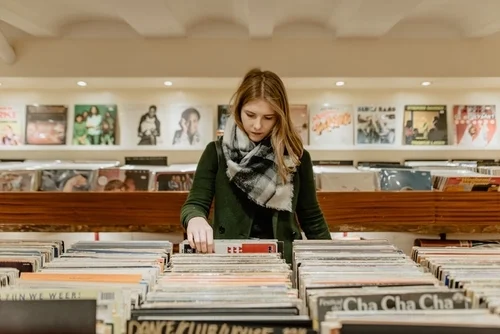
Maybe it would not be as intimidating and, frankly, pretentious as a salon but there are people who want to go somewhere you can listen to some great music and grab a brew whilst you’re at it. I think we are becoming less sociable as people and spend a lot of time online. Imagine a shop/space where there is music being played. I have been thinking about what I want in life and I think, more than anything, there is a desire to bond with people who think the same as me. I think a salon/café where people could go and converse – or just listen to music – would be great. I like the idea of making it a place to listen to music and buy. I love the cassette vending machines they have in some parts of the world. One could buy a classic album on cassette in a very cool way. There could also be a music-themed tuck shop where you could buy some merchandise and cool music memorabilia. The centrepiece would be record players and cassette/C.D. players where you could take a record/album/single from the racks/shelves and play it. One might say that the noise and clash of sounds would be offputting but there would be noise limitations and ways of blocking sound so that patrons are not disturbed. One could put an album on the record player and spin it; a few people could gather around and listen or one could take a cassette player and listen to an album in private.

 PHOTO CREDIT: Getty Images

I also like the idea of putting music magazines, both classic and modern, in addition to music books – whether biographies or other themes. If you want to broaden your mind and read about a certain artist/time of music, you could grab some literature, sit back and have your privacy. If you want to be more expressive and conversational then there would be great album to play and you can discover some new sounds. Of course, there would be technology among the older kit. A screen section would allow people to play music videos and people would be able to play what they want. In terms of décor, it would be less French and intellectual: the inside would be more like a U.S. record store or something with a bit of nostalgia. Maybe it would be 1990s-themed/looking but, throughout, there would be a clash of the modern and vintage. I do find a lot of people get hooked on modern music and do not spend looking back. We all need to be a bit broader and balanced and this venture – whatever it would be called and wherever it would start – would be a cool space where many different people could interact and discover cool stuff. From classic albums and concert films through to music memorabilia, rare vinyl; retro vending machines and live-streamed radio stations.

 PHOTO CREDIT: @natanaelvieir/Unsplash

You walk through any city and there are plenty of bars and cafés. I know they are profitable and respond to market forces but there is not a lot of variety on the street. One has to go to very particular areas if they want to discover something unique and unexpected. I love the idea of walking into a building and seeing classic videos playing or a chance to learn more about music. Perhaps this steps on my pitches regarding music bars and cafés but I do not like solely staying on the Internet and getting all of my music from there. It makes sense that, if one wants to chill out and get a bit of sonic nourishment at the same time, a business like this would take off. Perhaps I am a dreamer but I think there would be profit in it. There would be drinks and snacks, for sure, but nothing too heavy – the food and drink side of things would not take over and be the main focus-point. I feel all music fans miss out on interaction and we do lean largely on streaming sites and the Internet. Buying albums is quite expensive so having somewhere you could play them and not have to pay would be great. The way the business would make money is split between food/drink sales and an actual shop that sells a lot of great products; from T-shirts and rare memorabilia through to posters, cassettes and other assorted goodies.

popoppo.jpg

 PHOTO CREDIT: @seemisamuel/Unsplash

It sounds like, from what I am saying, this is going to be like moving back in time and clinging onto the past. That is one side of things but there is a big nod to the new and upcoming. Maybe there would be little in-store gigs like you get from record shops. There would be live radio and streaming facilities and a mixture of albums one could buy. I look around pubs and coffee places and there is not a lot of interaction between strangers. That is a natural thing – how many of us break from the pack and take that chance? – but, if you know you have something in common with others, wouldn’t you do something about it? Having this modern-day salon would help bringing artists and music fans together; give this comfortable yet open area where we could share music tastes and memories; buy some cool older music and look at what is upcoming and fresh. I would like all of that and there are many others who share my sentiments. With venues closing and instability prevalent on the high-street, there are inherent risks opening a business that relies on passing trade and people refuting the lure of the Internet. Because this business – I really should give it a name! – offers something you cannot get from the Internet (that connection and some awesome products that would be more expensive online); I feel there are legs and the chance for expansion. It seems like a cosy little idea but, I dunno, it is somewhere I would love to go and see in town! Others would come in and, before long, something unusual and much-needed would get word-of-mouth spreading and trending. The only problem is, like other similar pieces I have written, is what…

ccxxc.jpg

 IMAGE CREDIT: Nick Taylor

TO call the blooming thing!

FEATURE: Infrequency Leads to a New Wave? Gender Balance on Mainstream Radio: The Need for a Retuning

FEATURE:


Infrequency Leads to a New Wave?

vbvb.jpg

IN THIS PHOTO: Annie Nightingale was the first female presenter on BBC Radio 1 (she joined in 1970); she is the station’s longest-running presenter/PHOTO CREDIT: Getty Images 

Gender Balance on Mainstream Radio: The Need for a Retuning

__________

THIS is another of these subjects that...

 PHOTO CREDIT: @rangel/Unsplash

I have broached before but, as the situation is still apparent, it has motivated me to revisit older arguments! I listen to radio every day and it is an invaluable source of entertainment and music. At a time when there is so much music out there and it is impossible to get on top of everything, I feel like radio is a saviour and vital tool. There is nothing to suggest that, decades from now, we will get rid of radio. New acts rely on stations to spread the word and get their music to new people. That is great and I love the fact that radio holds such a precious place in our hearts. It is not only the artists who feature on radio that we tune in for. More and more, many of us are tuning in for the presenters. I have written a lot about stations such as BBC Radio 6 Music and how it seems to be the last real place one can hear eclectic music and true quality. That might be a subjective statement but there is something in it. Look at stations like BBC Radio 1 and 2 and there is not the same scope and majesty as you get with its sister. One big reason why I listen to the station daily is its incredible D.J.s who provide that awesome music and entertainment. One thing bothers me when I look at the line-up and that of other stations: the lack of women being given shows.

 PHOTO CREDIT: @BBC6Music

Apologies if I am covering old ground but we have no time for disclaimers and backstory. I write about gender inequality in radio because, like so many other areas of music, there seems to be little improvement. I am a huge fan of BBC Radio 6 Music and few out there champion the station more than me. There is no fault their way but look at the current roster and there has been little change over the past decade. With only two women in daytime slots during the week (Lauren Laverne at breakfast and Mary Anne Hobbs right after) there is a raft of men who make up the ranks. On weekends, there is Cerys Matthews and they have Liz Kershaw; Gemma Cairney and Amy Lamé present on the station but, for the most part, it is the men who make up the majority of shows. The fact that there is a gap and need for something to be done makes me a bit angry. There are those who say that, so long as the line-up is popular, then why change things? I would argue that, even on the best radio stations, there are cracks and that need for change. There are great occasional presenters like Jon Hilcock and Tom Ravenscroft who are waiting; fantastic female D.J.s like Georgie Rogers who warrants her own show. When BBC Radio 2 announced its line-up change last year and reordered things so that three of its biggest daytimes lots went to women – Zoe Ball at breakfast; Sara Cox and Jo Whiley taking us through the afternoon and evening – I was happy.

 IN THIS PHOTO: Jo Whiley presents weekday evenings on BBC Radio 2/PHOTO CREDIT: BBC

Some have contested the switches and claim that BBC Radio 2 was bowing to pressure. I think, when you have fantastic women on your station, there is a time when you have to wake up and realise that they deserve equal footing. The best radio comes when you blend voices and have a diversity of personalities. If you have a station that is predominantly make-driven then you do not get that! Think of pioneers like Annie Nightingale – still going strong – and the fantastic D.J.s on stations such as BBC Radio 6 Music – Lauren Laverne and Mary Anne Hobbs are two of the finest talents they have. BBC Radio 1 has Dotty and Annie Mac but, again, there is a heavy leaning towards male D.J.s – even BBC Radio 2, despite its changes, is still largely housing men. Things are better when you look at independent stations and Internet radio but think of the more popular and widespread stations and can we say that what we have now is great? I mean, there is sensational music coming to the people and I know there are a lot of women who would kill to have their own shows. Either they are on weekends or a late slot or they are working at smaller stations and feel that they will never get a shot in the mainstream. Like festivals and the lack of female headliners, there are those that things are fine now and why alter that?

nbvfdg.jpg

 ART CREDIT: Toni Demuro

This argument has always frustrated me as it suggests people think women are not good enough to headline festivals or they are not as popular as the men. The same can be said of radio. If a presenter has a fanbase and has been with a station for years then why shift them?! In order for radio to improve and inspire, there needs to be new blood. Ironically, whereas there is ageism in music as a whole, on some radio stations, there is a reliance on middle-aged presenters; very few younger D.J.s are given the opportunity to shine and have their own shows. Maybe things are slowly moving in the right direction but why does it take so long for real progression to happen? So many of the biggest radio stations stick with who they have and do not understand how many great women there who would provide something special, unique and hugely popular. When I started writing this blog in 2011, I came across this article, written by Miranda Sawyer (who presents on BBC Radio 6 Music), regarding the state of radio in 2011:

“So why did this year's Sony Radio Academy awards make me, and many others, so cross? "The year of the lad", it was deemed, with TalkSport winning station of the year, 5 Live's Fighting Talk bagging a gold and Absolute's celeb-jocks Ronnie Wood and Frank Skinner also winning big. Host Chris Evans displayed his familiar "chivalry" (can any woman feel comfortable when a man bangs on about how much he fancies her, to her face, in front of an audience?). Jenni Murray and Annie Nightingale won special awards: well deserved, but outside regular categories. And lots of great women got up on stage: Sophie Ellis-Bextor, Kirsty Wark, Mariella Frostrup, Moira Stuart. Unfortunately, they were there to hand over gongs, to men.

vvccv.jpg

PHOTO CREDIT: @jonathanvez/Unsplash 

'When I first approached Radio 1 about being a DJ [in the late 1960s], it was an all-male enclave. I asked why that was and was told, in all seriousness: "DJs are husband substitutes." Things have changed considerably since then. Hopefully, in the future everyone with talent and dedication to music broadcasting will get a chance to give it a go' Annie Nightingale, DJ, Radio 1, Thursday evenings”.

A new organisation, Sound Women, was launched that reacted to the imbalance in radio and the desire to change things:

“Sound Women will soft-launch at annual industry conference the Radio festival this week. We've made a promotional film and have a website. More importantly, Skillset, the skills council for the creative industries, has gathered together existing research on women in UK radio into a report, which we're also launching on Tuesday; and we've set up a mentoring scheme for women in radio, to be run by the BBC. On our to-do list is creating a network of contacts, so that employers and conference organisers in radio can easily track down brilliant females; funding more targeted research; and possibly, eventually, an annual glitzy do.

'I've got the best job in the world! The Today programme has a healthy mix of men and women behind the scenes, but when you listen, you don't always hear that. Today recognises that as a problem. Sound Women is clearly an organisation that is trying to help work through such dilemmas' Sarah Montague, presenter, Radio 4's Today programme”.

 IN THIS PHOTO: Johnny Vaughan is part of a largely-male line-up on Radio x/PHOTO CREDIT: Radio X

That was nearly eight years ago and, whilst some big stations have promoted women to big slots, there is still a problem. Whereas more women are producing mainstream shows, there is still an absence of presenters on the front-line. All the stations I have mentioned have not really altered things since then; the number of women working at these stations is pretty poor. Maybe it would be unrealistic to say every station would employ a fifty-fifty split but we are not even close in many cases! Those who feel that ratio would be pandering and extreme need to realise that there are so many women who are fantastic presenters; they are not being given an opening and fee that doors will always be closed. Away from the BBC, stations like Absolute and Virgin have a real problem regarding the number of women at their station. Perhaps the biggest culprit of gender imbalance is at Radio X. Aside from its crappy name, the station is dominated by men. Look at their website and how they publicise the station: a line-up of white, middle-aged men who are playing Indie and Rock with very little else. The fact that, in 2019, there is a station so proud of its male hegemony is quite appalling. Last year, the launch of an all-female radio station, JACK, gave me some hope. You can read about it here…but it has come to the point where women have had to set up their own station.

 PHOTO CREDIT: @_imkiran/Unsplash

I understand there are schemes and bodies that are providing courses on production and presenting for young women who want to be on the radio in years to come. Internet radio provides an indiscriminate platform where anyone can have their voice heard but will all these great new stations with fantastic women on them give the mainstream stations pause for thought?! Some stations are worse offenders than others but I do wonder whether those with a great gender imbalance need to pledge greater commitment to putting women on air. A big reason I am writing this new piece is because I have heard from a lot of female presenters on smaller stations – and those who work occasionally on bigger stations – who say that they really want to move to a mainstream station but feel like they (the stations) are inflexible and rigid when it comes to hiring. The change at BBC Radio 2 is a welcome wave that, hopefully, will be taken on-board by other large stations. Maybe it is just me but I tend to find the most appealing and strong voices on radio are women. It is unfortunate that change is happening slowly but I do hope there is a day when we will see more gender equality on the airwaves. This is just me being frustrated but I am seeing all the fantastic work by women in radio and wonder whether there are any truly progressive leaps being made.

 IN THIS PHOTO: BBC Radio 1’s Annie Mac/PHOTO CREDIT: Getty Images

I am hearing too many male voices in the big slots still and, without compromising or declining in quality, many stations could afford to promote women or bring fresh talent in. It is all very well saying that change will come in years but why do we have to wait that long?! Even my favourite radio station has some stale edges that could be revitalised and cured by bringing in fresh talent – quite a few very promising female D.J.s that deserve greater exposure. I can understand those who feel that there is a risk when you change line-ups and make big alterations but I feel it is a move many stations need to make. If we want to encourage more women into radio (which we do) either as producers, researchers or on-air talent, then there needs to be greater consciousness from those at the top. Aside from blatantly sexist stations like Radio X, there are small movements happening in the right direction. That is all well and good but how long will it be until these actions translate into something meaningful and equal? If we want to make radio as rich and strong as it can be then there needs to be more women brought in, in front of and behind the microphone. I listen to many stations and there is definite room for improvement and revitalisation. There are so many fantastic female news presenters, producers and D.J.s that are waiting to come through and want to shine. Let’s hope that, sooner rather than later, radio stations listen and we…

IN THIS PHOTO: BBC Radio 6 Music’s morning host, Mary Anne Hobbs/PHOTO CREDIT: Jessica van der Weert 

VALUE how important female voices are.

FEATURE: Early Intimacy, Then Screams Louder Than Explosions: The Beatles’ Life on Stage  

FEATURE:


Early Intimacy, Then Screams Louder Than Explosions

IN THIS PHOTO: The Beatles took the stage for the last time ever on 29th August, 1966, marking the end of their final tour/PHOTO CREDIT: Koh Hasebe/Shinko Music/Getty Images 

The Beatles’ Life on Stage  

__________

EVEN though there is nothing in the news right now...

hhhg.jpg

 IMAGE CREDIT: Getty Images

regarding The Beatles and live gigs, there are a couple of new releases that show the band on stage during the peak of their career. There is one, Blackpool, ABC Theatre, 19th July 1964 & 1st August 1965, that is a cracker and another, Australia, Festival Hall, Melbourne, 17th June 1964, that is worth snapping up. It is rare we get Beatles-related live albums coming up and, aside from The Beatles: Live at the Hollywood Bowl, there has not been much from the vaults. I applaud every Beatles album that comes out, whether it is B-sides or something remastered. Any opportunity that we can get for ‘new’ Beatles material is golden. This year, there will be a fiftieth anniversary release of Abbey Road. I suspect that is going to happen and, as it has been the case with other big albums of their turning fifty, I cannot wait to see what comes about; maybe Giles Martin (son of the late Beatles producer, Sir George Martin) will engineer something. That is all great but we often forget about The Beatles as a touring band. They pretty much stopped touring when they went into the studio to record Sgt. Pepper’s Lonely Hearts Club Band and many forget The Beatles at their gigging peak. One can understand why they stopped touring. They got to a point where fans were screaming so loud they could not hear themselves play.

To have that admiration, on the one hand, must have been thrilling and beyond anything the human mind can comprehend! On the other hand, there is that problem with what the gig becomes: four men on stage who are playing music but damned if anyone can hear what it is! The sheer hysteria and noise generated by fans turned Beatles gigs into something chaotic, frightening and delirious. One can only imagine, too, the relief The Beatles felt when they retreated into the studio and knew they did not have to endure touring again. This might all sound bleak and weird but I actually think the albums of The Beatles’ tours/gigs are among the most powerful records you can imagine. I have just purchased the album of them playing Blackpool (see above). There is footage on YouTube – despite claims on websites that there is no filmed evidence of the gig – and you can tell how much the lads loved being on stage. Perhaps the new releases that have come out (of them in Blackpool and Melbourne at their height) is a little more controlled and less hysterical than some of the gigs they played after that point. They did not have the emptiness of a stadium or the expanse of screaming faces drowning out their words. Listen to songs on their live albums and you can get a real sense of these brothers being in a natural environment.

I love how John Lennon switches between sarcastic and funny; the way Paul McCartney shyly interjects and the way he and George Harrison harmonise. Ringo Starr on his trusty kit is sometimes afforded a vocal lead and plays the roughish, cheeky chap who is self-deprecating and cool! We often listen to The Beatles and get a sense of who they are as writers – it is when they are on stage and afforded some time to breathe that we can really get an understanding of the men behind the microphones. Maybe those big stadium gigs and the bedlam that greeted them in the U.S. was more about spectacle: there is something quite intimate about some of the smaller gigs they performed in 1964 and 1965. There is much to love about Beatles gigs but, invariably, the pressure and problems associated with fame made them reconsider their future. This article from Ultimate Classic Rock details when the final nail was struck:

“For many musicians, playing live is the best part of the job — but touring, on the other hand, is a necessary evil. These days, veteran bands take all sorts of smart, unorthodox measures to mitigate the worst parts of life on the road, but even at their peak, the Beatles often found the experience a painful slog. On Aug. 21, 1966, they decided to do something about it: quit as soon as possible.

As Paul McCartney later reflected in the Beatles Anthology book, there had been rumblings among the band members about getting off the road for some time, particularly from George Harrison and John Lennon, but he'd always maintained that they needed to keep performing live; in his words, "I'd been trying to say, 'Ah, touring's good and it keeps us sharp. We need touring, and musicians need to play. Keep music live.'"

as.jpg

PHOTO CREDIT: Koh Hasebe/Shinko Music/Getty Images 

The tide turned on Aug. 20, when the band's performance at Crosley Field in Cincinnati had to be called off due to rain — the first and last time, according to Beatles lore, that the band ever failed to take the stage when it was supposed to. In his own recollection of the aborted gig, Harrison pinned the blame on poor planning at the venue, which compounded an already dangerous situation.

"Cincinnati was an open-air venue, and they had a bandstand in the center of the ballpark, with a canvas top on it. It was really bad weather, pouring with rain, and when [Beatles assistant Mal Evans] got there to set up the equipment, he said, 'Where's the electricity power feed?' And the fella said, 'What do you mean, electricity? I thought they played guitars.' He didn't even know we played electric guitars," Harrison recalled later. "It was so wet that we couldn't play. They'd brought in the electricity, but the stage was soaking and we would have been electrocuted, so we canceled — the only gig we ever missed".

From their early days playing at The Cavern Club in 1961 through to their final rooftop gig in 1969, they definitely went through a lot. Even those wild and packed-out gigs in the U.S. are thrilling to watch. To me, the finest Beatles shows are those where you get to see the boys talk; a more revealing insight into who they were and how they interacted with the audience.

bvvb.jpg

 IN THIS PHOTO: The press and fans greet The Beatles as they arrive in Washington, U.S.A. in 1964/PHOTO CREDIT: Getty Images

There are some video clips online and it is infectious and warming seeing the band smile and performing their big hits. Even though they had rattled out the same songs time and time again, they gave the songs new life and loved every minute. If you can snap up The Beatles’ live show in Blackpool (two shows, technically, on a variety slot) then do so. There is a lovely bit where Lennon banters with the audience and takes a dig at one of the band’s songs. Starr mocks his technical abilities when he is asked to sing and there are wonderful moments when the guys are enraptured in the performance and lost in the moment. Rolling Stone, in this article, celebrated fifty years since The Beatles’ final live performance with a top-ten. They include some cool shows from 1964 but, right near the start of their career in 1963, they included a gig from Sweden:

“The show was broadcast on Swedish National Radio, so the extant sound is impeccable, with lots of chunky, efficacious distortion from the guitar amps. This was the first concert they’d given outside of England after reaching stardom. They yelp over the start of “Money,” trying to force Lennon to get a further rung up in his vocal intensity. He gets there. They’re impeccably tight on the cover of Smoky Robinson and the Miracles’ “You Really Got a Hold on Me,” and the closing “Twist and Shout” gives its famous studio counterpart a push. This is a band discovering just how powerful they could be, even after knowing they were damn powerful. But it’s like they’re realizing they’re better than they knew they were, and it’s not like they lacked for confidence. That is one glorious hell of a sound”.

To have been a fan then and to have witnessed these early shows must have been something truly spellbinding. When the band was playing the songs fresh and they had not become so worn and over-familiar, you could sense the fun. It is a shame things changed and the sheer demand wore them down. When they played their final gig in Candlestick Park in 1966, it seemed like they have reached a natural end as performers. Rolling Stone tells the story:

““Following the harrowing ordeal, no one was particularly thrilled about having to hit the road again for a U.S. tour the following month. “We’re going to have a couple of weeks to recuperate before we go and get beaten up by the Americans,” George Harrison cracked with more than a touch of resentment. The off-the-cuff joke turned to a horrifying reality when a supposedly anti-religious statement made my John Lennon ignited a firestorm among Bible-toting zealots south of the Mason-Dixon line. They torched Beatles albums, boycotted songs and unleashed a torrent of death threats. Fresh bullet holes on the fuselage of the band’s plane cleared up any doubts: They were in harm’s way.

In 1966 the road was getting pretty boring,” Ringo Starr recalled in the Beatles Anthology documentary. “It was coming to the end for me. Nobody was listening at the shows. That was OK at the beginning, but we were playing really bad.” Perched in the back on his drum kit, he was reduced to following the three wiggling backsides at the front of the stage just to determine where they were in the song.

At least the audience couldn’t hear how ragged they had become – not that they would have cared. “The sound at our concerts was always bad. We would be joking with each other on stage just to keep ourselves amused,” remembered Harrison in the Anthology. Lennon took particular delight in making vaguely obscene alterations to their song lyrics (“I Wanna Hold Your Gland”), knowing full well that no one had any clue what he was saying. “It was just a sort of a freak show,” he later said. “The Beatles were the show, and the music had nothing to do with it”.

In a way, the rooftop gig they performed in 1969 was them stripping away all the plans, hordes of people and physical danger: just the guys jamming and giving this final hurray. In many ways, The Beatles touring life was split into two. The first half (1961-1964) seemed to bare more fruit and there was this real sense that the band were engaged in every moment. As they grew and gigs became more charged through 1965 and 1966, it sort of marked a turn. In any case, the story of The Beatles on the road is like no other band in history. I grew up around The Beatles and was introduced to their music as a child. It was thrilling listening to their music and I especially love their early output (1962-1965).

You get one side of the songs when you hear them on the record but I love the sound of their live performances. The thrill of seeing the early days when the guys rocked the crowds and were lost in the music…that is one of the great joys of life. I have seen some of the early footage of them at The Cavern Club and a few gigs they did in the U.K. The reaction of the crowd and the tightness of the performances is amazing. Even when they started blowing up in America, there was still a time when they were committed and feeding off of the buzz. If there are two sides to their life on the road, it is definitely worth buying as many of these recordings as you can.

We do not have bands like The Beatles anymore and nobody that commands the same sort of focus and excitement as them. I adore all The Beatles’ live performances and the sheer majesty of hearing these songs performed at venues. It is wonderful that a couple of their 1964/1965 performances have been released as it still shows them in love with performing and gigs. Has any other band created the same shivers and wonder when performing live? Maybe so but no other group has attracted the same level of celebration and popularity than The Beatles. Maybe they were not bigger than Jesus – a John Lennon comment that faced swift backlash – but they were something truly remarkable; the likes of which we will never see again. The band’s two surviving members, Starr and McCartney, are still active, although they are in two different places in their careers – McCartney touring the world whereas Starr has a slightly quieter life. To put on an album like (The Beatles at) Blackpool, ABC Theatre, 19th July 1964 & 1st August 1965 or Australia, Festival Hall, Melbourne, 17th June 1964 is truly awe-inspiring. If their touring life became problematic to the point of no return by 1966, investigate these earlier recordings and discover a time when The Beatles…

RULED the world!

FEATURE: “And We’ve Got to Get Ourselves Back to the Garden” Woodstock 50: Will It Happen at All?

FEATURE:


“And We’ve Got to Get Ourselves Back to the Garden”

IMAGE CREDIT: @woodstockfest  

Woodstock 50: Will It Happen at All?

__________

MAYBE quoting Joni Mitchell’s 1970 song...,

 IN THIS PHOTO: This image from 16th August, 1969 shows music fans at the original Woodstock Music and Arts Festival packed around the stage, at bottom, in Bethel/PHOTO CREDIT: Marty Lederhandler, AP

Woodstock, is not directly linked to the Woodstock festival - but those words at the very top seem appropriate. That track, from Ladies of the Canyon, is in my mind and I have been thinking of the original Woodstock festival in 1969. I sort of suspected that there would be a fiftieth anniversary for Woodstock because, as iconic moments in music go, it is right up there! The fact that it was a festival of peace and love – even though there was some distribution and incidents – was pretty radical. The calibre of artists on the bill was amazing and, although it was not all perfect, that festival has gone down in history. In fact, before I talk about the controversial and ill-fated fiftieth anniversary celebration of Woodstock, it is time for some history. This illuminating article gives details of the original festival and some of the highs and lows enjoyed:

“The Woodstock Music Festival began on August 15, 1969, as half a million people waited on a dairy farm in Bethel, New York, for the three-day music festival to start. Billed as “An Aquarian Experience: 3 Days of Peace and Music,” the epic event would later be known simply as Woodstock and become synonymous with the counterculture movement of the 1960s. Woodstock was a success, but the massive concert didn’t come off without a hitch: Last-minute venue changes, bad weather and the hordes of attendees caused major headaches”.

The festival was a bit of a new thing and nothing quite like this had been tried. In terms of the numbers expected, there was a bit of an error: soon enough, the people flooding in exceeded early estimations and caused a few problems:

“Originally, about 50,000 people were expected. But by August 13, at least that number were already camped out on location and over 100,000 tickets pre-sold.

The Woodstock audience was diverse and a reflection of the rapidly-changing times. Some were hippies who felt alienated by a society steeped in materialism”.

It is amazing to think that they could give tickets away and, think about festivals now, would we be able to run something for free? The sheer overheads and costs that a festival incurs means that they rely on ticket sales and merchandise. Some say Woodstock was a bit of a fad or something that is not as good as everyone claims. There were problems and hitches but, when you think about what America was going through at the time, having something like Woodstock was very important and necessary:

“In 1969, the country was deep into the controversial Vietnam War, a conflict that many young people vehemently opposed. It was also the era of the civil rights movement, a period of great unrest and protest. Woodstock was an opportunity for people to escape into music and spread a message of unity and peace.

Although the crowd at Woodstock experienced bad weather, muddy conditions and a lack of food, water and adequate sanitation, the overall vibe there was harmonious. Looking back, some people attribute the lack of violence to the large number of psychedelic drugs being used”.

There were incidents and tragedies at the event – one person died a drug-related death and another teen was killed by a tractor – but most of Woodstock went by without too much hassle.

Consider the size of the crowds and what could have happened, it is amazing that so much of Woodstock went by without a hitch. The performers had to battle some tricky weather conditions but the likes of Joan Baez, Santana; The Grateful Dead and The Who played. Janis Joplin and Jimi Hendrix were also on the bill and, in fact, Hendrix was the last performer to play. He was hampered by bad weather and his set was delayed. He didn’t get onto stage until Monday, 18th August (he was due on the night before) and it ended a remarkable, if weather-lashed, festival. Some big names declined to perform – including John Lennon and The Doors – but the bill speaks for itself. There were some truly enormous names on the line-up and there was nothing quite like it around. In many ways, there has not been a festival like Woodstock since; all the more reason there was a lot of expectations regarding Woodstock 50. Maybe we over-romanticise the original Woodstock because there were problems with the weather, technical hitches and more people turning up than expected. One can forgive Woodstock 50 for suffering similar setbacks. In USA Today, they ran an article on Friday that talked about Woodstock 50 and whether it will actually happen:

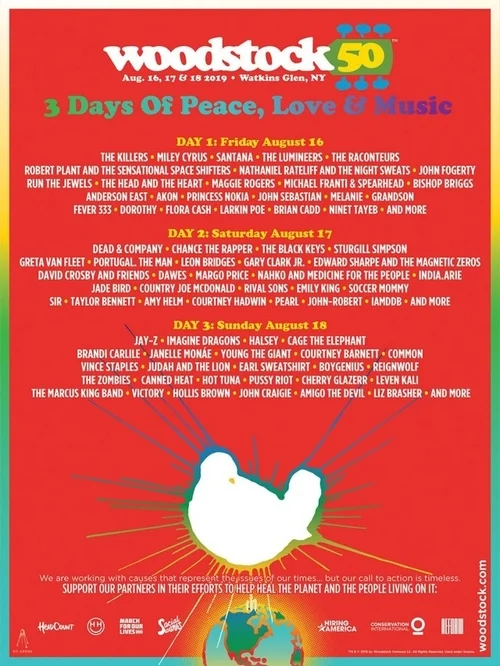
“In around 100 days, as many as 75,000 attendees and more than 75 musical acts are scheduled to be at the three-day 50th anniversary festival in Watkins Glen.

But permits have yet to be secured. Tickets have yet to go on sale. A date to begin that sale has yet to be announced after being delayed.

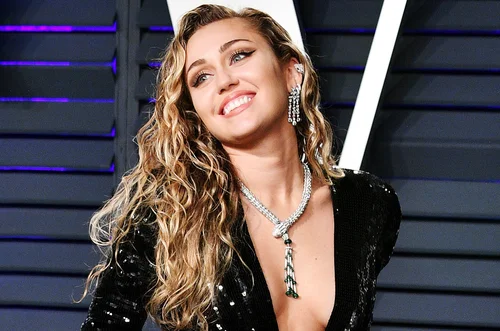
IN THIS PHOTO: Miley Cyrus is one of the names confirmed for Woodstock 50/PHOTO CREDIT: Getty Images

On Monday, the festival’s financial backer exited the project. On Wednesday, its production company followed.

And the music world has been left wondering how an event 50 years in the making could be scrambling in the final months. And, as it appears to many to be unraveling, how could it possibly get back on track?

Not many answers have come from the companies who have exited the festival. And the performers on the slate — names as big as Jay-Z, Miley Cyrus and Imagine Dragons — have been quiet.

But Michael Lang is confident he can make it work. The Ulster County resident, who co-founded the 1969 Music and Art Fair and is co-producing Woodstock 50, has attributed some of the planning delays to the parties who left.

Lang told the Poughkeepsie Journal, a part of the USA TODAY Network, he expects to have permits secured, and tickets either on sale or an on-sale date announced, in the next two weeks. His team of organizers is also “pretty close” to finding a new financial partner and transitioning to a new production partner. And, he said each of the performers have been paid in full and remain under contract, despite published reports stating the acts may be free to exit”.

It seems that there are going to be problems ensuring that everything is in place in time. There have been rumours of poor ticket sales and these new glitches throw into doubt the survival and reality of Woodstock 50. There have been anniversary celebrations of Woodstock – including its twenty-fifth in 1994 – and each has been beset with some sort of issue.

View this post on Instagram

The bird of peace is back #Woodstock50☮❤🎵

A post shared by Woodstock (@woodstock) on

One cannot expect any festival to run smoothly but Woodstock 50 has more illnesses and pains than most. Maybe the sheer scale and ambition behind it is a problem but, to me, there is a bigger problem: the quality of the line-up. Even though some huge names turned down Woodstock in 1969, they did boast some truly iconic acts. This year, Santana, Robert Plant and The Raconteurs are playing and there are some okay headliners. Not only is there a lack of female talent on the bill – I know the original Woodstock was male-heavy but we cannot use that excuse now – but there are very few female headliners. Look closely and how many truly wonderful artists are on the bill? We have Miley Cyrus, Imagine Dragons and The Zombies on the bill so, in terms of variety, there is a lot to choose from. There are Hip-Hop artists like Jay-Z playing and some new Pop acts. Woodstock had more Folk and Rock and it is a bit unfortunate seeing a relative lack of Folk and Acoustic on the bill. Who would you actually turn up for? Maybe Santana – as one of the artists who was on the original bill – could provide that link to 1969 but there is not a great deal of modern-day class. I wonder if the likes of Bob Dylan and Neil Young were approached; if Patti Smith got a call or a band such as Radiohead were called.

 IN THIS PHOTO: Michael Lang following the announcement of the Woodstock 50 line-up at Electric Lady Studios in New York City on 19th March, 2019/PHOTO CREDIT: Patrick Oehler/Poughkeepsie Journal

A recent post on Woodstock’s Instagram account suggests that things are going ahead. As Alt Press have reported, there are no firm plans to cancel.

“Last night, Woodstock 50 took to Instagram to thank those who have continued to support the festival throughout the rumors, sharing a few positive comments while showing appreciation for the “Woodstock Nation.”

“Thank you Woodstock Nation! To the more than 100,000 of you who have responded to our situation with support and solidarity… a heartfelt ‘thank you’. Our intention holds firm. To deliver a world-class, once-in-a-lifetime festival to celebrate the 50th Anniversary of Woodstock. To honor a cultural icon that changed the way we think about music and togetherness… and will do so again. We’re in this together, as reflected by your words of support”.

Who knows what the current status is, what with different reports saying different things. It seems like, if Woodstock 50 goes ahead, it will be pretty tight and there might be some compromises. I do wonder why there have been so many issues and how things have got so bad. Maybe, because Woodstock 50 is a bit of a landmark, we have heard about the same problems other festivals face…although they are never reported. I do think that the line-up itself is the biggest issue. The original Woodstock did have some stellar acts on the line-up and, whilst there is some quality this time, there is not nearly the same sort of brilliance.

 IN THIS PHOTO: Janis Joplin was one of the performers at the original Woodstock/PHOTO CREDIT: Getty Images

I do think it is a bit of a disappointing way to mark fifty years since Woodstock. One might ask who, then, would be best for the headline slots. I do think there are plenty of icons around that could fit the bill and they might have been asked already. With so many problems already affecting Woodstock 50, I hope that it manages to navigate them and survive. Any celebration of such a historic moment is great and I do feel that Woodstock deserves all the respect it gets. Maybe there were some problems and downsides but look at how it brought people together and what it did for the U.S. I hope that, at a time when Americans are being ruled by Trump, Woodstock 50 can bring them together and provide something positive. It is unclear whether the festival will go ahead and whether organisers can overcome problems regarding logistics, artists and everything else. Let’s cross our fingers but, aside from a less-than-fantastic line-up, the spirit is there. I do think it is good that we mark Woodstock and, in decades from now, we keep the ball rolling and mark the anniversaries. Maybe we will not see anyone as explosive as Hendrix at Woodstock 50 but, if everything goes according to plan – and the weather behaves itself! -, it could be a festival…

TO remember for years to come.

TRACK REVIEW: Kylie Minogue - New York City

TRACK REVIEW:


Kylie Minogue

New York City


9.5/10


The track, New York City, is available via:

https://www.youtube.com/watch?v=YjNnqqLbwEs

GENRE:

Pop

ORIGIN:

London, U.K.

RELEASE DATE:

3rd May, 2019

The album, Step Back in Time, is available from 28th June, 2019. Pre-order here:

https://www.amazon.co.uk/Step-Back-Time-Definitive-Collection/dp/B07RBJLZ5F/?tag=sdepcw-21

__________

THIS is a slight change of pace...

jhj.jpg

for me regarding genre and reviewing. I do not usually review many Pop artists but, because it is Kylie Minogue, one feel an exception must be made! In fact, I’d review her anyway but, on this occasion, she has sort of retuned to her roots. I will talk about Pop and the need for happiness on the scene; artists that reinvent themselves and go through these changes; iconic acts and those who warrant respect for years and years to come; role models for the next generation and why this year’s Glastonbury, with Minogue in it, will be very special – I will talk a bit regarding Minogue’s future and where she might head. There is a lot to unpack when it comes to the legendary Minogue so, right now, let us talk about her style of Pop. I am thirty-five and do recall the first flush of Minogue back in 1988. I was only five when her debut album came out in 1988 but Kylie was a quintessential 1980s Pop release. It was fresh and full of instant Pop winners. One might argue that it was a bit manufactured but nobody could deny the sense of fun on show. Minogue eventually changed direction and embraced something a little more daring but, on her first few albums, there was this sense of giving people something exciting, upbeat and catchy. Songs like I Should Be So Lucky (Kylie) and Hand on Your Heart (1989’s Enjoy Yourself) are rooted into memory and are instant classics. Maybe it was the age I was when these songs were out but it was great discovering these very bouncy and bright numbers at a time when genres like Hip-Hop and Grunge were providing something a little darker and more angered. In many ways, 1988/1989 was the most eclectic music has ever been. Pop was about to go through changes and we would see artists like Minogue spearhead something fantastic. I like the fact that she produced these radio-friendly songs that stuck in the head and stayed with you.

 PHOTO CREDIT: Audoin Desforges

In years to come, as I say, that would change a bit but it was that arresting and uncomplicated Pop sound that won people over. Anyone looking for more depth and vocal range were missing the point regarding the tracks. There was that instant connection and memorability. Now, in 2019, how many songs do we have that embrace life and love without a cynical aftertaste?! Look around the modern landscape and there are very few artists that are providing the same kind of rush as Kylie Minogue. I argued this yesterday in a feature but I feel the modern Pop scene has very little in the way of joy and uplift. There are a few artists who can produce gems but they are in the minority. Maybe people, in an effort to be too honest and connect with what they feel, are producing music that is pretty glum and tense. I am a bit disappointed that there is not more colour and energy in the scene right now. One cannot say the lack of 1980s influence is the reason behind slightly moodier sounds. There are 1980s influences about but they seem to be blended into something a bit unhappy. It is a shame because we need the likes of Kylie Minogue more than ever. I will talk about her new single, New York City, in a bit but it is a return to her classic Pop sound. I do think we need a kick and guidance to remind people why the likes of Kylie Minogue, back in the 1980s, has a definite place right now. I am not suggesting that a bit of Minogue input will revive a flagging genre but it is a handy reminder of why a simple and uplifting song can make a huge difference. I understand why artists want to be a bit more earnest and revealing regarding their music but we need to balance that with something more hopeful and energised. Right now, I do fear that music has gone down this black hole and it will be very hard to get back to where we used to be.

If you think about iconic artists who have been around for decades and reinvented themselves on each album, there are very few that come to mind. Madonna strikes the mind and you need to put in David Bowie and, maybe, Michael Jackson. Kylie Minogue is someone who started making these traditional and simple 1980s Pop songs but, through her career, grew and became bolder. With Mike Stock, Matt Aitken and Pete Waterman writing songs for her on her first few albums, we knew what to expect. Her third album in 1990, Rhythm of Love, had Step Back in Time, Better the Devil You Know and Shocked on it – it was one of the last albums that had that 1980s-soundign Pop flavour. By this point, Minogue was become more daring and explorative with her music. Her image changed from the cute and innocent Pop artists on her first couple of albums and was slightly raunchier and more contemporary – perhaps influenced by her then-boyfriend Michael Hutchence (INXS). The production was finer and more accomplished whilst the songwriting and Minogue’s vocals were more confident. Going into the 1990s, she had to reflect the changes and step things up. 1991’s Let’s Go to It was the last Minogue album with that more straight-forward Pop sound and, on her 1994 eponymous album, Kylie Minogue stepped into a new light. Tracks such as Confide in Me brought in more Electronic sounds and something more sensual and brooding. Gone were the bigger choruses and she brought in genres like House and Dance. With new writers and producers, this was the start of a second phase. I guess every major artist has some form of transformation and growth but, in terms of scope and sound, few as radical and impressive as Minogue. If 1997’s Impossible Princess did not resonate with many critics back in 1997, retrospective reviews have been a lot more kind and considerate. The songwriting is stronger than previous albums and Minogue was more involved in the songwriting process.

It is the sound of a Pop artist throwing away a more rigid sound and embracing everything from Techno to Trip-Hop to Britpop. Able to anticipate changing trends and adapt accordingly, Minogue was always moving and looking to evolve as an artist. Albums like Impossible Princess might have seemed a bit too eclectic and bold back in 1997; an unexpected move from someone like Minogue but you cannot deny the power and importance of that record. Recently, she has stepped into Country with Golden and, on some recent albums, has revisited Pop and some of her earliest sounds. If you want to talk about successful reinventions after a bit of a difficult patch – in terms of the reaction to Impossible Princess – then the 1-2 of 2000’s Light Years and 2001’s Fever saw Minogue enter yet another decade in bold and unexpected fashion. There were experimentations and leaps on Fever but the heart and soul was an updated kick of Disco. I think Minogue represents a time when Pop still had that sense of wonder and unashamed joy. Listen to songs like Spinning Around and On a Night Like This and they seem somewhat awkward and gleeful compared to a lot of the modern crop. Compare the sounds of the teenage Minogue on her debut and the thirty-something Minogue who was mixing something mature with a sense of liberation and joy; it was a magnificent transformation and step in her career. Fever extended that and brought songs like Can’t Get You Out of My Head and Come Into My World. Its Euro-Disco and Pop blends spawned big hits and the album gained huge reviews and impassioned praise. Perhaps there were fewer big artistic leaps post-2001 but Minogue was still exploring new ground and ensuring she did not repeat herself. In fact, 2010’s Aphrodite returned Minogue to her dancefloor roots and, again, was another big step into a fresh decade – releasing records in 1990, 2000 and 2010 is Minogue’s way of kicking off each decade in style; ensuring she sort of sets the trend and mood. Not all of her albums have been fully-realised and successful but you look at how far she has come and what she has achieved and, at the heart of everything, there is this desire to have fun and get people dancing.

I have given a bit of a whistle-stop tour through the back catalogue of the Australian icon but you’ll forgive me for being a bit brief. What I wanted to show was that, at each stage, Minogue was adapting to the music happening at the time but adding something unique and personal. She is not one of these artists that copies others or feels the need to be like anybody else. Every record has its own skin and scent and, because of that, I do not feel she gets the attention she deserves. Look at all the 1980s-inspired Pop songs and you can trace so many of them back to Kylie Minogue. I listen back to some of her earliest songs and they still stand up. Maybe the production is a little dated but one cannot deny the sense of fun and liberation. I do not think we have much of this now and it is a shame to see so many artists looking inward and producing music that is pretty glum and pained. Where is that spritz and explosion for those who need to be refreshed and inspired? For that reason, Minogue is an icon and someone who deserves to go down in the music history books. One of the reasons we are getting something a bit nostalgic and 1980s/1990-sounding on Minogue’s new single, New York City, is the fact she has a greatest hits collection, Step Back in Time, coming out soon. It is a great career-spinning collection that goes back to the very start and includes some of her later works. A lot of greatest hits collections can seem a bit redundant but, when you thinking about the radical changes in sound Minogue has adopted down the years, it is always necessary to have updated versions. I like the fact that she has this collection arriving but there are many more years ahead. I stated that Minogue’s most-recent album, 2018’s Golden, was another bold step.

As she turned fifty, there was a need to reflect a bit more and producing something a bit more mature. That is not to suggest that Minogue was playing safe and settling down: on the contrary, she was still kicking and alive but not so Pop and Dance-focused this time around. I think every great artist is that which can keep moving and surprise the audience. Few expected Minogue to head in this direction but, like all the icons of music, you cannot stay still and produce the same album over and over. With fewer and fewer mainstream artists making radical shifts and giving us these songs that stay in the head and will be remembered for years, the likes of Kylie Minogue are a rare breed. I have mentioned Madonna and, when you look at what she is putting out right now, there are no signs of slowing. Adopting a new persona, Madame X, the album of the same name will be a sort of chameleon-like heroine stepping into different moods, scenes and situations. At sixty, one would expect Madonna to adopt a calmer and more relaxed style of music – the misconception and rude expectation of the music industry. Instead, she has the same passion and potency we experienced at her heady best and the same can be said of Minogue. Although she is a decade younger than Madonna, there is nothing to suggest Minogue cannot last as long. In fact, it seems like an upcoming spot at Glastonbury will get her to new fans and generations. She takes to the ‘legends stage’ – if that is its official name? – and will get a chance to deliver her big hits to an enthralled crowd. So many of the fans that found Minogue in the 1980s have followed her; she picked up new ones with each new album move and, in 2019, there are youngsters who will be experiencing her music for the first time. One can only guess what the sets will be like and what sort of production values we will get. Seeing as there is going to be this career-arching set, there will be a lot of different scenes and styles mixed into the blend. Minogue was due to headline Glastonbury back in 2005 but, as she was dealing with a breast cancer diagnosis, that was not possible. It will be emotional for her as she heads to Glastonbury fourteen years after having to deal with such heartache and fear.

This year’s Glastonbury will be a big one for Minogue and it is only right that she should be seen as a bit of a legend. Not many artists have endured for so long and continued to win the hearts of fans around the world. I have never met her but, as a person, she always comes around as so bright, warm and funny. You get the sense that some big artists are a bit of a drag away from music and might let you down. Minogue seems always-radiant and has that classic Aussie humour and fun. When we look back in decades to come, the likes of Kylie Minogue will hold a very special place. Before getting on to review her new single, I wanted to talk about the new phase for Minogue. Ahead of her Glastonbury appearance and new greatest hits album, she has been speaking about her cancer fight and how that has affected her chances of having children. Speaking with The Times, Minogue she talked about love, her cancer diagnosis and what her Glastonbury set might contain:

“She has been dating Paul Solomons, the 45-year-old creative director of British GQ, for just over a year. When talk turns to him, she lights up. “I can feel my face going,” she says. “People say, ‘Your face changes when you talk about him,’ and it does. Happiness. He’s an inspiring, funny, talented guy. He’s got a real-life actual job! It’s lovely.”

“I was 36 when I had my diagnosis. Realistically, you’re getting to the late side of things. And, while that wasn’t on my agenda at the time, [cancer] changed everything. I don’t want to dwell on it, obviously, but I wonder what that would have been like. Everyone will say there are options, but I don’t know. I’m 50 now, and I’m more at ease with my life. I can’t say there are no regrets, but it would be very hard for me to move on if I classed that as a regret, so I just have to be as philosophical about it as I can. You’ve got to accept where you are and get on with it.”

She confirms there will be guests joining her on stage, but won’t tell me who. Dolce & Gabbana designed the Greek goddess-inspired costumes for her Aphrodite: Les Folies tour in 2011, but her on-stage style now is “more human, more real”. “But even Elvis had a few diamantés on him,” she continues. “Come on! I’m thinking of it as a big sing-along. It’s daytime, so you can’t have the lights, effects and lasers that I normally have. I think the simplicity is part of what makes that slot so magical. Dolly Parton just walked on out. Lionel Richie just walked on out. I mean, I’ll sashay on out”.

The first moments of New York City sort of blend her Pop work in the 1980s and early-1990s with the effects and Euro-Disco-inspired sounds of 2000 and 2001. The heroine is boarding a plane to New York and it seems that Minogue has desire in mind. She wants to get a train to the “big, bad city” and there seems to be a hero in mind. Whether she has jetted in from London or elsewhere, you follow this progress and Minogue having a very clear destination in mind. She is embracing the city but seems to be there in order to get a sense of satisfaction and release. Whether Minogue has a special attachment to New York or not, it is clear that there is this sense of beauty and grandeur that she cannot get anywhere else. New York’s epic backdrop and sounds are in her blood and, when the lights go down, she is very much matching New York’s coda: the city that never sleeps. Minogue has not really produced a Pop song like this since 2000/2001 and, in some ways, it is a sort of blast back to her 1988/1989 beginnings. She could have produced a song that was modern-day Pop: lots of processing and a fake sound; quite anxious and relying on loops and not really exploring a natural space. New York City is a fresh and natural song that is open and has nothing on its mind expect for passion and satisfaction. From the very off, you are hooked by the fizzing electronics and the clear glee in Minogue’s voice. We are not told what has brought her to New York and who her beau is but it is evident that she is at her happiest when in his arms. Some of the lyrics do stray into cliché territory but, rather than being quite lazy, it is a way of ensuring the song gets into the head and can be chanted by fans and followers. It is strange to compare the voice of Minogue in New York City and her work on Golden.

It is almost like, on this track, we have the Minogue we loved and discovered so long ago. That is no bad thing and it is nice to see this contrast in 2019. Rather than keep standing still, here is a song that is hard to pin down. On the surface, it sounds like a 1980s-inspired Pop strut but there is much more depth than that. At a time when there is little positivity and happiness in music, New York City is this rather strange-but-welcomed thing. Minogue switches between the more relaxed vocal delivery to a faster pace when she talks about getting to her man and being with him. It seems that dreams come true and that she has been waiting for this moment for so long. The simplicity of the song and the pureness of the sentiments means that you return to New York City time and time again. I have not heard too many Pop songs that have a very positive aspect and possess that addictive quality. It is no shock that Minogue should provide such a revelation and bomb but I was not expecting a song like this to come from her. Minogue takes us to the city and the dancefloors as everyone looks “so pretty” and glowing. The never-ageing Minogue is spinning and dancing; happy in this moment and completely arrested by New York and the love she has. These words and feelings cannot be faulted and it means the listener does not have to worry about any bleak moments or unexpected sourness – everything here is glistening and positive! As the song progresses, you start to put more of the picture together and follow the heroine as she becomes enthralled and spellbound by the sights and people around her. The catchiness and memorability of the song is evident from the first spin and it will be interesting to see if there is a video for this song coming. One can only imagine what it would contain and how good it would look. I am not a huge fan of modern Pop but, having grown up on Kylie Minogue and artists like her, this is almost like a pleasing return to the past. As youthful and physical as she was back in the 1980s, this is Minogue showing that she is among the most important artists in music. The sound of New York City mixes Pop with Dance. There is Disco in there and, whilst the production is quite big and busy, Minogue’s voice is not drowned out: instead, it is on the same plain as the composition and there is this pleasing balance of her rapturous voice and all the electronic fizzes that augment it. I have been a bit cynical regarding the opulence and mood of Pop right now and, with Minogue giving us a rich and much-needed song like this, I wonder whether there will be other artists following in her footsteps. It is strange that a song that sounds very 1980s/1990s in nature should be inspiring artists in 2019; by an artist who was making music before a lot of the modern sect were even born. Maybe it is not a shock as Minogue has always been able to guide and instruct. If she keeps on putting out songs like this then she could well give the Pop mainstream the smile and sense of fun that it has been lacking for so many years!

There is a lot happening in Minogue’s world this year. She has Glastonbury to come in June and her greatest hits package, Step Back in Time. There are tour dates and, recently, Minogue has been around the world and keeping pretty busy! She is always keen to meet new fans and I am amazed at her stamina and her passion. She seems to be happiest when on stage, delivering her songs to the adoring masses. She seems very happy with a new love and her base in London. There is new music brewing and one would expect another album in the next year or so. One never knows which direction she will head in and what genres she will explore next. There is ageism in music and an expectation that, when someone – women, mainly – gets to a certain age, they need to record something a bit soft and gentle. Look at Madonna (in her sixties) and Paul McCartney (in his seventies) and the biggest and best do not pay any attention to that ridiculous notion! Instead, the likes of Kylie Minogue are doing what they want and not concerned with slowing down and being ‘age-appropriate’. I think Minogue’s music should be played on BBC Radio 1 and younger stations but, as is often the way, their playlists are reserved for younger artists. I know there are many more years ahead for Minogue and who knows how many albums she still has in her. She has been through some tough times but, riding high, she is now ready to embark on one of her biggest career gigs so far with Glastonbury.

It will be more than a normal gig. In a way, it is Minogue playing somewhere she was due to conquer in 2005 and, although she beat cancer and is in fine form, there will be some hard emotions and harsh memories in her mind. It is impossible to think about what could have been in 2005 and what she had to endure in one of the toughest periods of her life. With New York City showing that the Pop Minogue puts out is far fresher, positive and memorable than most of what is being unleashed by the new generation, I do think there is a very bright and productive future ahead. I am not a Minogue super-fan but I admire what she does and have always followed her music. She has earned her place as one of the most-respected and adored artists in the world. Minogue has influenced so many other artists and, at only fifty, there are many more years where she can twist, turn and transform; always doing something new and opening eyes to what could be. When she does kick off her Glastonbury set in a few weeks, there are bound to be mixed emotions. Seeing Minogue on that stage, in the sun (one hopes), will be a huge moment. Where does she go after that? Knowing Kylie Minogue, there is no telling just…

WHAT she can achieve and where she will head.

___________

Follow Kylie Minogue

FEATURE: Better the Devil You Know: Has Music Given Up Its Smile and Sense of Fun?

FEATURE:


Better the Devil You Know

xcvc.jpg

PHOTO CREDIT: @emcomeau/Unsplash

Has Music Given Up Its Smile and Sense of Fun?

__________

HAVING just completed an article about dementia...

and how music can aid memory, it seems ironic that I have to be a bit tough on the modern scene. I think the reason I can recall clear details from childhood is because the music that soundtracked those times. I can remember all the cool Pop from the 1980s and 1990s; the great House and Dance music that emerged through the 1990s and all the brilliance that was popping about. Maybe I am employing some romance and rose-tinted glasses but there were many songs in a major key that provoked people to get up and move! One could easily get behind the spirit that was in the air and feel invigorated. Whether it was the Britpop movement of the 1960s or the brilliant Pop of the 1960s – that our parents raised us on – one was not short of pleasure and positivity! I know I have written about this subject a few time but it seems music and the industry in general is going down a bad road. I applaud artists who write about mental illness and pain on their songs and, at a time when many still place a stigma on such subjects. Music is a very powerful way of raising awareness. There are so many artists out there but one practically has to wade through a pile of needles before they can touch a bit of hay. I like the fact musicians are going deeper and more serious but does that mean we have lost a sense of fun and uplift?

s[[tr.jpg

 PHOTO CREDIT: @lucassankey/Unsplash

I was reading an article the other day where an artist was promoting their album and they talked about how it was an honest account of depression, mental illness and heartbreak. Even though that is all personal and fine, it sounds completely depressing and unappetising on the page. We have come to a point where more and more artists are writing about such themes and, whilst it is good that we are not shying away from this, there is a vacuum where something a lot lighter used to be. One cannot claim, in any decade, the mainstream was great and the scene was filled with quality and genius. Even if The Beatles ruled the 1960s, there was plenty of crap. We all love 1980s icons like Madonna and Prince but there was ample cheese and crap; the 1990s has plenty to choose from but there were some tragic songs that curdled the blood! I am not sure when a massive shift happened but it was not long after we hit the year 2000. Even over the past few years, there were examples of artists having a good time and celebrating life. One would think that, as more and more artists come along, there should be plenty of major-key music to look out for. Even when some artists – mainly Pop performers – go for something fun, it can sound hollow, processed and instantly forgettable. Perhaps this is me in nostalgia territory but think about decades like the 1980s and 1990s.

Both had plenty of artists that were looking inside their souls and producing music that was sad and reflective. We had some fun music that was very empty and vague but, riding high, there were movements that had positivity at their heart. Think about Dance, House and Britpop: genres and scenes that had more than their share of rapturous anthems and big moments. One reason why I listen back to this music so often is to get that satisfaction and sense of energy. I am revisiting this topic because, week by week, there seems to be less joy around. Has music become a place where artists are more concerned with anxiety and their own lives than projecting outwards and giving the people something fired?! I do worry that artists have missed the point of music and why it remains in our hearts so long: because, under everything, there is a positive spark that can lift us when we need it. I am not suggesting more morose music is forgettable but it is unlikely we will be recalling that type of music from now in about twenty years. All the music I recall now, with few exceptions, has a lightness and tinge of colour that makes me smile. We are, as we’re told, becoming more depressed as a society and we are making mental illness more visible. That is all great and one of the things music should be doing is having these conversations and making darker subjects more accessible.

dsdsds.jpg

 PHOTO CREDIT: @thefakebhogra/Unsplash

If one is going through depression or split, they can hear artists talking about the same thing and feel some sense of relatability and understanding. If previous musical movements evolved into something more positive and unifying, does the fact we have no real fun in Pop and any big movements mean we are a bit doomed? What can kick-start a revival? It is clear that artists are struggling to whip up passion and anything approaching happy. Maybe one can understand this but, as I have always said, music needs to allow escapism or something good – if we need misery and sadness then we would just stay outside and not listen to music. If one needs music to give a boost then how many options are there now?! This article from Pitchfork last year that outlined a pandemic that has occurred. It seems that, in the modern age, music as a form of delight and happiness is a thing of the past:

“There are glints of FUN! here and there—Kodak Black’s “ZEZE” has some steel drums, at least, a faint memory of a probably-impounded-by-now cruise ship. Cardi B is out there, trilling her tongue and spilling over with near-cartoonish brio. And Drake continues to elevate our national glucose levels with at least one daiquiri-syrup flavored tropical hit every year; this year it’s “Mia,” his breezy collaboration with Bad Bunny.  The Dua Lipa, Diplo, and Mark Ronson house-pop confection “Electricity” is there, but barely. The song sounds precision-engineered for ubiquity—a billowing soap bubble of “never let you go”—but it peaked all the way down at No. 96…

Perhaps most ominously, some of the most life-affirming pop songs of our current era are literally about affirming the decision to be alive: Last year, Logic became a superstar with “1-800-273-8255,” a massive hit about resisting the pull of suicide that turns on the chorus “I finally wanna be alive.” In the song, the idea that being alive feels awful and unendurable  is taken as a given.

The music has followed suit. There are almost no bright synthesizers, no chirpy voices. Out of all the songs currently in the Top 30, only two are unambiguously major-key—Maroon 5’s “Girls Like You” and Post Malone and Swae Lee’s “Sunflower.”  Nearly everything else sounds submerged, cloudy, groggy, pained, dour. One or two outliers aside—DJ Snake is still out here DJ Snaking—it is a particularly subdued moment in pop.

Music, and Pop especially, is meant to lift us up and provide something warming at the end of a hard day, no? Why, then, are we being let down and having to embrace something darker and colder?

The armchair-cultural-anthropologist answer is the easiest one: Everything is garbage! Who wants to celebrate when the world is crumbling? It’s a seductive explanation. After all, many of us are currently grappling with the reality that the Earth will probably be partially drowned within the next four or five presidential administrations (assuming presidential administrations keep happening). Despite whatever famed optimist and Harvard cognitive scientist Steven Pinker might be peddling, most of us, no matter our politics, are united by the overwhelming sensation that Things Really Aren’t Going Great. As citizens, we are more pessimistic, more distrustful, more anxious. We are angrier. We are more fearful…

In this sense, the pop charts are just mirroring back our internal climate. Wouldn’t it make sense that we wouldn’t be clamoring for FUN! to run around screaming in our faces? When confronted with terms like “climate genocide,” who really wants to party like it’s their last night on Earth?”

Even films like Vox Lux are casting Pop artists as tragic and darker figures. Pop is not the only culprit when it comes to an upside-down smile: genres like Rap, Hip-Hop and Rock are becoming much more depressive and angry. Surely, one feels a way of helping people through depression and tough lives is to produce music that elevates rather than compresses and clouds? Pop used to be the home of great, bouncing sounds but that is less so nowadays. I know there are artists now that can write happy songs but there is almost this sense of guilt when one does arrive. Also, there are few happy songs that have the same natural energy, memorability and nuance of the classic songs from the 1960s-1990s/2000s. I know the world is paddling down a creek of shite right now but we all know that. We do not need music to tell of the fact and, although artists should be honest and tackle meaty subjects, we need some contrast! I am worried that we are in a bad situation now and there is no easy solution. Look back at all the great songs that got us pumped back in the day and realise why these songs remain with us now. Everything is not lost but I feel, the more artists embrace moodier songs and a sense of the downbeat, the less likely we are to be able…

TO return to better, happier times.

FEATURE: Time Out of Mind: Music for Dementia 2020 and a Pledge We Can All Get Behind

FEATURE:


Time Out of Mind

IN THIS  PHOTO: D.J., broadcaster and journalist Lauren Laverne (left) is the Ambassador for Music for Dementia 2020 and wants more to be done to ensure music is free for all those who suffer from dementia/PHOTO CREDIT: Getty Images/Music for Dementia 2020

Music for Dementia 2020 and a Pledge We Can All Get Behind

__________

I am going to get a bit nostalgic in this piece...

bvvbvb.jpg

 PHOTO CREDIT: @elien_dumon/Unsplash

as I am writing about a disease that affects memory. That might sound like a loose and unrelated reason to discuss dementia but, as we know, the disease is serious and takes a lot from a person. I will mention a couple of big names who are supporting Music for Dementia 2020 and outlining why dementia is so serious; the role music plays and why it should be free for all those who suffer the disease. Before explaining the reasons behind writing this feature, it is worth noting who Music for Dementia 2020 are and what their aims are. From their website, we can see they are a brilliant organisation with a great aim:

“It is anticipated that there will be one million people living with dementia in the UK by 2021 ¹. Music is a powerful connector and has the ability to bring people together in the here and now. It can enliven, stimulate and enable people living with dementia to express themselves creatively through musical engagement.

Research has shown and lived experiences demonstrate that music has the ability to help reduce the often-distressing symptoms of dementia, such as agitation, apathy and anxiety.

Music supports people living with dementia to communicate beyond words, helping them to connect with others. It supports emotional health and wellbeing, particularly at a time when emotions can be overwhelming or difficult to process or manage. It has a valuable role to play in enhancing quality of life and supporting carers in their vital roles.

IMAGE CREDIT: The University of Queensland

Music for Dementia 2020 is a national campaign to make music available for everyone living with dementia by 2020. Led by The Utley Foundation, the campaign is a direct and positive response to the Commission report on Dementia and Music. (See section below for more information about the report).

The recommendations in the report are a call to action for all. The Utley Foundation is leading the way by creating a national taskforce of stakeholders from across the music, dementia, health, social and care sectors, from people living with dementia through to MPs, to help improve the quality of life for people living with dementia through music by making it readily available and accessible.

Click here to become a member of our taskforce

By 2020 we want to:

  1. Have the support of the music, social, health, and care sectors in making music readily available for people living with dementia.

  2. Create a collective understanding across society that music is a necessity for people living with dementia and they need access to it now.

When we talk about music being readily available, we are talking about the whole spectrum of music, from understanding how to create the right environments in care settings through appropriate use of the radio through to active participation in live music making, playlists, listening to performances, using music to enhance and enrich care, and music therapy. People should and need to be able to make choices about what types of musical activities are best for them. This campaign wants to make sure that choice is available to you wherever you live across the UK, and that you have access to high quality musical activities, from the best in the latest music technology to evidence based music therapy”.

It seems shocking that music now is not free and available to all who live with dementia. I have no first-hand experience of dementia but my mother is a care worker and regularly is exposed to people who do live with it. Family members and friends can be forgotten instantly; cherished memories can escape and the sheer fear of not knowing your own name and where they are. We misunderstand dementia but we are aware of how serious it is and how it changes a person. Imagine going through your life normally and then, when you get to a certain age, you start forgetting stuff you used to know. There are different levels of severity but, for many, daily life can be interrupted and affected in a very serious way. I have memory problems but it scares me that, one day, I might suffer from dementia. There is no family history of it but I do worry that I will be afflicted in older age. Maybe it is irrational but it seems that, with each year, more of my precious memories start to fade. Why is it important to get music to dementia sufferers without them incurring a cost? Music, to many of us, is a way to pass time and provide some emotional release. Everyone has different reasons for listening to music but we all get something from it. If you are in a crappy mood then you can play a song that will definitely lift the mood. I guess we all take it for granted because we can access pretty much everything recorded without paying for it.

vcvjgfd.jpg

 IMAGE CREDIT: Pinterest/Katyau

Music is used as therapy and has been shown to make a real difference for those who suffer mental-health problems. Whether it is a stirring piece of music we have not heard or a much-loved favourite, music has the potential to transform people and keep them alive. Certain songs can actually give people impetus and a new lease. Whether it is a potent lyric or a particular time, there is no telling just what music can do. In dementia, there is an extra reason why music is so special. We store music in a different part of the brain to other memories so, whereas we might forget conversations or events from a few years ago, we can retain music from much further back. Organisations like Music for Dementia 2020 knows that many dementia sufferers have music stored in their mind; they might not know their loved ones and their past but there are songs in them! Music can unlock those and, with that, help aid the memory. Maybe it is ironic but music itself can unlock music memories that can, in turn, help restore memories that had been forgotten. I can think of few illnesses and diseases that are scarier than dementia. The fact that as many as one-million people might have dementia by 2021 should all give us pause for thought. Music cannot cure dementia on its own but it is clear how important it is regarding therapy and support.

dswety.jpg

 IN THIS PHOTO: Actor Vicky McClure/PHOTO CREDIT: Getty Images

I will come to my own personal reasons for supporting Music for Dementia 2020 but there is a lot of positive support in the media regarding dementia and ways to make the lives of sufferers better. Actor Vicky McClure is a big supporter and someone who knows the pains of dementia. Her series, Our Dementia Choir with Vicky McClure is a fantastic series and one that puts real sufferers in the spotlight. The series uses music/a choir to show how affecting it can be when people with dementia bond through music. Make sure you watch it but, as this review from The Guardian shows, we all can stand to learn a bit more and understand just how serious dementia is:

“Music, though, often remains after other things have gone. Lyrics learned long ago can be embedded too deep for the ravages of age to erase them. The power of notes and harmonies to uplift, move and connect synapses and people remains potent. With this in mind McClure and a team of musicians and neurological experts (and the BBC in conjunction with the Open University) have brought together a 20-strong group of people with different types of dementia, from McClure’s home town of Nottingham, to form a choir that will give a public performance in a 2,000-seater venue in three months’ time.

Chris, 67, has fronto-temporal dementia, which attacks the areas of the brain that control behaviour, personality and language; the bits that make us most “us”, if you like. He is becoming more outspoken and inappropriately behaved. Perhaps as part of it, he seems sunnily unconcerned by the condition. His wife, Jane, who has taken early retirement to care for him, says: “It’s like the long goodbye – every week, every month, we lose something of Chris. He’s not the person I married. I just find the whole thing so, so sad.”

The choir starts learning Stand By Me (as arranged by their choirmaster, Mark De-Lisser, for Harry and Meghan’s wedding). Betty, Chris and Mick are soloists unafraid to belt out a tune, and Julie builds up her confidence with every outing. McClure is genuinely involved in rehearsals, as well as fulfilling her role as presenter and interviewer, gently soliciting people’s stories and offering sympathy and empathy without sentimentality or strain. The programme takes the same approach. The choir members and those who look after them speak for themselves, and there are no contortions to fit anyone on to a particular path and force “a journey” on them. Everyone’s dignity remains intact and the blind cruelty of the condition is left to tell its own story, even if the harsher realities of their lives are not dwelled on”.

D.J. broadcaster and journalist Lauren Laverne is the Ambassador for Music for Dementia 2020 and has been speaking about her reasons behind supporting this wonderful drive:

“She explained, “Music should be made free for everyone living with dementia.

“I’ve seen the way music can change people’s lives. This is my industry, and this is a thing that this industry can do to help the people who created it; you know, people who grew up in the 60s, and bought records and then CDs.”

“This is a generation who paid their music taxes, and made the music industry what it is today. We’d love to see streaming services make music free for everyone living with dementia.”

Explaining her own connection with music, she said, “I can’t imagine my life without music.

“And we all instinctively know how important music is, and how beneficial it is for our wellbeing. It connects us to others, to our memories and boosts our mood.”

But Lauren explained that music can provide proven benefit to those with dementia in particular. She told us, “We know music has this deep effect on us. But there was this research, done by a parlimentary group, that showed that for 67% of people with dementia music reduces irritability and the need for medication.”

Lauren also shared that she has a personal connection to the benefits of music – revealing that it helped her dad and her family massively during his long illness, before his death last year.

“There are real, cognitive emotional health benefits to these sorts of things. And coming out of that experience with my dad, I saw how beneficial it was to him and how much it helped him to maintain his identity.”

“After he died I thought it would be a great thing to try and help other family’s benefit in that way – and it was about a week later that I was approached about this campaign. So it was good timing”.

One can only imagine how stressful it was for her family when her dad was ill; the pain of losing him but the fact music helped ease that stress and bring them all together in those precious final days cannot be understated. I wonder whether there are going to be any initiatives but, as I am writing about later, it is not all bad clinging onto the pass.

 PHOTO CREDIT: Getty Images/Music for Dementia 2020

We are told that nostalgia should be doled out lightly and we cannot hang onto the pass. I think, the more the mainstream grows gloomy and loses its smile, the less memorable music is. One of my fears is losing the memories that connect me with my past. The majority of the songs that are lodged in my memory are in a major key or have a cheerier tone. Were it not for the music I was exposed to at a young age, it is debatable whether I would be a music journalist and have such a passion. From a very young age, I was exposed to my mother’s vinyl collection: records from The Beatles, Steely Dan and The Faces; rarer treats from The Ozark Mountain Daredevils and, as one would expect, classics from Pink Floyd, Led Zeppelin and Kate Bush. All of this love (she had) for music rubbed off on me and informed me as a child. It seems idle and cheap to throw in romantic visions of childhood but I recall the first album I bought (maybe, worryingly, it was Now That's What I Call Music! 24) and the early songs that I was listening to. There are lots of times where music played an important role but, when I was young, I had a go-kart – my grandad constructed for me as a present; it was a pedal one and had a bar at the back where one could stand – and a friend used to be on the back with a red cassette player/boom-box. Whether it was Michael Jackson, T. Rex or The Beach Boys, these artists filled our ears and made life very sweet.

I grew up around artists as eclectic as Del Shannon, Bob Dylan and Carole King and digested every note I possibly could! The fact I can clearly remember riding that go-kart is because of music. I remember buying my first album at a local record shop on double-cassette and revelling in songs from k.d. lang, Duran Duran; Snow, Shaggy and Lenny Kravitz. I can recall where I was when listening to The Prodigy, Beastie Boys and Jamiroquai – playing football after school – and why Basement Jaxx’s Red Alert and Sixpence None the Richer’s Kiss Me played different roles in 1999 (a girl I fancied was with a friend of mine at our prom and it was a bit heartaching to see!). Coming back from family holidays, it is amazing why music from those moments remains. Maybe it was the fact I was happy during these times but the importance of the music is clear and have stayed in my mind since childhood. I do not recall memories from around those times; conversations and other scenes are gone but certain songs are with me; they open up scenes and images like a Michel Gondry mind-f*ck video. It is clear that music bonds us and is that common voice that makes our childhood so good; that scores these important times and gets lodged into a part of the brain that other memories do not. I have musical memories as old as thirty-plus-years and hope that they stay with me for decades.

So many other memories have gone and so it is thanks to music that I can vividly remember parts of my childhood. Just listening to certain songs casts my mind back to particular times and what I was doing. Take The Beautiful South’s Song for Whoever or Bob Marley’s Iron Lion Zion; The Beatles’ Rubber Soul and The Bangles’ Eternal Flame. I think of these songs and can instantly transport myself back to when they first arrived in life. It is quite emotional recalling the times but music is the common theme. When depressed, I have turned to music to keep me going and give me perspective. So many of us are stressed and anxious and conventional medicine/therapy is not always helpful. It is hard know what course of treatment works for complex individuals but there is something simple with music that reaches us all. I am touching on this later but think about joyful songs such as Deee-Lite’s Groove Is in the Heart. That 1990 anthem is not powerful enough on its own to cure depression or make someone happy but it provides a blast of infectious fun that can make a bad day good. A single song can bring a smile and, for someone with dementia, that sort of emotional response should not be taken lightly! I have only touched the surface of music and how it has impacted my lie but every individual has their own stories.

 PHOTO CREDIT: @rocinante_11/Unsplash

Most of my early musical memories revolved around buying singles and physical albums. I recall getting the bus with my mates to buy singles from The Divine Comedy, Terrovision and Oasis back in the day. I loved the feel of an album and sharing it at school. A lot of people with dementia had a similar experience and now, as music is mainly digital, it is harder to get a handle on everything coming out. I applaud those who pay for music and do not stream for free but there should be expectations for those with dementia. The fact music can enrich their lives means that we should not be charging them. More than that, music can calm nerves and help recall memories; it can help loved ones seeing their relatives fade away and help with issues around mental-health and even physical injury. There is a community and sense of togetherness you get from music and, as Vicky McClure’s T.V. show proved, something as simple as a choir can make a huge impression. I know the Government has a lot on its hands right now but they should help make music free for everyone with dementia. Streaming sites like Spotify and Tidal need to do their part and realise why those with dementia can benefit hugely from free music. We are not asking for anything huge when it comes to those who suffer a horrific and frightening illness: make music free for them and help bring about improvement and positivity.

Age UK wrote about dementia and how it unlocks memories:

“The power of music, especially singing, to unlock memories and kickstart the grey matter is an increasingly key feature of dementia care. It seems to reach parts of the damaged brain in ways other forms of communication cannot.

'We tend to remain contactable as musical beings on some level right up to the very end of life,' says Professor Paul Robertson, a concert violinist and academic who has made a study of music in dementia care.

'We know that the auditory system of the brain is the first to fully function at 16 weeks, which means that you are musically receptive long before anything else. So it’s a case of first in, last out when it comes to a dementia-type breakdown of memory.'

Many music students throughout the UK, as well as more experienced musicians, now regard care home visits as part of their learning experience. As well as being enormously beneficial to those with various forms of dementia and their carers, they can also be helpful and rewarding for the musicians themselves”.

I am worried about old age and what it can bring but I know that, with support, research and awareness, there might be a cure for dementia one day. Make sure you check out Music for Dementia 2020 and help spread the word. We all seem to take music for granted because we play so much every day. There are people out there who are not so lucky and go through a lot worse than we do. A cure for dementia is not on the cards yet but, if we can harness music and make it freely available to dementia sufferers, then that is a really positive step. Music is not just sounds that we can hum to and dance along to: for many people, it can recover memories that they thought were…

LOST forever.

FEATURE: Sisters in Arms: An All-Female, Spring-Ready Playlist (Vol. X)

FEATURE:


Sisters in Arms

IN THIS PHOTO: Izzy Bizu 

An All-Female, Spring-Ready Playlist (Vol. X)

__________

AS the sun is out...                                                          

 IN THIS PHOTO: Ina Wroldsen

it is a good time to celebrate the weather and the fact that the cold days, we hope, are all through. On this Bank Holiday weekend, we are all going to be out and about but, as you go, take some cool music with you. I have been looking around at the best female-led sounds of the moments and put them together in the latest Playlist. From all around the musical map, here are some gems that should give your day a bit of a boost. Take a listen to all the great material and I know there is going to be something in there for you. There are some names in the rundown that are definite stars of the future. Make sure you investigate them now and watch…

IN THIS PHOTO: Holiday Sidewinder

THEM rise.

ALL PHOTOS (unless credited otherwise): Getty Images/Artists

____________

Sage Charmaine – around

PHOTO CREDIT: Linn Emmery

Miynt – Vacations with Bond in South of France, Pt. 2

sdsds.jpg

Luna Shadows – lowercase

Tacocat – Little Friend

PHOTO CREDIT: Rebecca Blissett

T. Nile – Beachfires

PHOTO CREDIT: Jakob Wandel

Royal Teeth – Rivalry

Izzy Bizu – Never with It

Kate Tempest – Firesmoke

Laura Misch – Night Drive

Sabrina Carpenter – Exhale

RVBY MY DEAR – Cycles

Molly Hammar -Words

Mabes - Gone

bvvbbv.jpg

PHOTO CREDIT: Cara Robbins

Jackie Cohen – Chico Chico

sasa.jpg

Holiday Sidewinder – Forever / Whatever

mmnnm.jpg

Lucy Spraggan – Luck Stars

Bellflower – You

Ina Wroldsen – Body Parts

Hildur Höglind – Further Apart

PHOTO CREDIT: Joseph Maddon

Pearl Charles – Sweet Sunshine Wine

Tessa Violet – I Like (the idea of) You

Ashley Tisdale – True Romance

Chelsea Cutler, Jeremy Zucker – please

vcxc.jpg

Georgia Meek – When You’re Sober

Ari Lennox – Up Late

FEATURE: The May Playlist: Vol. 1: When I Rise, Gimme New York and Firesmoke

FEATURE:


The May Playlist

IN THIS PHOTO: BANKS 

Vol. 1: When I Rise, Gimme New York and Firesmoke

___________

THIS week has some truly bumper songs…

 IN THIS PHOTO: The National

that stand out from the crowd. Among the new music are songs from The National, BANKS; Kate Tempest, Madonna; Kylie Minogue and Noel Gallagher’s High Flying Birds. The Futureheads and Izzy Bizu are in there and, in a busy and exciting week, it is hard to get your head around everything that is happening! It is a great way to kick off the weekend and, in this group of songs, is a tonne of variety, colour and memorability. Get involved with the fantastic songs assembled and I am sure there is something in there for you! I have seen few weeks where so many of the big names have come out and it is exciting seeing all this great music bubble. 2019 has already been a terrific one for music and, with the tunes out we have this week, it seems like there is….

PLENTY more to come.  

ALL PHOTOS/IMAGES (unless credited otherwise): Getty Images/Artists

__________

BANKS - Gimme

Madonna – I Rise

Kylie Minogue – New York City

Izzy Bizu – Doorstep

The Futureheads - Jekyll

Noel Gallagher’s High Flying Birds – Black Star Dancing 

Kate Tempest – Firesmoke

Cate Le Bon – The Light

Taron Egerton – Rocket Man

ewesg.jpg

The National - Hairpin Turns

Iggy Azalea - Started

slowthai – Nothing Great About Britain

Of Monsters and Men – Alligator

oooppo.jpg

Kitt Philippa - Human

Bastille - Joy

Vampire Weekend – How Long?

Lewis Capaldi – Hold Me While You Wait

pp.jpg

Mini Mansions - Bad Things (That Make You Feel Good)

Sabrina Carpenter - Exhale

The Record Company - Goodbye to the Hard Life

The Flaming Lips – All for the Life of the City

Ashley Tisdale – Vibrations

Jamie Cullum – Taller

wwwqwq.jpg

IN THIS PHOTO: Valerie Broussard/PHOTO CREDIT: Carmelo Donato

Valerie Broussard, Lindsey Stirling - Deeper

Big Thief – Orange

Rhiannon Giddens with Francesco Turrisi – Brown Baby

fds.jpg

Lucy Spraggan – Connie’s Bar

The Kooks – Got Your Number

Christina Perri – Tiny Victories

Jeremy Zucker, Chelsea Cutler – please

Tessa Violet – I Like (the idea of) You

JP Cooper, Astrid S - Sing It with Me

Stay for Good - China Bears

TRACK REVIEW: Stormzy - VOSSI BOP

TRACK REVIEW:


Stormzy

VOSSI BOP


9.6/10


The track, VOSSI BOP, is available via:

https://www.youtube.com/watch?v=9ClYy0MxsU0

GENRES:

Grime/Hip-Hop

ORIGIN:

London, U.K.

RELEASE DATE:

26th April, 2019

__________

WHEN thinking about Stormzy...

2.jpg

a few things do race to mind. I will get to his new song soon but, before then, I wanted to look at Glastonbury and the pressure some artists are under; the changing Grime and Hip-Hop scene in the U.K. and those who push forward and continue to grow. I will also talk about black artists in this country and whether there is still imbalance; a hint at where Stormzy might head and what the next few months holds. It has been a busy old time for Stormzy the last few weeks. His single, VOSSI BOP – I hate when songs are in uppercase like that but, you know, I have to plug on! –, is out and, even if the lettering is a bit annoying and pretentious, there is that distinct sense of alarm. The man has this direct and emphatic song out that has resonated and connected with the people. Stormzy heads to Glastonbury on 26th June and will take to the Pyramid Stage. It is the first time he has headlined the festival and the first time a Grime artists has received this honour. There are some that say Stormzy will not be able to command that big stage and deliver a knockout performance. He has come out in the press and stated that, to anyone thinking he is going to let them down, they are crazy. He is definitely determined to give an epic set and one wonders what will be included. He has released the one album, Gang Signs & Prayer and, whilst that album was lauded and remains stellar, can that fill an entire set?! There will be some theatrics and big routines. I know he will provide fireworks and drama but, when you look at the limited amount of material in the pocket, will that be enough to captivate? I think it will and, more than anything, the material is a lot fresher than what will be performed by the other two headliners at Glastonbury, The Killers and The Cure. Those bands have been around a while and it is a bit old-hat with them. You will get the hits but we have all heard the songs and know what we are in for! Stormzy is a fresh, young and vibrant alternative who can get people standing to attention and hooked.

I remember seeing, when Stormzy was announced as Glastonbury headliner, a lot saying that those with only one album under their belt should not have such an opportunity. Those questions around a setlist and what will be included kept coming up. It is inevitable that artists like Stormzy will be subject to scrutiny but the booking came off of the reception for Gang Signs & Prayer. Glastonbury has often been accused of being limited and predictable when it comes to the sort of music they put in the headline slot. The Killers and band like that are the usual fare and, to book a Grime artist, that is a big move and evolution. I hope this continues for years to come: Glastonbury is not just a Rock festival and shows that with its eclectic line-up. It is anyone’s guess as to what Stormy does when he heads to Glastonbury but you know it will be pretty special. There will be other material included – and not just his album – and you are going to get something pretty big. His headline opportunity will provide inspiration to other artists like him; those coming through who feel Glastonbury is too narrow and reserved only for a certain type of artist. Stormzy is breaking barriers and showing what can happen. His debut album is a great achievement and many people have taken it to heart. Seeing all these songs on the big stage, performed with sensational energy and command will be sensational. The confidence Stormzy has is incredible and it will be interested seeing this translated at Glastonbury. After the dust has settled and everything is done, I do feel Glastonbury will shake things up and be a bit more ambitious when it comes to bookings. I know that Stormzy will have a sensational time and give the enthralled gig-goers a set they will not forget. Let’s move on and address another subject – I wanted to look at Grime and Hip-Hop in the U.K. and how it is changing.

 PHOTO CREDIT: Shirlaine Forrest/Wireimage

Years ago, we did not really have a strong Grime scene. I am thinking back to the time Dizzee Rascal exploded not long at the turn of the century and then, after his best albums, there was a bit of a downturn. I maintain the U.S. is stronger when it comes to Hip-Hop. Look at all the great artists working there at the moment and, in terms of history, they are definitely stronger and more varied. Grime is not really a concept that extends to America and seems to be distinctly British. This is a genre that tends to focus on London and articulates the struggle and voices of artists who grow up in a certain situation. By that, Grime is a distinctly working-class struggle; a documentation of the division on estates and the voice of the street. It is a rawer style of music and one that articulates greater truth and potency that a lot in the mainstream. What I love about Grime is how eclectic it is. We assume that it will sound the same or is quite narrow but, from Stormzy and Skepta through to Giggs, there is a lot to be discovered. I love artists like Stormzy because they are hugely electric and provocative. When you listen to songs on Gang Signs & Prayer, one feels like they are being transported to his manor and watching what is happening. You are involved in the music and, even though the words might not be true to your life, you still immerse yourself in the music and get behind it. Grime is a growing genre and one that is picking up new champions. There are few genres, as I will explain later, when black artists are being recognised and can shine. It is a problem with the industry but, as time goes on, the power and leadership of Stormzy and his peers will make changes. The fact he has a Glastonbury headline slot is a piece of history and one wonders just how far he can go!

Whilst Pop will always dominate and it is unlikely Grime and Hip-Hop can overthrow it, I am seeing names and examples that can start to redress the imbalance. This country is producing a great new wave of Hip-Hop and Grime. Look at Little Simz and how she is faring right now. Her current album, GREY AREA, is tremendous and is one of the best albums of 2019 so far. It is a mesmeric and personal work that delivers knockout blows all over the shop. It is clear that, here, we have genres that are more powerful and inspiring than the majority of what is being foisted into the charts. It seems weird that commercial artists still have the most say and they are the ones with the most pull. The music they make, largely, is not that original and it does not have the same sense of importance and punch. You do not get cliché love songs and the same boring thing: instead, Grime and Hip-Hop has a lot more depth and reality. Even though, as I said, you do not need to be familiar with what is being said and projected, the music draws you in and there is plenty to love. I am not from the same neighbourhood as Stormzy but, when I listen to his songs, I can still connect. Stormzy does not push people away and, instead, the songs have a great flair, sense of cinema and power. You do not need to be an expert of Grime to understand why Stormzy is turning heads. It is a great genre and I feel like Grime is a lot more influential in these tough times. The country is divided and there is a lot of anger circulating right now. Rather than ignore the division and sense of confusion, Grime is providing some clear truth and cutting to the core. Artists are able to document the state of the nation and the reality out there without subterfuge and distillation. All of this means that, when Stormzy hits the Glastonbury stage, he will be given a political speech a lot more immense and truthful than anything any politician has delivered this year!

Whilst Grime and Hip-Hop are on the grow in the U.K., it seems like the fate of black artists is not so solid. We know there is racial imbalance in music – that is no real secret at all! For decades, black artists have not been afforded the same opportunities as everyone else. It is something that bothers me but, when you consider some of the best albums this year, do we need to take action and look for change?! I have mentioned Little Simz and, alongside Stormzy, we have two of the country’s best artists. Dave, a great Rap/Hip-Hop artist, released PSYCHODRAMA recently and that album, too, is one of the best this year. It may seem a bit simplistic but black artists are digging deeper when it comes to subject matter. I find artists such as Little Simz and Dave do not go for the obvious and, instead, one gets a lot more range and quality. Simz talked about her life and struggles in an evocative and spellbinding way. Dave documented imprisonment, slavery; violence and personal growth on his new album and I feel like some of our best sounds and songs are coming from black artists. Considering the quality of the music being put out, why is the industry struggle to create balance and conversation? If you look at the genres and charts, you see mostly white faces and the same old sounds. Grime and Hip-Hop are genres where black artists can thrive but the mainstream is still restrictive and homogenised. If we talk about Stormzy and festival bookings, he is creating history and I hope, in years to come, more black artists will be booked to headline. Genres such as Grime have been around for years but it is only recently where this is translating into exposure and festival glory. So many of the mainstream festivals do not book black artists and there is this whole world of music being overlooked and pushed away. Talking about race is a bit of a sticky subject and can lead to misunderstanding.

tter.jpg

 PHOTO CREDIT: Elle

What I mean to say is that, clearly, there is inequality in music and this is not new. We have seen this time and time again: great black artists reigning and striking and, when it comes to awards and recognition, they are in the back of the queue. Stormzy is one of these role models that has fought for equality and knows how ridiculous things are. His peers like Dave and Little Simz are representing the best music out there so I hope that there is conversation and betterment very soon. If one looks around right now, music is very predictable in terms of race and sound. I get bored of the processed and commercial sounds and want this shake-up to happen. Stormzy just scored a number-one with the song I am about to review and that, in itself, is a big artist. The fact that Stormzy has overtaken Taylor Swift and created this sense of shock is great! Does this mean that the charts will change and we will see more artists like Stormzy race to the top?! I do hope that we see this happen because I am tired of Pop ruling the roost. Things are very boring right now and I do think that genres like Grime and Hip-Hop have an important role to play. I am pleased Stormzy is at the top of the charts and continues to be up there for a long time! I do feel we have a problem with race and equality in music and the longer we ignore it then the worse it will become. I shall move onto another subject because, as you’d expect there is a lot to unpick when it comes to Stormzy’s new song, VOSSI BOP. It is a chart-topper and another big step from the big man. I do really want to hear discussions happen where we look at festival line-ups and certain genres; how black artists are having little say and the fact that we need to be much more inclusive. It will not be a quick solution but, given time and commitment, we can make some changes.

There is this sort of warped, haunting and howling electronic that brings VOSSI BOP up. In the video for the shot, Stormzy is on a bridge in London and things are eerily quiet. There is no traffic around and it provides an unusual (if cool) backdrop for the song. Rather than dabbing (a bit of a dance fad), he is doing this vossi bop variation. He is linking up with a girl in the coffee shop, and within a few lines, we know where the song is headed. Rather than beat around the bush, the hero is taking the girl back to his place and getting freaky in the sheets. A lot of Grime and Hip-Hop reflects the beat of the street and struggle but there is another avenue that is more about confidence and sex. The same can be said for any genres but there is that diversity in Stormzy’s work. He can mix things up and throw in songs like this that are more about pleasure than they are pain. The composition is quite simple and, in the first verse, there is not a lot of accompaniment. Stormzy’s vocal has a sense of cool to it and, rather than shout and get aggressive, this song has a swagger and vibe to it that is accessible. You are never pushed away and, instead, you walk alongside Stormzy as he talks about his conquest and path. As the track goes on, he discusses his route and profit. He uses the metaphor of seeds and trees sprouting, one feels, to reflect his musical progression. There is still that prurient chase and desire but, in a larger sense, the hero is talking about his success and how some people didn’t see it coming. He talks about his girl and that satisfaction; the fact he is rising and takes shots at politicians like Boris Johnson – someone who does not represent him. The video is pretty cool and, as the scene moves to a different part of London, there are dancers around Stormzy. Rather than there being this big hustle and pack around him, the scene is more akin to a ballet.

That might sound strange but the dancing and movement is more graceful and less aggressive. Maybe this is what VOSSI BOP is all about: putting in peace and calm rather than getting caught up in all the crap and lies. Stormzy addresses his peers and women; he talks about not chancing his luck and also addresses class. Some say he is a bit exclusive and being a bit middle-class; that he is not who he used to be and, maybe, betraying his roots. Stormzy fights back and knows that he is the same man he has always been. I love how the video flips between scenes and there is this sense of fluid moving. Other Stormzy songs have boasted quite a big and punchy kick in the composition but that is not the case here. There is much more subtleness to the song and you get more focus on the voice. Those who feel Grime is a bit too aggressive and attacking should listen to this song and realise there is broadness in the genre. Stormzy is talking about his life and how the fact his mum realises he looks tired. Stormzy has been flying around the world and gigging and it might be taking its toll. There are those who doubt Stormzy and his edge; maybe he has lost his cool or he is a different person. The man is not backed into the corner and is out there living it big. He is rubbing shoulders with girls and out there having fun. The words tumble at the rate of knots and you have this flood of images that go into the mind. The rhymes are solid and tight and you get caught in this sense of funk and catchiness. Rather than get buried by the composition and sound, the words and vocals rule and you can hear every beat of the story. Stormzy wants his competitors and haters to back off and give him some space. He has been getting tired and there are fake brothers out there.

The video continues to spark and intrigue as, with each new scene, the camera pans across. We see the fakers and those hassling Stormzy. He gives looks to camera and commands; he creates this very clear view of his world and the people he has to face. Stormzy (a.k.a. Stiff Chocolate) has nothing left to prove and is dropping bangers all over the place. He wants people to pay him homage and, as the song nears the end, you feel the man is talking about all his achievements and the fact he does not get the credit he deserves. I do love the fact that there is this balance of attack and retreat. On the one hand, Stormzy tackles those who doubt him and come his way. He is also looking for some love and acceptance. There is a nice balance of images, moods and emotions that run through. It makes VOSSI BOP a very vivid, nuanced and layered song that will bring you back time and time again. I love how the song jumps and pops. It has a definite strut to its step and I love the track. It is quite different to a lot of other Stormzy songs and might signal a new direction. Make sure you watch the video of VOSSI BOP as there are so many great scenes that make you smile and spike the mind. VOSSI BOP, so far, is my favourite Stormzy song and it made an instant impression on me when I first listened to it a few days ago. It is interesting to see how this song translates to the Glastonbury stage if Stormzy chooses to include it. It is a cracking tune and one that thoroughly deserves it place at the top of the charts!

lyte.jpg

 PHOTO CREDIT: Alex de Mora

The next few months are pretty packed for Stormzy. He has his Glastonbury duties in June but keep an eye out on his social media channels because the man is going to be pretty active. I do like Stormzy because he is one of these artists who goes beyond the music. We all read about the news that there is now a black scholarship for U.K. students and Stormzy has initiated this. It is a bold move and one that is needed. If we want to talk about race then we can look at elite institutions like the University of Cambridge and how their enrolments look – and how there are relatively few black students. Stormzy is almost like a politician in the sense he wants to change things and get rid of ills. Rather than our politicians, there are no lies from Stormzy and, instead, he is all about making improvements and helping those who do not have a big voice. I know there are other artists like Stormzy who are just as influential and I hope the industry recognises them. Stormzy has that Glastonbury headline slot and there are other artists out there who warrant the same sort of acclaim and celebration. So what might we expect from Stormzy going forward? There are many who are keen to see a follow-up to his debut album and, very soon, there will be news and announcements. I am excited to see how he follows Gang Signs & Prayer and what direction his music will go in. Rather than copying his debut, I feel the next album will be a bit more varied and take in some new lyrical themes. There is no telling but I am just eager to see how Stormzy follows his 2017 release. Stormzy is going to be busy touring and recording but it makes me wonder, when looking at what he does outside of music, whether there should be some sort of collective.

 PHOTO CREDIT: Stefan Heinrichs

I have not raised this before but, with politics in such a bad state, it seems musicians have much more influence and respect. They are able to change minds and galvanise the people; break down walls and bring about change. Maybe there should be this sort of body that consists of artists and they form their own sort of political party. They could tackle problems in broken estates and neighbourhoods with music and use their voice to unite people and create change. I know there are organisations that do the same sort of thing but musicians have so much sway and influence. Rather than rely on our leaders to get things done and improve the nation, artists are in a much better position. Someone like Stormzy seems like a natural leader. He is already making a difference when it comes to black students and Cambridge enrolment; talking about identity and race in his music and, alongside his peers, so much good is happening. Maybe I am getting a bit carried away but I think it would be feasible to start something like that! In any case, Stormzy is ruling right now and looking sharp. VOSSI BOP is at number-one and, very soon, he steps onto the Glastonbury stage. I am interesting seeing what his set is like and what he delivers to the punters. Those who doubt his credentials and headline promise should see one of his gigs and realise what panache and command he delivers from the stage. Let us wind things down and look ahead for Stormzy. I think there will be a new album from his very soon. I am looking forward to that but, after Glastonbury, there will be new demand to see Stormzy play. In a short couple of years, he has grown a lot and moved to the top of the Grime tree. Although he sees himself as a child of Grime and someone learning from the likes of Skepta and Wiley, that does him a disservice. I think Stormzy is among the most important and bold voices in British music and leading this new wave. I love what he is doing and think that the music world should embrace Grime and Hip-Hop more. I know Pop holds its place but I do feel there is something empty and predictable about the scene. We do need to change things up and integrate genres like Grime into the mainstream. It holds some sway but not nearly the same clout as Pop. Anyway, let’s end things there and it leaves me to urge people to check out VOSSI BOP and this great new song from Stormzy. This might signal a new album or it might just be a single release that is filling a gap. Whatever comes next will be thrilling and, next month, Stormzy will take to the Pyramid Stage at Glastonbury and tear loose. It will be a sensational headline set and I cannot wait to see what he delivers. Those who doubt his ability and think he will be a disappointment are mad! As he has proved throughout his career, Stormzy is capable of…

PRETTY much anything.

___________

Follow Stormzy

FEATURE: A Resurrection Down by the Waterfall: The Stone Roses’ Eponymous Debut at Thirty

FEATURE:


A Resurrection Down by the Waterfall

IMAGE CREDIT: Getty Images/ARTWORK: John Squire

The Stone Roses’ Eponymous Debut at Thirty

__________

THIS might be a day late but...,

 IN THIS PHOTO: The Stone Roses in 1989/PHOTO CREDIT: Joe Dilworth/Photoshot/Getty Images

with one thing or another, it is not always possible to get things out on time! I don’t think The Stone Roses would object to some well-meaning tardiness when it comes to their eponymous debut record. Released thirty years ago yesterday, it has been celebrated by fans and the press. I was five when it was released but, as explorative children often walk, it was soon in my vision. 1989 was a truly wondrous year for music and, alongside the golden age of U.S. Hip-Hop, there was some fantastic music coming from the U.K. House and Dance music was in full swing and, whilst a lot of influence was happening from Europe, there was something great blossoming in the U.K. In this country, bands like The Stone Roses were about to add their huge footprint to music. Their debut, The Stone Roses, was a bolt from the blue – and its influence is still being felt now. The band did not become an instant success when the album was released on 2nd May, 1989 but the band gained a huge following after touring more; a fixture of the Madchester and Baggy scene that was happening at the time. Although The Stone Roses had been playing together since 1983, it was their anticipated debut that broke them into the mainstream. Many claim that The Stone Roses, on their debut, invented ‘Madchester’: they definitely popularised it and made it ignite!

Although some of their peers were offering a more jangly and mellow form of Pop, The Stone Roses were channelling Dance, Rave and Psychedelia from the 1960s. Their debut album, in effect, was a mixture of the 1960s’ best and brightest with the growing and influential Rave scene of the late-1980s. If some of Ian Brown (the band’s lead) lyrics and confident vocals put some in mind of The Beatles, there was humour and arrogance that harked back to the explosion of Plunk and nodded to Mancunian heroes such as The Smiths. When supporting the album, The Stone Roses played some high-profile gigs – including playing at The Haçienda nightclub. There was a feeling by many – including the press and followers of the band – that The Stone Roses were offering something more explosive than The Smiths and something more substantial than a lot of their Manchester peers. Many have been writing about The Stone Roses on its thirtieth anniversary and I shall get to that soon. Of course, acclaim for the debut from The Stone Roses was instant and there has been a boat-load of retrospective regard. Pitchfork, when celebrating the album’s twentieth anniversary, had this to say:

“To wit, "She Bangs the Drums", "Waterfall", "Made of Stone", "(Song for My) Sugar Spun Sister", and "Fool's Gold" (a later single that was appended to the original U.S. release and, unlike fellow longtime U.S. add-on "Elephant Stone", reappears on the reissue), would make stellar radio hits in any decade. Brown's vocals, guitarist John Squire's intricate fingerwork and mighty riffs, and rhythm section Mani and Reni's sly, lockstepping grooves, are a textbook case of the whole far exceeding its components. Even "Elizabeth, My Dear", a notorious monarchy smackdown set to "Scarborough Faire"'s half-millennium-old melody, was ballsy then and remains deliciously tart today.

But queen-bashing and other acts of symbolic resistance aside ("Bye Bye Badman" and Squire's abstract expressionist cover art reference the 1968 student protests that uprooted France's political and cultural establishments), The Stone Roses isn't a radical, or even particularly progressive, work: From its verse-chorus-verses, to its meticulous overdubs and careful sequencing, to its revival-- however cleverly repurposed-- of hoary old rock myths ("I don't have to sell my soul/ He's already in me"), the album is a slick production designed for maximum market penetration”.

AllMusic, in 2014, had this to offer:

“Similarly, Brown can claim "I Am the Resurrection" and lie back, as if there were no room for debate. But the key to The Stone Roses is John Squire's layers of simple, exceedingly catchy hooks and how the rhythm section of Reni and Mani always imply dance rhythms without overtly going into the disco. On "She Bangs the Drums" and "Elephant Stone," the hooks wind into the rhythm inseparably -- the '60s hooks and the rolling beats manage to convey the colorful, neo-psychedelic world of acid house. Squire's riffs are bright and catchy, recalling the British Invasion while suggesting the future with their phased, echoey effects. The Stone Roses was a two-fold revolution -- it brought dance music to an audience that was previously obsessed with droning guitars, while it revived the concept of classic pop songwriting, and the repercussions of its achievement could be heard throughout the '90s, even if the Stone Roses could never achieve this level of achievement again”.

If some critics have been dismissive of the impact regarding The Stone Roses, there is no denying the influence of the album. In fact, the album constantly features on ‘best of’ lists – suggesting it is more popular now than back in 1989! At the time, in 1989, it was a revelation and opened the eyes of artists around the world. The sheer bombast, experimentation and confidence from the band stunned and enthralled. There is evidence that future icons such as Oasis were taking note when The Stone Roses was unleashed. Look at the anthems on the album and how consistent the material is. From the opening of I Wanna Be Adored to She Bangs the Drums; Made of Stone and I Am the Resurrection, there is an overloading of quality. One of the biggest hits from The Stone Roses, Fools Gold, was added to the U.S. edition of their debut but was, perhaps, the perfect fusion of 1960s trip and pure bagginess. Later in life, in the early-1990s, I was latching onto The Stone Roses and it was sort of a gateway from the Rave scene to Britpop. One can argue there was Britpop precursor on The Stone Roses’ debut: the album is such a marvel and mixture it is almost impossible to pin down! NME, when celebrating The Stone Roses, focused on the unique lyrics and Ian Brown’s original aspect:

“But, really, the most timeless aspect of the album is the lyrics. Ian Brown gets a lot of shit for his vocal ability, but that’s like slagging off a great author for their handwriting. The important things here are the mood and the message, and the Roses singer is an underrated philosopher. Many great songs contain a meaning that’s poignant whenever and wherever they’re played because they speak to fundamental aspects of the human condition: Pulp‘s ‘Common People’, LCD Soundsystem‘s ‘All My Friends’, Bruce Springsteen‘s ‘Born To Run’. On ‘The Stone Roses’ there are 11 of them. Optimism and hope reign supreme.

Throughout ‘The Stone Roses’, Ian Brown softly delivers lyrics that combine anger at the Monarchy (“It’s curtains for you, Elizabeth my dear“) and the government (“Every member of parliament trips on glue“) with sacrilegious arrogance (“I am the resurrection and I am the light“) and the unbridled optimism of talented youth (“Sometimes I fantasise, when the streets are cold and lonely and the cars they burn below me“). These are mood-lifting and perspective-changing anthems. Best of all, from ‘She Bangs The Drums’: “The past was yours but the future’s mine“. Any young person who doesn’t have that attitude is doing it wrong”.

In a fantastic article from The Independent, they talked about the bond in the band in addition to some of the struggled they faced:

“What made it all work were the personalities of the four musicians; a Beatles-esque spatter of contradictions that drove the band to great heights and also, when rancour later set it and it all tumbled apart, set them up as a cautionary fable of British pop.

Yet the Roses, less lightning in a bottle than nitro-glycerine in a flask, were never an entirely stable entity. Early on, Reni was regarded within the ranks as the natural talent. Indeed, Squire and Brown feared constantly that he would be head-hunted by a more established band (one particular obsession was that Mick Hucknall would pinch him for Simply Red).

Anxiety was thus infused into their DNA, along with that teary upstart spirit. Before Mani had joined, eager to expand beyond their loyal but modest fanbase, Brown and Reni had gone on a graffiti rampage, spray-painting the band’s name on walls in the suburb of West Didsbury.

It was clearly, also, that 1989 was a glorious time and one in which The Stone Roses flourished. Oasis’ Noel Gallagher, as the article explains, was also smitten when The Stone Roses arrived: 

Still, it was a glorious time. A period of innocence before their fall. Later, the Roses would be locked in endless wrangles with Zomba and Evans over their lop-sided contract. And they would become bogged down in the sessions for their lugubrious 1995 second record (the apocryphal difficult second album myth made flesh). Even their initially well-regarded 2011 return eventually petered out, leaving us only with two underwhelming, aura-destroying comeback singles.

But as 1989 ambled into 1990, how bright their future must have felt. Manchester, too, was basking in a moment. The Hacienda club was ground zero for acid house. Happy Mondays, James, The Charlatans were taking up the baton. John Squire’s shaggy non-haircut was trending, baggy pants were ubiquitous. We all seemed to live in the Roses’ world and it was magnificent.

“We were into The Jam and The Smiths before that,” Noel Gallagher would recall. “We thought you had to go to college or be an art student to be in a band. When I went to see the Roses, they looked exactly the same as we did … When I heard ‘Sally Cinnamon’ for the first time, I knew what my destiny was”.

The Stone Roses’ debut album can still be heard in modern music and the impact of the album is clear. I remember it, like all great albums, opening my mind at a young age. I was instantly connected to this pioneering band and, although their sophomore album (1994’s Second Coming) did not make such a huge wave, there is no refuting the power and potency of The Stone Roses! I love all the different mood and visions throughout and, thirty years later, I am picking up new shades, strands and colours. It changed the game upon its release and has been responsible for spawning so many bands – all hoping to follow in the footsteps of The Stone Roses. Thirty years after its release, the album still sounds fresh and exhilarating. It is clear that this phenomenal album will continue to motivate and startle musicians and fans…

PHOTO CREDIT: Getty Images

FOR decades to come!

INTERVIEW: Hannah Scott

INTERVIEW:

sas.jpg

Hannah Scott

___________

I have been speaking with Hannah Scott...

hg.jpg

about her new single, Walk a Wire, and what its story is. She discusses her album, Pieces of the Night (2018), and whether she has a favourite song from the set; the sort of artists/albums that influence her and whether there are plans for gigs this year.

I wanted to know whether the stage is somewhere she loves to be and what advice she’d give to artists coming through; how she spends time away from music and an approaching act to look out for – Scott picks a cool song to end the interview with.

____________

Hi, Hannah. How are you? How has your week been?

Hi, Sam. I’m good, thanks! Busy week as I’ve just released my new single, Walk a Wire!

For those new to your music; can you introduce yourself, please?

My name’s Hannah Scott. I’m a contemporary Folk artist based in London. I work closely with writer/producer Stefano Della Casa and, together, we write and release music with a story, often about the human condition and human connection.

Walk a Wire is your new single. Is there a story behind the song?

Yes. This is inspired by a friend of mine with a disability who closed herself away for fear of rejection. It invites her to open up and take a risk.

Your album, Pieces of the Night, came out last year. Are there particular themes that united the songs?

As I introduced myself above, I guess.

Lots of its songs tell stories around being human. Is there a track from the album that stands as a personal favourite?

It changes! But I'd probably have to say Boy in the Frame at the moment because it's so personal. We wrote it about my soon to be ninety-eight-year old grandmother losing her seventeen-year-old brother when she was just ten. It's a song which really seems to hit audiences and people often tell me it's made them cry - and they share stories about people they know having lost people lifetimes ago.  

gdfs.jpg

Do songs come naturally to you or is there a set process? Everyone is different and I am interested knowing how your music forms.

Sometimes they can take months, even years, to complete and others just fall out in the space of a few hours! It really depends! Stefano and I often write the music first and then I take the song away and write the lyrics. Sometimes I already have an idea for a topic or a particular phrase and we begin there, but mostly the music is complete before the lyrics are little more than a phrase or idea.

How important were your early music discoveries regarding your passion for music and how you write now?

So, so important. I started writing in my mid-teens and this was the time I also started exploring new artists and music beyond what I heard on the radio. Some of these I still adore today and their music continues to inspire me; an example of this is Counting Crows.

Do you have a standout memory from your time in music so far?

Probably opening for Madeleine Peyroux at the Festival Theatre in Edinburgh last November to an audience of two-thousand. It was an incredible experience in an amazing venue and one which I will carry with me forever!

Which three albums mean the most to you would you say (and why)?

Counting Crows - This Desert Life

Alanis Morissette – MTV Unplugged

Sara Bareilles - The Blessed Unrest

Counting Crows were the accompaniment to my mid-teens through to my earl-twenties, both my life and my early songwriting. This Desert Life was the first album I bought and features my favourite C.C. song, Mrs. Potter’s Lullaby.

Alanis Morissette is one of my favourite writers and performers. She’s a lyrical genius and I just love the sound and rawness of her Unplugged album.

Sara Bareilles’ album was one I discovered a couple of years ago at a time when my music consumption had changed, probably due to the ‘Spotify effect’. I realised I’d stopped listening to full albums and becoming totally absorbed by them. This album reminded me how wonderful that feeling is and we mustn’t let it go!

If you could support any musician alive today, and choose your own rider, what would that entail?

Probably Counting Crows. My rider would have a bottle of champagne and some chocolate on it but, apart from that, it would be healthy with juice and veggie food and fruit. Touring often means you have to eat on the go so it’s often unhealthy and quick. It would be nice to do the opposite!

What are your other plans regarding gigs/touring?

I’ve got lots of festivals and shows coming up over the summer and am constantly booking gigs; even starting booking for 2020!

Is the stage somewhere you feel at your most alive?

Absolutely. And with the audience chatting after a show. The stage is definitely the place I’m most open and most myself!

rewe.jpg

Is there any advice you’d give to upcoming artists?

Play live as much as you can, write as much as you can (my early songs were rubbish - you need to put the time in before you can write good ones!) and don’t expect your next release to be ‘the one’ - it’s a gradual journey and I’m not sure you ever ‘arrive’! 

Are there any new artists you recommend we check out?

I’ve played a couple of times with Folk-Rock band Merry Hell. They are fantastic and write brilliant, touching songs.

Do you get much time to chill away from music? How do you unwind?

My partner is a garden designer and we’ve just taken on an allotment - I love spending time there and getting my hands dirty! It’s such a good activity for being in the moment and I’m looking forward to eating fruit and vegetables which we’ve grown!

Finally, and for being a good sport; you can choose a song and I’ll play it here (not any of your music - I will do that).

How about Bury Me Naked by Merry Hell? This has become a favourite in my family!

___________

Follow Hannah Scott

dsa.jpg

INTERVIEW: Mark Daly

INTERVIEW:

Mark Daly

___________

TAKING us into the middle of the week...

 PHOTO CREDIT: Zyanya Lorenzo

is Mark Daly, as he tells me about his new single, Without You, and his 2018 album, When the Stars Align; the records that matter the most to him and when music came into his life – I ask how important and motivational it is knowing his music has connected with so many people.

Daly reveals his plans regarding touring and the future; whether the stage is somewhere he likes to be and which approaching artists we need to keep an eye out for – the songwriter chooses a great track to end the interview with.

____________

Hi, Mark. How are you? How has your week been?

Hello, how’s it going? My week has been great, thank you. It’s always very hectic and exciting leading up to a release but all positive.

What is the weather like where you are? Do the conditions inspire songwriting at all?

It’s actually been a nice sunny week in Ireland for a change - but we are being punished with a storm tomorrow that is going to make up for it. I definitely think weather has a big effect on my mood and rainy days at home often lead to new music. Most of my deep songs would come from days like that. I lived in Seattle for a couple of years too and they have the same weather so I guess I am used to it and that’s why I can’t write upbeat, summer Pop songs. Haha.

For those new to your music; can you introduce yourself, please?

I am a singer/songwriter from Cork in Ireland. I have been playing music full-time for ten years now and I have been loving every minute of it. In my early days, from about twenty to twenty-six, I was frontman for a rock band called The Voodoos and we were lucky enough to tour all over the world and sell a good few albums along the way. I was also a songwriter for Operation:Mindcrime in Seattle who are a supergroup of musicians created by Geoff Tate (formerly of Queensryche) who asked me to contribute some songs for his trilogy record…and I got to work with world-class musicians like John Moyer (Disturbed), Simon Wright (AC/DC); Rudy Sarzo (Ozzy, Whitesnake) and loads more which was an incredible experience.

After working on that record, I moved back home to Cork to focus on my solo career and I released my first single, The Hearts Reminder, in 2016. I also released a charity single in 2017 called Your World for World Autism Awareness Month with a song I wrote about my son.

In 2018, I released my debut solo album, When the Stars Align.

Without You is your new track. What is the inspiration behind it?

This song is like a dramatic love song; one where you write down all your feelings when everything is raw and the pain is at its worst. Then, later, you think I probably should have let the dust settle before writing these lyrics but because of how raw and real it was I wanted to keep it exactly the way it is now to show those emotions.

It is from the album, When the Stars Align. How personal is the album would you say? Did you take a lot of inspiration from your own life?

The whole album is very personal. Most tracks are about my life and personal experiences of dealing with hurt, pain; rejection and loss but also positivity, love; family and looking ahead to the future. To me, this album felt amazing to write and I found myself in a whole new style of songwriting on this record. The producer (Kelly Gray) wanted me to pull back from the Hard-Rock singing on these tracks and to focus on the lyrics - and telling my story -, which I was very grateful to him for making me do as I always used the Hardcore singing to cover up lines in my songs that used to make me feel uncomfortable.

dssq.jpg

Has music always been in your life? Which artists did you follow when young?

I have always loved music and all different styles of music. When I was a kid, I would get obsessed with one particular album for a long time - like ABBA’s greatest hits for example. Haha - and I would listen to it day and night. In my teenage years, I got massively into E.L.O, Pink Floyd; Led Zeppelin and The Rolling Stones.

Also, some of my favourite songwriters from when I was young are still my favourite to this day…like Adam Duritz (Counting Crows), Conor Oberst (Bright Eyes) and Justin Furstenfeld (Blue October); so, as you can see, I have a diverse taste in music for sure. Haha. 

Your music has received a lot of praise and support. How important and motivating is that kind of backing?

It’s very motivating when people reach out to tell you that they like your music and can relate to lyrics etc. For me, I find there are times as a musician where I end up with loads of self-doubt and question my abilities as a musician and songwriter even more so when it comes to releasing new music. It’s really amazing to hear positive feedback.

Do you have a standout memory from your time in music so far?

I thought my MTV EMA performance with The Voodoos in 2011 was always going to be my number-one memory but I have to say it was the day I released my charity single for Autism Awareness Month, Your World, as it was such a difficult thing to release such a personal song. But I got messages from parents all over the world to say how much the song meant to them - and that was truly an incredible memory that will be hard to beat.

Which three albums mean the most to you would you say (and why)?

August and Everything After - Counting Crows

It was the first album that I really, really listened to the lyrics and felt how powerful they were and, from then on, I was hooked on this band and songwriting.

The Dark Side of the Moon - Pink Floyd

I just think it’s the greatest album of all time. Everything about this record is incredible and, still to this day, blows my mind.

Higher Truth - Chris Cornell

I have always been a fan of Chris Cornell on all his projects but I really connected with his final solo album and I learned a lot from this particular record.

ff.jpg

If you could support any musician alive today, and choose your own rider, what would that entail?

My own rider would be nice and easy: beer, whiskey and FIFA (smiles.

What are your other plans regarding gigs/touring?

Lots of plans to tour the U.K. and Ireland this year, including a tour with one of my favourite bands, Candlebox, in June across the U.K. Also plans are well underway for a U.S. tour in 2020.

Is the stage somewhere you feel at your most alive?

Yes, indeed. I always love being on stage as it brings out a different side to me - and one where I always feel happy and comfortable in.

Is there any advice you’d give to upcoming artists?

Besides the obvious advice of ‘work hard and find your sound’, I would say just to try and keep it at a level where you love doing it. It can easily stop becoming about writing and performing because of how competitive and hard the music industry is, so I think once you are doing it for the right reasons and work hard, success will come along with that.

lkl.jpg

 IN THIS PHOTO: Better Oblivion Community Centre

Are there any new artists you recommend we check out?

Better Oblivion Community Center - which is Conor Oberst and Phoebe Bridgers together - is a really amazing new band and the album is brilliant. Irish band Fontaines D.C. are now starting to blow up and the album they just released is killer!

 IN THIS PHOTO: Fontaines D.C./PHOTO CREDIT: Daniel Topete

Do you get much time to chill away from music? How do you unwind?

I do get a nice bit of time to chill away from music. I love hanging out with my two kids and my better half, Claire, and playing/watching football. Although, being a Man Utd fan at the moment isn’t the best way to unwind. Haha.

Finally, and for being a good sport; you can choose a song and I’ll play it here (not any of your music - I will do that).

I’ll go with a Fontaines D.C. tune! Boys in the Better Land…and thanks for having me

___________

Follow Mark Daly

eqw'.jpg