FEATURE: Saintly and Supreme: Whatever Happened to Girl Groups?

FEATURE:


Saintly and Supreme

d.jpg

IN THIS PHOTO: The Supremes/PHOTO CREDIT: Getty Images 

Whatever Happened to Girl Groups?

_________

THIS is another subject I have covered…

de.jpg

 IN THIS PHOTO: All Saints/PHOTO CREDIT: Getty Images

before but, like any good journalist (if I can call myself that), some things are worth revisiting when the time calls! Tomorrow, I am going to talk about Lana Del Rey and her latest track – one that imagines an America without guns and chaos. It is an arresting thing and it makes me wonder whether musicians need to get more involved when it comes to raising awareness about what is happening in the U.S. Now, although some of the girl groups from my childhood are still around in some form, it seems strange that this scene died away. The Spice Girls have reunited and are performing but one wonders whether they will record new music – will it be as anthemic and spirited as their earliest stuff? One suspects now. Also, All Saints are around but, again, a more mature sound presents itself in their newest work; nothing quite like their regency back in the day. Apart from that, there are few remnants of the finest of the 1990s and earliest part of the last decade – I think En Vogue are still together but are hardly being talked about. Maybe there is something inherently un-PC about the term ‘girl group’: at a time when sexism and gender is being discussed and, in music, always present, is it demeaning and wrong to label like this?! I think ‘girl group’ is an old term that has been resigned but, in any case, what about the music that was being made? This feature from earlier in the year tells us where the girl groups of the past are.

I raise this subject for a couple of reasons – I shall get to the second in a bit. I grew up around a lot of music, but it was the music of classic 1960s girl groups that really caught my ear. Maybe it was the harmonies or the connection between the members; something magical that resonated and lingered between the notes. I recall hearing The Ronettes, The Shangri Las; The Supremes and The Shirelles for the first time and noticing how different they were to anything around. Maybe I am a sucker for the romance portrayed in the song but, really, it is the timelessness of the music that hit me – the fact it was passed from my parents to me and, in 2019, the music still sounds fresh and unique. This illuminating article dissects and revels in the extraordinary girl groups of the 1960s:

“Girl groups of the 1960s were responsible for some of the catchiest hits of the day. Songs like "Be My Baby" by the Ronettes, "Will You Love Me Tomorrow?" by The Shirelles, and "Where Did Our Love Go?" by the Supremes are pop-music diamonds, short and catchy with passionate lead vocals and sophisticated harmonies. The earlier wave of '60s girl groups included The Shirelles, The Crystals, The Blossoms, Shangri-Las, The Chiffons, the Dixie Cups, the Ronettes and The Cookies. Then later came the Motown sound with The Marvelettes, Martha and the Vandellas and The Supremes.

The Supremes were one of few girl groups that was able to sustain their success through the tsunami that hit American shores in the form of the Beatles and the British Invasion. It's conventional wisdom among some music experts that the Brits more or less "killed" the girl group phenomenon, or at least hastened the end of the golden age of girl groups. But let's be real -- it's pop music, considered a fairly disposable form of entertainment at the time, and nothing lasts forever. It's also worth noting that girl group never went away, it just changed with the music -- up through the Pointer Sisters to TLC to the Spice Girls.

One of the most famous of the girl groups that emerged out of Detroit’s Motown music scene in the mid 60’s, at the same time the Beatles and the British invasion were coming on strong in the U.S. and would go toe-to-toe with those groups on the music charts, was The Supremes. Diana Ross, Mary Wilson and Florence Ballard recorded “Where Did Our Love Go” in the summer of 1964, that particular song had been rejected earlier on by the Marvelettes. It went to #1 and sold over 2 million copies, so The Supremes were on their way to make music history! They quickly followed this with two more #1 hits: “Baby Love” and “Come See About Me”. The hits kept coming for The Supremes in 1965, 1966 and 1967. Between 1964 and 1967, The Supremes had one of the best all-time female track records in pop music history: they released 15 singles and all but one made the Top 10. Additionally, 10 of those songs were #1 hits!”

fd.jpg

 IN THIS PHOTO: The Bangles/PHOTO CREDIT: Bertrand Rindoff Petroff/Getty

I will bring in another article that examines the girl groups of the 1990s and early part of the last decade. It seems strange that bands of the 1960s such as The Rolling Stones and The Beatles were so much more massive than girl groups like The Supremes, but I think the classic girl groups helped influenced generations of artists and, as I say, the music sounds so sumptuous, passionate and evocative today. Whilst so many modern Pop artists discuss love in negative terms of, when being positive, are quite trite and predictable, there is something inherently jaw-dropping and seductive when you hear the 1960s’ best girl groups. Of course, not all girl group-produced music was about love and loss: there were anthems of defiance and the subject matter was quite broad. I am going to briefly mention the 1980s because we cannot ignore bands like The Bangles and Salt-N-Pepa. In a way, the classics crafted by these groups were on the same sort of level as the 1960s’ best. Maybe the subject matter was broader and we got some slightly harder-edged bands but, essentially, the template was the same: an incredible tight band performing these incredible catchy and memorable song. I like The Bangles because they were one of the few girl groups who played and rocked hard – maybe girl groups never caught on as much as Indie and Rock bands because of the lack of guitars and riffs; The Bangles were a bit of an anomaly.

When I think of the second wave of girl groups and the ones who I still listen to, it is the 1990s that comes to mind. Groups like All Saints and Destiny’s Child continued into the next decade, but I think the 1990s was this decade where girl groups held as much sway as boy bands. If the 1960s was defined by ‘boy bands’ like The Beatles courting more fevered and vocal fanbases than girl groups, there was a time when girl groups were on a level par with the men. What I like most about the 1990s’ girl groups was the fact that there were these different camps. If you wanted something a bit more commercial and sweeter, you had the Spice Girls and Sugarbabes. If you wanted something sassier that possessed a bit more clout then Destiny’s Child, TLC and En Vogue were on hand. Depending on your age will dictate whether the strongest girl groups were the legends of the 1960s or their grandchildren of the 1990s. I will end by asking where the girl groups have gone but I am not surprised the 1990s was such a fertile period for them. Even though genres came and movements evolved – we had Grunge and Britpop; U.S. alternative and all sorts at that time – girl groups seemed to be a constant that were unaffected by tastes, markets and trends. Some say girl groups aren’t prevalent today because the music is not enduring and seems uncool. I disagree. Listen to the very best girl group music of the 1990s – including All Saints and Destiny’s Child – and there are plenty of indelible tracks that added something bright and brilliant to the scene.

sa.jpg

 IN THIS PHOTO: TLC/PHOTO CREDIT: Getty Images

In America, you had these independent, pioneering and strong girl groups like TLC, Destiny’s Child and En Vogue who, to me, were about projecting these messages of strength against suppression; encouraging girls and young women to stand tall and believe in themselves. In a sense, the 1960s’ girl groups, whilst talking about love and heartache, were promoting the same thing: the new breed of the 1990s were updating those messages and giving them a bit more kick and swagger. Personally, I was a bigger fan of the U.S. best compared with our version: the Spice Girls, All Saints and Eternal were great but not quite as intriguing and nuanced as their U.S. sisters. Just as I write this, I am seeing a report that suggests Destiny’s Child might reform and tour together. They sort of came together for Beyoncé’s epic headline set at Coachella last year – few can forget that incredible performance. It was great to see the group back together and storming it like they did back in the 1990s and early-2000s. I digress. I think, though, there is an appetite for revival that extends past nostalgia and rehashing the past. Today’s music lacks potent girl groups and a sense of swagger, punch and pop. Think back to the 1990s and some of the anthems that came out. Destiny’s Child provided (from the 1990s to the next decade) Bills, Bills, Bills and Say My Name; the brilliant Lose My Breath and Jumpin’ Jumpin’. The Spice Girls had their fair share of brilliant tracks: Wannabe, Who Do You Think You Are and Say You’ll Be There among them.

Look at the En Vogue camp and some of their biggest numbers. Who can ignore the prowess and charge of Free Your Mind and My Lovin’ (You’re Never Gonna Get It)?! I really loved a lot of All Saints’ music and feel they are underrated. There was something about girl groups’ music that resonated more than simple Pop. Maybe it was the harmonies or, perhaps, the subject matter was more interesting. I was never into the branding; I never had a favourite member of the groups and, whilst I have great affection for the TLCs and Destiny’s Childs of the world, my love was purely musical – whereas a lot of fans identified with the imagery and messages being projected. I could definitely appreciate the lyrics but I understand male listeners might get something different to girls and young women. Certainly, one cannot refute the addictiveness of the music and the fact so many of the songs from the 1990s and early-2000s are revered and played today – that is the case with girl groups’ music of the 1960s, 1970s and 1990s, too. So, then…why have girl groups sort of faded away?! The Fader discussed the subject last year and stated that, whilst there are modern boy bands like BTS, girl groups are barely visible:

“BTS, with their distinguishing nicknames, hairstyles, and personalities, model a dynamic homosociality in the same mold set by The Beatles over fifty years ago. Like the now-hibernating U.K. group One Direction, they present an array of types from which young fans can choose a favorite member. When a straight or bi teen girl undergoes the process of finding out what kind of boy she finds most attractive — a clean-cut beach blond like Niall Horan or a tattooed enigma like Zayn — she also begins to construct her own personality. Boy band fandom has served as an easily accessible identity-building exercise among teen girls for decades.

At the turn of the millennium, girl groups and boy bands had nearly equal sway over American culture. Singles from the Spice Girls, TLC, and Destiny's Child brushed up against hits by Backstreet Boys, 98 Degrees, and NSYNC on the radio. With bubblegum tracks about female friendship in a world that prioritized men, '90s girl groups preached a newly accessible pop feminism. "Girl power" resonated among pre-teen and teenage girls, and it succeeded largely due to the social dynamics on display in girl groups.

Whether there is room for the girl group in the contemporary neoliberal imagination remains to be seen. Non-male bands command attention in more niche genres such as indie rock, where groups like Camp Cope and Cayetana challenge the patriarchal vision of the rock stage as a male domain. The sound of female camaraderie remains a powerful one for certain audiences, yet it remains a challenge for groups of women to attain mainstream sway. If girl groups are to see a resurgence, they’ll have to prove to the market what we already know to be true: female friendship is worth looking at”.

I do think it is changes in scenery and tastes that have seen girl groups’ numbers reduce rather than them being of a particular time. There are a lot of great female artists out there now and so many of them are in very innovative and stunning bands. We still have close-knit female groups but, rather than it being displayed through R&B/Pop with melodies and harmonies, things are more varied; perhaps the commercial demand is not there just yet and, with so many of the established girl groups either disbanded or less active than before, maybe we will see another wave in years to come. I do like the fact groups like the Spice Girls and Destiny’s Child have reformed and are/will play together again. Maybe it, as the article above claims, time for the industry to recognise female power and talent out there. Whereas we had a fair few great girl groups in the 1990s and last decade, things sort of petered out. With Pop evolving and the mainstream shifting, maybe the new breed of girl groups will be an entirely different proposition to the ones who have come and gone. I am buoyed by the news Destiny’s Child might record more material and, with one of the iconic girl groups gearing up for their next phase, does this mean that other girl groups, new and established, follow in their wake? At a time when music lacks a distinct energy and fun, I think girl groups’ music has…
sdsd.jpg

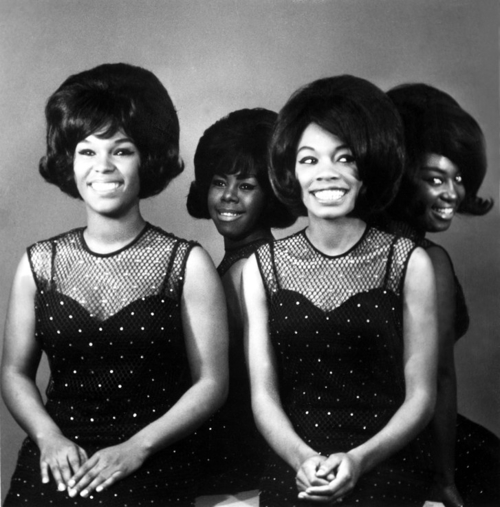
 IN THIS PHOTO: The Shirelles/PHOTO CREDIT: CSU Archives/Everett/Alamy

A vital role to play.

FEATURE: Back in My Day… Is Modern Music More About Sound Collages and Mood Rather Than Hooks and Melodies?

FEATURE:


Back in My Day…

ytyy.jpg

PHOTO CREDIT: @melodyjacob1/Unsplash 

Is Modern Music More About Sound Collages and Mood Rather Than Hooks and Melodies?

_________

MAYBE this is a generational thing…

fttf.jpg

 PHOTO CREDIT: @v_well/Unsplash

but I have just posted online an article that concerns Inner City’s hit, Good Life. It is an interesting piece in The Guardian that speaks with those involved in the song’s creation. A couple of months ago, the same site did a similar feature of Sub Sub’s Ain’t No Love (Ain’t No Use) featuring Melanie Williams. Both of those songs are from a period (the late-1980s/early-mid-1990s) when there was a big emphasis on hooks, big choruses and something quite exciting. For those who did not live through the Dance and Trance explosion; the beauty of House and the fantastic Pop that was around in the 1980s and 1990s, it was a heady time for music. It was not just the catchiness and quality of the hooks but there were great melodies and timeless sentiments that we are still spinning today. One can say we still have tracks like that today and, indeed, there have been bangers and addictive songs for decades – listen back to the best of the 1960s and you have ample examples of tracks that get into the head and stay there forever. I am not suggesting artists today are devoid of fun and excitement – as I have alluded to several times – but I think there are fewer modern examples of big songs with big hearts. I am not necessarily referring to House tracks but look back at the girl groups of the 1990s and early part of the last decade; some of the big club tunes that were around at the end of the 1990s and a few of the finest cuts from this year – the likes of Lizzo, Hot Chip and Sigrid have brought bags of hooks and bright moments.

Look at the best albums of the past couple of years and it seems, at least, there is greater attention paid to urgency in a more personal and political form. Maybe, too, artists are thinking more about using sound as a collage or tapestry; a mores sophisticated and less commercial sound. I do admit that a lot of the Pop mainstream and newcomers rely on the same sound: the plastic vocals and robotic lyrics; a template that is utterly lacking in charm, interest and originality. I love albums from Cate Le Bon (Reward), Weyes Blood (Titanic Rising) and Billie Eilish (When We All Fall Asleep, Where Do We Go?) but I do feel the strength of those records lies away from hooks and something instantly gratifying. Some might say their sounds are more mature than a lot of the music I have just described but is modern music more about building layers and mood rather than something free, unleashed and hook-laden? There is enough evidence to suggest that, over the past decade, music has sort of lacked real variety. I do think a lot of the best modern artist are trying to buck this trend by writing really interesting, rich and detailed songs but, in order to avoid being seen as meaningless or samey, are artists avoiding songs with hooks, bright choruses and sumptuous melodies? I do feel like artists such as Lizzo are a rarity in the modern scene.

I have a lot of time for most music but I do sort of miss the fun times; songs that got us moving because of their common codas, pure messages and the way they made us feel. A lot of modern music interests me and engages my imagination but very little sticks around and compels me to sing along or move. Maybe natural evolution and changes in scenes means music as it is now is the new explosion: as important and meaningful as the beats of the past but different in tone. At a time when we are strained and divided, does music need to reflect reality more? Is escapism something we should avoid? I want to bring in that article from The Guardian regarding Good Life and read producer Kevin Saunderson’s recollections:

“Thirty years later, Good Life still instantly gets people dancing and feeling good. It’s funny, because there’s not much to it: a TR-909 drum machine for the beat and a TR-707 for percussion, Casio and Korg keyboards and a sampler. I started with the main riff, imitated it with the bassline, put some strings on it and sent it to Paris. After she added her lyrics, I did a mix and a friend of mine played more keyboards. I wasn’t a trained musician, but I heard notes in my head and found a way of getting them out”.

We are being told music is getting louder, more receptive and over-familiar and I can appreciate how hard it is to stand out and remain relevant at a time when anyone, anywhere can release a track.


Gone are the slinky days when groups like TLC, Destiny’s Child and En Vogue could get you popping with an audacious chorus; the halcyon times when songs had quality and depth but they also boasted hooks and an explosive energy. I do think there is a desire for fun, boisterous and captivating songs that, whilst fairly simple, do make you feel better. As I say, I think modern music is great and one cannot say the quality has declined lately – in fact, I think the sheer variety and standard is staggering. In order to create structure, original expression and something personal, the universality of music has declined. By that, I mean a lot of the great tracks of the past were about coming together and feeling good. Even if they talked about love, artists were able to speak from the heart but speak to the masses and ensure there was a smile on the face. This interesting article explains how larger Pop writing teams takes away uniqueness; perhaps artists are taking fewer risks. I don’t know but I do think we have crossed from a time when there were a lot of artists penning these emphatic and instantly memorable tracks that one could relate to, but there was this need to capture the mood and move the soul. As I say, I love modern music and think it is a lot more varied and progressive than it has been for many years. Whilst genres are being fused and artists are creating these interesting tracks, I do miss harmonies and melodies; classic tracks with indelible choruses and the sense of release truly great music can provide. At this difficult and divisive time, I think the industry needs these kind of tracks…

 PHOTO CREDIT: @joewthompson/Unsplash

MORE than ever.

FEATURE: Spotlight: allusinlove

FEATURE:


Spotlight

vdeui.jpg

PHOTO CREDIT: Haris Nukem 

allusinlove

_________

THERE are a lot of rising artists…

ty.jpg

 PHOTO CREDIT: allusinlove

I want to highlight over the coming weeks but, as they are a bit of a roll now, I am putting the incredible allusinlove under the spotlight. This is not the first time I have featured the band: I have reviewed and followed them under their previous moniker, allusondrugs. If the once-drug-naming band have transformed into a more loving and wholesome-named clan, the music still has a certain sense of lick, sweat and excitement. The Yorkshire band’s new album, It’s Okay to Talk, had the terrific Catherine Marks on production duties (she is the go-to producer if you are a pretty thrilling and meaty band!), and I recommend people buy the album and check it out. The record has been picking up some promising and encouraging reviews. Here, Discovered Magazine had their say:

“‘It’s Okay To Talk’ is grounded in alternative indie but has many offshoots to keep the listener guessing and interested in what is to come, heavy distorted guitars keeps the energy up while the shoegaze aspect creates a spacey atmosphere. Not to mention a very memorable performance from lead vocalist, Jason Moules, adapting to each song to match the feeling from the intimate songs to distorted and soaring choruses. The track listing does include all four songs from the latest EP released late 2018 while two songs make a return from the allusondrugs days with a fresh sound and production that lifts and improves the songs tenfold. The producers give a good indication of what to expect from the record: Catherine Marks (Foals, The Killers, Wolf Alice) and Alan Moulder (Nine Inch Nails, The Smashing Pumpkins, Queens Of The Stone Age).

As a hard reset for the band, this is an incredibly well thought out and executed record. The band have harked back to their roots while improving on it, concisely setting out what they wanted to achieve in their production. The mix of styles and genres has certainly kept things open for what is to come from the Leeds outfit which is no bad thing but rather an intriguing prospect. While relying heavily on already recorded and released material is not ideal, the band have decided that this will be the jump off point for allusinlove”.

I love the band because they sort of mix modern Indie/Alternative with something a bit older. Yes, some of their songs cut to the bone and are lustful and cocky but the band are never that crude and vulgar: instead, they remind me of bands like The Rolling Stones and Led Zeppelin and can talk about love/sex without being disparaging. With incredible chemistry between the members and riffs-aplenty, it is no wonder allusinlove are proving to be a very popular live act. There are a couple of dates coming up, but keep an eye on their social media channels (links are at the bottom of this feature) as the band might add some new ones and stuff pops up. The fact that their album is out at the moment means there will be a lot of excitement and demand. Here, the band talk about each of the tracks and I have selected a couple of interviews from a little while back – where they talk about recording their material and how they started out.

When speaking with Sound Arts, they were asked about their formation and what it was like working with producer Catherine Marks:

“How did you meet and how were allusinlove (allusondrugs) formed in the first place?

We all met around the Leeds area as everyone in the band was already playing music in different projects. We had known of each other from previous gigs and nights out so we started hanging out as new friends. One evening, after a hazy conversation outside a pub, the first version of the band was born. We all connected extremely well musically because of a very similar taste in bands. The idea of forming a new band between us seemed exciting and we wanted to go for it.

“All Good People” is the first taste of your forthcoming EP, produced by the legendary Catherine Marks and Alan Moulder. How was your collaboration with them?

It was an amazing experience. Catherine was excellent to work with and she really had everything under control in the studio. She understood straight away what kind of band we wanted to be and she had some amazing ideas. There were some truly magic moments shared with both Catherine and Alan during the recording and mixing of the album. Thanks to them both we have been able to achieve a sound that we are very proud of.

Which is your favorite song from you latest EP and why?

Bad Girls is probably our favorite because it is the most experimental song we’ve done. The whole progression of the guitar riff is based around a constant loop that never actually changes it’s structure. The song loops through various different sections and the lyricism focuses on insecurities within a darker relationship between two broken souls. There’s also a hippie drum circle we recorded over the middle 8 which gives the song a real tribal feel”.

Of course, we know the E.P. became an album and the band have been showcasing songs on the road. I want to bring in another interview and, although it is pre-album, it does reveal something interesting – including who allusinlove would like to collaborate with. They explain more:

“Tsvetelina: You released your EP last year and it’s so diverse and interesting. What was your main inspiration musically and lyrically for it?

Jason: It’s longing mostly, like a lot of confusion. About life and just people – how you feel about them and stuff. And sex. Just stuff, I think, everybody goes through, mostly. It’s hard to talk about, I haven’t thought much about it. Other than actual subjects, it’s feelings, as well. Live musicians, they can create a feeling that’s not something you can describe but it can take you somewhere. I like stuff I can listen to. If I make a song and I can listen to it after, we’ve won. Sometimes you can make music and be like ‘I don’t actually like that. Why have I done that?’

Tsvetelina: There are a lot of new artists and bands but who would you like to collaborate with the most?

Jason: Perfume Genius. He’s a chap from America, I think he’s from Seattle. He makes really amazing music. There’s a girl called Anna Calvi. Let’s not say a girl, she’s a woman, she’s older than me. She’s from the UK. She’s amazing. We were really lucky with the people we made the album with, the EP. We’re a four-piece band but I would say in the studio we were a seven-piece band because of our producers and our engineers. They were helping us and creating with us, so just to work with them again would actually be really nice. Hopefully, the second record, we’re gonna do it with all the same people because they were just incredible. They’ve some of our favourite records, everyone between from Smashing Pumpkins to My Bloody Valentine and Warpaint. That’s all the music that I enjoy listening to and then the people who made that music are making music with us now. I just want to collaborate again with them, I guess. Because why not? The formula is good”.

I need to catch up with the band because I would love to know what they have planned for the remainder of this year. I know there will be more gigs but, in terms of material, perhaps nothing else until next year. I recall discovering them as allusondrugs and marvelling at a band who sounded so complete and assured right from the off. They have grown even stronger and more ambitious – in no small part due to gigs and great exposure – and I think they are one of these bands who could become IDLES-big. Maybe they are not as political and charged as IDLES but this new wave of guitar music with heart and nuance is very popular and something we have been missing for a while – there has always been guitar music but there is a definite rise right now. I shall wrap things up here but, how would one describe allusinlove?! They are brotherly and have a great bond with their fans. They are riff-tastic but have plenty of heart; they are underground yet primed for big success and, in a world where we have guitar groups like John, Foals; IDLES, Slaves and countless others, there is something different about allusinlove. Have a listen to their incredible music and I know you will become a fan soon enough. Sit back, turn up (the album) It’s Okay to Talk and allow the majestic and memorable songs…

 PHOTO CREDIT: allusinlove

TO lodge themselves in the brain.

_____________

Follow allusinlove

xx.jpg

FEATURE: It All Started with Lily... Kate Bush’s Before the Dawn at Five

FEATURE:


It All Started with Lily…

tyyt.jpg

Kate Bush’s Before the Dawn at Five

_________

MAYBE I should ration my Kate Bush-related features…

oiiiiiiiiiiiiii.jpg

 IN THIS PHOTO: Kate Bush performing on stage (in 2014) in Before the Dawn/PHOTO CREDIT: Ken McKay/Rex Features

to single figures next year but, when it comes to anniversaries and talking about important events, one just has to get involved. I will write one more feature – marking thirty years of The Sensual World in October – this year but I cannot believe it has been five years since Kate Bush brought the world Before the Dawn. I recall when tickets went on sale on 21st March, 2014. In fact, those were for fans who had signed up to her website: the general public had to wait until 28th March. I was not signed up to her website but, as I had to work the day tickets were available, I missed out. Tickets sold out in fifteen minutes! It is amazing to think that a concert run could sell out that quickly but, as it was thirty-five years since Bush hit the stage in such a fashion, one could understand the fever! The Hammersmith Apollo is a venue Bush has always had affection for. Not only does it have proscenium arches – it was formerly a cinema – but it is close to where she lives; she performed a few dates to end her The Tour of Life in 1979.  The Hammersmith Apollo is a great space and one Bush clearly feels at home in. I will discuss her legendary tour soon but, in 2014, few were expecting Bush to return to the stage. Since 1979, she had played a few times but they were one-offs or rare appearances.

There had been nothing on the scale of The Tour of Life since 1979. That tour took Bush through the U.K. and around the world. In 2014, there was no way Bush was going to repeat that process. She loved the original experience but was fatigued by touring and the fact that, in many ways, it was like a touring circus: she would pack up the stage and props from one location and then they would be moved to the next – this was quite rigorous and, as she was not keen on travelling, this time around it has to be the one location. It meant there were no stresses regarding moving around and she could remain in a venue she knew and was familiar in. That said, as she discussed with Matt Everitt in 2016, she was terrified each night; the fear of remembering her lines and getting everything right did not elude her until the final performance! I will also talk about the live recording of Before the Dawn that was released in 2016 but for those who were lucky enough to be at one of the twenty-two shows in 2014 witnessed a once-in-a-lifetime thrill. You can find more information concerning The Tour of Life and the sheer effort that went into it. Bush has joked in interviews, as I said, that it was like a circus act. Such was the scale and grandeur of the tour that is left critics’ jaws dropped.

After releasing two albums in the space of a year in 1978 – her debut, The Kick Inside and Lionheart – there was a desire for Bush to control something; to have a big input into something this big. She felt her first two albums were okay but she did not have enough say and, maybe, they were not as good as they could have been. The preparations and rehearsals were rigorous. Unlike standard concerts of the time, The Tour of Life was replete with set changes, incredible choreography and a mix of mime, dance; the fantastical and poetic. Bush did not say much during the shows because it was a very planned and constructed set. If there was a lack of audience interaction, the performances could not be faulted. This was a spectacle that had not been seen perform; an extravaganza that took her work to new levels and broke new ground. The very nature of what a gig could be changed. Bush’s grand visions and groundbreaking nature – she was the first to use a wireless/head mic – inspired other artists and has gone down in musical history. There were a number of reasons why Bush did not take to the stage sooner. Her song, Albert, sort of changed her mind and gave her the courage to get back on the stage. Consider the effort and work required to realise The Tour of Life. The energy-draining sets were spectacular to watch but sapped Bush; she wanted to concentrate on making music and other stuff got in the way. There are other reasons why she did not tour again but something clicked prior to 2014.

-9009.jpg

Having been immersed in recording prior to Before the Dawn – she released Director’s Cut and 50 Words for Snow in 2011 – she was keen to try something new and move on. Whereas The Tour of Life took material from her first two albums (and the odd new song), the bulk of the material for Before the Dawn was taken from 1985’s Hounds of Love and 2005’s Aerial: two albums with concepts/suites that she could link and explore on the stage. There were similarities between The Tour of Life and Before the Dawn. With multi-media effects and a mix of shadows, dancers and puppets, it was another chocked and evocative set that also brought in filmed sequences – Bush spent three days in a flotation tank for filmed scenes played during the performance (she got ill as a result and got a ticking-off from her doctor!). Also featuring dialogue written by author David Mitchell, it was a typically bold and spellbinding Bush show. There were some flaws – some of the scripted, filmed scenes fell flat; not all of the set/props choices worked – but one cannot argue with the reviews. The Guardian had two tastes and, in both reviews, could not fail to be impressed by Bush. Kitty Empire’s review was full of praise:

“Other than the woofers and what sound like a few more tweeters in Aerial's birdsong passages, there has been precious little messing with Bush's music at all. Her energies have gone into staging the visuals that tell the stories of two song-suites, The Ninth Wave (about a woman lost at sea, and the horror of being parted from loved ones), from the 1985 album The Hounds of Love, and A Sky of Honey, the second half of 2005's Aerial (about the play of light in midsummer). At one point there are 20-odd people on stage. Subtle rearrangements can suit a voice that's lost its elasticity. That stage management is not needed here. At the end of three hours of untrammelled theatricality punctuated by skits (written by novelist David Mitchell), what is truly thrilling about Kate Bush's comeback is how little her voice – or her essence – have changed.

6.jpg

IN THIS PHOTO: Kate Bush photoed in 2005/PHOTO CREDIT: Trevor Leighton/National Portrait Gallery, London 

This is an emphatically rehearsed production which draws heavily on moving scenery, startling stagecraft – a “helicopter” strafes the crowd in a botched rescue attempt during The Ninth Wave – and surprisingly scary costumes. Fish People is the handle of Bush’s website and record label, and the fish skeletons that populate the drowning dream sequences of The Ninth Wave are the stuff of gothic nightmares. Media are mixed. Infamously, Bush was filmed earlier at Pinewood Studios singing in a tank of water, buoyed by a blinking life vest, for this act. On the video she looks less like Ophelia, and colder and wearier than you might expect”.

Alexis Petridis was similarly blown away:

 “For someone who's spent the vast majority of her career shunning the stage, she's a hugely engaging live performer, confident enough to shun the hits that made her famous in the first place: she plays nothing from her first four albums.

The staging might look excessive on paper, but onstage it works to astonishing effect, bolstering rather than overwhelming the emotional impact of the songs. The Ninth Wave is disturbing, funny and so immersive that the crowd temporarily forget to applaud everything Bush does. As each scene bleeds into another, they seem genuinely rapt: at the show's interval, people look a little stunned. A Sky of Honey is less obviously dramatic – nothing much happens over the course of its nine tracks – but the live performance underlines how beautiful the actual music is.

Already widely acclaimed as the most influential and respected British female artist of the past 40 years, shrouded in the kind of endlessly intriguing mystique that is almost impossible to conjure in an internet age, Bush theoretically had a lot to lose by returning to the stage. Clearly, given how tightly she has controlled her own career since the early 80s, she would only have bothered because she felt she had something spectacular to offer. She was right: Before The Dawn is another remarkable achievement”.

I am a bit gutted not to have been in the audience for one of the Before the Dawn dates. Like me, go and buy the live album and you are treated to a pretty memorable experience. I love the excitement in Bush’s voice and the impassionate roar from the audience. The performances are tight, stunning and will stay with you for a very long time. Like the show itself, the Before the Dawn album received cracking reviews. Consequence of Sound had this to say:

“While it’s tempting to look at this as an endpoint — a final and well-deserved victory lap — Bush has described this album as “a rather big comma.” This isn’t the end, apparently, and nor should it be. If anything, Before the Dawn is living, breathing proof that Bush still has the creative prowess and unique sensibilities that made her a superstar in the first place.

Like most live albums, this is not essential listening for new or casual fans. However, for dedicated fans, both those who could and could not attend the run of shows, it is a reminder of the still very potent lust for life that Bush has always exhibited in her music, art, and personality. It’s a reminder that fear can be conquered in the most ambitious and uplifting way, that fear does not define who we are”.

Celebrating and remembering the incredible Before the Dawn makes happy because it was great to see Bush back on the stage. Many asked why she did not return sooner but there are reasons for it – including the fact she started a family and The Tour of Life was quite an exhausting experience. Whilst it is unlikely Bush will take to the stage again like she did in 2014, maybe there will be a gig in the future. Who knows? You can never rule anything out with Kate Bush but, whilst we wait to see where she heads next, let us remember the magical moment Kate Bush took to the stage…

IN 2014.

FEATURE: Vinyl Corner: Television – Marquee Moon

FEATURE:


Vinyl Corner

IMAGE CREDIT: Tony Lane and Robert Mapplethorpe

Television – Marquee Moon

_________

IT is a surprise…

 IN THIS PHOTO: Television/PHOTO CREDIT: Getty Images

because I should have included Television’s Marquee Moon in Vinyl Corner a long time ago! You should snap up the album on vinyl because, since its release in February 1977, the album has influenced scores of artists and delighted fans. I am fairly new to the album as a whole but have heard various songs played on the radio since childhood. I guess we need to get a bit of background together regarding Television and Marquee Moon. Before stepping into the studio to record their debut album – yes, they were THAT good out of the blocks! –, they were a prominent and respected act in the New York music scene. I am not sure how many of their shows included tracks from Marquee Moon or, in fact, how close to the record they would have sounded. I listen to Marquee Moon and it sounds so expansive, otherworldly and wild: I imagine the New York scene in the 1970s and consider something rawer and more Punk-based. Produced by the band’s lead, Tom Verlaine and Andy Johns, Television sort of went against the grain of the time. One could have expected a Punk/guitar-driven record but, instead, we got this more Jazz-inspired record. There is so much to dissect when we think of Marquee Moon but, whereas Punk was concerned with direct vocals and lyrics and music that was close to the bone, Television combined counter-melodies with poetic and sometimes-surreal lyrics.

Verlaine’s lyrics are interesting. I know he was experimenting with psychotropic drugs around the time the album was recorded but, whilst one can detect a certain sense of trip and fantasy in places, the literary and more intellectual qualities of the songs resonates harder and deeper. There is wordplay and puns alongside oblique threads and fantastic flights of the imagination. Tom Verlaine was determined to make the album in his own vision and not, as Elektra Records suggested, produce with a well-known name. Working alongside Andy Johns, one wonders what Marquee Moon would sound like if there was a big-name producer calling the shots. Television rehearsed for six hours a day, six-seven days a week to make sure the music was ready and tight. I know a lot of artists now rehearse endlessly but how many spend so many hours a week in the studio? One can see all the effort and preparation in Marquee Moon and I can only imagine the rehearsals and these great songs coming together. One might imagine songs like Friction, Venus and Guiding Light were all written early on – before the album was recorded – but a lot of material was thrown out when the band entered the studio. Verlaine had a clear plan regarding the structure of Marquee Moon so, in terms of switching tracks and adding new numbers, there was not a lot of experimentation and flexibility.

Marquee Moon arrived in a year when Steely Dan released Aja and David Bowie released Low. Alongside that, the Sex Pistols released their album, Never Mind the Bollocks, Here's the Sex Pistols and The Clash released their eponymous debut. Many argue 1977 is the finest year for music and the sheer scope is amazing. Marquee Moon is definitely one of the best albums of the year but think of the other albums released that year and it is mind-boggling. Punk was definitely coming through but there was more experimental and interesting music nestling alongside. There are Punk elements in Marquee Moon but, rather than the album being a raw and intense experience, the energy comes in fits and starts. For a start, a lot of the songs on Marquee Moon are over four minutes and the first three tracks – See No Evil, Friction and Venus – are not exactly the sort of short tracks the likes of the Ramones and Sex Pistols were putting out! The performances and compositions are far more developed and progressive as a lot of Punk stuff; the vocals are not as snarled and, whereas there are some focused songs, a lot of the best numbers expand and move at their own pace. It is hard to say where Marquee Moon emanates from but this article suggests records that might have influenced Tom Verlaine. Billy Ficca – drums; Richard Lloyd – guitar (solo on See No Evil, Marquee Moon; Elevation and Guiding Light), vocals and Fred Smith – bass guitar, vocals created this masterpiece that still sounds completely awesome and fresh today.

Many critics have named Marquee Moon as one of the best albums of the Punk Rock movement and many also consider it the cornerstone of the Alternative-Rock scene. So many Indie and Post-Punk artists have used Marquee Moon as a starting point; the sophistication and style of Marquee Moon was a revelation in 1977 and it is impossible to count just how many artists have been inspired by this remarkable work. In terms of the reviews of 1977, there was plenty of love around. More contemporary reviews have been incredibly positive and, as you can tell from this AllMusic review, there is so much to unpick when we evaluate Television’s masterful debut:

“Marquee Moon is a revolutionary album, but it's a subtle, understated revolution. Without question, it is a guitar rock album -- it's astonishing to hear the interplay between Tom Verlaine and Richard Lloyd -- but it is a guitar rock album unlike any other. Where their predecessors in the New York punk scene, most notably the Velvet Underground, had fused blues structures with avant-garde flourishes, Television completely strip away any sense of swing or groove, even when they are playing standard three-chord changes. Marquee Moon is comprised entirely of tense garage rockers that spiral into heady intellectual territory, which is achieved through the group's long, interweaving instrumental sections, not through Verlaine's words. That alone made Marquee Moon a trailblazing album -- it's impossible to imagine post-punk soundscapes without it.

PHOTO CREDIT: Getty Images 

Of course, it wouldn't have had such an impact if Verlaine hadn't written an excellent set of songs that conveyed a fractured urban mythology unlike any of his contemporaries. From the nervy opener, "See No Evil," to the majestic title track, there is simply not a bad song on the entire record. And what has kept Marquee Moon fresh over the years is how Television flesh out Verlaine's poetry into sweeping sonic epics”.

Pitchfork had this to say when they reviewed Marquee Moon:

“With all that context, the most interesting thing about picking up Television's Marquee Moon-- today, for us folks who weren't old enough to buy the first edition vinyl-- is how ahistorical it sounds. If you listen to their original Brian Eno-produced demos, you hear a scragglier, faster band that's less confident and more... punk? If nothing else, the band at least sounded closer to the sometimes-sloppy Bowery clubrats Eno must have taken them for on those early tapes. Their sound on Marquee Moon, though, is clean, raw and simple. The band never breaks for a squall of energy, yet the whole record crackles with it, and they never rely on atmosphere to make their case. Billy Ficca's drums and Fred Smith's bass are extra lean and crisp, and the band's so tight that even the "Did you feel low?" call-and-response on "Venus de Milo" sounds amusingly rehearsed. The only rough edge is Tom Verlaine's striking warble, a somewhat choked-off tenor influenced either by Patti Smith or by someone kicking him in the throat… 

But the things that make the record so classic, that pump your blood like a breath of clean air, are the guitars. This whole record's a mash note to them. The contrast between these two essential leads is stunning: Richard Lloyd chisels notes out hard while Verlaine works with a subtle twang and a trace of space-gazing delirium. They play lines that are stately and chiming, rutting and torrential, the riff, the solo, the rare power chord, and most of all, the power note: the second pang on the riff to "Venus de Milo" lands like a barbell; the opening bars of "See No Evil" show one axe rutting the firmament while the other spirals razorwire around it”.

One can examine where Television came from and what was inspiring them in the 1970s. You can theorise and speculate all you like but Marquee Moon sounds like nothing else on Earth! When looking at the album forty years from its release (in 2017), Consequence of Sound remarked the following:

“On its face, Marquee Moon sounds like an unparalleled work picked cleanly out of thin air. In many ways, it was and still is, but it arguably couldn’t have originated anywhere other than in the band’s home base of New York City. From a musical standpoint, New York City in the mid to late 1970s represented a wide-open frontier, a boundless play area where new ideas and experimenting were not only allowed, but encouraged. The New York Dolls, Suicide, The Modern Lovers, and The Velvet Underground before them were each creating something distinctly New York in sound and style — that is to say, something intelligent, cool, and edgy with a healthy dose of street smarts.

Marquee Moon is pure music gumbo, a staggering combination of contrasting aesthetics that slashes with punk rock grit, dazzles with jazzy guitar virtuosity, and moves to its own particular muse. It’s smart but tough, technical but accessible. Verlaine and Lloyd make a devastating guitar pair, especially on tracks like album opener “See No Evil”, the sprawling title track, and the more classic-sounding “Prove It”.

If you have not discovered this innovative, brilliant and timeless album then make sure you snap up a copy of Television’s Marquee Moon. You do not have to be a fan of Post-Punk or Jazz to appreciate the album: you simply need to put the needle down, let the songs sink into the mind and…

GET carried away.

FEATURE: Female Icons: Part Thirteen: Tina Turner

FEATURE:


Female Icons

IN THIS PHOTO: Tina Turner in 1993/PHOTO CREDIT: Getty Images 

Part Thirteen: Tina Turner

_________

THERE are a number of reasons…

j.jpg

 PHOTO CREDIT: Getty Images

why I am including Tina Turner in my Female Icons section. In terms of icons and superstars, how many of us think of Tina Tuner?! There are plaudits levied the way of Madonna, Joni Mitchell and Aretha Franklin – who I have all covered – but one cannot discount the impact and importance of Tina Turner. TINA: The Tina Turner Musical is a jukebox musical featuring the music of Tina Turner and depicting her life from her youth in Nutbush, Tennessee, through her tumultuous relationship with Ike Turner and comeback as a Rock 'n’ Roll star in her '40s. If you are a fan of Turner, you can go catch the musical and learn about her fascinating (and often struggling) background. The musical is described thus:

“From humble beginnings in Nutbush, Tennessee, to her transformation into the global Queen of Rock ‘n’ Roll, Tina Turner didn’t just break the rules, she rewrote them. This new stage musical reveals the untold story of a woman who dared to defy the bounds of her age, gender and race.

One of the world’s best-selling artists of all time, Tina Turner has won 12 Grammy Awards and her live shows have been seen by millions, with more concert tickets sold than any other solo performer in music history.

Featuring her much loved songs, TINA – The Tina Turner Musical is written by Olivier Award-winning playwright Katori Hall and directed by the internationally acclaimed Phyllida Lloyd.

Presented in association with Tina Turner”.

I guess a lot of the icons and legends of music had humble and hard backgrounds – that is what spurs a determinism and that desire to succeed. Looking at Tina Turner’s life and she has endured a lot of struggle, hurdles and pain to get where she is. The idea of the music, according to Turner, was to inspire audiences and show that you can turn poison into gold; pain and struggle need not define you and you can overcome it. This inspiring message has amazed audiences and the musical runs in London until next year. Time Out caught the show last year and had this to say:

“Where ‘Tina’ undoubtedly succeeds is in the casting of its lead. Broadway performer Adrienne Warren is virtually unknown over here, but it’s instantly apparent why she was tapped up for this. She doesn’t so much imitate Turner as channel her: her technically dazzling but achingly world-weary gale of a voice feels like it should be coming out of a woman decades, if not centuries, older. And while Warren doesn’t really look anything like Turner, she perfectly captures that leggy, rangy, in-charge physicality. From a musical standpoint, she virtually carries the show, singing nigh-on every song and even giving us an encore at the end.

Almost as good is heavyweight Brit actor Kobna Holdbrook-Smith, who brings a demonic charisma to the role of Ike Turner. Tina’s abusive bandleader and husband is monstrous in his self-pitying, manipulative rage, but it’s not hard to see the appeal of his raw wit and powerful sense of certainty. It is a deadly serious performance.

But the talented creative team of director Lloyd and writer Katori Hall never really crack the correct way to use their leads”.

Although the review points at some downsides – mixing spousal abuse with a collection of greatest hits is an odd blend; the euphoria and scene-stealing end sort of tarnishes a sense of queasiness -, it is a magnificent show that does not shy away from the realities of Tuna Turner’s upbringing, peak and success. Music struck Turner as a girl. As a child (Turner was born Anna Mae Bullock), she performed in the church choir at Nutbush’s Spring Hill Baptist Church. Turner’s mother ran off when she was eleven – to escape from an abusive relationship – and, as a teenager, Turner (Bullock) worked as a domestic worker. There was a lot of tribulation and upheaval in Turner’s early life and she and her sister eventually were sent to live with their grandmother Georgeanna in Tennessee. The pain and scar of domestic abuse would revisit Turner in later life but it is safe to say things were far from smooth early in her life. Displaced and unsure where she would end up, one can only imagine the sort of unhappiness and fear Turner faced. Music, in a way, provided an escape and release from a less-than-stable upbringing. She began her singing career in 1958 as part of Ike Turner’s Kings of Rhythm and she was captivated by Ike Turner instantly.

It was not until the 1960s when she adopted the stage name of Tina Turner – she was ‘Little Ann’ when recording with Ike Turner in the early days – and Ike and Tina Turner enjoyed a long and fruitful recording career. In terms of Turner’s music, we can split it between her work with Ike Turner and her solo material. As a duo, they enjoyed success with hits like River Deep–Mountain High in 1966 and Nutbush City Limits in 1973. I want to focus more on Turner as a solo artist but, sadly, her split with Ike Turner in 1976 (they divorced in 1978) was a result of domestic abuse and mistreatment. The Tina Turner musical reveals this on the stage and it is an eye-opening experience. Having seen her parents divide and split with a background of domestic abuse, Turner had to experience so much hurt and abuse. There were many who thought Turner’s career could not survive without her partner. By 1983, she had released the incredible single, Let’s Stay Together, and that was followed by the 1984 album, Private Dancer – a huge success and one of the best albums of the mid-1980s. If some of Tina Turner’s earliest experiences of music were more Gospel-flavoured, she had matured into a captivating Rock singer by the 1980s – and was shaping up to be an icon when performing with Ike Turner.

Turner enjoyed success through the 1980s and 1990s but her ‘golden period’ is the 1980s, in my view. The 1993 film, What’s Love Got to Do with It?, is a sort of early version of the Tina Turner musical and looks at her tumultuous relationship with Ike Turner. I will bring in a couple of articles that highlight the huge importance of Tina Turner’s work and how she has changed music. It is hard to select specific highlights but 1960’s A Fool in Love was a huge chart hit; the charted cover of Otis Redding’s I’ve Been Loving You Too Long is extraordinary, as is Turner’s solo rendition of Al Green’s Let’s Stay Together. Maybe her greatest year was in 1985 when she won a total of four Grammys – including Record of the Year for What’s Love Got to Do with It. She was touring her Private Dancer album at this time and was appearing in films and was pretty much unrivaled at that time. Consider other powerful female artists like Madonna and Kate Bush were peaking in 1985 and, to me, Turner topped the lots. Her incredible voice and power blew people away and, like so many recordings from the 1980s, Turner’s work does not sound dated or of a particular moment. Although Turner has not released a studio album since 1999’s Twenty Four Seven, there are many golden records in the collection.

lk.jpg

1975’s Acid Queen is a covers album (with a few song by Ike Turner) but features versions of The Rolling Stones’ Let’s Spend the Night Together and The Who’s I Can See for Miles. 1984’s Private Dancer remains a seminal work and a hugely influential album. AllMusic, in their review, were full of praise:

“In 1984, a 45-year-old Tina Turner made one of the most amazing comebacks in the history of American popular music. A few years earlier, it was hard to imagine the veteran soul/rock belter reinventing herself and returning to the top of the pop charts, but she did exactly that with the outstanding Private Dancer. And Turner did so without sacrificing her musical integrity. To be sure, this pop/rock/R&B pearl is decidedly slicker than such raw, earthy, hard-edged Ike & Tina classics as "Proud Mary," "Sexy Ida," and "I Wanna Take You Higher." But she still has a tough, throaty, passionate delivery that serves her beautifully on everything from the melancholy, reggae-influenced "What's Love Got to Do With It" to the gutsy "Better Be Good to Me" to heartfelt remakes of the Beatles' "Help," Al Green's "Let's Stay Together," and David Bowie's "1984." A reflection on the emptiness of a stripper's life, the dusky title song is as poignant as it is depressing. Without question, this was Turner's finest hour as a solo artist”.

Although 1989’s Foreign Affair is, perhaps, more commercial than Turner’s early work, it contains some of her best-known hits. The Best and Steamy Windows are classics whilst I Don’t Wanna Lose You is a more mature and controlled Turner.

One can look here to see Tina Turner’s accolades and honours but it is clear what she has done to music and how many artists she has inspired. The Tina Turner musical opens on Broadway in the autumn and there is a lot of new interest around the superstar. Turner is eighty later this year and, although she is not releasing any more material at the moment (and might never do), she still holds incredible power and influence. I will bring in an older interview and a feature that studies Turner from different sides. This 2018 article from The Guardian gave an affectionate account of Turner’s early life and how she became this Rock icon:

“Her singularity as an artist is undeniable. Turner merged sound and movement at a critical turning point in rock history, navigating and reflecting back the technological innovations of a new pop-music era in the 60s and 70s. She catapulted herself to the forefront of a musical revolution that had long marginalised and overlooked the pioneering contributions of African American women and then remade herself again at an age when most pop musicians were hitting the oldies circuit. Turner’s musical character has always been a charged combination of mystery as well as light, melancholy mixed with a ferocious vitality that often flirted with danger. Perfect, then, for a big-budget musical.

But it was Turner’s voice that spelled liberation even more potently than her moves, and similarly crystallised the era’s insurgent shifts in rock’n’roll singing. Whereas Little Richard squealed his queer pleasures and James Brown screamed of funk rebellion – and the Brits who idolised them followed suit, Turner turned her abrasive timbre and audacious delivery into singing that reverberated with the newly emboldened spirit of an evolving pop phenomenon.

7666.jpg

PHOTO CREDIT: Getty Images 

She generated her own rendition of sonic blackness and femininity while gigging in the 70s, finding a new home for her voice as “the acid queen” in the 1975 adaptation of rock opera Tommy. And she turned to a whole new set of covers – Under My Thumb, Let’s Spend the Night Together, I Can See for Miles, Whole Lotta Love – turning those masculine (and often misogynist) narratives of power, desire, independence and sexual prowess into the sound of brave and unbridled, sexually and socially assertive womanhood”.

I will discuss Turner’s legacy and influence a bit more in a bit but it is clear huge stars such as Beyoncé are the natural successors. You only need to turn on the radio now to know that Turner’s influence extends beyond Rock to multiple genres and various corners of the music world. The Guardian’s article continues:  

“The heir to Turner’s throne has long been Beyoncé, who paid homage to her foremother back in 2005 at the annual Kennedy Center Honors: “Every now and then, when I think of inspiration, I think of the two Tinas in my life – that’s my mother, Tina, and of course, the amazing Tina Turner …” Three years later, during the opening performance of the 2008 Grammys, the love-fest continued with Beyoncé celebrating the history of black women musicians and concluding her medley by introducing the “queen” (a line that Aretha Franklin would famously contest) to sway, “nice and easy”, right alongside her. The verse in Beyoncé and Jay-Z’s Drunk in Love, in which the rapper references a scene from the biopic in which Ike abuses Tina – “eat the cake, Anna Mae!” – was a less apt tribute.

Beyond Beyoncé, Turner’s legacies remain rich and varied in the world of pop, ranging from the brooding neo-soul of Meshell Ndegocello (who recently released a pensive, darkly lilting rendition of Private Dancer) to the underrated white funk vocalist Nikka Costa (whose 2005 cover of the Ike and Tina barnburner Funkier Than a Mosquito’s Tweeter revived the duo’s brand of nasty, in-your-face battle funk, all sweat and confrontation).

We see her brash and glamorous strut every time Rihanna takes to the stage, and even rapper Cardi B, with her stalwart posturing and vibe of unpredictability, owe Turner a bit of a debt. In our #MeToo age and with pop’s women unapologetically reclaiming their time, Tina: The Musical is poised to remind us of the sister who, legs and all, kicked open the door for this moment”.

I will end by discussing Turner’s legacy but I found a very revealing and honest interview she gave to Rolling Stone in 1986. You would never get an interview as revealing nowadays but, as she was at her peak, Turner was asked about her life, including her time with Ike Turner, She was asked about her parents and being abandoned:

“Psychologically speaking, there really isn’t anything worse than being abandoned by your mother, is there?

I think not. But I was different, because I’ve always been a loner. It mattered that she’d left – but it also didn’t matter. What I simply missed was that she didn’t love me. And I knew the difference, because I used to watch her with my sister, Alline – how she was with her and then how she was with me. She loved Alline. But, strangely enough, I wasn’t sad about it. It was just a fact that my parents didn’t care that much for me. See, my mother didn’t want me in the first place. She had taken my father away from another girl – which is instant karma right there. She was in the process of leaving my father when she got pregnant with me.

IN THIS PHOTO: Ike and Tina Turner in 1972/PHOTO CREDIT: Michael Ochs Archives/Getty Images 

That, of course, began sixteen years of beatings. You were a battered wife, controlled by fear.

It was a thoroughly unhappy situation I was in, but I was too far gone. I was trapped into really caring about Ike. If I left him, what was he going to do? Go back to St. Louis? I didn’t want to let him down. As horrible as he treated me, I still felt responsible for letting him down. That was a mental problem I had at the time. And I was afraid to leave. I knew I had no place to hide, because he knew where my people were. My mother was actually living in Ike’s house in St. Louis. My sister was living in an apartment basically rented by Ike.

Are you surprised by the way your life has turned out?

No. I’m not surprised, because I’ve always wanted this. And I won’t stop until I get that respect. I may not ever get it completely, because my life has been too hard so far. But I’ve gotten a taste of what that respect is probably like, and I like it. I may not be able to get that class, because I didn’t act my life, I lived it. I am Tina Turner. I am raunchy. But I know I’m a lady and that deep inside of me there’s a craving for class. I know I’m accepted, but what I always wanted was the principal’s daughters’ world. And maybe that was my lesson in life . . . . Maybe I had to learn something from wanting that and then not being able to have it. Instead, in this lifetime, I came back, so to speak, a slave girl”.

There are plenty of articles that dub Turner an icon and talk about her legacy. Turner has survived so much and overcome all of this to become the hugely inspiring artist she is. Her story is being told on stage and will, no doubt, engage new fans. This article from Afropunk in 2017 drills down the core:

“Once described by the Rolling Stone as “the world’s greatest heartbreaker”, Tina Turner’s musical legacy remains to be unlike any other we’ve seen before or since. From the onset, Turner’s pioneering musicianship and unrelenting vocals bridged the mainstream (read: imaginary) gap between Rhythm and Blues and Rock-n-Roll. One of the greatest vocalists of all time, Turner’s presence on the stage challenged the conventional, “pretty” performances of Black female performers of the 1960s. With her legendary physicality and hypnotic showmanship, she brought to life the electricity and soul of rock music in ways that have paved the way for every single one of your favs.

A survivor of Biblical proportions, Turner survived and fought her way to freedom against an industry and an abuser that would have swallowed the strongest amongst us mortals whole”.

Tina Turner is a fighter and survivor. She is a Rock goddess and star. She is an idol for many and a fountain of strength for so many others. I am a big fan of her music and deeply respect and admire her work; the way she has come through some dark times and captivated the world. A peerless and stunning artist, when it comes to competing with the amazing Tina Turner, everyone else has to settle…

FOR second best.

TRACK REVIEW: HAIM - Summer Girl

TRACK REVIEW:


HAIM

Summer Girl


9.4/10


The track, Summer Girl, is available via:

https://www.youtube.com/watch?v=ZjuA_o6Jzyo

GENRES:

Soft-Rock/Jazz

ORIGIN:

Los Angeles, U.S.A.

RELEASE DATE:

31st July, 2019

LABELS:

Universal Music Operations/Haim Productions Inc.

__________

THIS time out…

t.jpg

 PHOTO CREDIT: Elizabeth Weinberg for The New York Times

I get to talk about a band I have not covered before. I will get to HAIM’s new track, Summer Girl, very soon but, until then, I want to bring up a few themes. To start, I will discuss siblings in groups and the connection they have; summery songs and something more positive; the variety of Pop music out there at the moment and why HAIM are causing excitement; music videos and why this band are always interesting in that respect; sexism in the music industry and how HAIM have faced that; a bit on where they will head next. Este Haim (bass guitar and vocals), Danielle Haim (vocals and guitar) and Alana Haim are the stunning group and, since their 2013 debut, Days Are Gone, they have caught the critical ear. It is not always the case brothers and sisters in bands are better and more connected but I do think there is that understanding and connection that makes the music more interesting and tight-knit. There are some great bands around right now but I do find that there is something lacking. Maybe it is a lack of communication or the fact one or two members are in the background. Whatever it is, I think I tend to stick with solo artists and duos because they provide that emotional hit that I need. Maybe IDLES are an exception of a band who have that closeness and ingredient that sends their music over the top. Of course, there are siblings in bands who did not really get along (like the Gallaghers in Oasis) but, when it comes to HAIM, there is that simpatico and love between them. Before I continue on, here is an interview from NRP a couple of years back when the sisters talked about being in a band together:

“On the bond between sisters

“Este Haim: It's hard to keep secrets with these two. They can see it on my face — the second I get off a phone call, they're like, "What happened?" No matter how hard I try, or how much of a poker face I have. I could be in my house in the Valley and I can feel that Alana or Danielle is not having a good day, or they're having a great day and I'm like, "I need to call these two. What's going on? Something's off!"

gf.jpg

On being from a musical family

Este Haim: Some of my most vivid memories [are] coming home and my dad playing drums. And I don't remember a time in my life when I wasn't playing drums. It was the same thing as when I came to the realization that not everyone was in a family band. Because I was in a family band from the time I was in elementary school, I just assumed that's what families did. And then when I would talk to my friends about it, I'd be like, "So, when's your rehearsal?" And my friends would be like, "For what?" And I'd be like, "When does your band rehearse with your parents?" And they would be like, "I'm going to the mall this weekend, Este." [Laughs.]’.

Those two questions raised some interesting points. I love the fact that the Haim sisters would have been growing up around one another and in that musical household. It is possible for band members from different families to join one another and have a definitely spark; a similar taste in music that is instant and effective. When you grow up around one another, you already have that certainty and there is a sense of trust and closeness that, I think, makes the music stronger. One does not see too many siblings in bands these days and there is something charming about HAIM. I do really like the fact they are always on the same page and, when one of the sisters is having a bad time or needs that boost, she has the other two siblings there. Maybe that is what makes the HAIM brand so appealing but I just wanted to raise the point as it is great to see a familial link in groups. There are downsides relating to keeping it in the family – squabbles and the fact that, when there is an argument, it can be pretty big – but I think that sense of togetherness and understanding is key. You know HAIM will continue to make music for years to come.

HAIM’s music has changed since their debut. Their second album, Something to Tell You, was released in 2017 and, whilst less summer-ready than their debut, it was well-received. There are bands producing something warm and effusive at the moment but I do tend to feel that the air of positivity and light that we all crave right now is not being catered for. Consider all the bands out there and how many of them make you feel more positive and lifted. I can name, maybe four or five from the current scene, but it is hard to get past that. I do think we require a dose of optimism and hope in these strained times and that should not be taken for granted. HAIM’s upbringing surely had an impact on their material and you can hear mixes of Fleetwood Mac and the Eagles in their work. They mix styles and lace together sounds seamlessly and it is fantastic to witness. I think a lot of bands who mix Pop and Rock can strike that balance between sunny and hard-hitting. HAIM are definitely not all about surface with no depth: their music digs deep and, in the case of their latest track, it was inspired by a cancer diagnosis Danielle Haim’s boyfriend received. The song is a message of hope and, although there is darkness, it will be okay. One of the biggest issues with modern music is the lack of real energy and escape that we need. HAIM send out big messages and have a lot of layers but you can play their music and feel less heavy and stressed with things. As the sun is out and the weather is warm, they are the perfect group you need in your lives. I respect artists who talk about politics and modern-day concerns but there is so much aggression and blame that is can be a bit overwhelming and tense. One does look for something a bit more relaxed and breezy.

cvc.jpg

I will move on to another subject but I think it is important to promote artists who make of smile and have a positive vibe. Sure, Summer Girl has a bit of a heartbreaking start but you listen to the song and are put in a better mood. I wonder whether this is all leading to a third album because HAIM have been pretty busy on their road since their last album came out. Some have said Something to Tell You was a weaker effort than Days Are Gone. Maybe it was the fatigue of touring but there were fewer hooks on Something to Tell You; a sense that the songs were a bit samey and it was a more straightforward album. For those looking for big explosions, brashness and a freewheelin’ lyrical touches might have been disappointed. I think their latest effort returns more to their debut in a way. There is always that pressure when it comes to the second album and, perhaps, HAIM felt a bit of expectation that meant the songs suffered a bit. I actually really like the album but it is not quite as bright and unexpected as their debut. With talk of a third album buzzing, I do feel like there will be more of Days Are Gone’s themes and sounds. We shall see what HAIM come up with but I think Summer Girl is a great track and one can find little fault with it. If some critics were a little critical of HAIM’s previous album, many agreed that the optimism and energy was pretty infectious. I do feel like simpler music can be more effecting. HAIM can pen these catchy choruses and beautiful vocals but, rather than forget about the song the first time you hear it, you’ll come back for another go. It seems like, as I will explain later, HAIM are using their debut as a springboard and sort of working off of that for their new work.

 PHOTO CREDIT: Vogue Russia

I have discussed some of the influences regarding HAIM’s music. I could picture the three sisters at home and listening to their parents’ records. You can detect California and the open road in the music of HAIM but I can also hear some 1980s stuff and Disco. I think HAIM started out life playing covers; their mum and dad enlisted them to play Motown tracks in the family band whilst they plated in the San Fernando Valley. Earlier HAIM songs had a mix of Rock and Roll guitars and 1990s R&B but they mutated into a more straightforward Pop group. Perhaps people assume that the family connection and the fact that the sisters have been playing together since they were children would lend some dysfunction to the ranks. Maybe there would be problems and cracks forming soon enough. The clear love and connection the sisters have means that there is this rock-solid foundation. In terms of their sound, HAIM can do polished and carefree but also ensure that their music stands out and they have their own voice. If some have been too ready to compare them to Fleetwood Mac and highlight the vocal harmonies, you only need to listen closely to HAIM and realise that they have their own course. Their debut album was lauded because it has a bit of polish but the songs stood up to repeated listens and scrutiny. The passion and energy in every song caught the imagination and built a huge fanbase. Look at some of the best and most engaging Pop of the moment and you will name artists like Christine and the Queens and Lizzo. These artists deal with big themes but, in terms of the music and vocals, you get something pretty intoxicating, inspiring and pumped. I do think there are a lot of great Pop artists but so many are either pretty dark or they are far too commercial – the same processed beats and production values leads to a lot of dull clones.

I think HAIM’s latest track actually takes them in a slightly different direction. Reviews of Summer Girl have compared them to Loud Reed and his track, Walk on the Wild Side. There is sparseness and cool that is less about the bright harmonies and production shine and more about something a little more developed and mature. That is not to say HAIM have lost that cheer and distinct sound but they have pared it down a little; maybe signalling where their third album might go and reacting to some critics who felt they lacked real promise and range on their sophomore album. I maintain a lot of critics were a bit harsh when it comes to Something to Tell You. Maybe some were looking too closely at the lyrics and felt they were a little generic. HAIM’s strong point has always been the vocals and music and, whereas they could turn phrases on their debt, maybe there was something missing the second time around. I do feel like there will be a leap on their third album and, whenever that arrives, we will see a group revitalised and repurposed. If the music has faced some backlash from certain quarters, I feel the videos make up for any shortcomings. There seems to be a common theme with HAIM videos. If some acts like to be in the studio when it comes to recording videos, HAIM are very much about getting outside. Summer Girl sees them casting off clothing and moving from the studio into the street. They have previously worked with Paul Thomas Anderson on Night So Long, Little of Your Love and Right Now and it is a great partnership. I think it was Anderson who directed Radiohead’s Daydreaming and, there, we saw Thom York being tracked as he moved through doorway and through various scenes. There is a sense of openness, movement and geography when we look at Anderson’s videos. I do feel a lot of music videos are too much about flashing lights, constant cuts and lazy storyboards.

 PHOTO CREDIT: London Evening Standard/eyevine/Redux

HAIM’s sunny and coast-seeking music, I guess, begs videos that find them striding and swaggering but one could easily make these boring videos that have no real purpose. Although HAIM’s videos don’t rely too much on plot and effects, I think their strong suit is that outdoor feel. That is a weird sentence but the camera walks with them down the street. The sisters are always moving and, even on a more emotional song like Summer Girl, you are soon brightened and smiling. I really love HAIM’s videos because you get that style and distinct touch but they are always different. Have a look at Summer Girl and another brilliant video from Paul Thomas Anderson. How often do we talk about music videos these days? MTV recently celebrated its thirty-eighth anniversary and it made me think about the classic days of music videos and how effecting they were; many remain with me now. That is not suggesting artists lack that magic now but I think there are fewer standout videos these days. Maybe there are too many around or we have too much technology and choice. What makes HAIM’s videos brilliant is that lack of technology and complication. They bring us into their world and lead us through the streets. They can captivate and entice easily and there is something about their videos that is utterly engaging and fresh. I shall leave this subject because, before I move onto the song review itself, there is s subject I want to broach.

Although reviews have not directly mentioned gender and used sexist terms, HAIM are a group who have had to face sexism for years. I will bring in an interview they gave in 2017 where they discussed their experiences. I do wonder whether woman in bands face sexism a lot. Definitely, when some people see women in bands, they get this impression and feel that they will be weaker and not as impressive as the men. Maybe, if they have instruments with them, they get withering and patronising looks. When they talked with NME a couple of years ago, HAIM tackled sexist attitudes:

 “That, and they’ve got more important things to talk about – such as rampant sexism in the music industry. Even now, they still suffer from its toxic effects. They’re still asked ‘Who writes the songs?’ and have been mistaken for girlfriends of bands at “every festival we’ve been to,” says Este. “I literally have to say, ‘We just played behind you’”.

“We still have to fight this s**t,” bristles Alana. “The other day, I was told at a radio station, ‘You don’t need headphones. I’m sure you don’t want to mess up your hair.’” She continues: “I feel like the one thing that’s happening is we’re all banding together and not letting that s**t get us down. Like f**k that s**t! I’m f**king over it! Like, no one is going to make me feel anything other than a powerful woman because I love playing music and I love being onstage and if these f**ks want to do that s**t, the only way that will change is if we don’t stop”.

It is a shame HAIM have had to face this kind of crap but it doesn’t surprise me. There is still a big problem with sexism in music and I hope we see attitudes change. The fact that HAIM are great songwriters and musicians, one feels, should silence sexist tongues but we are still seeing toxicity raise its head. It is such a shame.

 PHOTO CREDIT: Taylor Jewell/Invision/AP

Rather than rush in with layers, harmonies and big production notes, there is something a lot groovier and more interesting that greets Summer Girl. The drums trip Jazz-like and they have a definite swagger and punch. The bass is quite sparse but it guides the song forward and has this elasticity. Few would expect a HAIM song to start like this but, as with a lot of their previous work, they have that love of the 1970s. Comparisons to Lou Reed are fair enough but, rather than the song walking on the wild side, there is something more emotional at heart. “L.A. on my mind/I can’t breathe…” opens the track and gives proceedings a real sense of heart. Knowing the inspiration behind the song – Danielle’s boyfriend and his cancer diagnosis – one cannot help feel a sense of sadness and tenderness. The lyrics discuss him being there when she (the heroine) closes her eyes; a smile being forced but that being turned into tears. There is this rawness and loss; a feeling that things are strained but, when he closes his eyes, his summer girl will be there. The HAIM heroine is there for him and, whilst things are bad right now, she is a support and here to make things better. There is actually a bit of Tracey Thorn, oddly, in the vocals; something Massive Attack might have made in the 1990s because, as the song progresses, we hear some smooth saxophone and these nice little touches. Fans of HAIM might be expecting harmonies and sunniness from the off but the group build up and there is this beginning which is quite soft and evocative; a sense that someone is struggling and times are hard. Look at the video and the sisters are on the street; they are literally peeling the layers from one another and sort of turning the gloom into a less suffocating warmth. With a nice wordless chorus – and removing their jumpers in the video – HAIM ease the mood and let the hero know that things will get better.

One can look at Summer Girl and apply it to other scenarios. Although there is a personal story and something dear to HAIM, everyone can relate to the song and get something from it. I do love the smoothness of the song and the fact that it sounds different to other HAIM songs. There is definite optimism and sun in the song but, rather than this being projected through harmonies and big choruses, a general mood exists that makes you feel calmer and better. The nice little saxophone interjections give the song a definitely niche that not many Pop bands are incorporating into their work. If other HAIM work has put us in the 1970s, I do feel like, as I said, there is a bit of 1990s Trip-Hop and Jazz this time around. It is impossible to listen to Summer Girl and not look at that video. HAIM are no stranger to walking down Ventura Blvd. but, this time, I love the fact that they keep on removing layers. It seems like they have a never-ending supply of clothes and I know it is a metaphor. Removing the struggle and weight; creating something lighter that can breathe. It is a clever technique and message and I love the fact HAIM have a sort of standard video style. They can make strolling down the street look really fascinating and cool. The video gets pretty interesting – have a look to see what I mean – but I think one of the biggest steps HAIM have taken since their latest album is the lyrics. “From over my shoulder, I need you/I need you to understand/These are the earthquake drills that we ran/Under the freeway overpasses/The tears behind your dark sunglasses/The fears inside your heart as deep as gashes/You walk beside me, not behind me/Feel my unconditional love” are wonderful words and lines that get into the mind and projects images. I keep coming back to Summer Girl because the lead vocal is so smooth, cool and rich that it has this great nuance. The lyrics are deep and make you think and the composition is really great. More subtle and relaxed than previous HAIM offerings, some fans might need to readjust but I think it is a really great move from them. You can hear some distinct influences but, like all HAIM songs, they put their own stamp on things. I do hope there are more tracks coming along because I am really intrigued. It is a brilliant song and one that deserves a lot of airplay. If you are not familiar with HAIM and what they are about, I suggest you start with Summer Girl and then go and check out their two albums. A brilliant song that, actually, ranks alongside my favourite from the year so far. You will come back to Summer Girl again and again because it has that really alluring sound that is hard to resist.

It has been a busy last few years for HAIM. After album releases, there is that touring blitz and there is rarely time to stand still. At the moment, HAIM are busy promoting Summer Girl and the song has been getting really good press. It is a different sound to what they have come up with before and suggests, if there is another album brewing, they might strip back some of the layers and adopt more Jazz influences as opposed Pop and Rock. The sisters have played a few gigs recently and I hope they get a bit of a rest before they are back out again. One does feel like an album is coming soon enough and that will be interesting to see. Many will be excited to see what HAIM have up their sleeves and whether they change direction on their third album. I feel there will be the same blend of harmonies and polish but, as Summer Girl suggests, that optimism will be more stripped back and the sound is a bit different. If you can see HAIM live this year then do so as their shows are incredible. Their songs come to life on the stage and almost sound liberated and released compared to the album versions. That is not a slight but I think one can only do so much in the studio and it is hard to give that live feel to a song. HAIM are fantastic live performers and they are really crowd-pleasing. I know the rest of the year will be pretty busy but, as I say, I do think we are gearing up for another album soon enough. I do really like everything they have put out into the world and have followed them since their debut. Maybe Something to Tell You was not quite as strong as their debut but it did have some golden moments – Want You Back and Walking Away are definite highlights. Let us wind up in a minute but I suggest people check out Summer Girl and that amazing video. I have read a lot of reaction on social media and people are getting primed for more HAIM music. I cannot wait to see what they come up with but, when it comes to tight-knit groups who make infectious and bright music, there are few to rival HAIM. The group have had a successful and busy career so far but many of us are excited to…

hg.jpg

 PHOTO CREDIT: Presley Ann/Patrick McMullan (via Getty Images)

SEE where they go next.

___________

Follow HAIM

FEATURE: Digital Love: You Me At 6: Hailing the Continued Growth and Popularity of BBC Radio 6 Music

FEATURE:


Digital Love: You Me At 6

fd.jpg

IMAGE CREDIT: BBC Radio 6 Music 

Hailing the Continued Growth and Popularity of BBC Radio 6 Music

_________

THIS is the week when the dreaded/loved RAJAR figures…

gg.jpg

 IN THIS PHOTO: BBC Radio 6 Music’s much-loved mid-morning presenter, Mary Anne Hobbs/PHOTO CREDIT: Eddie Lock

came out. Basically, they tell us which stations people are listening to. Broken down in terms of region, age and so forth, they do indicate which demographics are listening to which station; whether personal change on stations makes a difference and what changes are occurring. I shall name no names here but, when news broke that Zoe Ball’s breakfast show on BBC Radio 2 has shed a lot of listeners, there were some who were keen to criticise and attack. Ball has a marvelous show and, whilst her style is different to that of her predecessor Chris Evans, she is a warm and energetic voice. It is natural a lot of Evans’ faithful have followed him to Virgin Radio and I know Ball has picked up a lot of fresh ears – she will be in that role for many years so we will see listener figures climb up. It seems that more and more people are listening to radio and, as this article explores, some of the biggest stations keep on bringing in the punters:

“BBC Radio 2‘s drop in breakfast audience affects the reach of the rest of the station too, with the overall listening figure falling 763,000 this quarter – from 15.356m to 14.593m. Ken Bruce now has the biggest show on the station, with a weekly average of 8.489m to his 9.30-12noon programme. Ken says: “After 34 years as a part of the BBC Radio 2 family, I’m astounded that the allure of my daily grumpy musings, coupled with PopMaster, continue to entertain. Many thanks to the long-suffering listeners.”

IN THIS PHOTO: BBC Radio 2’s Zoe Ball stops for a photo/PHOTO CREDIT: Getty Images 

Radio 4 remains fairly constant year on year, but there is good annual growth for Radio 1 (up 327k to 9.563m), Radio 3 (up 120k to 2.028m), Radio 4 Extra (up 258k to 2.223m), 5 Live (up 509k to 5.242m), 5 Live Sports Extra (up 311k to 1.484m – highest in nearly 2 years) and 1Xtra (up 69k to 1.102m – highest since 2015)”.

Not only has traditional radio seen a bit of a rise but, happily, digital radio is feeling the sun shine on its back. Whilst the number listening to radio via a digital device has decreased, one cannot debate the continued popularity of digital radio:

“Share of listening to the radio via a digital device has gone down this quarter, whilst AM/FM listening has increased.

But the quarterly figures don’t represent the yearly trend though, with all digital listening going from 50.2% a year ago to 56% today, and AM/FM share going down to 44% from 49.8%.

Across all platforms digital listening grew by 58.9 million hours or 11.6% year on year. Listening via online and apps grew by 32.3 million hours (or by 34.2%) to now account for 12.5% of all listening and 22% of digital listening.

Listening via DAB grew by 23.9 million hours (or by 6.5%) year on year to now account for 38.6% of all listening and 69% of digital listening. Listening via DTV grew by 2.8 million hours (or by 5.9%) year on year to now account for 4.9% of all listening and 8.8% of digital listening.

PHOTO CREDIT: @juja_han/Unsplash

26% of adults now claim to own a voice-activated speaker, and 94% of those use the device to listen to live radio. This has boosted online listening in home, which is now the fastest growing platform and location, increasing by 27.7 million hours (or by 44%) year on year to account for 15% of all in home listening.

In-car digital listening grew 17.1 million hours or by 20% year on year and reached a new record share of 41.8%.

Ford Ennals, CEO of Digital Radio UK, said: “This is a significant moment for digital radio with a 34% surge in online radio listening hours prompted by the growth of smart speakers. These speakers are now in over 26% of all homes and are good news for the radio sector with most people using them to listen to live radio”.

The more popular voice-activity speakers and radios are becoming, the more people will seek out great digital stations. Riding high in the pack is the ever-expanding and incredible BBC Radio 6 Music. I understand I have written several features (many in fact!) about the station but, f*ck it, if you are someone who takes offence at optimistic and passionate journalism then you are not my kind of people. Maybe the station has not experienced the same RAJAR boom as other brands this week but, as you can see from these figures here, and a more specific breakdown here, the health of BBC Radio 6 Music is pretty impressive. In fact, as the years go by, I do think digital radio will grow and reach new heights.

 IN THIS PHOTO: Steve Lamacq gets in the middle of Slay Duggee/PHOTO CREDIT: BBC Radio 6 Music

I will get into specifics regarding the presenters and aspects of BBC Radio 6 Music that means it is the only radio avenue for me and millions of others. There have been peaks and troths regarding listening figures but one can see that there are a lot of passionate listeners out there and, whereas a lot of the commercial stations are rigid and offer a particular sound/format, BBC Radio 6 Music is a sweet-leaf, scratch-your-diary-because-you’re-going-to-be-hooked haven that continues to blossom and delight. Maybe I am biased – as I am a long-time devotee rather than a new convert – but I used to listen a lot to stations such as BBC Radio 2 and Absolute Radio and, whilst the former has excellent presenters like Zoe Ball and Ken Bruce, I find there is something lacking. Perhaps it is the music not really resonating or something else but I am hooked and locked on to BBC Radio 6 Music. Whether you add Pearl Jam’s Ten and subtract Beyoncé’s 4, the result is the same: 6 is the answer! Some might say BBC Radio 6 Music’s biggest drawback is the inflexibility regarding recruitment; a lack of fresh faces that means, compared to some stations, it lacks a sense of evolution and ambition. Conversely, it is the passion and dedication each and every person at the station has for what they do that means they do not want to go anywhere.

The rest of this feature is going to be pretty gushing and positive – it would be perverse if I were to do a switcheroo and do a hatchet job on the station! – so let’s get out some minor, minuscule points out the way – something a bit constructive. I may have covered this before but the playlists every station has, to me, seems outdated in a digital age. At a time when new songs are coming in thick and fast, having the same songs being repeated and promulgated does seem strange. If you are someone like me who listens to the stations for seven-eight hours a day, hearing the same track two days in a row can be annoying. As much as I love tracks like Sampa the Great’s Final Form, it is one of several songs that has been rinsed to the point of the obscene; constantly being spun and that has, for me, bled all the life and interest out of the track. I am not alone and do feel that mandated repetition is a little jarring; given a lot of the artists on playlists release new singles in the meantime (whilst their previous one is still being spanked) and, when their album comes out, we do not hear any other tracks from it. The only other downside relates to the classic artists are played and how, with such an impressive body of work behind them, the same songs are played. Kate Bush’s birthday was celebrated on BBC Radio 6 Music last Tuesday (30th July) and I was touched.

I did not expect them to make such an effort for an icon of mine and, to their credit, they did her proud! I was laughing to myself the day before because a Kate Bush song was played. The presenter announced Bush would be played and, without blinking I guessed what song they’d play: the station plays Hounds of Love and, more often than not, it is Running Up That Hill (A Deal with God), Cloudbusting or Hounds of Love that gets the spin – it was the former, just so you know. I guess playing her music is better than not but it is not just the fault of BBC Radio 6 Music. From The Beatles to David Bowie, I do think the same songs are played too much. I am not sure whether there are station guidelines/preferences but what about digging into the albums a bit more creatively?! Playing familiar songs is good to a point but, when we have to hear the same tracks so often, it does feel a bit stilted. The only reason I bring this up is because BBC Radio 6 Music is synonymous with its sonic depth and passion for the vinyl crates. I want to do a general shout-out to all the presenters and producers who make BBC Radio 6 Music tick; ensure that numbers climb and survival is guaranteed – God help the BBC if they try and scrap BBC Radio 6 Music like they did before.

ff.jpg

 IN THIS PHOTO: Chris Hawkins in an IDLES sandwich/PHOTO CREDIT: @ChrisHawkinsUK

Next year will be a decade since the station was saved and it is over seventeen years since it launched! That seems amazing. How many people who tuned in on 11th March, 2002 and heard Ash’s Burn Baby Burn beckon on this new station would have guessed it would still be around today?! I want to mention, in a large way, a few presenters that I listen to on a regular basis: Chris Hawkins, Lauren Laverne; Mary Anne Hobbs and Shaun Keaveny – with a bit of a nod to everyone else on the station. I love Steve Lamacq and his late-afternoon show; the clear enjoyment he has (as a veteran on the station) and the fact that he is constantly looking out for new music and discoveries. I also love Craig Charles and Cerys Matthews but, to be honest, every bone, vessel and patch of skin that makes the station a beautiful and vibrant climate should be congratulated. One can hear the soothing tones of Mary Anne Hobbs weekday mornings but (they can) also discover the U.S.-tough of Huey Morgan on Saturday. Chris Hawkins has enjoyed a boost in listener figures and, to be honest, I am not surprised in the least. He must be one of the hardest-working people in radio and I do love the infectiousness he gives – given the fact he starts at five in the freaking morning!

gfgf.jpg

 IN THIS PHOTO: Lauren Laverne poses with Michael Kiwanuka/PHOTO CREDIT: BBC Radio 6 Music

He is a quick-witted and really funny presenter who, like so many on the station, is eager to find the best new talent around. I remember him introducing Sam Fender to me and so many others. Hawkins is a busy D.J. who travels around the country to play. Based in MediaCity, Salford, his unique brand of brilliance runs seven days a week. Although he does two hours Saturday and Sunday, he does an extra half-hour during the week. Hawkins wakes me up and, when I am heading to work, he is perfect to have in the ears. Lauren Laverne takes over at 7:30 a.m. and makes sure breakfast is chilled and hot at the same time. I used to listen to her in the mid-morning slot and wondered whether she would be a great fit for breakfast. Taking over from Shaun Keaveny, it did not take too long for her to establish and hook in new listeners. Not only has Laverne been responsible for bringing record numbers to breakfast, she is an award-winning broadcaster and is fighting to ensure music is free and accessible to those who live with dementia. Laverne is the host of BBC Radio 4’s Desert Island Discs – having taken over from Kirsty Young – and I expect that appointment will be made permanent given the positive reviews and the excellent job she is doing.

One might imagine that Laverne’s breakfast show would suffer because of other commitments but, like Hawkins, she can bring that experience to BBC Radio 6 Music and, when it comes to music and reaching the public, she seems unstoppable – she has just completed a two-week break because, let’s face it, she has been working like a demon since the start of the year! I will not tread on well-covered ground too much but there are a few reasons why BBC Radio 6 Music is lucky to have presenters like Laverne. An experienced broadcaster – having worked for BBC Radio 2 and XFM -, Laverne seems to have found her home at BBC Radio 6 Music. The music featured on the show is the perfect blend of the uplifting and anthemic – lots of House and Dance – with the new, seductive and selective. There are no barriers when it comes to the sounds but, so long as the tune is ace, it goes in. Again, I have discovered new artists from listening to Lauren Laverne – Sampa the Great is one such example (even though Final Form has been ragged severely, I still love Sampa). Excellent features such as Desert Island Disco, House Music and The Maths of Life creates this structure and safety that means, like great T.V. shows, we will always tune back in. 6 Music Salutes gives a shout to people/events and music-related things that deserve a hearty nod; The People’s Playlist has a theme (usually relating to the news or inspired by something happening in music) and is a listener-curated collection of cool songs.

bvbvbvbv.jpg

 IN THIS PHOTO: Tom Ravenscroft/PHOTO CREDIT: Getty Images

I have speculated whether the show needs another feature but I think it is perfect as it is. The fantastic producers on the show ensure that there is this great balance of popular features and great music but, at the front, it is Laverne’s charm, enthusiasm and humour that keeps us all up and smiling. So many stations have presenters who are less bothered about the music and are all about being a personality or trying to be an entertainer. Maybe that accounts for a slight shift from traditional stations to digital - but BBC Radio 6 Music succeeds and resonates because music is at the core. Presenters like Laverne are all about the best sounds; bringing them to the listener and ensuring there is not a wasted breath and moment. Lauren Laverne is back on breakfast from Monday and it will be good to have her back. Before I nod to two more presenters, I want to highlight those semi-permanent presenters who often cover. This week, we have seen Huw Stephens, Tom Ravenscroft and Mark Radcliffe stand in. I will talk about Radcliffe in the conclusion but I wonder whether presenters like Ravenscroft will be given a permanent slot. He is very popular and, as his father is the late John Peel, the man knows his music! Maybe there is limited space and opportunity but I feel Ravenscroft has proven himself and would be suited to a regular position.

Mary Anne Hobbs has also been off this week and is back on Monday. When BBC Radio 6 Music had a bit of a move around late last year, it was announced Hobbs would go from weekend breakfast to weekday mid-mornings. I really love her show and, like Hawkins and Laverne, Hobbs is a keen and tireless promoter of great artists. I think BBC Radio 6 Music shines because you know the presenters are always looking out for underground artists; revealing classics we may have forgotten about and, basically, making music their life. Hobbs radiates warmth and curiosity and that is something that we all need. Less feature-led than Laverne and Keaveny, maybe it is more about playing the music but Hobbs, like so many of her colleagues, has crafted a show that is hard to fault. If they were all structured the same then it would be rather anodyne and formulaic. Instead, we get this nice blend and change of pace as we transition from Chris Hawkins to Lauren Laverne and then to Mary Anne Hobbs. I know she has seen her listener figures increase and I hope that continues for a long time to come. Shaun Keaveny takes over 1 p.m. and is someone I respect hugely. He moved from breakfast earlier this year and has taken to afternoons effortlessly. A lot of the same features remain – such as Small Claims Court and the usual impressions (Paul McCartney among them) – but there are new features.

IN THIS PHOTO: Shaun Keaveny (right) with Matt Everitt/PHOTO CREDIT: BBC Radio 6 Music 

Keaveny hosts an artist/band early each month: last month he had on the excellent Penelope Isles and, on Monday, he welcomes the legendary The Wedding Present into the studio at Wogan House. If you have not heard Keaveny’s show then tune in and witness the man in action. A key part of the show is the daily music news. The excellent Siobhán McAndrew has stood in a few days and I do hope she gets more of a role on the station down the line. Not only is Georgie Rogers making her excellent Super Women series and presenting on Soho Radio and foundation.fm, but she also does the music news. I think she is someone who would be brilliant fronting her own show on BBC Radio 6 Music but she has a great chemistry with Shaun Keaveny. In the regular music news slot is the excellent Matt Everitt. With his experience in the industry – having played with Menswear and The Montrose Avenue – his bond with Keaveny is infectious and joyous (even when they are taking the piss out of one another!). If you have not heard his show, The First Time with… then do so. It has just been named a top-ten Apple Podcast show and, alongside the book that accompanies the series, it is another essential thing you need in your life.

Maybe I am saying things I have already expressed but it is only because the station is a huge part of mine and many other people’s lives. The weekends have Mark Radlcliffe and Stuart Maconie bring their magic to the airwaves. They have features like Sampled Underfoot and The Chain – the long-running, listener-led giant – and there is that brotherly connection between Radcliffe and Maconie. They used to present afternoons during the week but the Salford-based duo are now on the weekends. I still maintain they are best when heard five days of the week and it is a bit of a shame they have a more reduced role. They are consistently funny and entertaining and, like so many people, I am now spending my weekend breakfasts listening to BBC Radio 6 Music. I have not yet mentioned Gideon Coe and Gilles Peterson; Marc Riley and Liz Kerhsaw; excellent series like Paperback Writers and the high-profile names they have had presenting on Sundays – Martin Freeman delivers his last show tomorrow; Rob Delaney presented a four-week run of shows before him. There is so much to enjoy about BBC Radio 6 Music and I know the future is very bright. I hope great presenters like Jon Hilcock, Tom Ravenscroft and Huw Stephens come into the fold more and are afforded more time on the air. I also really love Tom Robinson and cannot miss his show.

I know BBC Radio 6 Music celebrate big album anniversaries but, as The Beatles’ Abbey Road turns fifty in September, I wonder whether the station will sojourn to Abbey Road Studios and present there; have musical guests performing songs from the album and celebrating the final release The Beatles ever recorded. Maybe they will nod to the album but let’s hope they mark it somehow. BBC Radio 6 Music is there when you need it: it provides a lift and can give optimism in a grey world; it is a Mecca (Macca?!) for those who seriously adore music. Whether we want to find a great new band or rediscover some classic album, BBC Radio 6 Music is the place to be. There are other fantastic stations around but, in terms of the presenters, blend of music and quality, few can fault BBC Radio 6 Music. It has overcome some hard times and near-extinction but, with figures showing more and more people are embracing the station, it looks like things are smooth sailing (let’s hope). Maybe a few alterations – playlist-wise and giving more time to those presenters who cover for others – would be the way forward but, as it is, BBC Radio 6 Music is pretty awesome! This will be the last time this year I will write about BBC Radio 6 Music this year – as I know I can be a bit persistent! – but I hope those who are unaware of the station get involved. For those who want their music quality-steeped, their presenters engaging and passionate and their days golden, you definitely know…

WHERE to go!

______________

Follow BBC Radio 6 Music

xcxccx.jpg

FEATURE: Queens of the Underground: Part Five: Laura Snapes

FEATURE:


Queens of the Underground

PHOTO CREDIT: Laura Snapes 

Part Five: Laura Snapes

_________

THE reason for doing this feature is to…

4545.jpg

 PHOTO CREDIT: @sebastian123/Unsplash

shine a light on great women in various corners of the music industry. So far, I have featured two D.J.s and two producers who are responsible for some truly incredible work. At a time when there is a move towards equality, I feel we have a long way to. Can one realistically say we are where we need to be?! In terms of festivals and line-ups, there is a glaring gulf that is not shrinking as expeditiously as it should be; there are still very few female headliners and it makes for shocking reading. It is a shame there is so little movement because, in every layer and sediment of the music industry, there are pioneering and exceptional women who go unrecognised. This is a slightly nerve-wracking experienced because, for my fifth installment, I wanted to talk about a fantastic journalist: Laura Snapes. I guess I shouldn’t be nervous because, let’s face it, Snapes is a far more accomplished and talented journalist I am but, as I take so much guidance from her work, I will try to be as succinct as I possibly can – thinks might get a bit lengthy but you’ll have to bear with me! Whereas it is easy to talk about producers Catherine Marks and D.J.s Georgie Rogers and Carly Wilford and include videos/clips of their work, when it comes to a journalist, the game is slightly different game.

Next week, I am shining a light on a great female photographer and, today, I feel it is important to acknowledge a fantastic journalist who I know is inspiring many people – myself included. Whereas the gender imbalance is not quite as severe in journalism as it is elsewhere in music – owing to the number of blogs out there – I do feel the most interesting voices are female. I love Snapes’ work because she tackles subjects like gender inequality; interviews awesome artists and has an incredible voice. Maybe I am a bit biased but, a little while ago, she reviewed Kate Bush’s debut album, The Kick Inside – my favourite album of all time; Pitchfork (who she was writing for) were revisiting a few of Bush’s key albums and Snapes’ review really stood out. I shall talk more about my personal respect for Laura Snapes but, before you go on, make sure you order Snapes’ book, Liberté, Égalité, Phoenix! It is out on in October and you can find more details here. Snapes contributes to the book and, if you want to know what it is all about, this should give you all the information you need:

“The first book from the French band Phoenix, who helped define the sound of an era.

With one foot in the French electronic music sound of the late 1990s and the other in the world of indie Rock, Phoenix have evolved from an edgy French band to one of the most influential and beloved indie acts of the last twenty years.

ttttttttt.png

IN THIS PHOTO: Phoenix/PHOTO CREDIT: Julien Mignot

The book draws on the band's personal archives, including photography of everything from their instruments to the notebooks in which every lyric and chord change were carefully notated. Accompanying this is an oral history of the Phoenix's journey in their own words. The book is a superfan's chronicle of the evolution of a band”.

As I said…I will circle back to my personal reasons for supporting Snapes’ work but, in order to show you the tip of her talent iceberg, I have found a few articles that are well worth investigating. I will put her social media and professional links at the end of this feature but, if you want to look at her work for Pitchfork then you can; similarly, one can check out her contributions for The Guardian. Snapes is The Guardian’s Deputy Music Editor and is right at the forefront of British music journalism; in my view, one of the most passionate writers around. I shall not include the complete review Snapes provided for Pitchfork regarding The Kick Inside but I have highlighted a few passages – I urge people to read the complete article as it is beautifully written. I have written about Kate Bush a lot (being a mega-fan) and have written my own features about The Kick Inside. The album is one of the most feminine and astonishing recordings ever; a sublime debut where this teenage artist shows so much confidence, originality and boldness – writing about incest, menstruation and sexuality at a time (1978) where very few female artists were not.

In Snapes’ review (also, if you want to find out more about Kate Bush’s music, read Graeme Thomson’s definitive biography), she really gets to the beating and beautiful heart of The Kick Inside:

“The limited presence of women in prog tended to orgasmic moaning that amplified the supposed sexual potency of the group’s playing. Bush demanded pleasure, grew impatient when she had to wait for it, and ignored the issue of male climax—rock’s founding pleasure principle—to focus on how sex might transform her. “I won’t pull away,” she sings almost as a threat on “Feel It,” alone with the piano. “My passion always wins.”

What made Bush’s writing truly radical was the angles she could take on female desire without ever resorting to submissiveness. “Wuthering Heights” is menacing melodrama and ectoplasmic empowerment; “The Saxophone Song”—one of two recordings made when she was 15—finds her fantasizing about sitting in a Berlin bar, enjoying a saxophonist’s playing and the effect it has on her.

But she is hardly there to praise him: “Of all the stars I’ve seen that shine so brightly/I’ve never known or felt in myself so rightly,” she sings of her reverie, with deep seriousness. We hear his playing, and it isn’t conventionally romantic but stuttering, coarse, telling us something about the unconventional spirits that stir her.

The Kick Inside was Bush’s first, the sound of a young woman getting what she wants. Despite her links to the 1970s’ ancien régime, she recognized the potential to pounce on synapses shocked into action by punk, and eschewed its nihilism to begin building something longer lasting. It is ornate music made in austere times, but unlike the pop sybarites to follow in the next decade, flaunting their wealth while Britain crumbled, Bush spun hers not from material trappings but the infinitely renewable resources of intellect and instinct: Her joyous debut measures the fullness of a woman’s life by what’s in her head”.

The other three features/articles I am quoting for are those that have made an impression on me. All of Laura Snapes’ work is impressive but her review of Kylie Minogue storming this year’s Glastonbury is amazing; I want to bring in a very recent album review and, firstly, a stunning interview she conducted with Sleater-Kinney. I have just reviewed the band’s latest single and, as I am in my thirties, I recall Sleater-Kinney’s (eponymous) 1995 debut. When the interview was published, I was looking at Snapes’ Twitter feed and I think there were a lot of people pointing the finger at Annie Clark (St. Vincent) regarding the unexpected departure of Sleater-Kinney’s drummer, Janet Weiss.

090909.png

 IN THIS PHOTO: Sleater-Kinney (left to right: Janet Weiss, Corin Tucker and Carrie Brownstein)/PHOTO CREDIT: Brigitte Sire

It was Weiss who suggested Clark as producer and, although there is a bit of St. Vincent and some Pop edges on Sleater-Kinney’s upcoming album, The Center Won’t Hold, the relationship between the band and producer was respectful, harmonious and friendly – one cannot say Clark’s new vision and guiding hand led Weiss to be jaded and fear the band was losing its edge. Laura Snapes sojourned to Portland, Oregon to interview singer-guitarists Carrie Brownstein and Corin Tucker. Again, read the complete interview to get a sense of Snapes’ style and commentary but, from the first paragraph onward, it is clear here is a journalist who can bond with artists, ask the right questions and always gets a fantastic interview. Similar to the Kate Bush review, I have chosen some standout segments:

“In mid-June, I am due to meet the trio to discuss their second second coming over lunch in Portland, Oregon, but I get an email hours beforehand saying Weiss is ill. Tucker arrives at the neighbourhood spot first, her striped earrings matching her monochrome T-shirt. It’s a shame about Weiss, I say. “Yeah,” Tucker says with a sigh, looking at the sky. “It is.” Brownstein appears, tiny and shaggily glam in a grey felted jacket. We head into the restaurant, which is straight out of Portlandia, the now concluded Emmy-winning satire of life in the zealously artisanal city that Brownstein wrote and starred in. She orders fish stew, while Tucker orders cornbread and asks the waiter what their “zero food print” certification means. It’s a programme funding climate-friendly farming, we learn, as Michael Jackson plays over the stereo.

Tucker and Brownstein sound crushed when we speak the day after Weiss’s news. They admit that she wasn’t unwell the day we met in Portland – this happened very recently and suddenly and they didn’t know what was going on. They tried band therapy. They won’t speculate on Weiss’s reasoning, although Brownstein says they thought “everyone was really happy about the record”.

But the show will go on. Brownstein says they are as determined to evolve as ever. “After these years, it might feel harder to take those risks, but that’s what I’m invested in. Corin and I took ourselves to the opposite side of the world to start Sleater-Kinney. There’s always been something impulsive and scrappy about this band and I don’t feel there’s another way to be in it except to adapt and evolve.”

Hang on – from singing about rape culture in 1995 to the violence of capitalism on No Cities to Love, Sleater-Kinney have never been mellow. Brownstein half-agrees: “That was the whole creed we came out of – 90s punk-rock feminism – but the older you get, the scarier it is to actually say you still want to be doing this because there are fewer stories in popular music by women of a certain age. Doing that when we were younger was almost taken for granted. Now you actually have to grab for it, be a little bit greedy and voracious.”

Expansive and adventurous, The Center Won’t Hold makes that statement boldly. There’s also the matter of Brownstein’s bare bum being on the cover of single Hurry on Home. She had wanted the whole band to be naked. “That was a bad idea!” Brownstein admits.

Tucker – and her daughter – agreed. “I was reading her texts aloud and she was like, ‘MOM! You’re not DOING THAT!’”

Before I go on, it is important that we fund journalism and ensure we can enjoy the work of Laura Snapes and her peers. Snapes contributes for a few different outlets but it is The Guardian that is her base and home. I have contributed to the site/paper because I rely on their great work but I would ask as many people as possible to contribute some money or subscribe - so that you can enjoy the fantastic work The Guardian does! There are fantastic sites and magazines closing their doors because they are not receiving funding and, in order to keep producing great-quality work, they struggle to stay afloat. If you do enjoy the work that The Guardian does, spend a few quid and help them thrive for years to come. I shall wrap things up soon but, keen as I am to outline the great work Snapes does, I want to bring in her review of Kylie Minogue at Glastonbury. If you all recall, Minogue was scheduled to headline Glastonbury back in 2005 – only a few women have headlined Glastonbury in the last fifteen years – but Minogue received devastating news: a breast cancer diagnose that meant she had to cancel. Sadly, the cancer has meant Minogue’s chances of motherhood (she can adopt, mind) are gone. I would have thought Glastonbury would ask Minogue to headline this year – as she was owed – but she was given a chance to shine on the ‘legends’ stage.

In a year when female artists are producing the best albums around – Lizzo, Julia Jacklin; Little Simz and Jamila Woods are a few of the prime examples -, it is a shame that quality is not rewarded in terms of festival gender balance. That said, Glastonbury this year was dominated by women: storming sets from Billie Eilish, Lizzo and Janelle Monáe are still bouncing around my mind! If Janet Jackson’s career-spanning set was let down by sound issue, Minogue suffered no such slights: her set was simply brilliant and she provoked more than a few tears in the eyes of those lucky enough to catch her in the flesh. One could get a real sense of the infectious energy Minogue brought in Laura Snapes’ review. Again, Snapes’ writing means one did not need to be at Glastonbury to get a feel of Minogue’s passion and flair:

“She cries as she tells this story, but doesn’t mention cancer explicitly – an omission that reflects how incongruous this dark moment was in her world. Kylie was about lightness, about transcending time’s limitations. Stock Aitken Waterman pop stars weren’t built to last, let alone evolve beautifully through decades’ worth of shifts in the fabric of pop and experience second, third, fourth heydays. That this was under threat in 2005 didn’t compute, to the degree that it felt like a national crisis in her adoptive home land.

Thank god, she survived, and made it to Glastonbury 14 years after her initial appointment and to a hero’s welcome. One of the artists who covered her at the festival in 2005 was Coldplay, and she brings Chris Martin on to perform with her. Worryingly, he’s carrying an acoustic guitar, another thing that frankly has no place in Kylie’s gloriously ritzy world. They proceed to perform Can’t Get You Out of My Head – one of the 21st century’s most futuristic pop songs – in a stripped-back style. While tantamount to forsaking her official gay icon status, the goodwill and charm of the moment carries them through”.

The showmanship, the incredible run of hits – it is absolutely phenomenal. So much so that the crowd keep bursting into chants of “Kylie! Kylie!” and bringing her to tears. Never mind the legends slot; next stop, headliner”.

Laura Snapes’ range and consistency is amazing. So many journalists review certain genres and artists; they write features about distinct things but do not have that wide an arsenal. Snapes has worked with NME and you can find a selection of her work here. I really love the work Snapes has done for The Quietus but, keeping focused, I want to bring in a review she recently produced. Not only did Snapes give a rightful kick against Freya Ridings’ eponymous album when so many were (wrongfully) giving it praise but, as I said, she is not limited in terms of genre.

I am not a massive fan of Kaiser Chiefs – they have never struck me as particularly interesting and relevant – but I did want to check out their latest album, Duck. I read a few reviews but could not get a real sense of the album and whether it was worth seeking out. I have bought several albums off of the recommendation of Snapes – and, conversely, avoided some she has slated – and her Kaiser Chiefs review convinced me that the cheeky chappies might be worth a listen this time around:

“Frequently while listening to Duck, you remember: this man judges a TV singing competition. It’s not that Ricky Wilson was indie’s greatest singer, but he knew what to do with his voice, a bawdy, beery thing that could definitely talk you into another pint. But now he’s a shiny-floor entertainer, parochial indie culture is dead, and Wilson sounds adrift. He won’t find an identity in the painfully strained Golden Oldies, a shouty song in sharp contrast to its broody sentiment. Nor in Don’t Just Stand There, Do Something, an unnervingly edgy vaudevillian number, Wilson bellowing about a girl locked in the bathroom while the sounds of knives being sharpened slice through the mix.

He’s more convincing as a ruffian George Ezra type: high on his band’s Motown merriment, he celebrates boyhood, “so innocent and joyful”, on People Know How to Love One Another, a song that bassist Simon Rix has unironically described as “a really important song and a great message for Brexit Britain”. Northern Holiday absolutely accepts Ezra’s invitation to ride shotgun underneath the hot sun, finding Wilson boasting of his ability to “order sandwiches in funny languages”, even though “they don’t make them like you do at home”. It’s shameless, but endearing, and echoes the quirky mundanity that powered the band’s rise 15 years ago (back when their now-departed drummer wrote the hits)”.

Of course, it is great when we read journalists like Laura Snapes review the new albums; report the news and latest happenings. The reason I am inspired by Snapes is the fact that she has this desire for change. Just look here at this article about Ryan Adams and the allegations of sexual assault aimed at him. I consider myself a proud feminist and I am horrified when male artists and music figures are making the news for the wrong reason. Over the past few months, I have become bolder as a journalist. Reading pieces by Snapes regarding musicians such as Ryan Adams has compelled me to get involved and have a say. There are so few male journalists calling out musicians who are shamed. There are few male journalists talking about gender inequality and asking for betterment in music. Maybe they feel they are unqualified and are taking a voice away from women but, truly, we need as many people as possible to speak up and join the conversation. Referring to the article Snapes wrote about Ryan Adams and toxic masculinity, a particular extract caught my eye, opened my mind and forced me to put (electronic) pen to paper:

“The concept of male genius insulates against all manner of sin. Bad behaviour can be blamed on his prerequisite troubled past. His trademark sensitivity offers plausible deniability when he is accused of less-than-sensitive behaviour. His complexity underpins his so-called genius. As I wrote for this paper in 2015: “Male misogynist acts are examined for nuance and defended as traits of ‘difficult’ artists, [while] women and those who call them out are treated as hysterics who don’t understand art.”

dffdfdfdfd.jpg

IN THIS PHOTO: Ryan Adams/PHOTO CREDIT: Dave Hogan/Getty Images 

This was after, in response to an interview request, Sun Kil Moon’s Mark Kozelek told a crowd that I was a “bitch” who wanted to have his babies. Note, too, how many female geniuses are dismissed as divas, their art depicted as a symptom of disorder, their responses to mistreatment and calls for respect characterised as proof of an irrational nature”.

I have just scratched the surface here because, as you can imagine, Snapes has produced a lot of marvelous work across her career. She is an inspiration to women in music and upcoming journalists; she has made me a more aware and passionate writer and, as a male journalist, I feel I have asked myself a lot of questions: Am I doing enough? Can I be a better feminist? Can I be a better writer? What do I want to achieve? I look at Laura Snapes’ work and I am always stunned and moved. She is effortless when it comes to expertly reviewing music across the spectrum; her interviews are always deep and revealing and she writes fascinating articles. When it comes to influential figures, Snapes name definitely needs to be mentioned. As I stated, she has encouraged others to step into journalism and I started by talking about gender inequality in the industry. Although female journalist are becoming more common and heard, I do feel women in the press are not given the credit and respect they deserve. Laura Snapes is an experienced and always-compelling journalist and I take a lot of heart from her work. Although she is far stronger than me, I hope to get to her level one day – every time I read her work, I think my work sharpens. If you have some free time today, I would urge people to follow Laura Snapes, investigate her great work – remembering to pledge some money to The Guardian; pre-order her book, too – and discover a truly essential voice…

dfss.jpg

 PHOTO CREDIT: @nickmorrison/Unsplash

OF music media.

______________

Follow Laura Snapes

FEATURE: Sisters in Arms: An All-Female, Summer-Ready Playlist (Vol. VII)

FEATURE:


Sisters in Arms

u.jpg

IN THIS PHOTO: Girl Ray 

An All-Female, Summer-Ready Playlist (Vol. VII)

__________

THIS is a busy day for me…

 IN THIS PHOTO: Natasha Bedingfield

and, as I go about my way, I need some great music to keep the feet moving and the mind focused. The weather is pretty good today and I think the temperature is at least manageable. Because of that, a lot more people are out and it will be a sunny one. In that spirit, it is time for another summer-ready collection of songs that highlight some of the best female artists coming through. These new tracks are definitely worth a second look and I hope you find something in the pack that tickles your fancy. From more commercial Pop through to something a bit deeper and more varied, there is a nice collection of sounds to get your ears around. On the start of this bright weekend, have a listen to the latest selection of cuts and…

IN THIS PHOTO: Keke Palmer

GET lost in the music.

ALL PHOTOS (unless credited otherwise): Getty Images/Artists

____________

GHUM – Saturn

x.jpg

Teddi Gold – Cash

foxgluvv – Desperately Seeking Susan

Ava Max – Freaking Me Out

PHOTO CREDIT: @heyjinnij

Cross Record – I Release You

Natasha Bedingfield – Kick It

Raye – Love Me Again

Jade Imagine – The News

Miquela – Money

PHOTO CREDIT: @jazminrenae

Kash Doll – Here I Go

vvb'.jpg

PHOTO CREDIT: Märta Thisner

Alice Boman – This Is Where It Ends

PHOTO CREDIT: James Loved for Under the Radar

Girl Ray - Show Me More

Little Boots – Jump

Jessica Mauboy – Just Like You

Teyana Taylor (ft. King Combs) – How You Want It?

Lila Gold – Big Sad Eyes

Daniela Andrade – Polly Pocket

rere.jpg

Tori Kelly – 2 Places

kj.jpg

Snoh Aalegra – Situationship

Lindsey Stirling – The Underground

Bre Kennedy – Jealous of Birds

Keke Palmer – Twerk N Flirt

Hannah Trigwell – We’re All Gonna Die

Clairo – North

Sharna Bass – 4:30am

hhh.jpg

PHOTO CREDIT: Sorrel Higgins Photography

Lucy Whittaker – Touch 

FEATURE: The August Playlist: Vol. 1: Summer Girls and Guillotines

FEATURE:


The August Playlist

IN THIS PHOTO: IDLES/PHOTO CREDIT: Lindsay Melbourne for DIY 

Vol. 1: Summer Girls and Guillotines

___________

THIS is an interesting week…

 IN THIS PHOTO: HAIM

where we have a mixture of some big releases and a lot of smaller ones. The more underground songs are interesting but it is the big tracks that have caught my eye. Not only is there new material from HAIM, IDLES and Elbow; we have some great cuts from Sleater-Kinney, Girl Ray; Iggy Pop, FOALS and Angel Olsen. I always love it when these great artists put out material together because it leads to a colourful and fascinating mix. If you need a boost and bit of a push to get you into the weekend, this new selection of tracks will definitely do the trick! Take a good listen and I guarantee you will feel revitalised and spiked by the great music. It another big week where some of music’s major players are…

bvb.jpg

IN THIS PHOTO: Iggy Pop

CHARGING out strong!  

ALL PHOTOS/IMAGES (unless credited otherwise): Getty Images/Artists

_________

Sleater-Kinney – Can I Go On

HAIM – Summer Girl

PHOTO CREDIT: Tess Janssen Photography

IDLES – I Dream Guillotine

PHOTO CREDIT: Laura McCluskey

Girl Ray – Show Me More

Elbow – Dexter & Sinister

PHOTO CREDIT: BBC Radio 6 Music

Iggy Pop – James Bond

PHOTO CREDIT: Alex Knowles

FOALS – Black Bull

Boniface – Wake Me Back Up

The Futureheads - Listen, Little Man!

PHOTO CREDIT: Cameron McCool

Angel Olsen - All Mirrors

IN THIS PHOTO: Ariana Grande

Ariana Grande, Social House – boyfriend

Blanck Mass - Love Is a Parasite

PHOTO CREDIT: Chris Hudson

Sheryl Crow (ft. Chris Stapleton) - Tell Me When It’s Over 

PHOTO CREDIT: Dan Wilton

Friendly Fires – Silhouettes

Spinning Coin - Visions at the Stars

DRAKE – Club Paradise

Kojey Radical – 2020

Max Pope - Foot of the Hill

iuui.jpg

Frank Turner - Jinny Bingham's Ghost

Tadhg Daly – Stuck in the Middle

IN THIS PHOTO: Tove Lo/PHOTO CREDIT: Dimitri Hakke/Redferns

Tove Lo (ft. ALMA) - Bad As the Boys  

Noah Cyrus – July

Death Cab for Cutie – Kids in '99

Max Cooper – Perpetual Motion

YUNGBLUD – Hope for the Underrated Youth

gt.jpg

BROCKHAMPTON – I BEEN BORN AGAIN

The Lumineers – Leader of the Landslide

popo.jpg

Idris Elba – On Life

cc.jpg

Tom Tripp – Glow

PHOTO CREDIT: Ralph Arvesen

Korn – Cold

Ghostface Killah – Party Over Here

MisterWives - whywhywhy

Cross Record – The Fly

TRACK REVIEW: Sleater-Kinney - Can I Go On

TRACK REVIEW:


Sleater-Kinney

PHOTO CREDIT: Getty Images 

Can I Go On


9.4/10


The track, Can I Go On, is available via:

https://www.youtube.com/watch?v=pTZXBmRaQtw

GENRES:

Punk-Rock/Pop-Punk

ORIGIN:

Washington, U.S.A.

RELEASE DATE:

31st July, 2019

The album, The Center Won’t Hold, is released on 16th August, 2019 through Mom + Pop. Pre-order here:

https://www.banquetrecords.com/sleater-kinney/the-center-won%27t-hold/7790842

__________

THESE are interesting times for…

IN THIS PHOTO: Corin Tucker and Carrie Brownstein/PHOTO CREDIT: Rozette Rago for The New York Times

the tremendous Sleater-Kinney. I will talk about their new single, Can I Go On, in a minute but, when you look at how their music and line-up has changed recently, it warrants some discussion. I wanted to look at artists who evolve and go in a different direction; Annie Clark in the context of Sleater-Kinney and why she is a good force for them; this year being dominated by women and why I feel change needs to happen; artists that endure for years and continue to influence and inspire the generations; where Sleater-Kinney go from here and, indeed, why a lot of gossiping press around them is quite damaging. I have been a fan of Sleater-Kinney since the 1990s and, back then, they were seen as a great Riot Grrrl band; this potent and amazing force that formed in Washington D.C. and were destined for big things. They were indeed to go on and become a world-straddling wonder and their 1997 record, Dig Me Out, remains one of the best of the decade. Its raw look at survival and heartbreak might seem despairing on paper but (the album) is full of optimistic and guidance; brilliant sounds and this incredible band interplay. It was the debut of drummer Janet Weiss: she came in and added something to the band’s dynamic and gave them possibilities they did not have before. Maybe there was more energy and a different type of beat but Sleater-Kinney upped their games and hit new heights. Influenced by Blues and bands like The Rolling Stones and The Beatles, their success has continued to this day and it is amazing to see Sleater-Kinney still performing. The forthcoming album, The Center Won’t Hold, is a bit bittersweet as it is the last one featuring Weiss. This New York Times article shows how the sound has altered slightly since their earlier work:

“Weiss, 53, declined to comment for this article. In the statement announcing her choice, she said, “The band is heading in a new direction and it is time for me to move on. I will never forget the heights we reached or the magnificent times Corin, Carrie and I shared. We were a force of nature.”

PHOTO CREDIT: Rozette Rago for The New York Times 

They wanted the album to sound “really gross,” Tucker, in contrasting lacy white, said, as her collaborators mmm-hmmmed in affirmation. “Like, disgusting, dirty, gross, dusty.” She went to a Depeche Mode show and got absorbed by synths; Clark and Brownstein saw Nine Inch Nails, and heard industrial.

The three or so weeks they spent in the studio with Clark were, to hear Brownstein and Tucker tell it, transformative. Choruses and bridges were revised; major keys were introduced; Tucker, whose raging vocals have helped define the group’s sound, sometimes sings two octaves higher than normal”.

Every act is going to alter and try something new but, in the case of Sleater-Kinney, they are getting some flak from certain corners. One cannot call their new music ‘Pop’ but there is definitely something new in the fold. Maybe the vocals are higher-pitched or the music is a little different to what we remember. I think any criticism levelled at them is wrong because people expect artists to sound the same all the time and scold them if they dare to do something new. Janet Weiss actually suggested working with Annie Clark (St. Vincent) – she has produced their new album. Clark, as a hugely successful artist, has brought some of her own ideas in but the core is very much the same Sleater-Kinney we all know and love. I do like the fact that they have broadened their sound and tried something different on their ninth studio album. The single Hurry on Home has been named one of the best Queer Rock tracks of 2019 and there is a sexiness/coolness that was missing from some of their past work. The band wanted something quite intense and scuzzy and, actually, I think their music sounds dirtier and more gravelled than their classic albums. The production is not as raw as it could have been but I think Sleater-Kinney have mixed experimental steps and new layers with their reliable foundation to create something incredible exciting and nuanced – the songs, I guarantee, will stay in the head and come back to you time and time again.

 IN THIS PHOTO: St. Vincent/PHOTO CREDIT: Jenna VonHofe

Annie Clark has been mentioned a few times when talking about the departure of Janet Weiss. I, like many, was very excited when it was announced Clark was working with St. Vincent. I am a big fan of St. Vincent and I feel she is one of the finest artists of our generation. The amazing songs from Annie Clark have thrilled and excited but, as a producer, how would that work? It is interesting when one big artist works with another like this – I mooted we need more of these high-profile collaborations. Not many people can complain about St. Vincent’s current material and I know The Center Won’t Hold will get some great reviews; rank alongside the best albums from this year and please fans old and new. There was this theory that, when Weiss announced her departure, that it was because of the addition of Clark as producer and her role. In fact, as Weiss suggested her and it would be silly to do that and get bothered by Clark’s presence, I think it was a natural end for her – having been in the band for a couple of decades. The sessions with Clark were really productive and she brought something fresh into the camp. It was not a case of Clark making Sleater-Kinney sound more like St. Vincent; she added her own vision and dimensions but allowed the band free reign. The Center Won’t Hold might sound political but there is more of the personal in there; discussions about sexuality, gender and empowerment. This interview from The Guardian talked about the themes explored and what it was like having Annie Clark in the studio.

“But Broken aside, The Center Won’t Hold isn’t explicitly political. “If people thought Sleater-Kinney was gonna put out some loud, anti-Trump record, they would be misguided,” says Brownstein. The restaurant has closed, so we perch outside. Sleater-Kinney have already written those songs, she laughs. “We’ve been addressing the #MeToo movement and shitty patriarchal systems of injustice and subjugation since 1995!”

PHOTO CREDIT: Getty Images 

Sexual empowerment is in a state of hyper-evolution: now it would be the writer decrying Brownstein’s knickers who would be considered a traitor. “Gender as a construct is now like a mesh bag,” says Tucker, with relief. “It used to be so rigid,” says Brownstein. “The queering of the culture and the deconstruction of gender identity has freed up a lot of things for women.” She thinks her queerness challenges the idea that middle age is a sexual wasteland.

It’s all in the album’s best lyric: “There’s nothing more frightening and nothing more obscene than a well-worn body demanding to be seen,” Brownstein yelps on the euphoric Love, a love letter written by Sleater-Kinney to themselves, and to resistance through collaboration. It sounds a bit different now that Weiss has left – rallying cry turned eulogy.

But the criticism was misplaced. It had, in fact, been Weiss’s idea to work with Clark, who says she felt no fear about pushing Sleater-Kinney even though she was once a teenage worshipper of the band, whose posters were on her bedroom wall. After their 2006 farewell gig in New York, Clark was “so amped up that I kicked over a newsstand in excitement”. “Now,” she thinks, “there’s a lot of ways to move people’s hearts and make them wanna kick things over and scream.”

The group abandoned their original plan to work with multiple producers after their trial week with Clark in Los Angeles really took off. After that, Weiss didn’t return until the last two days of recording. She was busy, Brownstein laments in Portland. (Weiss works as a film and TV location manager, a career that started on Brownstein’s Portlandia.) There is a personal cost of being in a band, especially when each member has a very different economic reality: Brownstein a celebrity, Tucker a working mum, Weiss developing a new career”.

I do not believe Clark had anything to do with Weiss’ departure from Sleater-Kinney and, rather than see the former as a bad influence, let’s recognise her production talents and the fact she has created something new and exciting. Nobody can say Sleater-Kinney have abandoned their roots or sound foreign. They are still hitting hard and true to themselves but I think their palette is broader; their performances more rounded and the result deeper and more varied.

9898.jpg

 PHOTO CREDIT: Jonny Cournoyer

I will talk about Sleater-Kinney’s future very soon because, right now, they have tour dates and they need to get a new drummer on board. I want to side-step and look at women in music this year. This is something I bring up in a lot of reviews – as I am reviewing more women than men at the moment – but I feel it deserves repetition. Not only have the best albums of 2019 been made by women but I feel they are displaying greater range than the men. I am not dismissing male artists and feel they are vital but I am hearing female artists of the moment and they are more eclectic and original. Little Simz is one of Hip-Hop’s biggest names whilst there is great Folk from Julia Jacklin; some passionate anthems from Lizzo and, with Sleater-Kinney releasing new material, some great Punk/Pop-Punk. I do think this year has been especially strong for women and I am not sure why. It is no bad or strange thing but, compared with previous years, we have seen this explosion. The year is not yet done and I just know there are going to be other titanic albums from female artists. Sleater-Kinney’s The Center Won’t Hold will be among the best releases of this year and there is a lot of talk about Lana Del Rey’s forthcoming record, Norman Fucking Rockwell. Maybe it is this determination (from female artists) to be taken seriously or show that, in an industry where there is sexism in every corner, now is the time for change. I am not sure but I am amazed by the sheer quality coming through. I think this will continue for a few years and there are so many great new female artists emerging. I do believe 2019 is one of the strongest years for music we have seen for a very long time indeed. Women are definitely leading and it is high-time the industry reacted and actually made some big steps.

PHOTO CREDIT: Getty Images

Bands like Sleater-Kinney are discussing inequality and imbalance but I do not think the messages are resounding with the bosses and festival organisers. One will forgive me for repeating myself here but I do feel like the quality we are seeing from female artists is not being translated onto the stage and rewarded. Maybe next year will be the year when equality is closer and we will actually see change. I will move on to a new subject in a minute but I want to stay with equality and women in 2019. Sleater-Kinney are at the front of the charge and they are proving why we all need to be aware of the fantastic women in the industry. Maybe it will take a bit of time before there is true equality but we are still in a position where women are overlooked as headliners; their music is played less on the radio and we have to have these conversations. Maybe the next couple of years will get us on an even footing but I still have that fear things will be as they are now then. The rest of the year looks like it will be pretty special in terms of releases but, so far, we have seen this bounty from women in all genres. There are albums to come, as I said, from Lana Del Rey and Sleater-Kinney but take a look at the best albums so far this year – articles from various press sources – and you will see the embarrassment of female riches. I wanted to get that off my chest again but, moving on, one should be excited about new Sleater-Kinney material. They are a band who have inspired so many to get into music and will continue to do so for many years to come. There is always a danger, when you have played for years, that you’ll lose that touch and the spark that made you. So many acts go off the boil and they seem far less relevant as the years go by.

 PHOTO CREDIT: Getty Images

Sleater-Kinney have grown and changed since their start in the 1990s but one cannot accuse them of settling and waning. They have remained incredibly relevant, powerful and daring. St. Vincent’s Annie Clark has ensured that fire and intensity remains but she has brought new elements into the mix and given them a new lease. I do hope she works with them again but, at the very least, I know there will be many more albums from Sleater-Kinney. They are amazing and influential and we definitely need Sleater-Kinney in music right now. I think all the speculation and gossip that is around them right now is quite upsetting. Not only do we know Annie Clark has been a positive force and not the reason Janet Weiss is leaving the band but their upcoming album promises to be very special and interesting. All the rumours and chat threatens to overshadow the album and I do hope people listen to The Center Won’t Hold and not think about Weiss’ split and look for reasons why; listening to the songs and thinking Clark had anything to do with it. The band has set the record straight but I do think a lot of press outlets will mention the album in terms of Clark’s introduction. She has done a stellar job and I feel other musicians will be keen to have her on board as a producer. Sleater-Kinney are this magnificent force of nature and one has to respect them. To many of us, they are shining examples of artists who can transition through the decades and remain true to themselves yet willing to evolve. At their centre, as I said, is that true sound that has lasted for years, but they have mixed in something new. I will get to the new song from Sleater-Kinney, Can I Go On, in a bit but it is worth finishing on the point regarding Sleater-Kinney and their longevity. I loved them in the 1990s and they represented something illuminating, thrilling and wonderful. Look at the reviews their albums have accrued - and here is a group who have not lost a step through the years. They seem to get stronger as time goes by and that is down to their unwillingness to stand still and copy what is around them.

PHOTO CREDIT: Konstantin Sergeyev

The opening of Can I Go On is fascinating. There is this lovely combination of guitar and bass; a tapestry that has a sense of groove and brightness but there is a rawness underneath. The production allows the notes to shine and pop but there is a murkiness lingering underneath. When the vocals come in, one notices this sharp contrast. The electricity and potency of the delivery is a lot harder and sharper than the introduction. Our heroine talks about everyone she knows being tired and wired up to machines. There are toothy and growling strains from the electric guitar; some nice wordless backing vocals and Weiss at the back leading the song on and producing this steady heartbeat. You do need to spin the track a few times because it is quite busy and full. The composition is exciting and brings out emotions of its own. The song talks about friends being happy but, ironically, they are napping; the heroine cannot find her thrill and half the day is wasted away. When I listened to the song the first time around, I was thinking about the Internet and social media. Perhaps we all seem happy online because we are hiding behind screens and it is hard to tell. Perhaps we do waste a lot of time on computers and that creates social dislocation, anxiety and fatigue. I am not sure what the exact inspiration behind the song is but that is what I thought when listening. The chorus is this fulsome and catchy thing that asks whether they want to go on and whether, given these contrasts and themes being tackled, there are clear answers. Many have stated how Annie Clark has brought some St. Vincent to Sleater-Kinney and, in a way, she has. By that, I mean the chorus has a Pop edge but there is something there are major keys and something lighter. Sleater-Kinney still sound pumped and alive but there is one can detect a slight change in sound.

One can dance and sing along to the chorus but there is ample power and drive that will please the existing fanbase. Our heroine talks about everyone being funny but, as it seems, jokes do not make us money. There is still this sense of us being trapped and things needing to change in the world. Sleater-Kinney have said The Center Won’t Hold is not political but I cannot help but link their latest single with the state of affairs. We are living through a time when there are gulfs around the world and so much to be done. The severity is pronounced in America and, led by President Trump, one cannot help but listen to Sleater-Kinney and think some of their anger is directed at him. In a wider sense, one feels this tiredness and the observation that many people are floored and lacking energy. That might be a reaction to political situations or the way we conduct a lot of our daily deeds online. Modern life, it seems, is a bit rubbish and the band wonder whether they can go on and what the point is. That might sound grim and defeatist but it is not really. The vocal is incredible strong and impassioned throughout; this sense of defiance in the face of hardship and a strength that gives Can I Go On a definite buzz and appeal. The band sound incredibly tight throughout and I do love the fact there are nice little touches throughout (the buzzsaw guitar and some straining strings; backing vocals and nice little breaks here and there). The song is very busy, as I said, so you will want to come back and give it a listen after the first spin. Sleater-Kinney have kept their heartbeat traditional and reliable but, with Clark offering guidance and new elements, they have injected all these strands and sounds into their blend which is exciting indeed. Some purists might not like the new direction but I think songs like Can I Go On are phenomenal. If the rest of the tracks on The Center Won’t Hold sound like this then few can have complaints; the reviews will be strong and it will be another triumph for Sleater-Kinney. Maybe one listens to the music and wonders why Janet Weiss left the band and whether she was unhappy – I have already stated how, when it comes to Annie Clark, that appointment was one she endorsed. If you have not heard Sleater-Kinney’s latest jam then make sure you check it out. It is a wonderful thing and shows that they are one of the most important and enduring bands of the past couple of deacdes.

989898.jpg

 PHOTO CREDIT: Suki Dhanda

It seems like Sleater-Kinney will be heading to the U.K. early next year to play but they are busy with U.S. dates at the moment. The Center Won’t Hold is out in a couple of weeks and it will acquire a lot of debate, interest and fondness. I do hope people can get beyond the changes in the ranks and the fact Weiss has left. I think Annie Clark has done a terrific job on The Center Won’t Hold and we have to give her respect for that. She is an amazing producer and has uncovered something new from Sleater-Kinney. I do know there are gigs but, without Weiss, it means there will be this transition. It is sad the long-serving drummer is not with Sleater-Kinney anymore but we cannot overlook her time in the band and how much she gave. It will be strange not seeing her on the stage but it is an opportunity to add someone new to the line-up and that will give Sleater-Kinney a new impetus – as Weiss did when she joined in the 1990s. Not all change is bad and, whilst it seems odd at the moment, it will be okay. Of course, there are no immediate plans for Sleater-Kinney to slow down or split so one can expect to see them releasing material for years to come. Carrie Brownstein and Corin Tucker are still leading from the front and I know they will be okay. It is an eventful time for Sleater-Kinney none the less and we all need to look forward to The Center Won’t Hold. It will be, as I have predicted, among the best-received albums of this year and the reaction to their new material has been very strong. I shall end things in a minute but I wanted to encourage people to get behind Sleater-Kinney and listen to their new track. Go and pre-order their upcoming album (the link is at the top of this review) and follow them on social media (the links are at the very bottom).

 PHOTO CREDIT: Rozette Rago for The New York Times

Even if you did not grow up around Sleater-Kinney, you have to admit that they are among the very best and most relevant acts around. Since their eponymous debut in 1995, Sleater-Kinney have provided stunning songs and, to many, a voice. So many have been caught up in the gossip and rumours regarding Janet Weiss and Annie Clark and forget about the music. We need to respect Sleater-Kinney because they have inspired other artists and their music has enriched and empowered lives. There are not too many artists who can make that sort of difference so, in ending, let us salute this wonderful group. The future will be very different for them and things will settle down soon enough. I do know they will be alright and their new drummer will settle in fine. Fans might need some time get their heads around it all but that is something they’ll have to do. Now, Sleater-Kinney are priming a new album and we should all look forward to that. Maybe The Center Won’t Hold is not the political explosion some were hoping for but it is rich with interesting songs that discuss empowerment and the personal. The compositions are broader and different to what we experienced on the last couple of Sleater-Kinney albums but I actually think there is a richness and nuance that was not there before; perhaps something more accessible to those not familiar with Sleater-Kinney. I love everything they do and it has been great reviewing Can I Go On. Some might look at the title and think it is a declaration from Janet Weiss but, no, it is not! Make sure you buy The Center Won’t Hold and show Sleater-Kinney a lot of love. They are a band who have experienced a bit of loss and separation but, even though they have lost a sister, they will carry on and continue to make inspiring music…

FOR a very long time.

___________

Follow Sleater-Kinney

FEATURE: Video Made the Radio Star? Highs and Lows: The Iconic MTV at Thirty-Eight

FEATURE:


Video Made the Radio Star?

bbb.jpg

IMAGE CREDIT: Crush Creative 

Highs and Lows: The Iconic MTV at Thirty-Eight

_________

MAYBE it is arbitrary…

marking a thirty-eighth anniversary but, as MTV celebrates that birthday this week, I wanted to pay tribute. The station was born a couple of years before I was and, on its launch on Saturday, 1st August, 1981, the immortal phrase, “Ladies and gentlemen, rock and roll”, was announced; the first music video played on MTV was Video Killed the Radio Star by The Bugles. Since the very beginning, MTV was designed as a platform for music videos. I love the irony/humour of The Bugles kicking off MTV – a sort of message to say that the video would kill artists popular on radio. Rather than replace radio, MTV provided people with a new side to music; a more visual and cinematic approach that was quite new. Top of the Pops already existed but that was limited in terms of genre and artists. You didn’t get videos (for the most part) on Top of the Pops: MTV was a station that sort of had a bit of mixed fortune at the start. When I first encountered it in the late-1980s/early-1990s, I was staggered by all the brilliant videos. I was listening to music via radio and on a Walkman/Discman but MTV was this revelation; a station that opened eyes to amazing videos, new artists and, unlike a lot of radio stations, the sheer variety of sounds on offer was amazing – there were also interviews and features; a one-stop-shop for all eager music lovers.

Up until 1981, there was an enormous capacity for music videos. Sure, Top of the Pops played some but there wasn’t really an outlet where artist could see their latest video highlighted and enjoyed around the world. When videos were made, they got occasional T.V. time but radio was very much the medium for exposure. Perhaps there was a fear that music T.V. would destroy radio and artists would not be included in the world unless they made these big and commercial videos. Ironically, radio has not wavered and decline since then: one can debate the music video peaked in the 1980s and 1990s and now, at a time when we have sites like YouTube, videos hold less stock and fascination – as we mainly view them through laptops and phones and there is not the same sense of originality and spectacle. Before I get to the explosion of MTV, here is an article that talks about the station’s early success:

“The concept of playing videos 24/7 was a new one, unfortunately, the technology was not quite there yet and you would often see periods of complete black on the screen as an employee would have to physically switch tapes into a new machine called a VCR which I wrote all about in this blog.

There were also a lot of repeats because in those early days there were only a few hundred music videos that they had in their system. They would also have to put in stock NASA footage at twenty past the hour for what was called “local avail”. This local avail was the time period where local cable companies could sell advertising. The problem was no one wanted to buy advertising, so they were stuck having to fill this empty time slot. A lot of people would think these were actual videos…

bbb.jpg

IMAGE CREDIT: Crush Creative 

The thing was even though MTV was only playing in certain markets, and not attracting a lot of advertisers, it was a success right out of the gate. Local record stores that were in locations where MTV was playing were starting to sell more records for songs that weren’t being played on the radio. Some of these early unknown bands included Men At Work, The Human League, and Bow Wow Wow. No, I hadn’t heard of them either.

Everyone knew what a DJ was but what the hell was a VJ? MTV wanted to go with more album-oriented rock at first featuring more well known and established bands. The problem was they found out their audience was younger than they thought so they moved into more top 40 based music. Another problem was a lot of the music in the top 40 was by unknown new singers and bands. There was also new styles of music people really didn’t know including “New Wave” and more electronic dance-based music.

This leads them to use younger presenters to introduce these new videos and artists and the term “video jockey” or “VJ” was coined.

Some of the first VJs at MTV were:

  • Mark Goodman

  • Nina Blackwood

  • Alan Hunter

  • J. J. Jackson

  • Martha Quinn (not the medicine woman..)

The VJs would start to become celebrities in their own right and sometimes MTV would use “guest VJs” such as Adam Ant, Billy Idol, Phil Collins, and Simon LeBon. Arguably one of the most famous VJs of all time would be “Downtown Julie Brown” who was the host of the Club MTV show from 1987 until 1992. Her full name is Julie Dorne Brown and had been a dancer on Top of the Pops. The show she hosted was one of the first that exclusively played dance music”.

I forgot to mention the video jockeys but that was another news aspect to popular culture: the visual side of radio, if you will. The notion of introducing videos and having this very visual and, as I said early, cinematic quality was a breakthrough. We could witness music in a fresh way and it meant those who were not fans of radio could see all their favourites hits. MTV did strengthen and diversify before long but racial exclusivity and a slight lack of genre expanse was a problem in the first few years. The earliest videos were from white artists largely and there was not a place for black artists. One can debate whether that was a conscious decision by MTV bosses or the feeling mainstream radio in the early-1980s was lacking black artists. Whilst many do not speak of Michael Jackson in positive terms today, one cannot ignore his contribution and importance regarding MTV’s survival and popularity – and the way he helped bring black artists to the station. The Root explain more in this feature that, whilst Jackson helped bring more black artists to MTV, maybe some of the harder-edged black artists from Hip-Hop and Rap were not featured heavily:

"MTV's playlist was 99 percent white until Michael Jackson forced his way on the air by making the best music videos anyone had ever seen," Rob Tannenbaum, co-author of I Want My MTV: The Uncensored Story of the Music Video Revolution, told The Root. "Compared to Michael, MTV staples like REO Speedwagon and Journey suddenly looked even more boring. And when Michael's videos created higher ratings for MTV, network executives claimed they'd 'learned a lesson' and tentatively embraced the softer side of black pop music, especially Lionel Richie."

"Now they say they played 'Billie Jean' because they loved it. How plausible is it that they 'loved it'? Their playlist had no black artists on it," Yetnikoff scoffs in the book. "And at the time, Michael Jackson was black. So what is this bullsh-t that they loved it?"

The threats from Jackson's studio exec paid off, both for Jackson and his black contemporaries. "Yetnikoff fought for Michael and this music video to be played on MTV, and once the video was in rotation everyone understood why," said DJ Dave Paul, who is bringing his San Francisco-based club night, "The Prince and Michael Experience," to Detroit, Chicago, Los Angeles, New York and even the tony towns of Martha's Vineyard, Mass., and Cape Cod, Mass., over the next few months. "It would have probably taken another two to three years, in my opinion, for MTV to [fully] integrate black artists without the success of 'Billie Jean.' "

It's important to note that MTV's embrace of "Billie Jean" wasn't just a cultural breakthrough. The music channel might not exist today had it not changed its tune on black music.

"It's not enough to say the Thriller videos forced MTV to integrate," Tannenbaum insisted. "Michael Jackson helped save the network from being shut down. MTV executives had expected to lose $10 million before they showed a profit. The network quickly lost $50 million, and its parent company was prepared to shut down MTV and call it quits. Jackson's three Thriller videos came out in 1983. In the first three months of 1984, MTV had their first quarterly profit. Ironically, MTV was rescued from failure by a musician who didn't fit the channel's original 'rock 'n' roll-only' format."

Since Jackson's magical steps lit up 30 years ago, black music videos have grown to the point where a few generalizations to describe them would never suffice to really capture it all. There have been significant strides in filmmaking quality due to technological advances and a wider palette of thought when it comes to conceptualizing what a video can be”.

MTV’s style was about quick cuts and stylised lightning. Not only did this bring more music video directors to Hollywood but it translated into filmmaking and some of the big film releases. We look at MTV as a platform for music videos, but it was much larger than that. MTV was practically a new language and an obsession for many. It gave a new lease and imagination to music and, once the station overcame its early issues regarding race and variety, it exploded. My early memories of MTV revolve around these incredibly imaginative videos. I recall seeing Peter Gabriel’s Sledgehammer for the first time on MTV and the beguiling stop-motion/Claymation affects that were so evolved then – it still seems ahead of its time now. Madonna was an early star and videos for tracks like Material Girl and Vogue were hugely popular and talked-about. I shall conclude soon enough but, when seeing MTV as much more than a way to see videos from across the music spectrum, The National explored its wider realm:

“It was influential - enormously so - and MTV became a channel devoted to selling a lifestyle as much as anything else. "The job changed," the legendary producer Rick Rubin said of making music in the era of MTV. "It became a job of controlling your image."

As Marks and Tannenbaum scrupulously describe, artists with any hesitation about their looks, or about the power of the music video to sculpt careers, were left behind, replaced by a new, MTV-savvy fleet of superstars. MTV was little more than a disaster for major performers such as Bob Seger who were uncomfortable with their looks; like the advent of sound in film had spelled the end for actors with poor speaking voices, the arrival of MTV often meant an untimely conclusion to the careers of those musicians with faces made for radio.

In their place came artists such as Madonna, U2, and Guns N' Roses, who understood the power of video to burnish reputations, to create mythologies, and to reach enormous audiences with unparalleled ease. Music videos became the arena where larger-than-life performers exchanged one persona for another, treating stardom as a series of masks to be donned and abandoned at will. The channel would soon expand worldwide, opening numerous outposts in Europe and Asia, and eventually launching MTV Middle East (formerly known as MTV Arabia) in 2007”.

Articles such as this chart MTV’s highs and lows but I think the station was always going to struggle to survive when people caught on; when other stations broadcast music videos and, crucially, when the Internet took over. As mentioned, YouTube is the biggest platform for music videos and that means we do not rely on TV as much. It is a real shame we do not talk about MTV in the same way as we used to because, at its peak, it was truly remarkable. I loved the fact I could find this station that showed amazing videos and music content. I found so many new artists and songs from watching MTV and I know for a fact so many popular artists upped their game in terms of videos so they could get featured on MTV – the same can be said of the most innovative directors. Returning to the article from The National and they highlighted the change from video broadcasts to a new style of programming on MTV that was more about reality shows – this continues to this very day:

“The second, and more significant, is MTV's eventual abandonment of the music video. The groundwork for this move had been laid decades before, when market research indicated that a half-hour of scheduled programming - any programming - would regularly beat 30 minutes of videos in the ratings.

MTV began slowly, rolling out game shows such as Remote Control and fashion programmes such as House of Style that offered at least a tenuous musical link. But with the introduction of The Real World in 1992, the sluice gates opened, and the tidal wave of reality was loosed - not only on MTV, which would soon introduce the likes of Singled Out, Road Rules, and yes, Jersey Shore, but across television as a whole.

cd.png

IN THIS PHOTO: Director Michel Gondry helped push MTV to new audiences with his groundbreaking videos of the 1990s/PHOTO CREDIT: Getty Images

"That's really when MTV ended," says Duran Duran's Nick Rhodes of The Real World. With the buzz generated by its reality programming, MTV realised it had outgrown videos, and slowly began to jettison them from its schedule. Journalists penned obituaries for the video, and it was widely assumed that once MTV was no longer interested in playing them, neither would anyone else. They were completely wrong. The music video, left for dead after MTV abandoned it in the late 1990s, reinvented itself in smaller, fitter, fleeter fashion for its new patron - the internet”.

Every great innovation, format and revolution goes through its ups and downs and, sadly, had to compete with modern changes and progression. Many are remembering MTV at thirty-eight and were they were when they first saw it; the video that captured them and, for people like me, how long it took to come into our lives. One can argue the birth and popularity of MTV changed the relationship between artist and consumer; maybe there was less need to see them perform live as we could watch the videos but, to me, MTV helped boost so many artists; it brought girl and boy bands to the fore and gave the world some of the best music videos of the day. MTV gave us a lot of gold…and I especially love the Unplugged series.

MTV was a lifeline and essential fix for children back in my day. We could see a big artist in a new light and that simple visual aspect was essential: not just hearing someone from the radio but getting to see their videos, concerts and interviews. It heralded the modern=-day alternative, YouTube, but there is much more to MTV’s thirty-eighth anniversary than mere nostalgia. I want to end by sourcing from a 2008 article that seem to distil the essence of MTV and what it meant:

“Now watched by more than 340 million viewers in 139 countries (among them, Russia, China, and Vietnam), MTV has been credited with creating icons (Michael Jackson and Madonna leading a long and glittering list), influencing fashion, spawning movies and television shows (Flashdance, Miami Vice), saving the music industry, even ending the Cold War. Not to mention, according to its critics, leading several young generations to perdition.

MTV has shaped so much for so long, it is hard to recall a time when there wasn’t a blocky, graffiti-sprayed M (the channel’s break-all-the-design-rules logo is counted one of the most instantly identifiable on the planet) peering into the living room. But there was. Eons ago, when Ronald Reagan was in the first months of his presidency and Bill Gates had yet to make his first billion and cable television was boasting an unheard-of two dozen choices, there was no such thing as a 24-hour music channel…”

MTV will have its detractors and those who say its shone briefly and had more issues than triumphs. Others will use MTV as an example of a station that tried to control our tastes and was more about what was cool than what was good; maybe concerned with fashion and branding – there are those who have negative opinions and are glad the station is no longer a huge player. To many of us who grew up in the 1980s and 1990s, it was a fountain of conversation and, as I shall repeat, opened eyes to new songs and the power of the music video. Seeing our favourite artists on the screen was a huge delight and many of my treasured young memories stem from seeing videos for the first time on MTV. I can still recall the day I saw Soundgarden’s Black Hole Sun (from 1994’s Superunknown) and having my eyes opened to this weird and unique video; seeing Madonna and Michael Jackson create these ambitious and stylish videos in their prime; the cool adverts and those iconic logos – all of it sticks with me still. I think it is sad we no longer have music T.V. and, when we think of MTV and Top of the Pops, many want a return – there is something missing from the current climate. The Bugles sung about video killing the radio star but, actually, radio flourished (and still does): MTV was this great phenomenon and station that, whilst it only shone for a short time, we still talk about today. Thirty-eight years after it launched, I am remembering MTV and those stunning music videos. I have my top-ten list (of videos I saw on the station) but…

WHICH do you rank as the very best?

FEATURE: The Small Print: Are Music Copyright Laws Too Stringent?

FEATURE:


The Small Print

iiii.jpg

IN THIS PHOTO: Katy Perry copied her 2013 song, Dark Horse, from a Christian Rap song, Joyful Noise by Flame, a U.S. court has ruled/PHOTO CREDIT: Getty Images 

Are Music Copyright Laws Too Stringent?

_________

THIS seems to be something that crops up…

ooioi.jpg

 PHOTO CREDIT: @pichler_sebastian/Unsplash

more than one would expect. At a time when pretty much every sound, sub-genre has been explored, exploited and hollowed, is it becoming harder to write something truly original?! There have been a few copyright issues through the years where artists have been sued because their song bears similarities to an existing one. Ed Sheeran is one of the more recent cases where, again, someone has noticed something that rings bells – even if, in the case of Sheeran (Thinking Out Loud) being similar to Marvin Gaye (Let’s Get It On), it is hardly glaring and one suspects that the duplication was unintentional. It has not been long since the last big Pop copyright case – now another big artist, Katy Perry, is in trouble (the jury ruled against Perry after a week-long trial). As The Guardian reports, her song, Dark Horse, is very close to Joyful Noise. The track Perry is accused of borrowing from, I must admit, is not one I am aware of. The article shed more light:

“Katy Perry will pay damages to a Christian rapper after a jury in California found that her song Dark Horse plagiarised one of his tracks.

In Marcus Gray, who records as Flame, and co-writers Emanuel Lambert and Chike Ojukwu of his 2008 track Joyful Noise sued Perry and five other producers and songwriters who worked on Dark Horse. Among those sued include Dr Luke and Max Martin, and rapper Juicy J.

Gray’s lawyers argued that the beat of Dark Horse had been copied from Joyful Noise, but Perry and her co-writers claimed they had never heard the track, and were not aware of Gray. But Gray’s lawyer successfully argued that Joyful Noise was a widely known song, pointing to its millions of plays on YouTube and Spotify. “They’re trying to shove Mr Gray into some gospel music alleyway that no one ever visits,” argued Michael A Kahn.

Perry’s lawyer, Christine Lepera, countered by saying Gray and his team were “trying to own basic building blocks of music, the alphabet of music that should be available to everyone”.

I suspect that, around the world, there are many cases of artists who have a song that is quite familiar; one that sounds like another but there is never an intention to steal or rip someone off. I guess there have been cases where artists have just hooked a song, melody or chorus and assumed they could get away with it. There are a few things that worry me about putting Katy Perry in the firing line. For a start, the song was released in 2013 on her album, Prism. It has been six years since that album was released so it makes me wonder why it has taken so long to raise this case; why has someone just now decided to take legal action? Also, Katy Perry is just one of the writers of Dark Horse.

Like most Pop these days, there is a veritable army of other writers and producers. On Dark Horse, Jordan Houston, Lukasz Gottwald; Sarah Hudson, Max Martin and Henry Walter are listed as writers. I am pretty sure the record label (Capitol) will bear the brunt of the costs but one knows that Perry herself will have to pay out quite a lot if it goes that far. It seems a little cruel putting all the spotlight on an artist who, I suspect, had very little to do to with the music and sound – she would have been more responsible for the lyrics. I do think producers such as Dr. Luke would have helped more crafting the composition – are they going to face scrutiny and legal issues? If you literally use someone else’s music in one of your songs, sample-like, and do not clear it with the original artist then that is fair enough. My suspicion is that Katy Perry has not – as she claims – heard Joyful Noise. I have never come across the song and, whilst Flame’s creator claims most people have heard of the song, that does not mean Perry would have and, if she did, consciously copied any of it. I can see where artists are coming from when they claim there has been copyright infringement. If you work hard on a song and someone else profits from, technically, your work then that is egregious and unfair.

cc.jpg

 PHOTO CREDIT: @leecampbell/Unsplash

There is this world of difference from piracy and intent and an accidental similarity. A lot of cases where artists have been taken to court – accused of plagiarism – have been dismissed but a lot of them have resulted in big payouts and damages. Look at a lot of classic tracks and older numbers and you can hear lines and expressions from old Blues records; hooks that are a very familiar and, in some cases, there is deliberate thievery – who can listen to Oasis’ Cigarettes and Alcohol and, when witnessing the riff, be reminded of T.Rex’s (Bang a Gong) Get It On?! I do think there should be a statute of limitations whereby estates and artists can only take legal action for a certain time after the second song has come out. Katy Perry’s Dark Horses is six and it seems, as I say, baffling action is happening in 2019. There are so many different songs being created daily and I can appreciate how hard it is for songwriters to create something unique and fresh. I know there is not this big lab where record labels and lawyers are checking every song that comes up and monitoring any cases of similarity and copycatting but I do think there needs to be a line drawn between obvious and explicit plagiarism and something quite minor. Listening to Dark Horse and it is not like you are hearing a rewrite of Joyful Noise.

Also, rather than attack someone and ask for a big payout, how about asking the artist of crediting a songwriter? Maybe having Katy Perry and team note Flame in the credits for Dark Horse or give a percentage of future proceeds? Another point to note is that, in many cases, the accused songwriter is using a common building block or sequence of notes rather than lifting a melody or sequence of notes. If there is a common series of notes that many songwriters use, is that the same as someone listening to a song and using a lot of it for commercial gain? This article from Forbes explains in more depth:

“In past decades, you didn’t see much of this. Bruce Springsteen didn’t sue John Cafferty because On the Dark Side had a Bruce vibe; Van Morrison didn’t sue Bruce because Spirit in the Night had a Van vibe; Curtis Mayfield didn’t sue Van because Crazy Love cut a Curtis impression; and so on.

Today, anything goes when it comes to music copyright cases and there’s big money in it. A recent annual report says global recorded music revenue in 2018 is up 9.7% over 2017 figures, for a fourth consecutive year of hikes.

Songwriters used to feel secure standing on the shoulders of giants who inspired them. Scientists often share the sentiment. Isaac Newton said in 1675 that he was “standing on the shoulders of Giants.” That wasn’t original. Five centuries earlier, Bernard of Chartres said we were all “dwarfs perched on the shoulders of giants … [so we] see more and further than our predecessors.”

Now some giants are shrugging, and some pop stars are falling off their shoulders and getting shaken upside down until money pours out.

It seems hard for music litigators to convince jury members—often with no musical background—that while some tone-and-rhythm sequences are original enough to warrant copyright protection, others are simply musical building blocks or “vibes” that don’t belong to anyone.

One famous recent case went the other way. A jury in the Led Zeppelin Stairway to Heaven case, Skidmore v. Led Zeppelin, threw out a song claim based largely on a simple motif, but one far more complex than the line in Joyful Noise. That jury found that an A minor chord and a descending bass line, common in many compositions going back to Bach and before, were not copyrightable. A Ninth Circuit three-judge appellate panel ordered a new trial, finding an “erroneous jury instruction.” But last June, an 11-judge panel decided to take another look and listen. That decision is pending”.

One can commend songwriters for protecting their work and sending a message to others: it is not right to steal material and, at the very least, ask for permission. Also, in many of these legal cases, it is big hits that are highlighted rather than underground songs. At a time when we can access most songs recorded, is money to main motivation for those who take legal action?

I can appreciate, too, an original songwriter seeing an artist like Katy Perry accusing millions of streams and the money that must generate. Is the main motivation for suing to get a slice of that pie or is it, as it should be, to do with the music alone? It is a tricky debate to wade in to but I think we will see a lot more high-profile cases come up. It is unavoidable. Artists who are sued do recover and carry on but there are financial and psychological implications. I think there needs to be greater definition going forward so that artists who might risk facing a court battle can avoid that eventuality. There is a difference between using a common sequence or building block and stealing many notes or a big chunk of a song. I do think there needs to be significant similarities between tracks and, in a lot of these cases, that is not the reality. This will rumble on but it is disheartening to see artists face accusation and, maybe, there will be rules and laws brought in that force songwriters and producers to consult a database or musical lawyer before they release tracks. Let’s hope it does not come to that because, largely, these big cases are rare; but it does raise questions as to what genuinely constitutes copyright infringement and whether artists intend to defraud. A Dark Horse has been punished and, sadly, turned a Joyful Noise into an…

iiii.jpg

 PHOTO CREDIT: Getty Images

UNHAPPY mess.

FEATURE: Scenes from a Diner Jukebox: Quentin Tarantino: The King of the Film Soundtrack

FEATURE:


Scenes from a Diner Jukebox

Quentin Tarantino: The King of the Film Soundtrack

_________

THERE is an obvious connection between film…

IN THIS PHOTO: Margot Robbie plays Sharon Tate in Quentin Tarantino’s latest film, Once Upon a Time in Hollywood/PHOTO CREDIT: Andrew Cooper

and music that has existed for decades. A fantastic song can elevate a scene and stand in the memory for decades! Whether it is a slice of epic score or a classic Pop song slotted into a contemporary film, we all have our favourite moments from film where music has really stood out. I think the film score and soundtrack can be as important as what is happening on screen; sometimes more powerful than the script and more illuminating than the direction. At the very least, music and film have this natural chemistry and, when the combination is right, it can be absolutely magical. In terms of directors synonymous with their musical flair, there are a few modern examples that spring to mind. Edgar Wright is a brilliant British director whose film, Baby Driver, has a simply stunning soundtrack.

IN THIS PHOTO: Quentin Tarantino/PHOTO CREDIT: Time/Getty Images

Music plays a central role in the film and you can tell the directors who merely employ music to accompany a scene and those who understand the real depth and promise of pairing beautiful songs to wonderful scenes. To me, Quentin Tarantino is the master of using music to add layers and brilliance to iconic scenes. There is talk that his next film will be his last – Tarantino has announced plans to retire and it is sad that he might not be directing for long. There are various polls that decide which are the best songs in his films; the most memorable moments of Tarantino and music colliding - and we all have our favourite Tarantino soundtracks.

Tarantino is a broad and always-boundary-pushing director and his soundtracks have always captivated and engrossed. My favourite soundtracks are of the Kill Bill films but, when we think of his ‘definitive’ soundtrack, perhaps Pulp Fiction takes that honour – I will come to that more in a minute. Before highlighting five soundtracks from Tarantino that stand the test of time, I want to bring in some articles relating his current flick, Once Upon a Time in Hollywood, and its very specific and illuminating soundtrack. One might be forgiven for thinking Tarantino assembles all of the songs and puts everything together unaided. Mary Ramos is someone who is a big key to the success of Tarantino’s soundtracks. This feature from Variety spoke with Ramos about Once Upon a Time in Hollywood and some of the classic soundtracks:

“His longstanding partner in this is Mary Ramos, who worked as a music coordinator on his first two features and then has been upped to music supervisor on every film since. Variety spoke with Ramos about her work on movies like “Pulp Fiction” and “Django Unchained” and, now, the joys of becoming effectively a 1960s KHJ DJ for a day — or many months, actually — as they worked on the playlist for “Once Upon a Time.”

We would think that ever since “Pulp Fiction,” which really was kind of a milestone for using existing songs in movies and making kind of latter-day hits out of them that, money issues aside, it’s going to be an automatic yes, almost all the time, for a Tarantino movie. 

You would think that, wouldn’t you? And that’s if this director chose regular songs — regular artists that are alive, now. But because of the nature of Quentin’s tastes, a lot of the artists are not familiar with who he is, or passed away and you’re dealing with the estate.

IN THIS PHOTO: Music Supervisor to Quentin Tarantino, Mary Ramos/PHOTO CREDIT: Getty Images 

Obviously he is a big music fan, but he was probably never as obsessive about music as he has been with film. He probably knows more nooks and crannies than being the type of nerd who knows every single by every obscure artist. So is there any any sort of breakdown of how many of the choices come from you and how many come from him?

Well, that’s not interesting. [Laughs.] It’s more interesting to talk about Quentin and how these stories come out of his imagination, based on his experience. And so song choices, score choices, all these things are filtered what he may have come across when he was growing up or what really impressed him at a certain moment. Music definitely sets him off and gives him inspiration when he’s writing. And then from there, I can take over and help fill out his palate, once he’s set it up. But he’s a very musical director.

In the film’s end credits I counted close to 60 music cues. You can’t put out a 60-track soundtrack. Did you narrow it down yourself?

Oh, no, he’s very specific. From the very first soundtrack he did, he really approaches them thinking of his fans and really wants it to be a souvenir of the movie for his fans. And that’s why he has wanted to put snippets of dialogue … A lot of thought goes into the track listing. and you’ll be surprised by the track listing of this one. There’s a lot of very well-known songs that are in the movie that may or may not be on the soundtrack, and that’s not because we couldn’t get ‘em. It’s because he went through it and really decided what he wanted to share”.

Rolling Stone has also published a feature with Ramos and the big difference, as the article explores, is the fact that Once Upon a Time in Hollywood is more specific time-wise regarding the songs featured on the soundtrack:

“According to Mary Ramos, Quentin Tarantino’s longtime music supervisor, the process for selecting songs for one of his films starts in a record store—which happens to be in his Hollywood home. What Ramos describes as Tarantino’s “record room” looks like a vinyl boutique, with LPs separated into bins labeled by genres like soul and soundtracks. “In the past, when we’ve started preparation,” she says, “he invites me over and I madly scribble as he’s talking a mile a minute and pausing to put the needle down on records. Everything starts in his record room.”

ty.jpg

The major difference with Once Upon a Time in Hollywood was the time frame. For his poetic-license retelling of the intersection of Roman Polanski, Sharon Tate, the Charles Manson posse, and fictional actors played by Leonardo DiCaprio and Brad Pitt, Tarantino didn’t want any of the music heard in the film to go beyond one year (1969, when the film is set). Although they were approached by several name acts to record covers or – in the case of Lana Del Rey – offer up their own material, Tarantino stuck with his time-capsule idea. “Nothing later than 1969, some things from before,” Ramos says. “He was a bit more anachronistic with this. He wanted to stay very specific to the period.”

The Buchanan Brothers, “Son of a Lovin’ Man” (1969): Heard in a party scene set at the Playboy Mansion, this adult-bubblegum deep cut wasn’t made by actual brothers but by a trio of singer-songwriter-producers (two of whom went on to form the folk-pop duo Cashman and West). “It’s such a great dancing song, and it’s not that easy to find,” says Ramos. “That was a record in Quentin’s collection.”

Jose Feliciano, “California Dreamin’” (1968): The Mamas and the Papas, the Laurel Canyon quartet that so embodied the sunny air of the era despite their own inner-band turmoil, are a recurring motif in the movie. In one scene a character plays their “Straight Shooter” on a piano, and elsewhere actors portray Michelle Phillips and Cass Elliot. Puerto Rican singer-guitarist Jose Feliciano’s cover of their “California Dreamin’” is also featured. “There’s so much pathos in that version,” Ramos says. “Also, there’s something about using a song that has been over-used. It becomes wallpaper and you don’t really ‘hear’ it anymore. So using this alternative version was a beautiful way to have that song re-heard”.

I am ending the feature with, what I think, are the finest Tarantino soundtracks – choosing the best tracks from each album. A lot of directors have a great passion for music and understand how it can elevate a scene but, for Tarantino, it goes much further than that. One can detect an obsession and burning desire that means only the best songs will do. For many, the definitive Tarantino soundtrack is Pulp Fiction. One would think a film that weaves several crime stories in L.A. together would be filled with Rock and Metal but, in 1994, Tarantino subverted expected and assembled – with some trusty help – a beautifully broad and original collection of music. Screen Rant explains in more detail:

 “For Pulp Fiction, Tarantino selected a lot of surf music, because he saw this as the rock ‘n’ roll version of Ennio Morricone music and he wanted Pulp Fiction to be the rock ‘n’ roll version of a spaghetti western. Dick Dale’s now-iconic version of “Misirlou” bursts onto the soundtrack when the shot freezes on Amanda Plummer’s Honey Bunny threatening a diner full of people and continues through the opening titles until it’s replaced by “Jungle Fever” by Kool and the Gang in a shuffling of radio stations.

A movie playing around with music this much needs the goods to back it up, and thankfully, Pulp Fiction has it: Chuck Berry, Dusty Springfield, the Centurions. It might be the greatest movie soundtrack of all time”.

Whether it is Death Proof or Django Unchained, you are treated to these excellent soundtracks that stand alone as intriguing and eye-opening collections but, in the context of the films, they seem to give new life and fascination to scenes – lesser directors and writers would go for ordinary, commercial or overused tracks or would not value the importance of music. I think it is harder to compile a great soundtrack as opposed to creating an appealing score. Soundtracks contain songs many of us have heard so I feel there is that pressure to get it right and make sure the right song accompanies a particular moment – whereas a score is slightly different and there is not the same expectation. For those who want all Tarantino’s best soundtrack inclusions in one handy playlist; as NME explains, he has saved you the trouble:

“Quentin Tarantino has made a huge playlist of all his favourite music from his own films. You can listen to the playlist below.

Taking over Spotify’s ‘Film and TV Favourites’ playlist, the Once Upon a Time in Hollywood director has compiled almost four hours of his favourite songs that have all appeared in his own films.

Some examples of the songs included are Nancy Sinatra’s version of ‘Bang Bang’ from Kill Bill: Volume 1, Chuck Berry’s ‘You Never Can Tell’ from Pulp Fiction and The White Stripes’ ‘Apple Blossom’ from The Hateful Eight. The list contains over 70 songs…

In addition to the lengthy playlist, the soundtrack to Tarantino’s latest film, Once Upon a Time in Hollywood is also streaming alongside an in-depth podcast in which Tarantino explains all his musical choices in the film, track-by-track.

The 31-track soundtrack was unveiled last week (July 25) and features the likes of Simon & Garfunkel, Neil Diamond and Deep Purple. It comes out via Columbia on July 26 to coincide with the film’s US release (the film comes out in the UK on August 15), and will be available on CD, vinyl and digitally”.

To finish up, I have listed what are, in my view, the essential Quentin Tarantino soundtracks; with the essential tracks listed and a link where you can buy each soundtrack on vinyl. Listen to each soundtrack through but, more importantly, go and watch the films and discover how each track is used to, often, devastating and brilliant effect. It is a shame Tarantino is retiring after his next film -there is a rumour it will be a Star Trek film – but we will always have his wonderful creations and, alongside them, these variegated, passionate and popular soundtracks.

Kill Bill Vol. 1 Original Soundtrack

Release Date: 23rd September, 2003

Labels: A Band Apart/Maverick/Warner Bros.

Standout Cuts: Twisted Nerve by Bernard Herrmann/Woo Hoo by The 5.6.7.8's/The Lonely Shepherd by James Last & Gheorghe Zamfir

Definitive Track: Nancy Sinatra - Bang Bang (My Baby Shot Me Down)

Buy: https://www.amazon.co.uk/Kill-Original-Soundtrack-Version-VINYL/dp/B0000CABE8

Review:

“After Nancy Sinatra's torchy "Bang Bang (My Baby Shot Me Down)" and Charlie Feathers' tough, swaggering rockabilly chestnut "That Certain Female" set the story and the mood, the record is devoted primarily to instrumental pieces that range from surging epics to the calm kitsch of Zamfir's "The Lonely Shepherd" to the intense funk pastiche of Tomoyasu Hotei's "Battle Without Honor or Humanity" (the song that kicks off nearly every trailer and ad for Kill Bill). The reduced presence of dialogue from the film -- a hallmark of Tarantino soundtracks -- is a reflection of the film, which places emphasis on action and visuals. Hell, even the tracks on the soundtrack have minimal lyrics, consisting largely of instrumentals. This gives it more of a meandering feeling, and the soundtrack kind of peters out, ending in two quick excerpts of futuristic electro music by Quincy Jones and Neu!, then a gaggle of sound effects and Kung Fu hits. Nevertheless, its cavalcade of contradictory moods has its own coherence, and it's more musical than most pop music soundtracks. Plus, this has no familiar material, nor does it have anything that would be a single on digital radio, which is why it works as an album on its own -- it doesn't just reflect the movie; it follows its own logic, and displays fearless imagination. It makes you hungry for Vol. 2, both the movie and soundtrack” – AllMusic

Music from the Motion Picture Pulp Fiction

yy.jpg

Release Date: 27th September, 1994

Label: MCA

Standout Cuts: Jungle Boogie by Ronald Bell, Kool & the Gang/Girl, You'll Be a Woman Soon by Neil Diamond/Flowers on the Wall by Lewis C. DeWitt

Definitive Track: Bob Bogle, Nole ‘Nokie’ Edwards and Don Wilson - Surf Rider

Buy: https://www.amazon.co.uk/Pulp-Fiction-VINYL-Soundtrack/dp/B000002OTK

Review:

“The songs go hand in hand with the corresponding scenes. It’s seamless, really. The moods that Tarantino is able to create with music, and that includes silence too, are spot-on. The surf music sets the time and mood without being too overwhelming. Tarantino mentions in the interview that he picked surf music because to him it sounds more like a spaghetti western than surf music, and that he doesn’t understand what surf rock has to do with surfing in the first place. The surf rock combined with songs like Let’s Stay Together by Al Green, Jungle Boogie by Kool & the Gang, and Lonesome Town by Ricky Nelson tell you that its the ’70s without cramming it down your throat. You know like the Forrest Gump soundtrack. The songs also give you insight to the scenes and characters, as well: Bruce Willis character Butch Coolidge singing Flowers on the Wall by The Satler Brothers, or Let’s Stay Together playing while Marsellus Wallace (Ving Rhames) and Coolidge are discussing fixing the fight, for example” – Consequence of Sound

Reservoir Dogs: Original Motion Picture Soundtrack

bb.jpg

Release Date: 13th October, 1992

Label: MCA

Standout Cuts: Hooked on a Feeling by Blue Swede/I Gotcha by Joe Tex/Magic Carpet Ride by Bedlam

Definitive Track: Stealers Wheel – Stuck in the Middle with You

Buy: https://www.amazon.co.uk/Reservoir-Dogs-Black-Vinyl-VINYL/dp/B00UOEP5FC/ref=tmm_vnl_swatch_0?_encoding=UTF8&qid=&sr=

Review:

“Only five songs here were featured prominently in Quentin Tarantino's rousing crime film ("Little Green Bag," "Hooked on a Feeling," "I Gotcha," "Stuck in the Middle with You," and "Coconut"), but the record includes Steven Wright's introductions from the film (separately indexed, thankfully), as well as Tarantino's infamous interpretation of the meaning of Madonna's "Like a Virgin" and Harvey Keitel's monologue on how to rob a jewelry store. In total, that's about 15 to 20 minutes of material. Padding out the rest of the disc are three new songs that were heard in passing in the film -- "Fool for Love" is very good, "Harvest Moon" passable, and "Magic Carpet Ride" is abominable. After this, the disc has passed the half-hour mark by two minutes. The amount of music you'll actually want to listen to makes it even shorter, but it is a soundtrack you'll want to return to” – AllMusic

Jackie Brown: Music from the Miramax Motion Picture

u.jpg

Release Date: 9th December, 1997

Labels: Maverick Records/A Band Apart Records

Standout Cuts: Across 110th Street by Bobby Womack and Peace/Strawberry Letter 23 by The Brothers Johnson/Didn't I (Blow Your Mind This Time) by The Delfonics

Definitive Track: Bill Withers - Who Is He (And What Is He to You)?

Buy: https://www.amazon.co.uk/Jackie-Brown-Miramax-Motion-Picture/dp/B019GEFHGM/ref=tmm_vnl_swatch_0?_encoding=UTF8&qid=&sr=

Review:

“Jackie Brown, Tarantino's long-awaited third feature, finds him exploring new territory, creating an homage to blaxploitation flicks as well as a surprisingly subtle character study and love story, and its soundtrack appropriately finds him in new territory as well. The soundtrack still features snippets of dialogue, which simply aren't as effective separated from the film as those from Pulp Fiction, but the unified collection of '70s soul and funk is refreshing. He has wisely selected a batch of songs that haven't been worn out by oldies radio, building the bulk of the album with cult favorites like Bobby Womack's "Across 110th Street," Bill Withers' "Who Is He (And What Is He to You?)," Randy Crawford's "Street Life," Minnie Riperton's "Inside My Love," the Vampire Sound Inc.'s "The Lions and the Cucumber" and Pam Grier's "Long Time Woman." Only "Didn't I Blow Your Mind This Time," "Strawberry Letter 23" and "Natural High," as well as the Grass Roots' "Midnight Confessions," are familiar oldies items, but they play an integral part in the film itself and help make the soundtrack a thoroughly enjoyable, compulsively listenable experience” – AllMusic

Inglourious Basterds

poop.jpg

Release Date: 18th August, 2009

Labels: Maverick Records/Warner Bros. Records

Standout Cuts: The Green Leaves of Summer by Nick Perito & His Orchestra/The Man with the Big Sombrero by Samantha Shelton & Michael Andrew/Tiger Tank by Lalo Schifrin

Definitive Track: David Bowie - Cat People (Putting Out Fire)

Buy: https://www.amazon.co.uk/Inglourious-Basterds-VINYL-various/dp/B002H3ET46

Review:

“The soundtrack to Inglourious Basterds might not have the road trip-ability that the soundtracks to Pulp Fiction and Death Proof do. This one is like a fine wine to be sipped at home on a Sunday night, something to put on as an appetizer before you pop in that DVD copy of the 1968 mercenary adventure Dark of the Sun you were inspired to rent after hearing its theme song utilized with such love and attention in Tarantino’s alternate universe WWII epic.

Sure, it’s a bit of a bummer that there isn’t any of the brilliant Basterds dialogue snipped in between songs like Tarantino’s previous soundtracks. I, for one, would’ve loved to have heard Brad Pitt’s whole spiel about scalping Nazis get dropped in before the powerhouse funk of “Slaughter” fills up my stereo speakers. But alas, this particular soundtrack is a bit different than Tarantino’s previous collections in that little drops of script will not help entice fans of Tarantino’s films into buying it. The soundtrack to Inglourious Basterds caters to the upper echelon of Tarantino appreciators, those who see the music as a crucial aspect of the whole unique filmmaking process of creating a Quentin Tarantino film as his systematic choices in camera angles and dialogue lines.” – Pop Matters

FEATURE: Vinyl Corner: Sly and the Family Stone – There’s a Riot Goin’ On

FEATURE:


Vinyl Corner

cc.jpg

Sly and the Family Stone – There’s a Riot Goin’ On

_________

WHEN it comes to selecting albums…

yttyty.jpg

 IN THIS PHOTO: Sly and the Family Stone (L-R (back): Larry Graham, Gregg Errico; Freddie Stone, Cynthia Robinson (front): Rose Stone, Sly Stone and Jerry Martini/PHOTO CREDIT: Getty Images

for Vinyl Corner, I guess I have not looked the way of Funk that often. Although, as I will explain, Sly and the Family Stone changed their tone and sound for 1971’s There’s a Riot Goin’ On, there is a lot more to talk about than the sonic shift. The fifth album by the American group, the recording of There’s a Riot Goin’ On was marred by a period of heavy drug use by frontman Sly Stone and tensions within the group. If anything, however, some could say the tensions being felt and the problems the group experienced help create a darker, more challenging sound then their previous work – such as 1969’s much-celebrated Stand! Although There’s a Riot Goin’ On has gone on to top the lists of best albums ever and has influenced so many other artists, it was not apparent at the time (when recording the album) whether it would be a success…or whether it would get made at all. There was a lot of turmoil and disagreement in the Sly and the Family Stone camp when There’s a Riot Goin’ On was being made and, whilst that does not sound like a recipe for success, it did take the group in a new direction and opened up their music. If previous albums were more accessible Funk, There’s a Riot Goin’ On was more political, intense and provocative. Sly Stone was involved with the Black Panther Party who were insisting the music made by the band was harder-edged and reflective of the black power movement.

Filtered, rifling drum machines and a new energy defines Sly and the Family Stone’s fifth album. Although one might assume this was a record born of political motivation and aggression, a lot of personal and diverse themes run through There’s a Riot Goin’ On. (You Caught Me) Smilin’ is an ode to getting high and forgetting your troubles; Africa Talks to You (“The Asphalt Jungle”) is Sly Stone’s response to a lot of the grief he was copping from friends, family and the record label; Family Affair – the number-one single from the album – is about the highs and lows of being with family and the difficulties and triumphs experienced. Critics responded emphatically to There’s a Riot Goin’ On. This more mature brand of Funk was taken on by Funkadelic (among others) and the themes throughout There’s a Riot Goin’ On scored the social and political troubles of the early-1970s. In a retrospective review, AllMusic had this to say about Sly and the Family Stone’s masterpiece:

“This is idealism soured, as hope is slowly replaced by cynicism, joy by skepticism, enthusiasm by weariness, sex by pornography, thrills by narcotics. Joy isn't entirely gone -- it creeps through the cracks every once and awhile and, more disturbing, Sly revels in his stoned decadence. What makes Riot so remarkable is that it's hard not to get drawn in with him, as you're seduced by the narcotic grooves, seductive vocals slurs, leering electric pianos, and crawling guitars…

As the themes surface, it's hard not to nod in agreement, but it's a junkie nod, induced by the comforting coma of the music. And damn if this music isn't funk at its deepest and most impenetrable -- this is dense music, nearly impenetrable, but not from its deep grooves, but its utter weariness. Sly's songwriting remains remarkably sharp, but only when he wants to write -- the foreboding opener "Luv N' Haight," the scarily resigned "Family Affair," the cracked cynical blues "Time," and "(You Caught Me) Smilin'." Ultimately, the music is the message, and while it's dark music, it's not alienating -- it's seductive despair, and that's the scariest thing about it”.

Soundblab wrote these observations last year:

“But in essence, musically and lyrically (and let's not forget its cover) what we got is something that is certainly one of the most inventive and influential r&b/soul albums ever, drug binge or no drug binge, Black Panthers or no Black Panthers. His incorporation of rock and funk was actually one of the key influences then (on George Clitnon’s Funkadelic and all other incarnations for sure) and now, and the album itself currently is among the top sampled albums around.

With the elastic, drown out tempos of There’s A Riot Goin’ On Sly came up with something you can call ‘slacker funk’, maybe even inspiring all those slacker rockers that came on later (remember Evan Dando’s Lemonheads and their “My Drug Buddy”?). I guess they all listened to “(You Caught Me) Smilin’” quite a few times.

IN THIS PHOTO: Sly Stone/PHOTO CREDIT: Getty Images 

But incredible rhythm shuffles and intricate brass arrangements like on “Brave & Strong” are still there, and the album makes even the crude rhythms machines (or any rhythm machine, for that matter) available at the time sound good, as for example on the opener “Luv N Haight” or “Spaced Cowboy”.

Its acerbic and seemingly downtrodden lyrics are a matter in itself, but like in “Africa Talks To You," “The Asphalt Jungle,” or the closer “Thank You For Talking’ To Me Africa”, they certainly show a hefty dose of optimism; a bit veiled, but there nevertheless. The album’s full glory though, is embodied in “Family Affair,” probably one of the best funk/rock/soul tracks ever (musically and lyrically), showing the full complexity There’s A Riot Goin’ On as an album brought, and fully negating any negative opinions it has garnered through the years. An album to be cherished. Always”.

Go and buy There’s a Riot Goin’ On and snap up a vinyl copy as it sounds absolutely fantastic in that format! There is a debate as to which is the finest Sly and the Family Stone album but, to me, they do not get more powerful and memorable than There’s a Riot Goin’ On. This piece from How Land Echoes talks about Sly Stone’s delivery and some of the innovations that appeared on the album:

“His delivery is where the music gains some of its greatest moments though. The slurred words, which are at times indecipherable, only adding to the general sense of decay around the whole album. Lines come and go, but on specific lyrical points, Stone attempted to momentarily raise his game. The fact that his drawled register that cries out in desperation doesn’t hit the required marks only makes it that much more harrowing and real.

In Just Like A Baby Sly’s vocals are swamped within the murky instrumentation like a fish swimming beneath a surface of visibly impenetrable water. Confined to his mansion, he overdubbed the vocal takes to such an extent that the tapes began to audibly smudge.

Lyrically, the focus was mainly switched from what was going on in society to personal matters. On Brave & Strong he declares “Out and down, ain’t got a friend,” and you sadly tend to believe him. The fact that a rich man who had the adoration of millions could feel so hopeless and alienated was striking in its very notion at the time”.

I think what makes There’s a Riot Goin’ On distinct when compared with earlier albums from Sly and the Family Stone is the fact that, in some ways, it is a Sly Stone solo album; there was a lot of chaos and excess involved. CLASH explained in more detail:

“Recorded in a $12,000-per-month Bel Air mansion, replete with secret studio behind that bookcase, details of the recording are hazy at best. Most of it was done alone by Sly, or members of the band recording single overdubs – despite the track, this is no Family Affair. It was overdubbed to death, creating that awfully seductive murky sonic sludge…

hghh.png

PHOTO CREDIT: Getty Images

The world’s sharp corners are blunted, its bright lights are dimmed. There were bodyguards, guns, groupies, in-fights, affairs, a constant stream of celebrity guests, from Ike and Tina to Miles and Herbie. You can hear Bobby Womack, Ike Turner and Billy Preston on the record, you can sometimes hear the Family Stone. But what you can really hear is Sly, and Sly’s crying. Even when he’s yodelling”.

Not only is There’s a Riot Goin’ On seen as one of the finest albums of the 1970s but numerous artists have covered and sample the songs. Even though the album has a unique vision and sounds, the likes of Iggy Pop, De La Soul and Beastie Boys have dug into the grooves and extracted gold for their own tunes – passing this remarkable work on to new ears and uniting Funk with other genres in the process. It is a masterful and stunning album that sounds relevant today and still reveals layers of wonder. Put on There’s a Riot Goin’ On, close your eyes and let the incredible songs…

CARRY you away.

FEATURE: Spotlight: Rosie Lowe

FEATURE:


Spotlight

hg.jpg

PHOTO CREDIT: Getty Images/Rosie Lowe 

Rosie Lowe

_________

I have to thank BBC Radio 6 Music…

uu.jpg

 PHOTO CREDIT: Getty Images/Rosie Lowe

because they are responsible for so much of the music I listen to! I am capable of digging my own stuff and looking out there for what is good but I find the station is expert when it comes to discovering the very finest and most diverse artists. I have been conscious of Rosie Lowe since her 2016 album, Control. Tracks such as Who’s That Girl? and Nicole are glorious. Lowe can switch between the bright and evocative Neo-Soul sound to something chillier, more emotional and intense. Right now, Lowe is turning heads and recruiting new fans with her album, YU. It is a fantastic record and, although it has been three years since her debut, you do not really notice the gap. A lot of pressure is put on artists to follow up on successful artists and I do think that it cases pressure, anxiety and poor results. Cate Le Bon is a comparable artist who released Reward earlier this year – three years from her previous album, Crab Day. YU is a fantastic record from Lowe and one that, like her debut, has that mix of sounds. I think her current offering is more assured, bold and adventurous than her debut. Maybe it is the passing of time or life events that have gone into the music. Whatever the reason, the Devon-born artist is one of the most interesting and promising of the moment.

I cannot compare her work with anyone else and, at a time when we need more artists like Lowe, there is an absence. The way Lowe can fly and glide before swooping down; the layers of her music and the arresting vocals – there are so many different reasons why she is an artist to look out for. Birdsong is the song I first encountered from YU; played on BBC Radio 6 Music, it stuck in my brain instantly and I just love the unusualness of it. That might sound insulting but it really isn’t: the fact is, again, there is nobody like Rosie Lowe so her music has this unique aspect. The reviews for YU have been largely positive; critics keen to add praise and provide their thoughts. CLASH, in their review, had this to say:

“Delivered in Lowe’s trilling vocal, her pointed and pithy lyrics centre on fulfilment and possibility: ‘The Way’ joyously looks at a love-filled future; lead single ‘Pharoah’ asserts the “power in my imperfections that make me”, while even in dark times her independence blisters, as in final track ‘Apologise’, where she quite simply refuses to.

A confident and wonderfully coherent mingling of genres with an impressive roster of collaborators – see Jamie Woon, Jamie Jidell, Jay Electronica – it feels like a huge statement from a relatively new female artist in what’s sometimes a male dominated arena.

‘YU’ is a swagger drenched, masterful treatise from a woman with a new perspective, new weapons, and the confidence to use them. Careful now”.

PHOTO CREDIT: @smedleyshots for CLASH

The Line of Best Fit posted a positive review and they took a slightly different approach:

“I could go on, because YU is also never boring. Skip to any point at any track and there is something rumbling in the background - be it a scatter of hand claps. An extra layer of guitar. A rogue vocal sample. It oozes craft.

And that’s partly because it’s full of artists that are masters of craft. Not just Okumu - there are more players and more voices on this record, from Sam Shephard (Floating Points), Alfa Mist, Jay Electronica to a choir of Jamie Woon, Jamie Lidell, Jordan Rakei & Kwabs on “Birdsong”, which is just showing off.

The only thing that’s lacking on YU is a few more big hooks. “Birdsong” has it. “UEMM” does. “Little Bird” just about does. Some of the other tracks, though beautiful, can sometimes blur into one another, get a bit sluggish (I’m looking at you, “ITILY”).

Though taken as a whole, YU is a wonderful record. Okumu and Lowe are a dream partnership, and along with the rest of London’s modern soul players present on YU and hiding amongst other projects, have way more to give us over the next few years”.

I maintain 2019 is dominated by women. They are making the most original and satisfying albums and I also think they boast more variety than male artists. Rosie Lowe is a great example of the dexterity and brilliance coming from women in 2019.

Not only is Lowe’s music fascinating: when you read interview she has conducted, she is quite revealing and you get all these different jigsaw pieces. That is not to say Lowe is a puzzle but she has complexities and layers that are explored through YU. When speaking with The Guardian a few months ago, she talked about the three-year gap between Control and YU and discussed some of the themes addressed on YU:

“You sense that Lowe, 29, quite enjoys challenging people’s expectations. While she’s aware that the three-year gap since 2016’s debut Control doesn’t chime with music’s voracious appetite for the new, she’s unbothered by the wait. “My favourite artists take 10 years between albums, so I’m always like, pfft,” she says, shuffling into a cross-legged position on the sofa, a pose that, along with her thick elasticated headband and approachable, earth-mother vibe, makes her look like an off-duty yoga instructor. She’s also adamant about crushing any gendered assumptions about who’s in charge of her creativity. In fact, YU’s artwork, which crops most of her face, is a statement of intent. “I didn’t want a pretty black-and-white beauty shot because then I’d be trapped, and it would be less about the music.”

As well as touching on love and religion, YU also continues Control’s focus on feminism (Lowe’s debut featured the excellent Woman, an analysis of unfair standards), with Mango redressing the dynamic in the story of Adam and Eve. She says her feminism was influenced growing up by her mother and sisters, and has developed as she’s got older. “What I think has been prevalent in the last few years is that there’s not one version of feminism,” she says. “I’ve learned my feminism is not the ‘right’ feminism, it’s just my experience of misogyny. Or equality. I think it’s important to remind ourselves of that. A white feminist is going to have a very different experience to a woman of colour because they have to deal with different versions”.

I shall conclude the feature soon but, sticking with interviews, and I was struck by the revelations in The Line of Best Fit’s interview. Lowe chatted about psychotherapy and how that has helped; why she has worked alongside Dave Okumu for YU:

 “YU is built upon these relationships; whether cosmic, spiritual, or physical, these unspoken connections are the lifeforce of the record. It becomes clear during our conversation that there are two relationships at the heart of YU – two people in her life that this album probably wouldn’t be possible without. The first is musician and producer, Dave Okumu. After helping to turn her first album Control into reality, YU is as much a reflection of Okumu’s character as it is for Lowe. They have been longtime collaborators but never written together, so this was new ground for both of them. Again, Lowe had to give herself over to someone else for this to work. And luckily, it did.

“I want to work with people long-term, grow and develop with them – which is exactly what me and Dave have done. So we agreed to do this album together, no matter what happened or who was involved,” Lowe says. “We made that commitment to each other and it was natural that it would include writing together. It was actually quite scary going into this process and collaborating with him in that way. We thought, ‘Oh god we hope this works” because we’re best friends and long time collaborators. Luckily it did work and it was beautiful.”

PHOTO CREDIT: Nathan Barnes for The Line of Best Fit 

Lowe also studies psychotherapy alongside her musical career. Learning how the mind works has helped her to understand why her mind works in the way it does. Her training has enabled her to recognise her faults and deal with them head-on. Sometimes some problems are too big to face alone, and Lowe knows that she has people around her that can pull her through, as she sings on “UEMM”: You ease my mind / When you’re around it feels so simple to be / but through the night / it’s an empty shadow that stares back at me.”

“On my song. ‘Little Bird’, I actually started writing it about my nephew, who was around one and a half at the time. He was always falling over, taking a few steps, falling over again and hurting himself. I was just watching him. I wrote this song for him to let him know that you shouldn’t be afraid to fall. You’ve got to fall to learn to fly”.

Rosie Lowe is keeping pretty busy over the next few weeks and months. There is promotion still for YU and the business of touring. You can keep an eye on her dates and, if you can, I would recommend you go and see her play. She is a wonderful live performer and you get a different side to the music you do not hear on the albums. If you have not bought YU then snap up a copy because it is pretty damned good. I think it is one of those albums that will challenge for the best of 2019 and it is, as I started out by saying, so different to everything out in the world. Maybe there are not as many big hooks as some would hope for but those more interesting, intimate moments keep coming back to you when you least expect. There is so much detail and depth in YU that you listen over and over because it provides such a hit. I love Rosie Lowe’s music and I do hope we hear many more albums from her. She is a fascinating songwriter and I have read a lot of interview she has given. Lowe is always honest and arresting and, even though I don’t know her, I feel closer to her having read about her – it seems strange but there is this rare power that Lowe possesses! This year has been a successful and busy one for her bit, with so much love for YU out there, there is not going to be rest for Lowe…

QUITE yet.

__________________

Follow Rosie Lowe

FEATURE: Queens of the Underground: Part Four: Lauren Deakin Davies

FEATURE:


Queens of the Underground

t.jpg

PHOTO CREDIT: Bellanova Photography 

Part Four: Lauren Deakin Davies

_________

I was going to do another Female Icons…

 PHOTO CREDIT: Bellanova Photography

feature but, rather than that, I want to continue my Queens of the Underground thread. Next weekend, I will do a Female Icons piece and feature Tina Turner but, right now, I am spotlighting a great producer who warrants a lot of respect and love. So far, I have featured two D.J./presenters and one producer in this feature: Carly Wilford and Georgie Rogers; Catherine Marks yesterday. Like Marks, Lauren Deakin Davies is a fantastic female producer who is helping to break ground and bring more women into the studio. A lot of my features over the past few days have focused on women but I think it is important to champion great women in the industry as, so often, it is the men who get the focus. That is especially true when we look in the studio. The statistics still show that things are imbalanced regarding gender and production. Maybe it comes down to impressions regarding the careers women should be pursuing. We are still not talking enough about women becoming scientists, astronauts and engineers and so, when it comes to music, do we assume women should just be on the stage? So many of the biggest hits are written by men and most studio engineers are male; in terms of producers, what is the reason for a gender gap? Billboard ran a feature last year and posited a few theories:

“Why does record production remain the ultimate boys club of the music industry? There are myriad reasons, ­including a lack of role models. "I just don't think there are that many women interested," says songwriter-producer Perry, who, along with Missy Elliott, has been arguably the most successful female producer in pop and R&B, ­having worked with such hitmakers as P!nk, Christina Aguilera, Britney Spears, Courtney Love and James Blunt. "Where are they if there are?"

But when women first start to ­produce, some say that ­uncomfortable moments can arise.

PHOTO CREDIT: CK Goldiing 

"There have definitely been times you'll [suggest] an idea and the artist will pass over it and the guy in the room will say the same idea and they'll say, 'I love it,' and you're like, 'Oh, my Lord,' " says Hope. "You can't really show any signs of not knowing what you're doing. You are at the helm."

"Sometimes people are like, 'Why is this girl in the room?' " says WondaGurl. "Earlier, I would never talk; I'd just play the beat. I wouldn't give ­direction much, because they wouldn't take it. Now they take it seriously."

Catherine Marks, who has ­produced Manchester Orchestra and Wolf Alice, says the initial leap from engineer to producer was "a difficult and unexpected ­transition ... When I first started out I always thought, 'Ooh, I can't wait to be in that role.' And the more I learned and the more I began to ­understand the studio dynamics and the ­responsibilities that come with that role, I was like, 'Maybe I'm pretty happy where I am.' "

While many male and female executives have been supportive, several female producers expressed dismay that more female artists don't seek out female producers. "It's ­interesting that a lot of female artists have this feminist message and they'll make their record with all men. It seems kind of ­hypocritical," says Hope. "This [woman] will get up to accept an award and be surrounded by straight, white, middle-aged men".

There are great female producers around and, whilst there is willingness for change and the chance for equality, I think there are a lot of reasons why women feel discouraged. Another argument comes down to parental leave and the assumption that a female producer might not be able to balance maternal responsibilities with production duties. There is a lot we need to discuss and dispel but making production a viable and attractive career choice for women and girls is paramount. I think more female artists will want to work with female producers if we get the numbers up. An American study shows that, whilst there are some remarkable female producers around, the numbers are not rising as fast as we’d like – and there are stereotypes and discriminatory attitudes still in place:

“Turning to producers, the percentage of women working in this role remained stagnant in 2018, and only 2 percent of producers across 400 songs were female. For producers, this translates into a gender ratio of 47 males to every one female. Only four women of color have worked as a producer on the 400 songs analyzed.

"Women are shut out of two crucial creative roles in the music industry," Professor Smith said. "It was critical to understand what factors contribute to the lack of women songwriters and producers in order to open up more opportunities and create sustainable change."

Through interviews with 75 female songwriters and producers, the study explores the lived experiences of women in music. More than 40 percent stated that their work or skills were dismissed or discounted by colleagues, and 39 percent said that stereotyping and sexualization were impediments to their careers. Finally, more than one-third said that the industry was male-dominated—a belief borne out by the numbers in the quantitative report. Women also cited instances in which they had been doubted or questioned and illuminated how the recording studio is a site for objectification and place where personal safety is a concern”.

IN THIS PHOTO: Laura Marling (Lauren Deakin Davies worked with Marling on her project, Reversal of the Muse)/PHOTO CREDIT: Getty Images

This might sound all bleak but, when turning to Lauren Deakin Davies, and she provides a perfect example of why we need more female producers. When I talked about Catherine Marks yesterday, I listed some of the artists she’s worked with (The Amazons and The Big Moon among them) and the fact she is so passionate, eclectic and dedicated. Lauren Deakin Davies is another one of these great female producers who many others are looking up to. So far, Deakin Davies has written over two-hundred commercially released tracks and seen her work played on BBC Radio 2 and BBC Radio 6 Music. She was named producer of the year in 2017 and 2018 at the NMG Awards and is the youngest female producer to have tracks played on BBC Radio 2. Deakin Davies has this affinity and natural intuition that means she is a producer you definitely want to work with. She comes from a musical household and performs her own music as DIDI. As DIDI, Deakin Davies’ Pop-Punk sound is fresh and exciting and I think this gives her advantage in the studio. A lot of producers are not musicians themselves but Deakin Davies has that edge. She knows what is needed to succeed; she has that musician’s eye and realises what it takes to make a song shine and pop. Whilst a lot of female artists self-produce, there are standalone producers like Deakin Davies, Catherine Marks; Sylvia Massy and WondaGurl.

I am a particularly big fan of Lauren Deakin Davies’ production because it is so varied and nuanced. She can bring so much from a song and her expertise and experience really shows. I will continue on but I want to bring in an interview Deakin Davies gave last year to Music Tech:

“Working out of her impressive studio, The Den, Lauren’s productions have garnered interest from a range of high-profile artists, such as Laura Marling, Kate Dimbleby, Peggy Seeger and The Hoosiers. She also became, at the age of just 19, the Music Producer’s Guild’s youngest full member and has won two Producer of the Year accolades at the NMG awards. So how did her interest in music production begin?

“Well, I’ve been doing music since I was 11 years old and I’ve been in bands of varying sizes,” Lauren tells us. “One of the bands I was in when I was 15 started doing alright, and we ended up going to Universal Studios and Metropolis Studios and places like that. I remember walking into a studio and thinking, ’Oh my God, this is the coolest thing in the world!’, so I really got into it then. There was also a local studio called The Cream Room which had a young artist called Alexa Mullins. She wanted me to come into the studio to sort of make sure she was okay and enjoy it. She knew I was embarking on studying music production, so I ended up working at that studio for a while which gave me a lot of grounding.”

It wasn’t long before Lauren’s work started garnering high profile interest, and an invitation to join the Music Producer’s Guild landed on her doorstep, then at the astoundingly young age of 19. We ask Lauren what it’s like being the youngest member of the coveted collective.

“I’m not sure if I am still the youngest member to join, but I definitely was at the time (the youngest member now is still older than me when I originally joined though). My really good friend, who is also the bass player in my band, who is two days older than me, has just joined too. That membership was integral to when I was starting out. When I joined it meant I had a foundation and a base of people who were all willing to help. I ended up working on the Laura Marling project through meeting an acquaintance on the MPG panel. I wouldn’t have got that unless I’d been part of the MPG.”

In an already diverse career, one of Lauren’s most memorable collaborations involved the daughter of a popular broadcaster. “I think working with Kate Dimbleby on her album Songbirds is one of the most influential projects I’ve worked on. Kate is David Dimbleby’s daughter. She’d done a jazz album before, but she wanted to do something completely different, a whole album with no instruments – all just vocals. It was an interesting concept and quite challenging. All of the songs sound different but they’re obviously coherent as an album and it was just so interesting. It was like, ’How can you mix a 30-track vocal thing of random loops?’ There were 50 tracks on some of the songs, so that record was definitely one of the coolest ones, and Kate’s attitude was so positive. There are a few others: I really like the Danielle Lewis stuff that I’ve worked on; Minnie Birch’s albums as well. I’ve done quite a few albums but that’s the one [Kate Dimbleby] that sticks out for me”.

You can see the range of projects Deakin Davies has been involved with and some of the musical challenges that have been put her way. Working with such eclectic artists has strengthened her foundation and the projects Deakin Davies has been involved with its seriously impressive. The fact she worked with Laura Marling (on her Reversal of the Muse) stuns me as Marling is one of my favourite artists and someone I admire greatly. If there is a perception that many female artists do not want to work with female producers, Lauren Deakin is dispelling that. Having worked alongside Bella Gaffney, Minnie Birch; Kate Dimbleby, Roxanne de Bastion and Emily Mae Winters recently, it is wonderful seeing a great female producer working with some great female artists. If pioneering producers like Catherine Marks are working more with Rock and Alternative artists, Lauren Deakin Davies has more experience in the Folk/Singer-Songwriter/Pop realm. Deakin Davies’ advice to upcoming producers is to network and get out there. I think Marks gave similar advice when speaking with Georgie Rogers: see if there are any interns going at studios and don’t be afraid to ask around and get out there too. It may take a while to get to the position Deakin Davies and Marks are in but they both started on modest foundations. Through experience, learning and commitment, they have risen to the positions they are in now.

Lauren Deakin Davies is a producer who gets to know the artist before beginning work so that it gives her extra information and impetus when working on their material. The reason for me starting this Queens of the Underground feature is to highlight inspiring women who are working tirelessly and creating some fantastic work. I do think that Lauren Deakin Davies is a producer who will attract bigger and bigger names. I know there are girls and women out there who want to step into the studio but will feel hesitant and reserved. Maybe the wave of male faces seems daunting but producers like Deakin Davies will give them guidance and heart. I know Deakin Davies has spoken to young women about getting into the industry but I do wonder whether she has considered giving bigger talks and seminars as she has a lot of wisdom and experience to impart. I shall leave things there but I urge people to check out Lauren Deakin Davies’ work and follow her career. She is one of the best producers in the U.K. and, as I keep saying, proving an inspiration muse for women who are thinking of producing. I predict the future will see Deakin Davies producing albums for some of the biggest artists in the world and getting to work in the U.S., perhaps. Her award-winning career so far has been eventful but I think there are so many big years ahead. There are some truly fantastic producers in music but, when it comes to Lauren Deakin Davies, there is…

zzz.jpg

 PHOTO CREDIT: Lauren Deakin Davies

NOBODY like her.

_______________

Follow Lauren Deakin Davies

FEATURE: Hands Off! Continuing Cases of Sexual Assault and Inappropriateness in the Music Industry

FEATURE:


Hands Off!

IN THIS PHOTO: Lauren Tate of Hands Off Gretel wrote an open letter to men (it was published in Kerrang!) who attend the band’s gigs, making them aware of some of the abuse/inappropriateness she and her bass player, Becky Baldwin, have faced/PHOTO CREDIT: Hands Off Gretel 

Continuing Cases of Sexual Assault and Inappropriateness in the Music Industry

_________

THERE are a couple of different stories…

 IN THIS PHOTO: Hands Off Gretel/PHOTO CREDIT: Neil Chapman — with Becky Baldwin.

that have got me thinking about the darker side of the music industry. It seems, in an age of social media where everyone can be aware of dangers and some of the worst sides of music, we are still seeing too many disturbing cases when women are being assaulted. It seems like the perpetrators have this ignorance like they will not be shamed or caught; maybe there is this age-old problem with certain men assuming they are above the law and immune to judgement. Not only is their widespread sexism in music but, more and more, male fans and those in the industry are crossing the line. Hands Off Gretel’s lead, Lauren Tate, recently wrote an open letter, addressed to the men who come to her shows. It was published in Kerrang! and makes for some upsetting reading:

“If you listen to UK punks Hands Off Gretel, you know that they don’t take anyone’s shit. Not only are they a part of the Riot Grrrl movement, but their songs showcase a vivid and emotional portrayal of the experience of being a woman. So, when lead vocalist/guitarist Lauren Tate and bassist Becky Baldwin are disrespected at their own shows by predatory men, they are going to speak up.

“Dear guys that come to my shows. Please stop kissing my cheek. Please stop sexualising myself and my bass player. Please let girls stand at the front more. Please be more aware that I really don’t want to be touched or told I am sexy. I am a MUSICIAN and I get messages and comments all day from men about myself and my female bass player being sexy or eye candy or some bullshit and it honestly kills my soul and makes my eyes roll into the dirt. I’ve seen ‘band’ posters cropped with just myself and Becky in them used to promote shows! Can you imagine how it feels to be the guys? It’s shite! SOOOO…

To all the guys that respect personal space, genuinely love my band for my music and let young girls stand up at the front I really really thank you. You have no idea how much it means to myself and many female musicians when we are valued for our skills and seen as equal to the guys in bands on the same bill. Please note that a lot of girls stand politely and smile when they’re skin is crawling in so many situations it’s mental.

We just want to be valued and respected. AND WE REALLY REALLY NEVEREVER EVER EVER WANT TO BE KISSED or touched all over believe me! … In this photo here I’m locking eyes with the girls I requested come forward in the crowd. I’m holding the guitar that I wrote every song on for the new album, the guitar a guy told me after the show to ‘put down and stop playing’!!! See… us women are fierce. I’ve heard so many girls in other bands talking about these issues with men at shows and how we tackle them. It’s starts with the good guys. Look out for the girls in the crowd. If you see someone being a dick or a general creep… Call them out. Make them aware. We need more amazing guys like you in the world to stop these shitty men ruining it all for everyone. Massive respect to all those guys that do this… gigs should be for everyone to be themselves and have fun. I shouldn’t be worrying about anything while I’m up there on the mic playing my music for my fans #handsoffgretel #discuss #talk #girlband#girlstothefront #feminism#equality #respect#laurentate #femalemusician #rant”

I am not keen on the way Kerrang! sort of ended that piece by suggesting that, if this letter makes you angry, you can listen to some of Hands Off Gretel’s feminist jams. I get what they mean by it: there is anger in the music and it can provide catharsis. I do feel like there is a genuine attitude that, maybe, if we ignore these incidents then they will go away. I have written about sexual assault and inappropriateness in music before but, more and more, incidents like the ones Tate describes are coming up. I know not all men who attend gigs are the same but I have read so many cases where female musicians are either sexualised and objectified or, worse, they are touched and molested at the stage. Whether a woman is stage-diving, getting sweaty in the audience or close to a fan, that does not give the right to a man to assault her or touch her. I am going to bring in a new of articles and cases where, from musicians through to cases at festivals, sexual abuse and predatory behaviour is still alive and well. Whilst the likes of Lauren Tate are asking for anger and change, I wonder how much the industry as a whole is doing to ensure women are protected and feel safe at gigs and on the stage. It does not just end there, of course. In the social media age, abuse, harassment and assault can manifest itself in the form of photos, tweets and posts.

5.jpg

 IN THIS PHOTO: Jonny Fox/PHOTO CREDIT: Getty Images

I do wonder whether music is a safe space for women. In a piece I am writing for next week, I am exploring the groupie culture and how that has been a bit of music for decades. There are cases of famous musicians years ago abusing their young fans; taking advantage of their status and perpetrating awful and disgusting acts. Before I look at some research and statistics, there is another case in the music news where rapper Jonny Fox is in hot water. The Guardian reported the news – Fox claims he is being harassed by women who claim that he is a sexual predator and sends bad messages through his music:

“Five women who raised concerns online alleging that the singer/rapper Jonny Fox is a “sexual predator” and emotionally abusive are facing a multiple libel claim of up to £60,000, court documents show.

The case, which has reached the high court, is an example of the clash between Britain’s defamation laws and the MeToo movement.

Fox, lead vocalist and founding member of the punk-rock band the King Blues, who is commonly known by the stage name “Itch”, alleges that the women have individually, and as a group, engaged in a “persistent campaign of harassment” spreading lies about him in a series of online articles published in 2016. He denies all the accusations.

According to court claims seen by the Guardian, the women he is suing variously sent him a “menacing photograph and message”, contacted his current partner about the claims, staged a protest at the band’s performance and encouraged “militant” action against Fox.

IN THIS PHOTO: Petrol Girls (their lead) is one of the five women being sued by Fox. (You can support Solidarity Not Silence here)/PHOTO CREDIT: Martyna Wisniewska

In the articles Fox was described as a “sexual predator”, “domestic abuser” and someone who turned “the feminism he raps about into a joke”.

“The women felt it was in the public interest for them to speak out to warn vulnerable young women. That’s why they have called their fundraising campaign ‘Solidarity not Silence’. They feel this claim is an attempt to silence them.”

The court claims say that, at one concert, a group of 10 protesters hoisted banners declaring: “Itch: Stop your abuse of women” and “Call it out”. They were eventually escorted out by security guards”.

I do worry about artists who have to face sexual assault, sexualisation and abuse. Unfortunately, the music industry has seen too many cases where men in groups have assaulted and abused their fans. This BBC article makes for illuminating and shocking reading – I have selected a couple of rather upsetting cases:

"I started a friendship with him back when I was like 14," Rachel says about the man. She doesn't know exactly how old he was, but says there were "rumours" he was older than 30.

He would use his position to get her into shows for free and introduce her to bands she liked. But then, after a night at the pub, they went back to his flat.

"I basically remember waking up laying on the side of his bed with him having sex with me. I remember pushing him off. I'm crying at this point and he just kept going and kept going."

She has no doubt that the way the music industry works contributed to what happened to her.

IN THIS PHOTO: Moose Blood 

"It's an easy preying ground for these people to find fans that want that little bit more - they want that backstage pass, they want to meet the band, they want to get in for free.

In 2017, Zoe accused the lead singer of pop-punk band Moose Blood of stealing nude photos from her phone and sharing them in the band's WhatsApp group.

Moose Blood have always denied this and last year announced they were taking a break from music, blaming "serious false accusations" against them.

Regardless of whether it's true or not, Zoe told us the situation only came about because she was such a big fan.

"I didn't realise it was a bad thing because they were my favourite band and I was a bit flattered by the attention.

"I was just thinking: 'Oh my God, my favourite band are here in my house', so I just didn't react to it the way I probably should have.

"I think bands need to take full responsibility and realise their status and the effect they can have on their fans".

These might seem like isolated incidents but there are many cases going unreported. From young female fans to artists and those behind the scenes, what is the solution? It might seem improbable to eradicate all cases of sexual abuse and inappropriateness but we need to get to a stage where music is not being dragged through the mud and women feel safer.

 PHOTO CREDIT: Dave Hogan/Getty Images

This interesting article asked whether, like Hollywood, music was facing its #MeToo moment – in light of allegations against artists like R. Kelly and Ryan Adams:

“Stories of powerful players offering access in exchange for sex are rife in an industry where the #MeToo movement has so far had less visible impact than in film, TV, and media. That may be changing. In recent weeks, iconic artists R. Kelly, Ryan Adams, and the late Michael Jackson have finally faced a reckoning for alleged sexual abuse. Credit a rise in the power of female musicians and shifts in public opinion about sexual abuse. Change-makers are pressing their advantage at a time when old music-business institutions are waning in power, forcing the industry to reckon with a tradition of sexual exploitation that’s as deeply ingrained as the grooves of a vinyl record.

Ms. Powers says that one reason why this sort of sexual misconduct has historically been difficult to expose is that, unlike Hollywood, the music industry isn’t a centralized entity. Its male-dominated silos – including record labels, the concert-tour sectors, and media promotion – often protect abusers by enforcing omertà.

“In a society in which people are uncomfortable talking about sex, music was a realm where we could experience sexuality,” she says of an industry where ”groupies” were regarded as job perks and female singers and musicians were encouraged to play up their sexuality to advance their careers. “Because of that there’s been a kind of permissiveness around the music-makers’ sexual lives that we are now having to reckon with”

It is good that there is a call for change and there are areas of the industry where improvement is happening. I do think that there are far too many cases where women have to speak out and get angry about things that have happened at gigs; occasions when they have been taken advantage of and objectified. One of the most positive aspects of sexual harassment and assault in music is alternations occurring at some festivals. Teen Vogue reported a couple of months ago:

“Offset from the crowd, Kim Warnick, the executive director of Calling All Crows, has set up a table with information so fans, too, can learn how to help prevent sexual violence. It’s part of the #HereForTheMusic campaign, launched two years ago, working to end abuse and harassment in live music. Warnick, who has worked in sexual violence prevention for more than a decade, conducts most of the sliding-scale trainings. To date, the campaign has trained over 1,000 people.

The goal of the campaign is to give as many people as possible the tools to address this long-overlooked issue. It’s hard to have exact numbers on the pervasiveness of sexual violence in live music, given how few people report sexual assault. Yet some data does exist: A 2018 survey conducted by YouGov, a data analytics firm, involving 1,188 music festival attendees in the U.K. found that 22% of them had experienced assault or harassment.

In many cases, Warnick has found that venues and musicians had no process in place to respond to sexual violence. Even major players in the industry have been slow to address this. “I don't know that we ever actually laid out an official protocol prior to last year,” said Laura Sohn, the director of sustainability at Bonnaroo. “I think that was new for a lot of us in the industry.” For the second year, Bonnaroo will work with Calling All Crows in the days leading up to the festival to hold trainings for fans, staff, and volunteers. The festival's website also includes information on consent and sexual assault prevention.

Last year, Teen Vogue journalist Vera Papisova interviewed 54 women who said they were harassed at Coachella. While it doesn't work with Calling All Crows, the festival launched its own initiative called “Every One,” rolling out a zero-tolerance policy for sexual harassment and assault, and providing spaces with trained volunteers for people to seek out should they experience it”.

It is clear that things are moving in the right direction but I was appalled hearing what Hands Off Gretel’s Lauren Tate had to say and what her experiences are. I know her case is not unique: there are women all across the music world that are facing the constant threat of assault, inappropriateness and attack. There needs to be stricter penalties for men who step too far. If anyone at festivals are seen assaulting a woman or make them feel unsafe then they should be given a man; a ban also needs to go to men at gigs who are culpable of incidents. There is a long way to go and we should not have to hear of these horrible cases where women are being taken advantage of and touched. It is harrowing and disappointing to see but, with more action from the industry; the affected speaking up and shaming those who go too far and calling for change then, gradually, we can see some genuine evolution. Most male fans and artists are respectful and nice but they are being let down too. Women should not have to feel unsafe at festivals, on the stage or anywhere, really, so we need to take action. These cases of assault and inappropriateness might be in the minority but we should not have to live in an age where women are made to feel…

 PHOTO CREDIT: @cristian_newman/Unsplash

UNSAFE and vulnerable.

TRACK REVIEW: Taylor Swift - The Archer

TRACK REVIEW:


Taylor Swift

The Archer


9.3/10


The track, The Archer, is available via:

https://www.youtube.com/watch?time_continue=154&v=8KpKc3C9V3w

GENRE:

Pop

ORIGIN:

New York, U.S.A.

RELEASE DATE:

23rd July, 2019

The album, Lover, is released on 23rd August, 2019 through Republic/Taylor Swift Productions. Pre-order here:

https://taylorswift.lnk.to/LoverTw

__________

THIS is a bit of a departure for me…

because I do not often review a mainstream Pop artist. Taylor Swift is more than pure Pop but, when it comes to commercial artists, I tend to stay away. The reason I wanted to review her latest track was that, when one considers Swift, there is a lot to recommend. She may divide some in terms of her sound but, as an idol and someone asking for change, there is a lot to applaud her for. Before I react to her latest single, I want to talk about Swift as a huge star and how there is a lot of pressure on her shoulders; the fact that, just recently, she has started giving interviews after a three-year gap. I also want to move on to her role as a role model and how she will inspire the next generation; her brand of music and how it mixes in Pop, Country and other genres – seemingly more rounded than a lot of the mainstream music we hear at the moment. I will also discuss her role as a potential future headliner and icon and, also, whether we put too much expectation on bigger artists and whether we can separate the music from their personal life. I will discuss Taylor Swift and the fact she is giving interviews (after a long pause) but, when we think of the biggest artists in music right now, Taylor Swift must be near the top of the pile. With her, it goes beyond the music itself. Swift is not just an artist; she is a businesswoman and philanthropist who gives a lot to charity and is a big supporter of the L.G.B.T.Q.I.A.+ community. Maybe I should start with that. There are a lot of big artists out there but I do wonder how many use their platform for good; to raise their voice for causes and people. So often, one hears their music and they promote that but things rarely go beyond that. I do think that a lot of the biggest stars around are not really being vocal enough.

76;.jpg

For a while, Swift kept her political views away from music but she has spoken out. She is someone who is disgusted at the way America is going and what is happening. Even if you are a bit sniffy when it comes to Taylor Swift, you cannot deny that she has a certain power and charm that is hard to ignore. Her songs are varied and interesting and she is someone who puts messages into her tracks. You Need to Calm Down is about homophobic and her critics. ME! boasts a video that is glittery and extravagant whilst the aforementioned You Need to Calm Down is one of her most vivid and talked-about videos. She is a fantastic entertainer and has this incredible passion that one is sucked in by. Taylor Swift goes beyond merely music and performing. For so many out there, she is a guide and idol that is speaking for them and fighting their corner. With that, there comes this pressure and demand. I guess you can say the same for any big star but, with Swift, it seems like her every move is tracked. She is barely allowed a moment to relax and, one suspects, the reason she did not do interviews for a long time was because she needed some privacy and space. Many artists and young girls will want to follow in Taylor Swift’s footsteps but they will be seeing the media scrutiny and obsession and wondering whether it is such a wise move. For someone as popular and exposed as Swift, it is hard to lead an ordinary life. I know she has tackled criticism and pressure in her music but one wonders what happens behind closed doors. I do feel for a lot of Pop artists who have such a following and, whilst they inspire devotion, there is that downside where you can never get a breath and have time to yourself. This has been the way of music for decades and I do think there is this problem that we need to tackle. Not only do artists like Swift have to fight for their right for room and privacy, but there is that impact on their physical and mental well-being.

Swift has just begun conducting interviews again after a few years. I have not researched the reasons why she stopped doing them but one suspects that she was a bit tired of being picked apart and misrepresented. It is always interesting reading interview from Swift because she seems to be a lot more accessible than a lot of her peers. Rather than being someone in the business for fame, she genuinely does want to touch people and make a difference. In this interview with Elle, she talked about connecting with her fans and the nature of social media today:

 “So often with our takedown culture, talking sh*t about a celebrity is basically the same as talking sh*t about the new iPhone. So when I go and I meet fans, I see that they actually see me as a flesh-and-blood human being. That—as contrived as it may sound—changed [me] completely, assigning humanity to my life.”

And when it comes to social media, Swift considers it to be both a blessing and a curse because of the way people can be judged and treated, for better or worse, based on what they post.

“Our priorities can get messed up existing in a society that puts a currency on curating the way people see your life,” Swift began. “Social media has given people a way to express their art. I use it to connect with fans. But on the downside you feel like there are 3 trillion new invisible hoops that you have to jump through, and you feel like you’ll never be able to jump through them all correctly. I—along with a lot of my friends and fans—am trying to figure out how to navigate living my life and not just curating what I want people to think living my life is."

Swift has also had trouble figuring out where to set boundaries between her private and public life, how to be open enough on social media that she doesn't seem fake without compromising her privacy. "I’m not always able to maintain a balance, and I think that’s important for everyone to know about," she said. "We’re always learning, and that’s something that I also had to learn—that I’ve got to be brave enough to learn. Learning in public is so humiliating sometimes…."

But for now, things are going well, and she's enjoying that moment. "Do I feel more balanced in my life than I ever have before? Um, probably yeah," she said. "But is that permanent? No. And I think being okay with that has put me in a bit of a better position”.

There is, as I say, so much assumption from the media; they do like to fabricate stories and, when they are not doing that, the glare on big stars is immense. It is unsurprising that someone like Taylor Swift would need a break to reflect and relax. When speaking with MTV, she discussed the reason behind taking a gap from recording – between 1989 and Reputation – and how the album-making process is always different:

“Believe it or not, she's speaking from personal experience. While discussing what keeps things "fresh" for Swift after all these years, she admitted that she doesn't always feel inspired and happy from making music. As fans recall, there was a three-year gap between 1989 and reputation, and according to Swift, it was because she needed to take time for her mental health.

"It's not always fresh for me," she conceded. "There have been times when I've needed to take years off because I just felt exhausted or I felt really low or really bad. You never really have the same process making an album. Right now, thankfully, I feel really energized, which I'm feeling really grateful for. It's not something that I take for granted, that I feel this energized and this excited about this new music".

I just wanted to bring in a couple of interviews because it reveals a bit about Swift and the fact that she is relatable. Many of us do not really talk about musicians and their health and I think we need to do it more. Social media, pressures of modern life and musical expectations can all weight heavy and I do think that the likes of Taylor Swift are going to help raise awareness by speaking out and being open. I do think many people feel Pop artists are always happy and have this perfect life. For some, that might be true but the realities of modern music are quite stark. I am glad Swift is in a good headspace now and she is positive about making music.

 PHOTO CREDIT: Valheria Rocha

It is good Swift allows herself some time to breathe and step away from music because so many artists through the years have succumbed to the pressure or they have gone off of the rails. Let’s leave that aside because, when I was talking about popular stars speaking out more and discussing big issues, they could take a leaf from Taylor Swift’s book. She, for so many, is a role model and champion. She is a big supporter of the L.G.B.T.Q.I.A.+ community and she is keen to promote messages of togetherness acceptance and progression. She knows there is not the equality and understanding there should be but, for so many who feel isolated and alone, Swift is a light in the dark. For young girls and women out there, Swift is an advocate and inspiration. A few years back, there was a rise in girls playing guitar and it was traced back to Swift. The fact she has encouraged more girls to take up an instrument and get into music that way is fantastic. Swift is someone who has earned a lot of money through her work but she is a charitable individual and someone who wants to share her wealth in order to fund great causes. Recently, she donated a large sum of money to the Tennessee Equality Project and, again, it is an example of her standing with the L.G.B.T.Q.I.A.+ community. Swift is one of the most generous stars in music and is always happy to support causes she believes in. Rather than being this wealthy artist who throws money at charities to make themselves look good – it does happen -, Swift wants to make the world a better place and she wants to see greater acceptance and harmony through the world. So many people will look up to her, at the forefront of music, and be moved. There are artists who release music and not a lot else but Swift is always busy using her power and wealth to help improve lives.

 PHOTO CREDIT: @ashleyophoto

Not only is she charitable but she involves herself in other areas. As this article explores, Swift has used her personal experiences to help raise awareness for women who are sexually assaulted:

“Many of Swift’s fans and anybody who reads the news are probably familiar with at least some of the details of her lawsuit against Denver DJ David Mueller. The pop star accused the DJ in 2013 of groping her during a photoshoot, an accusation that eventually caused her to be sued by Mueller for defamation, after which she countersued.

Swift was eventually vindicated in court when the jury ruled that Mueller did, in fact, grope her.

Swift took an active role in these trials, using them as a public platform to bring awareness to the issue of sexual assault against women everywhere. “My hope is to help those whose voices should be heard,” Swift reported in a statement delivered in the courthouse. She tied her case in with other victim’ by thanking “anyone who feels silenced by a sexual assault,” pledging afterwards to make donations to organizations who assist those affected”.

I have talked a lot about Swift as a humanitarian and someone who wants to make a difference in the world and I know she will go down in musical history as one of the most inspiring artists ever. Swift is still only twenty-nine and she has decades more in the industry. So many people her age are just sitting around and watching others help change the world but Swift is at the front; always looking to make a difference. It is inspiring for everyone and for someone like me – who is not her usual target fan demographic – you get this very different impression about mainstream stars. I think many of us just assume they are obsessed with social media and fame; they have quite an easy life and are keener to line their own pockets rather than give something back. Taylor Swift is a very different type of artist and a human who has influenced so many people around the world.

It may be surprising to some to see I am reviewing Taylor Swift. I am not usually a big fan of mainstream Pop because it can be quite processed, overly-energetic and vague. I do think there is this core that put in generic lyrics and sound exactly the same. It can be depressing to hear that and, every year, people ask whether Pop music has gotten worse and why the older sounds were the best. I do think there are some great modern Pop artists around but the more commercial side of the market lacks real quality and longevity. Taylor Swift is not a straightforward Pop artist. She is someone who, on her eponymous 2006 debut, was a lot more Country-Pop then she is now. That album gathered some great reviews because, not only did Swift co-write all of the songs, but there was this huge maturity from someone so young – she would have been a teenager back then. The songs had elements of Country heartache but there was the youthfulness and slight naivety you get with Pop. It was a great blend and she built from there. On albums like Fearless (2008), she created something mature and accessible. Blurring the lines between Country music and Pop, Swift released an album that was very personal and accomplished; much more accessible and appealing than a lot of the mainstream fare – artists having teams writing for them and being more concerned with streaming figures as opposed the quality of the music. She kept her Country roots for 2012’s Red but that album was a bigger and more experimental thing; she talked about toxic relationships and, to many, Red was her most affecting and personal album. By 2014’s 1989, Swift released an album that was broader than her previous work and stepped from Country-Pop to Synth-Pop. This was a turning point for her and showed that she was not someone who was repeating herself and doing the same as her contemporaries.

1989 was the first album not to take shot at lovers: it was a more hopeful album and one full of self-discovery; although there were more emotional moments, it was a very different sound from Swift. Maybe it was a change of personnel and people around her but, with each album, she stepped into new ground and did something completely different. 2017’s Reputation is a much bigger and bolder record than anything she released until that point and it was another step forward for the Pop mastermind. So many modern artists do repeat themselves and bring out the same album time and time again. Swift is always keen to venture forward and, whilst relationships and heartache are never that far away, she documented something darker and deeper on Reputation. Her seventh album, Lover, is out on 23rd August and one suspects that this record will be a lot brighter and more optimistic than her previous one – maybe it will be quite dark but I sense something with more colour and positivity. I know Taylor Swift has her detractors and critics and, whilst her music is not for everyone out there, one cannot deny she is always evolving and experimenting. Her tracks are big and celebratory; she has a deeper side and is one of the most personal and intelligent Pop lyricists around. I do feel like the modern industry is harder than ever and it is so difficult getting a foothold and staying relevant. Swift has managed to transcend from this hopeful and appealing debutante to this blossomed and powerful mainstream artists who has not compromised her direction and independence. She does write with others but her voice is at the forefront; she calls the shots and she wants to make music that actually means something. Again, perhaps I am not who she is singing for – like a lot of Pop, there is a rather tight and particular demographic at work (unusually those under eighteen, let’s say)-, but I can appreciate her songs and the fact that she is changing people’s lives.

I have talked about expectation and the fact that we do heap pressure on artists. For someone like Taylor Swift, she is not afforded much quiet and privacy. Every move is watched and every song is pulled apart in a way you would not get with newer, less-popular artists. Swift handles the pressure with maturity and grace and, rather than rally too much against critics, she keeps pushing on. I do wonder whether were will see Taylor Swift headline a festival in the U.K. I believe she has headlined festivals around the world but when it comes to somewhere like Glastonbury, will we ever see the day? Ed Sheeran has, unfortunately, headlined Glastonbury and I feel Swift is a much more appealing and inspiring artist. Newer talent like Billie Eilish played Glastonbury this year and showed, in doing so, that there is headline worthiness there. I think Swift has been in the business long enough to warrant that sort of stage and I wonder whether there is reluctance to put a Pop artist on as headliner. It does happen but, more often than not, bands and other genres are favoured. Perhaps this will change over time but I do think that Swift has earned her striped and would make a genuinely popular headliner at one of our festivals. I do not hear her music often on the radio because, like everyone, I have my favourite station (BBC Radio 6 Music). It is ignorance on my part but I should listen to her music more; I think a festival appearance would make more people aware of her music; those who would otherwise avoid it. Swift is a fantastic live performer and I do think, at a time when Pop is still being criticised and compared with the past, festivals here need to book her. I have not mentioned Swift’s new song, The Archer, yet so I should probably get around to it! I know Lover is due to feature eighteen tracks – more than any of her other releases. It is clear Swift is in inspired mood at the moment and she has a lot to discuss.

It is clear The Archer is about cruelty in love and, as the title suggests, getting shot in the heart and avoiding the cruel slings and arrows of heartache. The opening notes of The Archer are quite calm and romantic. There is dreaminess and sense of composure as Swift comes to the microphone. If previous songs have been pretty buoyant and fired, this is quite different. Her voice reminds me of a cross between Lana Del Rey and Cyndi Lauper. Swift’s delivery is breathy and affected as she talks about combat; she is ready for combat and it seems like she is in the midst of a breakup. Swift observes that “cruelty wins in the movies” and she has thrown out a hundred speeches she was going to say to the guy. I have mentioned how Lover is an album with a more optimistic bent but I do think there will be more introspective tracks. Rather than attack her lover, Swift is discussing how capricious love is and how passion can come along easily and then leaves. She is leaping on the train and has this rather solitary nature. Maybe Swift has always been that way: someone who never stands still and cannot imagine herself with someone. I do think The Archer will get a remix at some point because its lyrics have a flexibility that suggest they could translate into Dance. Swift’s delivery is tender and delicate and, whilst never really blaming her sweetheart, you can tell there is an ache and sense of disappointment.  The chorus brings in this idea of the lover being an archer who is shooting arrows. Swift has been an archer too and, as the lyrics unfolds, you get these vivid images of the bond. Swift is one of the most original lyricists around and she documents and paints her plight in a very interesting way. With some 1980s synths backing her, there is this vintage sound that seems separate from the rather plastic and ultra-modern vibe of modern Pop today.

I know a lot of artists are bringing the 1980s into their music – such as Bat for Lashes – but Taylor Swift’s music seems a lot more mature and interesting than a lot of the modern Pop scene. Swift asks who could leave her and who could stay; she has cut her nose off to spite her face and beat herself up. Swift is hard on herself and not, as I keep saying, attacking her lover. So many artists jab at their lovers – and Swift has done this before – but Swift is looking at this situation/strain from different sides and looking inside herself. One might think The Archer is quite depressing and heavy-going but it actually a pretty accessible song. You can involve yourself in it and never feel like you need to be Taylor Swift to understand its words. Those expecting beefy chorus sounds and processed vocals might be in for a disappointment. Swift has created one of her most personal and evocative tracks to date. Her vocals get layered to create this ghostly sound and, when it comes to the spectral, she talks about waking at night and feeling like a ghost; she is wants to be held on to – the room is on fire and Swift notes how all her heroes died alone. Not only are the lyrics clever and illuminating but you cannot help but feel impressed by the poetic nature. So many modern artists rely on tropes and clichés but Swift does not go there. She sings how all her enemies started at friends and how she is broken right now – all the king’s horses and men couldn’t put her together again, it is said -; how she needs this protection and togetherness but something is getting in the way. It is never revealed why things have turned bad and how she has got to where she is. Perhaps it is a pattern she cannot get out of or a particularly tough time. The honest, emotion and maturity one hears throughout the song and, whilst The Archer is a lot cooler and slower than songs like ME! and You Need to Calm Down, it demands repeated listens and, I think, is more appealing. Because it is not a bold and colourful song, I do think it has the potential to cross over to a number of different radio stations and hit a wider demographic. Taylor Swift has always been a broad artist but, on Lover, she is mixing so many themes and sounds together. The Archer is a fantastic song and one that holds a lot of depth, intrigue and personal exposure.

On 23rd August, Taylor Swift will release Lover. Three singles have been released so far so it is hard to get a grip on the overall theme and sound of the album but, according to Swift, there is a more romantic gaze (than previous albums). We can find love in loneliness and hard times and it seems like Lover will be a pretty positive and potent album. We shall see what comes around but The Archer is a song I was eager to review. On every album, Swift adds something different into her sound and she, to me, is one of the best lyricists in modern Pop. With a new album, there will be tour demands and new expectation. I was keen to include new interviews from her because it shows a human side that often gets buried in all the glitz and promotional cycle. Swift is someone who has experienced pressure and had to take some time away from music. It seems like she is in a more positive place at the moment and I do hope that this continues. I am not interesting in the gossip side of things and her romantic life but I believe she is making plans for the future and, as she hits thirty in December, children are on her mind. I can imagine life is anything but normal and easy for one of the most influential artists in the world. With millions of followers online, Swift has a huge army behind her but I can imagine it is hard to just switch off and be a normal person. Her music has enriched lives and she is inspiring so many other artists. I guess songwriting is autobiography and she can get a lot of her emotions, feelings and angers out that way. I don’t know. It is a hard balance I guess but Swift is one of those people who seems indefatigable and incredibly strong. If you have not listened to her music or have been a bit reluctant before, take a look at The Archer because it is a genuinely great Pop song. Swift has such a varied career and it is impossible to label and define her. Not only is Taylor Swift one of the most varied and accessible artists in Pop but she is, as I have explored, someone who gives so much to others. It is not often we talk about Pop artists in terms of being an ambassador-like figure but, when it comes to Taylor Swift, she is…

A definite role model.

___________

Follow Taylor Swift

vpoiu.jpg