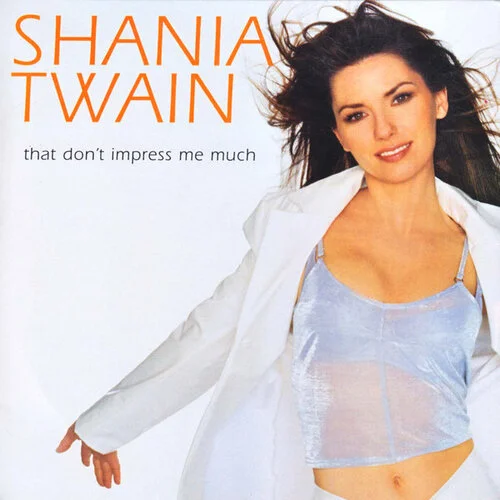
FEATURE: Too Good to Be Forgotten: Songs That Are Much More Than a Guilty Pleasure: Shania Twain - That Don't Impress Me Much

FEATURE:


Too Good to Be Forgotten: Songs That Are Much More Than a Guilty Pleasure
www.jpg

Shania Twain - That Don't Impress Me Much

___________

IF you were around in 1997…

you would have heard Shania Twain’s third studio album, Come on Over, a lot! Released on 4th November, it is an album that spawned huge singles and took Twain’s music to new audiences. Before I come to a song from that album that I want to highlight, it is worth speaking about the album. I know there are a lot of people who dislike it and feel that it is overrated. For an artist like Twain who was perhaps more synonymous with Country prior to 1997, some felt that there was too much Pop on Come on Over. That said, the album became the best-selling Country music album ever released…and the best-selling studio album ever released by a female artist in any genre. At sixteen tracks, one might feel there is filler on Come on Over. I don’t think the album is too bloated. Between 1997 and 2000, twelve tracks were released as singles! I criticise artists today who put out four or five singles from an album. It is clear there was enormous commercial potential with Come on Over. So many people will know Don't Be Stupid (You Know I Love You), You’re Still the One and Man! I Feel Like a Woman! I love the album. It was my introduction to Shania Twain. Discovering the album at high school, I heard a lot of the album’s tracks played and shared. With songs written by Shania Twain and Robert John ‘Mutt’ Lange, Twain demonstrates her variation and skill as a songwriter.

I think that Come on Over is one of these albums that should be celebrated and is completely deserving of its success. This is what AllMusic wrote in their review:

“Shania Twain's second record, The Woman in Me, became a blockbuster, appealing as much to a pop audience as it did to the country audience. Part of the reason for its success was how producer Robert John "Mutt" Lange -- best-known for his work with Def Leppard, the Cars, and AC/DC -- steered Twain toward the big choruses and instrumentation that always was a signature of his speciality, AOR radio. Come on Over, the sequel to The Woman in Me, continues that approach, breaking from contemporary country conventions in a number of ways. Not only does the music lean toward rock, but its 16 songs and, as the cover proudly claims, "Hour of Music," break from the country tradition of cheap, short albums of ten songs that last about a half-hour. Furthermore, all 16 songs and Lange-Twain originals and Shania's sleek, sexy photos suggest a New York fashion model, not a honky tonker. And there isn't any honky tonk here, which is just as well, since the fiddles are processed to sound like synthesizers and talk boxes never sound good on down-home, gritty rave-ups. No, Shania sticks to what she does best, which is countrified mainstream pop. Purists will complain that there's little country here, and there really isn't. However, what is here is professionally crafted country-pop -- even the filler (which there is, unfortunately, too much of) sounds good -- which is delivered with conviction, if not style, by Shania, and that is enough to make it a thoroughly successful follow-up to one of the most successful country albums by a female in history”.

Released in December 1998, at the time of its release, I heard many people (those I knew and members of the music press) saying That Don't Impress Me Much was a guilty pleasure. Perhaps less solid and impactful as other songs on Come on Over, I really love the imagery and wit through That Don't Impress Me Much. Wikipedia provides some details about the hit:

“That Don't Impress Me Much" is a song co-written and recorded by Canadian singer Shania Twain. It was released in December 1998 as the sixth country single, and seventh single overall, from her third studio album, Come On Over (1997). It was third to pop and fourth to international markets. The song was written by Robert John "Mutt" Lange and Twain, and was originally released to North American country radio stations in late 1998. It became her third biggest single on the Billboard Hot 100 and remains one of Twain's biggest hits worldwide. "That Don't Impress Me Much" has appeared in all of Twain's tours (Come On Over, Up!, Rock This Country and Now). The country version was performed on the Come on Over Tour and the dance version on the Up! Tour. "That Don't Impress Me Much" was named Foreign Hit of the Year at the 2000 Danish Grammy Awards”.

There is snobbishness and dismissive attitudes regarding That Don't Impress Me Much. The song, I guess, is about wanting an emotional connection with a man. Rather than these superficial guys thinking they are gods; Twain is casting them aside and putting them in their place. My favourite verse is: “I never knew a guy who carried a mirror in his pocket/And a comb up his sleeve—just in case/And all that extra hold gel in your hair oughta lock it/’Cause heaven forbid it should fall outta place”. That Don't Impress Me Much is a song I loved in 1998, as it is really catchy and has a great sense of fun. I can imagine there were a few guys Twain had in mind when she was writing about male arrogance and men with no depth! Perhaps she was after something more substantial; someone who was more about flash and good looks. I have seen That Don't Impress Me Much appear in a few modern lists of guilty pleasure songs. I do not believe any song can be described as such. It is a little galling that the track has been received this way by some. Maybe the lyrics are not as serious and deep as some were expecting. There are plenty of songs on Come on Over that offer something emotional and heartfelt. That Don't Impress Me Much is a fun and energetic song that is much more than a throwaway or something akin to novelty. Go and listen to the song and check out the Come on Over album. So many singles from the album (a dozen) might have seemed excessive. The fact they are fared pretty well showed Come on Over struck a chord with so many people. Everyone will have their favourite singles from the album. To me, the best is That Don't Impress Me Much. Over twenty years since I first heard it, it still makes me…

SMILE and sing along!

FEATURE: Beastie Boys at Forty: The Importance of 1998’s Hello Nasty

FEATURE:


Beastie Boys at Forty

www.jpg

The Importance of 1998’s Hello Nasty

___________

I often associate…

ggg.jpg

 IN THIS PHOTO: Beastie Boys in 1998/PHOTO CREDIT: Danny Clinch

Beastie Boys as being a 1980s act. They formed in July 1981. I am marking forty years of their existence. Even though they created some sensational music in the 1980s, of course, they released music until 2011 (following the death of Adam ‘MCA’ Yauch). Even though the group are no longer recording music, ‘Mike-D’ and ‘Ad-Rock’ are keeping the name and flame alive. There have been books and documentaries. New generations are discovering the music of the Beastie Boys. For me, there are albums that hit me in different ways. Each of them holds a special memory. The album that scored happy memories and was especially formative was their fifth studio album, Hello Nasty. The trio were releasing genius album after genius album. In 1994, they put out the sensational Ill Communication. Hello Nasty is a different-sounding record to its predecessor – to me, it is no less potent or memorable. In 1998, I was still in high school. I was as involved and immersed in modern music as at any other time in my life. At school, we would talk about the charts and swap albums. This was a post-Britpop period in the U.K. I think 1998 is one of the strongest years for music ever. I say that a lot about various years of the 1990s. Look at what was released then. Lauryn Hill’s only solo album, The Miseducation of Lauryn Hill sat alongside Madonna’s Ray of Light, Massive Attack’s Mezzanine and Fatboy Slim’s You've Come a Long Way, Baby!

It was a wonderful time and one that was accompanied by lots of discovery and experimentation. I discovered the Beastie Boys in the early-1990s I think. The first album of theirs I really bonded with was Hello Nasty. Compelled by songs such as Intergalactic, I was immersed in the album pretty quickly! I have written about Hello Nasty before. As Beastie Boys are forty this month, I wanted to revisit a classic album. Beasties fans will debate which is their greatest album. I think most would argue for Ill Communication, Licensed to Ill or Paul’s Boutique. Although there is a lot of love for Hello Nasty, I feel it is one of their more underrated albums. At twenty-two tracks, Hello Nasty could have been sprawling and a drag. As it is, the album is a delight from start to finish. There is so much variety throughout - this means one does not get bored. Apart from Intergalactic, I think The Negotiation Limerick File is my favourite track from the album. Hello Nasty is so special because I was listening to it with friends after school. It is the sound of freedom and a happiness that I have been thinking about. At such a hard time, albums like Hello Nasty are on my mind. I am going to do a few more Beasties features to mark forty years. Before moving on and wrapping up, it is worth bringing in some reviews to show what critics thought about the album.

I don’t think the Beasties released an average album. Maybe their instrumental album of 2007, The Mix-Up, is for diehards only. Hello Nasty is definitely among their best. In their review, AllMusic noted the following:

“Hello Nasty, the Beastie Boys' fifth album, is a head-spinning listen loaded with analog synthesizers, old drum machines, call-and-response vocals, freestyle rhyming, futuristic sound effects, and virtuoso turntable scratching. The Beasties have long been notorious for their dense, multi-layered explosions, but Hello Nasty is their first record to build on the multi-ethnic junk culture breakthrough of Check Your Head, instead of merely replicating it. Moving from electro-funk breakdowns to Latin-soul jams to spacy pop, Hello Nasty covers as much ground as Check Your Head or Ill Communication, but the flow is natural, like Paul's Boutique, even if the finish is retro-stylized. Hiring DJ Mixmaster Mike (one of the Invisibl Skratch Piklz) turned out to be a masterstroke; he and the Beasties created a sound that strongly recalls the spare electronic funk of the early '80s, but spiked with the samples and post-modern absurdist wit that have become their trademarks. On the surface, the sonic collages of Hello Nasty don't appear as dense as Paul's Boutique, nor is there a single as grabbing as "Sabotage," but given time, little details emerge, and each song forms its own identity. A few stray from the course, and the ending is a little anticlimactic, but that doesn't erase the riches of Hello Nasty -- the old-school kick of "Super Disco Breakin'" and "The Move"; Adam Yauch's crooning on "I Don't Know"; Lee "Scratch" Perry's cameo; and the recurring video game samples, to name just a few. The sonic adventures alone make the album noteworthy, but what makes it remarkable is how it looks to the future by looking to the past. There's no question that Hello Nasty is saturated in old-school sounds and styles, but by reviving the future-shock rock of the early '80s, the Beasties have shrewdly set themselves up for the new millennium”.

Every Beastie Boys fan has their favourite album and reasons for loving it. NME were impressed with Hello Nasty when they reviewed it in 1998:

“It's a tough one but remarkably they pull it off. True to form, 'Hello Nasty' is a sprawling schizoid mess, but in the best possible way. It is a 22-track, genre-busting, brain-and-body-stimulating party with a conscience. A tense space-age blowout before the morning after's monastic retreat. There is so much here - from the wisdom and virtuosity of the lyrics to the dense, innovative layers of music - that it seems conceivable the Beastie Boys could've spent every day of the past four years since 'Ill Communication' working non-stop in pursuit of the ultimate very-long-playing experience.

Of course, they haven't. Four years without new music (save the purgative hardcore EP, 'Aglio E Olio') has hardly seen their profile drop. Indeed, in spite of their Grand Royal label releasing a stream of almost unmitigated cobblers, and their Grand Royal magazine becoming progressively less interesting, their position as big-trousered arbiters of taste seems, bizarrely, to have grown. It's the myth of the Beastie Boys that is so all-pervasive: the dream of joining their laid-back, ethically aware wiseguy fraternity; of rhyming and stealing and shooting baskets and being namechecked in one of their epically self-referential raps. The most successful elite movements are the ones that appear just accessible enough to give the plebs a glimpse of the glamour; it's not hard to see the Grand Royal life as worth aspiring to. That said, when you're being sold that myth in the shape of a Sean Lennon album, it feels like more of a con trick.

'Hello Nasty' is no such disappointment. Rather, it's a benchmark album that successfully integrates Zeitgeist-friendly pre-millennial angst into the block-rocking gameplan. Fundamentally, it's hip-hop: there are no hardcore tracks this time round, and little evidence of the rap-rock hybrids that have popularly defined them. Instead, the starting point is warped retro-futurism, drawing from both original visionaries like Afrika Bambaataa (check the dippy electro of 'Intergalactic') and the current crop of cut'n'paste technicians like DJ Shadow, Jurassic 5 troopers Cut Chemist and Nu-Mark and the Invisibl Skratch Picklz. In fact, the latter crew's Mixmaster Mike is the featured DJ on 'Hello Nasty', scratching up a storm through a wah-wah pedal down the Beasties' answering machine, deified on the sparse old-skool homage, 'Three MCs And One DJ'.

Elsewhere, everything is going on. Opener 'Super Disco Breakin'' begins with a fucked-up riff from 'Are Friends Electric' before exploding with scratches, beats, fuzz, sirens, whines and those familiarly petulant voices. The effects are dazzling and bewildering, like Lee Perry and Sun Ra joining a DJ tag team on Planet Rock. During 'The Move' someone claims, "Dogs love me 'cause I'm crazy sniffable" over a drawing-room harpsichord fl”.

Forty years after the Beastie Boys name was created, they have influenced so many other artists. Having released so many iconic albums and put their names in the history books, we definitely have not heard the last of them. Aside from the re-releases, books and documentaries, I am sure that we will see some album reissues and other stuff coming through the years. It is amazing to think that Hello Nasty sold 681,000 copies in its first week! I am not surprised though. It is a tremendous album that means a lot to me. On the fortieth anniversary of their formation, I felt compelled to return to…

ONE of their greatest achievements.

FEATURE: The July Playlist: Vol. 1: Magic and the Magical

FEATURE:


The July Playlist

qqq.jpg

IN THIS PHOTO: Rico Nasty 

Vol. 1: Magic and the Magical

__________

THIS is another…

eee.jpg

 IN THIS PHOTO: Laura Mvula

great week for new music. Among the new releases are tracks from Laura Mvula, Rico Nasty, LUMP, Shygirl (ft. slowthai), Janelle Monaé, and Poppy. Also in the mix are songs from St. Vincent, Get Cape. Wear Cape. Fly, Villagers, Bobby Gillespie/Jehnny Beth, Mariah the Scientist, and Yola. It is a packed and eclectic week where there are some seriously good tunes to investigate! If you need a boost to get you into the weekend, then have a listen to the songs below. There will be something in there that takes your fancy, that is for sure! Finish off the week with a terrific assortment of tracks that should ensure that the weekend kicks off…

ddd.jpg

 IN THIS PHOTO: LUMP

WITH a real spark!   

ALL PHOTOS/IMAGES (unless credited otherwise): Artists

__________

rrr.jpg

Rico Nasty – Magic

eee.jpg

Laura Mvula – Magical

ddd.png

 PHOTO CREDIT: Tamsin Topolski

LUMP – We Cannot Resist

sss.jpg

Shygirl (ft. slowthai) – BDE

www.jpg

Janelle Monaé – Stronger (from the Netflix Series We the People)

eww.jpg

Poppy – Her

eeee.jpg

St. Vincent – Sad But True (from The Metallica Blacklist)

aaa.jpg

Get Cape. Wear Cape. Fly – Drift

rrr.jpg

Villagers - So Simpatico

www.jpg

Bobby Gillespie, Jehnny Beth - English Town

qqq.jpg

Mariah the Scientist – Aura

QQQ.jpg

PHOTO CREDIT: Jacob Blickenstaff

Yola – Starlight

qqq.jpg

PHOTO CREDIT: Graham Tolbert

Big Red Machine - The Ghost of Cincinnati

qaaa.jpg

GIRLI – Dysmorphia

aaaa.jpg

Django Django, Denai Moore, Bullion – Say Something

mmm.jpg

The Go! Team – Let the Seasons Work

aaa.jpg

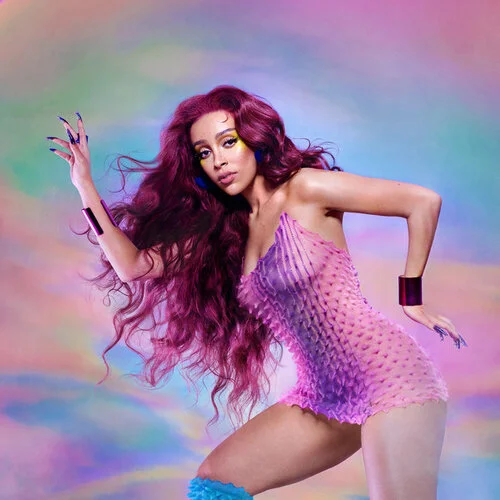
Doja Cat (feat. Gunna) – Why Why

sss.jpg

PHOTO CREDIT: Nick Porter

Peakes - An Infinite Divide

aaa.jpg

Inhaler – Totally

sss.jpg

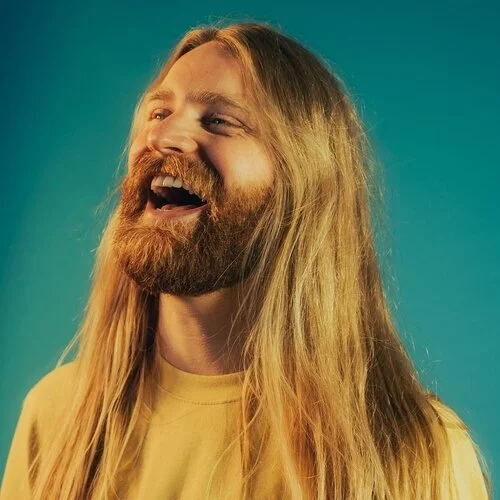
Sam Ryder – July

zzzz.jpg

Porij – Ego

wwww.jpg

Cosha – Hot Tub

xxx.jpg

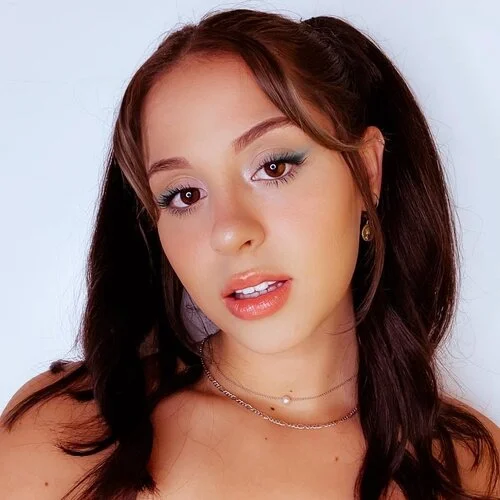
Lolo Zouaï - Galipette

sss.jpg

Molly Burch – Took a Minute

qqq.jpg

Pond – Toast

Wings of Desire - Choose a Life

aaaa.jpg

Maria Kelly – good enough

qqq.jpg

Sarah Proctor – Worse

qqq.jpg

Erica Cody – Better Days

qqq.jpg

PHOTO CREDIT: Nick JS Thompson

Desperate Journalist – Fine in the Family

aaa.jpg

PHOTO CREDIT: Lily Brown

Kay Young - White Teeth

ss.jpg

Matilda Mann – Bloom

aaa.jpg

PHOTO CREDIT: Sequoia Ziff

Aziya – Marathon

xxxc.jpg

Magdalena Bay - Chaeri

zzz.jpg

PHOTO CREDIT: Emily Scarlett Romain

Sonia Stein – Zoom Out

qqqa.jpg

Just Stef – Miss U Miss Me

aaa.jpg

PHOTO CREDIT: Lillie Eiger

Maisie Peters - Psycho

sss.jpg

Jaykae x Jorja Smith - 1000 Nights

FEATURE: Spotlight: Olivia Rodrigo

FEATURE:


Spotlight

sss.jpg

PHOTO CREDIT: Grant Spanier 

Olivia Rodrigo

___________

IT seems odd…

qqq.jpg

 PHOTO CREDIT: Grant Spanier 

spotlighting an artist who has became almost a household name! Olivia Rodrigo released her debut album, SOUR, in May. I would urge people to buy it, as it is such an accomplished and varied debut. The eighteen-year-old Californian has a huge fanbase already - though she is still in the earliest stage of her career and has many more albums in her. That is why I wanted to spotlight her. I will come to some album reviews for SOUR very soon. I am keen to bring in some interviews that Rodrigo conducted recently. Before then, this is how she describes herself on her official website:

“hi there! my name is olivia! I’m 18 years old and writing songs is my favorite thing to do in the world. I’ve been doing it for as long as I can remember and I fall more in love with it every day. The first song I ever got published was called “All I Want.” I wrote it for a show I act in and it was a super cool experience that opened up a lot of doors for me. On the last day before Covid lockdown, I met the team at Interscope/Geffen records and a producer named Dan Nigro for the first time.

It turned out to be a very momentous day for so many reasons. I spent most of quarantine writing songs in my living room and producing them in a garage, including ‘drivers license’. It was always a really special song to me but I never expected the response it got. It absolutely blew my mind and I still to this day refuse to believe it all actually happened. The day I am writing this is actually the day that I turn in my debut album! I’m sooo excited for you to hear it and I feel so grateful that I get to make music for my job”.

It is no surprise that there have been a lot of interviews conducted with Rodrigo. I want to pull one from The Guardian. In it (among other things), we learn about Rodrigo’s Disney career, in addition to the success of her single, drivers license:

 “Rodrigo was homeschooled long before the pandemic. She has been a Disney star since 2016, first in Bizaardvark, about two oddball vloggers, then High School Musical: The Musical: The Series (HSM), a mockumentary where the “real-life” teenagers attending the school where the original movies were filmed stage their own musical of HSM. The stars learn on set; fake Disney high school is as close as they’ll get to the real thing. Rodrigo questioned whether her unconventional life would make her songwriting unrelatable. Lorde’s debut, Pure Heroine, inspired her to get serious about it at age 12. “She talks about driving to the suburbs and going to school and all her friend-group drama,” says Rodrigo. “I remember feeling so seen: she’s taking this normal experience that we all go through and turning it into something really beautiful and artful. I always wanted to write a record like that, but never felt like I had that normal life experience.”

Then normal life – that pesky shattered heart – intruded. “It’s interesting, heartbreaks when you’re 16 or 17,” says Rodrigo, “because you don’t yet have that perspective of knowing that life goes on and you’re gonna meet other people; that it wasn’t the only happy experience you’ll ever have.” She recounts a day on set where the cast was filming “a really poppy, happy dance number”. Between takes, she was squirrelled away with her acoustic guitar, writing “this sad-ass song” called Happier, wishing her ex well and admiring his new girlfriend. On the piano-led album version, the verses spill over beautifully; the chorus awkwardly, earnestly strains its crescendo, showing the effort of her beneficence.

Much analysis of Drivers License’s wild success concerned a rumoured relationship between Rodrigo and a male co-star (and the alleged third wheel), which you can read about in asinine detail elsewhere. There is no way the majority of listeners cared about this; the song’s appeal is its musical familiarity and the cinematic lyrics laying out Rodrigo’s eviscerated-but-still-beating heart. (Even her best friend, Bizaardvark co-star Madison Hu – who steered Rodrigo through the breakup in real time – said she only really understood her anguish when she heard it.) And for all the media obsession with gen-Z culture shifts, she is reassuringly traditional: the eternal lovelorn teenage songwriter. Rodrigo’s songwriting also subtly distills the passing of innocence. Her second single, the gleefully accusatory Deja Vu, ribbed her ex for repeating their rituals with his new girl (Billy Joel songs, Glee) but also acknowledged “everything is all reused”. Losing first love, she says, “feels sort of earth-shattering in a way that’s obviously heartbreaking but really beautiful, too”.

Sour feels “intrinsically young”, she says; the point was to honour those acute teenage feelings. “Something I’m really proud of is that this record talks about emotions that are hard to talk about or aren’t really socially acceptable especially for girls: anger, jealousy, spite, sadness, they’re frowned-upon as bitchy and moaning and complaining or whatever. But I think they’re such valid emotions.” The seven songs I hear are also rife with deep insecurity: Rodrigo brutally comparing herself with the new girlfriend, defeated by a boy’s impossible standards, scrolling social media and feeling sick with envy.

Obviously, beauty and success aren’t everything, but it shows how absurdly poisonous social media is that the pretty, accomplished Rodrigo feels that way. “I think there’s a lot of strength in saying: I don’t know anything and I feel so insecure and unwanted,” she says. “If I were a younger person looking up to my favourite songwriter, I’d be really moved by that so I hope I can provide that.” Rodrigo is Filipino American, which created another point of comparison. “It’s hard for anyone to grow up in this media where it feels like if you don’t have European features and blond hair and blue eyes, you’re not traditionally pretty. I felt that a lot – since I don’t look exactly like the girl next door in all these movies, I’m not attractive. That actually took me a while to shake off. It’s something I’m still shaking off now”.

I am going to jump around a bit in terms of interview timeline. The BBC caught up with her as she was preparing to play in England as part of the BRIT Awards. It is a great interview. Rodrigo talked about Instagram, and what it was like being a household name:

“Her current single, Good 4 U, channels Alanis Morissette's pop-punk vitriol; Deja Vu finds her taunting her ex-boyfriend over waves of crashing drums and distorted guitars; and Enough For You is the sort of grippingly-told guitar ballad that made Taylor Swift a household name.

Swift is an important touchstone. Her intricate, inter-linking narratives have clearly influenced Rodrigo's writing and, like Swift, the star has a knack for excavating the little observational details that bring a song to life.

On Deja Vu, she recalls singing Billy Joel with her ex (Uptown Girl was their song) and how she's driven crazy by the thought of him sharing it with someone new.

Jealousy, Jealousy, meanwhile, tackles the inferiority she feels after being confronted by the "paper-white teeth and perfect bodies" of celebrities on Instagram.

"I wrote that song at a time when I was borderline addicted to social media and I just felt crippled by the comparisons," she says.

"I don't feel that now, but it's something I wanted to talk about. I am someone who has somewhat of a large following, so I think it's cool that I can be like, 'Yo, I still hate myself. I still compare myself to other girls.'

"Whenever I see people on Instagram do that, it always feel empowering to me - so I hope that I could be that for somebody else."

Until recently, Rodrigo had the unique experience of becoming a household name without having to leave the house - an experience she calls "a blessing in disguise".

"It helped me keep my sanity when there was so much drama going on. Being in isolation with people I loved and cared about kept me out of the hullabaloo."

She's speaking a few days before her first-ever live performance for an audience, which took place at last week's Brit Awards. For the privilege of playing in the UK, she's been locked in a hotel room for a week, somewhere outside London.

"I'm not sure where, but it's beautiful," she beams, sitting in front of a neatly-pressed bed and floral wallpaper, as a chorus of birds threatens to drown her out.

"They're so loud! Even at 4am, I was awake, because jetlag, and the birds were chirping away. I was like, 'Wow, I guess this is England!'.

I shall come to SOUR and the reviews it has accrued. I think it is among the best-received albums of this year. It is a fantastic album that everyone should check out! After such a busy year already, I hope that Rodrigo has chance to unwind at some point. I guess she will already be thinking about a follow-up to SOUR.

cc.jpg

 PHOTO CREDIT: Hanina Pinnick for NME

One especially deep interview came from NME. We learn so much about Rodrigo’s past and present. There are some segments that struck me that I feel is worthy of spotlighting:

“Work on the record first began last year, with initial plans to release a debut EP in 2021 – though this understandably changed after the response to ‘Drivers License’. “I was like, ‘I wish that I can make a project that fully encompasses who I am as an artist’,” she says. “And I feel like the EP wasn’t my strongest work.” Keen to fully showcase who she was as a songwriter, she called her label, Geffen, and asked to extend the project to a full album. They, of course, said yes.

On ‘Sour’, Rodrigo collaborated with producer Dan Nigro (who’s worked with the likes of Carly Rae Jepsen and Sky Ferreira), largely recording in his home studio. “I was really inspired by ’90s alternative rock records with ‘Sour’, especially alternative rock girls,” she says, and references Alanis Morissette as a particular inspiration. “I think the albums from that time were so brutally honest and angsty, and I wanted to make an angsty record about me growing up and going through heartbreak.”

There’s one constant in Rodrigo’s music: her astonishingly open songwriting. She’s a thoroughly Gen-Z creator, wearing her emotions plainly and pouring her own experiences into her songs. That’s in keeping with her peers such as Madison Beer and Girl In Red, the latter of whom recently told NME: “Gen-Z crave and expect more honesty, intimacy and almost a rawness.”

Rodrigo adds: “I’ve always been such an oversharer. I’ll tell my Uber driver all of my deepest traumas and insecurities, and so I just think songwriting for me is an extension of that aspect of my personality. I’ve never really been so terrified of people learning about the intimate parts of myself; I think that’s what makes songwriting so special.”

odrigo’s parents are both “music heads” and encouraged their daughter’s artistic endeavours. Rodrigo started to audition for television and film acting roles at seven years old, something she recognises as a brutal process: “I think auditions are really rough for anyone. I know people who’ve gone into their first audition and booked it, but that definitely was not my experience”. There were times that she almost sacked the whole thing off. At one point she made a pact with her mum: if she didn’t get a job by Christmas, they’d call it quits. She booked her first gig in November of that year.

With this level of ownership as a writer, though, comes negatives. As ‘Drivers License’ picked up pace, there was huge intrigue as to who she’d written the song about, with sites speculating about a “love triangle drama” involving her High School Musical co-star Joshua Bassett. “To be completely honest, it was really hard,” she says of the endless online speculation. “And, yeah, sometimes it wasn’t always the kindest or the most respectful. But I understand why people are curious and I’ve been curious about who my favourite songwriters wrote their songs about, so I completely understand.”

This level of commentary is almost exclusively reserved for female artists, with lyrics by women undergoing an extra level of scrutiny from the media and listeners – just look at Taylor Swift’s songs being dissected for details about her love life. “It would be a bald-faced lie if I say that I didn’t face any misogyny in the music industry – especially being a young girl,” Rodrigo tells NME. “It’s a weird place to be. But I feel like I’m surrounded by people who really respect me and treat me with kindness. I’m really lucky in that regard and I hope that my generation of artists can really forge a path for younger artists”.

www.jpg

 PHOTO CREDIT: Hanina Pinnick for NME

I shall get to some reviews in a bit. The final interview that I have been reading is from Vogue. They looked at the subject matter explored through SOUR, alongside the hugely positive response it has gained:

“Not all the songs are about heartbreak: the album’s closer, “hope ur ok,” pays tribute to lost connections with old friends—a boy with an abusive father, and a gay friend with homophobic parents—whose triumph in the face of adversity continues to inspire Rodrigo. Still, the terrain of romantic torment feels most natural, recalling some of the greatest alt-rock records of the ’90s, from Alanis Morrissette’s Jagged Little Pill to PJ Harvey’s Rid of Me to Fiona Apple’s Tidal. “I wish I could be a teenager in the ’90s, because that’s my favorite music ever,” says Rodrigo, namechecking both Apple and Morrissette as influences for Sour. “I just feel like it’s so raw. I remember the first time I heard Jagged Little Pill and I turned to my mom and was like, ‘Oh my gosh, wow, she really just said that.’ It’s so brutally honest to the point it’s almost shocking—they were things that I’d genuinely never heard before in a song. And that was super inspiring to me. That’s what really got me going and what made me excited to write my own story. 

For all its angst-riddled teenage catastrophism, though, the positive response to the album has been very much universal, with many noting its uncanny ability to transport you right back to the thick of the emotional turbulence of that life stage. “I work really hard to be specific in my songwriting, as I feel like specific songs are the most meaningful,” Rodrigo says. “I'm just so obsessed with really story-driven songs. I grew up listening to a lot of country music, and country music is really specific and vivid, and I think I always was attracted to that as a young girl, which translated over into my songwriting.” It’s a formula that clearly works, and has had its own, reciprocal benefits for Rodrigo too. “I always say you put out songs in hopes of making people feel more understood, but it also works in the reverse,” she continues. “All these people have said to me, I feel the exact same way, or this thing happened to me too. It makes me feel a lot less alone.”

For Rodrigo, the rollercoaster of the past six months has been so exciting that she has no intention of hitting the brakes any time soon, even as she completes the final months of her senior year of high school while on the road. “I’m just taking this day by day,” she says. “It’s all such a whirlwind at the moment, but it all comes down to the fact I just really love writing songs. I’m always writing, because it’s the way I process my emotions. It never feels like work to me in that regard.” Rodrigo might be in this for the long haul, but she wants all of us to come along for the ride”.

I could source a whole raft of reviews, as everyone has approached the album from a different angle. The response has been incredibly warm. SOUR is in my top-twenty albums of this year for sure. This is what Entertainment Weekly noted in their review:

“Born in 2003, Rodrigo began her come-up through the Disney ranks in the mid-2010s, appearing in and singing the theme song for the vlogcom Bizaardvark until 2019. That year, she was also cast in High School Musical: The Musical: The Series, which turns the unstoppable 2000s franchise into its own high school musical. As Nini Salazar-Roberts, who goes on to play Vanessa Hudgens' Gabriella Montez in the show's show, Rodrigo co-wrote and performed "All I Want" in the series, a deeply felt, if slightly gloppy, showcase for her lithe voice and detailed lyric writing.

Then came "Drivers License," which Rodrigo teased snippets of on Instagram last summer and released in January. While its popularity was given a boost by the gossip-page chatter around it — was it about HSMTMTS co-star Joshua Bassett? Who was "that blonde girl who always made [Rodrigo] doubt"? — its power-ballad grandeur and ingenious production, starting from the way its beat blossomed from a car's open-door chime, propelled its appeal across demographic lines. "Drivers License" sat atop the American charts during the country's shortest, coldest days, and its raging against cosmic unfairness felt righteous.

Sour could have been "Drivers License: The Maxi-Single," a cynical grab for curious streamers full of also-ran tracks from HSMTMTS' cutting-room floor. Instead, the album, which Rodrigo worked on with producer and co-writer Dan Nigro, announces the California native as a major player in the ever-shifting spheres of teen pop and adult pop. She's a singer who zeroes in on her lyrics' emotional core and a writer who's pushing past the noise of the outside world and listening intently to her truth — even if those realities seem ugly, or, as she sings on the serpentine "Jealousy, Jealousy," make her wonder, "I think too much."

Like any "bad times" playlist worth its track listing, Sour embraces sonic variety; pop-punk, synthpop, dreampop, and good old power ballads all come into the mix, while Rodrigo's limber soprano is its guiding light. "Good 4 U" is punchy and snide, with Rodrigo gasping out its syllable-laden, salt-heavy verses over tense drums that explode into a manic, sarcastic chorus. "Déjà Vu" is a gauzy fantasia with a time-blackened heart, all pillowy synths propping up Rodrigo's venom-filled diatribe toward an ex who's moved on. There are ballads, too — "Traitor," which precedes "Drivers License," feels like a thematic prelude to that hit, its lyrics full of the post-grief anger and bargaining that precede aimless-driving depression. But any heaviness is leavened by Rodrigo's self-awareness and grace: "Hope Ur Ok," which closes the album, is a shimmering blessing to down-on-their-luck people Rodrigo has known, complete with a chorus that sounds like a benediction.

Rodrigo was three years old when Taylor Swift's self-titled album came out, and 10 when Lorde released Pure Heroine; those two artists' DNA is definitely part of Sour's genetic makeup, from the interpolation of Swift's reputation track "New Year's Day" on the regret-wracked "1 Step Forward, 3 Steps Back" to the spectral harmonies on the stripped-down "Favorite Crime" that recall the choirs accompanying Lorde on "Royals." But Sour doesn't try to be "the next" anyone; instead, Rodrigo distills her life and her listening habits into powerful, hooky pop that hints at an even brighter future.  A-“.

To close, I found a great review from CLASH. There must have been a huge sense of pressure and expectation on her shoulders – given the fact there was a lot of hype and she was a recognisable a Disney star:

“If the past 12 months have been the weirdest in memory, then spare a thought for pop riser Olivia Rodrigo. This time last year she was a Disney star – fast forward and she’s a global icon three singles in, a teen voice already being touted as one of Gen Z’s finest.

Debut album ‘Sour’ arrives weighed down with hype and expectation, an 11 track song cycle that aims to make its mark. The banner headline of this review, then? ‘Sour’ exceeds the hype and smashes those expectations to pieces – lyrically strong, her bold, revealing, and punchy songwriting produces 11 potential smash hit singles, with each one feeling like a readymade anthem.

‘Brutal’ is a stabbing, succinct opener, recalling everyone from Garbage to Paramore via Elastica with its three chord minimalism. ‘Traitor’ opens out her pop palette a little, before the majestic, instant-classic ‘Drivers Licence’ arrives to make you fall in love with her calm, assured heartbreaker all over again.

‘Déjà vu’ sits close to the centre of the album, and Rodrigo’s heart – the buzzing digi-pop palette feels off kilter, breaking the rules because she’s too damn young to know them. ‘Good 4 U’ remains the exceptional, surging, stadium-throbbing monster it became on its release, but placed in this context her lyrical introspection becomes ever-more apparent.

‘Enough For You’ is a gorgeous hymn, perhaps the closest Olivia comes to echoing heroine – and now friend – Taylor Swift, with its ‘folklore’ esque acoustic chords. Indeed, Taylor is actually named on the credits, with ‘1 Step Forward, 3 Steps Back’ acting as a bridge between two incredibly potent female pop voices.

Indeed, what’s revelatory on ‘Sour’ is the sheer breadth Olivia Rodrigo can occupy. Only three singles deep into her career, she’s able to move from the glorious torch song atmospherics of ‘Happier’ – a piano-pounding song of regret – to the blunt, half-spoken slacker pop of ‘Jealousy, Jealousy’.

Brought to a close with the demo-like intimacy of ‘Hope UR OK’, this is a bravura pop experience. Marked by excellence from front to back, ‘Sour’ is the sound of a bold talent operating on their own terms – potent in its execution, revealing in its lyricism, it’s a record that finds Olivia Rodrigo effortlessly claiming her status as pop’s newest icon, and one of its bravest voices”.

There is no doubt that Olivia Rodrigo will be a huge star of the future! At the moment, she is getting a lot of press. Many are labelling her as an icon of the future. Certainly, she is an exciting young talent who is created such interesting and memorable music. SOUR is the sound of an artist who has already found her feet and is in the groove. I feel, though, that Rodrigo will get even better. Having made such an impact on her debut album, there is no telling…

JUST how far she can go!

_____________

Follow Olivia Rodrigo

zzz.jpg

FEATURE: Childhood Treasures: Albums That Impacted Me: The Beatles - The Beatles/1962-1966

FEATURE:


Childhood Treasures: Albums That Impacted Me

sss.jpg

 The Beatles - The Beatles/1962-1966

___________

IN the first part of a mini-series…

wwww.jpg

 IN THIS PHOTO: The Beatles in 1963/PHOTO CREDIT: Mirrorpix

where I look at albums that made an impact on me as a child, I spent some time with Michael Jackson’s 1987 album Bad. I was aware of Jackson before that but, as a young child, it opened my eyes to Pop music. It is such a stunning album that has songs that lodge themselves in your head. I love other Jackson albums such as Off the Wall, Thriller and Dangerous. In the next edition, I will focus on an album by a very important woman in music. Today, it is all about my favourite band. The Beatles came into my life as early as I can remember. In the family household, there were cassettes – though most of the music from The Beatles was on vinyl. From Abbey Road to Revolver, I was being exposed to these timeless albums. In terms of getting a real sense of The Beatles and the breadth of their music, the compilations known as the ‘red’ and ‘blue’ albums were important. The latter looked at their later-career work. It was the ‘Red Album’ that struck me hardest. With its title of The Beatles/1962-1966, many of their best-known early songs are on the album. I think a lot of people who are fans of The Beatles discovered their music through those red and blue compilation albums. As much as I love the later work, the brilliance and simplicity of the earliest singles mean more to me. Pop songwriting at its very finest, songs such as She Loves You and Eight Days a Week have been unrivalled since they were released.

It is worth bringing together some background and information about the compilation. The 1973-released The Beatles/1962-1966 was certainty popular:

“1962–1966 (also known as the "Red Album") is a compilation album of hit songs by the English rock band the Beatles, spanning the years indicated in the title. Released with its counterpart 1967–1970 (the "Blue Album") in 1973, the double LP peaked at number 3 in the United Kingdom. In the United States, it topped the Cash Box albums chart and peaked at number 3 on the Billboard Top LPs & Tape chart while 1967–1970 reached the top spot. The album was re-released in September 1993 on compact disc, charting at number 3 in the UK.

The album was instigated by Apple Records manager Allen Klein shortly before he was dismissed from his position. Even though the group had success with cover versions of songs, particularly "Twist and Shout", 1962–1966 contains only songs composed by the Beatles. The album omits any George Harrison compositions from the era, such as "Taxman", as the content is entirely Lennon–McCartney originals”.

Whereas the studio albums will always be important, so many people now will turn to the red and blue compilations to discover The Beatles. When it comes to a band with such brilliance in their catalogue, there are always going to be songs missing. At twenty-six tracks, we get to hear earliest cuts like Love Me Do (the band’s debut single) to Revolver’s Eleanor Rigby. Some would say songs such as P.S. I Love You, And Your Bird Can Sing and The Night Before should be in the pack. For me, I got a good impression of The Beatles’ career and evolution. I then sought out the studio albums to discover even more.

Whilst I have opted to feature The Beatles/1962-1966, it is clear that the second compendium, The Beatles/1967-1970 is also important. The Beatles Bible discussed why the compilations were released and how important they are:

“The Red and Blue albums were compiled and released in the spring of 1973, a year when the legend of The Beatles was even bigger than it had been when the group was together.  Three years after the break-up, all four former Beatles were enjoying enormous solo success.

Less greatest hits collections than surveys of The Beatles' high points, the two double albums became essential introductions for fans who came aboard after The Beatles broke up.  For millions of music lovers born after the mid-fifties, these have been and always will be where The Bealtes experience begins.

Also, by 1973 it was becoming clear that the breakup of The Beatles was not going to be, as many had believed, a temporary thing.  There was still widespread hope that they would reunite at some point, but their continued success as solo artists made it apparent that the four former Beatles were serious about going their separate ways.  The Beatles had never had a career spanning Best-Of or Greatest Hits - in a very real senses all of their LPs were Greatest Hits albums.  They had more hit singles that could fit on even a double album, and to complicate things, some of the group's most important songs - "A Day In The Life", The Fool On The Hill", and in England even Yesterday - were not released as singles.

The Red and Blue albums had to tell The Beatles' story in limited time, necessarily leaving out many big songs while conveying a sense of the whole history of the group

The Red and Blue albums do a  superb job of condensing a rich and complicated musical journey into four discs that move easily through a range of styles.  Through all the changes we always feel at home - because we are in the company of John, Paul, George and Ringo.  They never let us down.

Bill Flanagan

Author - Evening's Empire

June 2010”.

In future features, I am going to spotlight albums that affected me as a young child – and up to when I entered high school. Thinking about my earliest music discovery years, The Beatles were as important as any other act. I know that I feature them a lot in some capacity. There is a reason for that. Over three decades after I first heard them, their music is so transformative. It is definitely an album that I cannot be without. As I said, a female artist will feature in the next part. For now, a chance to mark the crucial relevance and power of The Beatles/1962-1966. It is a compilation album that will never…

LEAVE my collection.

FEATURE: She Bad: Are Women in Rap Underrated and Underappreciated?

FEATURE:


She Bad

Are Women in Rap Underrated and Underappreciated?

___________

EVEN though Cardi B…

mnmnmn.jpg

 PHOTO CREDIT: Justice Apple for Rolling Stone

has hit out against critics many times, her recent comments about how women in Rap and Hip-Hop are under-celebrated and given less attention is not far off the mark. As we can see from this NME article explains, Cardi B has highlighted how women are not given proper respect:

“Cardi B has spoken out on the mistreatment faced by women in rap.

She shared the opinion on Twitter yesterday (June 25), replying to a fan who pointed out the frequent criticism female rappers receive despite their strong talent and impressive production values.

“I hate how Women rappers can perform & have whole ass choreography routines & still get criticized & picked apart while men rappers just walk around in one circle, jump up & down, giving the bare minimum with no criticism @ all,” @ReinaHoneey posted, herself replying to a user that shared footage of Cardi’s performance at the 2019 BET Awards.

“Female rappers have to bust their ass on performances, great visuals, hours on make up, hours on hair, pressure by the public to look perfect, make great music and yet are the most disrespected,” Cardi replied.

“Always they not good enough, what’s new? It’s boring, why her not me.”

Cardi has long been vocal on the dissonance between how men and women are viewed in the rap world. In February, she spoke of the “crazy expectations” female rappers are pressured to meet, telling Mariah Carey in an interview: “It’s not like it’s a competition, but people are always comparing and comparing and comparing. It’s almost like they want to see you fail.”

In a 2020 interview with Billboard, she noted the pressure female rappers face to continuously deliver new material. “If you don’t have a super crazy smash, it’s like oh, you flop, flop flop,” she said”.

Maybe it is an old debate, though there does seem to be a double standard. There are many terrific women in Rap who are producing original and hugely strong music. In what Cardi B was saying about the effort and passion women put into their music. It does seem like, even though there is an influx of wonderful women across Rap and Hip-Hop, they have to fight harder for attention and respect. One can say that this is true across all of music. There are essays concerning sexism in Rap, whilst recent articles such as this one go into details about continuing misogyny. Maybe things have improved since the 1980s and 1990s. The article explores how women are under-represented in Rap. They also look at the attitudes male rappers have towards women – and the damage that can do in a societal sense:

“For decades, the genre of rap has lauded male artists while female performers struggle to succeed in the male-dominated industry. When over 6.7 million fans voted on a ranking of the “The Greatest Rappers of All Time,”  only three of the top 100 rappers were female artists. Furthermore, in 2019 when rising female artist Saweetie earned her title on the Billboard Top 100 Chart, she was only the 7th woman to do so that year.  Prior years saw even fewer women make this list: seven was the most number of women who had reached this achievement in a given year during the entire decade.

kkk.png

IN THIS PHOTO: Bree Runway 

The overarching issue leading to women’s underrepresentation among “elite” rappers is the lack of representation of women across all major roles in the music industry, especially songwriting and producing. In a USC Annenberg Inclusion Initiative study, Professor Stacy L. Smith analyzed the artists of 700 songs on the Billboard Hot 100 year-end chart over the years 2012 to 2018. Professor Smith uncovered that across all seven years, 12.3 percent of songwriters were female, 21.7 percent of the artists were female and only 2 percent of producers across 400 songs were female. Most crucially, the producing side of the music industry has consistently lacked female representation. This male-dominated environment hinders women with a passion for music production, preventing them from reaching a high level of success and achieving their career goals. Even further, female artists are consistently put in positions of answering to male producers. As producers often have a high degree of creative control over music, these male producers’ ideas heavily influence the women’s songwriting. Professor Smith’s study corroborates this idea, concluding, “Women are shut out of two crucial creative roles in the music industry.”

Professor Smith went on to explain, “What the experiences of women reveal is that the biggest barrier they face is the way the music industry thinks about women,” adding, “The perception of women is highly stereotypical, sexualized and without skill. Until those core beliefs are altered, women will continue to face a roadblock as they navigate their careers.”

Moreover, the lack of representation of women in music does not end at rankings and top 100 charts; women are also underrepresented at award shows such as the Grammys. In 2019, Cardi B made history, becoming the first female rapper to earn the award of “Best Rap Album.” While this recognition was a step in the right direction, the 2020 Grammys quickly stifled the progress. With the exception of two female artists featured on a nominated album, no other female rapper was nominated for an award.

The question then remains, in a male-dominated industry, where the so-called “greatest rappers of all time” are 97 percent men, why do so many rap songs sexualize women? Rap lyrics offensively and derogatorily call women “bitches,” “sluts,” “hoes,” “females” and romanticize a woman’s attraction to a lavish lifestyle, portraying wealth as a universal sex language.

All of these slurs, and more, are highly objectifying. Calling a woman a “bitch” likens her to a female dog, characterizes her as aggressive and annoying and casually ridicules her. The term “slut” nonchalantly criticizes what society views as promiscuous behavior or clothing, often a reason society blames women for being victims of rape. The derogatory term, “hoe,” has similar negative connotations. People generally use these terms to label women, not men, and portray them negatively. “Hoe” and “slut” embody society’s double-standards that scrutinize and judge a woman’s sexuality but praise a man’s. The impact of calling a woman a “female” holds similar weight, as the connotation of “female” implies that a woman can be considered for just her sexual traits while men, seldom referred to as “males,” are worth more”.

zzz.jpg

 IN THIS PHOTO: Megan Thee Stallion/PHOTO CREDIT: Flo Ngala

It is a complex and broad issue that cannot be solved that easily. Cardi B’s comments come at a time when the likes of Megan Thee Stallion, Bree Runway, Flo Milli and Mulatto are ruling. I am not sure of the extent of toxicity and misogyny through Rap - through it is clear that women are still held to a different standard compared to their male peers. It is shocking to think that very little progress has been made through the decades. If male rappers can score a minor hit and still find a lot of support and backing, women have to strike harder and reach higher in order to obtain the same sort of security. I will finish up there. Through the years, I have written many features regarding sexism an misogyny that has run through the music industry for decades. With more women in music now than at any other time, it is more pronounced. There is a lot of awareness coming from women themselves. I do wonder why relatively few men have raised the issue and called for change. Let’s hope that, with artists like Cardi B hitting out, there is change and improvement. I always feel Rap and Hip-Hop and much tougher genres for women than, say, Pop. If some areas of music like Heavy Metal are making small steps regarding sexism (though there is still a big issue), there seems to be this stagnation in Rap. In the long-term, these attitudes and this climate might put off very talented women from coming into the field. That would most certainly be…


A devastating loss.

FEATURE: The Whims That We're Weeping For: Kate Bush’s All We Ever Look

FEATURE:


The Whims That We're Weeping For

fddfjdfuj.jpg

IN THIS PHOTO: Kate Bush in 1980/PHOTO CREDIT: John Carder Bush

Kate Bush’s All We Ever Look

___________

I have covered most of…

wwww.jpg

Kate Bush’s tracks at some point through a feature. As far as I can see, I have not isolated All We Ever Look For. The fourth track from her third studio album, Never for Ever, I feel the positioning of the song is interesting. The album opens with the bold and brilliant single, Babooshka. We then get two slightly more ethereal and softer numbers in the form of Delius (Song of Summer) and Blow Away (For Bill). By the end of the third track, we have gone from something quite urgent and big to two songs that take things down and settle us. The first half of the album ends with the strange and beguiling Egypt. I feel the penultimate track on that side is a very important one. All We Ever Look For comes in at under four minutes (I like how the longest songs on each side come at the end and there is a nice balance when it comes to the running time). I am going to bring in an article that dove deeper into a fantastic song. One of the things I especially love about All We Ever Look For is the composition. By Never for Ever, Kate Bush was in control of the production more. Working alongside Jon Kelly, her confidence and curiosity was growing. The following album, The Dreaming (1982), found her producing solo and extending he experimentation and confidence. On that album, the Fairlight CMI was a big part of the canvas.

Whilst it can be heard through Never for Ever, it came in quite late in the day. On All We Ever Look For, we can hear Koto (Paddy Bush), acoustic guitar (Alan Murphy, Brian Bath), Yamaha CS80 (Kate Bush), timpani (Morris Pert) and Fairlight CMI (Duncan Mackay). I particularly love the synthesiser sound and what a spacey and fantastic quality they give the song. Whilst Bush’s voice was rawer on tracks like Babooshka, Violin, The Wedding List and Breathing, it is quite similar to other tracks on Never for Ever - in the sense that there is a heavenly and ethereal quality. On The Dreaming, alongside the technological and production shifts, Bush would bring in more accents and use her voice is very different ways. I really love her performance on All We Ever Look For. With backing vocals from Preston Heyman, Paddy Bush, Andrew Bryant and Gary Hurst, it is a layered and textured song. I will allude to elements of the song that I especially love. Before then, this article from the Kate Bush Encyclopaedia provides Bush’s words regarding an underrated and lesser-known song from her cannon:

“Kate about 'All We Ever Look For'

'All We Ever Look For' is about how we seek something but in the wrong way or at wrong times so it is never found. (Kate Bush Club newsletter, September 1980)

One of my new songs, 'All We Ever Look For', it's not about me. It's about family relationships generally. Our parents got beaten physically. We get beaten psychologically. The last line - "All we ever look for - but we never did score".' Well, that's the way it is - you do get faced sometimes with futile situations. But the answer's not to kill yourself. You have to accept it, you have to cope with it. (Derek Jewell, 'How To Write Songs And Influence People'. Sunday Times (UK), 5 October 1980)”.

Recorded in spring 1980 at Abbey Road Studios , All We Ever Look For is one of the rare tracks on Never for Ever where the new-found freedom, capabilities and possibilities of the Fairlight CMI are exposed and explored. This fascinating article from Dreams of Organon studies the lyrical meanings of the songs and the sounds used throughout. There are some really interesting observations. What is clear is the notable evolution of Bush’s sound: from the reliance on piano through The Kick Inside and Lionheart (1978), Never for Ever was a marked step forward:

“Upon the arrival of “All We Ever Look For,” everything changes once again. With its opening hook, a synthesized whistle overlaid upon an atypically minimal piano part, it immediately becomes clear that Kate Bush’s style of songwriting and composing has changed. Not only has her ubiquitous piano been relegated to a supporting role, the song sounds like it’s been built from its rhythm, which works like a frequently pausing, creaky wheel that thuds on every downbeat. Bush’s piano and an acoustic guitar are present in the mix, but the relationship of “All We Ever Look for” to conventional rock instrumentation ends there, with its menagerie of synthesizers and classical instruments. The world of Kate Bush has undergone another metamorphosis — the old world has gotten considerably stranger.

eee.jpg

IN THIS PHOTO: Kate Bush in 1980/PHOTO CREDIT: Getty Images 

Bush’s churning vocal begins with a sermon on the nature of families: “just look at your father/and you’ll see how you took after him/me, I’m just another like my brother/of my mother’s genes.” She places emphasis on the downbeat of each bar, singing the lines as “just LOOK at your FA-ther/and you’ll SEE how you took after him.” Bush’s interest in the institution of the family is omnipresent in her work — the fate of the narrator in “The Kick Inside” ends her relationship with her brother and potential motherhood, “Wuthering Heights” is a couple’s reunion, and the second half of Never for Ever is a meditation on the limits of family under the stress of social collapse. The family is the central unit of Bush’s mythology, the central cell from which life and art spring. One could read this as an extension of Bush’s Catholic upbringing, as it aligns with the traditionalist Catholic positioning of the family as the fundamental unit of civilization. Certainly this favorability towards the family extends from Bush’s well-adjusted family life. A staple of her early interviews is her enthusiasm and gratefulness towards her family, especially her father and brothers, the latter of whom are frequently involved in her music (especially Paddy, whose role in this song we’ll cover later). Given this background, a worldview that positions family as its wellspring is hardly a surprise from Bush.

ooo.jpg

IN THIS PHOTO: Kate Bush in 1979/PHOTO CREDIT: Claude Vanheye/LFI

In the first chorus, Bush lists what the previous generation has looked for: “a little clue,” “the truth,” and “a little bit of you,” fairly abstract expressions of a need for grounding. Meanwhile, the second and third choruses tell the listener what “we,” Bush’s generation, desires: “another womb,” “our own tomb,” “a drug,” and (my favorite) “a great big hug” among others. Sex, psychological gratification, Freudian solace, spiritual awakening, and getting high as fuck are all options. Bush makes her choruses into anaphoric lists of things to look for — yet every avenue is a dead end. The first chorus ends with “but they never did get,” while the second and third conclude on “but we never do score.” The difference is clear: one generation fails to attain things they could barely conceptualize, while the other sees the entire world and discovers that their search is futile. Burying one’s head in pleasures fails as wish fulfilment: one learns all about the world, but still arrives at a dead end.

Kate Bush is equally willing to find new musical ways of being a medium. “All We Ever Look For” is one of Bush’s first songs to be extensively constructed using a CMI Fairlight. For those unfamiliar with the machine, it’s an early sampler and synthesizer. Its user can use preprogrammed sounds or record their own sounds into the machine and play them on the Fairlight as a melody.

zzz.jpg

IN THIS PHOTO: Kate Bush in 1980/PHOTO CREDIT: Andy Phillips 

For example, if you recorded yourself breaking a wine bottle, you could then play that sound as a series of notes. It’s the one situation where you can open a bottle of Château Latour in C major. In “All We Ever Look For,” the Fairlight is used to build the song’s hook: a sampled line of whistling. According to the website Reverb Machine’s phenomenal article on Kate Bush and synthesizers, the whistle sample comes from the Fairlight’s sound library, which suggests that Bush was still getting accustomed to the instrument after being introduced to it by Peter Gabriel and leaning into its databanks. The sample is layered with accompaniment by piano and a Yamaha CS-80 synth, so it’s distinctive while supported by instruments Bush is familiar with.

This is realized quite literally in the song’s utterly bizarre bridge. The song’s melody line is mixed to the background, while a pair of feet walk down a hall and open some doors. The doors play a mix of different sounds, with the first opening to a sample of Sanskrit-singing worshippers proclaiming the Maha Mantra, the next offering some chirpy bird song, and the final opening to thunderous applause. The singer closes all three doors. It’s a strange detour, if quite literal-minded — the three samples can be read as instantiations of the chorus’ searches. Yet the incarnations of Bush’s ideas are all onstage and capable of being represented by sound. The Fairlight CMI has made Bush’s music sound like her writing: a menagerie of strange and magical ideas animating the universe”.

There is so much to love about Never for Ever. From the fact it sounds more forward-thinking and modern than any Bush record before, there are also plenty of classical and ‘older’ sounds that create this balance – the spiritual, choral-like vocals on Night Scented Stock and the subject matter of Delius (Song of Summer) are obvious examples. Both sides are nicely balanced in terms of the songs’ running times, the subject matter/music tones and quality. There is never a sense of imbalance or two tracks next to each other sounding too similar. This is testament to Bush’s skills as a producer and her maturing as an artist. Jon Kelly helped enormously in terms of production and helping get the album sounding like it did. Never for Ever is a lot busier in terms of instruments and backing vocals. Look at what here brother, Paddy Bush, was playing, and how many musicians helped bring the songs together! That said, Bush is very much at the centre of Never for Ever. The album never seemed to crowded or cluttered. There are the ‘bigger’ songs such as Babooshka, Army Dreamers and Breathing…though one hardly hears any of the remaining eight tracks played. Each are very different. All We Ever Look For fascinates me because of its lyrics (as Dreams of Orgonon explained and dissected). For me, it is the work of the synthesisers and that amazing section from 2:12 that is dizzying and delightful! The sound if voices and birdsong; footsteps moving between rooms and there being this sonic collage that one tries to picture. It is a shame the song was not performed on T.V. or had a video made. I love how much is packed into All We Ever Look For. Bush said the song is not about her. From lines that could speak of lost dreams or deprivation – “All they ever want for you/Are the things they didn't do“ -, to the starkly explicit – “The whims that we're weeping for/Our parents would be beaten for” -, through to incredible poetry – “All we ever look for, a god/All we ever look for, oh, a drug/All we ever look for, a great big hug/All we ever look for, a little bit of you/All we ever look for, a little bit of you, too/All we ever look for/But we never do score” -, All We Ever Look For is such a gem! I wanted to highlight a wonderful and fascinating song that…

MORE people should hear.

FEATURE: Spotlight: Joel Culpepper

FEATURE:


Spotlight

www.jpg

Joel Culpepper

___________

THIS is a Spotlight feature…

eee.jpg

 PHOTO CREDIT: Lauren Luxenburg for CLASH

where I am highlighting an artist who has been around a while. Joel Culpepper is not new off the blocks. That said, he is a musical treasure that has not reached every ear. Ahead of the release of his debut album, Sgt Culpepper, next month, I wanted to spotlight an incredible artist. I am not going to use a lot of my own words and thoughts regarding Culpepper. Only to say that he is phenomenal and has such a rich and original voice. Even though he is inspired by a wide range of artists, he has crafted a voice and musical palette that is very much his own. There are a couple of interviews that I am keen to explore. Before getting to them, I want to take some fascinating and insightful biography Jenessa Williams has provided:

“Joel Culpeppers’ subconscious knew that he was capable of making a great album before he did. A long-held joke with himself, “SGT CULPEPPER” is a pun that hints at the leadership he was wary of embodying, the relief when you realise you’re capable of all that you feared.

“‘SGT CULPEPPER’ just felt right as a title for so many reasons; ‘Sgt Pepper’s Lonely Hearts Club Band’ is recognised as one of the first concept albums obviously, but it’s also me finally being in this position to go, yeah, you've finally been approved to make an album, and here are all the soldiers involved,” he says. “The team of producers, the strategy and allegiances and legacy, with me having to steer it all; there’s an internal battle when you step into those public positions. It’s conflicting; you feel like you can do it, but at the same time you're scared of the outcome, even if it’s positive. And I feel like ‘SGT CULPEPPER’ is that story - who is this guy, and what is he all about?”

Born in Peckham before moving to Catford, South East London, Culpepper’s journey of musical self-discovery began as an ardent fan. From a very young age, he was raised on the work of the legends – watching from the top of the stairs as his mother swooned to the soulful vibes of Teddy Pendergrass on the record player, attending church during the growing era of Kirk Franklin and Fred Hammond’s Gospel cool. Friends were getting down to Chart RnB and American-import Hip-Hop, but for Joel, a true sense of belonging came with the discovery of both Prince and Neo-Soul, a fusion that shaped his ear for soaring falsetto and loose-swinging beats.

“Musiq Soulchild, D'Angelo, Jill Scott, Indie Arie, Erykah Badu, The Root, Dwele…it was literally like I’d found the world,” he smiles. “I got a little bit obsessive with it actually, a little too streamlined. But I had started to develop my own tastes, and then Prince suddenly became on my radar. With him, I learnt that the most powerful thing you can do as a performer is to allow yourself to be free in the moment – just do you and be present. Once I knew that, my performance flew.”

Having attended Croydon College as a performing arts student, a wide-eyed, 18-year-old Joel had seen enough episodes of MTV’s Making The Band to know that America was the place to be. Staying with an Aunt in the Bronx, he took to the streets with 100 demo CDs, thrusting them into the hands of likely industry types who showed interest in his style. Despite major label interest no deal was signed, but Joel returned to London with a much-needed sense of self-belief, the knowledge that he could put himself out there and survive. Now in his thirties, he believes that that early near-miss might have been the best thing to happen to him, allowing him to stay true to the kind of compassionate artist he wants to be.

“I do think friendship is a big thing for me; I lead with that and the music is second,” he says. “I want to understand who the person is that I'm working with and what they're about and if we can be pals. Not in a like 'please be my friend!' way, but everyone that I work with I respect; they’ve become family to me. Sometimes it takes time for the musical aspect to reveal itself; it did with me and Swindle. ‘Woman’ was maybe two years into our friendship, but we knew when we had something that felt right.”

An indispensable member of the Culpepper family, producer Swindle (Ezra Collective, Mahalia, Kojey Radical) plays a pivotal role in Joel’s creative expression, right there with him from the laidback 2017 EP ‘Tortoise’ (including the aforementioned ‘Woman’, the Colors Show performance of which has racked up 13-million-and-counting views) to the joyful style and ambitious focus of ‘SGT CULPEPPER’. Having mythicized the format of an album to impossible levels, the pressure Joel put upon himself to create his own ‘What’s Going On’ or ‘The Miseducation of Lauryn Hill’ created a kind of perfectionist-procrastination, the sort that can be difficult to snap out of without a good pep talk. Swindle, it seems, was that great friend.

“I don't know if it was anxiety, but there was definitely a responsibility to make a record that can do all these multiple things, you know?” says Joel. “It's got to have a strong identity, it's got to be impactful, it's got to be genuine but crossover. An album isn’t just a collection of songs; it’s a whole story. Where are the messages? Where is it nice, where is it sweet, where is it sour? It needs to pull and push and I think I just overthought it and became intimidated by it. My relationship with Swindle kind of changed that; recognising that we had not only great chemistry in our friendship, but at work too. I started collecting all these producers via unplanned scenarios, becoming friends and then naturally involving them in the record. When I finally asked Swindle to executive produce, it was him basically going 'Thank God. I've been waiting for you to ask forever, let's do it'. So, yeah, it took a while, but I think it needed to.”

Two years in the works, you can hear every note of the thought that was poured into ‘SGT Culpepper’, every participant holding an implicit understanding of what they wanted to achieve as a team. Inspired by the multiplicities of Joel’s Gemini star sign, it is a record that is split into four sections - the battle, the surrender, the love and the lesson, each guiding the listener through a process of acceptance and healing. Every aspect of that essential push and pull is addressed, from the skittering jazz-soul frustration of ‘Dead Bodies’ and ‘W.A.R’ (“I’m tired of having to turn the other cheek”) to the summery, lovestruck effervescence of ‘Kisses’ and the double-entendre of ‘Break’, simultaneously written about a struggling romantic relationship and the weathering nature of the Brexit debate. “It was the first song I had for the record, and I was just so proud that I’d achieved this kind of Soul Train, Al Green, Sly and The Family Stone moment.”

aaa.jpg

PHOTO CREDIT: Elisa MacDougall 

Across the record, you can hear the hand of all manner of collaborators and producers – Tom Misch, Redinho, Kay Young, Guy Chambers, Joker – but somehow, it all comes together to feel inherently Joel, the sort of record that would have slotted seamlessly into his Mother’s vinyl collection. Whether it’s the ‘Bennie & The Jets’-esque Piano on ‘It’s In Your Sex’ or the Smokey Robinson nod on ‘Tears Of A Crown,’ every reference is lovingly curated from a place of personal significance, a recognition that it is okay for him to play host in the journey through his life. It’s abundantly clear that he’s a soul man, but despite the caperings of lead single ‘Thought About You’ (featuring Joel and viral comedian Munya Chawama in impeccable 70’s disco dress), he was keen for his love of all things old-school not to come off as mere pastiche.

“It’s a really fine line - you don't want it to be try-hard or like, 'we get it, you like Soul'. I wanted to nod to things that had influenced me, but it also needs to work on radio in 2021. And that's where having the people within your team and the producers and the right sort of creative involvement kind of helps to steer it back in a direction that's authentic to yourself. We’re all very aware that I’ve probably listened to Curtis Mayfield a few times, but I want the audience to know other things about me as well.”

One of the most formative things to know about Joel is the time he has put in supporting the generation coming up behind him. Having worked in schools as a learning mentor for young people with challenging behavioural needs, it once again informs the importance he places on community spirit, rooted in the wisdom that it takes a village to raise a child. The experience runs through ‘SGT CULPEPPER’s desire to elevate other people’s stories, but really shines on the album closer, ‘Black Boy’, an unabashed celebration of all that it takes to be unique in the ever-growing pressures of the world.

“I feel there have been so many important songs that address black men, but I wanted to hear a song that universally celebrated being a black lad with an upbeat Minnie Riperton, summertime vibe,” he says. “When I was writing I kept going back to this one memory of a boy I worked with, just this one morning when he was running late, bowling through the playground with such a confidence and an air about him. He had his older sister's leopard-print coat, a pink lunchbox, these ankle-swinger trousers with no socks on. Some of the kids were saying stuff, but he was just head forward, bowling through, didn't care. I'll never forget me turning around to the other teachers and them going 'he's got it, int he?' Like fair play mate, you've sussed out life. That lived with me; we spend our whole adulthoods trying to find ways to be that uninhibited, and he’d cracked it at 10 years old.”

“I just wanted him to have that message. I felt horrendous for leaving that job, but in my head, I just kept thinking, I don't just want to be the guy that just spoke about doing music – I want those kids to see me doing it. It’s very much me coming to terms with this contradicting feeling of responsibility that I want to carry, where you feel nervous but know you can spearhead it if you try. ‘Black Boy’ is very much in a space of nah, you're meant to do this – go ahead and tip the crown. ”

sss.jpg

PHOTO CREDIT: Michal Augustini 

Standing on the shoulders of the musical giants we all know and love while also bringing his peers and mentees with him, Joel has found a way to craft a love letter to a community that lives simultaneously in the past and future, a retro-modernity that never feels stifled or contrived. Having conquered his uncertainties, is SGT Culpepper any closer to figuring out who he is?

“He's a leader, but he's also someone that doubted himself at points, as we all have. He’s showing you his weaknesses as well as his strengths,” Joel says. “I just want to tell that story through these chapters of this individual, the many sides to the one coin.”

“I think what matters is the experiences and the relationships that you form with people, the people who inspire you to really notch things up every time. I haven’t always been the ‘one to watch’ or the person on everyone’s radar, but there are so many people who are making me feel like you don’t just get one shot, like there’s a way to enjoy the journey. And that's the beautiful thing; I feel like I've only just gotten started.”

Jenessa Williams, April 2021”.

I know that is a lot of information to bring in! I did not want to separate the biography and chop stuff out. In terms of interviews, there have been a few through the years. I want to get to the more-recent examples. I am going to jump back and forth a little bit regarding the chronology.

aaaa.jpg

I would recommend people pre-order their copy of Sgt Culpepper. Here is what Rough Trade say about an album that is going to be among the best of this year:

“Joel's debut album, Sgt Culpepper, is an incredible modern soul album and the product of a two-year undertaking which saw him attract an array of respected producers and musicians from the UK and beyond, a testament to the reputation he had already built as a dynamic songwriter and performer among his contemporaries. With executive production from Swindle (Ezra Collective, Mahalia), mastering from Joker (Stormzy, Kojey Radical) and with co-productions that include the likes of legendary pop producer Guy Chambers, Raf Rundell (The 2 Bears), Shawn Lee (Saint Etienne, Kelis), and Tom Misch, Sgt Culpepper is a demonstration of the power of community, mingling self-reflection with wider social commentary. The record is split into four chapters: The Battle, which includes previous singles ‘W.A.R’ and ‘Return’, The Surrender, embodied by recent single ‘Poetic Justice’; The Love and The Lesson.

Joel’s desire to forge a sense of collectivism was the lifeblood for Sgt Culpepper, resulting in the diverse roster of talent attached to the project. As well as the aforementioned names, the record includes production from the likes of British multi-instrumentalist Redinho, South London rapper and Roc Nation signee Kay Young, Linden Jay (Poppy Ajudha, Rejjie Snow), and Grammy-award winning songwriter Jimmy Hogarth. "I've been inspired by how the UK jazz and Grime scene supports each other, it’s similar to what happens in the states. Collectives like Odd Future, Aftermath and the earliest being Motown. It’s soul’s turn to band together here, likeminded independent musicians working to support the scene and each other as a whole.”

Through charismatic storytelling, personal epiphanies, and the formation of a new creative collective that underpins his craft, Sgt Culpepper ushers in a new era for Joel as an artist”.

Just before rounding things off, there are some interviews that make for useful reading. EQUATE spoke with Culpepper last year and looked ahead to the release of Sgt Culpepper:

“Q: What’s your earliest memory around music? Was there one moment in particular that you recall where you decided that this is what you wanted to do?

J: I remember being in my mums car a lot on the way to school, 30 minute drive  listening to music. I feel like that was a big part in me drifting / envisaging what it would be like to be an artist.

EQ: What was the creative process for ‘Return/W.A.R’? What made you decide to put the singles together, was that the motive from the beginning or did it just happen that way?

J: It felt pretty organic and a natural decision. Both songs feel the same but juxtaposition in the approach. Soul vs funk. Says a lot about the upcoming record and the dualities running through.

EQ: How has 2020 affected your attitude towards music or creativity? What lessons have you learnt, realisations that you’ve had?

J:  I think 2020 has just made me want to do what I love even more. Never thought that could be possible especially in relation to music but all honestly without it has been very hard. I think the world has had a major wake up call and wants to get busy living again.

EQ: Is there an artist outside of your genre who you would love to collaborate with?

J: The beauty of being an artist means you don’t see genres so you can truly cross whilst being integral to who you are. Soul and funk is a solid foundation for me but equally love alternative rock, soft rock, country a lot of genres speak to me. Would love to do something with HAIM or Tame Impala.

EQ: Finally Joel, What does 2021 have in store for you? What are your plans surrounding the release of your album ’Sgt Culpepper’?

J: I hope more music, more collaborations and synergy with people I respect and love. We got a few singles to come yet before the album drops, looking forward to releasing those”.

qqq.jpg

  PHOTO CREDIT: Lauren Luxenburg for CLASH

It is clear that one of South-East London’s very best is an artist that people want to know more about. I think Sgt Culpepper will be one of the best-reviewed of this year. From what we have heard so far, it is shaping up to be pretty epic! CLASH caught up with him. I have selected some segments that are particular important. We learn about a worthy role Culpepper undertook (“Until recently, Joel had been balancing his music career with a full-time job as a learning mentor, supporting vulnerable children”), in addition to a musical fountain of inspiration I was not expecting (“While at college he fell for the smooth melodies of yacht rock, which added even greater texture to his work. “Bands like the Doobie Brothers and Michael McDonald, they soundtracked some of the films I loved growing up. The nostalgia of that genre led me down a well. It started coming out in my own music”):

“Joel’s music is a unique take on long established sounds, with a distinct ‘south of the water’ feel to it. “I always notice a difference when you meet South-East Londoners, it's just a vibe. I think there’s an attitude of ‘come on then, let’s have it!’ And I’m drawn to that mentality, it’s like a light switch, especially before a gig. It’s like ‘give me the mic.’ I recognise that in me.”

‘Woman’, the standout cut from Joel’s 2017 EP ‘Tortoise’ perfectly captures both that indomitable presence and Joel’s incredible falsetto. There’s a rawness here too, as he weighs up frustration (“Just got paid / But the man needs to give me a raise”) against the restorative power of love. His charismatic Colors Studios performance of the track has amassed over 12 million views on YouTube.

Like a lot of great art, the Swindle-produced track was completely unplanned, capturing a moment in time. “We didn't write anything down. It was the most organic song that I’ve written in that it didn't require me to pen anything. It was like a freestyle. I hit certain notes, and Swindle’s quite animated in the studio. He’s stopped the music, like ‘that’s it! Do that again!’ I didn't really know I had that in my locker. But I’ve kept rolling with it.”

His relationship with genre-hopping Swindle appears to have unlocked his true potential and the pair have worked extensively on Joel’s forthcoming debut album ‘Sgt. Culpepper’. “Our friendship is pretty special. And he's a really supportive character in my life. He believes in me, one hundred percent. And I think he senses where I can be hesitant. In the studio, I'm quite pensive. I can be quite reserved. He’s an encouraging person in the studio and brings out the best of me in those situations.”

On the album, they’ve tapped into the processes favoured by the masters of soul to create a cohesive body of work. “We went to watch Hitsville: The Making Of Motown in the cinema. There’s a blueprint that you follow in order to create those kinds of albums. We went to a remote studio, we stayed there for a week, we brought in musicians who played across the whole thing. Swindle was adamant that we spoke to each producer and made sure they understood the picture we were painting too. There was definitely a Quincy Jones element to the way we attacked this.”

Thematically, there’s a real urgency to the glimpses of ‘Sgt. Culpepper’ we’ve been given so far. ‘Return’ finds Joel meditating on thoughts of payback over a driving bass (“Hear them voices a calling / Trying hard to ignore them / But I wanna give in / Get up / And get lawless”) while the upbeat vibe of ‘W.A’R’ can’t mask his disdain at the treatment of marginalised groups. Justice and forgiveness is explored on the funk-licked ‘Poetic Justice’. It’s prescient music, reflective of testing times.

For Joel, articulating injustice and pain is a key element of being a soul artist. “I wrote ‘W.A.R’ the day after I performed at Glastonbury. These were feelings sitting beneath the surface that came out during conversations I’d had with Swindle. I think it’s important for artists that lean towards soul to address these things, because soul isn’t just about the sonics. It’s the message, it's the strife and struggle. They come hand in hand. My music is truthful, and if it invokes discomfort in people then that shows conversations need to be had”.

I will finish up there. There is a lot of information in this feature. I think Joel Culpepper is primed for big things! He has released his first E.P., Skydive, in 2012. Sgt Culpepper is the long-awaited debut album that will definitely get his music out to those who are yet to discover him. Make sure you pre-order the album and follow an artist…

WHO is a national treasure.

_____________

Follow Joel Culpepper

ssss.jpg

FEATURE: Spotlight: YEИDRY

FEATURE:


Spotlight

www.jpg

PHOTO CREDIT: Jackie Russo Jaquez for Pitchfork

YEИDRY

___________

ONE reason why the music media is…

ssss#.jpg

 PHOTO CREDIT: Davide De Martis (DeFuntis)

so important in the current time is so one can discover incredible new artists. In this case, I was reading an interview on the Pitchfork website. They were speaking with a phenomenal artist, YEИDRY. I had not heard of her - though I have gone back and listened to her music. Not only is her music sensational. Hearing about YEИDRY’s story, ancestry and hearing her talk about her career is deeply fascinating. I am going to bring in a few features to illustrate and illuminate one of the most engaging and promising artists coming through. Before coming to an interview, this article introduces us to an artist who defies convention and easy comparisons:

“Describing Yendry as the new Rosalía or the new Jorja Smith would be a far too reductive of an approach. Her personal history, background and relationship to music are simply her own. Yendry Fiorentino was born in 1993 in Santo Domingo. When she was three, her parents moved to Turin, Italy. She grew up watching her heroes on MTV: TLC, Destiny’s Child, Michael Jackson… Thus she benefited from a triple culture: Italian, Dominican and American.

As an adult, she started working as a fashion model, but music never left her mind, and in 2012, she took part in the Italian X Factor, reaching the final. The artists whose songs she covered in this competition show her influences: Lana Del Rey, Alicia Keys, Janelle Monáe… Powerful female singers who write their own songs, which is exactly what Yendry has become known in her solo career – before she stepped out on her own , she was the singer in the electronic Italian band Materianera.

In December 2019, Yendry unveiled the video for ‘Barrio’, her first official single. More songs have followed: ‘Nena’ (which has one million views on YouTube), ‘El Diablo’ and ‘Se Acabó’ (ft. Mozart La Para). On her website, her manifesto for El Diablo sums up her intentions:

“Women historically have been described as evil in literature, cinematography and music. […] In the song, the character of a strong, confident, independent woman challenges stereotypes such as The Trophy Wife, The Gold Digger, The Housewife, The Barbie Doll. In the video, Yendry wanted to reverse these stereotypes and show her sexual and social freedom”.

I am writing this on 19th June; it will not be published until later in the month. Maybe YEИDRY will put out new music by the time this is live. There is a lot of excitement and anticipation regarding a possible album from the rising talent. I think YEИDRY’s lineage and her roots feeds into her music. It is so much more layered and immersive than other artists. A strong and multicultural musician, I feel we will hear a lot more of YEИDRY. There are a few interviews and features about YEИDRY. I want to bring in a couple that teach us more about her music and background.

The first interview is from Harper’s Bazaar. They discussed Yendry’s musical influences and when she came to realise that music was her career path:

“Tell me about your journey into music. Why was this something you knew you wanted to do?

I think like a lot of people, I got in contact with music when I was a kid through my parents, because they were listening to a lot of music in my house. There has always been a lot of music, and it was two different sides. On one side, there was salsa, bachata, merengue, and reggaeton. On the other side, there was Michael Jackson and Barbra Streisand and Whitney Houston, that world. I grew up with this and watching MTV. I've always sang, and I've always danced to the music, and I've always felt it.

Who were the influences you looked to?

Of course, when you grow up, you start to have your own tastes in music. For me, I was a kid, and it started with, obviously, TLC and Destiny's Child, that world. But then, it kind of became a more personal research for what I really felt. I think Frank Ocean and J Paul were two artists that I was like, "Oh, this is something different. This makes me feel different." And then, I started to follow James Blake. From there, I started to listen to Radiohead and Massive Attack, and try to find out more music, more alternative music, if you want to call it like that.

aa.jpg

Many of your music videos are filmed in the Dominican Republic, and you'll showcase your old neighborhood and the very street your house was on. Was that a conscious creative decision for you?

I feel like I'm a little bit mysterious on social media. People don't really know where I am, where I live sometimes, and this is something I'm improving with. At the same time, they don't really know my stories. Even if I have a song out with like "Nena," even if I explain it in interviews and stuff, new listeners—I like to refer to them like that—they don't really know your stories. They just come up after that, and they're like, "Oh, I like this song, 'Nena.' What's this about?" I'm going to have to explain it, and explain it a lot.

I felt like I wanted to give something, and I wanted to tell my story, and I wanted my mom, my family, my grandma to be part of this, and I wanted it to go back to the place where I was born. When I was there, I was like, "You know what? I'm going to develop this video for the song, and do it and film it in my neighborhood." Because I felt the support from them. Everyone was helping from the speakers to my cousins. I have something like 40 cousins. They were helping me with everything. I worked with a stylist from the Dominican Republic. The brands were all Dominicans. I wanted to do something that was impactful there.

We didn't prepare anything. We just got there [in Herrera] and everyone was going crazy, because I was there with Mozart La Para, who is super big, super respected. The kids were going crazy. I feel like I gave something to the people there.

My taste in music, it took a different direction right now. That's why when people ask me for my influences, I'm like, "Okay, this is really hard, because I really listened to a lot of things." This morning, I was listening to Thundercat, and yesterday night, I was listening to Gloria Estefan. It's vast. My influence is big”.

It is time to come to the Pitchfork interview. It is a wonderfully interesting read. I would urge people to have a look, as one learns so much about YEИDRY. There are a few sections that I want to bring in now:

“Yendry has spent the better part of the last year working on her debut album in Latin America and in Miami, where she recently moved. She has five solo singles to her name thus far, and they all showcase her artful, slow-burning elegance. Her songs are delicate deconstructions of pop, R&B, reggaeton, flamenco, and beyond. No matter what genre she’s working with, or what she’s singing about—self-confidence, domestic abuse, failed relationships—Yendry exudes a coy playfulness and an untouchable aplomb. Listeners and fellow artists are taking notice—several of her videos have collected more than a million views, and over the past few months she’s posted Instagram photos in the studio with titans like Damian Marley and Afrobeats mainstay DJ Spinall.

She only recently returned to Italy, after her grandfather’s passing. She’s spent this time consoling her family, especially her grandmother, who slept in the same bed as her husband for 61 years. “We make her laugh; we make all her thinking about it pass,” Yendry says. “Sometimes, it still gets to her a little, but that’s normal.”

xxx.jpg

PHOTO CREDIT: Jackie Russo Jaquez for Pitchfork 

Yendry arrived in Turin when she was 4 years old. She was born in Santo Domingo and grew up in a small municipality on the outskirts of the city, surrounded by the Dominican Republic’s characteristic and colorful concrete homes, street vendors, and viejitos playing dominoes on the corner. When she was a baby, Yendry’s mother plucked feathers off chickens for a living, while her grandmother took care of her at home.

Yendry’s mother soon moved to Italy in search of better job opportunities but left her daughter behind. “She actually was like, ‘Hey, Mama is going. I’ll see you tonight,’ and then she left for one year,” Yendry chuckles. “That woman is not easy.” During those 12 months, Yendry fell ill. She had unexplainable fevers and a meager appetite. Her grandmother took her to doctors and spiritual healers to find out what was going on, but there didn’t seem to be anything physically wrong with her. “I think it was because of my mom,” she remembers. “I was too little to think about it as trauma.” Trauma is a topic that Yendry navigates with radical openness and honesty—a reserved wisdom that so many diaspora kids are forced to acquire.

zzz.jpg

PHOTO CREDIT: Jackie Russo Jaquez for Pitchfork 

Her mom would take her to barbecues soundtracked by bachata and merengue, classic artists like Yoskar Sarante and Juan Luis Guerra. And there was Italian music, of course. In the summers, her family traveled to Puglia, the southern region that forms the heel of Italy’s boot. On these 12-hour trips to the sea, her grandparents would play kitsch Neapolitan icons like Nino D’Angelo and Gigi D’Alessio. “Italian music is super melodic,” she says. “They’re super dramatic as well. Super dramatic!”

Yendry began singing casually with her friends at school when she was around 15, but never performed in front of an audience until she became a contestant on the Italian version of X Factor in 2012, an experience she now describes as “50 percent bad, 50 percent good.” It taught her how to be on stage, but also how the industry is a business involving marketing and entertainment, not just music. “I had my taste in music, and they didn’t really get it,” she says. “I was listening to Massive Attack and Lana Del Rey, and they got me singing Dionne Warwick—which is good, but it was not really me. Also it’s like, ‘Of course you got the Black girl on TV singing Black music.’”

How do you navigate the marketing term “Latin artist”? You’ve said that it’s important for you to not just be understood under that label.

That’s a hard question! I feel like a Latin artist, but I also feel like a global artist. If I don’t see it that way, then all the sacrifices I’m making right now don’t make sense. Everything I’m investing in it, financially, in terms of time. I’m living in another country and I don’t have a house. I’m staying in hotels, [fighting] against COVID, and trying to be in the right place at the right time to catch opportunities.

I’m not just doing Latin music. I have influences from a lot of other stuff. If I take a salsa rhythm or a bachata rhythm, I still wanna feel free to sing in English on it, because I know English. I still wanna feel free to put a synthesizer on it because I love synthesizers. I don’t really want to put limits on my project.

Also it’s like, do we call American artists “English-speaking” artists? To me that says it all—that we need a label to define ourselves. I don’t want to put labels on myself, but I also understand that I need to somehow sell my music. 

One of the topics you want to delve into more with your music is racism within Latino communities. Why is that so important to you?

Because I grew up in a Dominican family, I faced those problems personally, on different sides. I’ve had arguments with my family about saying stuff like, “Oh finally, we have a white president!” It’s like, “OK! Let’s start from the root! Why are you saying this?” And they’re like, “I don’t know.” It’s a lack of information and it’s something that’s so in the culture that they don’t really think about it. With my family, I always try to have these conversations at the table. I feel like it’s my responsibility. But that’s a really, really long conversation. It’s everywhere”.

I shall leave things here. Among a sea of rising artists, YEИDRY definitely offers something fresh and hugely memorable! I love her story and how determined and passionate she is. Keep an eye out on her social media channels for news of new music. On the evidence of what she has delivered to date, we are going to see her grow and move her way to the mainstream. I feel she will be around for many more years to come. The sensational YEИDRY is an artist that you..

DO not want to miss out on!

_____________

Follow YEИDRY

aaa.jpg

FEATURE: Modern Heroines: Part Fifty-Six: Tove Lo

FEATURE:


Modern Heroines

qqq.jpg

Part Fifty-Six: Tove Lo

___________

I am going to get…

aaa.jpg

PHOTO CREDIT: Moni Haworth

to Tove Lo’s most-recent album, Sunshine Kitty, in a bit. That was released in 2019. The Stockholm-born artist is one of the most-promising there is. I think that, if one cannot consider her one already, Lo will go on to be an icon of the future. Real name Ebba Tove Elsa Nilsson, the Swedish artist is someone who has an incredible talent. I am going to come to a review of her latest album. I also want to pepper in some interviews that Lo has conducted. Before that, I want to bring in AllMusic’s biography of a modern-day superstar:

“Crafting a raw, confessional brand of pop shaped by her love of grunge as well as the pristine sounds of her Swedish homeland, Tove Lo is an award-winning performer and Grammy-nominated songwriter. The way her 2013 single "Habits (Stay High)" swung between joy and despair and frankly depicted drug use and sex made it a distinctive, relatable, multi-platinum hit and a fitting introduction to her uncensored style. She followed it with more uninhibited, autobiographical music: Her 2014 debut album Queen of the Clouds and 2016's Lady Wood upheld her reputation for confronting the darker side of love and relationships with thoughtful, provocative, and catchy songwriting. On 2019's Sunshine Kitty, she took a slightly more lighthearted approach without losing any of her edge or candor. Lo also established herself as an in-demand collaborator by working with the likes of Coldplay, Charli XCX, and Nick Jonas; as a songwriter, her credits include songs for Lorde and Icona Pop, as well as Ellie Goulding's Grammy-nominated hit "Love Me Like You Do."

Tove Lo was born Ebba Tove Elsa Nilsson on October 29, 1987 in a suburb of Stockholm. When she was three, her godmother gave her the nickname Tove Lo after a lynx the young Nilsson loved at the local zoo ("lo" is Swedish for lynx). She began writing poetry and short stories at a young age, and had written her first songs by the time she was 11. While growing up, she was fascinated by the rawness of Courtney Love and Kurt Cobain's music and by their relationship, and also found inspiration in the work of Robyn, Lykke Li, Jeff Buckley and Charlotte Gainsbourg. She went on to study at the famous Rytmus Musikergymnasiet -- a music-oriented high school comparable to the U.K.'s BRIT School -- where she befriended Caroline Hjelt, a future member of the duo Icona Pop. After graduation in 2006 Lo began making music with other Rytmus alumni in the math-rock band Tremblebee. When the quintet broke up in 2009, Lo decided to focus on her own songs, spending six months in her shed studio recording her demo while working as a session singer.

Truth SerumAt a party celebrating Icona Pop's first record deal, she used the opportunity to give her demo to a staff member at their label, leading to a publishing deal with Warner Chappell and a trip to L.A. to work with fellow Swede and pop songwriting/production supremo Max Martin, who became a mentor and frequent collaborator. In October 2012, Lo self-released her debut single, "Love Ballad," a catchy, beat-driven pop track that showcased her powerful voice. It was followed in 2013 by "Habits (Stay High)," a dark breakup anthem that generated such Internet buzz that it led to a deal with Universal. "Habits" and its follow-up, "Out of Mind," which was in much the same vein, appeared on her debut EP for the label, Truth Serum, in 2014. The EP reached number 13 on the Swedish Albums Chart, while "Habits" peaked at 13 on the Swedish Singles Chart and hit number six in the U.K. During this time, Lo also established herself as a songwriter, collaborating on tracks for Icona Pop and Victoria Justice.

The Hunger Games: Mockingjay, Part 1 [Original Motion Picture Soundtrack]In September 2014, her debut album Queen of the Clouds arrived, featuring "Habits" -- which reached number three on the Billboard Hot 100 -- as well as other raw, confessional songs about love and heartache. The album was a Top Ten hit in Sweden and a Top 20 hit in the U.S. and U.K., and the subsequent single "Talking Body" was a similar success. Her 2014 collaboration with Alesso, "Heroes (We Could Be)," was another hit, reaching the top of the U.S. dance chart and becoming a Top Ten hit in Sweden and the U.K. In late 2014, she contributed a song to The Hunger Games: Mockingjay, Pt. 1. She also Martin's Wolf Cousins songwriting collective and co-wrote songs for Cher Lloyd, Lea Michele, and the Saturdays.

Earned It (Fifty Shades of Grey) [The Voice Performance]In January 2015, Lo underwent surgery for cysts on her vocal cords and couldn't sing for two months while she recovered. That month also saw the release of Ellie Goulding's "Love Me Like You Do," a song Lo co-wrote with Martin and others for the Fifty Shades of Grey soundtrack. It became a number one hit in the U.K. and a Top Ten hit in the U.S., and later earned a nomination for Best Song Written for Visual Media at the 58th Grammy Awards. Lo also won a pair of her homeland's Grammis in 2015, Artist of the Year and Song of the Year for "Habits (Stay High)." Following the release of a deluxe version of Queen of the Clouds, she embarked on her first headlining tour. Late that year, she lent her vocals to Coldplay's seventh album A Head Full of Dreams.

Bridget Jones's Baby [Original Motion Picture Soundtrack]Lo's busy 2016 included collaborations with Broods and Flume, while her single with Nick Jonas, "Close," became a Top 20 hit in Canada, New Zealand and the U.S, where it was certified Platinum. She also co-wrote another song for Goulding, "Still Falling for You," from the soundtrack to Bridget Jones' Baby, and contributed the song "Scars" to The Divergent Series: Allegiant soundtrack. In October 2016, she returned in 2016 with her second album, Lady Wood, which delivered more of her signature mix of cool synth pop and frank lyrics. Buoyed by the singles "Cool Girl" and "True Disaster," the album hit number one in Sweden, and landed at number 11 on the U.S. Billboard 200.

Fifty Shades Darker [Original Motion Picture Soundtrack]In 2017, Lo contributed the song "Lies in the Dark" to the Fifty Shades Darker soundtrack and co-wrote the Lorde song "Homemade Dynamite." That November, she released her third album, BLUE LIPS, a companion piece to Lady Wood that featured the single "Disco Tits." The album reached number 138 on the Billboard 200 and number 15 in Sweden. Lo created two short films featuring songs from BLUE LIPS, Fire Fade and Fairy Dust. In December, she appeared on "Out of My Head," a track from Charli XCX's mixtape Pop 2. In June 2018, Lo returned the favor, releasing a remix of BLUE LIPS' "bitches" that featured XCX along with Icona Pop, Alma, and Elliphant. Lo's fourth album, Sunshine Kitty, arrived in September 2019. Featuring collaborations with Kylie Minogue and Jax Jones, its songs reflected Lo's happier, more confident frame of mind. The video for single "Glad He's Gone" was nominated in the "Best Music Video" category of the 62nd Grammy awards”.

I will come to a couple of interviews conducted around the time of Sunshine Kitty. I want to briefly take things back to 2016’s Lady Wood. Tove Lo’s second album, this interview from The Guardian interested me. Among the subjects discussed, Lo’s approach to sexuality is explored:  

“She had no idea that her candidness would provoke such a strong reaction, nor that her debut album, Queen of the Clouds, would do the same. Sure, its overt sexuality was playfully on the nose at times – “If you love me right, we fuck for life,” she sings in Talking Body – but, she insists, she’s hardly in uncharted waters. “We’ve heard that in music since I don’t know when. I just feel for me, sex and music have always been very connected. Being open about being a woman, and being open about sex, is not a bad thing. And the other thing is like, would they ever ask a guy this? Ever?

“I feel like I grew up in a place where nudity and sex is something natural and not shameful. Here [in the US] they’re like: ‘Oh, you’re a bad girl, aren’t you? You go against the rules.’ That’s not at all what I’m trying to say or do here. It’s about just not feeling like it’s something bad. All of a sudden, I’m fighting this fight I didn’t know I needed to fight.”

Not that Lo has taken this as reason to tone things down on her new album, Lady Wood, with its winking title and the accompanying artwork – a closeup of her hand pulling down on her own shorts, the Os of Tove Lo shaped like vaginas. It was inspired by the Rolling Stones’ Sticky Fingers cover, though the Swedish interviewer from this morning, to Lo’s chagrin, assumed she was copying Madonna.

www.jpg

It’s not something she has ever been particularly good at either, bottling up her emotions – though she tried for a while. “From a very young age I felt very out of place. I did have a really dark mind and I would notice when I started talking about those things … it would not be the best of moments. So I was like: ‘OK, I probably shouldn’t.’ It’s very different what goes on up here,” she points a tattooed hand to her head, “and what you see out here, and I think my music and making videos, that shows the more intense side of me that I’ve kind of shaved off growing up, because it was never really OK to be that person. But when I’m creative, that’s when I feel fully free to be that.”

In person, that intensity comes only in flashes. “I think when people meet me they’re like: ‘She’s gonna be a fucking mess or just crying or stoned out of her mind’,” she laughs. She is, as far as I can tell, neither of these things. Now more relaxed after venting about this morning’s interview, she sits in a Lady Wood emblazoned onesie, her legs tucked beneath her as she sips an almond coffee (“I’ve gone from six a day to one a day, I think that’s pretty good”). So unguarded is her presence that it’s easy to forget this is a professional encounter. Perhaps that’s why she has found herself hit with some wildly inappropriate questions over the years – that, and the fact that people take her lyrical candour as licence to intrude.

“I remember sometimes thinking, ‘How the fuck did they know that about me?’” she says of interviewers’ tendency to ask invasive questions. “And then it’s like, ‘Oh yeah, because it’s in the fucking song.’” Still, there’s a difference between what she’s willing to sing about, and what she’s willing to divulge in conversation with a stranger. “For me to sit down with someone I’ve never met before and [for them to say], ‘So, pick up daddies at the playground?’ I’m like, ‘Yeah, do you want me to tell you about when I was way too young and dated this really old – this dad that I met? It’s not …” She trails off and exhales something between a sigh and a laugh”.

I really love Tove Lo’s music. I think that every interview she gives reveals something new. She comes across as very honest and fun. There is plenty of depth and humour. It is not hard to see why she is so popular and respected! This interview from GQ in 2019 uncovered new layers and revelations from the Swedish treasure:

“Sad bangers are all the rage and no one makes them better than Tove Lo. Once dubbed “the saddest girl in Sweden”, the pop star – whose real name is Ebba Tove Elsa Nilsson – became a global name when “Habits”, a still-inescapable 2014 hit about getting high all the time to forget an ex, hit No1 in the US Billboard Top 40. Since, she’s put out banger after banger, each one as raw, unfiltered and autobiographical as the next, all with synth and bass-heavy, ridiculously catchy beats.

Tove Lo’s tracks rack in more than 300 million streams each on Spotify and she’s also had huge success as a songwriter for other artists. In 2015, she was nominated for a Grammy for her work on Ellie Goulding’s “Love Me Like You Do” and has written for the likes of Hilary Duff and Adam Lambert. Lo’s also collaborated with some of the biggest names in the business, from a feature on Coldplay’s “Fun” (requested by Chris Martin personally) to Major Lazer and Wiz Khalifa. She’s far from your average pop princess, however: Lo’s got a grungy, bad-girl image, fuelled by her honesty around drink and drugs, predilection for flashing her chest during shows and deeply personal songs about sex (the title of her 2017 album, Blue Lips, is, she says, a reference to the female version of “blue balls”).

The first time you realised you wanted to be a musician…

“I was 13 and I had a friend who was in this pop group called ‘Play’. They were teenage stars. I wasn’t blown away by the free stuff, the travel, the cool things they got; the moment that I thought, ‘This is the dream’ was when I got to go with her to the studio. They were recording a song and we sat and listened, then I went in and tried the microphone. That’s the moment I remember realising, ‘This is amazing. I want to spend the rest of my life in this room.’”

The first time you made money out of music...

“The memory that sticks out here relates to when I was working as a personal assistant for a vocal coach in Stockholm – she’s a bit mad but a very talented woman and it was amazing to learn from her – while doing cover gigs, back-up singing and sessions on the side. I remember the feeling of quitting that job and realising, ‘Wow, I’m only doing music now – maybe not what I want to be doing, but I can pay my rent and eat.’ I was 22 and it felt incredible.”

The first time you were starstruck…

“It was in Gothenburg when I was eleven and Robyn was sound checking for a show. I didn’t understand that she was sound checking, I just thought it was the show, so I was losing my mind over the fact that there was no one there and no one seemed to care that this was Robyn! I was standing at the front of the fence taking photos and she waved at me, actually acknowledged my presence. It’s a crazy memory now I think of it, because she’s been such an inspiration for me”.

Just before I get to a review of Sunshine Kitty and wrap things up, there is a fabulous interview from NME that warrants investigation. I would encourage people to read the whole thing. I have selected a few choice passages:

“When Tove started writing ‘Sunshine Kitty’s formidable lead single ‘Glad He’s Gone’ in a vodka-fuelled session with Shellback, “it originally started to form as a break-up song and I was like: ‘No, I’m not in that place right now.” Her eyes cartwheel. “I don’t think I can gather any more from that well!” she laughs.

So it ended up as a pep talk aimed at a recently dumped friend which, despite containing lyrics such as ‘Did you go down on his birthday? (Yep) /Did you let him leave a necklace? (Yep)’ boasts a killer chorus so undeniable that even Ann Widdecombe would find herself helplessly humming along.

Tove Lo is a burgeoning gay icon. “I love that there are so many queer artists at the front of pop,” she says. “For me, sexuality is a fluid thing and it’s hard to be just the one way.” She adds with chuckle: “But maybe that’s just because I like both!”

She grew up buffered by relative wealth and privilege (her father founded a financial technology company) in Stockholm, a city that enjoys a relaxed attitude to nudity, weed and sexuality. So ‘coming out’ was never an issue for her. However, she has played places around the world where tolerance is slender, where, she explains, she has been warned, “’You can’t do propaganda for being gay or wear rainbow flags’”.

Kylie’s not the only one smitten. Lorde, who Tove looks up to, was the first person who fangirled over her – telling her of ‘Habits (Stay High)’: “‘’What a chorus! You’ve definitely got a Top 40 on your hands!’”. They eventually co-wrote ‘Homemade Dynamite’, a standout moment from Lorde’s 2017 album ‘Melodrama’.

Courtney Love posted the ‘Habits…’ lyrics in 2015 on Instagram with an invitation to hang out. Despite being a huge fan of Hole and Nirvana, it’s an offer Tove still hasn’t taken up: “Our paths haven’t crossed yet but I’m hoping for it one day!”.

The same year, Taylor Swift invited her to duet ‘Talking Body’ on a date of her blockbusting ‘1989’ World Tour. “It was an unreal moment to hear 56,000 people singing my song back at me with pyrotechnics and Shawn Mendes behind me,” Tove says.

Does she ever feel pressure from people expecting her to be provocative?

“I never feel like I need to ‘top’ my last sexual output,” she laughs. “I just go with the vibe and energy of the song. If you start thinking about what other people are going to think about your creation, it stops being for the real reason that you’re making it.”

“I know it’s pop but I still think of it as my artistic expression and how it’s me working through my shit, whether it’s happy or sad or sexual or angry. So if I start to think ‘Oh I can’t do this, what are people going to say?’, it won’t feel authentic; it will be forced. So it has to come from the heart – or from the body!

“If people are saying ‘Why wasn’t she naked in this video? She was naked in the other one’ – then I think they’re listening to my music for the wrong reasons”.

One of the most fascinating and inspiring modern Pop artists, we are going to see a lot more from Tove Lo in future years. On Sunshine Kitty, she produced some of her finest work. Whilst some were a bit mixed towards the album, there was plenty of positivity. This is what NME wrote in their review:

“It’s been six years since Tove Lo released sad banger ‘Habits (Stay High)’, the hazy, self-destructive break-up bop that soared up the charts, won awards and exposed the Swedish artist to an international audience. The sparse production and brazen lyrics (the song opens, “I eat my dinner in my bathtub, then I go to sex clubs / Watchin’ freaky people gettin’ it on”) were edgy, fresh and exciting.

And these are all things Tove Lo has remained in the years that have followed – just look at the pandemonium caused when she played a tiny NME gig in London last week. Since her emergence as a pop star, she’s released three albums, all stuffed with the slinky, expansive electronic pop tunes bristling with vivacity, and all  still full of lyrics you wouldn’t want your nan to hear (on 2017’s ‘Disco Tits’ she whispers, “I’m wet through all my clothes / I’m fully charged, nipples are hard / Ready to go”).

‘Sunshine Kitty’, Tove Lo’s fourth album, follows the suit of its predecessors. It’s another record rooted in the sparkling electro-pop that Lo has become renowned for; the album boast a host of intelligently written and slickly produced songs. The scintillating ‘Really Don’t Like U’, a collaboration with Kylie Minogue, is a reminder that Lo is an expert at crafting glittering tunes filled with fizzing hooks. ‘Glad He’s Gone’, meanwhile, where Lo comforts her pal after they’ve split with a fuck boy, is filled with sun-drenched tropical beats and electronic falsetto vocals.

Midway through, we come to Jax Jones collaboration ‘Jacques’, a slick, house banger that really dazzles, standing out among the shimmering electropop tunes that make up the rest of the record. It breathes a new life into Lo’s already exciting music, with the throbbing bassline and smoky reverb on the vocals, and evokes the excitement ‘Habits (Stay High)’ created when it first dropped.

Tove Lo’s fourth album sees the star largely stick the formula that made her successful in the first place, but that’s no bad thing: it features some of her best work in years as she boldly embraces new sounds and unusual collaborators. Exhilarating and fearless, Tove Lo has ensured she’s stayed relevant with a bold, brash and at often quite brilliant record”.

I wanted to salute and highlight a wonderful young artist who has put out so much incredible music. She is someone to look out for and follow. I have no idea what the rest of 2021 holds in store for Tove Lo. She will be keen to perform live, though many will wonder whether any new material is coming along. It is exciting to see what comes next. She has a rising and committed fanbase. For that reason (and many more), I wanted to spend some time getting to know…

AN amazing artist.

FEATURE: The Lockdown Playlist: Missy Elliott at Fifty

FEATURE:


The Lockdown Playlist

qqq.jpg

PHOTO CREDIT: Cindy Ord/BET/Getty Images

Missy Elliott at Fifty

___________

FOR this Lockdown Playlist…

sss.jpg

I am featuring an iconic artist who celebrates her fiftieth birthday on Thursday (1st July). Missy Elliott is one of the most influential rappers of all-time. I am going to end with a playlist containing her best tracks. Before then, I wanted to draw in some biography from AllMusic:

“Few artists have had the cultural impact of Missy Elliott, her visionary presence as both a producer and an artist reshaping the entirety of rap and R&B that followed her. From worldwide breakthrough-producing hits for artists like Aaliyah and Tweet to Grammy Award-winning solo albums, Elliott put her stamp on the music industry at large throughout the late '90s and 2000s. Even when slowing down on her solo output in the 2010s, Elliott continued working as a producer, and her watershed albums like 1997's Supa Dupa Fly and 2002's Under Construction changed the course of commercial rap and R&B for years to come.

Born in Portsmouth, Virginia, in 1971, Melissa Arnette Elliott began her professional career when Jodeci's DeVante Swing signed her group Sista (previously Fayze) to his Elektra-affiliated Swing Mob label. Elliott, who was also part of the Swing Mob collective behind the scenes, subsequently left her first Billboard chart impression in 1993 as the co-writer, co-producer, and featured vocalist on Raven-Symoné's number 68 pop hit "That's What Little Girls Are Made Of." The following year, "Brand New," a Sista single written and fronted by Elliott, touched number 84 on the R&B/hip-hop chart. Its parent album, 4 All the Sistas Around da World, was shelved in the U.S., but Elliott shrewdly remained beside fellow Swing Mob member Timbaland and worked extensively with him on Aaliyah's 1996 album One in a Million, the source of the chart-topping singles "One in a Million" and "If Your Girl Only Knew." The move proved to be key, as the album racked up enormous sales and led to sessions with other artists and a recording contract with Elektra. Her debut as Missy Misdemeanor Elliott, Supa Dupa Fly, hit the streets in 1997 and went platinum within two months. Along with name-making tracks such as "Sock It 2 Me," "The Rain," and "Beep Me 911," it contained an astounding crop of album tracks that naturally emphasized Elliott's versatility. By the end of the '90s, Elliott added to her list of production and songwriting feats with hits like Nicole's "Make It Hot," Total's "Trippin," and 702's "Where My Girls At?" as well as work for Fantasia, Monica, Tweet and others.

Into the mid-2000s, as a steady succession of emerging and established artists was boosted by her songwriting and production, Elliott released five additional albums that, like Supa Dupa Fly, went double platinum. Da Real World, her much-awaited second album, was even more ambitious than her debut, featured appearances from Aaliyah, Eminem, and Beyoncé, and included her first headlining Top Ten pop hit, "Hot Boyz," also her first solo platinum single. Around this time, her mainstream status was further affirmed with appearances in television ads for clothing and soft drink brands. The cycle repeated itself in 2001 with Miss E...So Addictive, powered by the nutty "Get Ur Freak On." Another Top Ten smash, the song was a Grammy winner in the category of Best Rap Solo Performance, the same year Elliott's work on a cover of Labelle's "Lady Marmalade" was acknowledged with the award for Best Pop Collaboration with Vocals. Elliott's winning streak continued a year later with album four, Under Construction, and its hits "Work It" and "Gossip Folks," which were somehow old-school reminiscent and alien-futuristic at once. The former hit made Elliott a repeat Best Rap Solo Performance winner. Her music machine continued to pummel the charts with This Is Not a Test! in 2003 and The Cookbook in 2005, full-lengths that didn't require event-level singles to sell over two million copies each. Respect M.E., a straightforward anthology, was released in 2006 in several territories outside the U.S. Multiple discs showcasing her songwriting and production work could have been assembled around the same time. By the end of the 2000s, in fact, she had added Tweet's "Oops (Oh My)," Ciara's "1, 2 Step," Fantasia's "Free Yourself," and Jazmine Sullivan's "Need U Bad" to her ever-lengthening list of hits.

The seventh Missy Elliott studio album, tentatively titled Block Party, remained elusive for over a decade. Elliott revealed in 2011 that she had been living with Graves' disease, a thyroid disorder that kept her from the studio. Into the late 2010s, she worked primarily in the background with Keyshia Cole, Jazmine Sullivan, and Monica. Her own releases were sporadic, limited to a handful of tracks highlighted in 2015 by the platinum-certified Pharrell Williams collaboration "WTF (Where They From)." Meanwhile, Elliott performed at some high-profile events, including the halftime show of Super Bowl XLIX and the 2018 Essence Music Festival. After hinting that she'd been working on new material, Elliott released the five-song Iconology EP in August 2019. Though slight, the EP produced several charting singles, including "Cool Off”.

To mark and celebrate the fiftieth birthday of Missy Elliott, here are a selection of incredible tracks from her impressive back catalogue. Since her 1997 debut album, Supa Dupa Fly, Elliott has been inspiring artists. This will continue for many years to come. As you can hear from the playlist below, Elliott has released…

SO many classics.

FEATURE: Second Spin: Faith Evans - Keep the Faith

FEATURE:


Second Spin

dnnd.jpg

Faith Evans - Keep the Faith

___________

I don’t believe there…

qqq.jpg

is really anything such as a ‘difficult second album’. It is a term usually applied to an album that follows a very successful debut. There was a certain degree of expectation and anticipation follow Faith Evans’ Faith of 1995. That debut featured incredible tracks and consistently impressive vocal performances from Evans. It was an accomplished and classic. Maybe people were expecting Evans to repeat the sound of the debut on Keep the Faith. There are similarities in terms of production sound. Maybe the fact her follow-up didn’t arrive until 1998 meant that a degree of momentum had been lost. Also, whereas her debut saw Evans at the centre when it came to songwriting, there were many more cooks in the kitchen for Keep the Faith. Now that Evans was an established star and gaining a lot of praise, it is not a surprise that we see some big names on production duties (Sean Combs (Puff Daddy) and Babyface among them). Songs like Love Like This and All Night Long are wonderfully rich and memorable songs where Evans showcases her incredible emotional range. I really love Keep the Faith. It did receive positive reviews on its release. I feel it also got its share of mixed reviews. One does not hear many of the album’s tracks played today. Faith Evans as an artist gets a lot less exposure than her R&B peers of the time.

To me, Keep the Faith is one of the strongest albums of the 1990s. I want to bring in a couple of reviews for the album. Whilst not entirely effusive, AllMusic did have some positive things to say about the album:

“Faith Evans' second album Keep the Faith was met with quite a bit of anticipation. The album was released three years after her acclaimed, soulful, and raw debut Faith, and in that time she had witnessed the murder of her husband the Notorious B.I.G., which led to the biggest hit of her career (and one of the biggest of the 1990s), the tribute "I'll Be Missing You" (in collaboration with Puff Daddy). Keep the Faith proved to be a success, and she happily avoided the curse of the sophomore slump. The album scored two Top Ten singles with the irresistible dance/R&B cut "Love Like This" and its follow-up, the equally intoxicating "All Night Long." Aside from those two dance numbers, the rest of the album falls somewhere between heavy ballads and mid-tempo grooves. Ms. Evans shines when she sings fast or mid-tempo songs, such as the slick "Life Will Pass You By," but the ballads weigh too heavily on this otherwise fine album. Some of the ballads stand tall, such as the gorgeous "My First Love" and the inspiration-tinged "Keep the Faith," while others are about as entertaining and inspired as tree sap ("Anything You Need" and the yawn-inducing interludes). Unfortunately, these ballads are all lumped together on this album, to the point where they almost blend into one long drip of molasses. However, the classy Ms. Evans possesses a beautiful voice, is a gifted songwriter, and happily steers clear of the tacky clichés that burden so much contemporary R&B. So despite the heavy reliance on ballads, this is actually a fine album, and is without a doubt a highlight of 1990s soul-pop music. Other notable tunes include the beautiful "Never Gonna Let You Go," which could be classified as the last great Babyface hit song of the 1990s (that song, incidentally, topped the R&B charts and hit the Top 20 on the pop charts), and the Dianne Warren-penned "Lately I," which never became the hit it should have been”.

Keep the Faith is an example of an album that is underrated and deserves greater focus and inspection today. Check out the album and give it a good listen. I will move on in a bit and wrap up. Before, there is another review that makes some interesting points:

“The highlight of Keep The Faith is a track called “Love Like This”. The single is a mild mix of R&B, disco and funk, and that’s a sound that Faith Evans developed a bit later, on her other albums, in such songs as “Mesmerized” and “You Gets No Love”. “Baby, try to understand / I’ll be crazy if you leave“, she sings gracefully over the smooth beat. It’s worth to mention, American rapper Fatman Scoop sampled the song on his hit single “Be Faithful” in 1999.

Faith keeps the same energy with the next song titled “All Night Long”. Until this day, the song is a perfect jam for club party. “We can dance, dance, dance / Clap your hands, hands, hands“, she repeats on the dynamic chorus.

The rest of the album is filled with ballads, which Faith Evans is a queen of. There’s a bittersweet track called “My First Love” where she’s trying to explain her feelings when it’s apparently too late. “We never said goodbye, no / I never wanna feel the pain of losing love again“, she sings in a very dramatic way. Is it a tribute to late Biggie Smalls? Probably… She puts a lot of heart and emotion in not only this track, but throughout the album.

The slow motion songs flows naturally into each other. She shines bright on “Anything You Need” and “No Way“. Ms. Evans has a beautiful, strong voice, which she uses carefully. There’s not a lot of contemporary R&B singers who can do that in a very classy way nowadays.

The singer and songwriter speeds up the pace on the mid-tempo track “Life Will Pass You By“, where she shares some of the tough moments of her private life in very laid bare lyrics. She reminisces: “I’ve got three children to think about first / I’ve got so much to do“, and later she even adds “I’ve paid my dues as you can see / Been in all kinds of drama in my life series“.

From a time perspective, the track could be a very good prelude to her later single “Again“. It’s very interesting to see how her point of view of love and life in general changed through the years.

Definitely, Keep the Faith was a move that kept the talented singer at the top of the charts for such a long time in the 90s. It’s also another reason for us to remember just how great Sean Combs’ production was and how good the Bad Boy Records catalogue is, as a whole.

This album shows Faith Evans’ maturity and growth during tough times. It obviously wasn’t on Mary J. Blige’s My Life level, but it’s a fine longplay nonetheless. Keep the Faith is just one of many proofs that Faith Evans is much more than a collaborator in P. Diddy’s highest selling single ever “I’ll Be Missing You” and it should be reminded every single time”.

Faith Evans’ seventh studio album, Incomparable, was released in 2014. It is her best album since 2005’s The First Lady. Evans is a tremendous and hugely influential artist. When it comes to her catalogue, there are albums that are celebrated. Some remain under-loved. That is the case with Keep the Faith. That is why I would urge people to give it…

A second spin.

FEATURE: The Lockdown Playlist: Football Anthems

FEATURE:


The Lockdown Playlist

qqq.jpg

PHOTO CREDIT: @joshuahanson43/Unsplash 

Football Anthems

___________

AS we are well underway…

v.jpg

with EURO 2020, I wanted to do a Lockdown Playlist with some football anthems in (many were not originally written about football; they have been taken to heart by football fans and chanted at games/taken on a new life as a football song). I don’t think there has been a lot of new songs written for EURO 2020, so I am going to include a selection of football anthems from throughout the years. With fans allowed back in stadiums, there is a lot of atmosphere and support being shown. It is hard to predict a winner at this stage - though I don’t think there will be any upsets at all. Whether you like football or not, it is hard not to be swept up in the coverage and pageantry. For that reason, here are some football themes and anthems that should definitely evoke a feeling of celebration and support. If you are looking for some football tracks to help soundtrack EURO 2020, then there are a few in the pack below that…

zzz.jpg

 PHOTO CREDIT: @slavasfotos/Unsplash

SHOULD help out.

FEATURE: Spotlight: Mykki Blanco

FEATURE:


Spotlight

xxx.jpg

Mykki Blanco

___________

FOR this Pride Month…

xxx.jpg

 PHOTO CREDIT: Thomas Hauser

I am focusing on artists from the L.G.B.T.Q.I.A.+ community. I have been meaning to spotlight Mykki Blanco for a while now. They (Blanco uses the ‘they’ pronoun) are one of the hottest artists around. I will come to Blanco’s new album, Broken Hearts & Beauty Sleep, in a bit. They have crafted a stunning album that everyone should check out. In case people do not know about Blanco, I want to grab a few articles that will help. In 2016, Blanco was interviewed by The Guardian. The interview uses the ‘he’ pronoun, as it was conducted in 2016. We discover more about Blanco and how they have progressed as an artist:

“It had been three years since he had transformed himself from a New York performance artist into the indie rapper du jour. He toured with Björk, recorded with Tricky and Basement Jaxx, released a flood of videos and mixtapes, and attracted an army of celebrity fans, ranging from the expected (Grimes, Jean-Paul Gaultier) to the surprising (Flea, Florence Welch). Alongside Le1f and Zebra Katz, he established “queer rap” as a viable sub-genre. It’s hard to create an entirely new persona in hip-hop, but a 6ft 2in gay man who performed quickfire rhymes in a bra and blonde wig? That was new.

By 2015, however, the buzz had cooled off and Blanco was stuck. He couldn’t get a record deal and he could only sustain himself independently through constant international touring, which left him without enough time to make the official debut album he had been publicly promising for a long time. He was seriously thinking about quitting music in order to go to college and study investigative journalism. He was, he says now, “at the end of my rope”.

The reason Blanco felt that he couldn’t move forward as an artist was because he was keeping a secret. In 2011, before he had released his first single, he had been diagnosed HIV positive, but he had told very few people and was tired of having the same awkward conversation every time he hooked up with a guy. His love life was as paralysed as his career. “The psychosis of secrets starts to make you crazy,” he says. “I was a very unhappy person. It’s funny now for me to look back, because I consider that I love myself, but during this period I was so turned off by myself.”

So, last June, Blanco decided to go public via a brief Facebook post. If being the first out HIV-positive rapper since the late Eazy-E 20 years earlier would cost him his career, so be it. “I thought when I came out that was going to be the end,” he says. “Mykki Blanco is fun. Talking about HIV is not fun. How could I be fun and have HIV?”

As it turned out, the reaction was the opposite of what he expected: he was flooded with good wishes and support. “It surprised the fuck out of me!” he says. “It allowed me to see how humane people are. It made me realise I had a much more jaded view of humanity than I realised.” His eyes moisten and he sniffs. “I’m so emotional today. I think it’s astrological. There’s a new moon in Leo or something. I’m really sensitive to stuff like that.”

When you’ve been called a faggot every day since you were six, there comes a point where you stop crying and become hard

A Mykki Blanco interview is a non-stop performance. I ask him one question and he answers three. Opinions and revelations spill out of him like treats from a piñata. “I’ve always been a little bit in-your-face,” he says. We’re sitting in the basement of a gay pub in Dalston, east London, talking about that long-awaited debut album, the fierce, frank and emotionally affecting Mykki. Blanco, 30, has close-cropped hair (better for wigs), silver eyeshadow and a lean torso decorated with tattoos. Now signed to Berlin-based !K7 Records, he’s planning to settle down in London for a while after a long period of being “glamorously homeless”.

Blanco has always enjoyed being on the move. “I like to be fluid,” he says. Growing up in North Carolina as Michael Quattlebaum Jr, he loved his family but hated his neighbourhood, so when he was 16 he emailed actor/director Vincent Gallo to seek his advice about running away to New York. “Don’t come to New York,” Gallo replied. “You’re an idiot.” Blanco did it anyway, living on his wits for three months before his mother tracked him down and, demonstrating remarkable understanding, gave him money for a hostel so he could intern at Elle magazine. Later, he won scholarships to two prestigious art colleges, but dropped out of both. He was, he says, a very volatile young man.

Blanco liked dandyish MCs such as Outkast’s André 3000, but his teenage heroes were people such as Laurie Anderson, Le Tigre and genderqueer performance artist Vaginal Davis, and he didn’t start making music until he was 25. He had already tried painting, photography and performance poetry – publishing an acclaimed verse collection, From the Silence of Duchamp to the Noise of Boys – before he created Mykki Blanco in 2010 as a teenage female alter ego for a video art project. He was surprised to discover, once the concept evolved into gorgeous, audacious rap videos, that people actually liked his music in its own right. He wasn’t just a performance artist who rapped; he was a rapper.

Around that time, Blanco spent two years identifying as trans and using female pronouns. He eventually decided not to transition but it was a life-changing experience. “When you’re a trans person but you still have very masculine features, people think they can frown and snarl and look at you as if, ‘How dare you exist?’” he says. “That period allowed me to see just how wonderful people can be and just how horrible people can be. I went through this period of hiding my eyes and being ashamed and then I was like, ‘What am I doing? I have a right to be on this earth as much as all these other assholes!’ It gave me a whole lot of inner strength”.

I put out a lot of that interview from The Guardian, as Blanco is very candid and honest. Since 2016, I think Blanco’s career has taken off. They are certainly one of the most promising artists of the moment. The reason why I have included Blanco in Spotlight even though they have been going a few years is because of the new album. Blanco is a trailblazer and a hugely influential artist. Before coming to a recent interview and sourcing a couple of positive reviews for Broken Hearts & Beauty Sleep, there is a fascinating article from Vogue. Published last year, Blanco provided their lockdown diary. I have chosen a few exerts:

“Wednesday, 1 January 2020, 10:30am

Raleigh, North Carolina

A new year and a return to a way of living I am all too familiar with. I’m back at home at my mother’s house. I just left behind a beautiful, lopsided Portuguese apartment filled with plants and a black house cat, and ended a three-year relationship that has taught me more about how to love myself then all my previous clumsy attempts. The relationship actually ended in August, but the lease would not expire on our flat until the new year, so we had been coexisting amicably between me flying out for concerts, rehearsals, and shooting a music video prior to coming home for Christmas.

Tuesday, 18 February 2020, 16:15

Milan, Italy

Life has stopped and living feels suspended, but racism never takes a day off. I asked our chauffeur if we can stop the car when I saw a man on the street corner selling what looked to be very ripe and very good melons. We had passed the same man on the same street corner earlier on our way to the Gucci show and I have not stopped thinking about the melons since. It has been a beautiful and exhausting morning, something straight out of a Michelangelo Antonioni film.

qqqq.jpg

PHOTO CREDIT: Benedict Brink

Gucci has flown me out for Milan Fashion Week and Alessandro Michele has been a remarkable host in a whirlwind 48 hours of dinners, fittings, a New York Times cover shoot and the fashion show itself. Our hotel is striking, but there is no supermarket nearby; I am happy the driver did not mind stopping in traffic so I can buy my melon. It feels silly reading this back on the page right now, but it was a carefree and glamorous experience. Maybe I’m just being overly poetic, but having a driver stop in traffic so I could get out of the car, tall, 6ft 3in in a teal-and-pink tweed suit, just to fetch a melon… It was a complete ‘ladies who lunch’ vibe. Black trans people like me do not often get to feel oh so nouveau riche and so, so glamorous!

Saturday, 22 February 2020, midday

Milan, Italy

I am sitting in my friend Francesco’s kitchen, alone, looking for a recipe to make pesto cauliflower. I am crashing at Francesco’s for the weekend and want to cook Sunday dinner as my way of expressing a heartfelt thank you to him before taking a plane to Greece tomorrow. Francesco has called me from the Marni headquarters and told me, “Mykki, they just announced that in Lombardy, the number of Covid-19 cases is over 100 and people are in a panic. They are telling everyone to get inside, and you know Italians, everything is going to be a drama.” We laughed”.

I think the best way to discover Mikki Blanco is to listen to the music. They are a wonderful artists with many bright years ahead. There is a GQ interview from this year that is compelling. People should read the whole thing. There are bits of it that especially caught my eye. Blanco’s story and experiences are so powerful:

“Mykki does not remember much in the way of HIV education at school. ‘I probably did have some, but it would’ve been a blip,’ they say. North Carolina state sex education at the turn of the millennium was still a terse practical run through of the basics. 'It was very biological. You learn about the parts, no mention of pleasure. A teacher saying one line, ‘When you are older you will have intercourse and you may wear a condom so that you don’t have an unwanted child.’ It was very clinical.'

When they started living a queer life, as a teen runaway to New York, information didn’t get formalised much clearer. ‘Those conversations for me were part of an erotic reflex. I don’t really have sometimes the best memories of my sexual life back then. For so long I guess I just didn’t know how to properly care for myself. A part of that behaviour was with this neurosis around sexual health.’ They tested positive in 2011. 'When I contracted HIV, I didn’t know a lot about how to go forward, but I did know that it was not a death sentence.'

xxxxxxx.jpg

PHOTO CREDIT: Lydia Garnett

Mykki Blanco believes that US health policy paused sometime before their positive test. 'I feel like the public health discourse thinks that it has done this amazing job at re-educating the public on HIV/Aids,' they say. 'But it ghettoised the discourse. Your average Joe, your average Jane are so uninformed and have this 15, 20-year-old idea about what it is to live with HIV. There is not a public health narrative that you can live healthily and live a long life. I do think everyone, generally, knows they have medicine for it. But there hasn’t been this strong public health push or campaign to let people know the strides that have been made, how far we have come, the quality of life and health you can have. I don’t see these narratives anywhere.'

Mykki Blanco believes that there is one narrative that has followed their life in music and performance, part of the reason they have chosen to shed a second skin on Broken Hearts and Beauty Sleep, infusing the record with joy. ‘There is definitely this narrative around my career about being an underdog.’ The Bikini Kill and Riot Grrrl legend Kathleen Hanna once took Mykki aside to impart a truism about artists working at the vanguard of societal moments. ‘She said there are some of us who are archived even before we’ve reached the climax of our careers. I was always, always on the edge of where it seemed like society’s next marker was. Or what the next big conversation was. But, somehow I was never able to be recognised as a part of pushing that zeitgeist forward.  What a strange feeling it was for someone to know, in their heart of hearts, that they had not reached the peak of their career.’

Other rappers may have scored more commercial success than Mykki, but few have pricked the intellectual imagination with such piercing candour. ‘The amount of colleges that I have spoken at,’ they explain, ‘My work being added to syllabuses. People telling me, 'oh yeah, I studied you in my gender theory and queer theory', whatever the class was. When multiple people tell you that they studied your work and yet you know that you haven’t even hit the really prolific part of your career? It does something strange to you. You are cannon before you feel you’ve earned a place in it.’

Earlier this year, Mykki Blanco turned 35. ‘Social media has transformed all of our lives,’ they say. ‘There is somehow this neurotic idea that you’re supposed to have it all figured out and each year it seems to get younger and younger. But you develop in life, you know? And that development takes time. I genuinely don’t feel like there’s been any time lost for me, at all. Maybe if I had made more careerist decisions, I would have more money than I do now. But when it comes to the truth of my artistic development, I am exactly where I need to be. Because I could not be here any other way’”.

I am going to round off in a second. As they put out the album, Broken Hearts & Beauty Sleep, on 18th June, it is nice and recent. Go and listen to it if you have not done so already. The reviews have been largely positive. There are two that I want to quote from. In their assessment, this is what The Guardian said:

“Mykki Blanco has spent their career immolating boundaries. A performance artist-cum-rapper informed by everything from outré digitals to punk, this 35-year-old’s work has long combined aggression and mischief, frankness and vulnerability.

This nine-track mini-album is their first outing since 2016’s self-titled Mykki, when emotion seemed to gain the upper hand over spikiness. Here, Blanco is processing the end of a relationship aided by producer FaltyDL; the mood veers from regretful to flirtatious. The trap-inclined That’s Folks sees Blanco go head-to-head with Big Freedia, while the defiantly single Summer Fling is as lewd as it is catchy (“Your dick smell of hamsters, go take a bath.”)

But most of the sounds here are mellifluous, with ample space given to heavenly backing vocalists on the more heartfelt songs, like the standout Hudson Mohawke co-production Free Ride. (“What I wouldn’t do for love,” sighs Blanco.) There are nods to jazz and house and the merest swish of bossa nova on Want from Me; soulful intercessions from Blood Orange (It’s Not My Choice) and Jamila Woods (Love Me) add to this record’s levels of bruised classicism”.

I have been spinning Broken Hearts & Beauty Sleep for a while now. It is a terrific album that has some true gems. NME mention a few in their positive review:

“’Broken Hearts & Beauty Sleep’ boasts other moments of braggadocio, but it’s also vulnerable and reflective. The impact of the romantic relationship that ended shortly before Blanco began working on these songs looms large on stunning recent single ‘Free Ride’. Co-produced by Hudson Mohawke, it’s a Luther Vandross-inspired soulful bop with a gorgeous sigh of a chorus: “What I wouldn’t give for love.”

Later, jazzy break-up number ‘Want Me’ offers the arresting image of Blanco trying to “sweat out” their ex at a spa in the French Riviera. And on ‘Love Me’, a pitch-shifted Blanco confides: “Without you by my side, I swear, I’d probably be a gonеr.”  This strikingly direct approach is no surprise from an artist who revealed their HIV positive status in a 2015 Facebook post, then spoke candidly about their gender identity four years later. “I’m not gay, I’m trans,” Blanco wrote on Instagram. “And it took me however fucking long it took me to actually fully self realize that.”

Working with producer FaltyDL, who’s credited on every track here, Blanco creates a body of work that feels cohesive but not constricted. The Blood Orange collaboration ‘It’s Not My Choice’ offers sax-flecked nostalgia; ‘Summer Fling’ sounds as sun-kissed as its title; and ‘That’s Folks’ teams Blanco with fellow queer-rap pioneer Big Freedia for a catchy hip-hop banger.

Some of Blanco’s rhymes could be tighter but this ferocious performer commands attention whether they’re chastising a partner for drinking their soya milk on ‘Fuck Your Choices’ or baring their soul on ‘Love Me’. The result: a bold and brilliant step forward”.

I shall end there. Go and follow Mykki Blanco and see where they head next. Based on what we hear on Broken Hearts & Beauty Sleep, there is going to be a lot more golden music in the future. I just want to finish by bringing in an interview published in The Guardian last Sunday. It is another fascinating insight into a modern-day idol:

“It’s such a romantic album. What kind of mood were you in when you were making it?
I went through a breakup in 2019. It was painful and sad, but also amicable. After the actual breakup, we lived together for another six months. I wasn’t going into the studio being like, “I had a dream about this fight that we had two months ago, let me write a song,” but I guess it was coming up from my subconscious.

How do you think your sound and style has influenced other artists?
It is not lost on me that even though I was not a mainstream success, I helped pioneer a lot of what I see now as far as new queer artists. Artists like Le1f, Big Freedia – we really laid the blueprint. People sometimes say: “Oh poor so-and-so, they were the first ones to do this and they never got their roses,” but now in this second chapter, I think I’ll be able to enjoy the atmosphere I helped to create.

How do you feel about the landscape of music and “queer rap” today?
Lil Nas X is a black queer pop star: that’s the world I always wanted to exist in. Yves Tumor toured with me for two years before they blew up. Arca produced one of my first songs when they were first freshmen at NYU. I don’t ever want to take responsibility for anyone else’s creativity, but just knowing that there were doors that were closed that I helped to push open, and now other people benefit from that, is a cool feeling.

What do you love most about being black?
There are so many powerful things that black people and black culture have given to this world. We are actively reclaiming our narratives and our own history. For the first time, we’re telling the truth, and not someone else’s version of events
”.

As it is Pride Month and I am very keen to explore and salute some of the finest new and legendary artists from the L.G.B.T.Q.I.A.+ community, I couldn’t pass Mykki Blanco by. They are a tremendous figure and artist that is…

A role model for so many.

______________

Follow Mykki Blanco

aaaa.jpg

FEATURE: The Kate Bush Interview Archive: 2011: John Doran (The Quietus)

FEATURE:


The Kate Bush Interview Archive

www.jpeg

IN THIS PHOTO: Kate Bush in a promotional photo for 2011’s 50 Words for Snow/PHOTO CREDIT: John Carder Bush

2011: John Doran (The Quietus)

___________

THIS short series…

qqq.jpg

allows me to revisit with some memorable print interviews that Kate Bush has conducted through the years. I started off with a 1994 interview that she had with actress Laura Dern for SPIN. This week, as I have been thinking about Bush’s most-recent studio album, 50 Words for Snow, I want to focus on a favourite interview of mine that she gave to promote that album. The Quietus republished the interview in 2014. The reason I wanted to select this interview is that a lot of people do not know Bush gave some print interviews in 2011. She did interviews with the BBC - though people might have passed by the ones she did for various magazines and websites. Not only is there a natural warmth and sense of relaxation from Bush; she seems to have this spark with John Doran. They conducted the interview by phone. We get some interesting details about 50 Words for Snow. The questions are really well phrased. There is a funny moment or two, as it seems that Doran is not completely awake! Bush takes it in good humour. I would urge people to read the entire thing - though there are particular sections that caught my eye:

“Kate Bush: I’m sorry I’m late phoning but I’ve been caught up in another interview that went on for much longer than it should have.

That’s fine. That’s not a problem.

KB: How are you?

I’m great thanks, how are you?

KB: [indecisively] I’m good… [decisively] Yeah! I’m good thanks!

I’ve got a five-month-old boy, he’s my first child so sleep’s at something of a premium. I say this to everyone at the moment because I'm half asleep.

KB: Awwwww!

So obviously looking at the artwork, the track listing, the title, and the lead single ‘Wild Man’ from your new album 50 Words For Snow, it's pretty clear what the theme is. Now culturally snow is really interesting stuff. It can symbolise birth, purity, old age, death, sterility… I was wondering what it means to you.

KB: [laughs derisively] Well, I’ve never heard of it in terms of old age or death… [laughs] That’s quite an opening line. Well, I think it’s really magical stuff. It’s a very unusual, evocative substance and I had really great fun making this record because I love snow.

So Aerial is full of images of clear skies, still water, warm days and it’s full of the bustle of family life and an easy domesticity. 50 Words For Snow is a similarly beautiful album but there is a chill to it - it lacks the warmth of its predecessor. I wondered if it represented another switch from an autobiographical to a narrative song writing approach?

KB: Yeah, I think it’s much more a kind of narrative story-telling piece. I think one of the things I was playing with on the first three tracks was trying to allow the song structure to evolve the story telling process itself; so that it’s not just squashed into three or four minutes, so I could just let the story unfold.

Did the snow theme come from an epiphany or a particular grain or idea? Was there one particular day when you happened to be in the snow…

KB: No. I don’t think there was much snow going on through the writing of this… it was more to do with my memories of snow I suppose and the exploration of the images that come with it.

Now the cover art features a snowman kissing a girl and I was worried that her lips might get stuck to his. Do you know like when you’re young and you get your lips stuck to a lolly ice straight out of the freezer?

KB: [giggles]

And what about the carrot getting stuck in her eye? It’s a health and safety issue.

KB: Well she doesn’t look too worried does she?

The song ‘Lake Tahoe’ has the feel of Michael Nyman about it to me, now I don’t know if that’s the fact it has the choirboys Stefan Roberts and Michael Wood, and maybe it's reminding me of 'Miserere' from The Cook, The Thief, His Wife And Her Lover or not… But anyway, why Lake Tahoe?

KB: It was because a friend told me about the story that goes with Lake Tahoe so it had to be set there. Apparently people occasionally see a woman who fell into the lake in the Victorian era who rises up and then disappears again. It is an incredibly cold lake so the idea, as I understand it, is that she fell in and is still kind of preserved. Do you know what I mean?

…yeah.

KB: [laughing uproariously] Oh John! I’m so sorry! Are you OK? I have this image that you just want to go to sleep and not listen to me! Are you sure you’re OK?

Yeah! Yeah! I’m fine… this is just the way I sound. [flapping] I’m going to treat myself to a very large cup of coffee as soon as I put the phone down.

KB: Well, that sounds like a good idea. And make sure it’s half full.

Now, ‘Snowed In At Wheeler Street’ features the vocal talents of Sir Elton John and I was wondering, was the track written with him in mind?

KB: Yes. Absolutely.

How long have you known him?

KB: Oooh. I’ve known him for a long time. He used to be one of my greatest musical heroes. He was such an inspiration to me when I was starting to write songs. I just adored him. I suppose at that time a lot of the well-known performers and writers were quite guitar based but he could play really hot piano. And I’ve always loved his stuff. I’ve always been a fan so I kind of wrote the song with him in mind. And I’m just blown away by his performance on it. Don’t you think it’s great?

One of the things that I find fascinating about your back catalogue is that you opt to work with people who don’t always make that much sense when you look at it on paper but sonically it always works. So other artists wouldn’t even run into record labels or producers saying to them, 'What the Hell are you doing? You can’t have Lenny Henry and Prince on the same song.' Because they wouldn’t even have thought of doing that in the first place. But to be clear, these experiments - if that’s what you would call them – have paid off handsomely. What do you do to motivate these people who are not pop artists per se, to get performances out of them?

KB: What do you mean?

Well in the case of Stephen did you just say come in and read this or did you have to brief him first on how to deliver what became an excellent performance.

KB: I just briefly explained to him the idea of the song, more or less what I said to you really. I just said it’s our idea of 50 Words For Snow. Stephen is a lovely man but he is also an extraordinary person and an incredible actor amongst his many other talents. So really it was just trying to get the right tone which was the only thing we had to work on. He just came into the studio and we just worked through the words. And he works very quickly because he’s such an able performer”.

Kate Bush has given a lot of interviews through the years. In the earliest days, she was doing so much to get her music out there. It wouldn’t have been the greatest experience. Traveling all over the place and having to do so much promotion, one feels she would rather have been in the studio or at home. When her career progressed, and she was able to be selective and interview from home (from 2005’s Aerial on), we get a sense that the promotional duties are less draining and more enjoyable. In 2011, Bush was balancing motherhood and domestic responsibilities with promotion. That said, she seemed very relaxed and playful (have a listen on YouTube to some of the radio interviews she gave for 50 Words for Snow). Let’s hope that, if there is another studio album, we get interviews from Bush that are similar to the ones with The Quietus. In future editions, I will look at interviews from various times. The 2011 interview is one of my favourite print examples. One can get a sense of the conversation and atmosphere. Doran could have asked the same questions as everyone else but, as you will read, he is quite inventive and original with his line of enquiry. I have read and listened to dozens of interviews Bush has been involved with. In each one, you get something different and utterly memorable. Charming, warm, funny, intelligent and compelling, Kate Bush always delivers…

SUCH great interviews.

FEATURE: Groovelines: The Cranberries - Zombie

FEATURE:


Groovelines

aaaa.jpg

The Cranberries - Zombie

___________

I bonded with The Cranberries…

qqq.jpg

when they released their debut album, Everybody Else Is Doing It, So Why Can't We?, in 1993. With huge songs like Linger and Dreams included, it was not hard to see why the album sold so well and gained a tonne of positive reviews. The biggest song from the Limerick band’s second studio album, 1994’s No Need to Argue, was Zombie. The single was released in September 1994. It is the band’s most-streamed song to date. Whilst my favourite songs from The Cranberries are Dreams and Linger, Zombie has this huge importance and history. It is a much more aggressive and urgent single that, so many years later, holds weight and causes a reaction. The band’s incredible singer, Dolores O'Riordan, would have been fifty this year. Sadly, we lost her in January 2018. I don’t think the world will ever see another artist quite like O’Riordan. Zombie is a song where she puts her true heart and soul into every word. I want to draw from a couple of features that tell the story of Zombie and how it was received. It was a top-twenty single in the U.K. and hit number-one in many nations. Many critics were on board with the song:

“Tedium's editor Ernie Smith said, "O'Riordan wrote it in a moment of anger and passion", and called the song "one of the defining songs of the alternative rock era". In a different perspective, Rebecca Black of Belfast Telegraph described "Zombie" as an "outraged response to the Warrington bombs", while music reporter Mark Savage wrote that "her pain was real", describing it as "a visceral response to the death of two children". In a contemporary review, Hot Press hailed the song and its arrangements, saying that it was stylistically different from the band's previous works: "Staccato rhythms and subtle jerks and pauses in the music and the singing make this more than just business-as-usual for the Cranberries.

A slow, brooding Siouxsie-like buzzing guitar melody and dirge-like bass and drums counterpoint the elliptical and impassioned vocals of Dolores O’Riordan as she works her way through the internal psychic and external human tragedies of the Troubles [...] "Zombie" signals a growth in confidence". The Rough Guide to Rock identified the album No Need to Argue as "more of the same" as the Cranberries' debut album, except for the song "Zombie", which had an "angry grunge" sound and "aggressive" lyrics.] Music critic Evelyn McDonnell allowed that O'Riordan had a "certain naivety to her and also a real toughness". New York arts editor Graham Fuller partially echoed this view, saying "she was right, but that naivety serves a song that's an unfiltered reaction to a tragedy. It goes with Zombie's primal fury; slicker lyrics would have diluted the song's rawness". AllMusic said the song "trivialized" the events of the Troubles, and that the "heavy rock trudge" of the song did not play to the band's strengths.

Music critic Neil McCormick wrote that it was the Cranberries' "fiercest rock song... An accusatory lament, it grapples with the endless recriminations of the Irish Troubles, with a slow rolling bass line and thumping mid-tempo beat, finding tension between melodic delicacy and introspection in the verses with a keening, wailing chorus charged with distorted grungy guitars". Music & Media stated that it "combines moody soundscapes with some grunge-y guitar attacks that together make an arresting number". Josh Jones of Open Culture, described the "Gen X heyday"'s song, as "O'Riordan's stadium-size hit ... and its beautifully pained laments and pointedly unsubtle yelps and wails—a stunning expression of mourning that reverberates still some 25 years later". Martin Aston of Music Week wrote: "Having broken the UK on the back of their US success, The Cranberries continue to use their pop acumen to fashion wonderful, wistful pop nuggets. Zombie is a little heavier and less user-friendly than Linger and Dreams, but no less sublime for it”.

If you are not aware of the tale behind Zombie and what compelled O’Riordan to write it, then there are articles that explain more. In this feature, we discover more about Zombie’s importance and derivation:

“‘Zombie’’s genesis is traceable to 20 March 1993, when two bombs, planted by the Irish Republican Army, exploded in the northern English town of Warrington. The blast from the second bomb injured dozens of people, but most cruelly claimed the lives of three-year-old Jonathan Ball and 12-year-old Tim Parry: a twin tragedy that shocked and appalled both the UK and Irish public.

“I remember at the time there were a lot of bombs going off in England and The Troubles were pretty bad,” singer Dolores O’ Riordan said in a 2017 Classic Rock interview. “I remember being on tour and in the UK at the time… and just being really sad about it.”

Deeply affected by the tragedy, O’Riordan began working on a song that reflected upon the event. However, unlike many Cranberries tracks which sprang from group collaboration, the formative ‘Zombie’ was composed alone by O’ Riordan during down time from her band’s punishing tour schedule.

“I wrote it initially on an acoustic guitar, late at night,” she told Classic Rock. “I remember being in my flat, coming up with the chorus, which was catchy and anthemic. I took it into rehearsals and picked up the electric guitar and kicked in distortion on the chorus. Even though it was written on an acoustic, it became a bit of a rocker. ‘Zombie’ was quite different to what we’d done before. It was the most aggressive song we’d written.”

Recorded in Dublin with producer Stephen Street manning the console, ‘Zombie’ featured pounding drums and churning guitars, representing a radical departure from The Cranberries’ signature sound. However, as Dolores O’ Riordan later revealed, the song’s beefed-up alt.rock sound wasn’t an attempt to jump on the grunge bandwagon.

Released as No Need To Argue’s lead single, on 19 September 1994, ‘Zombie’ was promoted with a powerful video which also made a significant impact. Directed by Samuel Bayer (also responsible for Nirvana’s ‘Smells Like Teen Spirit’ clip), the video was filmed in Belfast during The Troubles, using real-life footage. Dolores O’Riordan memorably appeared covered in gold make-up in front of a cross, alongside a group of boys covered in silver make-up. Though banned by the BBC at the time, the clip has since become one of rock’s most-watched music videos on YouTube, clocking up one billion views in April 2020, making The Cranberries the first Irish band to have a song reach that landmark.

Zombie’’s anti-terrorism stance struck a chord when it was first released, becoming a UK Top 20 hit and winning the Best Song award at the 1995 MTV Europe Music Awards. Perhaps more significantly, The Cranberries were later invited to perform ‘Zombie’ alongside Northern Irish political leaders John Hume and David Trimble at the ceremony for the 1998 Nobel Peace Prize.

The song’s anti-violence message continues to endure. During the 90s, Dolores O’ Riordan dedicated it to citizens of Bosnia and Rwanda during live shows, while a recent BBC article reappraising the song’s accomplishments observed that “her message applies equally to recent attacks in Manchester, Paris and Egypt to name just three”.

I want to quote from the BBC. They took a look at a classic track. We discover why The Cranberries went heavier for this single - and why there was some pushback and criticism of O’Riordan’s lyrics:

“Her anger and frustration poured into the song - which she wrote alone in her flat in Limerick on an acoustic guitar, before toughening it up in rehearsals.

"I picked up the electric guitar. Then I kicked in distortion on the chorus, and I said to Ferg [Fergal Lawler, drummer]: 'Maybe you could beat the drums pretty hard?'" she told Team Rock last year. "Even though it was written on an acoustic, it became a bit of a rocker."

The heavier sound was the "right thing" for the song, said guitarist Noel Hogan.

"If it was soft, it wouldn't have that impact," he told Holland's FaceCulture in 2012.

"This was a new direction for us. And it would stand out in the set because of that."

Released in September 1994, Zombie went on to become the band's biggest-selling single, reaching number one in Germany, Australia and France; and topping the US alternative rock charts.

O'Riordan's lyrics received some criticism at the time. People called her naive and accused her of taking sides in a conflict she didn't understand.

"I don't care whether it's Protestant or Catholic, I care about the fact that innocent people are being harmed," she told Vox. "That's what provoked me to write the song.

"It was nothing to do with writing a song about it because I'm Irish. You know, I never thought I'd write something like this in a million years. I used to think I'd get into trouble."

In the UK, the song reached number 14 in the charts - its success perhaps hampered by the BBC's decision to ban the video.

The original was shot by Samuel Bayer, who had previously directed the videos for Nirvana's Smells Like Teen Spirit and Blind Melon's No Rain.

He travelled to Northern Ireland and shot footage of the troubles, including images of children holding guns, which the BBC (and Ireland's national broadcaster RTE) objected to

Instead, they broadcast an edited version focusing on performance footage, which the band disowned.

"We said it was crap but knew we were fighting a losing battle," Hogan told New Zealand magazine Rip It Up in 1995. "It's just really stupid”.

It is sad that the messages in Zombie have not resonated with everyone. To this day, we are seeing senseless violence in Northern Ireland (and around the world). Not on the same level as The Troubles in the 1990s. That said, one hopes that there will be abatement and ceasefire in years to come. I love Zombie, as it is a song that does not hold back. I feel Dolores O’Riordan’s lyrics are very striking and one can see why she was compelled to write the song. No small wonder Zombie is the band’s most-popular song. Many people might have listened to Zombie through the years but were not aware of the significance and story behind the song. I shall leave things there. I wanted to spotlight a fantastic and truly vital track from one of my favourite groups ever. Even though O’Riordan is no longer with her, she lives on through the brilliant, powerful, beautiful and timeless music that she helped create. Dolores O’Riordan, Noel Hogan, Mike Hogan and Fergal Lawler crafted an iconic song with Zombie. Although the track was written for Johnathan Ball and Tim Parry after they were killed in an IRA bombing in Warrington, one can apply it to The Troubles in Northern Ireland and what was happening in 1993/1994. I think Zombie takes on an even wider meaning and can be linked to any needless violence and injustice. Let’s hope that Zombie, one day soon, will lead…

TO some real change.

FEATURE: A Buyer’s Guide: Part Sixty: Alison Moyet

FEATURE:


A Buyer’s Guide

qaaa.jpg

Part Sixty: Alison Moyet

___________

IT is fitting that this is…

aaa.jpg

the sixtieth part of this feature, as the great Alison Moyet turned sixty recently. One half of Yazoo, I am exploring her remarkable and decades-running solo career. One of the greatest voices ever, I love her music a lot. 2017’s Other is the most-recent album from Moyet. I hope that we will hear much more in the future! Before getting to her essential albums, here is some biographical guidance from AllMusic:

“A British pop singer known for her rich, remarkably bluesy voice, Alison Moyet sang in the short-lived, hit alternative dance group Yazoo before returning to the top of the U.K. album chart with her 1984 solo debut, Alf. It included "Invisible," her only Top 40 hit in the U.S. She went on to become a steady presence on the U.K. charts, however, with each of her studio albums reaching at least the Top 30. Sticking with a primarily synth-driven adult pop for her first few albums, she eventually experimented with lusher arrangements, including strings on 2002's Hometime, and took on standards with 2004's Voice. Released in 2013, The Minutes marked a return to club-minded electronics while keeping her sound distinctly contemporary. In 2017, Moyet's ninth studio album, Other, was accompanied by her first extensive world tour in 30 years.

Born Geneviève Alison Jane Moyet in Essex in the early '60s, Alison Moyet began her professional career with former Depeche Mode member Vince Clarke in the synth pop duo Yazoo (Yaz in the U.S.). They released two hit albums, Upstairs at Eric's and the U.K. number one You and Me Both, in 1982 and 1983 before splitting. Clarke went on to form Erasure with Andy Bell, and in 1983, Moyet began a solo career, releasing her debut album, Alf, the following year. Alf was a major success in Britain, hitting number one on the charts and launching the hit singles "Invisible," "All Cried Out," and "Love Resurrection"; it was a minor hit in the U.S., with "Invisible" cracking the Top 40. In 1985, Moyet toured with a jazz band led by John Altman. The group recorded a version of Billie Holiday's "That Ole Devil Called Love," which became her highest-charting British single, reaching number two.

In 1986, Moyet had another major U.K. hit with "Is This Love?," which was released while she was recording her second solo album. Raindancing appeared in 1987 and was another success, peaking at number two and spawning the Top Ten hits "Weak in the Presence of Beauty" and "Love Letters." The record also charted in the U.S., reaching number 94. In 1991, she released her third album, Hoodoo, which was her most musically ambitious collection to date, though it didn't match the commercial success of her previous albums. Essex, her fourth album, arrived in 1994, and she released a greatest-hits collection, Singles, the following year.

After a nearly nine-year layoff involving litigation with her longtime label, Sony, she signed with Sanctuary Records for 2002's Hometime, produced by the Insects. It saw her expanding her palette with strings and layered guitars as well as synths. Two years later, Voice arrived filled with standards and became her third Top Ten album. In 2005, it was reissued in America with her version of "Alfie" as a bonus track. After joining the W14 Music label in late 2006, Moyet released The Turn in October 2007.

Signing a new worldwide deal with London-based label Cooking Vinyl, Moyet returned to a more electronic sound with her eighth studio album, The Minutes, issued in 2013. It became her highest-charting album since Raindancing in the U.K., reaching number five. A couple of live records followed in 2014's full-length Minutes and Seconds: Live and 2015's Live for Burberry, an EP recorded during that year's London Fashion Week. Inviting back The Minutes' Guy Sigsworth to produce, her ninth studio LP, Other, arrived in June 2017. In support of the album, Moyet embarked on a major world tour, which was documented on 2018's The Other Live Collection”.

To celebrate the work of a remarkable artist, I have highlighted the four solo albums that are a must, the latest album from her and the album that is underrated – I am not including a book recommendation this week. Here is the very best…

FROM the amazing Alison Moyet.

_____________

The Four Essential Albums


Alf

qqq.jpg

Release Date: 9th November, 1984

Labels: CBS/Columbia (re-released on C.D. in 1990 by Sony Music Entertainment and 2000 by Sony-BMG)

Producers: Steve Jolley & Tony Swain

Standout Tracks: For You Only/Invisible/All Cried Out

Buy: https://www.discogs.com/sell/list?master_id=57478&ev=mb

Stream: https://open.spotify.com/album/5VuZzAwXSUGcT81VxY7QQO?si=PgGLt4ZaTgCycl50EgHmzA&dl_branch=1

Review:

“Moyet rolls up her sleeves when she sings: her rich alto fairly booms the licentious "Love Resurrection," the story of a woman who wants a little more than just a good-night kiss. "A warm injection/Is all I need to calm the pain," she declares, with the conviction of the blues mamas to whom she is hyperbolically compared. But she can't rescue "Steal Me Blind"; its empty soul homages only make Moyet sound self-pitying. And why is a maddeningly perky glockenspiel chirping on the otherwise chilling "Where Hides Sleep"?

In the end, Moyet has to pull much of this record out of the fire all by herself. The ineluctable blast of her voice is good enough to make the single, "Invisible" (written for her by Motown legend Lamont Dozier), a definite keeper. She plumbs the depths of her register during the middle of "All Cried Out," and the effect is just as thrilling when she wails with carnal delight ("Now you have no choice but to let go/And dive into my ocean") in "Honey for the Bees." That frankly sensual, defiantly uncoy attitude helps elevate Moyet above others with equally good voices. Even when she verges on melodrama – and on "For You Only" she reaches it – Moyet shows no shame. She rocks back on her heels and lets fly.

Diamond Life understands its singer's limitations perfectly, and wisely remains within them; "Alf" doesn't grasp or accommodate its vocalist's strengths. Sade is probably en route to becoming the Next Big Thing, but after that, who knows? At this stage, the truer talent is Alison Moyet's. Despite the occasional miasma of "Alf," Moyet's is a voice that shares in a grand, gripping tradition; one that demands – and will reward – your attention” – Rolling Stone

Choice Cut: Love Resurrection  

Raindancing

azz.jpg

Release Date: 6th April, 1987

Labels: CBS/Columbia (re-released on C.D. in 1990 by Sony Music Entertainment and in 2000 by Sony-BMG)

Producers: Jimmy Iovine (tracks 1–6, 8–10)/Jess Bailey & Alison Moyet (track 7)/Joseph Hughes & David Freeman (track 5)/Jean Guiot (track 6)

Standout Tracks: Weak in the Presence of Beauty/Sleep Like Breathing/Is This Love?

Buy: https://www.discogs.com/sell/list?master_id=57565&ev=mb

Stream: https://open.spotify.com/album/3Nd7hLMDdgniuc4o8XRXwU?si=6LohvVQrRnC88lnNzFReqg&dl_branch=1

Review:

“In 1987 Moyet’s second album, Raindancing (7.5/10) followed on where Alf had left off but with a slightly less poppy feel despite spawning four hit singles, two of which reached the top 10 – album opener Weak In The Presence Of Beauty (written and originally recorded by Floy Joy) and Is This Love? penned with Jean Guiot who would later be revealed as none other than Dave Stewart of Eurythmics. Further singles Ordinary Girl and Sleep Like Breathing failed to reach the Top 40, the latter of which was almost criminally ignored as it saw her duet with Dave Freeman of The Lover Speaks who were also responsible for the Annie Lenox track No More I Love You’s.

The album contained the stunning Blow Wind Blow, another haunting track which was stunning in its simplicity and begged to be used as a movie soundtrack, was largely produced by Jimmy Iovine who had recently worked with U2 and Simple Minds and showed the esteem that Alison was now being regarded. Again with the bonus disc come cd firsts including a stunning version of Jacques Brel’s Ne Me Quitte Pas recorded at Wembley Arena, and The Coventry Carol which was recorded for the Olympics benefit album A Very Special Christmas” – Louder Than War

Choice Cut: Ordinary Girl

Hoodoo

zz.jpg

Release Date: 22nd April, 1991 (U.K.)/27nd August, 1991 (U.S.)

Label: Columbia

Producers: Pete Glenister (tracks 1–2, 4–7, 9–11)/Dave Dix (track 3)/Andy Cox & David Steele (track 8)

Standout Tracks: It Won’t Be Long/This House/Hoodoo

Buy: https://www.discogs.com/sell/list?master_id=57595&ev=mb

Stream: https://open.spotify.com/album/6yiTPKwPqf1a3G4fxY0BgV?si=sCx_ExIlTUqx9RhOozVnhQ&dl_branch=1

Review:

“On her third post-Yaz release, songstress Alison Moyet puts her bluesy vocal abilities to good use on possibly her most soulful collection yet. She hasn't lost her knack for breezy, adult pop, evident on the lilting, melodic "Wishing You Were Here" (with Kirsty MacColl lending some assistance on backing vocals) and "It Won't Be Long," but tracks like the horn-driven "Footsteps" and high-energy title song form the core of Hoodoo. With the lyrics squarely focused on relationships, Moyet is often brassy and assertive as on "Back Where I Belong," which features a catchy electro-reggae beat and contributions from ex-Fine Young Cannibals Andy Cox and David Steele. She's still more than capable of expressing heart-aching vulnerability, though, especially on the gorgeous "This House," where a split-second pause gives way to her passionately imploring, "Who will take your place?" Other highlights include a pair of gospel-flavored numbers, the jumpy "Rise" (on which she adds harmonica) and the anthemic closer, "Find Me." It all makes Hoodoo another strong offering from the distinctive Moyet”- AllMusic

Choice Cut: This House

The Minutes

jj.jpg

Release Date: 3rd May, 2013

Label: Cooking Vinyl

Producer: Guy Sigsworth

Standout Tracks: Changeling/Remind Yourself/Love Reign Supreme

Buy: https://www.discogs.com/sell/list?master_id=566066&ev=mb

Stream: https://open.spotify.com/album/0xhSV8N220FdDVKjQZjhb3?si=QfD7TmKEQHy-wicxacufWg&dl_branch=1

Review:

“After a reunion tour with Yaz and an appearance as Mama Morton in the West End production of the musical Chicago, Alison Moyet released The Minutes, her first recording in six years. Produced and co-conceived with producer Guy Sigsworth (Madonna, Björk, Britney Spears, Alanis Morissette), this set marks the first time Moyet has embraced an entirely electronic palette since the 1980s. And while her electro roots are on full display here, this is not an exercise in nostalgia. The only cuts that remotely suggest Yaz are the jaunty, pulsing "Love Reign Supreme," a song about resilience in the most difficult of times, and "Filigree," with its delicate, barely there ticking rhythm, bubbling, bleepy synthesizers, and only enough structure to carry Moyet's melody home in this lovely, poignant ballad. In spite of her collaboration with a producer whose metier is more often than not dancefloor pop, Moyet proves she is no mere slave to the rhythm (never has been), and as has been her wont, the lyrics are meaty throughout. The record's first single, "When I Was Your Girl," doesn't stray very far from her torch song dramatics, even with its electronic palette -- no, those aren't guitars. But check "Changeling" and you'll hear dubstep breakdowns and drops, while "Right as Rain" uses 1990s post-disco and techno to carry its message of unlimited and unconditional devotion to her beloved. "Apple Kisses," with its squelchy basslines and skeletal beats, underscores the erotic bravado in the lyric. "A Place to Stay" commences with a gothic organ and its hint at harder edges, which arrive in the form of an industrial instrumental break, all of it underscoring Moyet the scorched-earth torch singer. Realistically, despite this being an electronic album, she only glances back occasionally. The Minutes is rooted firmly in the present. Lyrically, Moyet has seldom been better, and her voice is simply ageless. Her partnership with Sigsworth is a fine, even seamless fit, making this consistent, and satisfying, top to bottom” – AllMusic

Choice Cut: When I Was Your Girl

The Underrated Gem


Essex

qqq.jpg

Release Date: 21st March, 1994

Label: Columbia

Producers: Ian Broudie (tracks 1–5, 8, 10, 13)/Pete Glenister (tracks 6–7, 9, 11–12)

Standout Tracks: Falling/Whispering Your Name/Getting into Something

Buy: https://www.discogs.com/sell/list?master_id=82809&ev=mb

Stream: https://open.spotify.com/album/7y12awIP0Uu06chXMfN9JZ?si=T1fIXHWVTUS4C3nIxYSRcA&dl_branch=1

Review:

“This British belter slows it down on her fourth solo release Essex with plenty of guitar strumming, soothing harmonies, and bare- handed percussion. While she displays impressive range-one minute she’s grinding it out; the next, letting words breathlessly tumble from her lips- it’s not particularly distinctive. Essex may be elegant, but it lacks emotional weight. C+” – Entertainment Weekly

Choice Cut: Ode to Boy

The Latest Album


Other

wwqqw.jpg

Release Date: 16th June, 2017

Label: Cooking Vinyl

Producer: Guy Sigsworth

Standout Tracks: I Germinate/Reassuring Pinches/Other

Buy: https://www.discogs.com/sell/list?master_id=1196686&ev=mb

Stream: https://open.spotify.com/album/6LMBiPQioW6u5u91z9dyZU?si=v0Upd9cjSMeQiW7RAgDJzQ&dl_branch=1

Review:

“Suddenly the landscape has changed,” sang Alison Moyet as 2013’s The Minutes got underway, and it was true. In producer Guy Sigsworth, she’d finally found someone who understood how to best exploit the dark power of her voice, cloaking it in rich electronic arrangements and matching its passion with drama. Four years later, on Other’s opening track I Germinate, this remains true.

Moyet seems reborn, overflowing with confidence, her melodies as strong as any she’s sculpted, her lyrics ingeniously weighty. She is also accompanied by some of the most pristine, formidable music of her career, but – with all due respect to Sigsworth – it’s Moyet’s words that demand most attention.

Eloquent and expressive, they reveal a woman revelling in both her environment and her articulacy. Though she belittles her strengths on the gorgeous The English U – ironically with pithy wit like: “I want to know the comma/ Though I neglect to honour/ Every breath implied/ Uncertain of its need” – it’ll be a while before we stumble on anything so poetic.

So compelling are her words, she recites to us rather than sings on April 10th, conjuring up arresting images of “Fog, like boiled wool, felt-tight”.

Elsewhere, her luxurious vocals are perfectly suited to descriptions of “a crocus offering saffron token” on the grandiose I Germinate, or loaded observations such as the delicate title track’s “Don’t want another rock to hang about my neck/ You see bejewelled/ I see bedecked in dead stars”.

On the energetic Happy Giddy, a big budget throwback to Yazoo, her mood is lighter as she mocks social media culture: “Find your life online/ Emoji man”. However, on Beautiful Gun she converts this flippancy to grotesque sarcasm (“You’ve got a gun-toting gait/ That’s a walk that I rate”), while guitars wail behind her.

Those holding onto the Alf of All Cried Out and That Ole Devil Called Love might be surprised by elements of Other, but the majority will feel invigorated. Moyet still addresses romance on Lover, Go, where rich synths are matched, unexpectedly, by a baroque harpsichord line, and she is sweet as syrup on Alive.

Throughout it is her individuality that radiates strongest. As she puts it so exquisitely on Other: “I cut out whichever shape I need… I’m as free as I have ever been” – Classic Pop Magazine

Choice Cut: The Rarest Birds

FEATURE: Too Good to Be Forgotten: Songs That Are Much More Than a Guilty Pleasure: Shampoo - Trouble

FEATURE:


Too Good to Be Forgotten: Songs That Are Much More Than a Guilty Pleasure

zzz.jpg

Shampoo - Trouble

___________

I am focusing on a song…

aaa.jpg

that might have been considered a guilty pleasure in the 1990s more than it is now. I do not believe any song can be a guilty pleasure, though there are those that people write off or feel embarrassed about liking. I am including Shampoo’s Trouble, as it was a song that receive some hate when it came out in 1994. I have also seen the song on a couple of guilty pleasure song lists. Shampoo were a British duo, formed by Jacqueline Blake and Caroline Askew. Maybe, as Trouble came out in 1994, it was at a time where Britpop ruled. I think 1994 is the best year for music. I associate it with a whole range of sounds and magnificent albums. Perhaps Trouble was a song that didn’t fit in - or that it was seen as a novelty. Although 1994’s We Are Shampoo was an album that did not shoot up the charts, I think it is one that people should check out. Before moving on, it is worth discovering more about the release and reception of Trouble:

“The US promotional campaign for Shampoo, which centred on the single "Trouble", was described by Billboard as a massive effort. In addition to releasing the song as a promotion single for the Power Rangers film, 15,000 promotional cassettes of "Trouble" were given away at Wet Seal stores, as were coupons for the full album, and a video-reel containing music videos for "Trouble" and Shampoo's other singles, "Delicious" and "Viva La Megababes" was made, with the hopes of finding in-store play at over 200 music retail outlets.

Tom Demalon from AllMusic said that within seconds of hearing the track "most listeners will either be gleefully giggling along with the girls or scrambling for the stop button." While reviewing the Jawbreaker soundtrack, Doug Stone from Allmusic spoke favourably of the track, and Jonathan Bernstein from Spin described it as Shampoo's version of "No Sleep till Brooklyn", stating the song catapulted them to success, particularly in Japan.Billboard stated the song was just as goofy as the Power Rangers film it was supporting, and that it would probably only be of interest to children and top 40 radio as a novelty. Music & Media wrote, "Please meet Jacqui & Carrie. Headmasters beware of these schoolgirl versions of Polly Styrene (X-Ray Specs) and exTransvision Vamp Wendy James provoking with punky bubble gum pop." Robbert Tilli compared their style to the likes of Bananarama, Transvision Vamp and Fuzzbox. Alan Jones from Music Week said, "Taking their cue from the B52's, circa Love Shack, Shampoo are not one of the most original bands around, but they are good fun. Sure to score”.

If there was some discrimination and negative waves aimed at Shampoo and Trouble, the years since have seen the song cast in a slightly different light. I think that it has plenty of attitude and pop! It is not a novelty hit by any means. The performance is incredibly strong and, if you read the lyrics, they are very strong and funny. I especially like this passage: “We tried to drive a car but we soon realised/We got on the road/None of us could drive!/A police car came along and they took us for a ride/And when we get home/We're gonna get, gonna get, gonna get fried!”.

zzz.jpg

There was so much powerful and timeless Pop created during the 1990s. I feel Trouble is one of the anthems from the decade. It is definitely not a guilty pleasure or song that anyone should avoid! Reading this article from The Forty-Five, and I always assumed that Shampoo and groups like the Spice Girls arrived at the same time. Shampoo were there first. Although there was some very cool and great Pop in 1994 (and the earlier years of the ‘90s), maybe things improved in the second half of the decade. Influencing modern-day artists like Charli XCX, Shampoo warrant new inspection. This is what The Forty-Five wrote:

“Looking like a band long before they’d ever actually become one, it made total sense for the duo to start their own musical project. They claimed that Shampoo was so named after their excuse for turning down dates – because they were busy washing their hair, of course. Their debut single arrived in 1993, a clattering punk-pop trio of songs – ‘Blisters and Bruises’ backed by ‘Paydirt’ and ‘I Love Little Pussy’ – which slipped under the radar in the wake of the tougher riot grrrl sounds emanating out of Brighton’s Huggy Bear and London’s Mambo Taxi.

A rethink was needed but a year later Jacqui and Carrie returned with the glossy genius of ‘Trouble’. A perfect pop song, it was a flashy and brash Roy Lichtenstein painting come to life, all primary colours and giddy excitement delivered by two knowing blonde women in immaculate outfits. It landed them a Number 11 chart placement and the pair duly appeared on Top of the Pops, stood in front of a neon sign bearing their bubblegum pink logo. There were no dance routines and no choreographed cutesiness, but rather power stances, indoor sunglasses and ruby red lipstick that looked like a threat rather than a come-on. In fact, Shampoo had more in common with the likes of Liam Gallagher than they did any other girl groups of the era. The timing was perfect; Oasis had made their Top of the Pops debut a couple of weeks earlier and Shampoo’s nonchalant sass was the perfect pop response to Liam’s confrontational approach.

“In the summer of 1994, ‘Trouble’ was impossible to escape. When I was let loose in Tammy Girl one memorable afternoon, I was allowed to buy an outfit that I thought made me seem as if I was an auxiliary third member of Shampoo; a pair of tartan trousers and a crop top emblazoned with the words ‘This Bitch Bites Back’ that I’m pretty sure my mum only let me wear around the house. It was enough for me, I was now cool. I got the CD of their debut album, ‘We Are Shampoo’, for my birthday and was delighted to discover that ‘Trouble’ wasn’t their only incredible song. There was a raggedy cover of East 17’s ‘House of Love’, a surprisingly melodic ode to throwing up a kebab in the back of a cab and a banger about Gameboys. A quarter of a century later and I still wish I was in Shampoo. Now, where did I put those tartan trousers…”.

I want to spend a bit of time with a song that gained some unfair attack in 1994. Not only is Trouble an underrated song; I think that it is one of the best of the 1990s. It sounds infectious and irresistible all these years later! Maybe we do not quite have anything like Shampoo today, though there are Pop acts that have the same spirit and verve. If you are someone who has not heard the song or feel that it is a bit cringey, then give it another listen and it will definitely…

WIN you round.  

FEATURE: New York’s Finest: Beastie Boys at Forty: Their Five Essential Albums

FEATURE:


New York’s Finest

xxss.jpg

IN THIS PHOTO: Beastie Boys in 1986 in New York City (L-R): Michael Diamond (‘Mike D’), Adam Horovitz (‘Ad-Rock’) and Adam Yauch (‘MCA’)/PHOTO CREDIT: Michel Delsol/Getty Images

Beastie Boys at Forty: Their Five Essential Albums

__________

MAYBE it might seem reductive…

zzzz.jpg

 PHOTO CREDIT: Mpifreeberg/Mediapunch/REX/Shutterstock

narrowing the Beastie Boys’ eight studio albums to the best five. Because the legendary outfit are forty next month, I wanted to focus on their best albums. Before getting there, here is a little background on the Beastie Boys:

“Beastie Boys[a] were an American hip hop group from New York City, formed in 1981.The group was composed of Michael "Mike D" Diamond (vocals, drums), Adam "MCA" Yauch (vocals, bass) and Adam "Ad-Rock" Horovitz (vocals, guitar, programming).

Beastie Boys were formed out of members of experimental hardcore punk band the Young Aborigines in 1978, with Diamond as vocalist, Jeremy Shatan on bass guitar, guitarist John Berry and Kate Schellenbach on drums. When Shatan left in 1981, Yauch replaced him on bass and the band changed their name to Beastie Boys. Berry left shortly thereafter and was replaced by Horovitz.

After achieving local success with the 1983 comedy hip hop single "Cooky Puss", Beastie Boys made a full transition to hip hop, and Schellenbach left. They toured with Madonna in 1985 and a year later released their debut album, Licensed to Ill, the first rap record to top the Billboard 200 chart. Their second album, Paul's Boutique (1989), composed almost entirely of samples, was a commercial failure, but later received critical acclaim. Check Your Head (1992) and Ill Communication (1994) found mainstream success, followed by Hello Nasty (1998), To the 5 Boroughs (2004), The Mix-Up (2007), and Hot Sauce Committee Part Two (2011).

To mark four decades of one of the most innovative and inspiring groups in musical history, I have highlighted the five Beasties albums that everyone needs to own. In each case, I have given a link to where you can buy the album, in addition to the essential tracks. Here are five golden records from…

THE New York pioneers.

__________________

Licensed to Ill

sldkdf.jpg

Release Date: 15th November, 1986

Labels: Def Jam/Columbia

Producers: Rick Rubin/Beastie Boys

Buy: https://www.roughtrade.com/gb/beastie-boys/licensed-to-ill-0503e13a-15a3-46d3-81ea-d46473832609

Five-Song Essential Mix: Rhymin & Stealin/The New Style/Fight for Your Right/Paul Revere/Brass Monkey

A Positive Spin:

“Perhaps Licensed to Ill was inevitable -- a white group blending rock and rap, giving them the first number one album in hip-hop history. But that reading of the album's history gives short shrift to the Beastie Boys; producer Rick Rubin, and his label, Def Jam, and this remarkable record, since mixing metal and hip-hop isn't necessarily an easy thing to do. Just sampling and scratching Sabbath and Zeppelin to hip-hop beats does not make for an automatically good record, though there is a visceral thrill to hearing those muscular riffs put into overdrive with scratching. But, much of that is due to the producing skills of Rick Rubin, a metalhead who formed Def Jam Records with Russell Simmons and had previously flirted with this sound on Run-D.M.C.'s Raising Hell, not to mention a few singles and one-offs with the Beasties prior to this record. He made rap rock, but to give him lone credit for Licensed to Ill (as some have) is misleading, since that very same combination would not have been as powerful, nor would it have aged so well -- aged into a rock classic -- if it weren't for the Beastie Boys, who fuel this record through their passion for subcultures, pop culture, jokes, and the intoxicating power of wordplay. At the time, it wasn't immediately apparent that their obnoxious patter was part of a persona (a fate that would later plague Eminem), but the years have clarified that this was a joke -- although, listening to the cajoling rhymes, filled with clear parodies and absurdities, it's hard to imagine the offense that some took at the time. Which, naturally, is the credit of not just the music -- they don't call it the devil's music for nothing -- but the wild imagination of the Beasties, whose rhymes sear into consciousness through their gonzo humor and gleeful delivery. There hasn't been a funnier, more infectious record in pop music than this, and it's not because the group is mocking rappers (in all honesty, the truly twisted barbs are hurled at frat boys and lager lads), but because they've already created their own universe and points of reference, where it's as funny to spit out absurdist rhymes and pound out "Fight for Your Right (To Party)" as it is to send up street corner doo wop with "Girls." Then, there is the overpowering loudness of the record -- operating from the axis of where metal, punk, and rap meet, there never has been a record this heavy and nimble, drunk on its own power yet giddy with what they're getting away with. There is a sense of genuine discovery, of creating new music, that remains years later, after countless plays, countless misinterpretations, countless rip-off acts, even countless apologies from the Beasties, who seemed guilty by how intoxicating the sound of it is, how it makes beer-soaked hedonism sound like the apogee of human experience. And maybe it is, maybe it isn't, but in either case, Licensed to Ill reigns tall among the greatest records of its time” – AllMusic

Finest Jam: No Sleep Till Brooklyn

Paul's Boutique

eeee.jpg

Release Date: 25th July, 1989

Label: Capitol

Producers: Beastie Boys/The Dust Brothers/Mario Caldato Jr.

Buy: https://www.roughtrade.com/gb/beastie-boys/paul-s-boutique-14ae9c7d-1508-4233-bb96-9705a9c1b113

Five-Song Essential Mix: To All the Girls/Hey Ladies/Looking Down the Barrel of a Gun/Car Thief/Shadrach

A Positive Spin:

“At this point, anyone with even a passing interest in hip-hop culture should know the legend of Paul’s Boutique, the cut-and-paste masterpiece that transformed the Beastie Boys from cheeky party pranksters into fearless sonic adventurers. After originally flopping, the album eventually went double platinum, which means that the target demographic for its 20th-anniversary re-mastered re-release probably already owns it on vinyl, tape, CD, or MP3. The Boutique reissue contains no bonus tracks, just a goofy audio commentary where the Boys reflect fondly on their stoned youths, pontificating on the intricacies of egg-throwing and the real-life inspiration for “Johnny Ryall.”

So why would anyone buy this exquisitely redundant version of a stone-cold classic? Perhaps because it’s just about perfect, an essential product of a golden age of creative freedom where inspired crate-diggers like Boutique producers The Dust Brothers could get away with sampling anyone and everything, from The Beatles to Johnny Cash, without paying prohibitively expensive licensing fees. Boutique flows together like a single cohesive track: It takes such a trippy, kaleidoscopic, immersive ride through its creators’ pop-culture-warped minds that it’s hard to believe the journey lasts a mere 53 minutes. Those who don’t own Boutique should by all means pick it up. They might also want to pick up Sgt. Pepper’s Lonely Hearts Club Band and Thriller while they’re at it, and consider moving out of that cave. Then again, unlike with the recent Thriller botch (is anything improved by the addition of Will.I.Am?) the Boys know better than to mess with perfection” – The A.V. Club (20th Anniversary Edition)

Finest Jam: Shake Your Rump

Ill Communication

wwwwwwwww.jpg

Release Date: 31st May, 1994

Labels: Capitol/Grand Royal

Producers: Beastie Boys/Mario Caldato, Jr.

Buy: https://www.roughtrade.com/gb/beastie-boys/ill-communication-c469c825-79eb-4058-a69b-78d973109ea5

Five-Song Essential Mix: Sure Shot/Root Down/Get It Together (ft. Q-Tip)/Flute Loop/Heart Attack Man

A Positive Spin:

“A whole album full of that caliber of straight-up hip-hop would've been a pretty safe bet for borderline-classic status, but the fact that Ill Communication frequently switches between that and their more sprawling live-band stuff actually adds to its kitchen-sink charm a bit-- largely because so much of it's cut from a similar cloth as the soul-jazz records they sampled for their lyrical cuts. Sure, the big axe-swinging titan at the center of this album is the fuck-yeah highlight "Sabotage", the meatiest slab of moshpit rap-rock aggression the Beasties ever put to tape, and it stomps around a bit conspicuously between the funk-bop grooves of "Root Down" and "Get It Together". It's a classic case of the album's biggest single being its least-representative track, though I ain't complaining about its inclusion in the least; I think the one time I listened to that song and didn't get all amped, I was in a bronchitis-fighting NyQuil stupor.

But the instrumentals that they'd started experimenting with on Check Your Head are a bit more at home here, and they benefit from some additional polish and a tighter structure. The growly, early-Funkadelic-meets-El Chicano doom-funk jam "Futterman's Rule", the violin-driven shtetl-dub of "Eugene's Lament" and Money Mark's sleek electric piano vibe-out showcases "Ricky's Theme" and "Transitions" reveal a band that's busted their asses in the process of honing a relatively new aspect of their craft. They also wisely relegate their hardcore tendencies to the realm of absurd intermission-caliber comedy tracks; they might not be the most indispensable songs, but there's something inherently hilarious about using Minor Threat aesthetics to rail against a "Bill Laimbeer motherfucker" pickup-game nemesis.

Like Check Your Head, this reissue of Ill Communication comes with a bonus disc of B-sides and remixes; unlike Check Your Head, the B-sides and remixes are mostly good-to-great, though a bit redundant if you already own 1995's Root Down EP and/or are uninterested in listening to 87 seconds of the Beasties playing basketball. Still, it's worth it to hear the Prunes' Free Zone Mix of "Root Down" and the live performance of "The Maestro" where Ad-Rock goes fantastically apeshit on the "yeah, you motherfuckers, I'm all that" bit. In any case, the best thing about this reissue is that it's a good excuse to reassess an album that isn't quite as derivative and tossed-off as you might remember.

Since it shared some of their previous album's stylistic tendencies, a few listeners were left trying to pinpoint where the groove ended and the rut began when the album first came out. It's still regarded in some circles as a water-treading attempt to continue drawing off the aggro-punk/garage-funk blueprint of Check Your Head, and lord knows I'll probably draw some what-the-fucks for opining that Ill Communication's actually a fair bit better. But once the Beasties got a steady grip on their live-band sound, the fact that they found a way to reincorporate the gleefully adolescent goofiness of Licensed to Ill and the retro-funk style and pop-culture obsessions of Paul's Boutique is what really let them put together their ideal here-to-stay mission statement” – Pitchfork (Deluxe Edition)

Finest Jam: Sabotage

Hello Nasty

xxx.jpg

Release Date: 14th July, 1998

Label: Capitol

Producer: Beastie Boys/Mario Caldato Jr.

Buy: https://www.roughtrade.com/gb/beastie-boys/hello-nasty-bb23d52d-5498-4943-8aa7-2223c2b446b6

Five-Song Essential Mix: Remote Control/Body Movin'/Putting Shame in Your Game/Three MC's and One DJ/The Negotiation Limerick File

A Positive Spin:

“Now comes a ludicrously fabulous, oftmanic, sometimes mellow 22-song long player of such astounding variety that it seems a lot longer than 67 minutes: Hello Nasty. Mike D, Ad-Rock and MCA opened their career with a pair of hip-hop albums (Licensed to III and Paul’s Boutique), then shifted gears for a pair of records that were more punk influenced (Check Your Head and III Communication). With their fifth proper album, a playfully mature Beastie record (if that’s possible), they turn the focus back toward hip-hop — there’s not one hárdcore punk song here — but with an understanding of how to conflate their two largest influences into one smooth-flowing package. Imagine the collaboration that Black Flag and De La Soul might have made, mixing jaunty samples and esoteric beats with punk-guitar crunch while shifting between that old we’re-havin’-fun-on-the-mike ethos and a primal, post-vocal wail. Imagine a sonic mix that’s about sixty-five to seventy percent the frenetic, sample-crazy hip-hop eclecticism of Paul’s Boutique and about 25 to 30 percent the funk-punk fun of III Communication — with a cool, Latin-influenced near-instrumental (“Song for Junior”) and a sublime Brazilian-flavored acoustic number called “I Don’t Know,” which is sweetly delivered by MCA(??): “I’m walking through time/Deluded as the next guy/Pretending and hoping to find/That distant peace of mind,” and at that point you, too, will do a double take What? Did my Smashing Pumpkins CD sneak into the player? No, that’s just one of the many nice surprises on Hello Nasty — they wail, they whisper, they sample Spanish, they sample a little kid, they let Biz Markie and reggae legend Lee “Scratch” Perry do whatever they want. Still, it all flows so neatly, it’s like a single, multigroove, multisample, multihook sound collage that kinda morphs into something else every few minutes, with movements titled in a classically smart-aleck Beastie fashion — “Super Disco Breakin,'” “Song for the Man,” “Sneakin’ out the Hospital,” “Dr. Lee, Ph.D.” Good luck digesting all this sonic info before Labor Day. Hip-hop hasn’t unleashed anything this fantastically dense since the heyday of De La and Public Enemy.

On “Unite” the Beasties chant, “We’re the scientists of sound/We’re mathematically puttin’ it down.” Here’s the equation. In one rhyme, Ad-Rock tells you, “Well, I’m the Benihana chef on the SP-12/Chop the fuck out the beats left on the shelf”; and later they add, “I keep all five boroughs in stitches.” That’s the Beastie dichotomy — they’re silly on the mike to make it fun, but they’re Ginsu sharp on the samples and beats, throwing their pure love of sound all over the place. And I’m not supposed to like it? I’m supposed to prefer formula-clinging stereotype promoters who, every so often, catch a ridiculous arrest and make us cringe? The Beasties, as innovative musicians and good citizens, contribute more to the hip-hop community than a lot of MCs. And I’m not supposed to like it? Yeah, right” – Rolling Stone

Finest Jam: Intergalactic

Hot Sauce Committee Part Two

xxxx.jpg

Release Date: 3rd May, 2011

Label: Capitol

Producers: Beastie Boys

Buy: https://www.roughtrade.com/gb/beastie-boys/hot-sauce-committee-part-two

Five-Song Essential Mix: B-Boys In The Cut/Too Many Rappers (ft. Nas)/Don't Play No Game That I Can't Win (ft. Santigold)/Lee Majors Come Again/Crazy Ass Shit

A Positive Spin:

“In the ’80s and ’90s, hip-hop’s premier party advocates built a cache of seemingly infinite cool. But for the past 10 years, the Beasties have been in limbo, turning out sleepy albums like 2004’s To the 5 Boroughs and dealing with Adam ”MCA” Yauch’s cancer diagnosis. The spark of classic joints like 1992’s Check Your Head seemed like it might be gone forever.

Thankfully, Yauch is now in remission, and the group’s eighth album gets back to the business of being, to paraphrase their ’98 classic ”Body Movin’,” sweet like a nice bonbon. Although the trio is now collectively 135 years old, the Boys don’t spend Hot Sauce Committee Part Two pondering their own mortality. They’re too busy laying down noisy, minimalist funk (the glitchy ”OK”), rhyming former NBA star John Salley with Vogue editor André Leon Talley (”Here’s a Little Something for Ya”), and crafting a perfect reggae-kissed summer jam (the Santigold collab ”Don’t Play No Game That I Can’t Win”). And in case you forgot, the Boys are happy to remind you that there is a considerable amount of lyrical diesel left in their tank (”I’m running wild like rats in the Taco Bell,” declares Ad-Rock on ”Long Burn the Fire”). Hot Sauce is a lot like Daniel Craig’s übercool James Bond — another stripped-down return to a franchise’s best virtues after a decade or so of wandering the desert. It took a little time, but the Boys are back with a license to ill. A-“ – Entertainment Weekly

Finest Jam: Make Some Noise

FEATURE: Station to Station: Part Fifteen: Jane Garvey (BBC Radio 4)

FEATURE:


Station to Station

zzz.jpg

Part Fifteen: Jane Garvey (BBC Radio 4)

___________

SOME may say that…

aa.jpg

 IN THIS PHOTO: Jane Garvey alongside her Fortunately… co-host, Fi Glover

Jane Garvey is more associated with podcasts now, rather than presenting on the radio in a live capacity. This feature does spotlight hugely influential broadcasters across various stations. Having stepped down presenting BBC Radio 4’s Woman’s Hour recently (Garvey presented for many years alongside Dame Jenni Murray), she has definitely influenced a lot of broadcasters and left her name in the history books! I also feel that we will see Garvey return in a more full-time capacity to BBC Radio 4 in the future. I will mention a book that she has co-authored with her Fortunately… with Fi and Jane friend, Fi Glover. I also need to mention the podcast, as it has a growing, passionate and loyal fanbase. Garvey’s Life Changing podcast is one where “(Jane Garvey) talks to people who have lived through extraordinary events and discovers how these moments have reshaped lives in the most unpredictable ways”.

Radio Today spotlighted the series in March and gave us some details regarding (a series) that is so fascinating and compelling:

“In this new programme, Jane meets people who have experienced extraordinary moments that have set their lives on an entirely different course.

Each of the seven episodes in this first series will offer Radio 4 listeners a personal insight into some of the darkest and most uplifting moments in human life.

Jane Garvey said: “You can talk to some of the most famous people in the world but everybody knows the best stories come from real life. Hearing this astonishing range of experiences has been a great privilege.”

The series starts at 9am on 7th April with the story of Grace, who was 22 when her life changed in an instant. Grace was walking through the atrium of the Stratford Westfield shopping centre when a man fell from several storeys up and landed directly on top of her.

She woke up hearing screams and slowly realised they were her own. She was urgently telling those around her that she couldn’t feel her legs. Her extremely serious injuries meant she spent weeks in hospital coming to terms with her new reality. Whilst everyone around her was full of opinions and fury about what had happened to her, Grace’s reaction was entirely different.

In episode two Jane meets Tony, who in 2012 was convicted of stealing 1.75 million Euros in Ireland to feed an out-of-control gambling habit. He never told anyone about his addiction and lost his house, his job, his marriage and his freedom. When the auditors arrived on a Wednesday morning at the postal branch where he was the manager he went on the run, spending four days holed up in a hotel room ultimately deciding whether he would take his own life. Tony spent time in prison and went into rehab, he now works as an addiction counsellor.

Harriet is the subject of episode three. She grew up between the UK and Ethiopia where her father worked. She was eight in 1972 when she waved goodbye to her two older sisters as their flight took off from Addis Ababa airport – they were heading back home to school in England. The aircraft set off down the runway but shortly after one of the front tyres burst.

The plane lifted into the air briefly before crashing down and bursting into flames. In total 43 people died in the crash. Now a human rights consultant Harriet has recently decided to try and track down other survivors and relatives of the crash and find out how their lives were also changed in that moment.

In episode four Jane meets Keith aka Keith ‘y Glo’ or ‘Keith the coal’ who grew up in a small village in South Wales. Keith knew he was adopted from the age of 13 but didn’t look into his family history until he was in his 40s and expecting a grandchild. He eventually tracked down his birth mother and when he asked her about his birth father, she told him that Keith’s father had been a young Malaysian prince who had also been studying in London.

They had fallen in love and started a relationship but he was forced to return to Malaysia, where he later became one of the country’s nine Sultans. In another life Keith could have been royalty, but he reflects that he wouldn’t have had what he has now: a large family of his own in Wales and the strong relationship he was able to have with his birth mother”.

Even though she is no longer presenting Woman’s Hour (I included one of the new Woman’s Hour presenters, Emma Barnett, in this feature last week), it seems like Garvey is busier than ever! Although the pandemic ahs not been ideal for someone who, I suspect, prefers to be out and interviewing people at the BBC (in London), she has had to adapt. The Fortunately… podcast is closing in on its two-hundredth episode. I am not sure whether a special guest is booked…through I am sure something special has been planned. The one-hundredth episode featured the legendary Ken Bruce.  Whilst the connection and friendship between Garvey and Glover is real and one of the reasons why the podcast is such a success, I wanted to single out Garvey for now (I may include Fi Glover in this feature soon), as she has enjoyed a long and rich broadcasting career. Not to take the spotlight too far away from Jane Garvey. In 2019, she and Fi Glover were interviewed by The Guardian - as part of a feature where they met the country’s most candid podcasters:

“Broadcasters Jane Garvey and Fi Glover are the co-hosts of Radio 4’s hit podcast Fortunately... Each week they share musings on their lives, from pet deaths and garden hose repairs to the trouble with HRT patches, before being joined by a radio, TV or podcast star such as political journalist Laura Kuenssberg or actor and comedian London Hughes. It’s like sitting in on a tipsy conversation in a BBC green room.

Radio 4 listeners will be familiar with both hosts – Garvey presents Women’s Hour and Glover The Listening Project – but the podcast is far more intimate than the station’s usual output, earning it a devoted fanbase.

What is the story of your friendship?

Jane: I knew of Fi for a while before we met. We both worked at 5 Live but I avoided her. I didn’t like her because I was quite jealous. I thought Fi was a bit of a metropolitan know-it-all. But I knew she was good.

Fi: Well, I’ve always loved and admired Jane. We worked in the same station but were at different ends of the day. Then we hosted the Radio Festival together in 2013. We just had such a laugh.

J: There’s a low bar set for women being funny, so I think the fact that we didn’t need scripts and were moderately amusing was enough to gain us a reputation as a pair of wisecracking broads. Eventually, we recorded a pilot.

What can you get away with on the podcast that you can’t on the radio?

F: Quite a lot actually. They’d never let us take the piss out of each other if we were doing the Today programme together.

J: Not much joshery on that show is there?

F: That’s the joy of podcasts. There’s a very clearly defined structure to a radio show. Podcasting zigs and zags all over the place, and I think that suits the way lots of women talk to their friends.

Did you expect the show to become so popular?

J: Yes, we were expecting massive success. Absolutely massive.

F: Come on, let’s leave it Jane.

J: OK, yes, sorry. To be perfectly honest, I’m angry that I didn’t spot the obvious gap in the market. We talk about serious things, but we also talk utter shit, as you do with your female friends down the pub. The fact that no one spotted that’s what women wanted – because for years, women had to put up with just men talking at them – is almost a failure of radio.

sss.jpg

Who is your dream guest to have on the show?

Advertisement

F: I’d do Debbie Harry.

J: Deborah, she prefers. I know because she was on Women’s Hour. I couldn’t speak, I was agog, one of the worst interviews of my life.

F: Was she worth it?

J: I don’t know, because I couldn’t think of a single thing to ask her. So yes, I could make amends for that terrible interview.

Do you show different personalities in the podcasts?

J: I’m substantially more restrained on the Hour. On the podcast we give away more of our real selves. Like that I’m a hopeless case, a nervous wreck, I’m riddled with anxiety, irritable bowel syndrome, single.

You have become these unlikely role models…

J: Unlikely! Seems a bit harsh but OK, I really don’t mind. [To Fi] She’s younger than us, isn’t she?

F: I don’t think either of us would say we’re role models but we’re working women who have managed to produce families in various shapes and sizes. There’s nothing perfect about either of our lives – and perhaps that’s refreshing”.

With several different and must-hear podcasts to her name, she is reaching new audiences. Not only is Garvey one of the funniest broadcasters you will hear. She is compelling to listen to, and she is effortless and adept when interviewing a range of different people through different walks of life. Just before moving on, Garvey and Glover have written a book, Did I Say That Out Loud?: Notes on the Chuff of Life. Out on 30th September, it is one that you should buy and immerse yourself in:

“'Joyous, wise, reassuring and laugh-out-loud funny. I love these two women so much.' Elizabeth Day

Award-winning broadcasters Fi Glover and Jane Garvey don't claim to have all the answers (what was the question?), but in these hilarious and perceptive essays they take modern life by its elasticated waist and give it a brisk going over with a stiff brush.

They riff together on the chuff of life, from pet deaths to broadcasting hierarchies, via the importance of hair dye, the perils and pleasures of judging other women, and the perplexing overconfidence of chino-wearing middle-aged white men named Roger.

Did I Say That Out Loud? covers essential life skills (never buy an acrylic jumper, always decline the offer of a limoncello), ponders the prudence of orgasm merchandise and suggests the disconcerting possibility that Christmas is a hereditary disease, passed down the maternal line.

At a time of constant uncertainty, what we all need is the wisdom of two women who haven't got a clue what's going on either”.

Just to circle back to Woman’s Hour. I think Garvey’s time there was hugely successful. I tuned into the show. One of the reasons why I listened in was her presenting style – and, from there, I found the Fortunately… podcast. I want to bring in a feature from The Times, where Garvey explained her departure from Woman’s Hour:

“Woman’s Hour should devote more time to “real life” issues such as social care and accept that most listeners are not greatly interested in the trans debate, according to Jane Garvey, the outgoing presenter.

Garvey, 56, will anchor her last episode of the Radio 4 programme this month after 13 years in the chair. She said she was bored by celebrity interviews and beginning to lose enthusiasm after so long in the job, adding that the programme deserves “fresh voices”.

Woman’s Hour has attracted controversy in recent years with its coverage of transgender issues, with Dame Jenni Murray, her former co-presenter, prevented by the BBC from covering the topic after she breached impartiality rules by stating her personal view that trans women are not proper women.

Garvey told Radio 4’s Feedback that she had faced criticism from both sides of the debate, being accused of being anti-trans as well as anti-feminist. The average listener to Woman’s Hour cares much less about the transgender question and identity politics than activists do, she suggested. “Is this the issue that vexes our audience more than any other? Do they think of it as the most controversial or the most important thing we could be talking about? No, I honestly don’t think they do,” she said.

“If I’m thinking about a listener to Woman’s Hour I picture a woman in her early 60s, possibly still working, quite possibly still caring for her parents, whilst also caring for a grandchild a couple of days a week. I think there are thousands of those women. Without them, Britain would just buckle”.

I will wrap up in a minute. I have been a fan and follower of Jane Garvey for a while now. The broadcaster, writer and author is a radio legend whose podcasting career is giving her fresh outlets. I think the work she is doing now is among her very best. Check out Life Changing and, if you are new to Fortunately… with Fi and Jane, check it out ahead of the two-hundredth episode. Her partnership with Glover is a delight! Let’s hope that the two can take the podcast outside and return to the BBC piazza (or ‘pizza’, as they call it). Looking ahead, and this year is going to be busy for Garvey. Alongside her broadcasting and podcasting, there is the book promotion for Did I Say That Out Loud?: Notes on the Chuff of Life.  Let’s hope that 2022 is a year where things are fully open and we can return to normal. At such a difficult time, Garvey’s work and dedication has helped so many people. I will leave things there. This feature normally zeroes on those working on radio. I think the ‘broadcaster’ term is quite broad. As a legendary radio presenter and hugely influential broadcaster, I felt compelled to salute Jane Garvey. She is certainly…

ONE of the absolute greats.