FEATURE: The Kate Inside: Photographing an Icon: Kate Bush and Guido Harari

FEATURE:


The Kate Inside: Photographing an Icon

IN THIS PHOTO: Kate Bush in an iconic Underwater Triptyc composition from 1989/PHOTO CREDIT: Guido Harari 

Kate Bush and Guido Harari

__________

I will refer to a new interview…

 IN THIS PHOTO: Kate Bush in a moment of downtime during filming of 1993’s The Line, the Cross and the Curve/PHOTO CREDIT: Guido Harari

very soon and also talk about my experiences and feelings regarding Guido Harari’s work with Kate Bush. He photographed her for ten years. Her official photographer between 1982 and 1993, you can see some of his examples here. Harari recently spoke with Classic Pop about working with Bush. That is a nice, updated look back at a very productive and happy time. Before that, I want to flip to a 2016 interview he conducted with The Guardian .

“Any other star,” says Guido Harari, “would have gone crazy. They’d have probably thrown me out.” It was 1am one night in 1989 and the Italian had been photographing Kate Bush non-stop for 15 hours. “We hadn’t eaten. We weren’t really talking. Just shoot, costume change, more makeup, shoot, costume change, more makeup, shoot.” You worked in silence? “Yes. It was like we had telepathic communication.”

Bush had asked Harari to do the official photo shoot for her new album The Sensual World. And then, in the early hours, Harari had a bright idea. “I thought she looked like the figurehead of a ship. So I would make her look as though she was swimming towards the camera underwater.”

IN THIS PHOTO: Guido Harari

Harari decided to create this image by shooting Bush in a Romeo Gigli dress in front of a rented painted backdrop that looked like a Pollock painting. Then he would ask her to step out of the shot, rewind the film on his Hasselblad camera and shoot the backdrop again, making it look like she was a swimming through a submarine world of drips and blobs.

And then he had another idea. Why not have two images of Kate Bush on the same frame? “And then I thought: why only two Kates? Why not three Kates – all swimming in the water? She had to stand really still so she wouldn’t go out of focus because I was using a wide aperture, so there was no depth of field. She had to walk out of the shot, then back in, stand very still, and do the same again. I knew it was going to be great but it was going to take time and patience – and you don’t get either often from famous people when you’re photographing them.”

Isn’t that when her PR minder should have intervened and said: Guido, enough already? “Well yes! But there was no minder. She was never part of what she called the machine.” As we chat, Harari shows me shots from his new book The Kate Inside, which documents his 10 years photographing the British pop star. It shows her wearing a T-shirt that says: I am a prima donna. “My God,” he says. “I’ve worked with some real prima donnas, not to mention any names. She wasn’t one of them.”

Indeed, there is a copy of her handwritten thank you note which says: “You’ve made me look great.”

Harari has made his name over the years with disarmingly odd images of musicians. Leonard Cohen asleep on a little table before a huge painting; Tom Waits strutting in an improbably voluminous cape; Laurie Anderson and Lou Reed in a moment of tenderness, her nuzzling nose disappearing into his open shirt. Harari was a Kate Bush fan from the first time he heard her first single, Wuthering Heights, on the radio in 1978. “She was a pioneer, especially in Britain where no solo female artist had had a number one-selling album until she came along. And you had the sense that, despite her wistful manner, she had balls of steel.”

The photographer first met her in 1982 in Milan, when she was promoting her album The Dreaming. In the book he describes his first impressions:“Beautiful golden eyes, pouty lips, a big mane of hennaed hair.” Bush and her dancers had just come from a TV studio. “She was wearing what looked like decaying astronaut gear,” he recalls. “I had my equipment with me, so I asked them to improvise. What amazed me was how she switched. She seemed to be this shy girl then suddenly this wild beast came out. ”

In Milan, Harari showed her proofs for a new book he was making aboutLindsay Kemp. The choreographer had trained the teenage Kate Bush in the mid-1970s, becoming a mentor to her, as he had been for David Bowie. “So my book was like a calling card – showing her that I understood where she was coming from artistically.”

 IN THIS PHOTO: Kate Bush in 1985 (the year Hounds of Love was released)/PHOTO CREDIT: Guido Harari

Three years later, Bush called, asking if he would do the official shoot for her album Hounds of Love. “I went to meet her at her parents’ farmhouse in Kent. She had built a 48-track studio. One thing that really struck me was that there was no glass between the control room and where the musicians recorded. It was a place of silence and retreat from the rock’n’roll world. She had no desire to go to parties or be famous. Instead, she had her family around her. Her father was her manager and her brother had taken photos for her previous albums.”

For the Hounds of Love shoot, Bush told Harari that she would bring clothes that would be brown, blue and gold. “Nothing else! No other clues! So I got some backdrops I thought would go with those colours, and at 8am she turned up at the studio with her makeup woman and a few outfits and we went to work.”

Most of the photographs in Harari’s book have never been seen before. “There are lots of outtakes. What would happen is, at the end of the day, I’d have hundreds of rolls of film which I’d edit and then send to Kate. She’d send, say, four images to the record company. What nobody has seen until now is the progress through the day’s shoot. They really give a sense of her. The way she’s goofy one minute and then posing the next.”

 IN THIS PHOTO: Kate Bush during filming of The Line, the Cross and the Curve/PHOTO CREDIT: Guido Harari

After doing the photography for Hounds of Love and The Sensual World, in 1993 Harari was asked to be the stills photographer for her 50-minute film The Line, The Cross and the Curve starring Miranda Richardson, Lindsay Kemp and Bush, and showcasing songs from Bush’s album The Red Shoes. “It was a great invitation because I could be a fly on the wall. No fancy set ups, just me recording what was happening.” He’s particularly proud of his shot of Bush asleep on set in her curlers with Kemp posing behind her head. “I know she was disappointed in the film, she maybe thought it was a flop - not commercially but for her. So the photos were never published.”

That shoot marked the end of their collaboration, but there could have been another chapter. In 1998, Bush phoned Harari and asked if he would photograph her with guitarist Danny McIntosh and their newborn son, Bertie. “I said, ‘No. This is a private moment, keep it as it is.’”

Harari goes back to that Hounds of Love shoot, recalling Bush’s rapid transformations. First she appeared in an orange jacket with padded shoulders. “She looked like Joan Collins. And then she went off to the dressing room and came out wearing this fabulous purple scarf, like a woman from 1900. And then she disappeared again and I wondered where she was, so I went to the dressing room. And there she was sitting in a chair in this thick white Kabuki make up. She looked great, even with the powder still on her shoulders, but there was one detail missing – so I took her lipstick and smeared it across her lips”.

You can get Harari’s The Kate Inside. Three hundred photographs from the master photographer in a gorgeous and huge book. It is a must-own if you want something rare and timeless. I have been tempted to buy it, but the Deluxe version is quite expensive and I may need to have a think about it! I am going to wrap things up with my thoughts on Harari’s work. Classic Pop’s interview with him was very interesting. He explained how he met Kate Bush back in 1982. Bush was performing The Dreaming for a T.V. performance in Italy. Dressed in an astronaut costume with her two dancers, she agreed to be photographed in her hotel room. That was the start of a fruitful and extraordinary collaboration between two exceptional visionaries. Harari became more involved photographing her during the Hounds of Love period in 1985. Bush’s brother John Carder Bush has photographed her throughout her career, and he shot her a lot in 1985 (including the cover for Hounds of Love). Gered Mankowitz shot Bush for her first two albums so, wanting to do something different, Harari had a challenge on his hands. Her videos were evolving, so it was a case of how to fit in with that. “Here as the challenge” he explained: “to capture the “real” Kate Bush with no mask and no persona. Tricky!”. Harari recalls how he was a huge fan of Bush’s prior to working with her (though never starstruck). Remembering her as the warmest and kindest person, and her life and social activities tended to revolve around her work. She was incredibly focused on her career and being disciplined to ensure that she gave it her everything!

 IN THIS PHOTO: Kate Bush in 1982 after a performance of The Dreaming in Italy/PHOTO CREDIT: Guido Harari

Harari notes how the sessions were hassle-free and playful. “I had never felt so much trust, so much openness and telepathy with an artist before…”. That is great to hear! With no huge team around her, it was just Harari and Bush, her make-up artist, and his assistant. That would have made both of them feel comfortable and uninhibited. The sessions for Hounds of Love and The Sensual World, he said, lasted between twelve and fifteen hours. Sessions would run to 1: 30 a.m. One of the nicest moments of the interview is Harari remembering how, when the two were looking at endless Polaroids, Bush would whisper: “Guido, aren’t you feeling a bit tired?”. That was her sweet way of saying maybe it is time to clock off for the day! Modestly unsure as to why he was so successful in capturing so many great images, I feel the trust and friendship they shared meant Bush was truly at ease and invested in the sessions. Harari states how Bush has this timeless look and face. Almost a Hollywood screen icon’s beauty and aura that shows in every photo! He compared her to Marilyn Monroe, in the sense Bush is glamorous and striking, yet she has this girl-next-door charm and relatability. The accessibility mixing with something rarefied and almost heavenly! Harari told how Bush always sent a sweet thank-you note after every sessions – typical of her, she would often send presents to her musicians during recording albums, such is her kindness -, and she would call him on the landline. Harari enjoyed the vibe and reportage on set of 1993’s The Line, the Cross and the Curve (the short film Bush made around the time of The Red Shoes). The photo at the very top is one that Bush was very excited about. A series of underwater-style shots, it was the result of multiple exposures. It looks fantastic!
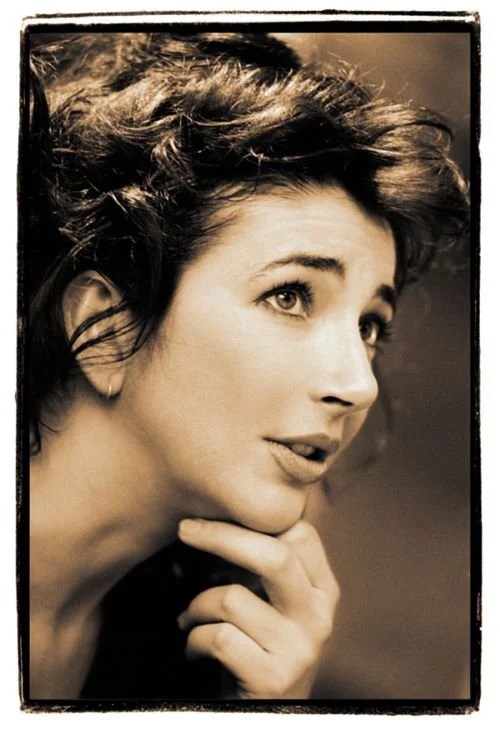
 IN THIS PHOTO: Kate Bush during filming of The Line, the Cross and the Curve/PHOTO CREDIT: Guido Harari

Although Bush stepped back and concentrated on her private life soon after 1993, Harari has very fond memories. Although the two had very little contacts afterwards (Bush’s next albums was not until 2005), he called working with Bush “a dream come true”. To have access to Kate Bush during the 1980s at a time when she was creating such wonderful music. Harari said to Classic Pop how he would have liked to have experimented more and played with different ideas, but the shots that he took of Bush are fantastic! The final questions asked of Harari was how he would sum up Kate Bush as a cultural icon. He explained how she explored so many uncharted territories and paved the way for countless women in terms of lyrical content and musical adventurousness. “She was, and still is, one of the bravest”. That is something people do not discuss when they think of Kate Bush: how brave she was as an artist, songwriter, and producer! Her private life mattered very much. She did not fall off the radar for twelve years, but it was definitely a sense of this artist who had been working tirelessly since 1978 needing to take time for herself. Harari’s very fond memories of working with Kate Bush cast his photos in a new light. I love his compositions and colours. You get different expressions and takes with different photographers. Seeing images of Bush from her mid-twenties through to her early-thirties is breathtaking! This blossoming and evolution. So many captivating shots between this exceptional photographer and a subject who was so hard-working and warm. You can sense that connection between them. I do love seeing photos of Bush, as she has a way of drawing you in and capturing the heart! Rather than projecting fantasies, hiding Bush’s light away, he managed to capture (quite beautifully and prolifically)…

IN THIS PHOTO: Kate Bush in 1985/PHOTO CREDIT: Guido Harari

THE true woman and artist inside.
FEATURE: My Name Is… The Phenomenal Eminem at Fifty: A Career-Spanning Playlist

FEATURE:


My Name Is…

PHOTO CREDIT: Interscope Records

 The Phenomenal Eminem at Fifty: A Career-Spanning Playlist

__________

ON 17th October…

 PHOTO CREDIT: Axelle/Bauer-Griffin/FilmMagic

one of the greatest songwriters and rappers of all time turns fifty. Eminem is one of the most gifted voices of his generation. Whilst he is controversial and some of his legacy ahs been dented because of various feuds and legal issues, that can take away from the fact that he is a hugely influential and important artist who deserves acclaim and respect. I am going to end this feature with a career-spanning playlist that joins his best-known tracks and some deeper cuts. There are a couple of articles that I want to bring in before I get there. I recently included an AllMusic biography in an Inspired By… feature about Eminem (a playlist of songs from artists influenced by him). I want to bring in a few sections from that biography that are relevant here:

“The Slim Shady EP opened many doors, the most notable being a contract with Interscope Records. After Eminem came in second at the 1997 Rap Olympics MC Battle in Los Angeles, Interscope head Jimmy Iovine sought him out, giving the EP to Dr. Dre, who proved eager to work with Eminem. They quickly cut Em's Interscope debut in the fall of 1998 -- during which time Marshall reconciled with Kim and married her -- and The Slim Shady LP appeared early in 1999, preceded by the single "My Name Is." Both were instant blockbusters and Eminem became a lightning rod for attention, earning praise and disdain for his violent, satirical fantasias.

Eminem quickly followed The Slim Shady LP with The Marshall Mathers LP in the summer of 2000. By this point, there was little doubt that Eminem was one of the biggest stars in pop music: the album sold almost two million copies within the first two weeks of release, but Mathers felt compelled to tweak other celebrities, provoking pop stars in his lyrics, and Insane Clown Posse's entourage in person, providing endless fodder for the tabloids. This gossip blended with growing criticism about his violent and homophobic lyrics, and under this fire, he reunited his old crew, D-12, releasing an album in 2001, then touring with the group.

During this furor, he had his biggest hit in the form of the moody ballad "Stan." Performed at the Grammys as a duet with Elton John, thereby undercutting some accusations of homophobia, the song helped Eminem to cross over to a middlebrow audience, setting the stage for the ultimate crossover of 2001's 8 Mile. Directed by Curtis Hanson, best known as the Oscar-nominated director of L.A. Confidential, the gritty drama fictionalized Eminem's pre-fame Detroit days and earned considerable praise, culminating in one of his biggest hits with the theme "Lose Yourself," which won Mathers an Oscar.

After all this, he retreated from the spotlight to record his third album, The Eminem Show. Preceded by the single "Without Me," it turned into another huge hit, albeit not quite as strong as its predecessor, and there were some criticisms suggesting that Eminem wasn't expanding his horizons much. Encore, released late in 2004, did reach into more mature territory, notably on the anti-George W. Bush "Mosh," but most of the controversy generated by the album was for behind-the-scenes events: a bus crash followed by canceled dates and a stint in rehab. Rumors of retirement flew, and the 2005 appearance of Curtain Call: The Hits did nothing to dampen them, nor did the turmoil of 2006, a year that saw Mathers remarrying and divorcing Kim within a matter of four months, as well as the shooting death of Proof at a Detroit club.

During all this, Em did some minor studio work, but he soon dropped off the radar completely, retreating to his Detroit home. He popped up here and there, most notably debuting the hip-hop channel Shade 45 for Sirius Satellite Radio in September 2008, but it wasn't until early 2009 that he mounted a comeback with Relapse, an album whose very title alluded to some of Mathers' struggles with prescription drugs, but it also announced that after an extended absence, Slim Shady was back. While not quite a blockbuster, the album went platinum, and Eminem followed it at the end of the year with an expanded version of Relapse (dubbed Relapse: Refill) that added outtakes and new recordings. Recovery, initially titled Relapse 2, was issued in June 2010. The album debuted on top of the Billboard 200 chart, where it remained for five consecutive weeks, while its leadoff single, "Not Afraid," debuted on top of the magazine's Hot 100 singles chart”.

I am keen to get to the playlist, but it is important to discuss Eminem’s legacy. One of the most exciting and original writers and performers in Rap history, he has definitely left his mark on the music world. Wikipedia have an article that tells of the huge legacy of a musical genius (who released the greatest hits compilation, Curtain Call 2, in August):

“Credited for popularizing hip hop to a Middle American audience, Eminem's unprecedented global commercial success and acclaimed works for a white rapper is widely recognized for breaking racial barriers for the acceptance of white rappers in popular music. Rising from rags to riches, Eminem's anger-fueled music represented widespread angst and the reality of American underclass. He has been greatly influential for artists of various genres. Stephen Hill, the then vice president of African American-themed television network BET (Black Entertainment Television), said in 2002:

Eminem gets a pass in the same vein that back during segregation black folks had to be better than average, had to be the best, to be accepted ... he is better than the best. In his own way, he is the best lyricist, alliterator and enunciator out there in hip-hop music. In terms of rapping about the pain that other disenfranchised people feel, there is no one better at their game than Eminem.

In 2002, the BBC said that the perception of Eminem as a "modern-day William Shakespeare" was comparable to the reception of American singer Bob Dylan: "Not since Bob Dylan's heyday in the mid-1960s has an artist's output been subjected to such intense academic scrutiny as an exercise in contemporary soul-searching. US critics point to [Eminem's] vivid portraits of disenfranchised lives – using the stark, direct language of the street – as an accurate reflection of social injustice." In addition, the BBC highlighted that, "Where parents once recoiled in horror [to his music], there now seems a greater willingness to acknowledge a music that is striking such a chord among the American young, angry white underclass."] Dan Ozzi of Vice highlighted that Eminem during the early 2000s was "the one artist high school kids seemed to unanimously connect with.... he represented everything high school years are about: blind rage, misguided rebellion, adolescent frustration. He was like a human middle finger. An X-rated Dennis the Menace for a dial-up modem generation."

 Writing for Spin in 2002, rock critic Alan Light compared Eminem to the Beatles' John Lennon:

Eminem is even starting to bear a resemblance to one of those rock icons ... Marshall Mathers is becoming something like this generation's John Lennon ... Lennon and Eminem were both subjects of pickets and protests; they both wrote songs about troubled relationships with their mothers; they both wrote about their strange public lives with their wives; they both wrote about how much they loved their kids. Lennon, of course, was able to find ways to use his voice to advocate for peace rather than just blasting away at litigious family members and various pop stars, but still, few other pop musicians since Lennon have found a way to render their private psychodramas into compelling art as effectively as Eminem.

Regarding his rehearsal with Eminem for the "Stan" duet at the 2001 Grammy Awards, English singer Elton John said, "[When] Eminem made his entrance, I got goose bumps, the likes of which I have not felt since I first saw Jimi Hendrix, Mick Jagger, James Brown and Aretha Franklin. Eminem was that good. I just thought, 'Fuck, this man is amazing.' There are very few performers who can grab you like that the first time — only the greats." John further praised Eminem, saying, "Eminem is a true poet of his time, someone we'll be talking about for decades to come. He tells stories in such a powerful and distinctive way. As a lyricist, he's one of the best ever. Eminem does for his audience what [Bob] Dylan did for his: He writes how he feels. His anger, vulnerability and humor come out."

Concerning the controversy surrounding Eminem due to his transgressive music, American entertainer Madonna had said, "I like the fact that Eminem is brash and angry and politically incorrect ... He's stirring things up, he's provoking a discussion, he's making people's blood boil. He's reflecting what's going on in society right now. That is what art is supposed to do.” American musician Stevie Wonder also said, "Rap to me is a modern blues – a statement of how and where people are at ... I think art is a reflection of our society, and people don't like to confront the realities in society ... But until we really confront the truth, we are going to have a Tupac or Eminem or Biggie Smalls to remind us about it – and thank God. They force people to look at realities in society”.

Ahead of Eminem’s fiftieth birthday on 17th October, I might write another feature. Such a fascinating and talented artist, it is clear he has had his problems and is quite divisive. Whether Marshall Mathers III, Slim Shady, or Eminem, it is time to offer up a salute to…

A mighty talent.

FEATURE: They Want to Hunt You Down: Kate Bush’s Wild Man at Eleven

FEATURE:


They Want to Hunt You Down

IN THIS PHOTO: Kate Bush in a promotional photo for 2011’s 50 Words for Snow/PHOTO CREDIT: John Carder Bush

 Kate Bush’s Wild Man at Eleven

__________

EVEN though…

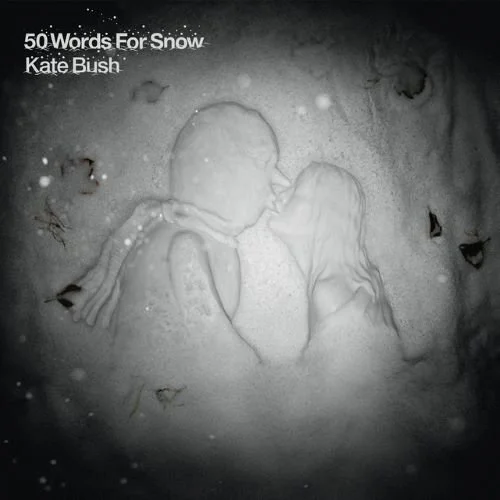
I am looking at 50 Words for Snow closer to its anniversary in November, I am keen to spotlight its single release. Wild Man was released on 11th October, 2011. Ahead of its eleventh anniversary, it is a good idea to go into more detail. I will mention Wild Man again when writing about 50 Words for Snow’s anniversary, but there are some interesting things to note about Bush’s incredible single. Aside from a re-release of Running Up That Hill (A Deal with God) in 2012 and this year, I am counting Wild Man as her most recent original single (not including the A-side 10″ vinyl release of Lake Tahoe/Among Angels from 50 Words for Snow). This is the latest taste of new music we have had form her. Bush’s two singles from 2011, Deeper Understanding (from Director’s Cut) and Wild Man didn’t chart too high. Wild Man got to seventy-three in the U.K. As you would expect, there was a disparity between the single placing and the album position. 50 Words for Snow reached five in the U.K. and was the recipient of huge critical praise. In terms of commercial releases, there is nothing really on the album that stands out. Wild Man, I suspect, was released as the single because it is relatively short compared to the rest of the tracks. The album version of the song is over seven minutes so, as you can imagine, even a radio edit is a bit too long to get a lot of play.

It will not have worried Bush that the single didn’t chart high, as she has always wanted the album to be enjoyed as a whole work. It seems like it certainly was (as it reached five in the U.K. and it was a success around the world). I really like Wild Man, and it is almost a shame we did not get a live action video of Bush in the wild trying to find this unknown figure. Searching through the snow for a Yeti or animal that resembles a man, it would have made for a really great video! As it was, Finn and Patrick at Brandt Animation created a short animation for the single that was put on YouTube. Before carrying on, this is what Bush said about the remarkable Wild Man and its origins:

“Well, the first verse of the song is just quickly going through some of the terms that the Yeti is known by and one of those names is the Kangchenjunga Demon. He’s also known as Wild Man and Abominable Snowman. (...) I don’t refer to the Yeti as a man in the song. But it is meant to be an empathetic view of a creature of great mystery really. And I suppose it’s the idea really that mankind wants to grab hold of something [like the Yeti] and stick it in a cage or a box and make money out of it. And to go back to your question, I think we’re very arrogant in our separation from the animal kingdom and generally as a species we are enormously arrogant and aggressive. Look at the way we treat the planet and animals and it’s pretty terrible isn’t it? (John Doran, 'A Demon In The Drift: Kate Bush Interviewed'. The Quietus, 2011)”.

A lot of Wild Man’s beauty and sense of atmosphere relies on Bush’s amazing production and the composition. With some excellent percussion from Steve Gadd, there is this environment and scenery projected that really takes you into the song. Bush’s lyrics on the song are among her most intelligent and itinerant. I imagine her lying awake thinking about this maligned and hunted beast that is actually quite friendly and wants to be left alone: “They call you an animal, the Kangchenjunga Demon, Wild Man, Metoh-Kangmi/Lying in my tent, I can hear your cry echoing round the mountainside/You sound lonely/While crossing the Lhakpa-La something jumped down from the rocks/In the remote Garo Hills by Dipu Marak we found footprints in the snow”. The digital download single finds Kate Bush in typically compassionate mood. Feeling that we treat animals and anything wild with contempt and cruelty, Wild Man embraces and celebrates almost something that is mythologised. You get the sense that Bush actually believes there is a Yeti or something out there similar to her subject in Wild Man. That doesn’t surprise me. Ever since her debut album in 1978, she has had this openness to the unknown, mystical, and spiritual. I get the feeling that the song came about when looking at the news or a report about cruelty towards animals or others. Being Kate Bush, this did not manifest itself in something literal or simple! Instead, because she was writing an album around snow, she took that thought out into the woods and mountains. This hunted wild man is being warned by Bush: “They want to know you. They will hunt you down, then they will kill you/Run away, run away, run away”.

IN THIS PHOTO: Kate Bush in a promotional photo for 2011’s 50 Words for Snow/PHOTO CREDIT: John Carder Bush

50 Words for Snow is quite a collaborative album in terms of guest vocalists. Aside from her son Bertie, she also introduces Michael Wood and Stefan Roberts, Stephen Fry, Elton John and, on Wild Man, the legendary Andy Fairweather Low. Formerly of Amen Corner, he is a great choice to lend his voice. Whether voicing the wild man or one of the protectors, he combines with Bush beautifully. The percussion has a warm roll and pitter-patter and tone that mixes superbly with the exotic and almost strange keyboard sound. Bush’s vocals are almost sensuous and husky. She has this sense of foreboding and worry, but there is also this allure coming from her voice. Definitely one of the best tracks from Bush’s tenth studio album, Wild Man turns eleven on 11th October. Wild Man received some really positive reviews. This is what NME wrote:

“As for the the chorus, it bursts forth mid-eruption; a choir of strange voices; echoing the ‘Wild Man”s own explosion out of habitation into civilization in the narrative of the song. Bush tackles this by a multiple layering of voices, creating several personas and the atmosphere of a village set adrift by the sudden intrusion. It’s a style which recalls some of her most classic work.

Musically, we’ve moved on subtly from the pared down production of ‘Director’s Cut’, and on ‘Wild Man’ a guitar riff-plays pan-Asian and ponderous, but there’s also a layering of sounds in the chorus (tinkling percussion, a bedrock of organs), which suggests her 80s heyday.

Multiple listens on, the references just keep coming; there’s ‘Scary Monsters And Super Creeps’ era Bowie and some of the ‘Tusk’ era Fleetwood Mac and her own ‘Sensual World’ and ‘The Dreaming’.

After the domestic bliss of ‘Aerial’, it’s a deep joy to have Kate roam the narrative wiles of her imagination. The result is her strongest single for decades”.

Let’s hope that 50 Words for Snow is not Kate Bush’s last studio album, as it is among her very best! Seven longer tracks built around the theme of snow (apart from Among Angels), Wild Man is right in the middle of the album and comes after the two longest songs, Lake Tahoe, and Misty. Misty is about a night of lust with a snowman. Wild Man has passion at its heart, but it is more about protection and keeping safe something being tracked and hunted in its natural environment. Even though this Yeti or wild man is fictional, Bush makes it real and makes you feel there is something out there. I guess that he is…

STILL out there now.

FEATURE: Kate Bush: The Deep Cuts: 50 Words for Snow

FEATURE:


Kate Bush: The Deep Cuts

IN THIS PHOTO: Kate Bush in a promotional photo for 50 Words for Snow/PHOTO CREDIT: John Carder Bush/PA

50 Words for Snow

__________

WHEN Kate Bush’s…

50 Words for Snow celebrates its anniversary in November, I am going to writes about particular songs and the album as a whole. As part of this series that celebrates and illuminates deep Kate Bush cuts, I am spending a bit of time with the great title track from that 2011 album. 50 Words for Snow, like the rest of the tracks on that album, are hardly played at all. The fact is that they are longer songs, so you may not have heard of a song like 50 Words for Snow. Why explore Bush’s deep cuts then? I feel that, in spite of her new respect and popularity, there is still a reliance to play her best-known songs. Many fans still do not explore beyond the popular. There is a whole world of fascination beyond those singles and bigger songs that we associate with Kate Bush. 50 Words for Snow’s title track is a wonderful track that features the brilliant Stephen Fry. Here are some details about an epic title track:

“Years ago I think I must have heard this idea that there were 50 words for snow in this, ah, Eskimo Land! And I just thought it was such a great idea to have so many words about one thing. It is a myth - although, as you say it may hold true in a different language - but it was just a play on the idea, that if they had that many words for snow, did we? If you start actually thinking about snow in all of its forms you can imagine that there are an awful lot of words about it. Just in our immediate language we have words like hail, slush, sleet, settling… So this was a way to try and take it into a more imaginative world. And I really wanted Stephen to read this because I wanted to have someone who had an incredibly beautiful voice but also someone with a real sense of authority when he said things. So the idea was that the words would get progressively more silly really but even when they were silly there was this idea that they would have been important, to still carry weight. And I really, really wanted him to do it and it was fantastic that he could do it. (...) I just briefly explained to him the idea of the song, more or less what I said to you really. I just said it’s our idea of 50 Words For Snow. Stephen is a lovely man but he is also an extraordinary person and an incredible actor amongst his many other talents. So really it was just trying to get the right tone which was the only thing we had to work on. He just came into the studio and we just worked through the words. And he works very quickly because he’s such an able performer. (...) I think faloop'njoompoola is one of my favourites. [laughs] (John Doran, 'A Demon In The Drift: Kate Bush Interviewed'. The Quietus, 2011)”.

In future features, I am going to look at songs from other albums. In November, 50 Words for Snow turns eleven. It is a remarkable album with longer songs that are wonderfully rich and atmospheric. The title track has this mix of skiffling, almost tribal drumming from Steve Gadd, Kate Bush switching between a deep and sensual voice to this scream. I like the fact that Bush picked up on the myth regarding fifty words for snow. Other artists would not think to write a song around it. The list she provides of the different words for snow is great! Wild Man was released as the single from 50 Words for Snow. I think that the title track could have been as second single, as it is one of the highlights of the album. Many people might not know about the 50 Words for Snow album. Bush’s most recent studio album, it has Art Pop sounds, but there is more of a Jazz sensibility and structure to many of the songs. Seven glorious tracks that unfold and seep into the senses, everything combines beautifully on 50 Words for Snow. Humorous, silly, exotic, and exciting, this is a great deep cut. Some may say that, as we are talking about Kate Bush, there can be no deep cuts. What I mean is the songs that are not singles. Those album tracks one might normally think about or play. 50 Words for Snow is a superb track that people need to hear. If you are a big fan of Kate Bush, new convert or somewhere in between, then check out…

THIS wonderful song.

FEATURE: Inspired By… Part Eighty-Two: Loretta Lynn

FEATURE:


Inspired By…

PHOTO CREDIT: David McClister

Part Eighty-Two: Loretta Lynn

__________

THIS week…

 IN THIS PHOTO: Loretta Lynn in 1965/PHOTO CREDIT: Alamy

we sadly said goodbye to the hugely influential Country pioneer, Loretta Lynn. The tremendous Lynn received many awards and other accolades for her huge role in changing and evolving Country music. Lynn was nominated eighteen times for a Grammy Award and won three. She is the most awarded female Country artist. During her amazing career, she scored twenty-four number one hits singles and eleven number one albums. Her forty-sixth and final album, Still Woman Enough, was released last year. It saw Lynn collaborate with female contemporaries such as Margo Price and Carrie Underwood. She leaves behind an immense legacy. Undoubtedly one of the most influential artists ever, this groundbreaking icon is going to keep inspiring artists for generations more. I am going to end with a playlist featuring artists influenced by Loretta Lynn. First, AllMusic provide a biography of the legend (it was written before her death):

“Few performers in country music have proved as influential and iconic as Loretta Lynn. At a time when women usually took a back seat to men in Nashville, Lynn was a voice of strength, independence, and sometimes defiance, writing and singing songs that spoke to the concerns of working-class women with unapologetic honesty. She could sing of her hardscrabble childhood ("Coal Miner's Daughter"), deal with the realities of relationships ("Fist City," "You Ain't Woman Enough"), deliver proto-feminist anthems ("The Pill"), and explore mature romance (her series of duets with Conway Twitty) and sound perfectly authentic at every turn. Lynn's voice, strong but naturalistic and matched to tough, lively honky tonk arrangements, reinforced the home truths of her songs, and her success blazed trails for other female country artists. As a member of the Grand Ol' Opry and the Country Music Hall of Fame, she's been honored by the country music establishment while still doing things her own way. She was a frequent presence on the country charts from 1960 to 1981, and even as tastes changed and her record sales faded, she continued to be a potent live attraction and a major influence on other artists. And at the age of 72, Lynn was discovered by a new generation of music fans when alternative rock star Jack White, a longtime fan, produced her 2004 album, Van Lear Rose. It wasn't Lynn's last hurrah, however. A few years later, she entered the studio with daughter Patsy Lynn Russell and John Carter Cash to record hundreds of songs that would come out as a series of albums in the 2010s and beyond, starting with 2016's Full Circle.

As told by her song (and movie and book), Loretta Lynn is a Coal Miner's Daughter, born in Butcher Hollow, Kentucky in 1932. As a child, she sang in church and at a variety of local concerts. In January 1949, she married Oliver "Mooney" Lynn. She was 13 years old at the time. Following their marriage, the couple moved to Custer, Washington, where they raised four children.

After a decade of motherhood, Lynn began performing her own songs in local clubs, backed by a band led by her brother, Jay Lee Webb. In 1960, she signed a contract with Zero Records, which released her debut single, "I'm a Honky Tonk Girl." The honky tonk ballad became a hit thanks to the insistent, independent promotion of Lynn and her husband. The pair would drive from one radio station to the next, getting the DJs to play her single, and sent out thousands of copies to stations. All of the effort paid off -- the single reached number 14 on the charts and attracted the attention of the Wilburn Brothers. The Wilburns hired Lynn to tour with them in 1960 and advised her to relocate to Nashville. She followed their advice and moved to the city in late 1960. After she arrived, she signed with Decca Records, and would work with Owen Bradley, who had produced Patsy Cline, one of Lynn's favorite artists.

Lynn released her first Decca single, "Success," in 1962 and it went straight to number six, beginning a string of Top Ten singles that would run to the end of the decade and throughout the next. She was a hard honky tonk singer for the first half of the '60s, and rarely strayed from the genre. Although she still worked within the confines of honky tonk in the latter half of the decade, her sound became more personal, varied, and ambitious, particularly lyrically.

Beginning with 1966's number two hit "You Ain't Woman Enough," Lynn began writing songs that had a feminist viewpoint, which was unheard of in country music. Her lyrical stance became more autobiographical and realistic as time wore on, highlighted by such hits as "Don't Come Home a Drinkin' (With Lovin' on Your Mind)" (1966), "Your Squaw Is on the Warpath" (1968), "Woman of the World (Leave My World Alone)" (1969), and a tune about birth control called "The Pill" (1974).

Between 1966 and 1970, Lynn racked up 13 Top Ten hits, including four number one hits -- "Don't Come Home a Drinkin'," "Fist City" (1968), "Woman of the World," and the autobiographical "Coal Miner's Daughter" (1970). In 1971, she began a professional partnership with Conway Twitty. As a duo, Lynn and Twitty had five consecutive number one hits between 1971 and 1975: "After the Fire Is Gone" (1971), "Lead Me On" (1971), "Louisiana Woman, Mississippi Man" (1973), "As Soon as I Hang Up the Phone" (1974), and "Feelins'" (1974). The hit streak kick-started what would become one of the most successful duos in country history. For four consecutive years (1972-1975), Lynn and Twitty were named Vocal Duo of the Year by the Country Music Association. In addition to their five number one singles, they had seven other Top Ten hits between 1976 and 1981.

Lynn published her autobiography, Coal Miner's Daughter, in 1976. In 1980, the book was adapted for the screen, with Sissy Spacek as Loretta. It was one of the most critically acclaimed and successful films of the year, and Spacek won the Academy Award for her performance. All of the attention surrounding the movie made Lynn a household name within the American mainstream. Although she continued to be a popular concert attraction throughout the '80s, she wasn't able to continue her domination of the country charts. "I Lie," her last Top Ten single, arrived in early 1982, while her last Top 40 single, "Heart Don't Do This to Me," was in 1985. In light of her declining record sales, Lynn backed away from recording frequently during the late '80s and '90s, concentrating on performing instead. In 1993, she recorded the Honky Tonk Angels album with Tammy Wynette and Dolly Parton. Still Country was released in mid-2000. In 2004, Lynn teamed up with White Stripes guitarist Jack White and released Van Lear Rose, which was met with both surprise and awe. The album quickly became popular and Lynn embarked on a tour to support it. Van Lear Rose won two Grammy Awards, including Best Country Album, in 2005.

In 2007, Lynn started recording again, with her daughter Patsy Lynn Russell and John Carter Cash acting as producers. Over the next eight years, she recorded hundreds of songs, and these recordings were whittled down to Full Circle, a full-length album released in March of 2016. The album debuted at four on Billboard's Country Albums chart and 19 on the Top 200 chart. The following October, Lynn released the seasonal White Christmas Blue, which was recorded at the same sessions as Full Circle. 2018's Wouldn't It Be Great was a low-key set designed to showcase Lynn's songwriting, while 2021's Still Woman Enough spotlighted her songs about women”.

It is so sad that the music world has lost Loretta Lynn at the age of ninety. With so many albums and wonderful songs left behind, her music will be discovered and adored for years and years. She was definitely one of the most important artists we have ever seen. To show that, below is a playlist featuring songs from artists who are either inspired by Lynn or have been compared to her. It shows that her impact was huge! It goes to show how many other artists have been moved and influenced…

BY her incredible music.

FEATURE: Sexy M.F.: Prince and The New Power Generation’s Love Symbol at Thirty

FEATURE:


Sexy M.F.

Prince and The New Power Generation’s Love Symbol at Thirty

__________

THERE are a few things…

to address before exploring Prince’s Love Symbol album. For a start, the album was just a symbol, so I am not sure how it should be written in words! Also, where do you rank it among his other albums? Many fans would put it in their top ten, yet some critics place it lower. Not his very best, it is a superb album that contains some of his best material. I think Prince’s output in the 1990s is very underrated. Following the mixed and slightly patchy Diamonds and Pearls in 1991, Love Symbol is a more consistent and tauter album. Sexier, more varied, and memorable as a listening experience, Love Symbol was released on 13th October, 1992. I wanted to mark thirty years of a classic. This was the second of two albums that featured his backing band, The New Power Generation. Maybe not as acclaimed as it should be, I want to bring in a few features that look back at the mighty Love Symbol album. Reaching five in the U.S. and one in the U.K., it is a golden disc! I really love Love Symbol, and I remember hearing it first as a child. It is an amazing album! It would be nice to think there is a thirtieth anniversary vinyl edition coming, but it seems unlikely there is. Albumism revisited Love Symbol on its twenty-fifth anniversary in 2017:

“Recorded just a few short months after the Diamonds and Pearls sessions wrapped, the Love Symbol album once again featured his New Power Generation band. On balance though, Love Symbol is equally a solo effort, with Prince taking on all musical duties on half the songs, whilst the NPG provide the backing for the other half.

Conceived as a concept album, with full narrative via the way of reporter Vanessa Bartholomew (played by actress Kirstie Alley) trying to remove the veil of Prince’s mystique whilst also pressing him on his “scandalous” new relationship with a 16-year-old girl (and by way of introducing Mayte), many of the original narrative elements were trimmed or dropped entirely to make space for more music. Not a bad decision, but the result is a confusing narrative that feels piecemeal and at times confusing, which distracts from the overall listening experience. But hey, you don’t buy a Prince album for segues anyway, right?

So what about the music? And how does it stand up 25 years later?

Written and recorded during a time when gangsta rap was on the rise and harder, more controversial social commentary was hitting the airwaves spearheaded by N.W.A and the Ice-T fronted Body Count, Prince decided to surround himself with his own posse of (not-so-convincing) rappers and dancers lead by Tony M, in either an attempt to reflect the changing musical landscape or appear in sync with it.

This, and the continual persistence of rave music (through techno and acid), cause a strong, cross-style musical influence on the album evident in the driving beats of “The Max” and “I Wanna Melt With U,” the hip-hop edge of “The Flow,” and the ironically titled “My Name Is Prince” (made even more so by the unpronounceable symbol that adorns the album’s artwork).

As a collection of songs, the Love Symbol album isn’t as cohesive and focused as its predecessor, but it is more musically adventurous. And even though not every path takes us to the Princely Promised Land, they are journeys worth exploring. If all that it yields for the casual listener are timeless tracks like “Love 2 the 9’s,” “And God Created Woman,” and “7,” then it deserves to be played again and played often”.

This was a fascinating period for Prince. For 1994’s Come, he was in a dispute and unhappy relationship with his record label, Warner Bros. Come would be Prince's final Warner Bros. album under his name. From then, his name would be represented by the ‘Love Symbol’, and he would be referred to as ‘The Artist Formerly Known as Prince’. Love Symbol seems like an altogether happier and more balanced album. One where you could feel the creativity and brilliant emanate from every song. On 13th October, 2017, The Current celebrated a brilliantly autobiographical album from the genius Prince and The New Power Generation:

“Always playing ambiguity like a symphony, Prince put a gold male/female symbol on the jewel case of what eventually became referred to by most as the Love Symbol Album. The dawn of the '90s was an insanely ambitious time for Prince. Hot off of the double platinum Diamonds and Pearls, much of Love Symbol was conceived and recorded around the same patch of time and with the same musicians, the New Power Generation.

Hotter than truly any other artist in pop and on MTV at the time, Prince found himself at the top of the mountain creatively, amid a tumultuous relationship with Warner Bros., having just signed again with the label for another deal that he was soon to chafe under. Love Symbol marks a period of personal and professional transition for Prince, who felt the label was putting too much of a clamp on his creativity, trying to dictate the pacing and length of his releases. Thus, the high concept Love Symbol “rock opera” — the final record Prince would release under his original name until 2000 — famously covered as much musical territory he could pack onto one CD.


During a flurry of writing and recording music, promoting and touring behind Diamonds and Pearls, Prince created the music on Love Symbol as a soundtrack for a film he was developing. The straight-to-video 3 Chains o’ Gold (which also featured Kirstie Alley) illustrates the story, in Love Symbol’s lyrics, of Prince rescuing an Egyptian princess played by his then-muse and future wife, Mayte Garcia. Love, passion, sex, and togetherness are themes throughout the record.

It’s not a shock the public didn’t really get it, and that the label didn’t know what to do with the album. Love Symbol initially garnered modest sales and a muted critical reception. Star Tribune music writer Jon Bream called it "a royal disappointment," suggesting that the album's rap elements sounded derivative. “Prince used to be hip," wrote Bream. "Now he’s just another hip-hopper.”

For others, though, Love Symbol stands as a soulful, sexy, spiritual and overflowing masterpiece, and a balanced collection of songs. Anchored by the singles that some fans place among Prince’s greatest songs, Love Symbol bobs and weaves musically between love ballads and his own patented brand of raunchiness.

“Sweet Baby,” “Damn U,” “And God Created Woman” all ooze with sexiness and flavor. Prince even took a rare dip into reggae territory with “Blue Light.” Eschewing radio-friendliness, Prince launched the album with the funky and frank “Sexy MF” as a first single. The James Brown homage remains a defining Prince floor-filler to this day.

The artist also incorporated the popular New Jack Swing sound (previously used to great success by his Minneapolis peers Jimmy Jam and Terry Lewis) on “I Wanna Melt with U,” “The Max,” and the boastful “My Name is Prince.” In full rap mode, Prince attempted to drop the gauntlet for anyone who questioned his creative strength and dominance. Performing the song on The Arsenio Hall Show the following February, Prince famously burned Bream’s review on stage. Ouch!

It’s a Prince signature song, “7,” that stands as the spiritual climax of Love Symbol and has endured as a high point of his '90s output. The song ties the theme of the album, essentially his own life story at that time, together. As depicted in the famous video — a still of which graces the cover of Love Symbol — Prince rescues his princess, Mayte, from her father’s assassins, who are dressed as corporate executives. They dance together and lead a group of children through streets of gold. (The video also features the onscreen debut of Prince's dove Majesty.)

In her book The Most Beautiful, Garcia fondly recalled the filming as the moment they fell in love. “We changed during that shoot," she wrote. "There was a moment when I looked at him with tears in my eyes. All I could say was, ‘This is everything I love.’”

Overtly metaphysical in its self-reflection and spiritual awakenings, Love Symbol has cemented itself as a pivotal album in Prince’s career. Prince paints a picture within the record’s grooves that 25 years on feels uniquely autobiographical. While gangster rap, "new country," and grunge dominated 1992 commercially, Prince followed his own path and brought self-awareness to new heights with Love Symbol. It remains, in content and concept, the year’s most beautiful”.

I think it is important and interesting pulling in different features that approach Prince’s fourteenth studio album. I think that Love Symbol is one of Prince’s best albums. Sexy M.F., My Name Is Prince and 7 are among his finest singles. So confident and hard-hitting, this is an album that demands your attention. The Quietus went deep into Love Symbol in 2017:

“For Prince, most boundaries were blurred: he could not conceive of freedom as anything other than sexualised. With all the talk of intersectionality in the last decade, it is startling to come across an artist who simply equated sexual denial with cultural and racial oppression. Staying independent meant being lascivious, as much as tattooing the word "slave" on one’s face with an ascendant "V". Liberty, intelligence, creativity - these were principles of eros, so interrupting the status quo involved a necessary defiling of the body ("I put my foot in the ass of Jim Crow"), as in 'My Name Is Prince'. But even here there was room for impish good humour: in the midst of his tirade, Prince cries, "When U hear my music, you’ll be havin’ fun / That’s when I gotcha, that’s when U mine!" This song is the kind of surrealist dream in which a major threat consists of being subjected to fun - a musical subjection, since Prince leaves most of the violent taunts to rapper Tony M.

'My Name is Prince' ends with two male voices trying to work out what a woman just did ("She came!" "Where?" "There!"). With that ringing in our ears, the next track, 'Sexy MF', is presented as the "there", the coming, even though it is tantalisingly slow in getting to the point. While Prince launches straight into seduction mode, he begins with a sly feint of keeping things purely cerebral ("It’s U I wanna do / No, not cha body your mind U fool"). According to the first verse, this song is about the "R.E.A.L. meaning of love", and if a woman assumed otherwise, that was her own dirty mind at work. Prince was fond of pulling these counter-intuitive moves, acting affronted at having his virtue questioned. At the inference that his motives might be less than pure, he would come back with shocked retorts of the "get your mind out of the gutter, Missy" variety, before getting down to lewder and lewder requests.

In '7', Prince’s multi-tracked vocals come together like pillars, upholding a vision of "streets of gold" after the fall of a regime. It is a song of praise, carried by stately Middle Eastern themes, but this anthem is also a death warrant: here, Prince’s fixation on counting is an unabashed glee in seeing his opponents crushed. The serene intonation of the chorus is deceiving; we hear drawn-out assertions that "we’ll love through all space and time, so don’t cry", but tears are quickly resolved with a curt statement: "One day all 7 will die." The seven assassins are not merely token obstacles to love; there will be a genuine joy in watching them suffer, literally one by one. The singer counts out the feet of the enemy army as they march to the slaughter: “words of compassion, words of peace” can’t silence the desire to “smoke them all” and see blood spilled. Along with the seven assassins, six traitors will be killed, and the song relishes their deaths by counting them. Although the second last line of each stanza suggests tolerance, we always close on an image of death (“watch them fall”).

That Prince could write a song of such magisterial calm driven by schadenfreude shows up the contradictions inherent in his talent: the ability to create elevated work from what others might regard as petty grievances, to transform hokey sentiments into singular imagery. For Prince, the chronically musical performer - he could hardly turn out a phrase that was unmemorable - it was often a matter of felicity as to what he might fuse together. On this album, he laced a hard-edged assault with humility, mixed flashy and elemental imagery ("like Evian and the deep blue sea"), and reserved his sleaziest lines for a sophisticated jazz number.

The story of Love Symbol allowed him to play out all of his ideal roles, even if they occasionally came into opposition: avenger, trickster, peacemaker, lover, aesthete. What other performer evokes such a range of fictional archetypes, from Des Esseintes, the collector of exotic sensations, to the Wizard of Oz, whose gaze simply filtered out colours which failed to harmonise? Like the Scarlet Pimpernel - another dandy known by a single symbol - Prince reconciled spiritual devotion with the glamorous life, presenting himself as a soulful libertine. Along with the pleasures of the harem, he wanted to experience repose, commitment, conjugal bliss - nothing less than the whole world at once”.

On 13th October, we mark thirty years of Prince’s Love Symbol. Whether you see it as one of his all-time best or something promising but flawed, one cannot deny a certain gravity and importance surrounding the album. I personally rate Love Symbol highly. It is a wonderful album that I cannot believe is almost thirty! A perfect time to spin this amazing album, there is no doubt that Love Symbol is…

A sexy M.F.

FEATURE: Revisiting... Joy Crookes - Skin

FEATURE:


Revisiting...

Joy Crookes - Skin

__________

I have featured this album before…

but, as it has been shortlisted for this year’s Mercury Prize (the ceremony takes place on 18th October), I wanted to come back to Joy Crookes’ remarkable debut album, Skin. Released on 15th October, 2021, it was one of the best debut albums of last year. Before getting to a couple of the reviews for Skin, there are interviews where we are introduced to Crookes and her amazing debut album. DIY spoke with her last August about her remarkable rise:

“From back when she released her debut single, aged just 17, South London’s Joy Crookes has been no stranger to hype; something that only heightened in the run up to releasing ‘Skin’, her eclectic, luxurious debut album, in October last year.

And while she certainly doesn’t take her accolades for granted – the 23-year-old already has two BRIT Award nominations and a spot on the BBC’s Sound Of poll to her name – she’s still taking things in her stride. “I don’t rely on external validation. It’s just not who I am,” she told us last year, around the release of the record. So it probably comes as little surprise that she seems remarkably chilled when DIY catches her to talk the latest addition to her musical CV: being shortlisted for the 2022 Mercury Prize with FREE NOW.

Your world tour for ‘Skin’ wrapped up recently with shows in Australia and New Zealand. How did it feel to bring this era to a close?

It was so happy and so sad at the same time. Even though we’ve still got festivals, [headlining] is my favourite. The reception that we had over there was absolutely nuts! It’s mad to go to the other side of the world, places you’ve never been before, and have that.

On paper, your career so far has gone about as well as it could have: support from the BBC, BRIT Award nods, ‘Skin’ charting at number five. What sort of mindset does that put you in as an artist?

It’s really easy from the outside to say it’s always been top form; it really hasn’t. There’s been a lot of f**king up as well, to work out what works or doesn’t. I might have hype now but I’ve 100% worked for it. I haven’t shagged any popular rockstars… Have I? No I haven’t [laughs]. I’m not trying to put all the BBC stuff down – it was really amazing when it happened – but other artists were getting a lot more hype at the time. For me, it’s always been very guerilla. I try to gauge my success from the people as opposed to the press.

So, putting that pressure aside, what was your intention when it came time to create a debut album?

I just wanted to make something I would be proud of. I didn’t think about what the reception would be; I really tried to stay in tune with my instincts. I’ve got really good music taste. I don’t mean that in an arsehole way, I mean I’m really open to listening to everything; I love all kinds of music from different time periods and across the world. I knew I needed my music to match the standard of what I think is great.

Was ‘Skin’ influenced by any artists that people might not expect?

I’m a big indie-head. That was my shit when I was like 11 – I thought I was the coolest motherf**ker walking around with a Rough Trade bag! When I was recording ‘Poison’, my drummer walked in and said “this reminds me of Young Marble Giants”, which is exactly the reference; they’re like my favourite band. The sample on ‘Kingdom’ is from White Mice by the Mo-Dettes which has a really sick drum break. They’re probably all yummy mums in Dulwich now, [but in 1979] they were all crazy white chicks making post-punk songs. All their videos are of them with these awful perms at the London College of Printing. Some of my favourite indie stuff is that kind of angry chick music.

The breakthrough hit from ‘Skin’ has been your single ‘Feet Don’t Fail Me Now’. What was the inspiration behind that song?

It’s social commentary. I was really interested in immortalising what I saw in 2020 – not only the pandemic but the Black Lives Matter movement. I was thinking a lot about armchair activism, performative activism, and how in some ways we are all guilty of it. It’s about this character who finds it easier to [blend into] a pack or a group and not have to think individually.

I was thinking about Priti Patel in the second verse. She’s a fantastic example of someone that will never stand on her own two feet. I tried to have some empathy about why she does things the way she does but that’s never gonna happen. She has to be a cog in the f**king Tory party ‘cuz that’s her way. There’s so much self-hatred in this country in people from ethnic backgrounds who feel they have to validate themselves in those spaces. It’s a really complex thing to try and write about – how I managed to do it in my ‘big pop song’ is hilarious to me!

Have you had any especially meaningful fan interactions since releasing the album?

People just be crying all the time! Also, people are nervous with me which I don’t understand. Obviously when you love music and you see your favourite artist you feel nervous [but when] people are acting like that to me I’m like ‘that doesn’t make any sense!’ Some beautiful stuff, like people losing loved ones and what not, then coming to a show [and telling me] “I promised them I would be here”. I love all of that. I love that I can be on someone’s bucket list.

You’ve made it as far as the shortlist. What would it mean to you to win the 2022 Mercury Prize with FREE NOW?

I’d love to have £25,000 in cash, that would be great. Just to hold that in your hands”.

I want to include some sections from a Vogue from December. It was a time when Joy Crookes could reflect on her year and 2021 as a whole. Among other things, she spoke about cultural identity and gentrification:

“While she has spent the past eight years building up to this moment, things seemed to accelerate over the last two, just as the world shut down. After coming fourth on the BBC’s Sound of 2020, she garnered a nomination for the taste-making Brits Rising Star Award; and following an increasingly ambitious series of videos rolled out to accompany her singles earlier this year, Crookes released Skin in October to widespread critical acclaim and commercial success, reaching number 5 on the U.K. charts.

Still, Crookes has been careful to keep things in perspective. “Social media was the only measure, and I try not to measure anything on social media, because it’s not real life,” she says of her recent breakout. “You can get as many likes or as many views [as you like], but it’s not the real thing. You don’t get that oxytocin, that genuine bond and connection with people. Real people are my biggest measure of success, and this year, just being in front of people, signing records for people, seeing what my fans look like, watching a 60-something-year-old man absolutely lose his mind to ‘Kingdom’ at the Birmingham show, that’s what I live for.”

It’s this attention to “real people” that brings her songs to such vivid life, after all. Much of the praise for Crookes’s songwriting points to her keen eye for a razor-sharp lyric, whether she’s invoking the epic or the everyday. “England’s blowing smoke, it needs attention / Could use a lick of paint, a change of color / Before they send us back across the water,” she sings on “Kingdom,” which skewers the U.K. Conservative government’s hostile immigration policies; “I’m Villanelle to your Sandra Oh / It’s only for the drama, I know,” she trills cheekily on “Trouble.” Voicemails from her uncle and recordings of her grandma also pepper the record, lending it an added touch of sentimentality and warmth.

 PHOTO CREDIT: Dervon Dixon for Vogue

There’s a strong sense of humor across the album, too; one that gently recalls Lily Allen’s Alright, Still, or even Amy Winehouse’s debut album Frank, with its pithy, distinctly London bite. “It feels like everyone’s really into the deep stuff, but I also think there are some fucking funny bits on the record!” Crookes says. “I do think that the funniest people are often the ones that have been touched by depression. Humor has been a deflection at times, but it’s also been really important through very difficult situations. I think if you can have a sense of humor, then it’s not getting the better of you. And because it’s such an integral part of my personality, it had to be showcased in the music and the lyrics, you know?”

It’s this mix of the sweet and the sour that perhaps best reflects how the spirit of Crookes’s upbringing infuses the album. Crookes talks most animatedly when it comes to her love for the area she grew up in, and the threats posed to it by gentrification. “When you put this gorgeous mix of all these different people from different walks of life into an area, the food, the smell on the street, the music, it’s just... there’s no real way of explaining it,” she says. “It’s a melting pot, and there’s never a dull day. South London is a cocktail of cultures and people and sexualities and races and identities. And somehow it’s thrown together carefully—emphasis on thrown and carefully. It’s a beautiful mess, and I mean that in the most positive way.”

On the album’s second track, “19th Floor,” named after the location of her “nani’s,” or maternal grandmother’s, apartment in a south London tower block, Crookes sings over sweeping strings and epic, Massive Attack-style trip-hop percussion of how the city she knows so well is changing in front of her very eyes: “Strip the life out of these streets / It’s a daylight robbery.”

“Gentrification is a fucking daylight robbery,” Crookes affirms. “It happens right under your nose, and before you know it, you’re like, fuck, I’ve just been robbed. There are problems here, but there is so much beauty.”

Crookes showcases that beauty in her music videos, which are just as vividly realized as the music. (“I always wanted to do that, I just didn’t have the money,” she says of the audibly extravagant production on some of the album’s tracks.) In the video for “Feet Don’t Fail Me Now,” a song written in the wake of last year’s Black Lives Matter protests as an expression of frustration with the emptiness of certain corners of online activism, she rides a motorcycle in traditional Bangladeshi dress while henna painted in the Louis Vuitton monogram pattern decorates her arms. In the final set-up, she wears the billowing white sari conventionally worn by widows as an intentional subversion of the idea that a woman should ever feel defined by a man, whether in life or death.

For Crookes, the idea of representation for the sake of representation feels increasingly redundant—instead, she deploys her South Asian heritage carefully, always to make a less-expected kind of statement. “There’s a lot of Desi-inspired ware in that video, but not just because of the aesthetic,” Crookes says. “I’m trying to make a point. That song is about people who are complicit, and I’m addressing my community there. I’m looking at the British-Bangladeshi community and reminding them that we’re part of the problem as well.” The gorgeous sunflower-yellow lehenga and chunni she wore to last year’s Brit Awards carried a similarly incisive message. “It’s about rewriting narratives,” Crookes says. “When I wore that to the Brits, yes, it was beautiful, but my point there was there aren’t any South Asians in this music industry. It wasn’t about representation—it was a bit of a fuck you”.

The reaction to Skin as hugely positive. One of the best albums of last year, it is a deserved nominee for the Mercury Prize. Maybe it is more of an outside bet, but Crookes’ debut is a stunning album that everyone needs to hear. When You Were Mine was among my favourite singles of last year. I am going to bring in a couple (of the many) positive reviews. This is what DIY noted in their review:

“Nearly two years after receiving a BRITs Rising Star nomination and placing fourth in the BBC Sound of 2020 poll (a title that, in retrospect, she’s probably more than happy not to have been crowned with), South Londoner Joy Crookes’ debut arrives not as a rushed product of the hype machine but a rich, varied and considered body of work that audibly benefits from the time its had to breathe. Close and justified comparisons will obviously be drawn to Amy Winehouse, but it’s not just a similarity in old school warmth that Joy draws with her fellow Londoner; like Amy, there’s a timeless quality to ‘Skin’ that pulls equally from more nostalgic orchestral flourishes (‘When You Were Mine’) and slicker, more modern influences like the Massive Attack-echoing ‘19th Floor’. ‘Trouble’ slinks along on dub rhythms, previous single ‘Feet Don’t Fail Me Now’ pairs string flourishes with lyrics about retweeting, while the album’s title track - written alongside Matt Maltese - is a piano ballad as fittingly affective as you’d expect from the pairing. ‘Skin’ is an album worthy of elevating the singer into the realm of Britain’s classiest chart-bothering talents. It does everything a debut should, dipping into multiple pools but uniting them all with a consistent outlook and a clear voice. Joy Crookes, by rights, should be riding ‘Skin’ into the big leagues”.

I will round off with CLASH’s review of a truly wonderful and memorable debut album. I am looking forward to seeing what Joy Crookes gives us next in terms of albums. The Lambeth-born artist is one of our finest talents:

“Joy Crookes radiates a self-confidence that defines herself in terms of who she isn’t. Transcending labels with her blend of neo-soul and R&B, she takes all the hooks, choruses, and high value associated with pop and packages them into something wiser. After all, calls to soul, jazz, and Motown are considered the province of generations past, right? Wrong. Spiced up with modern production and relatable reference points, 22-year-old Crookes is the real thing.

In the past two years alone, she has been nominated for the BRITs Rising Star Award, was due to support Harry Styles pre-pandemic, and has sold out her headline shows across the UK and Europe. She imbues her music with a genuine soulfulness, all the while touching on vulnerable topics including mental health, generational trauma, politics, and sex.

Honouring her Bangladeshi-Irish heritage, ‘Skin’ places this pertinence front and centre. The title track’s lyrics are evident: "Don’t you know the skin that you’re given was made to be lived in? You’ve got a life. You’ve got a life worth living". Crookes dispenses wider encouragement and, despite the pain, remains optimistically intimate with her featherlight tones as orchestral soul-jazz weaves around her. Later in the album, her skin becomes the subject of a political narrative in ‘Power’, where she makes an ode to the female figures in her life while exploring the misuse of authority in the current social climate.

The misty-eyed haze lifts on songs like ‘Kingdom’ and ‘Wild Jasmine’ which are filled with guitar riffs and experimental sonics. Crookes twists through narratives of both new beginnings and old flames, finding value in tumultuous times. Inviting listeners to daydream, ‘19th Floor’ laments on belonging. With a string arrangement that wouldn’t feel out of place on the discography of Portishead, Crookes vocal comparably reaches untold altitudes. Across ‘Skin’, the 13 smooth jams showcase Joy Crookes not only as a vocalist or candid writer but as the new face of British soul. While many artists chase nostalgia, Crookes offers a different way forward by disregarding the traditional boundaries of classicism.

9/10”.

On 18th October, Joy Crookes’ Skin goes up against eleven other great albums from British and Irish artists for this year’s Mercury Prize. It is wonderful to see her in the mix! Given how strong Skin is, there is every chance it could walk away with the prize. I wish the amazing Joy Crookes…

THE very best of luck.

FEATURE: A Timeless New Sensation: INXS’ Kick at Thirty-Five

FEATURE:


A Timeless New Sensation

INXS’ Kick at Thirty-Five

__________

I have done quite a few…

 IN THIS PHOTO: INXS in Chicago in 1988. From left: Kirk Pengilly, Garry Beers, Jon Farriss, Tim Farriss, Michael Hutchence and Andrew Farriss/PHOTO CREDIT: Norman Seeff

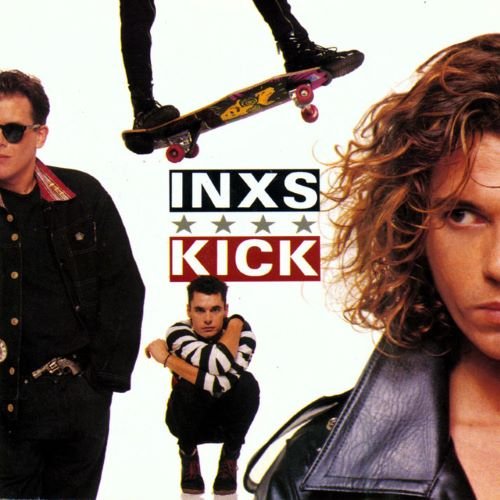
anniversary features lately. One that I am a bit late to but am going to mention now is INXS’ Kick. It was released on 12th October, 1987. Ahead of its thirty-fifth anniversary, it is only appropriate to celebrate and spotlight a sensational album by the Australian band. Produced by British producer Chris Thomas and recorded by David Nicholas in Sydney, Australia, and in Paris, France, Kick is seen as one of the best albums of the 1980s. In fact, it ranks alongside the best albums ever! Although the band are terrific throughout, I think their lead Michael Hutchence really defines the album and gives every song so much gravitas and passionate. A remarkable lead and songwriter, I do think Kick stands out and endures because of Hutchence’s talented and magnetism! It is worth coming to reviews of a simply wonderful album. I want to start out with Louder Sound and part of their review for the thirtieth anniversary release of Kick (in 2017). It is interesting what they say about the Australian band, and particularly Hutchence, and how they differed to what was around on the scene in 1987:

“Outside of Frankie’s pleasuredome and Dexys’ dungaree incinerator, no one in the 80s ever admitted to sweating. This was the decade of the pristine, the age of immaculate aristocrat make-up, sculpted fringes, and trousers cut to allow for the maximum air circulation. Pop music was clinically synthetic, sleek and vacuum-moulded; no star worth their Stock Aitken Waterman remix would ever do anything as human as perspire.


So when, in 1987, INXS frontman Michael Hutchence rolled up in a zip-strewn biker jacket behind a swarthy guitar riff and pouted ‘there’s something about you girl that makes me sweat’, we barely knew what to make of him. He and his band of Australian gloss-rockers had all the plastic funk grooves, silvery synth touches, sax solos and soul harmonies of popular contemporaries such as Fine Young Cannibals, the Human League, Duran Duran, Level 42 and Curiosity Killed The Cat, but they were fronted by a lizard-hipped sex mop with clear aspirations to be the Jim Morrison of his day. With one purring ‘slide over here and give me a moment, your moves are so raw’, INXS became the safe, sanitised sound of 80s sexuality, the Kylie fan’s (and, later, Kylie’s own) bit of rough. A band more likely to make you feel like a million dollars in the sack than Howard Jones, but less likely to leave you encrusted with soiled dairy products than Prince.

Very much an Australian phenomenon until ’87 – their many Australasian hits had barely registered in the UK – their sixth album, Kick, landed like a Thor’s hammer of lascivious arena pop, a virtually faultless, laser-targeted collection of synthetic sleaze that spoke of a band arriving fully formed at the very peak of their songcraft. After 10 years spent quietly polishing up their Boomtown Rats-style new-wave pub rock and trimming their mullets for the spangly new decade, they were the Down Under U2, slamming from the ether with their very own Joshua Tree or, in Peter Gabriel terms, delivering their So without the wider world knowing they’d ever worn a sunflower helmet. Seductive nightcrawler Need You Tonight was like a glowing neon calling card reading ‘NEW IN TOWN’ tucked suggestively into the breast pocket of the top five, and once we made the call they sure kept showing us a good time. Devil Inside was 80s pop licking a forked tongue”.

Kick was the album that defined and announced INXS. It is their breakthrough. 1990’s X is a great album, but it does not scale the same glorious heights as its predecessor. With classic albums, it is great to talk about the songs and the legacy of the album, but I always like to know about the background and how things came together. With INXS’ Kick, Andrew Farriss and Michael Hutchence did work intensely on the songs. This article from 2021 discusses the background and creation of Kick:

“After their breakout hit “What You Need” smashed into the US Top 5 early in 1986, INXS’s slow but steady rise to global stardom intensified. On the back of the single’s success, their fifth album, Listen Like Thieves, went double Platinum in the US and set the stage for the band’s promotion to rock’s big leagues with 1987’s Kick, released on October 19 that year.

Complacency, however, wasn’t an option for the hard-working Australian sextet as they began crafting their magnum opus. Indeed, while they embarked on the album sessions on a high following acclaimed US and UK jaunts, and the Australian Made tour, which straddled December 1986 and January ’87, the band was unanimous in the belief that their new material simply had to better than Listen Like Thieves. As guitarist and saxophonist Kirk Pengilly informed DJ and broadcaster Ian “Molly” Meldrum, INXS were striving for “an album where all the songs were possible singles.”

To achieve this aim, the band reconvened with Listen Like Thieves producer Chris Thomas. Having previously helmed acclaimed titles by The Pretenders, not to mention Sex Pistols’ infamous Never Mind The Bollocks… Here’s The Sex Pistols, Thomas’ crisp, efficient studio technique ensured he remained in demand. Yet while the producer was aware that INXS’s star was firmly in the ascendant, he later told band biographer Anthony Bozza that he felt “they didn’t have the right songs yet” when the Kick sessions began in Sydney.

Accordingly, primary songwriters Michael Hutchence and Andrew Farriss flew out to Hong Kong for an intensive two-week songwriting session. Inspired by the sojourn, the pair returned with a handful of promising demo tapes, including basic versions of several of the future album’s key tracks, among them the driving, anthemic “Kick,” “Calling All Nations” and “Need You Tonight.”

Certain they now had the goods, Chris Thomas and the band headed to France for further sessions in Paris, where they completed the newly-christened Kick. Their gut instinct was correct, for the new record took elements of all INXS’s key influences – anthemic, Rolling Stones raunch, Gang Of Four-esque angularity, and the cutting-edge sounds of the contemporary dancefloor – and seamlessly blended them into a compelling and highly original pop-rock hybrid that would thrust the band into the heart of the mainstream.

Yet, while group and producer alike were convinced they were sitting on a classic, INXS’s US label Atlantic initially failed to see Kick’s potential. In fact, it was only after the sleek, sensual “Need You Tonight” proved a hit on US campus radio, and its infectious follow-up, “Devil Inside,” crossed over onto classic rock playlists, that Atlantic relented and released Kick in October 1987.

The critical acclaim Kick attracted on release (with UK monthly Q’s four-star review memorably referencing “Hutchence’s knowing, Jagger-esque vocal swagger”) demonstrated that INXS and Chris Thomas’ confidence was entirely justified, and the band converted new fans in droves. The confident “New Sensation” and classy, strings-and-sax-enhanced ballad “Never Tear Us Apart” followed “Devil Inside” and the seductive, chart-topping “Need You Tonight” into the US Top 10, while Kick proved a global smash, topping the Australian Charts and peaking at No. 3 during a consecutive 79-week run on the Billboard 200 which eventually yielded US sales of over four million.

Keen to keep the ball rolling, INXS embarked on an extensive 16-month tour which saw them packing out arenas in North America, Europe, Japan, and Australia through October 1988. The itinerary included a brace of highly-acclaimed shows at New York City’s famous Radio City Music Hall and an emotional three-night homecoming at the band’s native Perth Entertainment Centre during the final leg in Australia. By the tour’s end, INXS was regularly performing all of Kick’s 12 songs and the group was widely recognized as one of the biggest bands on the planet.

“I think what makes the Kick album so dynamic is that we weren’t so much interested in what everybody else was doing as on what we wanted to do,” Andrew Farriss says, reflecting on the album’s longevity. “Michael and I were extremely focused as songwriters, and the band was very intent on making a series of recordings that we could be passionate about. It was really an incredible experience”.

I will end with a review for the immense Kick. Turning thirty-five on 12th October, I know that a lot of people will be sharing their memories of the album and what each of the songs means to them. Need You Tonight, New Sensation, Never Tears Us Apart and Mystify are among the best songs in INXS’ catalogue. Kick is an album without a weak moment. The deeper cuts are really strong and interesting. This is what AllMusic wrote about Kick in their review:

"What You Need" had taken INXS from college radio into the American Top Five, but there was little indication that the group would follow it with a multi-platinum blockbuster like Kick. Where the follow-ups to "What You Need" made barely a ripple on the pop charts, Kick spun off four Top Ten singles, including the band's only American number one, "Need You Tonight." Kick crystallized all of the band's influences -- Stones-y rock & roll, pop, funk, contemporary dance-pop -- into a cool, stylish dance/rock hybrid. It was perfectly suited to lead singer Michael Hutchence's feline sexuality, which certainly didn't hurt the band's already inventive videos. But it wasn't just image that provided their breakthrough. For the first (and really only) time, INXS made a consistently solid album that had no weak moments from top to bottom. More than that, really, Kick is an impeccably crafted pop tour de force, the band succeeding at everything they try. Every track has at least a subtly different feel from what came before it; INXS freely incorporates tense guitar riffs, rock & roll anthems, swing-tinged pop/rock, string-laden balladry, danceable pop-funk, horn-driven '60s soul, '80s R&B, and even a bit of the new wave-ish sound they'd started out with. More to the point, every song is catchy and memorable, branded with indelible hooks. Even without the band's sense of style, the flawless songcraft is intoxicating, and it's what makes Kick one of the best mainstream pop albums of the '80s”.

One of the absolute greatest albums, a happy thirty-fifth anniversary to INXS’ Kick for 12th October. It is sad that Michael Hutchence is not here to see how Kick has been respected and enjoyed through the years. He died in 1997. His voice, power, passion, and brilliance are displayed right through Kick. It is an album that will be adored and loved…

FOR decades to come.

FEATURE: Spotlight: Charlotte Sands

FEATURE:


Spotlight

Charlotte Sands

__________

AN incredible artist…

whose latest single, Tantrum, is among the best of this year, I wanted to highlight the wonderful work of Charlotte Sands. I am going to come to some interviews from this year. In fact, I will start with one from January, as it gives us some background and biography about the sensational Sands. SPIN spoke to her about life during the pandemic, her musical influences, and the success of the epic song, Dress:

“When Charlotte Sands posted a TikTok at the beginning of COVID asking Yungblud to let her open for him on tour, she didn’t know that it would actually happen. The idea was something the blue-haired singer-songwriter had been putting into the universe for a while, and it finally seemed like her unrelenting hope was paying off.

“I genuinely have been manifesting opening for [Yungblud on tour] for about two years now,” Sands laughs over the phone between hours of tour rehearsals in Nashville. “I’ve always been a fan of his message and everything he represents as an artist and as a person. He has always been a really big idol for me.”

Born in Massachusetts to a musician father and actress mother, Sands was always surrounded by music. As a kid, she found herself inspired by storytelling songwriters like Bonnie Raitt, Sheryl Crow and Grace Potter. By her teen years, she began writing music and discovered emo and pop-punk bands like All Time Low and Taking Back Sunday. Trying to find that middle ground between those 2000s rockers and childhood favorites has been an ongoing challenge she’s embraced as an artist ever since she moved to Nashville two weeks after high school ended.

“The quest that I’m on is trying to mix all those influences together,” she says. “Because they are so weird and are different parts of who I am as a person and as an artist.”

After years of building up her songwriting chops, the stars finally seem to have aligned for the 25-year-old alt-pop singer. At the end of 2019, Sands signed a publishing deal and became a full-time songwriter. By February 2020, she headlined her first sold-out show and planned to tour both coasts. Of course, the COVID-19 pandemic then put those plans on hold.

In the interim, her fanbase grew exponentially thanks to a viral song. In November 2020, Sands penned “Dress” — a direct response to conservative pundit Candace Owens and the negativity surrounding Harry Styles’ Vogue cover where he sported a Gucci ball gown. “I love the way you wear that dress / Making everyone upset / Burning that cigarette, boy / Swear to god I’ll confess, boy,” she swoons in the chorus. It didn’t take long for the song to blow up on TikTok, and it currently has 1.3 million views and counting. For Sands, the surprise hit wasn’t just a statement about redefining masculinity.

“‘Dress’ started from a place of me realizing that my type — the kind of people that I’m attracted to — had changed,” she says.

The success of “Dress” gave Sands some much-needed momentum to carry on despite quashed tour plans. In November, Sands finally released her debut EP, Special — a six-song compilation of vulnerable pop-punk anthems — and now she’s followed it up with Love and Other Lies, an EP that combines her raw folk songwriting and alt-leaning melodies. In developing the framework of her sound for these two EPs, she’s found inspiration in Kelly Clarkson, P!nk, Avril Lavigne and Katy Perry.

“These incredible women were so angsty, and they always felt like they weren’t doing what they were supposed to do, but in the best way,” she says. “They were always kind of rebellious and different and outspoken. Pop music has certain stigmas for women to create certain types of music about certain types of emotions or relationships. It’s really amazing to see female artists have this place where they can be angry, make aggressive music, be energetic and all these things, and people are applauding them.”

This mentality fuels Love and Other Lies, a seven-song amalgamation of tenderness, rage, heartbreak and jealousy. Ahead of the EP release, Sands shared “Every Guy Ever” — a sticky anthem about being fed up with manipulative men. A few months later, she dropped “Keep Me Up All Night,” a pop-punk gut-punch about being in love with someone and watching them be in love with someone else. That emotion also bled into “All My Friends Are Falling in Love,” a track that encompassed the loneliness Sands felt during lockdown as the regular fifth wheel with her coupled-up friends.

“It’s probably one of the hardest universal feelings, feeling unwanted or left out,” she says. “I remember crying in the bathroom [during lockdown] and having this overwhelming sense of loneliness in knowing that I was the only one going home to nobody and I live alone.”

Perhaps the most striking moment on the EP is also the softest. On the title track, Sands warbles about her family dynamic in a hazy ballad. But its opening is particularly meaningful for Sands. For two years, she held out hope that she’d play her biggest gig yet: Bonnaroo. But bad luck struck the festival again in 2021 and the site flooded, officially canceling the event. It emotionally crushed the singer, until her mom called when she needed it most and left her an encouraging voicemail. It’s stuck with her, and she thought it could help her listeners, too.

“Some people don’t get to have moms call them and tell them helpful, inspirational things to get them out of where they are,” she says. “Because they don’t have that, they can have my mom.”

Despite releasing two EPs in such a short period of time, Sands isn’t necessarily rushing to release an album. It’s something on her radar, but she’s got plenty of other ambitions for now — like dream collaborations with Yungblud, Machine Gun Kelly, Raitt, Perry or Gwen Stefani in the future. Slowing down isn’t even on her radar.

“I’ve always lived with the idea that you have to earn the time and attention of an album,” she says. “I think it really has to do with where I am. There’s a lot I have to check off my list in the next few years.” And she’ll get to that album… eventually”.

 PHOTO CREDIT: Nickalaus Stafford

Charlotte Sands is coming to the U.K. next year but, if you are in the U.S., you can see her this year. An amazing live act and fabulous artist, I know that she is going to go very far. The scene is ripe and overflowing with amazing women across all genres and corners of the musical landscape.  The turquoise-haired Nashville-based artist is really on the rise and making music of the highest order! Melodic Magazine chatted with Sands earlier in the year about touring with YUNGBLUD, in addition to whether it is easy to balance her influences with an original and personal direction:

“Picking a favorite song is like picking a favorite child – but do you have a favorite song to perform, or a favorite lyric you’ve written?

My favorite song to perform right now is “Keep Me Up All Night” because it feels like a ballad but also keeps the energy of the rest of the show which is really fun for me. It’s the only song that’s slow enough that I can actually focus on my voice and how it sounds and also check in on myself and my body during the show to make sure everything feels right and I’m not over or under performing.

I think one of my favorite lyrics is from the song “Love and Other Lies” when it says “we’re only human we’re all singing the same song”. It’s so simple but I love it because it’s a reminder that we’re all just people doing the best we can with what we have and that’s enough.

A few years ago you began manifesting opening for Yungblud – and it came true! Is the idea of putting things into the universe common for you, and something you want your fans to do as well? It seems in this day and age especially; we tend to be harder on ourselves and our dreams.

I definitely believe in manifestation and speaking things into existence! I’ve seen such an insane difference in my life since I’ve started vocalizing my goals and I don’t know if it’s the universe or a higher power or maybe just my own subconscious working harder for the things that I’ve said out loud but it works! I also believe that when you speak to yourself in a positive way and you talk about things you want to achieve in a way that’s claiming them as if they have already have happened, you start to convince yourself that things are possible and you work harder to make them happen without the constant obstacles of self doubt or fear. We live in a world with so much judgment and criticism and I think that anyone could greatly benefit from the idea of manifesting your dreams and shamelessly being your own champion.

Are there any other moments that have stuck with you and generated songs or specific lyrics that you could share with us?

In the second verse of my song “Bad Day” it says “I wish I felt everything less, can I be sad for a minute and not be depressed” and as dark as that sounds it was actually a note entry in my phone that I found when we were writing the song. I’m such a 0 to 100 person and I always feel every emotion so deeply which can be a blessing and a curse. I’m grateful I can feel so much because it’s why I’m able to write songs but it can also be a really heavy weight to constantly carry around which is what “Bad Day” ended up being about. It’s the story of allowing yourself to be where you are and to feel everything without automatically correcting yourself or trying to be more positive like we’re constantly told to be. It’s okay to have a bad day and writing that song has allowed me to be easier on myself when it comes to my own emotions.

You’re inspired by contrasting genres, from storytelling artists like Bonnie Raitt on one end to pop-punk bands like All Time Low on the other – creating your own distinctive sound. As time has passed, have you found it easier to create a middle ground combination of your influences, or is this something you are still seeking?

I definitely find it easier to combine all my influences now because I’ve realized how similar they all really are. All my favorite songs are so different but have so many things in common like the storyline or the quality of lyrics and overly melodic choruses. I have so much fun figuring out how to create music that sounds like mine and that reflects my influences and it doesn’t feel as daunting as it used to. I trust myself more and I’m a lot less interested in genre or whatever box that I’ve been told I fit best in which allows me a lot more freedom these days – I’m very excited about that”.

I am going to wrap things up with an interview from Alternative Press. A remarkable artist that everyone should know about, it is fascinating reading interviews with her. I really hope that Sands gets more dates in the U.K., as her fanbase is growing over here:

"Nashville-based singer-songwriter Charlotte Sands is truly having a moment right now. Between the breakout success of her single “Dress,” playing shows with YUNGBLUD and My Chemical Romance and providing guest vocals on several high-profile collaborations in the rock, alternative and pop world, Sands is an unstoppable force. While her rise to stardom has kicked into overdrive within the past two years, the young artist has been grinding it out as a songwriter for nearly a decade, and her success is a testament to her hard work and relatable ethos.

On “Dress,” Sands offers a stunning directive for her listeners to be themselves, defy societal expectations and embrace everyone’s unique characteristics. This has not only positioned her as a role model to a growing fanbase but has also created an entire community of supporters who are unified through a safe space rooted in the power of music. Now, Sands plans to make next year the most exciting and eventful it has been for her career while also giving back to her community in the process.

This leads us to the announcement of Sands’ first-ever headline run, the Love And Other Lies tour, which kicks off this fall with support from rising alternative artists John Harvie and No Love for the Middle Child.

You've had a meteoric rise as an artist. One can only imagine what's coming next for you, and it seems to be a very exciting time. What was the journey like to get here?

I pinch myself every day with how much we have been able to accomplish in the last two years, let alone the last 10 plus that I have been doing this. Overall, I have really tried to expand a network of people I love working with that inspire me and make me feel more creative. Once you build that community of people who love and respect your art, it helps create this web of like-minded people, which makes it more enjoyable.

Nashville has a history of having a strong community of songwriters and producers. What prompted you to move there, and what does the city bring out in your art?

Nashville is still where I believe the highest quality of songwriters exists. There is this quality and love for the story of the song and lyricism. The songwriters who live here, including me, experience this respect toward lyrics, and ever since, I’ve been obsessed with that relationship with words. I moved here because my favorite songwriters Sheryl Crow, Bonnie Raitt and Michelle Branch were here making albums, and when I was growing up, I had this feeling that this was where I was supposed to be.

With “Dress” being your breakout single, I find it so interesting that you leaked the song initially. Did you immediately know that you captured something special that needed to be shared right away?

To be honest, none of it was a strategy. I was in this position where I was home, I couldn’t tour and I didn’t feel like I had an output for my creativity besides releasing a song every six weeks. I hadn’t really gone down the TikTok hole at that point, but it got to a point where we had nothing else to try, so we just did it. I leaked it a couple of days before Thanksgiving, and I turned off my phone not thinking anything of it, but my manager called me and told me that something was happening with it. I was thinking it was probably a prank and automatically thought that there was no way this was real. I’m really grateful for the reaction to the song. There is such an important message in it of self-expression, questioning gender norms and being your authentic self.

There's such a strong message behind “Dress.” With that being said, do you recognize that you are now becoming a role model for so many of your fans?

I honestly have such impostor syndrome when it comes to that stuff. [Laughs.] I haven’t done anything — I just wrote my feelings in a song. I see activists and people who are donating their life to these causes, and I feel like I’ve done the bare minimum, but I do have so many people who have had an incredible reaction to it. I think the most wonderful thing for me is if I have given anybody more confidence because knowing that there is a community that supports you as you are and everyone is safe is something that I take a lot of pride in. Being able to curate a community is something I couldn’t be more proud of in my life. It’s so much more than a song.

You've also been involved in so many exciting collaborations with a wide range of artists, from Underoath and Sleeping With Sirens to pop artists like Mokita and the Maine. What was the process like getting together with these artists, and what makes collaboration so important to you?

I think every single collaboration has come out of a friendship. With Underoath, I wrote with [drummer, vocalist] Aaron [Gillespie] for my project, and he’s just the most beautiful human, and that’s how I got the Underoath feature. It was the same with Mokita. He lives in Nashville too, and it finally just worked out. The funniest thing about the Sleeping With Sirens collaboration was that I was on a podcast, and I was like, “I would love to do a collaboration with Kellin Quinn,” and of course, he saw that clip, and he told me he had a song he wanted me on. I think it’s important for me to push the box of the genre that people see me in. I grew up on such a wide range of music, and it’s important for me to not be pigeonholed as one type of artist.

Having the opportunity to share the stage with so many acts such as My Chemical Romance and YUNGBLUD must have been really special. Did you learn anything from these artists in the process?

It’s endless. With YUNGBLUD, that was my first tour ever, and he just breathes stardom. I think he is going to be the David Bowie for millennials and Gen Z. Watching him every night was so inspiring. Watching him have that power to captivate people so easily made me want to make people feel the same way when they’re watching me. It taught me so much. For the My Chemical Romance show, it was the biggest show of my life, and it was 32,000 people in a stadium. I blacked out a lot of it, and I remember walking onstage not being nervous and just kept telling myself, “This is what you are meant to do being do, so prove why you worked so hard and trust the work.”

That leads us to now with your first headline tour. What can we expect, and does it feel exciting or daunting?

I feel like the timing couldn’t be better. I’m itching to play more shows and play longer sets. For the first time ever, I get to curate an experience that is my own that I think the audience will enjoy. The preparation for it is daunting but it’s just one of those things where there’s so much to do that you just need to let go of control and know that it’s going to work out for the best. It’s going to be a magical experience, and it’s going to be the biggest thing I’ve done in my career. I’m so overwhelmed in a great way. I’m so excited!

With the music industry changing so much, a full-length isn't always needed anymore, but are there plans to put out a larger musical project down the road?

I have always said that you have to earn an album. You have to earn the amount of time it takes for someone to listen to your project front to back. I want to earn it, and I think I am at a point now where I want to do bigger projects. Being able to make multiple songs that feel like they are a part of each other and the same story is always really fun for me. Hopefully, next year is when I can put an entire project out”.

One of my favourite new artist, Charlotte Sands is primed for great things. I have been following her music for a bit, but I know the next couple of years are going to be really huge for her. I wonder whether there is an album in the back of her mind. If you have not heard of her yet, make sure you follow and listen to her now! This is a simply wonderful artist that you need to…

WATCH very closely.

______________

Follow Charlotte Sands

FEATURE: Kate Bush’s The Sensual World at Thirty-Three: This Woman’s Work: Her Most Heartachingly Beautiful Moment?

FEATURE:


Kate Bush’s The Sensual World at Thirty-Three

This Woman’s Work: Her Most Heartachingly Beautiful Moment?

__________

I will put out…

a couple more features relating to The Sensual World ahead of its thirty-third anniversary on 17th October. Kate Bush’s magnificent sixth studio album, there are so many great songs to be found. One that I especially love is This Woman’s Work. I have been thinking about Kate Bush and film. Someone whose music has been used on T.V. and film, I wonder how many times she was asked to write for films soundtracks. This Woman’s Work found her writing this beautiful song for the 1988 film, She’s Having a Baby. Directed by John Hughes, it is rare that people heard a Kate Bush song somewhere else before it appeared on a studio album. That was the case here. This Woman’s Work has a bit of a life of its own. Before moving on and going deeper, the Kate Bush Encyclopedia sourced interviews where Bush discussed one of her most potent and remarkable songs:

“John Hughes, the American film director, had just made this film called 'She's Having A Baby', and he had a scene in the film that he wanted a song to go with. And the film's very light: it's a lovely comedy. His films are very human, and it's just about this young guy - falls in love with a girl, marries her. He's still very much a kid. She gets pregnant, and it's all still very light and child-like until she's just about to have the baby and the nurse comes up to him and says it's a in a breech position and they don't know what the situation will be.

So, while she's in the operating room, he has so sit and wait in the waiting room and it's a very powerful piece of film where he's just sitting, thinking; and this is actually the moment in the film where he has to grow up. He has no choice. There he is, he's not a kid any more; you can see he's in a very grown-up situation. And he starts, in his head, going back to the times they were together. There are clips of film of them laughing together and doing up their flat and all this kind of thing. And it was such a powerful visual: it's one of the quickest songs I've ever written. It was so easy to write. We had the piece of footage on video, so we plugged it up so that I could actually watch the monitor while I was sitting at the piano and I just wrote the song to these visuals. It was almost a matter of telling the story, and it was a lovely thing to do: I really enjoyed doing it. (Roger Scott Interview, BBC Radio 1 (UK), 14 October 1989)

That's the sequence I had to write the song about, and it's really very moving, him in the waiting room, having flashbacks of his wife and him going for walks, decorating... It's exploring his sadness and guilt: suddenly it's the point where he has to grow up. He'd been such a wally up to this point. (Len Brown, 'In The Realm Of The Senses'. NME (UK), 7 October 1989)”.

One of the standout songs from The Sensual World, I was surprised that Bush reworked it for 2011’s Director’s Cut. Like Deeper Understanding (also from The Sensual World), This Woman’s Work is perfect in its original form. Maybe trying to breathe new life into the song, I am of the opinion that This Woman’s Work sounds better and more affecting in its 1988 version. It only reached twenty-five in the U.K. in 1989. In 2008 it reached seventy-six; sixty-three in 2012. A track that has not really hit commercial highs, one cannot deny its sheer quality and importance! One of the most devastating and memorable sets of lyrics Kate Bush ever penned, I feel This Woman’s Work is one of the most remarkable beautiful and moving songs in her catalogue. There have been four different versions of This Woman’s Work recorded. The original version was released on the soundtrack for She's Having a Baby. The version that was featured on The Sensual World was re-edited from the original version. The version released as a single was a third, ever so slightly different mix. The track was then completely re-recorded on Director's Cut. The new version features a sparse performance of Bush playing the piano and singing. Directed alongside John Alexander, the video for This Woman’s Work is beautiful. Bush plays the role of the wife alongside her husband Tim McInnerny. The husband is desperate in a hospital waiting room waiting to see if his wife is okay. A nurse then speaks to him and we are not sure what the outcome is. Though the smile she gives makes us feel that thew wife (Bush) is alright.

Filled with emotional and powerful lines, one of the most recognisable and stirring passages Bush has ever written is this: “Of all the things I should've said,/That I never said/All the things we should've done/That we never did/All the things I should've given/But I didn't/Oh, darling, make it go/Make it go away”. I have been thinking about various songs from The Sensual World ahead of its thirty-third anniversary on 17th October. A wonderful album that features some of Kate Bush’s best songwriting, it all builds to the heartache of This Woman’s Work. I guess it is more about regret and growth. The husband is in a crisis position at hospital when his baby is in the breach position. To this point, he has been a bit silly and immature. Facing potential tragedy, he regrets things he never said and things he never did. It has that sadness. I wonder whether the line about making it all go away refers to the doubts and past struggles, or whether it is actually about the baby. Taking responsibility and facing all this challenge might be too big and much. The way Bush sings the song sends shivers up the spine. It is a song I have heard so many times, yet it always makes me feel affected moved. Testament to the power of her songwriting! Possibly the most beautiful track she has ever written, I do wonder why This Woman’s Work did not chart higher. That is a question for the ages! Taken from the incredible and acclaimed The Sensual World, This Woman’s Work is…

AMONG Bush’s very best songs.

FEATURE: Madonna’s Erotica at Thirty: My Introduction to the Album: The Superb Rain

FEATURE:


Madonna’s Erotica at Thirty

My Introduction to the Album: The Superb Rain

__________

A Madonna song…

that performed better in the U.K. than on the U.S. Billboard chart, my introduction to her 1992 album, Erotica, was through Rain. Released on 5th August, 1993 as the fifth single from the album, I wanted to write more about it, in addition to marking the thirtieth anniversary of Erotica on 20th October. I will write about one or two other songs closer to the time, but I can remember when Rain came out. Unlike a lot of what we hear on Erotica, this was the more sensitive and touching side of Madonna. Whereas Erotica does have some steamy and provocative moments, Rain is one of her great ballads. Not everyone shares that opinion, but I think Rain is a highlight from Erotica. I think, when I was a child, I was hooked by the New Age sound and the fact that it was gentler and more accessible than a lot of the album. Now, I love Erotica and think that it is misjudged, underrated and hugely influential. Rain concerns Lyrically the song likens rain to the empowering effect of love and water's ability to clean and wash away pain. There might be sexual elements and interpretations, but I think this is Madonna in more thoughtful and spiritual mode. A beautiful song that adds something very special to the second side of Erotica – which I think is weaker than the first half -, this song needs to be re-evaluated and reassessed.

In terms of critical reception, there were those who identified Rain as a terrific song that showed a more tender side to the Pop queen. Compare Rain to a track like Erotica, and it shows how broad and eclectic her work was around this time:

“Upon release, "Rain" received generally positive feedback. Stephen Thomas Erlewine from AllMusic called "Rain" among "Madonna's best and most accomplished music". Jose F. Promis from the same media credited the song in "paving the way for the "softer" Madonna to emerge in the mid-'90s". Annie Zaleski from The A.V. Club stated that it established Madonna as "a sensual New Age goddess". While reviewing the album for Billboard, Paul Verna called the song "a lovely pop ballad". In a separate review of the single on the magazine, another editor, Larry Flick wrote.

A gorgeous, romantic moment from [Madonna]'s sorely underappreciated Erotica opus. A slow and seductive rhyme base surrounded by cascading, sparkling synths inspires a sweet and charming vocal. Though not as lyrically daring as the previous "Bad Girl", this is a wonderfully constructed, memorable tune that deserves as much attention (and airplay) as it can garner.

In August 2018, Billboard picked it as the singer's 73rd greatest single, calling it "a top 20 hit of perfectly polished R&B co-produced by Shep Pettibone. Built around one of pop music's most timeless central lyrical images, it's got a depth of production and vocal nuance that suggests Madonna's spin on a great late-'80s Jimmy Jam and Terry Lewis slow jam". Tony Power from Blender picked it as one of the stand-out tracks from Erotica. Scott Kearnan from website Boston.com felt that the song is an example of "what she lacks in [singing] technique she's always tried to make up for with earnestness". He also praised her phrasing, saying that "Madonna sings like she believes in every word". Troy J. Augusto from Cashbox commented, "Simple yet effective number sounds like a love-scene accompaniment from Beverly Hills 90210. At times. Miss Ciccone almost sounds like Karen Carpenter, all tender and shy. (My God, there's no limit to this artist's depth!)" Writing for The Huffington Post, Matthew Jacobs placed the track at number 43 of his list "The Definitive Ranking Of Madonna Singles" and felt the track was a departure from the previous "carnal" releases from Erotica; "It's not terribly distinctive from the other ballads Madonna released in the early '90s, but then there's the sultry chorus with the uplifting lilt 'Here comes the sun'". Stephen Sears from music website Idolator called the song as "the album's sole expression of pure love", which "revisits the oceanic sonic landscape of her epic 1986 ballad "Live To Tell".

I think there should be a lot of celebration around Erotica when it turns thirty next month. It is one of Madonna’s best albums, and one big reason is songs like Rain. Creating some balance and emotional reflectiveness on an album that is noted for its more sexual content, I was struck by the beauty and stillness of Rain when I first heard it. Although Madonna has created finer ballads (my favourite song of hers, Take a Bow, is from 1994’s Bedtime Stories), this 1993 hit she wrote and produced with Shep Pettibone is a classic. Even though I had heard other Madonna songs prior to 1993, I found Rain to be deeper and more mature than a lot of those from her earlier albums. Erotica is a magnificent album, and it came at a time when Madonna was this huge Pop artist on top of the world. Erotica is often seen as a purely sexual album or something trying to push buttons. To me, there is so much in terms of the themes and emotions at work. Some might not realise and appreciate the incredible strength and worth of Rain, but I really love it! A definitely highlight of Erotica, this stunning track ranks as…

ONE of Madonna’s best songs.

FEATURE: For One Night Only… Imagining a Kate Bush Q&A at the Eventim Apollo

FEATURE:


For One Night Only…

Imagining a Kate Bush Q&A at the Eventim Apollo

__________

THERE are a number of Kate Bush features…

 IN THIS PHOTO: Kate Bush during 2014’s Before the Dawn residency at the Eventim Apollo/PHOTO CREDIT: Ken McKay/REX

where I imagine events and documentaries. Things that I would love to see, as would the wider fan community. One such possibility is a Q&A. There is not much chance Bush will perform live again, especially not on a big stage. I have suggested an idea that she do a stripped-back set from Abbey Road Studios, but she might find that even more nerve-wracking than a bigger gig. Someone always driven by concepts and big productions when it comes to her live music, I feel something more similar to Before the Dawn would be in her mind if she performed live. Giving the audience some theatre and spectacle. Bringing her music to life through great sets, dancing, and tremendous scenes! Maybe going to a low-key and intimate set at Abbey Road Studios would be like her returning to the very early days where she was playing her songs to record company people. Days where she would play her songs to band members but be quite nervous at the same time. I think that fans would welcome something that featured Bush playing live but was not a massive show. Perhaps we will never see it happen. It is a shame, because there is a great outpouring of love and affection for Kate Bush right now. There always has been but, given the 2022 she has had, a live event would definitely be met with ecstasy! That got me thinking about an idea. Maybe a compromise that was not live performance, but it gets Kate Bush back on stage.

The Eventim Apollo (Hammersmith Apollo (formerly the Hammersmith Odeon) is somewhere that Bush has a special connection to. She performed her Before the Dawn residency there back in 2014. Her final night of The Tour of Life in 1979 was performed here. It is a great venue with a proscenium arch that allows for something on the scale of these mighty live events. I have never been to the venue myself but, as it is somewhere Bush feels comfortable at, I have been thinking about her and Paul McCartney. Forgive a bit of a tangent. Bush has always loved The Beatles. but I think she has a particular fascination with Paul McCartney. Having performed Paul McCartney-led/penned Beatles songs before (including She’s Leaving Home, Let It Be (more than once) and The Long and Winding Road), she also once claimed her favourite album from The Beatles was Magical Mystery Tour. At least she name-checked it as one that was very important to her. I always associate that with being McCartney-led. The two have met, and I feel like it is a tragedy that they have not recorded together on a studio album. One great McCartney event that happened recently was his Q&A at the Southbank Centre. With Paul Muldoon and chair Samira Ahmed, it was a night to promote The Lyrics: 1956 to the Present. That event took place last November. It was a world-exclusive Q&A that I would have loved to have been at. There is something fascinating having Q&As and getting to know more about an artist.

 IN THIS PHOTO: Paul McCartney/PHOTO CREDIT: Mary McCartney

Kate Bush does not have a book to promote, nor is there an album coming out. There is nothing she is selling but, as she has been touched by the reaction to Stranger Things using her track, Running Up That Hill (A Deal with God) and its subsequent success, you know she appreciates all the fans’ support and love. There are a couple of anniversaries next year. For one, and although it is a way away, Bush is sixty-five in July. I think that it would be wonderful if, for one night, there was a Q&A at the Eventim Apollo. Maybe hosted by a famous fan or author – Graeme Thomson wrote the biography, Under the Ivy: The Life & Music of Kate Bush; David Mitchell wrote the foreword/introduction to the 2018 lyrics book, How to Be Invisible -, you would have Kate Bush discussing her career, recent focus, and the future. Maybe it would be quite nerve-wracking, but it would be less daunting than a run of live dates! A chance for fans to see Bush in the flesh, this is exclusive access to her. A look back at her career and maybe a chance to receive questions from fans, this would be a wonderful event! This is me thinking about Bush and what she has given the world through the year. Whilst she may do another album, it is unlikely that there will be opportunity to see her on the screen or stage. A one-time Q&A, similar to the one with Paul McCartney from last year, would definitely prove popular. Showing love for an artist who has changed lives and inspired so many people around the world, the Eventim Apollo would be a perfect location. Next year sees The Kick Inside (her debut album) turns forty-five. Bush is sixty-five on 30th July. So what better excuses than to have this fan-filled event where she answers questions about her career. Giving direct thanks to those who have supported her! Maybe it is just a dream, but there are thousands of people who would flock to see a Q&A with the…

ICONIC Kate Bush.

FEATURE: You’re Making Me High: The Best of Toni Braxton: An R&B Icon

FEATURE:


You’re Making Me High

PHOTO CREDIT: Getty Images

The Best of Toni Braxton: An R&B Icon

__________

I have written about her before…

but, as she is fifty-five on 7th October, it is the perfect reason to revisit her incredible body of work. Toni Braxton is one of the most important successful women in music of all-time She has sold over seventy million records worldwide. Braxton has won seven Grammy Awards, nine Billboard Music Awards, seven American Music Awards, and numerous other accolades. In 2011, Braxton was inducted into the Georgia Music Hall of Fame. In 2017 she was honoured with the Legend Award at the Soul Train Music Awards. No doubt, one of music’s true icons, legends, and trailblazers, her most recent studio album, 2020’s Spell My Name, is terrific. I am going to use this occasion to compile a career-spanning playlist featuring her best-known songs and those deeper cuts. As I do in situations where I need a thorough biography about an artist, it is to AllMusic:

“Blending fire and finesse, Toni Braxton has wielded broad appeal throughout a career studded with Top Ten pop and R&B/hip-hop hits, multi-platinum certifications, and major award recognition. Soulful enough for R&B audiences yet smooth enough for adult contemporary play lists, sophisticated enough for adults but sultry enough for younger listeners, and equally proficient at heartbroken and seductive material, Braxton made her solo debut at full power during the early '90s. Her first two albums, Toni Braxton (1993) and Secrets (1996), both went platinum eight times over, accompanied by a string of hit singles that included "Un-break My Heart," which ranks among the longest-running number one pop hits of the rock era. Each one of her subsequent albums has been treated as an event, whether it has followed a brief or extended break in studio activity. They have regularly debuted within the Top Ten, highlighted by Love, Marriage & Divorce (2014), a set of duets with long-term collaborator Babyface that made her one of the few artists to be handed Grammy Awards in each of three decades. From "Love Shoulda Brought You Home" to her first single of the 2020s, "Do It," Braxton's Top Ten R&B/hip-hop hits span a similar length of time. The latter appeared on her first album for Island, Spell My Name (2020).

The daughter of a minister, she was raised mostly in the strict Apostolic faith. Encouraged by their mother, an operatically trained vocalist, Braxton and her four sisters began singing in church as girls. Although gospel was the only music permitted in the household, the girls often watched Soul Train when their parents went shopping. Braxton's parents later converted to a different faith and eased their restrictions on secular music somewhat, allowing Braxton more leeway to develop her vocal style. Because of her husky voice, she often used male singers like Luther Vandross, Stevie Wonder, and Michael McDonald as models, as well as Chaka Khan. Braxton had some success on the local talent show circuit, continuing to sing with her sisters, and after high school studied to become a music teacher. However, she soon dropped out of college after she was discovered singing to herself at a gas station by songwriter Bill Pettaway (who co-authored Milli Vanilli's "Girl You Know It's True"). With Pettaway's help, Braxton and her sisters signed with Arista Records in 1990 as a group dubbed simply the Braxtons.

The Braxtons released a single in 1990 called "The Good Life," and while it wasn't a hit, it caught the attention of L.A. Reid and Babyface, the red-hot songwriting/production team who had just formed their own label, LaFace (which was associated with Arista). Braxton became the first female artist signed to LaFace in 1991, and the following year she was introduced to the listening public with a high-profile appearance on the soundtrack of Eddie Murphy's Boomerang. Not only did her solo cut "Love Shoulda Brought You Home" become a substantial pop and R&B hit, but she also duetted with Babyface himself on "Give U My Heart." Anticipation for Braxton's first album ran high, and when her eponymous solo debut was released in 1993, it was an across-the-board smash, climbing to number one on both the pop and R&B charts. It spun off hit after hit, including three more Top Ten singles in "Another Sad Love Song," "Breathe Again," and "You Mean the World to Me," plus the double-sided R&B hit "I Belong to You"/"How Many Ways." Toni Braxton's run of popularity lasted well into 1995. By that time, Braxton had scored Grammys for Best New Artist and Best Female R&B Vocal ("Another Sad Love Song"), and tacked on another win in the latter category for "Breathe Again."

To tide fans over until her next album was released, Braxton contributed "Let It Flow" to the Whitney Houston-centered soundtrack of Waiting to Exhale in 1995. Again working heavily with L.A. Reid and Babyface, Braxton released her second album, Secrets, in the summer of 1996, and predictably, it was another enormous hit. The first single, "You're Makin' Me High," was Braxton's most overtly sexual yet, and it became her biggest pop hit to date. However, its success was soon eclipsed by the follow-up single, the Diane Warren-penned ballad "Un-break My Heart." The song was an inescapable juggernaut, spending an amazing 11 weeks on top of the pop chart (and even longer on the adult contemporary chart). Further singles "I Don't Want To" and "How Could an Angel Break My Heart" weren't quite as successful (hardly an indictment), but that didn't really matter; by then Secrets was already her second straight multi-platinum hit. In 1997, she picked up Grammy Awards for Best Female Pop Vocal and Best Female R&B Vocal (for "Un-break My Heart" and "You're Makin' Me High," respectively).

Toward the end of 1997, Braxton filed a lawsuit against LaFace Records, attempting to gain release from a contract she felt was no longer fair or commensurate with her status. When LaFace countersued, Braxton filed for bankruptcy, a move that shocked many fans (who wondered how that could be possible, given her massive sales figures) but actually afforded her protection from further legal action. She spent most of 1998 in legal limbo, and passed the time by signing on to portray Belle in the Broadway production of Disney's Beauty and the Beast. Braxton and LaFace finally reached a settlement in early 1999, and the singer soon began work on her third album. The Heat was released in the spring of 2000, and entered the Billboard 200 at number two, matching the highest position held by Secrets. Lead single "He Wasn't Man Enough" was a Top Ten hit and an R&B/hip-hop chart-topper. A brisk seller out of the box, The Heat eventually cooled off around the two-million mark and led to yet another Grammy win for Best Female R&B Vocal ("He Wasn't Man Enough").

Following the release of the holiday album Snowflakes, Braxton appeared in the VH1 movie Play'd and recorded More Than a Woman. Released toward the end of 2002 with half of its songs co-written with sister Tamar, it broke Braxton's streak of Top Ten studio albums and prompted a temporary move to the Blackground label. Libra, supported with the singles "Please" and "That's the Way Love Works (Trippin')," started a new streak of Top Ten entries in 2005. In Europe, it was re-released the following year with the addition of the Il Divo collaboration "The Time of Our Lives," the official 2006 FIFA World Cup anthem. It was around this time that Braxton became the main performer at the Flamingo Hotel & Casino in Las Vegas. Her show, Toni Braxton: Revealed, ran until April 2008, when she joined the cast of the competitive reality show Dancing with the Stars. After lasting five weeks before being voted off the show, Braxton completed Pulse, her first full-length for Atlantic. Issued in May 2010, it became her fifth Top Ten album.

Braxton further boosted her 2010s comeback profile by participating in another reality TV series, the long-running Braxton Family Values, which focused on her relationship with her mother and four sisters. Meanwhile, she reunited with Babyface to record the duets album Love, Marriage & Divorce. Released by Motown in 2014, it went to number four just before the duo starred in a Broadway production of After Midnight. Love, Marriage & Divorce won the Grammy Award in the category of Best R&B Album just months before Unbreak My Heart: A Memoir was published. The book detailed Braxton's triumphs, as well as her business and health struggles behind the scenes, and led to a similarly titled biographical television film.

Braxton's affiliation with the Def Jam label began in 2015 with her second holiday recording, Braxton Family Christmas. Although lupus complications hampered Braxton's touring schedule, she worked on a new album and in 2017 accepted a Soul Train Legend Award. Sex & Cigarettes, a set dominated by aching ballads, arrived in 2018. It reached number 22 and led to a Grammy nomination for Best R&B Album, while "Long as I Live," a Top 20 R&B/hip-hop single, was up for Best R&B Song and Best R&B Performance. The Top Ten R&B/hip-hop hit "Do It," featuring Missy Elliott, followed in 2020 as the first result of a new deal with Island Records. Spell My Name, on which she was also joined by H.E.R., arrived that August”.

A sensational artist who will go down in history as one of the greatest ever, I wanted to celebrate her forthcoming birthday with a selection of her terrific tracks. A voice filled with soul, passion and beauty, there is nobody in music like Toni Braxton! The career-spanning playlist at the end of this feature demonstrates…

WHY she is so loved and respected.


FEATURE: Like a Moonage Daydream… The Big Screen Kate Bush Treatment

FEATURE:


Like a Moonage Daydream…

IN THIS PHOTO: Kate Bush at the Amnesty International Secret Policeman's Third Ball, at the London Palladium on 26th March, 1987

The Big Screen Kate Bush Treatment

__________

I am not sure…

 PHOTO CREDIT: Fotex/Shutterstock

what the title would be but, as I tend to do, I have been thinking about various Kate Bush features and ways of getting her to the mall and big screen. When it comes to books, there have been a few. The same with magazine features. We have had some radio documentaries – including an excellent recent one by Ann Powers. I have tried to pitch a Kate Bush documentary to the BBC myself via a production company but it seems, if they broadcast one Kate Bush documentary, the door closes for a long time! Other artists might not have to wait too long. Although he is clearly a genius and a much-missed pioneer and chameleon of an artist, David Bowie has had a lot more documentary attention than Kate Bush, Of course, Kate Bush was a big fan of David Bowie, and it is a shame the two never worked together. She affected some of his mannerisms in various albums, and you can tell something like her 1979 The Tour of Love had a bit of Bowie. The costume changes and the theatre. Bush definitely looked up to David Bowie. Given Bowie’s remarkable catalogue, changing looks and his captivating stage presence, it is no surprise that the recent  documentary from Brett Morgen, Moonage Daydream, has scored five-star reviews and is seen as a masterpiece! Featuring never-seen-before footage and behind-the-scenes archives, this is a goldmine for Bowie fans and music lovers in general. It looks remarkable too!

Bowie has had a fair few documentaries made about him, but the latest might just well be the best. I can appreciate that film studios and radio producers want to explore an artist who sadly left us in 2016. Undoubtably influential, there have been quite a few different films and documentaries around Bowie and his work. Kate Bush is a very different artist and has limitations. Part of the spectacle and brilliance of Moonage Daydream is the live footage and Bowie coming alive on stage. Bush has toured and played live but, apart from audio of Before the Dawn, there is footage – not the greatest quality until it gets remastered – of The Tour of Life. If there was an equivalent film or documentary, it would have to include better quality live footage. I think there could be a film that explores her life and brings in her interviews, words, and various visuals aspects. I have raised it before but, until there is a career-spanning documentary, a film that runs as long as Moonage Daydream (140 minutes) would be a proper and long-overdue recognition of her importance. The reviews for the Bowie documentary show that, if done right, something wonderful can be created. I have been thinking about her interviews, live performances and videos and the sort of impact Bush has made. Maybe it will not be quite as emphatic and kaleidoscopic as Bowie’s documentary. But, when you think about the artists Kate Bush has inspired, the music she has put out, the way her live performances are utterly unique and her genius as a visual mind and producer, you could create something extraordinary for the screen!

Interviews could be shown. Animating Kate Bush in various styles to ‘speak’ on screen. Remastering The Tour of Life and remastering some of her videos. Getting inside the music and her brilliance through new footage, interviews and archive material would be the biggest Kate Bush documentary or film yet. There has not really been anything big and fitting enough for an artist of her caliber and popularity. Let’s hope that the resurgence and fresh wave of fascination and success leads filmmakers to do something. Radio documentaries are great, but there is something about a film or a documentary that is next level. Of course, anything of this sort would need full blessing from Kate Bush. I am not sure whether she would ever be interested in participating. As I will explore in another feature, maybe live performance is not on the cards. That may have been it from Kate Bush in 2014 at Before the Dawn. How about a one-off Q&A that is at a great venue where Bush is being interviewed by a big name or famous fan. There would be an audience and music of hers played. I don’t think it would be overkill to do both. Consider how many years Bush has been making music and the impact she has had. Next year sees two big anniversaries/birthdays happen: her debut album, The Kick Inside, is forty-five in February; her sixty-fifth birthday is in July. A perfect time to put a film alongside them. Like the magnetic, awe-inspiring, and immortal David Bowie, Kate Bush has affected millions and is a musical and artistic genius. She is in a league of her own. It would be a justified honour if a filmmaker…

HIGHLIGHTED that on the big screen.

FEATURE: Inspired By… Part Eighty-One: Minnie Riperton

FEATURE:


Inspired By…

Part Eighty-One: Minnie Riperton

__________

FOR this part of Inspired By…

 PHOTO CREDIT: Richard E. Aaron/Redferns via Getty

I am spotlighting one of the most original and extraordinary voices in all of music history. Someone who has inspired so many other artists, Minnie Riperton made such a big impact in a short life. Riperton would have turned seventy-five this November. She died in 1979 at the age of thirty-one. 1974’s Perfect Angel is perhaps Ripperton’s greatest release. Leaving behind such extraordinary and timeless music, I am going to end this feature with a playlist of songs from artists influenced by the Chicago-born legend. Before that, AllMusic have provided a biography of the magnificent Minnie Ripperton:

“The tragic death of 31-year-old Minnie Riperton in 1979 silenced one of soul music's most unique and unforgettable voices. Blessed with an angelic five-octave vocal range, she scored her greatest commercial success with the chart-topping pop ballad "Lovin' You." Riperton was born in Chicago on November 8, 1947. As a youth she studied music, drama, and dance at the city's Abraham Lincoln Center and later contemplated a career in opera. Her pop career began in 1961 when she joined a local group called the Gems, signing to the famed Chess label to release a handful of singles as well as lend backing vocals to acts including Fontella Bass, the Dells, and Etta James. After graduating high school, Riperton went to work at Chess as a receptionist. Following the Gems' dissolution, she also signed with the label as a solo act, releasing a single, "Lonely Girl," under the alias Andrea Davis.

In 1968, Riperton was installed as the lead vocalist of the psychedelic soul band Rotary Connection, which debuted that year with a self-titled LP on Cadet Concept. The singles "Amen" and "Lady Jane" found a home on underground FM radio, but the group failed to make much of an impression on mainstream outlets. While still a member of the band, Riperton mounted a solo career. Teaming with husband and fellow composer Richard Rudolph, and Rotary Connection catalyst Charles Stepney as co-writer, producer, and arranger, she issued her brilliant debut, Come to My Garden, in 1970. After Rotary Connection dissolved in the wake of 1971's Hey Love, she and Rudolph took a two-year sabbatical in Florida before relocating to Los Angeles, where she sang on Stevie Wonder's Fulfillingness' First Finale and toured as a member of his backing unit Wonderlove.

Wonder agreed to co-produce Riperton's 1974 album, Perfect Angel. It contained the international blockbuster "Lovin' You," the melody of which had previously been recorded and then looped to soothe Riperton and Rudolph's daughter, Maya Rudolph. The single made Riperton a household name, and subsequent LPs like 1975's Adventures in Paradise and 1977's Stay in Love maintained her popularity with soul fans. Diagnosed with breast cancer, she underwent a mastectomy in 1976, later becoming a spokesperson for the American Cancer Society and earning a Society Courage Award from then-President Jimmy Carter. Riperton continued performing despite her declining condition, with 1979's Minnie the final album completed during her lifetime. She died in L.A. on July 12 of that year. "Memory Lane," the biggest single off Minnie, was later nominated for a Grammy in the category of Best Female R&B Vocal Performance. Unreleased vocal tracks with new instrumental backing comprised 1980's posthumous collection Love Lives Forever, which likewise resulted in a Grammy nomination, this time for "Here We Go," a duet with Peabo Bryson”.

To mark the incredible life and legacy of Minnie Ripperton, below is a playlist of songs from artists who have either cited her as an influence or have been compared to her. There are some incredible artists in the playlist! Dubbed Queen of the Whistle Register (a title Mariah Carey maybe has inherited since), there was nobody like Minnie Riperton. This playlist contains artists…

WHO have followed this remarkable human.

FEATURE: Just for One Day… David Bowie’s “Heroes” at Forty-Five

FEATURE:


Just for One Day…

David Bowie’s “Heroes” at Forty-Five

__________

WHEREAS the title song…

 IN THIS PHOTO: David Bowie in 1977/PHOTO CREDIT: Masayoshi Sukita

is the best-known thing from the album, David Bowe’s “Heroes” is one of his best works and one that is coming up for its forty-fifth anniversary. There is an anniversary vinyl coming out that any fan of Bowie’s should get. Released on 14th October, 1977, this was Bowie’s second album that year (the first, Low, came out in January). His twelfth album is one of his classics and defining releases. After releasing Low earlier in 1977, Bowie toured as the keyboardist with Iggy Pop. When the tour wrapped up,, they recorded Pop's second solo album, Lust for Life, at Hansa Tonstudio in West Berlin. After that, Bowie met with collaborator Brian Eno and producer Tony Visconti to record "Heroes". The second part of his Berlin Trilogy – the final  being Lodger in 1979 – it was the only one of the three to be recorded completely in Berlin. What is amazing about “Heroes” is that most of the songs’ lyrics were recorded on the spot. The lyrics were pretty much imagined whilst Bowie was in the studio. With a harder, rockier first side and a softer second, there is this great blend of moods and sounds. There have been articles published that rank the tracks on “Heroes”, but I think most people place the title track at the top!

Before coming to a couple of reviews for the classic “Heroes”, there is an article from Classic Albums Sundays gives some background and history regarding the recording of the magnificent “Heroes”. In such a productive year (1977), there is an important to the album. It was the iconic artist bearing his soul and opening his heart. It is a remarkably power listen all these years later:

“After leading many trends of the early ‘70s, “Heroes” found Bowie in a more open and responsive mode. He had submerged himself in the nocturnal culture of Berlin, with its subterranean drinking dens and gaudy drag clubs, taking plenty of inspiration from what he saw and who he spoke to. As Alomar recalled: “I would say that his mental stimulation was at an all-time high at that point. There was a lot of clarity to David, in that he was back to being a literary person, very interested in the politics of the day, knowing the news, which I found amazing because he never cared about that. Obviously, there were other things on his mind than doing his record.”

But despite his Krautrock obsession, Bowie was apparently unmoved by other trends taking the music industry by storm. Released just two weeks after “Heroes” in October 1977, Never Mind The Bollocks immortalised punk rock and the Sex Pistols, but Bowie seemed largely unaware of its impact on youth culture, appearing on TV in leg warmers and a smart blazer as if the news had passed him by completely.“Heroes” mirrored this sentiment by sounding both universal and personal at once. As the album’s marketing slogan summarised: “There’s Old Wave, there’s New Wave and there’s David Bowie.”

Whilst the second half the album is once again occupied by evocative Eno instrumentals such as ‘Moss Garden’ and ‘Neuköln’, it is Bowie’s devastatingly passionate vocal performances for which “Heroes” is most fondly remembered. Having spent hours in the studio with Iggy Pop during his Berlin residency, his own creative approach had begun to mirror the spontaneity of the punk godfather. The only song that had been written prior to the Hansa sessions was ‘Sons of the Silent Age’, with everything else being developed in the recording studio. Bowie often had no idea what lyrics he would be singing until mere moments before he was in front of the microphone. On certain songs, such as ‘Joe the Lion’ his vocals were written and recorded on a line to line basis, with Bowie jotting down consecutive couplets in the booth as he and Visconti pieced together the song with methodical precision.

But other songs took a more conventional approach. During the arduous writing process for the album’s title track, Bowie was suddenly struck by the image of Visconti and his German girlfriend Antonia Maass kissing passionately against the concrete canvas of the Berlin Wall. The romantic view was irresistible, and Bowie was beaming with pride when the pair returned to find he had finally finished the song. Sensing its importance, he and Visconti rehearsed a few times before recording began, deliberating over which point the singer should let loose into the upper octave. In the final recording the sense of anticipation becomes overwhelming. As Bowie sings of nature, royalty, and forbidden love atop Fripp’s soaring guitar lead, the final explosive release ranks among the finest performances of the singer’s career, bristling with an energy that suggests the shedding of a decade’s worth of demons. Captured by three microphones, his voice reverberates around the booth, tracing its boundaries like a prisoner pacing his cell. Before long Bowie is joined by Visconti on backing vocals for a triumphant finale that suggests unity, courage, and reconciliation – symbolism that remains hard to ignore.

Despite the album’s ironic quotation-marked title, “Heroes” marked a moment of genuine soul-searching for Bowie. The Berlin Trilogy as a whole represented a kind of ego-death for the thirty year old star, who had already experienced such unbelievable highs and such crushing lows throughout his most successful decade. The greatest gift the city had given Bowie was its indifference – the war torn metropolis allowed him to be subsumed by its grey concrete and resilient residents; to be a face in the crowd once more. With no costume and no character to play he had regained his perspective and his intuitive sense of what drives ordinary people to do the things they do and love the people they love. To create and release art a mere stone’s throw from a place where a such a privilege was unthinkable without state-censorship was no doubt a humbling experience. The album’s legacy speaks for itself – Bowie’s return to the city in 1987 for a performance of its title-track was hailed as a major catalyst to the later fall of the wall in 1989. Following his death in 2016, the German government expressed its gratitude to a musician whose life-changing experience helped change the lives of so many others: “Goodbye, David Bowie. You are now among Heroes”.

I will finish things off with a couple of reviews. The first, from Pitchfork in 2016, was written in light of Bowie’s passing. It is interesting what they say about Berlin and the environment in which Bowie recorded one of his most celebrated albums:

“Even before David Bowie stepped foot in Berlin's grandiose Meistersaal concert hall, the room had soaked up its fair share of history. Since its opening in 1912, the wood-lined space had played host to chamber music recitals, Expressionist art galleries, and Nazi banquets, becoming a symbol of the German capital's artistic—and political—alliances across the 20th century. The hall's checkered past, as well as its wide-open acoustics, certainly offered a rich backdrop for the recording of "Heroes" in the summer of 1977.

But by then, the Meistersaal was part of Hansa Studios, a facility that felt more like a relic than a destination. Thirty years after much of Berlin was bombed to rubble during World War II, the pillars that marked the studio's exterior were still ripped by bulletholes, its highest windows filled with bricks. Whereas it was once the epitome of the city's cultural vanguard, in '77, the locale was perhaps best known for its proximity to the Berlin Wall—the imposing, barbed-wire-laced structure that turned West Berlin into an island of capitalism amidst East Germany's communist regime during the Cold War. The Wall was erected to stop East Berliners from fleeing into the city's relatively prosperous other half and by the late '70s had been built up to include a no-man's land watched by armed guards in turrets who were ordered to shoot. This area was called the "death strip," for good reason—at least 100 would-be border crossers were killed during the Wall's stand, including an 18-year-old man who was shot dead amid a barrage of 91 bullets just months before Bowie began his work on "Heroes".

All of which is to say: West Berlin was a dangerous and spooky place to make an album in 1977. And that's exactly what Bowie wanted. After falling into hedonistic rock'n'roll clichés in mid-'70s Los Angeles—a place he later called "the most vile piss-pot in the world"—he set his sights on Berlin as a spartan antidote. And though "Heroes" is the second part of his Berlin Trilogy, it's actually the only one of the three that he fully recorded in the city. "Every afternoon I'd sit down at that desk and see three Russian Red Guards looking at us with binoculars, with their Sten guns over their shoulders," the album's producer, Tony Visconti, once recalled. "Everything said we shouldn't be making a record here." All of the manic paranoia and jarring juxtapositions surrounding Hansa bled into the music, which often sounds as if Bowie is conducting chaos, smashing objects together to discover scarily beautiful new shapes.

Those contrasts begin with the album's personnel. For "Heroes", the then-30-year-old enlisted many of the same players that showed up on its predecessor, Low, once again balancing out the effortless groove-based rock stylings of drummer Dennis Davis, bassist George Murray, and guitarist Carlos Alomar, with Bowie's own idiosyncratic work across various instruments along with the heady synth wizardry of Brian Eno, who took on an expanded role. Part Little Richard boogie, part krautrock shuffle, the unlikely stylistic combination hints at man's evolution with technology while throwing off sparks of sweat. Also like Low, the album is broken into two contrasting sides, with the vocal tracks on the front and the back made up of mostly moody instrumentals.

But setting "Heroes" apart was the crucial addition of King Crimson guitar god Robert Fripp, who sprayed his signature metallic tone all over many of the album's most memorable moments. According to legend, Fripp recorded all of his parts in one six-hour burst of wiry bliss and feedback, often just soloing over tracks he was hearing for the first time. That spontaneity—most of the album's jam-based backing rhythm tracks were also recorded quickly, over just two days—is part of what makes "Heroes" live and breathe to this day. It's an album that is constantly morphing, never static. As Fripp's guitar is shooting electrical shocks, Bowie is bleating saxophone blasts, and Eno is summoning sonic storm clouds that pass as soon as they arrive.

And then there are the vocals. "Heroes" contains some of Bowie's greatest vocal performances, fearless takes in which he pushes his voice to wrenching emotional states that often teeter on the edge of sanity. There's tension here, too, because while Bowie is clearly putting all of himself into the microphone like never before, he would often have no idea what he was actually going to sing until actually stepping up to record, a technique borrowed from his frequent collaborator at the time, Iggy Pop. What came out was a Burroughsian stream of consciousness that suggests elements of Bowie's personal travails—involving alcoholism, a crumbling marriage, and business woes—while also sounding abstract and shadowy. He deals with previous alter egos on "Beauty and the Beast," which could be read as a kind of apology for the ill-advised, coke-fueled fantasies of fascism he was peddling just a couple of years before. He muddles sleep and death, dreams and waking life. On the iconic title track, he undercuts the song's would-be heroism by placing its title in quotes; rather than bending over backwards to elevate his own myth, "Heroes" puts everyday courage on a pedestal. It's an immortal track all about fleeting wonders”.

Rolling Stone reviewed “Heroes” when it came out in 1977. Reading a review that reacted to the album at the time it was released, not knowing what was going to come next from Bowie, is fascinating. Maybe not seen as groundbreaking as Low, “Heroes” is an album that is both classic and underrated. I would definitely put the album in Bowie’s top ten:

“Heroes is the second album in what we can now hope will be a series of David Bowie-Brian Eno collaborations, because this album answers the question of whether Bowie can be a real collaborator. Like his work with Lou Reed, Mott the Hoople and Iggy Pop, Low, Bowie’s first album with Eno, seemed to be just another auteurist exploitation, this time of the Eno-Kraftwerk avant-garde. Heroes, though, prompts a much more enthusiastic reading of the collaboration, which here takes the form of a union of Bowie’s dramatic instincts and Eno’s unshakable sonic serenity. Even more importantly, Bowie shows himself for the first time as a willing, even anxious, student rather than a simple cribber. As rock’s Zen master, Eno is fully prepared to show him the way.

Like Low, Heroes is divided into a cyclic instrumental side and a song-set side. “V-2 Schneider” is an ingeniously robotic recasting of Booker T. and the M.G.’s—at once typical of Bowie’s obsession with pop dance music and a spectacular instance of an Eno R&B “study” (a going concern of Eno’s own records). “Sense of Doubt” lines up an ominously deep piano figure with Eno synthesizer washes, blending them into “Moss Garden,” an exquisitely static cut featuring Bowie on koto, a Japanese string instrument. Low had no such moments of easy exchange; Bowie either submitted his voice as another instrument for Eno or he pressed Eno to play the part of art-rock keyboard player.

The most spectacular moments on this record occur on the vocal side’s crazed rock & roll. Working inside the new style Bowie forged for Iggy Pop, “Beauty and the Beast” makes very weird but probable connections between the fairy tale, Iggy’s angel-beast identity and Jean Cocteau’s Surrealist Catholicism, a crucial source for Cocteau’s film of the tale.

For the finale, Heroes explodes into a trilogy of dark prophecy: “Sons of the Silent Age,” “Heroes” and “Black Out.” It’s a Diamond Dogs set that, this time, makes it into the back pages of Samuel Delaney’s post-apocalypse fiction, pushed by a brilliant cerebral nova among the players. Bowie sings in a paradoxical (or is it schizo?) style at once unhinged and wholly self-controlled. With a chill, the listener can hear clearly through Bowie’s compressed lyrics and the dense sound.

We’ll have to wait to see if Bowie has found in the austere Eno a long-term collaborator who can draw out the substantial words and music that have lurked beneath the surface of Bowie’s clever games for so long. But Eno clearly has effected a nearly miraculous change in Bowie already”.

Forty-five on 14th October, David Bowie’s “Heroes” is an album that most people know about, though they may not be aware of much beyond the title track. Containing some of Bowie’s best work, I am glad there is a special anniversary release. Always such a visionary and innovative genius, “Heroes” ranks alongside Bowie’s most moving and revealing work. Even if some critics do not hail and rate the album as high as others in Bowie’s catalogue, I think “Heroes” is amazing. Ahead of its forty-fifth anniversary, go and spend some time with…

A stunning album.

FEATURE: Kate Bush: The Deep Cuts: The Infant Kiss

FEATURE:


Kate Bush: The Deep Cuts

IN THIS PHOTO: Kate Bush in 1980, posing for the painted cover of Never for Ever 

The Infant Kiss

__________

NOT a track I have discussed too much…

I wanted to return to Never for Ever’s The Infant Kiss. This feature series spotlights her songs that are deeper cuts and not well known. As I say with every track I include, I think Bush can have deep cuts – even though she is very popular and admired. You rarely hear non-singles played on the radio, so there is this world of songs out there that are not known. Any track that is seen as a brave choice for a radio playlist can be considered a deep cut. Never for Ever, her third studio album, was release don 8th September, 1980. Aside from singles like Babooshka, I am not sure how many new Kate Bush fans are conscious of the other songs on the album. In fact, The Infant Kiss may be a track that a fair few diehard Kate Bush fans are not overly familiar with. One of her most interested cuts, it has been misinterpreted through the years. In the song, Bush discusses falling in love with a little boy. The fear of kissing someone so young and having these feelings. Were the song released today, I think there would be this wave of comments regarding the slightly inappropriate nature of the lyrics. In fact, nothing of a sort was in Bush’s mind. For anyone who knows her, she is an artist who tackles subjects others do not. Whether it is love, dreams, ambitions or observations on life, she skews conventions and the predictable and takes in inspiration from film, T.V., literature and beyond.

The Infant Kiss is an exceptional song with a wonderful sense of atmosphere and importance. With lironi from Jo Sceaping and viol by Adam Sceaping, these tones combine beautifully in a song that is haunting, sweeping, romantic and full of depth. Definitely, if one did not know about the inspiration and reasoning behind the song, certain lyrics could be misconstrued. This verse is a particular striking example: “Just a kid and just at school/Back home they'd call me dirty/His little hand is on my heart/He's got me where it hurts me/Knock, knock. Who's there in this baby?/You know how to work me”. When it comes to the background of The Infant Kiss, the Kate Bush Encyclopedia provides some details and an interview snippet where Kate Bush mentions the song:

“Song written by Kate Bush. It was inspired by the gothic horror movie The Innocents, which in turn was inspired by Henry James' novel 'The Turn Of The Screw'. The story is about a governess who believes the ghost of her predecessor's dead lover is trying to possess the bodies of the children she is looking after. The song was released on the album Never For Ever.

'The Infant Kiss' is about a governess. She is torn between the love of an adult man and child who are within the same body. (Kate Bush Club newsletter, September 1980)”.

 IN THIS PHOTO: Kate Bush in one of her favourite dresses. Bush wore it to pose for the cover artwork for Never for Ever

This is not the only occasion where Bush has talked about something spiritual, supernatural and ambiguous. In terms of a boy being in the body of a man, one can loosely link The Infant Kiss to The Man with the Child in His Eyes. That song (from her debut album, The Kick Inside) is about a man with this child-like wonder. Maybe someone who has not grown up or has something about him not quite developed or normal. The Infant Kiss is about a woman loving a man, though there is this boy trapped inside of him. A fascinating and unique angle for a songwriter, one is captivated by the strangeness and beauty of the song. On Never for Ever, more than any of Bush’s other studio albums, you get tracks that are ethereal and almost hymnal, yet they combine in something gothic, unusual or taboo. Look at songs such as Blow Away (For Bill) or Army Dreamers. Bush’s voice and delivery is superb. Inhabiting this song completely, you are completely engrossed and invested. At times her voice shivers, at others, it is tremulous or almost sensual. A remarkable song that is a deeper cut many might not have ever heard, The Infant Kiss should be on playlists and discussed as one of Bush’s best tracks. In a recent Classic Pop magazine special, they did not include The Infant Kiss in the section that highlighted her forty best tracks. I think they should have. Maybe there is not any awareness of The Infant Kiss. A beautiful song from the sublime and underrated Never for Ever, please go and listen to…

THIS incredible song.

FEATURE: In That Paris Night… A Kate Bush Tour Bootleg, and a Stunning Rarity I Would Love to Own

FEATURE:


In That Paris Night… 

 A Kate Bush Tour Bootleg, and a Stunning Rarity I Would Love to Own

__________

I am scouring the pages of…

 IN THIS PHOTO: Kate Bush in 1978

a recent Classic Pop Collector’s Edition relating to Kate Bush. There are a few other features I am going to write relating to things written in the magazine. It makes for a fascinating read! For existing Bush fans, there is always something to learn. It is a useful keepsake that can be used for reference for a long time to go. For those new to her, there is so much information in there that will open your eyes and mind. Right near the end, there is a section called Kate on Vinyl. This is for those who wants something must-own or rarer to add to their collection. I have the studio albums of hers that I want on vinyl. I also have the 2016 live recording of Before the Dawn (2014). I am always looking about for Kate Bush vinyl that is unusual or sought-after. There were two picks from Classic Pop’s list that caught my eye. The first combines the two singles she released in Japan. It is called Them Heavy People & Moving. Many might not know that Bush released singles only for the Japanese market. This was something she did right up to and including The Dreaming in 1982 (that was paused until The Red Shoes in 1993, then she would only release one single per album after that). That act of marketing different singles for different countries.

With Moving released first in Japan, and then Them Heavy People, this is two great tracks from Bush’s 1978 debut album, The Kick Inside. In terms of a release, this is quite a rarity. In fact, this is the one that started off The Kick Inside campaign. As Classic Pop wrote in their feature: “Toshiba EMI issued Kate Bush’s first two singles, Them Heavy People and Moving, as a DJ-only double-pack, and the sleeve – as was standard for Japan at the time – was adorned by an advert, in this case for Seiko watches”. The magazine goes on to say that many copies were hand-delivered to D.J.s and media at the Tokyo Music Festival of 1978, where Bush was performing live. A copy did sell on eBay for £700 back in 2006. I can see a Japanese white label promotion for Them Heavy People on eBay, but not that double-single release. It may be a case of so few are in existence that it is very hard to see one listed at all. If anyone has a lead, I would be interested to know more. It is both alluring and infuriating when you learn about these rarities and know, deep down, the chances of tracking them down are rarer than the items themselves!
I would love to own it, as it is from The Kick Inside – my favourite album -, and it is documentation of Kate Bush launching her music in a huge music territory. Rather than hitting the U.S., she establishes this presence in Japan. With some slightly awkward interviews, that rare Seiko advert (she would not give her music and name to advertising until the ‘90s when she composed music for a series of Fruitopia adverts), that festival performance and some promotional photos, there were two successful singles and a top-forty album position. Bush would have some success in Japan with her follow-up album, Lionheart, yet there would be no Japan-only singles after that. A tough market to keep on top of, the fact that she would have to travel back and forth for promotion made it unviable. In any case, she did get these special releases. As I have said, the Japanese version of The Kick Inside is my favourite, as it features a stunning pink leotard photo by Gered Mankowitz that should have been in consideration for the U.K. cover. One of the rarest 7” releases featuring Kate Bush, I do wonder how many copies of Them Heavy People & Moving exist. Also, what condition might they be in?! I guess it is quite a long-shot hoping that eBay or another site might list another copy, but I have checked on Discogs too and I cannot see anything.

The second vinyl pick from Classic Pop that alerted my attention is the Paris, France 1979 L.P. A recording from Paris during The Tour of Life in 1979, it was released by Reformation and (supposedly) the Fan Club of Taiwan. As Classic Pop write, this L.P. is “a mythical concert bootleg. It was recorded at the Théâtre des Champs-Elysées on 6 May 1979 during the Lionheart (The Tour of Life) tour and has 11 songs, though seven are from The Kick Inside with just two from Lionheart”. The two from that album are In the Warm Room and Full House. There are also two songs that would feature on 1980’s Never for Ever. This bootleg only existed and was passed about during the 1980s and ‘90s, as MP3 meant that audience recordings had their day. The sound quality on this bootleg is meant to be legendary and way above the standard you would expect. It would be fascinating to hear this as, apart from the official On Stage EP (co-produced by Kate Bush and Jon Kelly, it features four songs) that was released in promotion of the 1979 tour, there is not a great deal of audio to get from The Tour of Life. The video from the tour online is not of the best quality, and I don’t think there is a full show available on vinyl or cassette.

 IN THIS PHOTO: Kate Bush during the Tour of Life in Hammersmith in May 1979/PHOTO CREDIT: Max Browne

I am going to wrap up in a second. I am someone who does not own anything rare relating to Kate Bush. As I wrote in a recent feature, there are rarities and collectibles that cost a fair penny that would be great to have for preservation and prosperity. As much as I would love to own the handwritten lyrics for The Man with the Child in His Eyes (that a teenage Bush wrote in hot pink felt tip), having recordings like Paris, France 1979 and that Japanese promotional, Them Heavy People & Moving, would be something else. Even though Kate Bush is so popular, known and adored, there is still a sense of the rare and mythologised. In terms of official releases, they are readily available from her official store and other sites. There is this whole other world of bootlegs, promotional releases, rarities, early pressings and other stuff that is treasure for fans! I know a few of her studio albums have different covers depending on which country they were released in, and they can go for quite a bit of money now. I was engrossed by the Japanese two-track 7” because of its rarity and the fact that it was a part of Bush’s early career not that many people are aware of. The weird and brief promotion and success she had in Japan. That bootlegged gig in France from 1979 seems quite elicit, but it one of very few examples of a set from The Tour of Life being available on vinyl. To own that would be amazing! It is unlikely that I will be lucky to find either of those prized releases coming up on eBay or another site, but it is true that you…

NEVER know what might come about.

FEATURE: Revisiting... Katie Melua - Album No. 8

FEATURE:


Revisiting...

 Katie Melua - Album No. 8

__________

I am not sure whether…

I have featured Katie Melua on my blog at all. That is an oversight that needs to be rectified, as she is one of those artists that just wins you over and stays in the heart! Album No. 8 is, as the title says, the eighth studio album by the Georgian-British singer-songwriter. It came out in October 2020. This feature finds me revisiting great albums from the past five years that may have been passed by or are not played as much now as they should be. I am going to come to a couple of positive reviews for the truly brilliant Album No. 8. I am going to start by bringing in an interview from American Songwriter. An artist who was always evolving and delivered something different to, say, 2013’s Ketevan, it is interesting reading how she approached Album No. 8:

“I’m in my old apartment, which I need to rent out, so I had estate agents coming around today,” says singer-songwriter Katie Melua during a Zoom call from London. As she talks about her life and her latest release, Album No. 8 (our review), she smiles often, seeming relaxed and content — even though some of her new songs are about the sorrow she has experienced in recent years.

In particular, Melua wants to highlight “Remind Me to Forget,” a poignant ballad. “This is a song where I actually talked about my own personal story of separating from a seven-year marriage,” she says. “This song taught me how to sensitively talk about the drama of something that happens in your life, and not to over-exaggerate it, not to overdramatize it, not to make it a melodrama, but to accept it. I like that I was able to get the story weaved into it with the right level of facts and sensitivity, and also the beauty of how I view the life that I’m blessed to have.”

For this album specifically, Melua says she focused on writing “a lot of different angles of talking about love.”

“I’ve sung a lot of love songs where I was much younger as an artist and it was about the fairytale version of love,” she says. “But I’ve come to realize love and relationships are really complicated — and I really believe songs can handle it. I really believe people want the truth and all the kind of experiences that I might have as an artist.”

As she works, she says, she seeks to capture “the actual real nuances of human existence.”

“I think that’s what fascinates me,” she adds.

Melua’s maturity and insight came out of her new approach to songwriting. “It’s the first record for me where I spent the last three or four years deep diving into lyric writing, and I did that because it was something that I felt a very strong connection to,” she says. “The words have always mattered to me a great deal. For me, what the words say, what the character of the song is, is really important.”

Melua admits that it took her some time and experience to learn to work in this way, though. “The first few records I released, I was teamed up with a very famous songwriter called Mike Batt, and so he wrote the early hits that I had,” she says. She was just 19 years old when her 2003 debut album, Call Off the Search, was released; it became the biggest-selling album in the U.K. the following year, thanks to Batt-penned singles like the title track and “Closest Thing to Crazy.” He also wrote the single “Nine Million Bicycles” for her equally successful second album, 2005’s Piece by Piece.

With outcomes like these, many artists might have been content to continue performing other people’s songs. Instead, Melua began taking an increasingly prominent role in the writing process. In 2010, she released her fourth album, The House (produced by William Orbit), which contained the hit single “The Flood,” written by Melua with Guy Chambers and Lauren Christy.

“I spent my time growing up with these brilliant musicians that I’ve been in the studio with and I’ve toured with,” Melua says. “I actually really took the time to study and become the best I could be in writing lyrics for songs. I wanted to see how much I could stretch my ability as a storyteller, as a lyricist.”

Melua is continuing this process with Album No. 8. Her co-composers this time were her brother Zurab Melua, bassist Tim Harries, Sam Dixon (Christina Aguilera, Adele) and the album’s producer, Leo Abrahams (Brian Eno, Jon Hopkins, David Holmes). “I would go to them with words and ideas and concepts of songs and musical sketches,” Melua says. She’d spend two or three days co-writing with each collaborator and then “would come away with a final demo and a structure, musically speaking.”

“I (then) would do what I’ve been told is very unusual, which is, I would then go away and spend months working on the words,” Melua says of the next steps in her process. To eliminate outside distractions, she would do things like stay in a countryside cottage for weeks while writing “to really dive deep into what was possible with this record.”

“I realized how much the space and the place where I write matters, so I’ve actually rented an office in Kensington, in an office block,” Melua says. “I have my private office where I go in and I spend my days working on lyrics and the top-line melody”.

There is still snobbery aimed at artists like Katie Melua. People thinking that she is one thing and, when you listen to her albums, you find a very different artist. Someone who is among the finest singer-songwriters there is. Album No. 8 is magnificent, and I am glad that it got a lot of positive reviews. This is what AllMusic said when they sat down with a truly beautiful album:

“Britain's Katie Melua returns to her intimate pop sound with 2020's artfully textured Album No. 8. The album is Melua's first proper studio follow-up to 2013s Ketevan and arrives four years after her majestic holiday collaboration with the Gori Women's Choir, In Winter. While a return to her original alternative pop style, Album No. 8 is nonetheless a creative departure from her past work. Produced by Leo Abrahams, it finds Melua in a deeply introspective mood, crafting lightly experimental songs that evince the influence of '70s Krautrock and more-contemporary indie rock influences. Most noticeable in this tonal shift is a change in Melua's vocals. Known for her warm, brightly resonant vocal style, here she eschews her delicate vibrato for a softer, more diffuse-sounding head voice. While the album was recorded in the wake of the end of her six-year marriage, calling Album No. 8 a breakup record feels reductive. Certainly, Melua explicitly addresses the breakup on the Brian Eno-esque "Remind Me to Forget," singing, "You're so good at hiding/But I always seem to be reminded/Love is change." Although similarly melancholy notions arrive elsewhere, as on the dusky "A Love Like That" and the yearning, post-punk-influenced "Joy," the overall sentiment is one of deep self-reflection and judgment-free musical experimentation. Fuzzy synths, skittering electronic beats, and ghostly guitars pop up throughout the album. She delves into early '80s electro-pop on "English Manner" and sinks into sweetly sad-eyed Regina Spektor balladry on "Heading Home," singing of her adolescence, "I wish I could go back and tell my younger self none of this matters, even though it hurts like hell." Album No. 8 is an intensely personal album that feels like Melua made it for herself first and foremost”.

It is good to see Katie Melua’s Album No. 8 got a lot of press. Most of the reviews were very positive. This is an album that anyone can come to fresh and take something away from. Riff Magazine spent a lot of time getting to the bottom of a terrific album. I was not aware of what Melua had already achieved as an artist when Album No. 8 came out! She is one of the most successful artists of her generation:

“Only two British female artists have reached the top 10 in U.K. album charts seven consecutive times. There’s Kate Bush, and then there’s Katie Melua, whose catalog has been certified 56-times-platinum around the world but remains a relative unknown in the United States. The singer-songwriter—who was born in the nation of Georgia before immigrating to Belfast, Northern Ireland with her family—broke through with her 2003 debut, Call Off the Search, and never really slowed down. And on Album No. 8, Melua continues her streak of intricately told stories set atop sophisticated and nuanced compositions by producer and collaborator Leo Abrahams.

As on albums past, Melua’s songs are neither pop nor folk. There are orchestral flourishes—courtesy of the Georgian Philharmonic Orchestra—but that doesn’t push the arrangement into “orchestral pop” territory. There are many jazzy touches—Melua has said she was entranced by the music of Brad Mehldau as she was writing, and her delivery recalls Norah Jones here—yet the songs never lose their leisurely pace or strong narrative.

Then there’s lyrical component of Album No. 8, which Katie Melua took so seriously that even though she was already a graduate of London’s acclaimed BRIT School (think Amy Winehouse and Adele), she enrolled to a short fiction course at a writing academy in London. She was determined to compose a compelling narrative that didn’t stick to the standard tropes of love (or the dismantling of love) all on her own. Around the same time, her seven-year marriage to motorcycle racer James Toseland was coming to an end. But Melua, who’s said the two still have a strong friendship, had no interest in writing about past mistakes or looking for Mr. Right.

“I think we’ve given love too much airtime,” she sings on penultimate track “Airtime,” a slow, jazzy lounge tune that you could imagine Melua singing with a martini in hand. “Turn it down/ Too much love is all around.” The strings swell toward the end of the song, yet they don’t mask the acoustic guitar that keeps the song out of any one box.

A lack of hate should not be confused with a lack of hurt or hope. Melua addresses disappointment and her attempts to move on at various points from opener “A Love Like That” (“It’s a burning fire/ It’ll be a wreck/ A bitter dream/ That makes you beg/ It falls like rain/ It turns to dust/ How’d you make a love like that last?”) to closer “Remind Me To Forget” (“The leaves remind me to forget… And now the birds go from two to one.”)

The former song poses a question as old as time: How do you keep the fire alive? It begins with fluttering strings that could easily go in the direction of “Flight of the Valkyries” before quickly swelling into a Laurel Canyon number that will perk up ’70s AM gold listeners. The latter is a meditative number anchored by deep bass plucking, violins, alongside acoustic and slide guitar.

There’s a beguiling nature to Melua’s voice on “English Manner,” a song that is supposedly about a love triangle yet leaves plenty open to interpretation. The mid-tempo arrangement—none of these songs are faster than mid-tempo but that doesn’t meant they’re not adventurous—has several mood shifts, from happy-go-lucky to menacing. There’s a beautiful, foreboding symphonic bridge that locks everything into place and sets the bar for the rest of the album.

Melua reminisces about life in Georgia and the city of Tbilisi, where she grew up, on “Voices In The Night” and “Heading Home.” Leaving the Mountain,” meanwhile, was inspired by a trip that Melua and her father took to the Caucasus mountains by the Black Sea.

“Voices in the Night” begins as a full-on jazz number with some wind instruments (clarinet and possibly a saxophone) weaving in and out. An electric guitar and an organ add an R&B element, and the strings are never far away. “Maybe I Dreamt It” slices a fine line between orchestral jazz and Americana—think Bill Frisell producing Carrie Rodriguez. She wrote the song, about influential German choreographer Pina Bausch, with her brother, Zurab.

The contributions of Leo Abrahams (who’s worked with Brian Eno, Jarvis Cocker and Paul Simon) should not be overstated. He was both a collaborator, completing the majority of the musical arrangements after Katie Melua finished writing lyrics, and producer—calling her back into the studio after everything was already done to record one last take of each song. It was these last takes that made it onto Album No. 8. He’s said his goal was to write the music as if it was a Greek chorus to Melua’s vocals.

Much of Melua’s songwriting process on this album had a cerebral tact. She began by reading Bob Dylan’s “Chronicles Volume 1” and looking up every song he mentioned in the book. From there she explored the work of Chicago jazz and soul guitarist Terry Callier, jazz composer Ramsey Lewis, French singer-songwriter Francoise Hardy, soul songwriter Charles Stepney, composer John Barry, Cole Porter and the previously mentioned Brad Mehldau.

How much of that deep dive made it into the record isn’t immediately clear, but the variance of these 10 tracks will seep into your psyche if you’re open to it. Melua avoids the percussive punch of artists like Florence and the Machine, who’ve crossed over in the U.S. But what it misses in lung-strength it makes up in its nuance”.

Melua did release an acoustic version of the album in 2021. Go and check that out if you can. A top ten album here in the U.K., I think that Album No. 8 is one of the best albums of 2020. In a very tough year when the pandemic was beginning, it must have been frustrating for Katie Melua to have released this wonderful album and not being able to take it out to the people! As such, maybe it did not get as much notice and spread as it warranted. Go and listen to Album No. 8 if you get the chance, because it is up there with Katie Melua’s…

VERY best work.

FEATURE: Spotlight: Samia

FEATURE:


Spotlight

Samia

__________

AN amazing artist…

who has been making progress over the past couple of years, there is a lot of attention the way of Samia right now. The Los Angeles-born Samia Najimy Finnerty moved to New York but is now in Nashville. She has soaked up the various atmospheres, cultures, colour palettes and vibes of those amazing cities. I am going to end with a report that she has announced her second studio album, Honey. That comes out in January. Her staggering debut, The Baby, came out in 2020. A year that was tough in terms of promotion (what with the pandemic starting), her music has evolved since then. A sensational artist that everyone should know about, her music is simply amazing! I am going to bring a few interviews in from the past two years. I want to start with The Line of Best Fit’s, who spoke with Samia around the release of The Baby:

“Just look at the reception of Greta Gerwig’s award-winning portrait of adolescence, Ladybird, which turned her personal story of a small-town girl into a full-blown triumph. As you learn more about New York songwriter Samia Finnerty’s teen years growing up in LA, it seems obvious to draw a cinematic comparison. Daughter to American actor Dan Finnerty, and actress and activist Kathy Ann Najimy (best known for her roles in timeless teenage classics, Sister Act and Hocus Pocus) Finnerty is no stranger to the bright lights and big city. Not least thanks to her swift ascent through the digital rankings early on her career.

The very same year that Gerwig was releasing her semi-autobiographical script, Finnerty was experiencing her own personal revelations. Fresh into her early twenties, the songwriter found herself regularly throwing roughly recorded tracks onto the internet just so that her friends would stop telling her to do it. ‘Someone Tell The Boys’ was one such track, written as a “joke to make fun of these boys who would sit in dorm rooms and wouldn’t let us talk”, she tells me from her home in New York. So it must’ve been surprising then, as she roamed around her parents’ place one afternoon, to find that she’d jumped from 3,000 to 13,000 streams in one day.

“I didn't fully understand the power of Spotify until that moment and definitely didn't understand how they could have found my song. I was in my parents’ bedroom, like, touching their stuff while they weren't there,” she recalls, drolly. “I was looking at my stats which didn't seem like it was gonna yield any results because it had been the same the entire time that I've had music online and I was shocked.” ‘Someone Tell The Boys’ first appeared on the platform’s Discover Weekly playlist and has since racked up over two million streams.

Earlier this year, the musician shared a taste of her forthcoming debut. Gone are the mighty riffs from the guitar and instead we enter into more mesmerising melancholia. But the unifying presence between both phases is her staggering vocal range, gracefully flitting between octaves with the same bone-shaking power as equally soulful songwriter Lucy Dacus. By turning inwards and stripping things back, Finnerty has found a more authentic way to explore her vulnerabilities. On the process of making the debut, she reflects: “I started to be more intentional; who I was listening to, the people who inspired me and that definitely was a shift”.

Rather than after school auditions and agents then, Finnerty became enamoured with the idea of songwriting and performing. From the age of fifteen, she would return home from school and immerse herself in the back catalogues of indie giants The National and Nirvana who gave her love for poetry a newfound focus. “It was kind of perfect timing for me because it was just when I became brave enough to take my guitar to an open mic night and fail..a lot”, she says, emphatically. “And yeah, I mean, the environment [in New York] is so conducive to that kind of thing and I don't think it is as much in LA where I was before so I'm really grateful that I came when I did”.

 Finnerty quickly became curious to meet other like-minded music types, hanging out at dive bars and grassroots venues in Brooklyn where artists and creatives were supporting one another and expressing themselves freely and without criticism. A community and ethos that provided a welcome balm to previous flirtations with the arts on the West Coast, as she recalls fondly. “I found this sort of authentic bubble that would support me and not scare me as much as the other stuff”. She soon found her footing in New York as an artist, touring the open mic nights of the Lower East Side and Manhattan.

Documenting your growth as an artist and as an adolescent is no small feat; for a self-professed introvert the process of inviting others to collaborate with your innermost thoughts must have been quite an intimidating. How did Finnerty cope with that intimate dissection? Again, it’s back to #squadgoals as she explains. “[Caleb] Hinz is a producer and has a band called The Happy Children. He made one of my favorite records of all time that I would listen to on repeat the summer before we made the record. There was something so magical about being able to genuinely be a fan of someone and then be able to pry open their brain to make something for me. It felt almost disgustingly cool and it should not have been able to happen. It was staring at my heroes in a museum”.

In the years between her early demos and releasing this full-length body of work, Finnerty has not only moved passed the legal age of drinking in the US (much to her Mum’s relief, no doubt, who pops up on occasional old Instagram posts quizzing her on “what she’s holding” about a darkly coloured liquid in a glass) but also into a new age of relatability.

The growth of Instagram Live during the pandemic proved that we’re all looking for less polished, more candid connections. The Baby showcases the realities of growing up, of feeling the fear and doing it anyway. And not just for the ‘gram. And it’s this idea of shared experiences and personal interpretations that Finnerty is most excited about when it comes to the release, she reveals. “I'm excited to talk about [The Baby] with people who are affected by it in some way. That's my favorite thing... to hear how people have interpreted the songs and how it's resonated with them and experiences in their own life”.

But, as Finnerty knows only too well, sometimes the conversation shifts in unparalleled ways so while she’s keen to start reading the reviews, she’s also mindful of our ever-changing news cycle at the moment. “I want to see what needs to be happening during that time and what we need to be talking about and try to focus on that first”. You’re left with the feeling that while Finnerty’s youth might’ve swung between both sides of the States, community and compassion are deep in her roots. And sometimes that’s as much about listening as it is about having the loudest voice”.

I will skip ahead to August 2021. Samia looked back on the success and sound of The Baby. Based in New York still there, DORK caught up with the amazing artist who delivered an E.P., Scout. Samia claimed that she needed another ten years before releasing a twelve-track album:

“With her debut album ‘The Baby’, New York singer-songwriter Samia stepped onto the scene in summer 2020, introducing the world to her world of confessional storytelling. A good year and a move to Nashville later, she returns with a handwoven basket of brand-new material: the ‘Scout’ EP – a stunning four-track record that builds a smooth transition out of the baby clothes and into a new era.

“Looking back, it’s sort of just me reflecting on the experiences that I wrote ‘The Baby’ about,” Samia explains. “I wrote the whole thing in lockdown. It’s weird to put that out for me because ‘The Baby’ was such an intentional thing. I took so long working on it and deciding exactly what I wanted to say and how I wanted to say it, and this EP is just sort of like, ‘Here are the songs I wrote’.”

Whether intentional or not, what drives Samia’s art is a passion for poetry that seeps into her intimate lyricism. Growing up a musical theatre kid and self-confessed “poetry nerd”, music was the only logical way forward. Talking about her first steps into songwriting, she laughs: “When I found out you could sing your own poetry, that was the best day ever.”

 PHOTO CREDIT: Sophia Matinazad

Born out of a need to process and deal with, well, life, all of Samia’s songs are fuelled by personal experience. “I write cathartically,” she says, “it’s something I need to do for my own mental health. It’s a personally rewarding experience to be able to write autobiographically, but I’m trying to get better at putting myself in somebody else’s shoes and writing from their perspective. It’s a good exercise.”

Growing up with two limelight natives for parents (actor Kathy Najimy (Sister Act, Hocus Pocus) and musician-comedian Dan Finnerty, because we know you were wondering) in a household that gave her a front row seat to the rapid rise and fall of other people’s careers, Samia quickly learnt to be wary of success. “I feel lucky to have seen people achieve a version of success and then lose it and then get it again and then lose it again – put so much stake in it and tie it to their worth. It just really destroys people, and they feel so completely worthless without it. I grew up watching that from afar and promising myself I would never let that control my happiness.”

Though ever the realist, Samia doesn’t pretend to be immune to the lure of a certain lifestyle; she reminds herself every day to find joy in the little things. “I try to remember that the things that make me happy are going on walks with the people that I love, listening to music and going to Trader Joe’s and getting a coffee. That’s really the peak of my happiness.”

And making music, of course. There is no doubt that Samia has found her calling, but there is no telling where her musical journey might be taking her next. Not even Samia herself seems set on a sonic destination. “I have no idea what I want my sound to be,” she admits. “I change my mind every day. That’s maybe why I write from experience because it feels like the through-line in my music is my perspective.”

Without a trademark sound, Samia is free to roam and explore as she pleases. The very quality that gave ‘The Baby’ its unique flair and eclectic charm. Seamlessly moving from bright and breezy to irresistibly defiant to utterly heartbreaking, it’s a debut record that is anything but one dimensional. Instead, it highlights all the different ways Samia excels at telling her story. “It’s always just been about the lyrics for me,” she says about her approach to songwriting. “And I’m so attracted to so many different genres and so many different sounds that I think it will always change.”

Talking about the different directions she could potentially maybe take her sound, Samia gives us a little glimpse into the not-so-distant future. “I have a little band with three of my friends. I don’t know when that stuff is coming out, but that was a really fun quarantine project.” And there’s more! “I made a whole [poetry] book last year, and I chickened out. I’m really scared to release it, but someday. I’m gonna give it another six months to a year and see if I can muster up the courage”.

With a growing following and her new material making an impact, The Forty-Five interviewed Samia in February. We know now that an album is on its way (eleven track in total), but at the time of the interview, Samia was about half-way in:

“THOSE SESSIONS WERE FOR YOUR SECOND ALBUM – HOW FAR INTO THAT PROCESS ARE YOU?

“I guess I’m five songs in. It’s just the start, but it’s the beginning of something. I’m suddenly really excited [about these songs]. The past two years has not been conducive to a lot of creativity. There have been moments of it that felt potent, but this last week I wrote the most songs that I felt confident about than I have in a long time.”

WAS THAT JUST BECAUSE YOU’RE IN A DIFFERENT ENVIRONMENT AND YOU’RE WITH SOMEONE YOU TRUST AND WHO YOU’VE WORKED WITH A LOT?

“Yeah, I think it’s just about dedicating time and space to it. I think I’m a lot more sensitive to environment than I knew – it’s really helpful to have a designated space to do that stuff. And I think also, with the pandemic, it just felt for so long like dramatising my own pain was weird in this super tumultuous, chaotic, terrible situation that was happening to everyone. It felt like looking inwards was maybe weird [laughs] but it feels now like things are starting to be in a place where we can do that again.”

WHEREABOUTS ON THE SPECTRUM OF ‘THE BABY’ AND THE ‘SCOUT’ EP ARE THESE NEW SONGS SITTING RIGHT NOW?

“I think it’s a new thing now. Part of my epiphany that I had last week was that I was searching for some angst that I had on the first record that I don’t have anymore. It’s hard to let go of, especially when you’re just accustomed to writing a certain way or have received any level of praise or criticism that is describing the way that you are. It’s hard not to identify with it. But I realised that I just don’t have a lot of angst. I’m sure that’s a natural part of growing up.”

ONCE THIS TOUR’S OVER, ANY CHANCE WE’LL GET TO SEE YOU IN THE UK SOON?

“We’re really trying to, once everything cools down with COVID and it gets less expensive. We’ve had so many little opportunities to do one-offs and stuff, but we’re trying to save it so that we can really make the most of getting over there”.

She is coming to the U.K. soon, so make sure that you go and see Samia live if you can. A hotly-anticipated second album is on its way next year. Before coming to that, WRVU Nashville spoke with her about Portland Brew, TikTok, and her new record:

“Samia moved to Nashville a little over a year ago, though you wouldn’t know it by her assuredness in the city. “After being here for a year, it feels like home now. It feels like somewhere I can come and not have to do anything or worry about anything. I don’t deal with a lot of stress here, which is great. […] I feel so inspired by my friends here who play music and the music that’s coming out of Nashville. I feel so lucky to be a part of it.”

Samia performing at the Basement East, photos by Taylor Lomax.

Since the 2020 release of her debut The Baby, life has been hectic for Samia. Between two separate headline tours, the release of her Scout EP, filming a Netflix Original, and writing her upcoming sophomore album, you couldn’t accuse her of being unambitious.

There is, though, a refreshing humility with which Samia approaches life, both on and off-stage. Talking to her or watching her perform, you wouldn’t immediately peg her for someone with the trajectory and productivity she has. She’s bubbly, kind, and endlessly earnest—notably, the traits that propelled her to where she is now.

 PHOTO CREDIT: Taylor Lomax

“What are you guys doin’ here?” she asked at the beginning of her headline set at the Basement East in February. “I didn’t know you were comin’!” It was a disarming remark, at odds with much of the larger-than-life crowd work you grow accustomed to when attending shows regularly.

“I search to a fault in just being myself,” she said of her stage banter. “I don’t really know how to do the thing where you pick a personality—not to bash that, I think that’s really cool too! I’m just incapable of saying things that haven’t naturally popped into my brain, for better or for worse. So whatever I’m doing on stage is just out of pure panic.”

Elsewhere in the set, her humor was perfectly deadpan: “this next song’s about when you go to Minnesota,” she said as she introduced The Baby cut “Minnesota.” And because all good things come in threes, this became a recurring bit, with her dubbing “Limbo Bitch” as “about how you can limbo, bitch” and “Show Up” as a song “about how nothing could ever stop [her] ass from showing up.”

 PHOTO CREDIT: Taylor Lomax

Unsurprisingly, this humor translates remarkably to TikTok, an app she’s recently embraced. “I was really scared of it for a long time,” she told me, “and then I saw a lot of my friends do it in a way that felt natural to them and authentic. It didn’t seem like a hassle, it just seemed like another fun way to express myself. And I also follow a lot of really fun TikTok accounts that make, like, breakfast and stuff. So I was like, I might as well just try and make this fun and do stuff I like to do on here and try not to worry about what other people are gonna think about it. Which is hard, and almost impossible. But I’m doing my best!”

Still, there’s a considerable amount of emotional release in Samia’s live show—unsurprising, considering how confessional The Baby is. “Most of the songs on The Baby I wrote in the middle of pain, and like as a therapeutic, cathartic tool to deal with the pain I was directly experiencing in the moment,” she told me. “Like, that was my way of processing what I was going through”.

I am going to end with that album news. I can imagine, after such a busy last couple of years, it might have been hard to nail down enough time to focus on an album and get some writing done! The new single from that album, Kill Her Freak Out, is among Samia’s best work. Honey is shaping up to be an album you do not want to pass by. DIY reported the good news concerning Samia’s forthcoming album:

“Set for release on 27th January via Grand Jury Music, Samia has announced her second album ‘Honey’.

“This record is about learning to see the love around you,” she explains. “Sometimes the only thing I can be certain of is the way it feels. Even when I zoom all the way out, the little things matter the most. I was trying to imagine looking back at the end of life and what I’d have to say about it right now. This is a little bit of it. Telling stories, making amends, trying to show people I love them. It’s a community record - I made it with Caleb Wright and our friends in the woods in North Carolina.”

Sharing lead single ‘Kill Her Freak Out’ alongside the news, she adds, “I wrote ‘Kill Her Freak Out’ at my loneliest and most delusional. I’d been quieting my true feelings for fear that someone would leave. The chorus is a reaction to constantly downplaying the emotions that felt wrong; it was cathartic to say the opposite of what I’d been saying for so long to this person I was trying to impress. I didn’t want to kill anyone, obviously, I just wanted to yell. It sort of marks the end of The Baby’s story”.

If you have not been made aware of or connected with this incredible artist, then please do so! Samia is someone I will try and catch in November here, but her live sets are music is phenomenal. She has this loyal and loving fanbase that is growing by the day. Someone that is going to be a legend of the future, Honey is an album you need on your radar. Judging by the new single from it, we are going to get yet another wonderful album from…

THE awesome Samia.

_______________

Follow Samia