FEATURE: Miss Independence? Why Ne-Yo’s Comments and Stance Regarding Gender Reassignment and Identity Are Dangerous and Flawed

FEATURE:


Miss Independence?

 IN THIS PHOTO: Ne-Yo/PHOTO CREDIT: Getty Images


Why Ne-Yo’s Comments and Stance Regarding Gender Reassignment and Identity Are Dangerous and Flawed

_________

I think that…

 IN THIS PHOTO: Staff at the Oregon Health & Science University’s Doernbecher Gender Clinic discuss hormone therapy options with a new patient and his mother/PHOTO CREDIT: REUTERS/Lindsey Wasson

if you are wading into an argument or debate around gender reassignment surgery and transgender people, then you need to be armed with the facts and all sides of the spectrum. That goes for gender equality and any other issue. You might have your personal opinion about these subjects but, if you share that and it is seen by millions of people, it can be very dangerous if you are misinformed or are being very subject. There are stats that show how people in the U.S. identify as transgender. In 2022, it was five percent. We are talking about a very small number. I will come to articles which highlight the number of people identifying as transgender, in addition to bringing in conversations around children and young people making that decision – and whether they are being informed and getting the best resources and support. Musicians should be able to speak freely about big issues. I wonder, when it comes to personal opinions around subjects like gender reassignment that may be problematic or controversial, they should be armed with more information and resources – which are freely available and they have no excuse for not access and absorbing. I mention this because U.S. musician Ne-Yo recently made his feelings about gander reassignment (specifically children making decisions around gender) clear. Rolling Stone explain more:

Over the weekend, Ne-Yo appeared in an interview with Gloria Velez for VladTV in which they criticized parents for allowing their children to have a say in their own gender identity from a young age. Shortly after, the musician issued a statement: “After much reflection, I’d like to express my deepest apologies to anyone that I may have hurt with my comments on parenting and gender identity.” Now, after a little more reflection, Ne-Yo has decided to walked back his apology. “This shit is getting out of hand,” he wrote on Instagram. “I will not be bullied into apologising for having an opinion.”

The singer shared a video recorded in his car in which he stated that he wanted his stance to be made clear “from the horse’s mouth, not the publicist’s computer.” Over the duration of the 2-minute long upload, he attempted to justify his opinion on the matter by stating that he is currently raising five sons and two daughters. “I was asked a question, and I answered the damn question. I have no beef with the LBGTQIA+ community whatsoever,” he said. “Do what you want to do with your kids. However, somebody asked my opinion on this matter, and this is how I feel. I will never be okay with allowing a child to make a decision that is detrimental to their life.”

 In his caption, he wrote: “If one of my 7 kids were to decide that he or she wanted to be something other than what they were born as, once they’re old enough and mature enough to make that decision… so be it. Not gonna love em’ any less … But this isn’t even a discussion until they are mentally mature enough to have such a discussion.”

Ne-Yo’s youngest child is four months old, while his oldest is 12.

During the original interview, Ne-Yo crafted hypothetical scenarios about gender identity, including one in which he stated: “If your little boy comes to you and says, ‘Daddy, I want to be a girl.’ And you just let him rock with that? He’s 5 … If you let this 5-year-old boy decide to eat candy all day, he’s gonna do that … He can’t drive a car yet, but he can decide his sex?”

He added: “I just personally come from an era where a man was a man and a woman was a woman. And there was two genders, and that’s just how I rocked. You could identify as a goldfish if you feel like, I don’t care. That ain’t my business. It becomes my business when you try to make me play the game with you. I’m not gonna call you a goldfish. But if you wanna be a goldfish, you go be a goldfish.”

And while he revoked his initial apology and also issued something of a non-apology, he maintained the portion of the statement that committed him to better educating himself on the topic of gender identity. But he made it clear that he has his mind made up already.

“I definitely plan to educate myself a little bit on this matter,” he stated in the video. “However, I doubt that there’s any book anywhere, or any opinion that someone’s gonna tell me, that’s gonna make me okay with letting a child make a decision like that. That’s just period point blank and that’s how I feel. If I get cancelled for this, then you know what? Maybe this is a world where they don’t need a Ne-Yo no more.”

But this conversation is larger than books and opinions. Across the country, anti-LGBTQ+ discrimination has targeted children and teenagers for their identity as well as their parents and families for banding together to protect them. To ensure that their children aren’t harmed, these families have limited their communication to member-only Facebook groups and meetings at undisclosed locations — in secret, these online whisper networks provide guidance for parents and support for their kids.

“Sometimes their kids find friends out of those connections with other trans kids that have been through it,” Allie, a mom who helps moderate a private support group for Texas trans youth and their families, told Rolling Stone last year. “It’s lonely and overwhelming, but when you’re fighting for your kid, you don’t really have much of an option”.

I can understand, to a degree, why some people might not want their own child to make decisions around gender reassignment at a very young age. They should be free to explore the discussion and have access to resources and people who can help and answer their questions. I have recently been reading Gina Martin’s book, No Offence, But…”. She writes various chapters around gender and sexual consent/social justice. As part of the book, she invited other people to write a chapter around issues relating to, among others, racism, illegal immigration and fast fashion. Rather than write about this issue how most people would, the chapter heading is a particular question relating to that subject. Charlie Craggs’ relates to whether children should be allowed to transition, as they may change their mind. She makes clear that children aren’t having gender reassignment surgery. In the U.K., you have to be eighteen. Children are not being allowed gender reassignment surgery. Treatment and consultation can begin at a lower age but, as Craggs notes, the wait to have surgery can take years. It is not a quick process and, when surgery is completed, the discrimination and hatred still aimed at the transgender community is shocking. There are valuable resources like this. Less than one percentage of the population identify as trans. About one percent of that one percent detransition. Not only is the number very low – one suspects many do identify as trans but are fearful about coming out -, but moist do not regret their decision. The emphasis should be placed on the child if they want treatment or more information. If they identify as a different gender as what is assigned at birth, they should be support. They are not then going into surgery without information and consultation with a doctor.
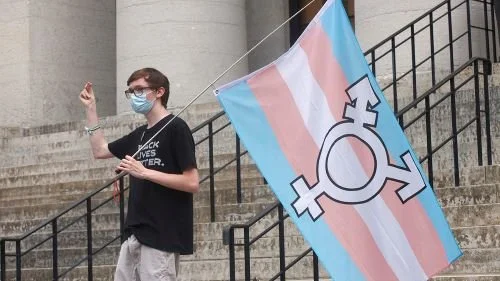
 IN THIS PHOTO: A protester holds the trans flag and snaps in solidarity with other transgender rights advocates at a demonstration outside the Ohio Statehouse on 6th June, 2021/PHOTO CREDIT: Stephen Zenner/SOPA Images/LightRocket via Getty Images)

Above all, it is not down to parents or other individuals as to whether they feel comfortable and it is ‘right’. An archaic attitude stating people are either male and female and stick with that is toxic, harmful, and is a big reason as to why trans people are trolled, attacked, and have a high suicide rate. Craggs argues, in her chapter, that those with concerns should ask themselves why. Why are they upset or angry? Do they know about the transition process? Are they aware of the discrimination trans people face and how hard it is being them? Does that drive their concerns and, if so, what can they do about it? Is the reluctance down to age-old stereotypes and a lack of underlying regarding the gender spectrum? Do they know about the attempted suicide rate and why it is so high? Above all, as Craggs points out too, the people who have an issue with children and teens wh want to get treatment for gender reassignment do not have an issue with cis people making equally or larger life decisions. Gambling, drinking alcohol, smoking and even unprotected sex are things not as inflammatory and divisive as trans people. Why is that seemingly okay or not as misguided, but people who want to make their life better and are unhappy in their skin seen as a bad thing?!

The alternative, sadly, is a life led falsely and one according to other people’s perceptions and sense of what is normal and morally right. Suicide attempts and suicide are all possibilities too. Would they prefer this to someone wanting to be who they want to be?! Last year, Associated Press published an article which said that The World Professional Association for Transgender Health said hormones could be started at age fourteen – that is two years earlier than the group’s previous advice, and some surgeries done at age fifteen or seventeen - a year or so earlier than previous guidance. The group acknowledged potential risks but said it is unethical and harmful to withhold early treatment:

A leading transgender health association has lowered its recommended minimum age for starting gender transition treatment, including sex hormones and surgeries.

The World Professional Association for Transgender Health said hormones could be started at age 14, two years earlier than the group’s previous advice, and some surgeries done at age 15 or 17, a year or so earlier than previous guidance. The group acknowledged potential risks but said it is unethical and harmful to withhold early treatment.

The association provided The Associated Press with an advance copy of its update ahead of publication in a medical journal, expected later this year. The international group promotes evidence-based standards of care and includes more than 3,000 doctors, social scientists and others involved in transgender health issues.

The update is based on expert opinion and a review of scientific evidence on the benefits and harms of transgender medical treatment in teens whose gender identity doesn’t match the sex they were assigned at birth, the group said. Such evidence is limited but has grown in the last decade, the group said, with studies suggesting the treatments can improve psychological well-being and reduce suicidal behavior.

Newly acquired Pittsburgh Penguins defenseman Erik Karlsson holds his first meeting with reporters in Pittsburgh since being traded from the San Jose Sharks, Wednesday, Aug. 9, 2023. (AP Photo/Gene J. Puskar)

Erik Karlsson’s uncertain summer is over. The defenseman is eager to get to work with the Penguins

FILE - Jon Rahm, of Spain, celebrates on the 18th green after winning the Masters golf tournament at Augusta National Golf Club on Sunday, April 9, 2023, in Augusta, Ga. The majors lacked drama, but not inspiration or phenomenal play. The last big event is the Ryder Cup. (AP Photo/Mark Baker, File)

Jon Rahm is the No. 1 seed in the FedEx Cup without history on his side

Milwaukee Brewers' Andruw Monasterio is douced by Willy Adames while being interviewed by Sophia Minnaert after the 10th inning of a baseball game against the Colorado Rockies Wednesday, Aug. 9, 2023, in Milwaukee. The Brewers won 7-6. (AP Photo/Morry Gash)

Brewers beat Rockies 7-6 in 10 innings as Mark Canha scores winning run on a throwing error

Starting treatment earlier allows transgender teens to experience physical puberty changes around the same time as other teens, said Dr. Eli Coleman, chair of the group’s standards of care and director of the University of Minnesota Medical School’s human sexuality program.

But he stressed that age is just one factor to be weighed. Emotional maturity, parents’ consent, longstanding gender discomfort and a careful psychological evaluation are among the others.

“Certainly there are adolescents that do not have the emotional or cognitive maturity to make an informed decision,” he said. “That is why we recommend a careful multidisciplinary assessment.”

The updated guidelines include recommendations for treatment in adults, but the teen guidance is bound to get more attention. It comes amid a surge in kids referred to clinics offering transgender medical treatment, along with new efforts to prevent or restrict the treatment.

Many experts say more kids are seeking such treatment because gender-questioning children are more aware of their medical options and facing less stigma.

Critics, including some from within the transgender treatment community, say some clinics are too quick to offer irreversible treatment to kids who would otherwise outgrow their gender-questioning.

Psychologist Erica Anderson resigned her post as a board member of the World Professional Association for Transgender Health last year after voicing concerns about “sloppy” treatment given to kids without adequate counseling.

She is still a group member and supports the updated guidelines, which emphasize comprehensive assessments before treatment. But she says dozens of families have told her that doesn’t always happen.

“They tell me horror stories. They tell me, ‘Our child had 20 minutes with the doctor’” before being offered hormones, she said. “The parents leave with their hair on fire.’’

Estimates on the number of transgender youth and adults worldwide vary, partly because of different definitions. The association’s new guidelines say data from mostly Western countries suggest a range of between a fraction of a percent in adults to up to 8% in kids.

Anderson said she’s heard recent estimates suggesting the rate in kids is as high as 1 in 5 — which she strongly disputes. That number likely reflects gender-questioning kids who aren’t good candidates for lifelong medical treatment or permanent physical changes, she said.

Still, Anderson said she condemns politicians who want to punish parents for allowing their kids to receive transgender treatment and those who say treatment should be banned for those under age 18.

“That’s just absolutely cruel,’’ she said”.

It all comes down to the wellbeing, safety and happiness of those who want to transition. I think artists like Ne-Yo need to be more nuanced and educated before they share views like this. He may think that he is taking a stand against something he feels is wrong – and has not bothered to do any research or put others first! -, but this can lead to greater stigma and attacks against the trans community. It is not only artists who should be more considered and wary about keeping their personal opinions about issues they should be more educated about private. Quite a few anti-trans public figures use platforms like X to spread hate and misinformation. It is doing a lot of damage. It also inspires others to do the same. For a community who are already attacked and marginalised, they deserve love and support and not judgement and hatred. I think there needs to be more positive conversation from artists about the trans community  - who make up a very small part of artists in the industry. They deserve nothing but…

RESPECT and support.

FEATURE: Not Being Funny in a Foreign Language: Why Are More Male Artists Not Using Their Voice and Platform for Good?

FEATURE:


Not Being Funny in a Foreign Language

IN THIS PHOTO: The 1975


Why Are More Male Artists Not Using Their Voice and Platform for Good?

_________

CREATING more trouble and furore…

PHOTO CREDIT: Jordan Hughes Curtis

that he should, The 1975’s Matty Healy keeps stoking flames which his band started. To be fair, Malaysia’s anti-L.G.B.T.Q.I.A.+ laws and attitudes are insane and inhumane. They violate human rights, and I don’t think any artist should play there until the law changes – and that goes for any other country that imposes such repressive and discrimination laws. The band should do their research before heading to the country. If they played, they should not have anger organisers by performing a gay kiss on stage. I know that would be seen as a positive things in the civilised world but, here, it was unnecessarily thoughtless and petulant – which resulted in the Good Vibes (ironically named!) Festival being cancelled. Now The 1975 are being asked to pay for money lost because of that. NME explain more:

The 1975‘s Matty Healy has addressed the band’s ongoing controversies in Malaysia after they were banned from the country last month.

While performing in Hawaii on August 6, Healy addressed the crowd before the band dove into ’28’. “All I’ll say is that I don’t give a fuck about any white saviour complex bullshit. What I’ll say is that doing the right thing often requires quite a lot of sacrifice and very little reward. And being seen to do the right thing requires very little sacrifice, and that’s when you get all the rewards. And me and Ross [MacDonald] nearly shaved our heads because we thought we were going to prison for being f*gs”.

Healy’s comments come after he and The 1975 were banned from Malaysia after criticising the country’s government for anti-LGBTQ laws during their headlining set at Kuala Lumpur’s Good Vibes Festival.

During their headlining set at the Good Vibes Festival in Kuala Lumpur on Friday July 21, Healy gave a speech calling out the Malaysian government for its hardline stance on gay rights. “I made a mistake. When we were booking shows, I wasn’t looking into it. I don’t see the fucking point, right, I do not see the point of inviting The 1975 to a country and then telling us who we can have sex with,” said Healy.

He continued: “I am sorry if that offends you and you’re religious and it’s part of your fucking government, but your government are a bunch of fucking retards and I don’t care anymore. If you push, I am going to push back. I am not in the fucking mood, I’m not in the fucking mood.”

Healy would go on to kiss bandmate and bassist Ross MacDonald on the lips onstage before their set was cut short two songs later – just seven songs into their setlist – and it was announced that the band were banned from Malaysia and had to leave. The following day, the Malaysian government ordered the cancellation of the remaining two days of Good Vibes Festival.

Yesterday (August 7), Future Sound Asia – the organiser of Good Vibes in Malaysia – revealed that they are pursuing legal action against The 1975, and have sent a Letter Of Claim to the British indie band.

According to a press release, the claim demands that The 1975 acknowledge their liability and compensate Future Sound Asia (FSA) for the damages incurred. It also states that if the band fail to do so, the organisers will pursue legal proceedings in the Courts of England.

“FSA would like to reiterate their strong disapproval of the Band’s behaviour during their performance at GVF2023,” it reads. “In particular, lead singer Matthew Timothy Healy’s use of abusive language, equipment damage, and indecent stage behaviour not only flagrantly breached local guidelines and Malaysian laws but also tarnished the reputation of the 10-year-old festival.”

 Following their actions at the headline set last month, the Malaysian LGBTQ+ community have condemned Healy, suggesting Healy’s actions would make life for the LGBTQ+ community in the country worse.

Additionally, it was reported that by the end of July, 18 police reports had been filed regarding the incident and a class action lawsuit was being readied by Malaysian law firm Thomas Philip – which described the incident as a “deliberate reckless act done knowing well [sic] of the consequences”.

Elsewhere at Lollapalooza this past weekend, The 1975 seemed to poked fun at the Malaysia controversy before performing ‘It’s Not Living If It’s Not With You’.

The moment came during the part of their set where Healy begins to say something controversial, before the band abruptly cut him off with the beginning riff of the song. While performing the song during their set at this year’s Lollapalooza, Healy said: “You want my travel tip? Don’t go to…” before getting cut off by the start of the track”.

 IMAGE CREDIT: kjpargeter via Freepik

Even though I hugely dislike Matty Healy and have said as much in a feature before, I can understand why artists would want to take a stand against anything anti-L.G.B.T.Q.I.A.+. If you are on a stage and you know resisting or protesting would lead to big consequences and no real resolution of the issue, then why do it?! Muse also played at the Good Vibes Festival. Both bands could have cancelled and shared their views back in the U.K. Protesting against festivals like this and urging countries that impose anti-L.G.B.T.Q.I.A.+ to change their ways – otherwise they will not be playing in these nations. I know women in music need to play their part too but, to be fair, many of the very best and biggest are trying to affect change and progress in a number of areas. They seem more proactive and conscientious. That may sound like a generalisation though, in an industry where men still have most of the power and are seen as the most influential. The industry certainly gives them more attention and opportunity. There are many men in the music industry trying to bring about change and highlight inequality. You do not hear many artists doing that. I have said before how it can be a commercial risk taking a stance on an issue. You have to ask whether the risk of staying quiet – and things carrying on as they are – outweighs the risk of speaking out. There are interviews, award ceremonies and gigs where they can speak up and out. From anti-L.B.G.T.Q.I.A.+ laws and discrimination to climate change to gender inequality and sexual assault in the industry (which there are especially few male artists discussing this!), how much of this is being discussed and challenged?!

 PHOTO CREDIT: anna-m. w. via Freepik

I do think that you can maintain a balance of being passionate about causes and talking about it and also focus on music. I have said quite a few times how things like gender equality and sexual assault are subjects men in the industry should do more to address. They do not need to say they understand what a person or group is going through. A hesitation because they feel they are neither qualified enough or have understanding or experience. Saying that they are against nations like Malaysia imposing anti-L.G.B.T.Q.I.A.+ laws or speaking about how unfair it is that there is inequality through the industry is taking a compassionate and proactive stance. Beyond that, there are forms of protest that can force awakening and change. By not playing festivals that are not supporting women and non-binary artists. Refusing to play or sell your music in nations that are morally corrupt. It is quite a brave step - though it is also very necessary. Of course, this applies to all of the music industry. In past years, there has been a lot more activation and action from women. Whether that is protecting their own rights or calling for change, they have not had the same support from men as they should. Matty Healy’s misguided and irresponsible baiting of a serious issue shows that making a joke about something like getting a festival cancelled and not addressing the actual issue is not funny. He and his band could have walked off stage and then condemned the festival and done an interview where they express their support for the L.G.B.T.Q.I.A.+ community. By not doing that, it givers the impression the band do not have that stance.  In more than one sense, men throughout the industry need to use their powerful voices…

FOR good.

FEATURE: Kate Bush: The Deep Cuts: Eat the Music

FEATURE:


Kate Bush: The Deep Cuts

 IN THIS PHOTO: Kate Bush in a promotional photo for Eat the Music in 1993


Eat the Music

_________

I have featured this song a few times…

 IN THIS PHOTO: Kate Bush in 1993/PHOTO CREDIT: Guido Harari

but never in the case of it being a Kate Bush deep cut. Even though it has been played on the radio a little bit, many non-Bush fans do not know about Eat the Music. Not only am I writing about the song because it is a deep cut. I am also celebrating its approaching thirtieth birthday. Rubberband Girl was releases as the first single from The Red Shoes on 6th September, 1993. The following day, Eat the Music was released as a single for the U.S. It was released as an E.P. in a few other countries months later, but never in the U.K. as an A-side. The singles from The Red Shoes had moderate success. Eat the Music did virtually nothing in the U.S. Rubberband Girl was a top twenty here, whilst The Red Shoes’ title track and And So Is Love went into the top thirty. Even Moments of Pleasure did not chart as high as it should – getting to twenty-six in the U.K. I am a bit miffed why the singles didn’t perform as well. Maybe fans found Bush’s most energetic and spirited music more accessible and preferable then. Something slower and more ‘composed’ was not seen as all that appealing. The Red Shoes album got to two in the U.K. I recently posted a feature about Rubberband Girl ahead of its thirtieth anniversary next month. When it comes to ranking her songs and fans choosing their favourite, Rubberband Girl does not get a load of love. Bush herself saw it as a silly Pop song; something quite throwaway or slight (though, as I noted, she released two music videos for it and re-recorded it for 2011’s Director’s Cut). Many prefer and would have liked Eat the Music to come out in the U.K.

Both songs share similarities. They are definitely among the most high-energy and catchy songs on The Red Shoes. In fact, I think Eat the Music has this sort of frenzy. celebration and rush that ranks alongside songs such as Jig of Life (from Hounds of Love) when it comes to that spark, dance and energy! With a delightful video (as part of the short film, The Line, the Cross and the Curve, it was conceived by Bush herself), it is a song that deserves a lot more attention and airplay. Before I get to some of the lyrics, the musicians who played on the song, and some of the reaction the track has got, the Kate Bush Encyclopedia give us some information when it comes to the release and background to Eat the Music:

Song written by Kate Bush. It was originally released as the lead single for The Red Shoes in the USA on September 7, 1993, while everywhere else in the world Rubberband Girl was released. In the UK, a small handful of extremely rare 7" and promotional CD-singles were produced, but were recalled by EMI Records at the last minute. A commercial release followed in the Summer of 1994 in the Netherlands and Australia, along with a handful of other countries. The song's lyrics are about opening up in relationships to reveal who we really are inside.

Formats

The USA CD-single featured the album version and 12" version of 'Eat The Music', along with Big Stripey Lie and Candle In The Wind. A 2 track CD-single, released in the Netherlands in the summer of 1994 featured 'Eat The Music' and You Want Alchemy. The Dutch and Australian 4 track CD-singles featured these two tracks plus the 12" version of 'Eat The Music' [which is actually the 4'55 US edit, see below] and 'Shoedance (The Red Shoes Dance Mix)'. It is worth noting that the Australian CD-single came in a 'Scratch And Sniff' card sleeve.

Versions

There are four versions of 'Eat The Music': the 5'10 minute album version, the 4'55 edit that appears on the American CD-single, a 3'25 minute 'edit radio', released on a French promotional CD-single, and the 9'21 12" version”.

Kate Bush has always been inspired by other cultures and sounds. Wikipedia sources a 1993 interview where Bush does discuss the origin of the song ("Eat The Music was inspired by Madagascan music which I was fortunate enough to hear through Paddy, who gave me some tapes that I loved listening to. The music is so joyous and full of sunshine and it's good to drive to. Justin Vali came to Paddy's attention and soon after, they were both playing valihas to a specially written "Madagascan" song. I wanted it to feel joyous and sunny, both qualities are rife in Justin as a person – so I just had to provide the fruit I hope the result is a colourful one. Again, this was a lot of fun to work on and it features Justin's first lines of sung English which he found hilarious. We found both his singing and his reaction to it delightful." Speaking of the song's lyrics, Bush told Melody Maker in 1993, "It's playing with the idea of opening people up, and the idea of the hidden femininity in a man, and the man in a woman”). If lines like “You put your hands in/And rip my heart out” feel almost horrifying or a metaphor for deceit and broken relationships, it is actually joyous and uplifting. People being opened up to reveal new depths and layers. Bush wanted this colourful and celebratory song to resonate. At a time in her life when there was a lot of professional and personal change and stress, she produced one of her most invigorating, yet underrated and under-played, songs.

All sorts of sweet scents and sensations are put into Eat the Music’s fruit bowl. If some feel the lyrics are weird, clumsy, and they opinion the metaphors and imagery is a bit misconceived and clunky, I will disagree. Eat the Music is a sensation! I especially love this verse: “Take a papaya/You like a guava?/Grab a banana/And a sultana/Rip them to pieces/With sticky fingers/Split the banana/Crush the sultana”. I love all the different exotic and unusual instruments used on Eat the Music! If Rubberband Girl is more basic in terms of its instruments – some nice brass is in the mix, mind! -, then there is something more variegated and ambitious on Eat the Music. There is some brilliant valiha and kabosy work by Justin Vali. Kate Bush’s brother Paddy is on valiha. There is also some tenor saxophone, trombone, and some trumpets. If you interested in knowing what those rarer instruments are I have mentioned, you might have to do some Google-ing! Kate Bush would sort of follow up Eat the Music with something fruit-based a year later.

In 1994, she was involved with composed short instrumental pieces for Fruitopia. It was introduced by Coca-Cola in 1994, and it was targeted at teens and young adults. Only really the second time she had leant her name/music to advertising – following her advertising Seiko watches in Japan in 1978 -, it was an unexpected step. As she did not sing or have to see her name on screen, it was a nice assignment and way of doing something new. Going back to Eat the Music, and the reception at the time was a little odd. Melody Maker felt Eat the Music was "misguided", "all ghastly, Lilt-supping, Notting Hill Carnival calypso". In another review (and going back to Wikipedia), Terry Staunton from NME felt the single was "a shopping list of exotic fruit, as if Kate is pulling Carmen Miranda's hat apart looking for metaphors for love". Parry Gettelman from Orlando Sentinel proclaimed the mighty Eat the Music is "The bizarre fruit metaphors on "Eat the Music" are exceedingly pretentious, but the song has a lilting, African high-life feel”. By contrast, I feel that it is one of Bush’s best mid-career offerings. As wild and joyful as Hounds of Love’s The Big Sky, Eat the Music should be played and discussed more. I think the metaphors work well and are backed by a superb video. If 1993 was not the most successful or memorable year in Kate Bush’s career, the fact she gave us The Red Shoes and brilliant songs like Eat the Music shows she was still on form! As Eat the Music turns thirty on 7th September, I wanted to return to it one more time and…

ENJOY its ripe and flavoursome flesh!

FEATURE: Madonna at Sixty-Five: Five Underrated Studio Albums Worth Exploring

FEATURE:


Madonna at Sixty-Five

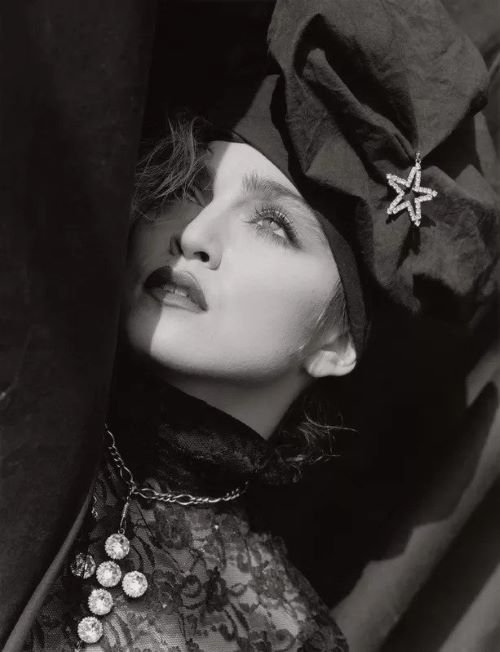
IN THIS PHOTO: Madonna in 1994/PHOTO CREDIT: Herb Ritts 


Five Underrated Studio Albums Worth Exploring

_________

THIS is my final feature…

 IN THIS PHOTO: Madonna in 1984/PHOTO CREDIT: Herb Ritts

about Madonna ahead of her sixty-fifth birthday on 16th August (Wednesday). I have compiled a couple of Madonna-related playlist recently. There is debate as to which of her albums are the best. Some would say 1989’s Like a Prayer or 1998’s Ray of Light. Early work like her eponymous 1983 debut and 2005’s Confessions on a Dancefloor are up there. I think some of her later work gets overlooked. That said, even early-period albums such as Like a Virgin (1984) and True Blue (1986) are not as treasured, discussed and explored as they should be. It is a subjective measure, but below are the five Madonna solo albums I think are underrated. I have also looked at critical lists and there is some crossover. In terms of not getting all the high praise they deserve and deeper cuts being ignored, in chronically order, below are five studio albums from the Queen of Pop that deserve a second look. As she turns sixty-five on Wednesday, I wanted to publish one more feature about…

THE tremendous and iconic Madonna.

____________

Like a Virgin

Release Date: 12th November, 1984

Labels: Sire/Warner Bros.

Producers: Nile Rodgers/Steve Bray/Madonna

Standout Tracks: Angel/Like a Virgin/Pretender

Review:

Madonna had hits with her first album, even reaching the Top Ten twice with "Borderline" and "Lucky Star," but she didn't become a superstar, an icon, until her second album, Like a Virgin. She saw the opening for this kind of explosion and seized it, bringing in former Chic guitarist Nile Rodgers in as a producer, to help her expand her sound, and then carefully constructed her image as an ironic, ferociously sexy Boy Toy; the Steven Meisel-shot cover, capturing her as a buxom bride with a Boy Toy belt buckle on the front, and dressing after a night of passion, was as key to her reinvention as the music itself. Yet, there's no discounting the best songs on the record, the moments when her grand concepts are married to music that transcends the mere classification of dance-pop. These, of course, are "Material Girl" and "Like a Virgin," the two songs that made her an icon, and the two songs that remain definitive statements. They overshadow the rest of the record, not just because they are a perfect match of theme and sound, but because the rest of the album vacillates wildly in terms of quality. The other two singles, "Angel" and "Dress You Up," are excellent standard-issue dance-pop, and there are other moments that work well ("Over and Over," "Stay," the earnest cover of Rose Royce's "Love Don't Live Here"), but overall, it adds up to less than the sum of its parts -- partially because the singles are so good, but also because on the first album, she stunned with style and a certain joy. Here, the calculation is apparent, and while that's part of Madonna's essence -- even something that makes her fun -- it throws the record's balance off a little too much for it to be consistent, even if it justifiably made her a star” – AllMusic

Key Cut: Material Girl

Erotica

Release Date: 20th October, 1992

Labels: Maverick/Sire/Warner Bros.

Producers: Madonna/Shep Pettibone/André Betts

Standout Tracks: Fever/Deeper and Deeper/Rain

Review:

IT TOOK MADONNA ten years, but she finally made the record everyone has accused her of making all along. Chilly, deliberate, relentlessly posturing. Erotica is a post-AIDS album about romance — it doesn’t so much evoke sex as provide a fetishistic abstraction of it. She may have intended to rattle America with hot talk about oral gratification and role switching, but sensuality is the last thing on the album’s mind. Moving claustrophobically within the schematic confines of dominance and submission, Erotica plays out its fantasies with astringent aloofness, unhumid and uninviting. The production choices suggest not a celebration of the physical but a critique of commercial representations of sex — whether Paul Verhoeven’s, Bruce Weber’s or Madonna’s — that by definition should not be mistaken for the real thing. It succeeds in a way the innocent post-punk diva of Madonna and the thoughtful songwriter of Like a Prayer could not have imagined. Its cold, remote sound systematically undoes every one of the singer’s intimate promises.]

Clinical enough on its own terms when compared with the lushness and romanticism of Madonna’s past grooves, Erotica is stunningly reined in; even when it achieves disco greatness, it’s never heady. Madonna, along with coproducers Andre Betts and Shep Pettibone, tamps down every opportunity to let loose — moments ripe for a crescendo, a soaring instrumental break, a chance for the listener to dance along, are over the instant they are heard. Erotica is Madonna’s show (the music leaves no room for audience participation), and her production teases and then denies with the grim control of a dominatrix.

Against maraca beats and a shimmying horn riff, “Erotica” introduces Madonna as “Mistress Dita,” whose husky invocations of “do as I say” promise a smorgasbord of sexual experimentation, like the one portrayed in the video for “Justify My Love.” But the sensibility of “Erotica” is miles removed from the warm come-ons of “Justify,” which got its heat from privacy and romance — the singer’s exhortations to “tell me your dreams.” The Madonna of “Erotica” is in no way interested in your dreams; she’s after compliance, and not merely physical compliance either. The song demands the passivity of a listener, not a sexual partner. It’s insistently self-absorbed — “Vogue” with a dirty mouth, where all the real action’s on the dance floor.

Look (or listen) but don’t touch sexuality isn’t the only peep-show aspect of this album; Erotica strives for anonymity the way True Blue strove for intimacy. With the exception of the riveting “Bad Girl,” in which the singer teases out shades of ambiguity in the mind of a girl who’d rather mess herself up than end a relationship she’s too neurotic to handle, the characters remain faceless. It’s as if Madonna recognizes the discomfort we feel when sensing the human character of a woman whose function is purely sexual. A sex symbol herself, she coolly removes the threat of her own personality.

Pure disco moments like the whirligig “Deeper and Deeper” don’t need emotional resonance to make them race. But the record sustains its icy tone throughout the yearning ballads (“Rain,” “Waiting”) and confessional moods (“Secret Garden”). Relieved of Madonna’s celebrity baggage, they’re abstract nearly to the point of nonexistence — ideas of love songs posing as the real thing. Even when Madonna draws from her own life, she’s all reaction, no feeling: The snippy “Thief of Hearts” takes swipes at a man stealer but not out of love or loyalty toward the purloined boyfriend, who isn’t even mentioned.

By depersonalizing herself to a mocking extreme, the Madonna of Erotica is sexy in only the most objectified terms, just as the album is only in the most literal sense what it claims to be. Like erotica, Erotica is a tool rather than an experience. Its stridency at once refutes and justifies what her detractors have always said: Every persona is a fake, the self-actualized amazon of “Express Yourself” no less than the breathless baby doll of “Material Girl.” Erotica continually subverts this posing to expose its function as pop playacting. The narrator of “Bye Bye Baby” ostensibly dumps the creep who’s been mistreating her, but Madonna’s infantile vocal and flat delivery are anything but assertive — she could be a drag queen toying with a pop hit of the past. Erotica is everything Madonna has been denounced for being — meticulous, calculated, domineering and artificial. It accepts those charges and answers with a brilliant record to prove them” – Rolling Stone

Key Cut: Erotica

Bedtime Stories

Release Date: 25th October, 1994

Labels: Maverick/Sire/Warner Bros.

Producers: Madonna/Dallas Austin/Babyface/Dave Hall/Nellee Hooper

Standout Tracks: Survival/Secret/Human Nature

Review:

AFTER THE DRUBBING she has taken in the last few years, Madonna deserves to be mighty mad. And wounded anger is shot through her new album, Bedtime Stories, as she works out survival strategies. While always a feminist more by example than by word or deed, Madonna seems genuinely shocked at the hypocritical prudishness of her former fans, leading one to expect a set of biting screeds. But instead of reveling in raised consciousness, Bedtime Stories demonstrates a desire to get unconscious. Madonna still wants to go to bed, but this time it’s to pull the covers over her head.

Still, in so doing, Madonna has come up with some awfully compelling sounds. In her retreat from sex to romance, she has enlisted four top R&B producers: Atlanta whiz kid Dallas Austin, Kenneth “Babyface” Edmonds, Dave “Jam” Hall and Britisher Nellee Hooper (Soul II Soul), who add lush soul and creamy balladry. With this awesome collection of talent, the record verily shimmers. Bass-heavy grooves push it along when more conventional sentiments threaten to bog it down. Both aspects put it on chart-smart terrain.

A number of songs — “Survival,” “Secret,” “I’d Rather Be Your Lover” (to which Me’Shell NdegéOcello brings a bumping bass line and a jazzy rap) — are infectiously funky. And Madonna does a drive-by on her critics, complete with a keening synth line straight outta Dre, on “Human Nature”: “Did I say something wrong?/Oops, I didn’t know I couldn’t talk about sex (I musta been crazy).”

But you don’t need her to tell you that she’s “drawn to sadness” or that “loneliness has never been a stranger,” as she sings on the sorrowful “Love Tried to Welcome Me.” The downbeat restraint in her vocals says it, from the tremulously tender “Inside of Me” to the sob in “Happiness lies in your own hand/It took me much too long to understand” from “Secret.”

The record ultimately moves from grief to oblivion with the seductive techno pull of “Sanctuary.” The pulsating drone of the title track (co-written by Björk and Hooper), with its murmured refrain of “Let’s get unconscious, honey,” renounces language for numbness.

Twirled in a gauze of (unrequited) love songs, Bedtime Stories says, “Fuck off, I’m not done yet.” You have to listen hard to hear that, though. Madonna’s message is still “Express yourself, don’t repress yourself.” This time, however, it comes not with a bang but a whisper” - Rolling Stone

Key Cut: Take a Bow

American Life

Release Date: 21st April, 2003

Labels: Maverick/Warner Bros.

Producers: Madonna/Mirwais Ahmadzaï

Standout Tracks: American Life/Hollywood/Nothing Fails

Review:

When Entertainment Weekly inexplicably placed Madonna’s debut LP at number five on its list of modern classics, aptly calling the eight post-disco, post-punk dance songs that comprise the album “scrappy,” it failed to acknowledge that Madonna (and Madonna) would likely have been forgotten along with jelly bracelets and headbands fashioned out of torn scarves had the album not been followed by at least a decade’s worth of some of the most captivating pop music ever recorded. Madonna herself even likened the album to music for aerobics classes and was eager to shack up with Chic’s Nile Rodgers and flex her creative muscle for her career-defining follow-up, Like a Virgin.

This summer, Madonna turns 25, but 2008 also marks the fifth anniversary of a wholly different Madonna album, one that couldn’t possibly be any further removed from that scrappy debut: American Life. You’d never even know the same artist made both albums. Aside from “Holiday,” a song she didn’t write, Madonna seemed more interested in ruling the world than saving it back in 1983; two decades later, American Life found the pop singer at her most political, confrontational, and to many, abrasive. It was her first and, to date, only flop, scanning less than a million copies despite its platinum certification and sporting no hits besides the forward-thinking Bond theme “Die Another Day,” which cracked the Top 10 the previous fall and was—dubiously, at least it seemed at the time—tacked onto the tracklist in a move that ultimately insured that American Life wouldn’t be Madonna’s only hitless album.

As with almost every Madonna album, save for the first one, it’s nearly impossible to talk about the music without addressing the cultural and social context that produced it. Some have claimed that’s why the singer’s image and marketing has always been the focus of her career, at the cost of fairly assessing the actual music, but this fact only strengthens the case for Madonna as a true artist. Art without cultural context is like war without a political one. And this time around, politics and war itself played a pivotal role in the construction, marketing, and ultimate perception and consumption (or lack thereof) of American Life—despite there being very little in the way of political commentary throughout the album.

More so than any other artist who emerged in the video era, Madonna’s songs can’t (and shouldn’t) be divorced from the images she assigns to them, and American Life’s failure can be traced directly to the video for its title track (we’ll ignore, for a moment, the actual song). “American Life” may have been the first time in Madonna’s career where she voluntarily censored herself; moreover, it may have been the first time she made a creative choice out of fear.

In the original unreleased version of the video, directed by Jonas Akerlund, Madonna and a band of unconventional beauties storm a fashion show that includes models dressed in military garb and gas masks, Middle Eastern children modestly strutting their stuff, video screens depicting scenes from war, and limbless soldiers trailing blood down the catwalk. Madonna and her fashion terrorists pummel the paparazzi with water from an industrial-size hose while the audience continues to hoot and holler at the spectacle.

The backlash Madonna likely would have suffered from an already-emboldened and not-so-far-anymore far right would have made the whipping she endured following Sex seem like harmless roleplay. But the video turned a trite, self-aggrandizing, and often awkward song about privilege into a startling comment on the obscenity of war and materialism—one that would have undoubtedly been looked back on as brave.

Madonna couldn’t possibly have intended to make a pop album. American Life is a folk album in the purest definition of the term—and it’s reflected right in the title. Though it owes plenty to the protest folk of the 1960s, the album’s anti-capitalist bent presented a dichotomy that’s been endemic in Madonna’s work since she co-opted “Diamonds Are a Girl’s Best Friend” and transformed it into an anthem for self-empowerment back in the ’80s. “What I want is to work for it,” she sings nakedly on “Easy Ride,” “feel the blood and sweat on my fingertips.” It’s the complete antithesis of what it means to be a Material Girl.

American Life is deeply personal (Madonna writes candidly about her relationships with her husband, children, and God) but only immediately relatable if you just so happen to be grappling with what it means to be one of the most famous people in the world. In other words, it’s profoundly truthful, but its audience is limited by design.

On the hymnal folk ballad “X-Static Process,” Madonna sounds almost childlike when she begs: “Jesus Christ, won’t you look at me/I don’t know who I’m supposed to be.” Mortality is a key issue on American Life, an inevitable existential crisis for an artist who reached godlike levels of idolatry and fame and stayed there longer than anyone else in modern pop-culture history without self-destructing. Questions like “Why am I here?” and “What is the purpose of all of this?” were inescapable. Madonna’s vocals are reminiscent of her pre-fame days on the guitar-driven “I’m So Stupid,” a track with a decidedly punk-rock sensibility on which she reassesses the value of the material world: “Please don’t try to tempt me/It was just greed/And it won’t protect me,” a sentiment she reprises on the wall of a bathroom stall in the “American Life” video.

In hindsight, American Life isn’t the masterpiece that Erotica so quickly revealed itself to be. It’s frequently self-indulgent, misguided, unpleasant, difficult to listen to, silly yet somehow humorless, but it’s also consistent, uncompromising, and unapologetic. The album is a testament to the artist’s willingness to take risks and her refusal to stay inside her comfort zone. 

In the grand scheme of things, the album might rank as one of the weakest in Madonna’s extensive catalog, and the ones that followed have been as good, if not better, but American Life stands as the last time Madonna seemed to make music without the primary objective of scoring a hit. It’s interesting to imagine what Madonna’s career would look like today had American Life been a success: For better or worse, that pink leotard and Justin duet might never have existed” – SLANT

Key Cut: Love Profusion

Rebel Heart

Release Date: 6th March, 2015

Label: Interscope

Producers: Madonna/Diplo/Ariel Rechtshaid/Avicii/Blood Diamonds/Billboard/Jason Evigan/Shelco Garcia & Teenwolf/Kanye West/Mike Dean/Toby Gad/AFSHeeN/Josh Cumbee/Salem Al Fakir/Symbolyc One/Magnus Lidehäl/lVincent Pontare/Astma & Rocwell/Carl Falk

Standout Tracks: Living for Love/Ghosttown/Joan of Arc

Review:

Rebel Heart was introduced to the world with an indiscipline uncharacteristic of Madonna. Blame it on hackers who rushed out a clutch of unfinished tracks at the end of 2014, a few months before the record's scheduled spring release. Madonna countered by putting six full tracks up on a digital service, a move that likely inflated the final Deluxe Edition of Rebel Heart up to a whopping 19 tracks weighing in at 75 minutes, but even that unveiling wasn't performed without a hitch: during an ornate performance of "Living for Love," she stumbled on-stage at the BRIT Awards. Such cracks in Madge's armor happily play into the humanity coursing through Rebel Heart (maybe the hiccups were intentional after all?), a record that ultimately benefits from its daunting mess. All the extra space allows ample room for detours, letting Madonna indulge in both Erotica-era taboo-busting sleaze ("Holy Water") and feather-light pop ("Body Shop"). Although she takes a lingering look back at the past on "Veni Vidi Vici" -- her cataloging of past hits walks right on the edge of camp, kept away from the danger zone by a cameo from Nas -- Rebel Heart, like any Madonna album, looks forward. Opener "Living for Love" announces as much, as its classic disco is soon exploded into a decibel-shattering EDM pulse coming courtesy of co-producer Diplo. Madonna brings him back a few more times -- the pairing of the reggae-bouncing "Unapologetic Bitch" and Nicki Minaj showcase "Bitch I'm Madonna," their titles suggesting vulgarity, their execution flinty and knowing -- but she cleverly balances these clubby bangers with "Devil Pray," an expert evocation of her folktronica Y2K co-produced by Avicii, and "Illuminati," a sleek, spooky collaboration with Kanye West. These are the anchors of the album, grounding the record when Madonna wanders into slow-churning meditation, unabashed revivals of her '90s adult contemporary mode, casual confession ("I spent sometime as a narcissist"), and defiant celebrations of questionable taste. Undoubtedly, some of this flair would've been excised if the record was a manageable length, but the blessing of the unwieldiness is that it does indeed represent a loosening of Madonna's legendary need for control. Certainly, the ambition remains, along with the hunger to remain on the bleeding edge, but she's allowing her past to mingle with her present, allowing her to seem human yet somewhat grander at the same time” – AllMusic

Key Cut: Bitch I’m Madonna

FEATURE: One for the Record Collection! Essential September Releases

FEATURE:


One for the Record Collection!

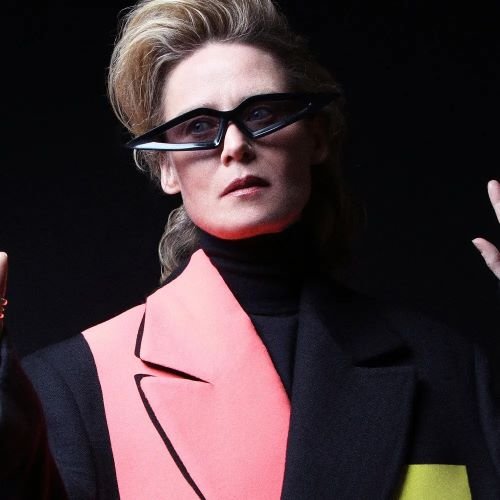
IN THIS PHOTO: Róisín Murphy/PHOTO CREDIT: Nik Pate


Essential September Releases

_________

THERE are some great albums….

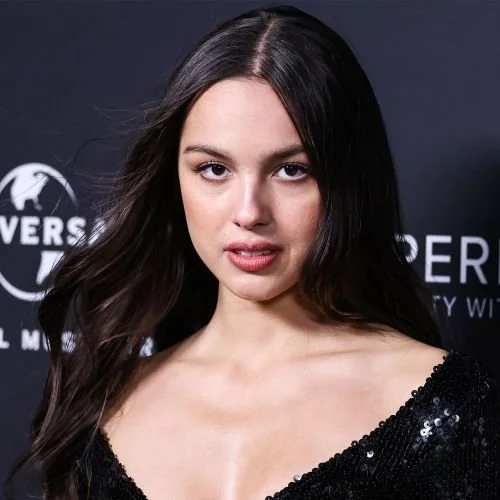
 IN THIS PHOTO: Olivia Rodrigo/PHOTO CREDIT: Splash News

due next month that you will want to pre-order. I am going to highlight them here. First, and starting with 1st September, and there are a couple of albums worth investigating. Slowdive’s Everything Is Alive an album I would recommend you pre-order. For most of these albums, I am going to link to Rough Trade’s website, as they have a great reputation and know their music! These albums will be available on other websites too.

Everything Is Alive, Slowdive’s 5th record, is exactly what the title suggests: an exploration into the shimmering nature of life and the universal touch points within it. While there are parts of this record that could sit neatly next to the atmospheric quality of 1995’s Pygmalion; everything is alive also manages to break down the boundaries of what’s come before it.  Spanning psychedelic soundscapes, pulsating 80’s electronic elements and John Cale inspired journeys, the album lands immediately as something made for 2023 and beyond.

For a genre that is often thought of as divisive, and often warrants introspection, here Slowdive show their craft as the masters of it by pushing it outwards, beyond the singular; the end result being a record which feels as emotional and cathartic as it is hopeful”.

I would say that you should also check out The Pretenders’ Relentless. This is an iconic band that keep on releasing sensational music. I am looking forward to their new album, and I would say that you should go and pre-order it if you are a fan. Led by the amazing Chrissie Hynde, the band have lost none of their gold touch and quality! It does seem like Relentless is going to rank alongside their very best! There is not a lot of information available when it comes to the album, its themes and anything like that, but Rough Trade do offer some basics. In any case, if you are a fan of The Pretenders, it will come as no surprise that this is business as usual for the amazing band:

The Pretenders release their 14th studio album. Produced by David Wrench and recorded at Battery Studios in West London, Relentless is released via Parlophone. It features 12 new songs co-written by the iconic Chrissie Hynde and Pretenders' guitarist James Walbourne”.

I am going to jump to the next week. There are seven albums from that week that you should think about purchasing. I better get down to things! One that should be on your radar is Coach Party’s KILLJOY. The Isle of Wight band are among my favourite around. They have such a promising future. This album is one that I think will firmly put them on the map. They have honed their craft by playing live. Not that they were not brilliant at the start, but you can feel and hear this new quality and sense of purpose from their songs. It is a trajectory that is going to continue strong. Go and pre-order the fantastic KILLJOY:

After three striking 10" EP's - Isle of Wight's Coach Party unleash their debut album. It's everything we hoped for and more. The production is crisp and clear whilst the playing is of a band that have spent the last few years playing hundreds of gigs / festivals and learning their craft. The 10 tracks are upbeat and noisy guitar pop that hints at the debut Elastica album, The Breeders, The Big Moon and Nirvana. It really is that good”.

The next album that I want to suggest you keep an eye out for is Courtney Barnett’s End of the Day (Music from the Film Anonymous Club). The Australian artist keeps on delivering some of the most instantly recognisable and sensational albums. I am excited to see what End of the Day (Music from the Film Anonymous Club) offers up. Rather than it being a traditional studio album, Rough Trade explain what we can expect on 8th September:

End of the Day is a collection of original music created by Courtney Barnett and Stella Mozgawa for Courtney's 2022 award-winning documentary, Anonymous Club (premiered in the U.S. at SXSW 2022). The soundtrack album features 17 ambient tracks, reworked and perfected in the studio. It feels like a new chapter, but also unmistakably like Courtney Barnett”.

Apologies that there is not a great deal of information for some of the albums I have recommended so far. It can be a bit tricky finding out too much if the press team or label does not offer too much. I guess we will find out more on each of the albums closer to their release dates. I am going to move to James Blake’s Playing Robots Into Heaven. Again, there is scant information available at this stage. You will be familiar with James Blake and his music. Playing Robots Into Heaven follows on from 2021’s Friends That Break Your Heart. One of the U.K.’s best artists, Blake always delivers something very special. It may not convert non-fans of James Blake but, if you do like his stuff, it is well worth checking out his upcoming album. This is what we know about Playing Robots Into Heaven so far:

Playing Robots Into Heaven follows the critically acclaimed Friends That Break Your Heart and will see James return to the electronic roots of his Hessle, Hemlock and R&S Records days”.

Four more albums from 8th September I want to bring in. The first is Olivia Rodrigo’s GUTS. I think that this could rank alongside the best of the year. Following 2021’s acclaimed SOUR, GUTS is going to be another huge release from the Californian-born superstar. I would recommend that everyone pre-orders this album. Again, there is not a lot available regarding details and insights, but we do get a bit of personal insight from Rodrigo:

Grammy-winning recording artist Olivia Rodrigo releases her new album, GUTS via Geffen Records. She recorded the album with producer Daniel Nigro, who also collaborated with her on SOUR, her chart-topping, 4x Platinum debut album.

“For me, this album is about growing pains and trying to figure out who I am at this point in my life,” says Olivia Rodrigo. “I feel like I grew 10 years between the ages of 18 and 20—it was such an intense period of awkwardness and change. I think that’s all just a natural part of growth, and hopefully the album reflects that.” On “vampire,” the album’s first single, Rodrigo’s increased maturity and bold confidence are apparent”.

One of my favourite artists is Róisín Murphy. She is releasing Hit Parade on 8th September. The Disco and Dance queen has offered some cuts from her forthcoming album. It is going to be another gem. I have so much love and respect for what she does. I would encourage you all to pre-order the mighty Hit Parade. It is definitely not going to disappoint in any way:

One of music’s most innovative artists, Queen of Electronic Music and the Avant-Garde, Róisín Murphy is back with a much anticipated new album - her sixth - in collaboration with the legendary producer DJ Koze. Hit Parade, on Ninja Tune, sees the idiosyncratic trailblazer masterfully spanning genres such as disco, soul, pop and house. The album features 13 indelible tracks and is one of the albums of 2023.

Bonus CD features a selection of tracks live from the recent Royal Albert Hall gig”.

I might include an eighth album from 8th September, as I forgot that Romy Mid Air is out that week. The debut album from one third of the xx, happily there is a bit more detail about this much-anticipated album from a tremendous talent:

Romy releases her highly-anticipated debut solo album. The UK singer, songwriter and DJ, who previously released three acclaimed albums with her band The xx, releases Mid Air via Young.

Mid Air is an album about celebration, sanctuary and salvation on the dance floor. It's an album that deals with love, grief, relationships, identity and sexuality and is a love letter to the queer clubs where Romy found community and connection. It’s a coming-out album in a way, although she came out in her personal life a long time ago, but it’s also a coming-through album – through grief and heartache, towards euphoria.

Mid Air sees Romy working alongside producers Fred again.. and Stuart Price, as well as her bandmate Jamie xx on recent single “Enjoy Your Life”. Also featuring the previous single (and crossover anthem) “Strong”, Mid Air is the perfect encapsulation of a sound Romy describes as “emotional music to dance to”. It’s a sound that’s set to unify dancefloors, distilling Romy’s love of club classics and classic song writing and finding the sweet spot – like much of Romy’s favourite music – between euphoria, escapism, sadness and melancholy.

The Fred again..-produced “Loveher” is a pivotal track for Romy and acts as both the album opener and the first song to be written for the record. Romy and Fred were first paired together to write songs for other people, but their fast friendship and musical connection proved to be a spark for something new. After writing “Loveher”, a declarative pop song about the intimacy of falling in love with a woman, “Fred asked me, who could this be for?” explains Romy “and I tentatively said… ‘maybe me?’”. A proud and positive queer love story, this was the beginning of Mid Air”.

Another corker due on a very busy week is The Chemical Brothers’ For That Beautiful Feeling. It is a pretty intriguing title from the legendary duo. I hope that people do go and pre-order this magnificent album from Tom Rowlands and Ed Simons:

The Chemical Brothers - one of the most acclaimed and innovative electronic duo in the world - release their tenth studio album For That Beautiful Feeling.

Recorded in the band’s own studio just near the south coast, this is a record that hunts for and captures that that wild moment when sound overwhelms you and almost pulls you under yet ultimately lets you ride its wave, to destinations unknown. It’s a record that pinpoints the exact moment you lose all control, where you surrender and let the music move you as if pulled by an invisible thread”.

I am going to move on after this suggestion. The Coral’s Sea of Mirrors is one you’ll need to pre-order. This band are among my favourite, so I am interesting to hear what their latest album sounds like. It looks like it is shaping up to be among the very best of this year:

Following the widely-acclaimed 2021 double album, Coral Island, The Coral announce ‘surreal Italian spaghetti western soundtrack’, Sea Of Mirrors.

Bridging their UK Chart No.2 success and the sun-bleached sets of imagined films, the physical formats-only release of Holy Joe’s Coral Island Medicine show makes it two albums in one year Singular psych-folk-pop-rock wanderers, The Coral revel in a resurgent phase of artistic enquiry and release two albums at the same time. Imagining the scorched sand, cardboard cowboys and flooded sets of a never-made Italian spaghetti western, the single 'Wild Bird' snaps the clapperboard on a new story playing out all the way to the release of Sea Of Mirrors, the band’s eleventh studio album ‘proper’.

After 2021’s expansive Coral Island album landed the Number 2 spot on the UK’s Official Album Chart and won unanimous critical praise, material for two, further albums occurred to the band. Amidst that songwriting scirroco, it was a script was written by keyboard player, Nick Power, and vintage cinema foyer poster artwork was created by drummer, Ian Skelly that confirmed Sea Of Mirrors’ vivid concept and the blueprint for The Coral to move beyond all expectations once again. The film’s envisaged opening theme, Wild Bird’s evocative sunlit shadows come laced with deft string arrangements courtesy of the album’s co-producer, Sean O’Hagan (The High Llamas, Stereolab) who was welcomed into The Coral fold as one of a number of guests and collaborators featured across Sea Of Mirrors’ 13-tracks.

Between the two albums, the band additionally count actors Cillian Murphy and John Simm, plus Love guitarist, Johnny Echols, as contributors. Former band member, Bill Ryder-Jones joins the songwriting credits for Sea Of Mirrors. The Sundowners are also amongst guests adding their voices to the album. James Skelly says of Wild Bird: “Like most of The Coral’s best known songs you could pick out, it was written in about five minutes. Once the album concept was clear, this was us imagining the theme tune for an Italian western directed by Fellini with a Richard Yates-written script. It’s us asking ourselves: what would have happened if Lee Hazlewood had produced a Gene Pitney song written by Townes Van Zandt?” Sea Of Mirrors and Holy Joe’s Coral Island Medicine Show became the last albums to be recorded at Liverpool’s legendary Parr Street Studios, a long-term home to The Coral and numerous other bands from inside and outside the city prior to its closure last year. Opening sessions with O’Hagan in London, returning to Parr Street and, eventually, completing in final sessions at Skelly and producer, Chris Taylor’s new recording facility, Kempston Street Studios, the album finds itself a part of music history for reasons beyond it’s place in The Coral’s extensive catalogue”.

There are many albums due out on 15th September that you might be interested in. Rather than discuss them all, I feel there are five that you need to get. I will start with Corinne Bailey Rae’s Black Rainbows. It seems that her new album is a change in sonic direction. You will want to pre-order it:

Black Rainbows is a musical project inspired by the objects and artworks collected by Theaster Gates at the Stoney Island Arts Bank in Chicago. Situated at the Great Grand Crossing neighbourhoods of Chicago's South Side, Stoney Island Arts Bank is a cathedral to Black Art, a curated collection of Black archives comprising books, sculpture, records, furniture and problematic objects from America's past. As well as being a site for archive, the Arts bank is also a place for convening. Bailey Rae attended The Black Artists Retreat there in 2017 and performed in the space.

Wide ranging in it's themes, Black Rainbows' subjects are drawn from encounters with objects in the Arts Bank. Taking us from the rock hewn churces of Ethiopia, to the journeys of Black Pioneers Westward, from Miss New York Transit Queen 1957, to how the sunset appears from Harriet Jacobs' loophole.Black Rainbows explores Black femininity, Spell Work, Inner Space/Outer Space, time collapse and ancestors, the erasure Black childhood and music as a vessel for transcendence.

The project is released in various iterations - live performances, books, visuals, lectures, exhibitions, and more.Sonically, the album is a multi-genre mix of the progressive R&B, neo soul sound that will be familiar to fans but it also contains rock, jazz and electronic elements. The album was produced by S.J. Brown and Corinne Bailey Rae”.

The magnificent Demi Lovato is releasing REVAMPED on 15th September. If you are a fan of their music or not, then I would suggest that this is an album that you need in your collection. Here is what you need to know:

Grammy-nominated global superstar Demi Lovato releases REVAMPED featuring rock versions of her hit songs. “Sorry Not Sorry (Rock Version)” features energetic new vocals and updated production from Warren ‘Oak’ Felder, Keith "Ten4" Sorrells, and Alex Nice, turning the iconic hit into an electrifying new smash. Legendary guitarist Slash of Guns N’ Roses, often heralded as the greatest guitarist of all time, provides razor sharp guitar riffs and a high-intensity solo fit for the revamped version of the song. “Sorry Not Sorry” was originally released six years ago as the lead single from Demi’s sixth studio album, Tell Me You Love Me. “Sorry Not Sorry (Rock Version)” follows the release of “Heart Attack (Rock Version)” and “Cool for the Summer (Rock Version),” with much more to come on REVAMPED. With all new vocals and production, the 10-track album REVAMPED sees Demi reimagine her career-defining songs with a fresh perspective that reflects her current artistic vision. The re-recorded music showcases Demi’s artistic growth and versatility, as she seamlessly evolves her songs from pop to rock while maintaining her signature powerhouse vocals”.

Let’s focus on Madison Beer’s Silence Between Songs. An incredible artist that some might not know about, I would still recommend you pre-order it. If you need some background and advice, then this website fills in the gaps. Madison Beer is truly a sensational artist who is going to be in the industry for many years to come:

Madison Beer's highly anticipated second album has experienced a tumultuous journey since its conception. Initially, Beer had planned to release both her debut album, "Life Support," and her sophomore album in 2021. However, unforeseen circumstances led to multiple delays.

After a Dropbox hack, there was a significant leak of several songs from the second album. In addition to the leak, Beer faced challenges in collaborating with her writing team due to scheduling conflicts during her Life Support tour. As a result, the album's release was pushed back to 2022. Further complications arose, leading to the album's release being delayed once more to 2023.

On May 31, Beer finally announced the album on social media with the release date of September 15, 2023. after the announcement of her sophomore album, Madison's webstore updated with a countdown to June 2 for the album preorder.

Beer described the sound as being very different from Life support. There will be no "bops" on the album and is aimed to mostly consist of ballads.

In an interview with Rolling Stone, Beer stated that Lana Del Rey had listened to her album and particularly enjoyed the opening track”.

I will round off this week with Mitski’s The Land Is Inhospitable And So Are We. If you are not sure who Mitski is or why this album is worth getting then here is some more information that may sway your decision:

Sometimes, Mitski says, it feels like life would be easier without hope, or a soul, or love. But when she closes her eyes and thinks about what’s truly hers, what can’t be repossessed or demolished, she sees love. “The best thing I ever did in my life was to love people,” Mitski says. “I wish I could leave behind all the love I have, after I die, so that I can shine all this goodness, all this good love that I’ve created onto other people.” She hopes her newest album, The Land Is Inhospitable and So Are We, will continue to shine that love long after she’s gone. Listening to it, that’s precisely how it feels: like a love that’s haunting the land.

Love is always radical, which means that it always disrupts, which means that it always takes work to receive it. This land, which already feels inhospitable to so many of its inhabitants, is about to feel hopelessly torn and tossed again – at times, devoid of love. This album offers the anodyne. “This is my most American album,” Mitski says about her seventh record, and the music feels like a profound act of witnessing this country, in all of its private sorrows and painful contradictions. But “maybe it’s beyond witnessing,” she says. At times, it feels like the album is an exercise in negative capability – a fearless embodiment and absorption of the pain of other bodies. When I ask her what the album would look like, if it were a person, she says it would be someone middle-aged and exhausted, perhaps someone having a midlife crisis. But through the daily indignity and exhaustion, something enormous and ecstatic is calling out. In this album, which is sonically Mitski’s most expansive, epic, and wise, the songs seem to be introducing wounds and then actively healing them. Here, love is time-traveling to bless our tender days, like the light from a distant star.

Mitski wrote these songs in little bursts over the past few years, and they feel informed by moments of noticing – noticing a sound that’s out of place, a building that groans in decay, an opinion that splits a room, a feeling that can’t be contained in a body. It was recorded at both the Bomb Shelter in East Nashville and the Sunset Sound Studios in Los Angeles. The album incorporates an orchestra arranged and conducted by Drew Erickson, as well as a full choir of 17 people - 12 in LA and 5 in Nashville - arranged by Mitski. And for the first time, it felt important to Mitski to have a band recording live together in the studio, to create this new sublime sound. Working with her longtime producer Patrick Hyland, the album has a wide-range of references, from Ennio Morricone’s bombastic Spaghetti Western scores to Carter Burwell’s tundra-filling Fargo soundtrack, from the breathy intimacy of Arthur Russell to the strident aliveness of Scott Walker or Igor Stravinsky, from the jubilation of Caetano Veloso to the twangy longing of Faron Young”.

I am going to jump to 22nd September and round off soon. Again, there are plenty of options regarding great and interesting albums. I will choose three that you should own. I think there are two from 29th that are worth getting, so let’s say five, maybe six more, to go. One of the most anticipated albums of this year is going to be Kylie Minogue’s TENSION. After the success of the Padam Padam single, so many people are keen to snap up this album. Go and pre-order your copy:

Kylie’s brand new studio album, Tension, a record of euphoric, empowered dance floor bangers and sultry pop cuts. Tension is eleven tracks of unabashed pleasure-seeking, seize-the-moment, joyful pop tunes with the hypnotic electro of ‘Padam Padam’ opening the album.

Discussing ‘Tension’, Kylie says, “I started this album with an open mind and a blank page. Unlike my last two albums there wasn’t a ‘theme’, it was about finding the heart or the fun or the fantasy of that moment and always trying to service the song. I wanted to celebrate each song’s individuality and to dive into that freedom. I would say it’s a blend of personal reflection, club abandon and melancholic high”.

I am interested in Loraine James’ Gentle Confrontation. Out on 22nd September, it features one of the most striking album covers of the year! If you are intrigued at all, then go and pre-order a copy of James’ upcoming album. I think you will fall in love with the music pretty quickly:

Gentle Confrontation, Loraine James's third Hyperdub album, opens a new chapter of her real and sonic life in which she examines her past and present. It's a positively languid, enjoyably disjointed set made while listening to her teenage favourites; math rock and emo-electronic such as DNTEL, Lusine and Telefon Tel Aviv.

The album also features an ever more diverse set of peers, placing them in her unusual musical settings and drawing out sensitive and reflexive performances. At other times the album stretches out into a drifting ambience as if seeking a sense of bliss in the everyday. Gentle Confrontation is about relationships (especially familial), understanding, and giving back a little grace and care, while the tone of the record criss-crosses watery ambience with denatured rhythm and asmr beats.

These 16 tracks are Loraine's best work yet, and a personal and musical leap forward, delivering a totally unique vision of electronic pop music”.

The last album from 22nd September you need to own is Laurel Halo’s Atlas. Before getting to albums due on 29th September, here is some detail about Laurel Halo’s forthcoming jewel of an album:

Currently based in Los Angeles, Laurel Halo has spent over a decade stepping into different towns and cities for a moment or more, to the point where everywhere almost became nowhere. Atlas, the debut release on her new imprint Awe, is an attempt to put that feeling to music. Using both electronic and acoustic instrumentation, Halo has created a potent set of sensual ambient jazz collages, comprised of orchestral clouds, shades of modal harmony, hidden sonic details, and detuned, hallucinatory textures. The music functions as a series of maps, for places real and imaginary, and for expressing the unsaid.

The process of writing Atlas began back in 2020 when she reacquainted herself with the piano. She relished the piano's physical feedback, as well as its capacity to express emotion and lightness. And when the legendary Ina-CRM Studios in Paris invited her to take up a residency the following year in 2021, she spared no time to dub, stretch and manipulate some of the simple piano sketches she'd recorded over the prior months; these subtle piano recordings and electronic manipulations would go on to become the heart of Atlas. In the remainder of 2021 and 2022, with time spent between Berlin and London, Halo recorded additional guitar, violin and vibraphone, as well as acoustic instrumentation from friends and collaborators including saxophonist Bendik Giske, violinist James Underwood, cellist Lucy Railton and vocalist Coby Sey. All of these sounds were shaped, melted, and re-composed into the arrangements, their acoustic origins rendered uncanny.

In short, Atlas is road trip music for the subconscious. With repeated listens, it is a record that can leave a deep sensorial impression on the listener, akin to walking at dusk in a dark forest. Its humor and sharp focus would dispel any notions of sentimentality. Completely distinct from the rest of Halo's catalog, Atlas is an album that thrives in the quietest places, rejecting bombast and embracing awe.

Fitting that it's the debut release on her new recording label, whose slogan parallels the mood and atmosphere of the album: Awe is something you feel when confronted with forces beyond your control: nature, the cosmos, chaos, human error, hallucinations”.

Finishing with two from 29th September, and another contender for the best and most anticipated albums of the year comes in the form of Jorja Smith’s falling or flying. Walsall-born Smith’s second studio album is going to be even stronger than her debut, Lost & Found, in my view. Here is where you can pre-order it:

Double Brits Awards Winner and Grammy / Mercury Prize nominee Jorja Smith returns with her second album. On the album Smith embarks on an adventure of sounds and thrills. It's smooth, it's pop and soulful and sure to be one of the albums of this year.

Sonically, this album, a no-skips body of work, isn’t like anything you’ve heard before. It sits masterfully in this same space of excitement, self-exploration and self-assertion that Jorja does. Compromised of deep, thumping drums, racing basslines, irresistible hooks and distinctive beats, ‘falling or flying’ runs at the same pace that Jorja’s mind does. ‘I don't slow down enough’ she says. ‘This album is like my brain. There’s always so much going on but each song is definitely a standstill moment.’

Of the many British voices in music today, Jorja is among the most commanding, writing at a pitch of intensity and urgency that few can match”.

Quite an important album in my view, people should go and pre-order Molly Burch’s Daydreamer. Out on 29th September, below is some background about a very special artist and album. I have been a fan of hers for a while, but I am aware that some people might not be overly-familiar:

For Molly Burch, the age 13 was a seminal moment in life that has shaped the path that she is on now. Burch's fourth album, Daydreamer, explores the feelings and insecurities of this critical stage. Burch has recently relocated to her hometown of Los Angeles, but while she was still residing in Austin, she visited home and did that thing our parents love to have us do: rummage through old boxes to see what shit we can throw away. Upon finding her old diaries from age 13 and younger, Burch was brought to tears. Realizing how cruel she was to herself then, and how she still harbors many of those same self-critiques. It was this visit that forced her to take responsibility for where she was currently at in life, anxiety and body issues and all, and to try to let go of old habits.

The thematic territory mined on Daydreamer makes it her most personal album yet, and though yes, she says that about all of her albums, this one in particular is a conversation between Burch's state of being when she was younger and how she feels currently as an adult. Daydreamer boasts a sharper, much cleaner production approach and a bit more pop than Burch's previous records, thanks to producer Jack Tatum (Wild Nothing). The result is music that feels stirring and sweeping, pulling in sounds and influences of the past, while also propelling Burch into a further development of herself as an artist.

 On the surface, lead single "Physical" is a dark and sultry '80s mid-tempo jam with an intro that could very well be on the soundtrack to a John Carpenter horror film. It's also about Burch's public struggles with PMS. The album also returns to themes that have become somewhat of a signature for Burch, such as unrequited love on "Unconditional." And then there's "Tattoo," one of the more emotional songs on the album, where Burch writes an ode to her best friend in high school who took her own life in 2009. It's the longest Burch has ever taken to write a song, an ethereal ballad featuring sweeping harp and backup vocals from Luna Li (Hannah Kim).

Though the album spends time with mournful, anxious reflections, the songs on Daydreamer never feel bogged down in bleakness or morbidity. Burch's ability to take the darkest moments of her life and translate them to a universal language lays the ground for her most masterful pop writing to-date. Daydreamer is dedicated not only to her thirteen year-old self, but the thirteen year-old selves of listeners that still lingers within them. As children, we escape the world and our scariest thoughts through daydreaming. When Burch was a kid, she would daydream about how life would look when she was older, when she'd presumably have all her shit together. Now, as an adult, she finds herself daydreaming about what's next in life, what she'll create in the future, and the person she wants to be”.

If you need some suggestions as wo which albums out next month are worth buying, then I hope the above has been helpful. Alongside releases from The Coral and James Blake, queens such as Róisín Murphy, Kylie Minogue and Jorja Smith bring us albums that might rank alongside their career best. September looks like it will be a busy and…

HUGELY exciting month for music.

FEATURE: A Great Heart: Saluting the Legendary Feargal Sharkey at Sixty-Five

FEATURE:


A Great Heart

PHOTO CREDIT: Richard Cannon for Country Life


Saluting the Legendary Feargal Sharkey at Sixty-Five

_________

THIS is a music website….

 PHOTO CREDIT: Adam Gerrard/Daily Mirror

so I will be dropping in a playlist featuring some of the classic Undertones songs Feargal Sharkey has sung on, in addition to some of his solo cuts. The Derry-born icon turns sixty-five on 13th August, so there were a few reasons I wanted to celebrate that. For one, he is someone who has influenced so many other artists. From his amazing work with The Undertones and his solo material, he has definitely drive and moved artists coming through. I have a special memory of hearing his solo hit, A Good Heart. Released in 1985 and written by Maria McKee, the chart-topping track first came to my ears in the '90s. The first time I heard it was when I was with the family and driving for dinner at a local pub. It may sound quite ordinary but this track instantly moved and excited me. I listen to it now – having heard it countless times – and I am transported. Sharkey’s soulful and beautiful voice is like no other. There is another reason why we need to celebrate his upcoming birthday extra hard. With the climate being in crisis, our rivers polluted, wildfires everywhere and the temperature rising, there are relatively few artists and public figures acting and calling for change. Sharkey is someone that is highlighting the devastating impact pollution is doing to our rivers and waterways. I am going to drop in a couple of interviews where he discusses his passion and calling for change.

This interview from The New Statesman is very interesting. There are parallels between Northern Ireland’s Troubles and the devastation being wrought on our rivers. Feargal Sharkey is someone who is always challenging the government and asking for action to be taken:

Every time we were told we couldn’t do something, that just made us 50 times more likely to do it,” the punk star Feargal Sharkey said of beginning his career in Northern Ireland’s Derry. The city was severely affected by the country’s violent sectarian conflict, with “people saying bands from Derry don’t make records or write their own songs”. But in 1978, the Undertones defied the Troubles, releasing a punk classic, “Teenage Kicks”; a line from which the legendary DJ John Peel included as an epitaph on his grave.

Now living in London with his wife and children, the 63-year-old has stepped back from the music business, having received an OBE for his services to the industry in 2019. Far from a quiet retirement, however, the memory of his embattled Catholic upbringing is never far from Sharkey’s mind – and he has since become one of the UK’s most vocal campaigners for a different kind of underdog: the environment.

When we met last week at the Amwell Magna fishery in Hertfordshire, Sharkey’s disarming turns of phrase were in full flow. The scene at the country’s oldest fly-fishing club appeared bucolic: geese tended their chicks on riverbanks covered in forget-me-nots and weeping willows; but it is also a landscape of sex, death and Darwinian struggle, the lyricist reminded me. “All you get is a bit of a shag, then you’re dead,” he quipped of the darting, short-lived mayflies.

PHOTO CREDIT: Hanna-Katrina Jędrosz

He is equally direct about the wider fate of Britain’s rivers: “The simple truth is water companies have been profiteering at the expense of the environment,” he said with the fervour of a hardened activist.

There is even a parallel, Sharkey believes, in Prime Minister Boris Johnson’s cavalier approach to Northern Ireland post-Brexit and the perilous state of Britain’s rivers – with unscrupulous politicians failing to prioritise long-term well-being over “parochial politics” and immediate political gain. “When the boss thinks he can stand up in public and lie,” Sharkey said, “what do you think the rest of the middle management has been doing?”

According to the water industry regulator Ofwat, water companies have stemmed water losses and kept bills low, while delivering “excellent quality drinking water and bathing water”. Yet such self-congratulation doesn’t add up: in 2020 the UK was ranked last in Europe for bathing water quality, with rivers across the country home to dangerous amounts of chemicals and sewage.

This is partly due to the UK’s outdated sewer system, partly driven by run-off from agricultural fields and partly because water companies routinely release raw sewage into waterways, said Sharkey. Just 14 per cent of English rivers are in good ecological condition, show official figures, and none are of good chemical status. This has profound consequences for Britain’s already depleted biodiversity, with more than a tenth of UK freshwater and wetland species threatened with extinction, from water voles to kingfishers.

There is a growing movement calling for water management reform – ranging from national organisations such as Surfers Against Sewage to local campaigns. Amie Battams, a young urban fly-fisher and YouTuber, who Sharkey was hosting at the Amwell club on the day we met, often tweets about the sewage she witnesses being pumped into London’s River Wandle in an attempt to safeguard her beloved chalk stream.

In terms of policy goals, Sharkey and his fellow travellers would like to see “a piece of legislation making every single director of those water companies personally liable”; a better system to measure the volume of dumped sewage; and, added Ali Morse of the Wildlife Trusts, an overarching target on the health of our waters under the Environment Act.

There are signs of progress. In response to recommendations in a recent Environmental Audit Committee report, the government and Ofwat have accepted the need to prioritise long-term investment in the sewer network and nature-based solutions, paving the way for an upgrade to England’s crumbling Victorian infrastructure.

“At the end of the day, all people actually want from their f***ing politicians is hope,” summed up the “Teenage Kicks” singer, now a father of teenagers himself. “Hope that tomorrow will be a bit better than today”.

 PHOTO CREDIT: Richard Saker/The Guardian

I am going to wrap things up with an interview from The Guardian. In Feargal Sharkey, here is someone whose passion and huge electricity fuelled The Undertones and made them such a phenomenal act, is now using that voice to make people aware of what water companies are doing. Or not doing. What our Government is or is not doing. In this interview, we learn more about his upbringing and when the fuse for activism was lit. His parents’ example of fighting against social injustice was instilled in Sharkey:

In the past week, that anger found a new focus in the latest toothless “action plan” delivered by environment minister Thérèse Coffey. After a couple of days spent eviscerating that muddled speech to all-comers, Sharkey, when I meet him in central London on Thursday evening, is at peak flow. “This is the third water plan in six months! Coffey announced on Tuesday a £1.6bn investment. Does that overturn the £3.1bn her predecessor announced last August? Or the billions Michael Gove announced in 2018? It is,” he says, “just kids in a panic realising too late they are going get a hammering on this at the local elections, and again grasping at any straw.”

Listening to Sharkey, it is tempting to think that, at 64, he still channels his punk edge. In fact, he says, it goes back a bit further than that.

He grew up in a Catholic family in Derry, the second youngest of eight kids. His father was chairman of the local Labour party and branch secretary of the electricians’ union. “The lesson that my parents instilled in us was if we saw social injustice, we had a bloody obligation to confront it,” he says, “and what bigger injustice is there than that every single river in this country is polluted? And all to drive the shareholder dividends of the water companies?”

Sharkey’s first experience of protest came in April 1969 when his mother bundled the kids into the car to take part in an Easter civil rights march, walking between Belfast and Dublin. He would have been 10.

“There is a temptation to romanticise some of that stuff,” he says, “but it is true that frequently in my parents’ kitchen the locals all sat around discussing how they were going to bring down the national government of Northern Ireland. And in the years that followed, I watched them do exactly that. I grew up knowing that things change when you get enough decent people saying we have had enough.”

Sharkey’s awakening to the injustice of river pollution came seven years ago when he became chairman of the Amwell Magna fishery on the River Lea in London. He imagined it might be a retirement hobby, indulging a passion for fly-fishing at the oldest club in the country, on a stretch of river that Izaak Walton fished for trout 400 years ago. That’s not how it turned out.

“As part of the handover, my predecessor explained to me issues with the Environment Agency (EA) and Thames Water going back to the late 1990s,” he says. “Water was disappearing from the river from over-extraction to such an extent that it was turning into two-and-a-half miles of stagnant pond.”

Though the cause of the problem had been identified in 2003, the EA had commissioned further studies and reports without taking decisive action against Thames Water. “Meanwhile, the river was dying.”

After he gave up performing in 1991, Sharkey had worked in executive roles in the music industry. “In that world you don’t have 15 years to sit around debating something,” he says. “You better get your sorry ass together, come up with a plan, and deliver it on time and under budget.”

Working with a group called Fish Legal, he compelled the EA to fulfil its obligation to protect water quality. “My plan was not to stand on the steps of the high court,” he says, “but to bang furiously on the door. As a result, we got our problem fixed really quickly. And I’m pleased to report that there’s now more water going through the Amwell Magna fishery than there has been for decades”.

On 13th August, we will all wish Feargal Sharkey a very happy sixty-fifth birthday. Not just for his fight against pollution and the decimation of our rivers, waterways and coasts, but for his incredible music and its legacy. The news is very shocking. Images of sewage being dumped straight into the water, and the unbelievable loss to the fish and wildlife who rely on clean water. In 1985, he sang about good hearts being hard to find – treating gentle and kind hearts with care. The lionhearted Feargal Sharkey is fighting for us and future generations. For that, we all owe a salute and thanks to…

AN icon and legend.

FEATURE: For Those at the Back: Why The Trouble Club Has Had a Hugely Positive Influence on Me

FEATURE:


For Those at the Back

IMAGE CREDIT: The Trouble Club


Why The Trouble Club Has Had a Hugely Positive Influence on Me

_________

ONE am aspect of my writing…

 IMAGE CREDIT: The Trouble Club

is its feminism. I am not strictly a ‘feminist journalist’ (as I fear it could be perceived as me wanting to feel special or like it is a bigger deal if a man is a feminist journalist) - even if I do think that it is vitally important for more men in the music world and men to vocally and creatively join in discussions and change. One aspect of my website is that I do concentrate on female artists and often discuss themes around gender equality, women’s rights, and darker an urgent issues like the continued cases of sexual assault, harassment in the industry. From discrimination to imbalance at festivals, I am always eager to help add to the conversation around issues concerning women. On social media, I see so many posts from women in the industry. In 2023, we are still in a position where there is a massive divide between men and women in terms of opportunities and acclaim. Women are – and have been for years! – producing the best music around. They are not being rewarded with festival slots and headline opportunities. I often hear some distressing stories about women being sexually harassed, bullied or in receipt of such toxic abuse. Most of this, unsurprisingly, is from men. I do as much research as I can when it comes to features. It is important to have facts and words from others whilst also adding my own impressions and thoughts. I am not a musician myself, though I can write lyrics and music (to a basic degree). I often think, whilst we are seeing many women in the industry raise concerns and highlight how there is inequality and issues, not many men are joining them. They have literal platforms and stages where they can raise their voices and show their anger at the continued ways in which the industry overlooks and hinders them. I thought of a song, For Those in the Back Rows, which is about gender inequality and women being under-represented at festivals and on radio playlist. You do not see many men writing songs about women’s rights and calling for equality!

Anyway…this is a bit of an introduction and preamble to the main point of this feature: discussing why The Trouble Club has been so important to me since I joined. You can connect with them via Instagram, Twitter, TikTok, and their YouTube channel. In terms of context, here is what The Trouble Club is about:

You were looking for Trouble, and now you've found us.

Welcome to a rather special members' club: we are here to enliven your mind, to expand your circle of friends, and to build a society of smart and engaged people who share the same interests.

We have a rich programme of talks, debates, dinners, private evenings out at cultural openings and foreign jaunts. We work with some of the finest venues in London - currently The Groucho Club in Soho and Mortimer House in Fitzrovia. For what's on, see our schedule.

A bit of history: Trouble first started in 2014 running pop-ups club and evenings in and around Soho. We've had evenings on everything from politics and economics to art, film, gaming and sex, and also drunk a fair amount of gin. There have now been several thousand people through our various doors, many of whom have become friends, done business together and keep nagging us to do more events.

There's a few things you should know about Trouble. It is led by women, founded by Joy Lo Dico, moonlighting from her day job as a freelancer for the Financial Times and broadcaster at Monocle as well as speaking and presenting. Its mission is to get great women speakers on stage and to build the bonds across the group.

You are probably by now asking how to join? We pride ourselves on being an inclusive, rather than exclusive, club. Whatever walk of life you come from, you are welcome to apply. Men are also absolutely welcome - indeed we'd love to have you share in this goal. Just be aware you might be outnumbered”.

Groucho Marx said he would not want to be a member of any club who would have him as a member – making his first name quite appropriate and his surname quite ironic, as he has a club named after him. I think clubs or societies are incredible things. It is not about elitism and excluding others. In fact, it is about inclusion, discussion, community and togetherness. I joined, aside from being messaged a while ago suggesting I might be a good fit, because I still think the music industry is a bit of a boys’ club – certainly in terms of the power dynamics and the fact most influence lies in the hands of men. I am going to end with a thought and angle: whether there are many male music journalists who are proactive feminists – in terms of them being feminist, though also writing issues around women and activating their thoughts. I am going to go on a slight diversion before getting to the crux and core of this piece. There are important podcasts out there like The Story of Woman, for anyone who wants to engage more with discussion and themes about the world seen through the female gaze. It is clear that, in all areas of society, women are still hugely underappreciated, discriminated against and ignored! I have been moved and inspired by Hollywood’s #MeToo movement. There are activists and women leading campaigns and organisations that look to make the industry safer, fairer and more inclusive when it comes to women. Those demanding change and progression.

Again, there are not many men adding their voices to the debate – but more on that later. The incredible Eleanor Newton is the Director of The Trouble Club. She also hosts most of the discussions/events that take place. She is a brilliant interviewer, too. Able to get so much fascinating insights and revelations. A nod too to Francesca Edmondson, who is the Marketing & Events Coordinator. Her role and work is crucial when it comes to staging The Trouble Club’s events. Basically, around various London venues, amazing women from various fields and walks of life talk about different things. They may be talking about their book; a politician or activist discussing deep and important issues. It is an inspiring club to be a member of. I would encourage anyone who has an interest in what The Trouble Club are about to apply for membership. They host great events for very reasonable (ticket) prices. They are at wonderful locations. There is always this amazing atmosphere. You come away more informed, enlightened and moved. I have not been a member long, though I did attend, on 16th May, She’s in CTRL with Computer Scientist Dr. Anne-Marie Imafidon. it is a book about women wresting back control of tech. How to do that; the challenges that might be in place. The problem of women being under-represented in tech. Decisions being made by a small group of people, mainly men. On 25th, I was at Mortimer House in attendance when award-winning author Holly Smale on Neurodiversity and The Cassandra Complex. As someone who has neurodivergence and struggles a lot in various settings and situations, it was not only illuminating and comforting hearing Smale discuss living with neurodivergence and her wonderful book, The Cassandra Complex. Many members of the audience also were neurodivergence – with someone in the Q&A at the end positing the fact that most people are neurodivergent.

Many see neurodivergence as abnormal. It is misunderstood and not embraced or discussed enough. Holly Smale’s experiences and tribulations resonated with me – especially when it came to the subject of dating (being a single man who finds it hard to find someone like-minded) and interacting with others. I also attended Sophie Haydock on The Flames. She talked about Egon Schiele, a world-renowned painter, whose work was praised and noted for its intensity and raw sexuality. His story is told and explored, but the women in his art whose bodies were shown in intimate detail, were forgotten. Haydock centred her book on the women in Schiele’s artwork. It compelled me because, as a music journalist, you do not often hear the women in songs – horribly and archaically called ‘muses’ – spotlighted and discussed. In a wider sense, many women in music are ignored in favour of men. It made me think about the industry in a different way. The brilliant Poorna Bell was hosted by The Trouble Club on 28th June. She talked about her debut novel, In Case of Emergency. Bell is an award-winning journalist and author of more than twenty years, former Executive Editor and Global Lifestyle Head for HuffPost. She won Stylist's Rising Star award for 2019, Red magazine's Big Book Award for 2019 and a Sunday Times Sports Books Award last year. I was very moved and stunned by her talk! Her book is amazing too. I can see her releasing so many more acclaimed novels. She is a wonderful and vital mental health advocate and inspiring person who many were entranced by when she spoke at the Trouble Club event.

Whilst I did not go to the I KILLED MY EX x Q&A with Emilie Biason, I did go and see the play in London at the Rosemary Branch Theatre the night after its opening. Biason is a wonderful talent and inspiring person. She discussed the female-empowerment behind the show. I have other events at The Trouble Club to look forward to. Included are Vogue's Annie Lord & Actress Rebecca Humphries on Love, Heartbreak & Toxic Relationships on 16th August, and tonight’s (9th August) A Celebration of Black Womanhood with Catherine Joy White. The most recent event I attended was Gina Martin and Charlie Craggs discussing Martin’s phenomenal and must-read book, No Offence, But…”. Martin’s book tackles “…20 of the most enduring conversation stoppers, the new collection by Gina Martin, No Offence, But… equips readers with the knowledge, tools, and context to respond with confidence. Today two of the book's contributors, Aja Barber and Ben Hurst, join acclaimed gender equality campaigner, speaker, and writer Gina in an event that helps us unpick frustrating phrases, understand why they are harmful, and feel empowered to change the conversation”. A gender equality campaigner, speaker and writer whose work focuses on gender, misogyny and sexual violence. Martin is the ambassador for UNWomen UK and Beyond Equality. This was a jam-packed event at The Trouble Club where I learned so much. I am reading her book at the moment. So much of it can be applied to the music industry.

So why mention these events? Well, for one, events like the one with Gina Martin and Charlie Craggs were so emotional, often very funny, and thought-provoking. I can apply much of what I heard – and what I read in the book – to my journalistic work. The same goes for all the other events. Not only am I become more awoken and informed as a feminist. So much of what I have already heard and seen at The Trouble Club has gone into my features. A lot that is relevant to the music industry. Despite the fact I am sometimes the only man in attendance at events (and outnumbered by women) is not intimidating or strange. It is natural that women are the prime and majority audience in a club where the focus is on women and their stories. There are events where one or two (or slightly more) men might be in attendance, yet it is a majority of women. It is wonderful, though for any men wondering whether they should apply for membership or follow The Trouble Club, I would say that it is one of the warmest, most inclusive and welcoming spaces I have been in! As Holly Smale might also be in the same position; I do find social events sometimes stressful and alienating. That is not the case here. In addition to talks, The Trouble Club also host social events like picnics and coffee mornings. Slam poetry, and book clubs – in fact, the inaugural book club meeting happened last night: Trouble Book Club: Our Wives Under the Sea by Julia Armfield. I will definitely go to the next book club meeting. A big thanks to Ellie, Francesca, and everyone at The Trouble Club for creating such an inspiring (a word I use a lot, but it seems appropriate) and varied calendar of events. The Trouble Club is definitely, to contradict Groucho Marx, one that I am very pleased and proud to be a member of!

In addition to highlighting them, I can apply it to music. I shall come to that. I am also an avid (or wannabe) screenwriter - especially the comedy genre. I, like millions, have been captivated by Barbie and the incredible work by its director and co-writer Greta Gerwig. The film inspired so much conversation around feminism. I am a massive Gerwig admirer and she, with her partner Noah Baumbach, created one of the best comedies in many years. It is such important film that will be discussed for years. Gerwig became the first solo female director to make $1bn at the box office. I think the film will be nominated for several Oscars (including Best Director for Gerwig). I wonder whether The Trouble Club will invite women in film to one of their events. I have suggested Margot Robbie (one of Barbie’s stars) would be a great speaker. Greta Gerwig too! Maybe their fees might be a bit high. Although the power and tidal wave that Barbie has created, tied to my experiences with The Trouble Club, have made me think more about incredible women in film. I am a music journalist, so I wanted to end with a theory or suggestion. As I have found out where reading Gina Martin’s “No Offence, But…”, there are plenty of men who are feminists. Wanting a fairer society and equality for women. Wanting to see change and progression happen. That is feminism. I think there is an assumption that most men aren’t feminists. They might not say the word themselves but, if they are among those who want a just and fair society where they want political, economic, personal, and social equality of the sexes, it is the case they are feminists.

 IN THIS PHOTO: Poorna Bell/PHOTO CREDIT: Poorna Bell

In music, there are artists and journalists who are feminist. By definition if not vocalisation. I said how many musicians have stages and opportunities where they can talk about feminism, inequality in music and the need for change. You find most feminist music journalists are women. I asked the question on the then-Twitter a while ago: if there are any male feminist journalists. I wanted to read their work and interview them. I did not get much response! In fact, those who did reply said that they highlighted great songs and albums by women. I was thinking more about those who write articles relating to feminism and equality. It is important supporting female musicians’ work. My question was around active and sustained features around equality and issues affecting women in music. There are not many out there. Maybe Robin Murray at Clash. Is someone who does fit into that. Perhaps also Drowned in Sound’s Sean Adams. The fact that the Google question and search term does not yield clear results. If you look for ‘feminist male music journalists’, you do not really get anything. The vast majority of article written around women’s rights, discrimination and sexism are from women. It does feel a bit strange that I might be one of a very small number of male music journalists who are writing about equality and sexism. Maybe some would see it more as a duty than feminism - which makes the fact that it is largely women writing about this quite weird and galling. I do think that male music journalists, like artists, need to use their voice and websites to write about sexual harassment and discrimination.

IMAGE CREDIT: The Trouble Club

To highlight all the brilliant women in music, and also call for parity and equality. That is why I think that The Trouble Club is so awesome and relevant. I have learned and taken so much from the events I have been at! Making me thinking more widely, deeply and more critically about many of the problems in the industry. From Gina Martin and Charlie Craggs discussing their experiences, which have gone into features I have written about sexual assaults and the safety of women, to Holly Smale’s The Cassandra Complex being a jumping-off point for another feature. Poona Bel’s words resonating in different ways also have compelled me. I do think that the Trouble Club would consider/welcome any men in music that want to hear stories and talks from amazing women. That would motivate them more and reframe and redefine women’s roles and importance in music. I have already seen the benefits of being in such esteemed and welcoming company. With every connection I make at The Trouble Club, there is a connection of a connection that provides this new opportunity for learning and enrichment. That is one of the big draws of being in the company of inspiring and powerful women. The more I learn and discover something important regarding feminism and my understanding of women’s experiences in the world, the more rounded and better it makes me as a human. That is why I would encourage everyone - not just men - to either apply for membership of The Trouble Club, or at least follow them on social media, visit their website, and see what I mean. From a personal motivation standpoint, I do hope that more men in the music industry will seek out and be inspired by The Trouble Club, so they can not only better understanding and contextualise women’s strengths and struggles in the industry, but also take action and become more incentivised to write about it in an educated and nuanced way. I go away from each event enriched, informed and moved. It is a wonderful club that has…

MADE a huge difference in my life.

FEATURE: Sleep to Dream: August 1980: The Initial Seeds of Kate Bush’s Fourth Studio Album

FEATURE:


Sleep to Dream

IN THIS PHOTO: Kate Bush in 1980/PHOTO CREDIT: Brian Aris


August 1980: The Initial Seeds of Kate Bush’s Fourth Studio Album

_________

WHEN you think about it….

 IN THIS PHOTO: Kate Bush pictured at the British Rock and Pop Awards at the Café Royal, London on 26th February, 1980 (where Bush won for Best Female Singer)/PHOTO CREDIT: Mirrorpix/Getty Images

Kate Bush was often working on a new album when she was still promoting another one. That was the case with The Klick Inside and Lionheart. That time in 1978 when she was talking about her debut, but she was writing and recording her sophomore release. There was definitely some crossover in 1980. I was not aware of this before, yet August 1980 was quite an important month. It would be a very busy time for her. The following month – September 1980 -, Bush would undertake a heavy promotional schedule for her third album, Never for Ever. I think her taking on production duties (she and Andrew Powell, who was the producer on her first two albums, parted ways; she would produce Never for Ever with Jon Kelly) meant that she was determined to promote her albums heavily but effectively. I think she was thrown far and wide for the first two. It seems like the promotional experience for Never for Ever was a bit smoother and less chaotic. Even so, from September 1980, Bush was diving into making sure people knew about Never for Ever. The seeds of The Dreaming were planted in August 1980. It must have been a strange headspace starting to think about an experimental and dense album. Never for Ever is terrific, but it sounds completely different to The Dreaming. This was such a fertile period for Bush. I will talk about it later this month, because Never for Ever came out in September 1980.

Its second single, Babooshka, was out in June of that year. The excellent video could not be played, as there was a strike at the BBC. Even so, it was her most successful single since Wuthering Heights. It got to number five in the U.K. It actually got to number two in Australia! A slight tangent but, seeing the single do so well in Australia, I wonder whether The Dreaming’s title track – about indigenous Australians being displaced and seeing their land destroyed – was a love letter and thanks to the country?! Anyway, August 1980 was a pivotal moment. After Babooshka was released and there was a bit of a blow with the video not getting shown widely, it was an opportunity for some downtime. With a few weeks rest under her belt, that gave her a little bit of time to freshen and decompress. The promotional juggernaut for Never for Ever would continue, but she did get a bit of time to step away and get some much-needed rest. I wonder what the first ideas for The Dreaming were. We know that the first single, Sat in Your Lap, was released in June 1981. Perhaps the inspiration for that song was a little later. Bush said, of that track, that she already had the piano patterns, but they didn't turn into a song until the night after she saw Stevie Wonder in concert. Inspired by the feeling of his music, she set a rhythm on the Roland and worked in the piano riff to the high-hat and snare.

Bush had the verse and tune to work on. I know that Stevie Wonder played Wembley Arena on 7th September, 1980. Looking back, maybe 8th September was when Bush’s mind sparked and she finished Sat in Your Lap. That date, 8th September, 1980 is when Never for Ever was released. It is fascinating. Bush was having writer’s block and a bit of a hard time coming up with much inspiration until Sat in Your Lap was revealed and written. August 1980 was one where Bush was still involved with Never for Ever and was gearing up to release it into the world. Babooshka was just about fading from public consciousness. it would be September 1980 when she released the final single from the album, Army Dreamers. I wonder what compelled her to begin work on her fourth studio album before she released her third. Forty-three years ago, aged twenty-two, Bush was about to jot down ideas and thoughts that started the process that ended with the release of The Dreaming in September 1982. It is amazing that she was involved with that album for two years. Considering how full and complex it is, she must have been truly exhausted by the end! Knowing that she wanted to produce on her own, I guess that influenced how she wrote. If Sat in Your Lap took a jolt of Stevie Wonder’s magic and genius to get it to where it needed to be, she was at least committed to stepping into new sonic territory and taking big risks.

Thanks to this excellent website for giving me the idea for this feature. I may well return to it time to time, as it chronicles events in Bush’s career that are worth noting. I wanted something August-related and I came across this interesting crossover in 1980. I wonder if anyone knows the answer as to which song was the first she sketched for The Dreaming? If September 1980 is when Sat in Your Lap was finished, was it started the month before?! Tracing the origins of an album’s beginning is really interesting. August 1980 was a bridge between promotion and the release of Babooshka and that rest period; September 1980 saw Bush heavily immersed in Never for Ever. On 11th September, 1980, the album is played and presented at a huge party for dealers in Brimingham. Bush is busy with personal appearances. She takes in, among other cities, Newcastle and Manchester (where she is reported to have kissed more than six-hundred fans!). When was signing in London, there was a one-hundred-meter queue snaking down Oxford Street. On 16th September, Never for Ever reached number one – making Bush the first solo British female artist to hit number one on the British chart. Bush travels to Germany. There, she performs a wonderfully odd version of Army Dreamers. Bush also performed in France in September 1980.

She also performed a solo version of Babooshka on the show (RockPop). She then is in Italy. Before too long, she was back in England to film the video for Army Dreamers. The website I am referencing says that Bush saw Stevie Wonder play at the end of September, where she then kept working on Sat in Your Lap. I am not sure whether he was in the country then, as this website shows that he was performing in the U.K. at the start of September 1980. This website goes into more detail. In any case, from September 1980, Bush was frantic and living with Never for Ever but thinking about The Dreaming. that crossover started in August 1980. I was intrigued thinking what her initial notes were and which song was in her mind. The Dreaming is such a different beast to Never for Ever. Maybe something happened in August 1980 that got her thinking in a different way. Maybe it was a natural step and progression. July 1980 was a pretty eventful one in terms of British politics and society. The death of Peter Sellers, the gutting of Alexandra Palace (in London), miners threatening to strike, unemployment being at a high, areas of the country suffering deindustrialisation. Maybe this all contributed and affected Kate Bush. What we do know is that forty-three years ago, a young Kate Bush was beginning to work on The Dreaming.  That two-year process resulted in…

ONE of her very best albums.

FEATURE: Perfect Imperfections: The Wonderful and Future Icon Olivia Dean

FEATURE:


Perfect Imperfections

PHOTO CREDIT: Petros


The Wonderful and Future Icon Olivia Dean

_________

I am returning to an artist…

PHOTO CREDIT: Press

who I discovered back in 2021. I wrote about the phenomenal Olivia Dean back then. She released the brilliant E.P., Growth, that year. Since then, she has put out some truly incredible music and continued to build her fanbase. I am going to drop in as much music as I can. One reason why I am coming back to her is that her debut album, Messy, came out in June. That has been nominated for a Mercury Prize. Dean spoke with NME and discussed how it feels having her debut shortlisted. She also co-wrote the England Women’s World Cup anthem, Call Me a Lioness. You can follow Olivia Dean and connect on social media. She is a tremendous live performer so, if you get a chance to go and see her play, then please do. The London-born artist – who is quite hard to pin in terms of genre; giving her music that fluidity, yet it is full of identity and definition - was named Amazon Music's 2021 breakthrough artist of the year. Dean grew up in Walthamstow and took musical theatre lessons. She was also a member of a gospel choir from a young age. She then attended the BRIT School. Citing influences such as Ms. Lauryn Hill, Amy Winehouse, Carole King, and The Supremes, here is someone who loves classic and iconic voices, but she very much has her own vibe and sound. You do feel that Olivia Dean can ascend the same sort of heights as Amy Winehouse and headline a festival like Glastonbury – which is something that she already has set in her sights.

There has been a lot of attention and excitement around Messy. One of the best debut albums of the year, I have been looking at interviews where she discussed her album, in addition to her upbringing and music tips. Ones to Watch spoke with her earlier in the year. If you do not already know Olivia Dean or her music, then do spend some time getting acquainted with one of our best young artists:

What is Messy all about?

Messy is an album about learning to fall in love again, the fear that comes with it, and finding independence within that still. It’s about being grateful for where you came from and accepting life’s imperfections.

How’d you settle on the album cover art; it's so dynamic and unconventional.

Funny story! We actually did a whole shoot with a completely different concept but I didn’t feel like any of the images represented the feeling of the record. I kept coming back to this image from a shoot I’d done a while ago with an amazing photographer Petros. I love how it felt blurred and candid, I knew the album just needed to be an image of my face. Me at 24! So we went back to this image and I’m so glad. I love this cover. I love the purple too. It’s a very powerful and comforting colour for me.

Any collaborations when writing the record? Who produced the album?

I worked with some amazing songwriters on this album. I’m not someone who is afraid of collaboration but I can only write good things with people I trust and know very well. Matt Hales produced and co-wrote a lot of the album with me. We wrote "Slowly" together on my last project Growth and that is one of my favourite songs I’ve ever written. I wrote "The Hardest Part" and "Dive" with Bastian Langebaek and Max Wolfgang. they are brilliant and we have so much fun working together, those songs have been so important in shaping the whole record.

PHOTO CREDIT: Petros

How do you feel your sound has evolved or changed since your first single?

I feel like this is the most refined my sound has been. I wasn’t worried about the album’s genre too much, as maybe I have been in the past. I think I sound free!

Can we expect more of this style in the future? Or is this just a step into further evolution?

I think anything is possible for me sound-wise in the future. There really are no rules with music, so I hope my next album will just be a reflection of what I’m enjoying during that chapter of my life. I never want to be in a box, musically.

Besides this excellent album, what else should we be on the lookout for?

Gigs and lots of them! I want to tour this album as far and wide as possible and bring the music to all the humans that want to hear it.

What's inspiring you right now outside of music?

Knitting, yoga, cooking and cycling are my favourite things to do outside of music. All require your full attention and are very therapeutic activities for me.

Food best paired when listening to Messy?

Good question! I think a roast dinner and a pint of red stripe. With Mac and cheese on the side. The Caribbean way!

Who are your Ones To Watch?

I’m really bad at listening to new music. I’m quite an old soul. But I’m loving Billie Marten’s new album and King Krule’s too!”.

The debut album was a long time coming. Prior to its release, Dean has built this incredible and loyal fanbase with her E.P.s. 2019’s Ok Love You Bye was followed by What Am I Gonna Do On Sundays?. Then came 2021’s Growth. I will get to a couple of reviews for the stunning Messy. I want to bring in a recent interview from NME. Naming Dean as one of the most emotionally astute – yet underrated – artists around, it is interesting discovering more about her acclaimed debut album:

Making an album has been something I’ve been working towards, and had an idea of what it would be like, for my whole life,” says Dean. “I’ve known I wanted to be a singer since I was eight.”

The London-born artist grew up on a eclectic diet of music that her parents played in the house, with Sam Cooke, Steely Dan and Destiny’s Child all making an appearance. Attending the prestigious BRIT School (alumni includes Adele and Amy Winehouse) for four years, Dean started writing her own songs at 16. It was then she realised that she didn’t love the musical theatre she was doing the way her peers loved it, instead choosing to pivot into making her own material and teaching herself guitar and piano. She bagged a manager the following year, and later signed to EMI.

For ‘Messy’, Dean teamed up with musician and producer Matt Hales, who she knew would be the perfect co-pilot for the record after they worked together on ‘Growth’ track ‘Slowly’. The early days of creating the album saw some reservations. “I felt so bogged down by what I was supposed to make, whether that be because of the way that I look,” she explains. “I really struggled with that for a while thinking it needs to be this really, like, ‘urban cool’ thing, but wondering, ‘Is that me? Or do I just love singer-songwriter indie music, can I make that? But I also like Motown?” She sums it up frankly: “I was like: ‘I don’t know what I’m supposed to make”.

There was also the conflict of having released a project called ‘Growth’ prior to ‘Messy’, with Dean initially thinking that her debut album would therefore have to see her “have reached a conclusion and be like, ‘I’ve grown and now I’m…’” she says, extending the delivery of her final word. “Then I realised I’m still growing. I don’t know who I am sometimes, I’m a bit of a mess. That’s why ‘Messy’ is just the perfect title because it’s about accepting imperfection and finding the beauty in it,” she says.

For Dean, the name ‘Messy’ also feels sonically fitting “because it’s just that”. It’s an album that places Dean among peers like RAYE or Holly Humberstone, artists who aren’t guided by traditional genre constraints and are unafraid to share their own vulnerabilities. “I don’t think that anyone is supposed to make any kind of music, you should just make what sounds good to you,” Dean says. “It took me a while to figure that out; but once I did, it was just clear and fun. And the album was just a joy to make.”

She also received advice from pal Loyle Carner, whose track ‘Homerton’ she featured on last year. “I’ve had a couple conversations with him and [British producer and artist] Kwes who was making the record [Carner’s 2022 album ‘Hugo’] while I was making mine, and I definitely learned to just make exactly what you want to make,” Dean says. “They said, ‘You know what you want to do, just listen to yourself’. It sounds cliche, but it’s really easy to forget sometimes.”

Inspired by the likes of Bill Withers, Mac Miller‘s ‘Swimming’, Alice Phoebe Lou and Clairo, ‘Messy’ follows suit from Dean’s previous projects. Her gorgeous vocals, delivering the heart-on-her-sleeve lyrics that fans have come to love, are run over varied indie-pop sounds, all with a soulful edge.

The ethereal ‘UFO’ fuses a Nick Drake-style guitar with vocoded vocals with honest couplets: “I can’t hold your hand / With my fingers crossed”. ‘Danger’ boasts elements of rock and bossa nova, while ‘Ladies Room’ – a celebration of the girl’s bathroom, where “you go in there and share stuff, it’s so alive” – is unadulterated “pure joy”, says Dean”.

The final interview I am bringing in is from Rolling Stone. Interviewing her on 30th June (the day Messy came out), Olivia Dean said how she liked imperfections – some might say that her music is perfect. Here is a very authentic and relatable artist:

Speaking to Rolling Stone UK while on a residential writing trip with fellow BRIT School graduate Rachel Chinouriri, Dean definitely has plenty to celebrate. In May, she completed her biggest-ever tour of the UK and Europe, playing to more than 10,000 fans in total. The week before, she was announced as one of the headliners of Somerset House’s Summer Series, with her show going on to be the first to sell out. Most excitingly, just 24 hours before we speak, she announced her long-awaited debut album, Messy, which arrives today (June 30).

Written and recorded with Lianne La Havas-collaborator Matt Hales, the 12-track collection looks set to cement the south London-based star’s reputation as one of the UK’s brightest young voices — not to mention surprise a few people with the scope of her vision. Informed by influences as diverse as Clairo, Carole King and Mac Miller, the songwriting on display extends from the pared-back piano balladry of ‘Everybody’s Crazy’ to the more maximalist, Motown shimmer of ‘Dive’, via the tender, steel pan-dappled grooves of ‘Carmen’.

Dean baulks at the idea that the album’s variety could be viewed in any way as a talking point. “I really struggle with the idea [that] I’m supposed to make one kind of music,” she shrugs. “For me, there are no rules. And at the end of the day, I’m gonna make what I want to make because I’m too stubborn to be told to make anything else.”

By her own admission, Dean has always been single-minded. Born and raised in Walthamstow, she knew she wanted to be a singer by the age of eight, after watching the success of her cousin — the rapper and actor Ashley Walters — from afar. Her parents further nurtured her love of music, introducing her to a broad range of artists, from Jill Scott to Joni Mitchell, enrolling her in musical theatre classes and tracking down a second-hand piano so she could start songwriting.

At 14, Dean won a place at The BRIT School, an achievement testament not just to her talent, but to the ambition and tenacity instilled in her by her mum, a lawyer and member of the Women’s Equality Party. “She was always like, ‘You can do whatever you want to do,’” Dean recalls proudly. “And I think that’s a really important message for a child. So I’ve always thought that if I want to do something and I just keep saying I’m going to do it, then I can just do it. I don’t know if that’s delusional, but I guess you have to be a bit delusional sometimes to get things done.”

During her first two years at BRIT, Dean studied musical theatre, before joining Rex Orange County, Black Midi and Raye on the music strand for the second half of her studies. At her final showcase, Dean was approached by her now-manager, who put her forward to audition as a backing siner for Rudimental. She was amazed to get the job.

PHOTO CREDIT: Press

“The first show we did was at Sziget Festival in Budapest in front of around 16,000 people,” she recalls, still in disbelief. “Like, I had literally just come out of college and I was doing all these crazy shows and getting this invaluable performance experience. But I don’t think I have the skill of a backing singer, so that was never going to be my final destination.”

Following the tour, she was accepted to study popular music at Goldsmiths, but quit after three weeks, worried that analysing the technicalities of songwriting would cause her to second-guess her own creative instincts. “I think it was a good choice,” she says, adding with a laugh, “Even if I do still have to pay off my student loan.”

Dean remains in south London and continues to immerse herself in the local creative scene, attending jazz nights by Steam Down in Deptford as well as Raw Eggs, a monthly event with participants showcasing everything from film to stand-up comedy and clowning. Today, she lights up when discussing her love of live performance.

“I’m like a live music sponge, I think it’s just the best thing ever. To have everybody in the room, all coming from their separate lives, and then joining together in this crazy shared experience, singing, dancing, crying… It’s 100 per cent my favourite thing.”

Dean’s profile has grown exponentially over the past five years, with the release of EPs Ok Love You Bye (2019), What Am I Gonna Do on Sundays (2020) and Growth (2021). Indeed, when it came to writing Messy, Growth initially proved something of a millstone around Dean’s neck. “Starting this album, I was like, ‘Well, the last EP was called Growth, so this album needs to be about what I’ve grown into.’ And I was like, ‘I actually don’t know what that is?’ But once I removed the pressure of having to be at my destination it was OK. This album is me saying, ‘This is where I’m at now: kind of a mess but loving it.’”

Messy was written over a period of 18 months, and recorded in just two weeks in October 2022, at The Pool Recording Studio near Elephant and Castle. It was important to Dean to record in her hometown, so as to provide an accurate snapshot of her identity as an artist.

Authenticity has always been a watchword in Dean’s songwriting, which sees her relaying real stories in a conversational tone rather than couched in metaphors or symbolism. This preference for naturalism over abstraction extends to her musical approach too, as she explains.

“I get frustrated with music that feels overly saturated or autotuned or calculated. And when I wrote the song ‘Messy’, it became obvious to me that I really enjoy imperfection. I think it makes things more interesting”.

I will finish with a couple of reviews. Messy won a lot of praise when it was released. I think that it can sit alongside the best of the year. This is what NME noted when they spend time with a gorgeous and hugely memorable debut album - one from an artist who is going to have a very long future in the industry:

Messy’ has the intoxicating promise of a summer’s evening. Olivia Dean’s debut album lives in a state of suspended animation, enthusiastic about what lies ahead while fully living in and absorbing the moment: she sings of romantic and familial relationships with a gentle touch, as though she’s contemplating her thoughts while standing beneath a beam of sunlight.

The matter of hope is central to ‘Messy’, a light, nimble and fresh-faced collection of sprawling soul-pop tunes that illustrate the importance of perseverance amid personal upheaval. In 2021, Dean, a 24-year-old songwriter from north London, finally caught her break with her ‘Growth’ EP. The five-track effort was a runaway success; after racking up streaming numbers in the millions, the BRIT School graduate would go on to perform at Glastonbury, tour with Loyle Carner and collaborate with soul superstar Leon Bridges.

What makes Dean markedly different from her peers, however, is that she has the confidence to occasionally dissect subjects that others swerve, all while appealing to a mainstream audience. Album standout ‘Carmen’ simultaneously works as a love letter to her Guyana-born grandmother, as well as shining a light on the hardship that was caused to those affected by the Windrush scandal. She continues to prove that there’s more to her writing than optimism; ‘Messy’ gives her space to examine her own frustrations: “Why can’t you be better for me?”, she pleads with an ex on ‘No Man’.

Elsewhere, the album is cozy and vibrant throughout, but really peaks when it gets fuller, weirder, and more unpredictable. Nearly everything revolves around Dean’s deep, tender voice, which skips and twirls through stories of love pursued and lost. ‘UFO’ sees her sing through a vocoder, and the effect is serene. Marching percussion adds texture to ‘Ladies Room’, while the title track’s spacey production is purposefully meandering, encouraging the listener to get lost in Dean’s stream of consciousness. “Never really known the right shape to be,” she sings, pondering the anxieties that accompany tentative new beginnings.

The fullness of Dean’s musical vision vibrates in these gorgeously crafted moments, making the stumbles feel like mere blips: notably, ‘Everybody’s Crazy’ relies too heavily on clichés surrounding how confusing it is to be alive. Dean may have not shed all of her growing pains, but ‘Messy’ ultimately does everything a debut should, uniting multiple stories with a clear, radiant voice”.

I will wrap this up with the review The Line of Best Fit wrote. I am a big fan of Olivia Dean. She is someone who is incredibly versatile. Her debut does feature some of musical influences, yet there is so much happening! You get to traverse so many interesting avenues and scenes. Such a rich singer and writer, Messy is an album that rewards repeated listens. I would recommend people go and hear the album and spend time in its presence. We are going to hear a lot more from Olivia Dean:

Starting in music at just 17 years old, her career has seen her selling out the Jazz Café plus hometown shows in KOKO and The Roundhouse. Now, at 24, her debut album Messy is no exception to her upward trajectory, using creative artistry to scrapbook elements of love, life and everything in-between into a homegrown directory of soulful buoyancy.

Balancing a fine line between refined and authentic, the record is universally carefree, with atmospherics ranging from dreamy to dark, soulful to spine tingling. Title track “Messy” is a perfect outline of the entire body of work "It's ok if it's messy," Dean croons as glittering synths echo intermittently, whilst mouth trumpet mimes feature alongside a steady build up a of acoustic tropical serenity.

Following her words of wisdom, Olivia Dean’s self-proclaimed mess is a rally of to and fro. Varying from delirious encounters in pub bathrooms in “Ladies Room,” the freedom of falling in love in the euphoric “Dive,” to the risks of taking that plunge, showcased in the playfully wonderful “Danger,” with thoughts that can only be translated into the method of music.

On the deeply personal “Carmen,” Dean pays tribute to her Grandmother who boarded her first ever plane at the age of 18 to the UK, as part of the Windrush Generation. An outpouring of overwhelming gratitude, the track is effervescent with recordings of her grandma’s rich voice, steel pan drums and horns set against undercurrents of delicate bass guitar. The star of the show, however, vocalises itself through Olivia Dean’s poignant storytelling, as she sings "You transplanted a family tree, and a part of it grew into me."

Despite bringing a joyful vibrance to the vast majority of the record, Dean continues to validate that she is the master of versatility. "I’m not as strong as I appear / I’m way more anxious than I seem" she admits on “Everybody’s Crazy,” bearing resemblance to the early soulful ballads of 00’s Adele. Rich with enigmatic chord progressions tied stylishly together with elegant strings, “No Man” is a dark tale of abandonment that see’s Dean reflect on a man’s neglect, with a sound conveying a hybrid of Arctic Monkeys’ Humbug and Tranquility Base Hotel & Casino.

It’s one thing to transform your deepest thoughts, experience and feelings into fiercely beautiful lyrics, the next steps of creating a catalogue of songs with music and vocals is just as precarious. In spite of this, no matter how disorganised Olivia Dean proclaims this album to be, she doesn’t miss a beat – and instead generates a record with just about everything to deem itself ‘perfect’”.

I know that Olivia Dean will continue to bring us wonderful music for years to come. She has some gigs booked already, though I am sure there will be more added. After her Mercury nomination and the fact Messy has received a load of love, so many people will want to see her in the flesh. One of our brightest and most remarkable artists, Olivia Dean’s name should be…

ON everyone’s lips.

FEATURE: Madonna at Sixty-Five: Like a Version: The Best Remixes of the Queen of Pop’s Tracks

FEATURE:


Madonna at Sixty-Five

PHOTO CREDIT: Madonna


Like a Version: The Best Remixes of the Queen of Pop’s Tracks

_________

LOOKING ahead to 16th August….

 IN THIS PHOTO: Madonna in 1984/PHOTO CREDIT: Tabak/Sunshine/Retna UK

and this is the date Madonna turns sixty-five. It is a big occasion and moment to celebrate the Queen of Pop. She is currently resting after almost dying due to a bacterial infection. She herself said she was lucky to be alive…so it makes this birthday milestone even more special. I have already published one feature regarding her sixty-fifth. I might do one more too. I am going to finish with something about her albums or legacy. It occurs that many of her songs have been remixed in the past. I think Madonna is always keen to see what other people do with her tracks. Adding something that might not have been there in the original. Even though the originals are wonderful, a remix is interesting to hear. Madonna has remixed for other artists, so it is something that she is fond of. Because of that, below is a playlist featuring some great remixes. From classic tracks to some lesser-heard cuts, other producers, artists or D.J.s have added their D.N.A. to the mix. Enjoy a playlist that boasts…

SOME awesome Madonna remixes.

FEATURE: Celebrating a Seminal Hip-Hop Classic: Ms. Lauryn Hill’s The Miseducation of Lauryn Hill at Twenty-Five

FEATURE:


Celebrating a Seminal Hip-Hop Classic


Ms. Lauryn Hill’s The Miseducation of Lauryn Hill at Twenty-Five

_________

ON 25th August…

the one and only solo album from Ms. Lauryn Hill turns twenty-five. The awe-inspiring The Miseducation of Lauryn Hill celebrate a quarter-century two weeks after Hip-Hop celebrates its fiftieth birthday. One of the genre’s most extraordinary and compelling offerings arrived in a year when there were not too many standout Hip-Hop albums. Apart from Beastie Boys and Hello Nasty, 1998 was dominated by other sounds. We all knew about Hill because of her time with Fugees. I remember talk of the solo album going around and, when it arrived in August 1998, we had heard the single, Doo Wop (That Thing). If some accuse the song as being slight and one of the less sensational offerings on The Miseducation of Lauryn Hill, it was an instant and (personally, at least) phenomenal example of her stunning command and invention. I think that Doo Wop (That Thing) is one of the best cuts from Hill’s debut solo record. Number one in the U.S. and two in the U.K., The Miseducation of Lauryn Hill masterpiece inspired women in Hip-Hop artists to broaden their narrative and lyrical arc. Often discussed sex and their experiences of being rugged or rough, Hill was heralded as this icon and almost prophet-like figure. Changing the game instantly, it is intriguing and sad that she has not released a follow-up. Such an important, impactful and successful debut solo album perhaps put pressure on her shoulders. How do you follow it?! I think that the songs on the album could score a great Hip-Hp film set in 1998. A great film with those amazing songs scoring a wonderful and moving script. You can see the legacy of The Miseducation of Lauryn Hill. Seen as one of the best albums ever released, I wanted to explore it ahead of its twenty-fifth anniversary next month.

There are a few features about the album that I want to highlight before getting to a review. The Ringer celebrated and dissected The Miseducation of Lauryn Hill on its twentieth anniversary in 2018. After all of these years, it still unveils layers and pearls. They explained how Hill herself is revising and reimagining her debut album – and we are all still finding new ways to understand it:

Given all that has come in its wake, it is still hard to believe that Lauryn Hill released The Miseducation of Lauryn Hill when she was 23 years old. True, Hill had lived plenty of lives by then, had tried on a variety of roles—straight-A student of Maplewood, New Jersey’s Columbia High School; founder of her school’s gospel choir; promising teen actress stealing scenes in Sister Act 2 and As the World Turns; sole female member of the multi-platinum, Grammy-winning group that the media dubbed “the new conscience of rap”; and of course at her most braggadocious, “Nina Simone, defecating on your microphone.” Yet somehow, none of this quite prepared people in the summer of 1998 for the monumental achievement of her first and, to date, only solo studio album, The Miseducation of Lauryn Hill—a collection of songs as timeless and disparate as the tough-love anthem “Doo Wop (That Thing),” the break-up dirge “Ex-Factor,” the fire-starting “Lost Ones,” and that tender ode to impending motherhood “To Zion.” When an artist makes such a massively successful, groundbreaking, and format-defining work at a precocious age—think Mary Shelley writing Frankenstein at 20 or Orson Welles directing Citizen Kane at 25—it usually inspires the less precocious members of its audience (so roughly, everyone) to feel some combination of adoration and human inferiority: What were you doing with your life when you were 20, or 25, or 23? But maybe, too, there is something inherently youthful and thus reassuringly communal about such be-all-and-end-all swings for the moon. And so I like to temper this vision of an inhumanly precocious Lauryn Hill with the more human hubris of youth. “Lucky for us, like everyone in their twenties,” writes Kierna Mayo, the woman who famously put Hill on the cover of the preview issue of Honey magazine, “Hill imagined herself wiser than she really was.”

This weekend, The Miseducation of Lauryn Hill turns 20, meaning it is nearly as old as Hill was herself when she wrote and recorded it. Its success is still staggering and well documented, and well worth documenting again: It sold 422,624 copies the week it was released, which at the time set the record for highest first-week sales by a female artist. It was nominated for 10 Grammys and won five of them (the most in a single night for a female artist at the time, breaking Carole King’s 27-year-old record), including Album of the Year, an award no black woman has won since. Last year, NPR placed it at no. 2 on its list of the 150 Greatest Albums Made by Women, just behind Joni Mitchell’s Blue, and the album was also selected to be included in the National Recording Registry by the Library of Congress. Worldwide, it has sold more than 19 million copies. Here is a paragraph break so the haters can take a breath.

But Hill’s travails throughout the past two decades have been well documented, too. When the album celebrated its 15th birthday, five years ago, Hill was in a minimum-security Connecticut prison serving a three-month term for tax evasion. There have been lawsuits, canceled shows, and accusations about her treatment of backing musicians. But perhaps most deafening, there has been her silence. Hill has released one-off tracks here and there, and her 2002 MTV Unplugged appearance was released as a (polarizing) live album. But she never released another proper album after Miseducation, and when not performing live, Hill has spent much of the past two decades in exile from her stardom, quietly raising six children and devoting herself to various spiritual practices. She rarely gives interviews, but in 2010 she told an NPR reporter who asked why she had stopped releasing new music, “There were a number of different reasons, but partly the support system that I needed was not necessarily in place. There were things about myself, personal-growth things, that I had to go through in order to feel like it was worth it.”

And yet around that time Hill began performing again, usually not new material but versions of the classic songs off Miseducation, reworked, sped up, and rearranged sometimes to the point that they were nearly indistinguishable. These performances have been mixed (I’ve seen her twice: one show was brilliant, the other a disaster, which seems in keeping with the general ratio). There is something both compelling and a little unsettling about how she still seems to be revising, rewriting, and endlessly tweaking the Miseducation songs live, akin to the creative perfectionism that drove Kanye West to continue reworking his 2016 record, The Life of Pablo, as though the album was not fluid enough as a format to contain his creativity. The culture is certainly not finished with The Miseducation of Lauryn Hill, and in some sense neither is she.

As a fan, I have found Hill’s refusal to make another record frustrating and at the same time deeply profound: What can be a louder and clearer message of rebellion than, in a culture bloated with noise and excess, to remain quiet when everyone demands that you speak? Hill quickly and summarily achieved nearly every major milestone in the music industry, and then she walked away from it, as if to show that success is not a proven avenue to personal fulfillment. Hill has sometimes been compared to two other prominent black artists of her generation who disappeared at the height of fame’s demands: D’Angelo (who worked with her on “Nothing Even Matters” from Miseducation) and Dave Chappelle. “Lauryn Hill said something so apt recently,” the Pulitzer Prize–winning writer Rachel Kaadzi Ghansah mused in an interview not long after she’d written a moving essay about her search for Chappelle. “She was late for her show and people complained that she was selfish in her tardiness and she said, ‘I gave you all of my twenties’”.

PHOTO CREDIT: Anthony Barboza

Before moving on, I was interested in an article from The Independent. There will be a slew of new articles to mark twenty-five years of The Miseducation of Lauryn Hill. The Independent spotlighted one of the most important Hip-Hop albums ever on its twentieth anniversary:

In a 1999 interview with The Guardian, Hill said the record embodied the notion that “what doesn’t kill us makes us stronger”. Yes, it dealt with heartbreak and love, but really, it “was meant to discuss those life lessons… those things that you don’t get in any text book, things that we go through that force us to mature”.

From the moving, slow intensity of “Ex-Factor” (“You said you’d die for me, give to me, give to me, why won’t you live for me?”) to the (admittedly, respectability-heavy) lessons of “Doo Wop (That Thing)” (“Look at where you be in, hair weaves like Europeans, fake nails done by Koreans”), it was – in the 1990s – ahead of its time. So far ahead, that Ms Hill, as she now refers to herself, is still touring almost exclusively off the back of it.

It has not been an easy path for Hill. One odd rumour surrounding the album on its release was that Hill did not want her music to be purchased by white people (a falsehood later attributed to a caller on The Howard Stern Show). The notion that she, with her dreadlocks, Fugees background and distaste for fame, secretly hated white people, was a satisfactory narrative for people who could not reckon with her success. That no one had seen or heard her say it did not matter. Hill and her neo-soul ilk created music that was not only distinctly black in sound, but also in social commentary, and that was enough of a threat in itself.

These days, Hill is, sadly, almost as well known for her tardiness and financial issues as she is for her first and only solo record. Having cemented her superstar status with a US No 1 album, she soon retreated from the public eye, accompanied by a swirl of rumours. Her MTV Unplugged No. 2.0 album – a stripped-back, and at times, rambling, but no less beautiful project teeming with observations about the perils of fame – only increased the whispers.

After a brief Fugees reunion in 2005, Hill ramped up her touring in the wake of a three-month prison sentence for tax evasion in 2013. Hill was back: albeit with frenzied live performances of the classics. And sometimes, there was no performance at all. In 2016 after showing up hours late for a concert in Atlanta and only performing for 40 minutes (a regular occurrence), Hill attributed her lateness to her issues with “aligning her energy with the time”. Disputes over crediting producers, writers and musicians have also plagued the star for some time, with Grammy-nominated pianist Robert Glasper recently suggesting that she had less input into her recorded work than people realised.

That aside, The Miseducation has had a rebirth of sorts this year. “Ex-Factor” was sampled twice – in Cardi B’s “Be Careful” and Drake’s hit feminist-lite anthem “Nice For What” – renewing conversations about the lasting legacy of the 1998 album.

In an interview with Rolling Stone on the 10th anniversary of the album, Hill spoke of her desire prior to its release, to “write songs that lyrically move” her. She wanted us to be “able to hear the scratch in the vocals”, and the “thickness of sound”, as well as creating something with “human element” strong enough to make the hair on the back of her neck stand up. And she did.

There’s a reason that this album refuses to fade into the background. So groundbreaking was it, with its penchant for infusing social commentary with R&B, soul and hip-hop beats, that you could argue that Lauryn’s The Miseducation, like Erykah Badu’s Baduizm the previous year, was one of a small selection of albums responsible for changing the face of soul and R&B as we know it”.

There is one more feature I am keen to uncover. The Quietus shared their thoughts in 2018. Even though The Miseducation of Lauryn Hill is primarily a Hip-Hop album, it also leans into Neo-Soul. It is such a rich album that is still teaching us after twenty-five years. One that you should listen to now and experience afresh. It is an absolutely dazzling work from one of the music world’s most potent and important poets:

So vast has been the expenditure of ink and breath over the years that it's difficult to approach the task of celebrating Hill's magnificent debut with a serious expectation of adding anything to the discussion. The back story has been exhaustively, if inconclusively, mined: from the Fugee rapper-singer's hard-fought battle to get her own music heard, how the doomed affair with bandmate Wyclef Jean bled in to the lyrics of around a third of the record's songs, to the acrimonious fallout with the hitherto unknown crew of producers and musicians she assembled to record it that inevitably diminished its legend. And Hill has remained an enigma, the fulfilled promise of Miseducation apparently coming from a place she has no intention to revisit, even as the approach she minted has continued to have a direct or implied influence on almost every artist who has sought to combine elements of soul, hip hop and pop since.

And yet the music remains, for the most part, the least-explored aspect of this record and what it has come to mean. It's almost another way in which the record was prescient - prefiguring today's increasingly narcissistic public square, where personality and perception carry a far higher price than content; where rumour and innuendo are considered more absorbing and vital than hard-won insights. All this, of course, says more about us than it does about Ms Hill; and none of it is very encouraging.

Instead of retreading that familiar if contested ground, then, let's go back and listen to a record more often talked about and cited than thoughtfully engaged with. In it we find an artist of uncommon gifts caught in a moment of breaking free - personally, emotionally, politically and contractually, from ties of friendship and business constructed with others and from mental and psychological bonds that span centuries and bound billions. Hill's genius in this moment was to be able to capture all these essences inside single, simple phrases, sung and rapped with a lack of affectation that ensures each feels relevant, raw and real.

After an intro setting up the schoolroom scene - of which more later - 'Lost Ones' is an aberration: a combative, predominantly hostile sentiment on a record characterised by its equanimity and empathy. What gives? In one sense it's like putting the bonus track at the beginning rather than the end (and there are already two superfluous, if fascinating, extras added at the back end: a cover of 'Can't Take My Eyes Off You' reportedly sung from an only partial memory of the original by a recumbent, eight-months-pregnant Hill, and the slight if sophisticated, but very definitely off-theme, 'Tell Him'). Yet in another, this anger-tinged yet ultimately measured - though still deeply biting - snap back at Wyclef is still a song of upliftment. And it definitely fits the education theme: 'Lost Ones' is Lauryn teaching her ex a lesson, not just literally but metaphorically - her delivery's acid sting hitting harder and digging in deeper than all but a handful of battle rappers are capable of. And, as we shall see later, there are moments where we probably need to have seen these bared teeth: later on Hill will position herself as a spirit of, if not vengeance, then watchful enforcement; to believe her, we'll need to be convinced from the start that this young mother isn't just going to nurture her newborn infant, but will defend him to the death.

They say the great ones have to suffer for their art, and, from a contemporary perspective, that's certainly been the case for Lauryn Hill in the decades following this moment of undimmable greatness. And yet, as an audience, our pressure on her has been thoughtless and unrelenting. Instead of acknowledging the obvious - that The Miseducation Of Lauryn Hill was a destination, not a waystation on a journey - we continue to expect, even demand, more of the same. This near-perfect record will continue to dispense new lessons if we approach it with open ears, minds and hearts - yet since its release, Hill's fans have craved more of the same. Her returns to the record racks have been few and far between, and nothing she's put out since has sounded like this LP - but why should it? This record is remarkable, in part, because it's a coherent, complete thought; a unique and singular response to a convergence of people, places, incidents and inspirations - lightning caught in a bottle, a one-off.

Meanwhile, a subset of the mainstream media seems to have made her a particular, peculiar focus. Which other artists, decades on from their moment of worldwide commercial acclaim, have their very infrequent live dates reviewed in daily newspapers, almost always for the purpose of timing the gap between doors opening and artist arriving on stage so that the headline can be about how late she was? She's also criticised frequently and extensively for playing versions of these songs in concert that deviate from those captured on the album - as if the purpose of live performance was to offer a carbon-copy of the past, not allow the education to continue (for both class and teacher) by discovering what new things these songs might be able to mean in different musicians' hands, different historical and political contexts. Outlets seem to believe their readerships demand coverage of Ms Hill, yet publish only those stories that build and rebuild the irrelevancy of her being irascible, obstinate, "difficult" - forgetting how she told us, almost a quarter of a century ago, that 'diva' (that term routinely applied to any woman who won't just jump when told to by a man) is simply another word for 'bitch', and apparently oblivious to what made Miseducation both great art and a huge commercial success was the very fact that Lauryn Hill had to fight tooth and nail to make sure every last note of it - and every aspect of the lives it flowed from, including that of her first child - was the way she wanted and needed it to be”.

I want to finish with an example review for The Miseducation of Lauryn Hill. It received massive acclaim across the board in 1998. I think, rather than expect new music or look at whether Hill will create a second album, we need to spend more time with her debut and take guidance from. The world has changed since 1998. The Miseducation of Lauryn Hill has inspired so many women and empowered countless people, and yet the world has stayed still in other ways. I feel The Miseducation of Lauryn Hill can keep teaching lessons and making society better. Rolling Stone had this to say when they reviewed Ms. Lauryn Hill’s dazzling 1998 debut. Rolling Stone note how, if Fugees started out slow or underwhelming with 1994’s Blunted on Reality, their final album together, 1996’s The Score, took them to new levels. Hill kept that movement going with a Hip-Hop/Soul album that has a broad reach and appeals to a wide audience:

After The Score, I was sure the Fugees had made a deal with the devil. A lackluster 1994 debut, Blunted on Reality, made them near-laughingstocks – imagine Digable Planets lite, if that's possible. But with The Score, they served more than 11 million customers – them's Kenny G and Celine D. numbers, mom. In a lightning moment, the three Fugees went from being known as those two Haitian dudes hanging out with that cutie from Sister Act II to being worshiped as musical genius Wyclef, beautiful songbird L-Boogie and moneymaking Pras. It was such a rapid and total metamorph that if it had happened in a movie, you'd say, "Oh, please." There had to be help from below.

Just as Blunted gave no hint of the commercial dam buster to come, The Score, dotted with smart interpolations, left little hint of the creative earthquakes ahead. But with Wyclef's stunning The Carnival and, now, The Miseducation of Lauryn Hill, Lauryn and her Fugee brother have established themselves as leaders in the genre of hip-hop soul. After pushing the commercial envelope, they've returned to push the aesthetic one.

Hip-hop soul is the music of Mary J. Blige, D'Angelo and Erykah Badu, a genre in which artists interpret this generation's experience through hip-hop's beats and outlook folded into soulful melodies and tenderness. Though some artists, like Clef and Lauryn, sing and rhyme, in hip-hop soul the singing and rhyming do not clearly demarcate hip-hop and R&B; – hip-hop soul is fluid enough to largely escape simple definition, though you know it when you hear it, and, generally, what you hear is greater musical ambition and courage than in most traditional hip-hop.

The chocolate-skinned twenty-three-year-old working single mom named Lauryn Hill – blessed with a beauty that attracts the fellas without turning away the sistas – is that rare artist who can be righteous and not self-righteous, who thinks a lot of herself without ego tripping. That's partly because she's so very honest – "Every time I try to be," she says in the title song," what someone has thought of me/So caught up, I wasn't able to achieve" – and partly because within her self-love message you can hear her implicitly saying "Love yo'self." Her confidence – "You can't match this rapper-slash-actress/More powerful than two Cleopatras.... MCs ain't ready to take it to the Serengeti/My rhymes is heavy like the mind of Sister Betty [Shabazz]," from "Everything Is Everything" – makes you feel confident. She sounds like an artist you could, should, look up to, like Chuck D back in his heyday.

She sounds like that before you even realize what she's rhyming about, because the very timbre of her voice – that deep, oven-roasted sound when rhyming, the sweet, melancholy-tinged midrange she owns when singing, the way she always comes confidently from deep within her chest – it communicates a self-respect and self-love. The sound of a woman who takes herself seriously. A sound that recalls, for me, the sharp, strong voice of Joni Mitchell. Joni seems a musical North Star for Lauryn, with her biting honesty, her musical innovativeness that's never exposed in an ornate or showy way, her confidence to keep it simple. Both speak universal truths from a definitely female perch.

Lauryn's epic, adoring tribute to her young son, "To Zion," is one of the album's high points. While the legendary Carlos Santana plays a sweet acoustic Spanish guitar behind her, Lauryn speaks of weighing whether or not to have her baby: "Woe this crazy circumstance/I knew his life deserved a chance/But everybody told me to be smart/'Look at your career,' they said/'Lauryn, baby, use your head'/But instead I chose to use my heart."

She goes on throughout the record vacillating between hip-hop-based shoulder shakers like "Everything Is Everything," dramatic ballads like "Nothing Even Matters," with hip-hop-soul king D'Angelo, and smooth and infectious joints with the warmth of old Stevie Wonder, like the hidden track "Can't Take My Eyes Off of You" and the title song. It's an album – like few hip-hop albums, like most hip-hop-soul classics – that you could play at a family reunion, or any sort of multigenerational party, and get everyone bouncing and singing along without anyone ever having to cringe. Lauryn is the sort of young woman whom the old women smile at lovingly, their eyes saying, "With people like you around, this generation, and your music, might just be all right, after all." Maybe it wasn't a deal with the devil. Maybe it was with an angel”.

Turning twenty-five on 25th August, the mighty and iconic The Miseducation of Lauryn Hill will get new celebration and love. I opened by stating how Hip-Hop is fifty on 11th August. A fortnight after, one of its queens and daughters will discover how the world embraces anew her genius debut album. Since 1998, there is always talk about when she will bring us a second album – or whether it might never happen. We need to be thankful for what she gave us in 1998. It is this invaluable and essential music document that we need to…

LOOK back on in order to move forward.

FEATURE: Spotlight: Elle Coves

FEATURE:


Spotlight


Elle Coves

_________

IT is exciting discovering a young artist…

who you just know is going to go a long way. Someone who will be making music for many years to come. That is the case with Elle Coves. Even though the German-born artist has only released a couple of singles thus far, she is already accusing a lot of attention and buzz! Everyone needs to follow her and keep their eyes peeled. I am going to get to a recent interview with her, in addition to some attention and focus her debut single, Before I Fall Apart, received. If you need to know more about Elle Coves, her official website fills you in:

My name is Elle Coves and I’m an 18-year-old singer/songwriter. My family is originally from Spain, but I was born in Germany, and lived there until I was thirteen, which is when my family moved to Ireland.

I’ve been singing since I can remember. I got my first guitar when I was five and started writing songs when I was fourteen. My mom and I used to go to a lot of gigs around that time, and at one of them we ended up talking to the band members after the show. A few days later my mom decided to send one of the guys in the band a cover that I had posted onYouTube (without telling me), hoping, but not really believing, that anything would happen. Luckily he liked it and decided to mentor me, teaching me how to write songs, and four years later becoming my manager.

Now I’ve gone on tour with Irish acts Moncrieff and Wild Youth throughout Ireland and the UK, played my first ever headline show at the Notting Hill Arts Club in London, and had the incredible opportunity to support Lewis Capaldi at his sold out arena show in Exeter, UK.

My debut single ‘Before I Fall Apart’ is set for release on the 24th May 2023”.

That single is now out. It has been joined by a new one, Summer. These two songs mark out Elle Coves for a long career and future glory. She has a loving and building fanbase. I shall wrap up fairly soon. There are a few things to get to. CLASH are big fans of Coves’ work. They were impressed by a song that went viral on TikTok and connected with a lot of people in different ways:

Elle Coves has shared her new stunner ‘Before I Fall Apart’.

The release ends one chapter and opens another, the much-anticipated debut offering from an artist with a knack for connecting to her audience. Born in Germany to Spanish parents, the family uprooted themselves and moves to Ireland at the age of 13, where Elle spent her teens.

Perhaps this continual movement suggests why music became so important to her, a unifying facet in her life. Citing Taylor Swift as an influence, you can also hear shades of Maggie Rogers in her work, alongside an abiding fascination with the pristine late 70s work of Fleetwood Mac.

New single ‘Before I Fall Apart’ is technically her debut, and it’s already gone viral on TikTok. Teasing the song with initial snippets, each play has scored millions of views, with fans swooning at the rise and fall of her songwriting.

Coming straight from the heart, ‘Before I Fall Apart’ feels like a massive, massive moment for Elle – it’s a huge pop song, with a chorus that could fill arenas straight out of the bat.

She comments…

“For me, ‘Before I Fall Apart’ is about realising that no amount of running or hiding from your feelings will keep you away from that person; that your paths are inexplicably entangled with one another, and there’s no escaping it. It’s about desperately needing reassurance and hoping that they want things to work out as much as you do”.

If you have not checked out Before I Fall Apart, then I would suggest that you do. It a stunning debut cut. There were some really positive reviews for the track. This blog were among those who were executed by and interested in the magnificent Elle Coves. I do think she is going to be in music for years to come. You can tell those that will go all the way and make a massive impression. Definitely go and follow Elle Coves:

Elle's debut single, "Before I Fall Apart," is a summer hit, the kind you'd joyfully blast in your car with the windows down and the wind blowing through your hair on a sunny day. Elle battles with internal doubts and fears while appreciating the beauty of her relationship. She acknowledges its potential and is enjoying the genuine care she receives, but her self-sabotaging tendencies emerge, threatening her happiness. The lyrics reflect her struggle: "I try to run but oh my God I can't escape this feeling. Try to move on, it's back to you that all my roads keep leading. You're all I want, so give me something that I can believe in, before I fall apart." Elle recognizes that these negative doubts are just illusions fabricated by her own mind. Self-sabotage tricks us into believing that we are unworthy of the blessings in our lives, stopping our personal growth and blocking our happiness. However, Elle realizes, and declares, "I know it's all just in my head." Yet, overcoming these behaviors requires time and effort. It becomes a journey towards practicing consistent positive thoughts and believing that the good things that come our way are meant for us. Towards the end of the song, Elle swings back and forth between battling her thoughts and doubting herself and the relationship before it even has the chance to get anywhere, expressing, "Fall apart, right before it even starts. I don't want to break your heart. I don't wanna fall apart."

Elle Coves is an 18-year-old pop singer and songwriter born in Germany. At the age of 13, she relocated to Ireland, where she began her songwriting journey. Just a year ago, she completed her education, and a few months ago in February, she had the opportunity to support and tour with Lewis Capaldi. Elle is swiftly establishing herself by consistently investing in her growth as an artist and expanding her audience. Despite "Before I Fall Apart" being her debut single, she has already accomplished impressive things, such as touring alongside artists, headlining her first show at Notting Hill Arts Club, collaborating with the industry's top writers and producers, and surpassing 70,000 streams on Spotify! Stay connected with Elle Coves'  journey by following the links below, and don't forget to check out "Before I Fall Apart" out now on all streaming platforms!”.

I am going to round off with an interview from NME. One of the first publication to interview and spotlight Elle Coves, it was interesting to read how moving away from Germany impacted and changed her songwriting. The more I read about Coves, the more I know we have someone very special on the scene. An artist with an original voice and huge passion or what she does:

Right now, the UK is starved of shameless summer pop hits. This year, our chart has seen plenty of smooth anthems from the worlds of disco, house, and hip-hop. We’ve had cool EDM-influenced bangers from Kylie Minogue and sleek garage from Jorja Smith. But what about the unabashedly saccharine, the songs celebrating teenage freedom, the summer heartbreaks?

Enter Elle Coves, the 18-year-old budding pop star whose sun-drenched sounds are picking up more and more fans. Her recent debut single, ‘Before I Fall Apart’, is a besotted plea to return to her lover, and its follow-up, ‘Summer’, drops today (July 19). ‘Summer’ has garnered its own reputation for its breezy, anthemic chorus across a series of viral TikToks, and feels ripe for meandering road trips and bonfire parties. Chuck in a Harry Styles shoutout, and you’ve got a legion of pop-obsessed teenagers who’ve been patiently waiting for Coves’ first recorded music for an entire year.

Born to Spanish parents in Freiburg, Germany, Coves was raised near the Black Forest and spent her summers in her parent’s hometown of Alicante. It was moving to Cork in the south of Ireland as a teenager that sparked Coves’ obsession with songwriting. At 14, her mother snuck her into the gig of Wild Youth (AKA this year’s Eurovision Ireland entry). There, frontman Conor O’Donohue was shown Coves’ cover of The Cranberries‘ classic ‘Zombie’. “It was not good at all,” she says. “I don’t know what he saw! So I’m always going to be grateful to him for giving me that opportunity.”

Since that fateful meeting, O’Donohue has become Coves’ manager, where he taught her how to write songs and casually introduced her to a friend of Wild Youth, Lewis Capaldi – whom she supported on tour earlier this year. Alongside NME 100 graduate Katie Gregson-Macleod, Coves is part of a generation of savvy songwriters fostered by TikTok that are equally interested in writing catchy choruses as they are poignant poetry. Coves’ music is a lyrical portrait of euphoria, nostalgia, and bliss in 2023: “Screaming to Styles, we must look insane / ‘Cause it feels like summer!” she sings exuberantly.

“I want them to feel different, to feel like they’ve been through something,” she says of the intended impact of her music on fans. “It doesn’t matter if it’s a big fight or something heartbreaking: I don’t want you to be the same person as when you started listening.”

 NME: How did you meet Lewis Capaldi?

“We met at a Wild Youth gig in London. I was opening for them and he went to my soundcheck. We met backstage, but we didn’t really talk a lot – he told me he really liked my songs and my voice, which was very tricky for me to wrap my head around.

“Everyone always asks me if he really is that funny and humble, and he is. At one point, he turned to me and said, ‘Can I give you a piece of advice?’. Everyone went quiet, and I was looking at him. He told me not to move to London and to stay connected to my roots, because it was going to influence my songwriting and keep the essence of who I was. He talked to me as if no one else was in the room.”

You moved to Ireland when you were 13 from Germany – how did that impact your songwriting?

“I was based in Freiburg near the Black Forest. I was raised to go on hikes; the people there are very connected to nature, you’re outdoors all the time. It’s still very important for me to be around nature.
“When I moved to Ireland, I was very excited to move because I always loved speaking English, it was my favourite subject. I don’t think I realised what it actually meant to move somewhere, I realised I wasn’t going to be able to talk to my friends as much and it wasn’t going to be the same.”

You’ve written about a particular friendship drama which went viral. What was the aftermath like? Did it make you reevaluate the risks of confessional songwriting?

“It’s definitely tricky because I have to find the right balance between being respectful of people and staying true to my writing. Sometimes I write songs to process things, but it’s easy for me to say I’m just processing it because I’m not the one who’s being written about. If there’s drama in your friend group and you put it on TikTok and it goes viral, it isn’t really great. I did apologise and we hashed it out, but it’s tricky because I do write from personal experience 99 per cent of the time.”

What’s one new thing you want to see from pop in 2023?

“I want people to stop rhyming fire with desire! It could be the most beautiful song in the world, it’s just… I can’t do it.

“I would also like people to think more about what they’re saying. I’m biased because, for me, lyrics are more important. If a song doesn’t have lyrics that I love, I can’t love it. So I would like for people to think about what they’re saying and what they want people to gain from it”.

I am interested whether Elle Coves is planning an E.P. or more singles. With two excellent tracks out there, she is building in terms of stature. We get something new with each song, in terms of revealing her songwriting personality and colours. Summer is a typically strong and unshakable track from an amazing artist. Elle Coves might be a new name in your thoughts now, but I can guarantee that she will be a huge proposition…

BEFORE too long.

____________

Follow Elle Coves

FEATURE: Groovelines: Billie Eilish - What Was I Made For?

FEATURE:


Groovelines

PHOTO CREDIT: Jack Bridgland

Billie Eilish - What Was I Made For?

_________

THERE are a few reasons…

 IN THIS PHOTO: Billie Eilish performs at Lollapalooza on 3rd August, 2023 in Chicago, Illinois/PHOTO CREDIT:: Michael Hickey/Getty Images

why I am sort of returning Barbie. I am not talking about the film or Greta Gerwig (its wonderful director and co-writer). I want to move to the soundtrack. I think that it has a fantastic collection of songs. Maybe recent allegations made about Lizzo – who provides one of the best songs on it with Pink – will slightly sour some of the focus on the album. I feel the finest track on the soundtrack is from Billie Eilish. I am going to end by discussing her a director. She directed the video for that Barbie song, What Was I Made For? It is a typically beautiful and slightly haunted song from the Los Angeles-born modern-day icon. It has such fascinating and thought-provoking lyrics. I shall come to them soon enough. I actually want to start with a feature from NME. There was a lot of interest around an artist one might expect to fit into a Barbie soundtrack aesthetic – brighter, more joyous and, well, pink:

Billie Eilish has released her song for the Barbie movie soundtrack – a soft, piano-led ballad called ‘What Was I Made For?.

The track was written by Eilish and her brother and collaborator Finneas especially for the soundtrack of Greta Gerwig’s new movie. Finneas also produced the song at his home studio in LA.

In the lyrics, the star candidly shares feelings of losing her purpose and not being able to enjoy life. “When did it end? / All the enjoyment / I’m sad again / Don’t tell my boyfriend,” she sings in one verse. “It’s not what he’s made for / What was I made for?”

Writing on Instagram, Eilish shared some insight into how the song came about. “in january greta showed me and finneas a handful of some unfinished scenes from the film; we had nooooo idea what to expect at ALLL… we were so deeeeeply moved.. that the next day we were writing and COULDNT shut up about it lolll andddddddddd ended up writing almost the entire song that night,” she shared. “to be real with you this all seemed to happen in a time when i really needed it. i’m so so thankful for that.

“This video makes me cryyyyy.. it means so much to me and i hope it will mean just as much to you. don’t have much to say other than that, i think it will speak for itself.”

The video, which was directed by Eilish, sees the singer wearing yellow and with blonde hair, sat at a desk in a wide, green-walled and floored space, looking through a box of dolls’ clothes. As the visuals progress, the room shakes, a gust of strong wind begins to wreak havoc, and rain begins to pour on her as she hurriedly tries to hang the clothes on a miniature clothes rail.

Other artists who are set to appear on the Barbie soundtrack include Sam Smith, whose song ‘Man I Am’ will represent the Kens, PinkPantheress, Charli XCX, Karol G, and Dua Lipa. Nicki Minaj and Ice Spice have also teamed up for their second collaboration on ‘Barbie World’, which features a sample of Aqua’s hit single ‘Barbie Girl’.

The first reactions to the Barbie movie, which stars Margot Robbie and Ryan Gosling, were unveiled earlier this week, with critics praising the film as “funny, bombastic and very smart”. Barbie will be released on July 21”.

There is a lot to love about What Was I Made For? Written with her brother Finneas O’Connell and produced by Andrew Wyatt, Finneas and Mark Ronson, this song, I feel, signals a new era for Eilish. Others have made that declaration. Now twenty-one, maybe she is saying goodbye to baggy clothes and a certain perception people have of her. Not that the song is a radical departure from what we heard on her current studio album, 2021’s Happier Than Ever. I think that this might be one of Eilish’s best-ever songs – so that was why I am keen to explore it and briefly return to the magnificent Barbie. Aural Crave provide some interpretation and assistance when it comes to the incredible and deep lyrics of What Was I Made For? I think each listener will have their own view on that the song is really about:

Announced a few days before its release, What Was I Made For? is the single released by Billie Eilish on July 13, 2023. As part of the soundtrack of the movie Barbie, set for release in the same month, the track is an emotional descent into Barbie’s psychology while acknowledging herself. The song’s lyrics are full of meaning: let’s discover them in this article; you’ll also find the complete lyrics at the end.

The lyrics of What Was I Made For? are about getting awareness of what we are and our place in the world. Billie Eilish expresses what would be Barbie’s feelings: apparently, Barbie has gained a new understanding of her life and now wonders what her role is. Basically, it’s the philosophic dilemma “Why are we here?” contextualized in Barbie’s individual life.

Following the lyrics of What Was I Made For?, we understand that the protagonist has experienced a growth phase, after which she now needs to understand her life purpose. From some lines, we may guess that Barbie realized she was part of a plastic world, and now she’s wondering why she came to life.

I was an ideal

Looked so alive, turns out, I’m not real

Just something you paid for

What was I made for?

If that’s true, now Barbie must find a new life purpose. A new way to conceive her life, a new perspective. Which means also changing the way you feel about what happens to you.

‘Cause I, I

I don’t know how to feel

But I wanna try

I don’t know how to feel

But someday I might

PHOTO CREDIT: Billie Eilish

It’s a sad song, and we cannot exclude that Billie Eilish expressed some personal feelings related to Barbie’s condition. However, What Was I Made For? is not hopeless, and that’s the authentic meaning of its lyrics: in the end, Barbie wants to find out why she’s here. She’s sad now but wants to be happy again. She must only discover what can drive her life in this new phase. “Something she can be.”

Think I forgot how to be happy

Something I’m not, but something I can be

Something I wait for

Something I’m made for”.

I am going to finish with some extracts from an interview Billie Eilish did with Zane Lowe. I love these types of interviews. Two people hanging out in a relaxed environment and almost shooting the breeze. Lowe is a great interview that gets some very interesting answers from artists. Let’s get back to What Was I Made For? The video of it will be in this feature, though Billboard highlighted some sections. In fact, before I wrap up, I need to talk about Billie Eilish directing the video for What Was I Made For? It is a gorgeous song that, let’s hope, might find its way onto her third studio album:

You might just have Barbie to thank for Billie Eilish‘s next album. In a new interview following the release of the 21-year-old pop star’s Barbie film soundtrack single “What Was I Made For?,” Eilish confessed that the project, which dropped with a self-directed music video on Thursday (July 13), pulled her and brother/producer Finneas out of a brutal writing slump plagued by self-doubt.

“Honestly, we were in a period of time where we were both… like through this last winter, we’ve both been incredibly uninspired,” Eilish told Zane Lowe for Apple Music 1. “And we’ve still been working and trying to make stuff. And honestly, that song was the first thing we’d written in a minute. Even though we were coming up with ideas and coming up with this and that, I remember after we wrote that first half, I go, ‘I think we still got it.'”

The “Bad Guy” singer also shared that the writing process began with director Greta Gerwig treating her and Finneas to a special viewing of a rough cut of Barbie at the Warner Brother Studios. The very next day, the brother-sister musicians weren’t having any success in writing music independent of the film — but when they on a whim shifted into writing what would become “What Was I Made For?” from Barbie’s perspective, their writer’s block immediately dissipated.

“We were really in a zone of feeling like we lost it and feeling like, man, I don’t know if we can do this anymore,” she added. “Barbie and Greta just pulled it out of me, I don’t know,” Eilish said. “Those first couple lyrics, ‘I used to float, now I just fall down,’ just came right out.”

IN THIS PHOTO: Billie Eilish photoed (looking super-cool!) attending the World Premiere of Barbie at Shrine Auditorium and Expo Hall on 9th July, 2023 in Los Angeles, California/PHOTO CREDIT: Axelle/Bauer-Griffin/Filmmagic

One of the most inspiring things to come out of the writing process, Eilish added, was how a song written strictly from the point of view of Margot Robbie’s titular character in Barbie somehow came full circle, with the “Happier Than Ever” artist realizing that she related to the lyrics without even trying to.

“I did not think about myself once in the writing process,” the Grammy winner explained. “I was purely inspired by this movie and this character and the way I thought she would feel, and wrote about that. And then, over the next couple days, I was listening and I was like, girl, how did this … honestly, and I really don’t mean this to come off a conceited way at all, but I do this thing where I make stuff that I don’t even know is … like I’m writing for myself and I don’t even know it.”

“It is one of the most incredible things I get to experience in my life,” Eilish continued. “Dude, the next week I was playing it in the car all day and playing it for everybody. And I was like, ‘This is exactly how I feel. And I didn’t even mean to be saying it.’ It was truly the trippiest thing I’ve ever experienced in my life. I was like, oh, I absolutely was writing about myself, but I was thinking about myself from a third person”.

One of the most accomplished and incredible artists of her generation, Eilish is also a magnificent live performer. I have often wondered when she is going to go into films. I have not checked IMDB, but I think she may have been in a few bits briefly. In terms of putting her as a lead actor, actually, I can see Greta Gerwig tempting her into a flick. Maybe an Indie film similar to Gerwig’s Oscar-nominated (and scandalously un-awarded!) Lady Bird, Eilish has this naturalness and honesty. She is a phenomenal performer, so you can see her lighting up the big screen – though she could easily step into a T.V. drama or comedy too. The video for What Was I Made For? is terrific. Eilish has directed some wonderful videos before, but this might be her most vivid, memorable and accomplished visualisation. I love the colour palettes and the choice of shots. Eilish showing that she is a naturally skilful director with her own visual aesthetic and storytelling arc. Someone who understands bringing out the emotions, depths and nuances in a song in addition to bringing some wonderful visuals and elements to a video, I can see her directing a lot more. Perhaps this song marks a step to a more autonomous career. Artists like Taylor Swift are directing their own videos more, so maybe Eilish is going to be the helm of all of her videos. I do really think her musical gifts could translate to acting very easily. I can see her having a career as successful as Lady Gaga. What Was I Made For? is a tremendous song from the Barbie soundtrack. It would be excellent to see it included on Billie Eilish’s next album – which has not yet been announced, just to avoid confusion! -, as it is one of her very best and most affecting songs. I actually think it is her best. An outstanding talent who seems to grow stronger with each song, there is no doubting she is an icon! That is why I wanted to dive inside…

ONE of this year’s very best tracks.

FEATURE: An Ocean of Talent: The Brilliant and Hugely Inspirational Karol G

FEATURE:


An Ocean of Talent

PHOTO CREDIT: Jingyu Lin for The New York Times


The Brilliant and Hugely Inspirational Karol G

_________

AN artist who is breaking ground…

 IN THIS PHOTO: Karol G at the premiere of Barbie, held at Shrine Auditorium and Expo Hall on 9th July, 2023 in Los Angeles, California/PHOTO CREDIT: Christopher Polk for WWD

and establishing herself as one of the most remarkable in the world, I must admit I did not know a great deal about Karol G until recently. Her live performances are a thing of unity and joy. She is one of the most astonishing and powerful artists in the world. I am going to end with a playlist featuring some of her best songs. There will be others who do not know about Karol G. Before I get to some interviews, it is pertinent to bring together some biography regarding the astonishing artist born in Medellín, Colombia. I will talk about her potential in the acting world, how she is transforming a particular male-dominated genre, and why one of her most live performance is so revered ands spectacular. First, this website provides us with some useful and impressive background about an artist that everyone should know about:

Who Is Karol G?

Karol G is a star of música urbana, which includes reggaeton, Latin trap and Spanish-language hip-hop. Her music also incorporates R&B and pop. Karol initially struggled to succeed as a female performer in the male-dominated world of reggaeton. To help her career take off, she sang backup and traveled extensively to perform at small venues and festivals. Doing this, she met fellow musicians who would become collaborators, such as Ovy on the Drums, who went on to produce much of her music. Karol's albums are: Unstoppable (2017), Ocean (2019) and KG0516 (2021). Her hit songs include "Tusa," "Bichota" and "Mamii"; among her collaborators are J Balvin, Nicki Minaj and the Jonas Brothers. Karol has headlined a tour in North America and was the first female reggaeton star to perform at Colombia's Estadio Atanasio Giradot.

When Was Karol G Born?

Carolina Giraldo Navarro was born in Medellín, Colombia, on February 14, 1991.

Early Life and Education

Karol grew up listening to music that included the Bee Gees, Thalía, Spice Girls and Red Hot Chili Peppers. She performed with her father, Juan Guillermo Giraldo, who worked as a musician.

Karol studied music at the University of Antioquia.

Early Career

In 2021, Karol told the Los Angeles Times, "When I started making music in 2006, there was already a very strong reggaeton movement in Latin America. The music I wanted to make was the music I loved listening to."

As a teenager, Karol appeared on "El Factor X," Colombia's take on "The X-Factor." In 2007, she signed with a Puerto Rican label. Her first single came out that same year. However, she found it difficult

After her father bought out her first contract, Karol met with another label in Miami around 2010. The label appreciated her work but wasn't open to signing her. "They said I could maybe be a songwriter, but a woman making reggaeton? That wouldn't work."

Pursuing a music career also led to Karol receiving unwanted sexual propositions. With her career not advancing as she'd hoped, Karol moved to New York. There, a subway ad inspired her to attend a music business conference in Boston and reignited her commitment to music.

Karol returned to Colombia and recorded her own songs in a home studio. She kept performing wherever she could get a gig.

Success in Music

Karol signed with Universal Music Latino in 2016. Working with Bad Bunny on "Ahora Me Llama" ("Now He Calls Me," 2017) raised her international profile.

Karol's debut album, Unstoppable, arrived in 2017 and reached No. 2 on Billboard’s Top Latin Albums chart. Her second album, Ocean, came out in 2019 and also debuted at No. 2 on the Top Latin Albums chart.

Singing about sex is common for male reggaeton artists but more unusual for their female counterparts. Yet Karol embraced her sexuality in hit songs like "Mi Cama" ("My Bed"; 2018) and "Punto G" (2019).

Karol reached another level of success with "Tusa" (2019). The song, made with Nicki Minaj, started at No. 1 on the Billboard Hot Latin Songs—a first for a female-led song since 2016—and reached more than 1 billion views on YouTube.

As the Covid-19 pandemic shut down the world in 2020, Karol worked on her third album, for which she scrapped an almost-done project to create new music that better reflected her.

KG0516 arrived in 2021 and was the first record Karol co-produced. It reached No. 1 on Billboard's Top Latin Albums chart and No. 20 on the Billboard 200. The album featured collaborations with artists from Ozuna to Ludacris.

Karol had another success with "Bichota" (2020). She explained the song title refers to an "empowered, strong woman."

"Ever since 'Bichota,' I am even more connected to my music," she said in an interview with Billboard. "Now, even if there are other songwriters involved, the direction of the lyrics and style are in my hands because I am at that point in my career where I know what I want to and don’t want to release."

Karol's first English-language song, "Don't Be Shy," arrived in August 2021. She worked with Becky G on “MAMIII" (2022), which reached No. 1 on the Hot Latin Songs chart. Karol's "Provenza" (2022) was another No. 1 hit on that chart.

Karol hasn't forgotten the obstacles she encountered on her way to the top. She included up-and-coming artists, like Mariah Angeliq and Nathy Peluso, on her third album. Karol also hosts an Apple Music show called "Bichota Radio" that features Latina performers”.

I am going to be bring a few interviews from earlier this year into the mix. Karol G is one of the most influential and important artists of her generation. Inspiring women hoping to break through in the male-dominated Reggaeton genre, I think that she is going to go from strength to strength and make big changes in the music industry – and open up conversations and enrich Latin and Reggaeton music. I want to start off with an interview from The New York Times. They chatted with her ahead of the release of the brilliant Mañana Será Bonito. Before getting to the interview, I want to swerve slightly and introduce a passage from one of the many impassioned and positive reviews for the album. this is what AllMusic offered:

What's most immediately noticeable is how in control of her vocals Karol is here -- she flicks between perreo smooth-talker and harmonic seductress on "Gatúbela," breathes sly inflections and layers deep harmonies, slurs into the "beber y beber" loops of "Ojos Ferrari," then lances venom through the sinister "TQG." Her vocals sit naturally and authentically on top of open-air production, a constant presence, subdued when needed but never unremarkable: she is every part the anchor of this album. From this core blooms a range of reggaeton. Karol captures a joyous night on the town on "Besties," coyly crosses lines on "Dañamos la Amistad," and conjures blue skies on the project's arcing title track. The genre bends of fan favorites like "La Vida Continuó" find new avenues in dancehall "Kármika," Regional Mexican "Gucci los Paños" and road-trip cruiser "Tus Gafitas," while opener "Mientras Me Curo del Cora" joins Bad Bunny's "Si Te Veo" as an instant karaoke classic, weaving Bobby McFerrin's "Don't Worry Be Happy" into an easygoing self-healing anthem. Collaborations form organically with contemporaries, too. Romeo Santos and Quevedo deliver crisp and deep melodies, respectively, Maldy and Sean Paul hammer out calls to the dancefloor, and longtime collaborator Ovy on the Drums adds a sun-washed touch to 11 of the project's tracks. The Shakira-assisted duet "TQG" -- undoubtedly one of the genre's biggest moments of 2023 -- sees both stars standing triumphant in singlehood, fanning their feathers atop a throne of their own making. This is an album of wanderlust, of new opportunities, of the here and now. It's vital and authentic, confident yet emotive, and refined in its simplicity. Karol G has produced her best work yet”.

Let us get to an interview with an artist who has this enormous fanbase. Some people may think that her music and Spanish-language songs might be impenetrable and hard to appreciate and understand. Karol G is an artist who can make her songs resonate and connect with any audience. I think everyone should investigate her latest album:

From an early age, she knew she wanted to sing. As a teenager, she auditioned unsuccessfully for the Colombian edition of the music reality competition “The X Factor,” but soon afterward signed to record with the Puerto Rican label Diamond Music — a contract her father bought her out of two years later. By 2012, she had grown so discouraged that she decided to give up on music and study marketing in New York City.

“My father stopped talking to me for three months,” she recalled. “He was like, ‘No, you can’t do that. You are throwing away seven years of our hard work. I know who you are. I know we can get it. It’s hard, but when we get it, it’s going to be bigger than the rest.’”

An advertisement for a music-business conference in Boston caught her eye as she was riding buses in New York. On an impulse, she attended, and it was a turning point. “I know I love music and I do this for passion,” she said. “But the teaching at that conference was how the music can be a really big business, and how you can work like that.”

PHOTO CREDIT: Jingyu Lin for The New York Times

She returned to Colombia, enrolled to study music at the University of Antioquia, released songs independently and performed at every opportunity, eventually singing duets with established reggaeton stars like Nicky Jam. Her 2017 debut album, “Unstoppable,” included duets with Bad Bunny and Quavo (from Migos), and it brought her a 2018 Latin Grammy Award as best new artist. Her popularity has only grown since then, stoked by lusty songs like “Mi Cama” (“My Bed”) and “Punto G” (“G-Spot”). In Latin America, she headlines stadiums.

Her constant collaborator has been Daniel Echavarría Oviedo, who records as Ovy on the Drums and has produced the vast majority of her songs. He tailors and refines reggaeton and other beats to suit her voice; he also strives to match her ambitions. “Karol’s mind is always going,” he said in a video chat from Los Angeles. “She always has an objective as to where the direction of the song should be, where the lyrics should go. She’s always thinking what’s the next move, the next step, the next accomplishment?

On “Mañana Será Bonito,” Karol G worked with Finneas (Billie Eilish’s brother and collaborator), the Jamaican dancehall singer Sean Paul, the Bronx-born bachata singer Romeo Santos, the Dominican dembowsero Angel Dior, and her forerunner as a Colombian superstar, Shakira. She also embraces an elder generation of reggaeton with “Gatúbela” (“Catwoman”), a racy duet with Maldy, a Puerto Rican rapper from the duo Plan B, which released its first album in 2002.

PHOTO CREDIT: Jingyu Lin for The New York Times

“I had never done anything with a woman before,” Maldy said in a phone interview via a translator. “But it was very natural. Being with a woman that brings that sensuality made the right combination for the song to have such an impact. She has the charisma to bring reggaeton to another genre. And international collaborations expand reggaeton, to maximize it culturally.”

Karol G stares at the camera, her red hair blowing across her face.

“For me to go to different styles of music, different genres is not hard, because I have music from everywhere that I really love,” Karol G said.Credit...Jingyu Lin for The New York Times

Karol G insists that her hybrids and connections are a matter of instinct, not crossover marketing. “For me to go to different styles of music, different genres is not hard, because I have music from everywhere that I really love,” she said. “I’m trying to show the world more what I do, instead of just doing things to open that door. I want to do it with my real identity. If I feel in my mind that a song has that feeling I go that way: ‘This is a rock, this is a salsa, this is a corrido mexicano’”.

The authenticity and honesty Karol G reveals through her music and interviews has made her accessible and so loved. There is this trust between her and the fans. People can relate because, despite her enormous success, there is this humbleness and sense of earnestness. She is an icon who will inspire so many other artists coming through. Karol G has achieved worldwide domination. ELLE spoke with her back in May. It is amazing learning about her relationship break-up struggles and heartache and how she has responded to that:

Recently, the stories in Karol’s life have involved healing from personal struggles amid professional triumphs. In 2021, her two-and-a-half-year relationship with fiancé Anuel AA, a Puerto Rican rapper, ended. Around the same time, her third album, KG0516, became her first to debut atop Billboard’s Top Latin Albums chart, driven by her megahits “Tusa” (with Nicki Minaj) and “Bichota,” the blustering female anthem that became synonymous with the singer as she embarked on her first headlining U.S. tour in the fall of 2021.

In the aftermath of the breakup, Karol learned to project confidence publicly, despite her private heartache and the scrutiny that came with her rising fame. She channeled the experience into Mañana Será Bonito, a perreo-ready dance album with melancholic undertones. Karol, working with her longtime producer Ovy on the Drums, experimented with more musical influences than ever before, weaving in traditional Mexican banda sounds, electric guitars, Afrobeats, and electronic music. She named the record after a mantra that got her through that time: “Tomorrow will be beautiful.” “I could never have imagined that such a dark period in my life would transform me into the person I am today,” Karol says. “The situation challenged me to learn, to appreciate what I had, to find happiness within myself, not in someone else.…I think that is really the soul of the album and what has made it so successful.”

PHOTO CREDIT: Zoey Grossman for ELLE

On Mañana Será Bonito, Karol also collaborated with one of her idols, Shakira, on the kiss-off hit “TQG,” short for Te Quedó Grande, loosely translated as “I’m Out of Your League.” The two Colombian stars had been eyeing a partnership for some time before Karol sent her the track last year. Riding a catchy chorus and sultry music video—and public interest in Shakira’s high-profile split from soccer star Gerard Piqué—“TQG” debuted at the top of both Billboard Global charts (Billboard Global 200 and Billboard Global Excl. US) in February and landed Karol her first top 10 hit in the U.S. on the Billboard Hot 100. “When we were filming the video, and [Shakira] was shooting her scenes, I was sitting and watching, and my life flashed before my eyes,” Karol says. “I was thinking about the World Cups she performed in; I watched Wizards of Waverly Place, and she was in an episode. I couldn’t believe it.”

Karol is venturing onscreen this year, too. A few years ago, she was considered for the role of Anita in Steven Spielberg’s West Side Story (a role for which Ariana DeBose went on to win the Oscar for Best Supporting Actress). Now Karol is making her acting debut as a drug mule on a new Netflix series, Griselda, which stars Sofía Vergara as the head of a powerful Colombian cartel, due out later this year. She’s setting aside time to explore new business ventures and has big plans for her nascent company, Girl Power, including brand deals and investments. (The company recently opened an office in Medellín.) She also appeared in her first luxury campaign this year, for Loewe.

PHOTO CREDIT: Zoey Grossman for ELLE

ow did Karol come to dominate a Latin music industry that is notoriously difficult for women? Part of her success is due to timing; she ascended in the U.S. just after streaming broke barriers for Latin artists, who had struggled to get airtime on American radio stations or distribute their CDs in mainstream record stores. Latin stars once needed English lyrics to find success here. Shakira’s breakthrough 2001 album Laundry Service, for example, featured her first fully English-language songs, and some of the tracks were released in both English and Spanish. Today, American listeners are more receptive to listening to music in a foreign language, particularly Spanish. As of 2020, Latinos represented 19 percent of the U.S. population, up from 13 percent in 2000. Another part of the answer is Karol’s resilience, and the years she spent honing her rich voice and confidence onstage. She is also meticulous, according to her sister Jessica Giraldo Navarro, a lawyer who joined her management team full-time in 2019. “Everything you see onstage, in a video, in a commercial—she was involved in every detail,” Jessica says. Her dad describes Karol as a perfectionist, especially on her latest album, for which she wrote 40 extra songs.

But what really differentiates Karol from other artists, especially in Latin music, is her approachability. “Her superpower is being so real and authentic that it makes people fall in love with her,” says J Balvin. He and Karol first met when he performed at her cousin’s quinceañera in 2008, and they later became close friends. Karol’s vulnerability is never more apparent than on Mañana Será Bonito. “This was a moment when I wanted to say we’ve already taught women how beautiful it is to be self-confident and empowered,” she says. “But it is also beautiful to reach this point, to use a platform as global as mine, and tell people that it is okay not to feel good. It’s normal....That’s my personal experience.” As she sings on arguably its most personal track, “Mientras Me Curo del Cora,” “Está bien no sentirse bien”—it’s okay to not be okay”.

I am going to round things off soon. Before I get to the last few bits, I want to source a GQ interview. They underlined how this Colombian superstar is taking on and domination the Reggaeton's boys' club. That is one of many reasons why she is such a vital artist. Any genre dominated by men needs to be shaken up and changed. It means that future generations have a more open and welcoming space:

Karol G is part of an emerging nucleus of reggaeton artists, producers, and engineers centred in Medellín – a city that’s exploded in recent years as both tourist destination and nightlife mecca. Reggaeton originated in 1980s-era Panama, when Black musicians created renditions of Jamaican dancehall and reggae tracks in Spanish. The nascent genre then reached Puerto Rico, where MCs melded hip-hop with lyrics often decrying police brutality, racism, and social inequity. Then called “underground”, the movement picked up steam in the ’90s, despite the Puerto Rican government’s attempts to criminalise it. But in the early 2000s, when stations started playing Tego Calderón’s “Cosa Buena” nonstop and a song called “Gasolina” hit the radio, reggaeton was suddenly everywhere, and it was worldwide.

The Medellín scene began coalescing around studios like La Palma, launched by teenagers out of their garage in 2002. Karol says that producers making those early reggaeton beats tried to emulate the sounds coming out of Puerto Rico, but they didn’t have the same drums or beats in their music libraries. Their attempts to interpret those ideas meant that a “different kind of dembow” would emerge.

For all the momentum behind her, Karol’s become part of the debate about why non-Black Latino reggaetoneros, such as Maluma and Bad Bunny, are bestowed heightened visibility in a genre with undeniably Black origins. And like a lot of successful artists, she’s had her share of stumbles. Karol caught heat during the 2020 racial reckonings after she posted an image of her black and white bulldog, with a caption in Spanish that translates to “the perfect example that Black and white together look beautiful.” Karol says she never intended for the photo to come off how it did, and admits that she didn’t fully realise the scale of racism’s pervasiveness at the time. “I feel that I learned a lot of things,” she says of the moment. The post was “ignorant,” as she puts it now, adding that, “Sometimes, you make a mistake and there is nothing you can do to explain it.”

For all her gifts, she’s still learning how to best express herself. Karol’s longtime producer, Ovy on the Drums, notes that the thing that distinguishes Colombian reggaeton is the simplicity of the instrumentation. “TQG,” for instance, is pretty minimal – a bass, some drums, a distant bell sound – that nevertheless manages to elicit tension. Ovy says the success of a song like that comes from Karol’s ability to connect with her audience and tap into their feelings. “She’s always been very clear about what she wants to express, what she wants to tell people,” he adds. “Another artist can sing a Karol G song and it might sound good. But when she sings it, she transmits something through her music.”

 IN THIS PHOTO: Karol G performs during Lollapalooza at Grant Park on 3rd August, 2023 in Chicago, Illinois/PHOTO CREDIT: Erika Goldring/Getty Images

Although the music industry might be fairly open and welcoming of Latin artist, maybe they are still considered quite niche and uncommercial. If they sing in Spanish for instance, there is a fear people cannot literally understand the music and will not appreciate it. The fact is that artists like Karol G cross language and genre borders. She made history recently she is the first Latin female artist to headline Lollapalooza 2023. NME explain more:

Karol G has made history by becoming the first Latin female artist to headline the Lollapalooza festival in Chicago.

No Latina artist has ever headlined the famous music festival since its inception back in 1991. The first Latino artist to headline the event was J Balvin back in 2019. Taking on the first day of the four-day fest, G’s set began at 8:40 pm and went on for two hours.

The Colombian singer has reached a few other milestones this year such as being the first Latina in history to reach the Number One spot on the Billboard 200 chart with her album ‘Mañana será Bonito’. The previous Latin singer to hold the spot was Bad Bunny with 2022’s ‘Un Verano Sin Ti’ and 2020’s ‘El Ultimo Tour Del Mundo’.

She is set to release her fifth album, ‘Mañana será Bonito (Bichota Season)’ on August 11 via Interscope. Visit here to pre-order the album.

In a five-star review of G’s history-making Lollapalooza headlining set, NME shared: “The performance and set list is perfectly edited for both old fans and new, and the importance of the history-making moment is palpable. Whether it be the doodle-like stage design that reflects her album artwork her band made entirely of talented women or her sweet interactions with the crowd, G easily cements the festival’s choice to have her close out night one.”

I am going to flip ahead to a surprise album that is due from Karol G. In such a busy year – I think that we will hear even more news and music from the superstar before 2023 is done -, we are being gifted with yet another album from the Colombian wonder. Variety tell us about what we can expect on 11th August:

Karol G is celebrating the launch of her first stadium tour across the United States with the release of a new surprise album titled “Mañana Será Bonito (Bichota Season),” set to arrive on streaming platforms the same day her trek starts on Aug. 11.

News of “Bichota Season” was revealed with a 30-second video trailer starring the pink-haired Colombian singer who, over a hard-hitting beat, draws her new album’s artwork using grains of pink and black salt. Towards the end of the clip, a voice ebulliently announces the start of “Bichota Season.”

In the caption of the teaser on Instagram, Karol wrote: “…this tour would not be the same without the end of this story,” alongside a note to pre-save the album with the link that appears in her bio. The album will be her second of the year, following the February release of “Mañana Será Bonito.”

Karol previously released the single “S91,” an EDM-infused track produced by Ovy on the Drums, with a matching music video directed by Pedro Artola. The video, which has since amassed over 30 million views on YouTube, teased “Bichota Season” with the message that it would be arriving soon though the news of the incoming album remained unclear seeing that “Bichota” is a trademark Karol has used for the past several years.

The single was released under Bichota Records LLC, Karol’s new imprint under an exclusive license to Interscope Records which she signed with shortly after the chart-topping release of “Mañana Será Bonito,” earlier this year.

“‘Mañana Será Bonito,’ marked a new era for me that came with many unforgettable milestones,” Karol shared at the time of her signing was announced. “I’m continuously amazed at the support my fans give me, which motivates me to deliver the best of me, and I’m certain that this partnership with Interscope and their incredible team will help us continue building and making history. I’m thrilled to see what’s to come.”

“Mañana Será Bonito” made history on the Billboard 200 earlier this year as the first all-Spanish-language record by a female artist to hit No. 1. The 17-song collection — which makes the most of pop, rock, reggaeton, regional Mexican and electronica — is also the artist’s first leader on the Billboard 200.

“Bichota Season” will drop on the same day that Karol will launch her first-ever stadium trek across the U.S. Produced by Live Nation, the six-date tour is set to begin on Aug. 11 at Las Vegas’ Allegiant Stadium and will hit Pasadena, Miami, Houston and Dallas with an end date of Sept. 7 at the Metlife Stadium in East Rutherford, New Jersey”.

I, like millions, have so much respect and love for Karol G. Pioneering and groundbreaking, here is a female artist who is making waves and redefining a genre (Reggaeton) once dominated by men. A fairly homogeneous style of music, I think Karol G is adding so much personality,. colour, flavour, variety and brilliance to the pot. She is such an empowering artist; I feel we will be talking about her decades from now. An early interview I sourced did mention Karol G’s previous acting work. Not to lazily link her to Jennifer Lopez – another iconic Latin artist -, but I feel she has that same star power and cinematic pull as her. Karol G is going to feature in more massive films. She has that electricity and natural talent that means she will be in demand as an actress for many years. I am excited to see how that side of her career blossoms. Like contemporaries such as Taylor Swift, Karol G is bringing her brilliance to the big screen. Karol G is one of the most remarkable artists we have. I think this is a statement that…

NO one can deny.

FEATURE: I, Object: Why Is There a Disturbing Decline in Etiquette at Gigs?

FEATURE:


I, Object

IN THIS PHOTO: Rapper Cardi B recently threw a microphone into the crowd after a fan threw water towards her face during a gig


Why Is There a Disturbing Decline in Etiquette at Gigs?

_________

I have written about this before…

 IN THIS PHOTO: Harry Styles has repeatedly had fans throw things at him (it is usually as a sign of admiration, it also is a very dangerous thing to do)/PHOTO CREDIT: Lillie Eiger

after there were a few incidences of fans throwing objects at artists. In baffling behaviour, some felt the need to endanger the security and safety of the artists. Recently, Las Vegas police dropped a criminal investigation into an incident involving Cardi B, in which the rapper was seen throwing a microphone at a member of the crowd at a concert after a drink/water was thrown at her. I can understand the reaction from Cardi B. That could have been acid or God knows what that was thrown! Maybe it was a violent reaction but, if you threaten an artist like that, then they need to defend themselves. I know, during that set, Cardi B encouraged fans to throw water at her p*ssy - but she threatened when someone threw water towards her face. It also, hopefully, sends a message not to do it in the first place. Sadly, I do not think we have heard and seen the last of it. I am going to offer some thoughts as to why this new trend (if that is the most appropriate word!) is happening. First, The Guardian reported on a rising number of cases where artists are being attacked by fans:

Concertgoers have been sharing footage of numerous artists falling victim to unruly fans. Harry Styles was hit in the eye with a sweet in Vienna, Bebe Rexha received stitches after she was hit in the face with a mobile phone in New York, and Pink was left stunned when someone threw their mother’s ashes on stage in London. In perhaps the most extreme incident, Ava Max was slapped mid-song by a concert-goer in LA.

The man charged with assault over the Rexha incident later said he threw his phone because he thought “it would be funny”.

“This kind of disrespectful behaviour has become the new norm at live performances, but it must stop for the sake of an artist’s and crowd’s safety,” Sam Allison, the head of events at independent music store chain Rough Trade, said this week.

IN THIS PHOTO: Bebe Rexha

Some believe that the rise in incidents may be driven by social media, with fans trying to become a part of the show, in order to post videos of stunts that could potentially go viral.

In response, Allison has shared his advice for concert etiquette “so all fans attending feel safe, secure and most importantly, continue to enjoy live events”.

“Never throw anything on to a stage or at an artist while they are performing,” Allison said. “Phones, soft toys, food, drinks, flowers, and clothing are some of the most common items thrown by fans on stage, but when thrown in proximity and at a fair speed they can cause injury and also be a major safety hazard on stage.”

Alongside throwing items on stage, Allison said, other behaviours deemed distracting to an artist were flash photography, shouting and attempting to engage a performer in conversation.

Footage from the Cardi B concert last weekend showed the rapper taking matters into her own hands after a member of the audience threw a drink over the performer.

According to Las Vegas police, a concertgoer had filed a police report for battery after being hit by “an item that was thrown from the stage” – though it was unclear whether it was the same person accused of throwing a drink. But the Grammy-winner will face no charges due to “insufficient evidence”, police said.

The spate of incidents has prompted a number of performers to speak out. Last month, during her Las Vegas residency, Adele told her audience: “Have you noticed how people are like, forgetting show etiquette at the moment? People just throwing shit on stage, have you seen them? … Dare you to throw something at me and I’ll kill you.”

IN THIS PHOTO: Charlie Puth

The singer Charlie Puth has also urged concertgoers to cease the “disrespectful and very dangerous behaviour”, while Tyler the Creator urged his fans to “stop throwing your shit on stage”, and Kelly Clarkson told an audience they could only throw diamonds at her.

Some fans exasperated by other people’s behaviour have taken the matter into their own hands, posting advice on how best to deal with antisocial behaviour during concerts. Taylor Swift fans have even created a concert etiquette guide.

Dr Lucy Bennett, a lecturer at Cardiff University who studies the relationship between fans and musicians, said collective action by fans could create a sense of belonging within their community and allowed them to express their identity.

“However, I think something is changing more recently and we’re seeing more isolated, disruptive, individual physical acts such as throwing items,” she told the BBC.

Bennett also said people’s attitudes might have changed since the Covid-19 pandemic “where we couldn’t be physically present at concerts”. Organisers of other live performances, from musicals to stand-up shows, have long complained of rowdy or misbehaved crowds since the isolation of the lockdowns.

Myah Elliott recently told her nearly 500k followers on TikTok: “We need to normalise calling out toxic fan behaviour, when people at concerts are doing things they’re not supposed to be doing that affects other people’s experiences.” This included shoving to get to the front, she said. “Do not be afraid to shame them”.

@weweregolden THI IS NOT OKAY! STOP THROWING THINGS @ ARTISTS ON STAGE, wtf is wrong with y’all?! 🎥 @Kelsea Central @Kelsea Ballerini #kelseaballerini #heartfirsttour #stopthrowingthingsonstage ♬ original sound - kelsea ballerini fans 💛

Whilst some of the things thrown at artists has been unusual and has a slightly odd edge – like P!nk being handed a wheel of Brie! -, you have to ask whether it is this escalating thing where fans are seeing stuff happen at other gigs where artists are getting things thrown at them, and that sort of provokes a copycat reaction. It has happened in the past, though I am not sure that we have seen so any cases where the boundary between fans and artists is being violated in a very dangerous and real way. I think there might be a general anxiety and stress building. Maybe political events and the general state of the world means that, in the heat of a moment at a gig, some fans are finding ways release some of that tension. I feel social media playing into this. If someone can make a viral moment by lobbing water or an object at an artist, then that gets in the news – and, with it, gives that fan a sense of brief and peculiar notoriety! Not only is it disrespectful to artists by risking their safety and mental health. Where does it stop?! What is a fan goes even further and hospitalises an artist…or even worse. There should be a basic code of conduct at gigs. Etiquette that everyone should abide by. When attending gigs, fans should respect the rules and guidelines set out by a venue. By throwing an object at the stage, it disputes the gig and annoys other attendees. It also could escalate one time where someone attacks someone attacking an artist. Before you know it, you have a real problem on your hands!

Cardi B’s no-nonsense approach to a fan throwing water at her should let other fans know that artists will react strongly and fiercely if they are threatened. In a wide sense, it makes artists fearful of going on the road. It is hard for artists to ensure so many gigs to please fans and make a profit for it. Thrown into the mix is this new and peculiar habit of throwing objects at the stage. Maybe it goes beyond attention-seeking and social media focus. Some sites have theories as to why this aggressive and needless trended is happening. Following the Cardi B indecent recently, new theories have come out as to why fans are blurring lines and creating hostility. Billboard are among those who investigated a series of fans-vs-artists interactions that are dangerous and disturbing. Billboard spoke with John Drury, who is a Professor of Social Psychology at the University of Sussex. He noted how it is not only music where certain member of the public see fit to outrage and scare artists (it is happening in theatre and other areas of the arts). We do not want to get to a point where physical barriers are put in front of the stage! Extra security is expensive and, to be fair, impractical. No venue can monitor and police every inch of a venue:

The incident is just the latest in a recent spate of similar occurrences. Among other episodes, fans have thrown a sex toy at Lil Nas X; a teddy bear at Lady Gaga; and a cell phone at Bebe Rexha — the latter of which caused visible injuries and reportedly led the 27-year-old man who hurled it to be charged with a felony. It’s enough that some event security professionals are worried the trend could tarnish live music’s post-pandemic comeback.

“People have been talking about changes in fan behavior since the return of live events in 2021, and it’s not just in concerts but at sporting events, theater and live comedy as well,” says John Drury, a professor of social psychology at the University of Sussex in the United Kingdom. Widely recognized as one of the leading experts on crowd behavior at concerts, Drury says that high-profile examples of rule-breakers experiencing the consequences of their actions can serve as an important deterrence against boundary-crossing that can go “beyond throwing things on stage…includ[ing] rudeness, aggression and dangerous behavior.”

Earlier this year, Drury and his colleagues at Sussex’s department of social psychology received funding from concert promoter Live Nation to study the causes of negative behavior at concerts and develop potential strategies for reducing instances of fans acting out. While the visual of Cardi B hurling a microphone at an unruly fan might serve as an important reminder that actions have consequences, it’s unreasonable to expect artists to physically enforce conduct rules at their shows.

It’s more reasonable to task venue personnel with identifying and deterring bad actors from engaging in bad behavior — but that, says Drury, is only slightly more effective. Most venue staff members are responsible for different elements of show production, while security staff is often tasked with defensive objectives like keeping fans out of dressing rooms, enforcing credentials and controlling access to meet and greets. But fans behaving badly in the audience is largely a blind spot.

“Fans are a venue’s most effective resource for preventing show stoppage and disruptive behavior,” says Drury, who advocates for greater resources to train venue staff. Through training and education, Drury wants to see venues develop fan communities that police themselves and deter bad behavior.

Drury’s theory that fan behavior can be externally formed and channeled in a way that encourages self-policing comes from a career spent studying crowd dynamics. Unlike traditional crowd control, which he says was initially created to understand the “madness” of the crowd, crowd dynamics looks at the beliefs and values of crowds. Even an unruly crowd like the one that took part in the Watts Uprising in 1965, Drury says, can help academics understand the dynamics drawing them together.

“While the dominant representation of [those who took part in the Watts Uprising] wasn’t positive and from the outside looked like chaos, violence and disorder, if you look closely, you can see there are limits,” says Drury. “[They] picked only on certain targets … there are limits that serve as a function of who they are, in line with their social values and identities.”

Drury also utilizes historical research, survivor interviews and sends researchers to observe festivals around the world to shape his models on what he calls “the power of the crowd.” That can be critical when dealing with issues like a spike in cell phone throwing that Drury says feels driven by a need for individual attention. After all, fans and bands have famously thrown things at each other for decades. Underwear was tossed at crooner Tom Jones, mixtapes and CDRs were frisbeed at mashup DJs like Girl Talk and millions of bouquets were thrown on stage for legends like the late Selena Quintanilla and Jenni Rivera. Alice Cooper once had a live chicken thrown at him on stage while performing in Toronto, leading the shock rocker to cup the chicken with both hands and throw it back into the crowd, thinking it would fly off. It didn’t”.

 PHOTO CREDIT: Wendy Wei/Pexels

Last month, Los Angeles Times wrote about a series of events where fans threw various objects at artists. Even though this ‘Rock & Roll behaviour’ is old and has happened for decades, there seems something more sinister and unmotivated when you look at why fans now would behave like this and the type of artists being targeted. This is not a case of wild fans reacting to the energy of a gig and rebelling. Many incidents seem to suggest, after social distancing during the pandemic, people seem unsure where the boundaries are now between fans and artists:

We knew at the beginning of this concert season that crowds were more rambunctious,” he said. “Young people want to get crazy. They lost a huge part of their lives during the pandemic.”

Carla Penna is a psychoanalyst and crowd researcher in Rio de Janeiro, and author of “From Crowd Psychology to Dynamics of Large Groups.“ She said that social media and fan culture have shifted the borders between fan and artist, and that influences the sense of physical space at shows.

While throwing a cellphone at an artist seems irrational, the object could carry a psychological meaning for fans.

“With the support of unbounded social media, the real or fantasized distance between the fan and the artist diminished,” Penna said. “Thus, in a show, the audience might feel entitled to join the artist in person on the stage or join the artist in a symbolic way by throwing objects that represent or symbolize themselves.”

Penna agreed that “misogyny is a possibility” when it comes to the recent spate of attacks, saying, “Female artists have always been targeted as victims of criticism or violence.” But she also cited changing consumer expectations and post-pandemic rage as reasons why the border between fan and artist is deteriorating.

“After 2½ years of lockdown and social distance, people changed their behavior, and many still feel uneasy in crowded or confined spaces. Domestic violence, self-harm, intolerance to noise, feelings of disrespect and invasive behavior increased,” Penna said.

Simultaneously, “Audiences became more demanding and assured of their rights as consumers,” she said, citing a recent instance at the Rock in Rio festival where fans threw bottles of urine at metal bands they didn’t care for. “Crowds are demanding. We should never ignore for good and for worse their power.”


There may not be much a venue or an artist’s crew can do about a fan who really wants to throw a phone — or a relative’s remains — from the distance of a pit seat. (Rexha has since taken to wearing protective goggles onstage.)

Still, artists should be vocal about demanding venue safety and crowd control, Wertheimer said. After the mass shooting at Las Vegas’ Route 91 Harvest festival, the deadly crowd crush at Houston’s Astroworld concert and last month’s fatal shootings at Beyond Wonderland in Washington state, any chaos in the crowd is cause for fear”.

 IN THIS PHOTO: Taylor Swift/PHOTO CREDIT: Beth Garrabrant

I am going to end with an article that suggests there is a two-way street here. If artists throw stuff to fans during a gig, then why can’t fans do the same?! I would argue that, for the most part, artists throw souvenirs and their clothing/instruments as gifts. This is a loving gesture and a way of artists showing their appreciation to the audience. Sure, there is a melee when fans all try and grab the item that has just been thrown. That quest for unique memorabilia can turn a bit ugly! I do feel that that response of chucking something at an artist is not the same. That is more aggressive. It is not a fan thanking an artist or showing them love. It is assault and a very stupid thing to do! Also, artists throwing instruments and objects to a energised crowd does not stop gigs. If an artist is injured or they feel vulnerable, then that could mean a gig is cut short – which then negatively impacts everyone there. Journalist Sinead Butler looked at this problem for an article last month. She noted how Taylor Swift has beefed up her security because fans were throwing friendship bracelets at her. Whilst this may seem cute and non-threatening, it is distracting for artists to face that. Also, what if something other than a friendship bracelet was thrown too?! I can respect fans who want to show love like this, yet they need to be aware of the implications and possible psychological and physical harm it can cause to artists:

Paul Wertheimer, a crowd safety manager believes the increase in this kind of behaviour stems from post-pandemic aggression as we continue to simulate back in life without lockdowns, after being stuck inside for three years when nobody could go to gigs.

“We all said that crowds would be more rambunctious, disorderly, and energetic after people came out of being cooped up,” Wertheimer told The Guardian.

“When crowds get rowdy, people can feel anonymous, and that leads them to do antisocial, dangerous things."

Music fans have also reflected on this point with people criticising concert etiquette post-pandemic, with people sharing their rules on the do's and don'ts when attending gigs.

However, performers also interact with fans in this way too as we have seen Beyoncé throw a pair of sunglasses into the crowd on the second night of her 'Renaissance' World Tour concert in London.

While Harry Styles often splashes water on the crowd before he sings his song 'Kiwi' and DJ Steve Aoki throws a cake at the crowd when playing his song 'Cake Face.'

“There is a long history of artists throwing guitars, bottles, and clothing into the crowd,” Wertheimer said.

“It’s a two-way street: if artists don’t want to be hit by projectiles, they shouldn’t throw projectiles themselves. There’s mutual respect there.”

Although Wertheimer believes "increase staffing" in the crowd can "help subdue antisocial behaviour," Bob Brecht, the CEO of TSE Entertainment notes to The Guardian that mass shootings and stampedes are more of a safety concern.

IN THIS PHOTO: Beyoncé during her Renaissance World Tour/PHOTO CREDIT: Kevin Mazur/Getty Images for Parkwood

AstroWorld in the US, Seoul at Halloween in South Korea and, Asake at Brixton Academy in the UK are some of the recent tragedies that have occurred.

"That’s where most of the fatalities have occurred, so that’s where the efforts are being made to set safety standards," he said.

All in all, there is no foolproof way to prevent fans from throwing objects on stage without creating a space big enough between the crowd and the artist to stop this from happening.

"But an artist would never stand for that, because they get a lot of their enthusiasm and excitement from a crowd," Brecht added”.

I do think that, eventually, fans throwing things at artists will fade a bit – though it is always going to happen at some point. Many of the artists being targeted are women. That seems extra-concerning, though many male artists have been on the receiving end of fans’ reckless behaviour. Artists like Cardi B or Harry Styles should not have to be on their guard whilst they focus on giving a good performance! They should not have to have a ring of security around the stage and make the set look like a fascist rally or something very cold and police. Fans, of course, can show their appreciation. They need to respect the artists, the people around them, in addition to venue rules and safety guides. Even if it is throwing flowers on the stage at the end of a gig, I think there needs to be this boundary. Artists might also feel it is cool to thrown an instrument, piece of clothing or something a fan would love into the audience. Not that interactions between artists and fans will be sterile or non-existence. It is just that the verbal interaction takes the place of physical ones. If an artist comes into the crowd to interact and bond with their fans then that is fine. I know it is a hard situation to define, rationalise and tackle, because there are so many genres and situations where physical interaction between fans and artists is always going to be different – such as a Metal act encouraging something more raucous and dangerous. In any case, recent events how that we need to respect artists and their safety! Getting to a place where artists cancel gigs through a fear for their safety would be…

A devastating and heartbreaking thing.

FEATURE: Rewind, Pause, Fast Forward: Given the Rise in Demand for Physical Music, Why Are Manufacturers Not Responding?

FEATURE:


Rewind, Pause, Fast Forward

PHOTO CREDIT: rawpixel.com via Freepik


Given the Rise in Demand for Physical Music, Why Are Manufacturers Not Responding?

_________

THIS is something that I keep coming back to….

 PHOTO CREDIT: master1305 via Freepik

and I feel that it is very relevant. It is always wonderful knowing physical music formats are flourishing. I think that is the case with all physical formats. There is a definite gulf between vinyl and everything else available. Cassettes and compact discs still have their place. I won’t bring this subject up for a while but, as we keep getting news that physical music is being bought and people want to step away from digital a bit, there is not a supply of devices to match the demand. It means, at a moment where something perhaps some consider retro is very modern and relevant. I can understand why C.D. players and record players have sort of faded. Well, we have turntables, yet most of the designs seem quite old fashioned. Not to suggest a hybrid or something like we had way back when with a combined C.D. player and cassette deck, but there does need to be a device or some kind. For home use, actually having a new Hi-Fi system wouldn’t be a bad idea. There does seem to be a lot of waste happening. I know you can’t make a turntable portable, but I wonder how much time and space people have to listen to vinyl. It is very important that those who buy L.P.s actually get to enjoy them – rather than buying them to support artists and then not doing anything else.

 PHOTO CREDIT: Freepik

This feature has been motivated by a couple of different things. I recently shared news that vinyl sales are up in the U.S. That is really encouraging, as it means that more and more are setting money aside to buy albums in their finest form. Even if vinyl is stealing headlines, I don’t think the relatively small increase in cassette and C.D. sales is because people necessarily dislike the format. Whether younger listeners like the retro value or there is the sense that they are cheaper and more affordable way to buy albums, where do they play them?! I am baffled as to why manufacturers have not reacted to the rise in physical sales. We continue to see record players made and widely available. Look online or stores like HMV and you do not see anything like a Walkman or Discman (or non-Sony products). That being said, they do not really stock cassettes. This is confusing. Most artists bring out album bundles with cassettes and C.D.sa included. I am not sure why the cassettes are not sold alongside vinyl and C.D. in stores. Perhaps they feel there is not enough space or demand. I think the availability and visibility of cassettes and something to play them on would be welcomed I feel. I am also thinking about the Barbie film and the feeling that a Walkman would definitely fit in there – a pink one of course! There does need to be some form of symmetry and connection regarding physical music sales and devices to play them on.

 PHOTO CREDIT: Jorge Fakhouri Filho/Pexels

At the moment, people are eager to support artists. That feeling digital music is overwhelming and lacks depth. Something that is not tangible and just disappears. So many albums are being bought and not played. That seems tragic when we have the capacity to produce them. Vinyl is still quite expensive. With a small number of pressing plants around the world, it is expensive manufacturing and shipping. Also, environmental concerns means that physical music does come with this carbon footprint. Cases for C.D.s and cassettes are often made of plastic. I agree artists should keep selling albums on cassette, vinyl and C.D - but, more and more, people are getting them to give money to the artist. They then find they can’t play the album. Portability and accessibility need to be words in the ears and eyes of companies who could manufacture devices that are affordable and environmentally conscious. I can appreciate there would need to be huge demand for a device to play music on. A slight rise in sales of cassettes and C.D.s will not really lead to a massive production of a new version of a Walkman, for instance. There are cassette players available at the moment, yet they are not readily available or on the high street a lot. Many are using ones they had from way back. It is important that we keep alive these formats. Even if they are being bought, so many are left collecting dust because they can’t be played. I hope that someone out there realises this fact and…

 PHOTO CREDIT: rawpixel.com via Freepik

PUTS some into production.

FEATURE: Madonna at Sixty-Five: The Pop Icon’s Best Deep Cuts

FEATURE:


Madonna at Sixty-Five

 PHOTO CREDIT: Ricardo Gomes via V Magazine


The Pop Icon’s Best Deep Cuts

_________

I am doing a few more Madonna features….

 IN THIS PHOTO: Madonnas during the Blond Ambvition World Tour in 1990/PHOTO CREDIT: Redferns

as she turns sixty-five on 16th August. I know it is not great highlighting the age of artists but, as this is Madonna – and she will very much celebrate and salute turning sixty-five -, it seems okay here. The Queen of Pop has this milestone birthday soon. I will do a few other features leading up to 16th August. For the first one, I am doing a playlist of deep cuts. You do not hear them often on the radio. When you hear Madonna songs, they are normally bigger hits and those songs which have had plenty of exposure through the years. Now, and to show the depth of her talent and the various sides of this Pop icon, i wanted to highlight the songs that don’t get as much attention as they deserve. It is a big occasion (her birthday), and it comes not long since she had to postpone the first gigs of her Celebration Tour due to illness. I am not sure when her opening night will be now, but keep your eyes peeled. In the first of a few tributes to one of the most influential artists ever, I have selected some lesser-known songs that you might not be familiar with. All interesting and worthy of more exposure, here are the best deep cuts from…

THE magisterial Madonna.

FEATURE: Hip-Hop at Fifty: The Best of the Genre from the '90s

FEATURE:


Hip-Hop at Fifty

IN THIS PHOTO: Missy Elliott/PHOTO CREDIT: Getty Images


The Best of the Genre from the '90s

_________

AN important anniversary….

IN THIS PHOTO: Disco fever/PHOTO CREDIT: Sophie Bramly

is coming on 11th August. That date, fifty years ago, was when Kool Herc (Clive Campbell) was credited as discovering Hip-Hop. It was a transformative moment that sparked a revolution and this exciting and powerful new phase for music. I am, going to dedicate this feature to celebrating the best Hip-Hop cuts of the'90s. Just before I get there, this fascinating article discusses Kool Herc’s background, and life leading up to a famous house party where he birthed Hip-Hop. I have split it so there is some lead-up to the 1970s and a lot of the tensions and racism that was engulfing America. A moment in 1973, lit a fuse that would react against the injustice and hatred many people in the Black community felt:

Clive (“Kool Herc”) Campbell and his sister Cindy grew up with a varied musical soundtrack in their Bronx home at 1520 Sedgwick Avenue. Their father, Keith, a trained mechanic in Jamaica before immigrating to the States and working at Clarks Equipment Company in Queens, raised them on an eclectic palate that included Nina Simone, Louis Armstrong, Nat King Cole, and Jim Reeves. Herc specifically recalled singing Reeves’ country tunes to help “Americanize” his accent.

While it was Herc’s father who instilled in him the value of a genre-less appreciation, it was his mother, Nettie, who showed him how music could have an intoxicating effect on people when absorbed together in the late ’60s.

“I see different guys dancing, guys rapping to girls, I’m wonderin’ what the guy is whisperin’ in the girl’s ears about,” Herc recalled in Can’t Stop Won’t Stop: A History of the Hip-Hop Generation. “I’m green, but I’m checking out the scene. And I noticed a lot of the girls was complaining, ‘Why they not playing that record?’ ‘How come they don’t have that record?’

IN THIS PHOTO: Delancy Street/PHOTO CREDIT: Jane Dickson

These questions shaped Herc’s musical sensibilities moving forward. He knew firsthand that if a room was full of people, it was the DJ using four-on-the-floor disco rhythms who ultimately controlled the mood at Bronx venues like the Puzzle, the Tunnel, and Disco Fever.

“This guy John Brown used to play at the Tunnel,” Herc recalled in The Record Players: DJ Revolutionaries. “Used to play music and I’m dancing with this girl trying to get my s*it off, and he used to [mess] up. And the whole party, they be like, ‘Y’ahhh, what the [heck] is that…? Why you took it off there? The s*it was about to explode. I was about to bust a nut.’ You know. And the girl be like, ‘Damn, what the [heck] is wrong?’ And I’m hearing his mistakes and I’m griping too. ’Cos he’s [messing] my groove up.”

When Herc was 23-years-old, he contemplated how he could leave his mark on American society in the same way figures like U-Roy had shaped Jamaican culture. However, the influx of gang activity caused these musical venues to become much more dangerous.

By 1970, police estimated that there were 11,000 active gang members in the Bronx alone. “The Savage Seven” would enter clubs around the Bronxdale Project on Bruckner Boulevard under the cover of pulsating strobe lights. Regardless of a person’s age or gender, the Savages were primed to inflict bodily harm. Eventually the Savage Seven’s ranks swelled to several dozens — prompting a name change to “the Black Spades.”

 The surge of energy was palpable. The Campbells’ friend Mike began using Herc’s own vocal cues to turn the fluorescent lights on and off. Herc’s ability to highlight nothing but the record’s “break” and his pioneering “Merry-Go-Round” technique — where he matched two identical records to form one continuous loop — turned the tiny recreation room into a sweatbox as bodies jostled against one another.

Another friend, Coke La Rock — whose moniker stemmed from his love of chocolate milk (Coco) — added to the atmosphere by injecting a touch of Jamaica’s toasting traditions.

La Rock was born in the Bronx. Prior to the party, he had earned a reputation for his agile dance moves, like James Brown. He and Herc became friends as teenagers, attending “night centers” together — a quasi after-school program for older students who could play basketball and shoot pool instead of wandering the streets. But in this precise moment, it was his vocal qualities using the echo chamber that really struck people.

“I was just calling out my friends’ names,” La Rock recalled to journalist Steven Hager.

“The first one was like, ‘There’s not a man who can’t be thrown, a horse that can’t be rode, a bull that can’t be stopped, there’s no disco that I Coke La Rock can’t rock.”

While Herc played his records in the same room where people were dancing, La Rock was by himself in another room with the microphone. He was the Master of Ceremonies meets The Wizard of Oz.

The next day, the party had resonated all over the city. Like so many other young people had done before, Clive and Cindy Campbell had simply thrown a back-to-school party. But this was different. With the ability to move the crowd with groundbreaking techniques, and the experiences he gained while attending parties with his parents, Herc thought differently on August 11, 1973”.

I might have time for one more Hip-Hop feature before its fiftieth anniversary on 11th August. I wanted to tip a hat to the 1990s. A decade where Pop and Rock were flourishing, it was also an amazing time for Hip-Hop. Below are some of the best cuts and jams from the kings and queens of the genre. I am sure there is something in the playlist that will…

 PHOTO CREDIT: Pavel Danilyuk/Pexels

TAKE your fancy.


FEATURE The Kate Bush Interview Archive: 1981: Record Mirror (John Shearlaw)

FEATURE:


The Kate Bush Interview Archive

IN THIS PHOTO: Kate Bush under the ivy in 1981/PHOTO CREDIT: Clive Arrowsmith 


1981: Record Mirror (John Shearlaw)

_________

A man….

  IN THIS PHOTO: Kate Bush in a promotional photo for the single, Sat in Your Lap/PHOTO CREDIT: John Carder Bush

who interviewed Kate Bush a few times, I have used John Shearlaw’s name for this feature before when looking at a 1979 interview with Kate Bush. I am going to take it forward a couple of years. Bush did not release any albums in 1981, but she was releasing music. In fact, speaking with Record Mirror in September 1981, Bush was promoting Sat in Your Lap. It would be another year until she released the album it is from, The Dreaming. In the couple of years before the interview, Bush took The Tour of Life on the road in 1979; her third studio album, Never for Ever, came out in 1980. At the start of the interview, it is said that depression, introspection and reassessment were part of Bush’s life since The Tour of Life. Marking a big shift in sound and direction, Sat in Your Lap sounds like a new lease of life. A burst of energy that she might not have possessed as recently as a few months before she wrote the track. Maybe tired or uninspired, the shock that is Sat in Your Lap got her going again! I am relying on the wonderful Reaching Out directory for transcribing the 1981 interview between Kate Bush and John Shearrlaw. There are a few part of the interview that caught my eye, and that gives us a sense of where Bush’s mind, music and ambitions were in 1981.

Kate Bush today sets up her own interviews, controls her own photographs, slavishly protects her fans through her club and, more so than ever, works on albums and tours at her own pace. And still we love her for it?

It's been two years now since what Kate calls her "Tour of Life", a massive circus of a tour that won't, repeat won't take place again until next year at the earliest. Again, it's been six months since the last single and Sat In Your Lap, as much as anything she's done, is the start of a new era, another "cosmic cycle" that will see the release of a new album later this year.

And now that all those ideas in the past--a theatrical tour that was a combination of the innovative and the unexpected, an album last year that surpassed all that went before it--have become reality, she's a powerful personality. SHe makes points where she used to make only comments, argues from experience now as much as from excitement, pushes herself as an artist ("one of us", she says, referring to the type) much more than a surprised, precocious talent.

Yet she's still infectious [huh?], vulnerable at times, as open to ideas as ever. Richness and fame don't embarass her; slowness in honing her creativity probably does, just a little.

Her favourite expression on this meeting wasn't one of wonderment, astonishment (ah, the cliche!); rather a dismissive pout of "Pah!" -- almost French, knowledgeable, and nearly coquettish.

"Pah! Let them think that! Pah! That's wrong!" she seems to imply, ready to underline her ideas. Call it a change, call it maturity, call it confidence in her art, for it almost certainly is. Take money:

"I've changed. I don't pretend it's not there any more, which I used to do," she says. "I'm not worried about being rich, I just didn't think of taking advantage of it. Now I buy things that I can use, things that will help me, like synthesisers and drum machines.

"My life has never been into money, more into emotional desires; like being an incredible singer or an incredible dancer; and if I can buy something that can help me, I will now. But I wouldn't buy something that I couldn't live with, like a country house which I don't need. [Actually, about two years after giving this interview, Kate bought--a country house.] I'd rather buy a huge synthesiser that I could live with all day."

She emphasises and explains, thinks out the question, returns to her theme. The easy answers have gone over the years. Take her career...

Kate maintains that there hasn't really been a gap, even though she admits that Sat In Your Lap only surfaced after her longest break to date.

"My slowness at doing things surprises me," she says, "but i have been doing things continuously. It's a battle to keep up with all the things I want to do, and obviously things like dancing are going to suffer. I couldn't spend twelve hours a day in a studio like I'm doing at the moment, and dance, as well."

Again the emphasis on her way of working--the only way. The ups and downs are of her own making, they don't follow rules. And Kate only bows to her own pressures.

The last album was the first one that I would actually hand over to people with a smile," she says, almost seeming to imply that it was the first one she was actually pleased with, "and that was followed by a greater period of non-creativity, when I just couldn't write properly at all.

"It happened before, when the tour was over, and then I felt I'd just given so much out that I was like a drained battery, very physically and tired and also a bit depressed.

"This time it was worse; a sort of terrible introverted depression. The anti-climax after all the work really set in in a bad way, and that can be very damaging to an artist. I could sit down at the piano and want to write, and nothing would happen. It was like complete introspection time.

"I suppose I had about two months out earlier this year...and that was a break I really needed. It gave me time to see friends, do things I hadn't been able to do for three years.

"It wasn't really as if I was missing out on normality," she laughs. "I'd rather hang on to madness than normality anyway, so it was more like recharging."

But something more came out of it than just a rest?

"Oh yes!" The smile returns. "I felt as if my writing needed some kind of shock, and I think I've found one for myself. The single is the start, and I'm trying to be brave about the rest of it. It's almost as if I'm going for commercial-type "hits" for the whole album.

Drums, Kate enthuses, are as wide a concept as music itself, and she's determined to go further than "a lazy acceptance of a drum kit." Add that to the news that she'll be working with other musicians on the new album--"the best around"--and it seems likely that "Kate Bush 4" will be one of the big surprises of the year.

As a preview she plays me one track that's currently being worked on: a wild soaring collusion with Irish group Planxty entitled Night of the Swallow, which also features one of the Chieftains. Again the sound is unmistakable, but this time it's Kate Bush married to the heartbeat of traditional Irish folk.

Discussing the project brings Kate Bush into larger-than-life focus once more. The burning enthusiasm returns, along with the string of "amazings", "incredibles" and "fantastics". She'd been up all night in the studio the previous night in Dublin, and her reactions are genuine, real and hard to resist.

"I'm still really up from the experience," she says. "In fact, I'm still reeling from it. I asked them if they'd be interested, and the whole thing was so relaxed, it was wonderful. I badly want to work with them again. I'm so excited about the fusion.

"And I think that there's so much of the Irish in my mother that it all suddenly came back to me--it was fate rearing its head at just the right time!"

So that's two surprises already, and although Kate has been making demo tracks since March, and Abbey Road is now her second home, the rest will have to wait until summer completion...if all goes according to plan.

What about the book you're planning to write, though? Again, she sighs (a marginal sigh) and repeats her line: "There's so many things I want to do, and it's so hard to fit them all in..."

But yes, a book is on the cards, hopefully before the end of the year, and she says: "I'd like to write it myself. Without saying anything about the other books, which I don't want to, I feel almost pressured to speak, otherwise there's this huge misrepresented area.

"In one way it's ridiculous--I feel it's much too early to write a book, I've hardly done anything yet. But I really want people to be aware of reality--subjective reality, obviously.

"It'd be about what it's like being me, my feelings, my friends, the people that I rely on. I need to be represented in a positive way, and I'll have to do it myself."

Slowly Abbey Road is beginning to wake up for another Kate Bush day that is likely to last until the early hours of the next morning, and she announces candidly: "I'm beginning to feel like shit. Ireland's catching up on me. And all the things that have to be done. It's impossible to do it all in the time...perhaps if I could stop sleeping it would help."

Twenty-two years old, a Tour of Life and three albums behind her...and the rest can wait. Treading devastatingly and surely between the doubters and the devotees, Kate Bush may well continue to "amaze" us all”.

Every interview with Kate Bush offers such richness and insight. The one above, published when she was only twenty-one, finds her in an interesting places. Three albums and an international tour under her belt, this was this brief period between albums. She had already begun The Dreaming, though people would not get to experience that album until September 1982. This moment (September 1981) is a bridge between one type of Kate Bush and another. A period where she is solo producing her own albums and is more experimental and bold with her music. She said in the interview how people are irritated by her – but she found that this is a good thing in a way. Things would change drastically by 1982. In a way, we get one of the last interviews with Bush before this transformation. The interesting conversation between Kate Bush and John Sherlaw really struck me, so I wanted to share it here. As I always say when sourcing old interviews with Kate Bush: she is this incredibly articulate, wise, warm and…

INCREDIBLE subject.

FEATURE: Come Together: Why There Needs to Be Unity Regarding Women’s Safety and Rights in Music

FEATURE:


Come Together

PHOTO CREDIT: Alexander Krivitskiy/Pexels


Why There Needs to Be Unity Regarding Women’s Safety and Rights in Music

_________

I have written a feature….

 PHOTO CREDIT: MART PRODUCTION/Pexels

about this subject before. In fact, I have written a few features on it. I don’t think that we have had a fully-fledged and significant #MeToo movement in music. Rather than demanding justice for women who have reported sexual assault and harassment, it needs to go wider and deeper. There are so many issues to tackle. From venue car parks and exits not being properly lit and security-heavy – meaning women feel vulnerable -, through to continued imbalance regards festivals, and abuse that many women receive online, there is not too much being done. I have been speaking with Karen Whybro, who is a women’s safety consultant based in Brighton. Her mission is to make all public spaces, workplaces and online platforms safe for women. Whybro shared some of her insight and hopes. Safe Gigs for Women are an important organisation, as are Cactus City. It is not just about making women feel safer and less threatened. It is about inclusiveness and ensuring that there is parity. Karen Whybro explained how she trains night-time economy businesses in creating safe spaces so happy to help too if you want my perspective. Shed stated how festivals are woeful when it comes to adequate lighting and visible security. Latitude is one that she highlighted. Door staff at venues need to be more aware, engaged and conscious of dangers facing women. From lighting and security needs to be stepped up, through to CCTV and other safety measures being put in place, the current music landscape is not putting women first. There are a range of security foundations and organisations like Security Industry Federation (Daniel Garnham is the President). Safe Gigs is another organisation doing great work.

IMAGE CREDIT: Safe Gigs for Women

Protection for women extends far and wide. It is about their physical and mental safety. Ensuring they are not subjected to assault, rape, or online abuse and harassment. The trouble is that most of the time it is women speaking up for themselves and not getting support from many men in the industry. Looking around, and I can see Fabric launched a campaign highlighting anti-harassment a desire to make all women feel safe. I guess a movement that dealt with harassment and sexual assault combined with inequality and discrimination across the industry would be quite unwieldy and hard to draw together. This might be the last feature on the subject for a while. It occurs that some sort of unification does need to take place. I think men in the industry, whether they are journalist, artists or anyone else, are not as vocal and proactive when it comes to tackling difficult subjects which are still alive and well in music. It is concerning that there are still so many incidences of assault and abuse against women. Equality has not got close to being achieved through live music and in terms of the industry offering opportunities and platforms.

  IN THIS PHOTO: Lily Allen

There are invaluable and essential websites and organisations that are trying to bring about awareness of a culture of sexual assault and harassment that needs to be challenged and ended. I shall finish with a view that there needs to be more input and conversation from men, in addition to a definitive and definite movement that mirrors and builds on Hollywood’s #MeToo. Last year, The Guardian published a feature exposing men in the industry who have been accused of sexual assault. As Tamanna Rahman wrote, the fact there has been no #MeToo movement might be because it is hard for women to speak out:

One of the women interviewed in my first film was Kristen Knight, a DJ. She brought rape charges against the DJ and label owner Erick Morillo, and told me thatshe had initially reported what had happened to colleagues, but that many had shunned her rather than supporting her. Morillo was found dead of a drug overdose just days before he was due to face charges in court. Since his death, multiple women have come forward to make similar allegations.

In 2018 Lily Allen alleged in her book, My Thoughts Exactly, that she was the victim of a sexual assault by a music exec. Almost everybody who’s anybody in the industry thinks they know who Allen’s alleged assailant is, and that it’s someone still working in music. Even if they are wrong, the fact that so many people presume that there would have been no consequences for the accused following Allen’s allegation speaks volumes.

So what is the answer? After all, if it is right that people are innocent until proven guilty, then it follows that a person cannot have their livelihood destroyed on the basis of one allegation. It’s certainly tricky for a record label to sack them on that basis.

IN THIS PHOTO: Kristen Knight/PHOTO CREDIT: Mixmag

The problem is that many record labels do not even seem to try. If you are making your way into the industry, the likelihood is that you’ll work for an independent record label. If you’re assaulted by the owner of that company, or the artist, then who can you go to to complain? There are often no HR structures in place, and even where they do exist, which HR person is going to scrutinise their boss, or the person upon whom a sizeable proportion of the business model relies? And it’s a small world. If you rock the boat, women have told me, you’re labelled a troublemaker, and you may even find yourself frozen out of jobs in other companies. This lack of internal recourse can leave women with only two options: calling out their abuser in public, with all the attached risks, or staying quiet.

The responsibility should be even greater for the major record labels and respected music bodies, where there are HR systems in place. But I’ve been told by dozens of women that when they have made complaints to HR staff, the response has ranged from being gaslit, ignored, threatened with lawsuits, required to sign NDAs or quietly let go. In one example, a junior member of staff told me she had revealed that she had been raped the night before by one of the bosses, and the response from her manager was brief sympathy, but nothing more. In another, an investigation was called after allegations of inappropriate touching. The man in question was quietly shuffled out of the building and given a glowing reference in the music press with best wishes for his future. The woman says she was forced to sign an NDA. And so the cycle continues.

PHOTO CREDIT: GHI/Education Images/Universal Images Group/Getty Images via Rolling Stone

It is worth highlighting that all seven of the women who came forward to make allegations about Tim Westwood are black. They allege he abused his position and power to prey upon them – in fact, the subtitle of the film is Abuse of Power. If a white woman feels a lack of support among her peers and seniors when making allegations of sexual misconduct, their testimony suggests the issue is compounded for black and brown women, who often have to work even harder to make it in the industry.

Music may not have had its #MeToo moment, but those in the industry are increasingly coming together to support one another. There are more female execs, more female-owned ventures, and greater awareness of what is and isn’t acceptable behaviour. Last month, former Atlantic A&R executive Dorothy Carvello launched her foundation, Face the Music Now, to provide a safe space for women to report their abuse and to help them find legal counsel. And it’s not just women. Many of the people I’ve spoken to are men fed up of seeing their colleagues experience abuse, only to then be minimised and dismissed”.

With all the amazing small organisations and crucial resources out there, there could be this unified cause and movement that brings them together and helps to launch a committed and dedicated movement that aims to end sexual assault and harassment within the industry. I also wanted to mention the essential Consent Coalition. You can follow them @ConsentInNotts. Their mission statement is: “The Consent Coalition is made up of 20 Nottingham-based statutory and voluntary sector organisations who are specialists in the sexual violence field.  We are working together to raise awareness on the importance of consent, challenge myths about rape and sexual violence, and encourage victims-survivors to access support and report”. Their incredible campaign asks some important questions: “Do you know what sexual consent means? Do you know how to get consent? Do you know why is it important to understand consent? At the Consent Coalition we know how important it is to educate each other and challenge myths and behaviours about consent and sexual violence…do you? The more you know, the more you can influence positive change, a culture of consent starts here. Click on the posters below to find out more about our consent campaigns”. Even though thewy are based in Nottinghamshire and there is a particular focus on the local area, their objectives, crucial work and campaigns should be a template fore the music industry. I know there are similar organisations and support networks like Consent Coalition, yet there is an opportunity for the music industry to collaborate.

IMAGE CREDIT: Consent Coalition

There needs to be discussion between men as to why we are still seeing so many cases. Information and resources widely and easily available so those within the industry (and gig-goers and music fans). I know there are a lot of issues and problems within the industry to tackle. I am aware that sexual harassment, assault and rape does not only apply to men. Shockingly, in the past week or so, we heard about Lizzo and accusations made against her by dancers who alleged fat-shaming and sexual assault. When stories against artists or those in the music industry break - whether is is Lizzo, slowthai, Tim Westwood or someone else -, there is a lot of discussion on social media. News and music website articles will provide links. Whether that is fore the NHS, Rape Crisis England & Wales, Safeline, Crisis Text Line, or links to Musicians’ Union and reports on sexual harassment in music industry, there is a lot of information out there, yet not a worldwide campaign and motion that utilises this and leads to changes. If Hollywood’s #MeToo movement encouraged discussion and a need for change rather than a definitive end to sexual assault and harassment, there have been some positive changes. It is definitely the case that the music industry has not experienced the same sort of  progress and shift as in Hollywood. I see on social media how so many women feel unsafe or threatened. Those who have experienced sexual assault and harassment. With women almost solely calling for change, highlighting music’s darker side, and sharing their experiences, there needs to be more input and conversation for men. Standing up in support! A music #MeToo movement can only start, succeed and endure when we all…

COME together.