FEATURE: A Musical Explosion and Revolution: The Beatles’ She Loves You at Sixty

FEATURE:


A Musical Explosion and Revolution


The Beatles’ She Loves You at Sixty

_________

I know I wrote about…

PHOTO CREDIT: Apple Corps

The Beatles’ Hey Jude recently (as it is fifty-five this month), but I couldn’t pass by the sixtieth anniversary of She Loves You. It was released in the U.K. on 23rd August, 1963. Possibly their most important and defining song, there is no doubt this track changed the face of Pop music. It was a Pop revolution and explosion! In 1963, nothing as thrilling and exciting had come along. Some may say Little Richard and Elvis Presley were equal, but in terms of a single song changing things and seemingly coming out of nowhere - I don’t think music will ever see the like again! The Beatles singles up to that point were great. They seemed to improve with every release. As an original composition, they had not released into the world anything as wild and hugely impactful. Instantly one of the most memorable and greatest songs ever, you can hear influences of Rock & Roll legends and artists The Beatles grew up around. Parts Little Richard with some elements of girl groups of the 1950s, this is a joyous call! I am going to bring in a few features that explore the seismic 1963 song.  The single set and surpassed several sales records in the United Kingdom, in the process setting a record in the United States as one of the five Beatles songs that held the top five positions in the charts simultaneously (on 4th April, 1964). It was the top-selling single of the 1960s there by any artist.  She Loves You has appeared in lists of the greatest sons ever. Here are more details:

She Loves You" is a song written by John Lennon and Paul McCartney and recorded by the Beatles for release as a single in 1963. The single set and surpassed several records in the United Kingdom charts, and set a record in the United States as one of the five Beatles songs that held the top five positions in the American charts simultaneously on 4 April 1964. It is their best-selling single in the United Kingdom, and was the best selling single there in 1963.

In November 2004, Rolling Stone ranked "She Loves You" number 64 on their list of the 500 Greatest Songs of All Time. In August 2009, at the end of its "Beatles Weekend", BBC Radio 2 announced that "She Loves You" was the Beatles' all-time best-selling single in the UK based on information compiled by The Official Charts Company”.

I am going to go to an authoritative source on all things The Beatles. The Beatles Bible give us the background and details about a song that, sixty years after its release, remains this thing of utter wonder. Every time I hear it – and I have listened to it hundreds of times – it hits me and physically moves me:

Written by: Lennon-McCartney
Recorded: 1 July 1963
Producer: George Martin
Engineer: Norman Smith

Released: 23 August 1963 (UK), 16 September 1963 (US)

Available on:
Past Masters
1 (One)
Anthology 1
On Air – Live At The BBC Volume 2
Live At The Hollywood Bowl

Personnel

John Lennon: vocals, rhythm guitar
Paul McCartney: vocals, bass guitar
George Harrison: lead guitar, vocals
Ringo Starr: drums

The song with which Beatlemania truly began, ‘She Loves You’ was released as a single on 23 August 1963. It remains their best selling single in the UK.

It was again a she, you, me, I, personal preposition song. I suppose the most interesting thing about it was that it was a message song, it was someone bringing a message. It wasn’t us any more, it was moving off the ‘I love you, girl’ or ‘Love me do’, it was a third person, which was a shift away. ‘I saw her, and she said to me, to tell you, that she loves you, so there’s a little distance we managed to put in it which was quite interesting.

Paul McCartney
Many Years From Now, Barry Miles

IN THIS PHOTO: The Beatles on The Ed Sullivan Show on 9th February, 1964

The song was mostly written on 26 June 1963, in a room in the Turk’s Hotel in Newcastle, prior to The Beatles’ second performance at the city’s Majestic Ballroom. A true collaboration between John Lennon and Paul McCartney, ‘She Loves You’ distilled the essence of excitement in their music, and became a defining moment of their early career.

I remember it was Paul’s idea: instead of singing ‘I love you’ again, we’d have a third party. That kind of little detail is apparently in his work now where he will write a story about someone and I’m more inclined to just write about myself.

John Lennon, 1980
All We Are Saying, David Sheff

McCartney’s original idea was to have a call-and-response song, with him singing the title line and the others answering with “yeah, yeah, yeah”. Lennon, however, persuaded him otherwise.

John and I wrote ‘She Loves You’ together. There was a Bobby Rydell song [‘Forget Him’] out at the time and, as often happens, you think of one song when you write another.

We were in a van up in Newcastle. I’d planned an ‘answering song’ where a couple of us would sing ‘She loves you…’ and the other one answers, ‘Yeah, yeah.’ We decided that that was a crummy idea as it was, but at least we then had the idea for a song called ‘She Loves You’. So we sat in the hotel bedroom for a few hours and wrote it.

Paul McCartney
Anthology

They finished writing ‘She Loves You’ the following day, at McCartney’s family home in Forthlin Road, Liverpool.

We sat in there one evening, just beavering away while my dad was watching TV and smoking his Players cigarettes, and we wrote ‘She Loves You’. We actually finished it there because we’d started it in the hotel room. We went into the living room – ‘Dad, listen to this. What do you think?” So we played it to my dad and he said, ‘That’s very nice, son, but there’s enough of these Americanisms around. Couldn’t you sing, “She loves you. Yes! Yes! Yes!”‘ At which point we collapsed in a heap and said, ‘No, Dad, you don’t quite get it!’ That’s my classic story about my dad. For a working-class guy that was rather a middle-class thing to say, really. But he was like that.

Paul McCartney
Many Years From Now, Barry Miles

In the studio

The Beatles recorded ‘She Loves You’ five days after it was written, during a five-hour session in Abbey Road’s studio two.

Documentation for the session no longer exists, but it was taped on 1 July 1963, the same day as its b-side, ‘I’ll Get You’.

They were especially proud of the final chord, which was previously undiscovered territory for them. As producer George Martin explained to Beatles historian Mark Lewisohn:

I was siting in my usual place on a high stool in studio two when John and Paul first ran through the songs, George joining in on the choruses.

I thought it was great but was intrigued by the final chord, an odd sort of major sixth, with George doing the sixth and John and Paul the third and fifths, like a Glenn Miller arrangement. They were saying, ‘It’s a great chord! Nobody’s ever heard it before!’ Of course I knew that wasn’t quite true.

George Martin
The Complete Beatles Recording Sessions, Mark Lewisohn

me>

I am surprised more documentaries and podcasts have not been made specifically about She Loves You. It is undeniably one of the most important songs ever. It was a tidal wave that blew up Pop music and announced The Beatles as a band who were in a league of their own. Maybe not seen as the very best Beatles song ever – there is incredibly tough competition! -, it is undoubtably one of their most loved and vital. A track that saw them claim a number one spot and, in the process, properly and definitively ignite Beatlemania. I can only imagine what it was like hearing She Loves You first-hand in 1963! Far Out Magazine, in a feature from in 2021, discussed how She Loves You was this seismic revolution. That is not overstating it at all:

The Beatles were already sizzling hot property before they released ‘She Loves You’ in 1963. Still, the song elevated them from being the flavour of the month into an unavoidable institution that were more than just a pop group. The Beatles were the only force in music that mattered. More importantly, on an artistic level, the song elevated their songwriting to an unprecedented degree and transformed pop music in the process.

It was only their fourth single, yet, they’d already had one number one hit to their name before ‘She Loves You’ became their second, and the view from the top of the apple tree is a sight that they soon became comfortable looking out from.

The track is a fixture embedded in every one of our minds; whether you were one of those who lived through the swinging ’60s or it soundtracked car journeys throughout your childhood, the song carries a universal appeal that awards it an undeniable classic status. Despite the thousands of times we’ve all heard ‘She Loves You’, those sweet harmonies still sound equally graceful as they did all those years ago.

On a wider level, the track modified how John Lennon and Paul McCartney approached songwriting in general, sparking a revolution that can still be felt within the arena of pop today. As Macca told Barry Miles: “It was again a she, you, me, I, personal preposition song. I suppose the most interesting thing about it was that it was a message song, it was someone bringing a message.”

Adding: “It wasn’t us anymore, it was moving off the ‘I love you, girl’ or ‘Love me do’, it was a third person, which was a shift away. ‘I saw her, and she said to me, to tell you, that she loves you, so there’s a little distance we managed to put in it which was quite interesting.”

Furthermore, in Anthology, McCartney elaborated on his point: “John and I wrote ‘She Loves You’ together. There was a Bobby Rydell song [‘Forget Him’] out at the time and, as often happens, you think of one song when you write another. We were in a van up in Newcastle. I’d planned an ‘answering song’ where a couple of us would sing ‘She loves you…’ and the other one answers, ‘Yeah, yeah.’ We decided that that was a crummy idea as it was, but at least we then had the idea for a song called ‘She Loves You’. So we sat in the hotel bedroom for a few hours and wrote it.”

After getting the bones of the song together, the band took it to McCartney’s home, and that’s where ‘She Loves You’ came to life. “We sat in there one evening,” McCartney recalled, “Just beavering away while my dad was watching TV and smoking his Players cigarettes, and we wrote ‘She Loves You’. We actually finished it there because we’d started it in the hotel room.

“We went into the living room – ‘Dad, listen to this. What do you think?” So we played it to my dad and he said, ‘That’s very nice, son, but there’s enough of these Americanisms around. Couldn’t you sing, “She loves you. Yes! Yes! Yes!” ‘At which point we collapsed in a heap and said, ‘No, Dad, you don’t quite get it!’ That’s my classic story about my dad. For a working-class guy that was rather a middle-class thing to say, really. But he was like that.”

Writing from somebody else’s eyes would change how The Beatles created music forever, propelling them lightyears ahead of any other beat band. It showed progression, and it was an early evolution from a band that only kept on enhancing with each pressing release”.

I am going to end with a feature from The Guardian. In 2020, they ran down their one hundred greatest U.K. number one singles. Coming in at number three – you would think it would be number one! – was the iconic and timeless She Loves You:

To hear She Loves You bursting out of a radio in the last week of August 1963 was to recognise a shout of triumph. Everything the Beatles had promised through the first half of the year found its focus in their fourth single, an explosion of exuberance that forced the world, not just their teenage fans, to acknowledge their existence.

The double-jolt of Ringo Starr’s drums kicked off a record that, unusually, began with the song’s chorus: “She loves you, yeah, yeah, yeah.” Straight away that Americanised triple “yeah” (Paul McCartney’s father, the first to hear the completed song, asked if they could change it to “yes, yes, yes”) offered a fanfare for a culture on the brink of irreversible change. It marked the moment when the Beatles moved from being just another pop sensation to a national obsession: misquoted by prime ministers, cursed by barbers, viewed by schoolteachers as the vanguard of a revolution that must be stopped. And before long, almost universally adored.

Sharp ears had detected its pre-echo in Love Me Do, their first single, released the previous October: the unfamiliar northern rawness of the two matched lead voices and a plaintive bluesy harmonica over a slouching rhythm. It had scraped into the top 20. Three months later, in January 1963, the mounting interest in this group from Liverpool was answered by the urgency of the follow-up. On Please Please Me, the harmony vocals were more adventurous, the lead guitar and drums filled the gaps in the tune with syncopated phrases and the harmonica was imaginatively embedded rather than highlighted in the overall sound. With young listeners now recognising the Mersey sound when they heard it, the record went to No 1 in the NME and Melody Maker charts. From Me to You arrived in April, a bit of a disappointment in terms of adventurousness – it was a song with a sweet tooth – but catchy and driving enough to foment their increasing popularity and stay at No 1 for seven weeks.

IN THIS PHOTO: The Beatles backstage at The Regal in Cambridgeshire on 26th November, 1963/PHOTO CREDIT: Mirrorpix

It was still at the top when Lennon and McCartney started writing She Loves You in their hotel room after a concert at the Majestic theatre in Newcastle-upon-Tyne on 8 June, the penultimate night of a 21-date UK tour in which they shared the bill with Roy Orbison and their fellow Liverpudlians Gerry and the Pacemakers. (Orbison had been the original headline act, but such was the response to the Beatles that they were promoted to share top billing and close the show.) The following day, before setting off for the tour finale in Blackburn, they finished it at McCartney’s family home, 20 Forthlin Road in Allerton, south Liverpool, a terraced red-brick council house owned by the National Trust since 1995 (and later viewed by a YouTube audience of 52m in the episode of Carpool Karaoke featuring McCartney).

This one had a new confidence, beginning with the bold move of getting away from a first-person narrative and starting with the chorus before leading into the memorable opening lines of the first verse: “You think you’ve lost your love / Well I saw her yesterday / It’s you she’s thinking of / And she told me what to say” Apart from the indelible yeah-yeah-yeah (which gave its name to France’s yé-yé youth culture), the principle attraction was the moment at which the singers sang a falsetto “Oooooh!” and shook their mop tops, triggering screams of ecstasy that wouldd make their way around the globe.

The playing also showed an increased sureness, particularly in George Harrison’s lead guitar and the imaginative drum fills that were all the evidence required to demolish the opinion of anyone who ever dismissed Starr as a hod-carrier. They all benefited from the way the song was recorded at Abbey Road. Producer George Martin and studio engineer Geoff Emerick had found a way of surrounding a four-piece beat group with a corona of reverb that matched the sound of American studios. They pushed the instruments higher in the mix, challenging the voices and creating a new intensity. The instruments were no longer the “rhythm accompaniment” of earlier forms of British popular music. She Loves You presented an integrated whole, a sound of collective creativity that demolished the supremacy of solo artists, setting a trend that would dominate pop music for a generation.

Four years later, in the summer of 67, the song would provide one of the most poignant moments in the group’s entire output when McCartney’s voice materialised through the random collage of sound on the long fade-out of All You Need Is Love, singing that simple phrase: “She loves you, yeah, yeah, yeah.” Already they were looking back, with a hint of wistfulness, at the time when history was being made and no one could imagine what lay ahead”.

I recently attended I Am the EggPod live at Opera Holland Park. Samira Ahmed (who has interviewed Paul McCartney and is a huge Beatles fan) was asked by host Chris Shaw what her favourite Beatles song was. She said She Loves You. That got applause from the audience. Shaw noted how unusual it is for a song to get applause! That is the power and importance of She Loves You. It turns sixty on 23rd August. I hope Pual McCartney and Ringo Starr reflect on a song that took them worldwide. I think it is one of the most important songs ever. I know there are other Beatles things going on – the 1962-1966 (The Red Album) and 1967-1970 (The Blue Album) albums are being reissued with more tracks -; the final song from the band to be released, Now and Then, is out soon…but this anniversary is really important. The song changed culture, threw the Pop rulebook out, and it is one of the most celebrated and important songs ever. It is often voted as one of the best songs ever. Sixty years later, and there is nothing like this explosive and utterly invigorating and soul-moving song. She loves you and…

YOU know you should be glad!

FEATURE: Hot Like a Cannonball: The Breeders’ Last Splash at Thirty

FEATURE:


Hot Like a Cannonball


The Breeders’ Last Splash at Thirty

_________

A few of these features….

PHOTO CREDIT: Kevin Westenberg

may overlap and repeat themselves, but I wanted to include quite a bit of information about The Breeders’ Last Splash. The second studio album from the band (Kim Deal – lead vocals, guitar, Moog, Casiotone, Kelley Deal – guitar, Kenmore 12-stitch, lap steel, mandolin, vocals, Jim MacPherson – drums, and Josephine Wiggs – bass guitar, double bass, vocals, cello) turns thirty on 30th August. What was originally a side project for Pixies bassist Kim Deal, the band soon took off and was her main focus. Last Splash remains their greatest and most revered work. Considered one of the best and most important albums of the'90s, its approaching thirtieth anniversary deserves recognition. If Cannonball is the standout track from Last Splash, there is plenty of gold to be found throughout. Alongside singles such as Divine Hammer are amazing and worthy deep cuts such as Roi and Mad Lucas. I will come to a couple of reviews for Last Splash soon. Before then, there are some interesting features that explain the history of Last Splash and how The Breeders put together their greatest work. Guitar.com discussed the genius of Last Splash for a feature last year:

It was naive of Pixies’ Kim Deal to think her side hustle wouldn’t hit the indie scene like a cannonball. From its opening seconds’ wailing guitars and throbbing bass, New Year announced the Breeders’ sophomore album Last Splash as a rival to Pixies’ 1988 classic Surfer Rosa.

Pixies’ DNA is entwined with that of the Breeders, evident in both band’s rollicking, throbbing multi-guitar approach, squealing reverb and joyfully smartass lyrics. Deal had already established her reputation in Pixies by the time she released the Breeders’ debut, Pod in 1990. Deal had begun writing for it during Pixies’ Surfer Rosa tour. That record’s hooky, reeling melodies infused both Pod and Last Splash. When Pixies took a break in mid-1992, Deal suddenly had the time and justification to focus entirely on the Breeders. Nirvana recruited them as support on their 1992 European tour and their 1993 In Utero tour, exposing them to much wider audiences and all but ensuring commercial success.

Released in 1993, Last Splash features surfer-garage guitar rock driven by Jim Macpherson’s pummelling drums and Deal’s dreamy, half-dazed harmonies. Deal established her bass chops in Pixies but it was Black Francis who got more of the spotlight.

PHOTO CREDIT: Jeff Kravitz/FilmMagic

In the Breeders, Deal on rhythm guitar and lead vocals was, well, a big deal. But not the whole deal. Backing her up was twin sister Kelley Deal on lead guitar (as well as lap steel and mandolin) and Josephine Wiggs of the Perfect Disaster and Dusty Trails on bass.

Listening to Last Splash is to work through a twisting thicket of rhythm and lead melodies, sometimes in sync and sometimes not. It’s wild and untamed in the true spirit of garage rock: musicians hanging out in the basement, bouncing along to contagious amped-up guitar mantras.

Lead single Cannonball remains the band’s biggest commercial success. It kicks off with the distinctive drone of Deal’s voice into a harmonica microphone before she repeats “check, check”. There’s the tap, tap, tap of Macpherson’s count-in and then, boom, the bass rumbles in duelling with Deal’s rhythm. The demo version had been titled Grunggae in honour of its melding of vibey reggae with raw grunge, and it’s a label that might well define the Breeders sound.

The lo-fi Cannonball video was directed by Spike Jonze and Sonic Youth royalty Kim Gordon. In it, the camera trails a cannonball rolling on its own mysterious trajectory through neighbourhood streets, cutting to the band performing in a garage. It epitomises the droll humour that characterised the Breeders and their lyrics.

While Pixies’ Black Francis is considered the master of oblique, quirky and downright often obscene lyrics, in the Breeders, Deal proves she has a knack for them too. Even the band’s name reflects their satirical nature and penchant for skewering political commentary”.

I am going to come to Albumism and their assessment of Last Splash on its twenty-fifth anniversary. They explored and dissected a terrific album back in 2018. I think that The Breeders’ second studio album still sounds essential to this day. Definitely influencing artists across multiple genres:

The opening bassline of “Cannonball” was catchier than anything Deal had done before, a statement she could back up with the assertion that Last Splash had outsold all previous Pixies records (and Frank Black’s solo projects, too). The Breeders’ sharper pop aesthetic fit into the zeitgeist, a slightly more mature companion to the riot grrrl and grunge movements of the early ‘90s. After the messy break-up of the Pixies, Deal was able to put all her effort into her own band, creating a loud manifesto of artistic freedom.

The slow, deliberate start of “Cannonball” feels like friends showing to a party. Everyone is carefully introduced and polite enough, until chaos erupts. At points the track, swinging between swagger and thrash, is indecipherable, lyrics fuzzed past recognition. “I’ll be your whatever you want,” sung in the iconic Kim Deal whisper, is a crystallizing point, a self-aware nod at being an operator in a sleazy industry.

While The Breeders have serious musical chops, as evident from the masterful performances all around, Deal’s singing truly sets them apart. “Invisible Man” has the lusty vocals that can color a song with just a sigh. “I Just Wanna Get Along” is pissed off, the chorus dripping with contempt. “No Aloha” sounds shockingly current 25 years later, and would fit into a new Waxahatchee or Mitski album easily. The contrast of Deal’s girlish sound and punk temperament set off a blessedly long-lasting trend.

The end of Last Splash is where the real feminist gems live. The country twang of “Drivin’ on 9” slyly buries lines like, “Does Daddy have a shotgun? He said he’d never need one,” a wink at those desperate for the women of The Breeders to be younger and sexier. The same sentiment is expressed in a more forward manner on “Hag.” “You’re just like a woman,” is lobbed around with the titular slur, each line sneered and spit out.

The giddy bop of “Divine Hammer” is a bright spot on the album, resplendent with good vibes. The never-ending search for inspiration becomes material for a sweet little pop song, a moment of levity before the hard-rocking instrumental “S.O.S.” Alternatively, “Roi” is a beautiful mess of textures, a smoothed out and shined up Sonic Youth-style noise collage, but without the intellectual heavy lifting.

Certain elements of Last Splash have, in retrospect, outed Kim Deal as a much larger artistic force in the Pixies than originally portrayed. Pixies trademarks appear all over Last Splash, several on “Cannonball” alone. Both the “quiet then loud” pattern and unedited commotion play out with the same drama as “Gigantic” or “Where Is My Mind?” Similarities aside, the effect is never derivative but energetic, like someone excited to get their point across.

Kim Deal understands the pleasure of music, how satisfying a chugging guitar riff or potent basslines can be to the aural palette. Last Splash was a surprising, but not undeserved, success. A stylish music video for an attention-grabbing single (directed by Kim Gordon and a very young Spike Jonze, nonetheless) launched them to MTV-fame. By doing it themselves, the Deal sisters inadvertently positioned themselves as folk heroes to any woman in a band being eclipsed. With Last Splash, they not only moved out from the shadows, they totally changed orbit”.

I am going to round off with some reviews. Highly commending the stunning Last Splash, this is what Pitchfork remarked when they sat down with an Alternative Rock masterpiece in 2013. They were reviewing the twentieth anniversary of the album, LSXX:

The Breeders began in earnest when Pixies and Throwing Muses came off that first European tour, at some point during which Kim and Donelly decided they wanted to make a record together. They recruited a British bassist they'd met on the road, Josephine Wiggs, and their Boston friend Carrie Bradley would play violin. In 1990, they released the great, eerily primal Pod, which Kurt Cobain loved, cited as an inspiration on Nirvana, and later dubbed, "an epic that will never let you forget your ex-girlfriend." After that, Donelly left to form Belly, Dayton's Jim Macpherson became their permanent drummer, and the Breeders found themselves in search of a new guitarist so they could go back into the studio with the bouncy, grungy demos they'd been writing in 1992. Kim knew somebody back in Dayton. Could she play well? Well, the thing was that she couldn't play at all. But she figured she could teach her pretty quickly, because she was her twin.

That's some of the psychic energy fueling one of alternative rock's most unlikely platinum records and most enduring masterpieces, the Breeders' Last Splash: an indie-famous frontwoman who'd spent the last couple of years feeling increasingly fed up and creatively muzzled at her high-profile day job; an untrained lead guitarist joyriding up and down the fretboard and riding high on the freedom of please, no chops; and maybe above all else a decade-delayed bar band family reunion. It's no wonder that 20 years later, Last Splash still sounds as sloppy and beguiling and warm as the day it was pressed. Although the songs were meticulously crafted and revised, and although the post-Nevermind boom had made the audience for a record this singularly weird suddenly visible, in the end the Breeders sound like a couple of kids from Dayton (and one like-minded Brit) making up their own fun.

Last Splash is a noise-pop record in the fullest sense of both of those words: It is a symphony of feedback but the melodies holding it all together are sweet enough to rot your teeth. From the squalling, rhythmic dissonance of "Roi" to the melodic Lynchian lullaby "Mad Lucas", the record is full of warm, damaged beauty. Fresh off a tour with Nirvana, the Breeders drove to San Francisco in a blizzard to record Last Splash with veteran producer Mark Freegard in the winter of 1993, and the reissue’s liner notes describe the process as a series of sonic experiments. What's that corrosive whir that opens "S.O.S."? It's Kelley's sewing machine fed directly through a Marshall amp, because why not. The distorted vocal on "Cannonball" happened because Kim (who shares a producer’s credit with Freegard) wondered what it'd sound like to sing through a harmonica mic and when they play the song live, they still get that particular tone of the iconic opening vocal ("Ahhhhhoooo-oooh/Ahhhhhoooo-oooh") not through some custom pedal, but by putting a styrofoam cup over the mic. At times they resorted to measures even more DIY than that. The best take of Bradley's warbling strings on "Mad Lucas" was the one where, by her account, "Kim and Kelley grabbed me on each side and shook me and quaked me while I played”.

I will finish with AllMusic’s views regarding Last Splash. I hope that this staggering album gets some new celebration and spotlight closer to its thirtieth anniversary on 30th August. I was ten when Last Splash came out. I think I first heard the album a year or two after its release, though it had an immediate impact on me:

Thanks to good timing and some great singles, the Breeders' second album, Last Splash, turned them into the alternative rock stars that Kim Deal's former band, the Pixies, always seemed on the verge of becoming. Joined by Deal's twin sister Kelley -- with whom Kim started the band while they were still in their teens -- the group expanded on the driving, polished sound of the Safari EP, surrounding its (plentiful) moments of brilliance with nearly as many unfinished ideas. When Last Splash is good, it's great: "Cannonball"'s instantly catchy collage of bouncy bass, rhythmic stops and starts, and singsong vocals became one of the definitive alt-pop singles of the '90s. Likewise, the sweetly sexy "Divine Hammer" and swaggering "Saints" are among the Breeders' finest moments, and deserved all of the airplay they received. Similarly, the charming twang of "Drivin' on 9," "I Just Wanna Get Along"'s spiky punk-pop, and the bittersweet "Invisible Man" added depth that recalled the eclectic turns the band took on Pod while maintaining the slick allure of Last Splash's hits. However, underdeveloped snippets such as "Roi" and "No Aloha" drag down the album's momentum, and when the band tries to stretch its range on the rambling, cryptic "Mad Lucas" and "Hag," it tends to fall flat. The addition of playful but slight instrumentals such as "S.O.S" and "Flipside" and a version of "Do You Love Me Now?" that doesn't quite match the original's appeal reflect Last Splash's overall unevenness. Still, its best moments -- and the Deal sisters' megawatt charm -- end up outweighing its inconsistencies to make it one of the alternative rock era's defining albums”.

It is not s shock that The Breeders’ Last Splash gets played on the radio. What seems a shame is it is usually only Cannonball. The album has so many incredible songs on it so, as it is thirty on 30th August, maybe this is a chance to explore this wonderful work in greater detail. It still packs a huge punch after three decades. If you have never heard the album, then do make sure you spend some time with. Not only is Last Splash one of the'90s' best albums; this phenomenal offering is one of the best…

THAT there’s ever been.

FEATURE: The Doom of Eternity Balms: Fifty Years of Kate Bush’s Passing Through Air

FEATURE:


The Doom of Eternity Balms.


Fifty Years of Kate Bush’s Passing Through Air

_________

IT almost slipped my mind…

but I was reminded by a Twitter friend that Kate Bush’s Passing Through Air was recorded in August 1973. Not long after Bush turned fifteen, this is the earliest of her recordings to be released officially. The band on that song played consisted of Pat Martin (bass), Pete Perrier (drums) and David Gilmour (guitar). At the time of recording, Kate had never played with other musicians before or played her music in front of anyone except her family. It might not have been considered for her 1978 debut album, The Kick Inside, but the song was released as a B-side of the single Army Dreamers in 1980. Rather than discuss this as a deep cut, I want to mark fifty years of an important song. I am not sure the exact day in August it was recorded. However, fifty years ago, laid to tape was a recording that would be the start of the career of one of music’s all-time best. Prior to this, Bush has written plenty of songs. She penned The Man with the Child in His Eyes when she was thirteen. By 1973, she had a considerable amount of songs that could be considered for recording. I will come to the lyrics of Passing Through Air. Prior to that, there are two great features that explore a Kate Bush song many might not be aware of. Passing Through Air was also released for The Other Sides a few years back. Sitting alongside other rarities like Ran Tan Waltz and Humming. As this momentous song was recorded fifty years ago, it is worthy of celebration and focus. Dreams of Orgonon dove into a sublime song back in 2018:

Having a professionally recorded song makes our job much easier. What nuances are lost in the lo-fi recordings of, say, “Queen Eddie” or “Sunsi” are picked up in the clean sound of “Passing Through Air.” This is largely due to Cathy recording with professional equipment for the first time. She didn’t need it to shine before, of course—she’s simply honing her best work to date for a really, really important moment.

Artists rarely get a big break. A 15-year-old artist’s home demos getting picked up for professional recording was pretty much unheard of in the pre-Soundcloud age. For a young artist to be discovered by a musician coming off the back of releasing one of the bestselling albums of all time seems colossally unlikely. Yet this is an exaggeration—plenty of people had heard Cathy’s demos by this point, and she wasn’t the only artist David Gilmour had taken under his wing at the time. Coming off The Dark Side of the Moon’s massive success, Gilmour was nurturing about eight protégés, the luckiest of whom would hit #1 on the UK singles charts five years later. He’d found Kate via her brother Jay’s friend Ricky Hopper, who played Gilmour some tapes which struck him. Maybe it was the undercurrent of ethereal strangeness in Kate’s songs or her musical aptitude which struck him. After he’d worked on “The Great Gig in the Sky,” no wonder he was into this sort of thing.

Another Gilmour ward was the band Unicorn, featuring the rhythm section of bassist Pat Martin and drummer Pete Perrier. The two musicians readily agreed to record the Bush sessions (they did so without immediate payment, although they’d receive royalties when the song was released seven years later.) They proceeded to play a number of songs (the exact song count is lost to history), including “Maybe” and “Passing Through Air.” The accompaniment of Gilmour, Martin, and Perrier, while not daring or spectacular by any means, lends some musical texture to “Passing Through Air.” To date, Cathy’s songs have sounded like they were recorded in a vacuum, not just because of their sound quality, but in how they’re completely isolated from any human contact. Gilmour’s home studio is a huge step up for her—being able to work with an 8-track recorder, a 16-channel mixing desk, an upright piano, and a Wurlitzer electric piano must have been thrilling for her. She immediately takes advantage of the equipment—she seems to record her vocal with automatic double-tracking (two tracks of audio will be recorded simultaneously, but one will have a slight delay, giving the recording a thick, rich sound. John Lennon used this technique often). Cathy steps into the world of professional recording with impressive ease, and so she makes our job a little easier as well. Not only do we know the exact circumstances under which “Passing Through Air” was recorded and have a high-quality recording of the song—there’s even sheet music for it.

Lyrically, “Passing” isn’t a great departure from the demoed songs. Its subject is much the same as “Something Like a Song” or “Queen Eddie”—an elusive figure who makes things magical and exciting. Yet Cathy has honed her skills as a wordsmith to write her best lyric yet. The verses seem to take a spiritual walk through a green moor—Cathy spins poignant phrases like “you mix the stars with your arms” and rhymes them with stuff like “the doom of eternity balms.” The song briefly walks through phrases like this before exploding into G and realizing that what Cathy needs to write is a pop song. “Oh, don’t you throw my love away/I need your loving, I need your loving” is the remedy to the lugubrious tunes she’s composed to date. Finally she’s allowing herself to have fun within a song”.

In 2020, The Traveling Red included Passing Through Air in a feature. Even though it is a professional demo – so it has that quality and sustainability -, it is capturing a teenage Kate Bush before she recorded The Man with the Child in His Eyes. Many assume that June 1975 session at AIR Studios was her first professional recording. Passing Through Air, produced by David Gilmour, beat it by almost two years. The period between 1973 and 1975 is fascinating! Maybe an academic route was sought by her parents. This prodigy was destined for bigger things:

Besides “Passing Through Air” a second version of “Maybe” was recorded. Kate later recalled, “And we went to Dave’s for a day, basically. And the bass player and drummer from Unicorn sat down and we just kind of put a few songs together. I remember it was the first time I’d ever done an overdub with the keyboard – I put this little electric piano thing down, and I remember thinking: ‘Ooh! [laughing] I like this!’ And, well, I mean really it was because of those tracks that I then went on to do the tracks which were then used – two of which were used to go on the first album. As far as I remember the tracks we did with this session in ’73… There was a track called “Passing Through Air”, which I think went on a b-side…” [“Passing Through Air appeared as the b-side to “Army Dreamers”.] A portion of the version of “Maybe” recorded at this session was played by Kate on the radio program “Personal Call”, BBC Radio 1, in 1979.

After the bit was played the announcer remarked: “Kate had a very wistful look on her face. Why was that?” Kate: “I was waiting for the flat note in the middle (laughs).

Announcer: “Ah, you mean we faded it just in time!” Kate: “No, you caught it actually, I’m sure.…” She later said the song was “pretty awful.

In June, 1975, Gilmour booked a professional studio (AIR London), brought Andrew Powell to arrange and produce the songs, and hired top musicians to back Kate. They recorded “The Man With the Child In His Eyes”, “The Saxophone Song”, and “Maybe”. This tape led to Kate’s breakthrough at EMI. The first two songs from this session appeared on her first album, “The Kick Inside”. Kate recalled, “Gilmour said: ‘It looks as if the only way you can do it is to put at most three songs on a tape and we’ll get them properly arranged.’ He put up the money for me to do that, which is amazing. No way could I have afforded to do anything like that. I think he liked the songs sufficiently to feel that it was worth him actually putting up money for me to go in and professionally record the tracks, because all my demos were just piano vocals and I had, say like 50 songs that were all piano vocals. And he felt, quite rightly, that the record company would relate to the music much in a more real way if it was produced rather than being demoed. So he put up the money, we went into the studio, recorded three tracks…”

The recording deal was discussed among Kate, her family, Gilmour and EMI and by July, 1976, it was finalized. During the first year of the EMI contract Kate made two further demo tapes. These are quite possibly the songs played during the infamous Phoenix radio broadcast (see below) and later from the various bootlegs”.

It is weird to think that fifty years ago, a very young Kate Bush (surely referred to as Catherine still by many) was laying down a song that was this professional thing. Overseen by a member of Pink Floyd, there must have been this belief she would go on to have a long career. In 2023, she is one of the most respected and loved artists in the world. The lyrics are among her most poetic and beautiful: “Passing through air/You mix the stars with your arms/Walking through there/The doom of eternity balms/Skies of gray are not today/Oh! Don't you throw my love away/I need your loving, I need your loving/Oh! Don't you pour down rain today/I need your love, I need your care/So much, so much, so much!/Laughing through smiles/You lick my love with the years/Walking for miles/You cool my brow with your tears/Skies of gray are not today”. That is the start of the song, but the rest is as sublime and gorgeous. The fifteen-year-old genius, in August 1973, created something very special with Passing Through Air. Even if we know she went on to great things, she could not have known…

WHERE it would lead.

FEATURE: Another Brick in the Wall: A Major Breakthrough That Could Restore Musicality of Natural Speech in Patients with Disabling Neurological Conditions

FEATURE:


Another Brick in the Wall

IMAGE CREDIT: Freepik


A Major Breakthrough That Could Restore Musicality of Natural Speech in Patients with Disabling Neurological Conditions

_________

A particular Pink Floyd song…

was in the news recently, as it has provided a major breakthrough. I am not sure whether you saw it, but Another Brick in the Wall – even though the song is a protest against abusive school practices, it seems apt given that this wall is being built that is forming something promising and strong -, is at the root of a discovery and finding that could mean great things for those with disabling neurological conditions such as ALS (amyotrophic lateral sclerosis). It must be unimaginably scary having something like this and almost being trapped inside your own body.  This is what The Guardian reported about the findings earlier this week:

Scientists have reconstructed Pink Floyd’s Another Brick in the Wall by eavesdropping on people’s brainwaves – the first time a recognisable song has been decoded from recordings of electrical brain activity.

The hope is that doing so could ultimately help to restore the musicality of natural speech in patients who struggle to communicate because of disabling neurological conditions such as stroke or amyotrophic lateral sclerosis – the neurodegenerative disease that Stephen Hawking was diagnosed with.

Although members of the same laboratory had previously managed to decipher speech – and even silently imagined words – from brain recordings, “in general, all of these reconstruction attempts have had a robotic quality”, said Prof Robert Knight, a neurologist at the University of California in Berkeley, US, who conducted the study with the postdoctoral fellow Ludovic Bellier.

“Music, by its very nature, is emotional and prosodic – it has rhythm, stress, accent and intonation. It contains a much bigger spectrum of things than limited phonemes in whatever language, that could add another dimension to an implantable speech decoder.”

Whereas previous work has decoded electrical activity from the brain’s speech motor cortex – an area that controls the tiny muscle movements of the lips, jaw, tongue and larynx that form words – the current study utilised recordings from the brain’s auditory regions of the brain, where all aspects of sound are processed.

The team analysed brain recordings from 29 patients as they were played an approximately three-minute segment of the Pink Floyd song, taken from their 1979 album The Wall. The volunteers’ brain activity was detected by placing electrodes directly on the surface of their brains as they underwent surgery for epilepsy.

Artificial intelligence was then used to decode the recordings and then encode a reproduction of the sounds and words. Though very muffled, the phrase “All in all, it’s just another brick in the wall” comes through recognisably in the reconstructed song – with its rhythms and melody intact.

“It sounds a bit like they’re speaking underwater, but it’s our first shot at this,” said Knight.

He believes that using a higher density of electrodes might improve the quality of their reconstructions: “The average separation of the electrodes was about 5mm, but we had a couple of patients with 3mm [separations] and they were the best performers in terms of reconstruction,” Knight said.

“Now that we know how to do this, I think if we had electrodes that were like a millimetre and a half apart, the sound quality would be much better.”

PHOTO CREDIT: vecstock via Freepik

As brain recording techniques improve, it may also become possible to make such recordings without the need for surgery – perhaps using sensitive electrodes attached to the scalp.

This year, researchers led by Dr Alexander Huth at the University of Texas in Austin announced that they had managed to translate brain activity into a continuous stream of text using non-invasive MRI scan data. The system was not accurate enough to decode the exact words but could detect the gist of sentences.

“This [new study] is a really nice demonstration that a lot of the same techniques that have been developed for speech decoding can also be applied to music – — an under-appreciated domain in our field, given how important musical experience is in our lives,” Huth said.

“While they didn’t record brain responses while subjects were imagining music, this could be one of the things brain machine interfaces are used for in the future: translating imagined music into the real thing. It’s an exciting time”.

The research, published in PLoS Biology, also pinpointed new areas of the brain involved in detecting rhythm, and confirmed the right side of the brain was more attuned to music than the left.

A better understanding of how music and language is processed could also have practical applications, such as helping to shed light on the mystery of why people with Broca’s aphasia, who struggle to find and say the right words, can often sing words with no difficulty”.

 IMAGE CREDIT: kjpargeter via Freepik

It got me thinking about the amazing power of music when tackling neurological diseases. It is reported how musical memories are stored in a part of the brain that is easier to recall than other memories for patients living with dementia and Parkinson’s. That is a real revelation, as music can act as therapy and help recovery – though not a cure – and it is that essential bond that is otherwise missing. Heartbreaking for relatives seeing their loved ones unable to remember details and memories. Not knowing who they are. Music can allow access to windows of times and time periods. This astonishing and hopeful new research shows that music is again at the forefront of progress regarding serious neurological disorders and discovery. In the sense that this new finding suggests that patients with conditions such as ALS might have a new way of communicating. Ot at least a vocal musicality of speech. At a time when AI is being feared and criticised because it seems imposing and replacing humans, in settings like this, it is very much doing what it is intended for. That inability to communicate is something most of us take for granted. It is neat to think that a Pink Floyd song has been at the core of a revolution that could lead to breakthroughs and even more developments like the one at the University of California in Berkeley. I think that there should be some new documentary or series that explores music and how it is being used in medicine and the sciences. Even though there are not cures for illnesses like ALS and Alzheimer’s, together with drug discoveries that are improving the quality of life and offering hope, we are seeing studies and news where patients are getting access to speech and memory in a way that was not possible before. This breakthrough could be the start of a chain of many other discoveries and positive findings. Who quite knows…

WHAT might come next.

FEATURE: Excess Denied: Why Modern Artists Are Eschewing the Recklessness and Vices of the Past

FEATURE:


Excess Denied

PHOTO CREDIT: Jakayla Toney/Pexels


Why Modern Artists Are Eschewing the Recklessness and Vices of the Past

_________

I do not think that we have…

 PHOTO CREDIT: MART PRODUCTION/Pexels

completely eradicated and suppressed something that was seen as desired and cool a while ago. Definitely from the 1960s to the 1990s even, that sense that Rock & Roll was about sex and drugs. I am going to come to an article from The Guardian. I wouldn’t ever say that Rock music has lost its edge and dominance. It is still an inventive and hugely important genre. It has become more cross-pollinating and diverse in recent years, which has led many to assume that a perceived lack of explosion and resonance is due to a lack of talent or people not living up to gods and goddesses of the past. I think what they really mean is that we do not see those figures – mainly men – who were known for heavy drinking, drug-taking and escapades. Unfortunately, even in recent history, there have been cases of male artists having sex with some of their fans. Not quite the same as the groupie culture that was almost promulgated and seen as a cool thing, I know that (luckily) this is rare now – although some groups still ensure that this rather poisonous and toxic practice carries on. You only need to think for a brief moment about some of the bands famed for their excess and sleeping with fans to know that a lot of that sex was with underage girls. As quite a few artists have been put under the spotlight due to sexual assault/harassment and rape allegations, there has been this intense focus on the industry.

 IN THIS PHOTO: Robert Plant of Led Zeppelin in Los Angeles in 1973/PHOTO CREDIT: Michael Ochs Archives/Getty Images

It is a good thing that there is greater awareness and retaliation against artists that are accused. I do think that there is this small sector that longs for the days of a more excess-laden and destructive music scene. Whilst it was usually confined to certain genres, I think that this idea of being a Rock artist involved a certain degree of recklessness and unsettling behaviour. I was compelled by an article from The Guardian - where it seems like there is not the desire in most artists to party and risk the safety and health of fans and themselves. I am going to expand more on what they wrote and add some new directions and thoughts:

For years, a concert tour was seen as the ultimate expression of the “rock’n’roll lifestyle”: a months-long bacchanal during which bands would sniff and swig their way across a continent, often leaving a trail of wreckage behind them. Oasis famously once split up on the road after Noel Gallagher went awol, the rest of the band having been supposedly supplied crystal meth by the Brian Jonestown Massacre; Led Zeppelin rampaged through groupies and hotel rooms on their infamous world tours, while In Bed With Madonna, the star’s wild 1991 tour documentary, culminates with a game of truth or dare in which she fellates a bottle and goads a dancer to show his penis.

In recent years – as conversations around substance abuse, consent and mental health have forced those in the music industry to consider the damaging nature of a lot of accepted rock tradition – that kind of touring-life debauchery has supposedly gone further and further out of fashion, replaced by a safer, more enlightened music culture. Which made it all the more shocking when, this month, Lizzo was sued by former dancers who alleged that, among other toxic workplace practices, the American singer encouraged them to dance with and touch naked strippers at a club while on tour in Amsterdam. (Lizzo denies all the accusations.) So has the culture really changed? Or has an ever-PR-driven industry just found better ways to hide all the shagging, drinking and drug-taking that still goes on behind the scenes?

IN THIS PHOTO: Bethany Cosentino/PHOTO CREDIT: Shervin Lainez

Best Coast singer Bethany Cosentino, who recently struck out as a solo artist under her own name, says that the election of Donald Trump in 2016, as well as the #MeToo movement, forced a lot of people she knew to “reckon with the idea that this machismo, toxic, masculine attitude has very much been applauded [in a way that let] men get away with anything”. When she first began touring with Best Coast at 23, she felt that touring culture was still very much geared towards the hard-partying lifestyle. “I’m from America, where our culture is very much like, you get wasted and you drink and you party,” she says. “There’s kind of a joke where people say like, ‘Every backstage is an open bar’, and it’s true – you get a rider and you get drink tickets and you can live this fantasy of what it would be like to be a quote-unquote rock star.”

She describes touring as “summer camp for adults”. “You play a show, and then you go out to bars and you hang out with fans and they buy you shots and you see where the night takes you, and then you wake up wildly hungover and do it all over again.” As she entered her early 30s, she began to take stock of the role drugs and alcohol had in her life, and realised that she didn’t really enjoy partying so hard any more. “I started to really acknowledge that maybe I did drink a little too much, maybe I was abusing my prescription medications – I wasn’t taking care of myself.”

In general, it would seem that sobriety is more common among touring musicians than it’s ever been, with indie stars such as Waxahatchee, Florence Welch and Cosentino herself all becoming drink and drug-free in the past few years. Lisa Larson, an American tour manager who works with bands such as Snail Mail, Bully and Boy Harsher, says that in the time she’s been touring she’s seen a lot of people “getting sober, going through some crazy shit in their lives that makes them rethink their choices and their nightlife behaviour”.

Maybe there was something about the time period and culture that saw artists party until late and engage in sex and drug-taking. Now that a lot of promotion and press is done on social media, they do not need to court the focus on the newspapers. It is going to be more damaging being perceived as a Rock rebel and hellraiser/caner than it is being responsible and measured. Some might find this more detox and adulty approach is a little boring and takes the spark and rebelliousness out of Rock. Whilst it is beneficial that artists are taking better care of themselves, that is not to say they cannot create excitement and be bold. It goes without saying that drugs and excessive drinking is something we do not need or want to see in music! With artists touring harder and longer than before, that endurance can only be achieved through self-discipline and sensible decisions. There is this problem with mental health too. Many artists have reported feeling drained and unable to continue. It has nothing to do with artists having less stamina than those in the past. It is a brutal game and routine of travelling between places and delivering these long sets. If artists before used to self-medicate and drink/take drugs to cover that tiredness or perk themselves up, a more holistic and self-preserving stance has come in. Of course, given the fact that there is still a problem where (mainly women) are subjected to sexual assault and harassment, we need to get out of our heads that the groupie lifestyle and artists inviting fans into their beds was ever cool or acceptable. It casts in quite a dark and negative light many bands we lionise and put on a pedestal.

 PHOTO CREDIT: Radu Florin/Pexels

In a larger sense, I think that the music scene now is more defined by the music and not necessarily lifestyles and celebrity culture. If there are artists who still keep up that 24-7 routine of partying all night and never stopping, thankfully we are seeing less and less of it. One of the most disturbing and worrying elements of that culture of excess was the sex and drugs. Too deep and complex an issue to completely cover, but it is positive that artists right across the board are committing to a healthier and less cleaner (in all senses) way of living. That artists are saying that things are hard when sober. Touring and committing so much energy is gruelling. Alcohol and drugs makes that much harder and even more destructive. The seediness that was prevalent and almost expected of many bands has faded through the years. In a time when artists are being named for alleged assaults and abuses, that unsavoury and hugely irresponsible behaviour is almost gone – but, as I say, it exists still in some corners. It leaves me thinking about live music now. If it seemed like artists of the past had limitless energy and acts now seem to have less stamina and gas in the tank, I don’t think this is true. I feel even smaller and rising artists are touring and traveling as much as many famed bands from back in the day.

 PHOTO CREDIT: Omnibus Press

There is a greater awareness and crisis of poor mental health. With artists knowing this and trying to maintain a healthier and more self-caring routine to try and keep going, I do feel questions need to be asked of the industry. Books like Touring and Mental Health: The Music Industry Manual are available for artists. I would thoroughly recommend anyone in the music industry to buy it:

It’s encouraging to see mental health become part of the mainstream conversation across every industry, and it’s a priority to Live Nation to help create tools for artists and crew working in live entertainment. It’s so valuable to have a resource built by people who understand the industry and unique dynamics of touring, which is why we jumped at the opportunity to support what Tamsin was building with the Touring and Mental Health manual.” Michael Rapino, CEO & President, Live Nation

“[it’s] like having a therapist in your back pocket. It helped deepen my understanding of myself as a performer and how the demands of the music business can take a toll.”  Siobhan Donaghy, Sugababes

“I wish this book had been around when I first started touring. Touring and Mental Health can really help us all navigate the darker moments and the bumps in the road out on tour. The insights, wisdom and strategies from the mental health and medical experts, the tour crew, and musicians in this book are invaluable. It should be the first thing we all pack when we head out on the road.” Philip Selway, Radiohead

Edited by psychotherapist and ex music booker Tamsin Embleton and published by Omnibus Press on 23rd March, Touring and Mental Health – The Music Industry Manual will help musicians and those working in live music to identify, process and manage the physical and psychological difficulties that can occur on the road or as a result of touring. Touring and Mental Health - The Music Industry Manual - is supported by Live Nation.

Covering topics including: emotional intelligence, depression, trauma, crisis management, anger, conflict, stress, addiction, eating disorders, anxiety, group dynamics, mindset, exercise, physical health, optimal performance, diversity and inclusion, romantic relationships, nutrition, sleep science, breathwork, meditation, mental capacity, psychological safety and post-tour recovery, Touring and Mental Health – The Music Industry Manual is written by health and performing arts medicine professionals to provide robust clinical advice, cutting edge research, practical strategies and resources.  Each chapter is underpinned with personal recollections from artists and professionals including Nile Rodgers, Justin Hawkins, Philip Selway, Charles Thompson, Katie Melua, Kieran Hebden, Jake Berry, Tina Farris, Taylor Hanson, Trevor Williams, Lauren Mayberry, Pharoahe Monch, Jim Digby, Neil Barnes, Stephanie Phillips, Will Young, Erol Alkan, Angie Warner, Suzi Green, Debbie Taylor and Dale ‘Opie’ Skjerseth, among others.

Praise for Touring and Mental Health – The Music Industry Manual

“This book should be a compulsory purchase for anyone who spends time on the road (or sends others out there). It can add decades to a career, give wisdom to the most exhausted mind, and offer encouragement to every burdened heart.”

James Ainscough, CEO Help Musicians UK

“The perfect book at the perfect time.” Marty Hom, tour manager for Fleetwood Mac, Shakira, Beyoncé

“A remarkable encyclopaedia of wisdom...  this impressive book needs to be read by every single artist and every single psychological worker as well.”

Professor Brett Kahr, Senior Fellow, Tavistock Institute of Medical Psychology

“An essential must-read for absolutely everyone involved with the music industry. At last, an honest and revelatory document that highlights the complexities with life on the road and existing as an artist in the public eye, capturing all the highs, lows and in-betweens.” Toby L, Founder Transgressive Records

IN THIS PHOTO: Tamsin Embleton

About the author:

Tamsin Embleton is an attachment-based psychoanalytic psychotherapist based in London. She trained at the Bowlby Centre, the Anna Freud Centre, Regent’s University and the Adult Attachment Institute and consults for a variety of entertainment companies and charities. Embleton is the founder of the Music Industry Therapist Collective (MITC), a global group of specialist health clinicians who combine their unique experience of working in the music business prior to retraining as health professionals. MITC have delivered workshops to Warner Music Group and Kobalt among others, and are hosting panels and workshops at SXSW and the International Live Music Conference later this year. Previously Embleton worked as a booker for the Mean Fiddler Group, Killer B Music, Standon Calling Festival and Metropolis Studios. She has also worked in artist and tour management and for the PRS Foundation as a grants advisor.

Connect here:

touringmanual.com

embletonpsychotherapy.com

musicindustrytherapists.com

https://twitter.com/tamsinembleton

https://twitter.com/weareMITC”.

Long gone (let’s hope) of lionised bands immersed in a revered and seemingly idolised groupie culture. The fights, scandal, drugs and excessive drinking is less rampant for sure and glorified. As artists today have to face more pressures and have less disposable income – so they have to tour longer and further -, it is good that they are speaking and letting their fans know when they need a break. More needs to be done by the industry to ensure that artists can tour and play; that their mental and physical health and safety is paramount. Even if the music of the Rock heroes of the past was exceptional and legendary, when it comes to that lifestyle and its values, it is clear that we do not want to…

 PHOTO CREDIT: Maria Pop/Pexels

GO back there…ever!

FEATURE: The Digital Mixtape: Tori Amos at Sixty: The Best Songs and Deep Cuts from the Icon

FEATURE:


The Digital Mixtape

PHOT CREDIT: Desmond Murray


Tori Amos at Sixty: The Best Songs and Deep Cuts from the Icon

_________

ON 22nd August…

 IN THIS PHOTO: Tori Amos in 1996/PHOTO CREDIT: Michel Linssen

we celebrate Tori Amos’ birthday. She will turn sixty on that day. It is a great chance to celebrate her work and pay tribute to an artist like no other. I am going to end this feature with a playlist featuring her best-known songs and a collection of deeper cuts. Before I get there, I want to reuse a source that I have referenced before. It is a great biography about Amos. For that, AllMusic provide a compressive career rundown for an artist who is still releasing phenomenal music (her most recent album, Oceans to Oceans, came out in 2021):

American singer/songwriter Tori Amos was one of several female artists who combined the stark, lyrical attack of '90s alternative rock with a distinctly '70s musical approach, creating music that fell between the orchestrated meditations of Kate Bush and the stripped-down poetics of Joni Mitchell. In addition to reviving those singer/songwriter traditions of the '70s, she also reestablished the piano as a rock & roll instrument, commanding the keys with both intimacy and aggression. After a late-'80s critical stumble with her glam rock-inspired project Y Kant Tori Read, she paused to realign, following her instincts as she returned her focus to piano-based compositions. The resulting album -- 1992's landmark classic Little Earthquakes -- set her on a path to a decades-spanning legacy that also established one of the most dedicated fan bases in popular music. Expanding on her debut's deep confessionals and unflinching, provocative perspective, she soon achieved platinum success with chart hits with the seminal Under the Pink (1994) and experimental Boys for Pele (1996). With each successive album, Amos and her piano remained at the core, even as she expanded her scope with forays into electronica on 1998's From the Choirgirl Hotel and 1999's To Venus and Back. Hopping from Atlantic to Epic, her albums began to swell in both length and storytelling, delving into concepts like American identity (2002's Scarlet's Walk and 2007's American Doll Posse) and life and death (2005's The Beekeeper). At the turn of the 2010s, she took a detour from pop with a holiday album (Midwinter Graces) and classical crossovers with Deutsche Grammophon (Night of Hunters and Gold Dust) before returning to her trademark style on 2014's Unrepentant Geraldines and 2017's Native Invader. In 2021, she continued a late-era streak with her 16th album Ocean to Ocean.

The daughter of a Methodist preacher, Myra Ellen Amos was born in North Carolina but raised in Maryland. She began singing and playing piano in the church choir at the age of four, and songwriting followed shortly afterward. Amos proved to be a quick learner, and her instrumental prowess earned her a scholarship to the preparatory school at Baltimore's Peabody Conservatory. While studying at Peabody, she became infatuated with rock & roll, particularly the music of Led Zeppelin. She lost her scholarship at the age of 11 -- quite possibly due to her interest in popular music -- but continued writing songs nevertheless, eventually moving to Los Angeles in her late teens to become a pop singer. Atlantic Records signed her in 1987, and Amos recorded a pop-metal album called Y Kant Tori Read the following year. The record was a failure, attracting no attention from radio or press and selling very few copies; nevertheless, she didn't lose her record contract. By 1990, Amos had adopted a new approach, singing spare, haunting, confessional piano ballads that were arranged like Kate Bush but had the melodies and lyrical approach of Joni Mitchell. Atlantic sponsored a trip to England in 1991, where she played a series of concerts in support of an EP, Me and a Gun. The harrowing "Me and a Gun" was an autobiographical song, telling the tale of Amos' own experience with rape. It gained positive reviews throughout the media, and both the EP and the supporting concerts sold well. Little Earthquakes, Amos' first album as a singer/songwriter, was released in 1992 and fared well in both the U.S. and the U.K. Earthquakes featured some of the most enduring songs in her catalog, including "Silent All These Years," "Precious Things," "Winter," and "Crucify." The same year, she released the Crucify EP, which featured cover songs like Nirvana's "Smells Like Teen Spirit" and Led Zeppelin's "Thank You."

Delivered in early 1994, Under the Pink -- the proper follow-up to Little Earthquakes -- was an even bigger hit, selling over a million copies and launching the iconic singles "God" and "Cornflake Girl." Pink also included a duet with Nine Inch Nails' Trent Reznor on "Past the Mission."

Two years later, Amos delivered her third album, Boys for Pele. The LP was her most ambitious and difficult record to date, adding harpsichord, gospel touches, and jazzy overtones to her piano-driven style. Pele debuted at number two and quickly went platinum. The Hey Jupiter EP arrived later that summer and featured live versions of B-sides "Honey" and "Sugar."

Amos spent much of 1997 dealing with personal matters, including a devastating miscarriage and a new marriage. These events would shape the entire tone of her fourth album, From the Choirgirl Hotel. Released in the spring of 1998, Choirgirl debuted in the Top Five and was certified platinum. After years of Amos flirting with the dance world -- she sang on BT's "Blue Skies" and hit number one on the dance chart with Armand van Helden's remix of "Professional Widow" -- Choirgirl was notable for the inclusion of dark electronic textures and synth programming. The album also provided the backdrop for her first tour backed by supporting musicians. The Plugged '98 trek featured Steve Caton on guitar, Jon Evans on bass, and Matt Chamberlain on drums. Selections from the journey were preserved on the two-disc To Venus and Back, which was released in September 1999. In addition to the transformed live versions of songs from her early era, Venus included a disc of new material like the Grammy-nominated single "Bliss." In 2001, Amos returned with the covers album Strange Little Girls, which featured her takes on songs by acts like Depeche Mode, Lou Reed, Slayer, Neil Young, the Beatles, and Eminem. The collection also marked her last release of new material for Atlantic.

The next year, she found a new label home with Epic and unveiled her sprawling conceptual post-9/11 epic, Scarlet's Walk. Home to hit single "A Sorta Fairytale," it was eventually certified gold i the U.S. A retrospective best-of collection, Tales of a Librarian, was issued on Atlantic in 2003. Librarian compiled notable hits and deep cuts from the first five albums of her solo career, as well as two new tracks and re-recorded B-sides.

Her eighth studio album, The Beekeeper, was released in 2005. Her fifth Top Ten debut, it was later certified gold. In conjunction with the LP release, Amos also published her first book, the New York Times best-selling autobiography Piece by Piece, written with Ann Powers. The massive five-disc Piano collection arrived in 2006, boasting a cornucopia of album cuts, B-sides, unedited and alternate versions, demos, and seven previously unissued tracks.

Amos issued the eclectic and hard-rocking American Doll Posse in 2007, a sprawling group of songs that found the artist assuming five archetypal personalities, all of whom were based on feminine gods in Greek and Roman mythology. As she toured in support of the album, Amos released live digital recordings of each concert as part of the Legs and Boots concert series, which grew to encompass 27 albums. Although each release was made available to fans, Amos also released a "best-of" Legs and Boots compilation in March 2009, creating its track list from various recordings during the tour.

Meanwhile, she also focused on writing new material during the tour. Those songs would find their way onto her tenth studio album, Abnormally Attracted to Sin. Released in May 2009, it was the first with Amos' new label, Universal Republic. It marked her seventh Top Ten debut on the charts. A holiday album, Midwinter Graces, followed closely behind, appearing before the end of 2009 and garnering warm reviews.

Afterward, Amos began a period in her career where she delved headlong into the world of classical music. In September 2011, she unveiled her 12th album, the classically based song cycle Night of Hunters, on Deutsche Grammophon. A conceptual work based on familiar motifs by composers like Satie, Chopin, Schubert, and Bach, Amos' recording centered on a couple torn apart by life's difficulties and monotonies, and the female protagonist's journey to find wholeness within herself. In addition to featuring her daughter Natashya Hawley and niece Kelsey Dobyns on vocals, Amos also collaborated with the string quartet Apollon Musagete, arranger John Philip Shenale, and clarinetist Ernst Ottensamer. While Night of Hunters only peaked at 24 on the Billboard 200, it helped Amos become the first female artist to simultaneously chart in the Top Ten on the rock, alternative, and classical charts. An instrumental version of the album -- Sin Palabras -- was also released that year.

Inspired by her classical foray, Amos' next move was to re-record some of her older songs, newly arranged by John Philip Shenale with the Metropole Orchestra. The resulting set, 2012's Gold Dust, appeared almost exactly a year after Night of Hunters; it debuted at 63 on the Billboard 200. Amos continued her creative exploration in 2013. After several years in gestation, the musical The Light Princess -- based on the fairy tale by Scottish fantasy writer George MacDonald and with music and lyrics by Amos -- premiered at the National Theatre in London to wild critical acclaim and was nominated for best musical in the prestigious Evening Standard Theatre Awards. The original cast recording would be released in 2015.

In May 2014, Amos announced her return to pop with her 14th studio album, Unrepentant Geraldines (Mercury Classics). Heavily inspired by her marriage and love of fine art, the album returned Amos to the Top Ten for the first time in five years. A world tour in support of Geraldines saw Amos return to performing solo on her piano without accompanying musicians. Deluxe reissues of the seminal Little Earthquakes and Under the Pink arrived in 2015, including a disc of the remastered album and a second that featured B-sides and other rarities. Boys for Pele received the same treatment for its 20th anniversary in 2016. The following year, Amos returned in September with the self-produced Native Invader. Her 15th full-length, Native Invader was heavily influenced by nature, the sociopolitical turmoil following the 2016 U.S. election, and her mother's failing health. The album included the singles "Reindeer King" and "Up the Creek," which once again featured her daughter on vocals.

Closing out the decade, Amos penned another memoir that was released in 2020. Resistance: A Songwriter's Story of Hope, Change, and Courage chronicled her own personal history through specific songs and their placement in American history. At the end of the year, she returned to holiday music with the seasonal EP Christmastide, which reunited her with her 2000s bandmates, drummer Matt Chamberlain and bassist Jon Evans. The rhythmic pair later joined Amos for her 16th set, Ocean to Ocean, which arrived in October 2021”.

The wonderful and spellbinding Tori Amos turns sixty on 22nd August. I love her music,. so it is a pleasure revisiting her wonderful catalogue and making a playlist. I hope we see many more years where Amos is releasing such captivating and brilliant albums. Ahead of her birthday, here is a career-spanning playlist that you…

NEED to hear.

INTERVIEW: Antony Szmierek

INTERVIEW:


Antony Szmierek

______________

AN incredible artist who I tipped for big success…

it has been a mighty pleasure finding out more about the incredible Antony Szmierek. I think I first heard the Manchester-based artist’s music via Laurene Laverne on BBC Radio 6 Music. She is a champion of his talent - and the station in general have spotlighted and raved about someone with a very long and golden career ahead. His new E.P., Poems to Dance To, I think, is his finest work. Szmierek seems to grow in confidence and wonder with each new pearl he releases! If you are new to this prime talent, then here is some background to a very special and distinct voice in music. Someone who is very much primed and ready for some of the world’s biggest stages:

Antony Szmierek is a spoken word and indie hip-hop artist making unique moves by blending his poetic, often introspective lyricism with undeniably smooth riffs and nostalgic beats. Hailed by Lauren Laverne as "the best thing I've heard all year" and described as "Mike Skinner spliced with Simon Armitage" - his track 'The Hitchhiker's Guide to the Fallacy' spent 4 weeks on the 6 Music B-list, as well as being featured on Jack Saunders' 'Future Artists' show on Radio 1. The same track also bagged the high score on Steve Lamacq's legendary Round Table. Support continues to pour in from the likes of Craig Charles, Steve Lamacq, Nemone, Mary Anne Hobbs and Chris Hawkins”.

If you are near anywhere Szmierek is playing soon, do make sure you grab a ticket! He is a live performer who has earned big reviews, and he has this very special bond with the audience. In addition to discussing his latest E.P., I ask whether there is more music ahead, who he’d like to collaborate with given the chance, what sort of music he grew up on and around, in addition to what it has been like playing his songs to a loving and receptive crowd. It has been a real treat to interviewing a magnificent artist who…

SHOULD be on everyone’s minds!

________________

Hi Antony. How are you? How has your week been?

I’m good thank you! In a brief respite between festivals and looking after some kids in a Guide Hut over the holidays. Double life.

Your debut album, Giving Up for Beginners, came out in 2021. Since then, you have released a series of singles and an incredible E.P., Poems to Dance To. Looking back at where you started and where you are now, how do you feel you have evolved and changed as an artist?

Thanks so much! It does all seem to have happened quite quickly. I think even looking back at P2D2, I can hear myself finding my feet as an artist, but I think I’ve landed now. It’s really helped me find the sound I’ve been looking for playing with the band this summer. I’ve been writing a lot, trusting the spaces between my words, and trying to push that honesty further than I have before in the songwriting. The more people trust me, the more I seem to be able to trust myself. It’s a nice feeling.

I found lockdown very difficult as everybody did, and this was what I needed to do to keep myself afloat

How strange or difficult was it sort of being a ‘lockdown musician’? At such a strange time, was it quite cathartic being able to put music out?

It wasn’t really a conscious choice; I just had a lot of writing, and music is sort of what I do for a hobby - that being finding new music and experiencing it live. I didn’t overthink it or make it with an audience in mind (I blame this for some very local references and not adopting a pseudonym!) I found lockdown very difficult as everybody did, and this was what I needed to do to keep myself afloat. So, very cathartic indeed.

Take me back to the start – right to the start. What sort of music did you grow up listening to as a child and teen?

My first love was Arctic Monkeys. The lyrics and the storytelling and the identity they gave me as a teen. On the bus, I’d listen to lots of Hip-Hop; some U.K. stuff like Kano, as Grime was taking hold. And loads of unreleased Kanye West demos that my friend and I were convinced was a ‘leak’ of his next album. They were not.

The title of your E.P., Poems to Dance To, seems like apt. The songs do seem like poems with music accompanying them. Do the words come first and the composition builds around that? What is your songwriting process like?

Words first always, but now there’s a feeling as well. When it’s good, the songs - the genre and the mood and even the tempo - come to me all at once. Sometimes I adapt old notes, and sometimes I work on a rough sketch that Robin or Luis send me - those being the producers I’ve had help me along thus far. But I almost always at least have a title. That’s how ‘Hitchhiker’ started.

Your music has received acclaim from websites, and radio stations alike. BBC Radio 6 Music especially have championed your music. I have heard you interviewed by Lauren Laverne. How important and encouraging is it having someone like her recognising your talent and giving your music love?

I’ve said probably dozens of times now that I’m a big Radio Head. I’ve been listening to Lauren for years, alongside Craig (Charles) and Lammo (Steve Lamacq), and just 6 in general. It really is a big club, and on tour I’ve met so many of the ‘6 Music family’. Lauren has been so encouraging and has approached everything as a friend would - she’s so warm, and I feel incredibly lucky to have her in my corner.

Honestly, I’m so thankful for the difficult lessons I’ve taught over the years!

In addition to music you are also a teacher. Do you think your training and experience as a teacher goes into your music? What do your students make of your songs?

Performing is so so similar to teaching. You’ve got a group of people watching you who you want to feel safe and welcome and included. Honestly, I’m so thankful for the difficult lessons I’ve taught over the years! And the admin stuff, the social media, the artwork, the press - just prioritising and keeping your head - is something that I wouldn’t have managed without teaching first.

The Words to Auld Lang Syne is your latest track. I especially love the video – which looked very cool to shoot! What was the particular inspiration behind the song?

Everybody starts the year with these resolutions and false promises, and then we all sing this song we barely know the words to kick it all off. We’re all just pretending and mumbling and masking all the time but we rarely admit it. I just loved that metaphor, and I wanted to make a song that felt like New Years’ Eve without actually mentioning it explicitly.

You have some great gigs coming up – including spots at Reading and Leeds! How crazy is it that you are playing such huge festivals, and what has the reaction been like from the crowds you have played to so far?

Yeah, we were really thrown in at the deep end! It’s been the perfect festival season, but it’s been very emotional and overwhelming too. The crowds have recently started singing the words back at me, and as everybody says, there is absolutely nothing like that feeling.
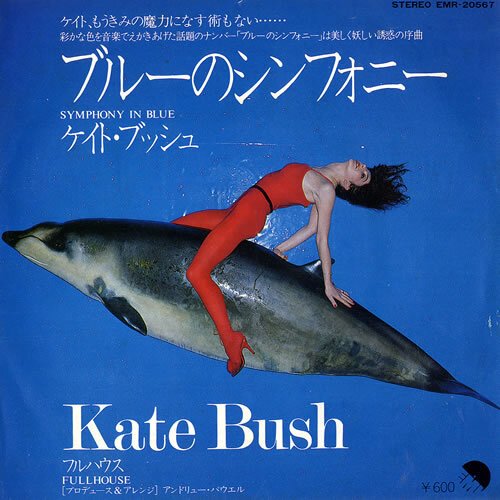
Every artist has a wish list in terms of people they’d like to collaborate with. Who is on your list?

I’d love to work with Jarvis Cocker! I’ve got a song that he’d be great on. I’d also love to do something with Arlo Parks, and maybe a collab with Barry Can’t Swim. Let’s put those out into the ether and see what happens.

Finally, and for being a good sport, you can choose any song you like (from another artist) and I will play it here.

Let’s go with ‘Telephobia’ by Baby Dave and Kate Nash. A bit Spoken Word, lots of longing, and a proper little groove to it.

_____________

Follow Antony Szmierek

FEATURE: Spotlight: Art School Girlfriend

FEATURE:


Spotlight


Art School Girlfriend

_________

I hope that we…

 PHOTO CREDIT: Nathan Barnes for The Line of Best Fit

get some more current interviews with Art School Girlfriend. The moniker of Polly Mackey, even though she has been on the scene a few years now and actually started to get a lot of buzz from 2019 and 2020, there are many who do not know about the incredible music – including the new album, Soft Landing. It follows her 2020 debut album, Is It Light Where You Are?. There are quite a few interviews from 2020 and 2021, but there are very few from this year. Instead, I am going to start with an older interview that introduced us to Art School Girlfriend. I will then get to reviews for the amazing Soft Landing. The Line of Best Fit spoke with Art School Girlfriend in 2019 about her (Mackey’s) decision to produce and take ownership of her music:

Having cut her teeth as a member of shoegaze outfit Deaf Club who parted ways back in 2014, Mackey found herself in a position where she nearly left music altogether, as she explains “I really had just got completely dismayed with music in general. I was working in the music industry at the same time and I was working for labels and magazines at the same time and getting really dismayed with the whole thing. So, when the band split up I kind of just ignored music for a bit and was only listening to whatever was on the radio.”

It was around this time that Mackey decided to pack up her bags and leave London for the seaside town of Margate, “I just got to the point in London where I was so broke, I couldn’t do anything. I had this sprawling metropolis in front of me and couldn’t access any of it.” Ultimately, this was a move that proved to serve Mackey well.

In the past few years, Margate has become something of a hub for creatives, but when describing the move, Mackey makes it clear that Margate was a different place when she originally made the decision to leave “I realised I was 24, which is quite young to move to one city and move to another one and start a new life. It was also terrifying, as Margate three years ago isn’t what it is now… There was nothing to do, and now it’s like the London ex-pat community and I’m so pleased I did it, because I’m surrounded by so many creative people, it’s like a little village.”

Her last EP, Into The Blue Hour, saw her team together a group of songs that were all tinged with the beauty and mystery of the night. “They are linked by a sense of malaise or feeling out of sync and were quite icy,” explains Mackey of the current that runs through the songs. “I don’t make them deliberately that way, but they tend to be quite sad and melancholy which then informs the lyrics quite a bit.” Despite that melancholy, Mackey is now ready to venture further afield and has begun to push the boundaries of her song-writing, and she has even returned to her teenage habit of keeping a diary.

“I decided to keep a journal. I used to keep one when I was younger, and I used to keep all my lyrics and notes separate, but I’m kind of keeping it altogether, so that is kind of changing how I’m working on the lyrical side as well.” It appears that the act of documenting her everyday activities has enabled Mackey to slow down and take stock, as she says “I remember I had one when I was eighteen and finished It and taped it up and when I was moving I cut the tape on it, and I read it and found it really interesting. Not just because I was seeing how I was feeling at the time, but also the everyday, humdrum things I was doing and you forget what sequence you had things in life, and actually I thought I could keep a diary and not be anxious about describing things completely it accurately or using poetic words but just writing what I’d done that day and that actually there’s actually something quite nice about that and keeping a record of that.”

This act of slowing down and taking it in has had a direct effect on how Mackey writes, which was exactly the effect she was looking for. “I wanted the track to be different to my last EP and to have a different theme and this one is basically like a booty call” explains Mackey of her latest sonic offering, a track that is fuelled by lust and experimentation with what the structure of a song should be”.

Prior to getting to some reviews, AllMusic Magazine introduced an album that ranks alongside the best of this year. Soft Landing has won plenty of acclaim from critics. If you have not heard it or discovered Art School Girlfriend, then make sure that you check out her wonderful music:

Soft Landing follows Mackey’s 2020 debut album, Is It Light Where You Are? an album made in the wake of a tumultuous time and released during one. Soft Landing feels like Mackey’s true debut, a record of curiosity and playfulness with songs that sound like they are falling effortlessly into place. Stay tuned for more news.

Tracklist

1. A Place To Lie

2. Close To The Clouds

3. Real Life

4. Waves

5. Blue Sky feat. Tony Njoku

6. The Weeks

7. Laugh My Head Off

8. Out There

9. Heaven Hanging Low

10. How Do You Do It

11. Too Bright

When Polly Mackey – AKA Art School Girlfriend – released her first album Is It Light Where You Are in 2021, what was a shimmering debut felt to her more like a sublime denouement.

The Welsh producer and multi-instrumentalist’s record revelled in expansive dreamscape sounds and diaristic writing that stretched deep into the emotional peripheries of a then very recent heartbreak. A protracted two years later, Polly was able to tour the record – then, embarking on a new relationship, and reconsidering her creative mode. While the album garnered critical celebration for its visceral aural textures and lucid themes, for Polly, it was inflected with alienation. “By the time it was out in the world, I felt unattached to it,” she shares. “This new record truly feels like my debut.”

Soft Landing is the culmination of Art School Girlfriend’s contemporary artistic testament. It represents a tonal shift and tenure in a much more contented and philosophical state of being. The title presented itself to her through the frequency illusion: a turn of phrase thrown up in overheard conversation, and mentioned on the news. “‘Soft landing’ showed up to strike me when things were falling into place,” Polly says. “I was at that typical moment where you’re leaving your 20s and realising you don’t have to work toward this concept of future happiness. Going to the pub with your mates can be the ultimate. Lying beside the person you love, watching the sun come in, can be it.”

This album percolates in these “small euphorias”; elations of life you don’t have to reach far for. “It captures what a lot of people coming out of COVID have felt, looking for joy closer to home, in your immediate surroundings,” Polly says. “I am much more interested in capturing a time and feeling, than getting it perfectly right.”

Polly decided in April 2022 that she’d have a record by the end of summer: she booked in sessions and mixing before she started, and wrote a creative manifesto. “I really wanted to commit to a new energy,” she says. “Before, I was so worried about fixing things as I went along. That doesn’t allow for being instinctive, or staying true to how I feel in the moment. I wanted this to feel pure, energetic, instant.”

The manifesto for Soft Landing outlined a divergent style for recording and decision-making. It meant resisting the “infinite space” of the first album, which led to agonising re-records and rewrites. Plug-ins and perfectly programmed drums were shirked for instrumental improvisation, tape machines and effects performed live, and stream of consciousness writing. “How Do You Do It…” was totally improvised, played on a keyboard and sung into a tape machine in Polly’s bedroom. “It’s very different from how I worked previously. I’d have spent the year trying to find the right snare,” she says. It’s about being more curious, playful, and “getting back to the reason I started making music as a kid in my bedroom”.

The sonic palette combines Polly’s more leftfield, lo-fi electronic influences (that you’ll hear resplendent on her ambient Foundation FM radio show) with the music that first inspired her, like Pixies, early Caribou, and Warpaint: artists with electrifying energy that elegantly oscillate from electronic to instrument. “Out There” – an homage to LCD Soundsystem’s “All My Friends”, written the day after she saw them live last summer in Brixton – propels itself with the dark atmospherics of Burial, and “Heaven Hanging Low” has the sun-breaking-through-the-clouds clarity of a trance anthem. “Waves” undulates with the sinewy avant-rock turns of PJ Harvey.

Most of the album was recorded at home, the rest at Crouch End’s Church Studios with friend and co-producer Riley MacIntyre, where Polly has recorded since 2016. Six of 11 tracks were written within two weeks, after she wrote “A Place To Lie”. “One track will pin the butterfly of what the record is going to be,” she says. “‘A Place To Lie’ was that. Everything flowed through it.” The track reflects Polly’s technical skills and a prowess for creating processed sounding sonics by organic means: “I didn’t want to look at a computer much.” Synths are replaced by manipulated nylon string guitars; live drums, guitars, and strings are played throughout the record; “Real Life” features birdsong and church bells from a memorable camping trip. Throughout, Polly deftly traces dance music’s spinal nodules, its crescendos and euphoria sweeps, and the shoegaze influence of her youth with gauzy, pensive tendrils of drones.

The sound design parallels deeply poetic and visual lyrics, a skill that was lauded on her previous record and EPs. “I tell people this is my joyful album, and they laugh – it still feels pretty fucking moody,” she says. “I like the light and shade, the joy can’t come without the melancholic – the queer trope of crying on the dancefloor.” Simple concepts and experiences are made sumptuous: “A Place To Lie” swells with the contentedness of waking up next to a lover, while “The Weeks” takes place in the summer lockdown at her girlfriend’s parent’s house in Devon, delicately threading the undercurrent of worldwide threat with the lush, hushed local surroundings. Folk and shoegaze arise again in lyrics with hazy, yet precise finality – ”I understand, I understand”, a willowy alto refrain on “Close to the Clouds”.

With crystallised focus, Polly’s favourite place has become the studio. In 2020, she scored for friend and visual collaborator Tom Dream’s film Shy Radicals. “In the last few years I’ve seen some changes for women in the studio space. I’m now engineering for myself and others,” she says. Polly intends to experiment beyond her ASG moniker, by producing for people outside of genres she works within, playing in bands again, finishing her Creative Practice MA, and scoring more films.

The words of poet Lucien Stryk, describing the work of Japanese haiku master Basho, resonate deeply with Polly and the record’s themes: “The poet presents an observation of a natural, often commonplace event, in plainest diction, without verbal trickery. The effect is one of spareness, yet the reader is aware of a microcosm related to transcendental unity. A moment, crystallised, distilled, snatched from time’s flow, and that is enough.”

An artist that once made music from the serrated edges of her wounds, Art School Girlfriend now sutures them with her small, intimate joys: Soft Landing yields soft power. “I had such a nice time making the record,” Polly says. “I’m at the age now that I know it doesn’t have to be loved or heard by everyone. I just want someone out there to find their personal euphorias with it”.

I am going to go back to The Line of Best Fit. They had a lot of positive things to say about Soft Landing. It is an impressive step forward for an artist who is going to be in the industry for many more years to come. Take some time out to explore and experience a tremendous album that should put Art School Girlfriend on everyone’s radar:

Though she released her first record two years prior, the Welsh producer and multi-instrumentalist has already expressed a distinct feeling of detachment to those tracks, instead naming Soft Landing as a record that “truly feels like my debut”. Instead, she leans into the electronic explorations of earlier projects, and in turn, creates an intricate world of textures for the listener to feast upon.

Soft Landing is a product of two halves, a culmination of the interior world of Mackey’s solitary creativity at home and the formal collaboration of recording studios based in Crouch End. As a result, it seamlessly balances explorations in both expansive sound and intimate lyrics, evidenced on the track that started it all, "A Place To Live". An exercise in creative production, it’s also remarkably deceptive – components that appear on the surface as electronic transpire to be a product of live recordings, creating a tangible depth to its sonics.

Mackey further displays her progression on album highlight, "How Do You Do It". Though entirely improvised in the four walls of Mackey’s bedroom, it’s imbued with the feeling of infinite space, full of sweeping soundscapes and echoing vocals that stretch for miles. Other notable excursions include the 80s drum-machines and eerie distortion on "Heaven Hanging Low", and "Waves" with its shoegazing guitars that gently shimmer on the surface.

Upon reaching its final stretch, the distinction between tracks begins to blur, overlapping over one another. This doesn’t appear to be a fault of its repetitive nature, but rather a purposefully immersive twist, producing a soundtrack to a night-out that seemingly never ends. And soon enough, reality begins to split at the seams and Mackey has transported us to a surreal world entirely unfamiliar, as she sings, “Sliding through paradise / I was caught in the light / Pulling planets out of the sky / taking a bite.”

However, the record doesn’t anticipate a crash back down to earth but offers slow descent, just as the title suggests. Mirroring the realisations made in her own life, Mackey asks us to find these moments of other-worldly ecstasy in our everyday existence, noting that “I just want someone out there to find their personal euphorias with it.” For Mackey, these arrive in the simplest of moments; “Lying beside the person you love, watching the sun come in, can be it.” And instead of striving towards a perceived notion of happiness, Soft Landing is simply the crescendoing finale of a journey towards contentment”.

Just before rounding things off, there is one more review that I want to bring in. Although some gave Soft Landing a more mixed reaction., most noted how it was an evolution and confident release from Art School Girlfriend. The London artist is someone who everybody needs to know about. Someone who is going to keep on releasing incredible music:

The effects of the pandemic are in many cases well documented, but in most not well understood.

One of the recurring ideas to emerge for musicians has been the return to old ground, of going home, being in isolation from their audience, the industry and the confirmatory aspects of their art.

Polley Mackey released the first Art School Girlfriend album Is It Light Where You Are? in 2021, but by then it felt like it had come from a different place, a sensation only magnified when the time came to perform the songs live, to the point she now admits that, ‘By the time it was out in the world, I felt unattached to it’.

Soft Landing arrives from a different headspace, one centered on accepting that little euphoria is still more than good enough: “I am much more interested in capturing a time and feeling, than getting it perfectly right.”

This willingness to mess with things also led to a more organic approach to composition, as out went plug-ins and software in favour of real instruments, tape loops and live effects. The result is an album of greater texture than its predecessor, mixing synth pop, electronica and occasional shoegaze into the kind of finished product that recalls Braids or Virginia Wing.

Mood wise, the general feeling was inspired by the contentment of a new relationship (Mackey’s partner is fellow musician Marika Hackman), but emotions are often dealt with obliquely, opener A Place To Lie’s skittering pads and airy sounding washes a continual source of motion that belies its theme of place and happiness.

The first to be completed, it was a piece which anchored the new record’s attitude, homing in on the simple contentment of waking up next to a lover whilst bathed in sunlight.

The edges of this new reality are never rough, Heaven Hanging Low’s graceful introspection circling round to religious imagery (‘Slide through paradise, I was caught in the light/Pulling planets out the sky, taking a bite’) followed by a devotional chorus of, ‘Pray and I Pray’.

Other references are more nuanced, even if the notions of desire and dependency swap places on Real Life, its strings impressing a sense of austerity whilst the subject is lost willingly or otherwise (‘Hands on the pane of a ceiling/Yeah, I’m coming upside-down to a real, to a real life’).

It was one of the first instances in modern memory, but the pandemic also brought a feeling of time standing still, of losing its meaning entirely; this smudged confusion is echoed in The Weeks, surreal experiences framing isolation in an otherwise idyllic house in Devon, the languorous patterns giving way to a rare, grunge-lite conclusion/collision of light and darkness.

If that feels like trauma getting some way in, by the foggy closer Too Bright a protective boundary has been fortified. It’s in Waves however that the most obvious sense of connection is offered; built on a languid patter of beats, the heavily retro-leaning chorus offers supreme, lovelorn pop.

There were no boundaries, no entry or exit signs to how the last three years has made us feel. Some went through the corridors unscathed, some didn’t, some may never have the tools for a true personal reconciliation.

Polly Mackey has made her peace with that, and accordingly produced a record about being in love with the spectre of guilt and disconnection as a rear horizon.

Soft Landing bravely doesn’t look back, a record whose layers take time to fully peel away and, even then, feels like not all its secrets will ever be yours to know”.

I normally spotlight new and rising artists for this feature. I feel Art School Girlfriend is entering a new stage of her career - and is someone that many do not know about. To correct that, I wanted to highlight her brilliance. Soft Landing may be an album that has passed you by. Make sure you catch up and give it a dive. I would urge people to…

DO so now.

_____________

Follow Art School Girlfriend

FEATURE: Eternal Life: Thirty Years Ago: Jeff Buckley’s Remarkable Time at Sin-é, New York City

FEATURE:


Eternal Life


Thirty Years Ago: Jeff Buckley’s Remarkable Time at Sin-é, New York City

_________

WHEN it was originally released…

 IN THIS PHOTO: Jeff Buckley in New York City in 1993/PHOTO CREDIT: Merri Cyr

on 23rd November, 1993, it was as an E.P. With performances taken from 19th July and 17th August, 1993, Jeff Buckley’s Live at Sin-é was his first commercial release. It would not be until later in the 1993 that Jeff Buckley would step into Bearsville Studios, Woodstock to record his only studio album, Grace. Of course, Buckley was not new to live performance when he released Live at Sin-é. He had performed at this particular venue/coffeehouse in New York City’s East Village quite a bit. The crowds eventually grew bigger and bigger. On the four track E.P. that went into the world in November 1993 – when he was just starting to record Grace – was Mojo Pin, Eternal Life, Je n'en connais pas la fin (I Don't Know the End of It) and The Way Young Lovers Do. With those two originals – which were close to the album versions but were still taking shape – sat alongside a couple of covers, it was ca chance to see Buckley’s incredible interpretive skills take flight. He also put out two incredible original songs that highlighted his songwriting brilliance. Accompanying himself on a Fender Telecaster, Buckley was playing and jamming in a great neighbourhood where he had made his home. I will get to a review of the expanded version of his sets at Sin-é soon. The reason I wanted to write about the E.P. and his performances at Sin-é is because of a big anniversary. The E.P. captures him playing songs from two different nights at the coffeehouse – the second of which happened on 17th August, 1993 (the first was on 19th July, 1993).

Thirty years ago, Buckley was playing out to a small but receptive crowd who were listening to this young artist taking his first steps in professional music. Buckley had signed to Columbia on 29th October, 1992. The deal was already done. One big reason why he was signed is because he was doing such spectacular live performances. Including his multiple gigs at Sin-é, Buckley was gaining buzz around New York City. Even though he was born in California, he seemed to find greater opportunity, excitement and comfort in N.Y.C. The Greenwich Village was once a haven for Folk artists back in the 1960s and ‘70s. The nearby (just under two miles away) East Village would also have seen and experienced a lot of great Folk music at this time. I think that is a factor in Buckley playing there. Perhaps less enamoured and attracted to the Punk scene of the city, you feel Folk artists such as Bob Dylan were more firmly in his mind. A chance to walk in the same neighbourhoods they would once have done. Artists, back in the day, would have just played with a guitar in some club or coffeehouse. Buckley’s 1993 sets at Sin-é remind me of the Folk artists in the '60s and '70s. If one is to compare him to Bob Dylan, Jeff Buckley is more like the genius going electric. I am sure Buckley played acoustic guitar, but he was thrilling the locals with his Fender Telecaster.

Maybe trying to marry some of the strands of Punk and Rock together with a more Folk setting. Whatever the reasoning and plan, this was a young man playing his music to those who showed. I can imagine the audiences at Sin-é in the earliest days were quite modest. Eventually, more and more people showed up, so that some gigs would see record label bosses’ cars and limos lining the streets; people maybe hanging outside the door, trying to hear what was going on inside. I don’t think Buckley had any idea that, thirty years since that incredible second night set that would go into his Live at Sin-é. E.P., would be talked about to this day. Before getting to a review for the expanded version Live at Sin-é., it is interesting contextualising his August 1993 performance. As this Uncut feature from 2017 illustrates, this was a time when Jeff Buckley was still honing his craft. The feature discusses Buckley’s early Columbia recordings and the time he was at Shelter Island Sounds – a small studio in New York’s Chelsea district –, where he had a handful of other people’ songs. Those records were released into the world. In fact, as this article explains, they appear on the You & I (Expanded Edition):

February 1993. JEFF BUCKLEY, a hyperactive music junkie just finding his feet in the New York clubs, enters Shelter Island Studios and records 40 songs in three days. As the session’s highlights are finally released, Uncut hears the inside story of how a genius singer-songwriter learned his craft via an eclectic songbook. “The goal,” says his A&R man, “was to allow him the time and space to find out which Jeff Buckley he was going to be…”

Steve Berkowitz likens Jeff Buckley’s first solo recordings to a journey undertaken without any map or clear destination.

“It was a musical exercise in self-discovery,” says Berkowitz, who signed Buckley to Columbia in the autumn of 1992. “There was no plan. It was very loose, like a conversation in someone’s living room. Jeff would move around. Start, stop, start again. I remember he played a Curtis Mayfield song, and then I said, ‘Know any Sly?’ He sighed and said, ‘I don’t really know any Sly,’ but even as he’s saying it he’s forming chords and, I swear to God, what comes out is the ‘Everyday People’ that’s on this record. It was breathtaking.”

Almost a quarter of a century after the private “conversation” that took place at New York’s Shelter Island Sound studios in February 1993, some choice extracts are being made public. The third LP of archive recordings to emerge since his death in May ’97, You And I captures Buckley when he was 26, living in a “crappy walk-up apartment” in the Lower East Side with girlfriend Rebecca Moore, consuming music by day and performing in the city’s cafés, clubs and bars by night. “The creativity was just pouring out of him at that point,” says his manager, Dave Lory”.

“STEVE BERKOWITZ (A&R executive at Columbia): We signed Jeff in the autumn of 1992 with the understanding that he would have complete control of his music. That was in the contract. He was capable of doing so much, the initial goal was to allow him the time and space to find out which Jeff Buckley he was going to be: are we going to wait for this flower to bloom, or are we going to cut it off? My job was to give him time to bloom.

MICHAEL TIGHE (friend; guitarist in Buckley’s live band, 1994-1996): I can remember Jeff holding this thick record contract in his hand on the night he was doing a show at [Brooklyn arts venue] PS1. He was a little scared, but it was also pretty exciting. He knew Columbia could get his music out there, but he also knew he was very green as far as songwriting and developing his sound went.

BERKOWITZ: By early ’93, the record company is asking, “So, what are you doing?” Not much! We hang around a lot. He comes to my house for Christmas, he mimes Warner Bros cartoons with my son. We go to a lot of gigs, play a lot of music, drink a lot of coffee. He’s playing every bump and hole in the wall in the city, but four, five, six months after he signed, there are no plans to record. So I suggest to Jeff, “Why don’t we go into this nice studio with this guy I know, relax for a couple of days, play everything you know, and at the end you can pick out three or four things that can be the beginnings of an idea for an album?” And he said, “OK, let’s do that”.

That gives you some background and lead-up to his sets at Sin-é. He was definitely a known musicians around New York City, though he was still largely unknown to the wider world. August 1993 was that period where he had done a lot of live gigs and been in a studio. He was about to – or he might have already spent time in Bearsville – head into Woodstock to record his debut album. It was such an important and wonderful time. Being in the audience when Buckley was on stage and performing these covers and originals in a small coffeehouse! SLANT reviewed the Legacy Edition of Live at Sin-é:

Jeff Buckley was much more than the tragic rock god he has become. He was a soul singer who incorporated a passion for the blues and jazz into his folky brand of rock music. No Buckley release since his death in 1997 has captured this soulful essence the way his 1993 EP, Live at Sin-é, did (and does). Reissued by Legacy Recordings with an additional 17 tracks, Live at Sin-é, in its new form, is what 2000’s Mystery White Boy (and the second disc of Sketches: For My Sweetheart the Drunk, for that matter) should have been: a private yet very public glimpse into the evolution of one of the most promising artists of the ’90s. The album captures the folk movement of the East Village that was still flourishing in the early part of the decade—it’s an artifact left over from when there were more artists on St. Mark’s than fast food joints. The performances found here—recorded at the Sin-é Café in the summer of 1993—find Buckley disarmed, challenged, inspired and, above all, graceful.

Only a handful of songs on the album are original compositions (“Mojo Pin” and “Eternal Life,” both of which appeared on the original release, along with “Grace” and an early version of “Last Goodbye”), but the covers Buckley chose to perform seem tailor-made for him. He makes Dylan his own (“Just Like a Woman,” “I Shall Be Released”) and even manages to fit his little white-boy feet into Billy and Nina’s shoes (“Strange Fruit,” “Twelfth of Never”). And, of course, there’s Leonard Cohen’s “Hallelujah,” a song he transformed into something wholly unique on his landmark full-length debut Grace. The listening experience is at once disturbing and comforting—the double-disc set includes many amusing interludes, one of which is an impromptu impersonation of Jim Morrison while another nods to one of Buckley’s contemporaries, Kurt Cobain. For fans of Buckley (both casual and hardcore), this new version of Live at Sin-é will be nothing short of a treasure. The album’s liner notes read: “He was the Montgomery Clift of singer-songwriters, beautiful and bruised, struggling so hard to communicate you could feel it.” One might call communication you can feel “music.” And Live at Sin-é is beautiful communication indeed”.

I will wrap up with my impressions and feelings around the thirtieth anniversary of the August 1993 set he delivered at Sin-é. First, from Jeff Buckley’s official website, we get to hear what happened in the period after the E.P. was released into the world:

By the time of the EP’s release during the fall of 1993, Buckley had already entered the studio with Mick Grondahl (bass), Matt Johnson (drummer), and producer Andy Wallace and recorded seven original songs (including “Grace” and “Last Goodbye”) and three covers (among them Leonard Cohen’s “Hallelujah”, Benjamin Britten’s “Corpus Christi Carol”) that comprised his debut album Grace. Guitarist Michael Tighe became a permanent member of Jeff Buckley’s ensemble and went on to co-write and perform on Grace’s “So Real” just prior to the release of the album.

In early 1994, not long after Live At Sin-é appeared in stores, Jeff Buckley toured clubs, lounges, and coffeehouses in North America as a solo artist from January 15-March 5 as well as in Europe from March 11-22. Following extensive rehearsals in April-May 1994, Buckley’s “Peyote Radio Theatre Tour” found him on the road with his band from June 2-August 16. His full-length full-band album, Grace, was released in the United States on August 23, 1994, the same day Buckley and band kicked off a European tour in Dublin, Ireland; the 1994 European Tour ran through September 22, with Buckley and Ensemble performing at the CMJ convention at New York’s Supper Club on September 24. The group headed back into America’s clublands for a Fall Tour lasting from October 19-December 18.

On New Year’s Eve 1994-95, Buckley returned to Sin-é to perform a solo set; on New Year’s Day, he read an original poem at the annual St. Mark’s Church Marathon Poetry Reading. Two weeks later, he and his band were back in Europe for gigs in Dublin, Bristol, and London before launching an extensive tour of Japan, France, Germany, Italy, Holland, Belgium, and the United Kingdom which lasted from January 29-March 5. On April 13 1995, it was announced that Jeff Buckley’s Grace had earned him France’s prestigious “Gran Prix International Du Disque — Academie Charles CROS — 1995”; an award given by a jury of producers, journalists, the president of France Culture, and music industry professionals, it had previously been given to Edith Piaf, Jacques Brel, Yves Montand, Georges Brassens, Bruce Springsteen, Leonard Cohen, Bob Dylan, Joan Baez, and Joni Mitchell, among other musical luminaries. France also awarded Buckley a gold record certification for Grace”.

I remember my first time hearing the Live at Sin-é (Legacy Edition). When I heard that, I was compelled to find out more. I discovered Jeff Buckley when I was a teenager. I had already bought and fallen for Grace. That 1994 album has its anniversary later this month. The Live at Sin-é release was one I got when it came out in 2003. Marking ten years since Buckley delivered those incredible songs to patrons in the East Village, I was casting my mind back and wondering what it must have been like watching Jeff Buckley play in the summer of '93. You listen to the 1993 E.P./2003 expended reissue and you can feel and hear that brilliance. This was someone still largely unknown to the world. Almost a local secret, the Legacy Edition gives us more insight and context. His interaction with the audience is great! So charming, silly and sharp, there is this tangible aspect. You imagine yourself sat there at the back, watching the man blow people away with his incredible talent.

That between-songs chat where he would do impressions, talk to the crowd or just riff and see what came out It is said that, after sets, he would hang around and make coffee. He felt comfortable in this space. I always feel like Buckley assumed big tours and fame was what was needed so he could be remembered and endure. Whilst he might not have ever been known worldwide if he just played smaller venues, it is clear he yearned to return to them later in his career. He died in May 1997 at the age of thirty. In the final months of his life, he was still trying to put together his second studio album – My Sweetheart the Drunk was never completed; a posthumous album, Sketches for My Sweetheart the Drunk came out in 1998. Rather than mourn and feel sad, I wanted to mark thirty years since Jeff Buckley performed a second taped night at Sin-é. That would go into an E.P. (in November 1993) that was many people’s first experience of Buckley’s music. It is the sound of a remarkably talented young artist just about to head into the studio to record his debut album. We were so lucky to have Jeff Buckley in the world! His legacy and influence will live forever. We are all so grateful for…

ALL of the incredible music he left us.

FEATURE: A Shared Deeper Understanding: Kate Bush’s Attitudes Towards and Relationships with Men

FEATURE:


A Shared Deeper Understanding

 IN THIS PHOTO: Kate Bush in 1989/PHOTO CREDIT: Guido Harari


Kate Bush’s Attitudes Towards and Relationships with Men

_________

WHEN writing about Kate Bush…

 IN THIS PHOTO: An outtake from the Army Dreamers video shoot/PHOTO CREDIT: John Carder Bush

I usually focus on her albums and songs. I also describe how she has impacted people around the world; the enormous legacy her music has. I am not sure whether I have written too much about this, but I wanted to look at her relationship with men and her attitudes towards them. In terms of the fact most of her interviews were men. Nearly every musician she has included on her albums has been a man. Not all the vocalists have been but, when you look at her discography and everything written about it, there is a lot of perception and interpretation from men. This may sound like Bush was avoiding women. From a musical stance, I think Bush was raised more around male sounds. By that, I mean she gravitated towards artists who were men. I guess, as an aspiring artist from a very young age, perhaps hearing too many women would have influenced her voice too much. She is a rare case in music of being this feminist icon and source of inspiration for women everywhere, without her actually embodying too many influences from other women. I shall come to the fact that, yes, Bush has worked with other women on her albums - though most of her collaborators were men. Some may say, during a sexist time when men were considered superior and got more attention, that this was a calculated move. I think, as I will also explore, it is Bush’s positive attitudes towards men and the depth of understanding she had about their complexities and depths that is a reason. Even if Bush, in decades past, did not actively identify herself as a feminist, she is someone who has influenced countless women in all areas of the arts and society. She is a huge role model - and someone who broke barriers and opened conversations.

I will break this up into two. I want to start out by discussing her peers and those she associated with. There was that division between her inner circle of friends and musicians and members of the press. Bush had plenty of female friends, though I think that she was more used to associating with men. When it comes to musical influences, maybe the media and industry were not promoting, highlighting and celebrating enough women. The Beatles, Steely Dan, and Peter Gabriel were among her influence – as were David Bowie, and Elton John. How many contemporary female musical role models were in her life during the 1960s and 1970s?! With the industry still very sexist and male-dominated, it is no surprise that Bush worked with male musicians, engineers and crew. When Bush started producing her own work (from 1980’s Never for Ever onwards), she was one of the few women producing their own music. She definitely gave inspiration to so many women in the industry. From setting records (Never for Ever was the first album by a British female artist to reach number one) to the way she was this unique voice who maintained such a long and successful career is a massive achievement and legacy. I feel Bush’s positivity towards men, in her personal life and through music, is a combination of her being in the studio with male personnel. Her homelife was also a factor. With two older brothers – Paddy and John (Jay) -, she did not have a sister or that similar-aged female presence at home; she felt bored or unchallenged at school.

If she listened more to male artists and bands during her career, I think that Bush’s music and career must rank alongside the most compelling and inspiring ever. In terms of how she is this incredible producer and singular voice that succeeded in a male-dominated landscape. As I say, if her relationship with the word ‘feminist’ or ‘feminism’ was not obvious or a little problematic at times – a young Bush once naively had a rather outdated visual interpretation on what a feminist looks like -,  she is no doubt a pioneering and groundbreaking woman who paved the way for those who followed her. I feel Kate Bush literally worked with more male musicians to a point because there were more available. I don’t know whether there was a great visibility of female musicians as opposed to the singers. Also, when it came to backing vocalists, she wanted the attention to be on her voice. Maybe another female voice would distract or the blend would not be right. Up until The Sensual World in 1989 – where the amazing Trio Bulgarka were beautifully brought into her music (they also appeared on 1993’s The Red Shoes)  -, she was singing all the ‘female’ parts and roles. She wanted to ensure her voice was the talking point, and she did that whilst maintaining a very positive attitude towards women.

There have been articles saying Bush had a calculated or colder approach to female journalists. She was interviewed more by men because the music media landscape was dominated by men. I don’t think it was a case of Bush trying to manipulate or seduce in any way. Maybe that is what some men were trying to do to her. Bush did have some awkward encounters with some female journalists - including this 1993 hatchet job. Some of the most interesting and heartwarming interviews I have seen or heard have been between Bush and another woman. Maybe, again, there was a case of Bush wanting to slightly control a narrative. Would other women see her in a colder or more condescending light than men?! It was definitely the case that she experienced plenty of sexism from male journalists. It has been an impossible situation. In spite of the fact that other songwriters wrote about love in a slightly angry or accusative way – in terms of placing blame on the other -, Bush was very positive. That is what I wanted to come to now. In addition to being a trailblazer and musicians who influenced a lot of women, I think her fanbase is  so dedicated and large is because of the positivity in her songs. I have recently written about her song, Eat the Music. That is thirty years old. Bush uses fruit as metaphors for men and how they express themselves. They bleed too. They can be opened and reveal something sweet and nourishing. Consider these lyrics: “Does he conceal/What he really feels?/He's a woman at heart/And I love him for that/Let's split him open/Like a pomegranate/Insides out/All is revealed/Not only women bleed”.

Right from the start of her career, Bush’s attitude towards men has been one of respect, understanding and affection. If a relationship goes bad or she is hurt by a man, there is that ability and desire to see the story from both sides and display patience. This extended to her interviews. Often asked insulting or personal questions, Bush would never lose her temper or be unprofessional – replying in a very considered and impressively calm manner. Think about The Man with the Child in His Eyes. Bush feeling, with the title, that men have this child-like wonder and innocence to them. If many of Bush’s songs between 1978’s Lionheart and 1989’s The Sensual World were relating to fictional scenes, inspired by film/literature or were more fantastical, she was still not portraying men as nasty or vindictive. From her sympathy towards young soldiers sent to war in Army Dreamers (Never for Ever), or the compromise, mutual understanding and iconic Running Up That Hill (A Deal with God) from Hounds of Love. That is literally about men and women swapping places so they can better understand one another. Not blaming men or casting them in a negative light, Bush highlights a more calm and diplomatic way that conflicts can be resolved and relationships can be bettered. Some of Bush’s most devastating, beautiful, remarkable and memorable songs put men at the heart of them.

Many think that The Sensual World’s This Woman’s Work is around a mother and the woman’s role. In fact, it is sort of the end of the sentence. You could put a parenthesis in there that says (Now Starts the Craft of the Father). Never belittling the man or being insincere, I feel This Woman’s Work is both encouraging the father to grow up and take responsibility. There is a lot of sympathy placed on him: “I stand outside this woman's work/This woman's world/Ooh, it's hard on the man/Now his part is over/Now starts the craft of the father”. He is going through a tough time in the song – his wife/the mother suffers a breach and the pregnancy means they could lose their baby -, and he now has to be the tough one and step up. It is understanding - though it also highlights how strong women are and, in times like this where there is potential loss and tragedy, they have to carry a lot of that hurt and responsibility. In Love and Anger (The Sensual World), the chorus is about the heroine. Bush wanting this anger to be taken away. Maybe it reflects a love breaking down. There might be something less personal. I feel there could be something acrimonious and blame-shifting. Instead, the whole song does seem to be about making things better and an extension of Running Up That Hill (A Deal with God) – swapping places or trying to create harmony and a common mindset: “To let go of these feeling/Like a bell to a Southerly wind?/We could be like two strings beating/Speaking in sympathy/What would we do without you? “.

There is great compassion and tolerance through her music. Think about The Red ShoesAnd So Is Love (“All you're doin' tonight/All for love (life is sad and so is love)/Just for the sake of love/(Life is sad and so is love)/You set me free, I set you free/(Life is sad and so is love)”) and You’re the One (“The only trouble is/He's not you/He can't do what you do/He can't make me laugh and cry/At the same time/Let's change things/Let's danger it up/We're crazy enough/I just can't take it”). On one of her most personal albums, Bush does show this need to see things from a man’s point of view – never submissively – and not leap to blame and anger. That positivity towards the men in her lyrics bled into the studio and the wider world. I think we often feel love songs or ones where one is hurt need to cast blame at the other party. Whatever the gender of the anti-hero, there is still so many songs where an element of vengeance and intolerance is displayed. Maybe that is earned - though I think many could take a lesson from Bush’s writing. Perhaps that need to swap places and see the world from each other’s view not only enriches and strengthens bonds; it makes fall-out and fracturing of hearts easier to cope with. That positivity and strength of heart she showed towards men, I feel, is a big argument as to why she is a feminist icon and someone who has inspired many other women – even if Bush herself would have a very different take. When so many of her peers wrote songs castigating lovers or angrily lashing out when things ended, Bush always maintained this ability to be understanding without compromising her strength and dignity. One of the great defining features of her work, career and personality, you have to salute her for possessing…

A hugely admirable quality.

INTERVIEW: Margaret Rasberry on Kate Bush’s Lionheart

INTERVIEW:

IN THIS PHOTO: Kate Bush, shot on a Hasselblad 500, in a beautiful outtake from the 1978 Lionheart shoot/PHOTO CREDIT: Gered Mankowitz (concept by John Carder Bush


Margaret Rasberry on Kate Bush’s Lionheart

_________

I feel every Kate Bush album…

 PHOTO CREDIT: Margaret Rasberry

is a thing of value, passion, beauty, power and significance. Even if one deems it less than her best, I don’t think that makes it bad. In fact, Kate Bush has never released a bad album. There are those who definitely undervalue albums that are a lot stronger than they get credit for. Unfortunately, when it comes to ranking Bush’s ten studio albums, the same three usually end up in the bottom three: Lionheart, The Red Shoes and Director’s Cut. The former is actually one of my favourite Bush albums – I would put it about fourth or fifth in the rankings. As recording began less than five months after she released her debut, The Kick Inside, it was an impossible task to get something career-best together. Three of the ten songs on the album were newly-written: Symphony in Blue, Full House and Coffee Homeground. I think Coffee Homeground was inspired by a cab driver she might have met when in America that seemed a bit nutty (her word, not mine!). In fact, each of the ten songs has its own skin, identity and strength. Lionheart reached number six in the U.K. (five in the Netherlands, New Zealand and Norway), its second single, Wow, reached fourteen in the U.K. (and it was released off the back of The Tour of Life, 1979).

 IN THIS PHOTO: Kate Bush in 1978/PHOTO CREDIT: Gered Mankowitz

As Lionheart was released in November 1978, we celebrate its forty-fifth anniversary very soon. I was thinking how nobody has really done any comprehensive podcast about the album. Not many journalist write about it and show it love – I am in the minority in that respect –, so I wanted to get the ball rolling before November and talk to someone who loves and respects Kate Bush’s second studio album. Discussing Lionheart with me is the amazing Margaret Rasberry. An ardent and passionate Kate Bush devotee, here (in her own words) is what you need to know:

Margaret Rasberry, MA, MLIS, has been an ardent Kate Bush admirer for over a decade and continues to make new discoveries about her music and artistry. Her main fields of interest are music, film, feminist, critical race, and queer theory. You can find her work on mollywoodwrites@wordpress.com and she has been published in print in Film Matters Magazine and in http://TheFilmStage.com as a contributing writer”.

Someone who probably knows more about Kate Bush’s magnificent and under-valued 1978 gem, it was a pleasure and enriching experiencing discovering what this album means to her. I know that after reading this interview you will think differently about Lionheart. It is such a compelling, important and fantastic album that deserve more love. It is a phenomenal work that…

MAKES you go WOW!

________________

Hi Margaret! Before we discuss a specific Kate Bush album, when did you first discover her music?

I first discovered Kate’s music in my late-teens; interestingly enough on a comedy website with a listicle called 5 People Cheated Out of The Rock and Roll Hall of Fame, and Kate Bush was number 1 on that list - and the only female artist on that list. The only artist on that list that has still not been inducted is Jethro Tull, so make of that what you will. The article also introduced me to my favorite album of hers, The Dreaming, which I discovered later had a wider, more positive reception in America than the U.K.

What was it about Kate that grabbed your attention and stuck in your heart?

Growing up in the southern part of the United States, I grew up with a sense of having to conform to standards I didn’t agree with. Much like Kate, I didn’t like high school (which is basically secondary schooling in the U.K.). And even growing up with a pretty progressive family to support you, you feel like an outsider if you don’t fit that heteronormative and shallow worldview. And it's reflected in so much of our music - especially in the late-2010s; American Pop/Rock music - during that time, which I did not enjoy - unlike my peers -, especially as a burgeoning bisexual realizing I preferred girls, and receiving some disgust from some of my peers when I came out to them. The first year of college was much better, but still I found myself not really fitting in. I instead found myself diving into books and movies, including the works of Jane Austen, The Brontë Sisters, Virginia Woolf, Thomas Pynchon, and watching the films of David Lean, Jean Cocteau, Michael Powell, and Emeric Pressburger, along with other great directors. So when I first heard Kate, it was like a lightning strike inside my mind.

That vulnerability and beauty of the storytelling resonated with me, as I felt so alone and isolated away from home for the first time when I first heard her sing

Here was this woman singing about swapping genders with her presumably male partner, singing about the adverse effects of colonialism in aboriginal tribes in Australia with an Australian accent, going mad after seeing the face of God, performing as the ghost of Catherine Earnshaw, admitting to being afraid in Hounds of Love, which is something you never hear an artist admit. That vulnerability and beauty of the storytelling resonated with me, as I felt so alone and isolated away from home for the first time when I first heard her sing. Her work on trying to comprehend the world around her resonated with me and led to a deeper understanding of how I perceived the world and humanity itself. The modulations, the ontologically strange performances, all of it just mesmerized me. And when I discovered she was a charming and nice person in real life, my love for her work deepened.

We are discussing Lionheart. Bush’s second studio album, it never received the love it deserved. Why do you think this is?!

I think it’s because it was not as fine-tuned as her debut, since The Kick Inside was worked on from the time she was fifteen to the age of nineteen. And I am sure EMI and her sponsor David Gilmour wanted her debut to be something special, and Wuthering Heights was this awe-inspiring debut single that, as you know, she had to fight the producers to have as her first single. I also think with all the promotion such as performing in Japan, on Top of the Pops, Efteling and more, it’s so much to tackle, especially a young woman in her late-teens. And since she wrote hundreds of songs when she was younger and EMI wanted to capitalize on her, I think they pushed her to do push out another album. But to quote one advertisement for Symphony in Blue: “Kate Bush’s B-sides are better than your A-sides!” .

Despite it being rushed in a sense, I think it is an amazing album. Three new songs she wrote, Symphony in Blue, Coffee Homeground and Full House, are among my favourites. Able to create weird and touchingly beautiful songs with that sort of pressure, how do you think Lionheart would have sounded if Bush had been given more space and time?

I agree. Especially for being a sophomore album, it’s a great one. I remember reading a Missy Elliott quote telling young rappers to not slack off on the second album cause that’s when you can experiment more. But Kate unfortunately did not have that option. Though she herself admitted she felt it was more adventurous compared to her debut. I think she would have been allowed to modulate her voice to sound a little deeper cause I feel that EMI wanted her to keep that coquettish way of speaking, especially for the ostensibly male listeners, since I think there was this desire for female singers to be sexy overall and not to negate that factor. And Kate’s performances on Top of the Pops and Saturday Night Live reflect that image. Maybe to some as a detriment, but she still exudes this innocent sensuality that’s so Kate. I think if more time would have been given to her, she could have implemented the Fairlight, cause she was first introduced to it in 1979 I believe when it first came out. It’s fascinating to imagine that album with the Fairlight.

I also love “Full House” because it heavily reflects anxiety and neurodivergent thinking. And having ADHD, I could really connect with “Imagination sets in, then all the voices begin

I adore Coffee Homeground where she affects a Lotte Lenya-esque performance that’s hilarious and endearing to listen to. I feel she had to fight for that one since it’s not ‘sexy’. I also love Full House because it heavily reflects anxiety and neurodivergent thinking. And having ADHD, I could really connect with “Imagination sets in, then all the voices begin”. I have a particular fondness for In Search of Peter Pan; a song that Björk has brought up as one of her favorites as well. And it’s look at nostalgia and continuing Kate’s fascination with childhood and how people with that childlike innocence navigate the world and try to comprehend it. Also, the ending with the bit from Pinocchio’s When You Wish Upon a Star is a beautiful end to the piece. And I’m biased, cause Pinocchio is one of my favorite animated films.

Although Bush assisted production on Lionheart, it was Andrew Powell who helmed it. I think Bush could have produced solo. Do you think this frustration was a big reason why she co-produced Never for Ever (with Jon Kelly) and split with Powell?

I think there was that frustration, definitely. Though this is pure conjecture, I believe that Powell never really got the “Kate Factor” as well as he should have. And Kate always exuded this feminine energy in her works, from slyly implying menstruation with the lunar cycle, to performing famous female roles in her songs, to describing sexual relations in such a beautiful way. And that does not even bring in The Ninth Wave or The Sensual World. The queer theorist Dr D-M Withers called this the “Bushian Feminine Subject” in their book, Adventures in Kate Bush and Theory. And there’s a definite shift from Lionheart to Never for Ever. I think Kate felt that the first two albums were not just her albums, but her and Powell’s, and it obscured her true vision of what they should be. Powell preferred this spontaneous approach, which Kate did not approve of. Jon Kelly was one of the first people to come out and tell her that after her first album she was never going to be able to walk down the street without being recognized cause of the fame it was going to bring her, which I’m sure she didn’t believe at first. And that honesty is probably what helped her decide to work with Kelly, after producing The Tour of Life. So yes, I believe that there was frustration with Andrew taking a lot of the roles she wanted to do when making the album, and because of her age and gender her influence was not as strong as it should have been.

IN THIS PHOTO: Kate Bush in 1978 for the ‘Redhead 2’ shot by Gered Mankwoitz

You have noted how Lionheart is a Queer/L.G.B.T.Q.I.A.+-friendly/focused album. Is this an aspect that resonated with you? Do you feel people in 1978 realized how progressive and unconventional this was for an artist?

Besides the obvious inclusion of the line in Wow, “He’s too busy hitting the Vaseline”, while patting her bum…so you know what she’s referring to. And the Queer couple that are central to the narrative she creates in Kashka from Baghdad. I think the performance and the theatricality makes the album more Queer-focused than her others. The podcast, Strange Phenomena, brought up that when Kate performs, she really performs in this camp stylings that she puts her whole heart into, which I like to call ‘sincere camp’. Camp that is imbued with sincerity and love, and not as a form of shade or mockery like a lot of camp is played out. The exaggeration is played very straight. Her shifting in identities and performance also calls to mind drag culture, theatricality and the concept of passing, which with the acceptance of trans and non-binary individuals would resonate with their experiences. Ran Tan Waltz, where she is literally performing in drag - as a drag king in fact - bring this to the forefront. And losing the hat with her long hair flowing muddles the gender line, as well as Stewart Avon-Arnold himself taking his wig off at the end and glancing at the camera.

Even the front cover of Lionheart with the lion costume obscures her gender signifiers with the bulky costume hiding her shapely form, and her hair looking like an exaggerated mane, calling to mind large wigs worn by drag performers. Hammer Horror with the narrative of a stage actor being haunted by the ghost of the lead whose role he took speaks to this theatrical performativity. In Search of Peter Pan sees her use male pronouns: “When I am a man I will be an astronaut and find Peter Pan”. Also, she brings up how she as a man keeps a pin-up of Peter Pan almost, like a homosexual crush.

It resonated with me because I don’t feel particularly feminine most days, and there are some days I dress and try to perform more masculine depending on the circumstances - and it brings a sense of comfort.

I think people did realize in 1978 that this was very progressive. She performed Kashka from Baghdad on the family program, Ask Aspel, a year before Margaret Thatcher and her Conservative faction came to full power with its anti-gay legislation, including the Section 28, which I’m sure you recall. It also calls to mind Thatcher’s opposition to immigration, especially from non-western countries. I had a film professor named Dr. Bose who went to graduate school in England, having immigrated from India…and remembered Thatcher saying, “We are being swamped with immigrants”. And the song speaks to the humanity of not just gay men, but to the humanity of immigrants who are also people of color - which was a needed message, and still needed now, especially in America, where people who come from primarily Islamic nations are heavily discriminated against. It also brings in found families and the communities outsiders feel being disowned for being different, as these two men have found a family together. And Kate as the innocent voyeur wants to be a part of that found family too.

Andrew Powell’s spontaneity was not conducive to her perfectionistic way of working, so this tour with full control gave her confidence, along with the standing ovations it received

My top three songs from Lionheart are Symphony in Blue, Wow and Kashka from Baghdad. Do you have favourite songs from the album?

I love Hammer Horror and it was the first song from the album I fell in love with, with her performance echoing Lon Chaney and gothic horror tropes you would see in German expressionist cinema, with the realization that her actor character is murdered within the song is hauntingly beautiful to see and listen too. I also love the aforementioned In Search of Peter Pan and Full House, which hilariously Ron Moy in his book, Kate Bush and the Hounds of Love, brought up was a song he never returns to, which is a shame, cause it really conveys the sense of not only anxiety, but being neurodivergent. It is like this constant reminder of being yourself and not letting the thoughts overcome your judgment or distract you from daily tasks.

In 1979, Bush embarked on her Tour of Life. How instrumental and influential do you feel the experience of recording Lionheart was to her decision to take this creative control and mount a huge tour?

I think The Tour of Life was very influential in how she wanted to have control. And of course since she was footing the bill for most of the production, no thanks to EMI not having as much faith in her as they should have, this gave her a way to leverage her influence to all facets of production. Andrew Powell’s spontaneity was not conducive to her perfectionistic way of working, so this tour with full control gave her confidence, along with the standing ovations it received. Though, I think Kate realizing how much she hated flying, and the untimely death of her lighting tech Bill Duffield, led to her fear of touring and performing live again until 2014. And that does not even scratch the surface on how influential The Tour of Life was for future performers being the first one with a head mic, and with skits and magic tricks; with the indelible opening with Kate emerging from an egg being copied by Lady Gaga decades later.

I agree that “Lionheart” is significantly overlooked

I think it is unusual she opted for Hammer Horror as the first single – whereas Wow or Symphony in Blue (which was released as a single in Japan) would have made more sense. Maybe she wanted something very different and weirder to detach herself from The Kick Inside. Are there any songs on the album you think should have been a single?

I am of the opposite opinion, in that I find that Hammer Horror is a remarkable single, cause it already had a story that she could choreograph with Anthony Van Laast. And since Kate loves performing with her songs to match the narrative there was a chance to be very creative, which shows with Gary/Anthony lifting and spinning her around, as a form of interpretative dance conveying a haunting and a murder. And it’s interesting that both Wuthering Heights and Hammer Horror are ghost songs, except with her playing the ghost in Wuthering Heights and then performing the role of the victim in Hammer Horror being haunted by the ghostly spectre.

I think the only two contenders for singles from the album I would promote would be In Search of Peter Pan and Kashka from Baghdad, especially since she only performed In Search of Peter Pan during the Tour of Life…and it’s such an enchanting song.

PHOTO CREDIT: Claude Vanyeye, 1979

Not many place Lionheart as their favourite Kate Bush album. In fact, for most it would be in their bottom three. I think it is hugely underrated. What would you say to people who overlook and dismiss the album?

I agree that Lionheart is significantly overlooked. And even though it’s in my bottom three, but higher than Director’s Cut, I like to tell people that Kate Bush has never released a bad album. With the appreciation from Queer fans such as the podcast Strange Phenomena and Dr D-M Withers, I think it will be looked upon as an essential album that deserves recognition for pushing Kate’s artistry to a whole new level that continued with Never for Ever and The Dreaming. I think people dismiss it because they see it as B-side songs that did not make it onto The Kick Inside - which is a fair point, but it makes the album sound like a throwaway one, instead of an essential part of her discography.

I think all of Kate’s albums deserve their due because Kate is just one of the most essential artists in Pop music history, and every Indie female singer and experimental artist owes her a debt to opening the doors to new possibilities in music, lyrically and compositionally.

IN THIS PHOTO: Kate Bush during an outtake from the ‘Redhead’ shoot in 1978/PHOTO CREDIT: Gered Mankowitz

Lionheart turns forty-five in November. I can’t see any podcasts or features exploring this important and under-appreciated record. (I believe Never for Ever, a song never released, was recorded at this time). What would be the best way to mark its forty-fifth anniversary do you think?

I think Lionheart does deserve praise, and the anniversary should be written about or discussed in a podcast. I know Ann Powers from National Public Radio did a special on the 40th anniversary for her favorite Kate Bush album The Dreaming, which funnily enough she could only do with the BBC because NPR (in our native America) had no interest in a whole hour-long feature on a Kate Bush album that was not Hounds of Love. Lionheart is a special album that found its way to becoming an underrated album that many Queer fans found a special place in their hearts for, and I am so happy she made it.

Finally, and for being a good sport, you can choose one song from Lionheart to end with. What do you want to go with?

The song I am going to pick is probably an obvious choice, but I am going with the first single, Hammer Horror - the unofficial spiritual sequel to Wuthering Heights. It reminds me “to keep the lights on to ease my soul”.

FEATURE: Spotlight: Bethany Cosentino

FEATURE:


Spotlight


Bethany Cosentino

_________

EVEN though….

Best Coast have not parted ways, the Los Angeles duo are on a hiatus. Consisting of songwriter, guitarist and vocalist Bethany Cosentino and guitarist and multi-instrumentalist Bobb Bruno, their most recent album, Always Tomorrow, was released in 2020. Bethany Cosentino is now embarking on a solo career. In fact, her debut solo album, Natural Disaster, came out on 28th July and received some great reviews. Even if it may take a few albums for Cosentino to establish her solo sound and win over all critics, she has huge potential and promise as a solo album. I will come to a review of Natural Disaster to end. Before that, there are a few interviews worth sourcing. Stereogum wanted to know more about Cosentino’s sound and her solo aesthetic. It is a fascinating interview you should check out. I have selected part of it to highlight here:

You started teasing your first-ever solo album on social media well before the actual announcement happened. Was it a relief when the announcement happened along with the release of “It’s Fine”

Bethany Cosentino: I feel very relieved. I have been holding onto this secret for a while. It was fun to keep it secret, and I think it was necessary for me to keep it secret as well, because it removed a lot of the pressure around what I was doing. But at the same time, it was starting to make me go a little cuckoo. As I started approaching the announce, I was every day like, “Oh my fucking God, I cannot hold onto this one second longer.”

Now that it’s out there, I feel a big sigh of relief. It goes from anticipatory anxiety to a busy schedule, and all of the other anxieties start to trickle in… But I’m very, very, very excited. I feel very ready to talk about this, and really ready to step into this next chapter.

Your press materials describe how you started giving thought to a solo move in 2020, in the pandemic’s early days. But given how many years you’d been doing Best Coast, was this something you had been thinking about even pre-2020?

Cosentino: I had definitely thought about making a solo record or a very different style of record. When Always Tomorrow came out in 2020, it was the first Best Coast record in five years. It was the first headline touring that we had done in a while, and I was very invested in this new chapter of Best Coast. It’s so funny because five years doesn’t really feel like it’s that long of a break, but if a band goes away for one to two years, people are like, “Where did they go?” So it was kind of this comeback moment, and I had definitely been thinking at that time about [a solo move] because I’m one of those people that the second something comes out, I’m like, “What’s the next thing?” I have a very hard time sitting in the present, which I’m working on.

So I had thought about it, but it wasn’t really on my mood board for the next five years. It was just sort of a thought that I had. Then when the pandemic really hit, we had to come off the road, and we kept trying to reschedule these tours. I just felt like the universe was, from all sides, being like, “Hey, you know that idea you have about doing a different kind of record? Why don’t you try to explore that now?” It was within that period that I realized, “Oh, I have the time to do this.” I think if the pandemic wouldn’t have happened, I would have just had just my eye on the prize of doing the Best Coast album cycle and seeing what happened with that.

I think the pandemic probably forced all of us to reevaluate what was going on. I feel like I can’t talk about this without talking about pandemic, which is annoying, because I feel like we all want to move past it. But it’s impossible not to, because I think it’s really what led me to end up here.

There’s been some discussion about Natural Disaster’s tone, your shift in aesthetic, and the sound. I’ve seen a lot of comparisons to Sheryl Crow, and I personally thought of Jenny Lewis a little bit. When you were working on what the sound of this would be, how did you want Natural Disaster to reflect your present-day tastes?

Cosentino: I think the necessary piece of the puzzle for me, in order to really lean into present-day Bethany’s interests and what she listens to, was removing the box of Best Coast. I talk a lot about how I felt critically – and from a public perception – put into this box. But I also think that I kept myself in that box. I think that people moved on from the “lazy-crazy-baby” ’60s lo-fi, sunny-pop thing. But because I did not know what I felt that I identified as anymore, I clung to that. I would see the criticism, and I would be like, “Okay, they know better than me.” That’s when I finally decided, “This is not going to be a Best Coast record, this is going to be a Bethany Cosentino record, I’m going to step out on my own. I’m going to just follow all of the things that I want to follow, all of the things that are influencing me.”

I didn’t feel beholden to anything. I really felt free to explore all of my interests. I would say that the real influences behind this record are things that I’ve always loved, and things that I’ve always listened to. Like, I’m a massive Indigo Girls fan, I love all of the Lilith Fair era, female-fronted ’90s music. That’s all shit that I listened to as a teenager, but I couldn’t really make a Lilith Fair-ian Best Coast song. Technically, sure I could have, but I just didn’t feel that it was right. It didn’t feel like an organic thing to do.

At the top of the pandemic, when it was still that period of not being able to do anything, I would take these long walks with my dog, I would just listen to music. I just went back to being a fan of music and listening, immersing myself in stuff that I had always loved, but forgotten about. It’s funny, because I was really listening to the music that I discovered as a teen, which was Sheryl Crow. I loved Sheryl Crow, growing up. I was listening to a lot of Shania Twain. I was listening to Counting Crows. I was listening to a lot of stuff from the ’90s that was on the radio when I was a kid.

I feel like it went into the DNA of what I knew that I was going to create. Even shit like Michelle Branch, The Spirit Room, that was one of my favorite records when I was in the eighth grade. I was just like, “Nobody really makes music like this anymore. This music is just so carefree, it’s uplifting, it feels good.” So I just started to chase that kind of stuff. Because it was a secret, I didn’t really care. I was like, “I don’t really care if people think the Counting Crows are cool, because I think the Counting Crows are cool. And I love that songwriting, and I’m going to make my own version of that kind of shit.”

Nobody knew that I was doing it, so I didn’t have to deal with any of the external, “What do you mean you like Dave Matthews Band?” I got to just be like, “I like what I like, and that’s fine”.

I am going to move things on. There are a lot of great interviews out there with Bethany Cosentino. I have selected a few but, if you are interested in her music, go and check the recent ones out. DIY sat down with her and discussed her debut solo album. Natural Disaster seemed like it was a long time in the making. She talks about the last Beast Coast album and transferring to her solo work:

Her first record under her own name, though, involves changes of a deeper and more wholesale kind. They were inspired, in part, by the frustration surrounding the last Best Coast album - the endearingly poppy ‘Always Tomorrow’ - released in February 2020 and, accordingly, soon swallowed up by the pandemic.

“It got swept under the rug,” Bethany sighs on a Zoom call from her Los Angeles home. “Not that it was anybody’s fault. But I did start asking myself, ‘What more do I want out of my life? What do I want to do differently?’ And I didn’t feel like I could reinvent myself again as Best Coast; I felt as if I’d always be in a certain box under that name. So I thought I’d see what would happen without it, and the result of that experiment and that faith in myself is ‘Natural Disaster’.”

The title suggests that her knack for witty self-deprecation remains intact, but nearly everything else is new. First, there’s the sound. Through all their reimaginings, Best Coast stayed true to scuzzy guitars of some description, whereas now there’s a country-folk feel, encompassing acoustic and slide playing; it all revolves around a new sonic nucleus of Bethany’s vocals, which have never sounded as rich, confident and unadorned by effects as they are here.

Having always cited the likes of Stevie Nicks, Christine McVie and Linda Ronstadt as influences, never before have these musicians informed Bethany’s own songwriting as keenly as they do on ‘Natural Disaster’, where the songs have a classic feel pitched somewhere between Emmylou Harris and Sheryl Crow. “As corny as it sounds, I think stripping away the persona or identity that your stage name gives you means that you can bear your soul more,” she reflects. “I was giving myself permission to be Bethany Cosentino, and that involves channelling some of those influences more honestly than I had before, and it also meant being able to talk about all these things I was reckoning with and digging through.”

Now 36, Cosentino is no longer the fresh-faced stoner girl singing wistfully of doomed summer romances. With the plaintive pining of early hit ‘Boyfriend’ a thing of the past, she’s instead tackling bigger issues these days. On ‘Easy’, the kind of swooning piano ballad that would have been way out of bounds for Best Coast, she taps into the approach of another of her key California touchpoints, Gwen Stefani, ruminating on the future and potential motherhood in a manner reminiscent of No Doubt’s ‘Simple Kind of Life’.

“I knew that I wanted to challenge myself, and get super fucking uncomfortable,” she explains. “And that probably meant that there were many different times in the process where I threw my hands up in the air and said, ‘What the fuck am I doing?’ That definitely happened, but I wanted to be really specific about the stuff that I wanted to talk about, which is why a lot of the album is just wildly vulnerable in ways I’ve never been before”.

The penultimate interview is from DORK. They go into detail with their questions and investigation of Natural Disaster. There is a positivity and sense of encouragement and motivation that comes through. Bethany Cosentino is going to grow even more amazing and assured as a solo artist in years to come:

The album is a record about living in the moment and making the most of life. “The song that conveys the message of the album is ‘For A Moment’, which is really about the understanding that nothing is guaranteed,” she explains. “If nothing is guaranteed, why not lean into love, lean into joy, experience all of life in its hard times, wonderful times and mediocre, boring times? Even if you’re only experiencing those things for 30 seconds, it’s like having a container in yourself where you can store these really big important, beautiful moments that push you through when you look around, and the world is burning down.

“The record doesn’t feel like it belongs to one genre or category, and that was the thing I was most proud of. Every song feels like it can live on a different playlist. I wanted to make something that gave people hope and joy in a time of real joylessness.”

The freedom to finally make this album comes from a much-changed musical landscape from when Bethany first emerged making lo-fi bedroom recordings back in 2008. “Because the industry is so different and in a lot of ways collapsing and having to be rebuilt, there are no rules to be beholden to.,” she says. “You can do whatever you want. You look at pop music, and the things that are popular now exist in so many different categories. There doesn’t feel like there’s this one thing that you strive to be. I try to see the silver lining that nothing matters anymore, and you can do whatever the fuck you want.”

With that newfound freedom of expression, the possibilities are endless for Bethany. “I see this as the start of a new chapter.,” she says excitedly. 15 years in and making the album of her career, Bethany Cosentino is beginning to rewrite her pop story, and we’re very much here for the ride”.

Prior to getting to a review of the excellent Natural Disaster, there is one more feature I want to highlight. For The Line of Best Fit’s Nine Songs feature, Cosentino chose nine tracks that mean a lot to her or have inspired her music. There was one particular that stood out to me – as it is a song that I really love too:

Don't Speak” by No Doubt

If I'm going chronologically, The Chicks “Wide Open Space” represents the side of me where I wasn't fully aware of the way the world worked yet, I was still young enough that I was like, ‘Oh, this is just fun.’

But when I first saw Gwen Stefani, I had never seen a woman as the front woman of a band who wore crop tops and exposed her abs. She was very feminine and girly, but at the same time she was also tough. Out of all the bands I discovered in my formative years, the discovery of No Doubt and the discovery of Gwen Stefani was wildly impactful on the person that I later became.

But this song is not the rambunctious punk of No Doubt. I think a theme through all of these songs is that I'm a very emotional person, I'm a very deep person, I love to analyse people and I think this is one of most beautiful breakup songs. It's one of the best sad songs.

It's the delivery of her vocals, the lines, how she sums it up with the words ‘don’t speak’. You think about going through a breakup, where you experience all the levels of grief, and it's ‘I don't even need for you to speak. I don't need to hear from you. I don't need you to say anything. I know exactly what you're thinking. I know exactly what's happening.’

I’d listen song over and over and over again. I had a twin sized bed with a pink metal frame, and I would lay on my back staring up at the ceiling in my bedroom listening to it. I was 13 or 14 and I had never experienced heartbreak, but the song resonated so much with me, and she resonated so much with me. It's really funny for me to think about being young, listening to the song, and being ‘I know, I feel you’, I had probably had two crushes on boys at that point so I probably thought, ‘Oh my god, life is so hard!’ But that was the first time I’d seen a female frontwoman and I was like, ‘This is what I need, I need more of this’.

Best Coast actually got to open for No Doubt twice. It was incredible, you talk about living out your childhood dreams, and that was the epitome, the pinnacle of living out my childhood dreams. I've been very fortunate to open for the majority of the bands I was obsessed with, Weezer, blink-182 Green Day, all of this stuff that I loved as a teen, but No Doubt in particular was so special for me because Gwen was such an impactful figure in my life.

“Don’t Speak’ is so beautiful, the music video is epic, it’s everything about this song. There’s a flamenco guitar, which is such an anomaly on that album. You put Tragic Kingdom on and there's all these up-tempo songs and then it's just like, ‘Bamm!’ This song comes and takes over the entire room”.

I will finish with a review for Natural Disaster. You can buy the album here. This is what NME said when they sat down to share their thoughts regarding an album that everyone needs to have a listen to. It is an album I have listened to quite a few times since it came out:

Produced by musician Butch Walker at his Nashville studio, Cosentino’s LP smiles back at the precarious nature of life, the passing of time and love through a pop-folk-coloured lens. The album’s title track was influenced by the early days of the pandemic, the internal struggle of thinking nothing matters anymore and everything matters even more simultaneously, all played out against twangy, bright guitars.

‘It’s Fine’ takes on the form of ’90s radio hit, as she sings “Look at all the pink flowers in the rearview / Reminds me of the seasons that I wasted on you” over rock-and-roll meets country pop arrangements. Her track ‘Outta Time’ enlists pedal-steel work and mandolins in a climbing anthem about urgently searching for signs and the unavoidable passing of time, backed by a big chorus and a hearty guitar solo.

Album closer, ‘I’ve Got News For You’, drives the message of risk and reward home in stripped-back demo form, a decision Cosentino and Walker made to not masquerade the vulnerable message behind the fragile piano ballad. In it, she sings, “I got news for you if we go down this road there’s so much more to lose / Am I the only one whose scared of believing this is true love / Do you feel it too?”  before her voice cracks at the refrain and she gives into the songs prevailing emotion. It’s the same heartbreakingly optimistic feeling tying together each track of the album.

In May, Cosentino announced her solo debut the same day Best Coast announced their “indefinite hiatus”. It was a bold move, but judging by the fruits of ‘Natural Disaster’, it was worth it. “It’s really scary to take those risks and make big changes in your life,” she said at the time. “But what you find on the other side can be so magical.” So it is”.

If you are not aware of Bethany Cosentino or were not conscious of Best Coast, go and check out her terrific solo album. I think that we will hear a lot more solo albums from Cosentino – and I am not sure what the future holds for Best Coast. A wonderful songwriter and compelling artist, there were so many reasons why I wanted to spotlight her. Make sure that Bethany Cosentino is…

ON your radar.

___________

Follow Bethany Cosentino

FEATURE: Turning the Dial: The Radio Queens I Admire

FEATURE:


Turning the Dial

IN THIS PHOTO: Claudia Winkleman/PHOTO CREDIT: Matt Monfredi


The Radio Queens I Admire

_________

THERE is a feature from last year…

 IMAGE CREDIT: Freepik

that I want to reference in a bit. I think I wrote about this a couple of years ago or so, but I wanted to salute some of the amazing women making British radio what it is. Even though there is gender disparity when it comes to women being included on radio playlists, there are more female broadcasters being heard than in recent years. Once was the day when stations were dominated by men. That is still the case across some stations, yet I think that the dial has changed a fair bit – thought there is still some way to go. I will quote from the aforementioned 2022 feature in a second, before naming and saluting the amazing female broadcasters across the stations I listen to and love. Of course, women on all stations deserve respect and support. The reason for returning to this subject now is because I feel that the most engaging and best shows on the radio are helmed by women. From Lauren Laverne’s BBC Radio 6 Music breakfast show commanding 1.4 million listeners to BBC Radio 2’s Zoe Ball reigning as one of the legends and queens of the broadcasting world. there is a young generation emerging looking up to these airwave icons. I will go station to station across the BBC (BBC Radio 1 (and its sister stations), BBC Radio 2, BBC Radio 6 Music, in addition to a selection of others. One thing that struck me about the You Magazine celebration from 2022 is that there is so much diversity on the airwaves. In terms of age, background and race, there is this representation that has not always been there. When I was growing up, there were very few women on the mainstream radio stations - let alone diversity in other areas.  I have not got time to do a biography and big spiel on every amazing woman on all stations, but I will nod to them all and highlight their show page(s).

IN THIS PHOTO: Lauren Laverne/PHOTO CREDIT: Matthew Eades

First, I want to come to that feature. Six amazing women across different stations came together to discuss their careers and celebrate the rise of women in radio. Those women were/are Lauren Laverne, Zoe Ball, Clara Amfo, Claudia Winkleman, Moira Stuart and Myleene Klass. I will highlight Moira Stewart, Lauren Laverne and Claudia Winkleman separately, but I want to source interview extracts from Zoe Ball, Mylene Klass and Clara Amfo:

Not so long ago the biggest shows across the stations were almost all presented by men, but look across the schedules today and so many of the most popular DJs and presenters are women – and collectively, our hosts reach more than 20 million listeners.

Clara, 37, who presents on Radio 1, welcomes these changes and says they

are long overdue. ‘When I was first on commercial radio in 2012 I told my then boss that I would really love to host a certain show. It just so happened that the show before it was also presented by a woman, and the reason my boss gave for turning me down was that: “Listeners don’t like to hear two women back to back”. It was ridiculous!’

Clara, whose parents emigrated from Ghana, grew up in London and got her first taste of radio on a school trip to the Design Museum where Capital had set up a studio for kids to record a few links. ‘I had a go and thought, “I need to do this.”’

IN THIS PHOTO: Clara Amfo/PHOTO CREDIT: Matthew Eades 

She got her start as an intern on Kiss FM and found an early supporter and mentor in one of the women here today. ‘The first time I met Claudia was at the Glamour Women of the Year Awards,’ says Clara, embracing her friend. ‘I didn’t know anyone but I’ve always been a massive fan so I went up to her quite shyly and introduced myself. She was so nice and lovely that day, and has been my energy queen and life coach ever since.’

Claudia is as gloriously offbeat as ever at 50, making gentle fun not just of this love-in but of the age difference between its participants. ‘I’ve actually just breastfed Clara – I don’t know if that’s too much information for you. I’m just flagging it up.’

Nobody knows this more than Myleene Klass, 43, who suffered a devastating miscarriage while broadcasting at the Smooth Radio studios in Leicester Square a few years ago and says it was her close friend Lauren Laverne who came to the rescue. ‘I went to the loo while the music was playing and there was blood everywhere. I didn’t know what to do. I had one hour left of my show. I rang Lauren and she said: “Do one link, take a breath, come out and call me.”’

It must have been so traumatic. ‘Lauren got me through. I did the next link and called her. We counted the links. I would go out, sob and come back in, take a deep breath and speak. I don’t know what I would have done [without her].’

IN THIS PHOTO: Myleene Klass/PHOTO CREDIT: Matthew Eades

Looking around at our shoot, Myleene is struck by the diversity in the room – one that is reflected on the airwaves. ‘You’ve got black girls here, white girls, I’m representing Southeast Asian girls. There’s such a mix. We’ve each had to elbow our way through and speak up, use our voices, literally, to get a place at this table. And here we are, representing so many. It’s extremely powerful,’ she says enthusiastically. ‘If I had to go back and explain this to my 15-year-old self, I don’t think she would ever believe it.’

Myleene has shows on both Smooth and Classic FM at the weekends, switching over from pop to classical music, but then that has always been her life. As a teenager in Norfolk she was classically trained before taking part in the reality series Popstars and being chosen for the band Hear’Say. That was when she met a zippy TV host called Zoe Ball.

‘My first lovely radio memories are of my dad,’ says Zoe, 51, whose father is former children’s TV presenter and national treasure Johnny Ball. ‘On a Saturday, he would listen to the football in the garage while doing DIY. Sundays, it would be all the big-band and jazz shows on Radio 2. And then there was Terry Wogan, who was hilarious and warm, like an uncle you’d never met.’

She has grown into one of the BBC’s most trusted and best-paid presenters, benefitting from the drive towards equality with a substantial pay rise when she took over the top-rated Radio 2 breakfast show from Chris Evans in 2019. ‘I think things are getting better for women. I don’t think we’re quite there yet. But I look at my daughter [Nelly, who at the age of 12 has been appearing as a DJ at festivals alongside her father Fatboy Slim] and I think: “OK – yeah, things are improving.”’

I ask her why she thinks women are flourishing on radio right now and she says, ‘There’s a softness to women. I think there’s that mothering, nurturing element. We’re good at listening.’

 IN THIS PHOTO: Mary Anne Hobbs/PHOTO CREDIT: Marcus Hessenberg

There are not many regular features celebrating women in radio. Normally, when they are published, it is tied to a news stories or statistics showing a rise in listener figures relating to shows hosted by women. I mean there usually is a catalyst or occasion that leads to these features. Instead, why wait for this?! Since 2022, there has been a rise in the power and influence of women in radio. Broadcasters like Zoe Ball, Lauren Laverne and their sisters that featured in that You Magazine interview special have helped shift a narrative that for decades has been all about men. Rather than this being a subject about division, it is about inclusiveness and recognition. I adore men in radio and all the wonderful broadcasters we have – from Tony Blackburn and Shaun Keaveny through to Greg James and Ore Olukoga, there is a wealth of phenomenal talent through mainstream and independent radio. I want to make special mention of radio pioneer, Annie Nightingale. The first woman on BBC Radio 1, she is still at the station today. Someone who has opened doors and paved the way for so many other women. The new wave of exceptional and diverse talent that is on British radio is inspiring. Below is part of a BBC article relating to Annie Nightingale being interviewed by Professor David Hendy in 2018 for the Connected Histories of the BBC project:

We tend to take particular notice of the women who come first. When Radio 1 decided that they needed a 'token woman', Nightingale was there, ready and eminently qualified. Her standing as the only female DJ continued for 12 years until Janice Long joined Radio 1 in 1982.

It was not until the 1990s and the 'girlification' of Radio 1 with the likes of Sara Cox, Jo Whiley and Zoe Ball, that Nightingale's exceptionality became her longevity and impact rather than her gender alone.

IN THIS PHOTO: The wonderful Annie Nightingale in 1970/PHOTO CREDIT: BBC

The radio itself is a reference point in her interviews and memories, beginning with the small white Bakelite wireless bought by her father, through which she listened to BBC children's serials, and later, Radio Luxembourg. Her intimate relationship with radio and with the audience was formed at this time:

"The breakaway moment came when my Dad who was always obsessed with tuning the radio in properly and you'd have it on a dial and it would say all these places like Prague and Hilversum which were kind of magic. They might have been on another planet. I didn't know where Hilversum was, or Prague, but these are places you could tune your radio in and it was like a mystery. I still feel that romance. I still feel when you're broadcasting, you don’t know where it’s going, and it could be reaching outer space somewhere and I am still in love with that, completely." - Annie Nightingale, interviewed by Professor David Hendy, London, 9 February 2018.

That small radio, says Nightingale, gave her the power to listen to her own music, independent of her parents. This seems to sum up that post war generation, the beneficiaries of their parent's generation, who were able to use those benefits to develop their own lives and styles. It also directly relates to the inclusive intimacy of her presentation style.

Listening to that radio, she felt that the pirate DJs she heard were talking just to her: "Once I had my own little radio, then I was in my own world, and it was just me and the radio. So anyone who was speaking out the radio was talking to me," she told Russell Davies in a BBC Radio 2 interview.

The experiences that Nightingale reiterates in her interviews and writing are the stories that matter. She has often talked about how she shifted from managing a band to presenting a pop music programme on television, about how she was initially locked out of the BBC, confronted by sexism in ways that she had not experienced as a print journalist.

She describes the independence of being an evening DJ compared with a daytime presenter tied to the playlist, and mastering the technical aspects of broadcasting. Each of these stories maps change, reminds us of who helped (and who didn’t) and demands that we remember the work of all the women who came first.

There is a long history to forgetting that women have ever stood on a stage, or driven a mixing desk before. When Nightingale talks about women, the radio and the popular music, she does so in ways that acknowledge the women who were in the industry, and the barriers that they faced.

In the interview Nightingale recalls her first attempt to get an on-air position soon after Radio 1 was launched. Despite her wealth of experience as a music journalist and TV presenter, she was rejected because of the assumption that DJs were "husband substitutes" speaking to housewives. This story is a useful insight into gendered assumptions behind who speaks, and who listens and for what purpose.

In 1977 journalist Mileva Ross found that although the majority of radio listeners in the UK were women, it was generally believed that women preferred men on the air, and that at Radio 1 and 2, "the old sexist way of keeping women as the silent sex, to be talked to but not heard, has gone virtually unchallenged".

Whereas Nightingale knew that women listeners wanted to hear women, and - as her own career showed - not all women stayed at home. She reminds us that it is not that women didn't ask to be allowed behind the mixing desk or mic - they were actively "locked out".

Nightingale's experience of being asked by Vicki Wickam, producer of ITV pop music programme Ready Steady Go! to present a new sister programme called That's for Me has important resonances. She recalls being an accidental careerist, and offers examples of women offering chances to other women, when the doors were shut elsewhere”.

The incredible women are not only compelling and giving opportunity and influence to young female broadcasters and those hoping to get into the industry. They are inspiring hopeful broadcasters of all genders. One big reason why I wanted to spotlight some incredible women – though I realise I sadly will omit some – is because the pandemic meant that radio was an essential outlet and friend.

 IN THIS PHOTO: Sian Eleri

Across BBC Radio, there are so many amazing women whose shows are essential listening. On BBC Radio 1, there is - among others but not all - Radio 1's Future Soul with Victoria Jane, Radio 1's Power Down Playlist with Sian Eleri, Radio 1 Anthems with Nat O’Leary, BBC Introducing on Radio 1 with Gemma Bradley, and Radio 1's Future Artists with Arielle Free. BBC Radio 1 Dance has the iconic Annie Nightingale. A shout-out to Radio 1X’s and 1Xtra Breakfast with Nadia Jae. Fee Mak provides good vibes and incredible tunes. Among the wonderful and must-hear shows on BBC Radio helmed by women is The Zoe Ball Breakfast Show, Sara Cox, Radio 2 Unwinds with Angela Griffin, and Claudia Winkleman. BBC Radio 3’s This Classical Life is hosted by Jess Gillam. Naga Munchetty brings news and big name interviews from the U.K. on her Radio 5 show. I want to nod to Moira Stewart Meets… on Classic FM. Her Sunday night show features interviews from the worlds of culture, politics, sport and entertainment. Ending with BBC Radio 6 Music and there is Emily Pilbeam, who has been sitting in for Chris Hawkins recently, but she deserves her own slot on the station. She hosts BBC Music Introducing in West Yorkshire. I will talk more about Lauren Laverne and her hugely popular breakfast show (she is also the host of BBC Radio 4’s Desert Island Discs). Mary Anne Hobbs is a broadcast icon, as is Jamz SupernovaSophie K, Sarah Champion, and Leona Graham are among the amazing women on Absolute Radio. Simone Marie, Gracie Convert, Georgie Rodgers and Anna Prior are among the queens of Soho Radio (alongside the wonderful Iraina Mancini. Rio Fredrika, Lauren Layfield and Kemi Rodgers are incredible Capital broadcasters. Myleene Klass on Smooth Radio is a Saturday afternoon essential stop! She is a wonderful broadcaster, as is Emma Bunton on Heart. A final shout-out to Asian Network’s Noreen Khan and Nikita Kanda.

 IN THIS PHOTO: Fee Mak/PHOTO CREDIT: BBC

That is merely a selection of wonderful female voices across the BBC and other radio stations/networks across the U.K. I am going to end with a bit about some of my radio heroines in a future feature, and how things are changing in radio. If recent nonsense articles like this from, The Guardian claims BBC Radio 6 Music has lost its way somehow, I would disagree vehemently! It is the passion and commitment from the broadcaster on the station that make it such a lifeline and haven. Incredible women on the station like Lauren Laverne and Deb Grant have been a source of strength, comfort and inspiration. Not to exclude men, but I think it is the women of radio that are changing the game and at the front of the most immersive, powerful, inclusive and memorable shows. That may be bias or subjective - though I know I am not alone. At the very least, I wanted to follow up on that 2022 article I started with to show how much richness there is on British radio! There is not quite true equality across stations in terms of gender, yet the phenomenal shows and voices show women are defining and reshaping radio. I know that this will continue strong. Many radio stations do need to create a better gender balance when it comes to their roster. Some amazing radio queens and pioneers are gamechangers that are inspiring so many people – not only those wanting to get into radio, but their listeners too. I know there are incredible voices I am missing, so feel free to list those (not deliberately) omitted. Despite the fact there has been a big advance in the number of female solo voices on U.K. radio, there are still very few female duos; many radio stations have disproportionately more male broadcasters. The innovators and incredible women creating radio gold and blazing that trail. The industry still needs to do more to ensure there is greater gender balance across most major radio stations. I think that this will happen…

IN THIS PHOTO: Zoe Ball/PHOTO CREDIT: Matthew Eades

VERY soon.

FEATURE: Revisiting… Soccer Mommy - Sometimes, Forever

FEATURE:


Revisiting…


Soccer Mommy - Sometimes, Forever

_________

THE most recent…

 PHOTO CREDIT: Sophie Hur

album from Soccer Mommy (Sophia Regina Allison), Sometimes, Forever got great reviews where it was released - but you do not really hear it played much on the radio. I use this Revisiting… feature to look at albums from the past five years that were either overlooked or warrant new focus now. Sometimes, Forever falls into the latter category. Following on from 2020’s Color Theory, Soccer Mommy’s third studio album may be her best so far. I am going to get to a couple of reviews for it soon. If you are new to Soccer Mommy, then I would adviser to go back to her 2018 debut, Clean, and then work your way forward. Such a distinct songwriter and wonderful artist, her music warrants greater exposure and spotlight. Despite the album charting low in the U.S. and U.K., it was voted among the best of last year by many critics. The critical reviews were extremely positive too. Before getting to a couple of reviews for the amazing Sometimes, Forever, it is worth starting with an interview. In her chat with Rolling Stone, Soccer Mommy discussed the album and her relationship with social media:

SOPHIE ALLISON LISTENS to a lot of country radio. “I hear all these songs about guys and their trucks,” the singer-songwriter behind Soccer Mommy says, calling from her Tennessee home a few weeks before her 25th birthday. “It’s so goofy, but it speaks to you, especially when you’re from the South.” That imagery inspired Allison to write “Feel It All the Time,” a hazy rocker about her own pickup. “It was a challenge to myself,” she says. “The idea of mentioning my truck in a song and having it not be, like, the cheesiest thing you’ve ever heard.”

She won that bet and then some. “Feel It All the Time” appears on her third studio LP, Sometimes, Forever, produced by avant-garde noisemaker Daniel Lopatin. “It’s important to constantly be trying to change yourself,” she adds. “I don’t ever want to be in a box.”

You’ve described the theme of this record as being that sorrow and happiness are not permanent feelings. What does that mean to you?

It’s about accepting that everything in life comes in waves. Nothing is really permanent. But, at the same time, so many things are forever. For me, that’s always been something that’s hard to grasp, because I’m a very concrete thinker. I want to be like, “This is how things are, and there’s a reason.” Especially when it comes to emotions, I’ve always been wanting to be able to pinpoint why I feel the way I feel and how to stop it if I’m not enjoying it, or how to move past it. That’s just not the reality. The reality is that things come and go. They’re always going to return.

That’s why I wanted to make [Sometimes, Forever] the title. But the album is not really thematic like Color Theory. There’s a lot of opposites pulling at each other, conflicting thoughts and feelings, even on specific songs. It’s the way my life goes.

There’s some intense imagery on this album — like the line on “Darkness Forever” where you allude to Sylvia Plath’s suicide. How did you get there?

The song got started when I literally had the thought, “I could imagine why you would want to do that.” At the time, I was feeling very overwhelmed and paranoid, and my brain was on fire. The song is about taking that and twisting it into this idea of burning down your house and everything in it, including yourself, to expel the demons that live within you.

PHOTO CREDIT: Sophie Hur 

There’s a sense of magic on the album, too.

That’s funny, because me and Dan would joke, “We’ve got the normal songs, and then we’ve got the evil songs, and the magic songs.” There is a lot of dark fantasy and some mysticism happening.

On “Feel It All the Time,” you sing, “I’m just 22 going on 23/Already worn down from everything.” How do you feel now, in your mid-twenties?

That song is one of my favorites, from a songwriting standpoint. I’m making this metaphor of comparing my body to my truck, because it’s a 2002 — it’s pretty old. I was comparing my life span to this truck’s life span and wanting to cling to this freedom: just driving my truck on a long road with the window down, this lightness of time, and stress not existing.

Do you miss the DIY scene you came up in, playing small venues in New York like Silent Barn?

Oh, my God. I loved Silent Barn. My first-ever show as Soccer Mommy was there. It was fun and exciting. All these cities have their own DIY scenes where it runs on people’s generosity — it’s so community-oriented. It’s a much more fun way, until you get to a point where I could no longer do that, even if I wanted to. You’d get mobbed. Venues that don’t have space for you to be away from people can be a little bit uncomfortable and creepy. It’s unfortunate that you can’t just do that forever.

Has fame lived up to your expectations?

I do not enjoy it. But I also never thought that I would particularly enjoy it, either. I never was like, “When I’m famous . . . ” I’m just not very comfortable with strangers. I’m a Gemini. I’ve become more reclusive, for sure, but I’m fine with it. I can still go out to a show in Nashville. I don’t think I’m some celebrity that can’t go out”.

I am going to move onto some reviews. So many glowing and impassioned reviews for a magnificent album. It is a shame that the songs from Sometimes, Forever are not really heard that much on the radio. Let’s hope that this changes! In their review, this is what CLASH noted about Soccer Mommy’s third studio album:

What is a dream but a light in the darkness, a lie that you wish would come true?” On ‘newdemo’, Soccer Mommy offers listeners some of her most experimental exploring yet. True to the gentle vocals her fans know and adore, 25-year-old Sophie Allison blends atmospheric string sounds and new wave influences as she enters new sonic territory. From the way she embellishes tracks with tambourines and electronic flourishes, ‘Sometimes, Forever’ is a marker of a completely new era.

On her second single ‘Unholy Affliction’ a darker, more mystical side was teased, her most haunting yet, until we reach the magical ‘Darkness Forever’. Here, the singer’s angelic vocals are placed against an unsettling backdrop. Haunting synths and grungier guitar riffs linger as the songwriter provides intense imagery, alluding to the suicide of Sylvia Plath.

Whilst embarking on a project that can be defined as broadening the borders of her trademark aesthetic, Soccer Mommy pens “I wanna know what's wrong / With all of the ways I am / I'm trying to be someone / That you could love and understand / But I know that I'm not.” Her unsparing lyrics and ability to create addictive melodies have not disappeared. Speaking directly to the most self-deprecating of us, Allison covers the common, everyday anxieties that plague our thoughts. “Bones” proves how the familiar can be amped up just a little more, to create a more expansive, yet comforting sound.

Closing with the intricate and introspective ‘Still’ Soccer Mommy sings, “I don’t know how to feel things small, it’s a tidal wave and nothing at all.” Encapsulating the beauty of Sophie Allison’s art in one line, the acoustic track reflects how ‘Sometimes, Forever’ takes risks, embodies the freeing, ephemeral nature of life, and the joy of following your inner monologue as you follow hers.

8/10”.

I will wrap things up with a review from The Line of Best Fit. Awarding it 9/10, they were hugely impressed by what they heard. Anyone who has not listened to Sometimes, Forever really to spend some time with it. The more you listen, the more layers are revealed. I did first hear it when it came out last year. I have been spending a lot more time with it recently:

But nothing could prepare for the staggering emotional heights scaled on Allison’s sophomore album Color Theory, which centred around her depression and her mother’s terminal illness.

On the centrepiece of that album – the seven-minute epic “Yellow is The Color of Her Eyes” – she sang of her mother’s fading health and her inability to hold herself together in the face of it. “Loving you isn’t enough / You’ll still be deep in the ground when it’s done / I’ll know the day when it comes / I feel the cold as they put out my sun” are the song’s final lines. The song – and the album it accompanied – solidified Allison as one of the most talented musicians of her generation; the lyrics were awe-inspiring and harrowing, yet, the melodies were tightly wound and expertly crafted, leaving you with no choice but to play these songs again and again and again.

Allison’s third album, Sometimes, Forever, sees the 25 year old Nashville singer-songwriter teaming up with legendary producer Oneohtrix Point Never, while continuing to create infectious melodies and pen dark truths. Though Sometimes, Forever does boast more of the pop-leaning, young love and heart-break anthems that Allison was originally known for.

Shotgun”, the album’s lead single, signalled Allison’s return in this direction, “So whenever you want me, I’ll be around / I’m a bullet in a shotgun waiting to sound”, she sings, sounding lovestruck. Boasting a superbly catchy chorus, it's an anthemic slice of pop-perfection that captures those magical moments in a blossoming relationship where consuming “cold beer and ice cream” together and watching each other “stumbling in the hall” feels like the best experience in the world. After an adolescence spent writing about being on the receiving end of unrequited love and strained relationships, “Shotgun” sees Allison finally find peace in a healthy relationship; “You know I’ll take you as you are / As long as you do me”.

It would be a misnomer, however, to refer to “Shotgun” as being indicative of what the rest of Sometimes, Forever has to offer. Though “Shotgun”'s poppier tendencies carry through on multiple tracks here, Allison’s third LP spends more time focusing on crushing lows than it does euphoric highs. Sure enough, opener “Bones” functions as a sort of sorrowful sibling to “Shotgun”, with Allison pondering “what’s wrong with all of the ways I am” in the wake of a relationship that’s falling apart despite her best efforts. Despite this, however, Allison stumbles upon a revelation towards the song’s midway point, “I’ve bled you out and patched you up again / Far too much to call it love”. It may seem like a small revelation - one that could easily get overshadowed by the sorrow at the heart of “Bones” - but it’s a seismic victory, nonetheless; pinpointing the moment at which the realisation comes that the constant cycle of mutual collapse and repair represents merely an illusion of love.

Accordingly, Sometimes, Forever is an album that despite devoting most of its runtime to the nadirs of the human experience, finds its narrator perpetually striving for salvation. The transcendent, and fittingly rough-around-the-edges, “Newdemo” begins with Allison meditating on all the many disappointments of the world in 2022 before escaping into a fantastical dream, whose promise and limitations she is acutely aware of (“What is a dream / But a light in the darkness / A lie that you wish could come true”). On “Feel It All The Time” – a country-tinged number that evokes Sheryl Crow with a shoegaze edge – Allison pens an ode to her truck and its enduring promise of freedom (“I wanna drive out where the sun shines / Drown out the noise and the way I feel”). “Feel It All The Time” is the sound of someone who spent much of their adolescence battling depression reclaiming their twenties and going out into the world to search for the many allusive promises of youth.

As alluded to by its title, Sometimes, Forever is an album about the transience of feeling and the push and pull of existence. Such is a universal truth of being, and while reassuring, this journey through life’s many peaks and troughs can be dizzying. Such is given a voice on the stunning closer “Still”, which begins with the disarming line, “I don’t how to feel things small / It’s a tidal wave or nothing at all”. Across four increasingly alarming minutes, Allison finds herself getting closer and closer to the cliff edge as she scrambles to make sense of young fame, online abuse and depression. “Okay, you win, I’ll end my life”, she sings at one particularly spine-chilling moment before recounting driving to the bridge to do just, only to ultimately “overthink it”. Elsewhere, she tells of self-harm, feeling dehumanised after reading people’s comments about her and taking “white little pills” to “take it all away”.

It’s a staggeringly powerful, and admirably honest, piece of songwriting – one that leaves listeners wrestling with an indescribable sense of hollowness in its wake. Though an unconventional note to end an album on, it rings true to Allison’s portrait of life – namely that there are few easy, satisfying fixes to life’s toughest battles. Like Sometimes, Forever’s other 10 tracks, it’s an astounding artistic accomplishment that deserves to propel Allison to the very highest ranks of the indie world. Though Allison never fully finds closure on Sometimes, Forever – or at least not for very long – its very existence is a testament to its creator’s continued survival, and the music contained within is a reminder that even in their darkest moments, the listener is never alone – and need never be without hope”.

A magnificent and hugely impressive album from Soccer Mommy, the stunning Sometimes, Forever is one that everyone needs to check out. It is a pity the songs are seldom played on the radio – that may not be the case here, though it definitely is in the U.K. Go and spend a moment or two with a phenomenal album from…

A hugely gifted artist .

FEATURE: Groovelines: The Beatles – Hey Jude

FEATURE:


Groovelines

IN THIS PHOTO: The Beatles on Sunday, 28th July, 1968 during the famous ‘Mad Day’ photographic session/PHOTO CREDIT: Don McCullin


The Beatles – Hey Jude

_________

THERE is a good reason…

 IN THIS PHOTO: The Beatles in February 1968/PHOTO CREDIT: Rex Features/Blackbrow

why I want to bring in this timeless classic from The Beatles. Hey Jude is one of their best-known and adored songs. I am going to introduce some information about an iconic track with a fascinating story. It was released as a 7” single on 26th August, 1968. As it is fifty-five soon, it is a perfect time to spotlight this wonderful and epic song. You can see more information about the song here. Put down between 29th July and 1st August, 1968, this emotion-stirring song is one of The Beatles’ most played and celebrated. That 26th August release date was in the U.S. Hey Jude was released on 30th August, 1968 in the U.K. A number one in many countries around the world – including the U.S. and U.K. -, this Paul McCartney-penned song was written for John Lennon’s son, Julian, during a time when a lot of heavy stuff was going on. A call that things will get better. This encouragement and support from uncle Paul!

Paul McCartney: vocals, piano, bass

John Lennon: backing vocals, acoustic guitar

George Harrison: backing vocals, electric guitar

Ringo Starr: backing vocals, drums, tambourine

Uncredited: 10 violins, 3 violas, 3 cellos, 2 double basses, 2 flutes, 2 clarinets, 1 bass clarinet, 1 bassoon, 1 contrabassoon, 4 trumpets, 2 horns, 4 trombones, 1 percussion

‘Hey Jude’ was the first release on The Beatles’ own Apple Records label. It was a ballad written by Paul McCartney, to comfort John Lennon’s son Julian during the divorce of his parents.

‘Hey Jude’ is a damn good set of lyrics and I made no contribution to that.

John Lennon, 1980

All We Are Saying, David Sheff

It was written in June 1968, as McCartney drove his Aston Martin to Weybridge to visit Cynthia Lennon and her son. On the journey he began thinking about their changing lives, and of the past times he had spent writing with Lennon at the Weybridge house.

I thought, as a friend of the family, I would motor out to Weybridge and tell them that everything was all right: to try and cheer them up, basically, and see how they were. I had about an hour’s drive. I would always turn the radio off and try and make up songs, just in case… I started singing: ‘Hey Jules – don’t make it bad, take a sad song, and make it better…’ It was optimistic, a hopeful message for Julian: ‘Come on, man, your parents got divorced. I know you’re not happy, but you’ll be OK.’

I eventually changed ‘Jules’ to ‘Jude’. One of the characters in Oklahoma! is called Jud, and I like the name.

Paul McCartney

Anthology

McCartney recorded a piano demo of ‘Hey Jude’ upon his return to his home in Cavendish Avenue, London. On 26 July 1968 played the song to Lennon for the first time.

I finished it all up in Cavendish and I was in the music room upstairs when John and Yoko came to visit and they were right behind me over my right shoulder, standing up, listening to it as I played it to them, and when I got to the line, ‘The movement you need is on your shoulder,’ I looked over my shoulder and I said, ‘I’ll change that, it’s a bit crummy. I was just blocking it out,’ and John said, ‘You won’t, you know. That’s the best line in it!’ That’s collaboration. When someone’s that firm about a line that you’re going to junk, and he said, ‘No, keep it in.’ So of course you love that line twice as much because it’s a little stray, it’s a little mutt that you were about to put down and it was reprieved and so it’s more beautiful than ever. I love those words now…

Time lends a little credence to things. You can’t knock it, it just did so well. But when I’m singing it, that is when I think of John, when I hear myself singing that line; it’s an emotional point in the song.

Paul McCartney

Many Years From Now, Barry Miles

The lyrics struck an immediate chord with the record-buying public, who related to the hopeful sentiments. Its universality was demonstrated when John Lennon later revealed that he felt the song had been directed at him.

He said it was written about Julian, my child. He knew I was splitting with Cyn and leaving Julian. He was driving over to say hi to Julian. He’d been like an uncle to him. You know, Paul was always good with kids. And so he came up with ‘Hey Jude’.

But I always heard it as a song to me. If you think about it… Yoko’s just come into the picture. He’s saying, ‘Hey, Jude – hey, John.’ I know I’m sounding like one of those fans who reads things into it, but you can hear it as a song to me. The words ‘go out and get her’ – subconsciously he was saying, Go ahead, leave me. On a conscious level, he didn’t want me to go ahead. The angel in him was saying, ‘Bless you.’ The devil in him didn’t like it at all because he didn’t want to lose his partner.

John Lennon, 1980

All We Are Saying, David Sheff

It wasn’t until 1987 that McCartney came to discuss ‘Hey Jude’ with Julian Lennon, after a chance encounter in a New York hotel.

He told me that he’d been thinking about my circumstances all those years ago, about what I was going through. Paul and I used to hang out a bit – more than dad and I did. We had a great friendship going and there seem to be far more pictures of me and Paul playing together at that age than there are pictures of me and dad.

Julian Lennon

Mojo, February 2002

The recording notes for ‘Hey Jude’ were bought at auction by Julian Lennon in 1996 for £25,000. In 2002 a sale of the original handwritten lyrics was announced by Christie’s in London, with an estimated price of £80,000. Paul McCartney took out a court order to prevent the auction, saying the paper had disappeared from his London home.

Although by 1968 The Beatles had stopped performing live, the anthemic ending of ‘Hey Jude’ was perfect for crowd participation. It was fitting, then, when later years McCartney made it a key part of his live shows.

I went into the Apple shop just before ‘Hey Jude’ was being released. The windows were whited out, and I thought: ‘Great opportunity. Baker Street, millions of buses going around…’ So, before anyone knew what it meant, I scraped ‘Hey Jude’ out of the whitewash.

A guy who had a delicatessen in Marylebone rang me up, and he was furious: ‘I’m going to send one of my sons round to beat you up.’ I said, ‘Hang on, hang on – what’s this about?’ and he said: ‘You’ve written “Jude” in the shop window.’ I had no idea it meant ‘Jew’, but if you look at footage of Nazi Germany, ‘Juden Raus’ was written in whitewashed windows with a Star of David. I swear it never occurred to me.

Paul McCartney

Anthology”.

There are a few other articles I want to reference before I end things. Smithsonian Mag spend time looking inside Hey Jude ahead of its fiftieth anniversary in 2018. It is an evergreen song that has huge relevance and meaning today. A track that will be played through the ages:

When “Hey Jude” was recorded, a 36-piece orchestra—ten violins, three cellos, three violas, two flutes, one contra bassoon, one bassoon, two clarinets, one contra bass clarinet, four trumpets, four trombones, two horns, percussion and two string basses—joined the Beatles, and all but one of the orchestra performers accepted double pay for singing and clapping during the taping. As the first recording session began, McCartney did not notice that drummer Ringo Starr had just walked out to take a bathroom break. Seconds later, he heard Starr walk behind him and return to his drums just in time for his first contribution to the performance. McCartney considered this fortuitous timing a good omen that led the other performers “to put a little more into it.” He recalled thinking: “This has got to be the take, what just happened was so magic!”

Shunning public appearances, the Beatles introduced the song to the world via film and video. The film version premiered in Britain on September 8 on David Frost’s show “Frost on Sunday,” and a month later the video version premiered October 6 in the U.S. on the “Smothers Brothers Comedy Hour.”

McCartney composed the piece during a drive in his Aston Martin from London to Weybridge, where he visited fellow Beatle John Lennon’s estranged wife Cynthia and five-year-old son Julian Lennon. McCartney has said that he conceptualized the song as a message to Julian, with “Hey Jules” offering advice to preserve Julian’s happiness as his parents faced a messy divorce over Lennon’s affair with future wife Yoko Ono. Later, he says, “I just thought a better name was Jude. A bit more country and western for me.” Julian’s dad thought McCartney’s lyrics were about his new relationship with Ono and that in a way, McCartney was giving him the go-ahead to leave their songwriting partnership and transfer his entire allegiance to his new love.

Other interpretations have surfaced. For instance, while the song’s beginning fits into McCartney’s description of his song for Jules, many other lines “seem directed more at a grown man on the verge of a powerful new love,” author Mark Hertsgaard writes. “That so many people seek to assign competing meanings to the lyrics, even with the Julian story so well-established, attests to the song's deep emotional impact as well as the lyrics' openness, even vagueness. It’s a masterclass example of songwriting in part because it continues to elude fixed meaning while grandly satisfying the listener.”

Quite a few features were published in 2018. Marking fifty years of Hey Jude was a big event. Now, almost fifty-five years since it came into the world, we get to talk about it again. The Guardian published a brilliant feature about Hey Jude. Articles like this and this put Hey Jude in the top ten Beatles tracks ever. Given their incredible body of work, that is a huge honour. It is one richly deserved!

You could argue forever about which of the Beatles’ songs is the greatest. According to the Daily Telegraph, it’s something nostalgic: In My Life. According to the NME, it’s something psychedelic: Strawberry Fields Forever, which wasn’t even the best song on the single it appeared on, alongside Penny Lane. According to Rolling Stone and USA Today, it’s something epic: A Day in the Life, which often does well in polls, perhaps because it’s written by both Lennon and McCartney.

The debate is diverting but doomed. The Beatles’ range was so broad that it would be easier to name Matisse’s best painting or Meryl Streep’s best performance – which wouldn’t be easy at all. This isn’t just apples and oranges, it’s the whole fruit stall, so if we must use superlatives, we’d better narrow them down. The most covered Beatles song is Yesterday, the biggest seller is She Loves You and the biggest crowdpleaser is Hey Jude.

Hey Jude, which turns 50 on 30 August, is the Beatles song most likely to be bellowed by a choir of thousands. At Manchester City, fans sang it after the team won their first Premier League title in 2012. At Arsenal, Gooners used it to serenade Olivier Giroud, the team’s sleek French striker, who said of the track before he left for Chelsea : “It gives me goosebumps.” It also rings out at Newcastle and Cardiff, thus spanning the four points of the Premier League compass. Any decent song needs to be singable, but Hey Jude goes further: it’s yellable and flexible. Into the gap after “Nahh, na, na, nahh-na-na, nahhh”, you can slot almost any pair of syllables – Giroud, City, Geordie.

By then, Lennon and McCartney were writing separately, but still acting as each other’s sounding board. After working on Hey Jude some more, McCartney invited Lennon and Ono to his house in north-west London and played it to them. One line, “The movement you need is on your shoulder”, was there as a placeholder. “I’ll change that,” McCartney said. “It’s a bit crummy.” “You won’t, you know,” Lennon replied. “That’s the best line in it.”

This exchange, recounted by McCartney in 1994, had two consequences, beyond preserving the line. “You love it twice as much,” he said, “because it’s a little mutt that you were about to put down.” And it would forever remind him of Lennon: “That is when I think of John, when I hear myself singing that line. It’s an emotional point in the song.”

IN THIS PHOTO: Yoko Ono, John Lennon and Paul McCartney in July 1968/PHOTO CREDIT: Getty Images 

The weak link in the lyrics was elsewhere, right at the top: “Hey Jude, don’t make it bad / Take a sad song and make it better.” This doesn’t make sense, because a sad song is not a bad thing, as McCartney, of all people, knows. But in music, meaning doesn’t always mean very much. These were the first words that came to him in the car and they stayed. They have redeeming features – they are immediate, they are conversational and they get the rhyme scheme going (an artful AABBCCB). They are, however, just not as good as the next bit: “Remember, to let her into your heart / Then you can start to make it better.”

The heart is standard stuff in pop lyrics, but McCartney breathes life into it by making it one of only three images in Hey Jude, all parts of the body – “into your heart”, “under your skin”, “on your shoulder” – and all at the end of a line. They make the song more touching.

At this stage, Hey Jude was still a piano ballad. It could have become a classic in that form, but McCartney had other plans. One side of his personality, the cuddly uncle, had started the song; the other side, the ruthless artist, had now taken over. McCartney wanted Hey Jude to be long (it ended up just over seven minutes, three times the length of the Beatles’ early hits). He also wanted the ballad to swell into a riff and the fade-out to end all fade-outs.

The Beatles’ producer, George Martin, protested that seven minutes was too long and radio DJs would not play the record. Lennon said: “They will if it’s us.” It was arrogant but accurate.

Martin conceded the point (“I was shouted down by the boys, not for the first time in my life”) and came up with a plan of his own. “I realised that by putting an orchestra on, you could add lots of weight to the riff by [having] counter-chords on the bottom end and bringing in trombones and strings, until it became a really big tumultuous thing.”

After playing, the orchestra were offered double pay to add handclaps and sing the nahh-nas. This prompted another rebuke, this time from one of their number. “I’m not going to clap my hands,” they reportedly said, “and sing Paul McCartney’s bloody song!”

A week earlier, with Helter Skelter, McCartney had made a racket that would be hailed as both proto-metal and proto-punk. Now, with Hey Jude, he pioneered the stadium-rock singalong, even though the Beatles had quit touring two years earlier.

Hey Jude became an instant classic. It spent nine weeks at No 1 in the US, the Beatles’ personal best. By the end of the 60s, it had been recorded by Elvis Presley, Smokey Robinson, Diana Ross and Ella Fitzgerald. At McCartney’s gigs, it often has pride of place as the last track before the encore. When he played at the ICA in London in 2007, McCartney left the stage, the crowd kept up the nahh-nas, and, on his return, he and the band joined in, in a lovely little reversal.

Hey Jude may seldom top the polls, but it drew the highest praise from one judge. “That’s Paul’s best song,” Lennon once said”.

 IN THIS PHOTO: The Beatles performing Hey Jude on The David Frost Show, 1968/PHOTO CREDIT: Everett Collection/Rex Features

I am going to end up with some critical reaction to the sublime and heart-stirring track. Wikipedia have collated some of the feedback this classic has accrued through the years. I have heard Hey Jude countless times, though it always elicits a reaction from me. It is remarkably touching song. One that had a distinct meaning in 1968, it has been adopted by so many different people and areas of society. This anthem that people belt out together. This was Paul McCartney writing at his absolute peak:

Cash Box's reviewer said that the extended fadeout, having been a device pioneered by the Beatles on "All You Need Is Love", "becomes something of an art form" in "Hey Jude", comprising a "trance-like ceremonial that becomes almost timeless in its continuity". Time magazine described it as "a fadeout that engagingly spoofs the fadeout as a gimmick for ending pop records". The reviewer contrasted "Hey Jude" with "Revolution", saying that McCartney's song "urges activism of a different sort" by "liltingly exhort[ing] a friend to overcome his fears and commit himself in love". Catherine Manfredi of Rolling Stone also read the lyrics as a message from McCartney to Lennon to end his negative relationships with women: "to break the old pattern; to really go through with love". Manfredi commented on the duality of the song's eponymous protagonist as a representation of good, in Saint Jude, "the Patron of that which is called Impossible", and of evil, in Judas Iscariot.[144] Other commentators interpreted "Hey Jude" as being directed at Bob Dylan, then semi-retired in Woodstock.

Writing in 1971, Robert Christgau of The Village Voice called it "one of [McCartney's] truest and most forthright love songs" and said that McCartney's romantic side was ill-served by the inclusion of "'I Will', a piece of fluff" on The Beatles. In their 1975 book The Beatles: An Illustrated Record, critics Roy Carr and Tony Tyler wrote that "Hey Jude" "promised great things" for the ill-conceived Apple enterprise and described the song as "the last great Beatles single recorded specifically for the 45s market". They commented also that "the epic proportions of the piece" encouraged many imitators, yet these other artists "[failed] to capture the gentleness and sympathy of the Beatles' communal feel".

Walter Everett admires the melody as a "marvel of construction, contrasting wide leaps with stepwise motions, sustained tones with rapid movement, syllabic with melismatic word-setting, and tension ... with resolution". He cites Van Morrison's "Astral Weeks", Donovan's "Atlantis", the Moody Blues' "Never Comes the Day" and the Allman Brothers' "Revival" among the many songs with "mantralike repeated sections" that followed the release of "Hey Jude". In his entry for the song in his 1993 book Rock and Roll: The 100 Best Singles, Paul Williams describes it as a "song about breathing". He adds: "'Hey Jude' kicks ass like Van Gogh or Beethoven in their prime. It is, let's say, one of the wonders of this corner of creation ... It opens out like the sky at night or the idea of the existence of God."

Alan Pollack highlights the song as "such a good illustration of two compositional lessons – how to fill a large canvas with simple means, and how to use diverse elements such as harmony, bassline, and orchestration to articulate form and contrast." Pollack says that the long coda provides "an astonishingly transcendental effect", while AllMusic's Richie Unterberger similarly opines: "What could have very easily been boring is instead hypnotic because McCartney varies the vocal with some of the greatest nonsense scatting ever heard in rock, ranging from mantra-like chants to soulful lines to James Brown power screams." In his book Revolution in the Head, Ian MacDonald wrote that the "pseudo-soul shrieking in the fade-out may be a blemish" but he praised the song as "a pop/rock hybrid drawing on the best of both idioms". MacDonald concluded: "'Hey Jude' strikes a universal note, touching on an archetypal moment in male sexual psychology with a gentle wisdom one might properly call inspired." Lennon said the song was "one of [McCartney's] masterpieces".

On 26th August, it will be fifty-five years since Hey Jude was released as a single in the U.S. The same anniversary occurs four days later in the U.K. Given the fact the song is over seven minutes long, it does not get as much radio attention as it should. I hope exceptions are made later this month. At a time when The Beatles were going through quite a tough times and relationships and bonds within the group were not as strong as they were several years earlier, I think Hey Jude spoke beyond Julian Lennon. Maybe McCartney talking about himself and the band. His impassioned declaration that thing would get better. Hey Jude is one of these songs that lifts the mood. Those end “nah, nah, nahs!” are infectious and spine-tingling. Go and put the song on now and…

SEE what I mean.

FEATURE: One Day or Another: Looking Ahead to the Forty-Fifth Anniversary of Blondie’s Parallel Lines

FEATURE:


One Day or Another


Looking Ahead to the Forty-Fifth Anniversary of Blondie’s Parallel Lines

_________

EVEN if its forty-fifth anniversary…

 IN THIS PHOTO: Blondie in 1978: From right - Clem Burke, Chris Stein, Debbie Harry, Jimmy Destri, Frank Infante, Nigel Harrison

is not until 23rd September, I wanted to look to Blondie’s iconic and legendary Parallel Lines. Earlier in 1978, the band released their second studio album, Plastic Letters. That housed many gems – including Denis -, though Parallel Lines took them to new heights! It seems almost like a greatest hits collection! From Sunday Girl and Hanging on the Telephone (a cover of The Nerves’ song, but Blondie’s version is best!!) and Heart of Glass, through to One Way or Another to Picture This, this is an album that will be talked about decades from now. It was wonderfully produced by Mike Chapman. He really got the very best from the band! Led by the peerless Debbie Harry and supported by Jimmy Destri, Frank Infante, Chris Stein, Nigel Harrison and Clem Burke, Parallel Lines is surely one of the all-time great albums. Released in 1978, it arrived at a time when the landscape had very few bands you could compare with Blondie. I want to bring in a couple of features before I end with a couple of reviews for the all-conquering Parallel Lines. Offering more insight and compelling information that I could offer myself, I want to start with Guitar.com’s feature from 2021. They underline how a mix of older sounds like'50s girl groups with the recently-faded Disco and New Wave elevated the New York band to new heights:

One way or another

Ever since their inception in 1974, Blondie had consciously cherry-picked from a forest of influences. The band first originated when 23-year old guitarist Chris Stein joined former waitress and Playboy bunny Debbie Harry’s female vocal troupe The Stilettos. Stein and Harry shared a love of similar flavours of punk and pop, and soon forged both a tight creative and romantic partnership. “I just love the way Chris thinks.” Harry told The Sun, “He is open to all kinds of music. I think it must be down to his punk spirit.”

Before long, the pair sought to create a new kind of musical vehicle. Appropriating a slur that the Monroe-like Harry had been frequently met with as she strolled around the decaying Bowery neighbourhood in Manhattan, the burgeoning band christened themselves as ‘Blondie’, and eventually settled on a five-piece line up. Joining Harry and Stein came Clem Burke on drums, Gary Valentine on bass and Jimmy Destri on keys. From the outset, Stein’s guitar approach prioritised attitude over technical flair, “Schooling and practice is not a bad thing, but at that time, there was a spontaneity missing on the radio.” He explained to Cryptic Rock.

With an alluring fusion of 50s and 60s girl-group, mod and the ramshackle punk sensibility of Stein’s guitar playing, the band quickly cultivated heady buzz on the cabalistic CBGB-oriented new wave scene. Blondie’s initial clutch of songs bore the same quirky DNA that would be central to their greatest work, from the irresistible lo-fi swagger of X-Offender, to the knowingly kitsch, Phil Spector-aping In The Flesh and their snarlingly cool take-down of high-minded critics, Rip Her To Shreds. Signing to the charmed Chrysalis Records, Blondie were clearly on the path to becoming something special indeed.

Despite their debut self-titled album sporting those aforementioned top-drawer cuts, this opening shot failed to make an impact in the US. But, across the pond in Britain, nods of approval from the likes of David Bowie and Iggy Pop (who would eventually seek the band out to support him on his The Idiot tour), as well as exposure on UK chart shows, enabled Blondie to build a solid core of Brit fans.

It was this odd disparity –  commercial and critical favour in the UK but a lack of widespread interest on home soil – that informed the band’s next move. Their follow-up LP, Plastic Letters was released in February of 1978, and though the record further demonstrated Blondie’s inventiveness, and cemented their place as one of the UK’s favourite punk-pop outfits, it did little to wake-up America’s record-buying public. Wasting no time, the band decided to plunge headlong into the recording of another album in that same year. This time, it would be a record that nobody could ignore.

PHOTO CREDIT: Pete Still/Redferns

Will anything happen?

A further, final shake up of personnel took place, with additional guitarist and occasional bassist Frank Infante joining the crew to replace the erstwhile Gary Valentine. Initially enlisted as a session player, Infante would prove a vital creative element as they approached this new record. A full-time bass replacement came in the shape of Nigel Harrison, an English musician who had moved to New York at a young age, bringing with him a love of The Yardbirds and The Who.

To helm the new chart-focused record, the band turned to the well-respected producer Mike Chapman, who had had a string of hits under his belt with glam pop acts such as The Sweet and Suzi Quatro. After being invited to watch the band by Chrysalis Records, Chapman was struck by their potential “I went to New York and met with Debbie and Chris at the Gramercy Park Hotel where they were living.” Chapman recalled with Ultimate Classic Rock, “We sat on the floor together and listened to a few rough demos. I loved the new song ideas and told Terry [from Chrysalis] to book some rehearsal time and I would start the recording process.”

The new song ideas spanned a gamut of flavours, from the immaculate sparkle of Picture This, the melodic, studied sweetness of Sunday Girl and One Way or Another’s mechanical, sludgy grind. There was more than enough for Chapman to sink his teeth into.

Both producer and band agreed to focus on making the record differently to the rawer approach of their previous records, gradually building the tracks up bar-by-bar. “Mike took [our musicianship] to a whole other level of meticulousness, where we were doing stuff over and over again to do it really precise and perfect.” Stein remembered in the documentary, Blondie’s New York.

Mucho mistrust

Entering the Record Plant with Chapman, the principle guitarists Chris Stein and newcomer Frank Infante were largely shepherded by Chapman, who didn’t shy away from admitting that the garage rocking six-piece were initially difficult to corral. “They were, musically, the worst band I had ever worked with.” he told Sound on Sound. ”The only great musician among them was Frankie Infante. He’s an amazing guitarist. The rest of them were all over the bloody place.” Despite these initial teething troubles, the relationship between producer and band softened as Mike got to know them more. “The fact was, Frankie made Chris look like a terrible guitar player. I loved Chris, and I worked very, very hard with him for years and years because I felt he deserved my time. He, to me, was a wonderful songwriter, and he was always so concerned about his playing ability.”

One of the key cuts, the pile driving One Way or Another, had started life as a very basic bass part written by Nigel. “It was just two chords going back and forth with a little riff in it” recalled Nigel in Blondie’s New York, “I was too shy to show it to anyone, it’s thanks to Jimmy (Destri) who said we should make a song out of it”. Worked up by Stein, Infante and Chapman (who usefully, was also a guitar player) the song quickly became one of the favoured songs in the sessions, its D-B chord-oriented foundational riff was laid down by Infante using his overdriven Les Paul Standard, while Stein added some additional harmonic lead flourishes on his Stratocaster, as well as the deranged mania of its middle-eight’s riff barrage in F♯m. The song was perfected by Harry’s threatening, stalker-inspired lyric. It’s a lyric which altered the listeners’ perspective on that bouncy, two-chord riff – transforming its relentless simplicity into the sound of ruthless obsession.

While Infante kept his Les Paul Standard to hand on most tracks, Stein largely stuck to a Strat-centric rig during the making of Parallel Lines, despite a few additions of 12-string Rickenbacker 425 to add a retro-Byrds-like shimmer. As he told Vintage Guitar “I had a lot of Fender amps and a ’56 maple-neck Strat I used all the time that was really great. I mostly used Strats because I was such a Hendrix freak; I referenced that all the time. I used Fender amps and occasional Marshalls.”

While further punkier-edged songs came in the shape of Infante’s demonic-sounding I Know But I Don’t Know alongside the swaggering strut of Harry’s Just Go Away, Blondie’s songwriting diversified with the likes of the gothic, electronic ambience of Stein’s Fade Away and Radiate, which guest-featured the unmistakable squall of their friend, Robert Fripp. Another example of Blondie’s wide-ranging scope was the hypnotic, emotional charge of Pretty Baby. Built around a straightforward G–D-Am–C verse chord sequence, Pretty Baby further expanded Blondie’s musical range, with an almost northern soul-like bassline from Harrison serving as its median throb, while the skating final pained guitar riffs cavort with Harry’s heart-breaking vocal melody. Here was yet another bona-fide classic in the making. But it was by no means the last.

PHOTO CREDIT: Lynn Goldsmith/Corbis/VCG via Getty Images

Heart of glass

The ultimate example of Blondie’s chart-sighted ambitions, and the album’s signature cut, was the stunning Heart of Glass. Originating as a rather plodding band-demo that had absolutely zero dancefloor appeal, Chapman heard the raw elements of something that could – with more than a little tinkering – inflame the attention of the record-buying public.

Heart of Glass’s production was intended to nod towards the motorik beats of Kraftwerk, infused with Chic-esque funk guitars, vamping largely on a single E note, that would slot into a disco DJs playlist effortlessly. Chris Stein remembered, in an interview with The Village Voice that, “It took us maybe four or five days, and it was all done manually. It’s all completely pieced together. All those guitar parts took four hours just going ‘digga-digga, digga-digga’. Because every 16th note was in time with the [Roland CompuRhythm CR78] rhythm machine.” These slick guitar chops were further augmented by some Space Echo saturated atmospherics around the edges of the mix, and the lush release of the lead riff which danced between the chorus’s triumphant A to E chords. Finally, Nigel’s funktastic bass-line (complete with head-bobbing octave runs before the chorus) was core to this simultaneously innovative yet widely appealing sound.

Though the song was already shaping up into an attractive production, the final stamp of genius came with the application of Harry’s ethereal vocal. “There she is, lullabying to it” remembered Chapman in Blondie’s New York, “I thought, wow, that’s so cool. It’s great, it’s beautiful, it’s so dream-like.” The song would go on to not just be one of Blondie’s best, but one of the defining tracks of the entire decade”.

Actually think I will get to a couple of the glowing reviews now. I might write another feature about Parallel Lines closer to its forty-fifth anniversary on 23rd September. In 2013, marking its thirty-fifth anniversary, Classic Rock Review has the following to say about a masterpiece that has been inspiring musicians since it arrived in 1978. It is an album without flaw or fault:

Blondie has become one of those groups that is often misunderstood on multiple levels. First, this was a band, not a female solo artist with a common nickname. Next, this was not a disco group but a bona fide new wave, experimental rock band with pop leanings which had started out at CBGBs right alongside the Ramones and the Talking Heads. Blondie just had far better pop success, which started with 1978’s Parallel Lines, produced by Mike Chapman. This third studio album, which masterfully blended bubblegum pop with elements of punk, went on to sell over twenty million copies worldwide and reached the Top 10 on both sides of the Atlantic.

The group’s iconic figure, composer and lead vocalist Deborah Harry, was already age 33 and a seasoned veteran of the New York rock scene when this album was produced. Her artistic and domestic partner in creating the group was guitarist Chris Stein, who brought with him inspiration from the new music scene of the Mercer Arts Center on New York’s Lower East Side. The duo first played together in the group The Stilettos in 1973 and formed many incarnations of a rock group before drummer Clem Burke and keyboard player Jimmy Destri came aboard and formed Blondie in 1975. The group released their self-titled debut album in December 1976 but scored their first commercial success in Australia in 1977, when a music television program mistakenly played their video “In the Flesh”.  That song, which has been described as “a forerunner to the power ballad”, went to number one down under. In February 1978, Blondie released their second album, Plastic Letters.

Producer Chapman intentionally steered the band away from their punk and new wave  leanings (although much of those elements seeped through) and towards making a pop album. He mixed Stein’s guitar right up beside Deborah Harry’s vocals and navigates from song to song and style to style smoothly. Chapman also imposed a tough rehearsal schedule and tightened up the rhythm and timing on the recordings.

The album begins with “Hanging on the Telephone”, a cover song written by Jack Lee for the new wave band the Nerves. Although this song sounds a bit dated just for the technology references (i.e. “telephone booth”), it does contain a pleasant harmonized guitar lead and is a near perfect setup for the next track. “One Way or Another” was co-written by bassist Nigel Harrison, who joined Blondie just prior to the recording of Parallel Lines. This rock and roll classic is a ballsy female creed of pure will and determination with an infectious cascading guitar lick. The song concludes with a tremendous outro which contains layered vocals and siren effects and it reached U.S. Top 40 in April, 1979.

“Picture This” is another gem on the first side, and the first foray into retro rock. The heavy guitar riffs are masterfully mixed throughout, giving the song a great vibe while maintaining an edge, accented by the profound lyrics;

“all I want is 20/20 vision a total portrait with no omissions…”

Stein’s “Fade Away and Radiate” Sounds like it is influenced by early Alice Cooper with its slow and haunting atmosphere. It kicks in nicely with well treated guitar and synth effects and dry but powerful vocals. “Pretty Baby” follows as a more upbeat rock song with a call and response chorus and great guitar riffs between verses. The group’s final 1978 addition, guitarist Frank Infante wrote “I Know But I Don’t Know” and shares lead vocals with Harry. This song has an intro organ has Latin influence but Burke’s driving drums make it come off more as punk rock, especially when coupled with Infante’s scorching guitar runs.

The album’s second side contains Parallel Lines two biggest hits. “Sunday Girl” almost sounds like a sixties cover, but is really just a masterful composition by Stein with a great vocal melody executed by Harry. The light plunking guitar and gentle cruising rhythms gives the song an air of innocence which is a nice break on this album and propelled it to the top of the U.K. charts.

From pure retro in “Sunday Girl”, the album takes a sharp turn to pure disco of “Heart of Glass”. The song evolved from a very different sounding demo by Stein and Harry, but the studio recording was fused together beat by beat by Chapman, who had lofty goals for this track from the start. It reached number one in both the U.S. and the U.K. (and beyond) and the group has long admitted the song was a flagrant attempt to exploit the then still raging disco scene. Deborah Harry’s vocal reaches a more airy high-pitched level than the more brassy rock numbers, which works perfectly with the band groove”.

To end and round it all off, I will go back a bit further and source a 2001 review from Rolling Stone. I could really have randomly picked two reviews, because I haven’t seen anyone give it anything less than a huge thumbs up! I chose two that were a few years apart, as it shows Parallel Lines never loses its power and importance:

Blondie's "sellout" record sent punk purists into apoplectic fits: The darlings of New York irreverence had recorded eleven pop songs and a monster disco number. Worse, civilians inflamed by "Heart of Glass" were flocking to buy what masqueraded as a New Wave artifact -- black and white and saucy all over. Parallel Lines didn't drive a stake into New Wave's heart, but it ripped its mask off. Without the cartoonish postmodernist referencing that Blondie excelled at on their first two albums -- the giant ants, spy-film romance, tabloid-headline goofs and French fluff -- the ugly truth was advanced in the prettiest way: This music had never been anything but contagious, glossy melodics ("pop"), some of which one could dance to (argh, "disco").

IN THIS PHOTO: Blondie during the photoshoot for 1978’s Parallel Lines/PHOTO CREDIT: Edo Bertoglio

Parallel Lines made a hash of the genre distinctions that kept snobs warm. Guitar-god posturing is toyed with and discarded on "I Know but I Don't Know," East Village sass spat out like chicken bones on "Just Go Away." The melting, metallic "Sunday Girl" features Debbie Harry's voice at its thickest and most cynically sweet, proving she was always a one-girl girl group in Candie's. "11:59" has the cheesy organ break and fugitive scheme that later became the stuff of send-ups, but its trench-coat posturing is less caricatured than desperate.

Parallel Lines is infused with a new, and appropriate, romantic fatalism. Jack Lee's two songs -- the backstage lament "Will Anything Happen" and the immortal, breathless "Hanging on the Telephone" -- established Harry's persona firmly between vulnerable but skeptical lover and pop tigress. Nice young couple Harry and Chris Stein wrote (with Jimmy Destri) the tenderest New Wave love song put to vinyl, "Picture This," in which Harry smolders with longing by degrees, then crabbily hangs up the phone. In "Pretty Baby," she's already mourning, with infinite empathy, the fleeting blossom of someone else's youth. As for that maddening, damnable disco number, it's not propelled by dithery space keyboards or the inimitable circular rhythm, but by Clem Burke's swishing cymbal work, which hits all the heart-bursting peaks that Harry's ice-cream-cool vocals won't. (RS 842)”.

Actually, as I have come across another review, I want to end with this. Pitchfork take on the  Deluxe Edition from 2008. They spotlight a gem of an album that actually has so many great deep cuts. Many of these are rarely played. Parallel Lines is that rare blend of genius singles and interesting and nuanced deeper cuts:

Blondie is a band," read the group's initial press releases. The intent of this tagline was clear, as was the need for it: "This is an accomplished bunch of musicians, a tight, compact group versed in everything from surf to punk to girl group music to erstwhile new wave," it seemed to say, "but, oh-- I'm sure you couldn't help but focus on blonde frontwoman Debbie Harry." In America, however, people didn't notice the group quite so quickly. Their first two records-- a switchblade of a self-titled debut and its relatively weak follow-up Plastic Letters-- birthed a pair of top 10 hits in the UK but had been, at best, minor successes in the U.S.; the debut didn't chart, while Plastic scraped the top 75. Despite savvy marketing-- the group filmed videos for each of its singles, that now-iconic duochromatic cover photo-- the group's third and easily best album, Parallel Lines, didn't take off until they group released "Heart of Glass", a single that abandoned their CBGB roots for a turn in the Studio 54 spotlight. Though its subtle charms included a bubbling rhythm, lush motorik synths, and Harry's remarkably controlled and assured vocal, "Heart of Glass" started as a goof, a take-off on the upscale nightlife favored outside of Blondie's LES home turf.

The swift move from the fringes to the top of the charts tagged Blondie as a singles group-- no shame, and they did have one of the best runs of singles in pop history-- but it's helped Parallel Lines weirdly qualify as an undiscovered gem, a sparkling record half-full of recognized classics that, nevertheless, is hiding in plain sight. Landing a few years before MTV and the second British Invasion codified and popularized the look and sound of 1980s new wave, Parallel Lines' ringing guitar pop has entered our collective consciousness through compilations (built around "Heart" plus later #1s "Call Me", "Rapture", and "The Tide Is High"), ads, film trailers, and TV shows rather than the album's ubiquity. Time has been kind, however, to the record's top tier-- along with "Heart of Glass", Parallel boasts "Sunday Girl" and the incredible opening four-track run of "Picture This", "Hanging on the Telephone", "One Way or Another", and "Fade Away and Radiate". The songs that fill out the record ("11:59", "Will Anything Happen?", "I'm Gonna Love You Too", "Just Go Away", "Pretty Baby") are weak only by comparison, and could have been singles for many of Blondie's contemporaries, making this one of the most accomplished pop albums of its time.

In a sense, that time has long passed: Blondie-- like contemporaries such as the Cars and the UK's earliest New Pop artists-- specialized in whipsmart chart music created by and for adults, a trick that has all but vanished from the pop landscape. Parallel Lines, however, is practically a blueprint for the stuff: "Picture This" and "One Way or Another" are exuberant new wave, far looser than the stiff, herky-jerky tracks that would go on to characterize that sound in the 80s; "Will Anything Happen?" and the band's cover of the Nerves' "Hanging on the Telephone" are headstrong rock; "11:59" does run-for-the-horizon drama, while "Sunday Girl" conveys a sense of elegance. The record's closest thing to a ballad, the noirish "Fade Away and Radiate", owes a heavy debt to the art-pop of Roxy Music.

Harry herself was a mannered and complex frontwoman, possessed of a range of vocal tricks and affectations. She was as at home roaming around in the open spaces of "Radiate" or "Heart of Glass" as she was pouting and winking through "Picture This" and "Sunday Girl" or working out front of the group's more hard-charging tracks. That versatility and charm extended to her sexuality as well-- she had the sort of gamine, sophisticated look of a French new wave actress but always seemed supremely grounded and approachable, almost tomboyish. (That approachability was wisely played up in the band's choice of key covers throughout its career-- "Hanging on the Telephone", "Denis", and "The Tide Is High" each position Harry as a romantic pursuer with a depth and range of emotions rather than simply as an unattainable fantasy.)”.

Go and get a vinyl copy of Parallel Lines. With its memorable and awesome cover (shot by Edo Bertoglio) to the phenomenal performances Blondie turn in, I hope there will be something released to coincide with its anniversary on 23rd September. Forty-five years of a classic, you can read more about it here as part of the 33 1/3 series. It will never lose its cool or genius. Starting with that dial tone on Hanging on the Telephone and rounding off with the brilliant Just Go Away, there is that bookmark of titles that suggests impatience and rejection. Throughout, the band seamlessly blend sounds and genres without losing their identity and edge. There is no doubt that the phenomenal Parallel Lines is an album…

FEW have equalled.

FEATURE: The Digital Mixtape: Kevin Rowland at Seventy: His Best Solo and Dexys/Dexys Midnight Runners Tracks

FEATURE:


The Digital Mixtape

PHOTO CREDIT: black door agency

Kevin Rowland at Seventy: His Best Solo and Dexys/Dexys Midnight Runners Tracks

_________

A big music birthday….

that almost passed me by is Kevin Rowland’s upcoming seventieth. The Wolverhampton-born singer-songwriter is the lead of the terrific Dexys (formerly Dexys Midnight Runners). The band formed in Birmingham. Best known for hits such as Geno and Come on Eileen, they are responsible for more than a few classics! Rowland himself has released two solo albums - 1988’s The Wanderer and 1999’s My Beauty. Dexys released the phenomenal The Feminine Divine on 28th July. It ranks alongside the best work from Rowland. Written with bandmates Sean Read, Mike Timothy and Jim Paterson, it goes to show that there is still plenty of life in this hugely influential band. Kevin Rowland turns seventy on 17th August. I am going to celebrate that with a playlist featuring some his best solo work, together with a selection of Dexys/Dexys Midnight Runners tracks. Before then, I wanted to bring in a recent interview from The Big Takeover, where where Rowlands talked about The Feminine Divine and Dexys hitting the road:

Not too many bands can claim to have a multi-generational hit and most would take that even if it meant being labeled as a “one-hit wonder.” You’d be hard pressed to find even the most casual music listener who hasn’t heard, and sung along with, Dexys Midnight Runners’ 1982 international chart-topper “Come On Eileen” from the Too Rye Ay album. When I tell founding member and lead singer Kevin Rowland that not only is the song one of my favorites, but also a favorite of my mom, my wife, and my kids, he rightfully asks, “Is that the only Dexys song you know?” Were it not for streaming services like Spotify and YouTube, I may have answered “Yes,” but, thankfully, all of Rowland’s recorded history – from Dexys Midnight Runners to the shortened Dexys to his solo material – is readily available and worth exploring if you only know the hit. While nothing will ever come close to matching the success of “Come On Eileen,” albums like Dexys Midnight Runners’ 1995’s Don’t Stand Me Down and Rowland’s 1999 My Beauty contain some treats.

The first collection of new Dexys songs since 2012’s One Day I’m Going to Soar has just been released. The Feminine Divine is a personal narrative for Rowland, one that tells the story of a man who grew up embossed in a masculinity culture that believed it was a man’s job to protect women only to discover, later in life, that women can protect themselves and don’t benefit from a machismo attitude. By the end of Rowland’s journey, he drops the tough guy persona and comes to realize that women are goddesses that he can submit to and learn from.

The Dexys name seems to be out there a lot surrounding the release of this album. Is that something that you’re noticing?

KEVIN: I think the label is doing a really good job, I have to say. They’re really pushing the album. They’re working it, they believe in it. I’m very happy about that. I think there seems to be a buzz.

With the new album, lyrically, you tackle a lot, but the first time I listened to it, the first couple songs really made me a smile. There’s a very bright sound to the music. And the second half of the album is just a little bit darker. It’s almost like the first half is daytime, the second half is nighttime.

KEVIN: I’ve never thought about that. That’s so good to hear because I’m a massive Beach Boys fan and I always loved how their songs sounded so sunny. I feel “Eileen” did sound quite sunny. And we’ve always sort of wanted to do that, really have songs that sound good in the summer. 

You’re a very fashionable gentleman. Did your music career help you get free clothes? Was that a perk when you were starting out?

KEVIN: Not really, but I do find it to be a perk more these days. I’m sort of known as somebody who wears clothes and is into clothes, and very fortunately, there’s a guy from LVC called Paul O’Neill. He’s a really nice guy, and he likes Dexys. When I went over there to California last time, he just met me and took me to LVC, which is Levi’s vintage company, all the really old reproductions, but they’re so well made, and he just went, “Would you like this? Would you like this?”

You’ve mentioned that you’re not interested in being part of any ’80s nostalgia touring package, that you’re going to headline and put on performances, not just concerts.

KEVIN: We’re going to do theatres and the show will be in two parts. First, it’s going to be The Feminine Divine performed live in sequence, the whole album. We’re going to perform it theatrically. We’re going to act the songs out. We’ve got a goddess called Claudia Chopek playing the female protagonist. She’s from New York, actually. She’s coming over in a couple of weeks. We start rehearsals and then there’s going to be an intermission and when people come back, we do the old stuff.

Do you get just as jazzed about the old stuff as you do the new stuff?

KEVIN: No, but I don’t hate it either, otherwise I wouldn’t be able to do it. But I would never do a show with just the old stuff. Never.

I appreciate that you’re interested in making new music and going out and playing it rather than just playing the stuff from the ’80s.

KEVIN: It’s all about the new stuff. I mean, we’re happy to play the old stuff, otherwise we wouldn’t play it. But it’s really all about the new stuff. Sometimes fans want to just relive 1980 or 1981 or 1982, and that’s not what we’re about. They don’t get it. But I understand they probably had some great time around then. It was a free time in their lives or whatever, but our job is to keep moving forward. You can’t recreate the past anyway, so why try?

Even the old ones, the way we’ll be performing them is Dexys, as we are now, performing the old stuff. We’re not trying to recreate 1982. We might change tempo a little bit, or few bits and pieces, lyrics, but we realize that, at the same time, people like those songs and they want to hear them, so we don’t massively change them too much.

You mentioned a few people earlier, Sean and MIke. Do you consider them permanent members of Dexys or are they guys that just help you out in the studio?

KEVIN: They’re permanent. They’re in Dexys. They’re financially involved, they’re part of the team. They do other stuff as well but Dexys is their priority. They’re in the band photos. They are financially incentivized in that they’re on a cut of the profits and all that kind of stuff. They’re properly involved”.

With Dexys scheduled to play some U.S. dates later in the year, it is an exciting time for Kevin Rowland and his amazing friends. I wanted to highlight Dexys’ lead as he is seventy on 17th August. There are some cover versions in the playlist. As not every Dexys/Dexys Midnight Runners or Kevin Rowland solo albums are on Spotify, it is not as complete a playlist as I hoped for. Regardless, there are some important songs that are included. A nod to a remarkable artist, songwriter and human, below are a selection of songs that showcase his talent and magic touch. Someone who has brought so much joy to countless lives, I was keen to recognise and tip my cap to…

A true legend.

FEATURE: Spotlight: Nieve Ella

FEATURE:


Spotlight


Nieve Ella

_________

AN artists who is really…

shining and powering through 2023 with amazing songs and a singular sound, I am looking forwards to Nieve Ella releasing her E.P., Lifetime of Wanting, on 1st September. I am going to bring in some fairly recent interviews. I want to focus on those that focused on her previous E.P., Young & Naive. The West Midlander spoke with CLASH about a tremendous work - one that that won a whole wave of new fans:

Since its global takeover a couple of years ago, TikTok has become the music industry buzzword, with talent blossoming and blooming from all corners of the platform. However, few truly nail the transition from ‘TikTok singer’ to mainstream starlet. But Nieve Ella is one of them.

After garnering a mammoth cult following on the app, the West-Midlands indie pop riser dropped her debut single ‘Girlfriend’ in mid-2022, a 90’s tinted guitar pop cut which grabbed the attention of many. Since then, Nieve has released a slew of tracks, delivering her own signature brand and raw talent of vulnerable and authentic song writing and infectious hooks. Now, these singles have culminated in her debut EP, ‘Young & Naïve’, a concise collection of the tracks she’s released over the past few months, plus brand-new cut ‘19 In A Week’.

After some brief trial-and-error on the cursed Zoom, Nieve and I were linked up to talk all things Nieve Ella.

‘Young & Naïve’ is just around the corner – how does it feel to have the last six months for you all in one little package?

It’s so surreal. Every time I talk about it, it kinda feels like a big joke. I’ve never done anything like this before. I don’t understand how I’ve got this opportunity, to say all this stuff, I’ve never been able to do that before.

So, you’re feeling good about it!

Yes. Very, very good. I’m excited.

When did you realise that your music went beyond TikTok?

I don’t even feel like I realise it now. I still feel I’m this TikTok person, posting videos. I remember sending demos of the tracks to my friends and them being like ‘Woah Nieve, you can actually make music? You don’t just do covers?’ And then it was like oh wait – I can actually do this. That’s probably what it was. All I wanted was my friends to like it. If they like it, that’s all that matters.

Do they like the EP then, now it’s finished?

Yeah, yeah, yeah! It’s weird, all of the demos I sent was the EP, but I didn’t know it was going to become ‘Young & Naïve’. It wasn’t for an EP; I wasn’t signed or anything like that at the time of the demos.

As someone who is a serial songwriter, are you already working on your next release?

Yeah mate. I’m not stopping. I’ll be releasing for the next ten years, every two months. Just you watch (laughs).

Did you grow up playing music?

No. I only started playing guitar like three years ago – yeah, it’ll be three years in March. I wrote my first song then as well, fully. When I was little I was always doing drama or singing High School Musical. I’ve signed up for Britain’s Got Talent twice in my life.

Fuck it, do it again. Promo for the EP.

Hmm. Maybe not (laughs)! I’ve always sang, but it’s one of them difficult things where I’m from a tiny village, a place called Albrighton.

Obviously, you did – or do – a lot of covers. If you could collaborate with any artist who would it be! Sorry, hard question.

Actually, it’s not.

Can I guess?

Yeah.

Phoebe?

Yeah. BUT, I have two. Phoebe Bridgers, obviously. She’s too cool for me, though. I would not be able to write a song with her, I just wouldn’t, I’d want her to write all of it. The dynamics wouldn’t work. Maybe in another life. The main geezer though, is Sam Fender. He’s literally the reason I do this. September 2021, I went to his show in Birmingham, without a ticket! I tried the door and they said there were none, but a guy came up to me wanting to sell his ticket for twenty pounds. I was like yes please! Got into the gig, and I was like I want his songs. The production of ‘Girlfriend’ and ‘Fall 4 U’ were inspired by Sam Fender; if I didn’t go to that gig, those songs would not exist.

So, you’re kicking off the year with your new EP, ‘Young & Naïve’. What next? What’s the rest of the year gonna hold?

Um, that’s a good question! I don’t actually know. I feel like most of it I manifest! I don’t wanna stop, I don’t know what that’s gonna be, whether it’s releasing music or playing live. I want to explore a new era of music, getting the chance to release you might as well just do what the bloody hell you want (laughs). There’s a lot more I wanna do with recording and making songs, I wanna properly get into a room with my band, write songs together, record stuff live. I just wanna find this whole new sound. There’s so much more I want to let out, I just haven’t figured it out yet”.

If you have not heard or discovered her yet then go and follow Nieve Ella. She is an artist with a very long future that we are going to hear a lot more from. I am excited to see what comes after the E.P. release. I know she will be in demand around the world – and I hope she gets to play in a lot of different countries. NME spoke with the then-twenty-year-old abut navigating music and grief simultaneously. Nieve Ella chatted about her amazing Young & Naïve E.P. too:

I never knew how to write songs before; it would just be me singing melodies,” Ella says, sitting cross-legged on a sunken sofa. But as soon as she played a guitar that her late father had left behind at home in Wolverhampton, she “just figured it out”. Ella studied tabs online, writing her first song ‘Four Years Gone’ in less than a week. “Playing guitar was a saviour for me,” she adds.

Fast forward three years and Ella has streams in the hundreds of thousands, and recently supported Inhaler on their UK tour as well as Dylan on her European stint. After every date of the latter, Ella – whose backing band comprises her “best friends” Finn Marlow (guitar), Matt Garnett (drums) and Fran Larkin (bass) – had hour-long queues of fans waiting to greet her at the merch stand. “Some girls were crying and saying, ‘You’ve really inspired me,” she says. “I want people to feel the way I feel when I listen to music; connected and not feeling alone.”

Ella’s songwriting process is as direct as it can be. Honed from her bedroom in lockdown, she found that speaking rather than singing lyrics over her guitar helped keep her style “conversational”. That’s reflected in the snippets of recorded phone calls with her mother on her ‘Young & Naive’. Elsewhere, on EP standout ‘Glasshouses’ she addresses her father, who passed away when she was 11, in the present tense (“I know you’re still out there somewhere”). Her father never lived with Ella and her two brothers at home with their mother; when she was a child, he moved to Spain and they had little contact. Songwriting, therefore, is a form of therapy for Ella.

PHOTO CREDIT: Frank Fieber

Ella says that she used to be “very shy”, and when NME suggests that her teenage years were stunted by grief, she nods. “I think so too. I’ve definitely realised that before it was like, ‘Oh, I’ve just got to carry on with life.’ But actually it’s a big thing.” She continues: “Music literally did save me. I can’t imagine doing anything else. It’s just the best feeling.”

Her songwriting heroes Sam Fender and Phoebe Bridgers have done much to inspire her raw writing style. They in turn have helped pave the way or boosted the profiles of dozens of other exciting British acts, such as last year’s BRITs Rising Star winner Holly Humberstone. The Grantham artist’s heartbreak anthem, ‘Scarlett’, for example – written about her best friend’s doomed relationship – mirrors Ella’s flair for imagery of splintered romances. “My friends say you don’t care / I can tell by the way you stare when I’m talking to you,” Ella sings on ‘Fall 4 U’. Performing the track live has allowed her to unlock the confidence that has always been there, hiding behind her timidity.

“I feel like I’ve connected to my family more because they’ve heard me now,” Ella says. “Instead of me just being a child at a party, sitting in the corner not talking, they all say to me, ‘Nieve, you’ve become so confident.’ I’m like, ‘This is who I am; I am confident.’ I just didn’t want to show it before”.

In fact, I think I will keep my interviewing sourcing around the previous E.P. Of course, she released Your Room last month. Big House came out in April. The terrific His Sofa came out in May. These three singles are among the best I have heard all year. Prior to getting to one more older interview. CLASH highlighted a brilliant and hugely memorable song in their feature from May:

West Midlands artist Nieve Ella returns with introspective new single ‘His Sofa’.

The songwriter is moving towards her ambitions, with each new song taking her closer to her goals. Out now, ‘His Sofa’ finds Nieve looks inwards at a key moment in her life, allowing fans into a vulnerable space in her life.

As ever, Nieve’s grasp of word play is exceptional, but it’s her use of melody – so pretty, and so affecting – that drives the song’s message home.

“It’s a love song filled with insecurities,” explains Nieve Ella. “It was written at a time when I felt so vulnerable, being new to a relationship I had never experienced before. It’s an overreaction and none of it is true but I wanted a song I could scream in the car, on stage, in my room.”

Constructed alongside close collaborator Joe Horridge (Wasia Project, Renao, grentperez), it’s a beautiful piece of autobiographical pop, one that moves Nieve to the next level”.

Let’s round off with another interview. I am sure there will be more in the coming weeks around the new E.P., Lifetime of Wanting. Go and check out her official website and make sure you stream it on 1st September. Nieve Ella plays Reading on 26th August. She plays Leeds the day after. Part of such a massive festival, this will be great exposure for this wonderful artist. She then heads to All Points East in London on 28th August. Having played Boardmasters Festival on 11th August, she has a 23rd August gig for Rock En en Seine in Paris. It is a busy and eventful month for one of our very best young musicians. It is great reading interviews from earlier in the year when Nieve Ella is asked what’s on the horizon. Now that a few months have passed, we can see that she has either fulfilled some of those gigs - or they are pretty close now. It is really exciting. I will end with an interview from NOTION. She discussed Dylan (another incredible young British artist), quitting college and playing festivals:

I read that you quit college to pursue your music career. Do you remember a ‘light switch’ moment for you, when you realised this was the path you were destined to take?  Or has it been more of a slow burn?

I don’t think I ever had a light switch moment to be honest, I always knew deep down that this was where I would be, no matter what capacity it was going to happen in. Joining a music course at college was something I needed for my confidence. I think when I say “I dropped out” it can sound like a negative thing, but it definitely isn’t. I was just learning more on the outside world than in class.

Signing to your first ever record deal at 18, how do you feel about documenting such a pivotal and time in your life? What do you think a younger Nieve would think of your progress?

Signing was something I never ever expected, I didn’t really know what it meant at the time to be honest. I think younger Nieve would be as confused as I still am now, I don’t really understand how it’s all happening, but I just know that it’s the positive feeling I’ve always strived and knew I’d feel one day.

I know that you had been waiting a while to release this project. Were there any challenges along the way compiling it?

I think the only challenge I dealt with and am still dealing with now is my tendency to panic that people won’t like what I’m doing or saying. At the time, no one had heard anything like it from me. Before releasing, it was just me on my bedroom floor; me and my acoustic guitar covering my favourite songs.

You started songwriting at a young age, and first picked up the guitar in 2020. So far you’ve crafted a very unique and transparent style of storytelling, how would you describe your musical style?

I just say how I feel in that exact moment, which is mostly on my bedroom floor or in my bed. I actually seem to write my favourite songs after watching a live video of one of my favourite bands/artists on YouTube which is mainly either Sam Fender or Flyte. Then I just seem to shape whatever I want to say with the feeling on my guitar.

PHOTO CREDIT: Frank Fieber

Last year you closed off 2022 with your gripping release “Glasshouses”. Was there any significance in seeing off 2022 with that track in particular?

“Glasshouses” is definitely my most personal song on the EP. The end of the year is always a pretty weird time for me as I lost my dad around that time when I was 10, so having the song come out when it did felt right.

This month you’re going on tour with Dylan, that’s exciting, what tracks off your new EP are you buzzing to play? Do you think you will have space to play any unreleased music in your set?

I’m so excited mostly to play “Blu Shirt Boy” as I wrote it about Harry Styles, and I know a lot of Dylan’s fans are Harries. I’m definitely going to try and squeeze an unreleased song on the set and see what people think!

In the last few weeks, you’ve announced some really exciting live projects such as a slot at All Points East festival, and TRNSMT festival. How does it feel to have these on the horizon?

It feels so amazing as not only do I get to play but, I’ve only been to 2 festivals in my life so I feel like this summer will be the summer I’ve always wished I had from when I was 16. It’s just a dream”.

I will end it there. The magnificent Nieve Ella is going from strength to strength. With huge gigs coming and another tremendous E.P. around the corner, here is someone that everyone needs to know about. What does the next year or two hold? Maybe a debut album. Perhaps some gigs in the U.S. and further afar. There is no telling when it comes to this wonderful talent. If Nieve Ella is not on your radar just yet, then go and follow her…

RIGHT now.

___________

Follow Nieve Ella

FEATURE: Queen Greta: Box Office Records, Undue Criticism, and What Comes After Barbie…

FEATURE:


Queen Greta

PHOTO CREDIT: Clement Pascal for The New York Times


Box Office Records, Undue Criticism, and What Comes After Barbie

_________

I did declare…

 IN THIS PHOTO: Margot Robbie/PHOTO CREDIT: Ethan James Green for Vogue, May 2023

that I had finished writing about Barbie and  Greta Gerwig. As the film has been out nearly a month and the initial explosion of attention, love and general examination has died down, it gives me a chance to finally (I promise this time) write about the film. Even though I run a  music blog, I do set aside a few articles a year for film, T.V. or theatre – that nice little space that is a bit quiet but very wonderful. I might drop a song or two from the Barbie soundtrack here to keep it musical, but there are a few things I want to write about: the continued and undue negativity or scrutiny both the film and Greta Gerwig received despite the hugely positive reviews and amount of wonder Barbie has generated; the box office record broken and why Gerwig is a groundbreaking director; finishing with a little about what comes next. Maybe in previous features I have not given enough credit to the cast and Margot Robbie. Everyone involved in the film is magnificent and perfectly cast. Special kudos to Margot Robbie and her production genius. Whether it was confidence on her part or she instinctively new that a Barbie film would be successful and pull in a billion dollars at the box office, as Variety reported last month, her prescience, intuition, raw talent and drive was right:

As a producer of “Barbie,” it was up to Margot Robbie to convince a studio that her vision for the film would lead to financial success. No wonder the Oscar nominee flat out said during pitch meetings that she believed a “Barbie” movie could bring in $1 billion at the worldwide box office. Such success depended on landing writer-director Greta Gerwig, Robbie stressed to execs.

“I think my pitch in the green-light meeting was the studios have prospered so much when they’re brave enough to pair a big idea with a visionary director,” Robbie said in an interview with Collider. “And then I gave a series of examples like, ‘dinosaurs and [Steven] Spielberg’ – pretty much naming anything that’s been incredible and made a ton of money for the studios over the years. And I was like, ‘And now you’ve got Barbie and Greta Gerwig.’ And I think I told them that it’d make a billion dollars, which maybe I was overselling, but we had a movie to make, okay?”

Whether “Barbie” makes $1 billion for Warner Bros. remains to be seen, but it’s already shaping up to be a blockbuster for the studio. The film is tracking for an opening weekend in the $95 million to $110 million range, with some exhibitors believing the comedy could make as much as $140 million in its debut. Warner Bros. is launching “Barbie” in 4,200 North American theaters over the weekend.

Gerwig signed on to direct “Barbie” and to co-write it with Noah Baumbach. The hire paid off for the film’s cast, especially Ryan Gosling.

“Greta, she’s just such a brilliant person and such an inclusive person,” Gosling told Collider. “She’s brilliant but incapable of being pretentious. I think what I admire so much about her work is that she doesn’t allow herself to create a divide between drama and comedy, and she encourages everyone around her to do the same. So you end up mining places that are in the in-between and it feels very specific to her, but also something that you can relate to because it’s more like life”.

It is not completely random or side-stepping talking about film and Barbie specifically. One of my major drives as a journalist is to celebrate and spotlight women in music. I also discuss gender equality and issues affecting women in music. There is a connection in a sense between women in film and music. When something amazing is created like Barbie, Greta Gerwig received a lot of undue criticism, questioning and general flak. That happens in music. Women often put down and doubted when they should be celebrated. Never having to face the same sort of inspection and criticism as men. Think about male directors and even big films like Christopher Nolan. Oppenheimer – released the same day (21st July) as Barbie – is not criticised for writing very small and insignificant roles for women, putting an unnecessary sex scene in his film, and generally not including enough diversity in his films. Greta Gerwig created none of these problems for Barbie. Despite criticism that the Kens of the film (Ryan Gosling and the supporting Kens) are portrayed as subservient, appendages, and dumb, that is not true. All these articles that the film is man-hating or slags men off. That it is merely a commercial vehicle that wants to hock products and make money through advertising. That Barbie is propaganda, not feminist at all, and it sends out very bad messages – all wrong and inexplicably sexist and misogynist. The directors of films with Transformers and Lego didn’t get slagged and piled on because their films were glorified adverts. More concerned with commercialism and lining the pockets of those companies. As director and co-writer (with Noah Baumbach), Greta Gerwig received far too much unwarranted cynicism and attack. If the Barbie film has a few minor quibbles – The New Yorker examined the film’s racial pose; some felt Barbie’s (Margot Robbie) shock at discovering cellulite was body-shaming, insensitive or joked away rather than taken seriously (the film is body-positive and features Barbies of all shapes, sizes, genders and races); maybe it was not as all-including and deep as it could have been (as it is not a Christopher Nolan film, Greta Gerwig could only fit so much in!) -, then that is to be expected with any film. In fact, Oscar-winning and all-time best films have more drawbacks and things to query and quibble than Barbie.

There have been some considered and balanced articles about Barbie, but there have been far too many that are laden with aggression and insult. I shall wrap up with my feelings and thoughts regarding Barbie and the immediate aftermath – in addition to what might come next for Greta Gerwig. There have been quite a few bizarre, off-the-mark and misogynistic articles written about Barbie and Greta Gerwig. A lot of it does come down to misogyny – again, why aren’t male directors having to answer for themselves and getting piled on for perceived shortcomings?! They are celebrated with very little scrutiny. The Guardian has been especially vocal in their disapproval. Perhaps jealous that a film has brought people together and it is magnificent – wand it only has a few minor flaws. It is great that a film inspires conversation and further discussion! There are a lot of angles one can come from, though the abiding impression is that it is a massively important feminist film that is not only important and inspiring to women: it is a film that wants to bring men into the conversation rather than excluding or belittling them. From early articles like this, to the bizarre downright stupid. It does seem that certain publications and sites have an agenda and distinctly right-wing stance on Barbie and Greta Gerwig. Taking every chance to attack and harass. Like a jealous ex who has this creepy and obsessive need to stalk and insult to fabricate flaws and come off in a really unflattering and bad way! Even now that Barbie has set box office records, where these sites and journalists should be celebrating and saluting Greta Gerwig, instead they are putting her down and finding corruption and moral disgrace in a fabulous film that will be in the history books! I am going to end with some very positive things. To pick on The Guardian – as they have no problem in dishing it out to Gerwig and her amazing film -, here are sections of two rather misjudged and psychotic takes.

When something is successful, hugely funny, celebratory and gets people talking, there will always be a faction that feels required to provide negatives and ‘balance’ things out. David Cox, apparently an expert on feminism and women’s issues/rights, felt obliged to weigh in and explain (one imagines him typing especially furiously as he tries to unpick Barbie’s crafty attempt at tricking everyone that this is an empowering film and feminist rather than a money-making and patriarch-bowing submission) why Barbie’s feminism is muddled:

At the film’s climax, America Ferrera’s Gloria, the LA mom whose angst has catapulted Barbie into the real world, presents her with a stirring litany of womanly woes. Its gist is that as long as the dudes are in charge, dames are doomed whatever they do. Gosh, it’s hard to be a woman. Reportedly, Ferrera’s rendition left everyone on the set in tears, even the men. Yet this speech sits uncomfortably alongside Barbie’s official slogan: “You can be anything.” Is aspiration a female fundamental, or an unfair imposition?

Unlike Ken, Barbie is permitted no flaws which might round out her character but undermine her gynocratic sanctity

Whatever. Gloria’s outpouring is all it takes to galvanise the gals into vanquishing the guys. Awkward contradictions in the gameplan are casually sidestepped. The film virtually acknowledges this with a knowing but fatal joke. Helen Mirren’s voiceover dares to point out the mismatch between celebrating the female right to eschew perfection and choosing Robbie as a leading lady. Quite.

IN THIS PHOTO: Ryan Gosling as Ken in Barbie/PHOTO CREDIT: Courtesy of Warner Bros. Pictures/Courtesy Warner Bros. Pictures

Women are counselled to discard illusions and confront real life, but what this might mean in practice remains unclear. Barbie consults a mystic oracle in the shape of the ghost of Ruth Handler, the Barbie doll’s inventor, but all she learns is that she’s allowed to be real. This turns out to mean she can visit a gynaecologist, but that’s pretty much it.

Where a real path forward is actually discernible, it turns out to be disheartening. Male domination is overcome not by open engagement but by feminine wiles, an approach that seems neither progressive nor likely to be especially productive. Rather, it fosters the fear that things won’t be changing any time soon. Men are expected to abandon masculinity once women show them its folly, yet the film has inadvertently advertised its apparently irreversible appeal.

So, what are those bevies of pink-bedecked filmgoing females supposed to make of all this? They will see seductive but dubious stereotypes embellished rather than subverted. Muddled messaging may dispel rather than stimulate any impulse to crusade. What might therefore leave the most residual impact is Sarah Greenwood’s luscious production design. A clear call to action does in the end emerge: go forth and buy the products of the film’s sponsor, Mattel, and its galaxy of commercial partners.

If Barbie constitutes a triumph, it’s a triumph not of feminism but of the patriarchy’s so far most unassailable scion – capitalism. Women have been spending millions to watch a giant advertisement more likely to bewilder than inspire them. And now they’re spending millions more on the merch. Mattel’s (male) chairman and CEO, Ynon Kreiz, has plenty of cause to be pleased. But feminists? Perhaps not so much”.

Amelia Tait who, as David Quantick pointed out on Twitter recently, has written about shopping, commercialism and the positives of retail chains booming, seemed aghast that a $100 million film that has made more than $1 billion at the box office’s biggest issue is its product placement. Rather than commend the success of the film and how its relation to Barbie is not to sell products and act as a shill for Mattel, instead it reframes Barbie and is a springboard to explore feminism, the patriarchy; fantasised and fetishised worlds and the real world – and many other topics and debates beside (none of them being advertising and flogging other brands). Still, Tait was unaware that people in films wear watches and drive cars. They are not wearing watch-brand watches or driving car-brand cars. People don’t drink generic Coca-Cola or have nameless smartphones. Again, male directors have characters with well-known brands on their body, in their hair, in their ears or beneath their feet. In spite of the fact Greta Gerwig did not talk about brands like Tag Heuer in great detail (or any I think), let her camera linger over their logos and images, or indeed advertise them in any form – and she also did not get money from them to include their brands -, she is being portrayed as the creator of a feature-length commercial:

Did you know that Greta Gerwig’s Barbie is a 114-minute advert for the toy company Mattel? Of course you did. You don’t have to be Detective Barbie to figure that one out. Yet you may have missed that the film is not just an advert: it’s an advert containing multiple other adverts. It’s a Matryoshka of adverts, each one nestled within the next, all contained within a giant, plastic doll.

Watching the film, I rolled my eyes at the starring role played by a spotless Chevrolet 4x4, and laughed aloud at the way the camera focused on Barbie’s (empowering!) heart-shaped Chanel bag. Ryan Gosling, as Ken, wears three TAG Heuer watches at once at one point, and I instantly knew Mattel would sell the “I am Kenough” hoodie he sported at the end (although my cynicism didn’t stretch to imagining its £58 price tag).

IN THIS PHOTO: Margot Robbie as Barbie in Barbie/PHOTO CREDIT: FlixPix/Alamy

Product placement in film is by no means new (some date it back to the presence of Red Crown gasoline in the 1920 silent comedy The Garage), but it seems to have picked up in pace – and shamelessness – in recent years. In 2015, the BBC asked whether it had gone too far in the James Bond franchise. But at least that was based on a series of books. Now, you can put adverts for watches, cars and handbags inside an advert for dolls. And it doesn’t stop there.

In early August, reviewers noted the “bizarre” and “brazen” presence of brands in Disney’s comedy horror film Haunted Mansion, which – like Pirates of the Caribbean before it – is based on one of the company’s rides. Haunted Mansion includes shout-outs to Amazon, Yankee Candle, CVS, Baskin-Robbins and Burger King – never mind that, like Barbie, the film was already an ad. (Disney did not respond to an email asking it to confirm or deny product placements in the movie.)

The trouble with all of this is that it appears to work. Auto Trader reported a 120% increase in interest for Chevy Corvettes after the Barbie trailer dropped, while TAG Heuer’s CEO has claimed that customers are nicknaming one of its models the “Barbie watch”. As of June 2022, product placement is now a $23bn (£18bn) industry globally – a 14% growth in just two years. In an era of skippable ads, companies are clamouring to be featured inside movies and shows.

Yet if brands don’t boast about it, it can often be tricky to find out whether they did indeed pay (or provide free products in exchange) for promotion in a film. Other kinds of collaborations are even murkier. It didn’t occur to me, for example, to question a nod to the language-learning app Duolingo in the Barbie film. The company’s press office told me the gag wasn’t paid for, but Duolingo did collaborate with Mattel and Warner Bros, creating an ad that runs before the film in cinemas. Duo, the brand’s owl mascot, was invited to the LA film premiere.

Meanwhile, I was convinced that the suspiciously sharp logo on Barbie’s Birkenstocks proved that the company had paid for placement in the film, but Birkenstock told me it did not collaborate with Mattel, Warner Bros or any of Barbie’s actors. According to Barbie costume designer Jacqueline Durran, Birkenstocks were in the script “from the beginning” thanks to the writer-director Greta Gerwig. The sandal company has benefited regardless, as Google searches for “women’s Birkenstocks” have soared 518% in the UK since the film’s release; the company is now considering going public with an alleged $8bn (£6.3bn) valuation”.

 PHOTO CREDIT: FlixPix/Alamy

Let’s end with what everyone should be doing: celebrations of a film and director who have created a singular cinematic moment. Opened up debates, inspiring women and girls around the world and, from first-hand and personal experience, engaged many men in discussions around women’s rights, feminism and the perceived superiority and importance of the patriarchy. The fact so many men of all sexualities adorned themselves in pink and participated in the call-and-response of “Hi Ken!” without feeling embarrassed, emasculated or submissive shows that any accusations of Barbie attacking men and this being an excuse to highlight and shame the patriarchy rather than being celebratory, progressive, and celebrating women (and all genders) are rank, bitter, unwarranted and oddly bullying and overly-misogynistic – not that there is a right or acceptable amount; it is just that there has been extreme piling-on and shaming from many. Harriet Fletcher, a lecturer in Media and Communication at Anglia Ruskin University (my alma mata!), writing for The Conversation counters those who say Barbie is plastic or anti-feminist - but highlighting how, like Greta Gerwig’s previous films, Barbie is a film where women are transgressive and rebel against their restrictive circumstances:

But Barbie fits perfectly into director Greta Gerwig’s repertoire of women-focused stories, which includes two Oscar-nominated coming of age films, Ladybird (2017) and Little Women (2019). Gerwig is a feminist filmmaker whose characters are curious, transgressive and rebel against their restrictive circumstances. Barbie is no exception.

The film follows Stereotypical Barbie (Margot Robbie), whose perfect life in Barbieland is gradually falling apart because the humans playing with her in the real world are sad. Her arched Barbie feet become flat, she gets cellulite on her thighs and becomes troubled by thoughts of death.

With the help of Weird Barbie (Kate McKinnon) – comically styled as if a child “played with her too hard” – Stereotypical Barbie is tasked with entering the real world to find her human family and solve their problems.

The film opens with a parody of a famous scene from Stanley Kubrick’s 2001: A Space Odyssey (1968). The world is thrown into disarray when a giant Barbie doll lands in the desert like a UFO. Through Helen Mirren’s terrific narration, we are told that the inhabitants of this barren wasteland are a hoard of little girls who only have baby dolls to play with. The girls are liberated by the arrival of their exciting new friend and, tired of playing at being mothers, they smash up their bland baby dolls for good.

This opening positions Barbieland as a feminist utopia. In Barbieland, women can do anything: become president, win literary awards and throw fabulous parties.

PHOTO CREDIT: Jaap Buitendijk/Warner Bros. Pictures

Barbie in the real world

Gerwig’s take on Barbie is timely. My research explores the recent feminist reclamation of the “bimbo” figure. On TikTok, the #Bimbo trend sees feminine-presenting content creators reclaiming the once derogatory “bimbo” label and aesthetic. Instead of abandoning femininity to succeed in a patriarchal society, bimbo feminism embraces femininity while supporting women’s advancement.

In the real world, Barbie is shocked to find that things are a little different than in Barbieland. She is harassed while roller skating and catcalled by male construction workers. A 2021 survey found that four-fifths of young women in the UK have been sexually harassed in public spaces. While Barbie says she feels “ill at ease” in these situations, Ken (Ryan Gosling) feels “admired”.

When Barbie finds her human family, she is met with hostility from teenage daughter Sasha, who claims that Barbie is nothing more than a “professional bimbo” whose perfect body and privileged lifestyle have been making women feel bad about themselves for decades.

Like real women, Barbie is faced with objectification and criticism. The film knows its audience and makes smart and accurate commentaries about women’s experiences.

Ken’s rights

In Barbieland, Barbie’s beach-dwelling boyfriend is “just Ken”. In the real world, he discovers a society where men reign supreme. It is not long before Ken’s endearing innocence is tainted by a concept that is novel where he comes from: patriarchy.

Ken becomes intoxicated by male dominance and the film takes every opportunity to lampoon it. Ryan Gosling excels in these comedy moments. At one point, Ken barges into a hospital and demands to perform surgery despite having no qualifications – other than being a man of course.

Back in Barbieland, Ken enforces his own vision of patriarchy. Every night is “boys night”. Every Barbie exists to be ogled, serve beers and nurture men’s fragile egos. Under Ken’s rule, the former female president of Barbieland serves drinks to macho guys on the beach. The all-female Supreme Court are demoted to a cheerleading squad.

In her 2020 book Men Who Hate Women, founder of the Everyday Sexism project Laura Bates examines what she terms the “manosphere”. In other words, the many faces of radical misogyny in modern society, from men’s rights activists to incels.

In its portrayal of the Kens, Gerwig’s film confronts the manosphere head on. Much like the men who are indoctrinated into these radical groups, the Kens are led to believe that their rights are being eclipsed by women’s and find themselves conforming to toxic male stereotypes to regain a sense of control.

Gerwig’s Barbie does a stellar job of exposing how damaging patriarchal ideology is to society. While the film obviously appeals to women, it is men who really need to watch it. Barbie makes a point that Leicester Square-megaphone-man really needs to hear: it’s not a Barbie doll that threatens women’s rights, opportunities and safety – it’s the patriarchy.

Barbie is one of the most surprising and daring films of the year. What could have been a frivolous flop succeeds in being a substantial, important and poignant piece of filmmaking – as well as tremendous fun to watch”.

 IN THIS PHOTO: Greta Gerwig and Ryan Gosling on the set of Barbie/PHOTO CREDIT: Jaap Buitendijk/Warner Bros

I think anyone who has written articles, tweets or whatever concluding Barbie is anti-men, bullying, commercial, selling-out or whatever needs to educate themselves. One of the aims of the film I think is for people to discuss and explore women’s rights and feminism more widely and lovingly. To actually show the fallacy that the patriarchy is the status quo and is a good thing. That this age-old imbalance and repression of women is anything other than misogyny and outdated. It does that in a way designed to incentive debate. It is not going for the throat or shaming men without nuance or reason. In fact, it is one of the most joyous and unifying films we have ever seen. The same sites and publications that accused Greta Gerwig of being a corporate sell-out also attack her muddled feminism – so they can’t agree on their take or real reason why Barbie is a ‘failure’. Let’s finish with two things: the remarkable news about Barbie’s box office-busting accolade and Greta Gerwig being carved into the history books; I will also wrap up and conclude (I will!) as to why I have limitless respect for queen Greta Gerwig. From extreme attacks on Barbie from the likes of professional bedwetters and perpetually sexually repressed head-banging nutjobs like Ben Shapiro, to the flatulent and pathetically misogynistic and sexist pieces that have zero substance, validity, value or point to make – other than the fact that jealous people need to attack success rather than embrace it -, there has been a positive outcome. Barbie, as Margot Robbie (perhaps with hubris and nerves) predicted, has hit a billion dollars at the box office!

There is no doubt books will be written about the Barbie film: its inception, promotion, impact and legacy. It is incredible that the film hit a billion dollars at the box office and, in the process, saw Greta Gerwig make history! The Hollywood Reporter explains why Barbie has set this new record:

"Filmmaker Greta Gerwig and Warner Bros.’ Barbie has enjoyed another history-making week.

Gerwig now ranks as the highest-grossing female director of all time at the domestic box office after skating past Frozen II, which was helmed by Jennifer Lee and Chris Buck.

From Walt Disney Animation Studios, 2019’s Frozen II grossed $477.4 million in North America, not adjusted for inflation. Barbie finished Tuesday with a domestic tally of $478.1 million before climbing to $492.6 million through Thursday. On Friday, it becomes the 20th title in history to clear $500 million domestically.

That’s not all — Gerwig is also celebrating becoming the highest-grossing female director of a live-action movie at the worldwide box office as Barbie passes up Marvel Studios’ 2019 superhero pic Captain Marvel.

Directed by Anna Boden and Ryan Fleck, Captain Marvel grossed $1.13 billion worldwide. Barbie finished Thursday with a worldwide tally of $1.113 billion and is strutting past Captain Marvel on Friday.

Barbie has been shattering the glass ceiling since opening to a staggering $162 million at the North American box office over the July 21-23 weekend, the top domestic opening ever for a female director (solo or otherwise). Domestically, Patty Jenkins’ Wonder Woman debuted to $103.3 million in 2017 on its way to earning $413 million, while Captain Marvel started off with on its way to grossing $426 million.

After just 17 days in release, Barbie became the first live-action film in history that’s directed by a woman solo to join the global billion-dollar club.

Now that it has passed up Captain Marvel, the question now is whether Barbie can strut past Frozen II‘s worldwide war chest of $1.43 billion to become the top-grossing movie of all time — whether live-action or animated — from a female director. (Lee and Buck’s Frozen earned $1.28 billion globally.)

At this pace, box office observers aren’t ruling anything out when it comes to Barbie, which will easily stay atop the box office chart over the Aug. 11-13 weekend despite being in its fourth outing”.

I am going to finish and, with this paragraph, step away from Barbie. I wonder what will come next for Greta Gerwig. I think that, despite the success, she will continue to do Indie films like Lady Bird. I can see her doing a new York-set film with a smaller budget but with a big cast. Maybe there will be another huge film, but one that steps away from comedy and is more thriller/suspense-set. I have not mentioned how funny  Barbie is. I think it is one of the best and most important comedies in decades. We have always known how great a comedy writer Greta Gerwig (and Noah Baumbach) is. In Barbie, as in all her films, there is that blend of real emotion and terrific comedy. Despite a particular Ryan Gosling ad-lib stealing a lot of focus – when, as Ken, he yells “sublime!” when Barbie agrees to go out with him -, the instantly quotable lines were written by Gerwig and Baumbach. Her direction is breathtaking. Bringing Barbie Land to life. The choregraphed musical numbers and the epic fight scene! So many genres of film spliced. Some terrific references and great mix of clever and smaller jokes and huge belly laughs. So rich, nuanced and inclusive as a film – in terms of gender, sexuality, body type, race and age -, any small quibble and faults (people expect her to be superhuman and perfect!) - again, lazy and nasty misogyny - can be appreciated. Its small faults and huge pluses and accolades are what makes Barbie a film we will be discussing and quoting for generations. I hope Greta Gerwig and Margot Robbie work together again. They clearly have this understanding and connection. Robbie has turned in one of her best performances yet – maybe just ahead of her playing Tonya Harding in I, Tonya -, whereas this is Greta Gerwig’s best film I feel.

 IN THIS PHOTO: Director/co-writer Greta Gerwig, here in New York in 2022, spent Thursday and Friday spot-checking different theaters in the city. “It’s been amazing to walk around and see people in pink,” she said on Tuesdy/PHOTO CREDIT: Clement Pascal for The New York Times

In reaction to the huge opening weekend Barbie enjoyed, The New York Times spoke with Greta Gerwig about the film and how (a film) with a big budget seems to have a lot on its mind – a busy film where multiple threads and discussion points are more crucial than the glitz, look and epicness of its all. It is a blockbuster film that still has Indie sensibilities, humble roots and a desire for real conversation, change and thought-provoking reactions:

After a year and a half of hype, a whirlwind press tour and stellar advance reviews, Greta Gerwig’s “Barbie” finally hit theaters this past weekend, smashing box-office records with a $162 million debut, the biggest of the year. That’s the highest-grossing opening weekend ever for a film directed by a woman, and though Gerwig had high hopes for “Barbie,” she can’t quite believe how well her unique spin on the Mattel doll has connected with a mass audience.

“I wanted to make something anarchic and wild and funny and cathartic,” a gob-smacked Gerwig told me over the phone on Tuesday, “and the idea that it’s actually being received that way, it’s sort of extraordinary.”

Few blockbusters these days have as much on their minds as “Barbie”; it is actually, to borrow a quote from “Clueless,” “way existential.” Underneath its candy-coated exterior, “Barbie” tackles issues like sexism and self-determination with aplomb, while never forgetting to supply its stars Margot Robbie (as Barbie) and Ryan Gosling (as Ken) with surprisingly witty jokes, some of which border on the arcane. (Who would have expected a punchline about the ’90s rock band Pavement in the “Barbie” movie?)

What specific things helped you get a grasp on how much the film was resonating?

I think part of the reason I was so fixated on volume levels was because it was a thing I could concentrate on. But mostly, it’s been running into people on the street who are excited and happy and exuberant, because so much of this movie was an attempt to create something that people would want to experience together. So it’s the little things.

My producer David Heyman sent me an email from someone who lives in a tiny Scottish town, and there’s a movie theater there that has been struggling, and they had sold-out shows all weekend for “Barbie.” He was like, “The town is showing up!” And my brother and his sons and his wife all went in Sacramento and sent a picture, then they sent a text saying their oldest son was going back the next day with his friends. These 15- or 16-year-old boys from Sacramento are sending me texts saying, “It was great! We loved the Porsche joke!” Those are the things that feel so amazing. I’ve never quite had anything like this.

One of the scenes that gets the biggest audience reaction is America Ferrera’s monologue about the tightrope that women have to walk in this society. What did you want out of that moment?

I always hoped that America would do this part, and I feel so lucky that she said yes. Over the course of a long time prepping it, we really embroidered it with her own specificity and talked about her experiences and her own life, and three takes in, I was crying. Then I looked around, and everyone was crying — even the men were tearing up. I suddenly thought that this tightrope she’s explaining is something that is present for women in the way that she’s describing it, but it’s also present for everybody.

Everybody is afraid they’re going to put a foot wrong and it’s all going to come crashing down, and in that moment of doing that monologue, she was giving people permission to step off that tightrope. I don’t think I realized until then that’s what that moment was for. She had a piece of the puzzle in her as an actor and collaborator and artist that explained it back to me”.

Before moving, there are other articles I would advise you read that discuss Barbie and its feminism. Vulture ask what is Greta Gerwig trying to tell us with this film. Rolling Stone profiled Gerwig in July. W Magazine argue how Gerwig has brought Indie spirit to Barbie. The Guardian – when they were being neutral and letting Gerwig speak and not questioning the film’s ethics and validity – interviewed her last month. I don’t think there is a pressure for Gerwig to top her box office taking now on her next film. In a way, she is a now a feminist icon. Having made this film in her own vision and setting box office records, Gerwig chatted with The Atlantic and made it clear how you’re interested in what you’re interested in. For her, that is women. There is a writer and actor strike in Hollywood, so nobody knows when Gerwig will make another film and what that will be. She cannot really do more promotion for Barbie. It will go to a streaming service at some point – probably Disney+ or Amazon Video I’d guess -, whereupon there will be a little more discussion and dissection of this year’s best film. I genuinely think Greta Gerwig will be nominated for and win the Oscar for Best Director.

 PHOTO CREDIT: Ellen Fedors for Rolling Stone

Margot Robbie and Ryan Gosling could get nominations, and it is inevitable Barbie will get nominated for its sets and costumes. That would be a beautiful and sweet cherry on top of the cake! Critically acclaimed, hugely adored by audiences, and a record-breaking film that will be a huge inspiration for other female directors – and inspire a generation of young women in film -, we are in this post-euphoria stage now. The film is still being seen by huge amounts, though I guess what happens to Greta Gerwig is a big question. Prior to Barbie, she was a hugely acclaimed director, writer and actor. Now, having created this titanic film, her career is going to explode! It does seem that she might be set to direct two Narnia films. Her head must be a mix of happiness, tiredness, fulfilment and a sense of uncertainty and dread (what with the strike prohibiting any new projects for now; the thought of following such a huge film). She is the queen of Hollywood and, seriously, someone who they should write books about and put a documentary together pretty soon – though I imagine there are already plans -, I wanted to both react to and discredit any negative, misogynistic or Greta-Gerwig-the-capitalist-sellout features that are depressingly predictable and sexist. To me and millions of others, the peerless and wonderful Greta Gerwig is…

SIMPLY sublime!

FEATURE: The Digital Mixtape: The Best Tracks from Amazing Supergroups

FEATURE:


The Digital Mixtape

IN THIS PHOTO: First assembled five years ago, boygenius combines the talents of acclaimed singer-songwriters (from left) Julien Baker, Lucy Dacus and Phoebe Bridgers. The group’s first full-length album, the record, released at the end of March, debuted at number four on the Billboard 200 and nnumber one on its Vinyl Albums chart/PHOTO CREDIT: Chantal Anderson for WSJ. Magazine


The Best Tracks from Amazing Supergroups

_________

I saw a news story…

 IN THIS PHOTO: Noel Gallagher/PHOTO CREDIT: Matt Crockett via The Times

on the NME website concerning Noel Gallagher. He seems to have an opinion on everything – whether it is asked for or not! -, but he did mention something that made me both panic and think. Wondering whether surviving Beatles Paul McCartney and Ringo Starr would be up for forming a supergroup, I hope that they do not ever do that – but Starr and McCartney continue release music of their own and maybe the two collaborate on something. Regardless of that long-shot dream from Gallagher, I did wonder about supergroups. Before I go on, here is what Gallagher discussed regarding The Beatles’ Macca and Ringo:

Noel Gallagher has said that he wants to join a supergroup with the surviving members of The Beatles.

The soloist and former Oasis member has long cited the Fab Four’s influence on his music, and previously said that the legendary band “mean everything to me”.

Back in 1995, Gallagher joined forces with Paul McCartney and Paul Weller to record a cover of The Beatles’ classic song ‘Come Together’. The High Flying Birds musician also teamed up with Macca for a duet at Stella McCartney’s 50th birthday party in 2021.

Gallagher has now been quoted by the Mirror as saying that he’d “definitely join a supergroup” with McCartney and Ringo Starr.

IN THIS PHOTO: Ringo Starr and Paul McCartney/PHOTO CREDIT: Fred Duval/FilmMagic

“I don’t know if I would start one,” he explained. “Who would I like to be in a supergroup with? I could be in a band with [Paul] Weller and I could be in a band with Johnny [Marr], easily.”

Gallagher added: “Playing the bass… Ringo and Macca would be fucking great.

“Imagine being in a band with Ringo and Macca. Who’s singing? Everyone. I’d fucking pay to be in it. Get me [promoter] Harvey ­Goldsmith.”

Last October, Gallagher said that The Beatles still remain “a level above” in terms of cultural power.

Asked if he had ever spoken to any of the members of The Beatles about songwriting, he replied: “No, I don’t really speak to other songwriters about songwriting because what would you say? I’m just of the opinion that everybody is the same, some people are just more talented than others”.

We don’t have too many supergroups at the moment. I guess most bands who break up do not really see members go to other bands. Many solo artists find it hard to detach from hat way of working to form a supergroup. We do have current greats such as boygenius. Classic examples such as Traveling Wilburys (Roy Orbison, George Harrison, Bob Dylan, Jeff Lynne and Tom Petty ; the band’s debut album, Traveling Wilburys Vol. 1, is thirty-five in October) will always inspire and be celebrated for being able to bring together such high-profile artists and make things work. No egos or disjointed sounds; just harmony and that chemistry! Because of Noel Gallagher’s comments and dreams of forming a supergroup with two Beatles icons, below is a playlist of songs from amazing supergroups both classic and newer. They show that, even if you put together different artists into a band, it can work and lead to something wonderful. Below are some super songs…

FROM some supergroups!