FEATURE:
Kate Bush: Them Heavy People: The Extraordinary Characters in Her Songs
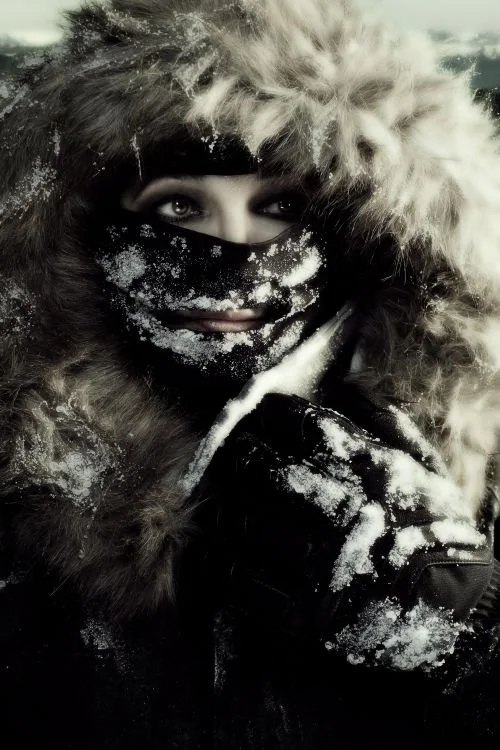
IN THIS PHOTO: Kate Bush in a promotional shot for 2011’s 50 Words for Snow
The Kangchenjunga Demon/Dipu Marak/The Schoolmaster of Darjeeling (Wild Man)/The New Man (The Dreaming)
__________
APART from The Kick Inside…

IN THIS PHOTO: Kate Bush in 1982
the other eight studio albums from Kate Bush (excluding 2011’s Director’s Cut) have one or two more characters to go in this series. I am ending with Them Heavy People (from The Kick Inside) which has a few, and I may pair that with Houdini. However, there are a few more at least before I get there. I am teaming 2011’s 50 Words for Snow with 1982’s The Dreaming. I have been writing a lot about Kate Bush in 1980, 1981 and 1982, so I am going to get to The Dreaming. I want to start with the final character from 50 Words for Snow. There are a few different names given to him in Wild Man. You could simply call him The Wild Man, though I think The Kangchenjunga Demon is the one that caught my eye. Also called Metoh-Kangmi. I am going to come to the Kate Bush Encyclopedia and an interview where Kate Bush explained why she wrote Wild Man:
“Well, the first verse of the song is just quickly going through some of the terms that the Yeti is known by and one of those names is the Kangchenjunga Demon. He’s also known as Wild Man and Abominable Snowman. (…) I don’t refer to the Yeti as a man in the song. But it is meant to be an empathetic view of a creature of great mystery really. And I suppose it’s the idea really that mankind wants to grab hold of something [like the Yeti] and stick it in a cage or a box and make money out of it. And to go back to your question, I think we’re very arrogant in our separation from the animal kingdom and generally as a species we are enormously arrogant and aggressive. Look at the way we treat the planet and animals and it’s pretty terrible isn’t it?
John Doran, ‘A Demon In The Drift: Kate Bush Interviewed’. The Quietus, 2011”.
I want to start by picking up on that interview. I will get to the itinerary of the album and that song in particular. It is one that takes us into the wild. I have said it in other features. Bush has a curiosity for things beyond our world. Her first single, Wuthering Heights, dealt with the spectral and haunted heroine from Emily Brontë. In terms of whether we empathise with Catherine Earnshaw. Right from the start, Kate Bush was going beyond the ordinary. Not a conventional artist, she had a curiosity about the spiritual world. I do like how Bush has this curiosity. In terms of what she wrote about, those who are attacked or misunderstood. This Kangchenjunga Demon is maligned and seen as something savage. They do not exist, but Bush has said in a promotional interview that she believes in Yetis. That she feels they are out there. It makes me think about her mindset and openness. So many songwriters are limited in terms of beliefs beyond love and their own lives. They may mention God and religion. Bush was not especially religious, though religious figures have appeared through her work. The Kick Inside brought in coincidence and phases of the moon. She has talked about philosophy and witchcraft. The latter was discussed in Hounds of Love. Literary figures and influences through film and T.V. Get Out of My House from The Dreaming is about a haunted house and this evil spirit warding people off. Influenced by The Shining. There has been a consistency throughout her career. In King of the Mountain from Aerial, we are in the mountains, and Elvis Presley resides there. You can feel this inventive and unusual blend that weaves through her work. 50 Words for Snow didn’t really have a concept, other than the fact that it is seven songs set to the backdrop of falling snow. A wintery feel. Though, as I will explore, it is one where we travel far and wide. I feel it is one of her most fantastical albums. Not to say there is little reality and the personal, as Among Angels could well be Bush reacting to the death of her father (who died in 2008). But her most recent album is one where she brings in the mythical and ghostly. Snowed in at Wheeler Street, this time-hopping song of two lovers torn apart through periods of history, where we are in Ancient Rome and New York in 2001. Misty is about a snowman that the protagonist has sex with, and he melts by the morning. The title track challenges the myth that the Inuit people have fifty words for snow. Bush invented fifty words. Lake Tahoe is about a Victorian woman who died in the lake, but legend says that people have seen her rise.
Let’s consider The Kangchenjunga Demon. That is one of the more derogatory names. Though Kangchenjunga is snow-appropriate. This is a wild man that lives in a cold climb. This beautiful mountain is one that could well hold and house something not quite human, though you feel Bush was employing a bit of fantasy. Not that there is credulity on her part. Bush is open to wonder and things we cannot explain. That it is better to believe and have that approach rather than shut things down. Here is more about this stunning mountain:
“Kangchenjunga is the third highest mountain in the world. It rises with an elevation of 8,586 m (28,169 ft) in a section of the Himalayas called Kangchenjunga Himal that is limited in the west by the Tamur River and in the east by the Teesta River. The Kangchenjunga Himal is located in eastern Nepal and Sikkim, India.Kangchenjunga is the highest peak in India, and the easternmost of the peaks higher than 8,000 m (26,247 ft). It is called Five Treasures of Snow after its five high peaks, and has always been worshipped by the people of Darjeeling and Sikkim”.
The names that people have for the eponymous Wild Man. Metoh-Kangmi translates as ‘man-bear snowman’. I will finish by discussing the geographical broadness of 50 Words for Snow. More commonly associated with the Himalayas, the hunt for The Yeti or Abominable Snowman has fascinated and compelled explorers for years. As we see in this article, there have been potential footprints but, as of now, no concrete proof of an elusive beast:
“And so the legend of the Yeti – its Tibetan name – went global, capturing imaginations and inspiring a century, and counting, of cryptozoological studies, searches and sightings. The hairy, ape-like biped has come in all different shapes and sizes, sometimes said to be much taller than a human and sometimes small yet frightfully strong, and while most famously depicted with white hair to blend into the snow-covered landscape it can also be reddish-brown and live in the Himalayan forests around the mountains. In movies, meanwhile, the Yeti has been both the killer monster of the 1957 Hammer horror The Abominable Snowman, and the cuddly cave-dweller of Monsters, Inc. (2001).
Still, when it comes to evidence for the Yeti’s existence, the closest that anyone’s got has been footprints – although not the ones spotted by Howard-Bury and his team. During another British expedition reconnoitring routes up Everest 30 years later, in 1951, climbers Eric Shipton and Michael Ward saw bizarre tracks that ran for about a mile at an elevation of well over 15,000ft. They had signs of claw marks, too. Shipton took a number of photos, with each footprint almost twice as wide as a human’s and larger than the ice axe and boot laid next to them”.
The Loch Ness Monster also comes to mind. That is mythical, too, though people believe it. Kate Bush even travelled to Loch Ness once, and you wonder if she wanted to spot Nessie. Surprised that she has not been mentioned in a Kate Bush song. Perhaps on a future album?! I do like how there are sightings of The Kangchenjunga Demon at Lhakpa-La (a 6,849-metre col about seven kilometres northeast of Mount Everest in the Tibet Autonomous Region), Dipu Marak sees the beast at the Garo Hills (part of the Garo-Khasi range in the Meghalaya state of India). Whilst lesser characters, I did want to also mention The Schoolmaster of Darjeeling. Kate Bush might have seen this 2008 article and been inspired when writing Wild Man:
“In 2003 an Indian forester claimed to have seen a Yeti three days in a row. Dipu Marak, general secretary of the Achik Tourism Society and Yeti enthusiast, followed the man’s trail and discovered strands of hair that he believed belonged to the mysterious creature. According to popular tradition, the Yeti is an ape-like animal that lives in the Himalayan forests.
After close study and DNA tests, researchers discovered that the hairs did not belong to a large unknown primate, but rather the Himalayan goral. The goral is a unique wild ungulate, which possesses characteristics of both antelopes and goats. Inhabiting high elevations, the goral confidently moves along cliff-sides and dizzying heights to escape predators such as wolves, tigers, and snow leopards”.
Kate Bush might have read Frank Smythe’s 1930 book, The Kangchenjunga Adventure. It is “An account of an unsuccessful expedition to climb Kanchenjunga, the world's third highest peak (unsuccessful)”. Talk that you/the beast “drowned near the Rongbuk Glacier (a high-altitude continental glacier located on the north slope of Mount Everest in Tingri, Tibet)”. There are other characters mentioned, though I will bring them in, but not expand. “Sherpas of Annapurna to the Rinpoche of Qinghai/Shepherds from Mount Kailash to Himachal Pradesh”. Annapurna is a mountain situated in the Annapurna mountain range of Gandaki Province. Bush could have been considering the late Humkar Dorje Rinpoche. Mount Kailash is unclimbed by humans; it serves as a central spiritual axis for Buddhists, Hindus, Jains, and followers of Bon. Himachal Pradesh is the northernmost state of India. We cover a lot of Asia through this song. Lake Tahoe is a major tourist attraction in both Nevada and California. There are a number of Wheeler Streets, though Bush could have been thinking of the one in London. I did not even mention that Andy Fairweather Low provides vocals on this song. A chance to explore collaborations on 50 Words for Snow. It is worth mentioning the brilliant percussion of Steve Gadd.
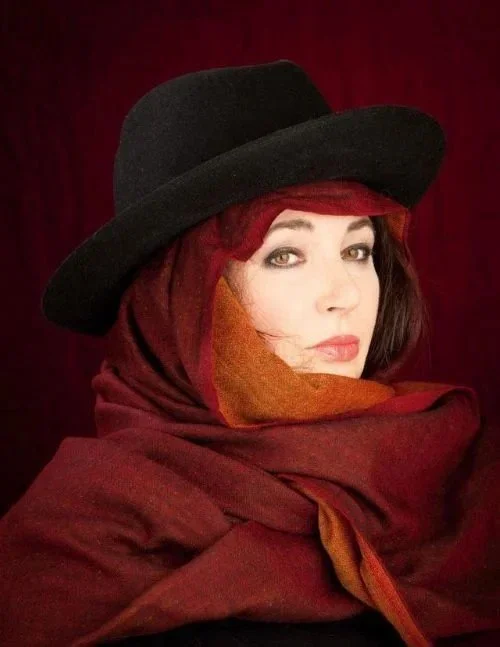
IN THIS PHOTO: Kate Bush in promotional shot for 50 Words for Snow
The Schoolmaster of Darjeeling took a trip to the Tengboche Monastery. Maybe there was a class of children walking there. Rumours that The Kangchenjunga Demon was dead and drowned. They were seen in the largest gompa in the Khumbu region of Nepal. The spiritual gateway to Everest, in broad daylight or in some remote and unclimbed mountain pass, this titular Wild Man is not an animal. Part-human and maybe part-beast, Bush takes a myth and this storied Yeti and gives it more flesh. She is not exactly sure where he may actually be, though we are taken around Nepal, so you assume that he is somewhere there. Though she did name The Schoolmaster of Darjeeling. I may have sourced this 2012 article from Telegraph India. But as Bush named a Darjeeling schoolmaster, I went searching to see why she made that connection. Then this article appeared. There may have been some rumblings and Darjeeling sightings pre-2012: “Darjeeling, March 30: A group of young storytellers and collectors has started a campaign here to document oral histories, myths and legends on yeti or the “Abominable Snowman” that many believe lives in the Himalayas in Nepal and Tibet. The group under the banner of Acoustic Traditional started a Big Foot campaign here today to popularise the legend of yeti. The “big foot” is a symbol of the animal’s feet and size. Acoustic Traditional was formed in 1999 and the members, mostly young tribals, are working with various communities across the country to record their myths and legends. It is a voluntary organisation based in Bangalore that works to promote oral storytelling and tribal folklore, especially of the mountain and forest-based communities, according to the website of the group. The campaign that started here today will end with a Big Foot March on May 15 during which participants will walk through the town wearing specially designed slippers that resemble the yeti’s feet”. We have a small but fascinating cast of characters in Wild Man. Key among them is The Kangchenjunga Demon. That seems to paint this Yeti as something sub-human and to be attacked. Kate Bush has this sympathetic and compassionate touch. Speaking with Dig! in 2022, Kate Bush did say this about Wild Man and this Yeti legend. One that garners curiosity and discussion nearly fifteen years after Wild Man was released: “It’s about how precious that mystery is, you know? We have such little mystery in our lives, generally, because of how we live now. I mean, of course, mystery is all around us, but the way we live our lives now, we’re too busy to be bothered with it”.
Let’s move to the second side. The Dreaming’s title track does provide us with a character. Even though there are animal noises as a kangaroo deployed to tragic effect, I am using these lines: “Coming in with the golden light/Is The New Man”. The New Man seems to have negative connotations. The New Man can refer to the concept of Milenungu (the ‘new man’ or ‘purified man’) described by anthropologist Kenelm Burridge. In traditional Indigenous Lore, an initiate completes sacred rites, washing away past failings to emerge as a renewed, responsible community member. This is what Kate Bush said about the Aboriginal Australians, “who were being wiped out by man’s greed for uranium. Digging up their sacred grounds, just to get plutonium, and eventually make weapons out of it. And I just feel that it’s so wrong: this beautiful culture being destroyed just so that we can build weapons which maybe one day will destroy everything, including us”. On The Dreaming, we get these wild scenes of white vans being driven by white men. How they are charging through the land and running down kangaroos. I am going to source some of the lyrics. I also want to discuss why The Dreaming is a complicated song now, and how it was an unsuccessful single. Also, how The Dreaming could have been a land acknowledgement song but wasn’t. A land acknowledgement is a formal statement that recognises and respects Indigenous peoples as the traditional stewards of the lands where an event, meeting, or institution is located. When Kate Bush was writing songs for The Dreaming, riots were spreading through the U.K., Thatcherism was in full swing, and it was a tense and bleak time. L.G.B.T.Q.I.A.+ rights are being challenged and denied. The community has to fight for recognition and visibility. Bush was not bringing this into her songs, though I think it spurred her to become more politically or socially conscious. The Dreaming about the land rights of the Aboriginal/indigenous Australians. Pull Out the Pin takes us to the Vietnam War. It would be impossible for the division and violence in the U.K. and the rights being stripped of people here to what Bush was writing. Perhaps too risky for her to reference race riots here. She was never going to write her version of Ghost Town (the 1981 single from The Specials). However, Bush was definitely affected. That hot and tense summer of 1981. Dragging into 1982. No surprise that two songs that reference violence and destruction are set in hot and sweaty climates.
There are positive connotations around The New Man. In Aboriginal culture, it could refer to an elder passing and this new man being a torch or responsibility passed down. However, it does seem to be a white man driving through Australia looking to destroy the land and displace the indigenous people. In terms of its reading, did Bush get it right when it came to the narrative and how she cast it? That vision of The New Man in the van causing terror and destruction. This 1982 song is not history. It applies to the modern day. This 2025 article from National Geographic writes how Aboriginal Australians are still fighting for recognition:
“The Stolen Generations
From 1910 to 1970, government policies tried to assimilate Aboriginal Australians. As a result, 10 to 33 percent of Aboriginal children were taken from their homes. People placed these “Stolen Generations” in adoptive families and institutions and forbade them from speaking their native languages. Their names were often changed.
Most First Nations people did not have full citizenship or voting rights until 1965. Only in 1967 did Australians vote that federal laws would also apply to Aboriginal Australians. This meant that Aboriginal Australians and Torres Strait Islanders would be counted in Australia’s population. It also meant that Australia could make laws they had to follow.
In 2008, Australian Prime Minister Kevin Rudd issued a national apology for the country’s actions toward the Stolen Generations. Since then, Australia has worked to reduce the social disparities that Aboriginal Australians face.
Aboriginal Australians’ struggle continues
Today, Indigenous Australians still work hard to keep their ancient culture and beliefs. Despite small progress such as the commission findings in Victoria, they continue to fight for national recognition and restitution from the Australian government.
In 2023, Australians overwhelmingly rejected a national referendum that would have recognized Aboriginal people in its constitution. It also aimed to create a group to advise Parliament on important issues. Although a majority of Indigenous voters said yes to the proposal, more than 60 percent of Australians voted no.
Many Aboriginal Australians saw the referendum’s failure as a blow. They proclaimed a week of silence and reflection on its wake.
But progress is still underway on other fronts. Australia is the only country in the British Commonwealth that has never made a treaty with its First Nations people. However, some Australian states are taking action on their own.
The state of Victoria has already established a framework for treaty negotiations, and is expected to broker a first-of-its-kind agreement.
The agreement aims to recognize the sovereignty of Aboriginal Australians and compensate victims of past injustices. It also aims to include findings from the Yoorrook Justice Commission truth-telling committee and make the First Peoples’ Assembly permanent within the state government.
If lawmakers pass the legislation, Victoria would become the second state to have permanent Indigenous representation in parliament. South Australia established its Indigenous representation in 2023.
A similar effort is underway in Queensland and is an attempt to “mend the very fabric of our society,” Aboriginal historian and author Jackie Huggins told the Guardian in 2022.
Still, it will take more than a treaty to heal the deep wounds of Australia’s colonial legacy. Aboriginal Australians say that whether the nation recognizes it or not, they possess sovereignty that, in the words of the national convention that called for the referendum, “has never been ceded or extinguished”.
The Dreaming was the second single from the album of the same name. Sat in Your Lap was released on 21st July, 1981. The Dreaming came out on 26th July, 1982. I wonder whether the turmoil and division that were happening in the U.K. affected their enthusiasm for the singles Bush released from The Dreaming. Sat in Your Lap was a top twenty, though The Dreaming did not get inside the top forty. Although Bush was trying to make a valid point and discuss something worthy, a combination of it being a little out of step with the political and national mood of the time and some slightly clumsy cultural appropriation means it has a complex legacy. I have said this before. The New Man could be this symbolic representation of white Australians plundering the land of Aboriginal Australians. This corruption and displacement. Is Kate Bush, a privileged white artist, the right person to tackle a subject like this? She profited from the song. I think it is less cultural appropriation and more cultural appreciation, though I can see why The Dreaming’s legacy is tarnished. It is amazing that she helped introduce the didgeridoo to Western audiences. Though it was played by the disgraced (and thankfully dead) Rolf Harris. Whether you like her Australian accent on the song or feel it is a bit distracting, there was nothing comedic or insincere about the didgeridoo. She understands its importance and how noble it is. Treating with respect. This article reveals that “Bush first discovered the instrument while visiting Australia shortly before writing The Dreaming. One could see Kate Bush’s use of the didgeridoo to be yet another cheap snatching of a revered, foreign instrument for entertainment value. However, that was far from what she was doing, in my opinion. The didgeridoo became a tool for what is, no matter how you look at it, a protest song about the illegal destruction of Aboriginal land”. As we learn here, “Commentators, including music journalists like Ann Powers, have characterised Bush as an artistic ‘pirate’ whose work constantly blends genres and world cultures. The core of the debate focuses on whether her integration of these cultures is a genuine, respectful attempt at cross-cultural exchange or a form of appropriating sacred traditions for personal and economic gain”. It is a stumbling block when you consider the Rolf Harris connection. Also, early promotional copies of The Dreaming featured the phrase "The Abo Song," an offensive racial slur. The title was swiftly recalled and changed before the official release. What could have been this great protest song is seen as a little exploitative and ill-judged. Too controversial in hindsight.

IN THIS PHOTO: Kate Bush in a promotional photo for The Dreaming in 1982/PHOTO CREDIT: Guido Harari
It is a shame. Thinking of The New Man and all that symbolised in 1982, we could use The Dreaming today and show that nothing has changed. Why are more songs not being written by mainstream Western artists to document this ill and evil?! Could we edit out Rolf Harris and some complex lines and aspects, and use this as an example of Kate Bush as a forward-thinking artist who was conscious of different cultures and issues? Going against this notion that she was this spoilt or privileged artist that lacked real depth or worldliness. The single did struggle, but the video did not help. Directed by Paul Henry, he would go on to direct a video for the next single from The Dreaming, There Goes a Tenner. The Dreaming’s video has wide shots and is more cinematic. Something Bush was keen on. That went against the more conventional and common feel of videos at the time, which favoured closer shots and more cuts. A combination of this somewhat jarring subject matter, given what was happening in the U.K., and perhaps a need for that to be addressed or something escapist to avoid the issue, and the cinematic and unconventional video made its mark. It might not be directly linked. Fiona Apple released Fetch the Bolt Cutters in 2020. She is a big Kate Bush fan and references Running Up That Hill (A Deal with God) – and maybe The Red Shoes - in the title track – “I grew up in the shoes they told me I could fill/Shoes that were not made for running up that hill/And I need to run up that hill/I need to run up that hill, I will, I will, I will, I will, I will”. Was Apple thinking of The Dreaming when she made this land acknowledgement? It was rare in 1982, but also rare in 2020 (and today). Artists, especially white artists, including a land acknowledgement on their albums. Here is a transcript from a 2020 interview where Fiona Apple was promoting Fetch the Bolt Cutters. We learn more about why she wanted to include a land acknowledgement:
“AMY GOODMAN: So, Fetch the Bolt Cutters, the album, includes a land acknowledgment. You’ve described it as sort of a last song of the album. Talk about what this land acknowledgment means to you.
FIONA APPLE: Well, Eryn and I had been talking about doing land acknowledgments. She wanted to start this project, which I think is amazingly smart and would be so nutritious for Americans, is that when artists go on tour, that they acknowledge the lands, the unceded lands, that they’re performing on, and perhaps educate people — and Eryn will correct me on any of this if I’m wrong, but educate people about the tribes that lived on those territories, so that we can keep aware of where we are and what the story is.
Now, the fact that we can’t tour now until probably 2022 maybe or late 2021 means that I can’t do that on the road, so Eryn brought this up to me when the album was finished. She said, “I wonder if you would consider doing this on the album.” And I just thought, “Absolutely, of course. That makes total sense. And yes, I would love to do that.”
And I do think that putting that on my album, as opposed to just like saying something like “I support this cause,” and the act of giving songs, giving sync requests, keeps them close to me and my life, so that it’s not just like a one-time thing that I’m just saying, “Oh, I’m into this cause right now because it’s kind of interesting,” but I’m just going to flit off over there after it’s over and just be done with it. This way, I’m tied into it with something that I made, now has more meaning because it’s attached to them. So, it’s a way for me to also make a life commitment to be listening and to be able to be a friend in whatever best way I can”.
You can feel Kate Bush’s influence on Fiona Apple in more than one way on this 2020 masterpiece. Perhaps Apple was not thinking explicitly of The Dreaming, yet you can draw a line between that 1982 single and Apple exploring the issue of displacement, land acknowledgement and rights of indigenous peoples. Indigenous rights activist Eryn Wise proposed the idea that musicians should start acknowledging the unceded lands they perform on while touring. On The Dreaming, Bush sings, “Erase the race that claim the place”. She elongates the word ‘Dreamtime’. “Dreamtime (also known as The Dreaming) is the foundational cosmological framework of Indigenous Australian spirituality. It represents an "everywhen" period of creation when Ancestral Spirits shaped the land and established the laws of nature and society, existing concurrently as past, present, and future”. You can learn more here. There are a number of Aboriginal groups with notable Dreamtime interpretative variation, including the Butchulla and Pitjantjatjara. Her lyrics do compel deeper dives. In 1982, there was no Internet and no quick resource to explore lines and lyrics that compelled curiosity and questions. Now, are there too many negatives associated with the song for people to be invested?! Artists playing on lands that are being taken from indigenous people. Maybe land they should not be playing on. Or they should acknowledge it and recognise the fact. Kate Bush also name-checked Woomera. Since 1947, it has been a Defence-owned and operated facility. The village is located in the Far North region of South Australia, but is on Commonwealth-owned land and within the area designated as the Woomera Prohibited Area (WPA). She had done her research, and there was this importance. As a woman, in line with tradition, she was not allowed to play the didgeridoo, though she treated it with respect in the song. Not making it comedic or background. Though Rolf Harris’s association brings some disrepute. The Australian tang puts some people off and fuels arguments around the cultural appropriation side. Even though it was not a successful single, Bush was appreciative and sympathetic when it came to the Aboriginal people of Australia.
It is not seen as one of her best songs. In 2024, MOJO placed it fifty when ranking her fifty best songs (is that good?!) and said this: “The Dreaming combines didgeridoos, Aussie race politics and daringly daft theatricals in a flummoxing lead-off single (allegedly titled ‘The Abo Song’ on early promo vinyl – oops), where multi-Kates brew a bad-trip babble through which “See the light ram through the gaps in the land” ripples like a seam of gold. Its other meaning was clear: all bets are off”. The Guardian ranked her singles in 2018 and placed The Dreaming twenty-eighth out of twenty-nine (Rocket Man, her 1991 cover of the Elton John song, came twenty-ninth). They remarked, “Clearly struggling over what the hell to release from her fourth album – frequently brilliant, but deeply experimental and devoid of obvious singles – her label plumped for the title track, an Aussie-accented tale of the destruction of Indigenous Australians’ homelands in the search for uranium. Not a hit, for some reason”. A bit dismissive. Seen as this oddity and misjudged flop. Though thinking of its relevance now, how an artist like Fiona Apple found spaces on her greatest album ever (not in the music itself but in the liner notes: “Made on unceded Tongva, Mescalero Apache, and Suma territories”), and the ways in which artists are lacking by not tackling subjects like land displacement and acknowledgement. That character of The New Man. It should help generate a new appreciation of an album still seen as an oddity and an insufficient release. Consider these words from a 2005 review: “‘The Dreaming’ is the sound of Kate striking out. Fighting for her own artistic integrity in a sea of pop banalities”. The title track has this tricky and complex legacy. Pitchfork wrote this in their 2019 review (of the title track): “both holdovers from music hall and vaudeville’s racist “ethnic humor” tradition, a kind of distancing that suggests that settler Australians are somehow less civilized and thus more responsible for their white supremacist beliefs than the Empire that shipped them there in the first place. In telling this story in this way—without accurate depictions of people, and without credit, understanding, monetary remuneration, proper cultural context, or employment of indigenous musicians—she unfairly extracts cultural (and economic) value from Aboriginal suffering just as the characters in the song mine their land. As a rich text to meditate on colonial, racial, and sexual violence, it is actually quite useful—but not in the way Bush intended”. It is a song that is more tarnished and has aged less well (to say that it was relevant or appropriate in 1982!) than others. However, I do feel we can salvage some important lessons from the ashes. How musicians today need to recognise, as The Dreaming says, “The Pull of the Bush” – which could also be a cheeky name-check from Kate! – and go beyond their four walls and private lives. Subjects such as indigenous people’s rights, land destruction and aboriginal people’s suffering are not something documented much in modern music. Innovations like this support “Aboriginal and Torres Strait Islander secondary students studying classical music in Australia”. Five years after The Dreaming was released as a single and only reached ninety-one in Australia, Midnight Oil released Beds Are Burning (Indigenous land rights protest anthem. Released in 1987, the song demands justice for the mistreatment and forced displacement of Aboriginal Australians, specifically calling for the return of stolen ancestral lands). They reached six in their native Australia and in the U.K. It has a legacy today, as this recent article explored: “Choirs and singing groups across the country are being called on to stand together in song for National Reconciliation Week 2026. Your voice matters and time to be heard is now. The 2026 song is the iconic Australian anthem is Beds Are Burning by Midnight Oil, a timeless call to action to be All In for justice and reconciliation, and for all Australians to know our history”. Nearly forty years after the release of Beds Are Burning and ahead of the forty-fourth anniversary (on 26th July) of The Dreaming, there is an urgency for modern artists to…
SHARE their voices.