FEATURE:
Kate Bush: Them Heavy People: The Extraordinary Characters in Her Songs
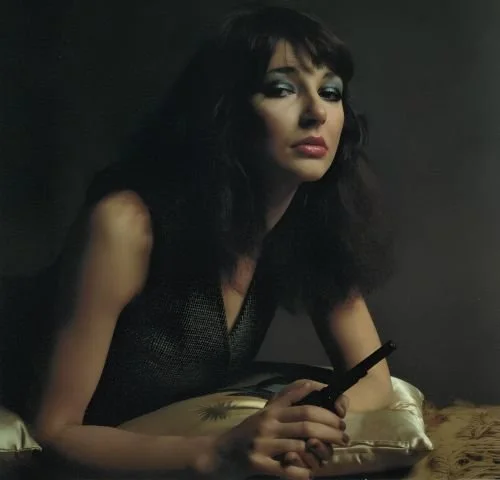
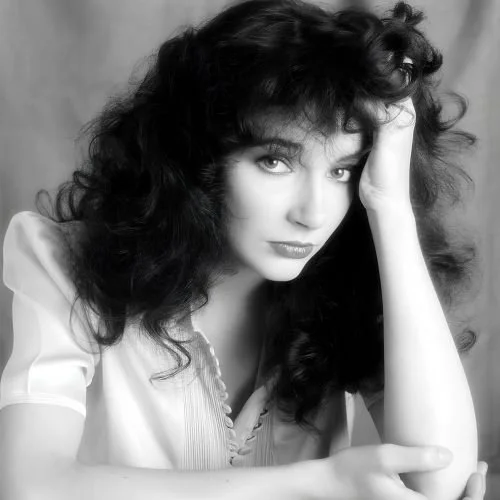
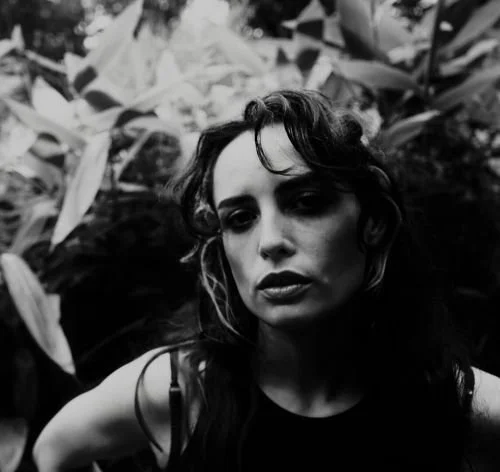
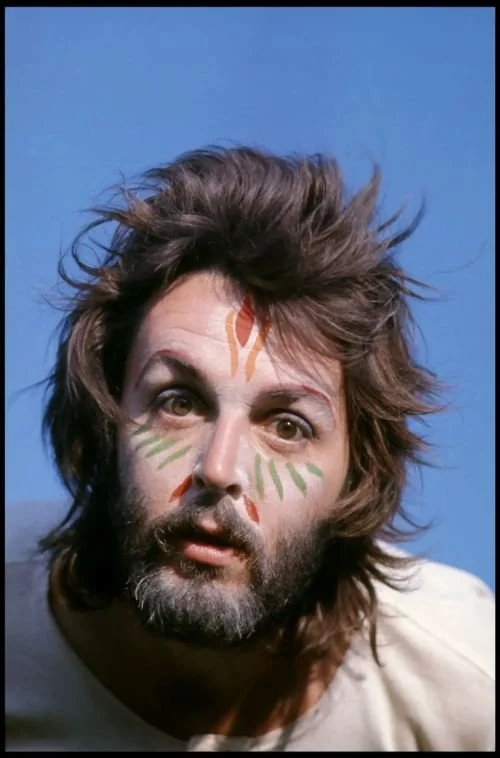
IN THIS PHOTO: Kate Bush in 1980/PHOTO CREDIT: John Carder Bush
Mammy’s Hero (Army Dreamers)/Rubberband Girl (Rubberband Girl)
__________
MAYBE a bit…
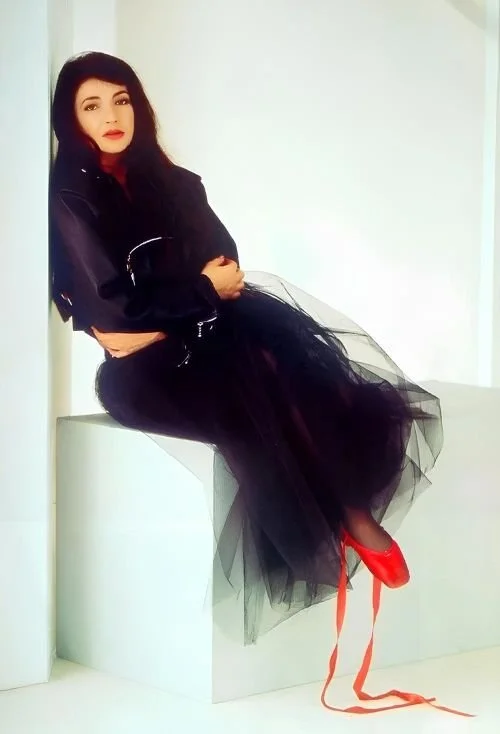
IN THIS PHOTO: Kate Bush in 1993
of a stretch (no pun intended), I am going to include a ‘character’ from the lead single from Kate Bush’s 1993 album, The Red Shoes, that may well be one of her most revealing and honest to that point. I am beginning by studying a track from 1980’s Never for Ever. I am going to pair these two albums together soon, as there is a song from each that mentions a lot of different people/characters. However, as these two songs were singles and they are very important, there are characters from them that are worth spotlighting. Let’s start with Army Dreamers. I could have talked about ‘Mammy’ in the song. A mother of a son who has been sent to war and died young. Presumingly seeing her as Irish – as Kate Bush’s mother was Irish -, instead I am turning my focus to Mammy’s Hero. The unnamed son that goes to war. Perhaps feeling it is important or something he had to do, I will revisit some themes I have addressed when discussing this song in the post. Before getting to those areas of exploration, it is worth getting some interview insight from Kate Bush:
“It’s the first song I’ve ever written in the studio. It’s not specifically about Ireland, it’s just putting the case of a mother in these circumstances, how incredibly sad it is for her. How she feels she should have been able to prevent it. If she’d bought him a guitar when he asked for one.
Colin Irwin, ‘Paranoia And Passion Of The Kate Inside’. Melody Maker (UK), 10 October 1980
No, it’s not personal. It’s just a mother grieving and observing the waste. A boy with no O-levels, say, who might have [??? Line missing!] whatever. But he’s nothing to do, no way to express himself. So he joins the army. He’s trapped. So many die, often in accidents. I’m not slagging off the army, because it’s good for certain people. But there are a lot of people in it who shouldn’t be.
Derek Jewell, ‘How To Write Songs And Influence People’. Sunday Times (UK), 5 October 1980
The Irish accent was important because the treatment of the song is very traditional, and the Irish would always use their songs to tell stories, it’s the traditional way. There’s something about an Irish accent that’s very vulnerable, very poetic, and so by singing it in an Irish accent it comes across in a different way. But the song was meant to cover areas like Germany, especially with the kids that get killed in manoeuvres, not even in action. It doesn’t get brought out much, but it happens a lot. I’m not slagging off the Army, it’s just so sad that there are kids who have no O-levels and nothing to do but become soldiers, and it’s not really what they want. That’s what frightens me.
There is a lot to discuss based off of these interviews. Kate Bush has said how Army Dreamers is about a mother who loses her son and questions her motherhood. I think that it is intriguing that she was thinking about this around 1979 or 1980. As she wrote it in the studio, perhaps this was one of a few songs in her career where she was reacting to the news. The song I am coming onto is another that she wrote in the studio, and I found that connection interesting. However, it is the urgency that is exciting. Up until this point, Bush’s work rarely touch on world events and politics. I think she was keener to explore different characters and channel her love of film asnd T.V. She did open up her heart and soul in some songs but, largely, there was this fictional element. When writing about love or loss, often some other character or person was cast in the song. I speculated before, though I wonder which conflict(s) she was moved by. It could have been the Soviet-Afghan War (1979–1989), or the Iran-Iraq War (1980–1988). Maybe it was the former, as the Iran-Iraq war started in September 1980. That was the month Never for Ever was released. If not reacting to specific global tensions, there was conflict and riots in the U.K. in 1980. The 1980 U.K. riots began with the St Pauls riot in Bristol on 2nd April, 1980, sparked by a police raid on the Black and White Café. It was driven by tension between Black communities and police over ‘sus’ laws, inner-city deprivation, and racism. The senselessness of violence and division. Those who were being attacked or supressed. You can apply Army Dreamers to local violence as you can with international wars. How mothers lose their sons in this senselessness. Army Dreamers resonates and remains popular because we have learned nothing. Right now, there is murder, genocide and destruction. Although the nature of war has changed and we might think of the violence as coming from the skies and less on the ground, young lives are still taken.
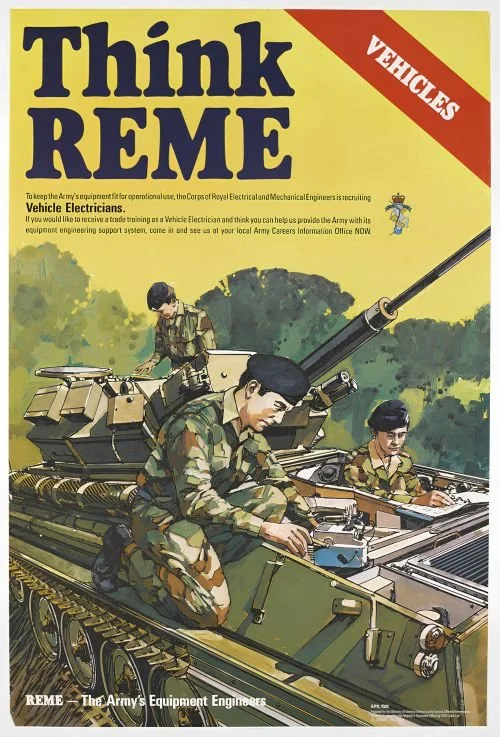
I am going to include a recruitment poster published by the Ministry of Defence in 1980. How war and drafting young men was represented. Making it sound like advice. Asking for engineers and mechanical minds to maintain the equipment used by the army. They still do this now. Adverts for the Royal Navy. Almost making it seem like this glamorous life where people are useful and get to have this fulfilling job. More interesting than regular jobs, I do feel like recruitment and drafting by the army or navy should not be on television. It does seem problematic for young people who are thinking of joining. Perhaps they feel they are doing good and this is like a national service or a calling. Instead, there is violence often involved. Especially now, there is call for people to risk their lives to attack or defend countries. Do people think about the families at home who have to receive news of a child’s death? Someone in their twenties – like Mammy’s Hero in Army Dreamers – who was “only in his twenties”?! It is scary that this is something we have to talk about in the modern age. I like how Buch did bring this into her music at the start of a decade that would see major conflicts and some of the worst violence in years. The Falklands among the conflicts of the 1980s. I am going to come to a feature about Army Dreamers to end this section. Going back to that first interview. How much guilt on the mother? We listen to Army Dreamers and feel sympathy with Mammy. Bush maybe unconsciously referencing her mother. Bush’s family supportive of her ambitions. Never a chance Kate Bush would be asked to join the army. Though weaponry, violence and this sort of theme was kind of explored again for 1986’s Experiment IV. The government making this device and machine that could kill people by sound. However, what if the mother had given her son a guitar when he asked? Children ask their parents for stuff like this and they have all these loft dreams. Did the mother encourage her son to do something ‘useful’ or practical and not chase wild dreams?! Going into war seen as helpful or like a purpose. Instead, her son was killed. It is an interesting angle I had not considered. How much of the lyrics were Kate Bush looking at her life? If she had not been granted a path to music and her parents resisted, would her life have turned out far worse? Not as extreme as dying in battle, but how there needs to be trust from parents when their children do want to pursue a path that is perhaps not orthodox or seems unlikely.
In the second interview, Kate Bush giving a different perspective. Someone struggling in education and, instead of learning a trade or redoing exams, the army is seen as an only option. How realistic was this in the 1970s and 1980s? Today, children, especially here, do not get drafted and there is not this option that, if you can get educated, then you go into the armed forces. However, it might have been an only way out for Mammy’s Hero. The next interview is the most revealing. How the Irish and Irish accent in Army Dreamers is emphasised. Army Dreamers almost like an Irish Folk song. This old tale of a young man killed in war. Bush saying that “There’s something about an Irish accent that’s very vulnerable, very poetic, and so by singing it in an Irish accent it comes across in a different way”. That is true. Bush’s accent and delivery does give Army Dreamers an elegance and sense of the poetic. Not that she saw romanticising war at all. Instead, she was mixing the beautiful and tender with the horrifying and stark. I did not know that Bush was also conscious of things like army manoeuvrers, especially in countries like Germany, where young men were killed there and not even in battle! If some think that Army Dreamers is about the futility of war and its insanity, it also can be seen as this excoriating attack on the education system and British society in 1979/1980. Around about the time Army Dreamers was written, Margaret Thatcher became Prime Minister. Thatcher's education policy (1979–1990) aimed to reduce state control, increase parental choice, and introduce market mechanisms into schools. In 1979, the U.K. labour market was at a turning point, with unemployment around 1.3 million in May. Manufacturing employment continued to decline, having lost 1 million jobs between 1970–1979. It was a terrible time. Those leaving school with no qualifications not able to get a job or not having the skills. These army dreamers thinking perhaps that being a soldier was an easier life. Instead, it was a reality that often meant premature death.
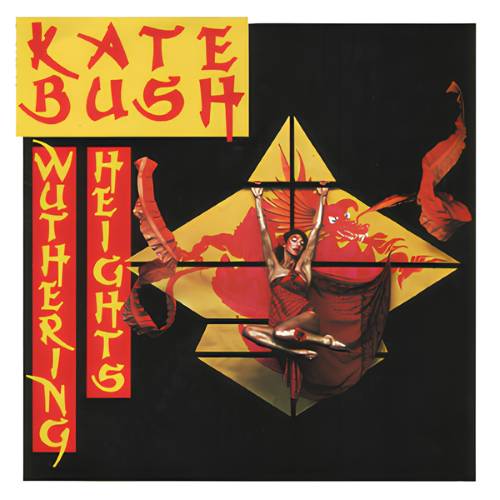
I have said before how many sexist journalists belittled Kate Bush and the fact she was not political. At a time Punk was in charge, Bush was seen as effete, insubstantial and airy-fairly. Danny Baker’s dreadful and insulting interview with Bush whilst she was still making Never for Ever. Not that this one interview led to Army Dreamers, though Kate Bush becoming much more conscious of bringing global conflicts, social elements and ‘deep’ subjects into her music. However, this being Kate Bush, she was not exactly a Punk act yelling and dully sloganeering or following the herd. You only need to see a few of the live performances of Army Dreamers and how they were staged. One or two performances quite camp and almost balletic. Bush bringing the quirky and kitchen sink into the performances. The video for Army Dreamers is the final one screened that was directed by Keith (Keef) MacMillan. You could tell Bush’s videos were growing in scope and becoming more filmic. Compare Army Dreamers with Wuthering Heights or Hammer Horror. In a short time, she had taken a big step in terms of her visuals and how her videos would look. In Army Dreamers, it is almost like a piece of film or a plot, rather than staged dance and about the choreography. Bush telling a story with the video. It is quite a startling video that hits hard all these years later. Dreams of Orgonon observe how, when it comes to war and young men dying, women are seen as devastated and emotionally broken. “the actual effects of trauma are widely besmirched and ignored by the jingoistic reactionaries who send civilians off to die”. This is not what Kate Bush does. The hero of the story has been snatches away from the mother, yet the mother is not broken and this cliché emotional wreck. She is strong and sad, yet there is this wider arc that is not about grief and what it does to those who lose their sons:
“There’s a touch of sentimentalism to this, if at least a grounded and humanitarian one. Violent deaths are often devastating because they cut short the lives of unsuspecting civilians who’ve been planning to go live their lives as usual the next day. Bush’s anti-militarism is hardly strident, but “Army Dreamers” has an edge to it even in its understatedness, blaming the services of “B.F.P.O” for overseas tragedies (although interestingly, her son’s death appears to be an accident — there’s little fanfare of death, no suggestion of the glory of battle). The horror of the death is largely its silence — all the things that couldn’t happen, no matter how much saying them would make them so.
The politics of the situation are left understated, as is typical for Bush, and yet with a light inimical rage, as if Bush is finally turning to the British establishment and shouting “look at what you’ve done!” While “Army Dreamers” is far from an indictment of the military-industrial complex (indeed, it has more to do with the British Army’s consumption of Irish civilians than anything else), its highlighting of war as futile is striking. “Give the kid the pick of pips/and give him all your stripes and ribbons/now he’s sitting in his hole/he might as well have buttons and bows” is a line of understated condemnation that spits on military emblems (pips are a British Army insignia) and consolidates trenches and graves. “B. F. P. O.,,” intone Bush’s backing vocalists again and again. In interviews, Bush backpedals from any perceived anti-militarist sentiments in her work (“I’m not slagging off the army…”), but her song tells a different story: nothing comes with B. F. P. O. except carnage.
In the song’s music video, Bush’s final collaboration with director Keef MacMillan (the two strong-willed auteurs could only collaborate together for so long), the visceral glimpses of departed loved ones that plague mourners gets captured in one devastatingly simple moment. Bush, a soldier stationed in a forest and surrounded by men in camo, turns to a tree to see her lost son. She runs to embrace him, and he’s gone before she reaches the tree. There’s a hard cut to Bush’s eyes flashing wide open. There it is: trauma and grief in a glance. Waking up, but still living the same dream”.
Reaching number sixteen in the U.K. upon its release, it was a modest success for Kate Bush. Perhaps fans of hers were not entirely sold on the song or expecting this direction. However, as Breathing was the first single from Never for Ever and also reached that chart position, people taking time to warm to Kate Bush as someone more political. Or that the songs were heavier. The second single, Babosohka, went to number five. Interesting too seeing how people reacted to the singles from Never for Ever. The more commercial and ‘traditionally Kate Bush’ faring better than her discussions around destruction, warfare, violence and death.
I have probably not gone into as much depth as I should with Mammy’s Hero and Army Dreamers. However, its lost son represents one of thousands of young men who needlessly were killed in battle. However, this second character is much more personal. One might argue it is not a character. However, as the Rubberband Girl was named and the title of the first single from The Red Shoes, it gives me chance to discuss this song and Bush as this character. I talked a bit about critical reaction and press interpretation of Kate Bush around Never for Ever in 1980. This was an album with Bush co-producing and taking more control. Her most confident album to date and first of the 1980s, she was on this upwards arc, and yet there were critics still mocking and insulting. In 1993, things had changed and I feel Kate Bush was at a stage where she was tiring or perhaps not seen as innovative compared to artists around her. Thanks to the Kate Bush Encyclopedia for this resource:
“This is Bush at her most direct… rhythmic, almost raunchy workout with the occasional outburst of rock guitar, strange lyrics – and a wired vocal impression of said office accessory being stretched. It is also a very commercial rejoinder.
Alan Jones, Music Week, 28 August 1993
Perhaps a little too up tempo for my tastes – I prefer my Bush all dreamy and mysterious. A minus the drums… but it still has enough kookiness to draw me under. And she’s still the only artist for whom the word “kooky” isn’t an insult.
Everett True, Melody Maker, 11 September 1993”.
It is arguable, that apart from Hounds of Love (1985), all Bush’s albums up to and including The Red Shoes was met by mixed reviews and some derision. That last interview about kooky not being seen as insulting, when blatantly it is! Rubberband Girl is not a kooky single. It was quite commercial, though in the 1990s and Bush pushing her music forward, I think it was necessary. Critics never really happy. Wanting her to be more commercial and accessible and then, when she is, they want her to be mysterious and odder! She was in this constant state of being true to herself but also wanting to sell albums and be relatable. However, by 1993, you could feel this strain taking hold. Kate Bush might not think of Rubberband Girl as her most autobiographical song. However, I feel it is up there with Hounds of Love in that sense. Number twelve in the U.K., Rubberband Girl was a success. Think about the singles being released at the same time Rubberband Girl came out (September 1993). It was an odd time in U.K. music. In terms of what was in the charts around August and September 1993, we had Billy Joel’s The River of Dreams, Culture Beat’s Mr. Vain, SWV’s Right Here, Mariah Carey’s Dreamlover and Nirvana’s Heart-Shaped Box. Boom! Shake the Room by DJ Jazzy Jeff & The Fresh Prince was also in the charts. Apart from Nirvana, I guess you could say Dance, Pop and Hip-Hop were trending.
How did Kate Bush fit into the scene in 1993? I do think that she was not compromising or trying to be like other artists that year. However, I do feel like there was a shift. Dance and Pop big at the forefront. Something Kate Bush was not naturally attuned to or was separate from, it was a difficult period. The Red Shoes reached two in the U.K. and twenty-eight in the U.S. Huge success here (though not with massive sales), that U.S. appreciate is notable. How she was connecting in the country at a time when genres like Grunge were perhaps seen as more commercial or cooler. Rubberband Girl is seen as a throwaway and silly Pop song by Bush. However, it was written in the studio and seems to have come together quickly. Rather than Bush tossing the song off and having to come up with a lead track that was Pop-heavy and accessible, I do feel like it absorbs some of Bush’s feeling and fatigue at the time. There is silliness to the song, though this idea of being knocked down and blown away and bouncing back on your feet. It was clear Bush’s career was in a slight decline and there was this slight downturn. Her songwriting and the critical reaction. “A rubberband bouncing back to life/A rubberband bend the beat/If I could learn to give like a rubberband/I’d be back on my feet”. On the surface, it may seem like Rubberband Girl is quite inessential or hollow. I do think it is Kate Bush casting herself as a Rubberband Girl. Being affected and feeling flattened by then having to get back on her feet and carry on. This promotional trail and this endless cycle. “When I slip out/Of my catapult/I gotta land with my feet firm on the ground/And let my body catch up”. It was a very unusual time anyway. Her mother died in 1992, and it was clear that Bush was losing people. There was this need for her to release music in the 1990s, but it was a decade that was so varied and perhaps one where Bush would not fit into so readily. In any case, she was at a natural point where she needed to stop and take a break away. Rubberband Girl reveals layers. Bush writing a song that perhaps was commercially demanded and would please critics and yet one that gives us a window into her mindset at the time.
Rubberband Girl was one of the songs that featured in the short film, The Line, the Cross and the Curve. I have talked about this a lot. It makes me think about Kate Bush and the source material. How so much of her work can be tied back to books, Folk songs, mythology, T.V., film and far beyond. If you look at many of Kate Bush’s songs, they can be traced back to some unusual or rare areas. Babooshka, from the aforementioned Never for Ever, inspired by (loosely, at least) a Folk song, Savoy, in which a young woman dresses a s highwayman to rob her lover to see if he will give her the gold love ruing she gave him. The husband refuses to give it up, which lets the woman know of his devotion. I feel like there should be a podcast or something that traces lines back to all the books, films and songs where Kate Bush had gained inspiration from. I mention this, as The Line, the Cross and the Curve was inspired by the 1948 film, The Red Shoes. The 1993 album obviously shares the title, though the only similarity or nod is the cover – Kate Bush’s feet wearing red shoes – and the title track. However, The Line, the Cross and the Curve was almost a remarking or reinterpretation of that film but with a new title. Written and directed by Michael Powell and Eric Pressburger, The Red Shoes follows Victoria Page (Moira Shearer), an aspiring ballerina who joins the world-renowned Ballet Lermontov, owned and operated by Boris Lermontov (Anton Walbrook), who tests her dedication to the ballet by making her choose between her career and her romance with composer Julian Craster (Marius Goring). I am not sure when Kate Bush encountered this film, though she had this fondness especially for Michael Powell, and the two did meet and I think discussed collaborating shortly before his death – though that never came to pass.
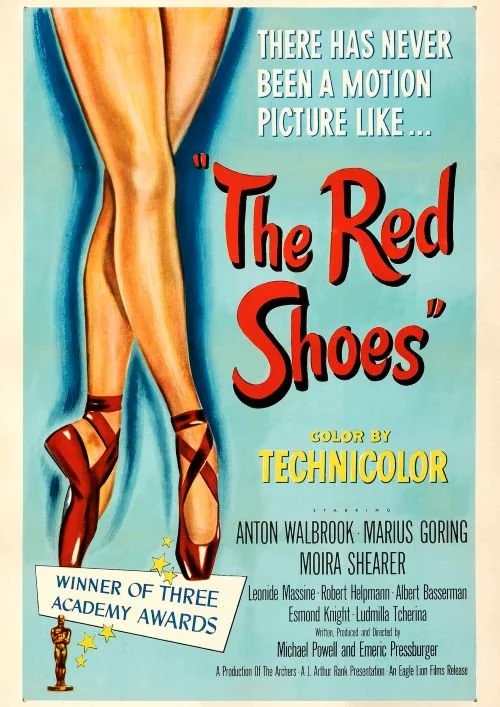
I do love how Bush was this innovator in 1993. If one feels The Red Shoes is one of her weaker album, consider how The Line, the Cross and the Curve was almost a visual album. One that was influenced by this 1948 film. If this was done today by a major Pop artist then they would get praise. However, Bush did get criticism. Rubberband Girl has a brilliant video where Bush dances and springs on a trampoline. In terms of concept, perhaps not as striking as other videos in that short film. However, this was one of the last times we get to see Kate Bush dance on film. Rubberband Girl sess her in quite an intense workout. The chorography and dancing quite energetic and flexible. Perhaps not the right words, it did at least show that, fifteen years since her debut single (Wuthering Heights) was released, Bush was still very much this amazing and compelling dancer. I do really love Rubberband Girl and the fact that this is a song that she re-recorded for Director’s Cut. One that she actually considered taking off of the album. I love the original and not sure that it should have been reproached. It is much more powerful and striking in its 1993 context than it was when included for Director’s Cut in 2011. I feel that people should seek out The Red Shoes. In terms of how Kate Bush was inspired, we get a deeper appreciation of here creativity when we look to the sources that she took from. There is the question as to whether the Rubberband Girl actually bounded back. In the song, it did seem to be the case that she got back on her feet. However, very shortly after the single came out, Bush would wind down and be seen in public less. It would be twelve years until here next album, Aerial was released. Perhaps one of the greatest acts of bouncing back in music history! A stunning double album and this…
AMAZING new chapter.