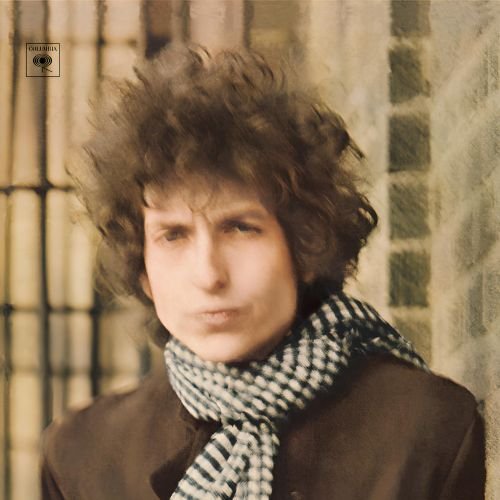
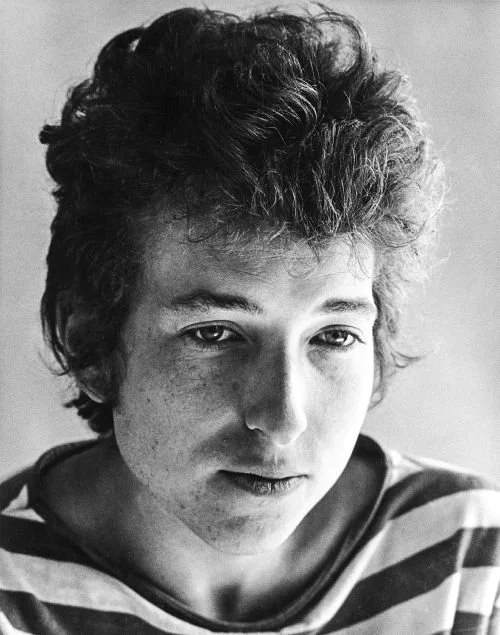
Prior to coming on to a couple of reviews for Blonde on Blonde, I will source Vanity Fair and their 2016 feature on Bob Dylan’s 1966 masterpiece. If an album can be considered a work of literature. Dylan did win the Nobel Prize in Literature in 2016. Just over fifty years since the release of one of his greatest display of poetic brilliance. Blonde on Blonde is a major display of his untouchable lyrical brillance. Could a single album be seen as a great work of literary? A case for Blonde on Blonde being this great '60s novel:
“Does Bob Dylan deserve the Nobel Prize in Literature? That’s a question some casual fans and detractors are asking now that the prize has been awarded to the 75-year-old singer, songwriter, tour-horse, author, broadcaster, and inveterate shape-shifter. Dylan’s oeuvre is vast—there are entire albums that even I, a fan well on the obsessive side of the scale, have never listened to in full—but pieces of it stand out as timeless monuments, however eager some may be to dismiss them as “dad rock.” And while his stark, haunting protest songs are what vaulted him into the uncomfortable role of “Voice of a Generation,” it’s the double album Blonde on Blonde, released in 1966, that provided the fullest indication yet of what an ambitious, unruly artist he truly was.
The album is a plea, a curse, and a benediction all wrapped in one. Affection, derision, worship, and betrayal all vie for the upper hand in one sonic and poetic masterpiece after another. Fifty years after its release, it’s still hard to figure out exactly what was eating Bob Dylan when he recorded Blonde on Blonde, but it’s not hard to see why it will be remembered as one of the greatest rock ’n’ roll albums of all time. Only a 24-year-old at the top of the world could sound this precocious, this romantic, this world-weary, this incorrigible.
When Dylan and his backing band, then known as the Hawks, convened in New York for the first recording session, he had just married the model Sara Lownds. Before decamping to Nashville for additional sessions, Dylan paused for the birth of his and Sara’s first child, Jesse. But Dylan’s fraught relationship and painfully awkward breakup with Joan Baez, who had vouched for him with the folk community and helped launch him to superstardom, was not far at all in the past, nor was his complicated friendship with the troubled Warhol acolyte Edie Sedgwick.
That jumble of relationships left a tangled imprint on the lyrics on Blonde on Blonde, which veer back and forth between loving and lacerating. We know (or think we know) that “Sad-Eyed Lady of the Lowlands” is about Sara (because an enraged Dylan will later say as much in the lyrics to 1976’s “Sara”), but who is the object of, say, “I Want You”? Is it a love song to Sara, or a song of lust, consummated or otherwise, aimed at Edie—or someone else entirely?
Dylan’s wild imagination only adds to the confusion. For every clear image drawn from real life, there are a dozen animated by silly word play, absurdist scenarios, and walk-on characters worthy of Cervantes and Chaucer—or, for that matter, Jack London and the hobo memoirist Jim Tully. Even “Visions of Johanna,” which begins with cinematic specificity inside a New York apartment with coughing heat pipes and country music on the radio, eventually erupts into a mad hallucination involving a peddler, a countess, a fiddler, and a fish truck. (Those shifts in perspective make “Visions of Johanna” one of Dylan’s most famously literary songs; chances are, the Nobel committee had it in mind, along with 1975’s “Tangled Up in Blue.”)
Still, even if much of this symbolism isn’t possible to fully pin down (despite the misguided efforts of countless “Dylanologists”), it’s easy enough to get a feel for what Dylan was struggling with. There is an emotional truth to these songs, even when the literal truth keeps scurrying around the corner before you can get a good look at it. “Pledging My Time” describes taking a chance on a new relationship, despite the knowledge that the odds are stacked against success. (“Somebody got lucky / But it was an accident.”) “Leopard Skin Pillbox Hat” is a parable of sexual betrayal. (“I don’t mind him cheatin’ on me / But I sure wish he’d take that off his head.”)
“Temporary Like Achilles” and “Absolutely Sweet Marie,” like “Maggie’s Farm” before them, are about being at the mercy of a much stronger woman. (“Is your heart made out of stone, or is it lime / Or is it just solid rock?”) “Fourth Time Around” is about tormenting such a woman through sheer stubborn lousy male behavior. (“I stood there and hummed / I tapped on her drum and asked her, ‘How come?’”)
Again and again, Dylan adds layer after layer of color, plot, and character without ever fully obscuring a song’s emotional meaning. You don’t quite know what he means when he says, “Now people just get uglier and I have no sense of time,” but there’s no mistaking the import of “Your debutante just knows what you need, but I know what you want.”
And then there are the songs where Dylan lets the dealer see his cards. “One of Us Must Know (Sooner or Later)” is both boorish and weirdly tender, depicting with unflinching frankness one of those lopsided relationships that bring nothing but misery to everyone involved. The narrator isn’t in love—far from it—but he wants the person whose heart he’s breaking to know that it’s not her fault. It’s not even personal. “I didn’t mean to make you so sad / You just happened to be there, that’s all.” He describes multiple misunderstandings, one of them leading to an unexpected argument: “An’ I told you, as you clawed out my eyes / That I never meant to do you any harm.” This is charmless but recognizable behavior—the kind that rarely shows up in poetry or Hollywood movies but occurs in real life more often than we’d like to admit.
“Most Likely You’ll Go Your Way and I’ll Go Mine” tells a similar story, except this time the narrator is the one who’s in too deep. After being jerked around one too many times, he’s finally cutting bait. “You say you got some other kind of lover / And yes, I believe you do / You say my kisses are not like his / But this time I’m not gonna tell you why that is / I’m just gonna let you pass.” This, too, will strike anyone who’s spent time on the dating circuit as an entirely familiar scenario: falling for the wrong person, getting sucked in by his or her games, then forcing yourself to quit chasing that person around despite the undeniable temptation. Is Edie the object of this song? That would be my guess, but it’s hard to know.