FEATURE:
Heirloom
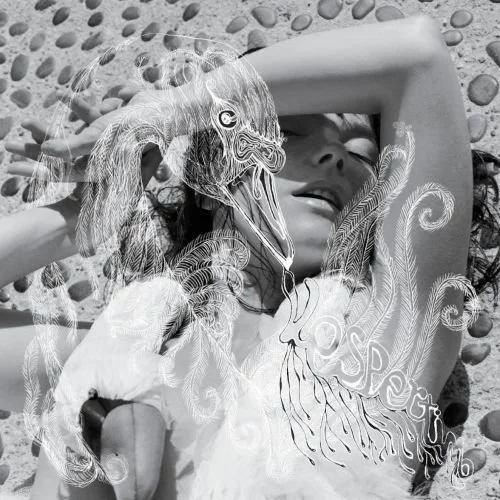
Björk’s Vespertine at Twenty-Five
__________
OFTEN ranked…
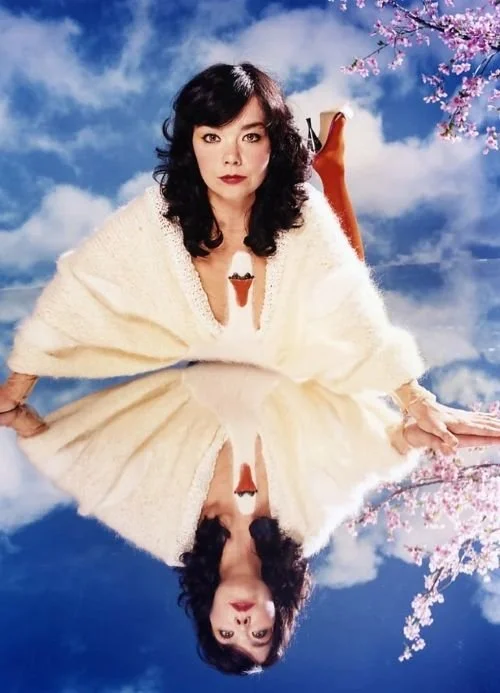
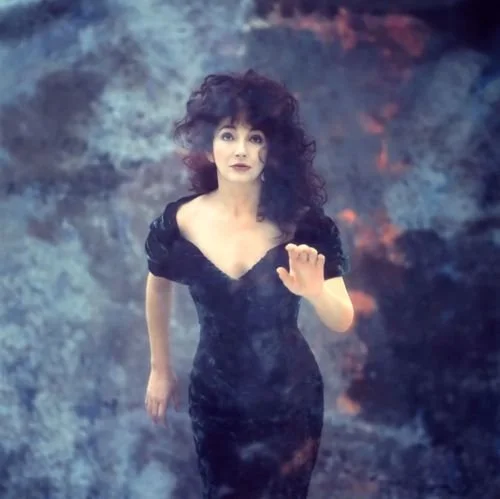
IN THIS PHOTO: Björk in 2001/PHOTO CREDIT: David LaChapelle
alongside Björk’s best albums, Vespertine turns twenty-five on 27th August. I want to go inside this album for an anniversary feature. I shall end with some reviews. Hugely critically acclaimed, Drowned in Sound placed it first when deciding the best albums released between 2000 and 2005. Slant Magazine placed Vespertine third when ranking the 250 best albums of the 2000s. Quite an honour, but not that surprising. Björk is one of the most consistent and brilliant artists in music history. Vespertine is one of her most astonishing releases. I am starting out with The Guardian and their 2001 interview. They chatted with Björk ahead of the release of a simply mesmeric album:
“We hook up in St John's Wood, where finishing touches are being put to some adverts for Björk's new album, Vespertine. When I get there, several people are musing over video images of Björk with some kind of sci-fi maggot slithering out of her nose and into her mouth. Björk sits before the screens, as quiet (natch) as her gorgeous stripy coat is loud. Her hair is longer, more rock'n'roll, than usual, tapering down her back in Ronnie Wood tendrils. When the time comes for us to retire upstairs and talk, she turns to smile 'Hello'. Not for the first time, her gothic prism of a face, with its up-turned nose and Slavic cheekbones, seems like something half-seen, half-sensed, lurking in the woods of a Grimm's fairy tale. If nothing else, Björk is the undisputed Blair witch of pop.
The maggot imagery in the video having been so repulsive, I can't help but wonder what Vespertine could possibly be about. I expect Björk to say 'death' or 'decay', something cheerful along those lines. However, she tells me that the new album is dedicated to 'worshipping the home, hibernation, finding paradise in your kitchen, magical moments on your own, that kind of thing'. Following this theme, Björk almost called the album Domestica but changed her mind. ('It was too much.') Then she found Vespertine in a dictionary. 'It means: "Things that come out of the night", like an owl or the northern lights,' she says. It's certainly gentler-sounding than previous material.
'Well, yes, my other albums, especially Homogenic, have been very extroverted, very bullet-proof. But that side of me has been captured so many times.' So is Vespertine the private Björk - Björk unmasked? She rubs her face nervously and considers. 'It is one side of me,' she says. 'A side of me that can't be captured by going out and being sociable. Something quite quiet and unexpected. Hidden things, just to do with the things that we dream about at night, the more Nijinksy sides of us.' Now Björk is warming to her theme, smiling sweetly. 'Sometimes they are subdued, but they are always there.'
If you're sitting at home reading this and thinking 'Crikey', then I can confirm that this is the way Björk speaks and thinks. Her private conversations with her friend Thom Yorke, from Radiohead, must be frightening to behold. On the other hand, it does lead to some interesting discussions that you just wouldn't have with Atomic Kitten.
Famously raised by her progressive hippy mother in a commune-style environment just outside Reykjavik (her estranged father, now a trade union activist, saw her almost on a daily basis), Björk was classically trained in music from the age of five, which stood her in good stead for later work with the likes of The Brodsky Quartet and percussionist Evelyn Glennie. At 11, Björk became a national child star after recording some traditional folk songs. Björk happily admits to banging on and on about Iceland in interviews as a mask for shyness, and denies that she is irritated by her homeland's current ultra-fashionable state. 'It is probably my fault. I've talked about it the most.' Like many young people in Iceland, as a teenager, Björk bounced for a few years between jobs to pay the rent and her creative pursuits. The early success of The Sugarcubes paved the way to a solo career, which is when Björk decided to move to London.
'When I moved to London in 1993, I was having the most happy life,' says Björk. 'I was regularly on tours with The Sugarcubes, seeing the world, but always having a safe nest to go home to. And that suited me, because I was so introvert. As a kid, I had this fantasy that I would end up living alone on an island, writing symphonies and just walking around in nature, tripping, singing at the top of my lungs in the blizzards, bumping into horses, whatever. But because I was so safe, there was a side to me, certain aspects of my character, that nobody had ever seen and nobody ever would. I knew I had to make a sacrifice, become more extrovert, push myself to the limit.'
Isn't sacrifice a big word? 'Not at all,' she says, surprised. 'To me, communication is all about making a sacrifice. A very beautiful sacrifice. That's the whole point. It's like love. For two people to synchronise so extremely, they both have to sacrifice their personal needs, they both have to celebrate each other's different sides, the different colours we have in all of us.' By now, it should be obvious what Goldie, one of Björk's exes, was going on about when he called her 'intense'. Mind you, in the same interview, Goldie gloated about the time he bedded Naomi Campbell, so Björk seems to be well out of that one.
If things are happier, less tortured, now, Björk prefers not to comment. 'I try not to talk about these things, I'm sorry,' she says, quietly, when I ask if she is currently in a relationship. The same intensity that evidently comes so naturally to Björk could account for her triumph as the blind mute Selma in Dancer in the Dark , not to mention the fraught relationship she had with von Trier. During the making of Dancer in the Dark , the on-set rows between director and star were legendary. What happened?
'I am used to the creative process,' says Björk. 'I work with a lot of people who are as strong, if not stronger than me. So I am used to disagreeing and working things out. But, with everybody except him, it would always stay creative and positive. Whereas with him, maybe it wasn't, it was quite destructive.' Is she saying that von Trier tried to destroy her? For the first time, Björk's face clouds over. 'I don't know,' she says wearily. 'It's, like, almost three years since I've been shooting this film, and I'm really bored talking about it, I'm sorry.'
There's the same muted, weary reaction when I ask about Ricardo Lopez, the obsessed fan (of whom Björk seems to have more than her fair share) who, in 1996, sent a letter bomb to her home, then filmed himself with a video blowing his brains out with a pistol. This upset Björk badly, prompting her to leave London, first to Spain to record Homogenic , then back to Iceland.
'It wasn't just the letter bomb,' she explains. 'Things were happening all around me, and I realised that I'd come to the end of the extrovert thing. I had to go home and search for myself again. My job is essentially about generosity and when I went to London, I had a lot to give, and it turned out I had given it all. If I'd tried to give any more, it would have become bad energy. So I left at just the right time. I'm not saying that I was responsible for the letter bomb, or that I saw it coming, but it didn't surprise me either, because something definitely wasn't right. I am much much happier now.'
And she seems it. As an artist and a person, Björk no longer seems inside out. As the world's leftfield chanteuse of choice, Björk's albums routinely sell a healthy few million internationally. Meanwhile, Björk the human being is at her happiest talking about Sindri, the son she adores. Back in 1997, she famously attacked a journalist at Bangkok airport for harassing him. 'I just flipped. She was pushing my boy, trying to get an emotional reaction out of him. I take the bullshit that comes with my job, but when it starts affecting the people I love, that's different.'
'Being famous is like 9 billion volts of electricity going through you,' she says earnestly. 'You feel it like that. That's what it feels like. There are people who are born to do it - the Lady Dianas and Mother Theresas of this world - who really have that level of communication, that talent to communicate 24 hours a day, and let all these people live through them. And it's actually a very positive, not a negative, thing - a self-sacrificial thing they are doing.' Hmmm, I say, carefully, maybe that is true sometimes. But what about the people who only want attention and glory? Björk shakes her head emphatically. 'Most people who have been in the limelight for a long time do it in a good way. They enjoy it and it's also a generous act, very self-sacrificial. I really believe that.'
This debate rages pointlessly on for a couple more minutes, until it finally dawns on me that Björk and I are just going to have to differ on the self-sacrificial qualities of modern celebrity. To be fair to Björk, it could be that she is thinking of Mother Theresa and I am thinking of Westlife. To be even fairer to her, fame never seemed to be the point for her anyway. 'You can't write a lot of songs when you've got to do all that,' she shrugs. 'And I guess if you were going to ask what I wanted to do with my life, a big question like that, I would say that I wanted to write songs, and keep writing songs until I die. I'm an explorer. I want to see how far I can go, and I what I can do.
'The very best thing about music,' she continues, her eyes gleaming, 'is that you can express all this kind of abstract stuff that everybody lives every day. So I think most of the time I would consider myself "happy", if that is the word. But I've always been happy, silly, sad, boring, furious, ecstatic, in love, the whole scale, all at the same time. So if I'm not happy all the time, it doesn't make me unhappy, if you see what I mean.' And now Björk touches her face for the last time. 'If I'm unhappy, it doesn't mean that something is wrong”.
I am going to come to Beats Per Minute and their assessment about Vespertine. In terms of when it was written, it was a slightly difficult period. Involved in a film that was not an especially happy experience, Vespertine was perhaps an escape. Or a chance for Björk to immerse herself in something different to a somewhat dark and traumatic film:
“In a way befitting of its creator, it was daring to release Vespertine in the dog days of summer. Released 20 years ago today, on August 27, 2001, Björk’s fourth full-length album took the icy exteriors of 1997’s Homogenic and went even further. She wanted to craft an album bound by domesticity, inspired by her newfound partnership with avant garde artist Matthew Barney, and delivered a record overflowing with wintry choirs and strings, icicle-delicate music box keyboards and beats. These tones and arrangements provided an idyllic backdrop to songs that mostly take place inside the home, wrapped up with a lover.
Conceived while filming Lars von Trier’s divisive musical, Dancer in the Dark, in which Björk starred and for which she wrote the film’s melancholy, whimsical soundtrack, Vespertine is a respite away from the business and chaos of the world. It may be a frosty record — the title literally means ‘relating to or occurring in the evening’, when the air is coolest and quietest — but it’s not alienating. There are moments here that may seem eerie or strange, but Vespertine also happens to be Björk’s most accessible and cohesive record in her sizeable catalogue. It has a welcoming character, feeling less like being stranded in the snow in subzero temperatures and more like pondering life from inside the warm cabin in the woods.
The album got a similar type of critical response as her prior records. Homogenic and Post in particular received the kind of critical adoration that artists can usually only dream of, but Björk continued her streak with Vespertine. From here, Björk would continue down her own various rabbit holes, experimenting with the human voice on the dense Medulla, creating obtuse pieces about the natural world on Biophilia. She got almost perversely personal on 2015’s abstract and winding Vulnicura, a heartbreaking sequel to Vespertine in that it found her constructing brutal orchestral pieces to background her processing her split from Barney and what it meant for her family. It was something she was still working through on her ninth album, 2017’s Arca-assisted Utopia.
Vespertine is, by some metric, the final album of hers that feels like a ‘pop album’ in any traditional sense. That it happens to be her strongest statement in a career of strong statements is testament to its timelessness – although that was achieved somewhat fortunately. Björk was aware that, in 2001, most people acquired their music on CDs or through illegal download platforms like Napster, and ultimately would listen to compressed files through computer speakers. She wanted to create an album using instruments she believed would be less compromised by these listening circumstances, and opted for minimalist beats beneath light, glistening, delicate sounds, created by harp, clavichord, and custom-made plexiglass music boxes (seen in the image above). Of course, Björk being Björk, they were recorded in pristine fashion, and still sound gorgeous, if not better, today in the age of audiophilia where this kind of instrumentation is much more commonplace in popular music.
In recent years, Björk has finally begun receiving her rightful recognition as a composer and producer of her own music. When Vespertine came out, her male contributors often got the majority of the credit. Electronic duo Matmos, for example, worked with her on the beats, but despite Björk laying claim to about 80% of them, she got almost none of the credit. In light of this, and simply because the record has aged beautifully, Vespertine’s 20th birthday is surely cause for celebration. Now go bundle up and luxuriate in its humane, tender, and emotionally resonant winter light”.
Albumism celebrated Vespertine’s twentieth anniversary in 2021. I would urge Anyone who has not heard the album to go and listen. In terms of its production and sound quality, it is such a transformative listen. The album was recorded at quite a few studios. Dividing her time between London, New York and Iceland, Vespertine does not sound disjointed. It is this magnificent and cohesive album:
“Vespertine was forged in the twin fires of a burgeoning new relationship (with artist Matthew Barney) and as an escape from the professional discomfort of working with Lars Von Trier on his film Dancer In The Dark (2000). Both influences can be sharply felt throughout, as she captures the intimacy and sexual frisson of a new relationship and produces music of an intensely personal nature as a reaction to the hours of grueling acceptance of the role she played out to award-winning effect.
Initial ideas were tentatively titled Domestika, as Björk sought to capture the homely and comforting existence of domestic life. This can be heard in the adoption of household sounds as the basis for some of the songs—the cracking of ice, the shuffling flick of playing cards. She had also tired of the big beats that dominated her previous work and opted instead for hushed, whispered snatches of vocals with electronic bleeps, whirs and pulses.
Furthermore, Björk had become acutely aware of the new technology associated with downloading music and used only instruments that would not be compromised in any way by the inevitable downloading that would unite listener and artist. So, she used harps, clavinets, strings and even used custom built music boxes—anything that would remain as it was recorded once the files were transferred for download.
Above all though, it was beautiful. All the ingredients that ensured the required homeliness resulted in an album that embraces and exhilarates at every turn.
And yet, I only listen to the album during four or five months of the year, and it seems ridiculous to be writing this anniversary piece during the summer (however typically British the summer may be), as I identify it so closely with the autumn and winter months. The album manages to be simultaneously cold and warm—the aural equivalent of plunging in the virgin snow and then recovering in front of a roaring log fire. It is a visceral and unique experience that is never lessened by repeated listens.
Vespertine is the very definition of an album with no skips—not just because every song is vital and filled with beauty, but also because it would just seem, well, rude to listen to any song in isolation or in the “wrong” order. It is (seemingly) built from a thousand different strands of sound and to tear the fabric of it by skipping or playing in a different order would be to denigrate the time and effort put into the artful construction of it.
Trying to distil the beauty into a tribute of this length is almost impossible, but “Hidden Place” that opens the album is emblematic of all the things that make it so special. The opening lyrics reveal that rush of new love: “Through the warmest cord of care / Your love was sent to me / I’m not sure what to do with it / Or where to put it / I’m so close to tears / And so close to / Simply calling you up / And simply suggesting / We go to that hidden place.”
As she sings those words, a ululating electronic bass throbs, percussion chirps, flickers and choral backing vocals swirl around to create a concoction of purest love. Love turns to physical intimacy on the charmingly explicit “Cocoon” before the closest thing we get to a big beat turns up on the opening to “It’s Not Up To You,” whose chorus is a dreamy delight with strings, harp and her uniquely surging vocals soaring skywards.
The same sense of upward trajectory is plotted on “Undo.” The final two-and-a-half minutes is a staggeringly wondrous piece of work, with magnificent choral voices and celestial strings ascending upwards for what feels like a weightless eternity. “Pagan Poetry” meanwhile revels in its pizzicato harp strings, as Björk’s voice runs wild and free like the wind, rising and falling in steep spirals of adoration while the backing vocals swoon dramatically.
The aforementioned music boxes turn up on the irrepressible elegant beauty of “Frosti” before my personal favorite (if I must choose one) “Aurora” takes center stage. The last remnants of the music boxes accompany another throbbing electronic bass line and plucked strings and the heavenly mélange of voices creates a magic carpet ride through the crisp arctic skies, bending every which way at will.
Elsewhere, there are wonders aplenty to imbibe. The lo-fi beat and lupine howl of Björk’s voice on “Heirloom,” the shiver-inducing strings at the conclusion of “Sun In My Mouth,” the eerie, foreboding feel of “An Echo A Stain” and the gradual climb to the restrained climax of “Harm Of Will.” The final act of the album is a jolly, even jaunty, celebration of unexpected love on “Unison,” as Björk reflects, “I thrive best hermit style / With a beard and a pipe / And a parrot on each side / But now I can’t do this without you / I never thought I would compromise.” As lyrics go, it is typically unique and somewhat unorthodox, but its power and wit are unmatched”.
Let’s finish off with Stereogum and their twentieth anniversary feature about Vespertine. Last year, Albumism asked its readers to decide on Björk’s best albums. Vespertine came second. In 2022, Rough Trade placed the album sixth. An artist who releases so many masterpieces, Vespertine stands up there with her very best work:
“In practice, you can still strap on some fancy headphones and lose yourself in Vespertine. In fact, Vespertine might be Björk's ultimate headphones record, if only because the whole thing is so soft and comforting. In outsourcing the remaining 20% of her beats, Björk called on the glitch wizards whose bugged-out beatscapes she admired: Matmos, Matthew Herbert, Opiate, Console. Vespertine sounds nothing like any of the music that any of those producers made on their own. Björk used them for texture, just as she used harps and clavichords and choirs. She even used her own voice that way. On Vespertine, Björk largely keeps her self to a murmur, never exploding and only bringing the passion where the songs truly demand it. The end result, an album of welcoming and reassuring pings and bloops and hums and twinkles, is closer to pure ASMR than to pop music.
Those blissful textures worked for Vespertine because it's an album about bliss-states -- and about one bliss-state in particular. Just as much as Let's Get It On, Vespertine is an album about fucking. Björk never hides that in allusion or innuendo. There's no symbolism in the imagery. Instead, she's talking about a boy entering her lightly, restoring her blisses: "He slides inside/ Half awake, half asleep/ We faint back into sleephood." The actual act of sex gets plenty of burn on Vespertine, and Björk never draws lines between physical and emotional connection. When Björk sings that she's close to calling this boy and simply suggesting that they go to a hidden place, she's talking about an imaginative zone of refuge, but she's also clear about what they're going to be doing in that hidden place.
All of Vespertine buzzes and ripples and plings beautifully, but it buzzes and ripples and plings most beautifully on "Pagan Poetry." Ostensibly, that's a song about how it's not easy to get close to Björk, about how she can be mysterious and difficult to interpret: "On the surface, simplicity/ But the darkest pit in me/ And it's pagan poetry." But she's not being a pagan poet when she stops the song and chants, simply and directly, that she loves him. That might be the most nakedly vulnerable musical moment in a career full of them.
Upon its release, Vespertine got awestruck reviews. Björk had entered the stage of her career where it was part of a music critic's job to properly explain how great her music was. Anecdotally, though, I remember a sort of muted confusion around Vespertine. The tracks on Homogenic had been weird, but they'd been weird in anthemic ways. Vespertine was inwardly, meditatively weird. It was Björk whispering about sex and flowers and glaciers over music boxes and soft jitter-bursts of programmed drums. You had to be in a particular zone to lock in with the album. You had to surrender to it.
Not everybody wanted to surrender to Vespertine. Björk's three previous albums all went gold or platinum, though it often took them years to sell that much. Vespertine never did, and neither did any of the Björk albums that followed. Even if Björk made Vespertine with Napster in mind, Napster wasn't the reason that Vespertine didn't become a dorm-room staple.Instead, Vespertine was a contradiction: an album of challenging serenity, an avant-garde meditation. That's exactly why Vespertine has kept its peculiar power. On Vespertine, Björk never bothered to sound futuristic. Instead, she built a beautiful bubble, a crystalline sanctuary, and that sanctuary remains pristine”.
Vespertine turns twenty-five on 27th August. I am curious if Björk will write anything about the album on its anniversary. How she sees it looking back. It is one of my favourite Björk albums. Every song on Vespertine is staggering and leaves an impression. It still sounds flawless…
ALL these years later.