
FEATURE: Spotlight: Tiffany Day

FEATURE:


Spotlight

PHOTO CREDIT: First Last


Tiffany Day

__________

AN immense talent…
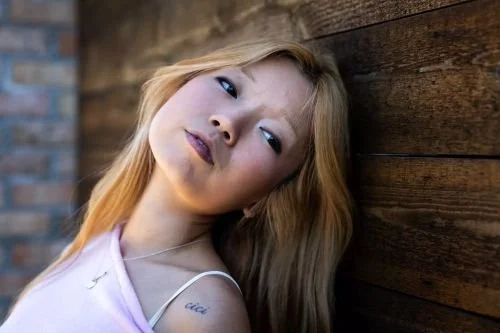
PHOTO CREDIT: Brian Feinzimer for Los Angeles Times

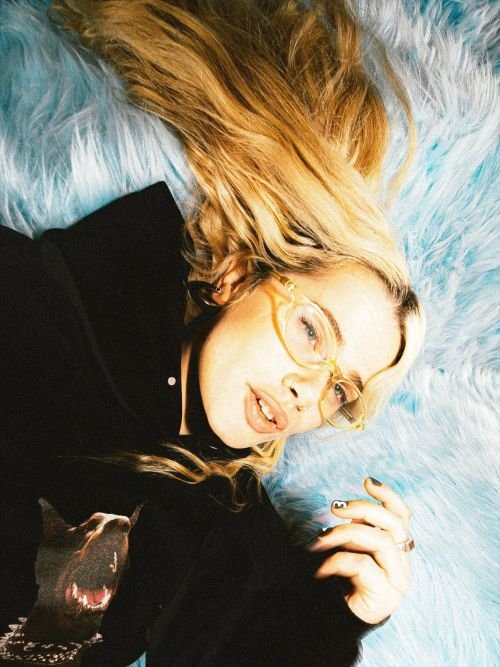
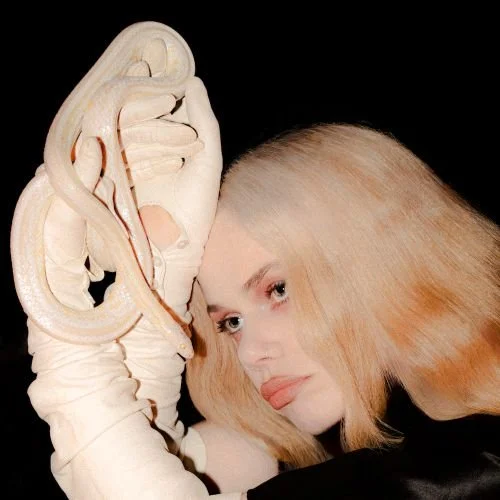
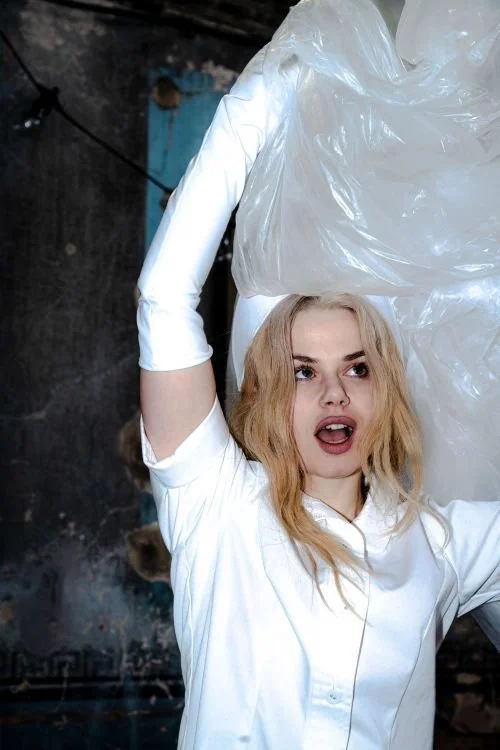
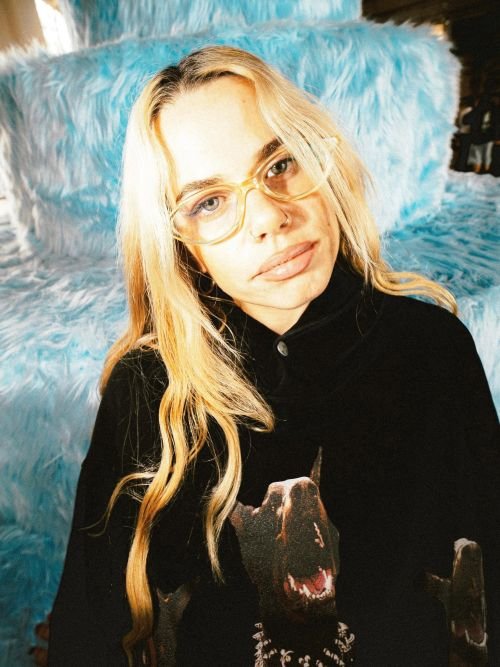
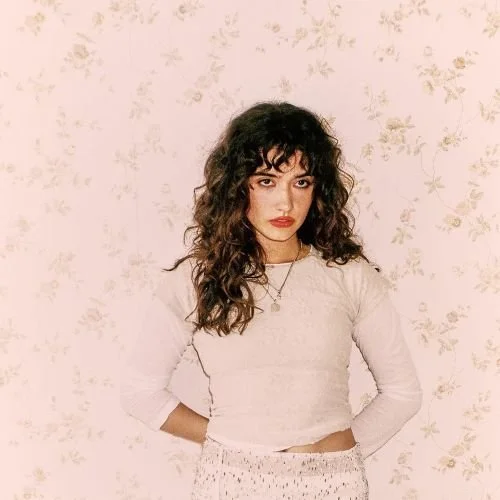
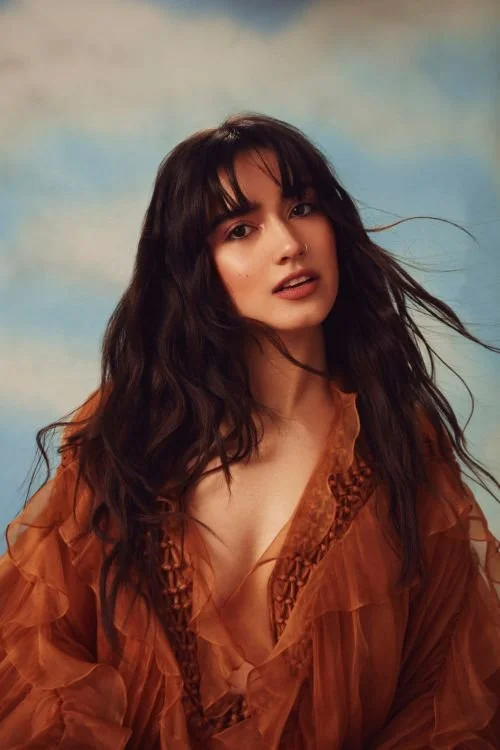
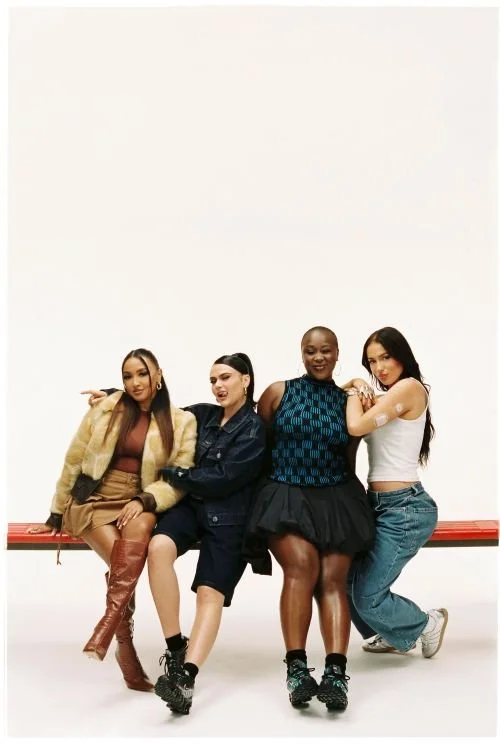
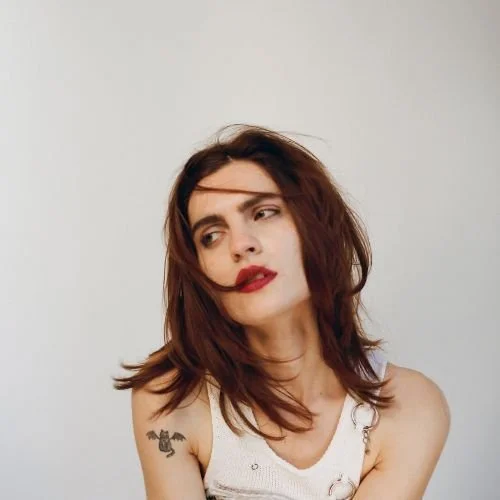
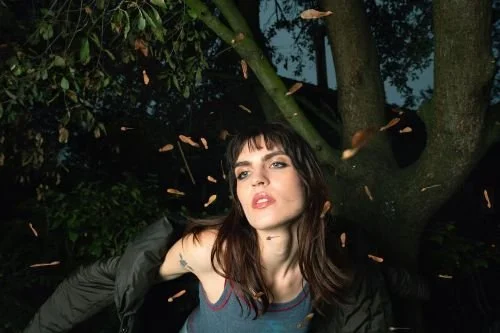
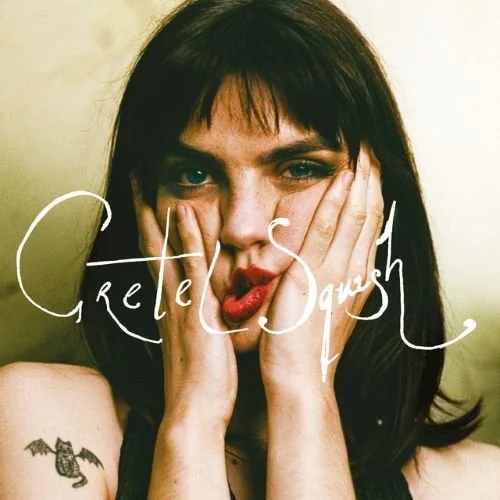
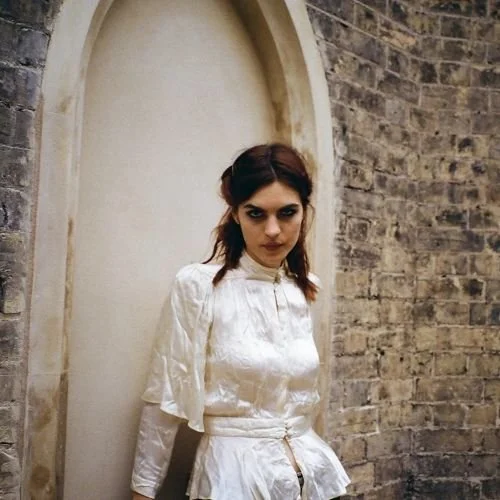
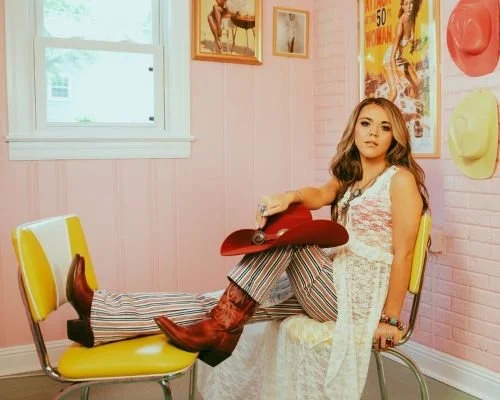
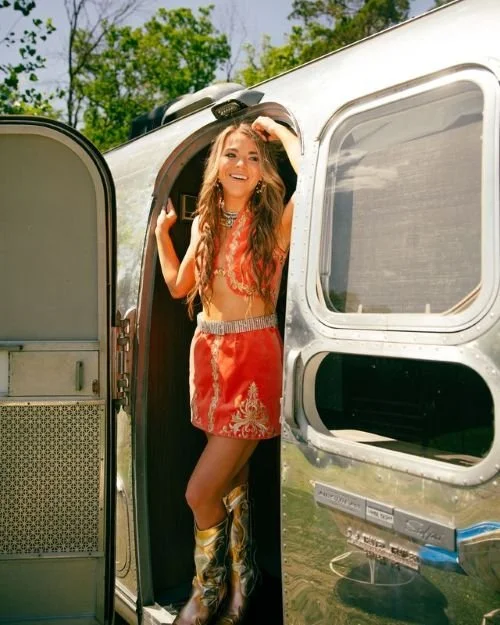
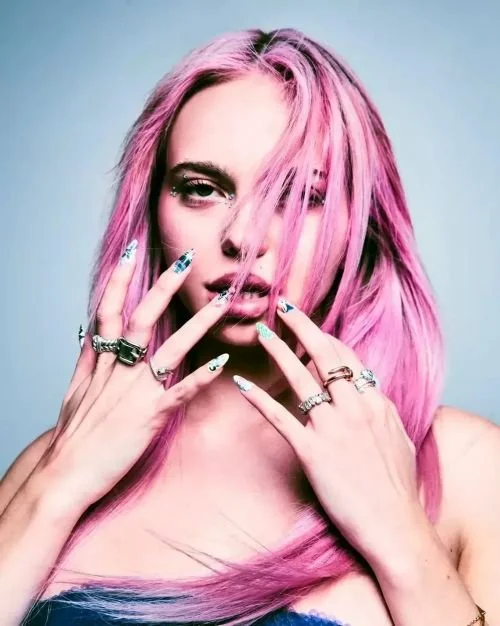
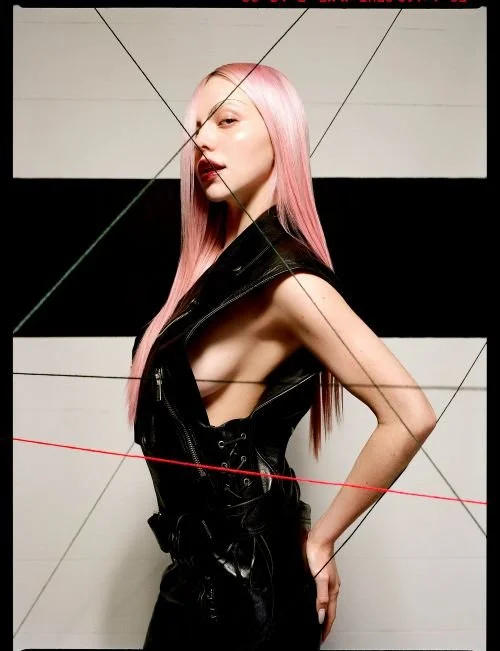
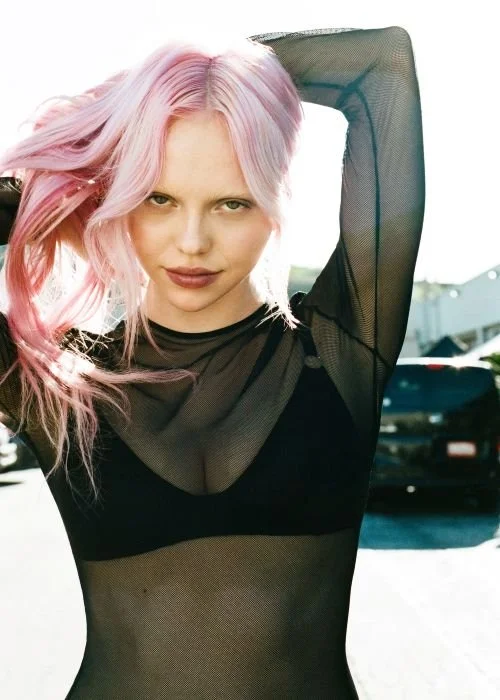
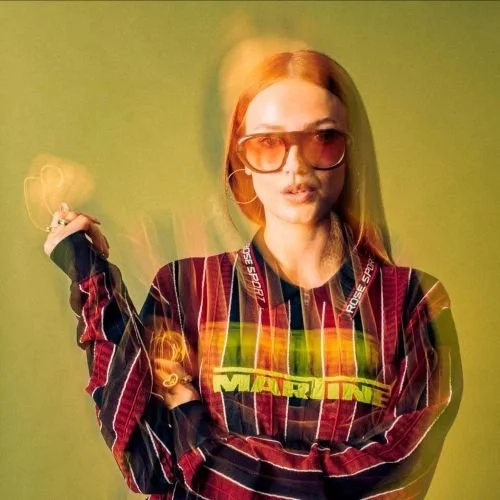
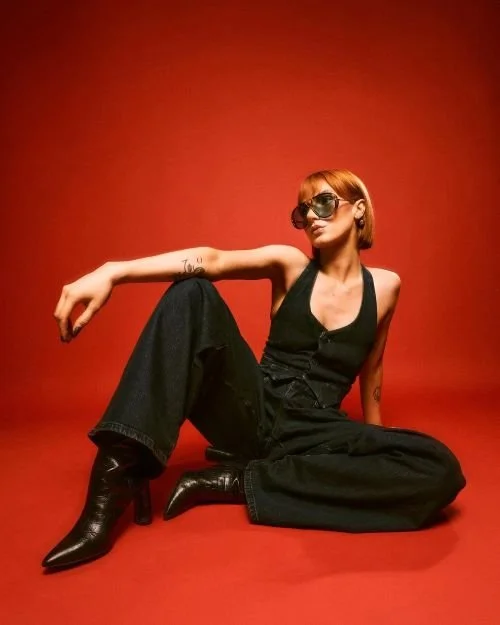
with a massive international following, the incredible Tiffany Day comes to the U.K. in December. The Los Angeles-born artist released her album, HALO, in April. This is someone that you need to hear, as he music is phenomenal. I will come to some interviews with her. I do want to start out with Los Angeles Times and their interview from April. I have included quite a bit of the chat in here, as I think that it gives us some context and background to this stunning artist. Although she is perhaps more popular in the U.S. than other nations, she has a huge fanbase around the world:

For the majority of Day’s career, which began in her late teens, she drifted between the bedroom pop and R&B genres, occasionally grabbing at a more electronic sound — including through a DJ alter ego — but shying away from it on account of a deep-seated insecurity that followed her from Kansas to L.A.

As a “nerdy” Asian girl coming up in a majority-white school system, Day had the persistent thought: “I’ll never be a cool kid.”

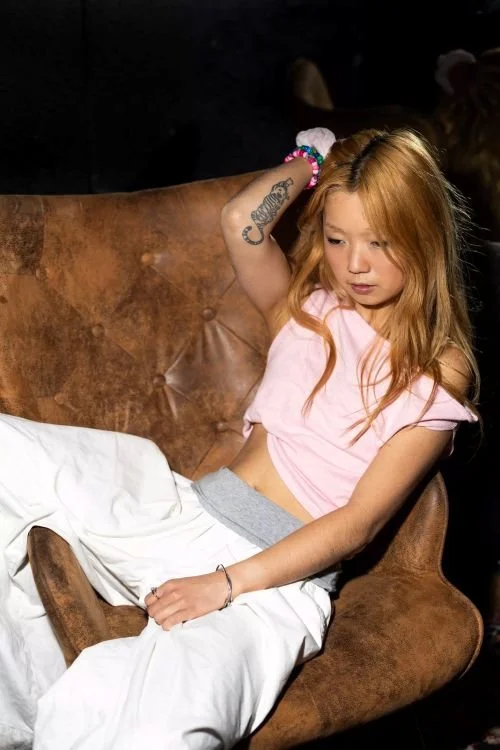
“It weirdly translated into the artist world,” the singer-producer said in a recent interview at the Observatory in Santa Ana, where she would open Aries’ show a few hours later. While she spoke animatedly from a green room couch, Day’s bubblegum pink off-shoulder tee and baggy white pants repeatedly flounced out and then resettled in new shapes

“I fell in love with electronic music when I was, like, 10, but as I got older, I started making indie pop and then slowly moving into an electronic space,” says Tiffany Day.

In place of the populars, Day said she began measuring herself against her favorite electronic artists, whose style of performance she idolized but felt she could never approximate. That feeling peaked at a 2024 electroclash concert, which showcased a sound that fuses ‘80s synth pop, ‘90s techno and the brashness of punk. Day attended the show shortly after the release of her debut album “Lover Tofu Fruit.”

“It was this weird shattering of inspiration, but I also felt sick to my stomach, because, how could I ever be as cool as these people?” Day said. By the time she set off to tour her album, the artist said, “I was already so checked out.”

Day packed all of the angst of that period into “American Girl,” the second single off of “Halo.”

“All up in my head/ I’m an American girl/ I know I don’t look like you yet/ Wanna be part of your world,” she sings in the glitch pop confessional, which has become one of her favorite songs to play live.

With “American Girl” and her previous single, “Pretty4U,” Day started to hone her signature sound. But she also lost some engagement from her more indie-leaning listeners.

“They weren’t being well-received because it wasn’t necessarily made for her previous fan base,” said Day’s manager, Sammy Seaver. Even before a less-than-successful promotional push for “American Girl” led Day to make a distress call to her manager, “we both knew the conversation was coming,” he said.

Seaver likes to tell people that when he first met Day, she was doing pop sessions, but all she listened to was the dubstep music she’d fallen in love with as a kid.

While she hesitates to call it a rebrand, Day said her hard pivot in the hyperpop direction was nerve-racking at first. She feared being called a clone, or a try-hard who’d hopped on a trend.

“But I got over it pretty quick, because I’m in love with the songs I’ve been making,” she said, and that love “triumphs [over] all of my fears.”

For many of the tracks on “Halo,” Day would start off with a producing collaborator and finish on her own: “They’ll usually send me home with the Ableton file, then I get to freak it.”

Such was the case for “Start Over,” a dizzying homage to the rave music Day considers its own art form. The track starts relatively tame with a melodic synth sequence, and then sounds crash in one after another until it’s full electromania. Fittingly, Day made it in the witching hours after last year’s Niteharts Festival. She’d chugged a Red Bull, which she never did, and couldn’t fall asleep.

“So I sat up in the hotel bed with these s— $2 Target headphones and produced out the whole song,” Day said. “It was like that feeling of being a kid and staying up until 7 a.m. playing a video game.”

That night she spent producing “Start Over” was immensely cathartic, just like writing it had been. Composed as Day’s star rose in real time, the song was a receptacle for all of her conflicting feelings about her newfound attention.

“So I did it/ now I’m starting again/ at first no one gave a f—/ but now you’re hitting me up/ I guess I’m doing something right,” Day sings over a thrumming backing track early in the song. A few bars later, she professes, “Could give a f— ‘bout what the number says/ at least that’s what I tell my[self].”

The week “Start Over” was scheduled to drop, Day posted a quick pair of TikTok edits teasing the release.

Before she knew it, the first edit had blown up and people were begging for the song. When it came out, “Start Over” broke Day’s personal record for release day streams with 100,000 across Spotify, Apple and YouTube. It’s impossible to predict which songs will gain traction, Day said, but she was very proud that one did.

That pride radiated off of her in late March as she bounced around the Observatory stage like a lottery ball in an air blower. Her energy was contagious, seizing entire parties across the venue.

At times, Day said the inherent impermanence of the spotlight gets to her.

“I feel like I’m on shrooms when I think about this,” she said, “the whole idea of hype and how much time is left in this.”

But after feeling forgotten for most of her career, and forging ahead in spite of it, the idea of going back doesn’t scare her so much.

“Or maybe that’s what I tell myself,” she grinned”.
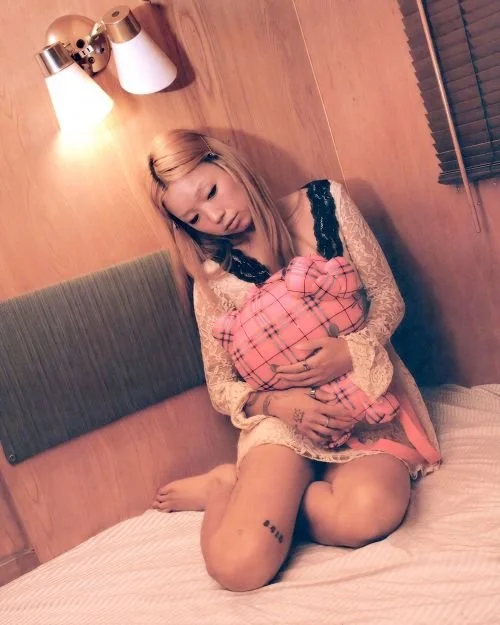
PHOTO CREDIT: Natalie Somekh

I move on to FADER and their recent conversation. They spotlighted a tremendous underground Pop artist who “combines a singer-songwriter’s angst with strobe-light euphoria”. I am really interested to see where Tiffany Day heads. There are so many artists int eh industry, so it can be hard to get a footing. Tiffany Day is definitely offering something different and distinct:

“In the past six months, Day has quickly transformed into underground pop’s ubiquitous new star. Clips of her performing have become embedded into the algorithm and view counts are rising — as is the discourse. Online, some commentators compare her to another Gen Z pop star: 2hollis, who also writes heartfelt pop songs in a language of 808s, side-chained synths, and vocal distortion.

“I love Hollis’s music,” she says. “[But] for people to call me a ‘trend hopper’ is pretty unfair. I grew up listening to EDM and attending raves. I was yearning for a way to bring that world to the pop realm of Tiffany Day. Hollis is definitely someone who helped me realize it’s all possible, but I’d like to think I’m making a lane for myself.”

Besides the tinge of misogyny in that comparison, it also minimizes the extent to which Day’s music is finding an audience because of her own skill. She is uniquely able to articulate the ache and euphoria of coming into adulthood, and she’s remarkably adept at crafting brain tingling melodies. All of that is on display in her new album HALO (released April 3 via Broke Records), the beginning of what is clearly a mainstream breakthrough

Day is not new to online attention. She first went viral in 2017 when she was still in high school, after a video of her singing “Hallelujah” into a reverb-ey well in Spoleto, Italy, while on a school trip with her choir took off on YouTube. “The freaking Ellen show was hitting me up,” she recalls. In the next half-decade, she forged a music career that inadvertently hit upon just about all of Gen Z’s cultural touchpoints: She began posting acoustic guitar covers on YouTube, then moved to Los Angeles as a college student/part-time pop star, and self-released four EPs, many of which featured a very late-2010s, bedroom R&B soundscape.

In 2024, after graduating college, she self-released an album, LOVER TOFU FRUIT, that combined her heartfelt singer-songwriter lyrics with dreamy digital production. She had a devoted fan base and toured, but the daily grind and fallow economics of independent artistry was a lot for a young girl who had aspirations of studying biomedical engineering before a music career fell on her lap. “Every day I thought about if I had chosen a different life, if I had worked a 9-to-5 with a steady routine and paycheck,” she remembers.

Her “last straw” happened on a beach in San Francisco in 2025, when she admitted to a friend that music no longer brought her joy. She struck up a deal with her managers: her next album would be her last, and she’d do the most for her final send-off.

Briefly giving up ended up marking a new beginning for Tiffany Day. She decided to try on the electronic dance music of her youth and the post-Crystal Castles pop that was finding a footing among Gen Z. “I was journaling about it for months,” she says. “I always wanted to belong to a niche and [electronic music] felt like it was calling to me, but it terrified me what [fans and musicians in this genre] would think of me and my music.”

Anxiety morphed into drive as she decided to take the reins on her production. She worked alongside her producers — Jeff Melvin, Niles Forester, and Jack Hallenbeck — but didn’t hesitate to “do rather than explain” her ideas. “It was a continuous journey of feeling like I didn't have the skills to [produce],” she says. “One day, I was just like, ‘I don’t need to keep telling myself that narrative.’ I just sent it.”

Whereas her music prior to HALO had a trying-this-out quality, the songs of her current era boast clear pop logic. Tracks like “SAME LA” and “START OVER” combine the adolescent angst of an Olivia Rodrigo ballad with the big-feeling sonics of EDM. Alongside the new sound, she adopted a more clearly defined look, part-skater, part-princess, and very online: slouching low-rise pants, an askew cap, over-ear headphones, and layers of colors and prints. She sparked some online attention via a viral On The Radar interview, where she performed with a big pink plushie backpack. “I just didn't want to lose myself when I moved into this [darker electronic] niche,” Day says. “I'm naturally a happy, fun person. Performing with my plushie backpack felt so real and so genuinely me. Your artist project should be who you are, times 30”.

I did want to include this interview from EDM.com, as they ask some interesting questions, and we get to learn more about the superb Tiffany Day. In their header they note how, “She has a dubstep alias, an inner compass pointing to the nearest rave, and a policy against writing indirect similes, which together paint a portrait of an artist profoundly uninterested in doing things the expected way”:

EDM.com: Walk us through your introduction to electronic dance music. Which artists or tracks made you realize you were meant to go down this path?

One of the first tracks I ever heard that really hooked me into EDM was a flip that Whethan did back in 2015 called ‘Mssingno – XE3 (Whethan Turn).’ I remember sitting in my room with my headphones, trying to dissect what exactly I was hearing and why it made me feel so emotional and how the hell he made those noises. I was maybe his biggest fan back then, I convinced my parents and drove over 2 hours on a school night to go see him. That song pulled me into a lot of other artists in that similar world of future bass, like Flume, Lucian, and Vanic.

When I started making original music, I was really just writing pop because I had learned how to write music on a guitar and naturally, that was the evolution. In 2019, I met Jef, and I think he was the first producer who made a song with me that was a little more electronically influenced. It makes sense, because Jef also has an artist project called MELVV, and back then, he was doing all those same tours and festivals as Whethan and everyone else I looked up to.

EDM.com: The frenzied production of HALO soundtracked your anxieties about fame and self-worth. Before that, LOVER TOFU FRUIT was deeply informed by your struggles with nihilism and mortality after your grandfather’s passing. As your sound seems to more heavily embrace EDM, how are you translating these heavy existential themes into a genre inextricably linked with the concept of euphoria?

As much as EDM is linked to euphoria, I also think it can be linked to just feeling anything intensely. Certain songs can make you reminisce on a moment, or maybe realize something about yourself that you haven’t before. As an EDM enjoyer and rave-goer, in live settings, I want to feel euphoria. But when I’m all alone and high, I like to lay in my bed in the dark with my monitors at full blast and feel whatever the song is telling me about.

Sometimes it’s intense sadness, sometimes it’s like confetti cannons are shooting out of my ears and my smile is so wide that it feels like it’s ripping my face. I think a lot of these heavier concepts I write about pair well with whatever the production makes me feel.

I think personally for me, there’s also a simplicity to my lyrics. When you’re feeling a song, both production wise and lyric wise, I think you kinda just wanna feel it directly in the moment. I don’t wanna think about what a line means. If I’m heartbroken because someone left me, I’m going to say that, not write some indirect simile or abstract concept about it.

EDM.com: Mainstream dance music has always been about pure escapism, losing yourself in the drop to forget your reality, while hyperpop is more about confronting the anxieties behind that racing heart. In the next five years, do you think the broader EDM community will fully adopt hyperpop, or do you think it will remain a unique island of anxiety on the dancefloor?

Honestly, I’m just not sure. As someone who does go to raves and partakes in losing myself in a drop, it’s hard to say if hyperpop could really be adopted by rave culture. I mean, don’t get me wrong, there is a huge overlap between the two. It’s just hard to see PLUR culture blending with hyperpop. I think there are a lot of mainstream EDM fans who like hyperpop, but I don’t know if I could say the same thing the other way around.

But a lot of hyperpop fans are also fans of other genres that just feel so wildly different from mainstream dance music. In my perfect world, I think integrating the two would be super cool if done properly, because I am a lover of both worlds, but honestly, I just can’t see it happening anytime soon”.

Let’s end with Pitchfork and their review of HALO. One of the standout albums of this year, if you are new to Tiffany Day, then I would urge you to listen to her music and follow her on social media. It will be great when she heads to the U.K. at the end of this year:

For all we wax poetic about youth, would any of us be brave enough to actually go back and relive it? Scroll through Snapchat memories or re-read teenage diaries and see if you could survive it again: breaking up with boyfriends because you thought you weren’t good enough for them; coughing up blunt smoke to impress older kids; awkwardly lingering at parties and watching everyone else to try to figure out who you were.

Such is the anti-nostalgia of Tiffany Day. In interviews, the 26-year-old electro-pop artist and producer has referenced growing up as one of few Asian teenagers in Wichita, Kansas, and feeling perpetually nerdy and uncool. As HALO, her second album, attests, maybe we never really leave high school; here, Day takes these growing pains and supercharges them with the sugary sounds of electroclash. “AMERICAN GIRL” lurches with quavering synths, shy as wallflowers, as Day confesses: “Now I’m so anxious at the function, getting fucked up on some shit/I never planned on even trying, I just wanted to fit in.” And while “DOIT4ME”, on first listen, sounds like a deep-fried ode to getting slizzard—all pulsating four-on-the-floor, obliterating walls of scuzzy supersaw synths, and tweaked-out cooing—it’s really meant for the girls hiding behind their phones at the party, nervously fiddling between the Find My and Settings apps (“It’s so funny I won’t look at my name/Lit up on my phone screen”).

In Day’s hands, electroclash hallmarks—crunchy McDonald’s Sprite electronica, chopped vocals, brain-tingling overstimulation—are beamed like a laser onto teen angst, frying up hormones into sizzling overdrive. The troubles she tackles on HALO are often small, but she cranks up the volume to magnify them—mirroring the emotional overload of growing up, where what matters is not the existential weight of these experiences but how overwhelming and real they feel. On “PRETTY4U,” Day’s voice is drenched in Auto-Tune fuzz as she promises she can be pretty too; it’s the sonic equivalent of aggressively FaceTuning your selfies while wondering if second puberty is actually a thing. “COPYCAT” finds Day idolizing the cool older girl—the one with the pretty braids, knocking back shots on a Sunday like it’s nothing—and contemplating what it’d be like to copy her. Yet right when Day is on the cusp of saying so—“I just wanna be your…”—her voice blitzes out into a cyclone of chiptune glitches. When you’re young, you can’t always express exactly what it is you want; all you know is that you want something.

Day first got her start as a bedroom-pop artist, and HALO marks a pivot into electronic music. The move has prompted a flurry of skepticism and controversy—including an accusation of plagiarism—in a scene wary of trend-hopping, post-Brat opportunists. Yet HALO feels both like a new exploration and an extension of Day’s perennial bedroom-pop sensibilities, and you can hear the DNA of earlier projects coursing through her new album’s coming-of-age confessionals. Day approaches medication, her struggles with OCD, messy breakups, and new therapists with a diaristic immediacy: This is Olivia Rodrigo for the kids vaping in the bathroom and crashing out on Instagram Reels comments sections. At times, the songwriting can veer into sounding juvenile, like the glacial trap-inflected “TELL ME WHAT I DID”, whose lyrics—“What a fucking switch/Kiss me on my lips/Then you fuck a bitch/I was on a trip, you were in her hips”—come off like the edgy finsta poetry of someone who’s just learned to curse.

Still, at its best, HALO wields electroclash’s chaos to capture the blown-out excesses of youth, where every emotion feels like you’re experiencing it for the first time. Album standout “SAME LA” opens with a cutesy ahem—functionally a teen pop-rock record-scratch of “You're probably wondering how I got here”—before Day eventually chants: “I’m scared to talk talk talk to you/’Cause my brain thinks everyone hates me.” Swirls of synths follow like a churning whirlpool of insecurity. Yet by the end, the song explodes into a crushing wall of sound, Day’s voice spawning in triples above a screeching electronica bed. You can’t talk through this; you can barely think. All you can do is feel everything while you slowly become who you’re meant to be”.

Such a remarkable and inspiring artist who is creating music that is pulsating, personal and yet resonates with a lot of people. Incredible music videos and great interviews, there is no denying Tiffany Day has a very long future ahead. This Los Angeles treasure should be on your radar, so make sure that you…

FOLLOW her now.

__________

Follow Tiffany Day
FEATURE: The Digital Mixtape: Florence Welch at Forty

FEATURE:


The Digital Mixtape

PHOTO CREDIT: Linda Brownlee/The Guardian


Florence Welch at Forty

__________

WHEN it comes to artists…

who define a generation or are consistently brilliant, Florence Welch springs to mind. The lead of Florence + The Machine, I wanted to celebrate her, as she turns forty on 28th August. She has had such a wonderful career. Her latest album with Florence + The Machine Everybody Scream, was shortlisted for this year’s Mercury Prize. The group’s debut album, Lungs, was released in 2009. Universally adored, Florence Welch is one of our most amazing artists. This Camberwell-born queen has so many years ahead in music. To mark her fortieth birthday, I will end with a mixtape of the best Florence + The Machine tracks. I want to come to some biography before then. Even though it does not take us all the way to 2026, we do get some interesting background about the stunning Florence Welch:

Before Florence Welch made her mark in music as the lead singer and songwriter of the indie-rock band Florence + The Machine, she spent much of her time as a child singing in school assemblies and churches,  and skipping lessons to wander around the hallways and test the acoustics of stairwells. Growing up with a fascination for Camberwell's music scene, Florence successfully enrolled herself in an Art Foundation course at Camberwell College of Arts, a place she credits for giving her creative freedom to experiment with music and developing early ideas of Florence + The Machine, and briefly studied there before deciding to pursue a career in music.

Florence + The Machine started as a private joke, being an imaginary band founded in collaboration with Central Saint Martins graduate Isabella Summers. In 2009, they released their first album titled Lungs, which held the number 2 position for its first 5 weeks on the UK Albums Chart and sold over 100,000 copies in the UK. Still trending the charts the next year, the album had been in the top 40 in the United Kingdom for 65 consecutive weeks, making it one of the best-selling albums of 2009 and 2010. Since then, the band has won over 20 awards from over 100 nominations including Critics Choice Awards at The Brits in 2009, 6 Grammy nominations, 2 wins for Best Solo Artist at the NME Awards and 3 Q Award wins, among others.

Best known for her powerful vocals and theatrical stage presence, Florence made history at Glastonbury Festival in 2015, as the first British female headliner of the 21st century. Florence has said that for her, music is a mode of catharsis and of survival, through which she hopes to give people a space to experience their true emotions.

Her talent is not just confined to music as many of her admirers look up to her as a fashion icon. She has long been a collaborator of Gucci under Alessandro Michele and was named the brand ambassador for their jewellery and watch collections in 2015. Inspired by Pre-Raphaelite art since her childhood, her early interests are often visible in the band's album artworks. Florence’s portrait from the Ceremonials album is put on permanent display at the National Portrait Gallery and in 2018, she released a book titled Useless Magic, a collection of her lyrics and poems, along with illustrations”.

Because she turns forty on 28th August, it is only right that this is marked. Florence Welch is one of the greatest singers and songwriters ever. I am looking forward to seeing where Florence + The Machine head. With such an impressive collection of songs under their belt, we are going to see them release albums for years to come. Led by the astonishing Florence Welch, this queen is…

A national treasure.

FEATURE: Beyoncé at Forty-Five: An Ultimate, Career-Spanning Mixtape

FEATURE:


Beyoncé at Forty-Five


An Ultimate, Career-Spanning Mixtape

__________

THIS is the first…

of a couple of features around the legendary Beyoncé, as she turns forty-five on 4th September. She is one of the most successful decorated, influential and important artists in history. In terms of her career and what she has achieved, I have argued before that there should be a Beyoncé documentary. Something new that really spotlights her brilliance. Her latest album, 2024’s COWBOY CARTER, is hugely acclaimed. Throughout her career, she has released so many important albums. In the second feature, I may select the five best Beyoncé albums. To give people a chance to look inside these incredible works. Here, I am coming to a career-spanning mixtape that spans her solo work, rather than including her music with Destiny’s Child. Prior to getting there, I wanted to bring in the entirety of this biography from the National Women’s History Museum. They provide a detailed and passionate insight into an artist who I feel is peerless:

Early Life

Beyoncé Giselle Knowles was born in Houston, Texas on September 4th, 1981, to mother Tina Knowles, a hairdresser and fashion designer, and father Mathew Knowles, an entertainment executive. Her parents, both entrepreneurs, worked hard to provide a comfortable upbringing for Beyoncé and her younger sister, Solange. Tina and Mathew both pushed and supported Beyoncé to follow her dreams and taught her that “nothing worth having comes easy” (Elle).

Beyoncé was enrolled in dance classes at around seven years old and began singing in local choirs and talent shows throughout the Houston area (Teach Rock). Her passion for performing launched her early career when she auditioned for a girls R&B group in 1992. The original group, which included Kelly Rowland and LaTavia Robinson, would eventually be known as Girls’ Tyme. Beyoncé’s father managed the group, booking performances around Houston and restructuring the group to include LeToya Luckett. Girls’ Tyme is an early step in Beyoncé’s lifetime of continuing Black musical traditions through her work. By performing in a Black girl group, she carried on the legacy of 1960s girl groups such as The Supremes and The Marvelettes.

Destiny’s Child

Girls’ Tyme became Destiny’s Child when the group signed onto Columbia Records in 1996. Destiny’s Child released their first album, Destiny’s Child, shortly followed by their second album, The Writing’s on the Wall. Both albums were major successes, and The Writing’s on the Wall became an 8x platinum record and spent 99 weeks on the Billboard 200 chart. However, internal tensions during the The Writing’s on the Wall era resulted in more restructuring of the group: Robinson and Luckett were replaced by Farrah Franklin and Michelle Williams. Within a year, Franklin was also dismissed from the group, leaving the iconic trio Beyoncé, Kelly, and Michelle.

As the lead vocalist, Beyoncé was placed front and center of Destiny’s Child. Some attribute this to favoritism from Beyoncé’s father as the group’s manager. Others, however, attribute Beyoncé’s role in Destiny’s Child to her undisputable talent, work ethic, and commitment to the group’s success. Her increased role in producing the Survivor album demonstrates this unmatched dedication.

Beyoncé the Solo Artist

Following the major success of Survivor, Beyoncé began to pursue solo opportunities in both music and acting. Between 2001 and 2003, Beyoncé starred in three films: Carmen: A Hip Hopera (2001), Austin Powers: Goldmember (2003), and The Fighting Temptations (2003). She also released her first solo studio album, Dangerously in Love, in June of 2003. This album included the hit “Crazy in Love,” featuring Beyoncé’s future husband, Jay Z. Beyoncé would go on to win five Grammy’s for the album—Beyoncé’s first solo Grammy awards—including Best Contemporary R&B Album (GRAMMY Awards). “Crazy in Love” was nominated for Record of the Year.

Even with the success of her solo career, Beyoncé was not quite finished with Destiny’s Child. The group released their final studio album, Destiny Fulfilled, in 2004 and embarked on their final world tour together in 2005. Destiny’s Child officially disbanded in 2006. Through her time in Destiny’s Child, Beyoncé set her stage for a lifetime of musical excellence and artistry. She laid the groundwork for a commitment to furthering Black musical traditions that would carry throughout her career. Beyoncé continues to acknowledge the importance that the group had on her early career and has reunited the group for one-off performances throughout her solo career.

After Destiny’s Child disbanded, Beyoncé continued with her legendary solo career. Her second solo album, B’Day, was released on Beyoncé’s 25th birthday in 2006. B’Day debuted at number 1 on the Billboard 200, received four GRAMMY nominations, and won one GRAMMY for Best Contemporary R&B Album.

In December of 2006, Beyoncé starred as Deena Jones in the drama film Dreamgirls, based loosely on The Supremes. Beyoncé's performance was partially inspired by her experience in Destiny’s Child. In addition, Beyoncé’s commitment to understanding Black music history guided her performance. Though she received numerous nominations for her performance, including two Golden Globe nominations, she herself did not win any.

Beyoncé’s third album I AM...SASHA FIERCE, released in 2008, was another hit. The album’s title refers to Beyoncé’s alter ego, Sasha Fierce, who Beyoncé created to“help her overcome challenges and give the best performances she can” (Oprah). The confident, stage-owning alter ego of Sasha Fierce differs from the shy Beyoncé, and the album provides a lens into both the persona and Beyoncé’s own vulnerability. It included ballads “Halo” and “If I Were a Boy,” as well as the iconic dance track “Single Ladies (Put a Ring on It).” The album also debuted at number 1 on the Billboard 200, and Beyoncé won her third consecutive Best Contemporary R&B Album award at the 2010 GRAMMYs.

Beyoncé began building her business empire in 2010 when she established Parkwood Entertainment and moved much of her work in-house (Forbes). From producing music, documentaries, and concerts, Parkwood fronts the front-end production costs and reaps the back-end economic gains. Beyoncé cites Madonna as an inspiration to take control of her own work:

Parkwood has now expanded to include Beyoncé’s smaller endeavors, including Cecred, a hair care brand, Sir Davis Whiskey, a whiskey label, and Ivy Park, a now-discontinued clothing line. Despite this growth, Beyoncé continues to make the majority of her wealth from her music and tours (Forbes).

Beyoncé’s fourth album, appropriately named 4, was released in 2011. Beyoncé promoted the album through a performance at the 2011 VMAs, where she also announced her pregnancy with her first daughter, Blue Ivy Carter. Beyoncé’s motherhood, though separate from her musical talents, would become a key element of Beyoncé’s artistry and legacy as a Black woman artist. As she has shared, “Something cracked open inside of me right after giving birth to my first daughter. From that point on, I truly understood my power, and motherhood has been my biggest inspiration.” (PopSugar).

Beyoncé credited Blue Ivy in the writing of “Brown Skin Girls,” a song celebrating young Black girls that would win Blue Ivy a GRAMMY at only 9 years old. Additionally, Beyoncé invited Blue Ivy to perform on both the Renaissance and Cowboy Carter World Tours, beginning at the age of 11. Beyoncé’s commitment to continuing Black legacies is seen in her own relationship to Blue Ivy and motherhood.

4 also included the song “Who Run The World (Girls),” an uplifting song speaking to the foundational role that women play in society and culture. Though the song was criticized by contemporary listeners for “proffering post-feminist falsehoods,” it is regarded today as a very important feminist anthem for the ways in which it seems to address how patriarchy “runs” on women’s reproductive and capitalist labor, care work, and accomplishments (James).

Beyoncé performed the national anthem at President Barack Obama’s second inauguration in 2013, further uplifting Black excellence through her artistry. She also headlined the Superbowl XLVII halftime show in 2013. When Beyoncé surprise-released her self-titled album at the end of 2013, then, it is no shock that it was a massive commercial success.

Black Empowerment

2016 is often marked as a turning point in Beyoncé’s career. Her release of Lemonade, an album celebrating unapologetic Black womanhood, is attributed to a shift in Beyoncé’s artistic focus toward politics and her Black southern roots. Although this “shift” might be a useful way to frame Beyoncé’s art, Beyoncé’s career was built on a foundation of Black musical traditions and Black experiences. As explained, Destiny’s Child followed in the tradition of 1960s girl groups out of Motown. Beyoncé’s role in Dreamgirls required a historical appreciation of Black women’s contributions to music. Early songs in her career, including “Countdown,” make mention of her hometown, Houston, Texas. Beyoncé’s marriage to Jay-Z, one of the biggest hip-hop artists of the 21st century, marked one of the most important Black music cultural moments in modern history. Thus, while Lemonade as a product might mark a turning point, Beyoncé herself has been rooted in Black musical tradition since the start of her career. Lemonade has inspired countless articles and scholarship, including college courses, and is regarded as the number one album of the 21st Century so far by Rolling Stone

After giving birth to twins Rumi and Sir Carter in 2017, Beyoncé returned to the spotlight to headline Coachella in 2018, the first Black woman artist to do so. Her performance centered Historically Black College and University (HBCU) culture, featuring a live marching band and dance squad. The performance was turned into a film titled Homecoming: A Film by Beyoncé, further drawing upon HBCU traditions, and released as a live album. Beyoncé also voiced Nala in the 2019 Disney live-action adaptation of The Lion King. She created an accompanying album for the film, The Lion King: The Gift, and visual album, Black is King, dedicated to her son Sir Carter. Both Coachella and Beyoncé’s involvement with The Lion King have demonstrated a heightened focus on Black culture, art, and history in Beyoncé’s career.

Following Coachella, Beyoncé took a short break. This was, at least in part, because of the Covid-19 Pandemic. As she articulated in an interview with Vogue, “I’ve spent a lot of time focusing on building my legacy and representing my culture the best way I know how. Now, I've decided to give myself permission to focus on my joy” (PopSugar). Beyoncé returned to music in 2022 with the release of RENAISSANCE, the first of three albums in her musical reclamation project. RENAISSANCE addresses how house music, originally created by Black and brown queer communities, has been lost to white artists and audiences. The album effectively shines a light on this loss and has led to conversations on the reclaiming of house music for its originators. RENAISSANCE was nominated for eight GRAMMYs and won four.

The second album in the trilogy, COWBOY CARTER, does similar work of musical reclamation for country music. Beyoncé features Linda Martell, the first commercially successful Black woman country artist. She was the first Black woman to play the Grand Ole Opry (Linda Martell). Beyoncé also features rising Black country artists such as Tanner Adell, Reyna Roberts, Britney Spencer, Willie Jones, and Shaboozey. The album speaks to Black southern womanhood through vulnerability and empowerment, highlighting Beyoncé’s own experiences within the industry and how those relate to her personal identity. “16 CARRIAGES,” one of the lead singles from the album, directly addresses Beyoncé’s internal struggle between her ongoing pursuit of success at the cost of time with her family: “It’s been 38 summers, and I’m not in my bed/ on the back of the bus and a bunk with the band/ goin’ so hard, now I miss my kids/ overworked and overwhelmed” (Beyoncé). COWBOY CARTER was critically acclaimed, garnering 11 GRAMMY nominations and three wins. Notably, Beyoncé won her first Album of the Year award for COWBOY CARTER.

Beyoncé’s Legacy

Beyoncé is the most decorated and nominated artist in GRAMMY history, with 99 nominations and 35 wins. She has performed around the globe on her many world tours, headlined the Superbowl Halftime Show twice, headlined Coachella as the first Black woman to do so, sung at the 2013 Presidential Inauguration, and much more. She is an international musical phenomenon and true tour de force in the industry.

Beyoncé is not just a musical legend. She is also a wildly successful businesswoman. At the end of 2025, Beyoncé reached billionaire status, according to Forbes. She was the fifth musical artist to do so, behind Jay-Z, Taylor Swift, Bruce Springsteen, and Rihanna (Forbes).

Though her career had humble beginnings performing in talent shows around Houston, Beyoncé is an example of the power and beauty behind one’s commitment to making authentic art, connecting with your roots, and never forgetting that you are flawless. As a Black woman artist, performer, businesswoman, and mother, Beyoncé’s story reminds us of the humanity behind our biggest stars that is complicated by a desire to overcome systems that otherwise might inhibit success”.

A salute to the one and only Beyoncé. I did want to mark her forty-fifth birthday, not as any random excuse to discuss her. It is an opportunity to showcase her brilliance and why she is such an influential figure. An artist who has many years ahead, I wonder what will come next in terms of albums. The divine Beyoncé is…

A music goddess.

FEATURE: And So I Want to Join In… Why a Kate Bush Tribute Album Is Hugely Relevant Today

FEATURE:


And So I Want to Join In…

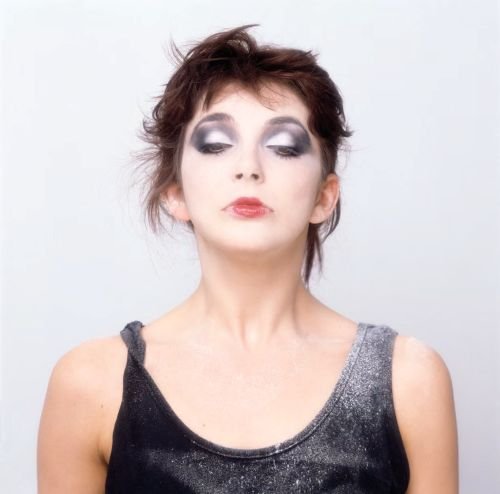
IN THIS PHOTO: Kabuki Kate’, from the Hounds of Love shoot, 1985/PHOTO CREDIT: Guido Harari 


Why a Kate Bush Tribute Album Is Hugely Relevant Today

__________

PEOPLE try to speak…

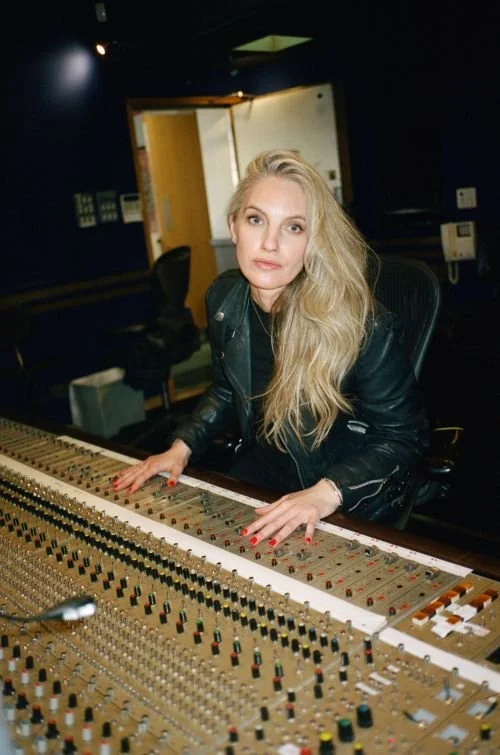
IN THIS PHOTO: The award-winning, hugely acclaimed and prolific producer, the queen that is Catherine Marks/PHOTO CREDIT: Vintage King

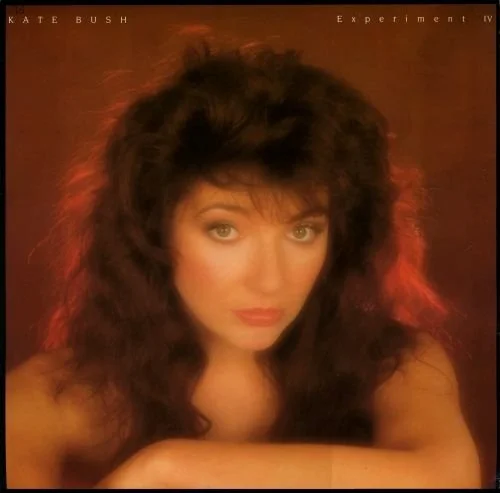
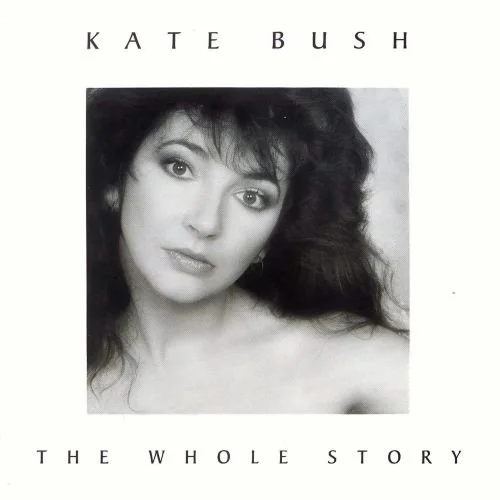
for Kate Bush and assume she had made decisions about certain things. In the past, I have asked why she has not been made a Dame. People have said she has been offered and refused. There is no proof that ever happened. Same with directors or producers approaching her to make a cinematic version of Hounds of Love’s second side suite, The Ninth Wave. People will say she has been asked about a tribute album and whether that is okay. I see no reason why she would reject this. In the past, artists have covered Kate Bush. A  few recent attempts When it comes to collating artists on a tribute album, this has not happened. Not major artists. I don’t feel there would be huge interest for unknown artists or smaller acts. You would need to combine them. I think that a tribute album now would be timely. Kate Bush’s greatest hits album, The Whole Story, turns forty in November. Maybe waiting until 2028 for when Wuthering Heights and The Kick Inside turn fifty. Her debut single and album respectively, why has their not been a major project where artists combine and cover her songs?! I think that it is overdue. I feel it should all happen at Abbey Road Studios. I am not sure who would produce it, but Catherine Marks and Tony Visconti come to mind. The latter almost worked with Kate Bush. A possibility of him producing one of her albums. She politely refused. Catherine Marks is one of the greatest producers. Award-winning and with such an eclectic C.V., she is also Mercury Prize-nominated, as she worked on the Help(2) album. Raising funds for War Child, it would connect to Kate Bush. Little Shrew (Snowflake) was released in 2024. Bush releasing the single and video to raise donations for the charity. It would be an expensive project, though a fifteen-track double album recorded and mixed at Abbey Road I feel would be wonderful. It could raise funds for War Child.

A very cool vinyl, cassette and C.D. release, you could unite major artists with slightly smaller ones. Those who have either cited Kate Bush as an influence or you clearly can hear her music in theirs. I think the budget wouldn’t be a massive issue. I feel the most difficult issue is getting the list whittled down. So many artists you could choose. Maybe uniting some in duets. Having strings on some tracks, I would love to see heavyweights like Catherine Marks and Tony Visconti joins forces. Thinking about the cover of the album, a classic photo from someone like Gered Mankwoitz, John Carder Bush (Kate Bush’s brother) or Guido Harari. Maybe a new illustration or design. It would be fascinating. One of the reasons why I am thinking about a Kate Bush tribute album is because there is so much more awareness of her music. In terms of how it has spread since Running Up That Hill (A Deal with God) was featured on Stranger Things in 2022. Opening her work to a new generation. I do feel though that people have not dug deeply enough. Look at Spotify, and Running Up That Hill (A Deal with God) possibly has more streams than the rest of her back catalogue combined. I fear she is still defined by this song. Of course, it could feature in a tribute album. It does not mean that she is retired and people are remembering who she was. There will be a new album soon enough. I think that a Netflix Kate Bush documentary is being made. I feel a book that charts her influence would be beneficial, though you’d have to revise it multiple times because so many people are nodding to her work! For an album, you could also have narration. Tracks like Jig of Life (from Hounds of Love) has a spoken part. In 1985, that was by her brother, John Carder Bush. An actor like Jessie Buckley (who is a Kate Bush fan) could do that part now. A 2028 album release would be possible. Getting all these artists to Abbey Road could be pricey, though many will visit the U.K., so their parts could be recorded then. They would not need to all be in the studio at the same time. Kate Bush recorded out of Abbey Road Studios, so artists paying their respects in that hallowed space would be incredible.

That takes me to fans of her work and some major names. Which fifteen or so artists would make the cut? Paul McCartney was one of the famous names at her Before the Dawn residency in 2014. Bush is a massive fan of The Beatles and she and Paul McCartney have met. Which song could he tackle? I feel Aerial from the album of the same name. Perhaps an odd fit, I feel he could add something different. A great fit for him. A major reason for this album is Charli xcx. She might be tired of me mentioning her when it comes to Kate Bush (though she is not going to read this!), but her “Wuthering Heights” soundtrack track, House, loosely took inspiration from Kate Bush’s Get Out of My House. That song appeared on 1982’s The Dreaming. I would love for this to maybe be the single from the album, just so Charli xcx could cover the track and there being this incredible video. Sophie Muller directing. There could be two singles or choices. I feel Michel Gondry would be another amazing director who could bring to life a song like Mrs. Bartolozzi is another great song that was never a single, this Aerial track could have options when it comes to artists. Phoebe Bridgers and PinkPantheress come to mind. Very different to one another, they could take it in their own direction. Guest musicians on this album has plenty of options. Bush’s mentor and friend David Gilmour playing guitar. If we have Get Out of My House and Mrs. Bartolozzi on the album, then which thirteen other songs? Too many tempting options, it could be decided. I would think Billie Eilish tackling The Kick Inside’s title track. Björk is a big fan of Kate Bush and has mentioned The Dreaming as a favourite. She would add something unique to a song like Pull Out the Pin or All the Love. ROSALÍA would definitely need to be in the fold. I can see her doing something with epic with Jig of Life or a song from The Sensual World (1989) like Deeper Understanding. Maybe Kate Bush admirer Stevie Nicks could be included (as she and Lindsey Buckingham are apparently back in communication, could these two duet on a track?!).

The idea is not to go for obvious singles. Give light and new life to songs that are underrated or were minor successes. Though there is room for a take on a classic like Wuthering Heights. CMAT has covered the track before, and I would love to hear a studio version. Elton John playing piano on one track, as he is a big fan (and he and Bush collaborated on Snowed in at Wheeler Street, which was a track on 2011’s 50 Words for Snow). Florence Welch is someone compared to Kate Bush. She could take on Never for Ever’s Breathing or even add her own vibes to 50 Words for Snow’s Among Angels. I would like to see two artists combine on a song that only has Bush on vocals. I am thinking Florence Welch and Damon Albarn joining forces. Which other artists would be on the fantasy list? Solange, Tori Amos, Lily Allen, Big Boi, Olivia Rodrigo, Fiona Apple, Muse, London Grammar’s Hannah Reid and Madonna. Addison Rae, FKA twigs, Neil Hannon, Halsey, Caroline Polachek, Jessie Ware, Lorde, Chappell Roan, Peter Gabriel and RAYE. Blood Orange too. There would be a long list of potential inclusions. Producer Nigel Godrich is a fan. A potential engineer/producer choice? Radiohead too. They apparently have invited her into the studio. Bush has attended a gig of theirs in London. This is a fantasy and me being somewhat self-indulgent, though there is relevance. As we look ahead and are creeping near to the fiftieth anniversary of her debut single and album, a tribute album to celebrate her work. Who knows, she may well release a new album before then too, which will ignite people and lead to more artists discovering her work. Irish author and Kate Bush fan Sinéad Gleeson writing an album foreword or providing narration on a track.

The aim is two-fold: to celebrate this iconic and goddess-like artist whose influence is massive; to raise funds for War Child, sort of in the way Help(2) did, though this is specific to one artist, whereas that album saw multiple artist cover songs from a range of musicians. I seriously doubt Kate Bush has been approached about something like this and, if she has, no reason she would object. She has indulged in retrospection and revision. She realised the impact her work has and, if for a great cause and done affectionately, this could be a massive thing. It is rare that we get such a high-profile and, perhaps, expensive album for a single artist. Though Kate Bush is no ordinary or minor artist! Thinking back to a song(s) that could be a single from the album. Get Out of My House could feature high-profile actor fans of Kate Bush such as Florence Pugh, Ayo Edebiri and Margot Robbie. A director like Greta Gerwig. Actresses Laura Dern, Gemma Arterton and Sadie Sink. St. Vincent should be one of the musicians feature or a vocalist on a track. In-studio shots taken by Kate Bush collaborators such as Trevor Leighton or Guido Harari. Of course, all moot if Kate Bush puts a stop to it or, if money was too much an issue, those restraints. Given anniversaries approaching and the rising influence of this queen, why not do something like this?! I have not even mentioned Lady Gaga, The Last Dinner Party, Self Esteem, Suede, Kylie Minogue, and actors like Guy Pearce. I will stop. This is a project I would definitely love to see come to life, as it would earn money for War Child and combine artists and those throughout multiple disciplines. All showing their affection for Kate Bush. If the woman herself might feel bashful or like it is too much, its objectives should not give her hesitation. Bringing so many Kate Bush fans to Abbey Road Studios to provide their takes on her songs would be something Kate Bush fans (in their thousands and possibly millions) would…

FLOCK to buy!

FEATURE: One for the Record Collection! Essential September Release

FEATURE:


One for the Record Collection!

IN THIS PHOTO: Beabadoobee/PHOTO CREDIT: Guen Fiore


Essential September Releases

__________

THE calendar is looking…

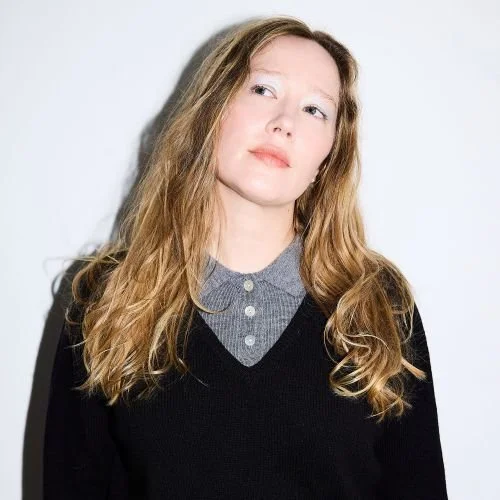
IN THIS PHOTO: Julia Jacklin/PHOTO CREDIT: Eva Pentel

pretty busy when it comes to albums due next month. I am recommending a selection that you will want to pre-order. I am starting out with albums due on 4th September. The first album I want to highlight is Dexys Midnight Runners’ LOVE. It is so great that Kevin Rowland (the group’s lead) is still making music. If you have been a fan for decades or are new to them, then you will want to check out this amazing album. Go and pre-order LOVE:

LOVE, Dexys Midnight Runners latest, possibly last ever album, is a luminous collection of scenes and reckonings. Stories of family and friends, tales from past and present. All drawn from Kevin Rowland’s life, each an individual jewel, threaded together with love. Songs begun three decades ago sit alongside those written in the last year. A vivid depiction of Rowland's Irish immigrant childhood [‘My Life in England Pt 1’]; a moving letter to his grandchildren [‘You’re Alright’]; a wistful moment at the start of a love affair [‘I Want To Be Holding You Next Christmas’]; a pin-perfect portrait of time spent with a dying parent [‘Once A Man, Twice A Child’]; the difficulties of relationships when you're older [‘Old Love’]. All deeply personal, all true, all here; the full human span of relationships, family and intimate emotion.

The theme of this album - Kevin's ninth, Dexys' seventh - gradually emerged as the songs progressed. "I don’t remember when it happened, but I just thought, 'Hang on, these are all love songs, of different kinds',” he says. "I knew then: Call it LOVE." These are love songs, but not of the usual pop style. Not will-she-won't-she romance, but something more emotional and all-encompassing. Those small moments that illustrate a rollercoaster sweep. "Everyone came at this project with love," he says. To tell a lifetime of different loves. A love life.

LOVE is also their first album under the Dexys Midnight Runners name since 1985’s Don’t Stand Me Down. “We realised a couple of years ago that some young people know Dexys Midnight Runners from ‘Geno’ and ‘Come On Eileen,’ but some that we spoke to, were confused by the name, Dexys. And some, thought Dexys was a different outfit to Dexys Midnight Runners.,” says Kevin. “Since Dexys returned in 2012, we’ve always felt what we do is worthy of a young audience, so it was a no brainer to revert to Dexys Midnight Runners”.

Those familiar with Kevin’s wonderful autobiography, Bless Me Father, will recognise some of the people in these songs: his dad, his brother, his first love, more recent romances. But this is a Dexys Midnight Runners album, the group of players where Kevin began his music career, and where he works best. So his lyrics are explored and highlighted, lifted to greater heights by the songwriting and creativity of long-time collaborators Sean Read, Mike Timothy and Jim Paterson. There are strings, too, arranged by Brian Irving, originally from Belfast.

Fellow Belfast man, DJ and musician David Holmes, is the album's producer. Holmes had long wanted to work with Kevin and Dexys: “They were the first act I was ever truly obsessed with, the first I saw live”. David's older sister bought him a Walkman when he was 11, and his first cassette was Searching For the Young Soul Rebels. When Kevin sent him a demo of ‘Once A Man, Twice a Child’ (written with Sean soon after Dexys' triumphant 2024 Glastonbury appearance), David was captivated. "His song writing is so strong," he says”.

Another album I would recommend you pre-order is Ellie Goulding’s I Know Too Much. I have been a fan of Goulding for many years, and she is one of our greatest treasures. Her sixth studio album follows 2023’s Higher Than Heaven. I think that so many albums are let down by weak covers. Artists not thinking about the aesthetics. However, look at I Know Too Much and its striking cover. It is an album that really stands out for that reason. You can pre-order it here. There is not a great deal of detail out there regarding I Knew Too Much. I do want to include sections from a NYLON interview from earlier this year. In terms of changes in Goulding’s life since her previous albums, she has gone through a divorce. That ides whether I Know Too Much is impacted by that:

Now that you’re on the other side: Are we getting what you would call a “divorce album”?

I asked my friends about this. I sent them a folder of the songs and was like, “What do you guys think?” I trust my friends, and they’re real music lovers. One person said, "Wow, this is the divorce album.” And then most of the others were like, "This just sounds like you’re a new woman. It sounds like growing and rediscovery. It doesn’t feel like divorce.” I don’t think that divorce has to have this negative connotation anymore. We’re lucky to be in a position where we don’t have to be married and we don’t have to necessarily rely on somebody. I really like that most of them clearly picked up in the writing that it’s about something else.

I think the term “divorce album” is also just at the tip of everyone’s tongues following West End Girl.

Yes. [Lily Allen and I], we came up at the same time. I actually saw Lily the other day randomly in the cinema. I always thought she was a poet, a lyricist. She’s got a really great voice, but I felt like her thing was to be a storyteller. I also like to think myself a storyteller, but I like seeing myself as a vocalist.

Are you feeling anything ahead of this new music that you haven’t in past albums?

Honestly, a complete lack of expectation, which is so liberating. I’m like, “I believe in this music. I believe in my voice. I believe in my writing.” If you don’t, people know. Fans know. Higher Than Heaven, I didn’t really believe in it. I released it in a kind of post-pandemic panic. It was just an album of nice songs. Everything around it was beautiful, dressed up real nice. But the actual album, it didn’t even land for me, so how did it land for my fans? Whereas this one, I was fully behind”.

The penultimate album from 4th September you should check out is Mykki Blanco’s CAFE PARADISO. Blanco is an artist I have a lot of time and respect for. I am looking forward to hearing what comes from CAFÉ PARADISO. If you want more details about this album, then Rough Trade provide some assistance:

On Cafe Paradiso, Mykki Blanco is completely reborn, trading the persona- driven theatrics of his previous releases for something more interior and exacting The record draws from the diverse, banal and yet idiosyncratic contexts of the artist's life in transit. "Chameleonic" is one way to describe the artist known as Mykki Blanco, who has played many roles through his storied career: a rapper, a poet, a magazine editor, an advocate. Perhaps "fearless" better describes him; with high profile collaborations from the likes of Charli XCX, Teyana Taylor, Basement Jaxx, Blood Orange, Big Freedia, Kelsey Lu, Michael Stipe, Arca and Anhoni, Mykki has been recognised as a pioneer of queer- centric hip- hop who resonates across musicians of many genres and generations”.

I am really looking forward to Natalie Imbruglia's Algorithm. Even though it is not released until 4th September, there is already this acclaim and buzz. I have been a fan since her incredible debut album, 1997’s Left of the Middle. Hard to believe that the album is almost thirty years old! I hope there is a big anniversary tour next year. One of my favourite artists, you should pre-order declared Algorithm their Best New Album for September. Awarding it four-and-a-half stars. I am keen to interview Imbruglia at some point, as she has had this astonishing career! The Australian artist is based in the U.K., but I have never seen her perform live. I shall try and right this soon:

Natalie Imbruglia is known to millions as the star behind the global hit ‘Torn’ which remains one of the defining songs of the nineties. It started a phenomenal run of success which has included two BRIT Awards, three Grammy nominations, a Silver Clef, eight ARIA Awards, seven million sales of her debut album Left of the Middle, and a #1 for Counting Down The Days. Recent times have seen her back in the spotlight, having performed alongside Olivia Rodrigo. It’s the perfect time for a new chapter, which starts with the news that she will release her new album Algorithm.

Algorithm finds Natalie Imbruglia in a new era: one of empowerment, freedom and creative fulfillment. The Australian-British pop icon’s first album in five years is a tour de force, a deeply personal record to remind us precisely why we fell in love with her in the first place. It comes as the cultural zeitgeist shifts and pop edges back towards the dancefloor, its direction feeling in tune with the sophisticated pop, disco and house leanings of Robyn.

Natalie says, “On this record I chose to work with collaborators who also co-produce so from start to finish we were all so invested in every song. I really hope that people get as much joy from listening to this record as we did making it. And that they dance their arses off.

This was by far the most fun I’ve ever had making a record. It also happened to coincide with the most challenging time I’ve had with my mental health. This is the beauty of music and artistic expression. You can take something dark and turn it into light.”

The single ‘Upside Down’ opens with a flourish of bright synths and energetic percussion, with Natalie’s distinctive lilt floating above. As she reaches the chorus, it grows brighter – kaleidoscopic, shimmering – and we hear her relinquishing control, and ultimately finding clarity in a song which came from a feeling of shame surrounding her mental health.

She explains, “The inability to control my emotions, wrestling with fight or flight mode, was awful, and I was reaching this critical point with it. In a way, the song is about how sheer willpower – trying to force your way out of something – doesn’t always work. You need tools, support. So that’s where the song was born from, that fight to maintain a semblance of what some might consider normality”.

There are some decent albums due on 11th September, though there is one I will spotlight. Not connected to music, but 11th September is going to be a sobering day for many Americans. Especially those in New York who were affected by the terrorist attacks twenty-five years ago. I digress! The album I want to recommend is Ibibio Sound Machine’s Chopping Mountain. Go and pre-order an album that is going to sit alongside the most essential of this year:

Chopping Mountain, the new record by Ibibio Sound Machine is the clearest rendering yet of the London collective’s longstanding mission to promote love, unity, and resistance through music. It is the band’s sixth full-length record, and the first to feature the band’s Max Grunhard as producer since 2019’s Doko Mien. Following their Hot Chip-produced breakthrough Electricity (2022) and the darker, clubbier inflection of the Ross Orton-produced Pull the Rope (2024), Chopping Mountain feels like it was pulled directly from the hearts and experiences of the Eno Williams and Grunhard-led band.

Williams, as always, is a siren — a once-in-a-generation frontwoman whose call, both to the dancefloor and for a better tomorrow, is impossible to resist. How she does it is a mystery. Take a song like “Return to Sender,” for instance. Inspired by a car accident in which she felt the steering wheel of her vehicle literally jump out of her hands — which she likened to “a spiritual attack by unseen forces” — the track is a sinewy, cathartic rager, a full-body workout and full-throated rejection of evil in multiple tongues, English and her native Ibibio.

She is, of course, hardly alone at the foot of Chopping Mountain. Ibibio Sound Machine — Grunhard (saxophone, keyboards), Alfred Bannerman (guitar), PK Ambrose (bass, keyboards),Joseph Amoako (drums), Afla Sackey (percussion), Scott Baylis (trumpet, keyboards), and Tony Hayden (trombone, synth) — are supernaturally tight, drawing on their roots and inspirations in highlife, disco, afrobeat, funk, post-punk, and electropop to build towering cathedrals of sound around her voice.

Continuing on the path they first charted on Pull the Rope, many of Chopping Mountain’s songs started out in jam sessions, locking in on a groove or an instrument or a lyric. “Give Me Peace,” featuring Dele Sosimi of Fela Kuti’s Egypt 80, found its way to bliss once the chant-sung lyrics “Give me peace, give me freedom, give me love with a kiss” tumbled out of Williams’ consciousness. The dub-inflected, breakbeat heavy soul that stirs to life beneath them — an entirely new sound for a band that has mastered blending a seemingly endless array of sounds — came naturally. “It’s about finding calm in a world that is trying to tear us down,” Williams and Grunhard explain. “Once we established that direction, the song seemed to write itself.”

This is, at its core, the spirit of Chopping Mountain. Against the backdrop of a dispiriting world, Ibibio Sound Machine remain hopeful, seekers of consciousness and connection. On tracks like “Concept of Love,” they are direct and earnest, sculpting an Afro-disco song around Williams’ repeated question of “What is your concept of love?” They have their theory (“When you love someone / Let them love you back”) but the song passes the idea from member to member — a thrilling guitar solo from Bannerman, Baylis’ horn stings, vocoders, and precision drumfills — in a way that creates, almost paradoxically, a space in which one can meditate on the answer or move through it. Exploring the concept further on “Love,” they deliver an ethereal slice of highlife.

This heady brew of disparate styles and points of origin melds and pulls itself apart across the whole of Chopping Mountain, its songs united in that they are the sharpest tools Ibibio Sound Machine can bring to bear in the present moment. They present the struggle for freedom as a communal one, in which even the smallest movement contributes to the end game. As Williams sings in the title track, “When pebble disturbs the water / Ripples over yonder / Force of a sling shot hits you / Chopping mountain rock asunder.” The work of liberation is long and difficult, but it is not without joy — here is an album bursting with it”.

Five 18th September-due albums I want to put on your radar. The first is from the amazing beabadoobee. Pylon is shaping up to be an essential release. An artist is never quite given the exposure and celebration she deserves, I hope that her new album creates this space and new interest. Not a tonne of detail around this album, I will bring in a recent(ish) interview instead. Pre-order Pylon, as it is going to be a spectacular album! In March, NYLON spent time with one of our greatest artists:

I can hear Beatrice Kristi Ilejay Laus, known to the world as beabadoobee, before I can see her. We’re meeting outside the Cat & Mutton pub, on Broadway Market in Hackney, for an afternoon stroll and tea. The sky is light grey, with the sun breaking through the clouds. It’s a welcome change from the dark, rainy skies of the last few days. Bea is laughing with her publicist as they reminisce about taking shots in Eastern Europe; they were in Lithuania last week filming the music video for her new single, “All I Did Was Dream of You”. The 25-year-old, sporting a white puffer and a brown beanie that covers her black-and-blonde mullet, brings out a spliff as she leads me around London Fields. She loves this park, she explains while smoking. She loves London. She loves her cats, Kimchi and Miso, and this other cat she found being chased by a fox the other day, now christened Moo. She loves her boyfriend and collaborator Jake Erland, her friends and family. “I’m loving life right now,” she says.

This wasn’t always the case for Bea, especially not when she began releasing music in 2017. Her first single, “Coffee”, got her signed to Dirty Hit Records and grabbed the attention of depressed and anxious teenagers everywhere (myself included) as she sang, “I promise that one day I’ll feel fine / And I promise that one day I’ll feel all right.” At 18, I would cry while listening to these lyrics, with the firm, melodramatic belief that I would not be able to keep the promises she sang so softly about. “I thought I was born sad,” she tells me as we wait for our drinks to arrive at Market Cafe. “I went to CAMHS (Child and Adolescent Mental Health Services) and they were like, ‘You did so many drugs, you’re just permanently sad.’” She can laugh now, but at the time, she thought she had “fucked” herself up, that she was always going to be a sad person. “Not true,” she says with a grin. “Not true.”

Now the Filipina-British artist is a Brit Award nominee with three albums (Fake It Flowers, Beatopia and This Is How Tomorrow Moves) and six EPs under her belt. She has been the supporting act for some of the biggest artists on the planet, including Clairo, the 1975, Taylor SwiftOlivia Rodrigo and Sabrina Carpenter, and after a year without releasing any music, she’s dying to come back. Will we receive something more upbeat this time? “The next album is still pretty sad,” Bea laughs. “But it’s about accepting the sad times and understanding that you have to feel every single fucking feeling. Happiness, sadness, anger – all of it.”

Are you a forgive-and-forget type of person, then?

beabadoobee: Back in the day, I was definitely out for revenge. I was on my Blair Waldorf shit. Nowadays, I don’t have the time. I low-key wish I did. I forgive, but I don’t think I’ll ever forget.

When do you find yourself lying the most?

beabadoobee: When I was younger, I used to lie about being OK a lot. But not so much now. Also, honestly, it’s fun to lie sometimes. I once lied to my Uber driver that I was in a Nine Inch Nails cover band, ’cause why not?

What’s your advice for mending a broken heart?

beabadoobee: Alcohol! [laughs] No – don’t listen to sad songs. People say you should so you can get it all out, but I disagree. When I was going through my first heartbreak, which was intense, I only listened to happy music and I had the best time.

Which words or phrases do you most overuse?

beabadoobee: Epic.

What do you consider your greatest achievement?

beabadoobee: For ages, I was always terrified of being alone, of being away from someone and missing them. It was a massive problem for me on tour. My greatest achievement is realising all of that is necessary. I am grateful I have someone to miss. I feel the most stable I’ve been right now, and all the things that I’ve had to do this year have led me to this point. I don’t feel the need for validation from social media or from other people; I’m completely and passionately focused on my art. I know that things can change and I might feel different tomorrow, but it’s the fact that I can right now accept that I feel OK. I’ve never had that acceptance before”.

The amazing and always-brilliant Beck releases Ride Lonesome on 18th September. I have been a fan since the 1990s, so I am definitely going to check out his new album. Though the vinyl is a little pricey, I think that it is good value, as Beck always delivers something special! You can pre-order Ride Lonesome here:

Beck returns with Ride Lonesome, his first album of all-new material since the Grammy-winning Hyperspace. Harkening back to the rich, atmospheric sounds of Morning Phase and Sea Change, the album reunites Beck with musicians from those acclaimed releases. Produced by Beck and mixed by Nigel Godrich, Ride Lonesome marks a compelling return to the intimate, cinematic style that defines some of his most celebrated work”.

A few more from 18th September to get to. Carly Rae Jepsen’s Day and Night is a stunning double album that is also going to challenge for album of the year, I think. You can pre-order it here. In June, NME interviewed Carly Rae Jepsen. She discussed, among other things, her upcoming double album:
For ‘Day And Night’, which is set for release on September 18, she worked closely with trusted collaborators including Noonie Bao, Patrik Berger, Tavish Crowe, Markus Krunegård and Pontus Winnberg. She also co-wrote songs with musician-producer Cole M.G.N., whom she married last October and welcomed a daughter with in March.
“At the time, he was just my boyfriend, and a lot of this album is really about that relationship: [us] falling in love and deciding to make a family together,” Jepsen said. “There’s nothing wilder than writing a love song about your husband, then showing it to him, and having him participate in it! It was honestly a really beautiful process.”

Check out the rest of the interview below, where Jepsen recalls how the ‘Day And Night’ concept took shape, outlines her future touring plans, and explains how her new single ‘On Wires’ reflects the tensions of pop star life.
NME: Hi Carly! So, did the songs inform the album concept, or did the album concept inform the songs?

Carly Rae Jepsen: “You know, the honest truth is it was a little bit of both. I never want to have constraints on what the album is supposed to be until I allow myself to play a little bit and just reach for what I’m attracted to. Then there’s a point where I stop and look at it, usually with my close friend and collaborator, Tavish Crowe.
“I write a lot, so even in the beginning phases, I still had a pretty hefty body of work on my hands. So I flew Tavish to New York and said, ‘I’m really torn. I love this and I love this, but I don’t know how to make it go together.’ What I had was obviously the beginnings of ‘Day And Night’. The ‘Day’ songs were a bit more organic in nature, with more live instruments and a little hint of my roots in folk music. But then I also wanted to go in this darker, more experimental, synth-based direction, which is [what became] the ‘Night’ songs.

“The mix wasn’t making sense to me, but Tavish just said: ‘It’s like this amazing house party with an upstairs and a downstairs’. I was like, ‘That sounds a little like Downton Abbey, but I feel you’. And then later on, when I was back in LA, the idea of ‘Day And Night’ really got formed in my head. And we all got excited about the indulgence of not having to decide, and just getting to do everything that you want. I’ve released B-sides projects in the past, so I was like, ‘You know what, with intention, at age 40, let’s just do a double album.'”

How do you see the project as a whole, now that it’s all finished and ready to go?

“As two full bodies of work that in my mind really belong together; it’s 12 songs for ‘Day’ and 12 songs for ‘Night’. They’re kind of the full spectrum of my musical tastes. I started to show up at sessions and be like, ‘Today I’m in a ‘Day’ mood, so let’s do something that feels Minnie Riperton-inspired.’ Or, ‘I just got back from London and saw ‘ABBA Voyage‘, so I really feel like we should do our version of ABBA, but with synths.’ But it wasn’t necessarily that LA thing of like, ‘Here’s the catchphrase [for the song], here’s the jingle.’ It was more like ‘I’m working with friends here, so let’s throw it all together and see what happens”.

I am a fan of Gia Ford, and this is an artis that more people need to discover. A Room Within a Room has this mysterious title that compels greater scrutiny. She is a singular talent who I want to turn people on to. You can pre-order A Room Within a Room here:

This album is the manifestation of a desire to make something real, in a world and artistic landscape that increasingly favours convenience over craft.

My producer and I wanted each player to leave their mark on the album, to hear everyone's personality in their performance; hear the room we recorded in, and the evidence of life within it. I miss hearing that stuff in recordings. This is the antithesis of that hyper-clean, optimised sound that is so abundant now. It's almost optimisation in the opposite direction, making it clear that some people made this music together in a room somewhere.

A Room Within A Room is about the local atmospheres we own that hang around us. It's about the private rooms within us, the expansiveness of our experience, the force of our inner worlds and imaginations. It's also about the importance of process, and overall, the significance of human creation”.

Before ending with four albums from 25th September you need to know about, I will conclude the best of 18th September with Tove Lo’s Estrus. There is not much information again about this album, so I will just drop in a little bit from Rough Trade:

Tove Lo’s sixth studio album Estrus, is an emo chic moment, leaning into the contradictions that have long defined her work — euphoria and melancholy, desire and doubt — without trying to resolve them. Balancing visceral, body-moving production with sharply observed writing, the LP captures the full spectrum of feeling in real time across 13 new tracks. Rather than offering answers, Lo stays inside the mess, continuing her core mission: making people feel everything all at once”.

The first of four albums out on 25th September I am mentioning is Blondshell’s Violins. Go and pre-order this album. This incredible American artist is another who I do not feel gets talked about as much as she deserves. It might be the case that Violins is a moment that sees her truly get the widespread conversation and love that her brilliant music warrants:

Violins, the third album from Blondshell, finds Sabrina Teitelbaum digging in. Following her acclaimed 2023 self-titled debut and 2025's If You Asked For A Picture, the 11-track Violins trades the veil of bad romantic relationships for something braver, asking how we balance the world's violence with its beauty across songs about troubled friendships, religion, the body, and the long, unglamorous work of healing. It's an album of grandeur, drama, and tragedy, built on virtuoso hooks, swelling guitars, and big lead lines, pulling in fresh touchstones from Gang of Four, Teenage Fanclub, The Go-Betweens, and Sade, alongside lyrical nods to Leonard Cohen and Pavement. From the anthemic frenemy portrait of "Heart Has To Work So Hard" to the sunny, insomniac daydream of "Lucky" and the disarming closer "Fur Elise," Violins captures the sound of an artist who has stopped overexplaining and started rendering art on her own terms”.

I love everything that Julia Jacklin puts her name to! Another Australian queen, The Gem is an album I am looking forward to hearing. A songwriter that melt the heart, I think this is someone who will be making music for decades more. Go and pre-order her upcoming album here. I do want to highlight The Forty-Five and their recent interview with Jacklin:

Releasing an album as a diaristic songwriter – giving people the full Julia Jacklin experience, as she admits to sometimes being aware of (and now actively trying to resist) – seems to necessitate that every expression on a record be completely true to its author’s feelings at the time. “But it’s a good song, so do I not put it out because I don’t feel that way now? I never said I was being honest,” she questions wryly.

“It’s funny, every time I’m making a record, I always worry that it’s not coherent. But I think about myself differently every day. I have a centre that follows me, but my sense of self is changing all the time based on where I am, or who I’m around. The thing about being a human being is sometimes you feel like the coolest, strongest person in the world and the next day you feel like the bigger loser on the planet. That’s what my experience of life is like. I think all of these things coexisting at the same time is more of a reflection on what it means to be alive than having a more coherent album.”

‘The Gem’ might range in outlook, from the willing supplicancy of ‘Walk On Me’ to the hard-won grit of ‘I Wish’, but there’s a confidence that emanates from both the record and the way that Jacklin speaks of it. We tell her that, on the singer’s Reddit channel, we posted a call out for fan questions and comments. The top voted response was a riff on the meme, ‘Did you kiss the brick before you threw it’ – a modern update on sweetening the pill before digging in the knife.

“Well I think that my greatest strength as a writer is not the devastating lyrics, guys!” she quips. “I think I do great melodies. Melody to me is way more important than the lyrics; I know for a fact that I would not be still doing this four albums later if I wasn’t a good melodist. That’s why my music is good. So be grateful that the sad lyrics are encased in those beautiful melodies and that’s the kiss!”

Her melodies might be a winning smooch, but you can imagine Jacklin’s lyrics inspiring the sort of devoted, intense fanbase that other similarly sucker-punch-inducing singers like Phoebe Bridgers or Mitski have earned in recent years. It’s a high-stakes level of fame that Jacklin, who performed her song ‘Don’t Know How To Keep Loving You’ on stage with Lana Del Rey back in 2019, has seen up close. But having a level of anonymity, and prioritising the other areas of her life alongside her career, is something she’s loath to give up. “I feel like that seems like a pretty traumatic experience. The way that Phoebe’s going about it now, she’s trying to rein that in surely with the no phones [at gigs policy]? Because it can get pretty out of hand…” she considers.

“It’s hard to talk about it because I don’t want to throw any fans under the bus. I understand that the music industry is so different to the way it was when I was growing up and I couldn’t even begin to understand what it’s like to be young now. But I think a lot of musicians would agree that a 500-capacity room is kind of the best, and once it gets bigger than that it becomes something different,” she says carefully. “And I think for me, I’m ambitious and I want people to hear my music, but I like being close to people and not feeling scared for my safety. And to me, it seems like [in some situations] you have to be scared for your safety as a woman and I don’t want to live my life like that”.

Leon Bridges’s Happiness Anytime is an album I have no hesitation in recommending. This incredible talent has one of the best voices in all of music, you can pre-order the album here. I have been a fan for a while now, so I am going to check out Happiness Anytime:

Leon Bridges presents Happiness Anytime, his highly-anticipated fifth studio album produced by J. Lloyd and Lydia Kitto of Jungle. The album's title serves as both a mission statement and an invitation. It's music you can put on no matter how you're feeling and be immediately transported somewhere coastal and warm. In crafting the album, Leon Bridges focused on feeling, storytelling, and his vocal performance. Lydia Kitto brought melodic intuition and harmonic detail, and J. Lloyd shaped the production, arrangements, and sonic structure. The result is an album that feels unusually cohesive, like three musicians discovering a shared vision, drawing inspiration from Fela Kuti’s Afrobeat, Brazilian music, soul, disco, and South American rhythms”.

I am going to finish off with Soft Cell’s Danceteria. It is bittersweet, as this is their final album. A group who have been releasing music for decades, it will be sad to see them come to an end! However, make sure you pre-order Danceteria. Rough Trade provide some information about an album that sounds like a perfect thing to own:

The final album is both a love letter to early 80s New York and a tribute to the late, great Dave Ball.

Electronic music legends Soft Cell, aka singer and frontman Marc Almond and multi-instrumentalist and producer Dave Ball, release Danceteria, their sixth and final studio album.

Danceteria the album is a big, classy and playful farewell to 47 years of Marc and Dave making music as Soft Cell and features career-defining performances from our electronic pop legends. Reminiscent of Sparks and Pet Shop Boys and with lyrics Lady Gaga would kill for, the album takes you on a vivid journey through a day in early 80s New York, bouncing round the clock from night to bleary daybreak and headlong back into the club”.

That is quite an extensive and detailed look at albums out next month I feel are well worth ordering. There are more to look at, but I can appreciate we need a cut-off point – and people’s budgets are limited! From the sublime Natalie Imbruglia to beabadoobee, Julia Jacklin and Soft Cell, there is an assortment. Something for anyone. September looking like it is going to deliver…

QUITE a few treats.

FEATURE: Spotlight: Freak Slug

FEATURE:


Spotlight


Freak Slug

__________

I am…

PHOTO CREDIT: Alice Palm

going to start out with an interview from 2025. Loud Women spoke with Freak Slug as she was on a U.K. tour. On 18th September, she releases her second studio album, Amulet. You can pre-order it here. Last year, she released I Blow Out Big Candles. Whilst many are aware of Freak Slug and love her work, there are some who may be new. This is a tremendous artist who I am fascinated by. She is absolutely wonderful:

Xenya Genovese, better known as her stage name Freak Slug, caught up with LOUD WOMEN before her show at the Brudenell, Leeds.

From back-to-back tours to cinematic features, Freak Slug is only going from strength to strength in her career. She delves into what it was like growing up in Manchester’s vibrant music scene, and how the magic has been fading for new generations. Genovese’s way with words is not limited to her songwriting skills but extends to how she describes her experiences in the music scene as a woman.

I’d say you get this asked all the time, but where does your name come from?

Thank you very much. It just came from me not taking myself too seriously. I noticed a lot of the time that there were a lot of serious sounding names, and I didn’t particularly want to be that poetic or deep with the name. I wanted something stupid and eye catching.

Do you notice any difference in the reactions of the crowds? Not necessarily a negative difference, but just in how responsive they are?

I think American crowds are more responsive. I just think they’re louder and naturally by default in everything that they do. So naturally, it would bleed into the way that they are in the crowds. I think in England we are just known for being prudish and rigid, and it reflects in the crowd for sure. But I still think a good crowd, especially if people have bought tickets to see you, it’s not really going to go down that badly, is it? Do you know what I mean?

Were there artists for you, musicians like that, who changed your life?

I think the first artist that I discovered when I was in my really early teens they were called the radio department, and they’re a dreamy band somewhere from Europe. They’re not English or from London. But they were amazing. They touched me, and every single song is incredible, and I still love them. That was really me finding my own music and not showing anyone. I didn’t care, it was about me. Some people think they’re cool because they listen to music that’s sort of bollocks. For me, it’s just listening to music is soothing to me feeling emotions.

So you rereleased your latest album, ‘I blow out big candles’, but you made the extended edition, with Cherry on top. What was the thought process behind that? Were the additional songs ones that you’d been originally working on before, and then went back to, or were they a clean slate?

I had one of the songs written for so long, and it had to come out because we’ve been playing it in the live shows for so bloody long. And do you know what? It came out at the Perfect Time because it’s going to be on this movie that’s out in July called I Know What You Didlast Summer, and it’s the new rendition of that nineties fucking thing. And it’s just fresh out the fucking womb, this song that’s only been out not even a year. So it must have come out at the perfect time because it’s going to be in this film. But it must all be Divine timing. Killer is the song that I’m talking about, and it is literally about a psycho killer, and it’s a horror film, which was perfect because I wrote that song inspired by the Series YOU, and I was like, oh my God, I just wanted to write. I’m not into tense films, I don’t like the anxiety and things like that.

Have you got any musical influences when it comes to your writing, or do your influences match your writing style?

I think I am just inspired by the Manchester scene, so I am inspired at the moment by Oasis. I just really like the direct style of Liam Gallagher, and well, to be honest, it’s Noel’s writing, but I just really liked the Manchester sound and the nineties sound specifically or early two thousands as well. I just really like the two thousand nineties stuff. I always say this, but it’s just true. Nothing else really touches me like that music.

Just as you mentioned, do you find any kind of roadblocks being a woman in the scene or the music industry?

I think there are definitely. My manager was speaking to me, and there is still misogyny that exists in the music scene. I think the problem is that you have to try 10 times harder if you’re a woman to get respect from men, which is sad. And I think men need to do much less to get the same level of respect, which is a tough thing, but I try not to let it get to my head. I think being a woman’s fucking lit and I don’t give a shit, I wouldn’t trade it. I think we’re blessed. Periods included, I don’t care. We’re blessed. So if someone wants to be misogynistic at the end of the day, we’re winning. So I don’t really care. To be honest with you. Sounds sexist, but it’s just how I feel. Do you know what I mean?”.

This Manchester-born artist is someone who I feel is going to have a massive career. I have never seen Freak Slug live, though I am going to rectify that. Last month, Monster Children spoke with Freak Slug. There is a lot of new interest ahead of the release of Amulet:

Is there a mood or a life event that you imagine this music would help others through?

I processed a lot of anger with this album. To put it very briefly, this whole album concept is about a past life. One that involved organised religion. My sister was killed instead of me when I ran away. We were both condemned but I got to realise music was a healer. And it channels a lot of the anger of a woman, especially those healing archetypes that are shamed but probably add the most value to society. It’s just that classic bullshit of how as women we are never being valued for how much we are worth.  So, that's what it's about. I was processing a lot of anger about that, like how the world still suffers from those beliefs. It also explores love and destiny and just generally about where we come from. It’s a very spiritual album but whether or not somebody is spiritual, I'd like to think that the energy travels to somebody who maybe doesn't understand it, but they can feel it. Or somebody else can interpret the lyrics on the level that they're at. It doesn’t matter, ultimately it will do whatever it needs to do for the people who hear it.

That's what the power of music and art is, right?

Exactly.

Even just hearing that response, but also within your lyrics, you are someone who expresses a lot about the extremities of yourself and the world around you. Is that how you have always been?

I've always been really direct. Sometimes it's gotten me into trouble, but now I just love myself more and I’ve accepted that sometimes I might appear as the villain by being honest. I don't mind playing the villain in somebody's life now. I explore being a villain in this album actually. We need to come to terms with the fact that we're all going to play villains and heroes in other people's lives. We are teachers to each other. Being a villain or someone being a villain serves us lessons.

I don’t know how to ask this in not in a corny way, but how did you love yourself more?

That’s a good question. I think by overcoming a lot of pain and realising that I was actually making the effort to change patterns. I think self love is self understanding and also forgiveness. If you have a willingness to move on and grow and you actually prove to yourself that you’re changing than you can have forgiveness for whatever parts of yourself you don’t love. If you can say oh two years ago I would’ve made a different choice in a situation than it proves you’re getting there.

I like that. Okay this is a bit off tangent here, but have you seen the recent rom com ‘Finding Emily?’

No, why?

Okay so it’s a film based in Manchester and the leading actor Spike Fearn did this interview the other day talking about how it’s really nice to see Manchester filmed with all this colour rather than the dreary way it is usually represented and it got me thinking about how with your early music you subdued your Northern accent because typically people have thought down on it. But with your recent music, it’s quite obvious the shift to your native accent. Why did you decide to do that?

I think it’s just be trying to be more authentic to who I am so naturally my accent has to come in. And to be quite frank I see all the men doing it. I see so many men doing it in all kinds of accents like Northern English, Irish, and I don't see as many women do it. And I was like well why? And I don’t mean to be rude, this is just how I have experienced my accent but I feel like people look down on a Northern accent and historically as common. Men tend to be able to get away with those gritty accents, but I don't think women can be because women are supposed to be soft and nice and feminine. Well fuck that. I’m going to do what the fuck I want because this is who I am. Not doing it feels like bowing down to the really subtle undercurrents of misogyny and the southern and northern divides. So fuck that”.

I am ending up with The Forty-Five and their recent interview with Freak Slug. She spoke about “Northern pride and embracing spirituality on album two”. If you have not yet heard this artist then you really do need to connect with her:

The choice to become a musician may seem an unusual one for someone who hates to be looked at, but Genovese explains that music is a powerful tool towards healing, allowing her to be seen through her craft without those physical eyeballs on her.

“I can’t escape [being seen]. We have to choose to face up to these things in some incarnation, and Freak Slug is mine.”

Even in the modern day, public perceptions of spirituality are a bone of contention for Genovese. ‘Black Eyes,’ a track from the upcoming album, delves into the uncomfortable truth that dismissal is not only frustrating, but dangerous. While the lyrics could be understood to explore male violence against women in a way that feels relevant to the present, Genovese reveals this wasn’t the vision she had in mind.

“‘Black Eye’ is about my past life. It’s about anger towards a man who is so dismissive of a woman and her spirituality, and just has none of it. It pisses me off to see these men still lingering today, because back then they would’ve been a danger to society; men were scared of the female intuition, and because of that, they killed women. Some men, and women too, are still so unaware and unwilling to learn about these other worlds. That back then would have cost our fucking lives.

“I do encourage people to interpret the lyrics in their own way; wherever they’re at in their lives, as long as it’s helping them process something, that’s cool. The lyrics all across the album are so potent and deep, and will speak to anybody regardless of spiritual beliefs.”

Elsewhere on the record, lyrics explore the many facets that make up femininity. ‘Girl, Intentions,’ the first single, features an interpolation of Nina Simone’s ‘Don’t Let Me Be Misunderstood,’ while the title is a nod to seminal film Girl, Interrupted.

Genovese highlights the importance of meshing together these contrasting examples of womanhood, which led her to sing more prominently than ever in her Manchester accent.

“I have seen so many men singing in regional accents but I don’t see that on the female side. That’s a load of bollocks. Why isn’t it happening? I think I know why. Politically and historically in England, Northerners are seen as more common. Men are allowed to be boisterous, blunt, rough and ready, whereas women need to be soft and sweet. All the history and judgement live inside you on a subliminal level. So men can get away with expressing their Northern-ness, but as a woman, it’s like, woah. I just decided, fuck that, I’m going to sing how I speak. If not me, who? They have been doing it since the fucking ‘90s, that was 30 years ago, and [the double standard] is still never spoken about. It’s time for change; women are going to get away with it too. It’s what the world needs.

‘Amulet’ was recorded in London, then finished off in Los Angeles. Being in the overly-polished LA presented difficulties in maintaining the grit of the album’s sound.

“Going forward, I want to record in England. LA’s sunny vibes are really affecting. I’m mostly inspired by Manchester music — I love the attitude and charm — and it saddens me to think the world doesn’t know the extent of how sick English music is. Like, why are The Libertines not worldwide? I want to keep that grit and charm [in my own music], and its not easy when you’re affected by the everyday sun.”

PHOTO CREDIT: Alice Palm

Despite bringing together such contrasting aspects of her identity, cohesion was never a concern for Genovese when making the album.

“I don’t ever want to make an album that sounds like one song 12 different ways. Albums need high moments of tension and then release; beauty and then ugly. Somebody criticised my previous album for not being cohesive. Fuck that, why should an album be anything? Why are we sticking to what albums were 50 years ago? It’s 2026, wake up. Albums should be whatever the fuck the artist wants them to be, and this is what I want.”

Letting go of traditional structure afforded her further sonic experimentation straying from the shoegaze path and veering into punk-edged guitar pop.

“I’ve always loved shoegaze and always will. It’s still a sick vibe to have on this album even, if it’s just in moments. But because the album is processing such deep anger, the grit and attitude and heaviness need to be there. There’s a juxtaposition of light and dark, as there always will be with me.”

The experimentation reached further heights on the track ‘Serpent:’ “Serpent was not meant to be an album song; it was like ‘Planet Caravan’ by Black Sabbath, we were just playing around with bongos. But I couldn’t let it go. We kept that psychedelic part, put autotune on my voice and I sang through a megaphone. I hate the word ‘psychedelic’ — it gives me the ick — but that’s what it is. We tuned it up and we saved it.”

Genovese is certain that being a musician is her destiny, but that doesn’t mean it comes without its challenges.

“Touring is really hard: being in a new place every day, tired, hungover, losing my voice, and still having to play a show. It’s debilitating for my health, which is hard for me as I love to take care of my body. But that’s the sacrifice; every job takes a toll in some way. It’s the nature of having a physical vessel and doing things that aren’t natural; the world today is not a natural world, so everything we do goes against our bodies.

“You just have to fucking keep going. The closer you get to a place you want to be, the more you want to give up. It’s not for everyone, though. A lot of people want to be a musician, but some do it for the wrong reasons — for ego or to look cool — and your spirit won’t reward you for that, because you are going against your own destiny. You have to follow what you think is right”.

On 29th August, Freak Slug plays Victorious Festival. That is going to be a huge gig. I might try and catch her when she plays London’s Rough Trade East on 20th September. I can see her playing Glastonbury next year. I feel Amulet will be an album worthy of Mercury nomination. This year they have been criticised by being too mainstream. No heavier music. Metal not represented. Lacking rising artists. They need to react to that, so I feel Freak Slug could be in with a shout next year. She absolutely is…

A titanic talent.

__________

Follow Freak Slug

FEATURE: Heirloom: Björk’s Vespertine at Twenty-Five

FEATURE:


Heirloom


Björk’s Vespertine at Twenty-Five

__________

OFTEN ranked…

IN THIS PHOTO: Björk in 2001/PHOTO CREDIT: David LaChapelle

alongside Björk’s best albums, Vespertine turns twenty-five on 27th August. I want to go inside this album for an anniversary feature. I shall end with some reviews. Hugely critically acclaimed, Drowned in Sound placed it first when deciding the best albums released between 2000 and 2005. Slant Magazine placed Vespertine third when ranking the 250 best albums of the 2000s. Quite an honour, but not that surprising. Björk is one of the moist consistent and brilliant artists in music history. Vespertine is one of her most astonishing releases. I am starting out with The Guardian and their 2001 interview. They chatted with Björk ahead of the release of a simply mesmeric album:

We hook up in St John's Wood, where finishing touches are being put to some adverts for Björk's new album, Vespertine. When I get there, several people are musing over video images of Björk with some kind of sci-fi maggot slithering out of her nose and into her mouth. Björk sits before the screens, as quiet (natch) as her gorgeous stripy coat is loud. Her hair is longer, more rock'n'roll, than usual, tapering down her back in Ronnie Wood tendrils. When the time comes for us to retire upstairs and talk, she turns to smile 'Hello'. Not for the first time, her gothic prism of a face, with its up-turned nose and Slavic cheekbones, seems like something half-seen, half-sensed, lurking in the woods of a Grimm's fairy tale. If nothing else, Björk is the undisputed Blair witch of pop.

The maggot imagery in the video having been so repulsive, I can't help but wonder what Vespertine could possibly be about. I expect Björk to say 'death' or 'decay', something cheerful along those lines. However, she tells me that the new album is dedicated to 'worshipping the home, hibernation, finding paradise in your kitchen, magical moments on your own, that kind of thing'. Following this theme, Björk almost called the album Domestica but changed her mind. ('It was too much.') Then she found Vespertine in a dictionary. 'It means: "Things that come out of the night", like an owl or the northern lights,' she says. It's certainly gentler-sounding than previous material.

'Well, yes, my other albums, especially Homogenic, have been very extroverted, very bullet-proof. But that side of me has been captured so many times.' So is Vespertine the private Björk - Björk unmasked? She rubs her face nervously and considers. 'It is one side of me,' she says. 'A side of me that can't be captured by going out and being sociable. Something quite quiet and unexpected. Hidden things, just to do with the things that we dream about at night, the more Nijinksy sides of us.' Now Björk is warming to her theme, smiling sweetly. 'Sometimes they are subdued, but they are always there.'

If you're sitting at home reading this and thinking 'Crikey', then I can confirm that this is the way Björk speaks and thinks. Her private conversations with her friend Thom Yorke, from Radiohead, must be frightening to behold. On the other hand, it does lead to some interesting discussions that you just wouldn't have with Atomic Kitten.

Famously raised by her progressive hippy mother in a commune-style environment just outside Reykjavik (her estranged father, now a trade union activist, saw her almost on a daily basis), Björk was classically trained in music from the age of five, which stood her in good stead for later work with the likes of The Brodsky Quartet and percussionist Evelyn Glennie. At 11, Björk became a national child star after recording some traditional folk songs. Björk happily admits to banging on and on about Iceland in interviews as a mask for shyness, and denies that she is irritated by her homeland's current ultra-fashionable state. 'It is probably my fault. I've talked about it the most.' Like many young people in Iceland, as a teenager, Björk bounced for a few years between jobs to pay the rent and her creative pursuits. The early success of The Sugarcubes paved the way to a solo career, which is when Björk decided to move to London.

'When I moved to London in 1993, I was having the most happy life,' says Björk. 'I was regularly on tours with The Sugarcubes, seeing the world, but always having a safe nest to go home to. And that suited me, because I was so introvert. As a kid, I had this fantasy that I would end up living alone on an island, writing symphonies and just walking around in nature, tripping, singing at the top of my lungs in the blizzards, bumping into horses, whatever. But because I was so safe, there was a side to me, certain aspects of my character, that nobody had ever seen and nobody ever would. I knew I had to make a sacrifice, become more extrovert, push myself to the limit.'

Isn't sacrifice a big word? 'Not at all,' she says, surprised. 'To me, communication is all about making a sacrifice. A very beautiful sacrifice. That's the whole point. It's like love. For two people to synchronise so extremely, they both have to sacrifice their personal needs, they both have to celebrate each other's different sides, the different colours we have in all of us.' By now, it should be obvious what Goldie, one of Björk's exes, was going on about when he called her 'intense'. Mind you, in the same interview, Goldie gloated about the time he bedded Naomi Campbell, so Björk seems to be well out of that one.

If things are happier, less tortured, now, Björk prefers not to comment. 'I try not to talk about these things, I'm sorry,' she says, quietly, when I ask if she is currently in a relationship. The same intensity that evidently comes so naturally to Björk could account for her triumph as the blind mute Selma in Dancer in the Dark , not to mention the fraught relationship she had with von Trier. During the making of Dancer in the Dark , the on-set rows between director and star were legendary. What happened?

'I am used to the creative process,' says Björk. 'I work with a lot of people who are as strong, if not stronger than me. So I am used to disagreeing and working things out. But, with everybody except him, it would always stay creative and positive. Whereas with him, maybe it wasn't, it was quite destructive.' Is she saying that von Trier tried to destroy her? For the first time, Björk's face clouds over. 'I don't know,' she says wearily. 'It's, like, almost three years since I've been shooting this film, and I'm really bored talking about it, I'm sorry.'

There's the same muted, weary reaction when I ask about Ricardo Lopez, the obsessed fan (of whom Björk seems to have more than her fair share) who, in 1996, sent a letter bomb to her home, then filmed himself with a video blowing his brains out with a pistol. This upset Björk badly, prompting her to leave London, first to Spain to record Homogenic , then back to Iceland.

'It wasn't just the letter bomb,' she explains. 'Things were happening all around me, and I realised that I'd come to the end of the extrovert thing. I had to go home and search for myself again. My job is essentially about generosity and when I went to London, I had a lot to give, and it turned out I had given it all. If I'd tried to give any more, it would have become bad energy. So I left at just the right time. I'm not saying that I was responsible for the letter bomb, or that I saw it coming, but it didn't surprise me either, because something definitely wasn't right. I am much much happier now.'

And she seems it. As an artist and a person, Björk no longer seems inside out. As the world's leftfield chanteuse of choice, Björk's albums routinely sell a healthy few million internationally. Meanwhile, Björk the human being is at her happiest talking about Sindri, the son she adores. Back in 1997, she famously attacked a journalist at Bangkok airport for harassing him. 'I just flipped. She was pushing my boy, trying to get an emotional reaction out of him. I take the bullshit that comes with my job, but when it starts affecting the people I love, that's different.'

'Being famous is like 9 billion volts of electricity going through you,' she says earnestly. 'You feel it like that. That's what it feels like. There are people who are born to do it - the Lady Dianas and Mother Theresas of this world - who really have that level of communication, that talent to communicate 24 hours a day, and let all these people live through them. And it's actually a very positive, not a negative, thing - a self-sacrificial thing they are doing.' Hmmm, I say, carefully, maybe that is true sometimes. But what about the people who only want attention and glory? Björk shakes her head emphatically. 'Most people who have been in the limelight for a long time do it in a good way. They enjoy it and it's also a generous act, very self-sacrificial. I really believe that.'

This debate rages pointlessly on for a couple more minutes, until it finally dawns on me that Björk and I are just going to have to differ on the self-sacrificial qualities of modern celebrity. To be fair to Björk, it could be that she is thinking of Mother Theresa and I am thinking of Westlife. To be even fairer to her, fame never seemed to be the point for her anyway. 'You can't write a lot of songs when you've got to do all that,' she shrugs. 'And I guess if you were going to ask what I wanted to do with my life, a big question like that, I would say that I wanted to write songs, and keep writing songs until I die. I'm an explorer. I want to see how far I can go, and I what I can do.

'The very best thing about music,' she continues, her eyes gleaming, 'is that you can express all this kind of abstract stuff that everybody lives every day. So I think most of the time I would consider myself "happy", if that is the word. But I've always been happy, silly, sad, boring, furious, ecstatic, in love, the whole scale, all at the same time. So if I'm not happy all the time, it doesn't make me unhappy, if you see what I mean.' And now Björk touches her face for the last time. 'If I'm unhappy, it doesn't mean that something is wrong”.

I am going to come to Beats Per Minute and their assessment about Vespertine. In terms of when it was written, it was a slightly difficult period. Involved in a film that was not an especially happy experience, Vespertine was perhaps an escape. Or a chance for Björk to immerse herself in something different to a somewhat dark and traumatic film:

In a way befitting of its creator, it was daring to release Vespertine in the dog days of summer. Released 20 years ago today, on August 27, 2001, Björk’s fourth full-length album took the icy exteriors of 1997’s Homogenic and went even further. She wanted to craft an album bound by domesticity, inspired by her newfound partnership with avant garde artist Matthew Barney, and delivered a record overflowing with wintry choirs and strings, icicle-delicate music box keyboards and beats. These tones and arrangements provided an idyllic backdrop to songs that mostly take place inside the home, wrapped up with a lover.

Conceived while filming Lars von Trier’s divisive musical, Dancer in the Dark, in which Björk starred and for which she wrote the film’s melancholy, whimsical soundtrack, Vespertine is a respite away from the business and chaos of the world. It may be a frosty record — the title literally means ‘relating to or occurring in the evening’, when the air is coolest and quietest — but it’s not alienating. There are moments here that may seem eerie or strange, but Vespertine also happens to be Björk’s most accessible and cohesive record in her sizeable catalogue. It has a welcoming character, feeling less like being stranded in the snow in subzero temperatures and more like pondering life from inside the warm cabin in the woods.

The album got a similar type of critical response as her prior records. Homogenic and Post in particular received the kind of critical adoration that artists can usually only dream of, but Björk continued her streak with Vespertine. From here, Björk would continue down her own various rabbit holes, experimenting with the human voice on the dense Medulla, creating obtuse pieces about the natural world on Biophilia. She got almost perversely personal on 2015’s abstract and winding Vulnicura, a heartbreaking sequel to Vespertine in that it found her constructing brutal orchestral pieces to background her processing her split from Barney and what it meant for her family. It was something she was still working through on her ninth album, 2017’s Arca-assisted Utopia.

Vespertine is, by some metric, the final album of hers that feels like a ‘pop album’ in any traditional sense. That it happens to be her strongest statement in a career of strong statements is testament to its timelessness – although that was achieved somewhat fortunately. Björk was aware that, in 2001, most people acquired their music on CDs or through illegal download platforms like Napster, and ultimately would listen to compressed files through computer speakers. She wanted to create an album using instruments she believed would be less compromised by these listening circumstances, and opted for minimalist beats beneath light, glistening, delicate sounds, created by harp, clavichord, and custom-made plexiglass music boxes (seen in the image above). Of course, Björk being Björk, they were recorded in pristine fashion, and still sound gorgeous, if not better, today in the age of audiophilia where this kind of instrumentation is much more commonplace in popular music.

In recent years, Björk has finally begun receiving her rightful recognition as a composer and producer of her own music. When Vespertine came out, her male contributors often got the majority of the credit. Electronic duo Matmos, for example, worked with her on the beats, but despite Björk laying claim to about 80% of them, she got almost none of the credit. In light of this, and simply because the record has aged beautifully, Vespertine’s 20th birthday is surely cause for celebration. Now go bundle up and luxuriate in its humane, tender, and emotionally resonant winter light”.

Albumism celebrated Vespertine’s twentieth anniversary in 2021. I would urge Anyone who has not heard the album to go and listen. In terms of its production and sound quality, it is such a transformative listen. The album was recorded at quite a few studios. Dividing her time between London, New York and Iceland, Vespertine does not sound disjointed. It is this magnificent and cohesive album:

Vespertine was forged in the twin fires of a burgeoning new relationship (with artist Matthew Barney) and as an escape from the professional discomfort of working with Lars Von Trier on his film Dancer In The Dark (2000). Both influences can be sharply felt throughout, as she captures the intimacy and sexual frisson of a new relationship and produces music of an intensely personal nature as a reaction to the hours of grueling acceptance of the role she played out to award-winning effect.

Initial ideas were tentatively titled Domestika, as Björk sought to capture the homely and comforting existence of domestic life. This can be heard in the adoption of household sounds as the basis for some of the songs—the cracking of ice, the shuffling flick of playing cards. She had also tired of the big beats that dominated her previous work and opted instead for hushed, whispered snatches of vocals with electronic bleeps, whirs and pulses.

Furthermore, Björk had become acutely aware of the new technology associated with downloading music and used only instruments that would not be compromised in any way by the inevitable downloading that would unite listener and artist. So, she used harps, clavinets, strings and even used custom built music boxes—anything that would remain as it was recorded once the files were transferred for download.

Above all though, it was beautiful. All the ingredients that ensured the required homeliness resulted in an album that embraces and exhilarates at every turn.

And yet, I only listen to the album during four or five months of the year, and it seems ridiculous to be writing this anniversary piece during the summer (however typically British the summer may be), as I identify it so closely with the autumn and winter months. The album manages to be simultaneously cold and warm—the aural equivalent of plunging in the virgin snow and then recovering in front of a roaring log fire. It is a visceral and unique experience that is never lessened by repeated listens.

Vespertine is the very definition of an album with no skips—not just because every song is vital and filled with beauty, but also because it would just seem, well, rude to listen to any song in isolation or in the “wrong” order. It is (seemingly) built from a thousand different strands of sound and to tear the fabric of it by skipping or playing in a different order would be to denigrate the time and effort put into the artful construction of it.

Trying to distil the beauty into a tribute of this length is almost impossible, but “Hidden Place” that opens the album is emblematic of all the things that make it so special. The opening lyrics reveal that rush of new love: “Through the warmest cord of care / Your love was sent to me / I’m not sure what to do with it / Or where to put it / I’m so close to tears / And so close to / Simply calling you up / And simply suggesting / We go to that hidden place.”

As she sings those words, a ululating electronic bass throbs, percussion chirps, flickers and choral backing vocals swirl around to create a concoction of purest love. Love turns to physical intimacy on the charmingly explicit “Cocoon” before the closest thing we get to a big beat turns up on the opening to “It’s Not Up To You,” whose chorus is a dreamy delight with strings, harp and her uniquely surging vocals soaring skywards.

The same sense of upward trajectory is plotted on “Undo.” The final two-and-a-half minutes is a staggeringly wondrous piece of work, with magnificent choral voices and celestial strings ascending upwards for what feels like a weightless eternity. “Pagan Poetry” meanwhile revels in its pizzicato harp strings, as Björk’s voice runs wild and free like the wind, rising and falling in steep spirals of adoration while the backing vocals swoon dramatically.

The aforementioned music boxes turn up on the irrepressible elegant beauty of “Frosti” before my personal favorite (if I must choose one) “Aurora” takes center stage. The last remnants of the music boxes accompany another throbbing electronic bass line and plucked strings and the heavenly mélange of voices creates a magic carpet ride through the crisp arctic skies, bending every which way at will.

Elsewhere, there are wonders aplenty to imbibe. The lo-fi beat and lupine howl of Björk’s voice on “Heirloom,” the shiver-inducing strings at the conclusion of “Sun In My Mouth,” the eerie, foreboding feel of “An Echo A Stain” and the gradual climb to the restrained climax of “Harm Of Will.” The final act of the album is a jolly, even jaunty, celebration of unexpected love on “Unison,” as Björk reflects, “I thrive best hermit style / With a beard and a pipe / And a parrot on each side / But now I can’t do this without you / I never thought I would compromise.” As lyrics go, it is typically unique and somewhat unorthodox, but its power and wit are unmatched”.

Let’s finish off with Stereogum and their twentieth anniversary feature about Vespertine. Last year, Albumism asked its readers to decide on Björk’s best albums. Vespertine came second. In 2022, Rough Trade placed the album sixth. An artist who releases so many masterpieces, Vespertine stands up there with her very best work:

In practice, you can still strap on some fancy headphones and lose yourself in Vespertine. In fact, Vespertine might be Björk's ultimate headphones record, if only because the whole thing is so soft and comforting. In outsourcing the remaining 20% of her beats, Björk called on the glitch wizards whose bugged-out beatscapes she admired: Matmos, Matthew Herbert, Opiate, Console. Vespertine sounds nothing like any of the music that any of those producers made on their own. Björk used them for texture, just as she used harps and clavichords and choirs. She even used her own voice that way. On Vespertine, Björk largely keeps her self to a murmur, never exploding and only bringing the passion where the songs truly demand it. The end result, an album of welcoming and reassuring pings and bloops and hums and twinkles, is closer to pure ASMR than to pop music.

Those blissful textures worked for Vespertine because it's an album about bliss-states -- and about one bliss-state in particular. Just as much as Let's Get It On, Vespertine is an album about fucking. Björk never hides that in allusion or innuendo. There's no symbolism in the imagery. Instead, she's talking about a boy entering her lightly, restoring her blisses: "He slides inside/ Half awake, half asleep/ We faint back into sleephood." The actual act of sex gets plenty of burn on Vespertine, and Björk never draws lines between physical and emotional connection. When Björk sings that she's close to calling this boy and simply suggesting that they go to a hidden place, she's talking about an imaginative zone of refuge, but she's also clear about what they're going to be doing in that hidden place.

All of Vespertine buzzes and ripples and plings beautifully, but it buzzes and ripples and plings most beautifully on "Pagan Poetry." Ostensibly, that's a song about how it's not easy to get close to Björk, about how she can be mysterious and difficult to interpret: "On the surface, simplicity/ But the darkest pit in me/ And it's pagan poetry." But she's not being a pagan poet when she stops the song and chants, simply and directly, that she loves him. That might be the most nakedly vulnerable musical moment in a career full of them.

Upon its release, Vespertine got awestruck reviews. Björk had entered the stage of her career where it was part of a music critic's job to properly explain how great her music was. Anecdotally, though, I remember a sort of muted confusion around Vespertine. The tracks on Homogenic had been weird, but they'd been weird in anthemic ways. Vespertine was inwardly, meditatively weird. It was Björk whispering about sex and flowers and glaciers over music boxes and soft jitter-bursts of programmed drums. You had to be in a particular zone to lock in with the album. You had to surrender to it.

Not everybody wanted to surrender to Vespertine. Björk's three previous albums all went gold or platinum, though it often took them years to sell that much. Vespertine never did, and neither did any of the Björk albums that followed. Even if Björk made Vespertine with Napster in mind, Napster wasn't the reason that Vespertine didn't become a dorm-room staple.Instead, Vespertine was a contradiction: an album of challenging serenity, an avant-garde meditation. That's exactly why Vespertine has kept its peculiar power. On Vespertine, Björk never bothered to sound futuristic. Instead, she built a beautiful bubble, a crystalline sanctuary, and that sanctuary remains pristine”.

Vespertine turns twenty-five on 27th August. I am curious if Björk will write anything about the album on its anniversary. How she sees it looking back. It is one of my favourite Björk albums. Every song on Vespertine is staggering and leaves an impression. It still sounds flawless…

ALL these years later.

FEATURE: The Great American Songbook: Susanna Hoffs

FEATURE:


The Great American Songbook

PHOTO CREDIT: Allen J. Schaben/Los Angeles Times


Susanna Hoffs

__________

THERE are a couple of reasons…

to include Susanna Hoffs in this The Great American Songbook. One reason is that her band, The Bangles, formed forty-five years ago. Formed by Hoffs and sisters Vicki Peterson and Debbi Peterson, The Bangles began as part of the Paisley Underground scene, a Los Angeles music movement heavily influenced by 1960s Rock and Psychedelic music. On 1st September, it will be forty years since one of their best-loved singles, Walk Like An Egyptian, was released. The band’s last album together was 2011’s Sweetheart of the Sun. I do hope that they perform of perform together. However, Susanna Hoffs has released some brilliant albums. I want to bring in this new interview from Los Angeles Times. Hoffs has announced a new album, The List, which arrives on 18th September. You can ore-order it here. Casablanca is a single from the album and is absolutely gorgeous. I will end this feature with a twenty-song solo mix (including original songs alongside some covers) from one of the greatest ever songwriters. Someone I have admired since I was a child. I have edited some of the text out, as we jump between her upcoming solo album and words about The Bangles:

Susanna Hoffs calls it “the list”: a faded piece of paper ripped from a Filofax day planner on which are scrawled the names of every guy she’s ever gone out with — some famous, some not, some “kind of douchey,” as she puts it with a what-can-you-do shrug.

“It was like a dating profile but pre-internet,” Hoffs says of the tally, which she composed sometime in the late 1980s as she was racking up hits — among them the chart-topping “Walk Like an Egyptian” and “Eternal Flame” — as the frontwoman of the Bangles. “I’m a nice Jewish girl,” she adds. “I was just keeping track, doing my homework.”

Today at the bottom of the list in all caps sits the name of Jay Roach, the movie director whom Hoffs met on a blind date in 1991. He’s the subject of a new song called “None of Them Were You,” in which the singer runs down some of Roach’s predecessors — “a very dapper Brit,” “a suave and handsome actor” — before musing on her deep connection with the man to whom she’s now been married for 33 years.

“I ended up with such a good guy,” she says. “It almost brings a tear to the eye.”

“None of Them Were You” isn’t the only tune with that potential on an album Hoffs is preparing to release next month. Due Sept. 18 from her Baroque Folk label, “The List” — Hoffs’ first set of original material in more than a decade — collects a dozen touching and witty songs based on tales from her life as an artist, wife, businessperson and mother. At 67, her winsome singing voice is remarkably unchanged from the era of big hair and dangly earrings. Yet the music reflects an emotional wisdom that had to be earned through experience, as in the folky “Time,” which ponders her and Roach’s relationships with their two adult sons.

“I see you dancing in the kitchen / I feel your tiny hand in mine,” she sings, “What if you fly back home this summer? / We could spend a little while.” (Beware, parents — this one will wreck you.)

A voluble presence with an easy laugh, Hoffs points out that she’s hardly been “hiding in a cave” since 2012’s “Someday.” In 2024, she put out a long-shelved solo record of songs she’d cut back in 1999; before that, she made a series of expertly curated covers albums, including three she recorded with the power-pop maestro Matthew Sweet. But publishing her first novel in 2023 — “This Bird Has Flown,” a charming bestseller about a one-hit wonder looking for a comeback — rejuvenated Hoffs’ devotion to songwriting.

“I never thought the book would sell, and I never thought it would get great reviews,” she says on a recent afternoon at her home in Brentwood. “That was a big turn career-wise.”

For “The List,” Hoffs teamed with CJ Camerieri, a musician and producer known for his work with Paul Simon and Bon Iver, among others; Camerieri in turn recruited an array of songwriters to collaborate with the two of them, including a couple of Grammy winners in Dan Wilson and Jesse Harris.

“Sue has built up decades and decades of goodwill in this town,” Camerieri says, seated next to Hoffs on a sofa, “so you call up somebody like Dan and you say, ‘Hey, you want to write a song with Susanna Hoffs?’ and he goes, ‘Great, yeah, I’m in.’”

The process was simple, the producer explains: “We’d start in Sue’s kitchen with coffee at 10 in the morning —”

“I’m really good at coffee,” Hoffs interjects. “I mean, I use Nespresso. But I’m good at being a hostess to all the lads.”

“So I’d give everybody a yellow legal pad and Sue would start telling stories,” Camerieri continues. “We’re all scribbling notes, and after about an hour, we’d go, ‘I think we got enough here,’ and we’d go write songs about what she’d told us.”

They recorded at Hoffs’ place — “We’d move this couch and the drums would go right here,” she says — beneath a vaulted ceiling that provided just the right ambience. First-call players like Greg Leisz and Wendy Melvoin stopped by to take part in the sessions; for harmony vocals in a country-ish ditty called “Bad Case of Loneliness,” they got Rufus Wainwright, with whom Hoffs had done a version of the Turtles’ “Happy Together” for Roach’s 2025 comedy “The Roses.”

The dreamy-rootsy arrangements are never less than handsome — and never prettier than in “Fool,” which Hoffs says was inspired by her love of the records Dionne Warwick and Burt Bacharach made together. Yet “The List” was built to showcase Hoffs’ rich storytelling.

The LP opens with “Casablanca,” in which she recounts a run-in with the Grateful Dead’s Bob Weir in New Orleans in the late ’80s. The Bangles were on tour opening for George Michael; the Dead had a gig at the University of New Orleans’ Lakefront Arena. After Hoffs and Weir ended up at a crawfish boil put on by the Neville Brothers, the two took a walk along Lake Pontchartrain — “He was very cute,” Hoffs says — then later strolled again through the French Quarter.

“At one point, I looked back and there was a sea of Deadheads who realized it was Bob Weir,” she says. “But I was with him. I got to be his pal, which I just couldn’t believe was happening. It was delicious.” (Between the two walks, the Bangles famously jumped onstage with the Dead to perform “Iko Iko.”)

After eight Top 40 singles and a triple-platinum LP, the Bangles split in 1989 amid differing ideas about the band’s creative direction and ambitions. The members pursued solo and other projects but reunited to record a song for 1999’s “Austin Powers: The Spy Who Shagged Me,” which Roach directed; two more Bangles albums followed in 2003 and 2011, the second minus Steele, whom Hoffs says she’s not in touch with at the moment.

Compared to the Go-Go’s, whose parallel career was detailed in a 2020 documentary and who were inducted into the Rock & Roll Hall of Fame a year later, the Bangles haven’t quite cemented their legacy, though an authorized biography came out last year and a doc is currently in development.

Yet Hoffs doesn’t seem especially troubled by the possibility that the Bangles might be underappreciated, perhaps because she’s got plenty of her own stuff going on. Before “The List” comes out, she’ll play her old hits in a Sept. 5 gig at Largo at the Coronet and in a handful of dates opening for Billy Idol; after the new album drops, she’ll head east for a residency at New York’s Café Carlyle.

She and Camerieri are also at work on a musical adaptation of “This Bird Has Flown” for the stage or the screen. And just the other day she found a folder on her computer full of songs she wrote years ago with her friend Marvin Etzioni of Lone Justice.

“I don’t like using the word ‘bucket list,’ but all these things are labors of love,” Hoffs says.

What’s the trouble with “bucket list”?

“Oh, I don’t know,” she says, smiling. “It just seems, like, death-y”.

I am excited to hear The List. One of my favourite memories from childhood was seeing the video for The Bangles’ Eternal Flame. That single came out in 1989. It reached number one in multiple countries, including here in the U.K. As a solo artist, Susanna Hoffs has released some incredible work. Her eponymous album turns thirty on 24th September. Arguably her best album, this is a music icon who I hope releases music for years to come. That is why I wanted to show love…

FOR a true music queen.

FEATURE: Spotlight: iKeda

FEATURE:


Spotlight

PHOTO CREDIT: Erika Kamano


iKeda

__________

HERE is an artist…

PHOTO CREDIT: Erika Kamano

who you know is the real deal. That their talent runs so deep and they have the potential be making music for many years to come. That is the case with iKeda. I am new to her work but, like so many, I was hooked on her recent single, Go!. I want to come to some interviews with her. First, Loud Women said this about an artist who is very much someone you need to know about:

London artist iKeda shares ‘GO!’, the latest single from her forthcoming sophomore EP Bangs N Braces, out via Orbit Artist Group.

Following her breakout moment as the official opening act for PinkPantheress across her UK and European tour, iKeda continues her rise in London’s underground pop scene. With a sound that blends electropop, electroclash, Caribbean influence and club culture, iKeda creates a vibrant world of her own.

‘GO!’ is a glitchy electro-pop earworm with heart-pounding beats and sweet melodies.

“‘GO!’ is for the gyal dem, for all the unbothered girls. The girls who do things because they want to do them and aren’t pressured by what other people think. They’re naturally cool because they’re just themselves. But they’re kind, too. They have a pure heart.”

iKeda”.

I do want to get to some interviews. I would urge everyone to follow iKeda. She releases her hotly-anticipated E.P., Bangs N Braces, on 28th August. I really love the cover of it and, on the strength of Go! and Red Red, this is going to be an extraordinary release. One of the best E.P.s of the year. Not only is iKeda someone who makes this incredible and distinct music. She is also a wonderful interviewee from what I have read. I would love to see her live one day.

In the first of three interviews, I will come to CRACK from April. This was ahead of her supporting PinkPantheress. There was discussion about her previous E.P., Pretty Little Problem. I am listening back to that and sort of playing catch-up. It is bold, effervescent and punchy Electro-Pop/Dancehall. You are helpless but to resist its power and brilliance:

She’s excited to be back out there, building confidence, dancing, visiting new cities, meeting new fans – something she got a taste of in Brixton. “There were so many people coming up and being so lovely,” she recalls. Some were a touch younger, admittedly, which was slightly daunting, she says, “because I can be a little risqué!”

But iKeda was once that same open-minded, music-hungry kid, too, growing up between north London and Cambridge, picking up influences from everywhere: a “music head” mum tapped into club culture; an older sister “into loads of different” things; friends from both cities with disparate leanings – indie on the one side, dancehall and garage on the other; and the radio. An accumulation of all sorts – probably why she finds it tricky to describe her sound, her reference points as scattered as the light still bouncing around her room.

A love for creating with those closest to her, though, is far easier to pin down. She got an early start singing at home with her younger sister, while DJing – mainly at little clubs with her friends – came later. A decade-long bond with musician and performance artist Babymorocco has stretched between life stages. “He’s like my brother,” says iKeda, whose previous releases have been supported by his PhatBoy collective, with other link-ups and appearances dotted about. “There are lots of things people haven’t seen,” she admits. “We’ve done a podcast together. We’ve done a comic together…”

For iKeda, a self-confessed art girl and “very contextual person”, the visual side of what she puts out is a forever focus. She wants to inspire. Make things that last. Be it illustrations for comics or high-drama videos like the one for RED RED (another close-friend collaboration, with photographer and director Erika Kamano, that saw Lady Gaga’s Telephone tacked firmly to the moodboard). Especially now, with a brand-new EP just around the corner.

In typical iKeda fashion, her forthcoming release, Bangs N Braces, is inspired by just about everything: children’s books (see: The Tiger Who Came to Tea), love triangles, Find My Friends-assisted cat-and- mouse games. Plus Major Lazer on the sonic tip – and, erm, cockroaches, at least in the case of Go, a track about dancing but also survival of sorts. Hence the bug comparison. “I know it’s like the worst way to describe yourself,” she laughs. “But me and my friends always say we’re like cockroaches!”

It’s the exact song she’s always wanted to make. And it’ll feel even sweeter to see how it – and the EP at large – lands live. “I feel like I’ve really stamped out my identity,” she smiles. “People are going to be like… they’re just going to see me”.

Last month, FADER spent time with iKeda. She discussed, among other things, “fusing dancehall with electropop, and her upcoming EP Bangs N Braces”. I do think that it is going to be one of the most acclaimed E.P.s of 2026. One that will lead to huge international dates:

Can you tell me more about bubble riddim?

Bubble riddim. I'm half-Jamaican, so I'm really inspired by a lot of Jamaican dancehall, classic reggae, and stuff like that. But then I feel like I also have this other part of me that's so obsessed with electro-pop. In my head, bubble riddim is this fusion of the two. There was a lot of artists, not really right now, but more in 2010 to 2012, where there was a lot of German and Dutch producers working with dancehall artists. And also Major Lazer and stuff like that, where they were making this fusion of dancehall and electro-pop.

We saw that you were in the studio with Oscar Scheller here in New York. Can you talk a little bit about that session?

Oscar is so amazing. He's such a versatile producer, songwriter. I can really appreciate when a producer can make the beat in the session and not take up the whole session doing it, and we're making it as we go along. 'Cause that's something that I do a lot with Tausha, who I collaborate with [on] all my music.
But yeah, Oscar, just instantly comfortable with him, and we already know each other, have some history together. We did a photo shoot together like a million years ago. [laughs]

Your upcoming EP is titled Bangs N Braces. What was the inspiration for the title?

Bangs N Braces is an evolution from my first EP, Pretty Little Problem. I'm really obsessed with shorts with braces – I think you call them in America, uh, suspenders.

I like to have fun when naming my EPs. I don't really take it too seriously. Whenever I'm thinking of a name, it will just come immediately, and I'm like, "Right, I'm doing that," and I'll stick with it. But I've been working on this EP for a really long time. I think a lot of people thought I wasn't releasing or doing anything since Pretty Little Problem, but I've been working on them for like a year.

[But] Whenever people hear about the braces, they think I'm talking about the teeth braces! It's not that! [laughs] 'cause a lot of my music is inspired by nursery rhymes and stuff like that. So some people are like, "Oh, is it braces because of that?" And I was like, "No, it's literally just because I'm obsessed" with the preppy [look]— I just wear a lot of them. And especially when we were in the studio, I was wearing them every single day. And then "Bangs" was because I had like a thick, thick bang. But also 'cause bangers, like big tracks.

I feel like my look plays a big part in my music as well so I was like, I got to include my braces, honey”.

Last week, NME spent some time with one of our most talented and instantly lovable artists. In the sense that she seems to have this mix of incredible charm, wit, intelligence and personality. Such an incredible human who is also one of the most promising artists we have produced in years. NME wrote how iKeda “is on the path to pop stardom. She’s taking each step in her stride – and very seriously”. I will drop in the second half/latter parts of the interview, as we get to learn new things about iKeda:

Single ‘Tiger Tiger’ epitomises both iKeda’s approach to storytelling and her newfound boldness: “I was going down memory lane with old childhood books, and I saw The Tiger Who Came To Tea. The story morphed into this whole thing, like there’s this secret club and you can only go if you’re a bad girl.” Beyond psychedelic imagery of perception-altering potions and spiralling white rabbits, iKeda emphasises the way the track signals her new outlook on life: “It’s part of my new path of just completely feeling myself.”

Ahead of the EP’s release later this month, that self-assurance has got iKeda feeling free – something that’s translating directly into her songwriting approach. “I just want to make feel-good music because that’s how I’m feeling right now,” she shares. But while her music evokes a fun-loving club pop sensibility, simple melodies are serious business for her. “People don’t understand how hard it is to write a catchy hook without it turning into slop,” she explains. A consummate perfectionist, iKeda is dialled into the details, focused on particulars like “the little intros and interludes, which labels don’t care about but that listeners love”.

While she might not accept herself as a pop star yet, the way she talks about her music and what she wants to do with it in the future points to an artist who’s more than fit for the role. “I just want to improve everything. I want to put on an actual production. I want to make bodies of work with coherent eras,” she replies, her relentless creative drive evident when conversation turns to what’s next. “Right now I’m trusting more in my ideas. I’m eternally grateful for all of the good times I’ve had, but I definitely have more to say”.

There is no doubt that, when iKeda releases an album, it is going to win awards. I feel she will appear at next year’s Glastonbury and will collaborate with other huge artists. Going on her own headline tour and getting a lot of love across Europe and the U.S. I feel she is this international sensation. No wonder so many people are following and showing love for iKeda. As a songwriter and artist, she is…

TRULY monumental.

____________

Follow iKeda

FEATURE: It's a Mistake in the Making… Kate Bush’s Experiment IV at Forty

FEATURE:


It's a Mistake in the Making…


Kate Bush’s Experiment IV at Forty

__________

I will be repeating…

myself a little for this feature, as I have written about Experiment IV a few times previously. However, as it turns forty on 27th October. It is a little way off still, but it is a big anniversary. It will not get the same attention and focus as Hounds of Love did last year for its fortieth. Experiment IV is a unique single for Kate Bush as it was added to her greatest hits album, The Whole Story. We celebrate its fortieth in November. Most artists who release a greatest hits album put in a new track. It is quite odd I guess, as it is not one of their ‘greatest hits’, though it allows an opportunity to pop in a song that may not have fitted on an album or was written between two albums and has a place to go. Blur put Music Is My Radar on their greatest hits collection in 2000. It came the year after 13, and a few years before Think Tank. For Kate Bush, perhaps Experiment IV was something she could not fit on Hounds of Love (or was not written at that point) and it had nowhere else to go. Many feel the song is nothing more than a filler or not Kate Bush cannon. I feel it is far stronger than that. We have aspects of suspense and horror working through a song whose video is pretty intense. I will come to that. Experiment IV charted simultaneously with her duet with Peter Gabriel, Don’t Give Up. That reached number one in the U.K., whereas Experiment IV got to twenty-three. Not too bad considering that she had all this momentum with Hounds of Love and this single arrived after that period. Fans still eager to hear new Kate Bush music. The Whole Story was a major success and went to number one. I shall bring in other features about it. This is what Kate Bush said about Experiment IV in 2019

This was written as an extra track for the compilation album The Whole Story and was released as the single. I was excited at the opportunity of directing the video and not having to appear in it other than in a minor role, especially as this song told a story that could be challenging to tell visually. I chose to film it in a very handsome old military hospital that was derelict at the time. It was a huge, labyrinthine hospital with incredibly long corridors, which was one reason for choosing it. Florence Nightingale had been involved in the design of the hospital. Not something she is well known for but she actually had a huge impact on hospital design that was pioneering and changed the way hospitals were designed from then on.

The video was an intense project and not a comfortable shoot, as you can imagine – a giant of a building, damp and full of shadows with no lighting or heating but it was like a dream to work with such a talented crew and cast with Dawn French, Hugh Laurie, Peter Vaughn and Richard Vernon in the starring roles. It was a strange and eerie feeling bringing parts of the hospital to life again. Not long after our work there it was converted into luxury apartments. I can imagine that some of those glamorous rooms have uninvited soldiers and nurses dropping by for a cup of tea and a Hobnob.

We had to create a recording studio for the video, so tape machines and outboard gear were recruited from my recording studio and the mixing console was very kindly lent to us by Abbey Road Studios. It was the desk the Beatles had used – me too, when we’d made the album Never For Ever in Studio Two. It was such a characterful desk that would’ve looked right at home in any vintage aircraft. Although it was a tough shoot it was a lot of fun and everyone worked so hard for such long hours. I was really pleased with the result.

KateBush.com, retrieved 28 February 2019”.

It does not rank too highly among her singles. I shall come to a feature from The Guardian, where they ranked her singles to show what they said about Experiment IV. There were some kind and perceptive reviews in 1986. This is what Edwin Pouncy wrote for Sounds: “The first lady of progressive rock warbles out another chilling fantasy. Kate crams more into seven inches of plastic than most science fiction writers could fit into a trilogy of novels. An epic to curl up with on some storm torn winters evening”. Kate Bush directed the video and many have compared it to Stranger Things. Bush’s Running Up That Hil (A Deal with God) appeared on that show in 2022. Maybe the Duffer brothers got some inspiration from Experiment IV’s video, which chronicles the destruction of a secret military installation by a creature made of sound. It features cameos by, among others, Dawn French and Hugh Laurie. Bush a huge fan of comedy, bringing together some heavyweight British comedic talent. Top of the Pops banned the video as it was seen as too violent and scary. Quite ordinary today, sensibilities were more delicate in 1986! Kate Bush’s then-twenty-nine singles were ranked in 2019 by The Guardian. They placed Experiment IV at twenty-one: “It’s tempting to see Experiment IV’s lyric – about scientists impelled to make a lethal sonic weapon – as a kind of allegory for Bush’s perfectionist approach to recording and belief in music’s power. Either way, it’s a more direct and undemanding piece of music than her preceding singles, from Hounds of Love, its mid-80s sound more dated”. Not too much has been written about Experiment IV, so forgive repetition and bringing in stuff that you may already know! Kate Bush explored Horror right though her work. One could argue her debut single, Wuthering Heights (1978), is Horror in the way she depicts Catherine Earnshaw and he ghost trying to grab Heathcliff. Her most recent single, Little Shrew (Snowflake), deals with the horror of warfare, but there is a connection. So many of her songs explore suspense and Horror. The dark and unnerving. I do want to revisit this piece from last year that took us inside Experiment IV:

Bush herself directed the video in which she stars as the apparition conjured by the strange experiment: at first a beautiful siren, then a monstrous banshee. The screams of this creation - signified by the piercing violin - immediately fry the brain of the unlucky test-subject, and the monster then breaks out and pursues the scientists themselves. The result was ‘too violent’ for Top of the Pops who refused to air it, which is a shame because this is essentially Kate Bush’s own mini horror film, and although it’s got a DIY B movie feel, it’s making an important point about the capacity of humans to turn things ‘made for pleasure’ into weapons capable of great harm.

This is very much a songwriter’s version of a dystopian nightmare and there’s a sense of sacrilege in the idea that the monster was composed from sampled sounds:

From the painful cry of mothers,
To the terrifying scream,
We recorded it and put it into our machine.

There are some wonderful details in the video. I love how Dawn French’s lab assistant character brings her boss a cup of tea as they prepare to record the sounds of suffering and insanity. Both she and her supervisor, the elderly man we saw at the start, (Richard Vernon) are framed as conflicted participants, like the real-world scientists who have come to regret their role in the development of new weapons. Just sip this tea, they seem to be telling each other, it’ll all be okay, won’t it?

By the end of the music video, bodies line the corridors of this secret institution. The creature is indiscriminate and kills everyone who crosses its path, military personnel, scientists and soon - it is implied - civilians.

We won’t be there to be blamed
We won’t be there to snitch
I just pray that someone there
Can hit the switch

And the public are warned to stay off

It’s a melancholy ending. As the music fades it melts into the sound of helicopters rushing to the scene and the music video gives us one final bitter joke – you’ll have to watch it to see.

Released as a single in 1986, ‘Experiment IV’ is a bit of an anomaly since it doesn’t quite belong to any particular Kate Bush album, but it was included as a bonus track on the best hits record The Whole Story the same year. It’s a strange, moody, story-driven piece, an odd thing to release as a teaser for an upcoming collection of your most popular songs.

Dubious experiments and reckless uses of technology have long inspired threats and monsters in horror films like the well-worn association between zombies and biohazards or between kaijus and nuclear war. There’s really no reason why songs shouldn’t also address these fears, nor why they shouldn’t form their own gnarled branch of the horror story tree, and this wasn’t the only time Bush explored dystopian science fiction terrors in a pop record as we will see later in this series”.

Even though Experiment IV was banned by Top of the Pops, Channel 4's The Tube aired the video in its entirety. Wonderfully, it was also shown in cinemas as an accompaniment to a feature film. I have shared this article before. It is Kate Bush’s KBC article for Issue 21. She was interviewing herself as Zwort Finkle. Kate Bush was their ‘cousin’. It is a nice way perhaps of directing an interview but still giving fans some insight and personal revelation. This is what she said of The Whole Story and Experiment IV:

Zwort: Only teasing. How do you feel about the video compilation?

Katie: Again, I was worried initially, because of the release of The Single File and Hair of the Hound, but with the opportunity of getting Experiment IV on it, and the record company being sure there was a market, I felt it could be a good idea. We spent a lot of work on Experiment IV, and because of it almost being an "adult" video, we were sure we'd have trouble getting it shown on TV.

Zwort: Did you have trouble getting it shown?

Katie: Yes. The video took a long time to make, and with having to write and record the single with the tightest deadlines I've ever had, the video was needed before we'd finished it. But we did get a minute clip ready in time to be shown when the single was charting, but Top of the Pops refused to show it, saying it was too violent! It's not violent at all, but we expected a response like this. Pop promos are in a very sensitive area. They're considered "family viewing", but there are many sexualy ambiguous videos shown on children's TV--yet this was considered too extreme. However, The Tube showed it in its entirety, and it's now showing at the cinema with a feature film, so we've made a sort of B-film!! That's quite exciting.

PHOTO CREDIT: John Carder Bush

Zwort: I noticed that instead of the Wow video you've pieced together footage from the live shows. Why is this?

Katie: Two reasons, really. Firstly, I really don't like the promo we did for Wow. I think it's silly. And also, looking through the videos I noticed a great absence of "performance" promos, and the tour was an important part of the story. Also, it makes it a more interesting item for people who have some of the other videos. That way it's not just Experiment IV that is a new visual.

Zwort: I understand you directed this clip. How did it go, and why did you direct it?

Katie: Directing is a new experiment for me--actually, it was Experiment III--and with this track I had such strong visual ideas while I was writing the song that I wanted to give it another go. It's the first time the video and song have come together. It was very hard work, but a lot of fun.

We filmed in an old disused hospital, and the conditions were very cold and damp, but everyone got very involved and we had a great time.

The cast included Dawn French, Hugh Laurie, Richard Vernon, Peter Vaughan, Del, Paddy, Jay, Lisa and many friends. It was wonderful to work with people who I admire so much, and a very exciting experience. Paddy played the lunatic, and in every take his sounds were just as impressive as his visuals--I wish I'd put it onto tape. He literally "threw" himself into the part, and the crew were so impressed they applauded him--a great accolade!

Although this was the most complicated of my directions, it was so much easier for me because I appeared in it only briefly, so I could concentrate on being behind the camera, which I really enjoy. And it's so nice to involve the people I like--not only are they great performers, but they're good to be with.

There were some wonderful moments, like filming in East London. We had a field full of "dead bodies" who kept moving about to get more comfortable, so we had to shout out over a loud-hailer, "Stop moving--You're supposed to be dead!" And the music shop that we created for the shot [ Music For Pleasure ] was so realistic that passers-by kept popping in wanting to buy some of the instruments”.

On 27th October, it will be forty years since Experiment IV was released. The Whole Story arrives on 10th November, 1986, so that fortieth will get slightly more attention, though I am not sure if anyone will write about it. I wanted to discuss the brilliant Experiment IV as it is a wonderful song with an epic video directed by Kate Bush. By no means the last of her videos she would direct. An underrated masterpiece from…

OUR fair queen.

FEATURE: Running Down That Hill: How Kate Bush’s Integrity and Multifaceted Brilliance Has Affected So Many Artists and Influenced a Lot of Modern Pop

FEATURE:


Running Down That Hill

IN THIS PHOTO: Kate Bush in 1980/PHOTO CREDIT: John Carder Bush


How Kate Bush’s Integrity and Multifaceted Brilliance Has Affected So Many Artists and Influenced a Lot of Modern Pop

__________

I do still feel…

IN THIS PHOTO: Kate Bush in 1989/PHOTO CREDIT: Guido Harari

feel that there is a book to be written that solely examines Kate Bush’s influence. Artists who are either inspired by her or are fans of her music. Perhaps impossible to list all through popular culture, there has not really been anything like it. Modern artists like PinkPantheress and FKA twigs are definitely fans, as is Olivia Rodrigo. In another feature, I did say how Charli xcx was the modern embodiment of Kate Bush. In the sense that she evolves between albums and is someone that does not listen to other people’s music when creating her own. Her attitude and fearlessness. So many aspects of her music and personality are reminiscent of Kate Bush, yet she is an original. Perhaps the greatest modern Pop artist. You can see how so many artists have been influenced by Kate Bush. We often think about the music solely. All these diverse elements have affected scores of artists. Though I think there is an attitude and aesthetic that is alluring. How many different sides there are to Kate Bush. I can imagine the Pop landscape was quite bland when she came through in 1978. Mainstream Pop not as exciting and meaningful as it would become. Many artists writing cheesy, depressing or cliché love songs. I feel this is a reason why so many people piled onto Kate Bush and ridiculed her. Someone who was not like everyone around her and there was something special there. It is true that there are artists today who different sides and personas. In the sense that Kate Bush could be witchy and weird. A queer icon or someone who goes beyond the mime. I will come to an article from PROG that was published in July. They quote from a 2010 book about Kate Bush called Adventures in Kate Bush and Theory. Perhaps one reason why she has such a wide fandom and captivates so many different people is that she never confirmed or was this singular artist. In the sense that you could define her or lump in with other artists.

One of the things that was clear is that Kate Bush was being touted as a sex symbol. The press practically drooling over her. So many questions and comments based around her beauty and sex appeal. This prurient and disgusting attention that has afflicted female Pop artists for decades. How they are reduced to their looks and bodies. In addition, Kate Bush was offered acting roles, big opportunities and sexy photo shoots. Kate Bush rejected these because she did not want to be a commodity. Or what people felt a star of the day should do. Now, you do get artists who record Bond themes, star in films, have their own product lines and do all sorts of different things. They create their own brand and diversify. It can be beneficial to their music, though you see them as celebrities and perhaps it does distract slightly from their primary passion. Kate Bush could have been one of the list of artists that would have made great actors but turned down roles (I always wonder what could happened if Gwen Stefani was offered a tonne of film roles). Although she did do the occasional advert, for the most part, Kate Bush was focusing on her music. To her, the brain and mind was more important. Her beauty a biological thing that has nothing to do with music. Let’s get to that PROG article. EMI, like labels today, trying to make Kate Bush part of an assembly line. She had other ideas:

While the marketing men and mainstream media were far from subtle in their slavering celebration of Bush’s obvious sexual appeal, she was already proving to be more enigmatic and far smarter than the mindless pop star hoped to make her. When The Man With... won her an Ivor Novello Award and she swiftly followed The Kick Inside with second album Lionheart, the critical acclaim grew.

“EMI really had no idea,” says Carder Bush. “It was run by salesmen who saw her as part of an assembly line – they had obviously never studied her lyrics! So once Kate became a success, they barged in with sexy photo shoots, offers of Las Vegas residencies and Bond themes. She said ‘no’ to all of them because it was the brain and not the body that was Kate’s real quality.”

Rush-released in November 1978, Lionheart was accompanied by a rigorous six-week tour of heavily-choreographed shows involved multiple set and costume changes, along with an onstage magician. They represented the most ambitious live extravaganzas since Bowie’s earlier in the decade.

“The tour was utterly exhausting and utterly successful,” says Carder Bush. “That success changed all of us – we were wary and we kept everything close. Kate has never dealt with bullshit; and promotion is 99 per cent bullshit. She hated it. So after that it didn’t matter what the record company said – she paid no attention to them.”

Spent, she vowed never to tour again. Instead she and her family took control of all her affairs, and relations with the media were similarly pared back. And so a dichotomy emerged: at the age of 21, she was a bona fide pop star about to embark upon a hugely successful creative run of albums; yet one who would become less publicly visible the more famous she became.

As she retreated to the studio, rumours abounded and she did little to dispel them – like the apocryphal anecdote about EMI executives arriving at her house, demanding to know what she’d been working on, to which she’d produced some cakes from the oven. Ultimately though, her reclusive tendencies would be the making of her. As chart music went through a period dominated by glossy pop that was all veneer and little content, Bush’s outsider status worked to her advantage.

A string of albums throughout the 80s went to Nos. 1, 3 and 1 respectively – Never For Ever (1980), The Dreaming (1982) and Hounds Of Love (1985). No one song was easy to pin down as she drew on murder ballads, the childhood wonder of nursery rhymes, her part-Celtic genealogy, the mythology of a lost Albion favoured by some prog and pastoral folk singers, the ethereal end of goth, the organic tones of early music, digital synth pop and emerging sequencing technologies.

Hounds Of Love alone spawned three classic singles – Running Up That Hill, Cloudbusting and the tumultuous, dramatically-heightened title track – and further reiterated her prog tendencies by devoting the entire second side of the album to a an experimental opera, The Ninth Wave, the name taken from a Tennyson poem. She also helped define the 1980s whilst being unlike anything else in that era: her skill was not to experiment in the live arena but by embracing emerging technologies in the studio.

“For three or four years it was a rollercoaster,” says Carder Bush. “She was being sent all over the world, and fortunately she had stockpiled a lot of songs. But when that stockpile ran out she was expected to come up with an album, then promote it, go on TV, all within a year. The type of artist Kate is meant that just couldn’t work. That’s why each album has taken longer and longer to come to maturity.”

It mattered little: many agree that anything she does is always of interest. In an age of over-exposure, her relative seclusion offers a continued sense of intrigue and mystery.

Twelve years of Garbo-like silence fell between between 1993’s The Red Shoes and 2005’s Aerial. Bush has managed to maintain her position for over three decades without ever once being sucked into the creative vacuum of celebrity culture. The less we see of Kate Bush, the more we want to know.

Writer and academic Deborah M Withers recently published an analysis of Bush entitled Adventures In Kate Bush And Theory that considered “the polymorphously perverse Kate, the witchy Kate, the queer Kate; the Kate who moves beyond the mime” and in essence suggested that Kate Bush is many things to many people.

“She supplies me with all the clues and it’s up to me to put the answer together – well, that’s like the Quran of music,” says John Lydon. “Surely that’s what we’re all looking for? No easy answers to anything. It’s not about rolling in the money, it’s about the joy of knowing that what you’ve done really touches people’s hearts.”

There’s not enough room to list those who Bush has influenced – but she can certainly be heard in prog singers such as The Reasoning’s Rachel Cohen and Mostly Autumn’s sometime triumvirate of Anne-Marie Helder (who says “Kate’s legacy is one of total creative freedom, taking risks and keeping her integrity”), Olivia Sparnenn and Heather Findlay and beyond the genre to Bjork, Tori Amos, PJ Harvey, Bat For Lashes and thousands of others”.

That blend of integrity, purity and no compromise. How many major artist today can claim that holy trinity?! She retains all of these to this day. As we speak, Kate Bush has not released an album in almost fifteen years (2011’s 50 Words for Snow). The last time she was photographed in public was at Elton John’s marriage to David Funrish. That was November 2014. The same year was her residency, Before the Dawn. And yet, she has given interviews and interacted with fans. Such a groundswell of new fans. Hordes of artists and those beyond music that share their admiration of Kate Bush. It is because she has all of these aspects and characteristics. Different types of Kate Bush that appeal to a variety of communities and people. I find so many Pop artists one-dimensional and lacking in real intrigue. Perhaps they are moulded by their label or feel they need to follow others or make music that appeals to a TikTok demographic. Whilst there can only be one Kate Bush, you can see so many artists today embodying so much of her. How easy is it for artists today to do what Kate Bush did and focus on music and not be turned into something commercial and regular?! You can see some homogenisation and so many short-term or limited artists. There are some who are very much focusing on music and not being led into a world of film offers and anything like that. That being said, artists like Charli xcx can balance a variety of interesting acting roles and also put out this unique and incredible albums. She is a massive film fan, like Kate Bush, so it is understandable that she has stepped into acting. However, the way she makes music and conducts her career does remind me of Kate Bush. There does need to be a documentary or coffee table book that deeply explores Kate Bush’s influence and why she is so beloved and popular. Those various sides to her mean she can speak to a massive demographic. Her strength of will to eschew trappings and shallow ventures to focus on music. See herself as a serious artist with a great mind and not what the press wanted her to be. I feel this is why Kate Bush’s influence will grow and expand…

FOR decades more.

FEATURE: Spotlight: Revisited: Asha Banks

FEATURE:


Spotlight: Revisited


Asha Banks

__________

I am…

PHOTO CREDIT: Kyle Galvin

revisiting artists that I spotlighted last year. At first, I am hearing the buzz and seeing the potential and then, soon enough, they start to explode and began known more widely. That is the case with British artist, Asha Banks. She released her E.P., How Real Was It?, last November. She has released a string of singles since then and has some international tour dates ahead. Included in her diary are some huge dates in the U.S. I am re-exploring Asha Banks because she is one of our most promising and talked-about young artists. She is also an accomplished and prolific actress. I am starting out with All the Things Music and their interview with Asha Banks. They spoke with the Hertfordshire-born artist about her new E.P. It is a phenomenal work:

Asha Banks has spent years captivating audiences on screen, but now, she’s letting the music take center stage. With the release of How Real Was It? on November 14 via Island Records, the British singer-songwriter leans into raw emotion and intimate storytelling, highlighted by tracks like “Rerun” and “Mascara Tears.” While many recognize her from Prime Video’s My Fault: London and Netflix’s A Good Girl’s Guide To Murder, music has long been her creative anchor.

For Asha, music functions as a kind of emotional release, something deeply personal, yet meant to be shared. When asked which lyric felt the most brave to put out into the world, one song stood above the rest. “The whole of the song Delay felt really honest and sort of everything was very much on the surface. Even the process of writing that—it was my first time writing with Taylor and Mason, who I co-wrote it with, and who are amazing. I was already nervous to be writing with them because I love everything that they've worked on. I think they're so talented. And then that song had been brewing inside of me, and it was one of the days that I just needed to write it. I remember feeling nervous and a bit scared in the room, so I tried to hold on to that feeling and realized that that means it’s probably a good one, and something I should be brave enough to write down, get out of my brain and my mouth, put onto paper, and release to other people. It’s been very nice, and I think people have connected to it in a way that I really hoped they would.”

That vulnerability is closely tied to Asha’s experience as an actress. After years of stepping into other people’s lives, music has become a way for her to reconnect with her own. “I've learned so much about myself through the music that I make and through kind of, you know, the forcing myself to dive deeper and to really think about everything that's happening and know my own brain,” she says”.

Even though this GLASS interview was published in March, they say how Asha Banks is talking about her upcoming E.P., How Real Was It? That came out last year, so I am not sure if there was some confusion or if the interview was republished or what happened. In any case, I did want to highlight it here:

The EP explores emotional distance – how she once felt in past friendships, relationships and breakups. “It’s a more detailed picture of those situations but in a nostalgic way,” she explains, expanding on how truth, time and connection have shifted her perspective. “Time impacts everything. Every day, you learn something new and it changes how you see the past,” she continues.

“I’ve had a tendency to over-catastrophise, to remember things as worse than they were. But in the same breath, I sometimes remember things as being better than they were. Also, I’m 21 and a lot of what I’ve been through happened when I was really young. Being able to look back now with a slightly more mature outlook is interesting, though I’m still growing.”

So what really compels Banks to write? “I guess it’s the emotions I’m feeling, whether it’s the humongous love I have for writing songs and the euphoria it brings me, or just the need to write one,” she says. “I love film and TV, and I read, but I just listen to absurd amounts of music. My headphones hate me,” she laughs again.

Banks hopes listeners find their own truths in her songs and lyrics. “Being a songwriter means I’m a storyteller and I just hope people can relate,” she says. As for where her songs begin – “It depends on the day,” she muses. “Sometimes I go into a session and there’s something happening right then that I need to write about. Sometimes I come in with lyric ideas I’ve stored on my phone.”

Her upcoming EP marks a new chapter in her artistic evolution. “Untie My Tongue marked the beginning and also the start of me working with Josh Bruce-Williams, my co-writer and producer on many of the tracks,” she says. “This second EP is our next chapter. We’ve learned more about each other and how we work. It’s a development in everything – my sound, our process – but it’s still in the same world. I’m not switching lanes, I’m just growing within the space I’ve already occupied.”

With new projects, a headline show and international tour dates ahead, the coming months are packed. “I’ll keep writing songs while I’m in LA, but I also start filming the third My Fault: London movie very soon,” she tells me as our conversation winds down. “I hope things can keep going the way they are – I feel very grateful and blessed to be doing what I love

This is an artist that is so grounded and humble. As we discover from Absolutely Magazine from earlier in the year, Asha Banks still lives in St Albans. Where she grew up, she maintains this connection with family and many of the friends that she has had for years. I do wonder what else is coming from Banks this year.

You’ve carved out a unique space between acting and music – how has your creative process evolved since your debut EP, Untie My Tongue, to your latest How Real Was It?

To be honest a lot of the music was written not that far apart from each other. So the writing felt like such a continuation, but just with a more reflective outlook on a lot of the same situations! It was more so just everything else being the second time around. You know, the second time finishing a project and understanding that more, the second time thinking about the creative and visual parts of an EP and executing that. I felt more in the know the second time around which was nice!

Signing with Island Records in 2025 must have been a milestone – how did that feel?

Very crazy! I feel like signing a record deal is one of those things that growing up always felt like a far far away surreal concept. One that I’ve always known of but truly never the details. So going into signing with Island was very exciting. A lot of learning and big conversations, but very inspiring. I’d just come off stage at Hyde Park BST supporting Noah Kahan when I signed my deal so that definitely added to the dream of it all!

Are there other artists you’d love to collaborate with in 2026 or beyond?

Yes, 100%! My three that I always say are Bon Iver, Novo Amor and The 1975. These are dream ones of course. I love so many artists and the idea of collaborating only excites me so I’d love to do more.

You’ve been gearing up for live performances around your music – how have audiences reacted to the new material on tour?

So well! It’s so surreal going from writing music in a room with one other person to playing them live to a room of people – and them singing back! It’s so wild to me and definitely something I’m still getting used to. But it’s starting to influence my writing too. There’s an awareness now when in the studio about what it will be like live and how different songs will connect in different ways.

What are some creative goals you’ve set for yourself in 2026 – musically or otherwise?

Definitely to collaborate with another of my favourite artists. And to just write better music than I have before. To keep on saying the scary things and go with my gut!

Finally, are you still living in St Albans?

I am! I feel so lucky to live in St Albans – it’s always so comforting to come back here after being away and just breathe out”.

I am going to finish with Pop Dust and their brief conversation with Asha Banks. They spoke with her when she was in Los Angeles. She talked about her recent E.P. and her acting career. I do think that Banks will be a headline-worthy artist very soon. How she will command the biggest stages at the most prominent and respected music festivals:

What was your experience like putting together this EP?

It was so much fun! I feel like I love telling a story and finding the cohesion throughout the tracks and figuring out how they all link. And even sonically, it was such a dream. I think putting out one song is one thing, but a full EP just scratched every itch that I had.

You recorded a a duet version of “Dive” with Holly Humberstone. Did you do you know her beforehand

Well I’ve been a massive fan of Holly for years. I think she’s amazing and is somebody that I’ve always looked up to. And her song “Dive” was in the credits of a film I did called My Fault London. I put “Dive” on my story whilst we were making the film. The editor saw it, and was like that would be an amazing song for the credits. So sort of that crazy thing happened, and then I ended up in a songwriting session with her. She’s so amazing and just as lovely as I hoped she’d be. She ended up asking if I wanted to do this collab version of “Dive” with her which was so special, both because I love her, and because it was in the film that I was in.

Did your acting and singing interest happen simultaneously as a kid, or were you into one or the other first?

It was definitely always simultaneous for me. I think when I was a kid, I just loved both acting and music, and they’ve always coexisted for me. So yeah, I’m just trying to keep on doing that, and have my cake and eat it.

I really love your production. It’s very like organic, kind of reminds me like Nick Drake or something. Why did you pick that direction versus a big splashy pop sound?

It’s so much down to taste and down to what I love listening to. And I think that for me, emotion is the thing that always just wins me over. I don’t know what it is about an acoustic guitar that sort of sounds a bit jangly and out of tune, or a double bass instead of a regular bass. And my producer, Josh Bruce Williams, whom I worked with on this EP, feels the same way as me.

What do you miss about theater that you can’t get in TV, movies, and music videos?

Oh I mean I love theater so much. There’s just such an adrenaline into doing something live that I guess you don’t get when you’re filming something. And I also love being able to do a full show one night and then come back and do it the next night and kind of be able to improve or change something. I guess when you’re filming something, it’s all very much immediate. But I kind of get to do that with live shows as a musical artist.

Do you enjoy touring?

mean I just did four shows in North America, and that was my first taste of tour. I think that was something that I absolutely loved— each day feeling a different energy and being able to play a slightly different show than the one the night before”.

Anyone who has not yet allowed and discovered Asha Banks, I would urge them to correct that. I am looking forward to what comes next, as she has put out some amazing E.P.s and singles. The more she tours, the more confident and distinct her music becomes. She is definitely producing music that is pure and true to her. Not an artist trying to copy someone else. It is clear that Asha Banks will…

GO very far.

___________

Follow Asha Banks

FEATURE: Best Foot Forward: DJ Shadow's Endtroducing..… at Thirty

FEATURE:


Best Foot Forward


DJ Shadow's Endtroducing..… at Thirty

__________

THERE is…

IN THIS PHOTO: DJ Shadow (Joshua Davis) in 1995 PHOTO CREDIT: B+ via WaxPoetic

quite a lot to discuss when it comes to DJ Shadow’s Endtroducing..... One of the finest debut albums in music history, it turns thirty on 16th September. A Hip-Hop masterpiece, its use of samples is extraordinary. Hughley critically acclaimed – I shall bring in some reviews -, DJ Shadow produced the album over two years, using an Akai MPC60 MKII sampler and little other equipment. That layering and editing of samples to create these new and unique pieces. Maybe not as easy today due to copyright and possible legal issues and expense, Endtroducing..... is an album I don’t think we would see again. Too many barriers for artists to hurdle. I am going to go inside this classic ahead of its thirtieth anniversary. I guess the album could be coined Trip-Hop, though DJ Shadow has refuted this and hates being put into categories and labelled. It isa almost hard to categorise an album as wide-ranging as Endtroducing..... This feature from last year goes inside a masterpiece:

To listen to DJ Shadow’s Endtroducing is to hear sampling approached as a spiritual practice, an aural document of one man’s lifelong reverence for hip-hop and his communion with the history of recorded music. After years of bending over record crates and inhaling dust from decades-old vinyl in the basement of the Sacramento record store, Joshua Davis pulled hundreds of samples together to create a record that reimagined and expanded the possibilities of the art form. Producers had sampled for years, and perhaps the Beastie Boys’ Paul’s Boutique rivals the number of sources on Endtroducing, but nothing before Endtroducing had its sonic scope. The fact that Shadow was able to keep every musical fragment in his brain almost makes him seem more like a conduit than a composer.

In the expansive, ethereal, and meditative world that is Endtroducing, The Meters coexist with Tangerine Dream (“Changeling”), Pink Floyd plays on the same bill with Jimmy Smith (“The Number Song”). Hip-hop, electronic, ambient, jazz, rock, classical, and more coalesce. Endtroducing was a hip-hop record that irrevocably blurred the lines between genres, exposing the reality that genre never really existed. It was a construct that DJ Shadow helped deconstruct one sample at a time.

Endtroducing legitimized sampling as an art form unlike few albums before it. If ever anyone says sampling takes no skill, that’s it’s lazy theft, you can point to Endtroducing. The seamlessness and shape-shifting of Shadow’s sonic collages aren’t impossible to recreate, but they would take years of study and innate musical skill to get right.

“By ’95, when I was really working on Endtroducing heavily, I was very much trying to make a statement about, ‘Why are we all abandoning this artform? What everybody else is doing is great, but I feel like there’s a lot of work left to be done in this discipline.’ And I wanted to create a record that pushed that conversation forward,” Shadow told Westword.

The album gave rise to the notion that hip-hop producers could create a full instrumental album, that they were more than composers for rappers. Without Endtroducing, the world might not have been ready to accept J Dilla’s Donuts, another brilliant work of sampling bricolage. Somewhere between Shadow’s Endtroducing and Dilla’s Donuts, you have the roots of the Los Angeles Beat Scene, the hip-hop and electronic music community that spawned Grammy-winning producers like Flying Lotus. There are decades of music that might not have happened if not for Endtroducing.

How was the album received upon its release?

In the UK and Europe, Endtroducing was a critical and commercial success. The album spent ten weeks on the UK album charts and was certified gold within two years. Apart from a negative review in The Wire, foreign press was extremely positive. Tom Wilkes, who reviewed Endtroducing for British music magazine Melody Maker, couldn’t have been more adulatory. “I hear a lot of good records, but very few impossible ones…” Wilkes wrote. “You need this record. You are incomplete without it.” NME called Shadow the “Jimi Hendrix or Jimmy Page of the sampler.”

However, after a whirlwind of press and successful gigs abroad, DJ Shadow returned to Davis still virtually unknown. Fans recognized him on UK streets, but sales and critical acclaim were slow to arrive stateside. “The album wasn’t getting radio play anywhere, as far as I could tell. Even my own college radio station didn’t seem to know who I was, or have any interest in playing my stuff. So, I thought that was it,” Shadow told Eliot Wilder for his 33 ⅓ book on Endtroducing. “At that time, Davis was the world to me. [laughs] Even though I had been a lot of places, it’s the only thing that seemed real. And then, all of a sudden, the weekly Sacramento arts and entertainment paper did a cover story on Endtroducing, and I didn’t even know about it. That’s when it hit home.”

DJ Shadow seems to discuss Endtroducing in every interview. This isn’t his fault. Even if the focus of the interview is Shadow’s latest album, the interviewer eventually circles back to his debut. In 2016, 20 years after Mo’ Wax released Endtroducing, Shadow reflected on the album’s legacy in an interview with Rolling Stone Australia.

After expressing his gratitude for the album’s continued resonance, Shadow said he hopes Endtroducing was “bought by 100,000 artists.” In other words, he wants musicians to return to Endtroducing for inspiration, to use the album to push their art forward. He also realizes the rarity of creating a piece of music of this magnitude.

“Being a student of music and reading about other artists and their aspirations, I know how difficult it is to connect in a meaningful way and have a record that endures for 20 years the way this one has, so I know how lucky I am. I know how grateful I am every day that I managed to achieve that at least once in my lifetime”.

Back in 2022, Joshua Davis (DJ Shadow) and Mo’Wax label founder James Lavelle discussed the making of Endtroducing..... with The Guardian. This ideas of instrumental Trip/Hip-Hop soundscapes. That fear people would not buy it. Perhaps unusual in 1996, now we can see the influence of Endtroducing..... I have loved this album ever since its release. This is what DJ Shadow says about his debut album:

By 1991, sampling had entered a golden era with De La Soul’s 3 Feet High and Rising, NWA’s Straight Outta Compton and the Beastie Boys’ Paul’s Boutique. I was a senior in high school, frustrated that I couldn’t afford turntables, let alone a sampler. I was doing poor man’s sampling by cueing records directly into my four-track cassette recorder, trying to fool the industry that I was more equipped.

I pooled all my money, went down to the Guitar Center in San Francisco and bought the Akai MPC60. When anybody buys an instrument, they always say that they go home and stay awake for two and a half days, just playing. That’s exactly what I did. You could only sample 2.5 seconds of stereo and store 13 seconds, so I would do the beat, melody, percussion, and go to the studio of Dan the Automator, a producer who had an early form of multi-tracking using VHS tapes. For the seven-inch mix of Stem, I wanted to sample Heat, the 1995 movie, so I said: “Make sure you’ve got a VCR. I’m gonna go rent the movie.”

I wanted people to understand that sampling has a long lineage, so the credits are right there in the liner notes. James Lavelle from Mo’Wax said: “Give us a list of the big eight.” So I identified the samples most likely to cause issues, such as Metallica, Björk and the piano on Midnight in a Perfect World that comes from 1969 song The Human Abstract by David Axelrod. A few weeks later I said, “Do you want some more?” and he said, “We still have our hands full, thanks.”

Just push your sound, I said, don’t worry about choruses and verses

I spent the summer of 1996 in the UK promoting the album. As a 23-year-old, there seemed such an optimistic aura. The album didn’t take off in the US until a year later. I’d hop on the phone to do an interview and would be met with a confused silence: people assumed I was British.

I know some fans think I don’t like talking about Endtroducing, as if it’s some sort of albatross, but that’s not true. There’s also been a narrative that James and I don’t get along. There has been some truth to that, but I’d do anything for James, and I’m sure he feels the same”.

In December, DJ Shadow joins with The BBC Symphony Orchestra to celebrate thirty years of Endtroducing..... This album, which was two turntables and a sampler, is going to performed in full and reimagined for an orchestra. I will end with The Line of Best Fit and their review of Endtroducing.....They were reviewing the special deluxe reissue that featured demos, alternate takes and live versions (alongside the original album):

Obviously, major labels aren’t reissuing classic LPs solely to preserve their legacy and introduce the music to new generation of fans. All this repackaging – double packed with a photograph and an extra track (and a tacky badge?) – simply serves as a way of cashing in on someone else’s genius. While a lot of the records that tend get this treatment do feel like unnecessary label cash-ins (no one really needs a reminder that Oasis’ Be Here Now still exists, for example), some really do just deserve the occasional glamourous gesture of appreciation and re-recognition. Works as groundbreaking as Endtroducing... are just too important to fade into obscurity.

The only problem with a reissuing an LP as extravagant and excessive as Endtrospective Edition is that, at an overall combined time of 2 hours and 42 minutes, it can sure get isolating for the casual listener. The full package here – including the live tracks, demos and remixes – is exclusively designed for purists, which seems paradoxical. Wouldn’t any diehard already own a copy, meaning that they really wouldn’t need to invest in another?

Having said that, if you’ve got the time (and the money), then the Endtrospective Edition is most definitely worth a listen at very least. It’s an interesting insight into the creation and subsequent influence of one of the best albums of the last two decades. Of course, the expanded edition does feel over-the-top - as expanded editions usually do - but, hey, what better way is there to celebrate a 20th birthday than by having it a little too large?

Ultimately, the substantial collection of ephemeral presented here only really highlights one thing: just how good the original album is. It’s an album similar to J Dilla’s Donuts in the sense that it’s a classic hip-hop record that doesn’t have any rappers on it. Dilla’s early production work for Slum Village seems to be unfairly underrated because listeners are too invested in the raps rather than focusing on the beats, and this is what puts the likes of Donuts and Endtroducing... into a league of their own - their sample-led beats are so intelligent and insanely listenable that they themselves become the main attraction. There's absolutely no need for a mid-level rapper to spit obscenities on top of them.

Endtroducing... is a part of a unique breed of albums that don’t need any additional work, and this is why the demos and remixes – while enjoyable as a whole – are largely redundant. This leaves Endtrospective Edition feeling more like a corporate con and an unessential expansion of an already essential album rather than the celebration of a landmark moment. Still, if nothing else, this expanded edition perfectly encapsulates how, even after 20 years, Endtroducing... still speaks for itself”.

It will be great to mark thirty years of Endtroducing..... on 16th September. An album that refined Hip-Hop and remains one of the most important albums ever released, it still sounds utterly awe-inspiring. You listen to it and are sucked into this world. DJ Shadow created something truly epic on his debut. He has released seven studio albums (his moist recent is 2023’s Action Adventure), but nothing compared to his debut. A hard act to follow, his second studio album, 2002’s The Private Press, is pretty remarkable. You can buy Endtroducing..... on vinyl here. Go and own a copy of…

THIS masterpiece.

FEATURE: Modern-Day Queens: Girls Don't Sync

FEATURE:


Modern-Day Queens


Girls Don't Sync

__________

HERE is…

PHOTO CREDIT: Sophia Carey

an incredible force of passion, togetherness, power and love. I have featured this heavenly quartet before in terms of including some of their music in a playlist. It does not look as though I have published a full feature. That is remiss of me! I am going to rectify that by bringing together a selection of interviews with Girls Don’t Sync. One from late last year, together with some from this year. Prior to getting to them, I would urge everyone to follow them, as they have released incredible singles like Keep Dancing, and their latest track, U Wanna Party? Their 2025 E.P., Code Orange, is immense. Let’s get to some brief biography prior to moving along:

Matty Chiabi, Sophia Violet, Hannah Lynch and G33 came together to form Girls Don’t Sync in summer 2021, and exploded onto the scene soon after with one of the most-watched Mixmag Lab’s of the year.

Their fresh take on UKG, house and bass has made them a must-see act at the likes of Glastonbury, Boomtown, Parklife, Lost & Found and many more this year, winning fans around the world for their boundless energy and the unforgettable atmosphere they create with each performance.

In an era of feminine resurgence, Girls Don’t Sync are inspiring a new generation of dance music fans and becoming leaders of their scene”.

There is something so worthy and incredibly inspiring about what Girls Don’t Sync stand for and what they are doing. They are compelling and empowering so many women. I think that they will be breaking down barriers and walls years from now.

Let’s come to some interviews with Girls Don’t Sync. I am going to finish with a live review from last year, as they are at their best when playing to crowds. Creating this incredible energy and unifying and uplifting people. They played Pride on the Park in Brighton on 2nd August, and I wonder if they have many other dates approaching. “With their impeccable knowledge of multiple genres and a knack for skilful edits, the Liverpool collective create an unrivalled atmosphere of unity and celebration, while championing inclusivity and political action”. This is what Rolling Stone UK noted in their header. I have loved researching and discovering more about the queens that are Girls Don’t Sync:

Unapologetic in their drive for inclusivity, Girls Don’t Sync are redefining the gender balance of lineups and dance floors across the UK and beyond. In their time together, these four friends have evolved from a DJ collective into full-scale artists. With their radical reshaping of ye olde sausage fest, they could well be the Slits of the rave scene, urging the unseen, unheard, misgendered, violated and abused to claim their space. They’re sparking a movement, platforming new talent and mentoring the next generation of women and gender minority DJs to step up to the plate.

Girls Don’t Sync are Matty Chiabi, Sophia Violet, Hannah Lynch and Gaia – aka G33. In their sets, they tear through house, UK funky, dancehall, drum ’n’ bass, techno, UK garage, Afrobeat, Bollywood, Middle Eastern sounds and more. With animated responses to whoever’s on the decks, they challenge each other, trading a full-on dialogue of beats and pieces. It’s an evident testament to the statement that embodies their name – which Chiabi came up with in the shower. It’s a double entendre: an affront to the stereotype that women who DJ rely on the sync button because they can’t beat match. “What we’re saying is that we are skilled DJs,” she says. “But it’s also ironic because as friends, women and as a group, girls do sync: emotionally, creatively, professionally. So we might not ‘sync’ on a technical level, but we do in every other sense, and that’s what’s allowed us to go strong for nearly five years.”

Earlier this year, Girls Don’t Sync released their debut track, ‘Our House’, which featured on their recent Code Orange EP (a second EP with key collaborators is also currently in the works). Lynch tells me that it epitomises exactly this attitude. “It sends a strong message that in our house we’re all the same,” she says.

The track was inspired by a session with Basement Jaxx. “We went into the studio, and they literally threw us into the booth, and were like, ‘Make some whacky sounds. Can you sing? Even if you can’t, just try, go for it, pull in all your identities,’” recalls Chiabi. “It was the maddest experience ever – obviously because we were in the studio with Basement Jaxx, but also because they shoved us into the booth for something that could potentially end up on their album. It was such a unique and special experience that we carried that energy into the session when we made ‘Our House’.”

Girls Don’t Sync have come a long way since 2021, when they first came together as a collective platforming female acts at Liverpool’s iconic District, after venue owner Eric Gooden urged them to start throwing their own nights. GDS embody that naughty north–sexy south connection: Brixton girls Chiabi and G33 spent their teens raving together before landing at District during their uni years. This is where they met Lynch and Violet, who were both DJing at the venue. Lynch’s dad, DJ 2Kind, was part of the rap group Lyrical Compact, while Violet also grew up inspired by her DJ mum and music venue owner dad.

District is one of few Black-owned indie venues and is one of the only ones to survive since Covid. Many of the venues they once all played at have now shut down.

“There’s no funding and the government fails to recognise them as important landmarks that cultivate culture, livelihoods, careers, confidence and oppor-tunities. It’s sad to see, so it’s important for us to advocate for their existence,” says G33.

“This is why we are political – but also by nature because of who we are, as it directly relates to our identities and the cultures we come from. You see this in the crowds we pull,” says Chiabi. “I would say that our message to young people is to stay informed, educated and empathetic, because that’s how change happens – even in the current climate where people are being silenced through punishment for speaking out.”

G33 agrees. “We come from places like Brixton, where music was the product of resistance. Using your artistry to talk about injustice is something we’ve definitely done. Our audience is also very young and mixed, and it’s important to remind them that music has always been political. So we’re encouraging them to galvanise in groups; take the conversation beyond social media. There is strength in numbers, and right now a global uprising is bringing many people together through the power of music”.

Let’s move thing to this year. DJ Mag published their conversation with Girls Don’t Sync in January. Really blowing up after the pandemic, they built their own label and productions off the back of their experience as D.J.s and promoters. Girls Don’t Sync spoke “to Christine Ochefu about their momentous rise, and how they’ve never lost sight of their original goal of uplifting women in the booth and on the dancefloor”. I am a huge fan of theirs and would love to interview them one day:

Part of GDS’ appeal is making dancefloors fun again. There’s often a sense that to be taken seriously, dance music must be sombre, intense and brooding to be of good taste, resulting in stony-faced selectors and equally immovable crowds. But the Girls Don’t Sync live experience is stirring in the exact way the nightlife space should be; they are DJs who dance, interact and soak up the club joy as much as their audiences do. “Our live shows and how we perform are a massive part of GDS, especially because of where we started putting on our own events. We wanted to create these spaces and places that we would enjoy,” Sophia says.

Each stop is amassed with their favourite DJs — up-and-coming women, people you might not see on other line-ups — all carefully balanced to ensure the flow of the night. They point to their headline show in London, where fans stayed till the early hours to see the likes of Manara, or their recent highlight stop in Amsterdam, where 70% of the crowd were women — one of the most diverse nights the promoter had ever seen. “We set out to build more across Europe and we’ve done so much incredible stuff,” Matty says. “Behind the scenes we’re working on the music and we’ve released the ‘Code Orange’ EP, but in terms of our live presence we’ve had a really strong year.”

‘Code Orange’, their first release, harks back to ’90s house and Eurodance. ‘Our House’ is maybe the unofficial title track; a rallying cry utilising Hannah’s scouse lilt and upbeat vocals — “In our house we’re all the same,” she says, a representation of their real-time politics. Then there’s tracks like ‘Come Get Dis’, combining Matty’s vocals with gritty basslines and euphoric lifts, placing it in the vein of classics by Culture Beat and Snap!. Arriving via their solo label FOURMATION, it’s a natural extension from a group whose sound was born out of remixes, edits and bootleg culture, often riffing off older UK tracks like Beats International’s ‘Dub Be Good To Me’.

PHOTO CREDIT: Lauren Luxenberg

There’s often debate about whether DJs need to get into producing to solidify their artistry in the wider music space, or reach the next level of their careers. It wasn’t the plan from the beginning, GDS say, but over time the girls have embraced the opportunity to create their own unique, identifiable sound. “The [tracks] feel very DIY and central to Girls Don’t Sync, because it’s literally our voices,” Hannah says. “All our tracks will have a different flavour, but being able to build a catalogue of music and define what our sound is — having people say, ‘That’s so GDS’ — and having our sound as artists recognised the same way our sets are as DJs is the goal,” Gaia adds.

Their background in promoting also affects how they think about building a party: inclusivity is central, as is using their platform to reflect their own tastes while uplifting new talent. They’re intentional about creating a safe space — “Women are always at the front,” they say — and they see themselves as a visual act as much as a musical one. “A lot of the beauty of GDS I don’t think we actually get to physically see. I think it’s experienced between these pockets of people that come to our sets,” Matty says. “You might have the girlies in the front, the boys giving us the nod of approval when it drops. You might have the gays voguing in a circle. That is what I want our dancefloors to look like: having that diversity and inviting a range of people who love to dance, love to be free, love the music, and love what we stand for.”

The background of Girls Don’t Sync speaks to three different geographical locations — Liverpool, Salisbury, Brixton — but also a million more musical lineages wrapped up within that. Hannah grew up in Toxteth, South Liverpool, to a family of Bajan and Malaysian heritage. In her early teen years, much of her music listenership was nurtured by her Dad; she grew up attending teen raves in her area with her father in tow (she couldn’t get in without an adult at the tiny age she was, she says), parties that would play the heavy bass, garage, funky house and local scouse house offshoot. Her Dad had been a hip-hop head, armed with an overwhelming collection of R&B and hip-hop records, and a studio in the home to record music. It was through him she built her skills in DJing, later teaching young people in the area to do the same

GDS are a major reference point in a groundswell of women now taking on the traditional narratives of the dance music industry: headlining their own parties, cross-booking each other for events as well as other under-represented up-and-coming talent, crucially shifting nightlife further away from old-guard, male-only line-ups. And even though things may have improved, there’s still the question of how the industry keeps up the momentum, and whether it is doing so at all. For the group, it’s not just an issue of line-ups, but equally of the quality of the scene for women attendees, and how we continue to encourage inclusive, progressive spaces on dancefloors.

“There has been a little bit of regression recently, especially in certain scenes in terms of who’s on the line-up,” Sophia says. “Crowds reflect the DJs that are on the line-up as well. If you go into a crowd and you can see maybe four girls in a crowd of 200 boys, it’s no fun to be around. What makes going out fun is being around all different people from all walks of life, that’s what enables that sense of freedom and being able to let your hair down.”

In 2025, male-heavy line-ups now seem a bit gauche; with the rise of similarly notable female DJs, many venues and promoters are diversifying line-ups by default, even if simply out of fear of being publicly called out for lack of gender parity. But some efforts, they say, may be inadvertently driving things backwards for new talent. “What has happened is that people are lazy,” Matty says. “They see one name doing well, maybe a woman or a Black woman, and put them on the line-up every single time because they tick that box. That’s not how it should be”.

Wonderland. caught up with Girls Don’t Sync at a vital time. “Heading up Relentless’ Local’ initiative, aimed at spotlighting grassroots communities, the quartet talks inception, connection, and reclaiming the dance floor”. Published in May, Girls Don’t Sync were preparing to head into the studio to record more music. You can discover more about Relentless Local here:

What are some of the struggles that you continue to face?

Sophia: We’re well-versed in dealing with situations, and we have a really good team around us. But online, it never stops. There are always those comments, and they still are going to affect you. Even though you’ve seen so many good comments, even if the crowd is jumping up and down loving it, the sexist comments online never get easier to deal with. They’re always going to stay in your head when that’s there. But again, because we have each other, we can talk these things out and feel the support of each other.

Gaia: A lot of female DJs face that, and they have to go through those emotions alone. The first time we were all launched online was when we did the Mixmag stream, and that definitely welcomed a whole variety of comments – it’s not even just about our DJing, but also personal stuff about what we look like, who we are, what we represent. I feel like that could have really shaken us, but instead, we incorporated it into our brand. Even our name is something that’s used as a stigma against female DJs, but we were able to create an armour through it. It doesn’t necessarily get easier, but I’ve seen so many more female collectives, the likes of Not Bad For A Girl, Sexy Lady Massive, just really taking back that control and that autonomy and using these vessels of hatred as part of their defiance, in their performances and in their ethos. And I think that’s really empowering.

As people flying the flag for nightlife and being really important in the framework of it, how do we get the next, younger generation out to clubs and nights out? How do we build it back up to where it once was

Sophia: By getting them to go to something that they really love once. It’s about the gentle encouragement to just try things out. There’s a big wellness culture that, by all means, is great, but is also killing real human connection and human experience. If we can encourage people to have one great experience, a night where they have that human connection and feel a sense of community through music, then they’ll be encouraged to do it again and again.

Gaia: We’re living in an age where a lot of things exist in a digital space, so encouraging people to actually go out and interact with people, not through the prism of their phone, is also really important. It’s also to do with access in terms of funding and tickets. We’ve had quite a few people message us at times, and they’ve been like, ‘Love you guys, I’d love to come, but I’m a university student, and I can’t quite afford it this month.’ Especially when we’re on bigger lineups, things are getting a lot more expensive. We always try to make a habit of allowing our community to come to our shows that we have control over. We would never want finances to be a barrier for them to come to our shows. So we’ve put a lot of people on that have just sent us really genuine messages who are clearly fans. The fact that the tickets [for the Liverpool headline show] are five quid and it’s in the venue we first did our first event in, as promoters, is a full circle moment. But it’s obviously difficult at times to keep ticket prices low. Where we can, we should encourage it, and encourage people to also invest in this stuff. When me and Matty were really young, and we had no money, we got ourselves to all these festivals because we worked jobs or we’d saved up. There’s a big shift in the younger generation; seeing what is trending at the moment, and maybe going to get a matcha or going to a pilates class is a little bit more attractive to them than going to a warehouse rave. But music, club culture, nightlife – this is something that’s cross-generational. There’ll always be communities and subcultures that flourish from that.

Matty: Clubbing these days feels like a luxury, almost, because it’s so expensive. But when I was younger – when me and Gaia were in our proper rave days – we were outside, Friday, Saturday, every single weekend of the month. It was way more affordable back then, but also the DJs that we wanted to see were a lot more accessible as well. This is why we’re so proud to be doing what we’re doing and doing this Relentless collab at District as well, because the bigger you get as a DJ, the more exclusive it becomes. You’re seeing your favourite DJ at a massive warehouse or a huge venue or when they’re on tour, rather than seeing them at a small local club. It just doesn’t happen as often, which is why doing this at District is such a treat because people haven’t seen us back in a local club for so long”.

Concluding the interviews section with more discussion around their Relentless Local work, CLASH spoke with Girls Don’t Sync, who discussed a scheme designed to support and discover regional talent. I do feel that there are so many sides and aspects to Girls Don’t Sync. In terms of the amazing work they are doing, combined with their D.J.s sets and their incredible and distinct tracks. They are a force that everyone should salute:

With the ‘Local’ initiative, what conversations are you hoping to start around regional music communities in the UK?

Matty: What we really want to emphasize is that your success isn’t based on your proximity to London. There are so many things that come with being successful; work ethic, friendship, tapping into communities and cultures, and I don’t think that is based on where you grow up or the fact that you live in a large city like London. It’s based on so many things that aren’t to do with geography. Even if you have the confidence and the drive to do certain things, you still need the access and support, which is why it’s so important that we are giving four collectives a share of £20,000, because you do need tangible things in order to make things happen. We really want to stress that people in regional spaces deserve the recognition and the chance. One of the sets that really put us on the map and allowed us to connect with crowds globally, was filmed in a small venue in Liverpool. That moment really highlighted how regional cities need the access and the spotlight, which we want to emphasize through this scheme.

Hannah: We want to tell people that you don’t have to leave your hometown to be successful and have a career. Through collaboration and working with brands like Relentless, there are opportunities out there that can help you.

Through this partnership with Relentless, you’re giving collectives actual funding, equipment and promotion. Why is tangible support more important than just visibility?

Sophia: I think it’s so nice and encouraging to have a brand like Relentless be getting behind a scheme like this, putting their money where their mouth is.

Hannah: Collectives around the UK definitely have so many amazing ideas and they want to do so much, because we remember our aspirations from when we first started out, but it’s not that easy and it’s just not always feasible. However, having opportunity and the funds gives artists what they need to get to the next level.

Gaia: Anyone can gain visibility online. Visibility is quite an individualistic thing, but having the funding and resources actually gives artists the opportunity to bring people together. It acts as a catalyst, and a stepping stone to further nurture their journey. We obviously understand firsthand how much effort and finances are needed when you’re putting on an event. You don’t get taught this stuff, there’s no online rule book, you learn as you go. You want to make sure that you’re paying people correctly and creating a safe environment. So, it feels like we’re able to pass that baton of knowledge and experience, because we’ve had our fair share of mistakes and difficulties.

Matty: It also gives these collectives the actual experience of running an event; how to interact with whoever’s on the lineup, making sure that crowd safety is under control, the people behind the bar, making sure that DJs are safe, and all the other intricacies that people don’t realize goes into putting on an event”.

I am going to end with a live review from The Courier Online. Playing the third show of their Fourmation Tour, they were reviewed at NX. I wonder what the rest of the year holds for Girls Don’t Sync, as they have this incredible momentum. Maybe an album coming or there is a big international tour. Who knows when it comes to this extraordinary four-piece! A stunning collective that we should all be very proud of:

Djs Diffrent, Lewis Taylor and Vnee opened for the act. They were all incredible DJs in their own right and were given a chance to shine. This not only helped build anticipation but also allowed for the audience to enjoy a range of genres and styles first. This exemplified the ethos that the girls pride themselves on – bringing community together and embracing their differences. This is truly what sets Girls Don’t Sync apart. It is such a varied and engaging kind of show and this was shown in every aspect of their set; even in the way that we, as the audience, are meant to interact with them.

At the beginning of their set, they urged the crowds to put the phones down, really feel the music and be present with them. While naturally reluctant, giving this a try made the performance so much better. In such a digital age it felt unnatural to put away the phones. However, with this slight change alone you saw the girls reaching out to people and people responding back – it was immersive and infectious.

The girls have said before in their own podcast, that despite understanding why people have their phones out, it is easier to do their part when they can physically see the feedback that they’re receiving from the crowds. Referring to the phones as a “block between us and the audience”, and how no phones encourages the audience to be “present”.

In addition to this, the NX venue allowed for fans to be physically on stage with the girls too. Watching them curate and craft the music was amazing to see. On this mini stage the girls would also again reach out to fans, dancing with them and enjoying their own music too. It was incredible to witness and be a part of.

The collective consists of members Gaia Ahuja, Matty Chiabi, Hannah Lynch and Sophia Violet. All members have different backgrounds which creates their unique sound, as they take turns performing music or collaborating.

It was incredible to see the process behind what I was hearing – especially as they jumped and blended seamlessly form genre to genre. For example, dancehall one second, transitioning smoothly into house the next.

Overall, Girls Don’t Sync were amazing. The music was expertly selected and blended together, it was beautiful to watch their distinct styles work in harmony but also in juxtaposition as they established their own feel. GDS can truly be deemed as trailblazers in their field - talented women infiltrating such a heavily male dominated space and doing it with ease and flare”.

I will finish off now. I am, as I said, a big fans of Girls Don’t Sync. How they are definitely helping to affect progress, change and fuel discussion when it comes to gender equality through Dance music. In terms of D.J.s being booked at festivals, there is still a skew towards men - though there are steps forward happening. Women are dominating through most areas of music. I feel the most engaging, extraordinary and talented D.J.s in the world are women. Few are as awe-inspiring and gifted…

AS Girls Don’t’ Sync.

___________

Follow Girls Don’t Sync

FEATURE: Spotlight: Revisited: Chloe Qisha

FEATURE:


Spotlight: Revisited


Chloe Qisha

__________

LAST year…

PHOTO CREDIT: Emily White Garay

I spotlighted Chloe Qisha. She is a Malaysian-born artist based in London. Qisha was included in the BBC's Sound of… 2026 shortlist. Having released two E.P.s, including 2025’s Modern Romance, her mixtape, Fantasize, is out on 30th October. I want to revisit this amazing artist and drop in a few recent interviews. Prior to heading to Japan for a couple of dates soon, she plays Boardmasters  2026 on 9th August. I do want to start out with this Jae-Ha Kim interview that was shared in the Chicago Tribune. Speaking with Chloe Qisha about, among other things, her upcoming tour, we do learn new things about a remarkable artist:

Born in Malaysia, Chloe Qisha moved to the United Kingdom at the age of 16, thinking that she would pursue a career as a therapist or psychologist. But instead, the London-based artist became one of Gen Z’s most exciting alternative pop stars, with songs that are fresh while conveying a retro vibe that pays homage to ’80s pop. Her latest single “YDH” is her answer to a stressful 2025. “I wanted a song that captured the feeling of letting your hair down and having the best time,” Qisha said. “’YDH’ is a good summation of that. I wanted to capture the raw, instinctual feeling of having a crush [when] there’s no rhyme or reason to it. That first initial pang of a crush can be all-consuming, and I like capturing that kind of raw emotion in a song.”

Q: What is your future bucket-list venue?

A: I’ve always said my ultimate dream would be a headline show at Red Rocks in Colorado. There’s something about that amphitheatre that’s really legendary. At night, especially with how it’s lit, it looks beautiful. I also like venues where there’s staggered seating or standing because you can see everything clearly. It’s somewhere I’d love to see a show, but also somewhere I’d love to play.

Q: What are your five favorite cities?

A: London, Tokyo, Singapore, Penang [Malaysia] and New York.

Q: What do you do to maintain your health while on the road?

A: I do a daily vocal warm-up that lasts about 30 minutes and is tailored to me and the songs I sing. I usually do it once in the morning and once before soundcheck if I’m performing that day. I also stay away from dairy, try to eat well and stick to food that is safe so I don’t get sick. And I drink chamomile tea before bed because it helps me sleep.

Q: When you go away, what are some of your must-have items?

A: My journal and my headphones. Traveling without my headphones is torture to me. [Laughs]

Q: What is your guilty pleasure when you’re on the road?

A: Honestly it’s just having some time to myself. I can be quite introspective, and I do my best music listening when I’m able to sit with good headphones and listen to something on repeat without distractions. Usually it’s when I’m traveling from one place to another or looking out of a window. I like being able to listen to music and daydream. It’s not the most social habit, but I try to do it at least a couple of times on a trip”.

Travelling to Asia, Europe and the U.S., Chloe Qisha has a busy diary. She will take her music to crowds far and wide. She is someone who I have been invested in for a while and she is one of our most important artists. Let’s move to NME and their conversation with Chloe Qisha earlier in the year at the 2026 Ivor Novellos:

The former NME Cover star spoke to us while at the 2026 Ivor Novellos, where she was nominated for the Rising Star Award alongside KwnDivorce and BBC Sound of 2026 winner Skye Newman. The award ultimately went to Jacob Alon, who also took home the Best Song Musically and Lyrically trophy for ‘Don’t Fall Asleep’.

Teasing more material, the singer said that she is currently planning on “slowly rolling out” a “new chapter”, and is well underway with adding the finishing touches to some new music that she will “100 per cent teasing and trialing” at her upcoming live shows.

“I think the music is going to be a little bit different,” she added, staying tight-lipped about when fans can expect it to drop. “But it’s music that I’ve been rinsing personally nonstop for the last six months, so I’m really excited for it to just be out in the world.”

Speaking about her nomination at the Ivors – which celebrates the craft, cultural impact and enduring importance of songs and screen compositions – Qisha opened up about what makes someone into a great songwriter, sharing that it ultimately boils down to capturing a sense of personality and maturity.

“I think being incredibly authentic to yourself… but also allowing time for that. Sometimes it doesn’t happen immediately, and you have to grow in yourself,” she explained.

“I think you need to have a better understanding of yourself before you start putting yourself out in the world. But as long as you keep putting good music out that feels authentic and important to you, then it will find the right people.”

Qisha faces a packed summer of touring, with live shows including Isle Of Wight Festival, Bristol Pride, Wilderness, Boardmasters, Reading & Leeds and supporting Self Esteem at the opening of London’s new British Airways ARC. Visit here for tickets and more information”.

I am going to end with a Cosmopolitan interview that was published in June. They observe how this “emerging Pop artist” has their hearts. I think she has won the hearts of so many fans around the world. Such a phenomenal songwriter who I can imagine releasing music for many years:

Do you think that there’s still a stigma around pop music?

I don’t think so as much now. Especially with The Powerpuff Girls [Sabrina Carpenter, Chappell Roan and Charli XCX] last year. They really made it into its own echelon of cool. But you will still get your annoying boy who loves ‘insert your British indie band in the 90s here’ kind of vibe. I always say you have to be a different breed of human to be a hater, because, a) who’s got the time? And b) the industry is saturated with so many artists and so many different kinds of music that fit every shade of genre, that if it’s not for you just move on.

Do you think women have to battle bigger, and often more critical, expectations when it comes to delivering a live show than their male counterparts?

They 1,000 per cent do. The bar for pop girlies is unusually high. Especially with the virality of TikTok and how big someone can become overnight these days, there’s no grace for growth. People expect Addison Rae to come out of the gate singing like Beyoncé, but then also dancing like Tate McRae and then also giving 20 years’ worth of experience all packed into one. But then, I feel like a pop boy can go on stage with the same T-shirt and denim jeans they’ve been wearing all tour and just rock out with a guitar and we’re like, ‘Yes, King, give me more.’ It’s the same with Chappell [Roan], she can’t step a hair out of line. If a man set boundaries with the paparazzi, we’d be like, ‘Yes.’ But then she does it and suddenly, she’s a diva.

Finally, you’ve released two EPs – is there an album coming?

I would love to call it that, but I just don’t know. I’m trying to be more open to the different ways of doing music. I think there’s merit in just putting stuff out and seeing where it lands. Ultimately, as long as the music feels authentic to me and I’m proud of it, I’m happy for songs to just keep coming out. Eventually, I hope that I will look up one day and be like, ‘Ah, this is the collection of songs and this is what I’m going to call it’”.

There is a lot of rightful excitement around Chloe Qisha. She is a superstar and her upcoming project, Fantasize. I am not sure if she is classing it as an album or mixtape. I am not sure of the distinction between the two. Whatever it is, this is the first full-bodied release from an artist who has a huge international following. A major reason I wanted to…

SPOTLIGHT her again.

___________

Follow Chloe Qisha

FEATURE: Modern-Day Queens: Gretel

FEATURE:


Modern-Day Queens

PHOTO CREDIT: Karolina Wielocha


Gretel

__________

I have covered this artist before…

PHOTO CREDIT: Karolina Wielocha

under her former name of Gretel Hänlyn. As Gretel, I do think that this is a new carnation. Her debut album, Squish, came out in April. I will end with a review of it. It takes me to the subject of the Mercury Prize, who announced their shortlist recently. Very little in the way of newer artists and debut albums. I would have thought an artist like Gretel would have been in the running, as Squish has the quality and calibre to sit with the dozen albums that were selected. In any case, I am eager to spend some virtual time with an amazing artist. Hailing from west London, I have been a fan for years now. I will get to a few interviews with her. A new one from CLASH is especially interesting. Let’s start with DORK and their fascinating chat with Gretel. They write how, with Squish, she “ditched perfectionism and made a record in five days that embraces spontaneity and the freedom of not knowing everything”:

It's a record which people have been asking her about for the last five years since the release of 'Slugeye' in 2021. Ironic, then, that the album should take all of five days to make.

"It would have been fab if it came out two years ago," she smiles, "it would have been good to get some stuff off my chest, and I could have just been churning out music, but that's not where I was at. The music didn't write itself that way. It just happened the way it happened, and I love it for that."

"On my second EP ['Head of the Love Club'], there was a lot of imitation of bands that I looked up to, but with this record, I was doing all this stuff live for the first time, so I was just so focused on it not sounding bad. In that way, it became kind of reference-less, or maybe more self-referential."

Drifting away from what she knows best ultimately set Gretel free, focusing on the messaging behind the songs rather than the most polished sonics.

Tracks like 'The Perfect Body', an exploration of Gretel's past experience with eating disorders, or visceral reflection on impending doom 'Fire Blooming Trees' are set alight by Gretel's knife-edge delivery of lyrics that can split you in two, with the more natural, organic instrumentation simply highlighting that this is an album reflecting what it is to be human in the modern world.

The title itself takes a tongue-in-cheek approach to situations that could otherwise pull you under. Shared by the opening track, one which reverberates with a high BPM expectant energy that sets up a record just on the verge of ripping itself apart, 'Squish' is a soft-edged word that represents something much deeper.

"It's about putting things into a box that don't deserve to be – like, I'm a human being, how can you sum me up? How can you shove me into one album? There's too much to be said and too much that I want to do, so this is as much as I could get into one album; that's why every song is the maximum version of what it is."

There's sometimes an assumption that songwriting is a means of catharsis, of dealing with whatever trauma or pain you've grown through. When we ask Gretel if that was the case for this album, the answer is: "No."

"I wrote from a confused place. I just write whatever comes to mind, which means I've got no idea what I'm writing about until I finally listen back to what I've written two months later."

She adds, "Actually, what did help me understand myself was picking the track listing and seeing all these different aspects of what it is to be a young woman, seeing that I had successfully represented it as far as I could. I looked at it like, 'Yeah, that's pretty much who I am right now', for better or for worse."

Across the process, 'Squish' was never taken too seriously. Of course, Gretel wanted it to be the best it could be, but she was equally aware that this was the first step on what appeared to be a long and exciting career. In that way, any small mistakes or decisions that made their way onto the record that she would now change are nothing to worry about; "It can't be perfect, can it? Otherwise, it would be boring!"

One of the other bonuses of having the first album written and ready to be set free is that it's allowed Gretel to focus on the next thing, whatever and whenever that may be. She lets slip that writing has occurred, so it would be rude of us not to ask at least a little something about it.

"It's going to be still the same thing, this album one kind of rawness," she hints, "but I can see myself reintroducing electronic elements; I was very stingy on synths in this album because I wanted to keep it as gritty and unpolished as possible.

"I'm just really interested to see what people's reactions are to this one, which ones connect the most. There's nothing more lovely than having someone who looks like you did at 13 connecting to a song you've written in the same way that I would have connected to a Wolf Alice song or a Nick Cave song”.

I do love this DIY interview. It was published in April. In their interview, “Gretel’s Maddy Haenlein talks self-knowledge, artistic integrity, and the importance of always honouring your inner teenager”. If you have not heard Squish and are unfamiliar with Gretel, then do check her out:

With the lion’s share of material recorded in a five-day stretch at RAK Studios, ‘Squish’ is a thrilling document of its spontaneous gestation. From the grungy guitar textures and vocal acrobatics of ‘Unbloom’, to ‘Laurali’’s swirling shoegaze balladry and ‘Pick Your Heart Up’’s playful mix of swaggering bass and girl gang shouts, there’s an unstudied charm throughout that feels thrillingly genuine. Early reference points - including The Cure and ‘Mellow Gold’-era Beck - were swiftly abandoned, with Maddy committing to pursuing the emotional truth of each individual track instead. The result is a full-band indie-rock record underpinned by a strong singer-songwriter sensibility.

And within this framework, there’s impressive variety. Like a blissed-out hybrid of Florence + The Machine and The Last Dinner Party, ‘Darkness Be My Friend’ serves as a stunning two-hander, its lilting verses giving way to dizzying choruses powered by shimmering guitar arpeggios. The title track pairs punky guitars with soaring vocals, while anthemic single ‘Fire Blooming Trees’ was co-written with Hugo White of The Maccabees, and channels much of that band’s vim for a heart-racing chorus. For Maddy, the album marks a full-circle moment, taking her back to her early days channelling Nirvana and Nick Cave: “It’s funny, I think the stuff that I’m releasing now is actually more similar to what I was doing at the very beginning of my career. Sonically, I’ve come home.”

Squish’’s most powerful moment comes in the shimmering dream-pop of album closer ‘The Perfect Body’. A song as devastating as it is courageous, it draws on Maddy’s experiences of disordered eating; its chorus finds her ruing that “I’ve wrecked my body tryna be happy,” while later, she confesses: “I want a perfect body / And I want a religion / And I want brains / And I want to have children / That is, if I still can.”

As deeply painful as these confessions are, Maddy views the song as a hopeful gesture. “I’m choosing not to let body dysmorphia get the better of me anymore. It’s me saying: ‘I want to be happy and exhilarated, and I want to see myself like you do’. But yeah, I still listen to that song and I weep at the girl who wrote it.”

Ultimately, she believes that embarking on this journey of personal growth has resulted in a record she can truly stand behind. “You can never be happy with a body of work that’s a reflection of yourself, until you’re happy with yourself,” she explains thoughtfully. “It was all about being honest with what I was writing and trying to excite the person I was when I was 13.”

Now it’s complete, we wonder what she thinks 13 year old Maddy would make of ‘Squish’. “Oh god, I really hope that she’d like it,” she replies quickly, a pained look in her eyes. “Sometimes [I think] ‘is it loud enough for her? Is it popping off enough for her?’ Mostly, I just hope that she would listen to it and feel something, because that’s the reason I started writing music in the first place”.

Speaking with Gretel backstage at the Deer Shed Festival, CLASH caught her in thoughtful mode. I do think that Squish is an album that should win awards. It definitely announces her as a very distinct songwriter. I am not sure what other tour dates are coming up, but I would love to see her play if she has some London dates coming up. You check back here when new ones are added:

The album is impressively wide-ranging, exploring issues including grappling with femininity, people pleasing, the male gaze and finding a place in the world. It is also a strikingly honest record, with few filters put between the artist and listener. Perhaps that’s why chatting with Gretel under a tree in a quiet festival corner feels so right. The songwriter exudes relaxed, unpretentious likeability and even grabs a blanket from her bag to spread for us on the guano-spotted bench. As we speak, it becomes clear than genuine human connections mean the world to Gretel.

“It’s so lovely hearing when people have connected to the work… That’s why it’s so nice to be able to come and play shows and actually reach those new people in real life, in a real way,” she says.

The very idea of success means something different to Gretel now than when she was younger, she explains.

“Now, success to me is making just about enough money from the music to always do it. I believe this album has been successful because it’s taught me so much about what I do and don’t want to feel when creating a body of work.

For Gretel, who was herself “discovered” by the industry before she turned 20, it is the modern idea and image of “the young prodigy” that makes her uncomfortable.

“There’s such an obsession with someone getting it right first time, and knowing who they are when they’re 17… and getting the perfect debut album when they’re 18… This whole idea of momentum and stuff like that,” she says. “Of course that stuff is really impressive, but what’s really lovely is a real human being figuring it out.”

Gretel muses on how artists she knows have reacted to challenges — such as having previous industry supporters suddenly lose faith in them.

“They can either decide they don’t want to do it and sink away and do something else, or they can go ‘Brilliant, we’ve had our shot and tried to do that, now I’m deciding to keep going because I’m always going to make music whether or not commercial success is on the cards for me.’ Again, really liberating!”.

Far Out Magazine provided their verdict on Gretel’s debut album. They say how it balances references and originality. I am interested to see where she heads next. There will be touring demand and international dates. If you have not heard they album yet then do go and listen now:

The Skinny: In particular, the demand for referencelessness feels like something thrown at women by men. It’s a new tool used in a weird attempt to catch women in rock out, suggesting if they take clear influence from another act or time, they’re clearly a copy-cat, a phony or incapable of their own originality.

On Squish, Gretel wearing her references doesn’t impact her greatness at all. In fact, it makes it all the better. Within seconds of the opening title track alone, Gretel croons “something in the way…” and your mind fills in the blank of George Harrison’s ultimate love song. That’s a tune of grand gestures and devotion, but as Gretel twists it, ending the phrase instead with “you’re holding me now”, she instead launches into a song about modern connection and desperation for affection, even if it’s fleeting. The rest of the song is a battle between two desires; “All I want is to drown in love” she wails while also agreeing to the chaotic confines of modern dating, singing “But call me up / In the dead of night / And I’ll be all over it / No courting, I’ll be all over it.”

Throughout the record, it’s as if Gretel sees the artists that shaped her and pays thrilling homage. There are PJ Harvey tones across the board, from her guitar tones to her turns of phrase and vocal acrobatics on ‘Witch Hunt’. ‘Laurali’ is devastating in the way Stevie Nicks’ saddest songs are, merging mythical images with simple gut punches like “I’ll lick your wounds while you’re sending back the things I bought for you“. Wolf Alice also comes up as a likeness again and again as Gretel undeniably sits in the new cast of women in rock influences, spurred on by the power of Ellie Rowsell’s powerful and characterful voice. 

With shades from shoegaze to classic indie to all-out rock rages like the standout track ‘Unbloom’, Gretel is clearly taking sips from all the different pools that first got her drunk on the idea of picking up a guitar and singing into the mic. Yet no amount of that takes away from her clear talent as a composer, but especially as a lyricist.

Squish is a step up in every way from her prior releases, but most notably in her writing. On ‘Maybelline’ alone, Gretel’s contemplation of beauty standards, generational insecurity passed down from age to age while it morphs and disguises, is so nuanced yet so catchy. All the references that colour the record might have pointed her in the right direction, started her off and informed some choices, but only sheer talent picks up a pen and makes something that good.

The Verdict: Building slowly over a scattering EP, Gretel’s debut album launches with a promise fulfilled and potential not only met, but doubled down on. Spanning a broad sonic landscape while her pen keeps her unique and focussed, it’s an album that never dulls but only deepens with each listen and gets more euphoric once you can sing along”.

This is an artist that I have admired for a long time. Her singles and E.P.s have been amazing but, with Squish, I feel she has hit this peak. I do think she will grow stronger and stronger. I feel that this London artist is going to be in the industry for decades more. A phenomenal talent…

LIKE no other.

___________

Follow Gretel

INTERVIEW: Bella Lam

INTERVIEW:

ALL PHOTOS: Joey Schrader


Bella Lam

__________

IT has been a pleasure…

learning more about Bella Lam. A phenomenal Asian-American Country artist with a sound and talent like nobody around, I interviewed her around the release of her latest single, Bootfirst. I was interested to know more about the song and what it was like filming its amazing video. Having built a loyal and loving fanbase on social media, this is an artist that you need to connect with. Following the success of her Write It, Don't Text It series, where fans anonymously submit breakup stories or texts they would never send to an ex, Lam launched Bootfirst Confessions in support of the new single.  The interactive campaign invites fans to share stories inspired by the song's themes of spontaneity, resilience, and taking chances, continuing Lam’s approach of turning fan experiences into part of the conversation around her music. She talks to me about her musical upbringing, how being born in Nashville impacted her, whether there are tour dates in the diary or any plans to come to the U.K., and how she feels about ongoing gender imbalance on Country stations. She gives a shout-out to fellow powerhouse Country queens Ella Langley, Megan Moroney, and Lainey Wilson. I predict that Lam has a huge future and will headline major international festivals. A stunningly talented artist that is…

TRULY awe-inspiring.

___________

Hi Bella. Can you tell me when music came into your life and why Country music is the genre you decided to pursue?

Well, my mama says I came out of the womb singing, so music has always been a massive part of my life. Everyone in my family plays an instrument, and I grew up with some sort of music always playing in the house. We even had a grand piano in the dining room of my childhood home, so it’s always been something I was drawn to and loved. I think being born and raised in Tennessee, Country music has also been something I was always surrounded by. My mama was always playing Loretta (Lynn), Patsy (Cline), The Judds, and Dolly (Parton). I think it’s just something that came to me naturally, not just because of the twang in my voice and where I was raised, but also the storytelling and the feeling I get when I play it.

I guess being born in Nashville must have exposed you to so many artists and a rich culture. What was behind the decision to relocate to Chattanooga, and how does it differ to Nashville?

Well, I was born in Nashville, but I grew up in West Tennessee in a town called Jackson, right outside of Memphis. My parents moved to Chattanooga while I was in high school, and growing up, we were always visiting both Memphis and Nashville. Both are so rich in culture and full of music. In Nashville, you have the Ryman, Music Row, and all of these iconic Country music landmarks. In Memphis, you have Sun Studio, Beale Street, and it’s so rich in its musical history too. Even Jackson has its music history with Carl Perkins and The Rockabilly Hall of Fame. I was incredibly blessed to be raised in a place where the love of music is so evident and in a family that nurtured that love; it exposed me to so many different types of music and genres, and I really think you can hear it in my music now. It inspired me to listen to everything I could growing up. Not just Jazz, Bluegrass, Rockabilly, and Country, from where I was raised, but also Rock, Alternative, Pop and everything I could, because I loved music that much, and I still do.

 “I think at its core it’s about taking a leap of faith and trusting your instincts”

You are an Asian-American artist in a genre that is more diverse than it was years ago but it still struggles. I know there are Asian-American artist making their mark, but do you feel the genre has a long way to go?

Over the past several decades, diversity has definitely increased in Country Music. There are so many great country stars like Charley Pride, Freddy Fender, and even Linda Ronstadt who had Hispanic heritage. Nowadays, there are so many more artists with diverse backgrounds, like Darius Rucker, MŌRIAH, Kane Brown, Tanner Adell, and so many more that I can’t even name them all. So while being Asian-American in Country music seems like a rarity, the genre is so much more diverse, and I couldn’t feel more welcome! I see it as adding my own sparkle to the genre.

Can you tell me more about partnering with viral line dance creator Madi Marie K to launch the official Bootfirst line dance? It has been a massive success, and it caught the eye of Lainey Wilson. How does that make you feel?!

I just feel so grateful that Madi wanted to do something like this. I didn’t know much about the line dance at first; my publicist sort of surprised me with it. I had told her that I was a big fan of this creator, Madi Marie K, and that she had such a cool boot collection, and she did line dancing content. Maybe a week or two before the song came out, she had texted me and said that Madi was going to choreograph a line dance for the song. I was so excited, not just because I was a fan of Madi, but because I knew it was something that my own fans would love, and I’m always trying to find ways to include them in releases and build that community. I had no idea it would take off the way it did; I still can’t believe that Lainey commented on it. Now, we’re doing the Bootfirst Line Dance giveaway for the fans. If they post a video of them doing the line dance, tag me and use the official hashtag (#bootfirstlinedance), they can win a $250 gift card to Boot Barn to buy their own pair of boots!

What was the inspiration behind the amazing single, Bootfirst?

I think at its core it’s about taking a leap of faith and trusting your instincts. It was my first ever co-write, so in the moment I was kind of going in bootfirst too. Kayliann Lowe and Jessica Cayne were so easy to work with, that they made the experience just so fun and creative. I kind of jumped all into it. I say this all the time, but I have a southern mama who jumps in without thinking, and an Asian doctor dad who is always thinking things through carefully and making sure he has a plan before he does anything, so the song really is a reflection of that. How I inherited both of those traits, and now I’m either all in or not at all.

The video looks like it was amazing fun to work on! How was it being on set, and who came up with the video’s concept?

It was so much fun! I think that’s why it’s so good, because you can tell we’re having fun in the video. It was just a fun, summer pool party, and it mirrors exactly how I want my fans to enjoy the song! With their friends in a pool, in a car windows down, at the beach, just having fun! Karl Weidmann with Southern Cabin Films was the director, and he came up with the concept and storyline. He is a dream to work with, and he shot my last music video, Take It Out on My Guitar, too.

You are a successful woman in Country music, but Country music gender inequality in 2026 remains heavily skewed. There is a persistent gender gap in terms of Country radio airplay and industry producer credits, while Country festival line-ups are male-dominated. Do this feel frustrating, and do you think this will change in years to come?

Right now, I turn on the radio, and all I hear is Ella Langley, Megan Moroney, and Lainey Wilson. They are absolute powerhouses and inspirations to women in music everywhere, no matter the genre, and I strive to be like them. I just hope for a world where the best song gets radio play no matter the artist. And one day, hopefully, fans can influence the airplay across the charts.

What comes next in terms of music? Might we hear an album or E.P., or are you focusing on singles at the moment?

I don't want to give too much away, but I am going back into the studio soon, and I’m writing more songs all the time. Just know you’ll have new Bella Lam music real soon!

“And to my fans who don’t feel like they have what it takes to achieve their dreams. No matter what, you can do anything your heart desires with hard work and determination” 

Might we see you on the road anytime soon? You have a fanbase here in the U.K. Are you coming to see us here at any point?

I would love to, and I would love to book a tour to the U.K. and Europe! That would be a 2027 goal for me!

You have had quite a career and story so far. How does it feel looking back, and what would you say to your younger self who was dreaming of being an artist and had this all ahead of her?

It’s so funny you ask because, lately, every time I feel sort of stuck or down on myself, I think back to that little girl dreaming to be where I am now, and it always makes me feel better. She’d be in awe of where I am now, and this is just the beginning for me. I’d tell her that she is deserving of love, and all of those nights she spent at home while everyone else was invited out to do something or the other, playing her guitar, writing her songs, and honing her craft and her passion will eventually pay off. She has so much ahead of her, and she was born to do great things. And to my fans who don’t feel like they have what it takes to achieve their dreams. No matter what, you can do anything your heart desires with hard work and determination. I was born a preemie with birth complications that led to me growing up with a speech impediment and hand tremors that affected the way I played my guitar and sang my songs. I never in a million years thought I’d make a career out of music, but here I am playing 100 shows a year because I put in the work and made it happen. You can do anything!

Finally, and for being a good sport, you can name a song and I will end the interview with it. What shall we go with?

I’ve been on a big ’90s and early-2000s Country kick, so I’ll go with I Try to Think About Elvis by Patty Loveless! It’s been a repeat lately.

___________

Follow Bella Lam

FEATURE: Spotlight: Revisited: ADÉLA

FEATURE:


Spotlight: Revisited


ADÉLA

__________

THIS is a modern Pop icon…

PHOTO CREDIT: Bryce Anderson

who I don’t think gets as much credit as she should. In terms of her talent and consistency, there are few artists as good as ADÉLA. I spotlighted her last year, but a lot has happened since then, so I wanted to revisit ADÉLA. This incredible Slovak singer-songwriter releases her debut album, Prima, on 4th September. I want to include some recent interviews with an artist who I have followed and admired for a long time now. There are four interviews from this year that I want to highlight. ADÉLA wants to create a perfect Pop album. With Prima, there is every chance that she might, given her track record (pun intended). Before coming to the first interview, you can see where she is on tour. ADÉLA plays Reading & Leeds Festival on 28th and 29th August. She plays HERE at Outernet in London 25th August. Go and pre-order Prima, as it is going to be one of the biggest albums of this year. Harper’s Bazaar note how ADÉLA “has studied Beyoncé, Rihanna, Miley, and more”. Now, she is ready to release her debut L.P. I am not going to quote this interview, though I would urge people to read it. I am starting out with this interview, as it is a bit more of a general. In terms of asking about her lifestyle, fashion and things beyond. However, there are some questions and answers I wanted to highlight:

What's your song of the summer?
"My song of the summer right now is 'What's Wrong With Me' by 
Olivia Rodrigo and Robert Smith. That song is fucking awesome. That whole album is awesome."

What musical artist inspires you the most?
"I would say Beyoncé for sure. I'm a big Beyhive. I just think she's so smart and she's so hardworking and talented obviously, but the work ethic is unmatched and she's a legend. If you don't respect her and study her, then I don't know what you're doing. It's kind of crazy to me."

How would you describe the genre of music you make?

"I make pop music. I always say that and then people like, 'What kind of pop?' And I'm like, 'Well, I only have seven songs out.' So those are electronic pop. With this new album, I kind of was trying to make music that I loved listening to when I was around 12 years old. I was born in 2003, so music from 2014 and 2015. I hope this album kind of sounds like."

Can you describe your perfect day?

"Wake up at 9:00 AM is perfect. It's perfect amount of sleeping in. And then get breakfast with someone's company that I enjoy and then get coffee, go to the studio, make a song that I'm really excited about—hopefully it's an easy process and the idea just comes and we're all really excited. And then maybe go dance in a studio alone in my heels and then maybe have dinner with some friends and then go to sleep next to someone that I love."

What do you want to be remembered for?
"I want to be remembered for being outspoken and for inspiring people. I want to be remembered for my art
".

I did want to get a bit more specific and bring in this i-D article for this spring 2026 edition. A great conversation with an internationally-respected artist who I feel is going to get so much love when her debut album comes out. Whilst we talk about the queens of modern Pop and certain names come up, ADÉLA does not get mentioned in the same breath as she should. That will soon change:

Her name is Adéla: a sherbet-haired, lethally determined 22-year-old who makes the kind of songs most pop girls would kill for. Over the past year, she’s gone from being a big dreamer from a city most people couldn’t place on a map, to becoming a peer of many global artists she stanned as a kid, co-signed by SZA and Grimes. Even she knows how weird her trajectory has been, so meeting her on home turf feels like watching a creature of the future walk back into her past. Everything here in Bratislava has stayed still since she left it behind. 

“I’ve always kind of felt weird here,” Adéla says, her dagger-nailed fingers wrapped around an almond milk latte. Her mum, a well-composed woman, sits opposite us in a downtown brunch spot, scrolling on her phone. The pop star has two phones stacked on top of one another: One serves its traditional purpose; the other is an iPhone 7, just for taking photos. (Y2K is out, Millennial is in, we agree.) Adéla almost never comes home—partly because the journey is long and tricky, partly because there’s not much for her here. She likes hanging out with her friends from school who are finishing their master’s degrees and opening Pilates studios. Other than that, she stresses, “I am objectively out of place. I think a good chunk of my life has been spent in dance studios and singing lessons. But I wasn’t really out in these streets.”

Performing has been in her since she was a kid. When she was just 3 years old, she started ballet lessons, training in Bratislava and Moscow until she moved to London to pursue dance full-time at age 15. It was there she met a young gay dancer named Luca Deller, who believed in her wholeheartedly when she said she wanted to try out the pop thing. “From the very first moment I met her, I knew she was bound to be a star,” Deller tells me. “It was just a matter of time. She wanted it so badly, she’d train six days a week at ballet school and still find time for singing lessons. By that point, she’d told me she wasn’t interested in being a ballet dancer.” So Adéla heeded her friend’s advice, threw in the towel, moved home, and decided to really become a musician.

Her journey to the limelight really took off on The Debut: Dream Academy, the 2023 YouTube reality series that saw hopefuls compete to be part of the global girl group Katseye. (2024’s Pop Star Academy, a Netflix show that chronicled all the girls’ backstories—including Adéla’s—would further popularise the stars of The Debut.) She submitted an audition tape from her bedroom in Bratislava and was accepted, making it down to the final 20 contestants out of hundreds of thousands of applicants. When Adéla left Slovakia for the show, guys she went to high school with teased her. “They were like, ‘What are you gonna do? OnlyFans?’ They thought they were eating—because so what if I did?” she says. She was just 18 years old when, after the first round, she was eliminated by a fan vote. “We see Adéla as a solo artist,” one of the show’s executives said at the time.

Women who want something openly are susceptible to being taken advantage of,” Adéla says of the EP’s thematic origins. “But [nowadays] I feel like I have the chance to be like, ‘Okay, well, fuck you. I’m actually gonna do it myself.’” Did she inherit that attitude? I signal to her mother, still sat scrolling. Adéla grins, then nods: “She’s the baddest bitch! I respect a blunt bitch, because we don’t have time for bullshit. We’re both Eastern European.”

She will soon support Demi Lovato’s arena tour, while envisioning her next chapter, sonically and aesthetically. “I want it to feel really feminine and vulnerable—but also hard,” Adéla says. Maybe she will shave her head, or change her hair colour from pink to green, or turquoise, or blonde. We laugh at the fact that this is something she’ll inevitably have to have a label meeting about: the autonomy of a proud, “fuck you” pop star always tested by the opinions of others. If they know what’s good for them, they should fall into line. “I don’t ever look back and regret anything,” Adéla says. It’s served her well so far. “I trust my gut all the time”.

Last month, CLASH made ADÉLA the third face of their CLASH 134. You can learn more here. I am going to end with NYLON from the start of the year. To sort of see how far she has come in a short time since then. The confidence in her ability is impressive. She has the talent to back it up. Someone who wants to go down in history:

Though Adéla set her sights on pop stardom early, she wasn’t sure how to get there. She tried ballet, which seemed to her like the only viable path to an entertainment career in Slovakia. But at 16, fed up with the discipline’s creative militarism, Adéla walked away and, at her parents’ urging, gave college a try. (She studied marketing, like “every artistically inclined person that needs to have a job,” she says with an eyeroll.) Then, in 2021, she read Olivia Rodrigo’s Elle cover story, which featured Rodrigo’s long-time vocal coach, Jennifer Dustman, as a secondary source. On a whim, Adéla tracked down Dustman’s contact information to begin working with her remotely. It was Dustman who sent her the open audition call for the talent competition series The Debut: Dream Academy.

Among the 120,000 young women who applied, Adéla was one of the 20 girls selected from around the world to train for nearly two years, K-pop style, and compete for a spot in the girl group that later became KATSEYE. Adéla was an early eliminee, but there are no hard feelings; she’s still close with the group, especially’s Lara Raj and Megan Skiendiel, and she is level-headed about the perks that come with being a solo artist.

“When I do hear about what they’re doing with everything that comes with it, there’s six individuals that are in the group, you don’t always get your way, and you don’t always get your vision, and there are obviously more compromises,” she says. “Where I just get to be completely me, and it’s going to take me longer to find success that way. So it’s almost like you win some, you lose some.”

PHOTO CREDIT: Chloe Horseman

The saying goes that it takes 10 years to become an overnight success, and lately, that’s felt truer than ever — just look at another big three in pop: Charli, Chappell, Sabrina. Adéla, however, might not have to wait. Her debut EP, The Provocateur — the cover of which features Adéla urinating against a wall — is a hyperpop fever dream, with transcendent tracks like “SexOnTheBeat” and “Superscar” showcasing a knack for scrappy yet dazzling pop spectacle. She followed its release with The Provocatour in London, New York, and Los Angeles, garnering rave reviews for her outstanding vocal performance delivered while en pointe. Demi’s not the only star who noticed her gifts, either: Grimes co-wrote and co-produced Adéla’s 2025 single “MachineGirl” (and later appeared in the song’s music video); Christina Aguilera made a cameo in the “SexOnTheBeat” video; and Charli XCX stylist Chris Horan contacted Adéla directly about helping translate her vision.

“This is one thing that I’m going to say: The support from the industry right away was so unexpected,” she says. “The coolest creatives do look on the Internet and do reach out to random people like, ‘I want to work with you.’ I didn’t know that.”

“I do want to be really big one day. I want to reach a lot of people, and I think it’s such a beautiful and precious thing,” she says. “I just hope to have a really big impact, which only a couple people get to do.” Right, I nod — only the most unique bitches out there”.

I am going to end here. I am really looking forward to Prima. It is one of the most important Pop debut albums of the decade, and I feel it will get a lot of rave reviews. Beyond that, headline sets and awards await ADÉLA. She is a supernova who everyone needs to hear and follow, as she will be a global sensation very soon. A magnetic and magnificent artist who will be slaying…

FOR decades to come.

___________

Follow ADÉLA

FEATURE: Spotlight: BETH

FEATURE:


Spotlight


BETH

__________

THIS is a wonderful…

D.J. and artist who has released some gems this year. Keep It Movin’ and Hooked on You are diamonds from this Scottish D.J. and artist. There are not many interviews out there with her, but I do want to source them. BETH is a titan and queen who I think is up there with the best D.J.s around. An exceptional producer, I am starting out by sourcing some of this interview from The Night Bazaar. Them, alongside Beatportal – who I will come to soon – have been invaluable when it comes to interesting interviews with D.J.s. I would love to read or see an interview where BETH took us trough her record collection and we get an insight into her tastes and story. This interview was published in May. They write how “Ahead of her huge TRNSMT Festival appearance alongside Illyus Barrientos, BETH opens up about club culture, authenticity and building a career with longevity in mind”:

What feels most different about BETH in 2026 compared to the early days?

I think the biggest difference is clarity. In earlier days I was very much in the phase of experimenting and trying to find where I fit, both as a DJ & producer. I feel more settled in my sound, my selections even the way I approach a set or track. I would also say my shift In confidence, before I was proving to myself that I could do it now I’m more focused on longevity and building something meaningful rather than reacting to opportunities as they come.

Your rise over the last year has felt incredibly organic. Has the pace of everything surprised you at all?

I would say yes and no because I have been grafting for years now so I feel like the rise over the past year has been earned so I almost feel like “about time” but I have always been quite patient with it all, so even though things have picked up , I still try to approach everything with the same mindset I had at the start.

Peggy Gou dropping your track during her Coachella set was a huge moment. Did that feel like a turning point for you personally?

Yeah it was a pretty big moment for sure. I had a lot of record labels contact me after they seen that, as a DJ picking one of my tunes to play at one of the most well known festivals in the world will always be a pinch me moment. Its made me realise my music is good enough.

How important is emotional connection in your music versus pure club energy?

The two go hand in hand I guess. The club energy is what draws people in but its the emotional connection that makes a track stay with them. I try to sit somewhere in the middle where there’s a strong groove and energy but also something underneath that people can connect with.

Dance music moves incredibly fast now through social media and algorithms. How do you stay grounded and avoid chasing trends?

Its definitely something you have to be conscious of because its so easy to get pulled into what’s working in the moment. Trends move fast and if you are constantly reacting to them you can lose your identify pretty quickly. For me staying grounded comes from having a clear sense of what I actually like and what I want my sound to be. I spend a lot of time just making music without thinking about how its going to perform, no socials, no pressure just focusing on what feels right.

There’s increasing pressure on DJs to also be content creators. How do you balance visibility with authenticity?

Yeah it’s definitely a real thing now, you’re not just a DJ/producer anymore your expected to exist online in a constant way. But I think the balance comes from being clear on what actually feels natural to you. I try not to force it, if something feels to staged or disconnected from who I am it usually comes across that way anyway, so I’d rather share moments that are genuine rather than trying to keep up with every trend”.

It is a shame that there have not been more interviews with BETH. I am fascinated to know more about her. Keep on Movin’ is such a phenomenal and entrancing track. I can imagine that her D.J.s set are a thing of wonder. Learning more about this phenomenal woman would be an advantage. I do want to finish off with Beatportal, as they spent time with BETH. We get to learn about her route to now. How she is considered ‘rising’, though she has been working hard for years so this exposure and suycecss seems earned. Hopefully, it will lead to more chats with someone who I find really fascinating. This interview was published ahead of her appearance at TRNSMT Festival in June. What we learn from this interview is how authenticity is key to everything that she does:

I have been grafting for years now,” she says. “So, I feel like the rise over the past year has been earned. I almost feel like ‘about time’.”

That patience and persistence have helped shape a much clearer sense of identity, both musically and personally. Looking back at her earlier years trying to establish herself as both a DJ and producer, BETH admits things feel very different now.

“I think the biggest difference is clarity,” she explains. “In earlier days I was very much in the phase of experimenting and trying to find where I fit, both as a DJ and producer. I feel more settled in my sound, my selections, even the way I approach a set or track.”

For BETH, though, finding her sound hasn’t meant standing still creatively. “I think I have found the core of my sound,” she says. “There’s a certain energy that runs through everything I’m doing and I think you can hear that in my productions. But at the same time music is always evolving and I’m always exposed to new influences, new sounds and just growing as an artist.”

That balance between consistency and evolution is something she also thinks about in the studio. While dancefloor energy remains central to her process, she’s become more aware of how records can connect emotionally too. 

“The club energy is what draws people in,” she explains, “but it’s the emotional connection that makes a track stay with them. I try to sit somewhere in the middle where there’s a strong groove and energy but also something underneath that people can connect with.”

Away from the studio, BETH’s reputation as a DJ continues to grow rapidly, with appearances everywhere from intimate club spaces to major festival stages. Yet despite playing to increasingly large crowds, she admits her heart still belongs to smaller venues. “In real honesty, I love my intimate settings,” she says. “Give me a 300-cap, low-ceiling sweatbox and I will be there in my element.”

At the same time, she recognises the scale and emotion that festivals can bring. “Bigger festival settings have a place in my heart because getting to play to thousands of people is a massive moment.”

Still, authenticity remains non-negotiable. “If something feels too staged or disconnected from who I am, it usually comes across that way anyway,” she says. “I’d rather share moments that are genuine rather than trying to keep up with every trend”.

I have not yet included one fo the most notable sections of the interview: “More importantly, she says, her confidence has shifted too. “Before I was proving to myself that I could do it,” she says. “Now I’m more focused on longevity and building something meaningful rather than reacting to opportunities as they come”. Authenticity is at the top her list. Wanting to remain and enjoying this very long career. You can see it happening. Hopefully, there will be some new interviews. Have DJ Mag got BETH on their radar?! I would love to see a huge profile of her there. In the meantime, go and support and show love for her. Follow her on social media for news of more festivals and any opportunities to see her live. I wanted to show my affection for…

THIS dazzling D.J., artist and producer.

___________

Follow BETH

FEATURE: Spotlight: Lilly Palmer

FEATURE:


Spotlight


Lilly Palmer

__________

I do think that…

there are so many incredible D.J.s that some people do not know about. I have highlighted a few, but I feel women are the most talented and passionate D.J.s in the world. Lilly Palmer up there with her fellow queens. I am going to jump to some 2026 interviews with this staggering talent. I am starting out with Beatportal. They say how “From Zurich's underground clubs to a solar eclipse in the mountains of Spain, Lilly Palmer reflects on belonging, transformation, Bigger Than Techno and the power of music to unite strangers”:

Techno was the first place Lilly Palmer felt she truly belonged. The German DJ and producer has become one of the defining figures of contemporary peak-time techno, commanding festival main stages across the globe with sets that balance relentless energy, melodic emotion and trance-infused euphoria.

Yet despite the meteoric rise, Lilly insists that the essence of what drives her has remained unchanged since the early days playing intimate clubs in Zurich. "Honestly, the core of what drives me has never changed," she says. "It's always been about emotion and connection."

Long before the sold-out arenas and festival crowds stretching to the horizon, she was searching for the same thing she seeks today. "When I was playing small clubs in Zurich to maybe a hundred people, I was trying to take them somewhere, to create a moment where everyone in the room felt the same thing at the same time. That's still what I'm doing on a festival mainstage."

While the scale may have changed dramatically, the mission has not. "The scale changes, the production changes, but that hunger to genuinely move people? That's never wavered."

That desire is rooted in her own personal experience. "I grew up feeling like an outsider, and techno was the first space where I truly felt like I belonged, where nobody cared about who you were outside of those walls. I carry that feeling into every single set."

It is a theme that emerges repeatedly throughout the conversation: connection, belonging and transformation. But for Lilly, techno occupies a uniquely powerful emotional space. "Music has always meant freedom," she explains. "The freedom to express, process and transform emotions."

"What techno does that nothing else quite manages is that it gives you all of it at once: the joy, the catharsis, the relief from anger or pain, the melancholy, the pure physical release."

Those moments on the dancefloor, she believes, transcend music itself. "When I say 'bigger than techno,' I'm speaking about this indescribable feeling that takes over completely in those moments. Those moments when strangers become family, when the pain becomes colour, when time seems to stand still and the beat carries you upward into something almost spiritual." Then she pauses before adding: "Techno has saved me, genuinely and I see it save people in the crowd every single night."

That emotional depth is evident in her performances. Her sets are known for combining aggression and tenderness, often shifting between pounding techno rhythms and soaring melodic moments that catch audiences off guard. "It's both, always both," she says when asked whether her sets are carefully planned or instinctive reactions to the crowd. "I go into every set with a kind of emotional arc in mind. I know the journey I want to take people on, from the first beat to the last"

Also in this interview, Lilly Palmer talks about Astral Plane. Taking place in Spain between 10th and 12th August, you can visit their website here. I have never been to a festival like this, but there is the temptation to maybe do it one day. To see such talent on display in a gorgeous location is hard to resist:

The more Lilly speaks about Astral Plane, the more it begins to sound like a physical manifestation of the ideas explored throughout Bigger Than Techno. Connection. Transformation. Transcendence.

Asked whether the festival's emphasis on cosmic energy and collective experience resonates with her understanding of techno, her answer arrives without hesitation. "Completely and deeply. Techno at its best is exactly that. It's a modern sanctuary where genuine thriving happens through music and community."

In a world that often feels increasingly fragmented, she sees dancefloors as rare spaces where genuine human connection still flourishes. "I believe we reclaim our capacity for connection in an increasingly isolated world every time a dance floor comes together with true shared intention."

Then she paints the scene awaiting festivalgoers in Spain. "An eclipse set in a mountain range at 1500 metres, day turning to night, 10,000 people unified by the same cosmic moment and the same music..." She pauses, as if imagining the moment herself. "That's not metaphor. That's the literal version of what I try to create every time I play. I cannot wait”.

Two more interviews I want to cover off. Back in January, DJ Mag spent time with one of the world’s truly great D.J.s. I am going to throw it over to them and start with their header: “The Amsterdam-based techno DJ was voted into last year’s Top 100 DJs poll at No. 57, one of the highest new entries, but in truth she’s been honing her craft for well over a decade. Like her DJ sets, her debut album ‘Bigger Than Techno’ moves through a selection of harder styles. It’s also the name of her events brand, a nod to her belief that techno can and should be a tool for connection and social progress. In her cover interview, Niamh O’Connor speaks to Palmer about her journey so far, facing her fears, and finding strength through techno”. It is quite an extensive interview, but we pick it up in 2019:

In 2019, Lilly released on labels like Senso Sounds and Natura Viva Black, and played in London, Madrid, Zürich, Hamburg, Dubrovnik, and Mumbai, some of which were headline bookings. She had up to 15 shows per month lined up for the last three months of the year. “I tasted blood in those months,” she recalls. “I finally understood what it was like to be fully booked and on tour, and I really liked it.”

Then the pandemic happened. “For us, the world stopped. Many artists are partnered with someone who has a regular day job, but we were both artists — and together we lost everything,” she says. “It went from ‘We have these amazing careers’, to suddenly, zero income, and zero to do as well.”

“This is what techno makes me do, because I was this shy person with no confidence when I was younger, and techno gives me so much balls and so much strength.”

Too anxious to make music, Lilly and Egbert didn’t spend time in the studio and instead checked the news every day. A few weeks later, the couple decided, “OK, we can cry about it, or we can do something.” Lilly observed how, before the pandemic, videos and reels on TikTok, Instagram, and YouTube had helped her to build an audience and fanbase. So the couple learnt how to set up a live stream, and Lilly recorded a mix from a beachside rooftop on the coast of Amsterdam. They uploaded the set and various clips on social media, and Lilly’s reach increased tenfold.

Egbert and Lilly occasionally produced music in their studio, but mostly, the couple remained busy setting up streams and took the concept further when they travelled to countries where a Covid-19 test wasn’t compulsory on arrival. This allowed them to record from idyllic locations in the Caribbean, Paris, and Iceland, all the while developing Lilly’s profile while clubs remained closed.

Their roving live-stream series ended when Egbert broke his ankle after a paragliding accident. It was December 2021, “the deepest point in the pandemic”, and feeling uninspired again, the couple downloaded the Age Of Empires video game and played it for one month straight. “We got really good at it,” laughs Lilly. “And then life got better after that.”

In 2022, Drumcode released Lilly’s EP ‘We Control’. Lilly and Egbert had produced it during the pandemic, using her own vocals on the title track. “At some point, we were like, ‘OK, we need a hit’ but without the pressure,” she says. “It was more like we were motivated; we felt, ‘OK, now we want to make a really great track’.” She sent the rolling techno EP to Adam Beyer, who recommended they hold off releasing it until clubs reopened.

On 8th April 2022, Drumcode dropped the EP and two days later, it went to No.1 on Beatport’s Techno (Peak Time / Driving) chart. Her booking requests multiplied. “It was my moment back then,” she says. “Finally, I could experience this real DJ life. I just really prepared for it. I was like a racehorse who couldn’t wait to do it.”

Since then, Lilly hasn’t looked back, and her debut album ‘Bigger Than Techno’ marks another pivotal moment. The 16-track collection pays tribute to the music and moments that encouraged her to step up and face her fears, from being an outsider oddball teen to playing F2F with Armin van Buuren at Ushuaïa Ibiza.

PHOTO CREDIT: Felix Rachor

“This is what techno makes me do, because I was this shy person with no confidence when I was younger, and techno gives me so much balls and so much strength,” she says. “So when I stand there on the stage in front of 50,000 people, and say, ‘Fuck it, have fun, live it and love it; this is bigger than techno’. I love this concept... it’s just perfect to describe the feeling of what music gives to me.”

Lilly’s album features collabs with Gregor Tresher, Maddix, Armin van Buuren, Danny Avila, Jose Bonetto, Space 92 and Vini Vici, plus a track with Egbert too. “In total, this album shows the full spectrum of the music which I love, and the people whom I love,” she says. “It’s very positive, and I can’t wait to release it.” Lilly and Egbert do not release tracks together too often, but they decided to collaborate on one for the album. ‘Rotterdam’ is the “super hard” track that honours the “roughness and realness” of the Rotterdam people, and Egbert’s hometown. It marks their first joint production since their rework of ‘We Will Survive’ by Warp Brothers, which Lilly released on Spannung Records in 2020, the same year she launched the label.

Speaking of which, Lilly says she has lined up releases by Nusha, Cristian Glitch and Jose Bonetto on Spannung Records, and she’d like to start curating label showcases again, but that won’t come until later down the line. As we carry on chatting on the call, we get to the subject of what keeps her grounded. Spending time with her horse and mucking out the stables tends to help. “Those animals, they just feel everything,” she says. “They know when you’re sad, when you’re stressed, and every other emotional sensation. So you can’t fake anything. You have to be authentic. You go there, and you just feel better.”

Before we end the call, Lilly has two pieces of advice for emerging artists. The first nugget is related to saying no. “I think this is something that every artist has to learn,” she says. “Your team should not only be out pleasing others and saying yes to everything, because I noticed a lot of agencies have this problem where they have so many DJs that they don’t want to risk relationships with promoters when saying no; that actually doesn’t help you as an artist. The key is to source a tight team, a ‘shark’ who is not afraid to lose and to face confrontations.” But at the same time, knowing you can always “go back to the safety of a situation where you can say, ‘Hey, I really don’t want to do this so I’d rather say no’. Then you actually raise the demand.”

The second part of Lilly’s advice is about toeing the line between confidence and self-criticism, something she admits she’s still learning. To strike that balance, you need a core support system, sans yes-men. For Lilly, that means receiving guidance from the people close to her: first and foremost, Karl and Egbert, teams like Armada Music and Kontor Records, and influential personalities like Armin.

“So keep your team small, with people you can trust and are in there for the experience and the desire to build something,” she says. “I don’t need to be the world’s top DJ — I need that team feeling. When we can honestly say, ‘We built this together and now we enjoy the results’, it becomes real. That’s the best job in the world”.

I am going to wrap up with The Night Bazaar and their conversation with Lilly Palmer. This year has been a busy one for her. She released the E.P., You’re the One, last month. Her album, Bigger Than Techno, came out in March. Such a prolific artist and D.J., her focus, dedication and passion has seen her blow up recently. Without doubt one of the most accomplished D.J.s in the world:

Your rise over the last few years has been massive, when you look back at the small club gigs in Zurich, what do you think has stayed constant about you as an artist?

Honestly, the core of what drives me has never changed, it’s always been about emotion and connection. When I was playing small clubs in Zurich to maybe a hundred people, I was trying to take them somewhere, to create a moment where everyone in the room felt the same thing at the same time. That’s still what I’m doing on a festival mainstage. The scale changes, the production changes, but that hunger to genuinely move people? That’s never wavered. I grew up feeling like an outsider, and techno was the first space where I truly felt like I belonged, where nobody cared about who you were outside of those walls. I carry that feeling into every single set.

Your sets balance aggression, melody, trance and emotion. Do you consciously think about storytelling when building a set or is it very much spur of the moment decisions reacting to the crowd in front of you?

It’s both, always both. I go into every set with a kind of emotional arc in mind, I know the journey I want to take people on, from the first beat to the last. But the crowd tells you everything in real time. Their energy, their body language, you feel it back as clearly as they feel what you’re putting out. My sets grew from a more melodic deep house foundation in Zurich, and that DNA never fully left. Even at 150 BPM, I’m always looking for that melodic moment that cuts through the intensity and makes someone close their eyes. The aggression and the tenderness have to live together. That tension is actually where the magic is.

The title of your album Bigger Than Techno feels like a statement. What does that phrase mean to you personally?

People sometimes read it as an ego statement, like I think I’m bigger than techno. It’s actually the complete opposite. Bigger Than Techno is about techno itself being bigger than anything. Bigger than a genre label, bigger than a scene, bigger than any boundary you could put around it. Techno creates transformative experiences, it builds communities, it inspires people on a level that goes far beyond the dancefloor into the very fabric of human experience. For me the album is a heartfelt declaration of that. It’s me saying: look at everything this music can hold trance, psytrance, hard dance, raw emotion, spiritual depth. This is sacred space. This is where authentic self-expression flourishes without colour or constraint.

As a female artist in a still male-dominated scene, have things improved since you started or do you still feel you have to prove yourself more than others?

Things have genuinely improved and I want to acknowledge that, there are more women headlining, more conversations happening, more space being made. But the doubts that get thrown at female producers didn’t disappear overnight. I’ve had people question whether I actually make my own music. My response was never to get angry, it was to show my work, to post my process, to let the music speak for itself. That’s the same integrity I’d expect of any artist. What I will say is that coming from the outside, being adopted, feeling like an outsider at school, finding my tribe eventually with the death metal kids, gave me a resilience that I now consider one of my greatest assets. I’ve never needed everyone’s approval. I need to be true to what I create”.

I will end here. Already a major name, I haven’t written about Lilly Palmer, so I wanted to correct that. I absolutely love her sound and admire hugely her skill as a D.J. and her incredible artistry. Her new E.P. is stunning and, as we can see, she is the middle of a run of dates at the moment. She plays Creamfields here on 28th August. If you get a chance to see her then you really should. Lilly Palmer is…

A modern-day icon.

___________

Follow Lilly Palmer