FEATURE:
Spotlight
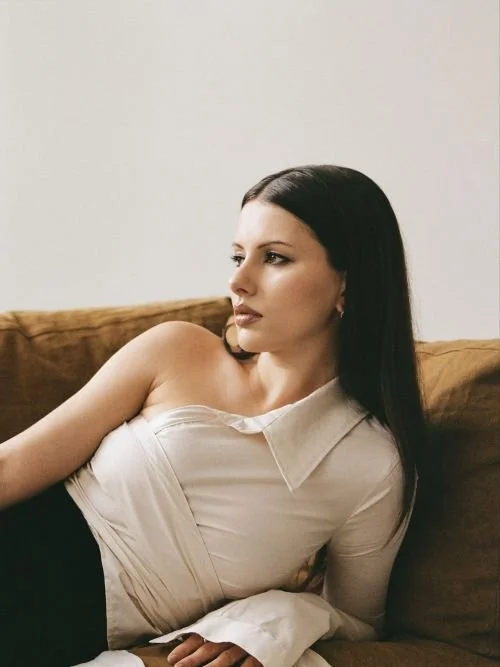
Daria Kolosova
__________
AS I have been including…
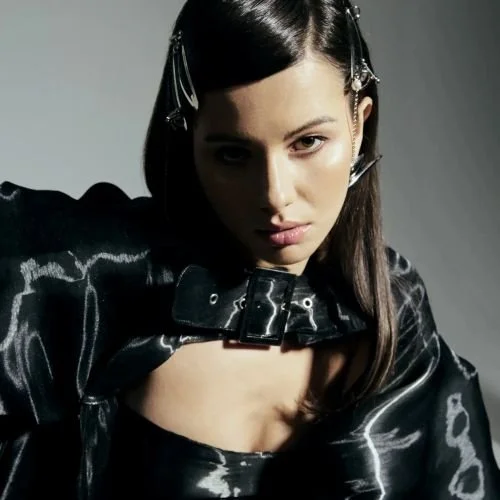
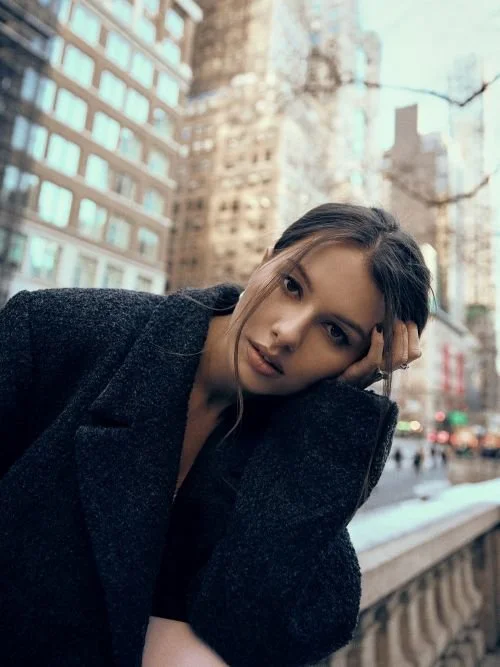
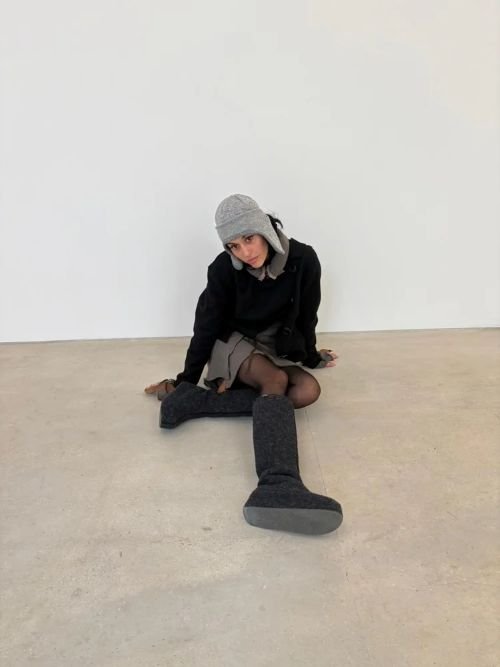
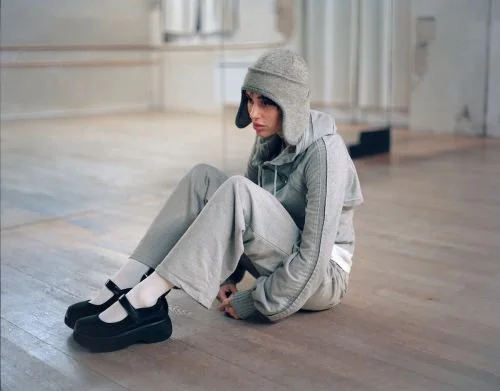
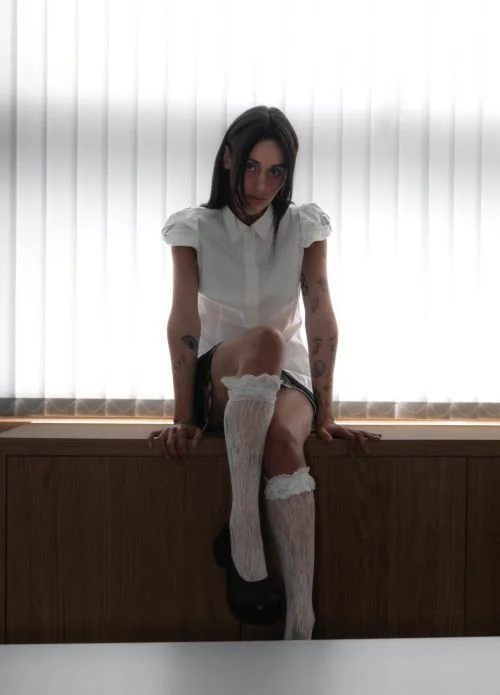
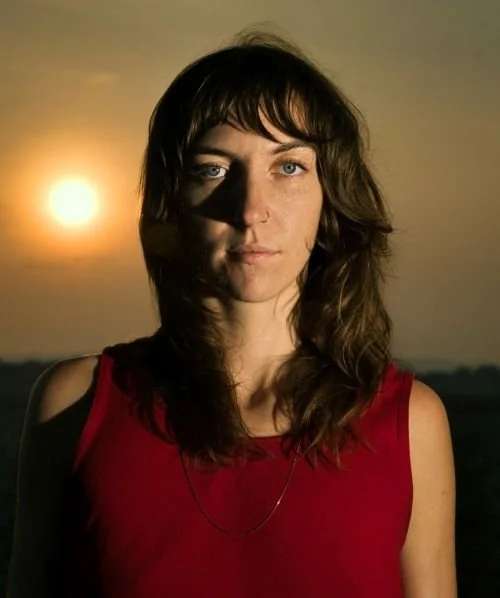
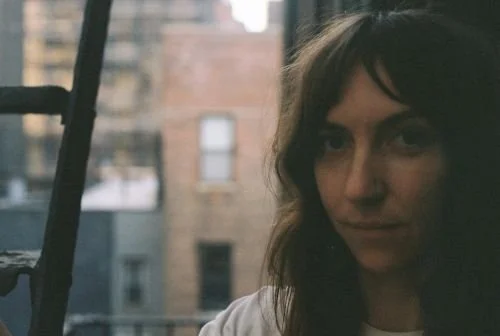
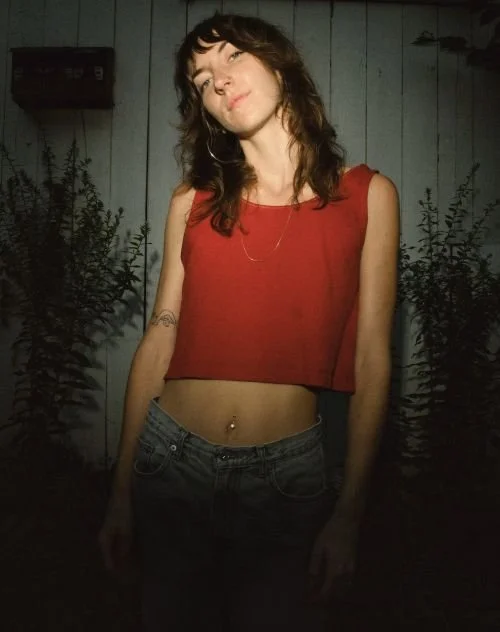
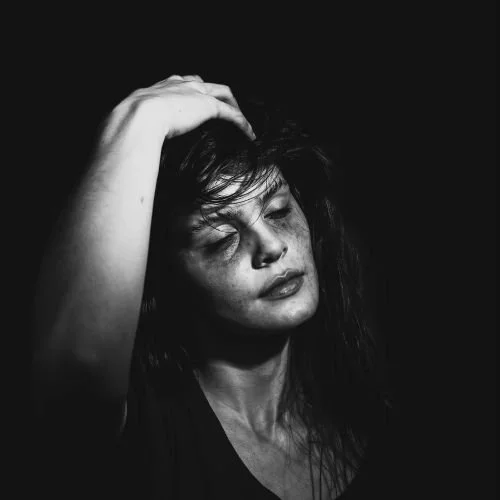
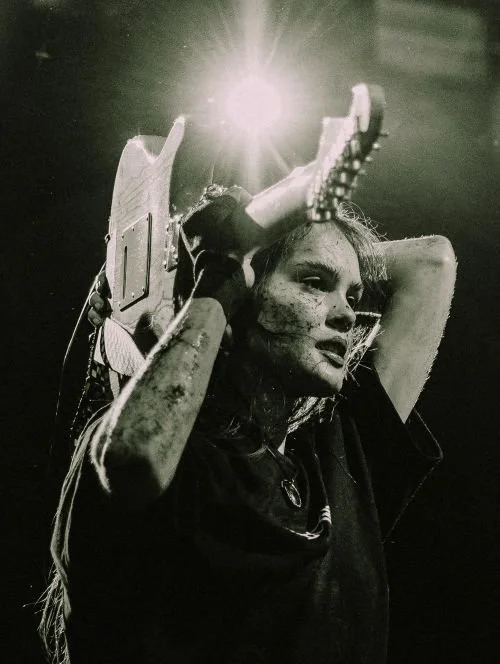
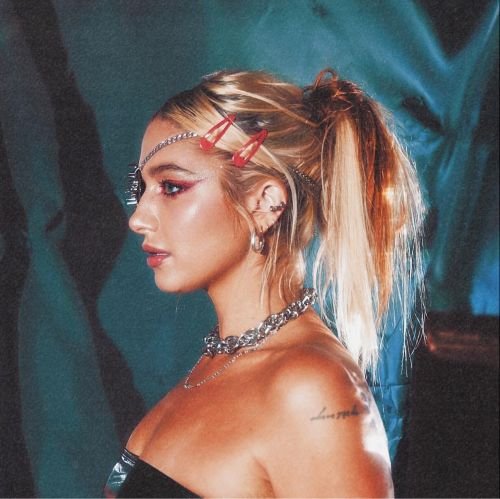
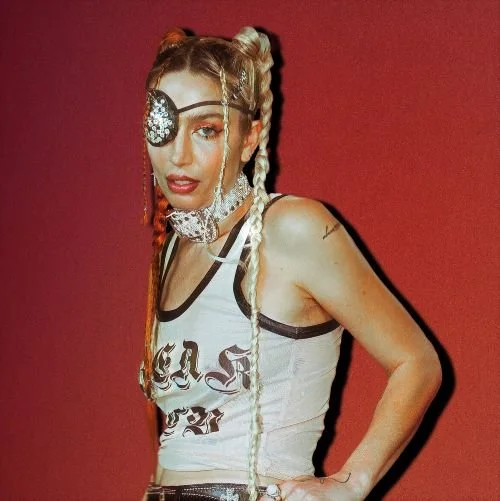
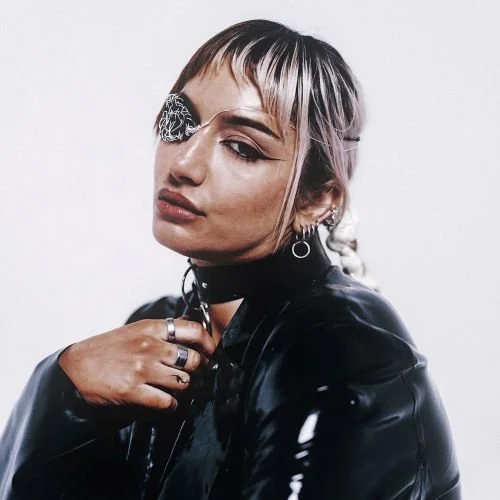
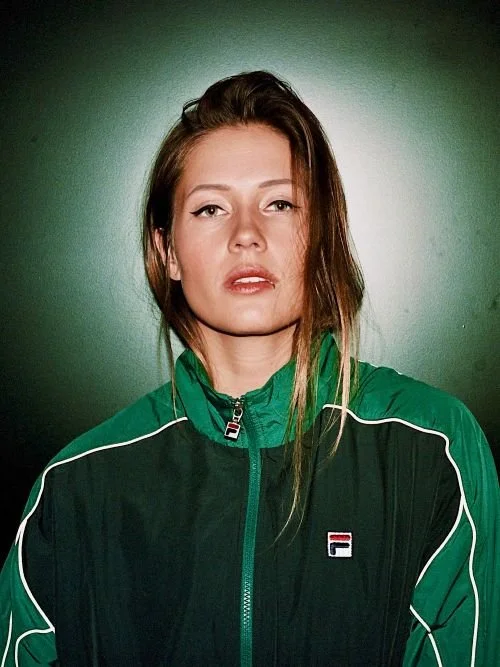
a lot of female D.J.s in my Spotlight feature, I wanted to keep that ball rolling. One of the reasons is because there seems to be steps back when it comes to gender equality for D.J.s. In terms of inclusion on bills and opportunities. I wanted to highlight as many great D.J. queens as possible. One that you should keep your eyes out for is the sensational Daria Kolosova. A world-respected, successful and captivating Ukrainian-born D.J., I feel like this year is going to be a gigantic one. I do wonder whether Kolosova will put out any tracks or mixtapes. A lot of D.J.s are also artists and have their own albums and E.P.s. It does seem like Kolosova could well follow that path. As she is playing at Fabric in London on 7th February, it is a good time to spotlight this astonishing D.J. I will come to some interviews with her, starting with one from a while back. However, before getting there, I want to bring in some biography:
“Daria Kolosova’s 14 years of experience as a DJ, combined with her deep passion for electronic music, have shaped her into a remarkably versatile and proficient artist. Daria was born in the small town of Lutugino in eastern Ukraine. Her love for music was instilled by her father and her devotion to electronic music began at the age of 9 when she first heard “Diesel Power” by The Prodigy. Her passion for music deepened when her mother sent her to music school, where she studied piano. Yet being drawn to DJing from an early age, Daria embraced her vocation which led to her first performance in February 2010. Following this debut, she continued to actively perform in clubs across Lugansk and other cities while also organizing her own parties. After being inspired by Kyiv electronic scene and absorbing the vastness of electronic music genres, Daria honed her taste and recolated to Kyiv.
There, she became a resident DJ at Keller, performing under the alias Dar:k and co-launched the party series Materia UA. After actively being involved in the electronic music scene for some time, Daria started to use her own name, leaving her Dar:k moniker aside as an experimental project. She began headlining most of Kyiv’s underground nightclubs like K41, Closer, Otel and began expanding her reach internationally, performing outside of Ukraine and securing her place on the global stage, with bookings at high-profile events and venues across Europe and beyond. Currently, Daria is one of the most actively growing names in the techno scene. She has played some of the world’s most renowned institutions, with frequent bookings at Berghain, Bassiani, Fabric, London’s Fold and festivals like Tomorrowland, Junction 2, Awakenings, Time Warp and played at Amnesia, Hi and DC10 in her first Ibiza season. As a DJ, Daria never aims to deliver what is expected of her, but rather tries to convey her personal narratives through music. Daria views music as the most genuine method of communication, empathy and unity - a tool that helps her transform her distinctive energy into a story that can be shared with people on the dance floor. She desires to not only provide a danceable and enjoyable set but inspire and introduce people to something fresh and daring. Daria’s style is rooted in hard and groovy techno, often infused with elements of breakbeat, electro, hardcore, or jungle, making her performances rich in variety and unpredictability”.
It is worth going back a bit, so that we can see this progress and evolution. There are not many recent interviews with Daria Kolosova, so I am heading back a bit further. System 108 spoke with Kolosova about her work and career. This is a Techno D.J. but not one that is one-dimensional or limited. You never know what to expect from her. Someone that I hope to see play soon. From everything I hear about her, and listening to mixes she has put together, this is someone who is among the greatest D.J.s in the world:
“Do you remember the first track that you listed to that made you think "Oh yeah, this is techno"? What did it make you feel.
It was Das boot by U96. Back then I didn't know it was techno, I thought it was just some type of electronic music. But that track was different in terms of thrust and crazy energy. I heard it when I was about seven years old. My Dad was a big fan of electronic music and I found it listening to one of his tapes. It was a real revelation.
Have you played it in your sets?
Actually no! Its pretty slow and I haven't tried speeding up the bpm. Maybe I should? Ive never thought about it. (laughs)
After watching a lot of your interviews and listening to a lot of your sets I feel like limiting you to techno alone would be wrong. Do you yourself identify as a techno DJ?
Its obvious that I define my main genre as techno, while it can be quite diverse - from melodic to rough and groovy. But it has always been important to me that im not associated with only techno music. Thats why I like experimenting in my sets, I can play brake-beat and electro, then try some jungle or ambient, downtempo or house in an atypical slot for myself. People know I'm a techno-DJ, but they never know what to expect from me.
You left the "Culture of sound" school because of your tight performance schedule?
I temporarily stopped teaching about six months ago. At some point, it became difficult to combine active touring with teaching at school. At first, the idea of teaching DJing came to me as a side effect of quarantine. There were few performances, I wanted to occupy myself with something, and then I got an offer from the school. Moreover, I git the offer from the guys at "Culture of Sound", at whose events I performed several times, and they themselves are very involved in what they're doing. I loved their approach. I taught at the school for about a year, I liked doing it. I can definitely say that the experience was very interesting. It turned out that I'm not a bad teacher. (laughs)
And you're not only good in practice, but also a great theorist?
Yes, it's one thing to be able to play, but another thing to be able to share your knowledge correctly and easily, to teach someone. When you start teaching, you overestimate your knowledge, you start looking at it from a different angle, wow, it turns out I know so much.
And your students? What kind of people were they? Those who are eager to conquer the industry, or those who are just looking for a hobby?
They were all very different. I probably had the most active flow of students out of all the teachers in the two schools (one in Kharkov, the other in Kiev). That's why I had the opportunity to choose my students. The first lesson at school is introductory. The student meets the teacher, tells him about himself and why he came to school, the teacher shares what will happen in the learning process, and eventually they decide whether they are suitable for each other or not. That was very important to me. I didn't want to waste my knowledge. I collected all my experience bit by bit, and wanted to share the information I got over the years with the most motivated people. Of course, there were some students that came to me and said, "I want to tear up dance floors , I want swarming crowds of fans." So what they needed first of all was fame and Instagram followers. I told them "I'm sorry, but we have different paths". That approach isn't really about culture and music. We are the "Culture of Sound", and thats exactly what we're about. But there were also some students who shared touching and motivating stories about how they got to know music, about their love for it. I was happy to take on training those people. There were also those who came and said directly: I don't understand DJing, I've only just started listening to electronic music, but I'd like to try and see if it will work or not. Thats also an honest position and I was also ready to work with such people.
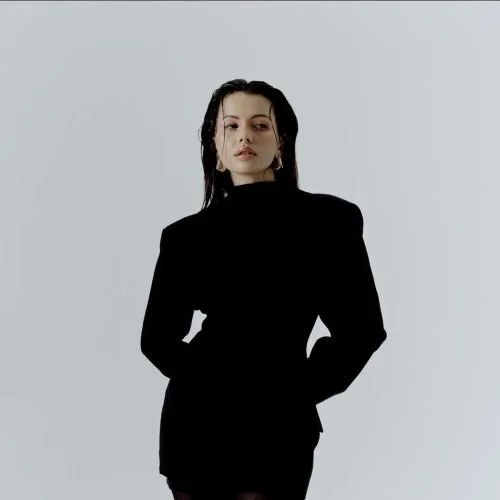
Can you name two or three moments in your career that you consider crucial for yourself?
The first such moment occurred in 2014 or 2015, when I decided to quit commercial music, and I was invited to perform in Krasnodar for the first time under the new nickname Dar:k. Then I indicated to myself that I wanted to move in a different direction and play techno. The second gig was my cooperation with Nastya. She offered to perform back2back, and for the first time we played in that format at the Arma17 birthday party at the Funkhaus in Berlin. And the third turning point was my performance at the Berlin HOR. I don't understand how or why, but this video has gained 670,000 views. I just came there for fun and played music that I really liked.
Haven't you started writing music yet?
I have! Seryozha and I were listening to music at home, just fooling around, and he says, "Why don't we write music together? That would be fun!" Yes, l agree. But in this area I feel his advantage and so far I'm a bit shy. Therefore, I want to focus on production again, to tighten up my knowledge. Seryozha constantly works at home, for example, right now he is finishing work on remixes, and he inspires me very much. On the other hand, I have a very active touring activity right now, and it's extremely difficult to find time to write. I sincerely admire people who tour a lot and still have time to write music. I don't understand how they do it.
Who inspires you?
Seryozha is certainly one of my favourite producers and DJs. I also like the creativity of Blawan — he's very talented. Lately I've been digging more into techno from the 90s and 2000s and I'm more interested in artists whose names are unfamiliar to me. I discover new names, a new sounds. I am inspired by what comes to me at the moment”.
I would be interested in reading something new with Daria Kolosova and how the Russian invasion of Ukraine has affected her and her home nation. In terms of playing in Kyiv and whether that is possible. I am staying in 2023 when it comes to interviews, as there does not to have been much written since then. I will head to Resident Advisor. Kolosova was asked about the invasion of Ukraine and how that has impacted her. Or she shared her views on the invasion and why it has impacted her especially hard. I do think that this year is going to be one where she release music, plays some of the biggest venues and festivals of her career, and collaborates with fellow D.J.s. It is a really exciting point in her career:
“Before the Russian invasion of Ukraine, Daria Kolosova was one of the brightest stars of Kyiv's incredible techno scene, when the city was among the best places for the genre anywhere in the world (and remains so, even under duress). Now living in Berlin, Kolosova's style and sound feel both timeless and progressive. She's been DJing since she was a teenager—after falling in love with dance music via her dad's collection—and has built up a style that has taken her to the world's most renowned techno clubs and festivals. In spite of her popularity, Kolosova does things differently to many of her peers. She's spoken about her respect for and recognition of techno's origins, and her DJing style pays homage to the genre's history. Her sets span eras and continents, with a '90s bent that encompasses not just hard, rolling techno but breakbeats, electro, IDM and prog. Her RA Podcast is a brilliant collection of old and new, from Goa trance to Julia Govor, expertly mixed with a storyteller's hand.
What have you been up to recently?
Lately I've been quite busy with touring around the world, besides my gigs in Europe for the last three months I did tours in Australia, US, South America. On the one hand I'm grateful to be able to travel again and do what I love after two years of the pandemic, but at the same time I've started to feel the need to find a healthy balance between my tours and personal life because it can be super exhausting at times. So I'm learning how to take care of myself, doing yoga, cold exposure and trying to dedicate more time to new projects and studio in the future.
What's one club or party that had a major impact on you as an artist? Playing at Berghain was a dream come true. It made a huge impact on me because I used to travel a lot from Kyiv to Berlin to go there to experience it and learn from bigger DJs. Lately I've enjoyed playing at BASEMENT in New York so much that I literally didn’t want to finish my set. I'm eagerly looking forward to being back. What's one social or political cause you want the world to pay more attention to? There are many things going on in the world, but the war in Ukraine is the most painful topic for me. Unfortunately there's not much news and updates about Ukraine anymore, and the lack of information makes people believe that the war is almost over or the situation has become better. It has also become more complicated to share information about the war on social media as it could be deleted or statistics of views would be significantly low. I just want to remind everyone that the war in Ukraine is going on and we need your support”.
This is a rare case of including older interviews for someone I am spotlighting. I do hope there are 2026 chats with Daria Kolosova. I feel this is a crucial point in her career and we will see big things from her. I do want to finish with another 2023 interview from Fabric London. In it “Nastia and Daria Kolosova give an insight into Kiev’s burgeoning electronic music scene”. This was published nearly a few years ago, so I am aware they are referring to Kyiv as ‘Kiev’:
“Something special is happening in eastern Europe. While artists like [a:rpia:r] have been the key proponents for a stripped-back style of house in Bucharest since the mid-2000s, in recent years there’s been a new electronic music scene developing in Kiev. The city’s favoured style is house and techno, a sound that’s frequently championed at parties like CXEMA and Ukraine’s premier nightclub, Closer. Few artists have done more to put the city on the electronic music map than Nastia. As well as being Ukraine’s biggest techno DJ, she helps run Strichka, the beloved annual festival from the Closer team that brings together a killer cast of local talents and international guests. Recently she’s found a sparring partner in Daria Kolosova, another Kiev selector who’s frequently found spinning colourful techno and electro alongside Nastia. Ahead of the pair’s upcoming head-to-head in Room One, they told us more about their musical backgrounds, how they first met, and why electronic music is thriving in their hometown right now. What styles of music were you exposed to through childhood? Nastia: I was born in 1987. My sisters were listening to pop music at the time, but from what they had I liked Enigma. Then The Prodigy, Chemical Brothers and Fatboy Slim came out. I used to collect movie soundtracks too – that was my passion. Daria Kolosova: My passion for music came from my father. He was a bassist in a rock band, and used to be a DJ. He took me to rehearsals when I was only 3. I grew up on my dad’s records – stuff like Pantera and Metallica, or electronic music such as The Prodigy, Groove Armada and Crystal Method. I went to musical school for piano classes, and DJing became the next natural step in my relationship with music. How did you first discover electronic music in Kiev? Nastia: For me, it happened in around 2005 or 2006. I started to travel from Donetsk to Kiev to party. There were several clubs, which I would now consider places playing mainstream music. There was also an underground scene, but I was removed from that. I was living in Donetsk, and started DJing in February 2005. Before that I was a dancer, and met all the local DJs who showed me this wonderful lifestyle.
Daria Kolosova: In 2010 I came to Kiev from my hometown Lugansk. I visited Cinema Club with my friends. It was a huge underground club playing big techno, hard techno and drum & bass. This was a super new experience because there’s nothing like this in my hometown. My second time was a Sunday daytime party at Closer. I’d just moved to Kiev, and this was a revelation for me. Beautiful people, amazing vibe and music. One of the residents dropped Call That Love (Rob Rives remix) by X-press 2, which I’ll associate with Closer forever. How did you obtain records when you first started collecting? Nastia: I started to collect records quite late, in 2010. I was travelling a lot and mostly going to record shops. I also used to order from online shops, but it would take three weeks to receive them. Nowadays it’s easy – I adore Discogs for that. At the moment there’s also Closer Record Store, which is run by serious diggers. Daria Kolosova: I started to buy records when I was travelling – from small no-name music stores to big ones like Spacehall Berlin. There are a few vinyl shops in Kiev. My favourites are Closer Record Store and Diskultura. Closer is a super cosy place with new releases and rare items, perfect for “diggers”. Diskultura is the oldest multi-genre store in the city with a big collection of old-school techno, electro and more. It seems like electronic music is going through a golden period in Kiev at the moment. How would you describe the scene right now? Daria Kolosova: It’s a really historical moment happening in Ukraine now. The post-Maidan financial crisis helped the discovery of a generation of local talents, because organisers didn’t have the money for big names. That’s why we have such a strong local scene. For example, at the recent CXEMA x Boiler Room rave, 4,000 people came for a local line-up. Young ravers are open-minded and educated, they don’t want to hear something expected. This builds to a raw phenomenon in Ukraine, and we are very lucky to be part of it. Nastia: Golden period – it’s true. Ukraine finally got on the map of the worldwide electronic music scene. It’s been a fast rise: in 2013 Closer club opened its doors, and by 2014 we had Strichka Festival, CXEMA, Rhythm Bureau and a few more local promoters. Now it’s huge, fresh and amazing. People here really dance, I don’t see people express themselves like this anywhere else. The club community is educated, curious, united and cultural. Strict face control at Closer helps keep the vibe on a high level. CXEMA keeps it raw with local artists. Brave! Factory and Strichka are the best festivals right now. I must admit we have very good residents: most of the time they are better than the international guests. People’s tastes and those who run the scene are always stepping forward. For me, Ukraine is the most interesting clubbing spot at the moment. We’ve travelled to the city a few times specifically to spend the weekend at Closer. What do you think makes this club so special? Nastia: The team behind it. You can feel they do it for themselves – not for people or business, but for themselves to be able to live the life they want, and do something for the history and culture. They were the ones who built the scene in 2013. The team used to do parties before, but everything started seriously with the club. I don’t know any stronger family-style relations than them. In five years, I’ve never seen any conflict in their group. They are just perfect”.
Most of my Spotlight features have new interviews and we can give a sense of where an artist is heading. However, with D.J.s, there is perhaps less in the way of continual interviews, unless they put music out, though Daria Kolosova is one of the world’s most important D.J.s, so I wanted to spotlight her. Given the continuing violence in Ukraine and Russia’s invasion, I thought it especially important to discuss a Ukrainian D.J. Go and follow her on Instagram and keep up with her mixes on Soundcloud. I really do feel this year will see Daria Kolosova creating some of the best memories and experiences of her life. If you do get a chance to see her play then please do. Among the queens of the decks, the fabulous Daria Kolosova is…
ONE of the absolute best.
___________
Follow Daria Kolosova