FEATURE: Spotlight: Elizabeth Nichols

FEATURE:


Spotlight


Elizabeth Nichols

__________

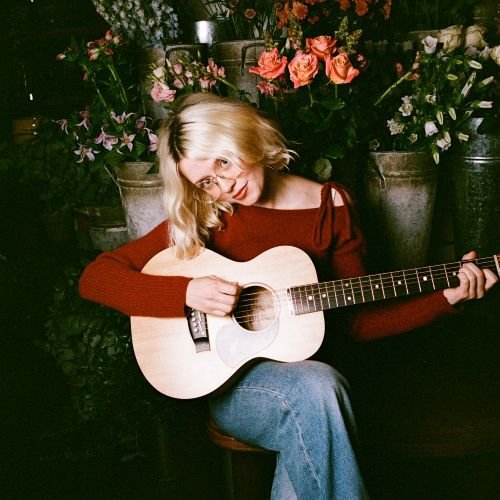
THIS is an artist…
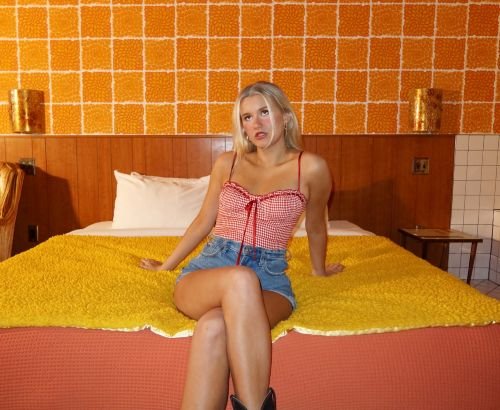
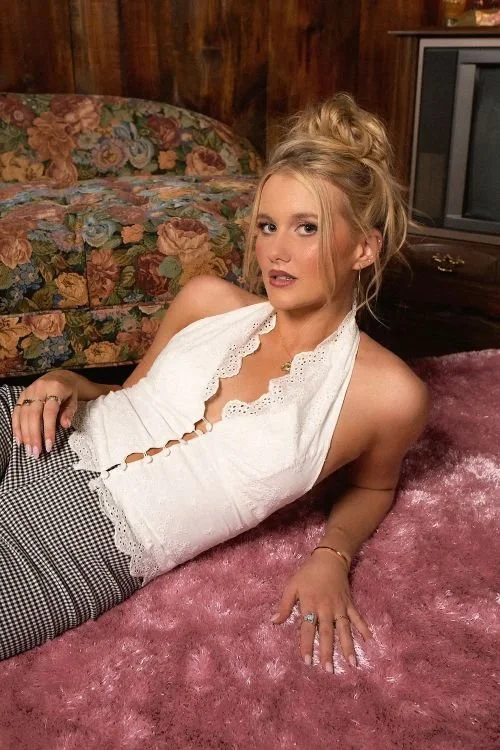
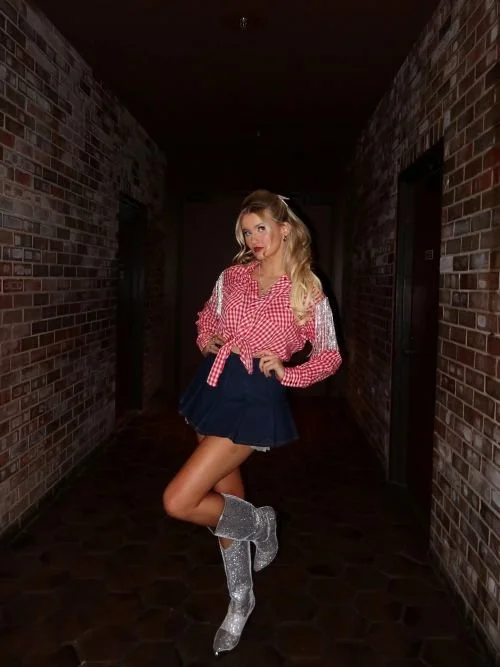
that I am quite new to. However, Elizabeth Nicols is someone who I am determined to find out more about. With a debut album coming soon, I think it is a perfect time to shine a light on this Kentucky artist. Last year saw the release of her Tough Love E.P. I really love it, and she has this sound which is instantly impactful and memorable. An artist that is so distinct and compelling, I am exploring some recent interviews with her. However, just before moving to those, I thought I would drop in some biography from her official website. This is someone who I would urge everyone to check out:

Elizabeth Nichols is a singer-songwriter hailing from Kentucky whose online presence has captivated fans with its blend of relatable storytelling and raw authenticity. At the young age of twenty-two, her lyrics explore commentary on everything from small-town life to current cultural trends. This ability to find universality in the specific has resonated with her audience, creating a sense that she's speaking directly to them. After spending much of her formative years in Kentucky and Oklahoma, Elizabeth is now based in Nashville where she is working with some of Music City's top talent on her debut album”.

I know that Elizabeth Nicols is a major Olivia Rodrigo fan. I do hope that they get to collaborate at some point. I really love her music and am glad that she is coming to the U.K. next month for gigs here. Her gig at The Garage in London is one that I might get along to. She is among this wave of incredible and hugely talented Country artists reshaping the scene.

The Tennessean spoke with Elizabeth Nicols around the release of her E.P., Tough Love. If you are looking for an artist who stands out dream the pack and has the talent and passion to remain in the music industry for years to come, then you should follow her. There is no doubt that Elizbeth Nicols is a very special artist:

Elizabeth Nichols, 22, is part of a rising wave of young female singer-songwriters reshaping Nashville’s country music scene.

A Louisville native with a flair for bold style — think white peasant dress, square-toed blood-red boots, and a silver miniature Colt .45 — Nichols is making a striking entrance with her debut EP, Tough Love, released June 20.

Nichols’ sound draws more from gospel than traditional country music. Her vocal influences include Marvin Sapp and CeCe Winans, while her country inspirations lean toward Miranda Lambert’s haunting rendition of “Tin Man” and Kacey Musgraves’ "Pageant Material" and "Golden Hour" albums. This blend gives her music a soulful depth that sets her apart.

In Nashville, she’s currently working on tracks like “I Got A New One” and “Somebody Cooked Here,” exploring how Dolly Parton’s early catalog benefited from gospel-infused production. Nichols is especially passionate about harmonies, often layering multiple vocal takes to create a rich, textured sound.

Nichols said that her songs hit so hard because she condenses the process of developing a beginning, conflict, climax, cliffhanger and denouement of an epic novel's arc into three minutes of a song.

"Bible Belt" is a personal, story-driven song that feels like Kacey Musgraves' "Biscuits" in its banjo-driven rootsiness.

"My father texts it to his pastor friends and jokes, 'this song is about you, you dirty, no good, son of a gun.' These stories are relatable because they reflect what they see (from the pulpit) when observing their congregations."

In June, the virally popular "I Got A New One" — a song about toxic ex-boyfriends — was covered, “Kellyoke"-style, by multi-platinum singer-songwriter Kelly Clarkson on "The Kelly Clarkson Show."

The song's popularity has also attracted supporters, including Oklahoma-born rising country star Wyatt Flores, who has had her on the road not just as his opening act, but also to play her first and second professional live performances ever.

"I went from shaking like a leaf and feeling like it was a trainwreck to feeling no nerves or stress and hearing the people sing my songs back to me," Nichols said, highlighting how quickly she focused on the opportunity Flores had provided her.

"My songs reflect the full spectrum of my journey to this point," Nichols said, reflecting on what two solid years of honing her craft as a singer-songwriter have yielded her.

"I prayed about finding my purpose in life and in the last year, I've found it," Nichols said, regarding her whirlwind evolution”.

There are a couple of other interviews I want to include before wrapping up. I will come to The Honey Pop. Speaking with her last August around the release of her track, I Got a New One, Elizabeth Nicols also talked about her new music and appearing on Kelly Clarkson’s talk show. When you hear and read interviews with her, she comes across as so endearing and genuine. One of these artist you know is going to be huge:

Hi Elizabeth! Thank you so much for chatting with us! To start us off, how would you describe your music to someone who is tuning in for the first time? 
I’d say probably clever and honest. Those are two elements that I see in all my favorite songs. I try to balance the two. I don’t want to be too clever that I’m not honest, or too straightforward that it kills the clever.

‘Tough Love’ is officially out! This acts as your debut multi-track project! What emotions have been going through your head as these seven tracks now live out in the world?
I am so grateful. If you had told me one year ago that this is where I would be, I would have never believed you. The idea that some group of girls in another state is in the car with their friends, singing one of my songs, is the most surreal part of it all. Music is such a beautiful part of life, and I am honored to be given the opportunity to make it.

We know that ‘Ain’t Country’ was your first jump into writing a country track. What changes about the songwriting process when you’re writing with a genre in mind? 
I was about 10 years old the last time I had written any kind of song, so ‘Ain’t Country’ was the first song I’ve written as an adult, and I think that country sound just kind of naturally came out of me because that’s what I grew up listening to. I also love storytelling and lyricism, and 
country music is a genre that really celebrates those things and makes space for that part of the craft.

Ahead of the release of Tough Love, was there a song you were most looking forward to seeing fans’ reactions to? 
I was most excited for fans to hear ‘Tough Love’ because it was the one song that I hadn’t teased at all before its release, so nobody had heard a single note of it. It was also the newest song out of the seven—I wrote it only a few weeks before the EP came out. There is something about how honest it is that I hoped fans would connect with.

We have to ask, ‘I Got A New One’ has officially received the Kelly Clarkson treatment! What was that like for you? 
I was and am extremely grateful. 
Kelly Clarkson is literally an American icon. She is so unbelievably talented, so the fact that she liked a song I wrote enough to cover it is a huge compliment—my family and I were so excited when it happened.

Once again, thank you so much for chatting with us! Before we let you go, what can fans look forward to as we round out the last few months of 2025? 
Some more music! I have a new single coming out in August. I’m also playing some shows throughout the end of this year, which I’m really excited about. I love meeting people out on the road
”.

I am ending with an interview from Holler that talks about how new Elizabeth Nicols is. Considering her first live show was not too long ago, and Nashville sometimes being stuffy when it comes to new artists enjoying a meteoric rise – this idea that you need to craft and have to have been around for years to be considered genuine and a true Country artist -, she has been welcomed with open arms fdo the most part. She was interviewed ahead of her ahead of her C2C Festival 2026 appearance:

There's an enchantingly sepia-tinged ambience in tracks like ‘Little Birds’ and her latest single, ‘Oh The Things Men Do’, which is dialled into the traditional country revival, sparked by Ella Langley and Riley Green's ubiquitous hit, ‘you look like you love me’.

“I think that I'm pretty country. I love country music”, Nichols muses, before qualifying this, “But I get a lot of comments from people...Girls will be like, ‘I love Sabrina Carpenter, and I love your music’, or ‘I don't really listen to country, but I love your music’. And I love that my music is country, but the things and feelings I'm singing about are universal. So people of all genres and walks of life can tap in to that”.

Another compelling element of Nichols’ storytelling is the fact that she isn't afraid to poke fun at the country bros of the world. Given how the likes of Florida Georgia Line and Luke Bryan spent much of the 2010’s dominating the airwaves with songs about chatting up girls in bars and painting women as little more than eye-candy, Nichols’ subversion of this male braggadocio is a breath of fresh air.

Songs like ‘Oh The Things Men Do’ - which jovially criticises the methods men employ to sleep with a woman - make it clear why she has struck a chord with Carpenter's fanbase.

Nichols reflects, “I wrote it with some of my favourite people, Laura Veltz, Steve Rusch and Steph Jones. They're some of my favourite collaborators. They just get me. We were just having a conversation about the things men do...You know, men are so funny sometimes. So we were talking about it, and it ended up turning into something that was very playful and exciting. It started off as a joke, but I really love how, with the music video and the rollout, it has a positive message. It's okay if a guy is buying you things or doing nice things, but make sure it's not performative”.

Much like ‘I Got a New One’, ‘Oh The Things Men Do’ had already gained traction on socials before it was officially released - a rollout strategy Nichols is quickly mastering.

“Right now, social media has made it possible for anybody to break into country music, and anybody can break into any genre of music”, Nichols observes, “And I think that is such a beautiful thing. If it wasn't for TikTok and Instagram, I wouldn't have found my people who want to hear my music. I think that is such a positive thing for all genres, but especially country...You don't have to live in Nashville, you don't have to live in LA to do music, whereas it used to be the case that you have to live in those places to be able to get your music out there”.

And it turns out Nichols has plenty of music she wants to release, “I just want to put out as much new music as possible...I love to write, it's my favourite part of the gig. I have an ungodly amount of songs, and I would like for them to see the light of day”.

Nichols teases a stacked 2026, including a debut album, a Stagecoach set, a trip across The Pond to perform at C2C Festival and C2C Berlin, along with an Australia tour, “Oh, we have a lot planned. I'm so excited about Stagecoach. We are touring a lot more. We're playing a lot more festivals. I played my first show like six months ago, and I have fallen in love with the live aspect...Album is coming sometime next year, which I'm very excited about. The Tough Love EP was so fun to make. But an album is a bigger piece of work, so there's more that goes into it”.

The country prodigy is set to dazzle audiences in the UK, the Netherlands and Germany for the first time as part of C2C Festival, C2C Berlin and C2C Rotterdam in March. Despite still being fairly new, Nichols’ sets are expected to be some of the most popular at each festival, due to her cross-genre appeal and TikTok virality.

“I'm so excited to play in Europe”, Nichols gushes, “I lived in Australia for a year, and it's so cool...I think it's interesting, even in the US, seeing how crowds react in New York versus how crowds react in Texas. So I'm excited to see that in Europe and Australia”.

As well as carrying a level of excitement at the prospect of bringing her sound across international waters, Nichols hints at possibly pushing it into new sonic territories, too.

When discussing her dream collaborations, one non-country name springs immediately to mind, “Beyond the Nashville scene, I love Olivia Rodrigo. I'm like an Olivia Rodrigo superfan. So I would just like to even meet her. That would be so cool”.

It's a link-up we'd love to one day see, and we'd be fascinated to hear how they manage to coalesce Rodrigo's punk-pop flourishes with Nichols’ traditional country textures.

As for a joint track in the country arena, Nichols again shows off her wit with a hilariously tongue-in-cheek answer, “In Nashville, I have a dream collab. This is niche. I want to write a song with Joe Nichols, because I tell people he's my uncle, as a bit - but we're not related. I have never met him, but I think that him and I doing a song together, with some family concept [would be great]. And then I also want to bring in a writer in town, Tim Nichols, who wrote a bunch of Zach Top's stuff - amazing music. So I think that me, Joe and Tim Nichols should all get in a writer's room and write a song, like, ‘Family is Family’” On a more serious note, Nichols cites Morgan Wallen as being at the top of her country bucket-list.

As well as a genre-blurring collaboration with Olivia Rodrigo, Nichols toys with the idea of one day dropping a gospel-tinged project - if only to make her pastor father happy.

She explains, “My dad's a pastor. My grandpa's a pastor. So I broke the cycle...I didn't go the pastoral route, but I love Jesus. And, you know, Jesus and God are creative, and I think He gifts people with ideas and creativity, and I'm blessed that I get to partake in that. So God is definitely an influencer. I'm not necessarily singing worship music, but I'm not opposed to that. That'd be so fun. My dad would have a heart attack. He'd be so happy. Maybe on his birthday one year...”

Although more of a flippant aside than an immediate plan to pivot to Contemporary Christian Music any time soon, it again highlights Nichols’ versatility and open-mindedness. Her sound is inherently grounded in classic country, but as her catalogue grows, she continues to embrace various stylistic strands and influences.

It's all the more reason to look forward to what's shaping up to be a huge year, as Nichols graduates from star-in-the-making to a fixture in country music's shimmering pantheon”.

I think that this year is going to be a really big one for Elizabeth Nicols. From Kentucky, this exciting and phenomenal artist is embraced around the world. There will be people reading this who are new to Nicols and her music. I would say to invest in her, as she is someone with a very bright future. This fabulous artist is someone that you…

REALLY need to hear.

_________

Follow Elizabeth Nichols
FEATURE: Spotlight: Revisited: Maisie Peters

FEATURE:


Spotlight: Revisited


Maisie Peters

__________

I am once more…

spotlighting the talent of the absolutely amazing Maisie Peters. I wrote about her in 2021. That was around the release of her debut album, You Signed Up for This. Peters released its follow-up, The Good Witch, in 2023. Her third studio album, Florescence, will be released on 15th May. Featuring collaborations with Marcus Mumford and Julia Michels, I love the song titles and the album cover. As a fan of Maisie Peters and her previous work, I am looking forward to her new album. The Brighton artist is one of our brightest and best musicians. You can pre-order her album here. Available on cassette, C.D. and vinyl, I know that there will be a lot of new love and attention around this artist. I am going to get to some recent interviews with Peters, as she is entering this new phase of her career. There are a couple of new articles that I want to lead to. However, it is worth heading back to 2023. An interview with Earmilk around the release of The Good Witch. If this artist is new to you then do make sure you follow her:

Peters always finds a way to put her sunshine-laden melodies underneath lyrics that seem so simple on the surface but cut deeper with each listen. "Body Better" perfectly captures the inescapable feeling of self-deprecating comparison felt by many. "Loving you was easy, that's why it hurts now," she gently sings before laying down the truth, "The worst way to love somebody is to watch them love somebody else, and it works out."

"I wrote the song last June; essentially, it's a very honest, somewhat uncomfortable in its honesty, depiction of how I was feeling at the time," Peters shared with EARMILK in an exclusive interview. "I had been through a breakup a few months before, and I was sort of processing certain feelings and how it made me feel about myself and my body. It's a song of self-reflection, the most negative version of self-reflection when you're alone and unhappy and bitter and jealous and obsessive in your hotel room at 1 am.”

Peters is known for writing songs that hit a little too close to home, and "Body Better" is no different. She compares it to drafting a scathing text to someone and not sending it, then tweeting it out to the world nine months later. "The longer time goes on, the more you get over and get past whatever it was that you were writing about, and it becomes a different thing. The song gets disconnected from the moment." Vulnerability is a muscle that Peters has trained so often it's second nature to her. It feels effortless on each release. In an age when women are picked apart for every detail, this song feels especially poignant.

The comparison in those intricate details feels like a stab at every turn. Comparison gets to everyone. Maisie faces it in her career as much as she does in her personal life. She says, "I feel like there's a point in my career where I haven't achieved enough or fallen behind, or I'm not where I want to be, and none of those things are true, and they're all things that only you think about yourself." But the response she gets with each song she releases just cements her position. She perfectly sums up the female experience, the way that nothing is able to exist without that question of what if? Or why can't I be like her instead?

Everything an artist does will be held up to compare to another and picked a part piece by piece, but Peters has learned to drown out that noise. Whether it's in her career or her personal life, she says, "It's a fruitless exercise, it's only you who thinks those things, and I guarantee who you're comparing yourself to would do the same thing back to you in a heartbeat. Just remember that you're more than what you think you are. There's so much depth to us as women, and we're so multifaceted. There's a myriad of wonderful things about us. Don't get caught up on one aspect of yourself or one aspect of someone else that you think you're missing or that they have. Everyone's so much more than that”.

I cannot find any 2026 interviews with Maisie Peters, though I am aware this will change soon as we get closer to the release of Florescence. My Regards is a new single from this incredible artist. The Honey Pop examined the song and its video. With a growing fanbase and visuals and music which is distinct and always extraordinary, there is a lot of love and fascination around Maisie Peters. I do think that we will be talking about her years from now:

Forget Kevin Costner in The Bodyguard—we’re craving a gender-flipped fantasy starring our pixie-cut blonde, Maisie Peters, blue-steeling in black shades like she’s guarding state secrets instead of your heart. It’s all in service of ‘My Regards,’ co-produced by Ian Fitchuk (yes, the mind behind Kacey Musgraves and Stephen Sanchez) and co-written and produced by Nick Lobel (of Harry Styles and Miley Cyrus fame), alongside Maisie herself. The track—cheeky, possessive, and gloriously self-aware—is basically a love letter that winks while it guards the door.

And honestly? There’s so much we’re obsessed with from this video-slash-single drop. The all-star creative squad. The wardrobe that could probably get its own security detail. And, of course, the soon-to-be-everywhere choreography destined to infiltrate your TikTok FYP with military precision. So let’s spot the eagle circling the nest and dive in.

Operation: Classified Poetry Is A Go

Part visual storyteller, part lover girl on steroids, bodyguard Maisie writes like someone who just caught user_fangirl09 red-handed, deep in a 2 a.m. Instagram excavation of her boyfriend’s feed and accidentally liking a photo from two years back. She’s already sketched the mission plan, neutralised the perceived threat, and done it using her weapon of choice—a glitter pen (very Taylor Swift coded, obviously).

All of it funnels into lines like, “But the problem is he’s mine, and it’s headline news,” which—fair enough—because our girl is famous and the tabloids would absolutely eat that up. The lyrics are poetic, saucy, and leave you wondering whether she’s actually serious or just being deliciously cheeky.

And honestly, in her defence, she does toss out a “‘Scuse me, sorry” in a Sussex accent between lines about her perfume (likely Giorgio Armani, given her androgynous campaign with them) being the only air he breathes, and spoiling him with hotel stays at the The Ritz London—all, of course, penned “from his bedroom.”

Assembling The Elite Unit: Mission Success Assured

The Powerpuff Girls, Totally Spies!—all the best team-ups come with an elite squad, and Maisie’s got hers on lock. Benny Drama, aka Benito Skinner, rolls in the melodrama by being an absolute heartthrob with an allegiance of fans that bodyguard Maisie would frankly have to shield him from.

Meanwhile, sneaking out the back of her Chicken Shop Date segment, Amelia Dimoldenberg steps behind the camera to direct the video, letting her genius comedy instincts run wild as Maisie and Benito awkwardly dance through the halls of Addington Palace, deep in the heart of South London. It feels like a covert-op meets a rom-com meets a TikTok fever dream—and the squad chemistry is half the fun.

Secure The Fit: Glamour Protocol Activated

With her pixie-blonde cut pinned back by two perfectly 90s clips and her lips pursed in burgundy, it’s obvious from the black shades alone that Maisie is on yet another mission: to slay. What’s so spunky about the video is that it doesn’t just play with the protector-and-protectee trope—it threads the whole subversion straight through the styling. Any hint of a femme silhouette is left on the cutting-room floor in favour of a full suit and leather gloves, all pulled together by Steph Major.

The creative aesthetic trickles out into the fans’ looks, too: an “I love you” broken up by gigantic red hearts reflects the over-the-top devotion toward Benny Drama’s character, styled by Lucy Bonner. Jake Sammis outfits Benito in that laid-back actor uniform—jeans, belt, plaid shirt, and, of course, matching shades to Maisie. It’s giving coordinated chaos, celeb crush fever, and covert-ops chic all at once.

Movement Intel: Steps Locked, Target Rhythm Acquired

Because while fangirls are busy chasing you outside, naturally, your bodyguard is inside… learning dance choreography. We see you, promotional TikTok routine, unfolding step by step like part of her training arc. And if you want to learn the moves too, don’t stress—there’s a full run-through of the choreography tucked right into the credits of the music video, practically begging you to join the mission.

Florals Under Surveillance

Our daisy-eyed girl, Maisie, is gearing up to drop Florescence, her third studio album, co-produced by Ian Fitchuck and blooming with collabs from Julia Michaels and Marcus Mumford, arriving May 15th. But don’t wilt on us just yet—while we wait for the petals to unfurl, she’s launching Before The Bloom, a mini-tour sprouting in Sydney, Australia, on March 1st at the Enmore Theatre before drifting across East Asia, Europe, the UK, the US, and Canada”.

I am going to end with an article from i-D that also looks at the incredible new single. Following last year’s You You You, Audrey Hepburn and Say My Name in Your Sleep (which appear on Florescence), this new year will offer an album and some incredible tour dates. Before playing London’s KOKO on 25th March, she has some dates in Australia and Europe. I know that London gig will be packed, as Maisie Peters is a phenomenal and hugely popular artist:

I arrive at Addington Palace in deep South London and accidentally saunter straight into shot: Maisie Peters, the big-gun British indie-pop girl, is filming the music video for her new track “My Regards.” Dressed in a black business suit, hair slicked and clipped into place, she is in bodyguard mode. Her client? A blue-jeaned Benito Skinner who, at this moment, is being set upon by a gaggle of rabid fans. Someone shouts “Cut!” It’s Chicken Shop Date creator Amelia Dimoldenberg.

This combination of characters was Peters’ idea. A mix of people she’d never properly met before but is a big fan of, like Skinner, and acquaintances who she shares a common language with, like Dimoldenberg. The song is a sexy, country subversion of the boy-protector and girl-protected narrative. For the video, Peters originally had a different idea: “When I was writing, I very much saw it as this old country-and-Western film, with me on my horse and my boyfriend behind me,” she says. But after sending the song to Dimoldenberg, she had a different idea, inspired by one line: “Call me Kevin Costner / The way I’m guarding his body.” And so here Peters is less cowboy, more CIA.

When Amelia had this idea, that the reason I’m so protective of him is because it’s my job, it clicked into place,” Peters says. “Then we agreed that this man in the video had to be a sex icon, and we both thought: Benito Skinner.”

PHOTO CREDIT: Sophie Scott

Skinner’s in the makeup chair getting touch-ups, looking good, he thinks, because he’s recovering from food poisoning. He’s having fun. His preparation was pretty easy. He just listened to the song 50 times. “Not having any lines is kind of explosive,” he says. “Like, it’s all in the eyes.” (For most of the video, his star persona wears sunglasses.)

“When my brain brought me Benny, I realized that adds another level to it, because I know how funny Benny is, but he’s also genuinely gorgeous,” Peter says. Dimoldenberg, understandably locked in for the day, told me later: “He was the final piece of the puzzle.” Following the creation of Chicken Shop Date and directing her first short film, she felt like she was ready to add something new to her bow. “Stepping behind the lens for my first music video has felt like a natural evolution,” she says. “I wanted this to feel playful, humorous, and in line with everything else I’ve done.”

“My Regards” is one of the early teases of Florescence, Peters’ third studio album. It was recorded after a long and manic spell of live shows, touring her last LP, The Good Witch, and doing support slots for just about every significant star on the planet (Taylor Swift, Coldplay, Conan Gray). She had been tinkering away at what would come next on that journey—she’s the kind of artist that never really stops, and reckons she’s written at least 60 songs for the album—but found herself burnt out, hitting a wall. So she canceled some shows, came home, and decided to figure things out. “I know other artists will go into an album with the title already, and a whole thesis,” she says, but she works in retrospect, making and then shaping.

Much of that shaping happened in Nashville, where she linked up with Ian Fitchuk, the Grammy winner who worked on Kacey Musgraves’ Golden Hour, to help bring things to life. Her writing partners this time around include Marcus Mumford and Julia Michaels, both of whom have features on the album.

Peters made her name as a pop star who was a little scorned and petty. Her past material, like “Psycho” and “Lost the Breakup,” offered opportunities for her to exorcise shitty old relationships. Each banger was a little teaspoon of salt in an ex’s morning coffee. But she’s 25 now, and Florescence feels like it’s written by someone assured and fulfilled. Even the quirkier tracks like “My Regards” are written from the POV of someone who knows they’re comfortable and loved. “While I was writing, I reminded myself that I’m a hopeful and forgiving person,” she says. “At this point in my life, I don’t have a lot of resentment towards people. I’m able to look back and see a lot of the relationships I had in a really new light. Maybe that’s growing up”.

I am going to end there. Maybe some still see her as new or rising, though it is clear that Maisie Peters is a major artist. She has performed with and won the love of artists like Taylor Swift. In May, we will get a third album from Peters, Florescence is shaping to be one of her best. The singles from the album are all terrific. Anyone who has not heard and connected with Maisie Peters needs to do so…

RIGHT now.

_________

Follow Maisie Peters

FEATURE: The Art of Hating: Focusing on a Recent CLASH Article Around Olivia Dean’s GRAMMY Success

FEATURE:


The Art of Hating

PHOTO CREDIT: Gwen Trannoy


Focusing on a Recent CLASH Article Around Olivia Dean’s GRAMMY Success

__________

WHILST there was a lot…

IN THIS PHOTO: Olivia Dean attended the GRAMMY Awards on Sunday, 1st February at the Crypto.com Arena in Los Angeles, where she won the Best New Artist award/PHOTO CREDIT: Etienne Laurent/Getty Images

of celebration around Olivia Dean winning the Best New Artist at this year’s GRAMMYs, there was this worrying online backlash and narrative. I am interested in an article Amelia Thompson wrote for CLASH. There is no denying how Dean is one of the world’s best talents. Her latest album, The Art of Loving, is a phenomenal release. Olivia Dean is such an interesting songwriter who is doing something new. Her music is engaging and engrossing. She has a soulful and wonderful voice and she is humble, charming and someone whose voice is necessary and vital. It seems incomprehensible that anyone would take against her or her music. It does seem that, especially when women in music are recognised and awarded, there is this negativity and criticism:

What was striking was how little of this backlash addressed her actual music. Songwriting, vocals and performance were barely mentioned. The criticism stayed vague, emotional and easy to share, and once it took hold, the pile-on followed.

Much of the backlash focused around a comparison with Addison Rae, whose GRAMMYs performance leaned heavily into pop camp and visual excess. One post praised Rae for “going full girly pop camp” and avoiding a “boring acoustic version” before concluding, “The girls that get it, get it. Those that don’t are named Olivia Dean” (monalisaney81). The contrast was blunt and familiar. Rae’s performance was framed as fun, smart and self-aware, while Dean’s stripped-back approach was dismissed as safe or empty. It seems acoustic performances were treated as pandering to the GRAMMYs, while spectacle was positioned as the only valid form of authenticity. What went largely unacknowledged was that both artists were making clear, intentional choices. Only one of those choices, in this moment, was treated with suspicion.

In 2026, it remains striking how quickly women with entirely different sounds are pushed into competition with one another.

As the conversation spiralled, the criticism turned noticeably more gendered. Suddenly, Dean wasn’t just being called boring or safe, but accused of pushing a “trad wife” agenda, based almost entirely on how she looks and the kind of songs she writes, rather than anything she’s actually said or done. One post claimed she makes music to “perpetuate the ideals of trad wife to modern day youth” (FENDIANASTARRR), reading political intent into dresses, softness and love songs. Others were quicker to clock the problem, with one user pointing out there was “something deeply misogynistic” about labelling a woman conservative simply because she wears dresses and writes about romance (foreverwintertv). That cuts right to the heart of it. Femininity gets treated as a belief system; romance becomes a red flag; softness is framed as submission. And when a woman isn’t cloaking her work in irony or provocation, even existing in that space starts to feel, to some people, suspicious.

Class-coded language played a big role in how her music was dismissed too. One reply calling her sound “whole foods ass music” racked up more than 18,000 likes (rainsblog), reducing her work to supermarket playlist fodder instead of engaging with it on its own terms. Dean isn’t really being criticised for the music she makes, but for how readable and non-confrontational her femininity is, in a cultural moment that seems to demand constant disruption, irony, or provocation just to be taken seriously”.

Olivia Dean has spoken out against sexism and misogyny in the music industry. She has discussed the issue with the lack of women and non-binary artists on festival line-ups. This continues today, especially with headline slots. Dean also works with female directors for her music videos so that she is not objectified and there is this male gaze. I think that artists like Dean should be heralded and seen as inspirations. I do think that there is this impression that women in music should be sexualised and designed for men. That they should flaunt their bodies and that their music should be brash or explosive. There are artists who are like that and are independent and empowering, but this perception that women should write a particular type of music and look a certain way. Anything out of that seen as boring or conservative. I do feel like any backlash against Olivia Dean winning a GRAMMY is misogyny. Her music is personal and spectacular, though this idea of pitting women against each other is sickening. Of course the vast majority of the feedback for Olivia Dean’s music is positive and nice. However, this perception that when music is not in your face or it is not sexual or whatever people think it should be is hollow or unimportant is something women have to face. Not that all female artists do this, but is there this culture that means women cannot be successful or stand out unless they are sexualised or they dress a particular way?! Any criticism against Olivia Dean because she does not flaunt her body or fits into this cliché and misogynistic stereotype of what women should be is appalling. Deep-rooted and enduring sexism that needs to end! It must be disheartening for an artist being honest and herself being criticised or insulted because she is not seen as uninteresting or sexy.

I think I have sourced this article before, though I feel it is relevant to bring it back in. Last year, author Sophie Gilbert wrote a book, Girl on Girl: How Pop Culture Turned a Generation of Women Against Each Other. I heard her speak about the book. This still happens today. Women compared and thrown together as rivals, rather than them being celebrated and allowed to have their own careers and work harmoniously with each other. In this article from Sophie Gilbert, we get an idea of a huge issue that spreads beyond music:

It hasn’t always been this way. Feminism has never been perfect, but during the second half of the 20th century, activists fought for a culture in which women raised each other up, congregating in groups to discuss each other’s needs, and endorsing the idea of a shared sisterhood. The movement made real gains, as more women entered the workforce in record numbers, gained reproductive rights, and made art that powerfully documented their experiences and their struggles.

But then the 2000s happened. I’ve spent three years researching the entertainment of the 21st century for my book, Girl on Girl: How Pop Culture Turned a Generation of Women Against Themselves, and one thing that was truly striking to uncover was how insistently this era taught women that they had to fight with each other to win. The inclusive, intersectional thinking of 1990s third-wave feminism was shunted out in favour of a more individualistic ethos of Me First. The new genre of reality television set up women as competitors scrapping over the “prize” of a man. Shows such as Who Wants to Marry a Multi-Millionaire?, The Bachelor, Flavor of Love and Wife Swap turned female conflict into ratings gold.

Other forms of culture followed the same pattern. The women musicians of the 1990s – the Riot Grrrls and rock artists who made protest music about inequality and sexual violence, and who worked collectively to establish festivals such as Lilith Fair – were edged out of the industry for a new generation of sexualised teenage solo artists. And as the internet became much more of a presence in people’s lives, a new kind of celebrity gossip industry was born – one that invented female rivalries, obsessed over the minutiae of stars’ lives and was ruthlessly cruel to women in the public eye.

The culture of the 2000s asserted the idea, ripped right out of Jane Austen, that women are competing for limited resources and should go to any length necessary to secure their own success. The phrase “I’m not here to make friends” captured the ethos of reality shows where contestants regularly insulted one another, fought and established rival friendship groups with arcane pecking orders. Gossip magazines and tabloids sold millions of copies on the backs of projected female rivalries: Britney and Christina, Jen and Angelina, Paris and Lindsay. Meanwhile, the movies of that era celebrated male friendship, male bonding, and male rites of passage, while positioning women as shrews, scolds or vacuous sex objects.

We’ve long since evolved in ways that let us see how toxic this era was, and how damaging it was to women in particular. Studies have found that when women are encouraged to compete with one another, their own careers and relationships tend to suffer. But the spectacle of women pitted against each other – competing for fame, male attention and mass approval – is deeply rooted in media, and even in our own minds. These days, competition culture is more likely to wear a progressive or a faux-feminist guise. The girlbosses of Selling Sunset, peacocking in absurd glam while sniping and backstabbing, mostly sell themselves as strivers hustling for commissions. Meanwhile, wellness influencers and women shilling for MLM recruits propagate impossible standards and unrealistic goals under the spectre of celebrating sisterhood.

But there is still another option. If we look back to the decades when the feminist movement had its most powerful impact, it did so by persuading women that they were stronger together. Girl-against-girl culture is less a trap than a minefield. Navigating it requires resisting the urge to judge other women, calling out people who build careers on stoking female conflict, listening to and elevating other women’s voices and being conscious while engaging with media, understanding that much of it is intended to get attention in ways that make things harder for women. Influencers and storytellers who encourage, rather than indict, each other help to support an environment set up for everyone to thrive, making it easier for each of us to be empowered in turn. There has never been a better time to fight for rather than with other women, making space to imagine what might be possible when we aren’t perpetually being persuaded to work against each other”.

That CLASH feature from Amelia Thompson is fascinating and eye-opening. That online reaction to Olivia Dean’s GRAMMY win slightly tarnished. It was a hugely deserved recognition of her talent. This blossoming young London artist with a massive future ahead! However, because she is not dressing, performing and looking a certain way, her music and her diminished and insulted. This is something that needs to stop. Every year we see examples of women in music being compared and pitted against one another. How women have to be there to serve the male gaze or they need to be revealing, flesh-baring or in your face. Not something applied to male artists to the same extent, women are often not given respect or the same opportunities if they step away from that ‘ideal’. At the end of the day, Olivia Dean is a phenomenon and someone we should be very proud of. The Art of Loving is a wonderful album and we are all excited to see where she goes next. If some have offered derision or misogyny, this artist is deserving of…

NOTHING but love.

FEATURE: Spotlight: Lenore Pink

FEATURE:


Spotlight


Lenore Pink

__________

PERHAPS more brief…

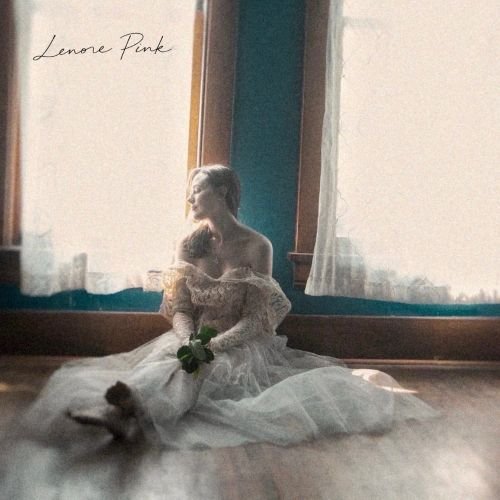
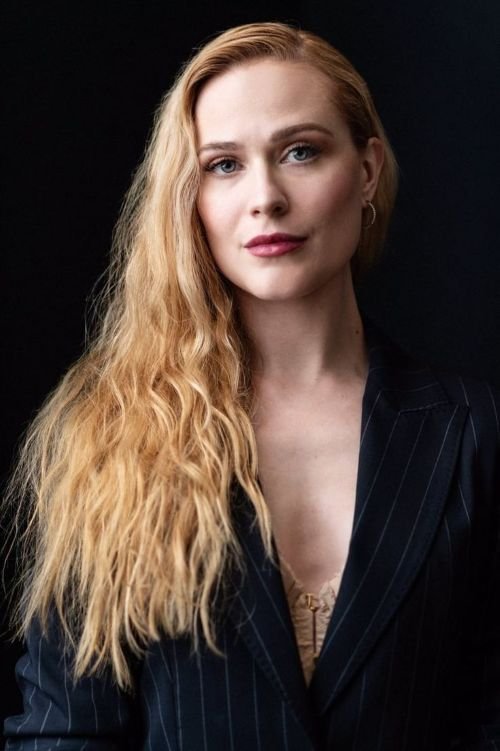
IN THIS PHOTO: Evan Rachel Wood (Lenore Pink)

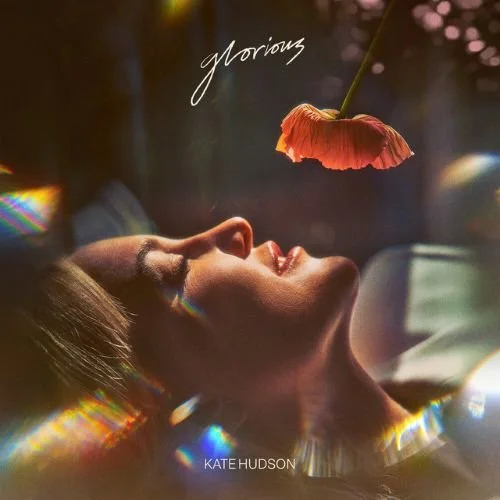
than I would normally be when it comes to these features, I did want to spotlight Lenore Pink. This is the musical pseudonym of Evan Rachel Wood. I am going to include exerts from a recent podcast appearance where she discussed her music career. Whilst there are not many interviews around her new music and that side of career, they will come. I wanted to spotlight Lenore Pink, as I am a fan of Evan Rachel Wood and she is an incredible artist. I have written many times about actors getting into music. How there is this feeling that it is about vanity of they are not genuine. I recently wrote about Kate Hudson and her debut album, Glorious, which I revisited. How there were these accusations made when she put out music. For Rachel Evan Wood, this has been a love of hers for so long. However, it is difficult going into music if you are an actor. In terms of what people might say. How it is a different world and there would have been some hesitations. As we learn from her appearance on American Songwriter’s Off the Record podcast, it took a bit of a push from a music legend to get Evan Rachel Wood over the line:

On the latest episode of American Songwriter’s Off the Record podcast, Wood told editor-in-chief Lisa Konicki how she and Perry got connected when the singer came across a video of her performing “What’s Up.”

“She got in touch with me over social media and was just like, ‘Hey, I think you’re amazing. Come into to my studio,’” Wood recalled. “And so I showed up and I thought, ‘Well, the last thing she’s going to do is just sit me down in front of a mic and tell me to start singing.’ And that’s exactly what happened.”

Wood said she was “absolutely terrified and really taken aback” by the turn of events, but “did the best I could to sort of squeak out some kind of song.”

“She really gave me some tough love. At one point I was crying in front of the mic because she was really pushing me pretty hard,” Wood said. “I think she’s known for doing that. She kind of breaks you open, and puts you back together. I got the full Linda Perry treatment.”

How Linda Perry Kickstarted Evan Rachel Wood’s Music Career

Eventually, Wood finished a song, after which Perry told her, “I hope this puts you on the path to making music, because I think you should be doing that.”

Looking back, Wood said she considers Perry her “musical fairy godmother.”

“She was the one who really pushed me to do it, and really believed in me, and gave me the confidence. She would ask me to come and sing at shows that she was putting on,” Wood said. “She just really believed in me, and she put me in front of people, in front of audiences.”

“I got my first standing ovation while I was doing a show with her, and it really took me aback,” she continued. “I didn’t know that I could have that sort of effect on a room or singing or anything like that. She got the ball rolling.”

Evan Rachel Wood Discusses Her First Foray Into Music

That all led Wood to August 2025, when she released “Nest” under her long-held pseudonym.

“I’ve always made songs by myself, or weird little sounds, or covers of other songs, and anytime I saved it onto my computer, I always just saved it under Lenore Pink,” Wood explained. “It’s been this alias I’ve had since high school.”

Wood decided to stick with the pseudonym professionally. She did so in the hopes that “people would just find it organically and not know it was me, and find out later.”

“I didn’t want there to be a bias going into listening to the songs if I could help it,” she said. “And so I thought, I”ll just call myself something else. If people know, they know, and if they don’t, great.’”

Several months later, a new song, “Gardenia,” followed. Wood said she considers the track “a love song to oneself.”

“That’s where I was when I sat down and wrote it. I realized I had finally found myself, and I finally loved myself, and I didn’t need to sing about anything painful or anything,” she said. “So much of the grief had been lifted. ‘Nest’ is very much about grief for me, and making peace with it… And ‘Gardenia’ is the flower blooming. I’m waking up, and I’m seeing myself, and I found you, and I love you.”

Evan Rachel Wood on Her New EP and Musical Future

That all led to Feb. 4, when Wood, as Lenore Pink, released her three-song debut EP.

“I’m really inspired by, and healed by, the desert, and desert music, and desert culture. You’ll find me, if I’m not working, somewhere in Zion or Moab or Santa Fe or Sedona,” Wood said. “It’s where I found a lot of healing from everything, and found myself there.”

As such, when Wood started making music, it was “really important” that she create “something that I would want to listen to while I’m driving down a desert highway.”

“It has to have a vibe, and it has to take me to a place, and I want it to match my surroundings,” she said. “So to me, it’s definitely got that Nashville inspiration in it and that Southern flair.”

Wood’s musical journey is far from over. The actress said she’s glad to have “ripped the band-aid off” and shared her music with the world. She intends to keep doing just that.

“I let it pile up and pile up for so long,” she said of her music. “Now I feel like I’m really ready to just keep adding more to that. I don’t have a label or a manager or anything. It’s really just something that I’m doing because I love to do it. It’s just happening organically, and I’m just getting it out. If you like it, cool. If you think it’s really annoying that I’m releasing music and I’m an actor, that’s fine”.

Lenore Pink will grow in terms of social media coverage and interview. It would be great to read more interviews with Evan Rachel Wood around her music. This is a side of her that I am fascinated by. She is a fabulous artist who has a long music career ahead of her. I do feel like we will hear a lot of music from Lenore Pink going forward. Whilst the debut E.P. is promising and shows the incredible talent on show, I think there will be a series of albums. Of course, Evan Rachel Wood has a busy acting career, so maybe that will take priority. However, music is very much a deep love that she will continue to cultivate. A distinct and arresting songwriter and performer, I do hope that there are live shows coming this year. I do not know if she has U.K. dates at all in the diary, though I feel there would be a fanbase ready to embrace her. I am going to wrap up soon because, as I say, there is not a lot in terms of music-related interviews. Lenora Pink should be on your radar. In terms of my favourite song so far, perhaps Come Running. In terms of its effect and beauty. Go and follow Lenore Pink on social media and check out the eponymous E.P. Even though a lot of people will focus on the fact this is Evan Rachel Wood performing, she should be seen as an artist in her own right. Take everything else away and concentrate on the music. On the strength of what has been released so far, it is going to be a very bright career. You can feel how much music means to her. I feel there will be these big live dates, a lot of great interviews and even awards in her future. When you hear Lenora Pink, you realise that it…

IS all thoroughly deserved.

______________

Follow Lenore Pink

FEATURE: Spotlight: Revisited: Mica Millar

FEATURE:


Spotlight: Revisited


 Mica Millar

__________

THIS is a tremendous artist…

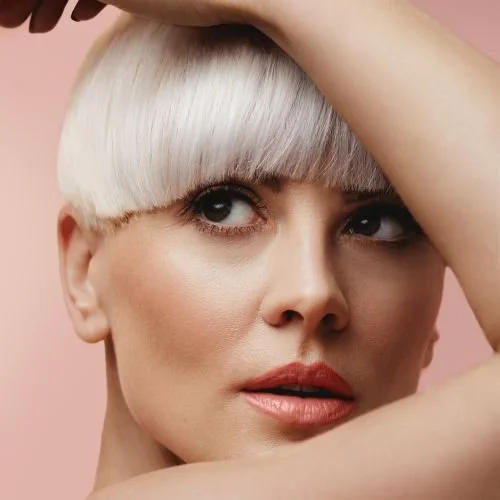
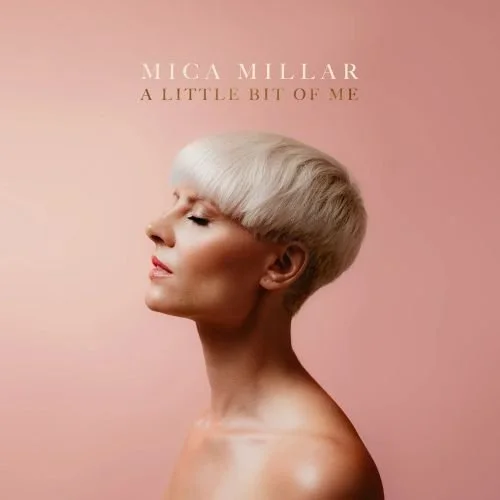
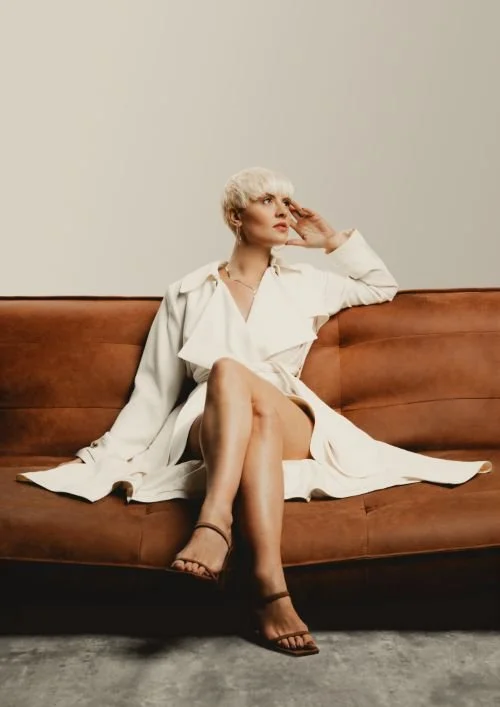
who I spotlighted back in 2022. The supreme Mica Millar. I have also interviewed her. She has this voice that is so captivating and knee-buckling. I wanted to come back to her now, as Millar releases her new album, A Little Bit of Me, on 5th June. I know there will be some interviews nearer the time. However, there are some interviews I can bring in to give you some background to Mica Millar. The Manchester artist released her extraordinary debut, Heaven Knows, in 2022. That is when she was on my radar. Putting out some incredible music since then, I am really excited to see what A Little Bit of Me offers. She has some European dates coming soon, so if you can go and catch her live then do so. Someone I am keen to see live very soon, two huge U.K. dates have been announced. Millar plays Manchester’s New Century Hall on 26th September. She plays London’s 02 Shepherd’s Bush Empire on 9th October. I am going to get to something new in a minute. However, I am heading back to some older interviews with Mica Millar. I will start out with 15 Questions and their interview. Published around the release of Heaven Knows, we get an insight into Millar’s creative process:

Where does the impulse to create something come from for you? What role do often-quoted sources of inspiration like dreams, other forms of art, personal relationships, politics etc play?

For me it’s about a need to express myself and process my emotions in a way that can’t be done through other channels - language doesn’t always have the capacity to communicate all that can be communicated when you combine it poetically with music.

For this album (Heaven Knows), I used a ‘stream of consciousness’ approach to writing quite a lot, either over an instrumental I've created or starting with finding chords on the piano that resonate with me in the moment, and feeling out what kind of emotions and words they evoke. This approach involves basically singing whatever comes out and then you interpret it later.

A lot of what you express from a process like that I think comes from the subconscious mind so it’s difficult when people ask what inspires me or what songs are about. I always go into writing without an intention and use the process to identify things I probably need to process. But of course, the subconscious mind is made up of all of the memories from our day to day lives so relationships and human experience are the things that often surface and express themselves through the lens of my political spiritual and political beliefs.

Do you have certain rituals to get you into the right mindset for creating? What role do certain foods or stimulants like coffee, lighting, scents, exercise or reading poetry play?

I don’t really have any rituals for writing apart from that I always write at night, generally in low light and always alone.

I know a lot of other songwriters love to collaborate with other writers but that has never been something that has appealed to me. I think to get into that flow-state that I love so much and where I find my best work comes from, I need to be isolated. I don’t really like it if someone else is in the house when I’m writing, I think I have an awareness that someones listening to my process and it’s incredibly personal and not something I’ve ever really been able to or comfortable sharing with anyone else.

The writing process, for me, is something that is a means to process my own emotions I suppose and what comes out at the end of that process is the ‘creation’ which is what I feel comfortable sharing. Going through the process of writing an album, I think I realise that by the time I’ve taken a song to its conclusion, the emotion that was attached to it initially has also been fully processed and I think ‘releasing it’ is a bit like letting go of the emotion.

What do you start with? How difficult is that first line of text, the first note?

It depends on the day and how I’m feeling. Sometimes things just flow out with ease and other times I could be sitting for hours not really finding anything that resonates. I think it depends a lot on mood and mindset”.

I am dropping in some tracks from Heaven Knows, though this is very much about A Little Bit of Me. Its title track has been released, and that was the first taste of an album shaping up to be one of this year’s best. Mica Millar is a truly immense talent that everyone should know. I want to come to Noctis, as their interview is particularly interesting:

Heaven Knows’ was mastered at the iconic Abbey Road Studios, how was that experience for you? How did all come about, as well as working with Geoff Pesche?

Working at Abbey Road on mastering the album with Geoff was a real career moment for me and knowing that all the work that had gone into it would culminate in a finished album at the end of the day was quite a magical feeling!

When I first arrived, Goeff said to me something along the lines of ‘you won’t get anything out of me about the content, all I’m doing here is assessing the sonics’. The first song he fell in love with and by the end of the day he was struggling to choose his favourite track and making suggestions for the running order. It was really quite special to be in a gold standard mastering studio and have someone really fall in love with the album in the way he did. It was after that that he chose my album as his favourite mastering project of 2021 in Abbey Road’s annual round up and he’s since used a couple of tracks from the record as ‘mastering room references’ for other artists’ sessions which is a huge honour.

Besides Covid, you also struggled with a traumatic back injury, what kept you going? What was going through your head when you had no idea what the future holds?

Yes,I had an accident in a trampolining class in 2020 which resulted in me crushing one of my vertebrae and severely damaging my spinal cord. I was very nearly paralysed so I’m incredibly lucky. It’s a long-term injury so it’s a lot to come to terms with but I’m definitely getting there.

Going through something so traumatic in the midst of recording the album was a real challenge but honestly, I just really didn’t want my injury to define me or impact what I had been working towards creatively. When Covid hit, it felt like one thing after another for me, I just thought, the universe is telling me to take some time out now. There were nine months where I was learning to walk so it wasn’t really feasible to work on the album, but I think that period of time did give me some perspective and when I was able to get back into my studio, I had a  much clearer vision for how I was going to approach finishing the record and I’d redefined what the end result would be.

Covid, in many ways, opened up a lot of opportunities for me to work with people I’d always wanted to work with in the US. Given everything was online at that time as we were in lockdown, recording some of the album remotely meant sessions could happen anywhere in the world. I’m glad I was able to take such a difficult situation and to make something really positive out of it.

What would you advise other people going through a similar thing?

I think everyone’s experiences are very different so it’s really challenging to answer this. Particularly with spinal cord injuries, I have learnt that every single person’s injury and their symptoms are very unique to them – this makes the whole thing quite isolating as it’s challenging to connect with anything relatable. Many people who have had the same injury as me are paralysed. On the one hand, I feel incredibly lucky and on the other hand I’ve had to learn not to devalue or invalidate my own experience and my own injury which has and continues to have a huge impact on my life.

Aside from the physical symptoms, with a trauma like this, it’s quite a natural response to have PTSD and I had a particularly difficult time with flashbacks and feeling like I was falling for example. I’ve had an amazing therapist over the last year who has guided me through re-processing what happened and coming to terms with the limitations I have physically and it’s been so beneficial. So I think my advice is to seek help, even if you feel like other’s might be worse off than you. Up to now, I haven’t really talked much about my experience but I’m also finding that it’s very good for me.

How do you think experience changed you?

Definitely. I’m a very different person now than I was before my accident. I think I connected with myself both mentally and physically in a way you don’t until you have to. I also learnt a lot about my resilience – those are positives. I’m also much less of a risk taker these days – I’d have loved to have done a skydive for example, I never have but it’s been on my bucket list for many years. Sadly, I don’t think I’d risk doing something like that now but maybe that will change in the future – you never know!

As an artist only at the beginning, what are you manifesting for yourself?

My vision for the future is in continual development but I really do believe you have to live what you want rather than just wish or hope for it. For me, manifesting is all about having a vision and then making that a reality through tangible and dedicated action every single day.

I have a vision board in my studio at home and Albert Hall and The Jazz Cafe are both pinned there from before I booked these shows, as are Abbey Road Studios, Radio 2 and Jazz FM. There are lots of other photos too… as for the rest, we’ll see!”.

PHOTO CREDIT: Jasmine Allcock-Fox

Mica Millar has had a busy start of the year already. See attended the recent GRAMMYs and she is preparing to release her second album. Last July, Millar played American Express Presents BST Hyde Park. Just Listen to This spoke with her ahead of the performance.

You will be performing at American Express Presents BST Hyde Park in London on Saturday 12th July 2025 which is the day that Stevie Wonder is headlining. How did that opportunity arise and how are you feeling about the event?

I was put forward as a potential support artist for the show a few months ago and have been waiting with baited breath since then. I honestly didn’t want to get too excited about it in case it didn’t come off. It really is a bucket list moment for me and I can’t wait.

Do you have any new music releases planned for 2025/2026?

Yes! I’ve been working on my new record for the last year and I’m looking forward to releasing new songs later this year!

What two things do you hope to have achieved once you have left the stage?

For this type of show, with such a huge audience across multiple stages, I guess you hope to see some of your existing audience there to support and also to captivate people who haven’t heard you before. I’m playing the Birdcage stage so I’m not too far away from the backstage area… hopefully Stevie will get to hear me sing! What a dream.

Do you have any favoured stage instruments, effects, pedals, microphones etc?

I use a Sennheiser MD435 microphone and it’s my favourite. I never go on stage without it. You get used to using a particular type of microphone I guess and it becomes a sort of comfort to you.

How do you look after your voice?

Lots of yoga for building core strength, vocal warm ups before every show, stream and I do love vocal zone as well as throat coat tea!

You are given the opportunity to write the score for a film adaptation of a novel that you enjoy. Which novel is it and why?

To be honest I’m a non-fiction kind of gal but, I’d absolutely love to write or have my song featured in some sort of Christmas rom-com like Bridget Jones Diary or Love Actually. I’d also love to write a James Bond theme and I’m a big fan of sci-fi movies so maybe something futuristic about AI?

Where is your hometown and could you please describe it in five words?

Manchester – gritty, grounded, community, industrial, hearty

Do you have any further live dates in the UK/Europe planned for 2025/2026?

Yes – I’m playing at Blue Festival in Poznan and Lazy Days Festival in Southend. I’ll also be in Copenhagen, France, Germany and Turkey for festivals this year.

Who are some of your musical influences? Do you have any recommendations?

Stevie Wonder of course. Aretha Franklin, Etta James, Donny Hathaway, Lauryn Hill, D’Angelo, Jill Scott.

What makes Mica Millar happy and what makes you unhappy?

I try to be pretty positive most of the time, I guess challenging situations that feel difficult to resolve or feeling misunderstood are the things that generally tend to effect me most.

I’d say I’m at my happiest when I’m with friends and family and when I’m writing. There’s a sense of elation that I get from writing which is definitely incomparable to any other feeling”.

I am going to leave it there. You can pre-order A Little Bit of Me here. For anyone who has not discovered her music yet, go and follow Mica Millar. She is one of our very best artists. I will see if I can interview her this year, as I would love to know more about her new album:

A Little Bit of Me is the second studio album from British singer, songwriter and producer Mica Millar.

Self-written and self-produced, the record brings a contemporary, female perspective to the timeless genres of soul, R&B and blues. Recorded at the iconic Miraval Studios in the south of France, surrounded by stillness and light, the album was shaped by reflection and intention. Across the record, Millar explores desire, femininity, freedom, emotional duality and the realities of a creative life lived on her own terms.

Warm, spacious, intimate and richly vocalled, A' Little Bit of Me' captures an artist creating with honesty and depth. 'A Little Bit of Me' follows Mica Millar's critically acclaimed debut album Heaven Knows (2022), yet another timeless work that affirms her as one of the most exciting voices of British Soul”.

It has been great reproaching Mica Millar. Although I have included interviews around her 2022 debut, Heaven Knows, we get an insight into her music and background. This is someone that you cannot afford to overlook. A stunning songwriter, producer and singer, there are few artists…

AS brilliant as Mica Millar.

______________

Follow Mica Millar

FEATURE: Modern-Day Queens: Teyana Taylor

FEATURE:


Modern-Day Queens

PHOTO CREDIT: Edwig Henson


Teyana Taylor

__________

I previously wrote…

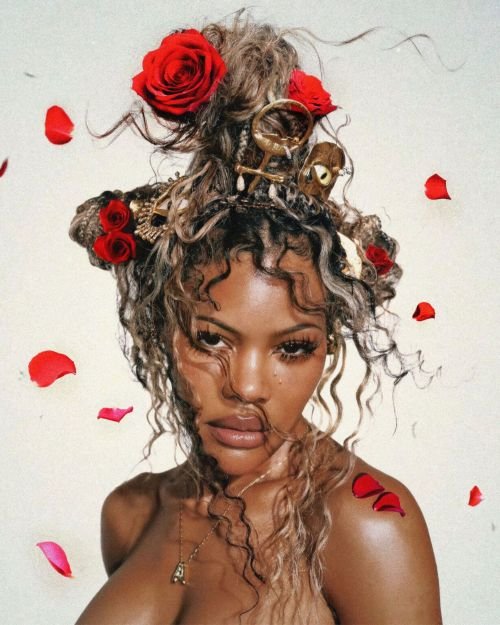
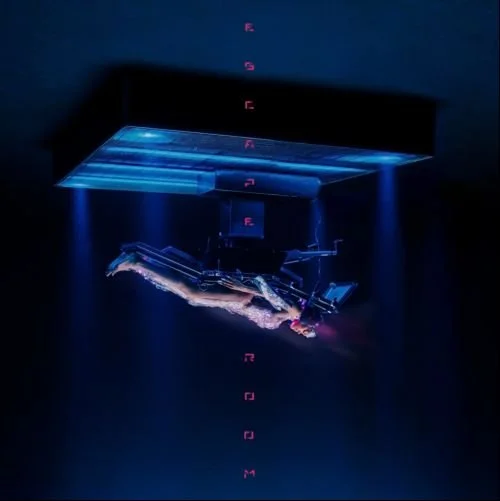
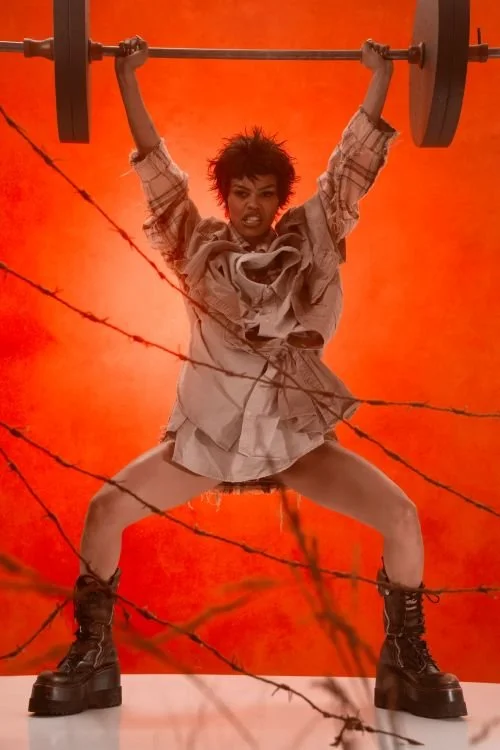
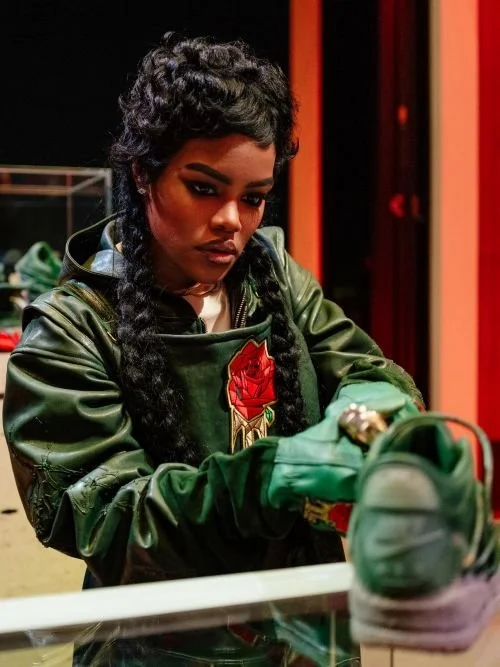
about Teyana Taylor in 2022, where I looked at her 2020 release, The Album. I am revisiting her for Modern-Day Queens as 2025’s Escape Room was one of the best albums of the year. It earned a recent GRAMMY nomination for R&B album. Although many might know her best for acting roles. For her performance in Paul Thomas Anderson's One Battle After Another (2025), Taylor won the Golden Globe Award for Best Supporting Actress and received an Academy Award nomination. I want to get to some interviews from last year around her music and the brilliant Escape Room. There are four that I want to include. I will start off with CLASH and their interview from November. Teyana Taylor could have walked away from the industry. One that, as CLASH say, “didn’t deserve her”:

On the closing track of her new album, ‘Escape Room, Teyana Taylor’s two daughters, Rue Rose Shumpert and Junie Shumpert, share tender notes of affection towards their mother. “The world loves you so much / Thank you for coming back to music and back to you,” says Taylor’s nine-year-old on a folk-inflected reprise that doubles as a symphonic devotional. “That song makes me tear up every time, it is so special to have them be a part of that song,” an in-demand Taylor tells CLASH in between an intense run of press junkets for her Oscar-baiting performance in the Paul Thomas Anderson black comedy, action thriller and political drama, One Battle After Another.

After releasing her pandemic-era collection ‘The Album’ in 2020, Taylor made the decision to step away from music, her “first love”. Citing burnout, Taylor had insulated herself to the opprobrium she’d received at the hands of a sexist and racist industry, one she’d navigated since her G.O.O.D label debut ‘VII back in 2014. Throughout her career, Taylor has been serially overlooked and underestimated, a fact she’s still reckoning with in the midst of a banner year. “Back then there was heavy gatekeeping around who got to be seen or supported and a lot of artists like me, especially young Black women, who had a clear vision for themselves, didn’t want to be put in a box. So it was hard to get your voice heard and be respected,” a weary Taylor reflects.

“At the time I felt really underappreciated, and undervalued, like I was giving my all to this industry since I was teenager and I wasn’t feeling like it was being reciprocated,” Taylor contemplates on all the years she was in survival mode. “I was feeling like the support I was being given, or lack thereof, wasn’t up to par with what I deserved. As artists we pour so much into our projects, and it feels like we are fighting to be seen or taken seriously. I just reached a point where I was tired of fighting.”

Thankfully, the slow burn arc of Taylor’s career is paying dividends now. Taylor is out of her creative fugue state, turning inwards on a downcast but defiant album that mirrors Janet Jackson’s ‘Velvet Rope’ in its revelatory lyricism, slinky grooves and interlude-heavy feel. It’s a study in classic RnB lore; a culmination of a life’s work that has gestured towards moments of greatness but never fully committed to the part until now. Take ‘K.T.S.E’, an austere collection of tracks made with Kanye West in 2018, in what would be deemed the “Wyoming Sessions”. The response was mixed: tracks like ‘Rose In Harlem’ recalled the artfully warped and looped hip-hop samples West loved experimenting with, with Taylor’s prideful homage to her Harlem roots grounding the listening experience in memoir and confession. And yet some critics decried the haphazard, half-baked nature of a record that sidelined Taylor’s uncut spirit and malleable voice.

Still, in the same way Taylor channelled Brandy’s melismatic range or Jazmine Sullivan’s interior sermonizing in her work, this generation’s artists like Coco Jones, kwn and Chloe x Halle, have her to thank for a modern iteration of a genre that can be soft, warm, abrasive, and riddled with contradictions. “We’re reflecting the complexity of real life,” she says. “Now, artists have more power to do things on their own terms outside of traditional structures. We can speak directly to our fans and deliver content to them without barriers.”

The cinematic scope of ‘Escape Room’ – part neo-noir romance, part dystopian thriller – is realised not only by a short film masterminded by Taylor’s auteur-like vision but by spoken-word testimonies from the likes of Taraji P. Henson, Sarah Paulson, Kerry Washington, Issa Rae, Regina King, and Niecy Nash – voices that mirror Taylor’s inner dialogue. “The narrations were a unique way to tie the songs together and it connected to each section of the album,” she explains. “I wanted them to help guide the listening and viewing experience, so the audience had the emotional journey from one song to the next, making sure it was truly cohesive. I intentionally picked the person I thought brought the emotion I needed for each moment. My girls really showed out!”

Teyana Taylor has lived many lives in this industry, shed many skins. She’s at juncture in her career where the industry is mobilising around her and finally catching up to her divinely-ordained talents. The Harlem star is in a high-yield place; she’s set to make her directorial film debut and is currently starring in Ryan Murphy’s soapy legal drama All’s Fair, alongside Glenn Close, Naomi Watts and Kim Kardashian. Earlier this month, Taylor was venerated as Ebony’s Entertainer of the Year. The award saluted the multi-hyphenate artist for “redefining the meaning of entertainer for a new generation.” It’s validation for an artist who has played the long game, and refused to be hemmed in by gatekeepers who too often presented her as fallible and one-dimensional.

We finish our conversation by circling back to the one constant in Taylor’s life: her children. She may have been hardened by the stop-start nature of her own trajectory but in her role as their provider, protector and nurturer, Taylor is encouraging her daughters’ dreams and vocations, be it in media or beyond.

“Experiencing life through their eyes… that’s the best part of being a mother,” Teyana concludes. “As their mom, I love watching them explore their interests and I think it’s important to support them through all the trial and errors of what they want to do in life. It’s a big part of the legacy I want to build for my girls”.

ELLE spent some time with Teyana Taylor in November. A multi-faceted talent who is an artist doing things on her own terms and keen to connect with her fans, I am curious what this year holds in terms of her music and gigs. She will be attending the Academy Awards and is focusing on her acting career. There will be a lot of people who want to see her on the stage:

On entering a new era

I have a lot of gratitude for how I am able to see all of my prayers answered, all of the tears wiped. It was tough because I said I retired, and I didn’t know what was next. I was afraid, but I wasn’t afraid to take the leap. I’ve always had a strong relationship with God and felt him saying, “Okay, do you trust me? I know you’ve been trusting, but do you really, really trust me? You ready to let me take that teddy bear from you so I can give you something bigger and better?” I told y’all that one day I’m going to be a big director, and [the fact that] that is coming to fruition shows his power.

On releasing Escape Room, following her five-year hiatus from music

I recorded this album on my terms. This is the most vulnerable work I’ve ever done; my label gave me a lot of support and freedom to do that. Sometimes, you’ve got to just shake the table. Some people believed, and some people didn’t believe in the vision I had, and that that made me go harder. Would I have been the same Inez if I didn’t go through that? Would I have been the same Perfidia? Would I be the creative artist that I am today if I hadn’t gone through that break?

On what Perfidia taught her

Perfidia is unapologetically herself, and those are the parts of her that inspire me because I feel, as a Black woman, when we are at that level of confidence, we’re told that we’re too loud. When we say nothing at all, we’re told that we need to stand up. We stay, we’re weak. We go, we’re the problem. I can appreciate Perfidia standing on what she believes in.

On being a Black woman in Hollywood

Well, the hardest part is being a woman in Hollywood. The even harder part is being a Black woman in Hollywood, because I do feel like this is a man’s world. And we have to show who we are as women to be respected in that space.

I do see change happening. I do see more light being shed on women, and I think it’s because we’re busting through the doors, unapologetically us. We’re not giving anybody a choice: you will see us and you will hear us. And if you don’t, we’re going to make you. Seeing women step into our glory and standing 10 toes down in some red bottoms has been amazing. We’re really stomping through, and that’s what I love about being a woman in Hollywood. We’re going to make you hear us”.

Actually, I will end with a review of Escape Room and get to one more interview. “Actress, dancer, director, choreographer, model, mother, superstar… Teyana Taylor is the gold standard”. This is what i-D said at the top of their interview with her. Escape Room was definitely one of the best albums of last year. I have been a fan of her music for a long time. I am excited to see where she heads next. There will be huge acting roles for sure:

Escape Room moves through the full spectrum of Taylor’s heart, from shadowy lows to vibrant highs. There are achy ballads and heated grooves for slow dancing and crying in the club. Each track is ushered in by interludes narrated by iconic women––including Regina King, Kerry Washington, and Sarah Paulson––who, Taylor says, “have been through it all.” She brings the depths of postnatal depression, divorce, and everything she’s escaped from to reach this point.

Without naming names, she lays out the experience of her divorce in a confessional arc that starts with heartbreak, stumbles into a dizzying rebound era, and ends with her resting in the bloom of something new. “I call it my ombre album,” she smiles. “It’s for lover girls. Being able to take in new love, you start to feel beautiful and seen again. Allowing somebody to kiss your wounds.” It’s been a long journey. In 2018, Taylor thought she was done with music. She had just walked away from everything she’d fought to build since the early 2000s.

The Harlem-raised artist first signed to Pharrell Williams’ label Star Trek Enterprises in 2007 at just 15 years old. In 2009, her debut mixtape, From a Planet Called Harlem, was released, establishing her style as a blend of modern and old-school R&B with elements of hip-hop, creating a unique, soulful sound that fast drew comparisons to the likes of Mary J. Blige. She was described as “bold” and “brash,” spinning the heads of everyone in her orbit with her singular style––from Ye (formerly Kanye West), who would become her collaborator, to Telfar Clemens, walking in his first-ever fashion show.

PHOTO CREDIT: Jason Nocito

When she abandoned it all in 2018, she was signed with G.O.O.D. Music, an imprint of Def Jam established by Ye, which she had been with since 2012. She had just released her sophomore studio album, K.T.S.E., hotly anticipated after 2014’s VII. It had, at the time, all the hype-inducing ingredients for success: produced by Ye, as a part of the “Wyoming Sessions,” following the release of Pusha T’s Daytona, Ye’s Ye, and Kids See Ghosts with Kid Cudi, and Nas’ Nasir. It featured guest appearances from Ye, Ty Dolla Sign, and Mykki Blanco, and additional production credits from Mike Dean, one of the 21st century’s most successful producers whose other credits include Beyoncé, Travis Scott, Drake, and Lana Del Rey.

Rather than the album she’d envisioned dropping, a different, shorter cut hit platforms at only 23 minutes long due to sample clearance issues and last-minute production decisions. “People were like, ‘She didn’t like her album.’ How can I not like an album that I wrote? It was more about the elements that were snatched off of it,” she remembers. The blame could be put on her label—she says she was then unaware that there would be no visuals to support the album and that samples, including Lauryn Hill’s “Lost Ones,” weren’t cleared by the label. “That’s why I felt like I was caged. My whole truth wasn’t on it. It wasn’t getting the push that it deserved,” she explains.

Her follow-up album, definitively titled The Album, was a reaction that swung wildly the other way, running at 23 tracks. She told Entertainment Weekly at the time that she was taking “full accountability, 110 percent on everything I do,” and was fixing “what didn’t work the first time, getting a better rollout, more records, longer records… just giving everybody more.” It was a critical success, featuring guest appearances from major, Hall of Fame artists—Erykah Badu, Lauryn Hill, Future, Missy Elliott, and more. Instead of sitting with her success following the release, Taylor announced her exit from music on Instagram Live. She asked Def Jam to end her contract with the plea: “I can’t let this kill me.” 

“What we doing, God?” she remembers asking, when she found herself pleading to be released from her record label contract. What came back was clarity and spiritual confirmation. “I focused on what was dead smack in front of me. I wasn’t going to sit there and be upset about what’s in the past or what hurt me.” Despite her split from Ye’s imprint, she’s still with Def Jam. What’s different this time around? “Me blowing up on their ass,” Taylor says, straight like that. “Now it’s on my terms. I’m not your artist, I’m your partner.” Besides, Taylor has other options”.

I am ending with a positive review for the brilliant Escape Room. Let’s go back to CLASH and their take on Escape Room. Perhaps Teyana Taylor’s best album to date, if you do not know her music then make sure that you check her out. Many might primarily know her for her acting. However, as an artist, she is someone that you will want to follow:

Her first new music in five years, Teyana Taylor taps into RnB’s golden age on her labyrinthine audio-visual experience ‘Escape Room’. Blurring the lines between music, cinema, and narration from the likes of Taraji P. Henson, Sarah Paulson, Kerry Washington, Issa Rae, Regina King, Niecy Nash and more, ‘Escape Room’ charts the aftermath of Taylor’s divorce and her awakening after a period of creative ennui. The Harlem star turns inwards on a downcast album that mirrors Janet Jackson’s ‘Velvet Rope’ in its interior sermonizing, slinky grooves and interlude-heavy, episodic feel.

Of an album produced under the banner of her all-female production company The Aunties, Teyana shared: “Escape Room isn’t just a film or an album, it’s a world I built to live in, bleed in, and heal in. I poured my heart into every layer, from the story to the sound, to capture that journey we all take through the shadows of heartbreak, whether that’s love lost, friendships broken, dreams deferred and guide you toward the lightness of healing.“

Throughout, Taylor explores the full gamut of post-heartbreak disorientation; she’s despondent, she’s hollow, she’s scared to fall in love until she isn’t. Perhaps no track captures those festering contradictions than ‘Back To Life’, which begins as a tearstained lament before transitioning into an elastic ballroom anthem – which Taylor is no stranger to. Even as the spectre of past trauma lingers (Taylor’s documentation of this is less confessional, more considered and art-directed), the discovery of new skin and new love comes through on the bedroom suite – ‘Pum Pum Jump’ with TYLA and Jill Scott, and the Kaytranada-produced ‘Open Invite’, which froths with sass and organic sensuality.

‘Escape Room’ is an adult album about connections forged and lost, of love as a weapon and the root of salvation. Its cinematic scope, realised through spoken-word testimonies, adds colour to Taylor’s real-time processing of emotions after a series of professional and personal setbacks. Album closer ‘Always’, which features tender notes from daughters Rue Rose Shumpert & Junie Shumpert, completes Taylor’s return to self on a folky reprise which pulses on the strength of Taylor’s glazed lyrics and the smoky tenor of her pliable voice.

‘Escape Room’ reverberates with cinematic flair and curatorial focus, but its true strength lies in Taylor’s understanding of the RnB rhapsody through time; the love song that is most effective when it’s spare and submerged. For this reason, ‘Escape Room’ is as necessary as anything Teyana Taylor has ever recorded”.

I do hope that there will be some gigs later in the year. I know many people here in the U.K. will want to see her. Teyana Taylor is a major talent who releases phenomenal albums and provides these incredible acting performances. If acting is her main focus, you sense music is her biggest love. You can feel and hear so much of her in Escape Room. One of the greatest modern music talents, after a GRAMMY nomination and acclaim for her album, this is someone who soon could become the biggest artist…

IN the world.

___________

Follow Teyana Taylor

FEATURE: Spotlight: Clara La San

FEATURE:


Spotlight


Clara La San

__________

I have been aware…

PHOTO CREDIT: Lane Stewart

of the brilliance of Clara La San for a little while now. However, I feel this year is going to be her year. Her terrific album, Made Mistakes, was released in 2024. Her recent single, Old Me, came out in November. There is a lot of excitement around La San. I do think that solo artists will dominate this year, in spite of the fact there are some incredible groups around. Clara La San is someone you need to put on your radar. If you can go and see Clara La San perform, then go and see her. She plays London’s Electric Brixton on 2nd April, so I may well see if I can go along and review the show. Before coming to some interviews from later last year, I want to first go back to 2024 and FADER’s interview. They note how this R&B artist – who they term “reclusive” -, talked about “perfectionism, viral stardom, and her stunning new album Made Mistakes”. It was Clara La San’s first interview in years. However, I think that it is judgemental to call her reclusive:

Resolution, either gaining it or acknowledging that it’s not coming, is a constant on Made Mistakes. “I've made mistakes in my life,” La San says. “People seem to think it’s bad to make a mistake. But all of these songs come from real life experiences. It’s me writing from a vulnerable place and learning how to grow through accepting those things.”

A common theme in music over the past decade, from stadium-sized pop stars to underground artists grinding out a living, has been a need to be ever-present. Always posting, constantly sharing. Going quiet is one thing, but removing the bulk of your music from the internet is a different level of not playing the game. So why did La San take Good Mourning offline? “I loved working with Jam City but I have a really specific way of how I want my songs to sound,” she says. “There was something that just didn't really feel ready [about it]. I can be a bit of a people pleaser but when it comes to music, if I don't like it, everyone's going to know about it.” She hopes to re-record the shelved songs in the future, though there’s no firm timeline.

“I write songs how someone else would write in a diary or speak to a therapist,” she says when asked about her slow creative process. “It is a way of answering your own questions and I don’t feel nervous by not sharing that with the world.” That’s not to say she is indifferent to returning. “There is this nice feeling knowing that an album is finally coming out,” she admits. “It's like, ‘Oh, I can rest a little bit now that people know I still exist.’”

La San admits she can be a harsh critic of her own music. Ultimately, however, she reasons that when a song makes her feel a certain way, there is a good chance it will do the same for others. That theory was backed up last year when “In This Darkness,” first released in 2014, went viral. It was one of her earliest songs and had existed as a SoundCloud loosie, sitting idly on her account for years.

Like much of her material, “In This Darkness” merges sparse but warm textures with a melancholy air. “I get lonely when you're not here,” she sings. “And this darkness appears, leaving me stranded.” It has been used in hundreds of thousands of TikToks depicting a wide spectrum of emotion: gaining clarity years down the line or simply mourning the break-up of Travis Scott and Kylie Jenner. The song has been streamed over 150 million times on Spotify. “It’s just crazy,” says La San, who decided to put her audiophile tendencies aside and return the track to streaming. “I see a lot of people sharing the song and how it relates to their life. I guess a lot of people out there feel sad.”

“In This Darkness” returned La San to wider consciousness, but it would be unfair to say she vanished completely after Good Mourning. She had a writing credit on the most recent Yves Tumor album and appears on Bryson Tiller’s “Random Access Memory.” She also contributed vocals to a couple of songs by Belfast rave duo Bicep. La San identifies a shared love of “escapism and euphoria” in both her and Bicep’s music, though laughs when asked if she spends much time in clubs. “I never go to raves,” she says, “I just listen to music in my headphones.”

The discussion returns to keeping things secretive and the pros and cons of working in isolation. La San is quick to acknowledge that her isolated workflow has shielded her from some of the sexism that affects so many female producers. “I just feel like anything is possible. I can create anything,” she says of her zero deadlines, pressure-free schedule. It all begs the question as to whether this album will herald another disappearing act. “I might vanish again,” she says with a grin, “but I don't think it will be for seven years. I’m in a groove now”.

I am going to move to a couple of interviews from last year. I do feel like it is wrong to refer to Clara La San as a ‘new’ artist or someone breaking through. However, she may not be known to everyone, so I think that it is important to highlight her in case you are not conscious of what she has put out so far. COEVAL spent some time with Clara Le San a few years ago:

Writing, producing, and performing mostly on her own, she approaches music as a quiet exploration, translating emotion into melody with care and precision. Her songs are intimate yet relatable each lyric a small story, a fleeting memory, or a late night thought made audible. Clara's honesty, calm, and self-awareness invite listeners into her world without spectacle, creating a space where vulnerability is strength and reflection is welcomed. In this interview for Coeval, Clara talks about love and loss, creativity and solitude, and the moments that push her to write. Her words offer insight into the artist behind the songs, revealing not just music but a perspective on life lived openly and thoughtfully.

Your music has always been about emotion, but Made Mistakes feels even more open. How do you decide what parts of your personal life you want to share through your songs?

For the most part I try to write music that's relatable. For me it's a way to process or heal from things that have happened to me. Life passes us by fast and I don't want to grow old with regret by not making my mark and sharing personal songs that are relatable to others.

Many of your lyrics talk about love not fantasy, but real love: complicated, painful, always honest. What does "real love" mean to you today?

Real love keeps me sane in world that teels so broken. Love is the one thing in this world that feels pure and worthwhile. I can't and don't want to imagine life without it.

You often produce and write everything yourself. Does that solitude make your process more personal, or do you sometimes wish for someone to share it with?

When it's just me producing and writing, I have the ability to unlock thoughts in my brain, thoughts that maybe I don't feel comfortable sharing with a collaborator straight away. I also love taking my time writing lyrics, I don't really like writing lyrics under pressure. They have to mean something to me, otherwise what's the point?

You first released Good Mourning in 2017 and then your debut album Made Mistakes in 2024. How would you describe the change in your sound and in yourself between those two moments?

I don't feel like there's a change in my sound when it comes to the production, but I do feel like the new mix of Good Mourning is definitely more dialled in. With the re-release of Good Mourning being my second mixing experience I knew exactly how I wanted it to sound and how to articulate that.

Do you ever feel pressure to protect your privacy or to hide behind the sound?

I've never been afraid of being vulnerable in my music or hiding because of that, I just don't like the superficiality of putting our faces at the forefront. Society has made us believe our appearance is our most important asset, but I don't care about that. For me it's what's inside that truly matters.

For many people, sad songs are therapy. Did you ever write a song that healed you or that changed the way you saw yourself?

I guess most of them. I either write about my own experience, or what could happen to me in the future.

The album is called Made Mistakes- do you see mistakes as part of becoming who you are, or as something you still wish you could fix?

It's not healthy to live in the past because we can't undo what's been done.

What do you do when you don't write? Tell me one of your obsessions.

I love to take walks. These are the moments when I disconnect myself from my phone and people in general. I try to do it as often as possible.

When will your new album be released? Give me a spoiler

I released a new single “Old Me" this month which I love, and I feel really inspired to keep writing and releasing at the moment”.

The penultimate interview I want to bring in is from earlier in 2025. The Creative Independent spoke with Clara La San about her creative process and how she really does not follow industry rules when it comes to release. Swerving games and working in her own way. Creating music that is timeless. La San also talked about “working from a clean slate, not putting pressure on yourself, and making art simply to understand how you’re feeling”:

Let’s say it’s a typical month of the year and you’re in writing, producing, and songwriting mode, but you’ve also got things to promote, live shows to prepare for, interviews to do. How do you balance all of that and retain your passion for songwriting and production?

For the most part, during the campaign runs, I wasn’t really creating that much music, just because I find it so hard to focus my mind on creating new material when I need to do all this other stuff. So I don’t put pressure on myself. I’m just like, “I know that I’m going to want to write when the time is right and when I have the mental space to do that,” unless I’m in a session or something. If I’m working with somebody else, it can motivate me, and that can really help. But for the most part, I just don’t put pressure on myself and just focus on what I need to.

Have you always been somebody who doesn’t put pressure on yourself, or has that been something you’ve learned over time?

I think so, unless it’s a deadline. Then, I’ll put pressure on myself. But for the most part, the best music I write is just when I’m in a certain mood, or when I’m experiencing a certain emotion and then I have something to say. I don’t force myself. I don’t say to myself, “I need to write today.” If I feel inspired to write, I’ll write, and if I have a deadline, I’ll put pressure on myself in that respect. But when it comes to creating, I’ll just let myself come around when I feel inspired, or I’ll find inspiration from somewhere to help.

A lot of press about you evokes this image of you as a recluse, but working with other people is so integral to what you do—like you said, you work with Jam City, you work with co-producers. If it’s true that you’re more drawn to solitude overall, how do you balance that aspect of yourself with your creative need for collaboration?

I love collaborating. I’m just quite particular with it, and I really just want it to be a back-and-forth process where whoever is involved has their say. It’s important for me to find a collaborator [with whom there’s] mutual respect for each other. And so I’m more particular with who I work with on projects. It’s important to find someone who wants to listen to what I have to say and lets me have my moment, whether it’s in the production or songwriting and everything.

For some creative people, they’ll go through a set of potential collaborators and not feel certain that any of them fit. Can you talk more about how you find great collaborators?

The first thing I like to do when I’m working with somebody is to share. I gauge a lot off the initial reaction and how a potential collaborator has reacted, whether they really like it or they don’t, and then you just know you are on the same page.

When I worked with [executive producer] Yves Rothman on Made Mistakes, that was an amazing experience because I had these songs already, but instead of him changing anything, he kind of just elevated it and didn’t go off on a different tangent. He got them to a place where I was really struggling to get to myself, but it was exactly where I wanted to take them, and that was an amazing collaborative experience and so enjoyable to work in that setting together.

That was everything I wanted to ask you today, but if there’s anything else you want to say about creativity in any way, shape, or form, please go for it.

When it comes to songwriting, it’s a journey of self-exploration. The best music I make is when there’s a mood that’s consuming my thoughts and interrupting my day-to-day, when I feel like, “Okay, I have to actually sit down and figure this out.” That’s how certain songs have come about that I love the most. Just basically having that inner pressure of, “I have to write in order to understand these emotions or the way that I’m feeling.” I can’t not, basically. That’s probably the time I enjoy writing the most, as much as I don’t because it’s frustrating having that feeling, but then, you’re creating really great art out of it”.

I am going to end with an interview from December from 10 Magazine. They asked her ten great questions (though I am not including all of them). Ending last year with great new music, having toured extensively, Clara La San will be looking at this year perhaps as one to reset and work towards a new album. There is a huge amount of demand for her to perform live, so that will also keep her pretty busy:

We love your recently released music, especially Old Me. How did this song begin? What was the catalyst?

I wrote Old Me in Los Angeles alongside Justin Raisin and Lewis Pesacov. The session started by Justin playing me some loops and I found that one of them in particular really resonated with me. Instinctively I’m drawn to melodies that feel melancholic, so when I heard his piano loop I knew instantly we had to build on it.

What did they bring to your sonic world?

Working with them allowed me to approach writing though a different scope and I’m so grateful for their input. The energy of Justin and Lewis in the sessions made me want to push something different that still felt inherently me, which I find really inspiring.

Where have you been crafting the new music? Has there been an environment that has been specifically conducive?

At the moment I’ve been writing from my home studio in the UK. I find I work well when I isolate myself and I like to explore what comes from that. I go through phases though, there are times when I like to be around people but for now I just want to be alone.

How does England and growing up there infuse into your sound?

The weather definitely plays a part. Maybe the bleakness sometimes comes through in my thoughts while writing music. I’m not saying it would change if my environment was different, it’s just easier for me to get into my preferred mindset here.

With this new music coming out, how do you think you have grown and evolved as an artist since your 2024 debut album? Are you creating differently now?

I feel like I’m continually evolving my sound. I guess it’s all a process though because I’m constantly learning new things, but I can’t take all the credit for that. I have a lot of people around me who I am grateful for, who inspire me to no end.

Are there either artists that have been exciting and inspiring you recently? Who is on your radar?

I’ve been kind of switched off to new music lately due to touring and various other things. I go days without listening to music but if I do hear something I like I’ll binge on it. I’ll play it over and over again until I get bored. The last time I remember doing that was on my flight to LA. The song was On My Back by Cardi B. That beat is hard.

What’s something important to you aside from music? Something your passionate about that you want to use your growing platform for?

I love building the world from a visual perspective so that’s something I’ll continually do.

What’s next?

Continue being me”.

I hope that as many people as possible check out Clara La San. She is a wonderful artist that I have known about a bit, but there are some who perhapos are not aware. Do take some time to check out her stuff and, as I said, see her live if you are able to. Whilst perhaps not a ‘rising’ artist, she is someone worth spotlighting as one of the most important and interesting artists of this year. Someone that I know…

WILL be making music for years to come.

___________

Follow Clara La San

FEATURE: You’re All Grown Up Now: Kate Bush in Her Thirties: The Changes and Challenges

FEATURE:


You’re All Grown Up Now

IN THIS PHOTO: Kate Bush at her home in Eltham, London on 13th September, 1989/PHOTO CREDIT: Kevin Cummins/Getty Images


Kate Bush in Her Thirties: The Changes and Challenges

__________

I am borrowing heavily…

from Graeme Thomson’s excellent biography, Under the Ivy: The Life and Music of Kate Bush. It is a book that I use a lot when writing features about Kate Bush. One of the most interesting chapters concerns Kate Bush turning thirty. Around the release of The Sensual World in 1989 and the period before that. Her final album in the 1980s, I guess turning thirty was not a huge deal for her. However, in terms of emotional maturity, life priorities and relationships, it was an important birthday to celebrate. One that must have caused her to pause and reflect. I have written about this particular fact before. On 30th July, 1988, Bush’s thirtieth birthday, she was typically donating her time to other people. Rather than spend the day making it all about her – though I hope she did celebrate with family in the evening -, she spent the day with other celebrities raising funds for the Terrence Higgins Trust. She was participating in the Shop Assistance charity event in London. She worked as a celebrity shop assistant at the Blazers menswear store in Covent Garden. This initiative involved celebrities selling merchandise to support HIV/AIDS awareness and care. This was a disease that would impact her life and claim the life of those close to her. It is a whole other chapter regarding Bush’s charity work and how she dedicates so much time and herself to these incredible causes. At the end of the 1980s, there was a lot of conversations around AIDS and HIV. Artists like Madonna bringing it into their work. Before 1988, there was a lot of rumours about her weight. Bush had gained a little weight and there were a couple of live appearances in 1987 – The Secret Policeman’s Third Ball, and performing Don’t Give Up with Peter Gabriel at Earl’s Court -, but she addressed the work-diet-exercise balance and there was this new fitness regime.

There was no dramatic changes as Bush turned thirty. She was spotted at the odd show and was staying at home. She was not someone who loved jaunting abroad on holiday. Preferring to stay put, she did the odd bit here and there. However, it was clear that turning thirty did influence and infuse what we hear on The Sensual World. There was a major change in terms of collaborations. This was the first time she brought other female singers into the studio. The Trio Bulgarka appeared on The Sensual World and The Red Shoes (1993). Bush discovered them towards the end of the Hounds of Love sessions. Yanka Rupkina, Stoyanka Boneva, and Eva Georgieva added new dynamics and tones to her work. Before July 1988, Bush was busy still with promotion. Promoting Hounds of Love through 1986, 1987 was a year when she could start work on a new album. Writing This Woman’s Work in spring 1987 for John Hughes’s She’s Having a Baby, it was a kick. The Bulgarian sessions definitely gave new impetus and energy to an album that was floundering and faltering at times. It was the task of having to follow a masterpiece like Hounds of Love that was this massive success. Not wanting the next album to be similar, it was a massive task trying to release something that would prove popular but also perhaps not deviate too far from what people expected. One of the most notable aspects of Hounds of Love and The Sensual World is when they were released. The former is forward-thinking and innovative, yet it easily slotted into 1985 and was not that alien. It is hard to think of much else like The Sensual World in 1989. The scene had shifted drastically and it was harder for Bush to be relatable and innovative at the same time. I think that milestone birthday refocused her priorities. Perhaps wanting an album more womanly and feminine, I also feel that she was looking to head more away from conventional Pop music. Not that you could ever see her a traditional Pop artist. However, Hounds of Love had some big and bright songs. Some commercial successes alongside more conceptual tracks. The Sensual World she saw as ten stories tied together. You can hear more influences of Folk and voices like the Trio Bulgarka. Less intense and dramatic as Hounds of Love, The Sensual World has this warmth and sense of loss to it.

It is fascinating to think about Kate Bush turning thirty in 1988. Already working on a new album, I do feel like there were changes and new considerations. Bush was personal on Hounds of Love and previous albums. However, I feel like there is this mix of desire, loss and growth. Hounds of Love’s title looked at Bush being chased by metaphorical hounds of love. Afraid to commit, there was not much else in the way of her talking of love and close relationships I feel. There is more on The Sensual World. Perhaps one of the first albums where Bush is angrier, defeated and mournful. Her parents still close to her heart. Her dad, Robert, can be heard on The Fog. There is still room for oddness and fantasy. Songs like Deeper Understanding and Heads We’re Dancing step away from love and relationships. Desire and sensuality. Hounds of Love had twelve tracks, though The Sensual World keeps it to ten. The same as The Dreaming (1982). It is interesting what Graeme Thomson notes about the technology Bush used for The Sensual World. Bush and Del Palmer upgraded the farm studio and added an SSL console. There was a sense of her being overwhelmed by all the technology around her. Working with the Fairlight III and DX7 synth to form demo-masters, Bush recorded quickly and then took a break for several months or so. I think The Sensual World is one of her best albums, though it is clear it did not come together as easily as others. At a stage in her career and life when she had worked tirelessly for over a decade, she wanted to end the 1980s with an album that was unlike anything she did previously. The daunting thing of the blank page. Less conceptual than Hounds of Love, The Sensual World is a songwriter’s album. Perhaps taking us back to her work from 1978. This was Bush stripping layers to an extent. In 1988/1989, there were other artists being compared to Kate Bush. It was harder for her to stand out and push her music forward.

I think the twenties for most artists is about putting out work and keeping busy. Priorities more about work and promotion. For women especially, this sense of ageism in the industry means that they may be discarded or sidelined when they hit thirty. You can see it in modern Pop. The ferocity in which women in their twenties (and even thirties) are pushing themselves and the amount of touring they do. Bush also didn’t need to prove herself. Having released commercially successful and stunning albums, that pressure to top what went before was perhaps not on her mind. She did still value music and wanted it to be amazing, though she was perhaps not as intense as she once was. In terms of hours logged in the studio and how little free time she had. Also, between the release of The Sensual World and The Red Shoes, she would be affected by loss and tragedy. Alan Murphy, her guitarist of ten years, died in 1989. One of her longstanding dancers, Gary Hurst, died in 1990 (both Murphy and Hurst contracted AIDS) a Her mother, Hannah, died in 1992. Like volunteering to work for Blazers in Covent Garden on her thirtieth birthday and raise money for charity, she was very much not doing what a lot of her peers were. Personal loss definitely did reshape how she saw music and its importance. Maybe not strictly related to Bush turning thirty. She did change her compositional and technological relationship. Wanting to go more back to basics, especially for The Red Shoes, maybe a feeling her work was too complex and hard to follow. The Dreaming experimental and layered. Hounds of Love a big and complex album too. The Sensual World was slightly more rooted or sparse in some ways. You can feel something different come through. The Red Shoes would be Bush working at the piano again and writing in a different way. Trying to make her music easier to follow and appreciate. That personal and spiritual growth. Different priorities and objectives regarding her music. Not making it cinematic or grand. Something more direct and accessible.

I do like how there was this reordering of her priorities. I keep using that word but, as Bush entered her thirties, she was a different person. I think she also wanted to change how the press saw her as well. Her promotional photos becomes less sexualised. Less provocative (though they were sensual and evocative). She did not want to be seen as a sex symbol or have people talk about her body. I want to end by quoting from a Pulse interview from December 1989. Will Johnson asking the questions.

She's genuinely bemused that one of her appeals, initially, at least, was a certain physical allure. Anyone who's seen clips of Bush's only live shows ever played in the spring of '79 can't help but be stimulated by her inimitable stage performance -- a visual spectacular of music, dance, mime and sorcery. The whole experience of releasing records quickly and keeping pace with the related promotion work eventually wore her down. The '80s would see Bush slow her pace.

"The problem with my live work," she admits, "was that I had to expose myself in public so much, whereas now I can concentrate on just doing videos for my work. What I really like about videos is that I'm working with film. It gives me a chance to get in there and learn about making films, and it's tremendously useful for me, because one day I might like to make films myself."

Bush's videos, which she codirects, are easily as vibrant as her vinyl work. In the video for "The Sensual World," Bush stars as a black-and-white Molly Bloom touching that oh-so-black-and-white sensual world. [What? The video is in full color!] Her own favorite is "Cloudbursting" [sic], in which she stars with Donald Sutherland.

In '80, her third album, Never Forever, included tracks like "Babooshka" and "Breathing." The latter concerned itself with the nuclear age and how man insists on screwing up the environment. In the video Bush appeared inside a large bubble, predicting the era of the ozone friendly consensus, lamenting: "Outside gets inside, through the skin," followed by the slow chant: "In, Out, In, Out, In, Out."

"I think it's really good, the fact that it's so fashionable now," says Bush. "Everyone's pleased 'cause everyone's wanted to do something about it, come out of the closet as it were. Unfortunately it's like most things -- it's not until things start going horribly wrong that you try to do something about it. I think the media's got a lot to do with it, people like David Attenborough (renowned filmer of wildlife, best-known for his strange antics with gorillas, and brother of well-known film producer Sir Richard) 'cause they present things in a human way. There's no lecturing, there's no saying, 'Look, you're very, very naughty treating the earth like this,' but saying, 'Look at all these beautiful things.' The photography is so superior, it just moves people. I mean, years ago, people would not stay in to watch a wildlife program, would they?"

Since 1982's The Dreaming LP ("the album was so difficult to make, just about everything that could go wrong did during that period"), Bush has been more determined to do things her way -- especially in image terms, to get away from her marketing image of "The Tease." She's become progressively quieter; you won't find her sipping Tequila and Cherryade at Stringfellows, or whooping it up in a rubber mini at The Hippodrome, or lobbing french fries around Langan's Brasserie. It's just not her idea of fun.

"I do like the quiet life," she replies almost bashfully. "I do like having privacy; it's incredibly important to me, because I do end up feeling quite probed by the public side of what I have to do. I'm just quite a private person, really. You just end up feeling quite exposed; it's this vulnerability. After I've done the salesman bit, I like to be quiet and retreat, because that's where I write from. I'm a sort of quiet little person."

Which my explain why it's taken so long for this idiosyncratic yet compelling artist to break in the States. "Yes," she says perkily, "I've really had no success in America at all, apart from the Hounds of Love LP. That did quite well, and it was really exciting to think that there were people out there wanting it. But I've never seen it in terms of you make and album and then conquer the world. I must say it's never really worried me that I've not been big in America, but I'm with a new record company over there now, and I really feel good about the people -- they're lovely to talk to and to deal with. It's quite exciting for me. I just hope people out there will have the chance to know that the album's out. Then, if people want to hear it, they can. If they don't, well, that's absolutely fine.

"You know," she continues, "what I like about America is that there's a tremendous sort of hyper energy that I really like. Especially in New York -- there's a much stronger social setup, especially between artists. It's a very isolated setup here, because London's so spread out and everybody's off doing their own thing. You don't seem to bump into people the way you do over there; it's exciting to have that interchanging of ideas, just to talk to people who're going through similar things. It's real modern energy stuff. And also, I really like the positivity of the Americans. I mean here, although I love being here and I love the English, we're very hard on one another, very critical, whilst they have a wonderful willingness to give everyone a chance. We're really hard on people trying to get off the ground -- it's really unfair."

[If Kate likes America so much, why on earth doesn't she *come* here?]

One of the most engaging characteristics of Bush's persona is that she's so much the epitome of The English Rose, the natural beauty with innate intelligence -- a woman who just doesn't have to try. On The Sensual World, she feels that it's the Bulgarian influence -- three aging ladies named The Trio Bulgarka -- that add what she calls "a very interesting female aspect" to the LP, complementing Bush's own very feminine touch. The Trio's music was introduced to her by brother Paddy, and, as a result, she ventured over to Sofia, Bulgaria to meet the threesome. The Trio has an intensity about their voices, a deep expression of womanly pain and suffering, that hit a chord with Bush: "They were so important for me," she relates, "both musically and personally. I got a tremendous amount out of them as people, and a very important musical influence."

The release of The Sensual World ushers in a few changes for Bush: a new record label, a growing profile in America, and a realization that there's life outside the recording studio. "Something that really hit me on this album a bit like a hammer," she says, almost embarrassed, "is that I didn't really have any hobbies, and all I did was work, and everything that had been my hobby had sort of turned into work, like dancing, even reading -- in a way, because your're continually drawing from things that happen to you.

"But recently," she adds, "things like gardening have now entered my life, which is wonderful. I've never had a garden before, just very down-to-earth things like that. Again, it's just having a bit of contact with nature, you know, and planting things and seeing the slowness of it all. I've planted a flower bed; you have to be very patient. And it's a good thing for me to work with, ' cause making an album, you have to be very patient, and this flower bed helped me, *tremendously*, to watch how things have to fight for space: You have to get the weeds out, a little bit of water everyday, everyday a little something. Odd things like that, really!”.

Bush giving herself more time and space for hobbies. Some might see this as Bush becoming a bit boring but, after burning through her twenties without putting her feet up for a second, you can tell that she wanted things to be different. I hope that I have got to the heart of how things changed personally and professionally for Kate Bush after July 1988. I think there is more to be said about it. The Sensual World was definitely the first sign that she was perhaps looking to spend less time with music and not work as tirelessly as before. Reshape and redesign her career path. However, you cannot deny the brilliance of her sixth studio album. Featuring some of her most enduring and spectacular songs, it was the work of an artist…

STILL at the top of her game.

FEATURE: Beneath the Sleeve: Kate Hudson - Glorious

FEATURE:


Beneath the Sleeve


Kate Hudson - Glorious

__________

A remarkable album…

PHOTO CREDIT: Guy Aroch

from 2024, Glorious is the debut from Kate Hudson. Though better known as an actor – who has starred in some truly huge films -, she has naturally transitioned into music. Releasing her debut album at the age of forty-four, I do think there were perils. The music industry has always been ageist and sexist, throw into the mix this is a famous actor making music, and there could have been this backlash and huge criticism. I did see some of that come up, though there was a lot of interest and positive reviews around Glorious. It is a stunning album that I hope Kate Hudson follows up. Right from the punchy Gonna Find Out, Kate Hudson reveals this incredible voice and musical talent. You can get the album on vinyl here. It has this beautiful and memorable cover. Before finishing with some reviews for Glorious, I want to cover some interviews Kate Hudson gave in 2024. The first I am coming to is from Rolling Stone. The fact that she possesses this Rock star voice and is a huge musical talent, she wasn’t ready until now (2024) to release an album. Let’s hope that she keeps the momentum going:

It took decades, lots of therapy, and a global pandemic for Hudson to break through all of those barriers and finally write and record an album of her own. The result, Glorious, is one of the year’s most pleasant musical surprises, a thoroughly grown-up and strikingly assured collection of guitar-heavy songs that tend to land somewhere between Adele and Sheryl Crow, with Hudson’s big, slightly husky voice and deep rock & roll fandom always front and center. “The spirit of Penny Lane descends on everything in my life,” Hudson says. “Because I was Penny Lane.… I love all kinds of music, but I love rock music, and I love women in rock. Linda Ronstadt is my favorite rock star.”

When the Covid lockdowns hit, Hudson found herself forced into introspection. “I was like, ‘What am I doing?’” she recalls. “‘What is my life? What’s going to happen if I die? This will be my great regret ever, that I didn’t allow myself to share music. And even if it’s one person who loves it, it would mean so much to me.’ And that was it. Like, ‘OK, it’s time.’” So, she was in the mood to say yes when a friend of hers, Tor E. Hermansen of the production duo Stargate, asked her to sing a cover of Katy Perry’s “Firework” for a school-charity Zoom. Soon afterward, Hudson got a surprise phone call from songwriter and producer Linda Perry, a parent at the same school. “She was like, ‘What the fuck? I didn’t know you could sing like that! Do you write music?’ And I go, ‘Yeah.’ She’s like, ‘Well, come in the studio.’”

Hudson and Perry were near-total strangers, but Hudson arrived at the studio with another, much more familiar collaborator. Danny Fujikawa, her fiancé and father of one of her children, had a music career of his own as a guitarist and songwriter for the indie band Chief, who released an album on Domino in 2010. The touring life had led to substance issues for Fujikawa, and he thought his musical life was over. “Kate brought me back into music with this album, kind of full circle, and it’s been such a blessing for me,” he says.

At that first session, Fujikawa recalls, “it was me, Kate, and Linda Perry sitting in a room, and it was like an awkward first date. Linda just strummed a chord and then belted some howling, crazy sound out of her mouth. That kind of set the tone for Kate, and then, honestly, we just hit the ground running. We wrote 30 songs or something over the course of three weeks.” Fujikawa and Hudson eventually finished the album with another musician, onetime Max Martin collaborator Johan Carlsson, who co-wrote Ariana Grande’s “Dangerous Woman,” among other hits.

The album’s power-ballad title track was one of the easiest Hudson-Perry collaborations, written in all of 10 minutes. “The process felt like channeling, and ‘glorious’ just was a word that came out,” Hudson says. “It was like we were in each other’s heads. It was awesome.” She connects that feeling to something that she’s experienced as an actor: “It’s the moments when you hit a scene with someone and everything goes away and it feels so good. It feels completely present. That’s the same thing for me writing music. You’re so present in it. ‘Glorious’ was just the best. It was better than sex.”

Hudson doesn’t mind acknowledging there are moments on the album that evoke the Black Crowes, the band fronted by her ex-husband, Chris Robinson. “Well, listen, I mean, talk about a foundation of my life,” she says. “I was a fan of my ex-husband before I met him. I remember what I loved about the Black Crowes when I was younger, before I fell in love with him — the naughtiness and the freedom in which they chose to create. I have a soft spot for people like that, even though they’re challenging and tough. Chris and I, we didn’t fall in love ’cause we liked opposite things. We fell in love ’cause we were into the same shit.”

Hudson, who was also once engaged to Muse’s Matt Bellamy, adds, “People always go, ‘You really like those music guys.’ And I’m always like, ‘They might like me, too!’ You know, there’s something about music. I’ve been in relationships where I can’t speak that language with someone, and I don’t know if I could exist in a unit where I couldn’t share it properly. It’s a really, really nice thing to share, and that’s been why I always end up having babies with [musicians]. It’s like my pheromones are like, ‘We’ll make a good child. We’ll make a musical child. So let’s do this!’”

Finishing the album felt almost like as momentous an occasion. “There’s so much emotion attached to it, and personal obstacles to overcome to get here,” she says. “When I knew it was done and everything was mastered and I was signing off on it, it was like giving birth to a baby — it really felt that way. I was incredibly emotional. But what was interesting was that I didn’t have any fear.”

Now, Hudson is looking forward to her first tour of her own, eyeing favorite venues like New York’s Bowery Ballroom. And as music biopics start to look like the new superhero movies, she has a few dream roles in mind that could combine her two artistic pursuits. “I think Dusty Springfield is a really interesting story,” she says. “People don’t know a lot about her, and she’s one of my favorites. She was very shy. She had a lot of stage fright and struggled with being open about her sexuality. That could be a very powerful movie”.

There are a couple of other interviews I want to come to before getting to review. GRAMMY spent some time with Kate Hudson to discuss her Glorious debut. I think that is genuinely is one of the best albums for 2024, and a work I would recommend to everyone. Go and get it on vinyl if you can. I have not seen Kate Hudson perform live, though I will try and catch her if she is coming to the U.K. this year:

When legendary songwriter Linda Perry discovered that Kate Hudson could sing, she enabled the actress' childhood dream to come true.

In the midst of the COVID-19 pandemic, Perry happened to be on a virtual school program during which Hudson sang a rendition of Katy Perry's "Firework." Soon after, Perry called Hudson in for a studio session — and before they knew it, they were creating Hudson's debut album.

But their interaction was much more serendipity than it was coincidence. And perhaps you could say the same for Hudson's breakthrough role as the music-obsessed "band-aide" Penny Lane in 2000's Almost Famous. Music was always Hudson's first love, now manifested as Glorious — a glittering musical coronation.

Across 12 tracks, Hudson shows off her sultry voice over an array of pop-rock melodies, conjuring the enchanting air of Stevie Nicks and the dynamic vocal power of Sheryl Crow. While some may remember hearing Hudson sing in the 2009 film adaptation of the musical Nine or her short stint as a sassy dance instructor on season 5 of "Glee," Glorious shows an entirely new side of the actress. She feels right at home as she rocks the soulful opener "Gonna Find Out," hits you in the heart on the tender ballad "Live Forever," and surprises with belting power on the soaring title track.

A musical venture has been on Hudson's vision board, first recognizing the pop star prowess of Madonna and Belinda Carlisle when she was just 5 years old. That lifelong aspiration has led her to feeling more assured in her debut album than anything she's done in her career thus far. As she declares, "I've never felt more present in something in my life."

She's already felt that synergy on stage, too. Hudson made her performance debut in Los Angeles the day after Glorious lead single, "Talk About Love," premiered in January; she's since shocked viewers of "The Tonight Show Starring Jimmy Fallon" and "The Voice" with her prowess ("Who knew Kate Hudson could sing?" one "Voice" fan tweeted). And while her singing career doesn't mean her acting chapter is closed, she's ready for a tour: "I can't wait to actually go out and meet people that I've never been able to meet before."

Below, Hudson details her journey to Glorious in her own words — from letting go of potential criticism, to gaining confidence in her voice (with help from Sia!), to simply enjoying a particularly special life moment.

I would always say no if someone asked me to sing. [Whether] it was a charity [event] or some sort of show, I just always had this thing where I didn't want to put myself out there like that.

I realized I had a fear of being on stage. And I was like, You know what, I've got to just start saying yes. So it started with that — I'm just going to say yes to singing, even if it scares me to death.

It's my happy place, singing and writing. The only thing that would have been holding me back was the fear of what people might say about it. And that is, I think, the worst possible thing to do — not make art because you're afraid of the criticism.

I'm always writing, but when Linda [Perry] said, "Will you come in and sing this song?" and I did, and then she asked if I wrote music, and she's like, "We should write together," that was sort of the beginning of what this album became. Getting in the studio with Linda, we had no expectation, we didn't know what it was going to be — one song, four songs. It ended up being, like, 20-plus songs.

It was a real passion project, versus being a younger artist, and wanting that to be my number one vocation. So I was able to be more present in the process and with no expectation. It sort of had that domino effect of starting the writing and then really just loving it — becoming kind of all-encompassing. Once you open the floodgates, there's so much to write about. I can't wait to get back in the studio already.

I think [my hesitation to sing before] was more about, Why am I singing? I find music so precious that, if I wasn't ready, ready, ready, I just didn't want to do it. And it's kind of my personality too. I was the little girl that wouldn't do anything unless I felt like I had perfected it and had the confidence to be doing it.

And then COVID [hit]. Honestly, it was like, Okay, I'm not getting any younger. I want music to be a part of my life in a bigger way. I can sort of see myself, as I get older, being more surrounded by music and writing music, and being more immersed in music like that, because I love it so much.

I was thinking about this the other day — lately, Danny [Fujikawa, Hudson's musician/actor fiancé] and I write, like, a song a week, and sometimes multiple. I love it, we love doing it together. So it's something that I can't wait to, hopefully, be able to do just more of.

The performance thing is so new for me that it's wild. This past month of performing, and being in front of people, and sharing music, and sharing my voice like that, is something brand new. I call it, like, putting on a new pair of shoes and wearing them in a little bit — going to different places and your voice sounds different in different rooms.

In reflection, at that time, crossing over [into music] was sort of looked poorly upon— if you're starting to become successful in one thing, you need to stick to that. You have to understand, like, if someone even did a commercial, the perception of it would be like, "Oh that person's career is over."

Now, the world has completely shifted and it just doesn't matter anymore. Which is such a nice thing for a lot of artists.

At the end of the day, these are art forms that we really care about. It's really important to us to make the right movies — when you're creating a character, or when you're writing an album. People might not see [that] from the outside in. It fuels something that is just like, you couldn't live without it.

So when you get to a certain place that you are being known for what you love, for the art form, and you become a celebrity, the criticism is so extreme. It's so extreme that it's like, if you feed into it, it will stop you from wanting to take any risks as an artist. You start to become precious about things — you get nervous to step out on a limb because it could destroy things that you've been really working hard to build. But the irony of that is, you aren't really an artist unless you're taking those chances.

Entering this phase of my life age-wise, I've been through all of that harsh criticism so many times that after a while, you realize like it just doesn't matter. What matters is that you're putting your best foot forward, you know?”.

The final interview I am keen to spotlight is from Variety. Maybe there was surprise that Kate Hudson was a great singer. However, more and more actors are going into music. I can imagine singing and having a strong voice is important for a lot of actors, so not a huge shock that Hudson is a natural musician. Glorious is an album that really cannot remain the only album from Kate Hudson! I feel like a strong debut like this will build all this anticipation:

A commonality of a lot of the promotional appearances you’ve been doing for this album is people telling you what a great voice you have, as if they’re surprised. You’ve probably experienced that hundreds of times in recent months. Do you think you might get tired of people telling you you have a fantastic voice?

Oh my God, how could you ever get tired of hearing that? It’s so kind. You know, I think the thing that feels really good is that I can feel a lot of kindness around this. On social media, people have a tendency to want to be very mean to people, and some people really like to be able to jump on that opportunity. So I’ve felt very emotional about the kindness that I’ve felt. I don’t know what that is about. But it brings up the reality that when you’re doing something from a really honest place, I think most people feel it and root for it. I’ve felt that in certain moments in my career, but this feels different because this is so personal to me. As you know, as a writer, you’re sort of jumping off of a cliff a little bit, and you just kind of put it out there and it doesn’t really belong to you anymore. It’s like having a baby, you know? I remember what my mom said when I had my first son. I was like, “Why am I so sad?” And she goes, “Because when he comes out, he doesn’t belong to you anymore.” And I feel that way about this album and music: It belongs to everybody else. And so I think that’s why it really hits the heartstrings when I feel people being supportive and kind.

Can you talk about the style you arrived at? Because it feels like what you are doing is ultra-mainstream in one sense, and yet, there’s not a lot of it around.

It’s so funny that you just said it like that, because I feel that way about it.

It recalls for people Fleetwood Mac or Sheryl Crow, and you’ve mentioned the Rolling Stones as an influence, too, not just to make it about female front-people. But it’s funny that when that “Daisy Jones and the Six” series came around, it made people wish this fictional band was real, because it reflects a thing people want and don’t get that much of.

I did what I love. And I’ve written all kinds of music, , but when I was making the album, I was like, what I love is band-led, and guitar-led… I like music that makes you feel like you’re surrounded by the band. You mentioned Sheryl Crow. I was a 14-year-old girl when “Tuesday Night Music Club” came out. That album and (the Stones’) “Tattoo You” were it for me when I was 14 and discovering music. Sheryl was my foundation of loving female rock music. And from “Run Baby Run” to “I Shall Believe,” I was like, this is it. Just in my stomach, just thinking about it now, it’s like, ugh — it’s just the fucking best. She’s such a rock star, and she was a real hero of mine when I was younger. And then, from there, obviously really discovering Fleetwood Mac and all of the women, like Pat Benatar and fucking Joan Jett, and the women in Heart. Ann Wilson is like that voice, and Nancy’s songs, and getting to know Nancy during “Almost Famous”… That kind of band-led music for me was it.

IN THIS PHOTO: Kate Hudson performs onstage during the album release concert for Glorious at The Bellwether on 18th May, 2024 in Los Angeles/PHOTO CREDIT: Getty Images

But it was also the brightness… I like that kind of golden sound that comes from David Crosby’s album with “Laughing” (1971’s “If I Could Only Remember My Name”), or discovering Neil Young’s “Harvest Moon,” which to me also has that kind of golden feeling. Sheryl has it; I think Lucius, now, have that sound. I just love it and so I’m sure it comes out in the album. I hope it does. When I’m singing the Patty Griffin song (“When It Don’t Come Easy”) on stage… there’s something about organic music. That being said, then I get into Brian Eno and I’m like, ooh, I could get weird too. I don’t know where it’s gonna go. Fuck, there’s so much great music out there, you know?

What covers do you most enjoy doing on stage?

The one we all love playing the most is “Voices Carry” (by Aimee Mann, from ‘Til Tuesday). You know it so well, but you don’t hear it all the time. People love that cover… I love taking a song like “Vaseline” (by Stone Temple Pilots) that wouldn’t be necessarily a song that I would write, but it’s a song that moves me, and is from a time in my life,and then you can build a fucking jazz sound around it… I’m such a huge TP fan. I had the honor of being on the road with Tom Petty one summer when the Black Crowes opened for them, and so I got to really meet their whole crew and to live with that music. He was the best… a very quiet, shy man. I’ll always want to do his songs, and we worked up a bluegrass version of (“You Don’t Know How It Feels”), which is one of my favorites”.

I shall end with a couple of positive reviews for Glorious. A remarkable album (the song included above is from the Deluxe version) from a renewed actor who I feel is equally strong an artist, there were some who claimed this was a vanity project. That is was undemanding music. I think it is incorrect, offensive and elitist. Because Kate Hudson is an actor and is going into music. If she were an unknown artist in her own right, then those words would not be applied to Glorious. Those who heard the album and judged it as a debut album from an artist and not an actor trying out music, you get something more considered. This is what AllMusic observed in their review:

Kate Hudson spent much of her career orbiting the center of rock & roll so the transition from acting to singing doesn't seem awkward in the slightest on Glorious, her debut album. Hudson spends the record on comfortable ground thanks to her chief collaborators Danny Fujikawa -- the onetime leader of Chief and Hudson's domestic partner since 2016 -- and Linda Perry, the superstar producer who encouraged the actress to follow her dream of writing and performing music after hearing Hudson sing for a charity event at a school both their children attend. Perry's schedule didn't allow for her to complete Glorious, giving Hudson and Fujikawa the opportunity to work with Johan Carlsson, an associate of Max Martin who found success co-writing with Ariana Grande. Having two prominent producers as collaborators winds up putting the spotlight on Hudson herself, as her passionate, full-throated vocals -- raspy without seeming ragged, powerful yet controlled -- are the focal point throughout the record. Unsurprisingly for an actress who became a star playing Penny Laine, the chief "Band Aid" in Cameron Crowe's album rock epic Almost Famous, Hudson is firmly rooted in classic rock, displaying clear debts to such '70s titans as Linda Ronstadt and Stevie Nicks. The trick Hudson pulls off on Glorious is that her classicism never seems staid: it's bright, lively, fresh and fun, tuneful, and knowing without succumbing to rote, respectful tropes of traditionalism. Part of the reason Glorious sounds so engaging is that she's working with Perry and Carlsson, pop producers who are keenly aware of fashion but who also know Hudson isn't gunning for the Top 40. Instead, the team knows how to give the insistent "Romeo" and pulsating "Fire" a New Wave sheen and how to let the power chords of "Gonna Find Out" settle into a blues-rock groove that's as slick as it is earthy. Similarly, there are both dimension and depth to the quieter moments -- "Live Forever" builds from a hushed acoustic guitar to a lovely shimmer of harmonies and strings -- that emphasis emotion instead of overwhelming it. The suppleness of the production mirrors Hudson's range -- she not only adeptly handles the shifts in style and tone, but provides the music with a dynamic center. Perhaps Hudson is indeed a bit of a throwback to another era -- not so much the '70s as the dawn of the 2000s, when Sheryl Crow made this kind of colorful classic rock a radio staple -- but Glorious shows she's a rock star in her own right”.

I will wrap things up with The AU Review. Awarding Glorious four stars, they heralded someone proving themselves to be a Pop poet. Glorious debuting at number 3 on Billboard's Heatseekers Albums chart and number forty-one on the Independent Albums chart. The album got to number nineteen on the Vinyl Albums chart. In the U.K., Glorious debuted at number eighty-one on the UK Album Downloads Chart Top 100 on, peaking at number eighteen in February 2025, after the release of the deluxe version of the album. In 2025, Glorious debuted and peaked at number twenty-eight on the UK Independent Albums Chart, and at number seventy-one on the UK Physical Albums Chart. Even if it was not a massive commercial success, I feel Glorious is a wonderful album that deserves to be played and appreciated:

It isn’t an uncommon road travelled for actors to further express their creativity through the release of music.  Whilst some commit to both with a certain vigour (Jennifer Lopez, Cher, etc) and others dabble with more consistent subtlety (Keanu Reeves, Ryan Gosling, Russell Crowe), it does feel a little out of the ordinary to switch to the medium so late into an already established career.

That’s how it may appear on the surface when looking at Kate Hudson and her foray into music with the release of Glorious.  But, if you’ve paid close enough attention, you’ll know that Hudson has always had an instrumental expression running through her blood, she just hasn’t had the ability to

At the age of 21 when she was thrust particularly into acting stardom off the back of her Academy Award-nominated performance as Penny Lane in Cameron Crowe’s Almost Famous (2000), Hudson – whose father Bill Hudson was a vocalist in the familial troop The Hudson Brothers – rode the wave of attention towards a fruitful career that saw her top such studio successes as How To Lose A Guy in 10 Days, The Skeleton Key, Fool’s Gold and, most recently, the Knives Out sequel, Glass Onion.

Hudson has stated that music is something she’s always wanted to pursue, but acting, for whatever reason, took precedence.  She fuelled her own musicianship through a recurring role on the TV series Glee and as one of Daniel Day Lewis’s muses in the musical Nine, and, however ill-advised the film ultimately ended up being, she flexed further in the Sia-penned Music.

Those musical outlets were specific to those projects however.  Glorious is authentically Kate Hudson, with the creative leaning into a poetic songwriter mentality that comes across as a folk-inspired Adele or a pop-fused Joni Mitchell.

The album’s launch single, “Talk About Love”, is indeed the most commercial sounding of the 12 tracks on hand.  It may not necessarily be a sonic representation of Glorious as a whole, but with its booming chorus and plucky riff it makes sense as to why it would suit as an introduction to Hudson as an artist.  The album flits between a predominant soft-rock and country aesthetic (the romantic “Live Forever” and the boot scootin’-lite “Romeo” proving strong examples), but her pop hook sensibilities are never discarded in favour of lyrical depth, with “Lying To Myself”, with its 80s inspired bassline, serving as a spiritual sibling to the aforementioned debut single.

The slight husk in Hudson’s voice at once suits the rock edge the album oft leans into, whilst also serving the vulnerability required for the softer, more open moments that speak to her strength as a storyteller.  The album opener “Gonna Find Out“, a breathy rock number that expresses a more sexually liberated Hudson (“It’s a hot night, it’s a low light. It’s a full moon, I’ll take you on a fun ride, I’m gonna stay down
‘Cause you’re my goal line”) and the following “Fire”, which enjoys a new wave-lite instrumental that brings to mind Icehouse’s seminal “Great Southern Land”, ensure the listener’s attention before the softer touch of “The Nineties” allows a moment of reflection.

Given the stigma that can so often come from an actor trying their hand at music, it’s a testament to Hudson’s commitment that she packaged Glorious and set it out for all the world to listen.  And whilst her bubbly, inviting persona may suggest a fluffier approach to pop music at its most basic, the emotionality and maturity of both her vocal tone and the production is sure to silence any naysayers that assume this venture is void of credibility”.

Turning two in May, I wonder if Kate Hudson has plans for a sequel to Glorious. She is a wonderful singer and artist who I would love to hear more albums from. I would love to see her perform live too. She may well be tempted to record more music after appearing in Song Sung Blue last year, where she starred alongside Hugh Jackman as the Neil Diamond tribute band, Lightning & Thunder. The role has won her a BAFTA nomination for Lead Actress. On 22nd February, we will see if she walks away with the award. Looking ahead, I do hope that she find time between film projects to record another album, as Glorious is a superb debut album. One that I get something new every time…

I pass through it.

FEATURE: The Digital Mixtape: Songs Produced by the Great George Martin

FEATURE:


The Digital Mixtape

IN THIS PHOTO: George Martin/PHOTO CREDIT: Popperfoto/Getty Images


Songs Produced by the Great George Martin

__________

IT is worth revisiting…

IN THIS PHOTO: The Beatles in 1967

George Martin ten years after his death. We lost him on 9th March at the age of ninety. Many people define him with The Beatles and no other artists, though he dd produce for others. However, the importance of his role in The Beatles’ music cannot be overstated. He helped define popular music. His input as a musician and producer not only help shape and transform their songs. He was very much part of the group. I don’t think The Beatles could have existed and got to where they did without George Martin. In 2028, we will get Sam Mendes’s films about The Beatles. Harry Lloyd will play George Martin. It will be fascinating to see how much screen time he gets and how they portray Martin. He is one of the greatest producers of all time. I want to move to the BBC’s obituary from 2016:

His career spanned six decades; in that time he produced more than 700 records, wrote film scores and worked with music's greatest talents.

His technical knowledge and love of experimentation saw him produce incredible sounds from equipment that modern musicians would consider primitive.

His greatest success came with the Beatles; from the loveable mop-top recordings of the early 1960s to the acid-drenched psychedelia of Sergeant Pepper.

George Henry Martin was born on 3 January 1926 into a working-class family in north London. His parents, a carpenter and a cleaner, wanted "a safe civil servant's job" for their son.

Four Liverpudlians

He won a scholarship to St Ignatius' College in Stamford Hill, but when war broke out his parents moved out of London and he went to Bromley Grammar School.

His passion for music really began when The London Symphony Orchestra, under Sir Adrian Boult, arrived to play a concert in the school hall.

"It was absolutely magical. Hearing such glorious sounds, I found it difficult to connect them with 90 men and women blowing into brass and wooden instruments or scraping away at strings with horsehair bows. I could not believe my ears."

He harboured secret ambitions to be a composer but, in the event, took a job as a quantity surveyor before joining the Fleet Air Arm in 1943 where he qualified as a pilot.

By 1947 Martin was playing the oboe professionally and had been accepted to study at the Guildhall School of Music, despite being unable to read or write a note.

After graduation he spent a brief spell at the BBC's classical music department before walking through the doors of EMI in Abbey Road as a record producer. He took to the mixing desk like "a duck to water".

Five years later, at the age of 29, as head of the Parlophone label, he worked with artists such as Shirley Bassey, Matt Monro and the jazz bands of Johnny Dankworth and Humphrey Lyttelton.

Martin also produced catchy, comic numbers, and enjoyed such successes as Right Said Fred with Bernard Cribbins and Goodness Gracious Me with Peter Sellers and Sophia Loren.

In 1962, Brian Epstein introduced him to four Liverpudlians. They had been rejected by every major record label in the country and Martin himself was more impressed by their strong personalities and natural wit than by their music.

"They were raucous," he later remembered. "Not very in tune. They weren't very good."

Nevertheless, he signed the Beatles and Love Me Do became their first hit later in 1962. Thus began the most successful recording studio partnership of all time.

Learning curve

For the next eight years, Martin guided the Fab Four from the frothy pop sound of I Want To Hold Your Hand to the ambitious experimentation of Sergeant Pepper's Lonely Hearts Club Band and Abbey Road.

It was a steep learning curve for both producer and musicians. Martin had very little experience of pop music and the band had no idea how a recording studio worked.

Martin's main talent lay in his ability to translate the adventurous ideas of Lennon and McCartney into practical recording terms.

While McCartney could express his requirements, Lennon was often more vague. If he was searching for what he called "an orange sound", it became Martin's task to find it.

But it all worked. In a 1975 interview with the BBC's Old Grey Whistle Test, John Lennon said that it was a true partnership.

"Some people say George Martin did all of it, some say The Beatles did everything. It was neither one. We did a lot of learning together."

Martin's classical training became ever more valuable as the Beatles continued to push the boundaries of their music. He wrote and conducted the strings on Eleanor Rigby and the eclectic backing to I Am The Walrus.

All this was being achieved on what would now be considered basic recording equipment, which would be pushed to the limit for the recording of the Sgt Pepper album.

At the time, EMI had only four-track tape machines so Martin, and his engineers, devised a technique whereby a number of tracks were recorded and then mixed down on to one single track, giving the flexibility of a modern multi-tracked studio.

He also made much use of recording different tracks at various tape speeds to change the texture of the final sound, a technique used to good effect on Lucy in the Sky.

The harmony between band and producer suffered one of its rare hiccups when George Martin was temporarily unavailable and McCartney brought in another producer to arrange the strings on She's Leaving Home.

By the time The White Album came to be recorded, Martin was working with a number of different artists and The Beatles produced many of the tracks themselves.

Following the 1970 break-up of The Beatles, Martin worked with artists such as Sting, Jose Carreras, Celine Dion and Stan Getz, as well as Lennon and McCartney on their solo projects.

By then he had set up his own company, AIR studios, which enabled him, for the very first time, to be able to receive royalties for his work.

In the late 1970s, Martin built a studio on the Caribbean island of Montserrat, and artists including Dire Straits and The Rolling Stones travelled there to record albums under Martin's respected guidance.

When Hurricane Hugo devastated both island and studio in 1989, Martin produced a benefit album to help raise funds for the victims.

Martin received a knighthood in 1996, and a year later, Elton John asked him to produce the reworking of his song Candle in the Wind for the funeral of Diana, Princess of Wales.

He persuaded the singer just to sit down in the studio and record it exactly as he had played it in Westminster Abbey. The resulting single was Martin's 30th number one record, the highest of any musical producer.

He retired two years later after producing what he decreed would be his final album, In My Life, a collection of Beatles songs, rearranged and recorded by a collection of singers, film actors and musicians.

However, he was not able to completely relax. In 2002 he was part of the team which put together the Jubilee concert at Buckingham Palace and in 2006 he supervised the remixing of 80 Beatles tracks for use by Cirque de Soleil in a Las Vegas stage show called Love.

In his career, George Martin worked with some of the best-known names in popular music - ranging from Jeff Beck, through Ultravox to the Mahavishnu Orchestra.

But his enduring legacy will be his work with The Beatles whose timeless sounds, as acknowledged by the band members themselves, owe much to his input as a musician, arranger and producer”.

It is the instinct and imagination of George Martin that very much added something exceptional to The Beatles’ music. Even though he lived a long and full life, his absence is very much felt. He was this genius that did so much to get The Beatles to where they ended. In terms of the band’s legacy and brilliance, you have to salute George Martin and his production talent. The likes of which we will…

NEVER see again.

FEATURE: Sweepin’ the Clouds Away: The Continuing Brilliance of Sesame Street and Its History of Music Guests

FEATURE:


Sweepin’ the Clouds Away

 IN THIS PHOTO: Sabrina Carpenter is one of the most recent music guests who has visited Sesame Street/PHOTO CREDIT: Disney+

The Continuing Brilliance of Sesame Street and Its History of Music Guests

__________

ONE of the most joyous…

IN THIS PHOTO: SZA appeared on Sesame Street in 2025/PHOTO CREDIT: Sesame Workshop

and important T.V. series ever has new episodes out. Sesame Street first aired in 1969. It is amazing to think that it has been running that long (you can watch episodes here). Most of us know about it, though I feel like it is so relevant today. Whilst you may feel it is not cutting-edge or socially aware because of the premise and how it is aimed mostly at children, it is a show that has always been socially aware. Maybe it is more directed at adults than imagine. I think the fact that it does exclude or punch down in terms of how it addresses the audience. It is not infantilising or restricted to children, nor is it too inaccessible to children. Before getting to music and discussing why this is such a great series when it comes to showcasing artists in a different light, I want to come to this Forbes feature from 2021 regarding the 2021 documentary, Street Gang: How We Got to Sesame Street:

Street Gang: How We Got to Sesame Street offers a nostalgic gaze into the minds of the visionaries who created the influential show, while also delving into never-before-seen archival footage and touching interviews with the cast, writers and crew. Directed by Marilyn Agrelo (Mad Hot Ballroom) and based on Michael Davis’ 2008 book, Street Gang: The Complete History of Sesame Street, the documentary includes a thorough look at the show’s goals: to educate children in underserved, lower-income communities with a diverse cast and to address real-life, contemporary problems, from the 1960s onward.

Joan Ganz Cooney, the first executive director of the Children’s Television Workshop, and Sesame Street co-founder Lloyd Morrisett, were deeply inspired by the civil rights movement. After Ganz Cooney noticed the educational gap in lower-income schools, she felt compelled to create a show that would speak to children everywhere. Another aim was to create educational programming in an experimental and creative format that didn’t seek to advertise to its young viewers. Federal funding made that possible, and Ganz Cooney’s vision drew in masterminds, including children’s television writer, director and producer Jon Stone and Muppets creator Jim Henson. The show consulted educators and psychologists on how to approach sensitive topics with children, without ever talking down to it’s young audience or underestimating their intelligence.

I spoke with Marilyn Agrelo about the film’s timeliness, how she because involved in the project and how quarantine has helped her to thrive in her creative work.

Risa Sarachan: How did you get involved with this project?

Marilyn Agrelo: I was lucky enough to be asked to direct a segment on Sesame Street about five years ago. It was a music video with Ernie and it was fantastic. At the end of the shoot, I posted a picture of Ernie and me on Facebook. Trevor Crafts, who had optioned the book and who I've known for twenty years, saw me on Facebook and he said, “Oh my God, Marilyn, I think she’d perfect to be the director of this documentary.” It was one of those crazy, amazing things. And so he called me, and we started talking, and that was the beginning of the partnership.

Sarachan: So many times I want to turn on social media, but then you hear stories like that, and you're like, okay, well, maybe it does bring some good into the world.

Agrelo: Trevor and I always joke that well, Facebook was at least good for one thing.

Sarachan: What did you want to make sure you kept from Michael Davis’ book while you were creating the film?

Agrelo: First of all, I was not aware of the political roots of Sesame Street and the fact that it really did come out of the civil rights movement. For me, that was the most amazing part of it.

I also love that Michael told the story from a very adult point of view, and I wanted to do that. I wanted to make a movie that was for adults, about adults, and capture the real struggle. They had all these ups and downs and setbacks in the beginning. What I do not want to do is make a love letter with a lot of clips of Sesame Street that you can get from YouTube. I wanted to go behind the curtain a little bit, and I think Michael's book introduced that idea to me.

Sarachan: That makes a lot of sense to me. The clips bring you to that nostalgic place, but I also had some revelations watching this. It explored ideas behind the show that I’d never thought about before.

Agrelo: That was really the hope. As in my first documentary, Mad Hot Ballroom, yes, it’s about kids in a dance competition, but it's really about all these other things, you know? And [with] this movie, yes, it's about Sesame Street, but it's really about this band of idealists and activists who wanted to make a difference in the world. Looking at it and telling the story from that lens, I think it tells a little bit of a different story than solely a story of Sesame Street.

The fact that they wrote it with such sophisticated humor and social commentary, they were writing for adults - which is just fantastic. The final thing about this film that I really wanted to bring out was the fact that Jon Stone is someone who nobody has heard of really. People will always assume - oh yes, Jim Henson started Sesame Street, and in fact, the genius of Jon Stone has been overlooked for 50 years. So, it was really important for me to, first of all, learn about him and then tell his story.

Sarachan: Yeah, it was really this whole team of people who were responsible for the show’s success. You can tell it wouldn't have been what it was without every single member of that team.

Agrelo: [That’s] exactly right. Joan Ganz Cooney, who, you know, there were no women executives in the television - there were no women put in a position to be in charge of such an experimental project. It was her vision of her leadership. Her ego didn't get in the way. She allowed people to express themselves and to be [their] crazy creative selves in a way that let everybody shine.

Sarachan: What do you think it is about Sesame Street that lingers with so many of us into adulthood?

Agrelo: I think it's this daring creativity. I think Sesame Street became, for all of us, a place where we wish we could be. I think all kids, even kids who had never seen a New York City stoop [and] didn't even know what that was, found this place where everyone was accepted, everyone was unified. Most kids, I'm guessing in the sixties, didn’t live in such an integrated neighborhood, and they saw that. No one talked about it, they just showed it. And I think it made everybody yearn for something. Then, of course, who doesn't want to live on a street where a giant bird is walking around? There's always that too. But I think it presented this ideal world in a way without being a fairy tale. It presented an ideal world but in a very real setting. It was so unique. I think it just gave kids a place to yearn to be.

Sarachan: What future programming do you think was influenced by the revolutionary work that Sesame Street created?

Agrelo: I think all of [the shows] since Sesame Street have taken notes. They've all tried to be like Sesame Street. They've all taken little bits of it and tried to incorporate it because there's no doubt that this was spectacularly successful. What Sesame Street did that no one else did and few people have done since is really bring in this level of educational expertise and really work with educators, psychologists, all kinds of people in our society who are advising.

I know that right now, they’re integrating stories of protests. They're integrating stories about homelessness. They're integrating stories about racial harmony. They’re mirroring the world and I think this is something that they were the first to do certainly and really raised the bar for everyone that has come since.

Sarachan: I haven’t watched Sesame Street in so many years. I’m happy to hear they are addressing the pandemic and the Black Lives Matter movement.

Agrelo: Exactly, because kids see all of this, and they have a lot of questions. It's the most serious time, I think, for kids to be exposed to the world. Much more so than when we were kids. So, I do think they have introduced something amazing into children's programming. The people at Sesame Street were frustrated because they could never really gauge their success. And the reason they couldn’t gauge it is that there was never a control group that they could compare with kids that were watching Sesame Street and kids that weren't. They could never find kids that weren't watching. They knew that they did raise the level of inner-city underprivileged children of color, but they also raised up the white children. It was quite amazing. I think it was far exceeded their expectation in every way.

Sarachan: I was reading about how many different countries play Sesame Street! It’s so impressive.

Agrelo: I know! It's in many different languages. Sesame Street also has programs in war zones. They are bringing muppets into Syrian refugee camps because they have found that this is very healing for little kids who are in crisis. So, they are doing so many things out there in the world that we're not even aware of.

Sarachan: How have you been able to access creativity during the pandemic?

Agrelo: I live in New York City. In New York, the impulse is always to go out: you go out to dinner, you meet friends for drinks, everything is out, and it has been very interesting to be so cut off. Luckily, in the course of making this film, we had shot everything before the pandemic hit, but it has very much forced me to observe. I've been watching a lot of stuff. It's fed my soul in a funny way because it's given me an excuse not to always be doing but to sit back and just watch. I think that is important for someone who is a storyteller or aspires to be an artist or to make things that people are going to see. You need to get back from the world a little bit. I think that's done a similar thing for many people that work in storytelling and filmmaking.

Sarachan: When you talk about sitting back and observing during this time - what has been feeding your soul creatively during this time? What books have you’ve been reading or films have you been watching?

Agrelo: I've been reading a lot, actually. They just finished a book called American Dirt, which is about this family coming across the border into this country. I really want to do a story in some way about the process of a child entering the United States. I'm an immigrant. I was born in Cuba. I've been watching everything that's happening this past year about acceptance. I'm very much thinking along those lines.

I feel almost like we're in the same moment that we were in 1969 when Sesame Street came on the air. You know, with the Black Lives Matter movement or with all of these things - everyone's consciousness being raised again. It seems a perfect moment really to bring this film out and to bring stories like this out into the world”.

IN THIS PHOTO: Miley Cyrus appeared in Sesame Street’s fifty-fifth season in 2025/PHOTO CREDIT: Sesame Workshop

I wanted to highlight that interview, as we can feel the history and influence of Sesame Street. What I especially like about the series is that they bring in big names and interact with them. Through the years, everyone from R.E.M. to Paul Simon to Katy Perry have stepped into Sesame Street. I do think that we often see artists in a particular way, as the promotional circuit and social media casts them that way. I think a show like Sesame Street allows these well-known artists to cut loose and be off guard. They can inhabit this fast and different world and we see different sides to them. Sabrina Carpenter is one of the most recent musical guests. Before coming to more about music guests and Sesame Street today, The Guardian wrote about why 2026’s Sesame Street is must-watch T.V. Some huge names dropping by for a chat:

That’s why we love them. Do we not, too, know ourselves to be odd, hapless psychological caricatures? Do our plans not also lead to flaming wreckage? Do we not long to put on a vaudeville-style variety show in a classic theatre?

Which brings us to the 2026 Muppet Show (Disney+, from Wednesday 4 February), with executive producer Seth Rogen on board. It’s a one-off, but could lead to a whole new series, the trailer reveals, “depending on how tonight goes”. Happily, it hasn’t been updated so Fozzie is doing bits on TikTok, or Rowlf protesting about streaming royalties. The guys are still trying to put on that variety show, and it’s still all going wrong.

Something I love about these geniuses made of rod and felt is their lack of false modesty. They know we love them. Every famous person in the world would kill to be on the Muppets (though what a horrific negotiation). They turn this popularity to farce: producer Kermit replies to every act who expresses interest in appearing, “That sounds like fun!” It’s a polite way of saying no, he confides to stage manager Scooter. “That’s very indirect,” responds Scooter, with misgivings.

Naturally, the overstuffed running order runs into crisis, with cuts needing to be made, a disaster for any fragile egos in the vicinity. At least guest star Sabrina Carpenter is unflappable. Like Rogen, the former Disney channel child is a perfect fit. She gets in a saucy joke with a straight face, doesn’t upstage the real stars and proves herself game. Or fowl, given her musical number backed up by a bunch of hens.

A highlight is when Carpenter meets Miss Piggy, gushing how she has always loved her, and even copied her look. “My attorneys have taken note,” Piggy replies primly. The porcine diva is energetic throughout, trotting backstage to announce to anyone present that she is “on vocal rest”. Protecting her place in the running order, she undertakes a water-based romantic rescue mission, which culminates in a bisexual rug-pull moment. She’s doing a lot.

Even the show within the show is good. Expect toe-tapping needle drops old and new. Skits include period-drama parody Pigs in Wigs, and a science segment about screen time, which ends with Beaker losing his eyes. Unlike Sesame Street, where the Muppets also appear, there is no educational agenda. The agenda is electric mayhem.

The Muppets have always been subversive. I thrill to the meta winks, comic timing, the sheer weirdness of this world. There’s a throwaway bit in which audience member Maya Rudolph dies and apparently goes to hell; it’s one of the sweetest things I’ve seen. Given that young people love choreographed K-pop and makeup tutorials, I wonder if nostalgic parents are now the primary audience. The kids may be just an alibi for them to watch.

The show’s resident theatre critics, Statler and Waldorf, remain unmoved by the Muppets. (The fact they live in a box, and have never missed a show, suggest a resentful dependence.) They are my spiritual teachers, yet here we must part company. This show isn’t half bad; it’s all great. In 30 minutes, I laughed more than I can count. In the end, it doesn’t matter why we love the Muppets. Joy needn’t be dissected, like a frog on the table. It’s meant to be felt”.

One of the greatest legacies Sesame Street has is its musical guests. There have been some classics through the years. Paul Simon is one of my favourite. Last year, they welcomed in great modern artists like Reneé Rapp. There must be this wish-list of artists who they’d like to book. I think that ROSALÍA and Chappell Roan would be especially great. Last year, ABC News explained why the long history of musical guests on Sesame Street continues:

The music of Sesame Street lives rent free in many of our brains.

Songs like The People in Your Neighbourhood, Rubber Ducky, and C Is For Cookie introduced us to the soothing, educational and celebratory powers of music. They delivered little shots of pure joy into our lives. They helped raise us, and continue to comfort and delight the young people we cherish today.

These days, children around the world rinse all manner of kids songs of varying qualities ad nauseam, but there's a sophistication to the work from history's most famous kids show that has set it apart since it first aired in 1969.

"When you have a child who's singing one of your songs and doesn't even know that it's a learning thing at the same time, that is really the ultimate thing," says Bill Sherman, Sesame Street's long-time music director.

"It's not meant to be subliminal by any means, but in the same way we teach the ABCs in classrooms, a song is just another mnemonic way of learning something.

"The great songs on Sesame Street are the ones that do two things: they get stuck in your head because somebody wrote a great song, and whatever that thing is that's in your head is something you're learning.

"If you can do both of those things at the same time, that is a successful Sesame Street song. And a successful learning experience. I think that both are equally as important."

The famous people in your neighbourhood

Sesame Street has perhaps had the best musical guest list of any TV show in history. From Destiny's Child to Dave Grohl, Billy Joel to Diana Ross, Stevie Wonder to Carrie Underwood, Smoky Robinson to Katy Perry, most artists of note have figured out how to get to Sesame Street.

The latest season, which is screening now on ABC Kids, features influential R&B chart topper SZA, folk heart-throb Noah Kahan and the Zeitgeisty Reneé Rapp.

A particular highlight of this year's soundtrack comes from country star Chris Stapleton, whose song You Got A Friend In Music feels like a future Sesame Street classic.

It's a tribute to music's ability to heal, with Stapleton's soulful, gruff-yet-toasty vocal reminding kids (and the rest of us) that there's a song to match every mood.

"Chris Stapleton is one of those people that when he opens his voice, you can't imagine that he could do anything else," Sherman says. "He exudes music. Even when he talks it sounds melodic.

"Another guy who's like that is Ed Sheeran, who's just unbelievably musically oriented.

"It's really an honour to get to work with them, and to co-write a song is one of the great joys and achievements in life."

In his tenure at Sesame Street, Sherman has worked with many of modern music's biggest names, and says there's no one size fits all approach to a successful collaboration on the show.

"[Stapleton] was dead set on writing a song, so he wrote this song and sent it to us. Most of it is what you hear. We have our curriculum goals and our educational goals, and we've got to implement those back into the song.

"Sesame Street's been around for a very long time, and there's a very high level of musicianship and history. Getting songs together is sometimes a difficult task because the level is so high. But with a guy like Chris Stapleton, he comes in with so much that it's just sort of sculpting and moving parts around."

While Sherman is no slouch on the tools — his past credits as a producer, orchestrator and arranger include Broadway smashes like Hamilton, In The Heights and & Juliet — he reckons his key role is directing the creative traffic.

"I think my job in a lot of this is like setting the table, bringing everybody over to have dinner and then, whatever happens at dinner, just trying to guide it to be the best thing.

"It's just putting the right people in the room and making sure that everybody knows the end goal, and then figuring out the most graceful, efficient way to get there.

"And not being a jerk, just being a nice person helps."

It also helps to have an inherent understanding of the magic the artist you're working with possesses.

"I think the best compliment I can get is when we go to shoot it, and they're there and they go, 'Oh my God, this song sounds like it should be on my next record.' That's only happened like two or three times, but that to me is the ultimate compliment."

A song like The Power Of Yet, Sherman's 2014 collab with neo-soul shapeshifter Janelle Monáe, is a strong example of a song that fits with an artist's own creative approach.

"I had just seen her in concert and there was so much James Brown happening," he recalls. "There was so much gut funk, awesome horns and dancing and everything.

"I just wanted to make something where she could do all of that. She could really sing, and then she could really have a full dance break moment and all this stuff.

"She did the vocal and it was awesome, and she was just super into it. As I watched her move and dance, she became like her own Muppet, her own character of Janelle Monáe on Sesame Street. It was such a fun day, and such a great thing to watch and be a part of. She was super into it. She took some liberties on the melody and did all this stuff that really made it hers”.

The great Samara Joy, SZA and Sabrina Carpenter are just a few of the amazing music guests that Sesame Street has hosted the past year. Miley Cyrus also appeared. It is going to be amazing seeing which musicians appear next. I do feel there is this enduring message of hope and togetherness. Sesame Street not afraid to react to modern events and politics, though it also provides this escape too. Incredible music and a cast of beloved characters. Sesame Street is filmed in New York City, primarily at Kaufman Astoria Studios in Queens. You do get this feeling of being somewhere real, albeit with a slightly glossier edge. Rather than Sesame Street feeling like it is in a studio with an audience, instead, it is like being in a magical part of New York with this great community! Natural and real, maybe the opposite of the chat show studios. I am not a fan of chat shows, as it feels fake, forced and a bit sickly. Audiences that are a bit too over-excited. Sesame Street is infectious and not too cloying or happy. It is full of charm and there is no angle for artists to promote or do anything like that. They can relax into things and be playful. It is a remarkable show that I hope runs for decades more. That combination of major names coming by and the regular cast interacting. The real-world and make-believe together. Not a lot like that exists on T.V. Not in the same way. Sesame Street is this institution and icon of the screen.  I do think that, especially in the U.S., Sesame Street is needed now more than ever. Providing that heart and kindness that is missing from the government. Maybe President Trump would see it as a propaganda channel or something anti-America. However, the fact that this series has been on the air for over fifty-five years and continues to captures the minds and imaginations of new generations is testament to its format, popularity and brilliance! No wonder so many giant artists are appearing on Sesame Street. It is an offer that is…

IMPOSSIBLE to refuse.

FEATURE: Pause: A Film That Explores Memory Loss and Music and the Profound Effect, Both Negative and Positive

FEATURE:


Pause

IN THIS PHOTO: Florence Pugh in 2025 for Who What Wear/PHOTO CREDIT: Greg Swales


A Film That Explores Memory Loss and Music and the Profound Effect, Both Negative and Positive

__________

IN part inspired…

IN THIS PHOTO: Broadcaster and D.J. Laurene is an ambassador for Music for Dementia (a U.K.-based campaign and initiative), advocating for personalised music to be an integral part of dementia care to reduce anxiety and improve quality of life

by Music for Dementia and the important and incredible work they do, it made me think about the subject of music and memory. How there are so many people out there who live with dementia and other debilitating and horrible conditions which means they lose their memory and their identity. So debilitating and challenging, it can be especially tough and harrowing for loved ones. If someone has dementia or Alzheimer’s, they may have ‘good’ days, where they are quite lucid and can remember people around them. However, there are those darker or more regular days when people forget names, people, places and simple things. One of the most upsetting elements is how people can forget their past. Those vital memories of childhood and your young years which can give us strength and escape in a world that is becoming increasingly bleak and helpless. I do not live with these conditions myself, yet my memory is not great. I feel like I am losing grip and sight of memories I should be able to retain. Things from my teenage years – I am forty-two – becoming patchier and fading somewhat. There will be as time, perhaps not too far away, when everything from my childhood up to the age of thirty or so, might evade memory forever. It is dreadful to realise that, as my parents (who are in their late-sixties/seventies) can recall their childhood and younger years much more clearly than me, It makes charities like Music for Dementia so important for those who actually live with conditions which impact their memory and mind in ways much more intensely and complexly than anything I will go through. I am very fortunate as I only have memory lapses and minor issues.

Lauren Laverne is an amazing D.J. and broadcaster who spearheaded the campaign to give everyone with dementia access to music, encouraging personalised playlist creation. Not only can it help gain access to memories that would otherwise have been lost. It is a way to understand the power of music for people who live with conditions like dementia. How you can access parts of your brain and memory with songs. Those that unlock something that words or conversation cannot. It does get occasionally discussed on the screen, though I am racking my mind to think if there has been a film where someone living with a condition like dementia has been brought to the screen. More specifically, where music is integral. How they are losing their memories and struggling to recall people and events from their life. Music helps them access that and gives them that clear glimpse of the past. There have been films concerning memories and wiping them. I am thinking of Eternal Sunshine of the Spotless Mind (2004). Something like Memento (2000). Both are very different films, yet they concern memory. Films have been made where music is integral. Mixtape, for example. Though it is a documentary-film concerning real people, 2014’s Alive Inside: A Story of Music and Memory is closest to what I am talking about. Directed and produced by Michael Rossato-Bennett, the documentary includes a series of interviews with individuals on neurology, geriatrics, and music. The documentary tells the story of patients and their experience with music and creating personalized playlists for elderly patients with dementia and Alzheimer's disease based on their music preferences. I have been thinking about work like this and how important they are. Conditions like dementia and Alzheimer’s can and possibly will impact most of us in some form through our lives. Illnesses that must be at times impossible to manage, and it can be so upsetting for loved ones who have to see someone they care about deteriorate and struggle to recall simple things, the fact is that music can be of huge benefit.

Maybe I will come up with a better and more intelligent title, but I envisage a film called Pause. The title would refer to the pause button on a Discman/Walkman, but also a pause in memory. How there would be this silent and static moment of nothing. It also has a third meaning, in the sense of music puts a temporary pause to some of the worst aspects of dementia and similar neurological conditions. In this case, it would be a story told through the eyes of a young couple. A young woman living with a condition whereby she struggles to remember. That is why I mentioned films like Eternal Sunshine of the Spotless Mind. Its director, Michel Gondry, has inspired my idea. In terms of a lead actor, Florence Pugh instantly sprung to mind. Someone who could handle the emotional heaviness and also mix in lighter and more comedic touches. She may not have a condition like Alzheimer’s, though she is in a position where she is living with an injury or disorder affecting her brain (maybe an injury after a car crash that then led to a neurological disorder). To me, it would be a story where we briefly see how she used to be and where she is now, though the bulk of the film is about the here and now. Maybe set in New York – because most of my film ideas are set there! – in the ‘00s perhaps, the action would flash back to her childhood and teens. Maybe growing up and also memories of the 1990s, when she was with her other half and they were falling for each other. An incredible soundtrack that would feature major artists and also some smaller acts, she is in this horrible situation where she can live her life but also is struggling to remember. So much of her is gone forever. The film would have an amazing twist ending or revelation based around the narrative and time period. Songs from the current and recent timeline would flash us back. Certain songs would bring up these scenes. However, because her memory is not clear and perfect, the visuals would be influenced by directors such as Michel Gondry and Christopher Nolan (who directed Memento). In terms of the former being quirkier and the latter building these complex and multi-layered films like Tenet and Inception.

Not only would there be unique selling points around the film’s promotion, trailer and soundtrack, the actual film itself would take us inside this relationship – and the couple’s wider world – that tackles the darker days when the lead’s memory is fading and it causes tensions. How they flash back to times of happiness and there are joyous scenes where an incredible song unlocks something wonderful. Michel Gondry has a whimsical, D.I.Y. aesthetic that blends surrealist dream logic with deep human emotion. He prioritises practical, in-camera effects over C.G.I. - using cardboard, animation, and forced perspective to create handmade, nostalgic worlds. This would influence a lot of the flashbacks and how the music, lyrics and themes in the songs might spill into the scenes and there would be this blend of worlds and timelines. Christopher Nolan uses immersive realism and time-bending storylines. This also would really suit Pause. I don’t think that blend has been used before. However, I am also influenced by directors like Celine Song and Agnès Varda in different ways. In terms of the visuals and style. In terms of Celine Song, 2023’s Past Lives has stayed with me. Maybe blending all this would be chaotic and a bit of a mess. Though, in some ways, that is the point. I feel like there could be enough justification to blend these different directors and visuals elements. However, budget would be a major concern. It would be quite an expensive film, though I think this is s story that needs to be told. It would not be too heavy a watch. There would be plenty of humour, some fantasy and wonderful moments. Of course, there would need to be more serious and draining scenes, as we are dealing with something very serious that requires that respect and examination. I like the idea of there being this split between a '00s/contemporary setting and going back. Though the timelines and realities would be bent and blurred so that we get this amazing twist and final few scenes.

I do feel like music has this transformative power. Bringing that into a film. One scene would essentially be a recreation of Perter Gabriel’s Sledgehammer video. This song that is important for a specific reason, that would then instantly cut to another scene where parts of the video set can be seen and are there but it is in the street (the Michel Gondry influence). This is about the fragmented and slightly unreliable and damaged side of memory and the brain, and how visions and memories of the past could not be as cohesive, coherent and focused as they should. It takes me back to Music for Dementia and the work they do. Other charities who use music and playlists as a way for those living with awful conditions to better access memories or use music as a therapeutic tool. I am not sure whether that aspect has been represented through film. As I say, there have been films where music has been instrumental for people with autism or someone being bullied. The 2021 film, Mixtape, is interesting. In 1999, twelve-year-old Beverly discovers a broken mixtape made by her late parents. She sets out to find the songs - and learn more about her mum and dad. Films like 2014’s Still Alice deal with the impact of Alzheimer's. I have not really seen anything that combines music and its power with something like dementia or Alzheimer's. That is why I want to eventually get Pause made. It would be new and quite timely in a way.  A film with hope at its heart, the mix of these visual and limnetic styles, the time-jumping and bending narrative and powerful central performances, tied to this incredible soundtrack, would make the film a success, I feel. Whilst it might only be a concept or fantasy at the moment, I would really love for this idea to…

BE brought to the screen.

FEATURE: Modern-Day Queens: Deb Grant

FEATURE:


Modern-Day Queens


Deb Grant

__________

ONE of my favourite…

broadcasters and D.J.s, the simply brilliant Deb Grant can be heard on BBC Radio 6. She also writes for the Big Issue. I have written about her before, though not really in as much detail as I should have. I am going to drop in some interviews, as Deb Grant is a champion of new music. Someone who has this deep and passionate love for music and is a staple of the BBC Radio 6 Music schedule. I love the shows she presents and I hope that she is there for many more years. Such a warm, funny, and hugely knowledgeable music fan who has turned me on to so many great new acts, classic albums and some great Jazz artists/albums, she is someone I have huge and boundless respect for. I will end with a recent Big Issue article she wrote concerning this year in music. I am going to start out with some biography from her official website. You can follow and find Deb Grant on Instagram, and Twitter (though she is more active on Instagram):

At the heart of the best DJs craft is a commitment to digging – dusty-fingered dives in dingy basements and obsessively combing through every corner of the bargain bins. Deb Grant’s restless search for the perfect beat enables her to interlace the most mind-blowing tracks to move people physically, emotionally and spiritually. At this point Deb’s breadth of knowledge and arsenal of secret weapons ranks her in the upper echelons of headsy selectors operating out of London, but it’s the vibe she creates in the mix that makes her so effective at bringing a get-down to life.

Whether on air or playing a heavyweight club session, Deb knows what she likes – her palette is broad but focused, with an emphasis on foundational disco, P-funk and soul, and the natural bedfellows of 80s boogie and early rap. The narrative she deftly weaves between those genres is as buttery smooth as the tunes themselves, and she’ll as likely drop a well-timed classic as a private press holy grail when the moment calls for it.

Growing up in Dublin, Deb was buying records from an early age and started DJing when she was just 15. Her career has been a consistent pursuit of exciting opportunities to share her favourite records with a crowd ready to get down. She’s spun at major festivals (Field Day, Green Man, Love Supreme) and sizzling hot club nights in NYC, and been called upon by MGMT and Beth Ditto to play after-parties for people who take their party music very seriously. Beyond her commitment to the club, she’s also a prolific broadcaster on BBC6Music, where she hosts the New Music Fix Daily show with Tom Ravenscroft, hunting down and sharing the freshest new releases every Monday to Thursday evening.

Such an active life in music means Deb is always pushing herself forwards, discovering fresh sounds that fit into her formidable repertoire. It also means her selecting is imperiously tuned up and tuned in, drawing on a life immersed in digging culture to deliver unforgettable experiences where heart and soul, funk and groove move in perfect harmony across the floor.

Alongside her club and radio work, Deb has been part of the judging committee for the Brit Awards, hosted and compered many industry panels and events and writes a regular music column in the Big Issue”.

The point of this feature series is to spotlight and celebrate amazing women in music. I have written features about and interviewed incredible D.J.s. I think that Deb Grant is one of the best out there. In addition to being this supreme voice on radio. I am excited to see where she heads on BBC Radio 6 Music. As the station turns twenty-five next year, I hope she gets even bigger a role and gets some many great opportunities. I especially love her columns for Big Issue. Always so fascinating and informative. I want to move to an amazing and really deep interview from January last year from Dust and Grooves. It is one where we dig deep into Deb Grant’s vinyl collection. The wax she loves and some of the most treasured albums. We get a great insight into Grant’s music route and background. She is someone that definitely has this love for physical music and the tangibility and purity of vinyl:

As an erstwhile mod, and atheist Irish Jew who grew up in Dublin before being wooed by the bright lights of London, Deb Grant isn’t your average record collector or your average DJ. Her star has risen rapidly over the past few years as the club DJ and vocalist formerly known as Anne Frankenstein (she dropped the moniker post-pandemic when radio became her main artistic outlet) moved from London indie radio station Resonance FM, to be picked up by Jazz FM, and then taken on by BBC 6 Music to host the New Music Fix Daily with Tom Ravenscroft, son of the legendary John Peel.

Deb gravitates towards the unknown, the weird in the vast plains of music out there. For her, the quest towards oddities is fueled by musical authenticity. “Anything that was made by someone who sounds like they have no connections whatsoever to popular music, and very authentically makes the music that’s inside of them with no real thought about how it’s going to land—that’s my absolute favorite thing.”

So how did this sometime folk singer, voice-over artist, and self-confessed lover of “outsider music” come to be one of the most recognizable voices and future light entertainment legend on one of the Beeb’s most popular radio stations? In the following, we’ve managed to find out…

Deb, how do you normally introduce yourself and what you do?

I’m Deb Grant, I’m a DJ, writer and broadcaster and I currently host the New Music Fix show on BBC6 Music.

Firstly, what does vinyl mean to you? Why is it important when listening to music??

I really struggle to listen to music passively. I’m not really into background music. I’m either out, listening to music in my headphones, or I’m sitting down with a record player, picking out a record and listening to it. It’s very rare that I’ll have dinner with a record playing in the background. To me, it’s an active thing.

So, listening to records is part of that. It’s like switching on the TV and watching something, or more like taking a book off the shelf—so having a record library is crucial to that too. In terms of having records to DJ with, I like the idea that I have to curate something out of a limited selection of music. I find the thought of having any possibility open to me when I’m DJing simply dull! In fact, it makes me panic a little bit. I love the concept that there’s only one or two places I can go next. I enjoy that challenge. There’s also, of course, the physicality and tactility of it as well.

In terms of your journey, was it vinyl from the beginning for you?

The records came first. From a really young age I was really into 1960s and ‘70s mod stuff and completely obsessed with that whole era. So listening to vinyl was a part of that. At the age of eleven or twelve, I had my grandad’s old record player set up in my room and borrowed some of my parent’s old records to listen to on it.

Aside from records, I was also making tapes for the car and I always enjoyed forcing people to listen to my selections. So that’s where the idea of DJing came from I guess. I was buying records from all genres and building up my collection. My friends were really into records too, especially the BritPop movement of the time, which was such a throwback to the ‘60s and ‘70s, and that was part of the reason I was so interested in it.

And what about your rarest, or most treasured, esoteric piece of wax?

I think that has to be Drugs Don’t Do It by War On Drugs. A super obscure, self-published, private press record from the US. I picked this up when I was in Baton Rouge. I was in a record store where everything was sealed and there were no listening stations, but this record was playing and I was thinking “what the fuck is this? I need to know what this is!” I was also intrigued by the blurb on the back of the LP that goes into all these details about how drugs are a scourge of US culture. I often play it out and people will ask me what it is without fail. It’s a really gentle Afrobeat track with sort of rapping over the top of it and also lots of airplane noises. It’s got pretty much everything! And no, it’s not that War On Drugs, obviously.

Your work, especially as a radio DJ, is increasingly taking you around the globe. What might be the most random or “out there” purchase you’ve made in a far-flung country?

That could very well be Jazz Dance: Introductory by Mari Tachikawa. It’s a recording of exercise instructions and gentle jazz. It’s basically a woman giving out instructions in this soft voice in Japanese while this mellow jazz plays in the background. I picked it up when I was in Japan (for the first time) a few years ago. Japan is a somewhat overwhelming place for buying vinyl. There are so many records that are from Japan that just look amazing, but there’s no indication of what they are. I made the mistake when I was in Tokyo of picking up a load of random vinyl I thought would sound amazing and then bringing them home and that was simply not the case! But fortunately, this was one record that didn’t disappoint. I think it was in the “Exercise Jazz” section in a little niche record shop, ha!

Radio must also have put you in the same room as your idols in recent years. Is there a record in your collection that connects a particular meeting that stands out in your mind?

I would have to say Solo Piano Volume Two by Cameroonian legend Manu Dibango. I picked it up when I was working at Flashback Records in Shoreditch, East London. I was already a fan and he’s obviously very well known for his funky Afro-jazz material, and I already really loved him for that, but I really gravitate towards solo piano music, so this was a perfect meeting of those two things for me. I put it on the deck (at the shop), listened to it, and was completely blown away. It’s so stunning! He’s not known as a piano player, but he’s such a great pianist and these are such gorgeous simple tunes, put together so beautifully. It’s probably one of my favorite records of all time.

And yes, I had the chance to meet him before he died, and he was like this lovely warm grandad. I said to him, “I love your music so much, but I have this album of yours of piano melodies” and his response was “that’s one of the worst albums I ever made!”

Finally, is there a record collector or DJ you’d like to see be part of Dust & Grooves?

WrongTom. A DJ and dub reggae producer, radio presenter, and journalist. He’s a bit of a dub legend with an amazing record collection and incredible musical knowledge. He’s like a one-man musical encyclopedia! Tom is a dub producer but what he works on goes way outside of that scene from indie to pop to jazz to punk—just the way I like it!”.

Joyzine spoke with Deb Grant last year. Presenting New Music Fix (now with Nathan Shepherd), she is this amazing and committed champion of new and rising artists. Filling floors as a D.J. and inspiring people as a broadcaster, Deb Grant is one of my favourite people. I love everything that she does. I will wrap with her great Big Issue article, where she looks to what this year in music will look like:

Who was your inspiration growing up?

I grew up in Dublin and listened to a pirate station called Spectrum 101, which became Phantom FM. I used to phone up and chat to the DJs, they were kind to me and I couldn’t believe they were so accessible. I also loved John Kelly, who had a show on RTE radio called the Mystery Train, where you’d here everything from Phillip Glass to Patti Smith to contemporary electronica to 1920s calypso. He made it seem possible to find a place to play whatever I wanted on the radio.

How do you prepare for your  ‘New Music Fix’ show?

Constant listening! I get sent so much music and I try to listen to everything. The show is prepped on the day of broadcast so I’ll pick out my favourite tracks in the morning to be played on the show that evening. I usually arrive in the studio an hour before we go live and gossip with Tom before we go on air.

How important is radio when it comes to breaking an act?

Given how much more agency artists have in terms of putting themselves out there these days, radio still seems to be very important. The show just feels like Tom and I casually sharing our favourite music, but often we’ll hear of a band selling out a tour or getting booked for major festivals after we play them on the radio. I think people listen to BBC6 because they trust the DJs to introduce them to their new favourite artists and help them to keep on top of what’s worth listening to – that’s why haven’t been replaced by the algorithm. Yet.

What advice would you give to any budding DJ’s out there?

Just do it as much as you can and have conviction in your own taste, and don’t treat liking music like a competition, it’s not, it’s something that helps people to connect, not a tool for one-upmanship.

Dream festival line up?

Manu DibangoGrace JonesJonathan RichmanBlackhaineDead Kennedys and a goodnight set from Ivor Cutler and Raymond Scott”.

Jumping ahead to last month, and Deb Grant’s article from last month for Big Issue. She discussed things that she is looking forward to. Her writing is so personal, yet it brings readers in. Someone who is perhaps a bit more outsider, esoteric and more original with her music choices and recommendations compared to some – perhaps me included! -, I always get something from reading her columns and listening to her radio shows:

Wordplay Magazine returning to print, for example, is a welcome course correction. Wordplay has always been good at holding jazz, rap and soul in the same conversation without smoothing off any edges. After four years as a purely online enterprise they relaunched at the end of November 2025 with Lord Apex and Emma Jean Thackray on the covers, and will be rolling forward into 2026 as an object that lives on coffee tables, filling homes with that inimitable freshly printed magazine smell.

I’m also looking forward to holding Madra Salach’s debut EP It’s a Hell of an Age (out 23 January) in my hands. A buzz has been gathering around the Dublin six-piece owing to their brilliant live shows and singles blending post-rock and traditional Irish references, particularly the lyrics and delivery of frontman Paul Banks, with a voice reminiscent of Luke Kelly’s forceful tenor. Their debut single “Blue & Gold” attracted much enthusiasm both on air and in print, and the band will be touring the UK in March.

Belgian electronic duo Charlotte Adigéry and Bolis Pupul are rumoured to be releasing a new album, finally following up 2022’s Topical Dancer, a record hailed around the world for its lush, dynamic production and satirical lyrics covering everything from cultural appropriation to sexual awakenings. The record still sounds like nothing else and has had many of us on tenterhooks, nearly four years later, anticipating whatever they’re planning next.

This year also presents a long-awaited opportunity to read Flyboy in the Buttermilk, Greg Tate’s dispatches from the edge of US culture, featuring notes on jazz, hip-hop, politics, fashion, art and African American identity, as it comes back into print in early February. Originally published in 1992, this new edition will feature an introduction by Hanif Abdurraqib and a foreword by Questlove. Tate, who passed away in 2021, wrote extensively for theVillage Voice, Vibe andSpin during the ’80s and ’90s and was known for his humour as much as for his candour. He was posthumously awarded a Pulitzer Prize in 2024.

More reading material arrives in May as Daniel Dylan Wray’s history of independent music in Sheffield, Groovy, Laidback and Nasty, is published by White Rabbit. It promises a sweep of nearly seven decades, more than 150 interviews with some of the architects of the city’s world-renowned music scene, from Cabaret Voltaire and The Human League through Pulp and Arctic Monkeys, Self Esteem and Richard Hawley. I am curious to hear the consensus on what makes the city such fertile ground for such a broad range of sounds.

When I’m finished hibernating, I have a few festivals in my sights, although one of them I am loath to mention as its low key intimacy is a large part of its appeal. Krankenhaus, a festival curated by Sea Power in the stunning grounds of Muncaster Castle on the west edge of the Lake District, was set to take a break this year but the team have fortunately been forced by popular demand into returning at the end of August. I do mean intimate; the tickets are limited to around 2,000 people and the whole event takes place between one small barn, one smaller outdoor stage and various atmospheric, high ceilinged, slightly spooky rooms within the castle itself.

Sea Power will play, although no one else has been confirmed for the line-up yet. Last year featured Stewart Lee, Arab Strap, Throwing Muses and Jane Weaver along with the annual dog show, curated walks and falconry. It was the highlight of my summer.

This year I’m also determined to finally attend We Out Here festival in Dorset, Gilles Peterson’s four-day gathering celebrating jazz, soul, hip-hop, house and all the liminal spaces in between. Stereolab, Yazmin Lacey, Mulatu Astatke and Arthur Verocai are already confirmed for 2026, but the music is almost beside the point; everyone I know who has attended mentions the energy as being unlike any other festival, a sort of lucid dream where you discover your new favourite band while also making new friends for life. I’m hoping it meets my expectations. Regardless, it’s something else to look forward to”.

Go and listen to Deb Grant, read her work in Big Issue and…I almost recommended you go read her book, without realising there is not one out there! I feel there is a music book in her, though I am not sure what it would concern! There is no doubt she is one of the world’s best broadcasters and D.J.s. When it comes to her commitment to new music, her eclectic range of favourite artists, her passion for vinyl and how completely engrossed she is in music, there are few out there as impressive and dedication! Such a magnetic and compelling voice, Deb Grant is someone that is…

ALWAYS fascinating to listen to.

FEATURE: I Had a Dream She Took My Hand: Jameela Jamil, Producer

FEATURE:


I Had a Dream She Took My Hand

IN THIS PHOTO: Jameela Jamil/PHOTO CREDIT: David Dee Delgado/Getty Images for The New York Times 


Jameela Jamil, Producer

__________

I am a big fan of Jameela Jamil

IN THIS PHOTO: James Blake/PHOTO CREDIT: Harrison & Adair

and have been for many years now. I think that my first experience of her was her presenting music shows back in the day. Jamil became the first woman to present The Official Chart show on BBC Radio 1. As the actor, podcaster, activist and broadcaster turns forty on 25th February, she will enter a new decade where one thing about her career is not discussed or given importance. Before that, it is worth mentioning all the great things she does. I have written about her before, though there is a lot to bring in since then. I would urge people to check out Wrong Turns with Jameela Jamil, which is the successor to the I Weigh podcast. She is a terrific actor, though I feel she is worthy of more than she has been offered. I can see her fronting a long-running U.S. sitcom (She was in The Good Place, but more as a supporting role) or even helming a major film. She has appeared both on film and T.V. A phenomenal comedic actor but someone who can also perform these dramatic roles, you do feel like there are so many projects where she could be at the centre of. I also wonder whether we will see any new documentaries or music-based projects. As this incredible activist and feminist, there is so much to tackle today in terms of how women’s rights are evaporated and they are exposed to even more misogyny, abuse and harm through politics, the streets, online and the wider world. She attended the Hay Festival last year, and I know that there will be a lot from her this year. Not to force projects on her or trying to manifest things, though I feel Jamil is overdue huge roles and some incredible projects! Maybe she will direct, or there will be documentaries from her. Or maybe she doesn’t need my suggestions and she will do her own thing! It all comes from a place of huge respect and admiration.

However, one of the (many) things that is seldom mentioned when we think of Jameela Jamil is her role as a producer. I think we live at a time when female producers are not as respected as they should be. Massive inequality and lack of visibility in professional studios. Whilst many female artists produce their own works, statistic around the industry and how women are held back is shocking. Think about the recent GRAMMY nominations, and there is still inequality there. It is the same with film and how few women are nominated in technical categories and how few female directors are included at the Academy Awards, BAFTAs and other events:

Although last year’s study documented a significant change for women, the latest study finds little forward progress made by the music industry in 2024. Women comprised 37.7% of artists across the Billboard Hot 100 Year-End Chart last year, which is only slightly higher than in 2023 (35%) — though it represents a significant improvement from 2012 (22.7%). There were no duos or bands with women in 2024. Additionally, more than a third (38.9%) of individual artists were women, compared to 40.6% in 2023 and 35.8% in 2012.

“Women artists in 2024 saw little change,” Smith said. “In fact, it is the number of men that has declined while the number of women in 2024 was consistent with prior years. This suggests that it is fluctuations in the number of men, not gains for women, that is driving these findings. For those interested in seeing change in the music industry, this is not a sign of progress.”

Behind the scenes, there was also little movement for women. The percentage of women songwriters in 2024 was 18.9%, similar to the percentage in 2023 (19.5%) and significantly higher than the 11% in 2012. Just over half (54%) of songs in 2024 featured at least one woman songwriter, on par with 2023 and significantly higher than 2012. Additionally, women of color were largely responsible for the gains seen in 2023, but not in 2024: Last year, the number of women of color working as songwriters dipped while white women increased.

“The music industry is a mirror to the film industry — there is a lot of fanfare about supporting women, but little actual change among the most popular songs,” Smith said. “While there may be movement in the independent space, the songs and charts evaluated represent the agenda-setting music that has the greatest opportunity to launch and grow a career. Until the people in the executive ranks and A&R roles take seriously the lack of women in the industry, we will continue to see little change.”

The amount of women popular music producers also saw no significant increase in 2024. A total of 5.9% of producing credits were held by women, compared to 6.5% in 2023 and 2.4% in 2012. Of the 14 women producers in 2024, only two were women of color. Across all 13 years, 93.3% of songs were made without women producers”.

This does take me to James Blake. Rather than, as a lot of articles do, refer to her as Blake’s ‘girlfriend’ – which is technically true -, I think she is often seen as a muse or inspiration, rather than an integral part of his career and music. It is the same for so many other women. Not only in terms of how they affect the songwriting. I mean the production side. It is not a case of Jameela Jamil suggesting things and lobbing in the odd note here and there. She is a fully-fledged and exceptional producer. I do wonder whether she will produced for other artists, though she had a big role to play in James Blake’s forthcoming album, Trying Times. That is out on 13th March. You can pre-order it here. There is still this misogyny around women who are part of a musical couple. Those who are in relationships with artists. The assumption they can be little more than lyrical inspiration or the ghastly ‘muse’ word! I have heard interviews recently where James Blake discussed the album – one on BBC Radio 6 Music was especially interesting - and he talked about Jameela Jamil and how she helped shape the album. As a producer, listening to these songs and being very honest. That they could be x% better or bolder. Technical notes and really improving everything. In terms of the release date, sound and feel of the album, all the credit will be given to James Blake. He wrote the songs and sings them, yet I feel like a producer such as Jamil will not be given credit – or even talked about! I am aware I am one of the only journalists in the world who will write about her brilliance as a producer. This is not the first album where Jameela Jamil has acted as a producer. For 2021’s Friends That Break Your Heart, as this article explains, there was a lot of condescension and misogyny around those credits:

Actress, activist, and former DJ Jameela Jamil has responded to sexist and misogynistic comments on Twitter stating James Blake only credited her “to be nice” on his latest album, Friends That Break Your Heart. Jamil is credited on 12 of the tracks.

“A lot of mostly women insisting I couldn’t possibly have actually worked on my boyfriend’s music, and that he must have just credited me to be nice,” Jamil tweeted on October 8th. “I was a DJ for 8 years, and studied music for 6 years before that. You are part of the problem of why women don’t pursue producing.”

Jamil has been dating Blake since 2015. She said the renowned artist had to fight her to take credit on his 5th studio album, which has been critically acclaimed. “I was so preemptively sick of the internet,” she said.

But this isn’t the first time The Good Place star has been the victim of sexism and misogyny.

The music industry is flooded with these seemingly endless comments and ideologies, pushing women to not get into music production or take credit for the exprbitant amounts of time and energy they put into a project. We are, however, beginning to see changes, but not fast enough.

“I hope you’re taking credit for your work wherever you are in the world right now,” Jamil wrote in an Instagram post. “I hope you know that if you’re not being believed over your achievements… that it’s not a reflection of you… it’s a reflection of people who are so underachieving, cowardly and insecure that they can’t fathom that you could be impressive. It happens at every level in every industry. Even to me. Even when I don’t credit myself, my boyfriend just quietly credited me. We are in this shit together. Representation matters. It is not our responsibility to be believed, liked, understood or approved of”.

Jameela Jamil has produced on James Blake after that. The most recent being on Playing Robots into Heaven of 2023. I don’t think that she was given respect or any sort of acknowledgement for that. People still feeling she was being credited our of nepotism or that her boyfriend recorded the material. As we have heard in new interviews, Jamil was a huge part of Trying Times. Her experience as a D.J. and someone with this extensive musical and technical knowledge, she has been in the industry for a very long time. If people think it is all James Blake producing and guiding the music, the album that comes out on 13th March would not be the same without Jamela Jamil. The songs would not be as strong and impactful. Essentially, it would not be as good as it should be - or ready. With there still being so much misogyny around women in production and the industry not doing enough to address imbalance and discrimination, I do feel like women like Jameela Jamil need to be addressed and seen as great producers, rather than muses, girlfriends, or someone given a credit because the artist is being nice. The songs I have included above are ones Jamil has produced on. Showing her instincts, skills and knowledge, they would be lesser tracks without her. I am interested to see the credits for Trying Times, as I feel she is more involved in James Blake’s music and production than ever. Even though she is based in the U.S. these days, I hope that Jameela Jamil spends some time back in the U.K. soon. I am a member of The Trouble Club, and she would be an amazing guest. I hope that happens one day. That is a slight detour. I wanted to publish this feature because there was so much misogyny around her production work in 2021 for Friends That Break Your Heart. When Trying Times is released, will there be retrospective apology and respect for someone whose contribution and brilliance on James Blake’s recent albums is a reason why they are so acclaimed and memorable?! Even if they are in a relationship, there is this professional one – albeit, one with more affection and a different nature of trust – that is separate. In terms of women being credited and respected as producers, we are still in the Dark Ages. I hope that things shift in the industry! I am a fan of James Blake and love his music. He is a wonderful singer, songwriter and producer. However, I feel that his album are as strong and enduring…

BECAUSE of Jameela Jamil.

FEATURE: Top of the City: Why Kate Bush Is Overdue New Award Recognition

FEATURE:


Top of the City

IN THIS PHOTO: Kate Bush in 1981/PHOTO CREDIT: Clive Arrowsmith


Why Kate Bush Is Overdue New Award Recognition

__________

I have brought this up…

IN THIS PHOTO: GRAMMY-winning, BRIT-nominated Olivia Dean, I feel, is an artist who you feel is influenced by Kate Bush, alongside so many other artists who released year-defining albums in 2025

for other Kate Bush features, but it does seem overdue that she is given an award. I am not suggesting that a spurious award is provided just for the sake of it. I was shocked that she has not been made a Dame yet. Considering King Charles is a fan of her music, why does this honour allude her?! Some suggested Bush was approached and declined but that is just speculation and wild guessing. I see no reason why she would decline being made a Dame. I think, more importantly, there should be a music honour going her way. It is great that the GRAMMY Awards are honouring some incredible people. Brandy being given the Black Music Icon Award is truly deserved. GRAMMY nominations have not evaded Kate Bush, though she has not been honoured with an award. Given her impact in America now and how Running Up That Hill (A Deal with God) has dominated and reached so many new people, her endurance and impact remains huge. I do feel like she is one of the most influential artists ever. I also recently wrote how so many of the best albums of 2025 were graced with Kate Bush’s D.N.A. and influence. Artists who have alluded to her and are inspired by Bush. It does seem like this will continue. The endless importance of Kate Bush. Whilst there is time to honour Kate Bush, I think this year is important. The GRAMMY Awards and BRIT Awards made their selections, and Kate Bush was not included. That is fine and fair. However, I have been looking at albums from last year. Those where you can feel Kate Bush’s influence. How she continues to affect and infuse the music world, even if she herself has not put out an album in nearly fifteen years. I am not suggesting we force her into the public and put her on the stage. The last time she was on a stage collecting an award was back in 2014. Bush won the Editor's Award at the Evening Standard Theatre Awards; and was subsequently nominated for two Q Awards in 2014: Best Act in the World Today and Best Live Act. Those honours were for her residency, Before the Dawn.
I think that is the most recent time she won an award. Bush was entered into the Rock & Roll Hall of Fame in 2023 but did not attend the ceremony. You do feel like she is overdue, considering everything that has happened over the past few years. How we view her now. Almost like she is entering a new chapter of her career. The Music Week Awards 2026 takes place in May. The YN Rolling Stone Awards took place last November, so throw ahead to this coming November, would that be a moment where Kate Bush is celebrated? That month marks fifteen years since her latest album, 50 Words for Snow, was released. There would be no guarantee that she would attend to pick up an award, though she is not averse to awards and being spotlighted. I do think, if it was an Icon award or a celebration of her career with this achievement or recognition prize then she would attend. I think Rolling Stone will be back at London’s Roundhouse this year. A terrific venue to bring Kate Bush to. Of course, this is just a fantasy. You cannot force people to give awards or make these big decisions. However, we need to think about how she really inspired so many artists. Not just this legacy artist who affected a certain generation, you can clearly see that she is as important to Gen Z and Generation Alpha as she is to people older. It is a bit scandalous that there has been very little in the way of award wins the past decade or so. There would be so much curiosity from people just seeing Kate Bush in the flesh. Maybe that pressure would be too much, though I am not sure whether that would be a concern if she were awarded. More than anything, it is this recognition I feel she deserves. How she continues to innovate and break ground nearly fifty years since her debut album was released. One of the most enduring and important artists ever.

I feel this year is the right time to award Kate Bush. I know that Bush will release another album at some point. When that album is released, I guess that there could be award nominations for that. Not that awards are the most important thing ort matter hugely. They do acknowledge the excellence of artists, songs and albums. As I see new artists turn up for the GRAMMYs and BRITs, you sort of feel like there is a lot that many owe to Kate Bush. You can feel her impact now among so many of those highly lauded artists. They are all deserving of their nominations. However, Kate Bush reached number one in 2022 with Running Up That Hill (A Deal with God). There was that Rock & Roll Hall of Fame induction in 2023. The Little Shrew (Snowflake) video and fundraising for War Child. The second wave of appreciation for Running Up That Hill (A Deal with God) last year. So many of the finest and most important albums of last year were released by artists who are fans of Kate Bush. For her constant relevance, charity work and the way in which she is affecting and touching new fans and younger generations, it would be nice to gather musicians legendary and new to show love for Kate Bush. This year marks twenty-five since Bush attended the Q Awards to collect the Classic Songwriter award. In 2020, Bush was made a Fellow of The Ivors Academy. I do think a Legend or Icon award should come her way. I am excited to see what happens this year. Weather Kate Bush will release anything. Maybe not a new album just yet. However, there are other possibilities and avenues. She is always present and you can feel her influence heavily today. Even if she has not been made a Dame and will never be, there is no doubt that she is…

A music queen.

FEATURE: Let Me Blow Ya Mind: Eve's Scorpion at Twenty-Five

FEATURE:


Let Me Blow Ya Mind


Eve's Scorpion at Twenty-Five

__________

THE second studio album…

IN THIS PHOTO: Eve in 2002/PHOTO CREDIT: Interview Magazine

from the incredible Eve, Scorpion turns twenty-five on 6th March. On 5th February, its lead single, Who’s That Girl, turned twenty-five. Many might see that as her defining song. It is definitely one of her best. I want to come to some reviews for Scorpion ahead of its twenty-fifth anniversary. The other single from the album was the Gwen Stefani collaboration, Let Me Blow Ya Mind. Maybe that is my highlight from the album. However, there is so much to explore. I shall come to a feature from Stereogum, where Eve discussed her career highlights – including Let Me Blow Ya Mind. Though her 1999 debut album, Let There Be Eve...Ruff Ryders' First Lady, is incredible and acclaimed, I feel that Scorpion is a more confident album. That is what some critics noted. How it is also more muscular. Perhaps, at sixteen tracks, there are a couple of tracks not as strong as the others. However, twenty-five years after its release, and Scorpion still stands up. I will get to that Stereogum interview first of all:

Moving into your collab with Gwen Stefani -- nowadays, cross-genre collaborations happen all the time in popular music. But when you said, “I want Gwen to sing on ‘Let Me Blow Ya Mind,’" how hard was it to convince your team that it was worth trying?

EVE: I mean, when I did that record, [Gwen] was the first person I thought of. I've always listened to all types of music and I always have felt that good music is good music, no matter what. So I was like, "She would be amazing." But when I mentioned her to some of the people that were in Ruff Ryders, some of the people that helped us put the songs together, A&R, whatever, it definitely was, "Eh, I'm not sure. I'm not sure if that will match. How people are going to feel about it."

Thankfully, Gwen was on my label, so getting her was not the hard part. It was convincing. "Well, let's just record it and if it sucks, it sucks, and we never have to put it out." I think there were equal parts "Hell no, this is not going to work" and "Hey, let's just try it." And thankfully, I mean, I'm pretty much annoying when I want something done, so I did not give up on it and thankfully it all worked out. And then once they heard it, that's when everybody came around, they were like, "Actually you know what? This might work." And thankfully, it did.

Yeah, I can't imagine that there was a ton of precedent at the time. The only thing I can really think of at the moment without doing an internet deep dive is Run-D.M.C. with Aerosmith.

EVE: Yep. Yep, exactly. That's all I think of at first, that's the first thing that popped to my head because I was even thinking just now, what else could it have been? But that is the one collaboration I would say. I'm sure it might be more, but I can't think of any right off the top of my head.

Are there many other aspects to the music industry you came up in the early 2000s that you see as being different today? Aspects that you wish you hadn’t had to contend with at the time?

EVE: I do think some of the things that have come out in the last years, whether it's collaborative, whether it's the way that songs are set up, the way that some artists were able to express themselves. Or whatever... I have had some frustrations, I'm not going to lie. I have heard people talking like, "Damn. That's something I tried to do years ago." And what was the confirmation for me was years ago, about three years ago, an A&R of mine, he called me and actually apologized and said, "You know what? I just want to tell you, I wish I would've listened to some more of your ideas back then, but I just wasn't there and I don't think we were there as an industry." And that was confirmation for me, I'm like, "Fuck, I wasn't crazy." You know what I mean?

Because I've always been the type of person... I mean, I'm like this in my life. I do not believe in limiting boxes, even back then as an artist. Yes, of course I'm a female MC, I do hip-hop, but I listen to every type of music. And like I said before, good music is good music, why can't it be a collaboration? And back then, I definitely got turned down for some of the ideas I had, but ultimately, I cannot complain. My life has been amazing and we're going into the 20-year refresh of this album [Scorpion] that is... It's a celebration. So I can't be upset, everything happens how, and when, it was supposed to. It only leaves it open for me to be able to experiment now the way I want to when I get back to music, so it's all good”.

There are a few interviews I want to get to. Before that, this article from Hot New Hip Hop in 2022 reacted to the Deluxe version of Scorpion, and an interview Eve gave, where she revealed how the album was recorded quite quickly. Also, she shared a story where her hair caught fire while preparing the release of her second studio album:

Ruff Ryders legend Eve released her critically and commercially successful sophomore album Scorpion on March 6, 2001. Scorpion boasted singles like "Let Me Blow Ya Mind" and "Who's That Girl?" and sold approximately 162,000 copies in its first week. The album eventually went platinum and secured Eve a Grammy for Best Rap/Sung Collaboration in 2002, and today, it still remains one of the fan-favorite albums from the former Ruff Ryders femcee.

In honor of the album's 20-year anniversary, Eve has shared a deluxe version of Scorpion, complete with 12 bonus tracks, and talked with HipHopDX to discuss the album's impact and share new insights on the album's creation process.

"It’s very weird. I’m like, ‘Who pushed the speed up button?'" she tells HipHopDX, reflecting on her beloved album's 20-year milestone. "It’s amazing to look back on this because I have to say, I’m really seriously lucky that my songs are still being played in places and that people still want to hear the music and still get excited when they hear the music. So I don’t take that for granted. I really don’t."

Deeper into the interview, Eve reveals that she had a very limited amount of time to create Scorpion. For her follow-up to 1999's Let There Be Eve…Ruff Ryders’ First Lady, HipHopDX reports that she had a mere two months to get the album done. Throughout the mad dash, the "Love Is Blind" artist claims to have accidentally lit her hair on fire, leading to the iconic look seen on the album's cover artwork as well as in her music video for "Let Me Blow Ya Mind."

"That album was so fast to do,” she says, starting the story. "There were a lot of things that happened. For one, we recorded in Miami, so it was the first time I was able to take the budget and go somewhere, get a dope house and all the Ruff Ryders were there, going through the studio”.

I am going to bring in a few reviews of Scorpion before finishing off. In 2021, Pitchfork reviewed this phenomenal album twenty years after its release. It is interesting what a feminist album Scorpion is, yet Eve never really identified herself as one in 2001. Maybe that has changed now. It is such an empowering work from one of the music world’s absolute best. I recall when the album came out and instantly being transfixed by Eve:

On her second album, recently reissued for its 20th anniversary, the lone woman of Ruff Ryders took the reins and made the loudest statement of her career.

Eve’s debut album cover emphasizes her crew’s name and her position in bold type: “Ruff Ryders’ First Lady” looms right above her paw-print chest tattoos. More than just their resident woman, though, she was easily their most versatile member, a hardcore softie adaptable enough to perform beside street cliques like Cash Money or with pop acts like Nelly and Jessica Simpson on a TRL tour. Her range made her marketable, but what Eve really offered for women in rap was proof of dimension. All she wanted for her second album was the freedom to show it.

Though in interviews at the time, Eve danced around calling herself a feminist, Scorpion is one of the most explicit pro-woman declarations in rap. “My goal is to be known as a strong independent woman who stands up for what she believes in, who stands for something other than taking your money or having you pay my bills,” she told XXL in 2001. “I’m Eve, and there’s no man in the world who can ever speak or try and write (for me).” Mass-appeal party records like “Who’s That Girl?” and “Let Me Blow Ya Mind” double and triple as power anthems and kiss-offs that affirm Eve as a multifaceted, enterprising rapper, singer, and pop star with a high emotional IQ. The cover image fittingly blends three shots of Eve: a front-facing, a profile, and a closeup of one eye gazing outward.

Within a few years of her debut, Philly’s self-professed “pitbull in a skirt” had gone double platinum and become only the third female rapper to earn a No. 1 album. She began scoring invites to fashion events like the Chanel boutique opening and invested in stock. She had enough income at then-22 to buy a house for her mom and one for herself: a lavish three-bedroom in New Jersey that was soon occupied by a live-in boyfriend, Steven “Stevie J” Jordan, a member of Bad Boy’s unstoppable Hitmen production squad who’s now better known as a sleazy reality TV player. Eve’s own real-life intersecting conflicts—her work ambitions, love spats, and efforts toward self-sufficiency—exist in equilibrium on the album.

Media celebrated Scorpion as Eve’s declaration of independence; The New York Beacon ran a review under the actual headline “You Go, Girl!” And in fairness, the first half is a total coming-out party amped up by call-and-response records like “Cowboy,” where Eve methodically lists her achievements and lays out future ones. As Swizz Beatz plays hypeman over his typically exuberant production on “Got What You Need,” Eve cautions women to demand more of aspiring ballers, ending her first verse with a shrug: “If he actin’ cheap then, fuck him, you ain’t need that.” Her flow is relentless and newly melodic across the album—she harmonizes and sings most of the hooks, and proves herself more than capable.

The album’s timeless centerpiece, lead single “Who’s That Girl?” starts with a rhythm that evokes Morse Code: nine short horn bleats, the ninth note elongated, then two quick ones, and the cycle repeats before the beat hardens into a vibrant Mardi Gras-style collision of bells and bass, all produced by Teflon. (The deluxe reissue comes with three additional remixes, the best being a dreamy, mellowed-out version by C.L.A.S.) In this one song, Eve raps enough affirmations to adorn a SheEO merch line. The lyrics might sound like empty slogans in a post-girlboss world, but in Eve’s voice, they become smooth mantras. She can fend for herself financially (“Eve want her own cash, fuck what you bought her”), that she has influence (“Power moves is made every day by this thorough bitch”), and the world is her oyster (“Bottom line, my world, my way, any questions?”). In “You Ain’t Gettin’ None,” she entertains lust for a guy while making it clear that the decision to go further is hers. “Should I give in? Ready to open my garage/And let you park in the dark,” she raps, later deciding, “Dinner was lovely, but I really gotta go.”

When Eve brags about writing her own rhymes on “Let Me Blow Ya Mind,” it’s both a boast and a reality check: this is a job, and songwriting earns her royalties. Dr. Dre’s workhorse beat pairs with breezy Scott Storch keys to produce a classic pop-rap earworm. It was Eve’s idea to collaborate with Gwen Stefani, who later said Dre was so hard on her in the studio that she cried afterward. The meta-hit about the power of a hit song somehow only peaked at No. 2 on the Billboard Hot 100 but won the Grammy’s first-ever Rap/Sung Collaboration award, solidifying Eve as a household name. The album reissue adds a summery Stargate remix that underscores how well the original beat amplifies Eve’s swagger.

As always, her music lands firmly on the side of scorned women. Stevie J appears on Scorpion as both a rose and a thorn in her life; he figured prominently in her interviews at the time. (In a Rolling Stone profile in 2001, he gauchely reveals Eve’s spending habits, claiming, “She spent a hundred grand real quick.”) The couple’s on-again, off-again tension manifests in a skit and a breakup anthem, “You Had Me, You Lost Me,” where Eve sounds legitimately fed up as she vents about the audacity of a cheating partner. “You fucked around and played around and now you’re feeling sad,” she croons in the chorus above a dub of herself singing the familiar playground taunt “na-na-na-na.” Ironically, Eve had reunited with Stevie by the time the album dropped, making the song’s heartfelt fury more relatably tragic. The song lives on as a document of her growing pains.

Scorpion’s backend is a collection of boutique collaborations meant to showcase Eve’s range: a laid-back reggae cut featuring Stephen and Damian Marley sits alongside a duet with soul legend Teena Marie about resilience. The records feel like icing on an already decadent cake, but they’re the sum of Eve’s parts that helped her step so fluidly into pop on her own terms. On the crew anthems—a staple on all her albums—labelmates DMX, Drag-On, and The Lox appear as shadows in her journey and risk eclipsing her message even as they line her path toward independence with flowers. Solidarity is nice. But at that point, she didn’t need the backup”.

A couple more reviews to get to. I want to move to NME and their 2005 take on Scorpion. Awarding it a perfect score, they make some interesting observations about it. I would urge anyone who has never heard this album to go and put it on. It is absolutely phenomenal! I would also recommend getting the memoir, Who’s That Girl from Eve and Kathy Iandoli. It is a must-read for anyone even curious about Eve:

Scorpion’ begins with Eve declaring: “Y’all niggas think this is a fuckin’ game!!!”. She then sets about bursting the seams of the gangstress role established by her US chart-topping ‘Let There Be…’ LP, rushing a ghetto hit into your safe suburban home. With a sigh like a knife between the ribs, she seduces pop, reggae, rap and R&B, turns them to mush at her feet, enslaves them to her rhythm, then, just like that, drops ‘Who’s That Girl? (Main Pass)’, the gonna-be Riot GucciGrrrl smash hit that delivers this prophecy with the absolute confidence of fact: “Little boys hang me on their walls growing chest hair/Why you listening to the other shit?/You got the best here…”

No point in fucking around. ‘Scorpion’ is the strongest, sexiest, most determined, focused, joyful and inspirational album you’ll hear this year.

Ladies, this one’s for you.

The killer weapon in Eve’s arsenal is her sexuality. Listening to ‘Scorpion’, it’s no coincidence that she was once, for a short time, a stripper. She wears her sex so upfront it’s scary, forcefully raising – and settling – the age-old conundrum of who’s exploiting who – the voyeur or the stripper? Eve’s in control, ain’t no doubt about it. Call her a bitch, she’ll call you a dog. “All men are dogs” she once said. “I can train a dog”. And ‘Scorpion”s got ’em sniffing, barking and howling all around her back door. ‘You Had Me, You Lost Me’ dumps the traditional weepy ballad on its wimpy ass. When the dude walks out for another squeeze, this chick doesn’t dissolve into self-pity. She brags like a brat in the schoolyard: “Nah nah nah nah nah nah… you fucked around… now you’re feeling sad”.

She won’t give it up for cars or furs or jewels or fame-by-proxy. She’s seen her sisters prostitute themselves into subservient positions. ‘You Ain’t Getting None’ explores the temptations – the bit on the side, the game played out between the hard snarl of the hood gang-girl in the verses, and the melting compliant babe of the chorus.

Every song on ‘Scorpion’ is a street drama demanding high rotation radio. Eve ropes in DMX, Lox, Da Brat, Dre, even Gwen Stefani to people the scenes while Swizz Beats do for her what The Neptunes did for Kelis, creating a clean, bright, svelte, diamond-hard setting for her verbal rocks. She even gets the Marley boys Damian and Stephen in to make the dancehall classic ‘No, No, No’ into her own personal property.

Most of all, ‘Scorpion’ is a powerplay.

“Eve don’t give a fuck about you/Dat’s what it is/Eve is the hardest bitch/Dat’s what it is/But she’s gon’ stay ladylike…” So goes The Lox and Drag-On in ‘Thug In The Street’ and so goes this album. Success, respect, fame, riches, the world… all on her own terms or it don’t mean shit. Makes Madonna sound like Myleene Popstar.

As the OTT R&B gospel belter ‘Life Is So Hard’ declares, Eve riding the devotional rush with Teena Marie: “Whatever doesn’t kill me makes me stronger”. Eve set out to carve herself a role the equal of any and she has totally succeeded. And more. ‘Scorpion’ is the stuff of superheroes. It will annihilate all your preconceptions. You’d better Saddam and Eve it, boy. It is, as they say, the absolute fucking bomb”.

I am finishing on a review from 2001. Entertainment Weekly provided their thoughts on a Hip-Hop masterpiece. A lot of people may not have heard Eve’s 1999 debut, Let There Be Eve...Ruff Ryders' First Lady. Scorpion took her to the world. It was a breakthrough. I listen to the album now and am still blown away by it:

Perhaps it was wishful thinking, but wasn’t The Miseducation of Lauryn Hill supposed to set a new standard for hip-hop, especially in the realm of female MCs? Hill isn’t the funniest or most dexterous rhymer, but the musical diversity and respect-yourself vibe of her album still put nearly every other female hip-hopper in the land to shame. Few seem even remotely interested in picking up where the former Fugee left off, leaving us to settle for the likes of Lil’ Kim and Foxy Brown, both better known for their hoochie-mama wardrobes than for music (and rightfully so, since most of their tracks have been cluttered or lackluster).

And then there’s Eve. On her first album, 1999’s Let There Be Eve … Ruff Ryders’ First Lady, the former Eve Jihan Jeffers fell somewhere in between the Hill and Kim camps. Unlike most of her peers, she radiated power, and she clearly had the verbal skills to fend for herself amid the testosterone-fueled world of the Ruff Ryders posse. Yet with her ultra-close-cropped blond Afro and Xena: Warrior Bitch wardrobe, she wasn’t above presenting herself as a rap fantasy object, and thanks to its underwhelming beats and conventional flow, Let There Be Eve … wasn’t the knockout it was hyped to be. Its follow-up, however, is another matter. More than just a dramatic improvement over its predecessor, Scorpion is the first female hip-hop project that even attempts to fill the void left by The Miseducation of Lauryn Hill.

The reasons why are immediately evident in the music. Scorpion is rooted in hardcore stomp, rhymes, boasts, and slams. But just as Hill’s album encompassed a broad range of styles, so does Scorpion; it even covers some of the same territory. The diverse array of grooves dips into reggae (a remake of Dawn Penn’s ”No, No, No,” coproduced by Bob Marley’s son Stephen) and gospel (”Life Is So Hard,” with old-school R&B queen Teena Marie exhorting along). With its stark, brooding interpolation of beats and strings, ”That’s What It Is” (one of two tracks helmed by Eve’s onetime mentor, Dr. Dre) feels like a sequel to Hill’s ”Everything Is Everything.” Throughout the album, Eve both sings and raps, much as Hill did.

Yet Scorpion whacks out its own path with a sharp machete. So much contemporary hip-hop feels sluggish and monochromatic; it’s no wonder Eminem stands out. From start to powerful finish 16 tracks later, Scorpion pumps up the volume, the rhythms, everything. Swizz Beatz, the young producer who oversaw most of Eve’s debut, is back, and his contributions — the I’ve-returned anthem ”Cowboy” and ”Got What You Need,” another back-and-forth with fellow Ruff Ryder Drag-On — are among his best, their rubbery bounce cushioning Eve’s burly, taunting machine gun of a voice. ”Who’s That Girl” and ”You Ain’t Gettin’ None” also prop up their no-scrubs-allowed sentiments with, respectively, a swaying Caribbean vibe and girl-group harmonies. Like The Marshall Mathers LP, in fact, the album hits you with one hook after another, even if Eve isn’t anywhere near as psychologically complex as Eminem.

Sometimes, of course, you wish she were; Eve’s raps are largely about her skills. On ”Be Me,” she brags about owning her own publishing rights (a first in a song lyric?), and her rough ride in the music business during the last two years (which she’s said resulted in a mild depression) is one of the album’s underlying themes. Her other principal topic is blowing off, and declaring independence from, feckless men: ”You’ll never catch me wishing on a star for some nigga to come bless me,” she announces in the self-explanatory ”You Had Me, You Lost Me.” The stance is very much part of the current trend in female pop, but it grows a little tiring. At times during Scorpion, you may find yourself longing for a little of Hill’s civics-class sermonizing. But Eve has such vocal presence (and her producers such a flair for texture) that her lyrics don’t detract from the album. Even the inevitable series of cameo appearances, including Da Brat and No Doubt’s Gwen Stefani, don’t overwhelm her.

On ”Scream Double R,” Eve gripes, ”I’m tired of the same old beats.” Thankfully, Scorpion is one hip-hop album that lives up to that lyric. On that same track, she even gets the notoriously surly and far from touchy-feely DMX to pledge his allegiance to her. When was the last time that happened?”.

A massive success that won critical applause and was a massive-selling smash, I do hope that more is written about Scorpion. Its impact and the effect it had on the Hip-Hop scene. Also, Scorpion as this powerful feminist statement and mandate. A bold and essential album that does not get discussed as much as it should have. On 6th March, we celebrate twenty-five years of a classic. One of the all-time best Hip-Hop albums, you have to salute the genius of…

THE mighty Scorpion.

FEATURE: The Way That I Love You: Alicia Keys’s Fallin’ at Twenty-Five

FEATURE:


The Way That I Love You


Alicia Keys’s Fallin’ at Twenty-Five

__________

THE lead single…

PHOTO CREDIT: Philippe Bialobos

from her debut album, Songs in A Minor, Fallin’ turns twenty-five on 28th March. I remember when the song came out. It was a real moment. In terms of its power. I was not aware of Alicia Keys at that point, so it was the discovery of this incredible new artist. Fallin’ reached number one on the US Billboard Hot 100 and the top ten in several countries. Written and produced by Alicia Keys, her debut album, Songs in A Minor, turns twenty-five in June. I wonder if Alicia Keys will mark the anniversary in some ways. I keep saying how 2001 is a strange year in terms of looking back. With the terrorist attacks in the U.S., you sort of reflect with that in mind. However, when Fallin’ did arrive, there was this instant reaction. One of celebration and wonder. Of course, Alicia Keys is a music legend. One of the true greats. In 2001, there were many who just discovered her. Fallin’ remains her signature song. The one people associate with her. I will explore it more ahead of its twenty-fifth anniversary. I am going to start out with a 2001 interview from FADER, where Keys reacts to the massive success of her debut album:

Alicia Keys has a weird habit: when she curses, which she doesn't do often, her mouth makes a weird shape out of the word she wants to say, but the sound doesn't come out. It's almost as if she is already doing the job for TV and radio so they won't have to censor her bad language.

This is Keys' first interview and in the distance you can hear the distinct noise of the hype machine starting to hum and whiz. Keys is one of the first artists signed to J Records, the company founded by record industry legend and former Arista big macher Clive Davis, and you know that they can't wait to make sure you know her name. Pretty soon the rest of the glossy mags will make the rounds asking about her mentor at the performing arts school she attended [Fame!], about growing up in New York's Hells Kitchen [scary-sounding!], and about the biracial background the record company lists as one of her selling points [unconventional!]; but for now she is spending a lot of time meeting with stylists, auditioning back-up singers, doing industry showcases, and keeping herself busy with the stuff that keeps superstars-in-training busy.

In the pop-strumpet climate of modern music, however, Keys is a curious choice to be pegged as a breakout star. For one thing, she knows what she's doing, even though she's only 19. She's a classically trained pianist who can talk about Porgy and Bess, Schubert and Erykah Badu. She's already survived a go-nowhere record deal with a major label who wanted to hook her up with a male studio svengali instead of letting her produce her own records like she is currently doing (she won't tell which label when you ask her, but it was Sony.)

Keys is also surprisingly down to earth despite all the buzz going on around her. In fact, she is forthcoming about the demand she is feeling. "There are times, I'm not going to lie, when I feel a little bogged down and I want to meet all the expectations. So therefore, sometimes it can create its own pressure if I allow it, and sometimes I do." She is also wary about dealing with the individuals whose job it is to package and market her. "It's scary, because when you put yourself out there, you can only hope that you can make the person understand you in that hour or two you have with them. Are they really going to understand who am I in two hours? Can they capture it?"

Her maturity, however, is most evident when she discusses what will happen if she doesn't become an instant pop music phenomenon. "I can be satisfied with not selling 12 million records and not going on tour with N'Sync. That's okay with me. But say my album is released and I do sell 12 million records? It's almost like, what can you do after that? Can you sell another 12 million records? That's creating an even bigger hype that you then must surpass”.

There may be some who have not heard Fallin’ or cannot recall why it was so lauded. I want to bring in some features about it. Last year, Rolling Stone Australia ranked the best 250 songs of the century so far. They placed Alicia Keys’s Fallin’ at 155: “Alicia Keys’ debut single is still her signature for a reason: The soulful cut highlights Keys’ strengths as a singer, pianist, songwriter, and producer. Just 20 when the track was released, Keys sings of the emotional turbulence of being in love with someone with wisdom and pain beyond her years, with the type of emotive runs built for car sing-alongs and karaoke rooms for decades to come. The track hit Number One on the Billboard Hot 100 and won Song of the Year at the Grammy Awards. “I was going through it bad,” Keys said of the relationship that inspired the song. “But it helped me work things out.” —B.S.”. In 2024, Alicia Keys spoke with The New York Times about reimagining Fallin’ for Broadway. I am going to finish up with a feature from Stereogum from 2022. Looking inside this incredible number one single, I still think that it reverberates and resonates twenty-five years later:

Alicia Keys seemed too good to be true. I didn’t trust her. When the 20-year-old Keys became MTV-omnipresent, it seemed like Clive Davis had figured out how to sand all the rough edges off of the woozy, psychedelic neo-soul that was making mainstream inroads at the time. Artists like D’Angelo and Erykah Badu were ultra-talented but also mercurial and unpredictable. Where mainstream R&B singers adapted rap beats and poses, D’Angelo and Badu and their contemporaries took different things from rap — the sense of rhythmic experimentation, the cut-and-paste approach to musical history. That whole Soulquarian movement was hugely exciting, and to a total outsider like me, Alicia Keys seemed like a threat to all that.

Alicia Keys wasn’t a threat because she was untalented; it was quite the opposite. Keys seemed like a record executive’s dream. She wrote and often produced her own stuff. She was a prodigy who’d been playing piano since she was barely old enough to walk. She looked like a model. She’d grown up in New York and absorbed the sound of rap music, almost through osmosis. She gave off the impression that she’d been immaculately media-trained, that she’d been grown in a record-label lab. The support of Clive Davis, who’d turned Whitney Houston into a commercial juggernaut and who wasn’t exactly known for facilitating his artists’ challenging artistic statements, seemed like another cause for suspicion. I thought of Keys as a product of the machine — one who assumed the form of a neo-soul insurgent while slinging a form of streamlined pop that wouldn’t make anyone uncomfortable.

As usual, I had it all fucked up. Alicia Keys was hugely talented at a wildly young age, and she did make a smooth and frictionless form of pop music, but those aren’t ultimately bad things. Even though she was young, Alicia Keys was already a music-business veteran who’d fought her way out of a couple of bad label situations. Clive Davis has a rep for molding artists into chart behemoths, but with Keys, he was smart enough to take a hands-off approach after other execs had tried to dictate the path of Keys’ career. “Fallin’,” Alicia Keys’ pop breakthrough and first #1 hit, was her debut single, but it was also the product of years of struggle. You might even hear that struggle in the song itself.

Alicia Augello Cook grew up Hell’s Kitchen, back in the day when that Manhattan neighborhood actually earned its name, before it was a strip of decent restaurants and off-Broadway theaters. (When Alicia was born, the #1 song in America was John Lennon’s “(Just Like) Starting Over.”) Alicia’s mother worked multiple jobs; her father wasn’t around. Alicia was an only child, and she lived with her mother in a one-bedroom apartment. Alicia started singing in school musicals when she was still in preschool, and she started playing piano at six. She studied seriously, learning the classical canon and playing for hours every day. Eventually, she dropped her exhausting slate of after-school activities to focus entirely on piano.

Alicia was 12 when she started writing songs, and she was 14 when she enrolled in New York’s Professional Performing Arts School. Her whole biography gives the impression of a classic young overachiever. Alicia moved from classical piano to jazz, and she also had big ideas about pop stardom. As a teenager, Alicia took vocal lessons in Harlem, and that’s where manager Jeff Robinson discovered her. Robinson’s brother was one of Alicia’s teachers, and she was performing at the Police Athletic League center in Harlem as part of a girl group called, appropriately enough, Ambition. Ambition never got a record deal, and they eventually broke up, but Robinson signed Alicia and convinced her to try for a solo career. Robinson is also the one who came up with the Alicia Keys stage name; the artist originally planned to call herself Alicia Wilde.

Jeff Robinson booked Alicia Keys to play some showcases, and Jermaine Dupri’s father Michael Mauldin signed her to Columbia Records in 1996, when she was 15. Columbia turned out to be a bad fit. Alicia was still in high school, though not for long. She graduated at 16, serving as her school’s valedictorian, and she started studying at Columbia University (no relation) while working with the label. The execs at Columbia tried to mold her into a pop-friendly teenage R&B singer. She wanted to write her own songs and to pursue her own aesthetic ideas, and the label wasn’t interested. The whole time that she was on Columbia, Alicia only released two songs: “Little Drummer Girl” on a Christmas compilation from Jermaine Dupri’s So So Def label and “Dah Dee Dah (Sexy Thing)” on the Men In Black soundtrack.

Alicia Keys hated working with the outside producers at Columbia, so she decided to teach herself how to produce. Alicia moved into a Harlem apartment with her much-older boyfriend Kerry “Krucial” Brothers, and they built a bedroom studio there. When she brought her tracks to Columbia, the label rejected them. In 1998, Alicia fought to get out of her Columbia contract, and Clive Davis immediately signed her to Arista, paying Columbia a pile of money for the rights to the songs that Alicia had recorded while under contract to that label. “Fallin'” was one of those songs. In retrospect, it’s crazy that a big label worked so hard to alienate the young can’t-miss prospect that they’d just signed, but that’s the record business for you. Alicia landed songs on the soundtracks of Dr. Doolittle 2 and the 2000 Shaft remake, but soon after she signed with Arista, the label pushed Clive Davis out. Davis immediately started J Records, his next label. He got distribution through BMG, and he took Alicia Keys with him.

In certain circles, Clive Davis is notorious for refusing to allow his artists any artistic freedom; Kelly Clarkson, an artist who will eventually appear in this column, spent years fuming about Clive’s assessment of her songwriting abilities. But Clive Davis let Alicia Keys do her own thing. He trusted her, and he had good reason. Clive had heard the music that Alicia was making on her own. Songs In A Minor, Keys’ 2001 debut album, features contributions from some big songwriters and producers: Brian McKnight, Jermaine Dupri, Kandi Burruss. But Alicia Keys wrote and produced much of the album herself. “Fallin’,” the first single, is all Alicia; she’s the sole writer and producer.

Alicia Keys wrote “Fallin'” in a rush, while some of her other tracks were being mixed at Columbia. She’s said that the song was inspired by a real relationship. (I would assume that she wrote the song about Kerry “Krucial” Brothers, but I don’t think she’s ever specified.) When Alicia first got to work on “Fallin’,” she was thinking that she might give the song to another Columbia artist, the extremely young R&B prodigy Kimberly Scott. In Fred Bronson’s Billboard Book Of Number 1 Hits, Alicia says, “I thought how crazy it would be for somebody young to sing this deep song about life and love and bring it across as if they lived it.” Alicia didn’t seem to consider the idea that she was also very young, but by the time she finished the track, she realized that she should keep it for herself.

“Fallin'” is a simple song, and its simplicity is what makes it stand out. The song opens with Alicia Keys’ bare voice, and for the first few melismastic syllables, she sounds wracked with pain: “I keep on fallin’ in and out of love with you.” By the time she gets to the “out of love” part, though, her voice slides into an easy, bluesy groove, her vocal cadence syncing up with her piano arpeggio. The howl turns into a sort of sigh. She’s singing about an emotionally uncertain state, and she sings in a way that mirrors that state. By the time she hits the second line, gospel-style backing vocals well up behind her, emphasizing certain lines: “Sometimes I love ya!” But those backing vocals disappear when she sings that sometimes this other person makes her feel blue. And then the drums kick in. Given that “Fallin'” was the first thing that most of us heard from Alicia Keys, that’s a remarkably self-assured intro.

I can’t separate that “Fallin'” intro from the image of Alicia Keys in the video. Director Chris Robinson, who would later make the movie ATL, films Keys in a tight close-up, her braids framing her unlined face just so. At first, she’s looking down at her piano. But when she sings the words “with you,” she looks up, making eye contact with the camera. It’s an electric moment. Again and again, she makes eye contact with you, the viewer, and it never loses its charge. Maybe that’s why I didn’t trust Alicia Keys at first. Maybe there was too much power behind those eyes.

Even at its most orchestrally grand, “Fallin'” sounds locked-in and elemental — as if the song was specifically created to cut against the grain of the bright, programmed club-thump that dominated that moment’s R&B. With all those allusions to classic soul, “Fallin'” sounded, consciously or not, like a throwback. Alicia’s delivery is slow and deliberate, and “Fallin'” has far fewer lyrics than most of the hits of that moment. One of those lyrics is constructed pretty awkwardly: “Just when I think I’ve taken more than would a fool, I start fallin’ back in love with you.” But Alicia sounds raw and graceful and confident, and she makes that line work. When Alicia and the backup singers cascade all over each other on the bridge, “Fallin'” starts to sound less like a retro exercise, more like something eternal.

Because of her allusions to older styles, some early-’00s critics overreached, comparing Alicia Keys to classic soul figures like Aretha Franklin. That kind of thing was always ridiculous. Alicia Keys has a warm, fluid voice, but she’s not a force of nature like the greats who she consciously evokes. Her delivery is a little too light, too studied. The music holds back, too, never exploding into full catharsis. But that simplicity would cut through the noise. When “Fallin'” came on the radio, it didn’t fade into the background. People noticed.

Clive Davis put his full promotional weight behind Alicia Keys and “Fallin’.” He wrote a letter to Oprah Winfrey, asking her to book Alicia Keys on her show. When Oprah heard “Fallin’,” she agreed. Alicia played the song on Oprah, using “Moonlight Sonata” as her intro, and she left a big impression. She performed on The Tonight Show, too. Songs In A Minor came out in June of 2001, and it debuted at #1 — a rare feat for a new artist’s debut album. The “Fallin'” single went gold — and then later, in the streaming era, triple platinum. After “Fallin’,” reached #1, Alicia followed it with the ballad “A Woman’s Worth,” which peaked #7. (It’s a 6.) A third single, Alicia’s cover of Prince’s 1982 B-side “How Come U Don’t Call Me,” peaked at #59, but Songs In A Minor still went platinum seven times over.

You will probably not be shocked to learn that Alicia Keys cleaned up at the Grammys in 2002. Grammy voters love few things more than a young classicist who can sell records by the pile. That night, Alicia won five awards. “Fallin'” won Song Of The Year, and Alicia took home Best New Artist, beating out Linkin Park, David Gray, India.Arie, and Nelly Furtado. (We’ll see Furtado in this column eventually.)”.

On 28th March, Fallin’ turns twenty-five. It is quite a big moment. I wonder how Alicia Keys will reflect on the song’s enduring success. The wonderful Keys was released in 2021. I wonder whether we will get more music from her this year. 2001 was this big year for me in terms of going to university and this important stage in life. The music from that year is very important. Fallin’ is a song that was a source of strength for me. Without doubt one of the most important and remarkable songs from the 2000s, it still has the ability move…

ALL these years later.

FEATURE: I Just Want Your Extra Time and Your… Prince’s Kiss at Forty

FEATURE:


I Just Want Your Extra Time and Your…


Prince’s Kiss at Forty

__________

RELEASED on 5th February, 1986

IN THIS PHOTO: Prince in 1986/PHOTO CREDIT: Everett Collection/Bridgeman Images

Kiss is one of Prince’s most adored and acclaimed songs. One of his most recognisable. It was the lead single from Prince and The Revolution's eighth studio album, Parade: Music from the Motion Picture Under the Cherry Moon. The album is the soundtrack for the 1986 film, directed by and starring Prince. Although the film was panned upon its release and is not really worth watching like 1984’s Purple Rain, the songs from Under the Cherry Moon are phenomenal. I am going to get to some insight into Kiss. How it came together and why it is so impactful. A number one smash in the U.S., I think that 1985 and 1986 are years of Prince’s career not as investigated and respected perhaps as what came before and after. The fact is that 1985’s Around the World in a Day and 1986’s Parade: Music from the Motion Picture Under the Cherry Moon were sandwiched between 1984’s Purple Rain and 1987’s Sign o’ the Times means they will always fall short. However, Parade (I will shorten it for the rest of the feature) has plenty of incredible songs. New Position, Girls & Boys, Under the Cherry Moon and Sometimes It Snows in April are classic examples. In terms of singles from Parade, some less obvious songs were released instead. Mountains and Anotherloverholenyohead are less obvious singles. If some felt Parade was overblown and not to his usual high standard, Parade was a commercial success and in years since is ranked alongside the best and most important Prince albums. How Parade led to the mighty Sign o’ the Times. I think that Kiss is one of those songs that everyone knows the words to. Covered by the likes of Tom Jones, nothing beats the electric and sexy original! There are various features written about Kiss. Varying in length, insight and quality, there are two very detailed ones I am going to draw and quote heavily from. The first is from Sound on Sound that was published in 2013. There is a tinge of sadness looking ahead to 5th February. Just over a couple of months later, we mark ten years since Prince died. It still doesn’t seem real that he is no longer with us. However, thanks to his legendary Vault, there is material and whole albums still being released by his estate:

"For a long time, Prince had been talking about forming his own record label,” says David Z, who by then was heavily into the creative employment of sampling, synths, loops and drum machines that had already become characteristic of that era. "One day, he called me and said, 'There's a group that I've just signed and want you to have something to do with. Come to LA.' So, I went there, walked into Sunset Sound, and he said, 'You're going to produce this group called Mazarati.' That was the first time I'd been labelled a producer, which I'm very grateful for. It got me started.”

Formed by the Revolution's bassist Mark Brown (aka Brown Mark), Mazarati was a funk/R&B outfit whose only hit was the Z-produced/Prince-co-written '100 MPH', but whose greatest claim to fame was a recording that never saw the light of day — at least, not in the form that the band members intended.

"We did a bunch of songs for Mazarati's album,” Z recalls. "Then, when we needed a single, Prince gave me this demo of him just playing straight chords on an acoustic guitar — one verse and one chorus — while singing in a normal pitch; not the falsetto that's on the finished record. To us, it sounded like a folk song and we were wondering what we could do with it. No way was it funky. Anyway, starting with a LinnDrum, I programmed the beat and began experimenting. Taking a hi-hat from the drum machine, I ran it through a delay unit and switched between input and output and in the middle. That created a very funky rhythm. Then I took an acoustic guitar, played these open chords and gated that to the hi-hat trigger. The result was a really unique rhythm that was unbelievably funky but also impossible to actually play... I'm sure that sound influenced the fabulous new Daft Punk song 'Get Lucky', because it uses the same trick, with the guitar gated to some sort of rhythm and sequencer.

"Next, I remembered a little piano part from a Bo Diddley song called 'Say Man' and put it on there, and then Tony Christian sang the lead part, an octave lower than what Prince wound up doing. The background vocals I adapted from the Brenda Lee song 'Sweet Nothings' — good music is always taken from somewhere else — and that was that. The whole thing was done in a day.”

Hijacked

Or David Z and the guys in Mazarati thought it was. The fact is, in this form 'Kiss' sounded OK — a so-so dance number. However, Tony Christian's lead vocal was a little soulless and uninspiring, and when Prince heard the track he decided to head in a different direction... with himself at the helm.

"When I came back into the studio the next morning, Prince had already taken it off the machine, replaced the vocal with his own falsetto performance — which, I guess, he felt it needed — got rid of the bass part and added a James Brown 'Papa's Got A Brand New Bag' guitar lick,” Z recalls. "'What happened?' I asked, to which he replied, 'It's too good for you guys. I'm taking it back.'”

Boasting a four-octave range, Prince sang virtually the entire song in head voice, reverting to chest voice for the final line, as well as a single note before the last chorus. "At the time, I think he was into using a [Sennheiser MD] 441,” says Z.

"We only used nine tracks for that song, including a bass drum on one track, the rest of the drums on another and the hi-hat on a separate track. As for the lack of bass guitar, we always ran the kick drum through an [AMS] RMX16 and put it on the Reverse 2 setting to extend the tail of the reverb. That served as a kick drum and a bass, and it was a signature sound that we used all the time with Prince. We didn't need a real bass. And there was no reverb on anything else; just the kick. The guitar was dry and gated, and everything else sounded kind of different to the corporate rock that was on the radio at that time.”

Mazarati's backing vocals ended up on the finished record, yet this was scant compensation for what they had hoped would be their breakout hit.

"They were pissed,” says Z. "Prince had promised everyone a share of the songwriting credit, but that never happened and they were kind of mad about it.”

While Z had engineered the Mazarati recording in Sunset Sound's Neve 8088-equipped Studio 2, Prince used the API/DeMedio-equipped Studio 3 to record his overdubs.

"We had a factory going,” Z says. "I did a bunch of things like that, with him always in the other room. That's also how we worked at Paisley Park.”

According to David Z, the minimalist arrangement of 'Kiss' required him and Prince to spend only "about five minutes doing the mix”. Nevertheless, he wasn't involved with the 12-inch mix, which, built around the funky guitar lick and featuring additional lyrics as well as a more comprehensive arrangement — complete with organ and bass guitar — could be heard in Prince's critically-panned, commercially disappointing 1986 musical-drama movie Under The Cherry Moon, which he directed and starred in.

"The 12-inch was done by Prince after the fact,” Z explains. "He was obligated by the record company to do a dance version, and it was just a matter of editing in eight bars and then another eight bars of something different. Prince did a lot of his own engineering; sitting behind the board and singing, playing guitar or playing bass while punching buttons at the same time. He worked super-fast. And, apart from the first album, that went for everything we did.

"We'd have these stations set up, with drums out in the room, the bass plugged in, the keyboard plugged in, the guitar plugged in, and he'd jump around between stations while expecting everyone to work as super-fast as he did. If someone didn't, there'd be hell to pay; I've seen him be really hard on some second engineers. So we had to be aware of what he was doing and when he wanted it done. He'd jump to the guitar, you'd hit 'record' and bam, it was done.

"There was no rehearsing. I think he just rehearses in his head, 24/7. He'd start a song, do all of the parts, and then we'd mix it and take it off the board before starting another one. We often did two songs a day, and it was usually a constant process of starting a song and totally finishing the song within about fours hours without any coming back to overdub or remix.”

Power Play

The soundtrack album, Parade: Music From The Motion Picture Under The Cherry Moon, was the final record on which Prince was backed by the Revolution. He was reinventing himself, as evidenced by the new image that saw him dispense with his curly mane, purple outfits and ruffled shirts in favour of shorter, slicked-back hair and smoother-looking clothes. Accordingly, 'Kiss' matched the mood of the moment, yet it initially didn't impress the record-company honchos.

"It was so different to everything else out there that the Warner Brothers executives freaked out when they first heard it,” David Z confirms. "I was going to get credit as the producer, arranger, everything, but when I talked to the Warners A&R guy he said, 'Oh man, Prince really screwed up. It sucks.' I thought, what? My heart just hit the floor. He said, 'It sounds like a demo. There's no reverb, there's no bass — it's terrible.'

"I was shaken and really disappointed. At that time, however, Prince had enough power to go, 'That's the single and you're not getting another one until you put it out.' The rest is history. When he recorded 'Kiss', Prince was actually going down in terms of his popularity. He had already hit his peak and people were going, 'Ah, Prince is over with.' Well, that song, because it was so different, totally reignited his career and a year later Warners were trying to sign people who sounded like that”.

I am going to conclude with a feature from Stereogum. They explored the sublime and supreme Kiss as part of their The Number Ones run. Although it was number one for only a couple of weeks, it is one of Prince’s most enduring tracks. You can play it to anyone and get a reaction. It is insatiable and slinky. Sweaty and seductive. Classic Prince! If you have not listened to this song for a while then go and play it now:

In the first decade of his career, Prince released 10 albums. Most of those albums are essential. A couple of them are double LPs. The man kept up an insane pace, but he didn't release all the great songs he wrote. By the early '80s, Prince had already made a habit of gifting hit singles to other artists.

Sometimes, other artists covered Prince's songs and turned them into hits. That's what happened with "I Feel For You," Chaka Khan's 1984 take on a 1979 Prince track. (Khan's version of "I Feel For You" peaked at #3. It's a 9.) Other times, artists took Prince's melodies and built new songs out of them. Stevie Nicks' 1983 single "Stand Back" is essentially a rewrite of "Little Red Corvette," the Prince single from that same year. Before she recorded "Stand Back," Nicks called Prince to tell him that she'd used his song, and Prince came in to play keyboards on Nicks' track. ("Stand Back" peaked at #5. It's an 8. "Little Red Corvette," meanwhile, peaked at #6. It's a 10.) There were also plenty of cases, like Phil Collins' "Sussidio," where artists landed huge hits by outright biting Prince songs and not getting his blessing beforehand.


The stories I love the best are the ones about Prince just writing these glittering and immaculate pop songs and tossing them out to whoever he felt like helping out. By 1986, Prince had done that for plenty of people. In 1984, Prince wrote and co-produced Sheila E's "The Glamorous Life," which peaked at #7. (It's a 9.) A year later, Prince wrote "Sugar Walls" for Sheena Easton, and that one peaked at #9. (It's an 8.) One week in the spring of 1986, the top two songs on the Billboard Hot 100 were both tracks that Prince had written with other artists in mind. With one of those tracks, though, Prince heard what the other artist did with the track and decided that he wanted the song back. This was a wise decision, and it may have saved Prince's hitmaking career.

It seems far-fetched that Prince's mid-'80s run was ever in any kind of jeopardy, especially just two years after the global-conquest move of Purple Rain. But in 1986, many of Prince's ambitions got the better of him. Prince had followed up Purple Rain with the psychedelic pop LP Around The World In A Day. That album went double platinum and sent two singles into the top 10 -- including the classic "Raspberry Beret," which peaked at #2. (It's a 10.) But Around The World In A Day only managed a fraction of those Purple Rain sales, and then Prince went even further down that rabbit hole.

Prince's next album, 1986's Parade, was straight-up Sgt. Pepper-style baroque pop opulence. Parts of it, like the woozy ballad "Sometimes It Snows In April," are brilliant. But other parts are lushly disjointed to the point of absurdity. For the most part, Parade marked a severe departure from the pop zeitgeist of the moment. While most of Prince's peers were going for big drum-machine boom -- doing variations on Prince's Purple Rain sound -- Prince was fucking around with fussy string arrangements and flugelhorns. On top of that, Parade was also the unofficial soundtrack to Prince's second film, the black-and-white musical Under The Cherry Moon. Prince directed the movie himself, and it became an instant-punchline flop. (I've never seen Under The Cherry Moon, and now, watching the trailer, I feel like I should fix that.)

Ultimately, though, none of those moves wounded Prince because Prince was smart enough to drop "Kiss" right in the midst of all this. Originally, "Kiss" wasn't supposed to be a Prince song. At the time, Brownmark, the bassist for Prince's backing band the Revolution had a synth-funk side project called Mazarati, and they were signed to Prince's Paisley Park label. (Mazarati's highest-charting single was 1986's "100 MPH," which Prince wrote and co-produced. It peaked at #19.) Prince wrote "Kiss" with Mazarati in mind.

When Prince gave Mazarati the "Kiss" demo, it was a short and bluesy acoustic sketch of a song. At the time, Mazarati were working with producer David Z, a longtime Minneapolis music-scene fixture who'd played guitar on Lipps, Inc.'s "Funkytown" and whose brother was the Revolution's drummer Bobby Z. David Z took Prince's "Kiss" demo and rearranged it, using a LinnDrum drum machine to turn the song into a spacey, funky vamp. In other words, David Z made "Kiss," a song that Prince had written, sound like a Prince song. Mazarati recorded that version of "Kiss," but when Prince heard it, he decided to take it back for himself. David Z tells Sound On Sound that Prince literally told the band that "Kiss" was "too good for you guys."

Prince wasn't wrong. Mazarati's version of "Kiss" is close to the finished version, but singer Tony Christian sounds weirdly bored on it, and not in a cool way. Prince took that version of the song and made a couple of key adjustments, singing it in a squeaky falsetto and adding the spider-funk guitar fill from James Brown's "Papa's Got A Brand New Bag." ("Papa's Got A Brand New Bag" peaked at #8 in 1965. It's a 10.) Prince credited David Z as the arranger for "Kiss," and he left Mazarati's backing vocals intact. But Prince didn't give Mazarati co-writing credits for Kiss, which infuriated Brownmark. (David Z will eventually appear in this column as a producer.)

You wouldn't think a song as simple as "Kiss" would have that complicated a backstory. It sounds like the kind of thing that Prince could do in his sleep. For most artists, this would be a complaint. For Prince, it's anything but. "Kiss" stands out on Parade because it's the one song where Prince doesn't work to smother his funkiest instincts. Instead, it's all negative space and swaggering fuck-squeak -- one of the most fundamentally Prince songs that Prince ever made.

When Prince first wrote the "Kiss" lyrics, he might've meant them as reassurance: "You don't have to be beautiful to turn me on/ I just need your body, baby, from dusk till dawn." Over and over, Prince tells this potential lover that she doesn't have to change anything about herself. She doesn't have to be rich or cool or experienced. She doesn't have to watch Dynasty. (Was there social pressure to watch Dynasty?) Prince would prefer it if this potential lover did not act younger than her age or attempt to talk dirty, since Prince can talk dirty enough for both of them. Mostly, though, he just wants her to be herself. That's all he needs -- her extra time and her kiss.

In its final form, though, there's nothing reassuring about "Kiss." Instead, it becomes a radically horny statement of intent. Prince sounds like he exists on the outer edges of the sexual imagination. He sings the whole thing in a near-inhuman falsetto, like Barry Gibb taking hits of helium. The beat is a spartan echo of a shimmy, a mechanized strut. His guitar needles and itches. The lyrics tell you that everything is going to be OK, that he just wants to hang out with you. The music tells you that everything is not OK. It tells you that you're about to go on a journey.

Just as much as that syncopated yip-stomp, the "Kiss" video speaks of fuck-worlds that most of us can scarcely imagine. Fashion photographer Rebecca Blake directs, filming Prince sliding and mugging in rooms full of sunset colors. Prince somehow looks more scandalous in his giant leather jacket and tiny little half-shirt than he does when he's straight-up shirtless. He does splits and spinkicks and twirls in towering heels. Dancer Monique Mannen and Revolution member Wendy Melvoin are both in the video, and both are plenty charismatic. But Prince carries himself like he exists on a whole other plane, like he's the only man in existence. It's some of the greatest peacocking ever put to film.

Decades of constant repetition have hurt "Kiss." Sometimes, its minimalism can sound slight and brittle, and it doesn't have the same heft or presence as Prince's best Purple Rain songs. But as a workout, it's extremely slick and beguiling. It's the kind of song that must take unearthly confidence to pull off. At the time, some Warner executives thought "Kiss" was too weird to be a single, even though it might be the least weird song on Parade. But at the time, nobody was going to tell Prince no.

After "Kiss," none of the other singles from Parade cracked the top 10. Parade would be the last album credited to Prince & The Revolution. Prince ditched most of his backing band after they finished touring behind Parade. Mazarati broke up a few years later without making any more hits. (Two members of Mazarati will eventually appear in this column, but only by voicing a rapping cartoon character.) Prince, meanwhile, went on to record Sign O' The Times, the astonishing double album that turned all his Parade-era pretensions into something sprawling but cohesive. We'll see Prince in this column again.

GRADE: 9/10”.

Kiss came second when The Guardian ranked Prince’s greatest singles in 2019. Many might place Kiss a bit lower, though the fact it has this legacy and remains flawless speaks volumes. It is a song I heard as a child and never get tired of: “By 1986, Prince was peerless, so far ahead of everyone else in contemporary pop it was almost laughable. Kiss was all the evidence you needed. It repeated When Doves Cry’s hugely impressive trick of conjuring up funk without a bassline, and added perhaps the most indelible chorus of his career and a vocal that turns into an astonishing lust-racked scream at 3min 20sec”. American Songwriter declared Kiss as the third-best Prince song in their 2022 article. In 2024, when Rolling Stone decided on the best 250 songs ever, Kiss came in at eighty-five: “When Mazarati, one of the bands in Prince’s Paisley Park orbit, asked him for a song, Prince dashed off a bluesy acoustic demo for them. Mazarati added a funk groove, and Prince was smart enough to take the song back, maintaining some of producer David Z’s arrangements and the band’s background vocals but no bass line, to the disappointment of his label. “At that time, however, Prince had enough power to go, ‘That’s the single and you’re not getting another one until you put it out.’ The rest is history,” Z recalled in an interview. “That song totally reignited his career, and a year later Warner Bros. was trying to sign people who sounded like that”. On 5th February, it will be forty years since Kiss was released. The lead single from a fascinating soundtrack album that I think works better standalone, rather than tie it to Under the Cherry Moon, Parade is a masterpiece. Kiss is its brightest and boldest song. In 1986, with the world at his feet, Prince was this titan of an artist that…

FEW could equal.

FEATURE: What I Do: Donald Fagen’s Morph the Cat at Twenty

FEATURE:


What I Do


Donald Fagen’s Morph the Cat at Twenty

__________

IN terms of artists I would love to…

IN THIS PHOTO: Donald Fagen in 2006/PHOTO CREDIT: Rick Diamond

hear an album from, there is this shortlist. I feel, because it has been quite a while, Donald Fagen is near the top of that list. His most recent album, Sunken Condos, was released in 2012. I do wonder if he will release another solo album, as there is nobody out there like him. Many might know him as the co-founder of Steely Dan alongside the late Walter Becker. The final Steely Dan album was 2003’s Everything Must Go. Donald Fagen had a solo career after the group/duo went on hiatus after 1980’s Gaucho. Morph the Cat was his first solo album of the 2000s. On 7th March, 2006, this incredible album came out. Whilst not quite up there with Sunken Condos, I feel Morph the Cat is an extraordinary work that needs to be highlighted. I am going to come to a few reviews. Many note how it was business as usual for Donald Fagen. In terms of it was not a huge break from his previous solo and Steely Dan work, though it is was still extraordinary and better than a lot of what was out there. It is strange that Fagen saw Morph the Cat as his ‘death album’. He was only fifty-eight when it was released, so I wonder how he feels twenty years later. The fact Morph the Cat is recorded and written in the wake of the September 11 attacks and the devastation in New York and the shockwaves caused gives Morph the Cat this idea of being very serious and a hard listen. Maybe not as witty and light as Sunken Condos or even The Nightfly (1982), there is plenty of dry humour, sarcasm and fascinating characters. The eponymous Morph the Cat is this spirit and shadow that hovers over New York. Maybe this symbolism for foreboding or a black cloud, it is a song that is full of interesting and humorous ideas. I love the eponymous H Gang, Security Joan and the fella who is a more multicoloured version of Death. He is the unnamed lead of Brite Nightgown. It is an album that takes its time to unfurl. Longer songs that many Donald Fagen/Steely Dan albums, maybe that slight lack of economy is a fault.

However, I really like how the music occasionally wanders and you get longer to spend with these great tracks. If mortality and a certain dread following the 2001 terrorist attacks and the danger the world faced in the first decade of this century, I feel you could adapt Morph the Cat today and apply it to Donald Trump, genocide, domestic terrorism and fears in the U.S. That is why a Donald Fagen album would be much needed. Reacting to ICE, Donald Trump’s dictatorship and the situation in the U..S., maybe even he feels reality is too bleak to bring into the studio! I think anyone who has not heard Morph the Cat should give it a play. My favourite track is the opening title cut, as it has a truly funky riff and a great Fagen vocal as he watches this ominous-but-cute Morph float above Manhattan. Before getting to some reviews, there is an interview from The New York Times from 2006 that I want to spotlight. Donald Fagen discussing the album but also displaying his trademark humour and sardonic edge:

THIS is my death album," Donald Fagen said in his office on the Upper East Side of Manhattan. "It's about the death of culture, the death of politics, the beginning of the end of my life." Then he mock-sobbed, "Boo hoo hoo."

Mr. Fagen, best known as the vocalizing half of the rock band Steely Dan, turned 58 years old in January. His new CD, "Morph the Cat," is his first solo album in 13 years, and he's kicking it off with an 18-city concert tour, starting this Wednesday -- his first live shows with his own band ever.

He wrote "Morph the Cat" in the wake of Sept. 11, and it's an album about fellow New Yorkers dealing with the aftershocks -- tales of love and dread in a time of terror.

One of its eight songs, a ballad called "The Night Belongs to Mona" is about a woman who stays cooped up in her Chelsea high-rise. At one point, Mr. Fagen, playing one of Mona's worried friends, sings, "Was it the fire downtown/ that turned her world around?" It's the album's only reference to the World Trade Center. But the attack lingers as a constant backdrop.

"The Great Pagoda of Funn" is about two lovers who stay together as shelter from the world's horrors, itemized by a choir of background singers: "Poison skies/ and severed heads/ and pain and lies "

"I wrote that after several beheadings in Iraq," Mr. Fagen said. "You can thank Mr. Zarqawi for that song."

"Security Joan" is a comic blues about a man who swoons for an airport guard while rushing to catch a plane.

When I felt her wand sweep over me

You know I never felt so clean

Girl you won't find my name on your list

Honey you know I ain't no terrorist

The album's finale, "Mary Shut the Garden Door," sounds like the score for a spooky political thriller. Mr. Fagen's liner notes describe it: "Paranoia blooms when a thuggish cult gains control of the government."

"I wrote that song right after the Republican Convention took over New York," he said. "I'm afraid of religious people in general -- any adult who believes in magic." It's a gloomy number -- the doo-wop background singers chant, "They won/ Storms raged/ Things changed/ Forever" -- but it holds out a thin hope in its last line: "This ballad is for lovers/ with something left to lose."

That's a contrast to the most recent Steely Dan album, 2003's "Everything Must Go." It too was produced in the shadow of 9/11, but it responded to catastrophes with mordant retreat ("the long sad Sunday of the early resigned") or down-with-the-ship partying ("Let's switch off the lights/ and light up all the Luckies/ Crankin' up the afterglow").

All nine Steely Dan albums over the past 34 years -- which Mr. Fagen wrote with Walter Becker, his musical partner since their undergraduate days at Bard College -- dwell to some degree on destruction and doomsday, but usually with black humor or a diffident shrug. "Morph the Cat" has the familiar Steely Dan sound: the dense chords, jazz vamps, laser backbeat, skylark guitar riffs and sly lyrics -- polished narratives of insouciant irony and cryptic allusions -- sung by Mr. Fagen in a nasal troubadour's wail. But this time, he's staring at the darkness with open apprehension.

"Part of the difference," he said, "is that Walter's more snarky than I am. He's more realistic; I'm more of a fantasist, a romantic. Walter has that side, too. But when we write together, we assume this collective guise -- this guy you could call Dan -- who isn't either of us, really. Dan's a much colder dude. Or maybe he just seems cold. Maybe he's afraid to show his emotions; that's more likely."

Cut loose from Dan, Mr. Fagen writes songs that are "more personal," he said, "and, as it turns out, more autobiographical." The keys to this chapter of his chronicle are not just the attack on his city but also the death of his mother, in January 2003, after a long bout with Alzheimer's disease.

"It was a horrible death, very agitated toward the end," he recalled. The album is dedicated to her. "In memory of Elinor Rosenberg Fagen, a k a Ellen Ross," the liner notes read. "Ellen Ross was her stage name," he explained. "She was a professional singer from the age of 5 years to 15. She was the Shirley Temple of the Catskills. Her mother would take her up there in the summers to sing in a hotel. One time, the guy who owned the hotel took her over to an amateur-hour radio show. She had an anxiety attack. That was the end of her career."

While Mr. Fagen was growing up in the New Jersey suburbs, his mother sang show tunes around the house, encouraged him to play piano, and took him into Manhattan on weekends to see Broadway musicals. "I got most of my musical theory from her," he said.

"Morph the Cat" begins with the title song, which sounds like an R. Crumb cartoon theme about a cat named Morph who flies above Manhattan and seeps into apartments, spreading good cheer. But when the tune is reprised at the end of the album, after the songs about severed heads and so forth, Morph (as in Morpheus, god of dreams?) seems more menacing.

"Yeah, the cat is narcotizing the citizens," Mr. Fagen said. "I observe it in people, this mind-death, these layers of brain-washing that's gone on for so many years. It's in the techniques of political machines, the unbelievable stupidity on television." He stopped and raised his eyebrows. "Hey, maybe Morph is television."

Then he backed away, chuckling. "I refuse to take responsibility for any interpretation," he mumbled.

Last week, he was busy rehearsing for his tour. Steely Dan gave up live performance in 1974. "I burned myself out quickly, my voice was getting tired, I was in my mid-20's, my lifestyle wasn't very healthy." Mr. Fagen recalled. After he and Mr. Becker broke up the band in 1980 (a split that lasted 16 years) , "I didn't have the confidence in myself to organize a band and a tour without him."

In the late 80's, he met a producer, Libby Titus, whom he later married. "She was putting together what she called these 'horrid little evenings,' " he said, concerts with several big-name pop singers, performing one after another. Mr. Fagen joined them. At first, he just played piano; then, under her prodding, he sang again, too. "So," he said, "I got back into it a bit."

Still, his element is the studio. Last August, he sat in a booth at Avatar Studios, in Midtown, with his engineer, Elliot Scheiner. Mr. Fagen had spent a year recording the album's tracks. Now it was time to mix them. He and Mr. Becker were notorious perfectionists in mixing the Steely Dan sessions. That part hasn't changed.

"Mmmm, bring the snare down in those two bars by one-tenth," Mr. Fagen said, listening to the rhythm tracks of "Mona." He meant one-tenth of a decibel, a minuscule adjustment in volume.

Later, listening to the horn tracks, he said, "After the first bop-bop, you've got to bring up the da-bop."

Then the vocal tracks. Hearing himself sing the line, "To see how the story ends," he said, "The first syllable of 'story' is a little hard; bring it down two-tenths." Another line, "When you're already dressed in black," was a little soft. "Bring up the whole line one-tenth." He listened again. "Maybe only the end of the line -- "dee dressed in black" -- bring just that up one-tenth."

After five hours mixing, he said, "I'm wearying of this," in a stentorian tone. He got up, stretched, sat down, and went back at it for two more hours.

Soon, Mr. Fagen hopes to remix his previous solo disc, the 1993 "Kamakiriad." His voice on that album was buried: too soft and indistinct. "I was in my self-loathing period," he said.

The remix will be part of a three-disc box-set, which Reprise Records plans to release later this year, of all three Fagen solo albums, starting with "The Nightfly" (1982), his wistful look back at his cold-war adolescence. "I see them as Youth, Middle Age and Death," he said with a crooked smile.

But if "Morph the Cat" is "Death," what will he do for an encore?

In an e-mail note, Mr. Fagen replied, "just one of those cringe-worthy duet albums: you know, me and gwen stefani, me and tony bennett, me and gladys knight also some tricked-up duets with dead people: nat king cole, tiny tim, mae west, etc."

But those aren't booked. What is likely, he said, is another tour with his new band this summer and probably some gigs with his musical companion of youth and middle age, Mr. Becker. Just because you've done death doesn't mean you're done with Dan”.

There is one more interview that I want to source before getting to some reviews. In 2006, MP3.com’s Chris Rolls spoke with Donald Fagen about Morph the Cat. They also discuss Steely Dan, literature, and lyrical inspirations. A Donald Fagen interview is always fascinating!

Chris: Do you often draw upon literature for inspiration?

Donald: Well, when Walter and I met, we — aside from having some musical favorites in common — we were both jazz fans as, really as kids, which is kind of very unusual, especially for that time, you know, like since we were 10 or 11 years old, type of thing. But we also had some literary tastes in common, particularly what they used to call black humorist, which is not African American books so much but a dark humorist like Kurt Vonnegut and Thomas Berger, Philip Roth, and Vladimir Nabokov. And although these represent a wide variety of authors, they were kind of … in those days kind of categorized as a type of literature, which before that time really … no one had really categorized them that way, but it was very big in the early ’50s and the early ’60s.

Chris: Were you a fan of Philip K. Dick?

Donald: Yeah also…well, science fiction writers were part of that in a way, although in those days they didn’t make science fiction with what they would call literary fiction. But indeed, Philip K. Dick as well as the books of Fredrick Pohl, C.M. Kornbluth, and…Alfred Bester is another one I remember, and some of the Theodore Sturgeon stories. And just, a lot of science fiction writers really are satirists — they just use the forum to satirize the present, really.

Chris: And those literary themes have carried over very well into your lyricism, both in your solo work and with Steely Dan, and that really seems to be something that’s absent from contemporary popular music. And I’m just curious what your take is on…?

Donald: Oh, you know, reading is absent from a lot of popular culture altogether.

Chris: It is, and I feel it’s reflected in popular music, and I’m just curious how you feel about the popular music industry?

Donald: You know, I don’t have that much contact with it really. You know, I recently have been talking to some people from Warner Brothers… I’ve been in Warner Brothers since The Nightfly in 1982, and I think between… I guess in between albums I never get one phone call from Warner Brothers. Like, I have no contact with the company whatsoever unless it’s to do something specific. So when an album comes out, there’s a whole new bunch of people there because everyone else has been fired, and they’re all young, you know much younger, increasingly younger than I am and don’t even know who I am, so I have to reintroduce myself. It’s, you know, that shows how alien I am to the whole process really.

Chris: The sort of “man on the hill.”

Donald: Exactly.

Chris: Do you listen to any contemporary music?

Donald: Not that often. I mean, there’s a few things I like if someone brings it to my attention, but I only listen to the same 40 jazz records I had in high school pretty much.

Chris: It’s funny that you say you sort of have to reintroduce yourself. Your music has remained a constant over the years; it’s instantly recognizable.

Donald: Oh, well thanks.

Chris: And I’m curious do you — well it sounds like maybe you’ve answered this — but do you consciously sort of shut out anything that’s going on with contemporary music trends or…?

Donald: It’s not really necessary, because I don’t think anything has happened for 30 years or so.

Chris: Really.

Donald: Not really. You know there’s a new kind of… you know they have different names for like crunk and stuff like that, or there’s this kind of music, but you know aside from some fairly subtle things, and like, maybe they use a drum machine instead of drums or something. But that’s really kind of the opposite of evolution as far as I can say so. It’s really… I don’t think there’s anything really… I don’t see any sort of major thing that’s happened since maybe reggae music in the ’70s that’s really different.

Chris: So you wouldn’t consider, say, rap music to be new?

Donald: Well, I mean it’s more of a theatrical forum really… or poetry with music type of thing, which certainly isn’t new. And the beats are basically funk, or something else, only played by machines, it’s really not… it doesn’t sound new to me. I mean, what’s new about it?

Chris: Well…

Donald: I mean, they use sampling technology to put out a blip of sound, but it’s really like an orchestral hit will be sampled and then so… you know and maybe they do… like if they appear very rapidly, that’s something maybe an orchestra couldn’t do, because it happens faster than an orchestra could play it but… it’s not what I would call a really significant change or anything.

Chris: So no real validity to the art of sampling, in your opinion?

Donald: Well it all sounds so canned that it’s basically… since they use drum machines and sequences for even the ballads now… people are used to it now, but to me, it also sounds like the kick drum comes in the wrong place, or it sounds wrong. You know like it’s… there’s really something wrong with the groove. Although, they’re getting better at mimicking real grooves. To me there’s always something, and the fact that it’s unchanging makes it sound, it may be hypnotic, but it has no dynamics, and it has no shape.

And what’s more, if you want to continue with the technical thing, as far as the other instruments are concerned, if you use synthesizers for all the keyboards and stuff like that, they’re always out of tune, technically, and I can hear it. It’s like the top end is always a little flat, and the bottom end is always a little sharp, because the keyboards aren’t what they call “stretched.” Like, when a piano tuner tunes a piano, aside from being tempered, they’ll stretch the tops of the harmonics so they aren’t flat on the top and sharp on the bottom. So they’re… there’s no groove and they’re out of tune.

Chris: Have you adopted… well, I assume you haven’t adopted modern synthesizers then into your work?

Donald: Well, I sometimes use synthesizers, but only in special situations… I’ll play a Rhodes piano, which is tunable, or some other kind of, like a Wurlitzer piano, which is also tunable by a piano tuner, because I just can’t take the out-of-tune quality of synthesizers.

Chris: What about in your recording process? Have you adopted any of the modern recording techniques?

Donald: Yeah I think Pro Tools for instance, the digital technology is really helpful at times, just because you can maneuver around easily and quickly.

Chris: Where was the bulk of Morph the Cat recorded?

Donald: Mostly in Manhattan . My wife and I went on a vacation to Hawaii in the middle of it, but I got bored and, you know, rented this studio and did some of the vocals there as well.

Chris: Did Walter Becker help out with this particular record?

Donald: Not on this one.

Chris: OK, I know the two of you tend to work outside of Steely Dan together.

Donald: Yeah, sometimes, but we were just on a kind of a break.

Chris: Are you going to be touring in support of this?

Donald: Yeah I’ll be out in March and — with my own band — and then in the summer, I’m going to go out again, and then maybe toward the end of the summer, Walter and I will hook up and do some Steely Dan gigs as well.

Chris: Oh really! Oh that’s very exciting. What could someone expect from your live performance of solo material? Will there be theatrics involved?

Donald: Yes, smoke bombs, the usual kind of — no, I’m kidding. Usually Steely Dan, when we play, it’s pretty basic, in fact we’ll be probably … my show will probably be even more stripped down, like usually, Steely Dan has a kind of fairly deluxe-looking stage set, and lights and stuff — I’ll probably have something a little more economical.

Chris: Interesting. Well I wanted to say that I grew up listening to Steely Dan in the ’70s and listened to many of the albums. Well, my mother would play them for me. But it seemed like when I was a child, you were releasing albums quite often…

Donald: Yeah, that’s right.

Chris: And I would sit and stare at the records, and I found myself pulling them out again as I became an adult. And there’s this quality about your music that really sort of manages to transcend whatever is happening at present.

Donald: Oh, thanks a lot.

Chris: What do you personally feel it is about the music that gives it a timeless quality?

Donald: Don’t know, it’s hard to say. You know, I think as far as the lyrics, I think we’ve always tried to be honest and address problems like aging and you know…I think we didn’t even start out pretending we were adolescents or anything like that, so we didn’t have to keep that up. You know, maybe coming out of adult traditions like jazz and literary tradition kept us honest, I think, and so … but on the other hand, the Rolling Stones still pretend they’re adolescents, and they’re in their 60s, and they survived very well, so I’m not sure.

Chris: Well you seem to be surviving well. Two Against Nature brought home a Grammy.

Donald: I saw the Rolling Stones the other day. They were great. You know, I mean, Mick Jagger was in incredible shape, he was actually very inspiring … not only was he pounding around for two hours, but he seems to sing just as well doing that, as if he was standing still, which is quite miraculous.

Chris: You saw them live?

Donald: Mm hmm, in Madison Square Garden .

Chris: Are you friends with them?

Donald: No, I met Keith Richards a couple of times, but I’m not really friends with anybody, no.

Chris: With anybody?

Donald: Well, with any, you know, any like celebrity-type people for the most part.

Chris: Did the continued success of Steely Dan into this millennium, has it surprised you at all?

Donald: Yeah….when we got nominated for the Grammy and all that stuff — it was quite unexpected.

Chris: So, back to Morph the Cat . What are the themes that dominate this particular record?

Donald: Death.

Chris: Death.

Donald: Mm hmm.

Chris: Is that something that, well, is on your mind?

Donald: Well yeah. I’m 58 as I say, and so you start thinking about, you know, I have so many years left, and so what am I going to do, what’s important. My mother died a couple of years ago, so that was interesting, and then I’m a New Yorker, so 9/11 I think was particularly … had a fairly intense effect, and I think it still does on all New Yorkers. You know, this kind of underlying paranoia in the city that was never there before, and I think it also tends to eroticize the society a little bit more, in that it’s kind of a reaction to the imminent extinction.

Chris: Of the self or society?

Donald: Well just, you know, both. If they think … when people think they don’t have that much time left, and when there’s a threat of war, or during wartime, I think it’s kind of sexy.

Chris: And do you feel the same way about the sort of omnipresent paranoia and fear that’s been injected into the American mind?

Donald: Mm hmm, yeah sure.

Chris: It certainly plays upon a lot of the literary themes that you mentioned earlier.

Donald: Yeah. I think especially like, for instance, in Milan Kundera’s work, when he talks about Czechoslovakia during the communist regime he makes a point of saying, “I kind of eroticized the society,” and that’s different in many ways from what I’m talking about, but I think there’s a parallel somehow”.

The first of three reviews I want to drop in is from Popmatters. Awarding it eight-of-ten, maybe those not a fan of Steely Dan or familiar with Donald Fagen might have felt cold towards Morph the Cat in 2006. Consider albums released in that year – including Lily Allen’s Alright, Still, Arctic Monkeys’ Whatever People Say I Am, That's What I'm Not, Joanna Newsom’s Ys, and Amy Winehouse’s Back to Black – and it is a harder sell. It does stand out. A sophisticated, rich and occasionally bleak album, there is stunning musicianship, world-class harmonies and lyrics from Donald Fagen that brings in humour and intelligence but addresses terrorism, death, and subjects many artists would not be able to elevate beyond the basic or heavy-handed:

Morph the Cat is the latest product from the Dan imprint. And though it is a solo album written and produced only by Donald Fagen (The Dan’s singer and co-composer), it is inarguably a Steely Dan album in musical approach. Recorded by the very nearly the same band as Two Against Nature and Everything Must Go (particularly, Jon Herrington on guitar, Keith Carlock on drums, Walt Weiskoff on saxophones, and many others), Morph brims with tight but light funk grooves, astonishing harmonic twists going into choruses or bridges, and creepy, funny, mad lyrics that tell stories too dark for most pop music. The guitar and saxophone solos are serpentine and brilliant, and the singing — both Mr. Fagen’s flexible but sneering lead and the gorgeously layered backgrounds — is pitch-lovely.

The question of whether you’ll like this music will be based almost wholly on your gut-level feeling about Steely Dan as a whole. If you’re one of those in-my-DNA Steely Dan-haters (you know who you are: you are under 40, think Steely Dan sounds like smoove jazz with vocals, and find the whole thing contrived and plastic, utterly without soul), then this is a big-time PASS for you. It is slick-o-rific. But for those who love The Dan’s bop-cum-funk mixtures juxtaposed with sick stories, well — you’re in for the usual treat.

Lyrically, Morph the Cat is a logical successor to the first two Donald Fagen solo albums, The Nightfly and Kamakiriad. While Nightfly was set nostalgically in the 1950s and ’60s of Mr. Fagen’s youth, Kamakiriad and Morph are present tense missives from middle-age and late middle-age, respectively. The one significant difference between “Steely Dan” and “Donald Fagen” is the personal cast to the stories Mr. Fagen chooses to tell on his own. This time around, our narrator faces mortality on his home turf of 9/11-shaken New York City. The Old Bastard Death hangs around many of these songs like a bad smell, mixed whenever possible with the usual Dan/Fagen sense of creepy horniness.

Thus, in “Security Joan”, a slippery blues with all manner of harmonic elaboration, the narrator tries to explain to the alluring airport security officer both that “I’m not a terrorist” and that she is more than welcome to confiscate his shoes and perhaps his other clothes too. “The Night Belongs to Mona” describes a “child of the night” who’s become a hermit in her 40th-floor New York apartment, likely because of “the fire downtown / that turned her world around.” The couple in “The Great Pagoda of Fun” also cloister themselves “inside this house of light”, hiding from “psycho-moms / and dying stars / and dirty bombs”. No doubt, it’s an album of nightmares wrapped in crystalline music — particularly “Brite Nightgown”, a series of three dreams of Donald Fagen’s meetings with the Grim Reaper: a deadly fever, a sucker’s mugging, and an overdose. Fagen dresses this tune in a jumpy vocal that sounds as much like Prince as it does like Steely Dan — a falsetto octave syncopatedly set against the funk.

The title track is about a ghostly feline who floats over the whole city, visiting upscale apartments, playground basketball courts, and even Yankee Stadium, maybe a cousin to the devil who pads about the Russian novel The Master and Margherita cutting deals and promising a reprieve from the hardest thing there is. And Morph offers a few reprieves of its own. The “single” is “H Gang”, a story of a charismatic band that rises and then fades into MTV obscurity — perhaps the opposite of Steely Dan. It bops with fine pop pleasure. Better, though, is “What I Do”, a dastardly clever conversation between the ghost of Ray Charles and a young Donald Fagen seeking romantic tips. “I say, Ray, why do girls treat you nice that way?” Brother Ray replies: “It’s not what I know, what I think or say / It’s what I do.” You won’t find a better description of Ray’s music than this: “Well, you bring some church, but you leave no doubt / As to what kind of love you love to shout about.” This one is also a blues, but a gorgeous catchy blues with tasty stop-time for the piano and guitar. 

Despite the craft in this music — no, because of the craft in this music — most younger fans will run from Morph like it carried the very plague. No question, this album sounds uniform and rather overpleasant — engineered to a sheen of perfection by Elliott Scheiner. If that makes baby-boomers nostalgic and cozy, remembering cruising in their 1974 Camero listening to Aja, it’s not really Donald Fagen’s fault. He is still making — unapologetically — some very beautiful and very weird music that comes through the gate like a Trojan Horse and then explodes with disturbing imagery.

Indeed, “Mary Shut the Garden Door” is about that very topic: “They came in under the radar / When our backs were turned around / In a fleet of Lincoln Town Cars / They rolled into our town / Confounded all six senses / Like an opiate in the brain”. Morph the Cat works very much the same way. At first it sounds perhaps too much like Two Against Nature or Gaucho, but it insinuates. The melody of “The Night Belongs to Mona” is unique and sturdy as rock, the intimacy of “What I Do” is as vulnerable and intimate as anything on The Nightfly, and the death-groove of “Brite Nightgown” is sung and played with good nastiness. All this great stuff creeps out of the belly of Morph at midnight. My recommendation: keep your eyes — and ears — open”.

The penultimate review is from the Steely Dan Reader that makes some compelling observations about Morph the Cat. It is an album that I did not hear back in 2006. However, as a massive Steely Dan and Donald Fagen fan, it is one I listen to a lot now. I would recommend it to anyone:

So Morph the Cat is the title and apparently it is the third part in a highly personal trilogy. The Nightfly about youth, Kamakiriad about midlife and Morph the Cat about endings or as Fagen himself puts it, “I’m starting to get older and began to think about mortality a little more. My mother died in 2003 and that was a big shock. When your parents start to die off, that’s going to be a revelation. So for me, this album, although it might sound quite cheery, is really talking a lot about death.” There are plans to release the trilogy as a separate box set, no doubt with extra tracks so we have to buy the albums again.

The first single from the album is “H Gang” and it’s just perfect. I am sure it will be and probably already is a radio smash and is just indicative of the album — it really is just perfect. I want to take you through my own personal mindset when I get a new album from the Steely Dan boys. Initially I really want it to be the best thing I’ve ever heard.

It starts with the CD arriving, then the anticipation about the first hearing, then strangely, disappointment as it can never live up to my non-realistic expectations. First listen over, phew, pressures off, now I can relax and really start to get into it. Every time this has happened and with repeated listens the albums just get better and better!

Well, it’s here and in my life, a new solo album from Donald Fagen and I can’t stop playing it, over and over. Those “right in the pocket” grooves, heavenly harmonies, strange lyrics and subject matters, fantastic musicianship, Fagen’s strained but powerful vocals, it’s everything you could want and more. It’s not jazz, not soul, and not rock but is infused with the spirit of all these genres. It is unique and in possession of that x factor so missing in today’s money, fame and power obsessed music industry, much like Mr Fagen himself. A true original musician who has lived his life and reacted to it through his music, including long periods of writers block and inactivity, times that must have been incredibly frustrating. 

I haven’t got any sleeve notes to help me try and dismember the subject matter on hand but despite its upbeat sound the album is dark and serious and I can only hazard an educated guess about some of the songs. “Mary Shut the Garden Door” seems to be about fighting or hiding from aliens and has probably got some political agenda. “Security Joan” is another great character created for the purpose of one of life’s patience building experiences, the airport security routine, especially since 9/11.

“It’s What I Do” is a song he has had for a while, as Fagen says to explain this piece, “I think I didn’t accept myself as a performer until recently. I always thought I had this sort of fake job. Like a lot of people of my generation, I didn’t quite sink into my actual profession, so it was difficult to take myself seriously in any given role. So I had this song that concerned itself with that concept. Then when Ray Charles died, I realized it would be much better if I addressed it to Ray Charles rather than just have it about me because he was such a great role model. So that one’s really a younger version of myself addressing the ghost of Ray Charles.”

Here we have the essence of Donald Fagen, an ability to blend jazz, soul and other musical influences with extended grooves and changing musical landscapes, in fact not unlike Ray Charles! He has no problem if this album echoes our troubled times, it is the reason for his own longevity, the instinct to reflect what’s going on both in his own life and the world at large. As to the real nitty gritty I’ll leave the last word to the great man himself: “I like it when songs develop in some way and four minutes usually isn’t enough time for something to develop. I’m still kind of plugged into that Duke Ellington model – something akin to classical music – where you start something, you develop it a little bit and stick with it and when you get a groove going, time flies.”

I found out two interesting pieces of information when writing this review, firstly both Donald Fagen and Walter Becker attended Bard College along with actor/comedian Chevy Chase and the three of them played together in a band known as Leather Canary! If you have ever wondered about the meaning of some of the crazy and exotic words used in Steely Dan/Becker & Fagen songs then you will be very pleased to discover www.steelydandictionary.com where you will find out things you probably didn’t even want to know but are so glad you did. Enjoy this new album from one of music’s great original craftsman and let’s hope he tours the UK very soon”.

I am going to wrap up with this review from AllMusic. Most people share the same point that it is not a big break from any previous Steely Dan/Donald Fagen album. Even if the same hallmarks are there, the lyrics themes and players are different:

There are no surprises in sound and style on Morph the Cat, Donald Fagen's long-awaited third solo album, nor should any be expected -- ever since Steely Dan's 1980 masterwork, Gaucho, his work, either on his own or with longtime collaborator Walter Becker, has been of a piece. Each record has been sleek, sophisticated, and immaculately produced, meticulously recorded and arranged, heavy on groove and mood, which tends to mask the sly wit of the songs. When it works well -- as it did on Fagen's peerless 1982 solo debut, The Nightfly, or on Steely Dan's 2001 comeback, Two Against Nature -- the results go down smoothly upon first listen and reveal their complexity with each spin; when it doesn't quite succeed -- both 1993's Kamakiriad and the Dan's 2003 effort Everything Must Go didn't quite gel -- the albums sound good but samey on the surface and don't quite resonate. Morph the Cat belongs in the first group: at first it sounds cozily familiar, almost too familiar, but it digs deep, both as music and song.

Sonically, at least superficially, it is very much a continuation of the two Steely Dan records of the new millennium -- not only does it share Fagen's aesthetic, but it was recorded with many of the same musicians who have shown up on the Dan projects. There are slight differences -- without Becker around, there's a greater emphasis on keyboards and the songs stretch on a bit longer than anything on Everything Must Go -- but this, at least on pure sonics, could have functioned as a sequel to Two Against Nature. But Morph the Cat is very much a solo affair, fitting comfortably next to his first two solo albums as a conclusion to what he calls a trilogy. If The Nightfly concerned the past and Kamakiriad was set in a hazy future, Morph the Cat is rooted in the present, teeming with the fears and insecurities of post-9/11 America. Fagen doesn't camouflage his intent with the gleefully enigmatic rhymes that have been his trademark: his words, while still knowingly sardonic, are direct, and in case you don't want to bother reading the lyrics or listening closely, he helpfully offers brief explanations of the songs (for instance, on "Mary Shut the Garden Door," he writes "Paranoia blooms when a thuggish cult gains control of the government," a statement that's not exactly veiled). On top of this unease, Fagen faces mortality throughout the album -- he talks with the ghost of Ray Charles, borrows W.C. Fields' phrase for death for "Brite Nitegown," writes about attempted suicides -- and every song seems to be about things drawing to a close.

It's a little disarming to hear Fagen talk so bluntly -- although he came close to doing so on the deliberately nostalgic The Nightfly, the fact that he was writing about the past kept him at a bit of a distance -- but despite the abundance of morbid themes, Morph the Cat never sounds dour or depressing. In large part this is due to Fagen's viewpoint -- he never succumbs to mawkishness, always preferring to keep things witty and sardonic, which helps keep things from getting too heavy -- but it's also due to his smooth jazz-rock, which always sounds nimble and light. This, of course, is how Fagen's music always sounds, but here, it not only functions as a counterpoint to the darkness creeping on the edges of the album, but it's executed expertly: as spotless as this production is, it never sounds sterile, and when the songs start stretching past the five-minute mark -- two cuts are over seven minutes -- it never gets boring, because there's a genuine warmth to the clean, easy groove. More so than on Kamakiriad, or on the tight Everything Must Go, there is a sense of genuine band interplay on this record, which helps give it both consistency and heart -- something appropriate for an album that is Fagen's most personal song cycle since The Nightfly, and quite possibly his best album since then”.

If you have never experienced the brilliant Morph the Cat then you need to go and listen to it. It turns twenty on 7th March, and I am not sure whether there will be much new discussion or whether anyone will wrap about it. We definitely need a new Donald Fagen album. However, having not lost his wife, Libby Titus, and things in America being so bleak, it may be a while until his next solo album. In the meantime, we have works of genius like Morph the Cat. I think that it is a masterpiece…

YOU definitely need to hear.

FEATURE: When the War is Finally Done… The Importance of the HELP(2) Album

FEATURE:


When the War is Finally Done…

ARTWORK CREDIT: Jonathan Glazer


The Importance of the HELP(2) Album

__________

I remember when…

IN THIS PHOTO: Jarvis Cocker said he hoped the HELP(2) album would raise both money and awareness

the original HELP album came out in 1995. I had not really heard anything like until that point. I was aware of compilation albums and that sort of thing, but the notion of a range of popular artists coming together recording songs for a charity album was such an incredible idea. I am going to drop a couple of the HELP tracks in to show the type of artists who were involved. HELP(2) seem hugely important right now, as there is genocide and bloodshed around the world. The album is designed to raise money for War Child. You can donate to the charity here. Consider the scenes we see of countries afflicted by war and violence. It has been over thirty years since the first HELP album, so I do think that it is long overdue. At perhaps one of the scariest and most violent times in decades for the world, minds turn to the children affected by this. I am going to come to a feature first where producer James Ford revealed some artists approached to record for HELP(2) turned him down, as they thought it was too political. That seems infuriating, as it is not a political decision but a moral one! Supporting a charity that raise money for war-afflicted children does not make you anti-Semitic or against any nation. It is not an artist tying themselves to a political party. The thought artists would be worried fans would create backlash because it is controversial to support War Child. I can’t quite fathom why artists would do that. I know that Kate Bush has raised money for War Child and I wonder if she was approached. I cannot imagine she would decline for political reasons, but it would have been cool to see her in the fold. However, I am curious which artists declined to be a part of HELP(2). This NME article featured James Ford talking about that strange and shocking decision of artists not wanting to be part of an album raising much-needed money for War Child:

James Ford, producer of War Child’s upcoming ‘Help(2)’ album, says some artists refused to be involved as they thought it was “too political”.

The collaborative album, inspired by the landmark 1995 ‘HELP’ record for War Child, comes out on March 6 – you can pre-order here. Produced and stewarded by Ford (Arctic MonkeysGorillazFlorence + The MachineBlurPet Shop Boys), ‘HELP(2)’ was recorded through “a close collaboration with Abbey Road Studios” mostly during one week in November 2025.

So far, the album has been previewed by one track – ‘Opening Night’ by Arctic Monkeys, which also marks their first new song in four years. Now, in a new interview with the Guardian, Ford has said that some artists declined to be a part of the album out of fear that it was too political.

War Child was first set up in 1993 by filmmakers David Wilson and Bill Leeson, who had seen the effects of war in the former Yugoslavia first-hand. The 1995 ‘Help’ record saw the charity gain mass exposure and generated a significant increase in donations.

IN THIS PHOTO: HELP(2) producer James Ford/PHOTO CREDIT: Pip Bourdillon

The decision to make a new album came from the severity of the crises in Gaza, Sudan, Ukraine and Syria.

“Obviously, a lot of people I know and I’ve worked with were easy targets, so we started with them: Fontaines DC, Arctic Monkeys, Depeche Mode, Gorillaz, Pulp and people like that,” Ford told the publication.

He went on to say that curating the record was “actually a great insight into the industry: which people are willing to do something. People who you’d think would be into it flat-out refused because they saw it as too political or something like that. It was fascinating.”

Alongside Alex Turner and co’s first material since 2022’s ‘The Car‘, the album also features Anna CalviArlo ParksArooj AftabBat For LashesBeabadoobeeBeckPortishead‘s Beth GibbonsBig ThiefBlack Country, New RoadCameron Winter, Blur’s Damon Albarn and Graham CoxonDepeche ModeDove EllisWolf Alice‘s Ellie Rowsell, English Teacher, Ezra CollectiveFoals, Fontaines D.C. and frontman Grian ChattenGreentea PengKae TempestKing KruleNilüfer YanyaOlivia RodrigoPulpSamphaThe Last Dinner PartyWet Leg, The Smiths‘ icon Johnny Marr and Young Fathers.

However, shortly after being asked to lead the project, Ford was diagnosed with leukaemia. He told the Guardian that he was in the ICU during the week of recording sessions “with a pipe coming out of my fucking neck.”

“But because of technology, I could actually be in hospital, on my laptop, listening to what they were doing on the desk,” he added. “I could press the space bar and talk to everyone’s headphones, so I was remotely producing a lot of the tracks.

The record follows more than 30 years from the original and legendary Brian Eno-led 1995 ‘Help’ album that featured OasisBlurRadioheadOrbitalPortisheadMassive AttackSuedeSinéad O’ConnorManic Street PreachersThe Boo Radleys and more.

That album raised over £1.25million and sold over 700,000 copies, and was followed by other charity records including 2002’s ‘1 Love’, 2003’s ‘Hope’, 2005’s ‘Help!: A Day in the Life’ and 2009’s ‘War Child Presents Heroes’. The charity works to protect, educate, and support the mental health of children affected by war – and comes at a time of conflicts in Palestine, Ukraine, Sudan, Syria and beyond.

The original ‘Help’ charity album was reissued and made available on streaming platforms in 2020 to celebrate its 25th anniversary. In October last year, it was then reissued again, this time as a limited, numbered 7” single boxed set in celebration of it turning 30”.

IN THIS PHOTO: Arctic Monkeys/PHOTO CREDIT: Phoebe Fox

Before going into the behind the scenes and the making of, Abbey Road give all the details of where you can pre-order the album, the artists involved, the tracks that have been recorded, and some details around the original HELP album. I must mention that in-person sessions at Abbey Road Studios were assisted by phenomenal producers, Marta Salogni and Catherine Marks (who is one of my favourite producers ever):

HELP(2) is a brand new collaborative album inspired by the landmark 1995 release HELP to engage music lovers globally in support of War Child's vital work delivering immediate aid, education, specialist mental health support, and protection to children affected by conflict around the world. The new album, like the original, speaks to the urgency of the humanitarian situation globally today.

HELP(2) will be released on Friday 6 March via War Child Records. You can pre-order the album HERE.

HELP(2) carries forward the spirit of the original HELP album and was brought to life through a close collaboration with Abbey Road Studios, recorded predominantly across one extraordinary week in November 2025 under the stewardship of acclaimed producer James Ford.

HELP(2) features an incredible line-up of contributors including Anna Calvi, Arctic Monkeys, Arlo Parks, Arooj Aftab, Bat For Lashes, Beabadoobee, Beck, Beth Gibbons, Big Thief, Black Country, New Road, Cameron Winter, Damon Albarn, Depeche Mode, Dove Ellis, Ellie Rowsell, English Teacher, Ezra Collective, Foals, Fontaines D.C., Graham Coxon, Greentea Peng, Grian Chatten, Kae Tempest, King Krule, Nilüfer Yanya, Olivia Rodrigo, Pulp, Sampha, The Last Dinner Party, Wet Leg and Young Fathers. You can find the full HELP(2) tracklist below.

The spirit of the original record was reflected in the collaborative nature of the recording process with numerous impromptu moments unfolding in the studio. Damon Albarn's session for Flags saw him joined by Johnny Marr on guitar and Kae Tempest and Grian Chatten of Fontaines D.C. on vocals; and Olivia Rodrigo was connected with Graham Coxon resulting in the guitarist performing on her cover of The Book of Love.

In addition to the stellar cast of musicians involved, renowned filmmaker and Academy Award Winner Jonathan Glazer acted as Creative Director for HELP(2), working with Academy Films to assemble a team of brilliant creatives and overseeing the filming and art direction for the project. Glazer and Mica Levi’s concept was simple - By Children, For Children - with his team handing the cameras over to children in order to see the world through their eyes and serve as a constant reminder of the reason for the endeavor to the audience and all involved.

Each child operated their own small camera and was invited into the studios to film the artists recording without any restrictions. In addition, Glazer’s team worked with fixers and filmmakers in Ukraine, Gaza, Yemen and Sudan to gather footage filmed by children on the ground in these conflict zones. The results are a stunning piece of work that, ultimately, connects the album to the children the music seeks to help.

Recorded in a single day in 1995, the original HELP album raised over £1.2 million, enabling War Child to provide vital support to thousands of children caught in the Bosnian conflict.

However, when HELP was first released, around 10% of the world’s children were affected by conflict. Today, that figure has almost doubled to nearly 1 in 5, or 520 million children worldwide; more than at any time since the Second World War. With conflicts escalating and funding cuts hitting hard, War Child’s work has never been more urgent and the need for these artists to carry forward the original album’s spirit of collective action could not be more vital.

“When James Ford called and asked if we’d contribute to the HELP(2) album we set to work on a song idea and assembled in Abbey Road to record it. We are proud to support the invaluable work War Child do and hope the record will make a positive difference to the lives of children affected by war.” - Arctic Monkeys

“I felt incredibly honored when War Child asked me to work on ‘HELP(2)’. The original ‘HELP’ meant a lot to me and to have the opportunity, given the current news cycle, to  help galvanize our music community into doing something as unarguably positive as helping children in war zones seemed like a no brainer. The experience of making the album itself has been very powerful, and dare I say life affirming for me personally, against the backdrop of a very difficult year. I’m extremely proud of the results and of the efforts made by all involved. I can’t wait for people to hear this very special record. ” - James Ford

“It has been such a privilege to be part of bringing a team together to film this incredible collective effort.” - Jonathan Glazer

“HELP(2) is more than an album. It’s a powerful example of what can happen when the music industry comes together around a shared purpose. It has united a diverse group of artists and creatives in support of War Child’s vital work with children affected by the devastating impacts of war. We are immensely grateful to all the artists and teams who have donated their voices, talent and time to support our mission to ensure that no child is caught up in conflict zones. We hope this record not only raises vital funds, but also awareness of the urgent need to turn compassion into action and do more to protect children living through war.” - Rich Clarke, Head of Music at War Child UK.

War Child is driven by a single goal – ensuring a safe future for every child affected by war. Using 30 years of experience and proven methodologies, War Child aims to reach children as quickly as possible when conflict breaks out and stays long after the cameras have gone to support them through their recovery.

Together with its partners, War Child delivers vital work in 14 countries across the globe, including Sudan, Gaza, Ukraine, Syria, and more. Every day, its local teams are in communities and refugee camps creating safe spaces for children to play, learn, and access psychological support. War Child also specialises in responding rapidly to emergency crisis situations as they happen, offering immediate and critical aid impartially to keep children safe and help them through their trauma.

Led by Brian Eno, the original HELP album has become one of the most celebrated charity records ever made, featuring contributions from Oasis, Blur, Radiohead, Massive Attack, Portishead, Sinéad O’Connor, Paul McCartney, Paul Weller and more.

The story behind the record and its recording is now legend: all of the songs were recorded on one single day, Monday 4th September 1995, mixed the following day, and released to the buying public a few days later, on Saturday 9th September. The idea to record in 24 hours came from John Lennon, who, when discussing his 1970 record Instant Karma said that records should be like newspapers, reflecting events as they are happening.

HELP sold over 70,000 copies on day one and reached number one in the UK compilation charts and would have reached number one on the UK albums chart had it been eligible. Following its release, the record won both a specially created BRIT Award, collected by Thom Yorke, and a Q Award to recognise its impact. It was also nominated for the 1996 Mercury PrizePulp won that year with Different Class but donated the prize fund to War Child.

HELP captured a defining cultural moment and, nearly three decades on, its unparalleled influence continues to resonate with a globally-conscious generation of listeners.

No child should be a part of war. Ever.

HELP(2) Tracklist:
Arctic Monkeys - Opening Night
Damon Albarn, Grian Chatten & Kae Tempest - Flags
Black Country, New Road - Strangers
The Last Dinner Party - Let’s do it again!
Beth Gibbons - Sunday Morning
Arooj Aftab & Beck - Lilac Wine
King Krule - The 343 Loop
Depeche Mode - Universal Soldier
Ezra Collective & Greentea Peng - Helicopters
Arlo Parks - Nothing I Could Hide
English Teacher & Graham Coxon - Parasite
Beabadoobee - Say Yes
Big Thief - Relive, Redie
Fontaines D.C. - Black Boys on Mopeds
Cameron Winter - Warning
Young Fathers - Don’t Fight the Young
Pulp - Begging for Change
Sampha - Naboo
Wet Leg - Obvious
Foals - When the War is Finally Done
Bat For Lashes - Carried my girl
Anna Calvi, Ellie Rowsell, Nilüfer Yanya & Dove Ellis - Sunday Light
Olivia Rodrigo - The Book of Love”.

Some truly major and influential artists are behind the HELP(2) album. I hope to interview some of them or some of the technical crew and those responsible for bringing the music together, as I would love to know what it was like seeing it all coalesce. Rolling Stone gave us some insight a charity album that I hope raises millions for War Child. I have heard the Arctic Monkeys’ song that has just been released, Opening Night, and it is a fantastic track:

Arctic Monkeys have their own relationship with War Child going back to 2018, when they played a show at the Royal Albert Hall and donated the proceeds to the organization. A live album from that concert, released two years later, yielded even more funds for children affected by war. “I think we’re just shy of £1.5 million from the show and the record,” Clarke says.

When the band met up at Abbey Road toward the end of 2025, it was their first time together in a studio in a few years. They decided to revisit an unfinished song that Turner had been toying with for more than a decade; Helders estimates that it first surfaced “in Joshua Tree, when we used to record out there.” (Dedicated Monkeys scholars can deduce that it probably entered the picture during the sessions for 2009’s Humbug or 2013’s AM, both partially recorded in the California desert.)

“He never got to scratch the itch of completing this song,” Helders says. “It was just one of those that wouldn’t go away in his head, I think. There was never a full version of it. We’d jam it out and try to write parts for it. It never got over the finish line, but it was too good to just leave alone.”

Now, they tried taking another run at “Opening Night” in the style they’ve evolved into on later albums like Tranquility Base Hotel & Casino and The Car. “And it just worked,” Helders says. “It’s different to what it was going to be if we did it 10, 15 years ago, but we were all really happy with it… It’s almost like this song was waiting until we were good enough to do it.”

IN THIS PHOTO: Damon Albarn

Coming Full Circle

The rest of the HELP(2) sessions, the bulk of which took place over three days at Abbey Road, featured some other familiar faces, too. Back in 1996, when Pulp won the Mercury Prize for their era-defining album Different Class, they donated their winnings to War Child, feeling that The Help Album ought to have won instead. Three decades later, Jarvis Cocker and company stepped up to contribute a characteristically droll rocker called “Begging for Change” to the new project.

The original Help album, released at the height of the Britpop craze, included an instrumental track from Blur. This time, Blur guitarist Graham Coxon dropped by Abbey Road to sit in with the indie band English Teacher, while Albarn teamed up with Chatten and rapper Kae Tempest to polish off a new song called “Flags.”

“It was quite major chords, which is unusual for me,” the Blur/Gorillaz singer tells Rolling Stone. “So when conversation of War Child came, I thought it was quite a good thing to present as an idea.”

Albarn is a fan of both Chatten and Tempest, calling them both “huge talents,” and he was delighted to form an impromptu trio with them in the studio. “Flags” wound up featuring guitar from Johnny Marr, Portishead’s Adrian Utley, and Dave Okumu, as well as backing vocals from Cocker, Barât, Declan McKenna, Marika Hackman, the members of Black Country, New Road, and several other musicians who were around that day.

“We did it all together, like a band,” Albarn says. “When you do music for charity, it can be a bit trite somehow. But I don’t think we got distracted by that sense of, ‘Oh, we’re doing a charity record.’ We all just enjoyed recording together in Abbey Road.”

All of this action was recorded on hand-held cameras wielded by a crew of grade-schoolers that Glazer, the filmmaker behind The Zone of Interest and Under the Skin, sent to Abbey Road to document the sessions. “It’s to tell the story through the eyes of children,” Clarke says. “At one point, they’d be sat next to Damon on the piano stool, or sticking a camera up Jarvis’ nose in the vocal booth in Studio Three. It had a wonderful effect on the atmosphere, because once you’ve got kids running around, it just takes the stress away.”

Sadly, Ford, who was diagnosed with leukemia in early 2025, was unable to attend the sessions in person. So War Child brought in top producers including Marta Salogni and Catherine Marks to help out, and Ford continued to provide as much remote input as possible.

On the final day of recording, Dec. 17, Olivia Rodrigo came by Abbey Road to record a quietly stunning cover of the Magnetic Fields’ “The Book of Love”; the track also features Coxon on acoustic guitar. Ford, who was receiving treatment in the hospital at the time, guided the session over Zoom. “He was actually talking into Olivia Rodrigo’s [headphones] while she was recording, while he was having a blood transfusion,” Clarke says. “Remarkable man, and an absolute genius.”

Around Christmas, Clarke got to hear Arctic Monkeys’ “Opening Night” for the first time. A longtime fan of the band — “I’m old enough to remember seeing them in Camden in skinny jeans and a flannel shirt and long hair” — he knows that getting a new single from them is no small feat. “We didn’t take it for granted,” he says. “I was absolutely blown away. It’s a brilliant track, isn’t it?”

With “Opening Night” out now and the album arriving on streaming services soon, he’s looking forward to seeing how fans respond to all the music that got made at Abbey Road for War Child. “The wonderful thing is, these rights are going to support children affected by conflict in perpetuity,” Clarke says. “The music’s the legacy piece, and the quality of that will carry through for the next 30 years, we hope. Fingers crossed”.

I will end with a BBC article that also takes us inside the recording of HELP(2). It is important because there is this crisis moment in terms of the children displaced and affected by war around the world. It is not talked about as much as it should. Whilst events in the U.S. and global politics is crucial, there is not as much media coverage of the nations affected by violence and what they are facing. HELP(2) will help shine new light on a conversation that needs to continue. Those artists who turned down the opportunity participate and add their voices, I feel, should be ashamed:

These were the scenes in London last November, as some of the world's biggest stars convened to record a new charity album in aid of Warchild.

The tracklist, revealed yesterday, is like a who's who of indie rock. Wet Leg, The Last Dinner Party, Wolf Alice, Fontaines DC, Nilüfer Yanya, Cameron Winter, Ezra Collective, Foals and Young Fathers all contribute.

Over the course of one week, 23 tracks were recorded. At times, five of Abbey Road's famed studios were in use, with collaborations springing up on the spur of the moment.

Blur's Graham Coxon plays guitar with Rodrigo on a cover of The Magnetic Fields' The Book Of Love. Damon Albarn's session saw him joined by Johnny Marr on guitar, with additional vocals by Kae Tempest and Grian Chatten.

Later in the day, Jarvis Cocker got back from a bathroom break to find them all in his studio - so he got them to sing the intro to a new Pulp song, Begging For Change.

"The just turned up, so I thought, 'Why not?'" he laughs. "I'm not used to that kind of thing, but it was really good."

The original 1995 Help album featured Noel Gallagher, Paul McCartney and Paul Weller playing a cover of The Beatles' Come Together, under the name Mojo Filters

The album is the spritual successor to 1995's Help! - recorded at the height of Britpop, and featuring contributions from Paul Weller, Radiohead, Suede, Paul McCartney, The KLF, Portishead and The Manic Street Preachers.

It was also, famously, the only time Oasis and Blur appeared on the same record, just months after their legendary (and acrimonious) chart battle.

"We'll put aside our differences for the cause," Noel Gallagher said at the time. "And it's the only time you'll see us agreeing on anything."

The record sold 70,000 copies in its first week, raising nearly £1.25m to help children in war-stricken areas, such as Bosnia and Herzegovina.

In 2025, the fund-raising is even more urgent. According to Warchild, 520 million children worldwide - almost one in five - are affected by war, with simultaneous crises in Ukraine, Sudan and Gaza.

The figure is higher than any time since the Second World War, at the same time as governments across the world are cutting international aid.

"At the moment, there really does seem to be a lot of bad things happening, and a lot of people feel powerless," says Cocker.

"They're looking at the news and they don't know what to do. So I would hope this album is something the people can enjoy, and also know that they're trying to make a positive change."

More than 15 million children are in need of assistance in Sudan alone, with more than a third of the population fleeing their homes amidst a brutal civil war.

The first single, released on Thursday, is a new track by Arctic Monkeys called Opening Night.

A sparse, sinister ballad, it finds Alex Turner singing about political sloganeering and "supercomputer crusades" before a beautifully harmonised chorus that offers a message of hope in dark times.

The song dates back a couple of years, drummer Matt Helders tells the BBC, but had never been finished.

Getting the call from Warchild was the prompt they needed to complete the song, with lyrics that felt like a call to arms.

"With charity records, it's often tempting to do a cover, or an interesting collaboration," he says, "but we enjoy making records and being in the studio, so it was fun to work on something that we'd written."

Adding to the fun was that film crew of children, principally aged between eight and 10, who documented the entire recording progress.

They were corralled by Bafta-winning director Jonathan Glazer (Sexy Beast, Under The Skin, The Zone Of Interest), who wanted to connect the music back to the young people it would help.

"They were given free reign to just roam around, which really changed the atmosphere," says Helders.

"Studios can be quite a stiff, clinical environment, sometimes. But they were walking around and bumping into stuff. It made it fun."

The stars at Abbey Road were filmed and interviewed by a cast of junior documentarians

Cocker wasn't so sure.

"I hate anybody watching me sing in the studio, because I'm kind of a self-conscious person and somebody pointing a camera at me doesn't help with that," he says.

You won't get to hear that song until Help(2) is released on 6 March. Thanks to record labels and pressing plants donating their services free of charge, it will be cheaper than standard albums - with a double vinyl costing around £26 - and Warchild receiving all the profits.

"We found that this project really lit a fire under the creative community, " says Rich Clarke, the charity's head of music. "Lots of people wanted to get involved."

He lets slip that the 23 tracks on the album weren't the only product of the week-long recording sessions.

"There's a there's a whole load of tracks, around 10 or so, that that came in when people heard about the project. So actually, there were some tough decisions for the team about what made it onto the record."

But Olivia Rodrigo's song - about the purity of love - was always earmarked as the closing track”.

Even though HELP(2) is about raising money and this wonderful and vital combination of artists, it is also intriguing looking at the tracks and artists performing together. I am particularly excited to hear Olivia Rodrigo’s take on The Book of Love. I love Peter Gabriel’s version, but Rodrigo will do something different with it. Anna Calvi, Ellie Rowsell, Nilüfer Yanya & Dove Ellis together will be awesome arrangement of talent. I do hope that there is more life in terms of a documentary coming soon and maybe in-depth magazine articles. I am not sure whether many publications and websites beyond Rolling Stone are running features with photos, interviews and insights. I will keep an eye out. I would encourage everyone reading this to pre-order HELP(2), as it is very affordable for a double album and all that money goes to War Child. It is going to be a phenomenal collection of songs and a unique occasion. These artists all together and in harmony for a great cause. On 6th March, you can experience this wonderful album. Recorded at Abbey Road Studios and thinking about the atmosphere. These amazing scenes of artists who might never interact chatting and being in the same space. The power of these performances and the possibility that HELP(2) could raise many millions. Let’s hope so. Opening Night is a tantalising cut from the album, and it may be the final track we hear from Arctic Monkeys. If it is, then it is a wonderful way to wrap things up. However, it is more than being about the artists. So paramount that War Child is supported so that they can get much-needed resources and help to those living in absolutely awful circumstances. Let’s not rule out a third volume of this album. However, here and now, everyone needs to throw their weight behind…

THE stunning and moving HELP(2).