FEATURE:
Recognising a Queen and Global Icon
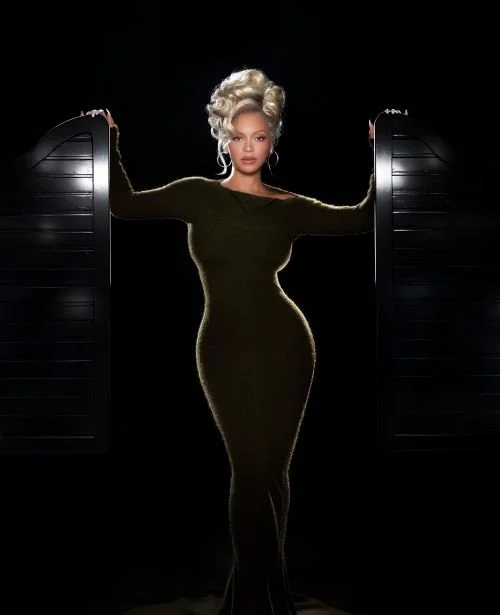
PHOTO CREDIT: Bryce Anderson for GQ
Will There Be Greater Recognition of Beyoncé This Year?
__________
I am writing this…
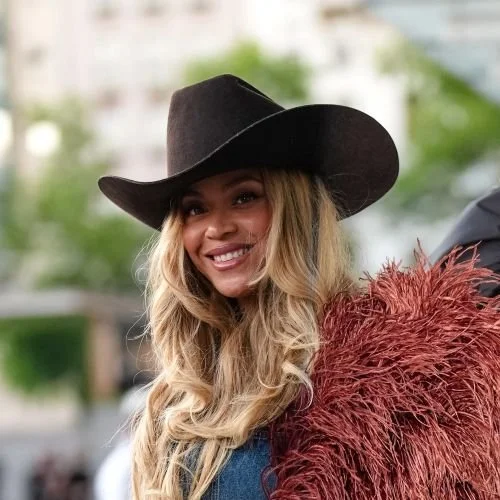
PHOTO CREDIT: Edward Berthelot/Getty Images
on 6th June. There has been rumour that a Beyoncé album is coming. Following 2024’s COWBOY CARTER, it will be interesting to see what comes next for her. On 4th September, Beyoncé turns forty-five. It will be a huge celebration. It also makes me think it is a milestone in some ways. A chance to recognise her incredible legacy and brilliance. In terms of the literature about her, there have not really been comprehensive books that look inside her albums. A detailed and updated biography. No career-spanning documentaries or anything like that. I do think that Beyoncé has been a little under-represented or underserved. As someone who is this extraordinary businesswoman and idol. One of the most successful and greatest artists ever, there does seem to be this gap. Perhaps she wouldn’t want this huge amount of fuss. Though it is not really about that. A way of not only acknowledging her incredible contribution to music and beyond. I will come to her legacy. Before that, this interview from GQ Beyoncé talked about family, art, business and legacy:
“What has your experience been like, as a Black woman, in business spaces that some might have assumed you wouldn’t thrive in?
There’s a huge contrast between the business journeys of men and women. Men often have the luxury of being perceived as the strategists, the brains behind their ventures. They’re given the space to focus on the product, the team, the business plan. Women, on the other hand, especially those in the limelight, are frequently pigeonholed into being the face of the brand or the marketing tool. It’s important to me to continue to take the same approach I have taken with my music and apply my learnings to my businesses.
I am here to change that old narrative. I’m here to focus on the quality. We took our time, and we did our research, and we have earned respect for our brand. I try to choose integrity over shortcuts. I’ve learned that true success isn’t about leaning on a name; it’s about crafting something genuine, something that can hold its own. It’s not about being perfect. It’s about being revolutionary.
Cowboy Carter was the second album in a planned trilogy that you started two years ago with Renaissance. What sparked this grand idea to do a trilogy of records, each exploring different genres?
I started Cowboy Carter almost five years ago. Pay close attention to my age in the lyrics of “16 Carriages.”
From the start of my career and on every album, I have always mixed genres. Whether it is R&B, dance, country, rap, zydeco, blues, opera, gospel, they have all influenced me in some way. I have favourite artists from every genre you could think about. I believe genres are traps that box us in and separate us. I’ve experienced this for 25 years in the music industry. Black artists, and other artists of colour, have been creating and mastering multiple genres, since forever.
This is why it was so important for me to sample the composer Joseph Bologne, known as Chevalier de Saint-Georges, in the song “Daughter” on Cowboy Carter. Violin Concerto in D Major, Opus 3, No. 1: II. Adagio was created in the 1700s. This is a testament to Chevalier’s vision. I hope it inspires artists, as well as fans, to dig deeper and learn more about the Black musical innovators who came before us. Some of the most talented artists never achieve the mainstream praise they deserve, especially when they defy the norm.
I was so hyped to see a song like “Texas Hold ’Em” gain worldwide acceptance. Even more exciting was how it helped reinvigorate the country genre across music, fashion, art, and culture, and introduced the world to so much great talent like Shaboozey, Tanner Adell, Willie Jones, Brittney Spencer, Tiera Kennedy, and Reyna Roberts.
Earlier this year, you also launched a haircare line, Cécred. In ramping up these business interests, do you find that entrepreneurialism scratches a different kind of itch than your other creative pursuits?
I am a musician first. It has always been my priority. I didn’t get into anything that could take away from my artistry until I felt I was solidified as a master at my first love, music.
When I started my hair care brand, Cécred, I wanted it to be recognised for what it does for real people and their hair. When it launched, I made a conscious decision not to appear in the ads. The brand’s first impression needed to stand on its own merit, not be swayed by my influence. I’ve been using these products for years, so I know firsthand how magical they are.
Your reputation as a perfectionist precedes you – we see and hear it in the finished version of everything you release, and you lean into this narrative in documentaries like Homecoming and Renaissance. But is there a point where that reputation is a burden, or even a prison? Do you ever feel personally overwhelmed by the weight of expectations set by the highs of your previous work?
I create at my own pace, on things that I hope will touch other people. I hope my work encourages people to look within themselves and come to terms with their own creativity, strength, and resilience. I focus on storytelling, growth, and quality. I’m not focused on perfectionism. I focus on evolution, innovation, and shifting perception. Working on the music for Cowboy Carter and launching this exciting new project feel nothing like prison, nor a burden. In fact, I only work on what liberates me. It is fame that can at times feel like prison. So, when you don’t see me on red carpets, and when I disappear until I have art to share, that’s why.
Increasingly, your work seems a little bit like a family business. For instance, recently your 12-year-old daughter, Blue, has evolved from a curious onlooker of your creative process to fully being a part of it, with her own dance routine in your last tour beside you. Were you ever hesitant to include her in your public life and work, with all the scrutiny and, sometimes, criticism that that entails? How has it felt to watch her blossom as a creative force in her own right?
I build my work schedule around my family. I try to only tour when my kids are out of school. I always dreamt of a life where I could see the world with my family and expose them to different languages, architecture, and lifestyles.
Raising three kids isn’t easy. The older they get, the more they become their own individuals with unique needs, hobbies, and social lives. My twins are God-sent. Parenting constantly teaches you about yourself. It takes a lot of prayer and patience. I love it. It’s grounding and fulfilling.
My kids come with me everywhere I go. They come to my office after school, and they are in the studio with me. They are in dance rehearsals. It’s natural that they would learn my choreography.
Having just released your eighth album, when you step back and look at the breadth of your discography, what do you see? What do you hope to see when it’s all said and done?
I am proud of what I have been able to do, but I also recognise the sacrifices – mine and my family’s. There was a time when I was pushing myself to meet unrealistic deadlines, while not taking the time to enjoy the benefits of why I was working so hard. There aren’t many of us from the late ’90s who were taught to focus on mental health. Back then, I had little boundaries, and said yes to everything. But I’ve paid my dues a hundred times over. I have worked harder than anyone I know. And now I work smarter. In the end, the biggest reward is personal joy. Has what I created pushed others to think freely and believe in the impossible? If the answer to that question is yes, then that is the gift”.
There is so much to explore and recognise. In 2011, GRAMMY included Beyoncé in a new series. “Black Sounds Beautiful series, learn about the many ways in which Beyoncé's words, music and initiatives have celebrated and elevated the Black community”. This is a living global colossus who I feel does deserve something major made about her:
“Beyoncé doesn't only loom large in American culture just because of her hits. Although her musical accomplishments are staggering—at 28 GRAMMY wins, she holds the record for most GRAMMYs won by a woman—Beyoncé's ongoing commitment to uplifting and celebrating the Black community has become a key part of her legacy.
This goes beyond her empowering songs—it's in her public statements and art, too.
In the debut episode of GRAMMY.com's Black Sounds Beautiful series, a special series honoring Black music and culture in all its forms, learn about the many ways in which Beyoncé's words, music and initiatives have celebrated and elevated the Black community and how she remains a steadfast fighter for the accomplishments of Black people everywhere.
"It's important to me to show images to my children that reflect their beauty, so they can grow up in a world where they look in the mirror—first through their own families as well as the news, the Super Bowl, the Olympics, the White House, and the GRAMMYs—and see themselves and have no doubt that they're beautiful, intelligent and capable," Beyoncé said in an acceptance speech at the 59th GRAMMY Awards in 2017.
She doubled-down on the sentiment at the 2021 GRAMMY Awards show when she won the GRAMMY for Best R&B Performance for "BLACK PARADE," which she originally released on Juneteenth last year.
"As an artist, I believe it's my job, and all of our jobs, to reflect the times," she said in her GRAMMY acceptance speech this past March. "... So, I wanted to uplift, encourage and celebrate all of the beautiful Black queens and kings that continue to inspire me and inspire the whole world."
She's continued to do exactly that throughout her entire career.
In 2018, Beyoncé headlined Coachella, becoming the first-ever Black woman artist to headline the festival. She used the history-making moment as a platform to celebrate Black culture, inviting performers from historically Black colleges and universities (HBCUs) to the Coachella stage and mixing in vocal snippets of Black icons like Malcolm X and Chimamanda Ngozi Adichie. Her 2020 GRAMMY-nominated music film, Black Is King, is a "love letter" to Black men. The film is the visual counterpart to The Lion King: The Gift, a 2019 soundtrack album curated by Beyoncé that spotlights African and Afrobeats artists like Wizkid, Burna Boy, Mr Eazi and many others.
Check out the strengthening clip above and watch out for more episodes of Black Sounds Beautiful as GRAMMY.com's Black Music Month celebrations proceed throughout June”.
I am going to leave it there. Beyoncé turns forty-five on 4th September. I do think it is a moment to consider her immense legacy and importance. From her earliest days as a member of Destiny’s Child to where she is now, she is one of the most culturally significant figures who has ever lived. I will finish with this from Wikipedia and the cultural impact of Beyoncé:
“Beyoncé has revolutionized the music industry, transforming the production, distribution, promotion, and consumption of music. She has been credited with reviving both the album and the music video as art forms, popularizing surprise albums and visual albums, and changing the Global Release Day to Friday. Her artistic innovations, such as staccato rap-singing and vocal manipulation techniques, including chopping and re-pitching, have become defining features of popular music within the 21st century. With her work frequently transcending traditional genre boundaries, Beyoncé has created new artistic standards that have shaped contemporary music, helped to renew subgenres of R&B, hip-hop, country, dance, and house, and brought Afrobeats to a global audience. Beyoncé has been recognized as setting the playbook for music artists in the modern era, with musicians from across genres, generations and countries citing her as a major influence on their career. Beyond entertainment, Beyoncé has had a significant impact on socio-political matters. Her work celebrates women's empowerment and Black culture, while highlighting systemic inequalities and advocating for social justice. Through her music, public statements, and philanthropy, she has become a prominent voice in political conversations, with cultural critics crediting her with influencing political elections and mainstreaming sociocultural movements such as fourth-wave feminism and Black Lives Matter. Beyoncé's work and career is the subject of numerous university courses, cultural analyses and museum exhibitions around the world. Through the "Beyoncé Effect", she has ignited market trends and boosted the economies of various countries”.
I do genuinely believe that more needs to happen regarding Beyoncé and her legacy. All that she has done and how her music continues to change lives. The success she has earned and the ways she has transformed and revolutionise culture. Talking about that through books, documentaries and beyond, we need to properly salute…
QUEEN Bey.