FEATURE:
Going Back to the Discman?
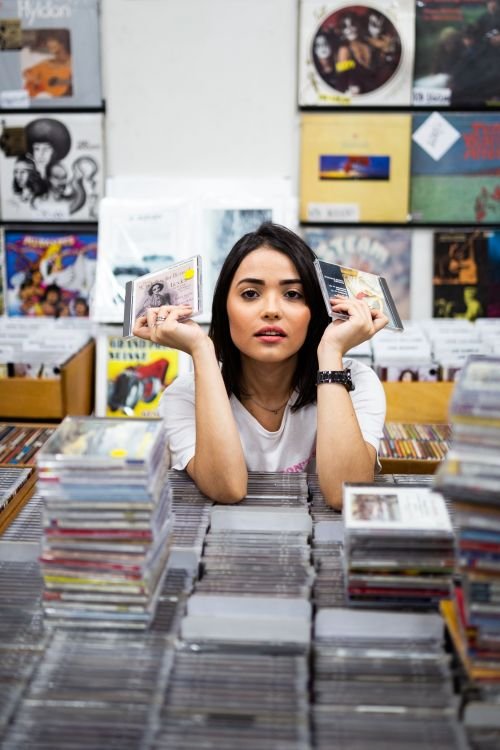
PHOTO CREDIT: Jorge Fakhouri Filho/Pexels
Analysing and Reacting to the Continued Rise in C.D. Sales
_________
I have written about this before…
PHOTO CREDIT: Poranimm Athithawatthee/Pexels
but I wanted to revisit the topic. C.D. sales are continuing to rise in popularity. We always associate physical music with vinyl. Most record shops stock a load of vinyl, whereas C.D.s are perhaps rarer. Chains like HMV feature more C.D.s, though many of their shops are closing. I do wonder why so few cassettes are sold. You tend to get artists offering albums on cassettes, though it is restricted to online. Some independent record stores stock cassettes, but mostly older albums. Vinyl very much is the preferred option for records shops, though there are drawbacks. Vinyl is still expensive and not something you can partake in obsessively unless you have a lot of money. Albums on vinyl take a while to arrive and I feel a lot of music listeners, especially younger fans, want music to be portable. They do not want algorithms and the impersonal nature of streaming. That is where C.D.s come in. You can easily buy new albums on the format, in addition to older ones. There is this rise in Gen Z music fans buying albums from the 1990s and before then on C.D. I am not sure whether they are listening on a Discman. Whatever the modern equivalent is. Last month, Rolling Stone reacted to a pleasing and encouraging upsurge in C.D. sales:
“Half of 2026 saw a 16 percent surge in CD sales — and you might be surprised by who’s buying them. Gen Z and millennial fans are gobbling up those shiny, Nineties-coded aluminum discs, 16.3 million of them in the U.S. alone. This format is even outpacing vinyl, which rose by only 2.4 percent. It’s official: Today’s music fans have a bad case of Discman fever.
It makes sense that younger listeners are turning to physical media, to make that direct tactile connection. They want to go off the grid when they listen, instead of asking a screen for permission. CDs might not be as sexy or romantic or glam as vinyl or cassettes — but they’re the best format ever for getting up close and personal with your favorite music.
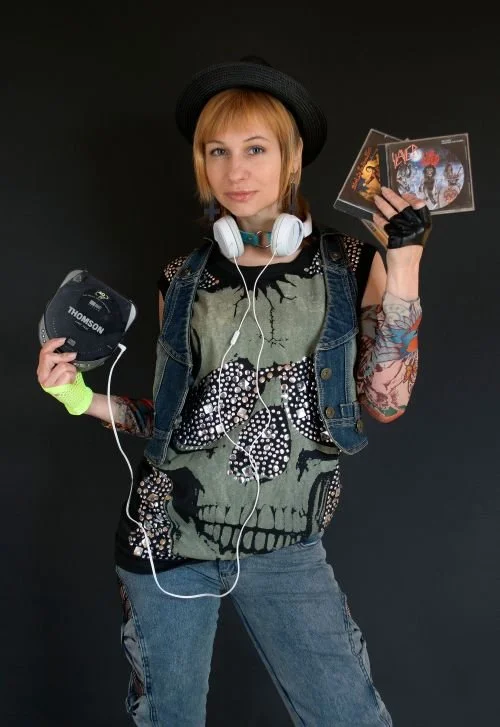
PHOTO CREDIT: Vika Glitter/Pexels
Vinyl takes much longer to produce, which means sometimes it moves too slow to keep up. If you bought the excellent new Olivia Rodrigo album on LP, you probably paid 40 bucks for an incomplete listening experience — because the songs get sliced down to fit on wax. The vinyl edition means you get “U + Me = <3” without the “all my favorite Cadbury” bridge, which is like a mutilated doll. The CD gives you the full album, the way God and Olivia intended you to hear it.
Streaming offers convenience and speed, but also constant distractions. Let’s face it, your phone is a clingy, needy, passive-aggressive housemate who’s sweet but a real pain in the ass, and you get sick of trying to have fun while it keeps barging in to ask “Hey, whatcha doing? Have you checked your emails?” Sometimes you want to leave the housemate behind. It’s tough to lose yourself in the music when your only source is the same device you use for texts, news, and videos of cats jumping on birthday cakes.
CDs have always been the geekiest music format, which is why they’re surging in a music culture that’s more geek-driven than ever. Luminate cites K-pop and indie rock as the two genres where fans are most hardcore about physical media — an audience Luminate classifies as “purchase-based superfans.” And the physical medium they want right now is the CD. Let the Discman spin forever”.
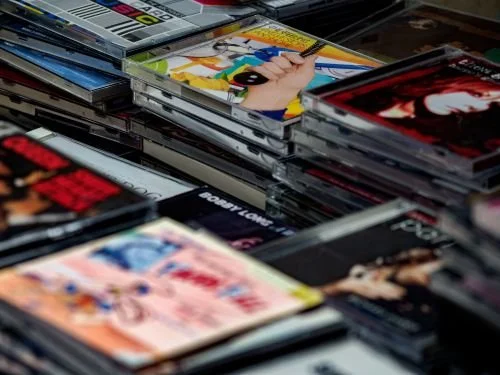
PHOTO CREDIT: Brett Jordan/Pexels
It is interesting that Indie and K-Pop are the genres where C.D. sales are most sought-after. Something about the physicality of the format that speaks to them. I am not sure C.D. sales will ever match vinyl ones, though there was a time when people thought they would die. Articles that scoff at C.D.s and feel that any rise is temporary or insignificant. That is not the case. What we are seeing is that a generation growing up with digital music are favouring physical formats. Streaming is convenient and cheaper, though it is also this invisible format. In the sense you don’t feel like you are supporting the artist. Nothing to hold in your hand or keep. The experience is ephemeral. People wanting the permanence of C.D.s and other formats. It is not just Gen Z who are unironically stocking up on C.D.s. Those who grew up with the format are bonding with it still. This article from The Guardian features words from people who are turning to the physical. Whether that is C.D.s, cassettes or films. A combination of ownership, supporting artists, or protecting their personal data, this is a phenomenon that will continue to grow. I feel that C.D. sales will continue to increase next year:
“Spotify quickly “bored” Ruth, 67, a retired professor from Michigan, but there were other reasons behind her move to CDs and DVDs.
“Most of all, I wanted to own my music and support the musicians, so I own 5,300 CDs; they have their own walk-in closet,” she says. “Owning my own books, music, and photos (no iCloud) has always seemed normal to me, and, increasingly, prudent.
She adds: “No algorithm is as creative as a well-stocked human brain alive to its actual surroundings.”
Ruth also rents physical film titles by mail from a store in Seattle. “We retired to a rural area with internet unreliable for streaming that wouldn’t sustain a movie without interruptions and buffering. We can stream music from the internet, although even then the connection will conk out every once in a while”.
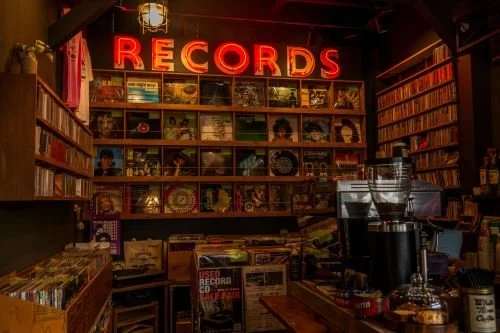
PHOTO CREDIT: Guohua Song/Pexels
C.D. sales in the U.S. have overtaken vinyl. I want to drop in a couple of other articles. I wrote about C.D. sales and their increase recently, and I sourced this article from The Guardian. How young people are buying all-in-one C.D. players or are searching for them more. It is not about being cool or retro. It is a real desire to step away from phones and connect with music. Like my generation did (I am in my forties and I very much recall a time before smartphones!). We have reached a point where there is this digital saturation. More and more people preferring physical formats like C.D.s:
“Tom Morgan-Freelander, the deputy editor of the technology magazine Stuff, has noticed the change over the past two years. He puts it down to consumers wanting to move away from using their phone, a better audio quality, and limited disposable income. “It’s: ‘I don’t want to spend money on a turntable and the speakers that go with it. I want to spend £150 on an all-in-one system that comes with the CD player,’” he says.
In the CD aisle of an HMV in London on a weekday morning, people in their teens and twenties are browsing. Fourteen-year-old Milo Georgeaux-Healy has chosen two Dua Lipa albums as well as Brat by Charli xcx to play on an “old boombox”. “I like them because they’re cheaper,” she says. “They’re a lot more compact [than vinyl], and I find that they have better quality than your phone.” Adel Alsehi, 27, is visiting from Riyadh. He has selected a Madonna greatest hits, a Kacey Musgraves album and Private Dancer by Tina Turner. “It gives me a different feeling,” he says of CDs. “I feel like I’m listening to an artist’s work. It brings me joy.”
The sold-out Crosley Voyager CD player: better quality than streaming without shelling out for a high-end system. Photograph: John Lewis
Richard Farnell runs Vinyl Exchange in Manchester, where they also sell CDs. He says the people buying CDs are now younger, and cost is a big part of this. “The record labels started to up the price of vinyl and it became largely unaffordable for this demographic,” he says. “A copy of Oasis’s Definitely Maybe on original UK “Damont” pressing can sell for between £150 and £250, depending upon condition. The standard vinyl reissue will be around £25-£30, but in our shop the CD version will only be £4.”
The CD revival is part of a wider fashion for retro tech. As well as the vinyl resurgence and cassettes becoming popular items to buy, there’s the vogue for wearing wired earphones over AirPods. “The vinyl revival re-established our appetite for analogue, and now we’re seeing that broader love for physical music drive a genuine surge in CD players,” confirms Katrina Mills, the category buying lead for audio and imaging at John Lewis.
Part of this is about optics. “Someone walking around with a portable CD player and wired headphones is signalling their sense of taste and cultural capital,” says brand strategist Alexi Gunner. He has labelled this trend “performative audiophilia”.
Gunner argues that the return to the physical for music is a kind of rebellion. “The status quo is streaming platforms and wireless audio on identical iPhones,” he says. “All this has taken away the haptic, sensorial quality of listening to music”.
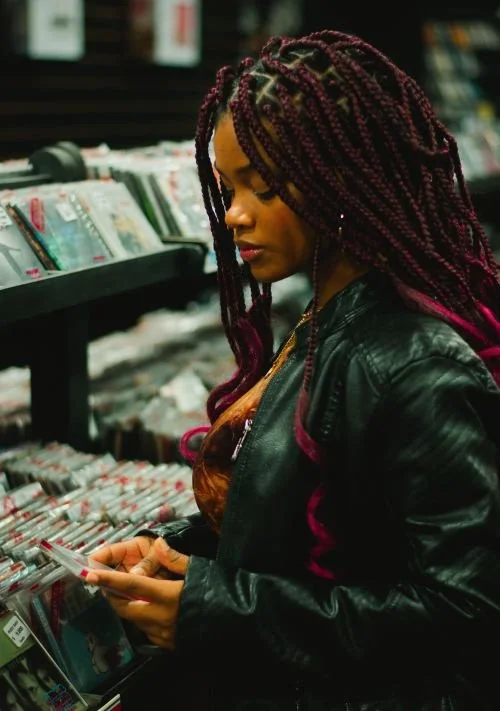
PHOTO CREDIT: Magdalena López/Pexels
There is something collectable with C.D.s. Artists release albums on vinyl and do different colours and variations. Vinyl is not as collectable because of the price. K-Pop artists especially good at turning albums into something fans want to collect and keep. Also, streaming helps C.D. sales. As this article suggests, “Streaming says: “I listen to this artist.” Buying an album says: “I’m a fan of this artist.” Those are different behaviours. Streaming can therefore function as the discovery and listening layer, while physical music becomes the ownership and fandom layer”. Streaming is definitely not on its way out, though more and more, we are seeing fans invest in C.D.s. I would argue the sound quality is better on C.D. Also, that idea of albums sitting on the shelf and being available to you. Albums disappear from streaming services. They can change. An inexpensive and sturdy source of music, you do hope that records stores on the high street thrive. That more offer a greater range of C.D.s. The idea of people browsing together for C.D.s rather than getting everything online. Gen Z are a big reason why we are discussing C.D.s in 2026. This is encouraging! When they get older and have children of their own, they will pass down C.D.s and this love and fascination will reach a new generation. That is how I got into C.D.s. But with streaming being easy and quick, I have sort of forgotten why C.D.s are so great. I love listening to them in the car. I listen to music portably, but there is something about a portable C.D. player that beats a phone. The warmth of it. Just holding that device. A mix of nostalgia and a sense of ownership. That you can only listen to one album at a time and there is not that distraction of looking at the phone whilst listening to music and skipping between albums. A much richer experience. The rise in C.D. sales is not this fad. It is a genuine and very real thing that will continue for years. And, to be honest, it is so…
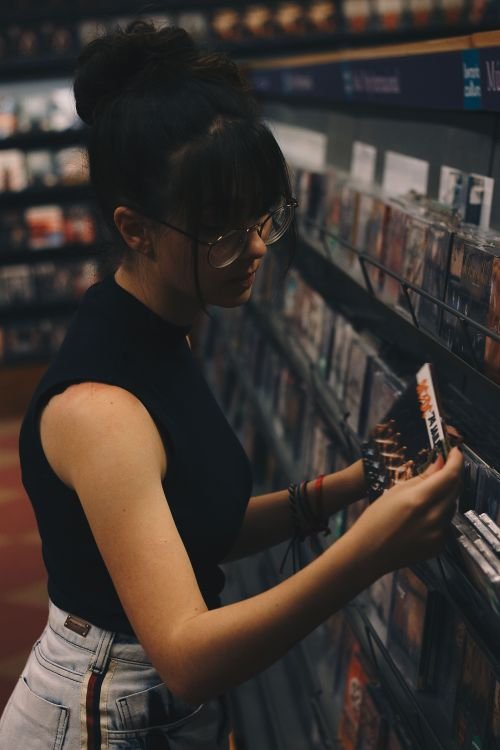
PHOTO CREDIT: Bran Sodre/Pexels
WONDERFUL to see.