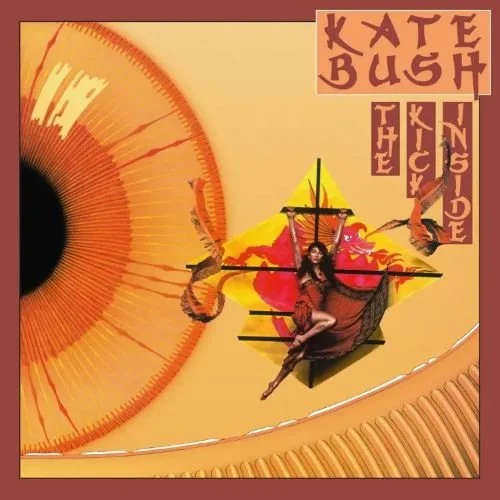
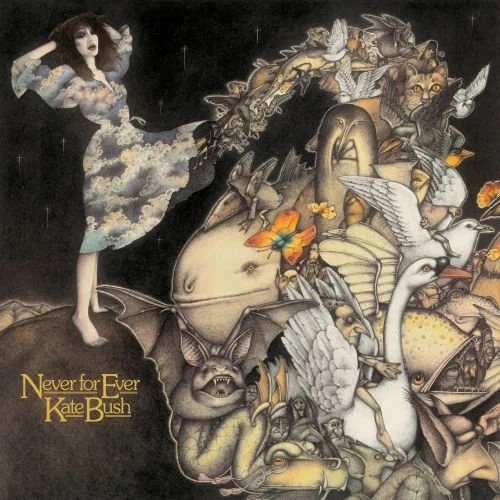
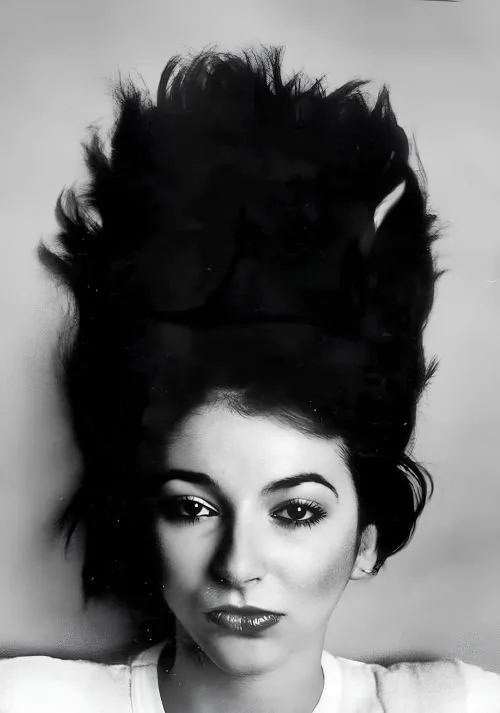
I don’t think that people discuss or write about Moving much. In terms of ranking it alongside the all-time best Kate Bush song. I think it is wonderful. I want to move now to Dreams of Orgonon, as I always learn things. Think about Kate Bush’s music in a different way. The fact that the track opens with whale song makes me love it even more. How unusual that would have been for a Pop artist in 1978. The perfect way to open Kate Bush’s debut album:
“Bush has credited multiple instructors in the development of her dancing skills, including jazz-influenced instructor Robin Kovac and American mime Adam Darius. But her most influential teacher is one of the world’s most famous mimes, Lindsay Kemp. Kemp’s legacy is enormous, boasting experience teaching and working with David Bowie, maintaining a status as a gay icon, and his extravagant theatrical performances. One of these stage shows is particularly crucial for Kate Bush. In 1975, she saw Kemp for the first time in a performance in Bloomsbury. Flowers, an adaptation of Jean Genet’s proto-Beat debut novel Our Lady of the Flowers, is an astonishing vision of decadence, material brutality, and bodily liberation. Presenting everything from masturbating prison inmates to literal angels onstage, Flowers is Kemp’s magnum opus, an outrageous exhibition of maximalism and sex. Flowers has command of several aesthetics at once, from ragtime to classical music to Luigi Russoli-an proto-noise music. It’s totally outrageous and works precisely because it has the flourishing courage of its convictions.
Naturally, Kate Bush was utterly compelled by Flowers. Its lack of restraint in aesthetics and public displays of sexuality are visible influences on huge swaths of Bush’s work. She was subsequently instructed by Kemp in his dance classes, and he’s remained an influence on her work. Years later, Bush was still praising Kemp in interviews, and of course she paid her respects upon Kemp’s death last year. It’s easy to feel she never really got over that first performance of Flowers. This display of eroticism, veneration of physical beauty, and dedication to surrealism would remain useful to Bush, staying visible all the way from The Kick Inside to 50 Words for Snow.
“Moving” is explicitly Bush paying her debt to Kemp, applying his lessons to her work in the same way she’s channeled the songwriting of Bowie or Ferry into her music. Bush’s anti-gnosticism in particular is inherited from Kemp, viewing dance as an art form that can be radical, liberating, and innovative. “You give me life/please don’t let me go,” says the hedonistic Bush, “you crush the lily in my soul.”
Salient in “Moving” is a use of aqueous language. From its whale sample onwards, it fixates upon water as a metaphor for dance. “Moving liquid/yes, you are just as water,” Bush realizes about her partner, as if she’s realized he has the face of a genius. She invests greatly in malleability, letting motion transform her — Bush has explained the “moving liquid” lyric by explaining it as “what the Chinese say about being the cup the water turns into” (this also touches on George Gurdijeff’s Fourth Way, in which an essence is governed by the form is takes. We’ll get there soon). For “Moving,” form is as crucial as substance.
Bush gives “Moving” a tricky melody, as she typically does with her songs: the eccentricities are in the details. The track is in D minor, starting with an interesting progression of i-VII-VI-III (D-C-B flat-F), with a digression into chords like E major (a chord raised a 6th above D minor’s ii chord, E diminished) and D major (not found in D minor). The chorus drifts through i-v-iv-III (D-A-G-F), with an A7 and G major thrown in to satisfy Bush’s obligation to out-of-key chord selections, while the post-chorus hits upon the root chord of C sharp and drifts into the A of D harmonic and melodic minor. “Moving” chooses chords conservatively at times but will throw a pebble into the midst of the song at an instant, causing musical ripples.
Like “Wuthering Heights,” “Moving” is a thesis statement: it’s the inaugural track of Kate Bush’s debut album, the opening song of every concert on her only tour, and was released as a single exclusively in Japan, where it failed to chart. Clearly Bush considered the track a tone setter, the beginning of the duet of music, sex, camaraderie, and motion that shapes much of her work. Her subsequent music doesn’t always sound like “Moving,” but Bush clung to its sensibilities for a long time”.