FEATURE: Needle Drops and Scores to Settle: Seven Eight: Fight the Power: Do the Right Thing (1989)

FEATURE:


Needle Drops and Scores to Settle
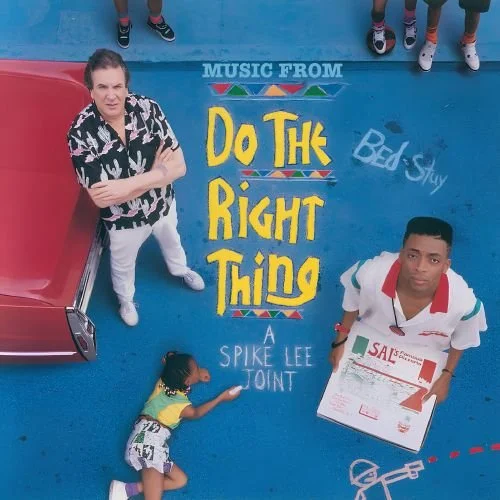
 

Seven Eight: Fight the Power: Do the Right Thing (1989)

__________

THERE are a couple of different…
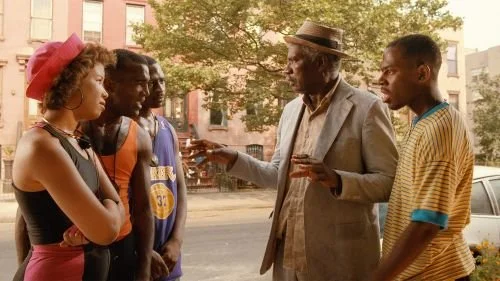
versions here. There is the soundtrack of the film, Do the Right Thing, which features songs by Public Enemy, Steel Pulse, and E.U. There is also the incredible score from Bill Lee and The Natural Spiritual Orchestra.  I am going to include both, though I will focus more on the soundtrack. Fight the Power by Public Enemy perhaps the most iconic and recognisable song from the album. Spike Lee’s masterpiece was released in 1989. Written by a cinematic genius, I do want to get to some features which look at the music from this landmark film. However, before getting there, Wikipedia give us some detail regarding the impact and legacy of the film: “Lee's direction combines heightened realism with theatrical and symbolic techniques to convey the psychological and emotional effects of heat, crowd dynamics and urban life. The film's ambiguous and controversial conclusion sparked widespread debate upon release regarding the nature of protest, responsibility and moral judgment. The film earned nominations for Best Original Screenplay and Best Supporting Actor (Aiello) at the 62nd Academy Awards. It has since been widely recognized as one of the most important American films of the late 20th century; in 1999, it was selected for preservation in the United States National Film Registry by the Library of Congress as being "culturally, historically or aesthetically significant". In 2022, the film was ranked the 24th greatest of all time in Sight and Sound magazine's decennial poll of international critics, programmers, curators, archivists and academics. It has been featured on many other lists of the greatest films of all time by numerous critics”. I do want to move to The Criterion Collection and their assessment of a hugely powerful and important film and its incredible score. If you separate the soundtrack and score or see them as one of the same, it is clear that the music in Do the Right Thing is integral and unforgettable. Almost as potent as any actor or scene:

By the time Do the Right Thing was released—or maybe unleashed does its seismic and immediate impact more justice—Lee had already established himself as one of America’s foremost young filmmakers, following the success of She’s Gotta Have It (1986) and School Daze (1988). His eye for comedy was clear, as were his elegiac love for black people and his deep involvement in the politics of the moment. Now he found himself in the middle of one of New York City’s periodic inflammations of racial angst, sparked by state-sanctioned racist violence and intermittently settled in the streets. Lee dedicated his new film, an opus of racial proximity, to the families of Eleanor Bumpurs, Michael Griffith, Arthur Miller, Edmund Perry, Yvonne Smallwood, and Michael Stewart: each black, each killed by police or a white mob. All those names: songs cut short. (Incidentally, the crown Smiley draws over Dr. King’s head looks something like the crowns famously used by Jean-Michel Basquiat to honor bygone black heroes. Basquiat was so spooked by the killing of Stewart, a fellow graffiti artist, that he dedicated a painting, Defacement (The Death of Michael Stewart), to the incident.) Toward the end of Do the Right Thing, after Raheem’s asphyxiation by baton, the crowd starts to invoke the dead, first tentatively, then as a chant. The litany of names has become one of the signature rhetorical tropes of the twenty-teens; Lee’s crowd has memorized their list—on which Raheem is just the latest item—just as well and as thoroughly as contemporary viewers can tick through the likes of Trayvon Martin, Laquan McDonald, Sandra Bland, and Philando Castile.

Two years after Do the Right Thing, in 1991, a riot bloomed like a rash in Crown Heights, punctuating tensions between blacks and Jews that rhymed perfectly with the black-Italian (and, to a much lesser extent, black-Korean) strife that Lee sketches. Earlier that same year, on the other side of the continent, Rodney King had been pummeled by a gang of highway cops. Ten years after the film came out, in 1999, NYPD officers fired forty-one shots at Amadou Diallo, an innocent Guinean immigrant, killing him just after midnight, steps away from his own home. Fast-forward twenty-five years from Do the Right Thing, to 2014, and alight on Eric Garner, an eerie echo of Raheem: also big of body, also a fixture in his neighborhood, also choked to death on the sidewalk for no reason. Back in ’89, some viewers were worried that Lee might provoke black audiences to violence. What a strange and oblivious concern, what with reality’s steady supply of kindling for the fire. Lee’s crucial climactic passage—death, rage, riot—is easily the most blankly realistic in the film

Its notes of righteous anger notwithstanding, Do the Right Thing is an early articulation of the uneasy ambivalence that would become the signature black political attitude of the nineties. (It’s not too hyperbolic to say that this movie helped to call that decade, tonally and visually, into being; the fonts and angular graphics of its opening credits foreshadow those used in classic black sitcoms like Martin and Living Single, and its high-flying, supersavvy argot is echoed in John Leguizamo’s one-man shows and Wanda Sykes’s stand-up specials.) The civil-rights generation, with its totemic victories and liberal Protestant openness, was long gone, and its fierce successors, Black Arts and Black Power—those political-artistic twin nationalisms—were beginning to recede. Now Lee’s generation would start to sift through the work of their forebears and start to edge toward a tentative blend. The most chaotic moments of Do the Right Thing jibe naturally with lines like these, from Gwendolyn Brooks’s late-sixties poem “Riot”:

“Because the Poor were sweaty and unpretty
(not like Two Dainty Negroes in Winnetka)
and they were coming toward him in rough ranks.
In seas. In windsweep. They were black and loud.
And not detainable. And not discreet.”

But the movie also contains an earnest and quite unconcealed yearning for togetherness. Yes, one of the three outdoor choristers, ML (Paul Benjamin), is aggrieved by the economic foothold gained by the Koreans who own the grocery store that sits across Stuyvesant Avenue from Sal’s—but his buddies have fun reminding him that he, a West Indian, also stepped off “the boat” into New York. His pattern of absorption into the life of the city and the country is different from the grocers’—it’s unavoidably inflected by his color—but it is no less real, and no less comic in its quickness. ML has rushed into American covetousness just as abruptly as Sonny and Kim the grocers (Steve Park and Ginny Yang) have claimed their stake in American commerce”.

There are a couple of other features I want to pull in. Forbes looked at the Do the Right Thing soundtrack in 2019, thirty years after the film was released in cinemas. If you have not seen this Spike Lee work of brilliance, then I would advise people to do so. Even if the soundtrack I have embedded at the end of the feature does not include all of the songs, you can buy it on Apple Music here. That soundtrack came out in 2001. It is a case of a phenomenal director perfectly pairing music with images. One of the most acclaimed and highly regarded soundtracks ever, it has a legacy beyond the film it comes from:

Perhaps the most memorable song from the soundtrack is "Fight the Power," a tape played often by Radio Raheem (Bill Nunn, pictured in the above photograph next to Lee) as he strolled the streets of Brooklyn in that film. Recorded by socially conscious rap group Public Enemy, the song reached #20 on Billboard's R&B/Hip hop singles chart. The movie opened with that song accompanied by Rosie Perez dancing solo. It subsequently played 14 more times before the credits rolled.

Another key song from the film, Teddy Riley and Guy's "My Fantasy," peaked later that fall at 62 on the Billboard hot 100 charts, but reached number one on the Hot Black Singles Chart that summer. The song is the mini-soundtrack to when Mookie (Spike Lee) and Buggin' Out (Giancarlo Esposito) discuss a potential boycott of the local pizza place. The soundtrack overall reached 11 on the Top R&B/Hip-Hop Albums chart, and peaked at 68 on the Billboard 200.

Lee curated a soundtrack that is just as memorable for its music as the movie is memorable for its ability to delve into tough racial topics. R&B group Guy was popular in the late 1980s, and the Teddy Riley-written "Fantasy" was a hit the entire summer. Riley's New Jack Swing brought a pivot to popular music, and it made sense to install a Riley cut on the film soundtrack. Bringing in gospel-pop stars Take 6 and rap stars Public Enemy also hit sweet spots with a variety of listener demographics. Ruben Blades joined with Take 6 for "Tu Y Yo (We love.)" And of course, "Party Hearty" kept EU and DC-area Go-Go music front and central”.

I will finish with Culture Sonar and their write-up about Do the Right Thing. Heralding this masterful soundtrack, there are few that have made the same impact. Even if you do not know Spike Lee’s work or know much about him, you will definitely be able to appreciate the soundtrack and score. I would suggest to people to seek out Do the Right Thing. A film that seems to be incredibly relevant to this day:

There are few films that capture the simmering tension of an urban summer quite like Spike Lee’s 1989 film Do the Right Thing, where a New York City heatwave becomes the manifestation of American racial tensions. Although its action is more or less limited to a Bed-Stuy block in Brooklyn, the scope of this insightful film is certainly panoramic. Lee manages to bring the heightened reality of theater to his “Street Scene” film and uses the movie’s soundtrack as a powerful, natural extension to the furiously funny dialogue that so forcefully draws us into the action. The film’s score is a veritable window into the hip-hop and contemporary R&B scenes that were taking over in the late 1980s, and its enduring appeal is a testament to the strength of the era’s musical innovation. With its peppering of New Jack-era hits, summer party anthems, and slow jams Do the Right Thing’s music captures both the frivolity and the fury of 1980s America.

Public Enemy’s “Fight the Power”

Undoubtedly the song which has become most synonymous with Do the Right Thing, Public Enemy’s “Fight the Power” not only served as the film’s leitmotif, it also fully embodied the spirit and energy of the movie. The song accompanies the opening credits during which we see Rosie Perez’s character “Tina” dancing by herself against a backdrop of Brooklyn neighborhood images. Her dancing is fierce and pugilistic, and immediately communicates a tone of feverish intensity that will continue throughout the film. Spike Lee handpicked Public Enemy to create a theme song for his work, and Chuck D and the Bomb Squad did so with unapologetic mastery. “Fight the Power” is played fifteen times throughout the movie, and as its lead single, this singular track managed to both reflect the zeitgeist of the black community during that time, and become a lasting rallying cry for activists all over the world.

Guy’s “My Fantasy”

In 1989, the New Jack Swing movement was at its height. Spearheaded by Teddy Riley and Bernard Belle, this fusion of hip-hop, dance-pop, and R&B was taking over the black New York club scene. Riley was known for his inventive, funky beats, and before he created the group Blackstreet in 1991, his group Guy was commissioned to contribute a hot number for the Do the Right Thing soundtrack. “My Fantasy” was an instant hit, reaching the Number One spot on the Hot Black Singles Chart in 1989. The song also served as the backbeat to the film’s turning point, when Buggin’ Out (Giancarlo Esposito) tells Mookie (Spike Lee) about his plans to boycott Sal’s pizza place.

E.U.’s “Party Hearty”

While present-day Brooklyn may be best known for independent coffee shops and bearded hipsters, the outer-borough in the 1980s was a place for block parties and spontaneous gatherings over music. It’s only fitting then that Spike Lee called upon the legendary Go-Go band E.U. to deliver a track that had the party-hopping movers and shakers of that time in mind. Their song “Party Hearty” may be light on lyrics, but its funky rhythms and contagious instrumentation are hard to resist, making it an undeniable dance-party staple.

Steel Pulse’s “Can’t Stand It”

Although a lot has changed since 1989, one thing that hasn’t is the suffocating heat of a New York City summer. Perfectly capturing the sweltering temperatures the city endures is Steel Pulse’s feel-good, reggae tune “Can’t Stand It.” One of the things that makes Do the Right Thing such a lasting, relatable film is the way in which Spike Lee every so often pulls back from the film’s narrative in order to deliver montages that engross us fully in the time and place of the story. The scorching summer heat is thus palpably portrayed in the film through the juxtaposing images of sweating bodies and cooling water, scored by Steel Pulse’s appropriately named “Can’t Stand It.”

Take 6’s “Don’t Shoot Me”

Spike Lee gives a little corner of doo-wop with “Don’t Shoot Me,” sung by the a cappella gospel group Take 6. While the funky beat and soulfulness of the song conjure up images of stoop-singing groups of a bygone era, the lyrics of the song transport us directly into the narrative of Lee’s film and contextualize the feeling of neighborhood angst we see played out on screen. “Don’t shoot me, I didn’t mean to step on your sneaker” references the iconic moment in the movie when Buggin’ Out has a run in with a Brooklyn gentrifier, giving the song a singular blend of old-school musicality with the very real problems we see going on in the film”.

There are some great interviews such as this, where Spike Lee talks about making Do the Right Thing. I am going to end with Stereogum, and their interview from last year with Lee. Of course, Public Enemy’s Fight the Power is the standout track. The theme and biggest moment. One of the greatest Hip-Hop anthems ever, it works perfectly in Do the Right Thing:

What was your relationship with Public Enemy before that song?

LEE: I knew them. I admired them. Chucky is a big sports fan, so we love the Knicks. And I knew with this film, I needed an anthem, and the rest is history. Herstory. But another thing, though, it's more than an anthem. It had to be a great song, because every time you see Radio Raheem with his boombox played by the great, great, great Bill Nunn, my Morehouse brother. Him and Sam Jackson were a couple years ahead of me at Morehouse College, Atlanta, Georgia. I don't know how many times you heard "Fight The Power" in that movie [laughs], but it had to be a great song! You hear it more than once, I think at least it was more than 10 times. And the way that song is weaved, it leads to him coming to Sal’s Famous Pizzeria with Smiley, played by Roger Smith, and Buggin Out, played by Giancarlo Esposito. Sal takes out his Mickey Mantle Louisville Slugger and stops that song. So it's interwoven. That stuff is interwoven, not a mistake. You had to hear it multiple times in the film to lead up to that point.

So was it as simple as you getting them the script or telling them what they're telling them the gist of the film, and then they made it after that?

LEE: No, no, no. They did some runs through the song even before they saw the film. And then we finally had a cut to show them, then they made changes”.

I do hope that there is a reissue of the soundtrack. Whilst it can be bought on Apple Music, it would be great if it were on vinyl and other formats. I think you can buy used copies or get the odd one here and there. However, given its impact and importance, it does deserve to be reissued. Many people will not know about the film and why its music is so key. I hope that what I have included here gives you a feel of why Spike Lee’s 1989 film and its music is so enduring. A timeless and classic soundtrack from one of the greatest writers and directors…

OF his generation.
FEATURE: Spotlight: Revisited: Erin LeCount

FEATURE:


Spotlight: Revisited


Erin LeCount

__________

EVEN though…

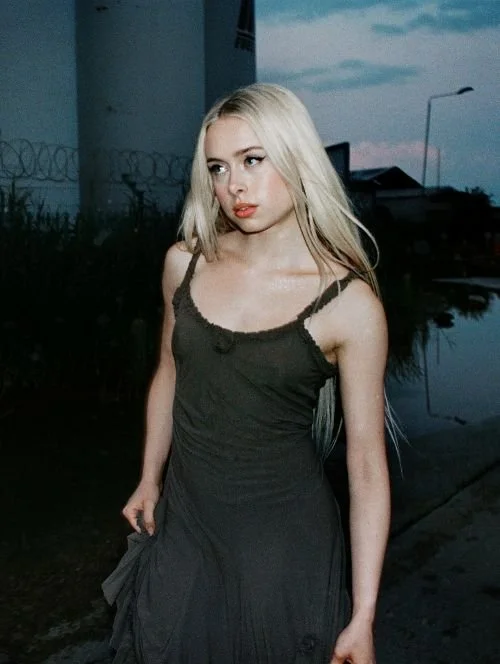
PHOTO CREDIT: Bella Howard

I spotlighted her two years ago, I want to come back to the music of Erin LeCount. I want to start out with an interview from earlier last year, around the release of her E.P., I Am Digital, I Am Divine. DORK (who included in her in their Hype List 2026 in January) spoke with an artist who had this unconventional path to Electronic music. Through reality T.V. and Essex pub gigs, it was a modest and sometimes strange path to where she is now. From humble origins, Erin LeCount is hailed as one of our finest rising artists:

The path from caravan park performances to crafting intricate electronic compositions wasn’t a straight line. By age nine, she was performing at open mics in Essex pubs, though as she notes, “I wasn’t really aware though, and not really consciously thinking about putting myself ‘out there’.” Under the guidance of her primary school music teacher, Peter, who owned The Hermit Club in Brentwood, she immersed herself in live music every weekend. “We’d practice every Saturday in a band, learning instruments and covering songs we liked,” she remembers. “I made silly amounts of money busking as a kid.” These formative experiences provided an education in performance that few could match.

At twelve, she was scouted for The Voice Kids, an experience that fundamentally altered her relationship with music. “I’d never had singing lessons; I’d never really wondered or questioned if I was a good singer or not. I just did it without thinking – it was fun, it was intuitive,” she explains. “Suddenly you’re surrounded by kids that starred on the West End, kids younger than you that are classically trained, and you’re suddenly being analysed and coached on how you sing, dissected on how you pronounce your words. I realised that it’s a sport and an art.”

That realisation came with a cost, but LeCount maintains a philosophical perspective: “I have opinions about it all, but I am a firm believer in sliding doors and that there’s something fateful about everything you experience, so I’d never take it back.” This early exposure to the industry’s more clinical aspects would later inform her approach to creative authenticity.

Now, nearly a decade later, she’s emerged with ‘I Am Digital, I Am Divine’, an EP that grapples with the complexities of human emotion through the lens of technology and spirituality. “It’s about feeling inherently dysfunctional as a person, like you’re a machine with a fault in your code or a piece of art, like a statue that has come to life and can feel everything in a way you’re not supposed to,” she explains. The collection emerged from a period of emotional hibernation and subsequent awakening. “A few years ago, I was quite unwell and dealing with a lot at once that I felt like all my emotions shut down for a good amount of time. When my life eventually started to open up again, I felt like I was a child experiencing every emotion for the first time, to its fullest extent, and that’s documented in a lot of these songs.”

Each track on the EP represents a different facet of emotional dysfunction. “‘Silver Spoon’ and ‘Marble Arch’ are two very different versions of feeling like there’s something very wrong with you,” she explains. “Feelings of resentment, performances of trying to be perfect, even if it’s self-sacrificial and you hate yourself and other people for it. The whole EP covers this spectrum of feeling dysfunctional as a person.”

Between recording sessions, LeCount maintains an eclectic set of interests. “I’m an avid car boot sale enjoyer – every Sunday like church, and not even the sexy London vintage kind, I’m talking local mums trying to get rid of their old night-out clothes,” she shares. “I like dance; I’d like to go back to dance lessons. I run a lot, and I lift weights; I’m quite strong.”

Looking ahead, she’s careful not to let recent success dictate her future direction. “I think I make good things when I’m not thinking about who’s listening,” she says. “Getting praise for something you make is lovely, but I’m very afraid of being redundant and safe in trying to recreate that same response over and over again.” She’s currently in what she describes as “a processing phase,” working on “the kind of things I’d dreamt of doing but didn’t think would happen for many years”.

There is something very special about Erin LeCount. Even though you might consider her to be an established artist, I do feel like she is someone still not known to everyone. Her new E.P., PAREIDOLIA, is hugely exciting and anticipated. I am publishing this just before its release, though I would suggest everyone digs it out. The songs released from it so far are among the best we have heard from LeCount. There are a couple of other interviews I want to cover before finishing off. A remarkable songwriter and producer, this interview from RTÉ was published around the release of her recent single, I BELIEVE:

How would you describe your music?

I think if it was a person, it would have a pop heartbeat, but the body is a bit of a Frankenstein. Warped and slightly dark but there’s a lot of care and craft put into it, a lot of alchemy.

Who are your musical inspirations?

Kate Bush is really my north star, and the lineage of everyone she paved the way for like Imogen Heap and Björk. I love Robyn and Lorde, the synthpop outliers and Lana. I love Sampha too, he’s a special artist to me.

What was the first gig you ever went to?

I went to every random band gig/live show/open mic I possibly could at a really young age, I was obsessed with this local club and rehearsed there every single weekend, so I would desperately try to stay and see the local bands in the evening, a lot of those memories blur. My first proper "concert" that wasn’t in some local bar or club was when I was sixteen, it was in the nosebleed seats of Ariana Grande’s Sweetener Tour. Very different energy. I love both.

What was the first record you ever bought?

I mean the first ever thing I remember buying on my iPod Touch was Now That’s What I Call Music 81, which was 2012 era pop music. If that counts. When I started listening to vinyl, I just used to take my dad’s old hip hop stuff, or my mum's 80s records.

What’s your favourite song right now?

My Lights Kiss Your Every Thought by Lucy Gooch. Feels like being weightless.

Favourite lyric of all time?

"I just know that something good is gonna happen, I don’t know when, but just saying it could even make it happen" from Cloudbusting by Kate Bush. I listen to it on every good day, every bad day.

If you could only listen to one song for the rest of your life, what would it be?

Cloudbusting by Kate Bush (again). It’s really that special to me”.

I am going to end with an interview from EUPHORIA. Making her debut in 2022, at a time when we were living with the COVID-19 pandemic and it was a strange time for something special, she is now on the brink of something special. PAREIDOLIA is the latest work from a truly remarkable artist. I would urge everyone to listen to her music, as she is set for greatness:

You’ve announced your new EP – PAREIDOLIA – where three songs you have already released last year. How have you felt about the reception of those so far?

This is the first time I’ve been releasing music while there’s an active audience coming to shows, and it’s been a completely different experience. I’ve felt incredibly grateful. It has reminded me how lucky I am to have listeners who really pay attention to detail. I obsess over every part of the production and writing, and it feels like the people listening are doing the same. Releasing music that’s so intensely personal and feeling like it’s being taken care of has been really special. The reception to “I BELIEVE” surprised me in the best way. You sit with a song for so long that you forget what it sounds like objectively, so it’s been really beautiful.

The project has a unique title, PAREIDOLIA. What inspired this?

It’s the phenomenon of seeing faces or patterns in things that aren’t actually there. It was inspired by Kate Bush’s “Cloudbusting,” when you look at clouds and think, ‘That looks like an elephant.’ A less poetic example is seeing a plug socket and thinking it looks like a smiley face.

You mentioned that “MACHINE GHOST” is your favourite song you’ve ever written and recorded. Why is that?

I love that song. It’s rare for me to make something and feel immediately proud of it. Usually, I think, ‘There’s something here,’ and then I obsess over it for six to twelve months. But with “MACHINE GHOST,” it was different. I wrote the opening line, “I didn’t want us to, I wanted us to make love,” when I was about seventeen. I’m about to turn twenty-three, and I held onto that line for years without being able to build a song around it. Then I was incredibly sad one day, experimenting with a vocoder, and the song came together in about an hour. I barely touched it after that. I didn’t obsess over it at all; it just was what it was. It’s one of those songs that makes you understand why people talk about music coming from somewhere beyond you, like you’re just a channel for it. It felt like it fell out of the sky, even though it had been lingering with me for five years.

“AMERICAN DREAM” is my personal favourite. It feels very autobiographical.

I love that it’s your favorite. I’m curious which version you were sent, because it’s the least fleshed-out one. I’ve actually been working on it nonstop for the past forty-eight hours. I’m excited about it, and I love that it resonates with you because I always suspected it might. Some people were concerned it was too autobiographical or too niche. I tend to write very specifically anyway, but usually there are broader themes people can latch onto. “American Dream” is more sprawling; it’s about how I grew up, working-class British culture, and this strange transitional period I’m in. I live at home with my parents, and then suddenly I’m leaving to tour America. I meet people in the music industry that I don’t always feel I belong with, and at the same time, I sometimes struggle to connect with friends I grew up with who are trying to find jobs and get by. It felt like a diary entry about guilt, ambition, and knowing that pursuing something bigger can come at the cost of personal relationships. It’s about shifting dynamics in my identity, my family, and my relationships as my career progresses. I worried for a while that it might be too early to talk about these things, but it felt honest and very specific to my life.

Have you been able to bond with other singers/your peers who have had a similar year? Other artists like Sienna Spiro have also gone from tiny gigs to a lot of recognition in such a short span of time.

I really love Sienna, she’s genuinely a wonderful person. Befriending people who are in similar positions has been incredibly helpful, especially in understanding what’s acceptable in the industry. You don’t know until you talk to others about their experiences. As emerging artists, especially women, we’re often pitted against each other, and it benefits everyone to focus on collaboration and community instead of competition. The friendships I’ve made this year have brought so much clarity and light to really confusing transitions in my life. It helps to talk to people who understand that even when you’re doing the “dream” thing, you’re not happy all the time and that’s nothing to be ashamed of.

With everything happening so fast, are you able to recognize what is a milestone? I’ve read interviews from artists, where it wasn’t until much later on until they were able to realize having success early on was a big deal as opposed to it being expected.

I try to mark milestones, achievements, exciting days, moments where you get a great phone call or news from your manager. I’m very committed to keeping diaries and journals; I write every morning and every night, and I’ve done that for over five years. It helps me stay present, because that doesn’t come naturally to me. I move very fast and put a lot of pressure on myself. I’ve been working toward this since I was sixteen, so in many ways I’ve been waiting for these things to happen for a long time. I’m trying to slow down and enjoy this transitional phase, because this part, playing shows, and building momentum, is arguably the most exciting point. It’s the best part of the climb”.

Take some time to explore this phenomenal artist. Erin LeCount is going to be making music for many years to come. She has some incredible gigs coming up, including a huge show at London’s Roundhouse on 15th May. One of our most prestigious venues, that will be an incredible gig! Proof that there is this great demand for an artist that is in her own league. Anyone who does not know about Erin LeCount, make sure you…

DO not miss out.

___________

Follow Erin LeCount

FEATURE: One for the Road: Ocean Colour Scene's Moseley Shoals at Thirty

FEATURE:


One for the Road


Ocean Colour Scene's Moseley Shoals at Thirty

__________

PERHAPS not as discussed…

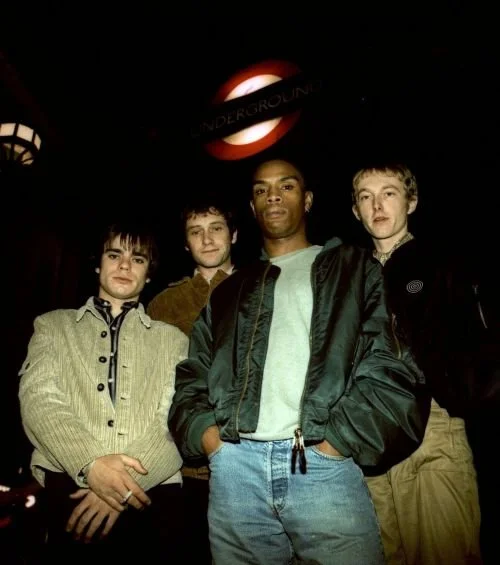
 IN THIS PHOTO: Ocean Colour Scene (L-R: Damon Minchella, Simon Fowler, Oscar Harrison, Steve Cradock) in London in 1996/PHOTO CREDIT: Martyn Godacre/Getty Images

and celebrated as many albums from the 1990s, Ocean Colour Scene's Moseley Shoals turns thirty on 6th April. I wanted to spend time with it as it is a fantastic album and one that definitely has a legacy. It contains classics like The Riverboat Song and The Day We Caught the Train. Songs most of you will know, Moseley Shoals is much more than that. It is, in my view, one of the best albums of the 1990s. Given the strength of the album, it is amazing that some were mixed and critical in 1996. NME were not that kind towards it. I have seen some one, two and three-star reviews for an album that is a lot stronger than that! I will bring in some features that reassess an album that arrived in a really strong year for music. Maybe critics reacting to what was around it at the time. 1996 would see everyone from Manic Street Preachers, Beck, Fugees, and DJ Shadow release classics. Let’s get inside Moseley Shoals. The band, led by Simon Fowler, alongside Steve Cradock, Damon Michella and Oscar Harrison (Paul Weller pops up on a few tracks), it is worth reassessing and reframing this album. Pete Paphides wrote an article for Medium in 2020 about the mighty Moseley Shoals:

As with Oasis, comparisons with Paul Weller haven’t always been helpful to Ocean Colour Scene, but in the case of Moseley Shoals, it isn’t hard to see what would have reminded Weller of himself in these songs. Fowler was going through a version of what Weller himself had gone through at the turn of the decade: feeling like the world had left him behind and wondering what it might possibly take for him to catch up again. Just as Weller wrote it all down with the songs on his first two albums, Fowler poured it all out into the songs on Moseley Shoals. When Weller’s then-producer Brendan Lynch heard them, he volunteered his services. Lynch hadn’t accrued a huge amount of experience until that point. At his lowest point, after losing his Polydor deal, Weller fell in with The Young Disciples and the extended Acid Jazz family. As Weller is wont to do from time to time (see also: Simon Dine, Stan Khybert) he eschewed a more seasoned hand in order to see what a young untried producer might bring to his sound. Lynch clearly rose to the challenge. Further to his work on Weller’s eponymous set and Wild Wood, Lynch inverted a handful of Weller songs into epic space dub odysseys that numbered among the most adventurous music to bear Weller’s imprint. In particular, his SX2000 Dub version of Kosmos is easily the match of anything you’ll find on contemporaneous albums by kindred spirits such as Primal Scream and Future Sound Of London.

Moseley Shoals was never going to be that sort of album. By the same token, Lynch and Ocean Colour Scene were quick to reach a mutual accommodation that played to all of their strengths. At its core, what you’re hearing is the synergy of an electrifying band and a producer who knows when to get out of the way. It was one of the four songs featured on a tape sent to journalists in advance of the album’s release — for many, the first indication that Ocean Colour Scene hadn’t dissolved with the passing of baggy. Along with The Stone Roses’ Love Spreads, it was pretty much the only single by a band of that generation — certainly from an indie background — to assimilate the influence of Led Zeppelin (and remember that it was Led Zep’s rhythmic irresistibility as much as their heaviness that distinguished them from all the other heavy bands). In doing so, The Riverboat Song picks up from Zeppelin’s Four Sticks, deploying the same 6/8 swing time with an uptight intensity that suggests something has to give. When the release comes it’s thanks in part to Oscar Harrison’s halving of the tempo on the chorus, one of a series of excellent decisions undertaken by him throughout the song. Prior to joining The Fanatics and then Ocean Colour Scene, Harrison had spent years in a Birmingham reggae band Echo Base, and even before that, learned to play by aping the Jamaican syncopations of Steel Pulse. You can hear all of that throughout The Riverboat Song: a delayed landing on the snare and cymbal here; a string of deft half-fills to accentuate key lines. You could listen to Harrison’s drum track alone and still feel your heart racing.

And yet even on this song — the one which had detractors quickest to dismiss the band as retro-fetishists — there are flourishes from Brendan Lynch which don’t really belong in any recognisable era: the delicious scaling down of the arrangement before the second verse, which makes the first verse almost seem like a false start; the staccato bursts of interference at the beginning of the instrumental break; the way Cradock’s lead guitar seems to do something entirely different in each section, in particular the extended notes at 3:50 and then, subsequently, nothing at all, leaving the entire space open for just the occasional organ stab. Nuances of Brian Auger and Graham Bond are detectable alongside the obvious Zeppelin nod. Everything you hear is deliberate and immaculately executed, down to the final surge of feedback dissipates to reveal the first strummed chords of the song that follows right after it.

The Day We Caught The Train sat in the top ten for much of the summer of 1996. It pulled off the same illusion that Come On Eileen and Our House managed in the previous decade, creating a vicarious longing for the events it was describing. And like those songs, its almost immediate emotional pull distracts you from the unconventional manner in which it goes about its work: the sudden descent from those angelic opening lines into murky memories of half-forgotten plans and then, before you can properly get your bearings, up a semitone (“Stepping through the door like a troubadour…”) before the moment when the song really reveals its hand. Why can’t things just be like they were? Even for a little while?

“You and I should ride the coast/And wind up in our favourite coats just miles away…”

It’s moving for all sorts of reasons. It’s moving because you suspect the person being addressed doesn’t feel the same way. It’s moving because the sudden shift into those lines suggests that the protagonist has just decided to blurt out the thing he’d been too shy to say all along. It’s moving because when Cradock lands onto Em on the word “miles”, you realise that this is just one more daydream on an album that’s actually full of them. And finally, it’s somehow really moving when, Fowler vents his inner Marriott on “Roll a number…” and finally succumbs to unguarded longing for a more carefree time.

Moseley Shoals is studded with these remorseful reveries, and perhaps none more bereft of hope than The Downstream. It’s one of those songs that, in another era — when soul singers used to cherry-pick and reinterpret the best of what sat outside their immediate genre — Otis Redding, Solomon Burke or The Isley Brothers could have absolutely turned into a standard. For all of that though, it’s Fowler’s creation and he really digs deep for it. Over a smoulderingly empathetic accompaniment from the rest of the band, he cuts a solitary presence. “Sell me a river/And I’ll skate away/To the downstream/Where I did play/So easy minded/Like a hill on the skyline/Tripped up and blinded/Getting lost on the sidelines.”

And yet, for all of that, the record’s reputation remains tarnished hampered by critical ambivalence about the era and milieu in which it emerged. At Time Out, where I was employed as a staff writer in the mid-90s, I was only finally allowed (by a music section who were appalled at the prospect) to write about the band when an interview with Underworld’s Karl Hyde dropped out at the eleventh hour and the only other option in the time available was an interview with Fowler. A look at the end of year Top 50 albums lists in Melody Maker and NME for that year shows that there was no place in either for a record whose creators were regarded as mere passengers on a bandwagon which had Oasis’ logo painted on it. But this doesn’t tell you as much about the qualitative merits of Moseley Shoals as it does about the dialectic that was prevalent in the music press at the time: an assumption that if you liked guitar music, you were a classicist who had no interest in dance music; and that if you liked dance music, then you couldn’t abide guitars.

Of course, beyond the offices of the music press, this sort of tribalism was itself becoming an anachronism. Ex-ravers were going to Oasis gigs and indie kids were packing out Prodigy gigs. In a world where the observation of aesthetic battle lines was getting to be a thing of the past, Moseley Shoals found its audience. It’s the sound of a band coming to terms with its place outside the circle and realising that with failure comes a kind of freedom. The freedom to tell the truest story you know. And maybe, just, maybe, if you tell it well enough, you’ll never want for an audience again”.

A lot of the press really didn’t take to Ocean Colour Scene. Slating an album that in years since has been given far kinder words, Moseley Shoals perhaps was subjected to tribalism and snobs in the press. Britpop Memories celebrated twenty-five years of Ocean Colour Scene’s second album in 2020. A Britpop classic as they say, I wonder what others will say to mark thirty years. How this album has endured. Reaching number two in the U.K. upon its release and having sold over a million copies. It has received accolades. In 1998, Q readers voted Moseley Shoals the thirty-third greatest album of all time. Pitchfork ranked it forty-second in their 2017 poll of The 50 Best Britpop Albums:

Why didn’t the press like them? No idea. Was it that the band stayed in Birmingham and didn’t come down to London to hang out in the good Mixer? Even the Gallagher brothers had come down to London Town when the time was right. Maybe the fact that they were such good mates with Weller who was himself the subject of some fairly petty and insulting treatment by the weekly music press. The fact that they’d had the guts to reinvent themselves by playing the music they wanted to after the debut was more of a label driven baggy album to try and cash in on the then fading scene. But frankly by the mid 90’s the weekly music press had gone power mad and out of control. OCS have had the last laugh as they’ve outlasted the Melody Maker completely and the NME has been reduced to an online gossip website taking more interest in the fashion choices of Harry Styles than music.

Moseley Shoals doesn’t really need me to go track by track offering a review of each song and giving my in depth analysis, the songs are well known and speak for themselves, what I will say is that there are no bad tracks, not a single bar of music on the whole album is superfluous or could be deemed “filler”. Looking at the replies to my 25th anniversary post on Twitter earlier today every track has had a pretty fair share of the love, although unsurprisingly “The Day We Caught The Train” has probably had the most mentions by fans when asked for their favourite track.

The band are easily the best musicians of the Britpop era, each of the four members being a master of his chosen instrument, some are well known for their skill, Cradock is often cited as one of the best guitarists of his generation. But even the quiet man at the back Oscar Harrison is a drummer of exceptional and sadly over-looked talent. Combine that with Minchella’s grooving bass lines and the vocal range of Foxy Fowler and your looking at a band that took the musicianship of Britpop to new heights.
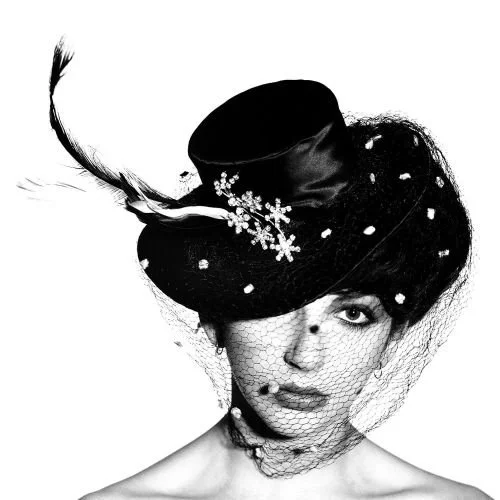
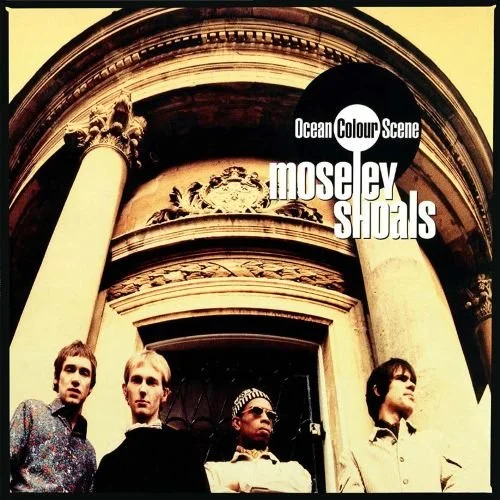
The whole package of Moseley Shoals was perfection. Tony Briggs’ photos inside the inlay are beautifully shot black and white portraits, the cover itself is one of the most iconic images of any Britpop band and any fan worth their salt will at some point have called in at the Jephson Gardens in Leamington Spa to have a go at recreating the image either alone or with friends and family. Lastly the music videos were all amazing. Cool as you like with lots of nods to the past. “Riverboat Song” and “You’ve Got It Bad” both looking like Mod/Northern Soul homages, “The Day We Caught The Train” with the band in Ben Sherman’s and bucket hats, “The Circle” with its Scooter ride out in obvious debt to Quadrophenia and with Oscar looking like a reggae superstar.

The band would go on to release more great albums, more great singles and play big arenas, but for me they peaked musically with Moseley Shoals just because the tracks are all perfect, every subsequent album would have a track that didn’t quite live up to this body of work. In fact the b-sides of this album cycle were also so strong that a compilation album called “B-sides, Seasides, and Freerides” was released and is another set of tracks that any OCS fan will wax lyrical about if asked.

This is an album and band that today generates huge social media stats, has a dedicated and passionate following and stands the test of time far better than many of its 90’s contemporaries, but then as the saying goes “form is temporary, class is permanent”. Sadly the damage done by the weekly music press is still evident and if you try to discuss the band online you can bet your bottom dollar that at some point you’ll get a response including phrases such as “Dad Rock”, “Lad Rock”, “Noel Rock”, etc. The irony is I loved them as a lad, I now love them as a Dad, I don’t see the problem. And being compared to one of the country’s most successful songwriters? Well, there are worse comparisons aren’t there?”.

I am going to end with words from Glide Magazine. They shared their positive review in 2011. That is when a remastered version appeared with the original album tracks in addition to the B-sides from the singles released. I would say to anyone who has never heard of this album to go and listen to it. Maybe it has this reputation as being about TFI Friday and soundtracking that. Only having a couple of decent singles, when in reality Moseley Shoals is an incredible album from start to finish:

After hearing a demo, Oasis’ Noel Gallagher invited the band to support his tour.  With this recognition, major labels came calling and Moseley Shoals was released to critical acclaim from the famously hypercritical Brit press. The name of the album, of course, is a play on Muscle Shoals, the legendary Alabama town that housed a recording studio which began in 1969 and produced epic soul and rock music. Moseley is the name of a Birmingham suburb where three of the group’s original members were born.  This title plays warmly with the music inside, a combination of a little 90s brit-pop, big hearted classic rock, and blue eyed soul.

Immediately kicking things into high gear with “The Riverboat Song’s" Zeppelin-esque guitar and bass interplay, the band arrives with intention and a soulful force.  This music is not a match for Oasis’s bombast or even Blur’s punchy, quirk-pop. However, Moseley Shoals shines with a refined, timeless sound; a deep, melodic accessibility with songs arranged naturally and played with passion. Lyrics are earthy yet poetic, elegant and stylishly grounded. The most alluring element of all may be the understatement with which the band is able to play. Dripping with emotion, staying rooted in traditional song arrangements, they creatively play with melody and make Moseley Shoals a revelation for those of us struggling to remember what exemplary melodic rock sounds like.  A song like “Lining Your Pockets” is one of a few slow burners on Shoals that captivates with a Rod Stewart-era Faces feel. “The Day we Caught the Train” is stylized like Revolver-era Beatles with a gorgeous chorus.  It’s no wonder the song reached number 4 on British charts, a place where the appreciation for well played pop rock has never wavered. “One for the Road” is the best Bob Seger ballad he never played.  In the vein of “Night Moves”, this one focuses on natural production, loose yet crisp playing, and gorgeous vocals from Simon Fowler.

“40 Past Midnight” possesses the most obvious overture to Moseley Shoals with bar room piano and agile guitar stabs from Steve Cradock that hook and dive.  There is an organic liveliness to the song and all of Moseley Shoals that allows the music to shine and flow naturally, as if it was recorded live and in one take. The album is blessed by iconic Brit Paul Weller’s (The Jam, The Style Council) presence on organ, piano, and backing vocals for three songs.  With Weller and Gallagher’s stamp of approval Moseley Shoals was afforded an instant loudspeaker to all of Britain.  “Policeman and Pirates” is a quintessential example of OCS’s ability to create gorgeous blue-eyed soul melodies inside classic rock structures.  There is a sweet affection to the song, one that can only come from a labor of love. "You’ve Got it Bad” uses a filtered synth sound for texture, allowing it to play off and with punchy piano runs and a kinetically understated guitar solo. Coupled with Beatles-esque melodies, the band keeps finding gold in every song.

The album finishes with “Get Away”, the longest song on the album at almost eight minutes. Beginning with harmonica and acoustic guitar for two verses and then voraciously jumping into wah guitar and angry vocals, the band turns up the heat.  Cradock plays a liquid solo, and the song slows to a crawl again. These organic twists and turns make Moseley Shoals feel warm and welcoming, like the product of a real band full of heart. Soon the song turns into a rambunctious exploration of vibrant drums and refined yet ragged guitar noise.  Moseley Shoals breathes to a close with guitar feedback fading.

Albeit with some lineup changes, Ocean Colour Scene remains a stalwart in the British music scene.  Celebrating their 21st anniversary with a 4 CD box set and recently releasing a deluxe edition of Moseley Shoals, the band has embarked on an extensive tour playing the nationally famous album in its entirety.  Perhaps the album’s greatest strength is its ageless sound.  Sounding as if it could have been made in 1969, 1996, or 2009, Ocean Colour Scene produced an unwavering testament to quality songwriting and the power of British melodic rock”.

On 8th April, it will be thirty years since Moseley Shoals was released. Despite press criticism, it was  a big commercial success. It still holds up today. Even if its biggest songs are at the top and there are not many hits or bigger songs lower down the order – always a risk when it comes to an album -, there is this consistency throughout. Strong and interesting songs from a band who would release its follow-up in 1997. Marchin' Already received similar lukewarm reaction. That album contains Hundred Mile High City. A band I really like and feel are one of the best, go and listen to the superb Moseley Shoals. Thirty years later, and this phenomenal album still…

SOUNDS utterly superb.

FEATURE: Spotlight: Lola Wild

FEATURE:


Spotlight


 Lola Wild

__________

THIS is an artist that…

you will need to check out. Last year was a busy one for her. In November, she released the E.P., Lost Signal. It is a remarkable E.P. I would urge you to check out. Before getting to a selection of interviews from last year, I want to come to some biography about the sensational Lola Wild:

Lola Wild is a London-based singer-songwriter whose music conjures a cinematic dreamscape where nostalgia meets modern artistry. Seamlessly blending dream-pop, folk, and alternative indie, her sound is both timeless and contemporary, drawing listeners into an intimate world of haunting melodies and evocative storytelling.

With influences ranging from PJ Harvey and Nina Simone, Lola’s music resonates with a raw, emotional depth. Her rich, crooning vocal style nods to legends like Roy Orbison, David Bowie, while maintaining a uniquely feminine modern edge.

Lola’s debut EP, Get Up, released early 2024, introduced her as a compelling voice in indie music. The record, steeped in lush arrangements and poignant melancholic lyricism, explores themes of longing and resilience, offering a sound that feels both otherworldly and deeply personal. The release has garnered critical acclaim, with features in Under the Radar, Clout, and AmericanaUK, as well as national airplay on Radio X, BBC Introducing, BBC Radio 6, and Amazing Radio”.

I am going to lead on to an interview from last February. The Lunar Collective spoke to Lola Wild about her single, Jump the Gun. A song where she “delves into the restless energy of instinctive actions, regret, and self-reflection, capturing the duality of impulse and introspection with striking honesty”. I am quite new to her music, though I was instantly captivated and invested:

LUNA: Is there a particular story or concept tying the EP together?

LOLA: The title itself kind of sums it up—this feeling of isolation, of voices trying to reach each other but never quite connecting. It’s that melancholy of chasing something familiar, only to be met with static. Sonically, it’s got that nostalgic, cinematic feel, but each track has its own space, shifting between intimate moments and bigger, more atmospheric sounds.

LUNA: How does “Jump the Gun” fit within the overall narrative or sonic landscape of Lost Signal?

LOLA: “Jump the Gun” sits right at the heart of Lost Signal, both in sound and in what it’s about. The whole EP is tied to this idea of searching for clarity, whether that’s misunderstandings, regrets, or just that feeling of being slightly out of sync with everything around you. “Jump the Gun” taps into that impulsive side of it, acting before you’ve had time to think, then dealing with the fallout. It’s a bit restless, a bit dreamy, like reaching for something you’re not sure you can ever quite hold onto, which pretty much sums up the whole record.

LUNA: If you had to describe “Lost Signal” in three words, what would they be?

LOLA: Camp, cinematic and nostalgic.

LUNA: Your vocal delivery has drawn comparisons to legends like Roy Orbison and David Bowie. Who are some of your biggest musical influences?

LOLA: Roy Orbison and Bowie are proper icons. As for my influences, there’s a real mix of classic and modern artists that have shaped what I do. I’ve listened to a lot of classic ‘50s and ‘60s artists like Connie Francis and The Beatles. Fleetwood Mac’s storytelling and that dreamy, atmospheric vibe has always stuck with me too. I’m also a big fan of PJ Harvey for her raw energy, and Blondie’s mix of punk and pop definitely inspired me. Nina Simone’s voice is just so powerful, and Billie Holiday has this beautiful, heartbreaking way of singing that really connects with me. It’s all these voices and styles mashed together really. Honestly, though, the list is forever changing and growing as time goes on!

LUNA: What do you hope listeners take away from “Jump the Gun?”

LOLA: I really hope “Jump the Gun” helps people feel like they’re not alone with the type of treacherous thoughts I tackle on a daily basis—the ones where you act impulsively, even when you know there might be consequences. It’s about those raw, messy moments we all have, and I think if listeners can hear it and go, "I’ve felt that too," then that’s a win. We're all just trying to make sense of our instincts, and sometimes it’s nice to know someone else gets it.

LUNA: Beyond music, are there any other art forms—film, fashion, or literature—that influence your aesthetic and storytelling?

LOLA: Oh, absolutely! I draw a lot of inspiration from all sorts of art beyond music. Alfred Hitchcock’s films have always stuck with me, once you look past the blatant misogyny of course—his knack for building suspense and creating an atmosphere is something otherworldly. There’s something about the dark, twisted side of his stories that I just love. Oscar Wilde’s writing is another big influence. Also David Lynch—his surreal, dreamlike worlds pull you in and make you think. He has this way of challenging what we think of as "normal," and I think that kind of boundary-pushing is something I try to channel in my work too. I’m also a big fashion historian too. I’ve been collecting and researching fashion from the 1920s to the 1980s since I left college—there’s something about that bold, rebellious spirit that happened in those 60 years that I love.  Modern designers like Vivienne Westwood and Mugler definitely influence me too. Westwood’s punk aesthetic and how she challenges norms, while Mugler’s designs have this powerful, sculptural vibe that feels timeless to me.

LUNA: You’ve been honing your craft for years now—what has been the biggest lesson you’ve learned along the way?

LOLA: If I had to pick the biggest one, it’s probably that nothing ever goes to plan and that’s actually a good thing. You can’t force creativity, and if you try, you’ll end up with a lot of frustration. I’ve also learned to embrace the messy bits...those “Oops, didn’t see that coming” moments can sometimes turn into the best parts of a song or even your career. And if you make a mistake, just blame it on being “experimental” and move on”.

Getting to a deep and interesting interview from Medium. They spoke to Lola Young about finding her voice and balancing artistry with glamour. This is someone whose aesthetic and look is very much intertwined. She discussed her start and growing up. It is remarkable reading about Wild’s early life and how she transitioned into music. You can tell that she was very much born to do this:

Based in Hackney, Wild folds retro color into contemporary moods. Her recordings nod to 60s pop and the foggy synth textures of the 80s. Press comparisons have placed her croon near Roy Orbison, David Bowie, and Connie Francis, while recent write-ups lined her up beside artists like Angel Olsen and Sharon Van Etten. Since debuting in 2023 she has sold out rooms including SJQ, Crazy Coqs, and The Waiting Room, and stepped onto the O2 Academy Islington stage. A live session for “Rendezvous” at Paul Weller’s Black Barn Studios came through a collaboration with Tom Hill, Weller’s keyboardist, who co-wrote the track and helped bring in players from the band. The filmed session opened doors and led to more live work.

Her new single “Girls in Hollywood” dives into the faded glamour and cost of chasing a dream. Co-produced with multi-instrumentalist Jim Wallis at Strong Room Studios, the track sets a brooding arpeggiated synth over a steady pulse and follows a young woman who gets lost in the industry machine. The visualiser, directed and edited by Jack Satchell and Mars Washington, features showgirl Roxy Van Plume alongside Wild, and leans into the cinematic tone she favors. The song fits her broader interest in storytelling that sits between nostalgia and unease.

Wild’s lyrics often look backward, not to escape but to examine. “It’s very reminiscent, very nostalgic,” she says. She loves old cinema, Westerns, and stage choreography, from Cabaret to Bob Fosse. Asked which era she would choose to live in, she opts to stay in the present. The 60s fascinate her for the fashion and the music, but not for the politics. The 80s hold a pull for the birth of electronic pop and Prince, yet she will take modern medicine and today’s hard-won gains.

Offstage, she writes at the keyboard, strums enough guitar to sketch chords, and shares instruments with her partner, who plays bass and guitar. An Omnichord from the 80s sits nearby for textures that hum in the margins. Her self-care is simple. “Dancing will always be something that helps me,” she says. Laughter is her cure. Community in Hackney keeps her grounded. She is an introvert at heart who likes to stay in, listen to records, and spend time with her cat.

Looking ahead, Wild is finishing her first album, planned for next year, and will release one more single this year. She is lining up collaborations and remixes with producers she admires, and wants to take the show on the festival circuit with a UK tour as a starting point. America is on the wish list. The message she hopes listeners carry is the same advice she would have given her younger self. Believe in yourself. Trust your gut. “Be authentic. Be weird, be crazy.” Be loud, not only in volume, but in presence. Above all, be honest about what the music makes you feel.

Lola Wild, it’s an honor to meet you. Before we dive in deep, our readers would love to learn about Lola Wild’s personal origin story. Can you share with us the story of your childhood, how you grew up, and the seeds for all the great things that have come since then?

Lola: Amazing. So, I was actually brought up in a small village in the Midlands in the UK. Very much out in the sticks. We call it the flatlands because there are literally no hills — just fields. It’s like a farmer’s paradise.

I was the youngest of four kids, raised by a single mom. So I’ve definitely been brought up to be a strong lady for that very reason. My childhood was filled with a lot of music. Since there wasn’t much money, we kept ourselves entertained with music and imagination. My mom loved singing. She wasn’t a professional singer, she just loved it. She listened to a lot of music — mostly 80s, a lot of rock — even though I’m not a rock artist myself. She was into Led Zeppelin, soul music like Aretha Franklin and Donna Summer. So I grew up with a pretty broad taste in music.

She definitely wanted me to pursue singing at one point, but she didn’t want to be a stage mom. So she kind of left it to me and said, “If you want to do this, do it on your own terms.” And I just kept doing it.

Eventually, I fell in love with jazz — got into Billie Holiday and Sarah Vaughan. As time went on, I went to college to study music, taught myself a lot, got into production. That’s when the evolution of Lola Wild started to come into play.

It didn’t stay with jazz or soul, which is where I originally came from. I started listening to the Beatles, Beach Boys, Connie Francis, and shifted toward melodies, harmonies, and really leaned into songwriting more than just singing.

So here I am, from that whole evolution. That’s where Lola Wild came into play. And as you probably know from the press release, I’m also a burlesque dancer — or at least I used to be more involved in the showgirl world. That definitely influenced how the music changed. It became more narrative-driven, more performative.

With burlesque, you have to perform without saying a word, which is different from singing, where everything is a bit more on the surface. It made me think more about how the music feels — how it makes me feel and how it’s going to make someone else feel.

Long-winded answer to your question, but that’s kind of where it all started. And just to throw it in there, film plays a huge role too. I’m really into cinema — old-school cinema, Westerns, theatrical styles, even musicals like Cabaret, 60s musicals, Bob Fosse. There are lots of theatrical embellishments in my work that come from all kinds of genres.

We love hearing stories where someone a bit further ahead opens a door or creates an opportunity that changes someone’s career trajectory. Do you have a story where you did that for someone else, or where someone did that for you?

Lola: I’d say for me personally, since I’m still at the early stages of my career, I’m not sure I’ve been able to open too many doors for someone else just yet.

But I’ve definitely had a couple of experiences where someone opened a door for me. One of them was with my friend Tom Hill, who’s Paul Weller’s keyboard player from The Jam. He actually co-wrote Rendezvous with me, which is a song I wrote about two years ago.

I asked him if he wanted to do a live session, and I was just expecting something low-key — maybe at my house or a local venue. Then he gets back to me and says, “I’ve asked Paul Weller if we can use his studio in Woking, near London, to film the session.” He even invited Paul Weller’s sax player to join us.

That moment really opened a lot of doors. I got to meet and play with some incredible musicians in such a legendary space. It was filmed too, and once that video went out, things started picking up. I started getting opportunities like the Crazy Coqs gig at Zédel, and others like SJQ and more.

So if you could take all of your lyrics, all of your melodies, put them all together in a bucket and blend them up, what would be the overall message that comes out of the music?

Lola: I would say… oh, that’s a very good question. A lot of what my lyrics point to is the past, and also the future. It’s very introspective, and I think that’s just how my brain works. I’d say it’s very reminiscent, very nostalgic.

You know how when you think about something that happened years ago — even if it’s narrative-driven — for me, that’s probably why I focus so much on vintage aesthetics and retro, old things. It makes you feel something when you think about something that already happened, even if you weren’t present at the time.

So if I compared past and future, I’d say more past. More retrospective, more nostalgic. I hope that was a good answer”.

I am ending with an interview from Unclear Magazine from November. After putting out the Lost Signal E.P. and touring, I wonder what this year holds. Keep an eye out at her social channels for gigs and news. Lola Wild is being tipped as a name to watch closely. I feel that she will ascend to incredible heights and have this very long and successful career. If you are new to Lola Wild then do make sure that you connect with her:

You draw musical inspiration from the 60s and 80s. Have these decades always meant a lot to you?

Lola: “I'd say for most of my adult life it has been influenced by those eras. I used to work in a vintage shop, so I was constantly surrounded by those worlds — the clothes, the colors, the sounds playing through the speakers all day. It definitely seeped into the way I see and hear things now. The interesting thing about the ’80s is how it took such a clear nod to the ’60s —  not just in the fashion, but in the sound too. Both eras share this obsession with melody and harmony, that sense of something lush and cinematic.”

Considering you navigate in your lyrics a narrative landscape, what do you enjoy most of your songwriting process?

Lola: “I think what I enjoy most is building a little world around a feeling. Usually it starts with an image or a moment in my head, like a scene from a film and then I just start to fill in the details. I love figuring out who the character is, what they’re thinking, what they’re running from. It isn't always about being literal. I like hiding bits of truth in metaphor, or saying something real in a slightly surreal way. It keeps it interesting, like you’re telling a story, but through a dream lens.”

In general terms, what do you want people to take away from your music?

Lola: “My music tends to live in that space between nostalgia and daydream, so if it gives someone a bit of comfort or escape for a few minutes, that’s enough for me. I think it’s just really special when people find their own stories in the songs. Once it’s out in the world, it doesn’t really belong to the artist anymore... it becomes whatever someone needs it to be, and I love that.”

In terms of music production, what are you always aiming to achieve?

Lola: “In production, I’m always trying to create tension between control and chaos. I want every sound to feel deliberate, but I also want it to have life, not be too polished or stale, little unpredictabilities that keep it from feeling static. I’m fascinated by texture and space, how silence and noise can interact, and how a song can exist somewhere between intimacy and spectacle.”

How does your music reflect your personality?

Lola: “I think my music reflects the way I process the world. It's a mix of observation, chaos and unpredictability. I like contrasts — beauty and discomfort, intimacy and spectacle. In a way, the songs are an extension of how I see and react to things, filtered through a lens that’s performative”.

I am going to end there. Such a distinct and consistently brilliant artist, Lola Wild is primed for a very long career. A lot of people are very excited about what she is putting out and where she might head. Even though I have recently discovered her, I am going to follow her work and see where she heads. In terms of the artists coming through, the superb Lola Wild is…

ONE of our best.

_________

Follow Lola Wild

FEATURE: Spotlight: Leah Cleaver

FEATURE:


Spotlight


Leah Cleaver

__________

ON 3rd October…

Leah Cleaver released her remarkable E.P., Pushing Up Flowers. It is the latest offering from one of our most talented and promising young artists. I want to get to some interviews with her. I am starting out with DIY and their interview from October of last year. They spoke with someone who was an “Intoxicating, chameleonic pop built on community and shared confidence”. If you are new to Leah Cleaver then go and follow her:

East London multi-hyphenate and purveyor of intoxicating, chameleonic pop. Having cut her teeth as a member of neo-soul group ZEBEDE, Leah’s now striking out solo with her recently released debut EP ‘Pushing Up Flowers’ - a vibrant six-track project that sees her flit between bouncing, funk-flecked grooves (‘Get You Home’), kicked-back, chorus-backed rap (‘Have You Ever’) and looping electronic beats (‘I Go (Outta My Mind)’). To celebrate the project’s arrival, Leah tells us more about her disparate musical influences, the significance of sisterhood, and how she found confidence through personal crisis.

What was the first gig you ever went to? 

Okay, so I must have been seven or eight and I went to go and see McFly with my bestie Callum and his mum - that night I realised I was more of a Busted fan. It was very sad… but still a very fun time.

Your music pulls from a diverse range of influences, from Red Hot Chilli Peppers to Little Simz. Are these artists you listened to growing up, or discovered through family/friends? Tell us more about what shaped your sound.

I think I totally absorbed the music around me because it was always on in the house. My aunt played a lot of The Rat Pack tunes and was a huge Dean Martin fan, so I grew up watching movies like High Society with Louis Armstrong and Frank Sinatra, and Singing In The Rain. And I remember so clearly watching Dirty Dancing and hearing Otis Redding’s ‘Love Man’ for the first time - it blew my mind. So that American soul/blues/jazz influence was really heavy in the house.

But then round at my nana and grandad’s, I was singing out ‘Weila Waila’ by The Dubliners when I was only small (which is a madness because that song is pretty gruesome, but I loved it so much). I loved the raw vocals and the pain and playfulness of it all, which really
makes sense because soul music and Irish music really go hand in hand. And then my uncles played me Red Hot Chilli Peppers, ‘Demon Days’ and Arctic Monkeys, so it was all the good stuff.

I think it all made me have an affinity with unique, commanding tones in their own right, so I naturally found my way to Little Simz, Channel Tres, NAO, Jeff Buckley, David Byrne - a lot of this project is a nod to some of them.

Your upcoming EP, ‘Pushing Up Flowers’, was written after a period of sudden uncertainty, when you inexplicably lost your voice. What was this experience like, and how do you think it affected your outlook/headspace heading into this new era of music?

It was a super scary time, because your voice is so personal - it’s your identity - so it feels like the thing you love doing has let you down. Then you get more stressed about it, so it gets worse. Also, that’s how I pay my rent, so it was a lot at that time. But in hindsight, I honestly think it was my body and the universe telling me to… not just slow down, but to stop with the constant self-judgment and cut things out of my life that weren’t serving me, period. That carved out a weirdly calm but finally breathable era of me having no expectations of myself. When I started writing music again, I wanted to get out what I needed to say, and I couldn’t sing it, so I said it: I shed a lot of old baggage in these songs and self-soothed through the music (which is cheeeeese but it’s that truth cheddar!).

If you were stranded on a deserted island and could only take one album, one book, and one film with you, what would you pick?

Album: ‘Needle Paw’, by Nai Palm. Book: Girl, Woman, Other, by Bernardine Evaristo. Film: American Gangster.

What’s your worst musical habit?

Listening to songs to DEATH immediately after making them (only if it’s good!). It’s cool, but I’m trying to practise giving it a day or two so I can listen to it with fresh ears. But I’m awful - by the time

The next interview I am getting to is from HASTE. They spotlighted her then-new single, Last Time, and the upcoming E.P. An artist inspired by the likes of Channel Tres, Little Simz, Jungle, Nina Simone, Talking Heads, Sly and the Family Stone, this is someone with such a rich and layered voice that is unlike no other in music. I think that we will hear a lot from Cleaver in the coming years:

Growing up Leah was surrounded by the likes of Ratpakc, Frank Sinatra and Elvis Presley, which started her love of raw, soulful sounds. “It was the first time I’d heart Otis Redding and I think that changed my life,” she explained. “I’d never heard a voice like that it was incredible. And then on the other side of my family it was all Irish rebel music, Luke Kelly and the Dubliners which I loved, I loved all the raw harmonies and stories within these cheeky, but mostly heartbreaking songs.” After feeling so deeply connected to this type of songwriting, Leah moved to London aged 18 and naturally gravitated towards jamming and writing.

A push-and-pull tension beats throughout ‘Last Time’, Leah’s tender vocals detailing a tumultuous relationship characterised by carnal desire. The track’s instrumental mirrors this cat-and-mouse story, pivoting between gentle keys, funky bass and an eruption of rattling guitars, stomping drums and rippling synths. On her debut, Leah is already highlighting herself as an artist with a mastery of various genres, which she playfully weaves together into a sound that is excitingly fresh. Leah went on to explain, “Last time is 11pm on a Thursday night and 20 minutes ago you were in your pj’s but you just got that  from that person so now you’re in an uber looking 12/10 about to have a cheeky night. It’s about being spontaneous and taking ownership in your naughty side, and totally leaning into it!“

While the song takes listeners on a cohesive journey, the chorus brings the song to a whole new level of musical layers. Bringing to life a kind of chaotic energy, the lyrics and sounds become reflective and intertwining. Leah told us that this is very much reflective of the start of relationships. “You’re nervous, excited, you’re changing your outfit 1000 times, you’re scrambling to find your keys and then add the fact that you know this person isn’t exactly marriage material, but the sex is incredible, that’s a whole other dilemma! So I think the chorus captures all of those feelings.”

Leah’s music is a clear example that artists are taking control of their own sound by introducing new and unexpected layers into it when they feel it suits. Meaning that her music can not be accurately contained within on genre label. She explained to us that she wants people to feel good when they listen to her music, “like really good. I want them to feel good about how gorgeous they look, how they feel, how their body moves when they’re dancing to this music. I want them to feel like them and their friends are the hottest people in the room. Mostly I want QPOC and underserved communities to know this music is for them, and inspired by them. This is their space for them to be seen, held and feel safe in, and everyone outside of that community can Kiki too if they know and advocate for that.”

Aside from creating music, Leah is also a co-founder of the U Gd, Girl? organisation who run monthly events, workshops and discussion circles for women and non-binary people, creating an open dialogue to explore issues including women’s health, setting boundaries, love languages, body image and more. Perfectly intertwining with her personality and the stories behind many of her songs, Leah spoke enthusiastically about the platform, saying “it’s a space for women and non-binary people to come together to discuss different topics that we think people can sometimes struggle talking to their friends and family with, so this is a space for them to enter a judgement free, safe space and share their stories that we can all learn from, we do healing circles, educational sessions as well as “werkshops” that include self defence classes, “boddy oddy oddy” photo shoots and events showcasing some of London’s best musicians and performers which we run monthly in East London”.

There are not a lot of new interviews with her. However, there was quite a lot of attention her way last year. She Said spent some time with Leah Cleaver last summer. I am interested to see what this year holds for her. Formerly of ZEBEDE, and now this incredible solo artist, I feel this year will see Cleaver make some huge steps:

Last Time’ introduced us to your sound and your story. With ‘Have You Ever’ coming next, where are you taking us now and how do the two songs connect?

Last time feels like 2am on a saturday night buzzing round through london in a cab and have you ever is 2pm on Sunday and you’re laying in the grass in the park with your friends in the sunshine absolutely GIGGLING and gossiping about the night before, it’s a nod to those  that sometimes put their foot in their mouths (like me!) and do cheeky things with gorgeous people but it’s all okay because their friends hold space and love for them.

You started gigging around London early on. What’s one thing that helped you grow a buzz at the grassroots level?

I started going to jam nights, especially ones that made me nervous and my beautiful friends  would champion me, and i’d watch other amazing artists and see their authenticness and rawness to perform, so then I started to as well and I would tell those people who I was and I kept coming back, and I think that’s how you build community within grassroots organisations, you just keep going back.

What’s one tip you’d give to another artist who feels like they don’t fit into the industry’s boxes?

People will always try to ‘re-create what you do, rebrand it, manufacture it, mass produce it, water it down, claim it as their own (eventually) - so you may as well be the source! It might take time but you need to exist in the knowledge that your people will find you and will notice what you’re doing, keep your blinkers on and keep going

What’s something you’ve figured out about being an artist that no one told you?

I figured out that there are amazing people doing the same thing as you that will, and can pull you up alongside them so generously and without motive. Sometimes we focus so much on the competition of numbers and who’s  the ‘favourite’ right now that we forget that as artists we are our community, and especially as a black woman I know when one of us win we all win, so i’m hear to raise up others voices and I know people have been raising mine so I feel grateful”.

I shall wrap things here. I discovered her music after the release of Pushing Up Flowers, so I am playing a little bit of catch-up. However, I am not firmly on board and can see Leah Cleaver being among our greatest and most admired artists. Someone you really need to hear, she is an artist that will…

BLOW you away.

_________

Follow Leah Cleaver

FEATURE: Spotlight: Amie Blu

FEATURE:


Spotlight

PHOTO CREDIT: Rankin
  

Amie Blu

__________

SHE has got a couple…

of U.S dates for this month, though I do hope that Amie Blu comes plays in her native London at some point. She would be lapped up, as I can imagine her stage performances are phenomenal! I guess that there will be a lot of U.K. performances later in the year. Her latest album, when all is said and done, was released last September. It won huge acclaimed and is up there with the best thing that she has ever done. I am starting out with a few interviews from last year before finishing with an impassioned and insightful reviews of when all is said and done. This is a hugely special artist that everyone needs to connect with. Let’s start with CLASH and their conversation with Amie Blu:

Amie Blu grew up surrounded by music; it was woven into the fabric of her childhood home in Bromley, South East London. The living room doubled as a makeshift studio, as Amie and her brother moved between the drums, guitar and piano. “Piano practice was forced,” she recalls, laughing at the memory of inching the clock hands forward whenever her dad left the room. “But everything else; singing, writing… that’s always been natural.”

At six, Amie began experimenting with melodies, and by her teenage years she was developing her own songs in earnest. Her parents’ collection formed the earliest soundtracks; Biggie and Tupac, Eminem and Justin Timberlake, Alicia Keys pouring from her mother’s speakers. Everything shifted at 15, when a friend introduced her to FKJ’s ‘Vibin’ Out’. “That song completely changed my algorithm,” she remembers. “Suddenly I was getting COLORS shows, Daniel Caesar… it was like I’d finally found music that felt close to mine.”

Two EPs, ‘5 for U’ and ‘crumbs in my bed’, marked her as an artist unafraid of sincerity, but her debut album, ‘when all Is said and done’ moves with a different weight, carrying both the intimacy of her earlier work alongside the discipline of an artist finding her centre. Written in the South of France alongside longtime friends and collaborators, it transforms what she calls “one of the worst years of my life” into a tender exploration of sadness, endurance, and eventual hope. “Writing the album allowed me to process,” she explains. “Just having it in song form feels validating.”

Amie is meticulous about her delivery, often speaking with her singing teacher about how meaning shapes performance. “What am I trying to convey? What do I want people to feel? That was always in my head,” she says. The result is a voice unflinching in its documentation of grief yet never tipping into despair. Listeners have felt that honesty deeply: one fan has her lyrics tattooed, whilst others write to her about how her music connects with their own lives. “I write so specific to me and my life,” she reflects, “so it’s interesting seeing how people relate it back to themselves. Sometimes I’m like, are we living the same life?”

Her visual world, created with collaborator Alistair Mcveigh, extends her homespun tales into dreamlike textures. “Visual identity is so important,” she insists. “It’s what differentiates a singer and an artist.” That same sharpness carries into her navigation of the industry itself. Having worked in A&R and publishing, she explains, “It helped me learn how to read between the lines, speak on my own behalf, and stand on business”.

It is well worth people getting to know Amie Blu. That is what DIY did last year. There was a lot of fascination and love around her when she put out the album. It is a remarkable work and one from a singular talent. I am quite new to her music but I can see why people are hailing her as a major talent. This is someone who will enjoy a long and successful career:

You hail from South East London, which is a part of the city that’s known for having a really distinct cultural identity. For you, musically, what was it like growing up there? 

To be honest, there wasn’t that much going on in my area… I think it’s probably like everywhere in London; if you’re passionate about something, you just need to find what you can and do whatever you can to make it work.

Lyrically, your work doesn’t shy away from exploring weighty topics, but the tracks themselves aren’t necessarily sombre - take ‘swimming in pity’, which is both a song about depression, and really quite anthemic. How do you walk this emotional tightrope? 

Sometimes it’s a conscious decision; I love juxtaposition. But at other times, that’s just the direction we’ve gone in ‘cos it sounds lit. Also, most of my songs are sad so I’ve gotta switch it up somehow!

If you could be in a band/collab with an artist from the past two decades, who would you pick and why? 

Ugh, my answer will always change depending on the day… right now, I’ll probably say Elliot Smith - but he’s the lead singer and guitarist, I just sing backing vocals (and my mic is muted).

Finally, DIY are coming round for dinner - what are you making?

Honestly, I rotate between the same two things… you can either have creamy salmon pasta or you can have chorizo pasta, I’ll let you guys decide. They’re both a 6.5 out of 10, but made with love”.

Prior to finishing with a fascinating review of when all is said and done, I want to bring in FADER and their interview with Amie Blu. Among the artists tipped for great things this year, I think that Blu is among the absolute best and brightest. After playing L.A. on 9th and New York on 19th March, she will be back home and I guess there will be plans for a summer of gigs. I am looking forward to catching her:

The opening three song titles on Amie Blu's when all is said and done give a good impression of the album's downcast vibe: "swimming in pity," "worse," and "missing everything" make it clear the album is for grey days and depressive moments. The fourth song, titled simply "take me as I am," meanwhile, is the London-based songwriter reaching out a hand in the darkness. It could be adressed to a partner or the listener at home tuning in through their AirPods.

"Take me as I am," the 22-year-old pleads between carefully picked acoustic strings. "It's been so long since I felt whole." At a time when feelings of misery and hopelessness can often feel like they're being used a chic aesthetic, Blu's songwriting hits a cord with its blunt approach to documenting life's most uncomfortable feelings.

It's an approach that breeds connection and this year she opened for Faye Webster on tour while another when all is said and done song, "shadow," was co-signed by SZA online.

She is set to headline her first run of U.K. and European shows starting in October. Before that we asked him for some photos from behind-the-scenes of her recent shows, and got her opinions on Black Swan, London in a heat wave, seeing Justin Bieber live and other hot topics.

What’s the best advice you’ve ever received?

My nan is French and taught me how to make crepes. She ADVISED me to learn how to make crepes.

What’s your favorite song to play live right now and why?

Probably "falling to pieces" from my album. The song is from the perspective of my cat while he gets extremely ill and eventually passes away. Some people have been putting up pictures of their pets on their phones while I sing this song and it’s the sweetest thing ever. I could cry thinking about it.

What was the last creative idea you had that made you ask, ‘Can we do that’?

I had a listening party in London for my album where I invited fans to come hear me play a couple unreleased songs. It was originally meant to be in a live room but when I visited I fell in love with their kitchen and was like, 'Can we do it here instead pleaseeee?”.

I have one more interview to include before getting to a review. I was really captured by this Wonderland feature and what they asked Amie Blu. For anyone who has not heard her, I would say you definitely need to explore. Such a phenomenal artist that you know we will be listening to years from now:

Following her debut album when all is said and done, made with her “talented friends”, a trio of rising producers, instrumentalists and songwriters Humble the Great, Will (Worm) and Will Hargreaves – Amie Blu is settling into her moment. Released this September, the reviews rolled in, and they were good. Co-signs from the likes of SZA (who liked an Instagram post of her stand-out track “shadow”), fellow Londoner Joy Crookes and a steadily growing audience of more than 260,000 monthly Spotify listeners only confirm what’s ahead: a quiet, steady ascension. Still, Amie stays grounded.

“I sound so cringe,” she laughs, “but I see music as this long marathon, and every message or co-sign or anything is like a high five. It means everything, it’s so validating, but it doesn’t change the distance. It just makes it easier though, for sure.”

After a long day on set for Wonderland, thick with outfit changes, lukewarm bath shots, TikToks to Yeat’s “COME N GO”, and the inevitable London downpour (pathetic fallacy, if you will), she finally melts into a chair at Cecconi’s downstairs, glowing in that post-shoot exhale. She orders decisively: “Spaghetti lobster with tomato and chilli, definitely.” A pause. “Actually, the crab ravioli please.” For the first time all day, she looks at ease.

The calm exterior, though, hides nerves. “I just always get a bit nervous with shoots because my least favourite part of being an artist is pictures,” she admits. “I don’t like pictures. I’m very insecure. I don’t like my face, I don’t like anything about myself.” Vulnerability sits in stark contrast to the “so beautiful” murmurs drifting from the crew all day, though contrast, in Amie’s world, is kind of the point. Take “missing everything”, an upbeat melody masking a quiet ache: ‘I can hardly believe / But lately I’m missing everything…’

“I find it easier to write with a pessimistic outlook,” she says simply. “To be honest, I just have that view on life in general.” Her then-favourite track from the album, “worse”, captures it in full: ‘Trying so hard not to break apart / You’re only gonna make it worse’. “It’s about friends being far away. I hadn’t seen mine in a while,” she says. “But the song is about my friends being there for me and me for them, and us just being there for each other. I’m so grateful for my friends.”

In moments like these, you can tell her heart is rooted in the human part of it all, not the attention that comes with it. Her album is an unfiltered catalogue of that. “Last year was one of the worst of my life. I was just like, if I continue, I am genuinely not going to be here anymore. I had no desire to be here,” she says, her head resting in her palm. And this heaviness, she doesn’t linger in it, but she doesn’t shy away from it either. Her song “if i leave” dives headfirst into that space. “It’s about not wanting to be here, but feeling like you’re forcing yourself through life for other people…and how I think that suicide can be really selfish,” she says, steady.

Weeks later, she follows up via email with something lighter: “We’ll probably hear all about it in a song one day lol. But now I’m feeling a lot better. I’m trying really hard every day to feel better, and I’m surrounded by people who genuinely love me and want the best for me. I have an amazing support system.”

From those teenage sessions to now, the growth feels both sudden and slow. “As an artist, I think I’m more confident,” she says. “I’m writing more clearly and have more of a vision, a sound.” As a person, the story’s rawer. “I’ve always felt sad…but I feel like…do I want to get better? And I think, this year, I genuinely do”.

This amazing review is what I shall end with. I am really keen to see where Amie Blu heads. The fact that she has U.S. dates and there is a fanbase there is already a big thing. After a busy and phenomenal year in 2025, this year is one where she will build even more fans and play some of her biggest shows. Her music has touched so many people already. It is incredible seeing this wonderful young artist get so much affection:

At just 22, Amie Blu, the South East London singer-songwriter, had already carved a niche with her diary-like songwriting on the 2024 EP How We Lose, but this full-length project is a far more unfiltered portrait. Her music is confessional to its core, often evoking the feeling of reading someone’s private journal set to melody. That intimacy is immediate—Blu’s warm, unguarded vocals draw you in close, only to reveal heavy secrets just beneath the pretty surface. Her debut album, When All Is Said and Done, is a thoroughgoing introduction to a young artist unafraid to expose her bruises. The album doesn’t aim to be a polished escape. Instead, it’s drenched in messy, uncomfortable truths about love, loss, depression, and the tangled knots of human connection. In tone, it’s frank and unassuming yet assured in its vision, delivered with a candor that can stop you in your tracks as often as it comforts you.

From the outset, Blu establishes an emotionally open space where darkness and reluctant hope coexist. When detailing When All Is Said and Done, she outlined it as “such an honest depiction” of her lifelong feelings of sadness and struggle, and the candor is apparent in every lyric. The songs document depressive episodes, internal conflicts, and the faint glimmers of hope that sustain her. Writing these songs was clearly cathartic—after finishing the album, she realized, “It is so sad… lol,” a self-aware, gallows humor that actually helped her start feeling better in real life. That paradox of pouring out despair to make room for hope defines the record’s arc. Blu never sugarcoats her mental health battles—she often admits, “I struggle to find anything positive in my life… I want to get better… but despite all my efforts, I often still feel the same.” Yet by voicing these thoughts so openly, she transforms isolating pain into something communal. Her honesty turns vulnerability into connection, for herself and anyone listening. It’s as if sharing these diary pages creates a safe place for not only her survival but others’ too.

The album’s songwriting stays intensely personal and literal, which is both its main strength and a potential limitation. Blu writes in plain language that often reads like unfiltered journal entries—she even notes that she always writes for herself first, considering that others hear it as only a “privilege” afterward. This approach yields some beautifully earnest moments where her sincerity is heartbreaking, but it also means she can circle the same themes repeatedly. There’s a deliberate repetitiveness to some lines, a reflection of mental ruts and obsessive thoughts. If she occasionally sounds like a broken record about feeling broken (and she’s joked about this herself), it’s because these songs refuse to dilute the reality of depression. That directness can hit hard; lines like “what’s the point in having all that love just to keep it?” in the song “bite” land like a quiet gut-punch. Even so, the album strikes a balance between despair and subtle resilience. Blu’s voice, soft and smooth, has a way of making even the most wrenching confessions feel inviting—she lulls you in with a gentle melody, then crushes you with the truth. It’s a tricky tightrope of emotional songwriting that she walks with remarkable poise for a debut.

For an album rooted in one young woman’s internal battles, When All Is Said and Done is surprisingly dynamic and collaborative in its execution. Blu created these songs in close collaboration with her friends, embracing a DIY spirit, and that camaraderie is evident in the music. The production spans a wider range of styles than one might expect from the singular focus on depression. There are soul-soaked confessionals, gritty lo-fi textures, and even a hint of breezy soft-rock optimism peeking through in places. “Bite,” for instance, blends a loose live-band energy with touches of soul and country, bringing a warm, organic feel to her self-reflective musings.

By comparison, “Legs”—the centerpiece of the album—is stripped-back and raw. Blu first unveiled this song in a COLORS session, just her voice and the bare essentials, and in studio form, it remains the emotional crux where all the album’s themes coalesce. The song was born from a moment when she “felt like I no longer had the will to live,” and it confronts that breaking point directly. There’s a quiet intensity to it; rather than a polished pop song, “Legs” feels like eavesdropping on Blu’s most private plea to keep going. Fittingly, she positions it as the turning point where survival itself turns from a “whispered thought into song.” You get the sense of an artist mustering the strength to stand up (as the title implies) after being emotionally flattened. Throughout the record, the instrumentation and arrangements generally serve the songwriting well—organic guitars, piano, and subtle electronic flourishes are deployed to mirror the emotional beats.

If a song needs to brood in quiet despair, it does; if it needs to burst open in catharsis, it isn’t shy about it. At times, the lo-fi touches (a bit of fuzz on a guitar, or a room ambience in the recording) give the sense of Blu and her friends huddled in a small studio, capturing real feelings in real time. That intimacy is one of the album’s greatest strengths. On the flip side, a couple of tracks don’t stand out as much melodically and can blend on first listen—a possible side effect of sticking to mid-tempo, introspective territory. However, when given a fair shot, they reveal distinct shades of her melancholy: some songs are angry or frustrated, while others are resigned, and still others are cautiously hopeful. The cohesion of tone is actually purposeful, painting a comprehensive picture of depression without ever wallowing to the point of monotony.

When All Is Said and Done’s visual presentation reinforces its honest portrait of survival in striking ways. The album’s surreal cover art (created in collaboration with Blu’s close friend and creative partner Alistair McVeigh) depicts a tiny, warmly lit room built on a flatbed trailer, parked in the middle of a bleak, wintry landscape. It’s an arresting image: a fragile sanctuary on wheels, literally a shelter from the storm of the outside world. This visual metaphor couldn’t be more apt—it’s as if Amie Blu built herself a safe space to contain all her vulnerabilities, and she’s towing it with her wherever she goes. The fact that the room is mobile hints at the transitory nature of healing and survival; you carry that cozy refuge with you, even through a desolate environment. Blu and McVeigh clearly put thoughtful intent into constructing a cohesive visual world around the album. Every shot, from press photos to the music videos, extends the album’s themes. There’s a sense of being exposed yet protected: Blu is often seen alone in empty or open spaces, bathed in gentle colors or soft light, visually emphasizing both her loneliness and her strength in that solitude.

At long last, When All Is Said and Done lands with a quiet sort of impact. It’s not the kind of debut that announces itself with bravado or flashy innovation, but it sneaks up on you, slowly enveloping you in its emotional atmosphere until you’re living in that little room with Blu, weathering the storm together. The album’s resonance comes from this unfiltered emotional truth. You feel you’ve read an entire chapter of someone’s life with a song pointedly titled “When There’s a Will There’s a Way,” an echo of hope if ever there was one (the ugly cries, dark jokes, desperate midnight thoughts, and all), and come out the other side with a surprising sense of comfort. The neutrality of the tone throughout—clear-eyed, unsentimental—keeps it from being a pity party. Blu is reporting from the trenches of depression with a wry smile and a tear in her eye, never asking for sympathy so much as understanding.

If there’s any gripe to offer, it’s perhaps that the album lives so intensely in its headspace of sadness that it rarely steps back to take a broader view; the catharsis is mainly in the act of expression itself rather than any grand revelation. But that in itself feels true to the subject matter. Depression often has no neat resolution, and When All Is Said and Done wisely doesn’t pretend to have one—it’s about finding a way to survive with honesty, not about being magically cured. In that regard, this record succeeds in expectations. It’s a richly human debut, one that confirms Amie Blu as a fearless new voice unafraid to document the hard stuff. Her candid songwriting and unguarded performances turn solitude into solace, inviting listeners to feel seen in their own struggles. When all is said and done, Amie Blu has delivered a debut album that finds strength in vulnerability—a shelter in the storm for anyone who needs it, built out of songs that are as comforting as they are cutting”.

I will leave things there. A wonderful live performer and one of the most memorable new artists I have heard in a long time, I do have the highest of hopes for the sensational Amie Blu. Following the release of when all is said and done, I wonder what music we will get this year. Take an opportunity follow Amie Blu on social media and give her some love. She is this incredible artist that everyone needs to know. If you are unaware of her brilliance then you need to…

CHANGE that now.

_________

Follow Amie Blu

FEATURE: Back to Wuthering Heights… With So Much Conversation Around Kate Bush, What Will This Year Hold?

FEATURE:


Back to Wuthering Heights…

IN THIS PHOTO: Kate Bush accepts the Editor's Award for Before The Dawn at the 60th London Evening Standard Theatre Awards at the London Palladium on 30th November, 2014/PHOTO CREDIT: David M. Benett/Getty Images


With So Much Conversation Around Kate Bush, What Will This Year Hold?

__________

IT is not a new thing…

when we talk about Kate Bush and the conversation around her. There has been this new wave of appreciation and discovery since 2022. We all know that is when Stranger Things features Running Up That Hill (A Deal with God) from Hounds of Love. That lasted for quite a while and has been her defining song. The one that has been streamed the most. However, with the release of Emerald Fennell’s “Wuthering Heights”, the Kate Bush debut single of the same name has been back in focus (as we speak, it is currently in the U.K top 40 and reached a whole new generation. Its streaming figures have shot up the past few weeks too). The album it is from, The Kick Inside, turned forty-eight on 17th February. Because of that, there is this whole new discussion happening. Charli xcx recorded the soundtrack for “Wuthering Heights”, but there has been all this connection back to Kate Bush. Charli xcx mentioning her and obviously inspired by Bush. Margot Robbie talking about Kate Bush and recreating the dance Bush did in the red dress version of the Wuthering Heights video in 1978. So much new conversation and excitement around social media. I have seen articles discussing the single. MOJO ranked Kate Bush’s albums on the anniversary of The Kick Inside. All these articles and all this buzz. I have seen many journalists write about Wuthering Heights and how this song is back at the forefront because of the film. It has connected with a new audience and, like Bush had a massive moment in 2022, there is another one in 2026 – though not quite to the same level. It is great that we are going back to the start. The single that went to number one, set a record, became a worldwide success and, with it, launched one of the most extraordinary, talented and original artists ever.
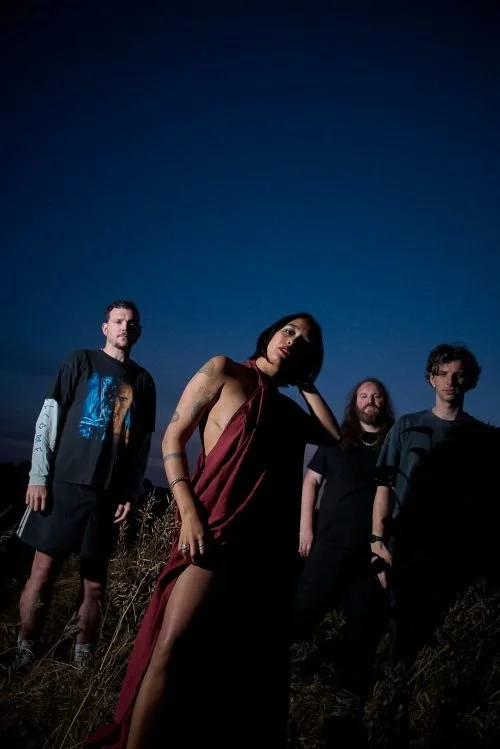
I have heard people ask what has happened to Kate Bush. There is a lot of wild wind and weather around her music, legacy and impact. Artists, actors and more discussing her brilliance and importance. However, what about the person who made this music?! Without using the word ‘recluse’, there is this curiosity around Kate Bush. Obviously, she has not released a studio album since 2011, and there have not been too many interviews the past few years. However, it is clear that she has noticed how Wuthering Heights has been picked up and how Emerald Fennell played a part in that. I don’t think it will speed Kate Bush up when it comes to a new album or anything like that. However, when the whole Stranger Things thing happened, she did do the odd interview and posted to her website. I am curious how she is reacting to all this new press and people like Margot Robbie mentioning her name and music. In addition to it being flattering, it goes to show that she does not need to release new music to be relevant and cherished. However, I do think that Bush will release a new album in the next year or two. There is that question about the time leading up to that. I am curious how Bush is viewing this and how she feels. Flattered by all the new honours and success for Running Up That Hill (A Deal with God), I do wonder if Bush will consider her legacy. What I mean is that she has remastered her studio albums and there has been retrospection. Would she ever be tempted to look back at an album like The Kick Inside and do something with that? She recorded a new vocal for Wuthering Heights in 1986 for The Whole Story (her greatest hits albums). It would be interesting whether Bush would ever explore those songs and do something with them; either a re-recording or bringing out an expanded edition of The Kick Inside.

What I think is more intriguing is an interview. Emma Barnett spoke with Bush on two different occasions after the Stranger Things phenomenon. The last time we have heard an interview with Kate Bush is 2024. Unless I have missed a more recent one. However, quite a bit has happened since then. Maybe a third chat with Emma Barnett, a talk with BBC Radio 4 or BBC Radio 6 Music, you can guarantee it would not be filmed. I have also seen an article that highlighted the most recent time Kate Bush has been photographed in public. Bush She attended the 60th London Evening Standard Theatre Awards at the London Palladium on 30th November, 2014, to accept the Editor’s Award for her Before the Dawn concert residency. She was photographed there, but also later in the year when she attended Elon John’s wedding to David Furnish. She has just led a normal and private life. She has been inducted into the Rock & Roll Hall of Fame and nominated for awards, though she has not made a public appearance. I suggested in another feature that Bush deserves an award and would she attend the ceremony. Not for the chance to see her in public, but because it recognises the incredible impact she has today. I think the days of Bush being filmed for interviews ended a long time ago. The only photos of her will be for promotional images should she release another album. However, many out there are fascinated by Kate Bush’s career in a way we have not seen for many years. The past four years have been huge in that respect. Everything does not have to be tied to a new album, so you would hope someone will approach her at some point. Maybe Bush does not want to give new interviews.

However, she is humbled and grateful for all this love. With the fever and debate around Emerald Fennell’s “Wuthering Heights” dying down and, with it, the discussion about Kate Bush’s debut single of the same name – minus the inverted commas - is losing a bit of heat. However, it has left a big impression and will lead to people who are not aware of her earlier music digging it. I am sure we will see smatterings of activity. Magazines writing about Kate Bush. Maybe one or two of her songs appearing in film and T.V. I would love it if there were a new interview. One of the most exciting aspects of all of this is imagining Kate Bush writing new songs and looking out and seeing and hearing people talk about her work. The passion there is for it and her! Bush might be done with retrospection, though it is clear that we cannot define her with one song. That was my fear. Running Up That Hill (A Deal with God) has this domination and I did wonder if it would bury the rest of her work. However, there has been this expansion. People not exactly going after the deep cuts, through Wuthering Heights getting this love is brilliant. Army Dreamers still being talked about. My mind keeps going back to recent interviews Bush took part in when she spoke with Emma Barnett. Especially the 2024 one. I have included them a lot of times in features, though I feel it is worth including it again. Is 2026 going to offer up a new interview with Kate Bush? Even if not, there is this continuing conversation and fascination. Bush’s work still so powerful and loved after all these years. Proving that she is one of the all-time greats. Lots of articles asking where Kate Bush is. We have to bide our time regarding new music, but it is clear she is not going to attend film premieres and be seen in public for the glare of the media. However, there is new momentum and impetus! Interesting to see what Kate Bush does next. When it comes to her…

NEARLY anything is possible!

FEATURE: Spotlight: The Sophs

FEATURE:


Spotlight


The Sophs

__________

ON 13th March…

The Sophs release their debut studio album, GOLDSTAR. You can pre-order the album here. I want to spotlight the band ahead of that release. The L.A. sextet are playing London’s 100 Club on 22nd April. That is going to be a hell of a gig! 2026 is going to be a very busy one for them. Promoting that debut album and taking their music around the world. They have a sound and vibe that you do not get with other bands. They have been tipped for big success by so many publications. The band consists of Ethan Ramon, Sam Yuh, Austin Parker Jones, Seth Smades, Devin Russ, Cole Bobbitt. The first interview I am getting to is from Hard of Hearing Magazine, and their 2025 chat with The Sophs as they played the End of the Road Festival in the U.K. They were asked about their formations and how British festivals compare to U.S. ones:

LA sextet The Sophs announced their signing to Rough Trade this year with the addictive debut single ‘SWEAT’, which spirals from something reminiscent of the intimate indie pop of Metronomy to a furious pitch more evocative of East Coast influences like Bodega and The Strokes. Subsequent singles elaborate on a sprawling musical approach that always orbits a deeply melodic core, the band always keeping focus on the hook that really makes a song. The band’s sprawling setup features lead vocalist Ethan Ramon, keys from Sam Yuh, Austin Parker Jones and Seth Smades on guitar duties (Seth also adds occasional accordion), Devin Russ on drums and Cole Bobbitt on bass. We met up with the band at End of the Road last month after their storming set at a packed Folly stage, comparing notes on Festivals on either side of the Atlantic and hearing about everything the band are excited to share in the coming months.

How did you guys all meet?

E: So Austin, Sam, Seth and I all are from Arizona, I graduated high school with Sam… The Sophs wasn’t formed until we moved out to LA and we were already friends with Cole and Devin and then it all just lined up.

Cole: We were all friends first before the music came along.

How do US festivals compare to UK?

C: I’ve been to Coachella for a few years… this is something completely different. There’s a lot more culture and, people are here to enjoy the music, less so to be seen by cameras. I feel like people go to Coachella and festivals like that to be seen by cameras. People are here to enjoy the music, it’s very refreshing for sure.

What are you most excited to share with listeners, either musically or beyond the music?

S: The end of ‘Blitzed Again’, the end of ‘Blitzed Again’ is magical.

C: I’m excited for all the music we have coming out… I think that since we’ve really strapped in and started working, everything keeps getting better and better, and we become closer as friends professionals, and it feels really special.

E: I think honestly just us as people. I think we have the rare opportunity, we’re fortunate enough to redefine ourselves in the context of this band, at all of our big ages, where all of us are old enough to be a little more in control of how we’re perceived, how we act, and the type of music we make. We’re not failing in public anymore, not creatively, not personally, so just really stoked to be a young adult in a band introducing myself to people, and it kind of sticking”.

Riff Magazine spent some time with The Sophs last year. A no-holds-barred and honest Rock and Roll band, they were signed to a big label despite not having this huge buzz or a relentless social media campaign. A rare occasion of a band being noticed because of tehri talent, live reputation and originality. Something they are not taking for granted as they prepare to release their debut album:

The Sophs’ live show has a unique, intense energy that seems to be resonating with audiences. The band attributes this in part to the power of playing together, the whole greater than the sum of the parts.

“When I watch the videos back after we’ve played a show, I’m kind of surprised,” Jones says. “When we’re playing, we’re still ourselves. But together we’re an entity, and we’re able to ride that energy through the show. Honestly, I do wish I could see it [from the audience] myself, because when I watch it back, it’s a lot of fun.”

The band has been hitting the road since last summer, including a short tour of the U.K. and Europe. Up next is an eight-date U.S. tour that begins at Bottom of the Hill in San Francisco on Oct. 28.

Rough Trade is the home of many of their favorite bands. The band Caroline comes in for particular praise from the band, for its unique and collaborative songwriting. The Sophs says that they are very collaborative themselves and strive for an organic process without famous super-producers and co-writers. Several of the members know how to produce, which they say helped them achieve the sound they wanted better than trying to explain it to an outsider.

They describe their production as “guerilla-style,” adding that being active in the Los Angeles music scene helped prepare for the moment when it came. Friends who work at studios helped them get recording time on nights and weekends.

“We plugged ourselves over these last couple of years, while we were amassing this catalog, Ramon says.”When the time came for us to utilize our resources and our connections and the Rough Trade story came along, we had a lot of people that were willing to help us out, which we’re eternally grateful for”.

here is one more interview that I am covering off before finishing things. In this interview with Atwood Magazine spoke with lead Ethan Ramon as he “fearlessly unpacks the shame, paranoia, catharsis, and brutal honesty driving his band’s irresistible, no-holds-barred sound”. I do think that GOLDSTAR is going to be among the best debut albums of this year. I might revisit the band later in the year:

DEATH IN THE FAMILY” is your second lifetime single, and one of the more vulnerable songs I've ever heard. What's the story behind this song? What makes it special, for you?

Ethan Ramon: Do you know the scene in 8 Mile where Eminem’s character starts off his final rap battle completely disparaging himself? He talks about how he lives in a trailer park with his mom, then finishes his verse with “tell these people something they don’t know about me.” He protects himself from any criticism, as he’s self-aware enough to identify the worst parts of himself and effectively “beat people to the punch” about himself by weaponizing his flaws and vulnerability. So picture me (Ethan) as Eminem in that scenario.

Ethan, you've said this song is one of the most personal songs you've ever written. What’s this song about, for you?

Ethan Ramon: It’s about shame and paranoia. Two traits I believe all people must have in order to be a good hang.

What do you hope listeners take away from “DEATH IN THE FAMILY,” and what have you taken away from creating it and now putting it out?

Ethan Ramon: I’ve been reading a lot of really touching DMs from fans of the song. I hope they find some sort of solace. That being said, I hope my weakness is not taken for kindness, and I’m not hailed as some sort of bastion of mental health. A flawed person is not going to only be flawed in ways that you can relate to, or are easily captured by an Instagram reel. I hope my status as a human is something everybody can continue to respect.

Lastly, tell me about the band’s latest single, “I'M YOUR FIEND”!

Ethan Ramon: [It’s] The Sophs at our most manic. It’s frenetic declarations of love and lust under a blanket of static so thick it feels like your DIRECTV satellite just got hit by lightning in the middle of your favorite show”.

I am going to wrap it there. I know there are other interviews from last year with the band, though I was eager to spotlight a few that approached the band and music from different perspectives. This feature is an introduction and starting point. People should do a bit more reading and digging, as L.A.’s The Sophs are primed for a huge rest of this year. GOLDSTAR is out on 13th March. I would advise people to check it out. They may be in their earliest phases at the moment, but you know The Sophs are a band with…


A long career ahead.

___________

Follow The Sophs

FEATURE: One for the Record Collection! Essential March Release

FEATURE:


One for the Record Collection!

IN THIS PHOTO: RAYE releases her hugely anticipated second studio album, THIS MUSIC MAY CONTAIN HOPE, on 28th March/PHOTO CREDIT: Willy Vanderperre for ELLE


Essential March Releases

__________

NEXT month is a busy one…

IN THIS PHOTO: Robyn releases Sexistential on 28th March/PHOTO CREDIT: Marili Andre

and there are some great releases to get to. Let’s start out with 6th March and two albums I want to highlight. The first is Squeeze’s Trixies. The legendary band have a new album out. I am a big fan of theirs and have been since I was a child. You can pre-order it here. Available in a range of formats, I would recommend this to existing Squeeze fans and those who may not have heard of them. A terrific group who have been consistently brilliant through the decades:

Trixies, the new studio album by Squeeze, could have been their very first record. Written by Chris Difford and Glenn Tilbrook when they were just 19 and 16 respectively, Trixies is a concept album born of imagination and nostalgia. Inspired by a fictional members' club dreamt up in the early ‘70s and imagined as existing in the “future” (the ‘80s), the album channels a world reminiscent of a ‘20s or ‘30s speakeasy – glamourous, smoky, and populated by colourful characters. Although the album was demo-ed at the time it was never released, and only revisited decades later. Now, the record is fully realized with today’s musicianship and production, combining teenage brilliance with seasoned artistry; its lyrical themes and narrative sweep offering fertile ground for storytelling and immersive campaign touchpoints”.

I am going to get to one of the biggest albums of this year. In terms of anticipation. Harry Styles’s Kiss All the Time. Disco, Occasionally has gained a lot of excitement and speculation. You can pre-order the album here. Harry Styles has given some recent interviews. However, not too much has been revealed about his forthcoming album. Last month, The Guardian were among those who reacted to the announcement of a new Harry Styles album:

After a brief teaser campaign in which billboards around the world promised “we belong together” and “see you very soon”, Harry Styles has announced his fourth solo album.

Kiss All the Time. Disco, Occasionally will be released on 6 March. It was produced by Kid Harpoon, the British songwriter and producer who has worked on all of Styles’ previous albums. The artwork shows the 31-year-old pop star wearing sunglasses and ducking beneath a disco ball seemingly suspended from the night sky.

The 12-song track list has not been shared – nor any music – but Styles’ web store offered packages including vinyl, cassettes, T-shirts, what appears to be an analogue camera and a bum bag. The site seemed to immediately crash on the announcement.

The long-awaited album news followed Styles sending a voice note of him singing “we belong together” to fans who had signed up to a WhatsApp promo line earlier in the day.

It has been reported that Styles will give a second residency at Madison Square Garden in New York after playing 15 sold-out shows at the venue in 2022. It is also rumoured that Styles will hold a residency at the Co-op Live in Manchester, in which he is an investor. He has been tipped by bookies as a potential headliner of Glastonbury 2027 after the festival takes a fallow year this summer.

Kiss All the Time. Disco, Occasionally comes four years after Harry’s House, which reached No 1 around the world and was certified triple platinum in the UK with more than 900,000 certified sales. It won the coveted album of the year at the 2023 Grammy awards in addition to two other categories. It was also named album of the year at the 2023 Brit awards and spawned the hit single As It Was, his most-streamed song on Spotify with 4.2bn streams.

The last new music Styles released was Forever, Forever, an eight-and-a-half minute instrumental song played on piano that he previously performed on the final date of his 2023 tour. Each of Styles’ previous albums was co-produced by Kid Harpoon and Tyler Johnson.

The album will be Styles’ first since the death of his former One Direction bandmate Liam Payne in October 2024 at the age of 31. Payne fell from the third-floor balcony of a hotel in Buenos Aries. In a statement released at the time, Styles said that Payne’s “greatest joy was making other people happy, and it was an honour to be alongside him as he did it”. One Direction were active from 2010 to 2016 after being formed on The X Factor.

Outside music, Styles has made headlines as a marathon runner. He finished the 2025 Tokyo marathon in three hours and 24 minutes in March, but blitzed his own time at the Berlin marathon in September, achieving a coveted sub-three-hour finish in two hours and 59 minutes. His lifestyle brand Pleasing also made the news last year when it launched a sex toy and lube, complementing the line’s apparel, accessories and beauty products.

In May, he was, mysteriously, spotted in Rome awaiting the announcement of the new pope, Leo XIV, wearing a cap emblazoned with “techno is my boyfriend”. If his new record contains religious themes, he will be in good company, after Rosalía’s Lux: released in November, the Catalan star’s fourth album referenced numerous saints from across history.

Styles has also backed Ed Sheeran’s call for the government to provide funding for music education, investing in schools, training for music teachers, grassroots venues, apprenticeships and a diverse curriculum.

In 2022 he starred in the films My Policeman and Don’t Worry Darling. Styles has no future publicised movie appearances”.

There are some really great albums coming out on 13th March. I would recommend James Blake’s Trying Times. You can pre-order it here. Blake is one of our greatest songwriters. I am looking forward to his latest album. One that will rank alongside his best. Judging by the songs that have been released already, it could be among the best albums of this year:

Trying Times is a record about being in love whilst battling the limits of the self against a backdrop of global uncertainty. James Blake explores the tension between intimacy and isolation, the pressure to curate and perform even as everything, inside and out, feels fragile and precarious. Themes of reflection, both literally and metaphorically, run through the record’s visual presentation, as Blake holds a mirror to the contradictions of modern connection - how we see ourselves, how we’re seen by others, and what gets lost in between. It’s about the disorienting loop of joy and dread: feeling safe in love, yet knowing the bubble could burst at any moment; struggling to stay present while global anxiety and private doubt pull you in different directions. A meditation on love, identity, and fragility in an age where the world feels balanced on a knife edge”.

Kim Gordon’s Play Me is released on 13th March. You can pre-order it here. One of the greats of music, I do love her solo work. Many might only associate her with being in Sonic Youth. However, she is a tremendous solo artist who put out her debut album in 2000. I think that Play Me is going to be another wonderful album from Gordon:

Kim Gordon’s vision of art and noise has come sharper into focus just as readily as it has changed—a paradigm of possibility that, four decades on, still feels like a dare. The adventure continues on the artist’s third solo album, Play Me, released by Matador Records.

Play Me is distilled and immediate, expanding Gordon’s sonic palette to include more melodic beats and the motorik drive of krautrock. “We wanted the songs to be short,” Gordon says of her continued collaboration with LA producer Justin Raisen (Charli XCX, Sky Ferreira, Yves Tumor). “We wanted to do it really fast. It’s more focused, and maybe more confident. I always kind of work off of rhythms, and I knew I wanted it to be even more beat-oriented than the last one. Justin really gets my voice and my lyrics and he understands how I work—that came forth even more on this record.”
In 2019, Gordon’s debut solo LP No Home Record proved she was attuned as ever to vanguard sounds, mixing avant-rap and footwork into her sonic conceptual art. The Collective, in 2024, was brick-heavy and even more daring, led by the tectonic industrial clatter of her packing-list-cum-rage-rap banger ‘BYE BYE’ and earning two Grammy nominations.

The fast-following Play Me processes, in Gordon’s inimitable way, the collateral damage of the billionaire class: the demolition of democracy, technocratic end-times fascism, the A.I.-fueled chill-vibes flattening of culture - where dark humour voices the absurdity of modern life. But despite its frequent outward gaze, Play Me is an interior record, one in which a heightened emotionality pulses through physical jams, rejecting definitive statements in favor of an inquisitiveness that keeps Gordon searching, ever in process”.

The last album from 13th March I am recommending is The Orielles’ Only You Left. This is a band that you may not be aware of. However, The Orielles are tremendous and I would urge people to pre-order their new album. If you need some more details about them and what to expect from Only You Left, then Rough Trade have provided some words. I think that Only You Left will get some amazing reviews. This is a group that I am keen to see live soon, as I have not done so yet:

Through this process of creative renewal, the Manchester-based trio – completed by drummer Sidonie Hand-Halford – have managed to weather a pandemic, defy the fickleness of a trend-led music industry, and emerge, phoenix-like, with something familiarly Orielles, yet altogether different.

Recorded in two locations – Hydra and Hamburg – over the summer of 2024, the 11 tracks of Only You Left sees the band consolidate the bold experimentation of their previous LP, Tableau (2022), with a return to the more stripped-back, song-led approach of their early origins.

“There’s nothing more trad than a three-piece,” quips Henry, in reference to the band’s decision to return to their roots as a trio. Originally from Halifax, the Orielles first came to recognition in 2018 with their debut album, the indie-rock Silver Dollar Moment, which is approaching its eighth birthday in February 2026. “These things come in like seven year cycles. So we've come in like a full circle back to a familiar place, just as different people.”

By exploring binaries and contrasts, the Orielles are finding shapes in the chaos and confusion of the world around us – it’s an undertaking that benefits from more than 15 years of close collaboration, driven by friendship and the artistic compulsion to find meaning in music”.

A couple of albums from 20th March to spotlight before moving on. The first is Ladytron’s Paradises. This is a group that I have been following for a while now. I am excited about Paradises. You can pre-order a copy of their album here. If you are unsure about the album, then I would recommend that you investigate it. Ladytron are a terrific group that always deliver something special:

The iconic and influential electronic pop group Ladytron returns with a new album Paradises - their first since 2023's critically acclaimed Time's Arrow.

Spanning dance and indie movements since their formation in Liverpool at the end of the last millennium, Ladytron have earned a unique position by carving out new sonic and conceptual space, and refusing to abide by formula or trend. In the early 2000s, the fiercely individual group were placed at the forefront of the so-called electro-clash scene (which now enjoys another revival), but with time, they came to appreciate the pop cultural moment that they had reluctantly become part of.

The new album follows a period of renewed cultural presence for the band. Their 2002 single "Seventeen" unexpectedly went viral on TikTok, introducing Ladytron's sound to a new generation and amassing hundreds of thousands of fan-made clips. Their legacy was further acknowledged recently with "Destroy Everything You Touch," one of their most celebrated tracks, featured in the GRAMMY-nominated original Motion Picture Soundtrack of cult movie Saltburn, reaffirming Ladytron's enduring appeal”.

I am going to bring in Avalon Emerson & the Charm’s Written into Changes. I have known about Avalon Emerson and her work for a while now. This moniker is something I am new to. I am a little late to the party in that sense. You can pre-order the album here. It does sound like it is going to be a fantastic and interesting album. Below is a bit more information for you:

Change, they say, is the only constant in life. Fittingly, multi‑hyphenate musician Avalon Emerson sounds at home harnessing the steady flux of her existence on Written into Changes, the memoiristic second album released under her Avalon Emerson and the Charm moniker. A work of rigorous invention and revision, the album’s themes of personal and relationship evolution “came into clarity after they were all done,” according to Emerson.

The making of Changes was, appropriately enough, very different from that of and the Charm. While that album was, in Emerson’s words, “soft and bedroomy,” the energy was upped this time around, as Emerson carefully considered how this material would work in a live context. The resulting body of work is band‑driven but groove‑heavy and dance‑adjacent. The break‑beat‑assisted “Eden” has a “baggy” sound that’s reminiscent of dance‑rock hybrids of the late ’80s and early ’90s. The witty “How Dare This Beer” was written in loving tribute to the Magnetic Fields. “’87 to ’94 is my idea of the best era of music,” says Emerson. “And with Nathan, our musical taste overlaps quite a bit.”
Nathan is Nathan Jenkins, aka Bullion, who co‑produced & the Charm and returned to handle the bulk of its follow‑up. Much of the recording took place in Braintree, England, in the winter into spring of 2024. The two tracks co‑produced with Rostam Batmanglij (“Jupiter & Mars” and “Earth Alive”) were cut in Los Angeles. Synth touches were added at the Synth Cabin at Rosen Sound in Glendale, California. While the collaborative creation of Written into Changes diverged considerably from Emerson’s dancefloor‑tailored solo productions, the influence of dance music is splashed all over it. Emerson was fixated on her music’s low end as she crafted it. “Bass was definitely a priority,” she says.

Emerson wrote the melodies and lyrics on Written into Changes, and the majority of the latter were sourced from her personal life. “It was a goal with my lyrics this time around to be a little bit more direct,” she says. The title track, one of the artist’s favorites, is about her move from Berlin to Los Angeles in 2020. The frenetic “Happy Birthday” has a sunny spirit anchored by gently devastating lyrics like those of the refrain: “Too young to die / Too old to break through.” That track arrives having been club‑tested—Emerson has already dropped it into her sets at clubs like Panorama Bar at Berlin’s Berghain and Brooklyn’s Nowadays. Both “Eden” and “Country Mouse” are odes to Emerson’s relationship with her wife, Hunter, while “I Don’t Want to Fight” and “Earth Alive” are “about realizing you can't change people and trying to take them for who they are, and sometimes that means loving them from afar,” she says.

Written into Changes is an album about not just accepting change, but embracing it with a full wingspan. Progression is a theme both on record and behind the scenes, so that “written into changes” describes a conscious approach to expression and life itself”.

There are some huge albums due on 27th March. I shall end with them. Courtney Barnett‘s Creature of Habit is one I am especially looking forward to. Her fourth album, she is always superb. The themes she tackles on this album and what she wants to accomplish are fascinating. Her music has evolved since her earliest days. This is an artist that you need to follow and support. Go and pre-order here album here:

Courtney Barnett releases her fourth studio album Creature Of Habit including single 'Site Unseen featuring Waxahatchee.

Creature of Habit marks a decisive new chapter in Courtney Barnett’s musical evolution. It’s a bold, emotionally resonant record that explores the central question: how to get out of your own way so you can truly feel your life. Written in the wake of a relocation from Australia to Los Angeles and the closure of her long-running label Milk! Records, Barnett was grappling with changes that put the future of both her life and career in question. Rather than internalizing those feelings, she decided to bring all this swirling confusion directly into the recording process”.

Another album that is well worth pre-ordering is Flea’s Honora. One of music’s great bass players, you know his work with Red Hot Chili Peppers. However, he is this incredible solo artist whose upcoming album is one you will want to add to your collection. Pre-order it here. The collaborators that he brings into Honora are amazing. It is going to be such a brilliant album you will not want to miss out on:

After a nearly five-decade (and counting) career as one of his generation’s defining rock bassists, Flea releases his first full-length solo album, Honora, on Nonesuch Records.  Time and space have finally allowed him to return to his first musical loves: jazz and playing the trumpet.  The album features the track ‘Traffic Lights’, co-written with Thom Yorke and Josh Johnson, as well as the previously released ‘A Plea’.

For Honora, which takes its name from a beloved family member, Flea composed and arranged the music, and also plays trumpet and bass throughout, joined by an elite crew of modern jazz visionaries: album producer and saxophonist Josh Johnson, guitarist Jeff Parker, bassist Anna Butterss, and drummer Deantoni Parks.  The record features vocals from Flea, as well as friends Thom Yorke and Nick Cave.  Mauro Refosco (David Byrne, Atoms for Peace) and Nate Walcott (Bright Eyes), among others, also join the band.  The album comprises six original songs – including one co-written by Flea, Johnson, and Yorke – as well as interpretations of tunes by George Clinton and Eddie Hazel, Jimmy Webb, Frank Ocean and Shea Taylor, and Ann Ronell”.

I am ending with two huge albums. Both from artists whose name starts with the letter r. Let’s get to RAYE’s THIS MUSIC MAY CONTAIN HOPE. You can pre-order it here. It is going to be one of the most acclaimed albums of this year, I can feel it! One of the most anticipated ones too.  Her award-winning and acclaimed debut album, My 21st Century Blues, was released in 2023. There has been a lot of success and love for that album. THIS MUSIC MAY CONTAIN HOPE is the next chapter. A title that suggests something more optimistic than her debut, it will be interesting to see what this incredible artist offers:

Four-time Grammy Award-nominated global superstar Raye, is releasing her highly anticipated sophomore album THIS MUSIC MAY CONTAIN HOPE. The album, set in 4 “seasons” with each side of the vinyl being a different season, takes listeners on a sonic journey that begins with darkness and ends with light.

“Music is medicine. I’ve always said that, and I guess I’m in the process of making medicine for myself that I can share with the world. I want us all to say to ourselves that it’s going to be all right, and I’m going to have faith in the seeds that I’ve planted beneath the snow. I wanted to create something that is a hug or bed or soft place for that person who needs it”.

I am ending with Robyn and Sexistential. One of the most enduring and beloved artists there is, this album is going to be a smash.!I can see a lot of critics giving it the highest marks. One that comes out on 27th March, you will want to pre-order it. Ending out a great month for new music, Robyn will grace us with an album. Something that we have been waiting for:

Sexistential is the most ecstatic record that Robyn has ever made, the sound of one of contemporary music’s most influential artists coming home. After the club music meditations of 2018’s Honey, the album features nine, deeply playful pop songs that tie back to her era-defining Body Talk trilogy, designed to feel “like a spaceship coming through the atmosphere at a really high speed and crash landing”, she says. “That’s how I felt, like I’d had all these experiences searching too far out into space, and now I’m crashing back into myself.”

Co-produced mainly with longtime collaborator Klas Åhlund, Sexistential is emphatic and punchy, defiant about both emotional and biological pleasure, need and softness. The album’s title started life as an in-joke before she realised it said everything she wanted to say. “Exploring my sensual life is the same feeling as when I make a good song,” she explains. “It’s such a beautiful kind of sensitive vibration that takes so much work to keep afloat. I feel like the purpose of my life is to stay horny - it doesn’t even have to be about sex, but it’s feeling sensual and attracted to things that I enjoy, and not letting anything take over that.”

To celebrate the news, Robyn released two new tracks from the album. Building on the success of acclaimed first single “Dopamine”, new singles “Talk To Me” and “Sexistential” further reveal one of the decade’s most celebrated comebacks. “Talk To Me” – produced by Klas Åhlund and Oscar Holter, and featuring Max Martin as a co-writer (their first collaboration since 2010’s “Time Machine”) – is pure, unadulterated fun, like Robyn trying to write a Prince or Gap Band song but underpinned with uber-contemporary production. “I wrote it during the pandemic when there was no way to be physical,” Robyn says. “I like talkers, that turns me on”.

A diverse and busy month for new albums, I hope that the suggestions above have been of use. There are other albums out next month I have not mentioned that you may want to check out. Something for everyone, we have Harry Styles, Robyn, RAYE, and so many other artists putting out stuff in the same month. So much to look forward. March is going to be…

A wonderful month.

FEATURE: The Day Writes the Words Right Across the Sky: The Spread of Kate Bush’s Music

FEATURE:


The Day Writes the Words Right Across the Sky

IN THIS PHOTO: Kate Bush in 2005/PHOTO CREDIT: Trevor Leighton


The Spread of Kate Bush’s Music

__________

CONNECTED to my features…

IN THIS PHOTO: Kate Bush in 1978/PHOTO CREDIT: Gered Mankowitz

about Kate Bush that concern her legacy and how relevant she is today, it is worth noting how her work has spread through the years. Many artists influence certain types of sectors and corners of culture. There are a few greats that go beyond that and have made a huge impact right across the board. Their music has been used on T.V., film and there is this enormous spread. Kate Bush is definitely someone who can stand alongside the very best in that sense. I am going to mention some of the people who were in attendance in 2014 for Before the Dawn. As the live album turns ten in November, I am thinking about the residence and how significant it was. One of these once-in-a-generation things that truly blew people away. Kate Bush’s music, in the 1970s and 1980s, definitely had this legacy. It was influencing artists and being played around the world. However, the advent of the Internet definitely helped bring it to new places. She is not one of these artists who agrees to every request that comes her way when it comes to using music in film and T.V. However, there have been occasions when T.V. shows have used her songs to incredible effect. Of course, Stranger Things and Running Up That Hill (A Deal with God). That was in 2022. That same song has also appeared in Pose, It’s a Sin, GLOW, The Lake, CSI: Crime Scene Investigation, Clique, The Real World Homecoming and others. You do wonder how Bush decides which shows can use the songs. That is quite a broad range of shows with different fans and followings. No too much connects those shows. However, each time that song appears, it will connect with those who watch the shows. Her music scoring scenes across these eclectic and fascinating T.V. series/shows. This Woman’s Work has been used in Alias, It's Always Sunny in Philadelphia, The Handmaid's Tale, The Pact, and films including A Man Called Otto and The Mother.

Cloudbusting featured in Gossip Girl and Palm Springs. Hounds of Love was in Shadow in the Cloud. Babooshka has been played in Happy Valley. The Man with the Child in His Eyes was in Ashes to Ashes. Wuthering Heights in Behind Human. The Simpsons used π. The Morning Fog was in The Bear. Hello Earth showed up on Miami Vice. Under the Ivy used beautifully in I Hate Suzie. Think about all the different audiences who have watched those films and shows. How diverse those productions are. Beyond that, to the stage, there are tribute shows and cabaret performance. Dance and performance art shows. Orchestral performances too. In terms of the spread of her music, there are few artists who have had this music used in such a wide-ranging way. Again, maybe a sprinkling of legends, but it is a rare accomplishment. Her music has featured on shows like The X Factor. It is commercial enough that it can be brought to the screen on these mainstream shows. However, it can also sit on a show like The Handmaid's Tale. Something that is not especially mainstream and glossy. That is the power and adaptability of Bush’s music. In terms of artists who have covered her, again, it is a broad spread. Placebo, CMAT, The Last Dinner Party, Ra Ra Riot, The Decembrists, Georgia, Maxwell, The Puppini Sisters, The Staves, Gemma Hayes, Dusty Springfield and Saint Saviour are just a selection of artists who have covered her music. If Running Up That Hill (A Deal with God) remains the most popular in terms of the number of covers, Suspended in Gaffa, Love and Anger and Wuthering Heights have been covered. I am always gladder when someone covers a lesser-known song. Maybe that is the one blind spot or negative: people not really going as deep as they should. Songs that are not covered and used in film and T.V. The fact The Bear used The Morning Fog was great. The Simpsons’ inclusion of π. If you were to draw this diagram about all the different artists, shows, films and theatre productions that have used her music or covered it, then it would be such a broad map! Dance acts like Utah Saints, The Prodigy, E-Clypse and Blue Pearl have sampled her work. A Folk heroine, she is also hugely adored in the worlds of R&B and Hip-Hop. I am sourcing from Graeme Thomson’s Under the Ivy: The Life and Music of Kate Bush, where he discusses how far and wide Bush’s work has reached. Prince and Tupac Shakur were fans. Big Boi is a massive champion. Tricky loved her music.

I do think that Kate Bush gets narrowed down and seen as a particular artist. That her music has only reached a certain type of audience. I am glad that she got this new focus through Stranger Things. However, Bush’s work has always appeared on screen. It has been covered so many times. Perhaps there is the temptation for people to go for more obvious songs, though the sheet variety of people who have tackled her music is stunning. Rita Ora, St. Vincent, Nerina Pallot and Solange you can also toss in there. When it came to those in attendance in Hammersmith for Before the Dawn in 2014, we had members of Pulp, Orbital, Pet Shop Boys, Prefab Sprout and Sparks. Kiera Knightley, Daniel Craig, Miranda Richgardson, Terry Jones, Dawn French, Tim McInnerney and Frank Skinner. From comedy to the big screen through to music, that was just a small selection of the incredible names that flocked to see one of their favourite artists, Lauren Laverne, Björk, Annie Lennox, Grace Jones, Paul McCartney, Florence Welch and Elton John. Madonna was reported to be in attendance. Mani, Kate Moss and Stella McCartney were there. The world of fashion showing their love. Bush’s music has long been used in fashion shows. Designer Greg Myler used Bush’s music for his Milan show.  Bush was nominated in thew British Style category for the 2014 British Fashion Awards. Phoebe Philo opened her Céline show with This Woman’s Work and was wearing a Kate Bush T-shirt (that she bought at Before the Dawn days earlier). Authors who attended Before the Dawn included David Mitchell, Philip Pullman and Jeanette Winterson. The unique nature of Kate Bush’s lyrics resonated with authors. They are also universal lyrics. That paradox that means her work spreads so far and wide!

Her influence continues to grow and spread. The L.G.B.T.Q.I.A.+ community hold her up as an idol. Bush’s charity work and raising money for War Child means that she is also seen as this humanitarian figure. Or at the very least, someone who is hugely charitable and benevolent. This has inspired other artists and people throughout culture to do likewise. To user their platform and music to help raise awareness. People responding to her uniqueness and vision. Her singularity and openness. I have spoken about the need to recognise her influence in terms of the artists who cite her as important. Where you can hear Bush’s impact in their own work. I do feel a larger project should reflect Bush’s influence. Maybe a documentary (which I have pitched). Rae Morris, Peaches, Guy Pearce and Gemma Arterton. You can go on forever and ever looking at all the people who count Kate Bush as an idol or someone they admire. This has intensified over the past few years. I guess there is the temptation for every filmmaker to ask Bush for permission to use her music, as they want a viral moment. However, there is also that respect and affection. Not anting to bombard her. Bush is quite discerning, though she also is happy for her music to be used if done right. If she feels it adds to a scene. Lauren Mayberry and ANGELINAÏ covered Running Up That Hill (A Deal with God) last year. Kate Bush’s music continues to be celebrated through high-profile orchestral tribute tours, specialized cover performances, and a resurgence driven by new media, particularly surrounding a 2026 “Wuthering Heights” movie adaptation. Charli xcx wrote the soundtrack and has mentioned her love of Kate Bush. Star Margot Robbie has. There are new covers of Army Dreamers. Considering the bloodshed and warfare around the world, that song influential and powerful to this day -over forty-five years since it was first heard. We have Cloudbusting in Paris, Cloudbusting - The Music of Kate Bush, Classically Kate Bush Tour, club nights and listening parties that have happened or will happen his year. One cannot deny just how vast her legacy is. Stretching and growing in terms of where her music reaches and how it is being represented and used, this will continue to grow for generations more. So many artists today who you can feel Kate Bush running through. That kind of power and genius reserved only for a select few. It is a major reason why so many people love…

THIS music great.

FEATURE: Kate Bush: Them Heavy People: The Extraordinary Characters in Her Songs: The Man with the Stick (Constellation of the Heart)/Peter Pan (Oh England My Lionheart)

FEATURE:


Kate Bush: Them Heavy People: The Extraordinary Characters in Her Songs

IN THIS PHOTO: Kate Bush during the back cover shoot for 1978’s Lionheart/PHOTO CREDIT: Gered Mankowitz


The Man with the Stick (Constellation of the Heart)/Peter Pan (Oh England My Lionheart)

__________

I am going to come back to…

IN THIS PHOTO: Kate Bush in the make-up chair during filming of the 1993 short film, The Line, the Cross and the Curve/PHOTO CREDIT: Guido Harari (via The Guardian)

Kate Bush’s Lionheart and The Red Shoes again, as there are more characters to explore. From the latter, Moments of Pleasure has loads. There is The Song of Solomon and Rubberband Girl. In Lionheart, we have Kashka from Baghdad, Coffee Homeground and Hammer Horror. I have included at least two characters from each of Kate Bush’s studio albums (I am not including Director’s Cut), except for Hounds of Love and Never for Ever. I will team these albums next, before including characters featured outside of her albums. Maybe on B-sides or rarer songs, it is fascinating seeing the full extent of the figures that appear in her music. Not always human. There are also suggestions of people who are not named. You know who she is referring to. I am starting out with The Man with the Stick. There are not that many unnamed characters in her songs. Bush usually referring to people or characters directly I feel. I think that the influence of literature and the screen means she likes to have characters that are rounded, named or tangible. You get semi-anonymous characters, and I sense she alludes to herself without writing necessarily in the first person or revealing herself. However, there is this sense of mystery when she does drop in these unnamed characters. Appearing in Constellation of the Heart, it leads me to discuss her lyrics and their power; Bush discussing love and loss more in 1993 (or when she was writing The Red Shoes); rarer cuts that have never been performed live or been re-recorded. These songs that are terrific but have been buried somewhat. I also want to discuss the somewhat unique sound of The Red Shoes. In terms of the fact that (the album) maybe is not as warm and natural as what followed, and what would come after. I think Kate Bush’s songbook is as broad as any artist ever. I am including The Beatles in that! This is true when it comes to the compositions, the range of instruments, the way she was hugely different on each album.

I feel it is especially true of her lyrics. In sheer terms of what she writes about, there are few artists who are as eclectic and surprising. Many felt that 1993’s The Red Shoes marked a low point. Sure, Bush had to deal with personal loss and exhaustion. She was in a decade where she was no longer seen as this innovative forerunner and someone who was leading a pack. What she produced for 1989’s The Sensual World could perhaps not cut it in the 1990s. The Red Shoes is a great album but perhaps one that suffers because of the cracks, tiredness and struggles to adapt to this new decade. Bush also not having had time to breathe since the start of her career. I have seen people look at the lyrics on The Red Shoes as being cliché, boring, lacking inspiration and ordinary. Maybe that it is true of a few songs, as I do think that Why Should I Love You?, You’re the One and Big Stripey Lie are not as engaging as they could be. What I will discuss in a moment is how Bush is not only writing about the heart but to it too. I do think that The Red Shoes features some of Kate Bush’s most extraordinary lyrics. From Eat the Music and the fruit metaphors and symbolism. Mixing the edible with the sensual and profound. In Moments of Pleasure and that deep emotion and Bush remembering those dear to her that have passed. The Song of Solomon and Lily are remarkable. The title track is stunning too. I have said how one issue with The Red Shoes is the sequencing. Constellation of the Heart is the last of the great tracks. It comes right after the brilliant Top of the City – another song with remarkable lyrics -, but the final three tracks are quite weak in a sense. A slight reorder would have led to a stronger whole. Maybe people ignore Constellation of the Heart, as it appears as track nine. As of writing this piece (15th February) it is the fifth-most streamed track on The Red Shoes, so it has found an audience. It is the lyrics that are stunning. Some Kate Bush songs are economic or have fewer words. However, I feel Constellation of the Heart is one of the fullest. I wanted to highlight some examples of her genius. I’ll start with the character I am focusing on and who he may be: “Ooh and if you see the woman with the key/I hear she's opening up the doors to Heaven/Oh and here comes the man with the stick/He said he'd fish me out the moon”. There is that woman with the key and there is a man with the ladder, but they are mentioned but never materialise. I do love this man and what he might look like. That idea of fishing Bush out of the moon. The whole song is fascinating. How Bush referencing a track from Hounds of Love in one section: “We take all the telescopes/And we turn them inside out/And we point them away from the big sky”. In fact, there is another character I am not mentioning, “Well we think you'd better wake up capt'n/There's something happen'n up ahead/We've never seen anything like it/We've never seen anything like it before/I want a full report/That's it/What do you mean, "that's it?". This captain. You imagine what he looks like. In Constellation of the Heart, Bush is philosophical (an idea of turning a telescope maybe inward and seeing stars in the heart and the galaxy of emotions), funny, conversational and emotional.

Do we talk enough about songs like Constellation of the Heart?! It is a remarkable track that has one of Bush’s best vocal performances on The Red Shoes. Her backing vocals too. It is so heady and fulsome! Maybe, with Bush mentioning The Big Sky in her lyrics, she is distancing herself from a theme and sound of the past. Where she is more whimsical, childlike and fantastical. Perhaps not seeing those songs as serious or wanting to push away from that, I don’t think Bush discussed Constellation of the Heart. The power of the lyrics on Constellation of the Heart are replicated and reflected in other songs. Ones I have mentioned. The Red Shoes is an album that got a kicking and is overlooked today. It is so rich and accomplished. Even some of the ‘lesser’ tracks have interesting elements. Bush playing electric guitar (for the first time) on Big Stripey Lie. What you get from You’re the One, And So Is Love, Why Should I Love You? and Constellation of the Heart is Bush very much being more personal and looking inward. She was a bit on albums before The Red Shoes, though now in her thirties, I feel she wanted to change the narrative a bit. Maybe reacting to the breakdown of her relationship with Del Palmer and this dislocating time, Bush puts her heart out there more than she had previously. Aerial is when she went even further, though more from a maternal standpoint. That effusiveness from her new son, Bertie. I don’t consider the early-'90s as this time when artists were being especially emotive or revealing. Maybe artists like Tori Amos were. However, I associate it more with something perhaps less emotion-led. That might be wrong. Constellation of the Heart is not a typical representation of what was being released in 1993. There was observation around the slightly lyrical weakening. How (in their view) Bush was not at her peak. Many felt that The Red Shoes did not really gel and songs were half-formed. When I discuss Rubberband Girl and Moments of Pleasure, I will highlight again how strong the songs are and how different. Bush maybe not seen as out-there as she once was. She could not win. People criticised her oddness. They criticised everything she did. Maybe that sense that this evolution was a step back – and not forward. However, the fact that Bush turns the telescope inwards and looks at human emotions and her personal life – though some would say she is writing generally and not specifically about her – is a wonderful thing.

Constellation of the Heart is a rare example of a song that was not released as a single, performed live or re-recorded. Many songs from The Red Shoes were reworked for 2011’s Director’s Cut. I feel that Constellation of the Heart should have featured. Maybe take out Rubberband Girl. Whilst Top of the City featured in 2014’s Before the Dawn residency, Constellation of the Heart did not. Consider this article, and what they noted about Constellation of the Heartis squelchy funk and the most dated production. A bit Prince and a lot Peter Gabriel, Big Time etc. Chorus sounds like lots of people although only two people are credited. I can see people might think she was running out of inspiration and following trends. Nothing wrong with this but then again nothing too exciting. Some nice audio touches. I suppose it’s a bit of an audiophile record. File alongside Dire Straits and the Blue Nile for playing through you flash hifi system”. Why did Bush not strip it back down and have this incredible version of Constellation of the Heart surface in 2011?! That idea of the dated production is one of the major issues with The Red Shoes. I do feel like Bush was always trying to push herself as producer, or at least give every album  different sound. That idea of the production being dated. I am focusing on The Man with the Stick. This intriguing figure from Constellation of the Heart. You are perhaps more distracted by the production and miss that lyric. The Red Shoes a little dated in a way none of her other albums are. The drums often feeling compacted or unnatural. Compressed and lacking the warmth of The Sensual World, the power and beauty of Hounds of Love and the sense of wonder, scope and intimacy you get with Aerial, perhaps that somewhat dogs the brilliance of The Red Shoes. I do think that Constellation of the Heart is remarkable and showcases Bush’s continuing lyrical gift. How I am focusing on this unnamed character that has an important place in a song that is both personal and universal. One of her most compelling music moments. A wonderful vocal. Perhaps a little overshadowed by the production. Such a shame Bush did not include this song in Director’s Cut, as it would have shone a light on its brilliant heart, soul and bones!

This is a bit of a cheat. I am mentioning a song from Lionheart that name-checks Peter Pan but it is not In Search of Peter Pan. It is odd that Bush included him twice! Maybe this is why she wrote a song like Constellation of the Heart. Detaching from that fantasy and child-like sense of purity and curiosity. Oh England My Lionheart is a song Bush was fond of at a certain point. More and more she started to get embarrassed by it and then dismissed it altogether. She did perform it as part of 1979’s The Tour of Life, so perhaps she was tired of the song. Maybe Bush aware that this song might lead to mockery: “Oh England My Leotard’ is a song written by Peter Brewis and performed by Pamela Stephenson on Not The Nine O’Clock News, the BBC’s alternative comedy show. It was a bastardised version of Them Heavy People with alternative lyrics”. Before getting to some interviews where Bush talked about Oh England My Lionheart, I did want to mention how I will discuss Disney and Bush’s child-like side. I will also move to the melody and the way she was such an accomplished writer of these melodies and choruses that get into the heart. The imagery on Oh England My Lionheart of warfare and battle. Both of modern wars and also Richard the Lionheart. Though not a true title track, I feel Oh England My Lionheart nods to Richard the Lionheart (King Richard I of England), who died on 6th April, 1199, at the age of forty-one. He died in Châlus, France, from a gangrenous wound caused by a crossbow bolt, which he sustained while besieging the castle of Châlus-Chabrol on 26th March, 1199. Before moving along, this detail from the Kate Bush Encyclopedia: “Kate performed ‘Oh England My Lionheart’ during the Tour of Life as the first encore of the evening. Dressed in an old, oversized flying jacket and air helmet, she sung the song on a set inspired by old war films like ‘A Matter Of Life And Death’ and ‘Reach For The Sky’. Her dying comrades lay around the stage. The coat belonged to David Jackson, set designer on the Tour of Life, and according to him “she was naked underneath it. Somebody found that out and offered me £1000 for it but I turned him down. He was so besotted that he wanted to buy the coat. I was so besotted myself that I wouldn’t sell it to him!”. Maybe also worth noting that idea of Kate Bush as a sex symbol and how there was this other strand of attention. Maybe harmless fan admiration, a lot of people were obsessed with her beauty and sexuality.

I will come back to this soon. The images of war and what Bush wanted to achieve with Oh England My Lionheart. Thanks again to the Kate Bush Encyclopedia, we get this revelation from Bush as to what she had in mind. A wonderful song that she should not have come to dislike. Maybe she felt it was a bit sappy or too cloying. I would argue against that:

It’s really very much a song about the Old England that we all think about whenever we’re away, you know, “ah, the wonderful England” and how beautiful it is amongst all the rubbish, you know. Like the old buildings we’ve got, the Old English attitudes that are always around. And this sort of very heavy emphasis on nostalgia that is very strong in England. People really do it alot, you know, like “I remember the war and…” You know it’s very much a part of our attitudes to life that we live in the past. And it’s really just a sort of poetical play on the, if you like, the romantic visuals of England, and the second World War… Amazing revolution that happened when it was over and peaceful everything seemed, like the green fields. And it’s really just a exploration of that.

Lionheart Promo Cassette, EMI Canada, 1978

A lot of people could easily say that the song is sloppy. It’s very classically done. It’s only got acoustic instruments on it and it’s done … almost madrigally, you know. I dare say a lot of people will think that it’s just a load of old slush but it’s just an area that I think it’s good to cover. Everything I do is very English and I think that’s one reason I’ve broken through to a lot of countries. The English vibe is very appealing.

Harry Doherty, Enigma Variations. Melody Maker, November 1978”.

Before ending with writing about warfare and battle imagery and also discussing the melody, I am here to focus on Peter Pan. In Search of Peter Pan sees Bush singing “He's got a photo/Of his hero/He keeps it under his pillow/But I've got a pin-up/From a newspaper/Of Peter Pan”. Maybe this romantic idea. However, on Oh England My Lionheart, there is something perhaps a little darker at play: “Oh, England, my lionheart/Peter Pan steals the kids in Kensington Park”. I am curious why Bush came to use Peter Pan twice. The Disney film, Peter Pan, was released in 1953. Although it came out five years before she was born, no doubt a film she would have seen as a child. Bush made reference to Pinocchio – a Disney film released in 1940 – for Get Out of My House (from 1982’s The Dreaming) and the cover artwork for her 1978 debut, The Kick Inside (The sky she flies in is an enormous eye; an image apparently inspired by a scene in the 1940 animated film Pinocchio of Jiminy Cricket beside waking giant whale Monstrot, as MOJO explain). I think there is a child-like quality by referencing Peter Pan. However, it is not this silly fantasy or something immature. Bush using characters from Disney in this sophisticated and challenging music. It does make me think of her childhood and when she first encountered these characters. Whether Peter Pan was someone that she was fascinated by. Peter Pan is a fictional character created by Scottish novelist and playwright J. M. Barrie. Pan is a mischievous, magical boy who can fly and refuses to grow up, spending his never-ending childhood on the island of Neverland. That idea of not growing up. Many critics sort of levied this criticism against Kate Bush. How they felt the music was immature or squeaky. Bush very much pushing against this from The Dreaming onward. It is not the only time Bush has referenced this idea of not growing up or being stuck as a boy or younger person. The Man with the Child in His Eyes, from The Kick Inside, about men who have a child in them and that quality that never leaves. Bush always fascinated by that idea an she explored the soul, the child spirit and maturity through her music.

You cannot deny that the melody and beautiful composition of Oh England My Lionheart is sublime. This article that showed love for the somewhat maligned Lionheart shines a light on the song. Especially warm words for Oh England My Lionheart: “And “England, My Lionheart”, is quite simply one of the most beautiful and  unique melodies ever written.  Usually in pop song craft you can hear echoes of the familiar; even if the artist is stealing from him/herself.  This song exists on a different plane.  That the lyrics are penned by a teenage girl is stupefying and magical.  Why this song hasn’t been declared Britain’s national anthem is beyond me.  It still might someday”. Think about the typical Pop song from 1978. Disco, Punk and New Wave were very much in focus. Bands like ABBA and the soundtracks for Grease and Saturday Night Fever very popular. Kate Bush was creating music and melodies unlike any other artist. Kate and Paddy Bush (her brother) harmonising. Harpsicords by Francis Monkman. The recorder is a divisive instrument, though Richard Harvey plays beautifully and it works on Oh England My Lionheart. It has this medieval or older sound. Like it would have been made in medieval times. Not only this, but Bush managed to write this gorgeous and dreamy melody and vocal sound. A talent that she always had but would develop further. Bush’s piano very much one of the driving forces of the song too. Bush’s childhood home filled with music, poetry and literature. No wonder she had this talent for lyrics, melody and the unique. This article notes how the piano spoke to her at a young age: “Her father, an amateur, Chopin-obsessed pianist, was keen to show the young Catherine how its notes could be a conduit for her inner-most feelings. Her mother was prone to spontaneously exhibiting her penchant for traditional Irish dance while Catherine’s older brothers Paddy and John were both heavily involved in the local folk music scene. The multi-instrumentalist pair would later both play crucial roles in Kate’s exploits. Being raised in such an environment, it’s not at all surprising that Catherine became fixated with the piano. Also a voracious reader, Bush spent hours pouring over the pages of poetry books and classical literature. These twin passions naturally merged. By age 11, Bush was penning her first songs, and fitting words to chords and melodies soon became a chief pastime. “Just as some people sit with a piece of paper and doodle, I guess I was doing that at the piano,” Bush said in an interview with Weekend Australian. “I used to write one song a day, sometimes two. But of course it's so much easier at that age. You have a lot less to do”.

IN THIS PHOTO: Kate Bush photographed in 1978/PHOTO CREDIT: Shutterstock

Maybe one of the issues with Oh England My Lionheart today is how it might seem nationalistic. Dreams of Orgonon explored this in 2019. Kate Bush seen as quintessentially English (though she was half-Irish). Bush talked about Oh England My Lionheart as being this patriotic number. Maybe this romantic idea of an older England or the past. Consider today how people who are right-wing might attach themselves to this song and what Bush was saying. Perhaps a complex legacy, I feel Bush was instead just showing pride of the country she was born in. Not at the expense of other people and nations. Rather than it being jingoistic and a song of nationalism, a paen to a different era:

Let’s end with the images of Oh England My Liomnheart. We saw earlier how Bush rewflected and dissected them in interviews.

“The title track “Oh England My Lionheart” engages with this British tradition. It is a classical song in a fair few regards. Unlike most of Bush’s music, the song is played features acoustic instruments exclusively, including Richard Harvey’s recorder and Francis Monkman’s harpsichord. If reading that you thought “huh, this sounds like a Renaissance song,” you would be correct. Bush described the song as being done “madrigally.” It’s not difficult to imagine “Oh England My Lionheart” being used in a classicist production of Twelfth Night. “Lionheart” sounds like a folk song, with its fixed structure of repeated chords, its descending melody, and its lengthy descriptions of scenery. This isn’t the first time Bush has interacted with folk music, of course. Bush often imbues antiquated styles with her own vision of strange things. With “Oh England My Lionheart” she takes the folk ballad and takes it on a tour through England, from the Thames to London Bridge to Kensington Park. Yet for its breadth, “Oh England My Lionheart” is dreary, positively crawling through its three minutes and twelve seconds. Bush is outright crooning in this song, doing little heavy lifting on lyrics like “give me one wish/and I’d be wassailing.” It’s an uncharacteristically mellow performance with an iffy production. Few songs could get over these hurdles, and “Oh England My Lionheart” is put to the test by them.

The production does the song a disservice, as it makes “Oh England My Lionheart” sound more conservative than it actually is. It’s easy to read the song as a nationalist ballad, but “Lionheart” is more nuanced than that. The song narrowly treads a line with its war-inflected imagery, but let’s look at exactly what Bush explores here. She’s living in a postwar England where “the air raid shelters are blooming clover.” “Dropped from my black Spitfire to my funeral barge,” Bush sings as if the country is going to land on her. Pastoral England is growing over wartime England. The country is a romantic lead here, giving solitude to those in it. “Oh England My Lionheart” is a return to Bush songs about spying on an inaccessible love. Bush cries “I don’t want to go” in the outro, desperate for her country to stay with her. Without England, there is no Kate Bush, and she knows it”.

Two very different characters from albums released fifteen years apart. Oh England My Lionheart from her second studio album, Lionheart, released in 1978. Produced by Andrew Powell, it sounds worlds away, sonically and thematically, to Constellation of the Heart from 1993’s The Red Shoes. Produced by Kate Bush, the song was Bush perhaps distancing herself from songs like Oh England My Lionheart. I love The Man with the Stick and what he might look like. How Peter Pan was mentioned briefly in this vivid scene from Oh England My Lionheart. Examples of the brilliant characters…

IN Kate Bush’s songs.

FEATURE: Spotlight: Revisited: Mandy, Indiana

FEATURE:


Spotlight: Revisited

PHOTO CREDIT: Charles Gall 


Mandy, Indiana

__________

THIS is a terrific band…

ARTWORK CREDIT: Carnovsky

that I spotlighted back in 2023. That is when Mandy Indiana’s debut, i’ve seen a way, was released. Hugely acclaimed upon its release, I was instantly grabbed by this group. Based between Manchester and Berlin, the line-up consists of Valentine Caulfield, Scott Fair, Simon Catling, and Alex Macdougall. Their new album, URGH, came out on 6th February. I am going to end with a review of the album. Before that, it is worth drawing in some interviews with Mandy, Indiana. There are some great new interviews that bring us right up to date. I am starting with The Needle Drop and their fantastic interview with Mandy, Indiana. They talk about URGH, surgeries, movies and where they are now:

There's an infectious disharmony within Mandy, Indiana, particularly between its two founding members, Caulfield and Fair. When films like Crimes of the Future and Titane were brought up as possible touchstones for Mandy, Indiana's creative process, Caulfield immediately vents a roguish disgust for Léa Seydoux and Kristen Stewart's performances in the former picture, while Fair leisurely confesses, "I’d probably be into that!"

Furthermore, one can sense visible ambivalence in Mandy, Indiana in allowing outside reference points to mark their art. A common narrative in bands is to always name their influences, to formulate some kind of contrived cause-and-effect narrative of why the music sounds the way it does. Caulfield's musical background doesn't abide by such narrative logic. The short story reads as someone who has studied classical music and sung opera from the age of five, only to flip on a dime and rebel into punk rock and alternative music in her late teens.

But there has to be some kind of turning point to just make music completely differently – this concrete formative moment. But Caulfield persistently opts for the "boring" answer: no, there really has not.

"And also, now having treated my voice the way I have, even if I wanted to go back to classical music, I couldn’t do it," Caulfield confesses. She says she still loves classical music and singing, even after having forfeited her ability to sing and perform it after the mileage that comes with snarling and screaming in punk bands. But Caulfield is quick to deem it less as a regression from her natural voice, and more as organic change that's in no way inferior.

Caulfield notes that with i've seen a way, the music has much more of an overarching narrative, whereas on URGH, the band was geared more to making each track is more its own insular thing. "On our first album we thought it was kind of a journey," she says. "And we feel this one is less of a journey and maybe more of an album, if that makes any sense. The storytelling is definitely different, it’s also telling stories, but on the first album there was more of this cinematic aspect than this one. Which makes it sound negative, but I think this one is so much better."

She calls the songs on URGH "more polished," adding, "but there isn’t that kind of storytelling aspect that takes you from the beginning like with [i've seen a way opening track] "Love Theme" where you go down into this underwater room and leads through the thing. This one doesn’t have so much of a narrative arc maybe."

"For me the influence of cinema is that I generally get more inspired to write a song after seeing a film more than after going to see a show or listening to an album," Fair adds. "It’s more personally that that’s where I draw inspiration from. It’s the combination of visuals and audio where I'm like 'I want to make something that feels like that.' But as Val said, the first one feels more structural and narrative-led, there’s even sort of recurring musical themes throughout the tracks. URGH is more track-based; everything’s a little more self-contained."

Each song on URGH is a crucible for deep-seated, front-line experiences. Lead single "Magazine" is a cadaverous "primal scream" revenge fantasy where Caulfield hunts down her own rapist (she courageously came forward on Instagram in 2023 about this traumatic experience), while album closer "I'll Ask Her" – one of the few songs where Caulfield trades her native French for English-spoken lyrics – acts as an austere PSA against rape culture.

Some tracks sprout into unlikely moments of beauty from their withered, miasmic roots. "Dodecahedron" stampedes with mechanized menace, but seeks illumination with a headstrong call-to-arms (Caulfield spits the rather timely line "Leurs tours d’ivoire ne les protègeront pas lorsque nous détruirons leurs sociétés immondes", which translates to 'Their ivory towers won’t protect them when we destroy their disgusting societies'), before dovetailing into a pixellated trance.

URGH goes against the grain of a traditional sophomore album, which usually revolves around refining and further cultivating the winning elements of the debut LP. If anything, all four members agree on actually making the work more obtuse and ambiguous. "When you look back at the repertoires of loads of bands, sometimes they put out a record that is headier and more considered," Fair says. "And then they want to do something different. That’s how I felt with this record. I just don’t want to make that record again. It’s not like ‘What is Mandy, Indiana, and how do we want it to be defined?’ More like ‘What feels right?’, and stumbles in the dark a bit towards whatever that is”.

Moving to CLASH, there are some great questions that are posed. In the interview, “Valentine Caulfield talks new album ‘URGH' and its connection to today’s global despair”. If you have not heard URGH yet, then make sure that you check out the album. An early contender for the best of this year:

I’ve Seen a Way’ had this really sophisticated, geometric, yet surreal cover by Jared Pike. ‘URGH’, on the other hand, has this vivid, emotional, punky visual by the Carnovsky duo. What’s the story behind this choice?

It’s actually interesting. I think it all tied together in a very beautiful way. We discovered Carnovsky when we were starting to think about album covers. Before the album was recorded. They have a lot of these RGB Images, but we were especially attracted to this one, which is like an anatomical drawing. It spoke to us in a way that we were all really quickly convinced. We’ve almost disbanded over album titles before (laughs). So, when we all find something that we all like, it’s a bit of a miracle, and we tend to stick to it. But it really spoke to us in a way, and I think it works very well with the album title, because the face on it has this expression of intense… It’s not quite pain, but it’s like, urgh – it’s really that oh my god feeling

‘I’ve Seen a Way’ was a huge breakthrough for the band and for you personally. How did it change things for you? Did that success bring new pressures?

Was there success? (laughs)

Yeah, absolutely.

I don’t know! I guess, it made us maybe… I don’t want to say a household name, because we’re really not. But I think it got a certain amount of recognition from a very specific part of music fans or people who care about music. It’s great and it definitely opened some doors.

Maybe the most exciting, or the biggest thing that we’ve ever done was that we played Coachella, we played Primavera – that’s the big two things that we’ve done, and it’s the most successful we’ve ever felt, I suppose. And I guess Coachella came about because we had really great US booking agents, and we started working with them off the back of us playing South by Southwest, which was before the album came out. I mean, I’m sure the album played a role, but arguably I don’t know how much of a role it played.

It definitely got us some things. I’m sure, and it made us maybe a bit more well-known among festival bookers and stuff like that, but honestly, I wouldn’t say there was much success from this album. We’ve only just about broken even with it, and it came out in 2023!

Your music reflects an oppressive world, but it still points to a positive future. You sing, “The future belongs to us, and our humanity” in ‘Ist Halt So’. Do you have a vision of it in your head?

It’s really hard to have a vision of a bright future right now. But, like I said, I believe in communities uplifting each other, and I believe in people working together. It’s hard to see right now because there is so much hatred, and everyone looks at their neighbor with this kind of fear and disdain.

I want to believe that we can create a world where we stop pillaging the resources of other continents and then pretending that they’re underdeveloped. I would love to see a world where not everyone turns to ChatGPT to ask what they’re gonna eat tonight, so we stop burning resources that we don’t have. I hope for a world where there are no more private jets. I hope for a world where we have all eaten billionaires. Maybe not literally eaten, but you get my point.

We have all the resources for everyone to have a decent life. We have the capacity to live together. We just need to fucking get on with it.

And I also really like the line, “They tried to bury us / They didn’t know we were seeds,” in ‘Ist Halt So’.

It’s a very famous protest line, so it’s been used in protests all over the world. Apparently, it originally was attributed to a Greek poet, and then it was basically been used by a bunch of protest movements. I’ve always really liked it. And then when we were writing that song, it became obvious that that needed to go there. Yeah, it fits really well there.

I’ve heard your collabs with The Null Club and Algernon Cornelius, which are great. Have you thought about a solo project in the future?

It’s something that I think about every once in a while, and then I never really kind of pull the trigger on it. First and foremost, because my own producing abilities are non-existent, so I would genuinely have to do it with someone else, and I think part of the reason why this band works is because this is a collaboration between myself and Scott to begin with, and we’ve really found each other in the songwriting, and we work together really well. So in order to start something else, I would have to become better at it.

But it’s definitely every once in a while that I have little song ideas, and sometimes I write them down, and there’s bits and bubs knocking about. Maybe it’ll come to fruition at some point.

Yeah, we’ll see. And the final question: can music save us?

Not on its own, but it can help”.

Before getting to Pitchfork’s review of URGH, I am getting to this interview with Post-Trash. This is a great interview that gives us more insight into the band and their second studio album. “The band’s new album, URGH, appropriately titled for the times, almost never was. Against a background of personal turmoil, surgeries, and disparate locales, Mandy, Indiana has put together the first truly great album of 2026. We sat down with Scott Fair and Alex Macdougall to discuss the making of URGH, its challenges, and how existing on the brink means always striving for the good just out of reach”:

PT: Has the band talked about a time when it would be a political statement to just say “we can't tour the US right now,” even if it were feasible financially?

SF: To be honest, that’s the impression I’ve got from conversations we’ve had as a band. There are certainly artists who are still (touring) and using their voice to draw attention to the horrendous things that are happening. But there’s been a rebellion against doing that from our camp, to not have a physical presence until things change. The last thing we want to do is go to the U.S. and give the impression that everything is fine when it so clearly is not. I don’t want to make assumptions, but it seems the people who seek out music like ours are well-informed enough and open-minded enough to see the injustices that are happening, but we can’t know for sure.

PT: As someone who in no way supports the actions of the U.S. government, what’s happening here gives me a profound sense of shame.

AM: There’s such a diverse range of views and opinions in the U.S. and identity is such a complex thing, but when you live in a country, you’re associated with what it does almost by default. It’s like you feel complicit or responsible, as ludicrous as that may sound. It’s really hard.

PT: There's no good segue here, but let's just jump in and talk about the music. The album is fantastic. Place seems to be an important aspect to the making of your art. I've read stories that you recorded previous bits in caves and crypts and all sorts of seedy places. And for URGH it seems you've gone to a haunted house outside some chilly Northern UK city?

SF: Yeah, we went to this creepy house on the outskirts of Leeds to write. We’re all spread out across the country and Valentine lives in Berlin, so we’re rarely together as a band in the same place. The couple nights we spent at the Leeds house were the only group writing sessions we had (for the album). Then, when it came to recording, it was very disparate. Everybody recorded their parts individually in different places.

PT: Do you find that challenging?

SF: Not necessarily—and sometimes it’s just the opposite. The way we work, we don’t pay a whole lot of respect to making things sound like they’re all occurring at one place at one time. Rather, we like to embrace sounds from different spaces. In the past, we’ve recorded drums in a cave then the guitars in a bedroom somewhere. We’re almost reveling in the fact that everyone has a device in their pocket that can capture high quality enough audio from anywhere that can appear on a commercially-released album. So (on URGH) we’re continuing to embrace that dysfunctional aspect of jamming things together. We did, however, record in studios a lot more this time, but without trying to make things sound too pristine.

PT: When I listened to the new album, I definitely wondered on multiple occasions how y’all put a song together. Like, take “Magazine,” one of my favorites—how does something like that get made?

SF: That song is the oldest one on the record. It’s from a period shortly after (i’ve seen a way). I’d seen something online, a 30-sec clip of video from an event, that inspired me to want to make something that sounded like how the clip made me feel. It started with rhythmic, percussive loops, then once the outline of the track was there, Val came in and did her thing, which is always the turning point in the writing process. When her vocals are in, it becomes a lot clearer what the track is, what the structure is. Sometimes I’ll put my editor cap on and move a bit of Val’s vocal around, and sometimes Val will say, no I don’t want it there (laughs). But to go back to what Alex was saying, many of the songs start with his drumming, the performance and personality he brings, his energy. He has a bit of Zach Hill energy.

AM: Yeah, he’s one of my favorite drummers. I remember (when we were writing the album) I would ask you, Scott, who you were vibing on and I would go and listen to some of that stuff. Then I would do a solo session where I just improvised with that inspiration in mind and record it with my phone. This process becomes its own inspiration loop. Scott is inspired by something that I reinterpret, play and record, then send back to Scott. Specifically, with “Magazine,” I remember starting the first beat with that cowbell rhythm after listening to a lot of Liquid Liquid. When we came into the studio to properly record that beat, it didn’t quite do the same thing. So we replaced it with my demo recording, which has a real, like, shitty lo-fi vibe, like, you can hear the fucking pirate studio room I recorded in.

SF: The looseness Alex is mentioning happens a lot with us. So many bands that cross over to the electronic realm seem inclined to make things as tight to the grid as possible. It’s not like we don’t use click tracks, but it’s become a mantra for us to embrace the looseness as well. We like the feeling that the song sounds like it’s on the brink of falling out of time.

PT: You mentioned being in a better place as a band. And this kind of goes full circle to what we were talking about at the start. How do you balance the despair of the moment with a hope for a better tomorrow?

SF: We’re optimistic people and we try to seek out the positive in even the darkest areas of life. But we’re also realists. We don’t shy away from the horrors of the world we live in. A lot of our music is a mirror reflecting these darker areas, but at the same time, the spirit of the music is optimistic. It’s about rhythm and movement and trying to get a response from whoever is engaging with it. We’re not wallowing. This isn’t misery porn. It’s an invitation to people who are experiencing the same crazy thing to recognize the darkness together, so we can face them together and search for the positives together. This band is about not having any limitations. We want the freedom to explore any genre and any emotional content. We could go anywhere”.

Let’s end with Pitchfork and their glowing review of URGH. I think that this album will be nominated for awards. They note how it is “insidiously catchy, incomprehensibly groovy, and fueled by righteous fury”. On 25th March, the band play London’s Heaven. They then have dates in Manchester and Leeds. I am excited to see where the band head from here. After release two distinct and tremendous albums, they will acquire a whole new wave of fans:

In Mandy, Indiana’s hands, repeated sounds and phrases become improvised weapons. “Souris souris souris souris/C’est plus joli une fille qui sourit” (“Smile, smile, smile, smile/A girl who smiles is prettier”) went the skin-crawling nursery rhyme hook of i’ve seen a way’s “Drag [Crashed].” On URGH, Caulfield flips the French playground chant “Am stram gram” into a call to the dancefloor (“Cursive”), and recreates a sample of the “Light as a feather/Stiff as a board” scene from the 1996 teen-witch cult classic The Craft (“Life Hex”). As her voice gets gobbled up by the gnashing teeth of Macdougall’s kit, the listener is, in turn, subjected to the ravages of growing up as a girl under patriarchy. But these kinds of schoolyard games are also early building blocks of female solidarity, the groundwork upon which networks of collective care—from “Are we dating the same guy?” Facebook groups to French women’s activism behind Gisèle Pelicot—are built.

“Do you want to be remembered as someone who clapped as the bombs rained down?” Caulfield demands on “Dodecahedron.” “Stand up and march.” She namechecks Gaza directly on “ist halt so,” which sounds like “Bulls on Parade” being fed through a paper shredder. Mandy, Indiana’s livewire, high-wire act—they’re somehow even more galvanizing onstage—gets juiced here by production from guitarist Scott Fair and Gilla Band’s Daniel Fox, who throw on the floodlights, catching the contours and reflections of every instrument. The rotor-blade synth that descends halfway through “try saying” seems to chop the song into ribbons. On“Sicko,” which isn’t that far afield from the most virulent El-P beats, Caulfield hands the mic to another postmodern prophet, billy woods, who rails against Big Pharma.

For the closer, “I’ll Ask Her,” Caulfield dons a British accent and sneaks behind enemy lines: “And anyway, you stand by your boys, ’cause they’re your boys and that’s just how it is, and they’re all fucking crazy, man.” A synthesizer blares like an air raid siren, one of those Pavlovian triggers that means get out, get out, get out. Insidiously catchy, incomprehensibly groovy, URGH is a razor blade hiding in a rainbow jawbreaker. Then, in its final moments, Caulfield just says the thing: Your friend’s a fucking rapist!!!

Where do you go from there? Out into the streets seems like a start. An “urgh” can be a vulgar grunt, a furious growl, a cry of physical exertion. It also sounds a lot like “urge.” On a record that transforms this band’s music into an abstracted, serrated version of its previous self, it seems pointed to close with its most startling lyric, delivered in the second person as an accusation. Here the hard work begins”.

I will end it here. I wanted to revisit Mandy, Indiana, as they have released another album since I approached their music and have grown in stature. However, there are those unfamiliar with them, so I hope that they start listening to Mandy, Indiana. In a music scene where there is a lot of homogenisation and same-sounding acts, it is clear that there is…

NOBODY like them.

__________

Follow Mandy, Indiana

FEATURE: Modern-Day Queens: Eydís Evensen

FEATURE:


Modern-Day Queens

PHOTO CREDIT: Vikram Pradhan


Eydís Evensen

__________

I am not able…

to see her live, but Eydís Evensen is heading to the U.K. to perform. She plays in Bristol on 25th of this month and London the following day. She is in Manchester on 27th and then heads off to Europe. Evensen is an Icelandic composer, pianist, vocalist, and former model. Her 2021 debut album, Bylur, is a remarkable listen. She was listed on The Line of Best Fit's 2021 Artists on the Rise as well as on Classic FM's 30 under 30 stars on the Rise list. I am keen to see her on the stage, as she is a phenomenal composer and musician. Someone whose music I instantly fell in love with. Before getting to some interviews, here is some background about someone you need to know:

Evensen’s music is guided by emotion above all else. Her compositions are raw, graceful expressions of what it means to feel deeply — to mourn, to hope, to reflect, to move forward. There is an honesty to her work that’s increasingly rare: she writes from experience, from memory, from pain and joy alike, with no attempt to dilute or disguise it. Each piece carries a story, and every performance is a new telling of it.
Live, Evensen’s concerts are quietly breathtaking. Her shows are immersive, intimate, and atmospheric — the kind of experience that holds a room in stillness, she creates a world that invites listeners in, allowing them to feel their way through the music rather than just hear it. Her presence at the piano is both gentle and commanding, and no two performances are ever the same — shaped by the space, the moment, and the energy of those present.
With millions of streams worldwide and a growing international following, Evensen has quickly become a unique and vital voice in the modern classical landscape. Yet what sets her apart isn’t just her technical ability or compositional flair — it’s her unwavering emotional clarity. Her music doesn’t strive to impress, it simply exists to connect.
This is music that lingers. Music that comforts. Music that heals
”.

I am going to come to some recent interviews with Eydís Evensen. I am starting with this one from Austin Town Hall. Oceanic Mirror was her album from last year. It is a masterpiece. In 2023, she released the phenomenal The Light. I do not think that female composers are given enough exposure and opportunities. Still an area of music where sexism and misogyny exists. In terms of their work being recognised, they do seem to be fighting a fight that has gone on for so many years.

Describe your group’s sound using only adjectives or superlatives.

I am a classically trained pianist and my music sits within the genre, post-classical music.
I compose mostly for piano, but also compose music for string instruments, brass, woodwind and vocals. My music is deeply personal and inspired by Icelandic landscapes as well as my personal emotions and experiences. It’s honest, raw, and an emotional rollercoaster ride.

What was your most recent release? Any planned releases for 2023?

I just released a piece called ‘Tephra Horizon’, which will be included on my upcoming sophomore album called ‘The Light’ which will be out in May this year.

There are tons of bands coming into town, but if you could create your own perfect festival, who would you have playing? Would it have a sick name? Where would it take place? Feel free to disregard the rules of time and space.

I’d love to be able to create a genre-fluid festival which I think I’d like to call ‘Flow Festival’. Ideally it would take place upstate New York, whereas electrical, americana, post-classical and classical artists would take us on a flowing journey with their performances. There’d also be yoga classes, meditation sessions and vegan food feasts shared with like minded people throughout the festival.

What has everyone in the band been listening to, or, what plays in the tour van/car/bus?

My musical taste spans from jazz, ambient, classical, electronical, rock and other – Therefore there’d always be different music playing each day compared to my personal mood of each day.
To mention a few artists that are my current go to, that would have to be Led Zeppelin, St. Germain, Pink Floyd, John Coltrane, Miles Davis, Rachmaninoff, Philip Glass and Johann Johannson.

Obviously you have seen or heard about the issues coming up this year about fair pay for artists at SXSW? Care to offer any insight or comment?

I strongly believe that all artists participating should have equal pay during all showcase festivals, but I have not introduced myself enough to this particular discussion for SXSW to be able to make further comments”.

I will move on to 2025 interviews soon. However, this Fifteen Questions interview caught my eye. I am interested to see what comes from Eydís Evensen. I am a recent convert to her music. However, it is someone who has instantly captured my imagination. I hope that more people turn onto her music. A truly wonderous composer that I know will get a massive amount of love when she plays here:

How do you see the relationship between the 'sound' aspects of music and the 'composition' aspects? How do you work with sound and timbre to meet certain production ideas and in which way can certain sounds already take on compositional qualities?

I personally like warm and soft textures within the sound world at the moment and I feel inspired by different sounds in daily life which bring life to perhaps a melody within a piece.

Collaborations can take on many forms. What role do they play in your approach and what are your preferred ways of engaging with other creatives?

I have mostly been collaborating with other instrumentalists for recordings and live performances - My current aim is to create an atmosphere in which everyone can feel comfortable as themselves and from there to focus on how we communicate and perform music as one voice together.

Take us through a day in your life, from a possible morning routine through to your work, please. Do you have a fixed schedule? How do music and other aspects of your life feed back into each other - do you separate them or instead try to make them blend seamlessly?

Everyday for me is different compared to different moods. Sometimes I wake up feeling such an urge to start my day with a cup of coffee and by starting with my technical warmups on the piano, versus other days I feel a greater sense of need to evoke inspiration by taking hikes and writing down anything that I feel or notice in my surroundings.
Despite that, I always try to find a certain balance within each mood each day which presents itself in the forms of practising meditation, exercising and tending to different music projects.

Music and sounds can heal, but they can also hurt. Do you personally have experiences with either or both of these? Where do you personally see the biggest need and potential for music as a tool for healing?

I can say that I have experienced both. I feel as if everybody has a different association of which pieces of music makes us feel within the headspace of healing, acceptance, hurt and grief to mention a few.
I feel that there is much need for peaceful and honest music as a tool within the journey of healing, whereas it can hopefully ease one's mind.

There is a fine line between cultural exchange and appropriation. What are your thoughts on the limits of copying, using cultural signs and symbols and the cultural/social/gender specificity of art?

I don't feel that there should be such a thing as a limit both in arts and within our existence.

Our sense of hearing shares intriguing connections to other senses. From your experience, what are some of the most inspiring overlaps between different senses - and what do they tell us about the way our senses work?

I feel the overlap of hearing and experiencing visual art during a concert has felt inspiring lately. In our modern world where social media has narrowed most of our attention spans that a visual element can perhaps aid the audience to experience the concert more presently”.

Let’s get to some chats with Eydís Evensen from last year. That is when she released Oceanic Mirror. In fact, there is just one. The Sonic Antler went deep with the Icelandic composer and artist. Go and listen to Oceanic Mirror, as it is definitely one of the standout albums of last year. Such an engrossing and mesmeric thing to behold:

What influences do you feel are most deeply rooted in your language? Are there composers, sound aesthetics, or even musical experiences that have shaped your way of thinking and writing music?

My biggest source of inspiration is undoubtedly Icelandic nature. I always return to the present moment, rewinding in my mind to landscapes that moved me when I was a child in Iceland. That connection to place is fundamental, it shapes not only my music, but also the emotional state from which I allow myself to improvise.

In terms of artists, Nils Frahm has been a major influence. His way of improvising, both on stage and in the studio, is incredibly inspiring to me because it breaks boundaries, he creates something entirely new in the moment. Watching that process taught me a lot about flow: visiting past memories or visions in your mind, channeling them into the present, and asking yourself, how do I feel today?

Sometimes, if you don’t have the answer, you just start to play, and the piano tells you how you’re feeling. So for me it’s a combination of nature, memory, and the conscious state of being present, with improvisation, especially as I’ve seen it in Frahm’s work, as a guiding force.

Have you ever composed music for images, or would you like to? If so, how would you approach this kind of writing compared to your non-filmic music? Do you think the visual context would change your way of shaping sound and form?

Definitely. Earlier this year, in January, I worked on my very first score: an Icelandic two-part documentary called Útkall (Rescue). It tells a true story through a mix of reenactments and interviews with the people who were directly involved in a tragic accident and rescue mission on Iceland’s glaciers. Three jeeps were crossing the ice when one of them fell into a massive crevasse, about thirty meters deep. One person lost their life, another survived, and the film explores both the rescue and its impact on the families and the wider community.

This project felt very close to home for me. My mother is a surgical nurse at the main hospital in Reykjavík, and my father used to be a volunteer with Iceland’s National Rescue Team in the North of Iceland, he would go out in the middle of the night to help people in these extreme situations. So composing music for this documentary was more than just a commission; it became personal. Of course, it’s very different from writing my own pieces at home, where I might start with a feeling or a fleeting notion and let it flow into music. Here, the task was to capture and amplify the emotions of people actually living through these experiences, while also weaving in my own personal connection to the story.

I composed most of the score with the Osmose by Expressive E, an incredible synthesizer, and worked in Ableton Live for the first time on my own. I ended up recording over sixty tracks, layering textures and sound worlds. It was a magical process, and it made me realize: this is exactly where I want to go.

Now I’m about to start working on a short Icelandic film, and hopefully later this year I’ll move on to a TV series. What I love most is the collaboration, the marriage between director and composer. When you write for yourself, you’re telling your own story. In film, you’re telling a story together. I worked with director Daníel Bjarnason, who specializes in true stories and documentaries, and his honesty deeply shaped the process. Being part of that dialogue, helping to sculpt the emotional arc through the edit and the music, opened up a whole new world for me. It’s incredibly exciting.

What is your relationship with music technology? For example, what role does the DAW play in your creative process? Is it a compositional space in itself, or mainly a tool to finalize ideas born elsewhere?

For me it’s both a tool and a way of composing. Usually, once I’ve sketched an initial structure, maybe something I’ve recorded, I bring it into the DAW and start adding elements. At first it feels like a tool, but as I begin layering textures, mixing, and shaping the sound, new ideas often emerge. It becomes a compositional space in its own right.

That’s something I really discovered while working on the film score. I’ve never considered myself a technical person, I’ve always written my music on paper or simply recorded it on my phone. Until recently I didn’t use software at all. But about six months ago I learned how to work with Ableton Live, and it opened up a whole new world for me.

So now I’d say it’s both: still a tool, but also a space where I can actually compose and experiment. Being in the studio and opening up those possibilities feels like stepping into a completely new universe.

What do you think about labels such as “modern classical” or “neoclassical”? Do you feel these terms are close to your artistic world?

Definitely. I think they relate 100% to a different way of thinking, a different extension of classical music, almost like another arm or branch of the tradition. If you look at pioneers like John Adams or Philip Glass, for example, they opened up this path that feels very fitting to what we now call “neoclassical.”

Of course, it’s also a very broad umbrella. Some people are very opinionated about labels, whether it should be called neoclassical, modern classical, ambient, or something else entirely. Personally, I don’t mind. For me, it’s simply a broad and flexible term that can cover many different approaches. In that sense, I think it works perfectly.

Imagine you are scoring a scene where a figure walks across a snowy landscape. Where would you begin, what material, what compositional gesture, what production technique?

The very first thing I hear when I picture this scene is the wind, the howling wind. The question is how to translate that into musical elements. Could it be woodwinds? Or perhaps the sound of the wind itself, gradually transforming into an icy arrangement for string quartet? Maybe even a solo violin playing over that backdrop. There are so many possible directions, and I always like to explore them.

Whether I’d use high or low registers would really depend on the visual mood. If the scene shows a bright winter’s day, minus ten degrees but with sunlight sparkling on the snow, I imagine something high and crystalline, a piece full of clarity. But if it’s a storm, with snow falling heavily and the wind howling, then I’d go for darker tones, closer, drier sounds.

In either case, I’d want the music to feel crisp and cold, almost like icy needles cutting through the air, airy, windy, sharp. That’s where I would begin”.

I will leave things there. I am sorry that Eydís Evensen will be met with some decidedly rough weather when she plays at Bristol Beacon on 25th (though it is winter I guess). I live in London, so I would have loved to have seen on 26th, but I have something else on. I shall make a note to catch her the next time she is back in London. This is someone that you…

CANNOT afford to miss!

__________

Follow Eydís Evensen

FEATURE: Spotlight: Jai'Len Josey

FEATURE:


Spotlight


Jai'Len Josey

__________

I think that this year…

is going to be a standout year for Jai'Len Josey. A tremendous artist who I feel will gift us with an album very soon, there are a couple of chats from last year that I want to get to. If you have never heard of her, then I hope that they provide you some background and detail. I am starting out with her interview with Shifter. The interview does actually reveal the title of an album that Jai'Len Josey is working on. From Atlanta, Georgia, this is an amazing talent who also works on stage and screen. Someone who is also one of the most talented artists coming through. Even if Jai'Len Josey has been releasing music for a while now, I still think that she is upcoming and breaking through. Maybe not yet at a stage where everyone knows her:

When you’re in your own space, you don’t see yourself as much as other people may see you. The way you treat yourself is harsher than other people would expect. So when I hear somebody tell me they see big things for me, it makes me feel like, okay, maybe I need to chill. I can breathe for a little bit and continue on this long but rewarding journey”, she said.

Josey named India Shawn and Mnelia as fellow artists who deserve more shine. She is also a fan of Victoria Monét, whose three wins at the 2024 Grammy Awards felt like a victory for all “the underdogs”. Like Monét, Josey pens songs for other singers. She co-wrote Ari Lennox’s hit single Pressure, which samples Shirley Brown’s “Blessed Is the Woman (With a Man Like Mine). The song peaked at #66 on the US Billboard Hot 100, and #2 on the US Billboard R&B/Hip-Hop Airplay chart.

In 2017, Josey played Pearl Krabs in Spongebob Squarepants: The Broadway Musical, alongside Stephanie Hsu and Ethan Slater. The production earned twelve Tony Awards nominations. Though she subsequently left Broadway to focus on her music career, Josey remains open to acting.

“I never really gave up on it. I just knew that it wasn’t my dream at that moment. I needed to leave Broadway to put out [Illustrations]. I would go back to Broadway if it was the right thing for me. My life was gearing up to be on Broadway. I was in the Youth Ensemble of Atlanta. There’s a performing arts high school here in Atlanta called Tri-Cities High School, and you’re either in musical theatre or you’re in sports. OutKast came from Tri-Cities, Kandi Burruss from Xscape”, she said.

“What Broadway enhanced was performance. I love an orchestral atmosphere, watching these people play their instruments, the horn section. Broadway definitely widened my love for live music”, she added.

Josey’s latest single “New Girl, takes a different direction from her previous outputs. She substitutes the symphonic production which is so prevalent to her catalogue for an understated blend of UK Garage, R&B and Techno. Josey’s signature vocal runs and melodies remain. The song structure (verse, pre-chorus, chorus, verse, pre-chorus, chorus) compliments the single’s experimental production and short-length. The result is a unique listening experience with insane replay value.

“Serial Romantic is not necessarily [about] me being a serial dater. It’s [about] giving my heart out multiple times, being naive in the beginning. You come to this realization that giving your heart out so many times is ultimately abusive to yourself.”

“My mom is from Detroit. They had this thing called Ghettotech. What’s cool about Ghettotech, UK Garage, Trance, House, is that ability to get you to dance. Even though [New Girl] is different from Illustrations, it still is reminiscent of its essence. This new set of music is reminiscent of my mother, me being Southern, and trying to mash that together to create something different. The [first] five, six songs on my new album are all high-tempo. People have to dance when they press play. I like to think of Whitney Houston’s ‘I Want to Dance With Somebody’”, she explained.

Josey’s upcoming album, Serial Romantic will explore dating, self-discovery, and decentring romance.

“Serial Romantic is not necessarily [about] me being a serial dater. It’s [about] giving my heart out multiple times, being naive in the beginning. You come to this realization that giving your heart out so many times is ultimately abusive to yourself. You need to give your heart back to yourself. The outro was originally entitled ‘Selfish’. It’s called ‘I believe’ now, and says that I need to give the love that I’ve been giving to everybody—family, [romantic] relationships, work—I need to give that back to myself”, she said.

Like previous releases, Josey will be the sole performer on Serial Romantic.

“I’ve been doing so many guest appearances on other people’s songs. I don’t have any features [on Serial Romantic], and not because I don’t want them, but because I still feel like I need to plant my feet in this industry. I need to solidify who I am so that by the next album, I’m bringing people into my sound, not the other way around”, she concluded”.

I thought 2023’s Southern Delicacy was her debut album, as it runs at eleven tracks. One cannot really class it as an E.P. However, that is what Jai'Len Josey views it as – or the press do at least. In any case, an upcoming debut album is gaining a lot of buzz. This is an artist that you definitely need on your radar. For Vibe, Josey explains and explores why a serial romantic is not about being a serial dater. Something that many people might have assumed with the title:

Serial Romantic’ means being genuine each time that you give your heart to someone,” Jai’Len shared. “Of course, it sounds like being a serial dater, but it’s more so about giving your heart in hopes that it’ll be returned back to you, loved and cared for. Honestly, it takes a toll on the body. At the end of the album, I come to the realization that I really just need to end the cycle and give my heart back to myself.”

In comparison to her breakout EP, Southern Delicacy, Jai’Len confessed that they are two sides of the same coin. Explaining, “‘Southern Delicacy’ is about my story, [my] background, how I am, where I come from [whereas] ‘Serial Romantic’ is the Lover Girl [in me].”

As a proclaimed lover, she’s learned that it really comes down to two key elements: time and grace. “The biggest lesson I learned in love is just to take my time, and more so with myself. I really have not gotten the gist of being a lover in a relationship, but I’ve gotten the gist of loving myself. I just realized that I’ve got to take my time with myself. I got to give myself grace,” she shared.

On Serial Romantic, the blossoming phenom collaborated with hitmakers such as Tricky Stewart, The-Dream, and Theron Thomas—something she considers to be a “blessing.”

“Tricky is a gift to me, a father figure in a way. He instills so much love within me, and he teaches me not only how to be an amazing writer, performer, and singer, but also a producer. I love sitting in on sessions just seeing how he works in that space so that I can better myself!” she exclaimed.

Jai’Len continued, “As it comes to the album, he took it on as if it were his own and saw so much within me. I was more grateful for the fact that he even saw a vision before I could. We were coming from L.A. with broken pieces of the album, and he literally took it and put it together so beautifully. I’m very grateful for Tricky. [Also] for all the people who are on the album, but yes, grateful for Tricky.”

As she enters her debut era, she’s most excited for fans to experience her growth and be part of the ride. “This is only a piece of my story,” she teased. “I want them to hear how far I’ve come sonically [and feel seen]. I feel like as a Black woman, I love Black women, and I see so much of myself [in] every woman that I come across. I feel like it’s my duty to narrate those stories as just an artist in general. I want [fans] to know that I dedicate so much into narrating these stories and these experiences that we usually don’t get to hear.”

The question remains: has the self-proclaimed “serial romantic” been successful in love? Well, that’s one secret we’ll never tell. If you’re really looking for answers, life often inspires art— so we encourage you to turn to the music”.

I am going to end with an interview from Uproxx, as it offers answers and insights that we did not get with the other interviews. I feel Jai’Len Josey is an artist we will be hearing a lot more from. I am not sure whether the U.S. artist will play in the U.K. and if there are going to be tour dates. I guess they will be announced around the release of Serial Romantic. I think the album was slated for a release last year, so I am not sure what the expected date is right now:

Who or what inspired you to take music seriously?

I was really loud, so it wasn’t more so what inspired me, [but] what was going to get all of this energy out of me. I was just very obnoxious, very loud. My mom saw it and decided to put me in different classes growing up. I was in the youth ensemble of Atlanta. My high school, Tri Cities High School, had so many music programs for music theater, so that’s how it was. I was always inspired by what my mom did back in the day. She worked at So So Def and LaFace Records for a minute. I was always inspired by that I’ll say, but I was really just loud. I didn’t really know I could hold a tune until somebody told me that I could hold a tune.

You get 24 hours to yourself to do anything you want, with unlimited resources: What are you doing? And spare no details!

I am buying a whole new wardrobe, booking a first class flight to Japan, buying souvenirs… Dang, the flight to Japan will take up all my time. Yes, a long flight. Let’s go back: Wardrobe, a new hairstyle, I’m gonna just get my whole thing together. I’ll get my lashes, my hair, a facial. I’m gonna pay my bills. I’ll buy a town house or a condo or a house. I could buy a house and pay it off that day. 24 hours? I will make the time to do all of that. I don’t need to do a house viewing, I don’t need none of that. I would make it happen in that day. Basically, I would do all the things that I need to do because an unlimited amount of money right now will be heavenly.

What is the best song you’ve ever made?

There’s an unreleased song that I have called “Stupid Man Of Mine” and it’s been floating around because I gave it to someone. It always finds its way back to me, and they’re like, “Oh my gosh, this is, this is you?” or “I heard the song being played in the studio.” I was truly in love with the person that I was talking about, but I didn’t realize that the relationship was fueling some of the best lyrics I’ve ever put down on paper. I was told that they’re keeping my voice on the record, so it’ll be out. It just won’t be published by me. It’ll be out by somebody else, a producer who wants to put it on their compilation album.

You are throwing a music festival. Give us the dream lineup of 5 artists that will perform with you and the location where it would be held.

I gotta do it in my hometown, I’m having the festival in Atlanta. I’m bringing out Victoria MonétSZA, and Brandy as the headliners. Durand Bernarr — and you know how they have different stages? I’ll have Samaria joy on the jazz stage. We’ll have a special guest of Mariah The Scientist, because I love her down, and Summer Walker. [They’ll] do a joint set because they’ll feed off of each other.

What would you be doing now if it weren’t for music?

I would be a marine biologist. I was really good at science and I loved water. I love water, I live by a lake. I won the science fair when I was in high school. If [singing] wasn’t my lane, it would be marine biologist. I love bioluminous. I like those type of things. I like jellyfish, things like that.

If you could see five years into the future or go five years into the past, which one would you pick and why?

I don’t want to go back five years into the past because I like Jai’Len with her frontal lobe fully developed, so I don’t want to do that. I will probably go five years into the future.

What’s one piece of advice you’d go back in time to give to your 18-year-old self?

Stop eating those freaking dumplings. I was living in New York, and I was living above a dumpling shop, and I was going H.A.M. I feel like now I work out so much just to avenge my younger self and I’m just like all of this could have been avoided if I just would have stopped eating those dang dumplings. If we’re playing yeah, but if we’re being serious, I probably would just tell her to have patience or be understanding and grateful of the stepping stone you are on right now because a plethora will come. More will come now.

It’s 2050. The world hasn’t ended, and people are still listening to your music. How would you like it to be remembered?

Therapy. I want it to be remembered in a therapeutic way. I would want people to immediately feel the frequencies that run through the songs when they listen to my music. It has helped me with therapy. Music has been my therapy, so I would hope and pray that in 2050 people are also feeling healed by my music”.

I will end there. Starting this year strong, Housewife is the latest single from a staggering artist that everyone needs to connect with. I am looking forward to Serial Romantic and seeing whether Jai'Len Josey will be touring and where that takes her. She has a big fanbase already, though there are some corners that do not yet know about her. There is no doubt that Jai'Len Josey is…

A legend in the making.

__________

Follow Jai'Len Josey

FEATURE: Little Palaces: Elvis Costello's King of America at Forty

FEATURE:


Little Palaces


Elvis Costello's King of America at Forty

__________

A true classic…

IN THIS PHOTO: Elvis Costello (Declan Patrick MacManus) in 1986/PHOTO CREDIT: BSR Agency/Gentle Look via Getty Images

turns forty very soon. Elvis Costello’s King of America was released on 21st February, 1986. His tenth studio album, it is also one of his most celebrated. Different to the scene around him, it was a key moment when Costello had this turnaround. Finding form critics felt he lost on albums previous, it was a big revelation that scored him a top twenty in the U.K. and top forty in the U.S. Ahead of its fortieth anniversary, I want to explore King of America. I will start off with an interview from the Los Angeles Herald Examiner from March 1986. Costello talking about an album that did seem like a new phase in his career:

Perhaps the relaxed manner Costello displayed owes something to the fresh turns in his life. The most emblematic of these changes is his recent decision to change his name back to Declan Patrick MacManus, a decision that he says was tantamount to reasserting control over his life. (To appease Columbia Records, he will continue to be billed on records for a while as Elvis Costello.) In a similar back-to-simplicity vein, his new album, King of America, is his most straightforward-sounding record in many years, a record as genuinely fetching as it is guilelessly revealing.

"There's no question that this new album is me being as open as I'm capable of being at the moment," he said, leaning back in his chair. "Despite all the rumors that have circulated about me in England this last year — that I had writer's block, that I was alcoholic — and despite the fact that I'm now getting divorced from my wife, I'm far from being unhappy. As a result, I even took songs off the record that I thought were too negative."

Although King of America is hardly a blithe work, it does achieve a loose, rather offhand manner that is uncommon even in Costello's best early sessions. Co-produced by Costello and T-Bone Burnett (with whom Costello sometimes performs and records under the name the Coward Brothers), and supported by a remarkably diverse and capable batch of backing ensembles (Including Jazz musicians Ray Brown and Earl Palmer, and core members of one of Elvis Presley's greatest bands), the album is a spirited sampler of unadorned, fundamental folk, pop and rock styles. In fact, like much of the best post-punk music of our time, King of America seems to be a record bent on renewing some of the better folk-and-pop idioms of the past, and quickening them with the themes and temper of modern times.

"Obviously," said Costello, "this record owes less to current pop sounds than any other I've ever made. That's because most current pop music is really dreadful and soulless, and doesn't serve my purposes as a lyricist. Consequently, I'm relying on what are fairly timeless idioms, and though they're American in one respect, they're also, by this time, simply universal folk forms.

"But more important, this was the first time in quite a while that I didn't worry the material to death. If I began to lose my nerve about a song, began to think I should change it around or add some fancy chords to it, T-Bone would say, 'Remember why you wrote this song in the first place.' He kept dragging me back to what the feeling of the tune was about, rather than worrying whether I had a good hook or a proper sound on the bass drum. The song was the thing, and he never let me forget that. By approaching it that way, we let the arrangements grow from the material, so that everything would be in service of the song.

"If anything," said Costello, "I think the album offers a very oblique statement about America. In fact, while it isn't exactly intended as a love letter, it is an attempt to inject a little love into the situation.

"I think it's embodied mainly in two of the songs: 'Brilliant Mistake' and 'American Without Tears.' Somebody asked me what I thought of Los Angeles when I was there. I said I thought it was a brilliant mistake, and I came to recognize that as a fairly good description of America as a whole. It's a country with great intentions, founded on noble principles, and it very rarely lives up to it all. But having said that, I also recognize that there's a lot about the place that remains great, and there's a lot of ambitions and dreams that America is still made up of. There are people still coming here looking for a new world, hoping there's going to be something for them: a living, a fair hearing, a fair deal, maybe sanctuary. But they don't all arrive wise to how complex the place is, and that's what 'Brilliant Mistake' is all about.

"The other song that comments directly on the theme is 'American Without Tears.' It's something of a love song because it's about these two Englishwomen who had come over here a long time ago with complete trust, and were accepted by this country. This is the song where I tried to redress this awful, mindless racism that is going on in England at present toward America. Many people there have this attitude, 'Take your foreign policy and your president and go to hell,' and they just damn millions of people here, without really thinking about it.

"But the song is just a small observation, based on a certain private story. Really, there are no heavy or wild generalizations about America in this record, and there are no political statements intended. I wanted to avoid pompous generalizations and just describe my own personal journey over here. That's all I have the right to talk about."

I asked Costello whether, in this season of renewed social activism in pop, he had felt tempted to make music that was more politically overt. "No," he replied without hesitation. "Certainly, there are some noble causes that people are taking on at the moment, but I'm not sure there's really any good music that's come of it yet. Worse I'm not sure it truly changes anything in the long run, other than that a lot of pop stars get to wear political halos for a bit. I mean, isn't it just going to end up like in the late '60s and early '70s where everybody was singing 'We can change the world,' but all they really changed were their bloody bank accounts? What did a record like Volunteers do except make some more money for RCA and for the Jefferson Airplane?”.

Before wrapping up, there are reviews and features about King of America that I need to get to. Ultimate Classic Rock looked at the creation of a defining moment in Elvis Costello’s career. Still considered one of his best albums, I know there will be new reflection and inspection forty years later. This is what Ultimate Classic Rock wrote in their feature from 2021:

By late 1985, as Costello pondered how to follow 1984’s Goodbye Cruel World (a flop in his and his fans’ minds), the big, highly produced sound of American rock began to show cracks. Bruce Springsteen dominated the charts like never before with Born in the U.S.A. and its six Top 10 singles, but he would turn away from that magnificent bombast and radio-oriented approach with 1987’s Tunnel of Love. With American FoolJohn Mellencamp had matured toward becoming the John Steinbeck of Heartland rock, and he would champion the roots renaissance with The Lonesome JubileeBon Jovi and Motley Crue were minting money, but acoustic guitars, vocal harmonies and subtly would rebound in a few months thanks to Tracy ChapmanIndigo GirlsR.E.M. and even TeslaU2 were about to “discover” America; Talking Heads were about to discover Americana.

During this period, Costello got divorced, wrote most of King of America and embarked on a solo tour alongside singer-songwriter T Bone Burnett, the soon-to-be producer behind the Americana rebirth. (Not only did he co-produce this album, but he also helmed everything from the O Brother, Where Art Thou? soundtrack to Robert Plant and Alison Krauss' Raising Sand). The two plotted a break from Costello's old sound, old band and old image.

When King of America appeared, it was created to “The Costello Show featuring Elvis Costello” in North America and “The Costello Show featuring the Attractions and Confederates” in the U.K. and Europe. But the Attractions only team up on one track ("Suit of Lights”), and the "Elvis Costello" stage name he'd used for a decade gets pushed aside — he's credited as nickname "Little Hands of Concrete" for performance, with Declan Patrick Aloysius MacManus (his real name if you strike the "Aloysius") for songwriting.

Costello had previously dabbled in Americana. Of course, he also dabbled in so much else: punk, pub rock, New Wave, ska, country, soul. But album 10 was striking for its relentless push away from his past. His name and backing band and electric anger feel distant in this wash of mandolins, dobros, accordions and brushed drums — so many brushes that the stick hits come off as positively ferocious.

Critics and super fans, who went wild for the LP, often call it personal or self-reflective, but Costello never seemed to hold much back before this. Instead the music smacks of shocking earnestness. The writer who could lean on sardonic sneers, ironic detachment and whirling fury finished his long ebb from those voices. Left behind was sincerity dressed up just right in twang and pickin’ — Costello and Burnett replaced the Attractions with American session aces dubbed “the Confederates,” which included Elvis Presely alumni (members of the TBC Band, who backed the other King from ‘69 to ‘77).

The LP opens with the woody thump of an upright bass, the lazy strumming of an acoustic guitar and Costello singing. “He thought he was the king of America / Where they pour Coca Cola just like vintage wine.” ("Brilliant Mistake" also features an insightful assessment of the country: “It was a fine idea at the time / Now it’s just a brilliant mistake.”) Definitively mid-tempo, it recalls something an Irish immigrant might croon on the docks in Boston, predicting the tone, speed and arrangement of Springsteen’s “Brilliant Disguise.” It defined the “new” Costello. The lyric that inspired the album title also influenced the LP cover photo, with the 31-year-old artist in a crown, looking like more introspective John Lennon than rave-up-ready Buddy Holly.

The set also includes doom-riddled folk rock (“Our Little Angel”) and blazing barnburners (“Glitter Gulch”). It finds the sonic overlap between Celtic and Appalachian traditions for a ballad about the battles of the working class (“Little Palaces”). It carves out space for a broken romance between Irish immigrants and G.I.s (“American Without Tears”). Costello covers old bluesmen, tries out lounge jazz, and closes the affair with a barbed, dense ballad about dignity, betrayal, estrangement and judgement: “Sleep of the Just” is the exact song the writer of “Allison” should have come up with a decade on.

His cult and the critics fell hard for the LP, but the record label and radio seemed befuddled and indifferent. In The Village Voice's annual Pazz & Jop critics poll, King of America finished at No. 2, but it peaked at No. 11 in the U.K. and only climbed to No. 39 in the States. In a bizarre, and perhaps ironic, twist, the label released his simmering, growling cover of Nina Simone's “Don't Let Me Be Misunderstood” as the first single, and it completely missed the Billboard Hot 100. The follow up, the rockabilly-meets-R&B jam “Lovable,” also failed to chart.

King of America is a dozen strange and wonderful things, none of them definitively. But it made one thing plain: Costello wasn’t the artist many thought he was. He would never again be the rock star that burst out of the ’70s British punk and pub rock scene. The album opened him up to everything”.

I will end things with this Pitchfork review that makes some interesting points about King of America. Many critics and fans were not expecting Elvis Costello to release an album like this in 1986. It did prove to be this turnaround. If you have never heard King of America, then make sure you do as soon as you can:

Back in the midst of the Thatcher era, it must have been startling to see Elvis Costello staring back from the 12-inch-by-12-inch black-and-white LP cover of King of America, looking much older than the young rabble-rouser on the cover of 1983's Punch the Clock. Instead of the enormous Buddy Holly specs that had been his trademark for years, he continues to sport a pair of understated wire-rimmed spectacles that-- along with that facial hair-- lend his visage a grave, almost academic air. Bedecked with an ornate crown and an embroidered jacket, he hides his recognizable features behind a bushy beard, and his weary eyes manage a wary look.

More surprises awaited eager listeners: On the spine, the artist was listed not as Elvis Costello and the Attractions, but, more puzzlingly, as the Costello Show. Similarly, the songs were credited to Declan Patrick Aloysius MacManus, the acoustic guitar parts to The Little Hands of Concrete. In fact, the name Elvis Costello was barely mentioned in the packaging at all, as if MacManus needed a vacation from his alter ego.

These oddities heralded an even more dramatic change within the vinyl grooves. King of America was MacManus's first album without the Attractions since his debut (they appear on only one track, "Suit of Lights"). Instead, through co-producer T-Bone Burnett, he had corralled a strong roster of impressively pedigreed studio musicians (he calls them "my jazz and R&B; heroes" in the new liner notes) that includes Jim Keltner, Mitchell Froom, and Tom "T-Bone" Wolk, as well as Ron Tutt, Jerry Scheff, and James Burton from Elvis Presley's T.C.B. band. They lent the songs a professional albeit occasionally slick feel and helped MacManus realize his country and R&B; ambitions.

What wasn't different, however, was the barbed wit and acid humor that infuse songs like "Glitter Gulch", "Jack of All Parades", and "Brilliant Mistake". Costello's career to this date is often idealized as perfectly angry-- Costello the scourge-- but it contains a very human number of mistakes and miscalculations committed, on his own admission, by a very confident artist and a very confused man. The 31-year-old singer's anger and outrage had been diluted with disappointment and experience: the band was in turmoil and on the verge of breaking up (and would after one more album); MacManus's marriage had recently ended; he had been playing innumerable live shows to counter legal woes; his previous album, GoodBye Cruel World, had been a flop (he refers to it as his worst).

The result of all this angst is a complex and conflicted album that, despite all the spit and polish, sounds lively and raucous. Intense romantic embitterment informs the wordplay of "Lovable", the willful caution in "Poisoned Rose", and the extended metaphor of "Indoor Fireworks", which is all the more devastating for MacManus's straight-faced delivery. Likewise, the idea of America-- his adopted homeland, if only temporarily-- simultaneously repulses and attracts him. On the powerful "American Without Tears", he compares his own loneliness and alienation with that of two World War II G.I. brides, as Jo-El Sonnier's accordion plays over the chorus.

Not knowing exactly what to do with such a bristly, ruminative album, Columbia Records unenthusiastically released the cover of "Don't Let Me Be Misunderstood" as the first single, then promptly forgot about King of America, as did most listeners. A proper (and final) Elvis Costello and the Attractions album, Blood & Chocolate, was released before the year was out (on which Costello credited himself as Napoleon Dynamite). Rykodisc unearthed King of America almost a decade later, and Rhino is reviving it two decades later as the final installment in its ambitious and generous reissue project. While many of the 21 bonus tracks-- including the A- and B-sides of "The People's Limousine" / "They'll Never Take Her Love from Me" by the Coward Brothers, Costello's side project with T-Bone Burnett-- were included on the Rykodisc version, the real finds on this edition are the seven live tracks from one of MacManus's few shows with the King of America band. They fare respectably on the album track "The Big Light", but the band, especially guitarist Burton, blaze through covers by Waylon Jennings, Mose Allison, and Buddy Holly”.

In 2024, King of America and Other Realms was released. Anyone who is a big fan of Elvis Costello and King of America should consider investing. Arguably his very best album, I would urge anyone to check it out. It is a stunning album that I really love and am keen to see how others write about it on its fortieth anniversary. A commercial and critical success, it has gained even more retrospective acclaim. It is an…

UNDENIABLE masterpiece.

FEATURE: The Great American Songbook: Billie Eilish

FEATURE:


The Great American Songbook

IN THIS PHOTO: Billie Eilish at the 2026 GRAMMY Awards/PHOTO CREDIT: Jordan Strauss/Invision/AP 


Billie Eilish

__________

AS a fan of Billie Eilish

PHOTO CREDIT: Johnny Dufort for British Vogue

I wanted to include her in this The Great American Songbook. The Los Angeles-born artist released her debut album, WHEN WE ALL FALL ASLEEP, WHERE DO WE GO?, in 2019. Her second album, Happier Than Ever, turns five on 30th July. Hit Me Hard and Soft was released in 2024. Every album is brilliant, so it will be exciting to see what comes next. I have shared Billie Eilish playlists before but, updating and refreshing it, this twenty-song mix salutes one of the modern-day greats. One of the best songwriters of her generation. Writing with her brother, Finneas O'Connell (who produced her albums), she is a role model. Someone who has spoken about climate emergency and is this activist who deeply cares about the world and our future. An incredibly smart person with a great heart, she is also not afraid to speak out against injustice and terror in the U.S. As Hollywood Reporter shared recently, Billie Eilish shared her horror and disgust about ICE:
A little over a week after the Department of Homeland Security publicly blasted her “garbage rhetoric” for anti-ICE posts shared via Instagram StoriesBillie Eilish graciously received the 2026 MLK Jr. Beloved Community Environmental Justice Award presented by the King Center on Saturday, Jan. 17, at the Hyatt Regency in downtown Atlanta. Eilish’s philanthropy was recognized back in October when her plan to donate $11.5 million to groups working on climate justice, reducing carbon pollution and food equity through The Changemaker Program from her sold-out Hit Me Hard and Soft tour was revealed. Her challenge to billionaire attendees of The Wall Street Journal Magazine 2025 Innovators Awards, including the world’s third richest person Mark Zuckerberg, to “give your money away” was even bigger.

Extremely humbled, Eilish was introduced by Black Girl Environmentalist founder Wawa Gatheru, and expressed both her gratitude and disappointment in the current state of affairs. “To be honest, I really don’t feel deserving,” said Eilish. “And it’s very strange to be celebrated for working toward environmental justice at a time where it feels less achievable than ever given the state of our country and the world right now. We’re seeing our neighbors being kidnapped, peaceful protesters being assaulted and murdered, our civil rights being stripped, resources to fight the climate crisis being cut for fossil fuels and animal agriculture destroying our planet, and people’s access to food and health care becoming a privilege for the wealthy instead of a new basic human right for all Americans. It is very clear that protecting our planet and our communities is not a priority for this administration. And it’s really hard to celebrate that when we no longer feel safe in our own homes or in our streets,” she read from a tiny piece of paper.
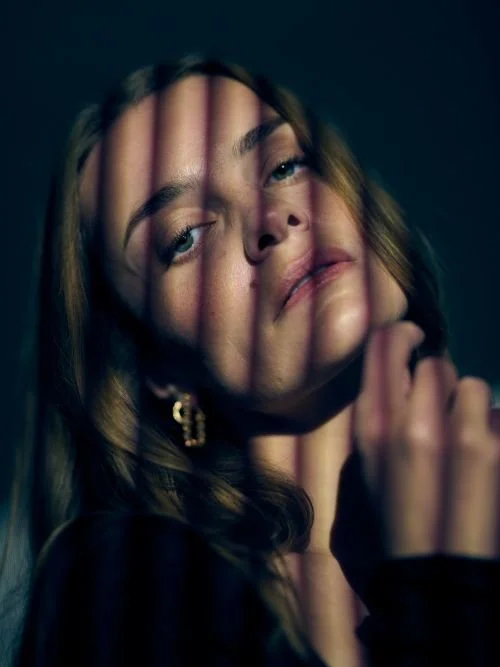
Social Justice recipient Justice for Migrant Women founder Mónica A. Ramìrez validated Eilish’s fears by sharing the fear ICE had unleashed on her Latino community. She also shared how bold she thought it was that she was being recognized. “I understand that part of my receiving this recognition today speaks to the courage of Dr. Bernice King and the King Center to give someone like me and my organization a platform in this moment,” she said.

Other honorees included EGOT Viola Davis, former Atlanta Falcons star Warrick Dunn and Gloria James for the LeBron James Family Foundation, with Young Sheldon star Iain Armitage, former White House Press Secretary Karine Jean-Pierre and Beyond the Gates star Sean Freeman also presenting. Iconic Sesame Street star Sonia Manzano presented the Christine King Farris Legacy of Service in Education Award to her very own Sesame Workshop. Chance the Rapper was among the several musical performers.

Bernice King, the King Center CEO and Dr. Martin Luther King Jr.’s daughter, called the gathering of roughly 1,000 people “a celebration of humanity at its best.” She also proclaimed this year’s “Mission Possible 2: Building Community, Uniting a Nation the Nonviolent Way” MLK theme “more than fitting,” because “it is a mandate for this moment.”

Eilish admitted to feeling more hopeful amid the energy of the evening. “I am so inspired by all the stories and the other honorees tonight and everyone in this room, and I’m grateful to everyone and for the huge community of people who are taking action centered on Dr. King’s message. I just want to thank my mom, both my parents, for raising me the way they did. I wouldn’t be doing any of this without you, Mom,” she said, acknowledging her mother’s presence. “I have this platform and I think it’s my responsibility to use it, so I feel like I’m just doing what anyone in my position should be doing”.

I wanted to drop that article in, as we get to sense Billie Eilish’s empathy, activism, conscientiousness and compassion. As an artist, she is very much one of the greatest ever. A genius with decades ahead. I don’t think her songwriter is given enough credit. She is such a wonderful writer and someone whose voice and stage presence is captivating and stunning. This mixtape is dedicated to…

A music queen.

FEATURE: The Legacy Spreads: Could Recent Love Shown for Kate Bush Lead to a Documentary?

FEATURE:


The Legacy Spreads

IN THIS PHOTO: Kate Bush in 1989/PHOTO CREDIT: Guido Harari


Could Recent Love Shown for Kate Bush Lead to a Documentary?

__________

THIS might also be a pitch…

IN THIS PHOTO: Margot Robbie for British Vogue, December 2025/PHOTO CREDIT: Mikael Jansson

for LuckyChap Entertainment (a production company based in Los Angeles and Bromsgrove, founded in 2014 by Margot Robbie, Tom Ackerley, Josey McNamara and Sophia Kerr. The company describes their focal point as female-focused film and television productions), as Margot Robbie recently showed some appreciation for Kate Bush. The Emerald Fennell film, “Wuthering Heights”, was released on 13th February. It definitely gained a lot of reactions and divided critics. Although the film does not feature the Kate Bush debut single of the same name, inevitably, people did ask about Kate Bush when speaking of its stars, Margot Robbie and Jacob Elordi. There is a new interview from Attitude where “Wuthering Heights”’ leads spoke about the film. They also mentioned Kate Bush. This is what Margot Robbie said: “Of course. You can’t make Wuthering Heights without listening to that,” adding: “Kate Bush is just the soundtrack to my life”. Jacob Elordi noted this: “Kate Bush was constant [on-set]. I think that’s just being alive! There may have been a Charli XCX song or two”. Although Robbie seems more into Kate Bush than Elordi, these are huge names that listen to and admire her music. When I shared the article online, it did split opinions. Many liked the fact that someone like Margot Robbie listens to Kate Bush and is a fan. Those recognising that her influence has spread. Also, there were those who doubted Robbie’s credentials in that regard. Could she name deep cuts and does she know albums like The Dreaming?! Many feeling this was a major artist jumping on a bandwagon or mentioning an artist without knowing anything about them. I actually think that Margot Robbie is a bigger fan than many give her credit for. Look at her uncanny recreation of the red dress version of the Wuthering Heights video…

In any case, it has got me thinking about whether a Kate Bush documentary made in association with LuckyChap Entertainment could happen. I shall come to that. There has been other praise for Kate Bush. Recognition of her music. Peaches shouted out Wuthering Heights in an NME interview. I have said numerous times how ROSALÍA is a big Kate Bush fan. I can hear that influence in her music. Last year’s Lux – which was hugely acclaimed and was perhaps the best album of the year – has elements of Kate Bush’s influence throughout. When speaking with Vogue about Lux and what comes next, ROSALÍA talked about Kate Bush: “My mom, she showed me Kate Bush since I was very young,” she said. “I didn’t appreciate it, but with years, it grew on me. I really like that song where she explains this possibility of exchanging places with God. A deal with God. It would always make me cry”. I know that ROSALÍA’s knowledge and appreciation of Kate Bush goes beyond Hounds of Love’s Running Up That Hill (A Deal with God). You can feel and hear it through her music. It is another important endorsement of an artist whose influence is everywhere. One that continues to grow. You could say that Kate Bush’s music has reached more artists and big names in the past decade than the forty years or so before. In terms of legacy artists, those who have been around for years and those who are new. Going beyond music to all corners of the cultural map. I keep writing about this topic. Though, now that Margot Robbie has spoken about Kate Bush and her attachment, it makes me think about a documentary.

IN THIS PHOTO: ROSALÍA for Vogue, February 2026/PHOTO CREDIT: Alasdair McLellan

There is snobbery and dismissal when a major star says they are a fan of an artist. Like they are not at all genuine. I think Margot Robbie’s kudos is pure. In terms of what LuckyChap Entertainment does, their work is mainly in film. They have produced for television. However, given that they are about female-driven projects and this is a documentary about a music queen that could be directed by an amazing woman, you do feel there is this opportunity. I am sure Kate Bush finds its touching and flattering that her music is being praised and noted by actors and artists. Bush is a major film fan, so she will know about Margot Robbie. The drawbacks are that Bush has not really given a green light to a major documentary. There have been a few smaller ones through the years – including a BBC one for 2014 -, but I am sure she has been approached by all kinds of people to allow her music to be used for a documentary. I am sure she is happy for there to be these smaller documentaries, as they are more underground and not too exposing. However, something huge that appears in cinemas, on Netflix, Amazon or Apple TV+ would be a different scenario. I know that nobody from LuckyChap Entertainment will ever read this. Margot Robbie will never see it. However, there is the temptation to make a pitch, as I feel Kate Bush would be open to Margot Robbie. You feel like she is a fan of her work and no doubt would have heard about the new “Wuthering Heights” film. Another potential stumbling block is the use of Kate Bush herself. Whilst Bush would never be filmed for a documentary, could she ever be persuaded to provide some words and do some voiceover? It would be a tall order, as she would probably not want to be involved in that way. I do think that a stunning documentary that looks at her brilliance and influence and speaks to fans across culture that includes actors like Margot Robbie and incredible artists would be a success. It is always hard getting the balance right and ensuring that a documentary is engrossing, watchable, informative, balanced. One that also appeals to long-terms fans and can speak to new fans.

Every time I see someone in the public eye talk about Kate Bush, it makes it abundantly clear that she is one of the most important, enduring and wide-reaching artists ever. I know she would not want to be too much in focus with a documentary. However, a mix of styles and filming techniques, coupled with a blends of artists discussing her music and clips of her videos and interviews, could well be something that appeals to her. Making it more inventive, stylistic, broad and striking than many of the dry and formulaic music documentaries would be something LuckyChap Entertainment could be involved with. Discuss it with Kate Bush and do something loving and respectful. Photographers and musicians who have worked with Kate Bush. People talking about her as a producer. Maybe something where her family – including her brothers, John and Paddy, and her partner, Dan -, could share their memories. Bush providing the occasionally audio interjection about working at various studios and performing live. Or just talking in the introduction and at the very end. Nothing like this been done with her music. One might say she does not have the same legacy as a David Bowie, The Beatles or Madonna. I would disagree. Kate Bush is more than worthy of the diamond treatment. A medium-budget documentary that is authoritative and deep that runs to about ninety minutes. Rather than exploiting the Stranger Things/Running Up That Hill (A Deal with God) impact and how her music has reached a whole new generation, it would be a long-overdue. Whilst there is limited footage of Kate Bush on the stage – in terms of beyond T.V. shows – and none of her recording in the studio (as far as I know), we can see her impact through her videos and hear that genius and originality through her recordings. That Margot Robbie quote about Kate Bush, “Kate Bush is just the soundtrack to my life”, got me thinking about a documentary. It depends on whether Kate Bush would be willing or feel that it would be too personal. Given the fact her legacy and influence is as important as it has ever been, I would like to think that she would be…

OPEN to the right idea.

FEATURE: I’ll Tell My Brother… Will Paddy Bush Work with His Sister in the Future?

FEATURE:


I’ll Tell My Brother…

IN THIS PHOTO: Kate and Paddy Bush talking with Peter Gabriel during the rehearsal of her 1979 Chrismtas special, Kate/PHOTO CREDIT: Getty Images


Will Paddy Bush Work with His Sister in the Future?

__________

THIS is something that I have…

IN THIS PHOTO: Paddy and Kate Bush during a live performance of Army Dreamers (from 1980’s Never for Ever)

written about before. We can dissect Kate Bush’s music and discuss it from all different angles. Of course, she is the driving force. However, I would say her biggest influences are her family. Her parents in terms of their support and how they showed her so much love and comfort. Crucial during her career when things were especially stressful, Hannah and Robert (her mum and dad) would be there. From providing hospitality to musicians, to offering up their help – they appear in her music at different moments -, they were a huge source of strength. Her older brother John helped open her eyes to different types of music, but his poetry and photography was a big part of her life. He photographed her from young childhood right up to 2011. He shots some of her album covers and is responsible for the iconic Hounds of Love cover. No doubting his influence and impact. However, in terms of music and that side of things, I feel Paddy Bush is the biggest drive. The one who really did expose her to sounds, artists and instruments she would not otherwise have come across. Their collaborations began right from the start of Kate Bush’s careers. In fact, when they were children, Paddy would expose his sister to interesting music and support her own music. He has appeared on almost every one of her albums. In fact, I think that 50 Words for Snow is the only one where he did not feature. I always wonder why that is. Perhaps it is because the album is sparse in terms of instruments. For 2005’s Aerial and even 2011’s Director’s Cut, there was mor opportunity for him to provide his unique blends. However, there are no unusual instruments on 50 Words for Snow. I don’t know. I could have imagined him popping up on Wild Man or Misty with something distinct that adds new colours and textures. Maybe backing vocals on some of the songs.

I am guessing it was an amicable decision, but he did get a chance to contribute to his sister’s work a few years later. For 2014’s Before the Dawn, his voice can be heard. He was not part of the cast of musicians like he was for 1979’s The Tour of Life. However, he does get to contribute some instrumentation. In addition to some harmonic vocals, he does play the fujare (it originated in central Slovakia as a large sophisticated folk shepherd's overtone fipple flute of unique design). It is great that he was back in the fold, though it would have been nice to hear him on 50 Words for Snow. However, he did provide the voice of the Helicopter Pilot for Waking the Witch. It is a really key role and wonderful that, forty years or so since he started playing and recording with his sister, he got to be a part of Before the Dawn. Paddy Bush is communicating with base or someone else in the helicopter. Spotting something in the water, he goes lower but then says it is probably flotsam from the wreckage. It is this dramatic moment when we get these coordinates and it looks like Bush might be saved. However, getting towards her, they turn around and go back up. Nice to hear his voice as an older man, his appearance was in an especially kick-ass and meaty version. Props to the guitarists. Jon Carin, David Rhodes and Friðrik Karlsson were guitarists for Before the Dawn. Some great percussion from Omar Hakim. I will discuss the musicians more closer to the tenth anniversary of the live album in November. However, it was nice that Paddy Bush was in the residency! Seventy-three as we speak, I am curious whether he still explores music and comes across these odd and unconventional albums.
Once was the time he would walk into his sister’s room, chat with her when at her place or in the studio, and there would be that exchange and discovery. Now, as they live different lives and are not as interlinked as they once were, is his role and importance what it once was?! I would imagine the two talk a lot and Paddy Bush does throw in the odd name and album for Kate to investigate. Bush has a son, Bertie, who is in his twenties. No doubt he is giving his mum all these leads and tips for artists. Her son and brother taking her in different directions. As we look back to the start of her career and how Paddy Bush was there at the start. I know there will be a new Kate Bush album in the next few years. She is undoubtedly working on songs. Depending on what it sounds like and whether it is bigger and more varied like Aerial or is a bit more spare like 50 Words for Snow, my biggest hope is that there is a spot for Paddy Bush. Him doing some backing vocals and coming in with a cool instrument and adding his unique touches! I am looking back at live performances and these occasions where he has joined Kate Bush on the stage or during a T.V. slot. I also love how he has been there through her albums. I think her most frequent collaborator. There will be a lot of speculation around a future Kate Bush album. What form it takes and whether it is going to be this huge and ambitious thing or Bush will do something a little stripped and piano-led. In any case, I feel family will be involved. Maybe John Carder Bush shooting the cover or promotional photos. Dan McIntosh, her partner, on guitar. Bertie might well provide a vocal or be there in some form.

Having Paddy Bush there and him being instrumental would mean it would be the fifth decade where he appears on a Kate Bush album. It is all speculation at this point. However, people do not really talk about Kate Bush’s brothers. John (Jay) and Paddy added to so much to her career and were obviously very close to her. Paddy perhaps more directly involved, his immense contributions are overlooked. Not only in terms of what he did on her albums. Behind the scenes, he was so important. These music tips. The Trio Bulgarka, who appeared on The Sensual World (1989) and The Red Shoes (1993), were brought to Kate Bush’s attention when she was working on Hounds of Love (1985). I can only imagine their childhoods and teenage years involved a lot of discussion around artists away from the mainstream. It is always great how Paddy Bush brings in these interesting instruments and takes his sister’s music in different directions. That also influences her writing and how expansive and adventurous she can be. Emotional to think that they worked together as recently as 2014. In 2026, who is to say we will not hear Paddy Bush in some form? I am not sure what he is doing at the moment. No doubt he is involved with music still, though he is probably more returning or doing the odd bit here and there. A bigger role on a Kate Bush album would be the most amazing thing! If you think about his significance and all he has added to Kate Bush’s music, you have to give him proper respect! I have been listening back to Before the Dawn and his spoken part as the Helicopter Pilot. How good that is! Not many more recent examples where we get to see Paddy Bush speak. He has always worked with his sister on something, so I hope that it happens again…

SOON enough.

FEATURE: Spotlight: Natanya

FEATURE:


Spotlight

PHOTO CREDIT: Alex Radota


Natanya

__________

LAST year…

PHOTO CREDIT: Bella Howard

was a massive one for Natanya. She put out Feline’s Return and Feline’s Return Act II came out and were met with praise. This is an artist I only came across this year but wanted to spotlight here. The London artist is someone I am desperate to see play live, as I can imagine that she is a captivating and compelling stage presence. I am going to come to some features and interviews. Starting out with CLASH and their Next Wave salute from August, we get some important insight and background. An artist that I feel is really transforming and adding her stamp to Pop:

Blessed with an acrobatic voice and an innate musicality, Natanya is well on her way to becoming a trailblazing force in pop. After first releasing ‘Sunset Melody’ on SoundCloud as a teenager, the London-based artist has honed her sound with a coming-of-age EP ‘Sorrow at Sunrise’, and her latest offering, ‘Feline’s Return’, speaks to an emboldened artist able to temper the melodrama with sensitive, soul-searching lyricism.

Natanya spent her formative years learning classical piano which was hindered by a “musical dyslexia”. She found a way to turn this creative dissonance into a positive. “I treasure that time so much. It taught me that even if you have these cards that you’re dealt, you’ve got to figure out how you can shape it to work in your favour,” she tells CLASH.

Her classical training was enhanced by weekends at the Julian Joseph Jazz Academy, as well as growing up around the sounds of Motown, Teddy Pendergrass, Janet and Michael Jackson. Aged 14, she came across Amy Winehouse’s ‘Frank’ and Tyler, The Creator’s ‘Cherry Bomb’ during a free trial on Deezer. “Amy had a jazz background and so did Tyler. It was just so eye-opening. I was like, ‘wow, music isn’t for old people. I could do this too”.

I am going to now move to this NYLON interview from earlier in the month. There is a lot more in store for Natanya. She has this incredible desire and passion for what she does. I can see her collaborating with some massive artists and being a major festival headliner in the future. Someone very much on a course to becoming one of this country’s biggest new Pop artists. One who very much has her own sound, yet she also has these influences that are weaved into the music:

The impression she’s made so far has already seen her monthly listeners on Spotify more than double. Her lilting, buttery voice recalls Aaliyah, Janet Jackson, Amy Winehouse (a formative artist in her childhood), and Destiny’s Child all at once, and the beats she produces range from bedroom pop to full R&B homages (Janet and Aaliyah come to mind again) and indie-rock smooth jams. Growing up in London with a dad in a church band and a Trinidadian-Indian mom who played calypso music in the house, she touched almost all forms of music available to her. She studied classical piano from the age of 4, watched wrestling and became obsessed with the bombastic entrance songs, and of course, is a child of the Internet, soaking up music on YouTube and Roblox. Her references speak to the post-globalized digital world, specifically the melting pot of East-meets-West that is London, and her ability to tap into so many disparate energies at once yet create a novel sound is what sets her apart.

Her first few songs and introductory EP, Sorrow At Sunrise, sound like exactly what they are: a girl making beats with a laptop and the hope of etching out her own corner in the music universe. But with the two-part EP that is now her first full-length project, Feline’s Return, she has what many emerging artists only dream of: a body of work that not only arrives as something new, but has a league of fans rabid for more. Her fan base already has a name, The Felines, which she tells NYLON comes from her love of a cat-eye. Her upward-tilting eyes have a coquettish, feline, and ineffably unique look to them, and her pin-up, cutesy vibe does not betray the intelligence and camp in her delivery: Everything comes with a knowing wink, not unlike a black cat that tips over a glass of milk only to relish in the act.

Before she goes on what she calls a “mini-break” to dial in for the rest of 2026, Natanya is releasing a video for “Ur Fool,” the cool, guitar-led duet with her peer, Unflirt, that encapsulates her direct, piercing lyrics, which she says are almost often “the first words that usually come out of my mouth… they punch a lot”: “I’ll be your fool / even though it’s not easy / you know that you need me.” NYLON got a first look at the behind-the-scenes pictures from the shoot, which she called a “cute hang,” and dialed in with the artist to talk about her formative years in jazz school, what SZA song makes her cry, and her determination to make everyone sit up straight and know her name in 2026.

When was the first moment when you switched from studying music and seeing it to wanting to make your own?

I never had a switch flick in my brain. I was always unconsciously making things. Even when I got Fisher Price toys, I would always make loops and learn the “instrument.” When I was a teenager, I transitioned to jazz because one of the girls at the top of my school was incredible at piano — she ended up going to Berklee — and she told me about this academy that was happening on Saturdays, so I followed her, did my audition on the spot, and studied that for a while. I always had these melodic ideas in my mind and I would go on the computers after school, hang back in the music suite, and try to make these loops because I wanted to get the ideas out.

We were always surrounded by the ability to create at jazz school. We would do a cappella groups and split the whole class up into these mini stems. When I did one, my teacher told me after the warmup finished, “Natanya, you have such a penchant for arrangement. It's one of your strong suits and you should never forget it.” The moment when I really woke up and my frontal lobe started to develop was at the end of university, which wasn't that long ago. I started to process, like, “OK, if I want to do this, I have to give it my best shot.” 2025 was the real moment of saying “there's no time like the present.” A lot of people come in with a laser-sharp focus saying, “I know I'm going to get this,” and even though I do speak positively about myself and I manifest a lot, I never started to create music with this idea of garnering fame or accolades. I’ve just had so much fun doing it for so long.

I'm so happy people are starting to wake up to the music you're putting out, because not only is the production amazing, but I love your lyrics and your directness. Specifically, this morning I was listening to “Jezebel.” I love that it's a letter to yourself. Tell me about making that song and what you wanted to say to yourself.

The first half of the song was made in 2023. I was going through a lot of difficulty because I come from an academic background, and it's discouraged for people to go off and do something like this. I also remember being the only person that looked like myself in the places I grew up, so there was always tension. When I first started with Sorrow At Sunrise, I felt like I couldn't do anything right. It hurt me, because at the time I couldn't see the potential my friends were seeing. I thought of it as, “I'm hanging out with my friends, doing my thing, and this is the other hobby I have behind the scenes,” but they were like, “Natanya, you don't realize your power.”

I was really dejected one day after an argument, and when I got to the piano, [Jezebel] was the first word that came out of my mouth. I grew up in church; I always heard about Jezebels in English Lit when I did my degree, and that was a word that was thrown around to talk about women that were being villainized. And I felt villainized. The second half, I wrote in the shower in 2025. Funnily enough, I was taking a shower in the water of my dreams. I wanted to talk about how sometimes your destiny is tangible. It's there and it's in front of you, you can see it, but because of what other people feel about you or what they lose from you going for it, you push it away and you don't let it wash all over you. “Take a shower in the water of your dreams” is almost like, “Accept it, let it overwhelm you and let whatever's going to happen, happen.” It's also this double entendre to refer to how once you do take a shower in the water of your dreams, life changes forever. You will never be the same person to the people that know you. It does wash you clean of your past, because what this job demands of you takes away some of your other identity. I've struggled with that too.

There's an intelligence behind the songs that allows you to be campy with the delivery. Why the name Felines for your fan base?

Oh my goodness, Kevin, thank you for that question. I get to explain it now. Ever since I was young, people told me I have a really catty eye, and I love eyeliner. It represents the way I like to see myself. You know when you make something cool and it makes you feel sexy and you sit there proud of yourself? Whenever I make a great demo, I dance around my room to it, and I'm always playing into this character of a seductress. I felt like that's the best name for my alter ego because I'm nerdy, introverted, and I overthink. When I'm not that, I’m Feline. I wanted to project that identity into the world. If Natanya doesn't yet feel like she's able to return, at least Feline can first, and then she can come out when it's safe. I’m happy my fans took over the Feline thing.
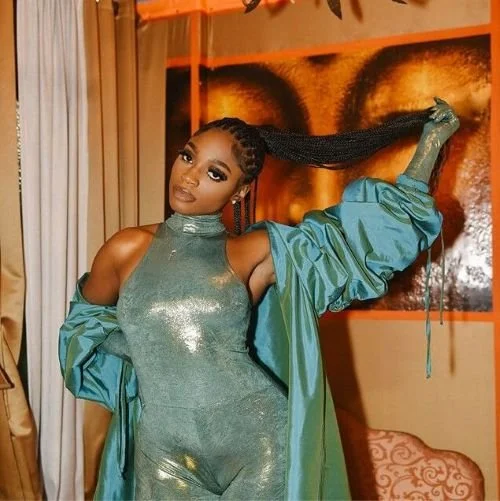
What do you want from 2026? This time next year, what do you want to have under your belt?

This year, I want to redirect the attitude about me even more. I want people to understand me on a deeper level, not just on a superficial, “Oh my God, she's so cute” level. I want them to say, “OK, maybe Natanya could do something cool with music. Maybe she does have something going on in her head that we need to stop and drop our bags and listen to. Maybe I do need to find out a little bit more about her. Maybe I'm obsessed with her.” That's what I want to create.

By the end of 2026, my only dream is that that happens. Off the back of that, we do an incredible headline tour, but it's all down to the music and the music videos and me doing my job. I'm trying hard to focus. You're going to see a lot more of me as an executive producer than you did before. I'm learning production from every angle now, and putting my foot down and asserting myself to a level I haven't before. I'm excited to see how people react to me doing something they didn't expect me to do”.

I am going to end with a great NME interview from January. I am so excited by all the focus around Natanya. Shaping her sound and getting these huge numbers across streaming platforms and TikTok, she has captured this huge audience. This year is going to be exciting. After putting out new music last year, there will be demand for her to take to the stage. NME write how “the north London vocalist-producer has learned how to turn experience into pop music that moves, lingers and lasts”. This is an artist destined to be a legend. She has the talent and drive to take her all the way to the top – and into the history books:

With ‘Feline’s Return’, she wanted to make her music “infectious”, using words “like paint” to insinuate things in a more subtle way. Its songs stretch across electronica, R&B, soul and pop, stitched together by worldly rhythms, chiming melodic accents and layered production that often feels larger than the room it was made in – adopting Natanya’s new “urgency and hustle”. She decided to stop  “showing people exactly how chaotic [her] emotions are” and translate them into something more physical, so she could “​​make people dance as much as possible”.

By the time she began work on the EP, her approach to making music had changed. “The main difference was that I took control,” Natanya says. “When I was making ‘Sorrow At Sunrise’, I was heartbroken, and I let so much happen to me. Even in the studio, I wouldn’t take control.” This time, she arrived with “pre-made demos that sounded nearly identical to the finished masters, [knowing] exactly what every song was to be”.

That focus came amid the massive upheaval she experienced in 2024 – a period when she was touring Europe, opening for rising R&B juggernauts FLO and Destin Conrad, and finishing up her university work. But among the success and new opportunities, there was also pain and strife. Two days before she joined Conrad on tour, her grandma died. Then,  while on the road, the team she’d built around her “broke apart”.

PHOTO CREDIT: Alex Radota

Natanya was physically and mentally spent and was faced with a choice between fight or flight. At one point, she nearly left Conrad’s tour early. “I called my dad, saying I wanted to go home,” she recalls. His response was firm: finish it. But there was still a nagging part of her that wondered whether she should “stay and be scared” of navigating the industry alone, or if this was “the sign” she needed to go in “the opposite direction and find [her]self”. In the end, she stuck with it – after all, she isn’t a quitter.

Now, Natanya is looking to the future and is currently working towards another collection of songs. The project is still taking shape, but she’s aiming to create something that’s both “like ‘Feline’s Return’, but also a complete deviation” from her frenetic-yet-soaring sound.

The paramount thing for the singer and producer is how she reacts to the music that comes out of her. “The human body knows what makes it feel good, whether you’re trained or not,” she philosophises. “If I listen to a song and I can’t feel it, I have to go back. I don’t want to release something that feels passive.” She’s keeping any further details on what she’s working on close to her chest – a precautionary move so as not to jinx building something with the scale and staying power of the records that raised her: “I really do believe that I’m protecting something that’s going to be legendary”.

I will finish here. Maybe she does not need my recommendation – as there are so many big sites and names backing her -, but I wanted to shine a light on a brilliant artist. It will not be long until other artists coming through cite Natanya as an influence. She is absolutely tremendous and is one of my favourite new artists now. One that I am committed to following…

FOR as long as possible.

____________

Follow Natanya

FEATURE: Spotlight: I Am Boleyn

FEATURE:


Spotlight


I Am Boleyn

__________

THIS is the musical moniker…

PHOTO CREDIT: Eva Pentel

of the brilliant Lydia Baylis. I have been a fan of her music for years now. I can’t remember what year it was, but I hosted Baylis for an event I helped run in London where a selection of artists played. It was a month dedicated to music blogs and these terrific curated line-ups. I was instantly struck by her confidence, stagecraft and exceptional music! That incredible voice and the way she can engage with an audience and how she gets this adoration and energy from them. I have watched with interest and seen her career grow and expand. Formerly writing under her real name, I Am Boleyn is this alter ego and alias that is fascinating. Voyager was released last year and is a spectacular album that won a lot of praise. I will end with a few glowing reviews for Voyager. However, many people might want to know more about I Am Boleyn and why you should support this incredible artist. Someone I am always in we of. I want to go back to last year and this interview from Rizing Playlists. Such an immense and original talent, I feel the next few years will see I Am Boleyn growing in stature. This music queen with so many great times ahead of her:

What’s the story behind your artist name — and does it reflect who you are today?

My name is inspired by Anne Boleyn, who was the second wife of Henry VIII of England. She lived, and died (!) it such a colourful way, I was intrigued by her. Especially at a time when women really didn't feature in decision making. I wanted to incorporate her spirit into my stage persona in someway.

Which song of yours means the most to you, and what inspired it?

This is a really hard question to answer! I think I would have to pick Girl Like Me - it is inspired by I Am Boleyn's journey from space to earth where she falls in love with a human man. I wanted to explore the theme of love and all its disappointments and wonder through the lens of someone out of this world and its content.

How would you describe your sound in three words — and why those?

Nostalgic. Empowering. Fun!

What was the moment you truly felt like an artist — not just someone making music?

I love this question! Creating the character of I Am Boleyn and telling her story made me feel like an artist. All of the artwork as well as the music pulled together towards her voyage, which was the reason for the album title 'Voyager'.

Who are your biggest musical influences, and how do they show up in your work?

I love Stevie Nicks from Fleetwood Mac and Florence and the Machine. I also love Goldfrapp and Annie Lennox. So many wonderful women to be inspired by!

What’s your creative process like — from a blank page to a finished track?

Usually I start with a lyrical idea, this album was quite conceptual as I wanted to tell the story of I Am Boleyn and her voyage through space to earth, falling in love and observing the chaos of our world before deciding if she wanted to stay. Then we built the tracks around those ideas and they were produced by the very talented, Johannes Willinder, Par Westerlund and Charlie Thomas.

If someone’s hearing you for the first time, which track should they start with — and why?

This is another great question! I think that 'Only Space' would be a good place to start. It is the opening track on the album and introduces my style quite well - it is synthy and cinematic and also fun!

What’s been your most unforgettable moment on your music journey so far?

There have been lots of great moments! Getting to see the full album, all fifteen tracks released was really special. Also my show in London as it was packed with a home crowd and it felt so great to perform a lot of the songs for the first time.

What do you want people to feel when they hear your music?

I love the idea that people will dance to my music - I love dancing! But then that they will also listen to the lyrics and feel comforted and inspired by them. I write a lot about love and also the power of letting go and blazing your own path.

What’s next for you — and what should fans be excited about?

My album 'Voyager' just came out and I have done some promo shows in Stockholm and London which were amazing. I'll be releasing more online about the songs, some videos and interviews to deep dive into the album!”.

In another 2025 interview, Last Bus Magazine spotlighted the fabulous I Am Boleyn. In terms of her look and aesthetic, I think it is really interesting and standout. I have not seen Lydia Baylis perform since I hosted her, so I must catch an I Am Boleyn show if there is one in London very soon. She has so many fans out there. Voyager was one of my favourite albums from last year:

What music were you brought up on/who are your musical influences?

I was brought up on David Bowie and The Velvet Underground by my father and then fell in love with  Zero 7 and Massive Attack. I am also a huge fan of Lana Del Rey.

We heard that you used to have a residency at Ronnie Scott's. What a place!

Yes! It's such a cool spot! I loved being there. We were upstairs on Tuesdays for a few months.

Was your music more acoustic back then? If so, how did your music evolve to where it is now?

Yes it was. It has definitely evolved. The songwriting itself remains a very similar process, it gets better over time you hope... but the basics of finding a melody and writing the lyric around the idea - those things stay the same. But the next stage, the production, has really developed over trial and error and ultimately collaboration with amazing people. It sounds weird for a musician to talk about finding their 'sound', but it is a real journey!

You've mentioned that you write your music mainly in Stockholm. Why there?

I was introduced to Jocke and 'Family Stockholm', who are producing the album , about two years ago by a friend Bobby, and it was creative love at first sight! It is also very liberating to go and work somewhere were you know very few people (and it's dark for half of the year!) so you can really focus.

Who do you listen to on your Last Bus home?

Another great question! It depends on what mood I'm in a littlest, but if I am feeling reflective then I love the album 'Silent Treatment' by HIGHASAKITE. There is an amazing song on that album called 'Last Wednesday'. I also love Tycho's 'Awake' album. Sometimes you just need music and no words.

Who are you listening to at the moment?

It's got to be Grimes 'Delete Forever' and all things Sam Fender”.

I am so glad there are these ecstatic reviews for Voyager. It is a very special album from an artist that is in a league of her own! One that you all should follow and hear. Visit her Bandcamp page and grab her music there. York Calling shared their thoughts about an album that will grab you right away. It is such a remarkable collection of songs:

The album starts with Only Space, a cosmic disco number that opens ambient before finding an intoxicating electronic groove. I Am Boleyn’s smooth vocals provide the perfect balm to its sci-fi edge, giving us something delicate and organic to follow on our journey.

The emotion of the album’s themes is never understated yet its mix of genres is subtle. Girl Like Me is a wistful ballad with synth pop and R&B undertones. Tiny Love is moody and heart-wrenching. Stay ups the emotions, providing some catharsis in the soaring chorus. Lydia – Snowdonia is an expansive tribute to the North Wales region before Until The Summer Ends brings the album to a close in romantic style.

Lead single, Taxi, is, of course, a highlight thanks to its slow-building electronic opening verse and crystalline vocals. It’s instantly stirring and only builds from there, finally arriving at a riveting crescendo.

Among the album’s originals we get two unexpected covers – The Corrs’ Breathless and Britney Spears’ Toxic, bringing the ’90s and ’00s classics bang up to date with retro-modern reworks.

With a mix of the conventional and unconventional, along with a compelling authenticity, Voyager is a masterful record. I Am Boleyn has nailed it with her debut. It’s a must listen”.

Let’s move to this review, that offers some interesting perspectives on Voyager. It is clear that, with I Am Boleyn, we have an artist that is going to be putting out world-class music for years to come. I need to interview her very soon, as I have been invested in Lydia Baylis’s music for a very long time. Always so proud of everything that she does:

“Do you want to embark on an interstellar journey with the Space Queen, who descends to Earth and discovers the feelings of humans? This is a very interesting theme explored by I Am Boleyn from London in her album ‘Voyager’. 15 tracks lead the listener through a neon, cool synthwave sound and the bright pop vocals of I Am Boleyn, and the album’s title speaks for itself. But if you look deeper, it becomes clear that this is not only about how the Space Queen ended up on Earth, but also about how she loved, despaired, and revealed herself after everything she went through. It is an amazing story about how the main character experiences heartbreak while also feeling the euphoria of love. This might be a new sensation for the Space Queen, since only life on Earth can bring such feelings.

This suggests the fragility present in this release, that even the Space Queen, the one who can cross time and space, has a very gentle, fragile soul, vulnerable to earthly emotions. And this is an experience that makes her stronger, and it is a very important theme, reflecting many modern views and tendencies. ‘Voyager’ is a very subtle psychological album that will undoubtedly touch every attentive listener. On the other hand, if you just want to enjoy an amazing, vibrant dance atmosphere, I Am Boleyn and her music are exactly what you need. And I would like to highlight a few tracks that moved and inspired me the most.

Undoubtedly, the first track-intro ‘Only Space’ stands out. It introduces us to the Space Queen, to her power and might through a vivid arrangement, the voice of I Am Boleyn, and an overall epic atmosphere. I would even compare it to the opening titles before a full-scale film that then unfolds inside your headphones. Then comes ‘Girl Like Me’, one of the singles on the album, which reveals the tenderness that will remain present throughout all the tracks. It blends harmoniously with the bright rhythm, synths, keys, and airy sound. Following that, ‘Taxi’, the main single produced by Par Westerlund (Black Pink, One Direction), heats up the atmosphere with multiple backing layers, a striking structure, and dynamic melodic development that immediately grabs attention. I enjoy how effortless I Am Boleyn’s vocals sound. Her voice is soft, gentle, slightly processed, and creates a cosmic and magical tone, like shimmering stardust. You know, when you first hear the story of a Space Queen, the first thing that comes to mind is strength and authority, but the album ‘Voyager’ shows that behind the mask of a powerful image hides a sensitive soul and endless tenderness. And I hear that in the vocals on ‘Taxi’ and in the overall style of I Am Boleyn.
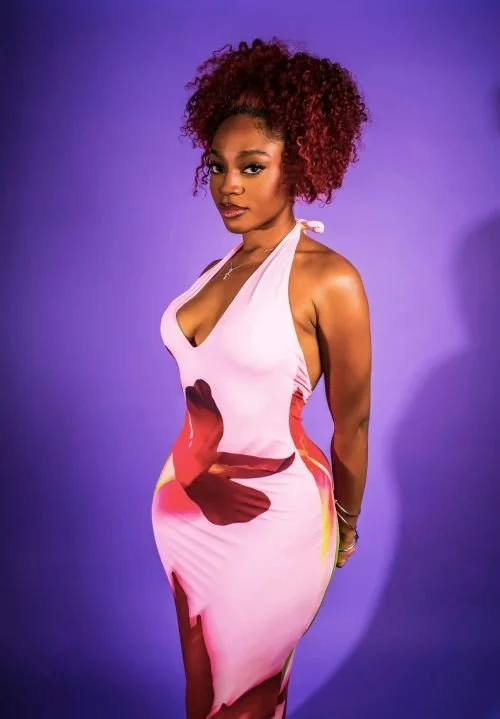
I am completely in love with the gentle sound of the song ‘Tiny Love’. The charming lyrics and steadily developing arrangement create a very cinematic and aesthetic experience, images appear in your mind instantly, and you just want to sit back and enjoy the stunning atmosphere that ‘Tiny Love’ brings, stylish, tender, and remarkable. I would like to highlight the track ‘Here Before’, where the futurism of I Am Boleyn’s shimmering silver sound takes on a softer and sweeter tone thanks to her voice. There is something almost intangible in this track that works on a subconscious level and gives it a strong commercial appeal. The production is fantastic, and the anticipation of what will happen next grabs immediately. I have to admit, this is one of my favorite songs on the album.

I Am Boleyn sticks to conceptuality, dividing it into parts, and the track ‘INTRO / INTERLUDE’ marks a turning point in the release. It is placed almost in the middle, which makes it significant for the story. Here, the melody becomes more grounded, almost ritualistic in rhythm, with more familiar instruments. This can easily serve as a moment for reflection, for example, it could be the turning point for the Space Queen, who has gone through several trials and begins to rediscover herself, uncovering emotions she had never felt before. Possibly that is why the next track, ‘Toxic’, carries a more passionate sound and hidden energy, which can be felt if you close your eyes and listen to every beat. I am completely captivated by the lyrics in ‘Another Me’ and how the melody, shimmering synths, rhythms, and a vivid pulsing beat blend with I Am Boleyn’s unique vocals. ‘Another Me’ seems to mark the birth of a new version of the Space Queen, which fits perfectly within the concept of the entire release. At the same time, this song could stand alone as a single and carry a powerful message for anyone who needs to move on or simply needs a sense of support. Stunning!

I like that the final track ‘Until The Summer Ends’ starts with the sound of what feels like a cassette or disc starting to play. This detail adds something familiar, light, and cozy. ‘Until The Summer Ends’ is filled with commercial hooks that instantly stick, and this track gives a feeling of joy. You can simply enjoy ‘Until The Summer Ends’, sing along and dance, or reflect on what comes next. Will the Space Queen remain on Earth or travel to other planets, taking the experience she gained with her, an experience that could bring a new understanding of the infinite cosmos. This is a great ending for ‘Voyager’, marking that the adventure and journey continue, and everything experienced becomes a new impulse to keep exploring the world. You felt it too, right? Be sure to follow I Am Boleyn, add your favorite tracks to your playlists so you never lose them and always stay up to date with new releases from I Am Boleyn!”.

I am going to wrap things up with Vox Wave Mag. I am not sure what her plans are for the rest of 2026. I can imagine that some summer festival dates will be announced, and there will be some more singles. Thrilling to see what comes next for I Am Boleyn. There are no other artists out there quite like her. Such a special songwriter. Someone whose voice is especially powerful and striking:

At the heart of Voyager is the story of the Queen of the Cosmos, who sets off for Earth: an odyssey of love, despair, and self-discovery. And I would like to tell this story from the point of view of a culinary critic. Imagine that you’ve come to a special concert-dinner, at a molecular gastronomy restaurant. Here, familiar dishes suddenly transform into something unexpected: ice cream is served hot, and soup comes in the form of transparent spheres that burst on your tongue. That’s more or less what happens with “Voyager” – familiar emotions and melodies, but presented in such a way that you don’t recognize them right away. You sit down at the table not knowing what to expect, and then the first dish appears, opening this unusual tasting menu. The first track of the album, “Only Space,” is like a greeting from the chef, which immediately sets the mood for the entire evening, surprises and intrigues, promising even more musical discoveries ahead.

And it is precisely in this context that “Taxi” appears, the lead single, which I would compare to a spicy sauce that adds heat to the entire album and gives the sound a special piquancy. In it, synthpop reveals itself in all its beauty: shimmering synths, groovy beats, and a melody that grabs you instantly. The track captures attention right away, blending nostalgia with a sharp modern sound. The vocals are that very spice which gives the sound its refined, flavorful kick.

The songs on “Voyager” are like individual dishes in a tasting menu.
And if we talk about flavors, “
Driving in the Dark” is a kind of atmospheric experiment. The sped-up chorus sections and shimmering synthesizers create a sense of movement, while the vanilla-caramel vocals add softness and completeness to the composition, preparing the listener for the next musical revelation. It is in this atmosphere that “Here Before” appears, a light mousse of nostalgia that melts as you listen, leaving behind only a delicate, pleasant aftertaste. This approach allows the track to gently blend into the overall style of the album, without overloading the sound palette, while setting an emotional tone and enhancing the overall atmosphere of the record.
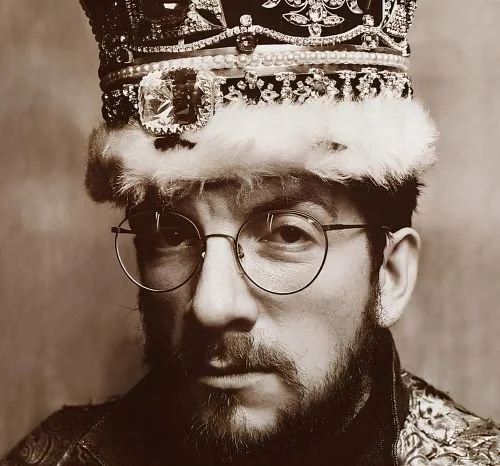
There is a lot of interesting material on the album, but I would like to pause on the track “Toxic “(a cover of the Britney Spears hit). Its sound is like a classic dish prepared using new techniques: you recognize the taste, but can’t quite understand how it’s even possible. In my view, this highlights the originality of the interpretation while also giving the album a fresh sonic flavor. This becomes especially clear in the track “Meet Me in the Clouds“, which is like a cloud of cotton candy, only instead of sugar, it’s made of dreams and hopes. The lightness of form is deceptive; inside lies a complexity of emotion, and that’s where the magic truly is.

I can’t help but highlight the track “Stay ” – one of the most melodic on the album. It’s something like a dessert with an unexpected filling: at first everything seems familiar, the taste is recognizable, but inside a whole bouquet of nuances is revealed: airy foam, bursting berry spheres, a slight tartness and sweetness that together create an entirely new experience. Just like in the track: familiar synthpop motifs are unexpectedly complemented by unusual arrangements and emotional shades, making Stay the highlight of the album. And yet, the track “Until The Summer Ends” becomes the true culinary finale of the album. The singer masterfully weaves synthpop elements into the song, shimmering synthesizers and airy beats, and around the main vocals, various sonic accents scatter like sprinkles. The result is a rich ending that leaves a bright and memorable aftertaste.

The debut album “Voyager ” by I Am Boleyn is like a dinner prepared by an experimental chef who isn’t afraid to mix tradition with innovation. The music becomes a gastronomic exploration, where you want to keep tasting to catch all the nuances and unexpected accents. In short, if you’re tired of your usual playlists, listen to “Voyager”, and let your ears “feel like true gourmets”.
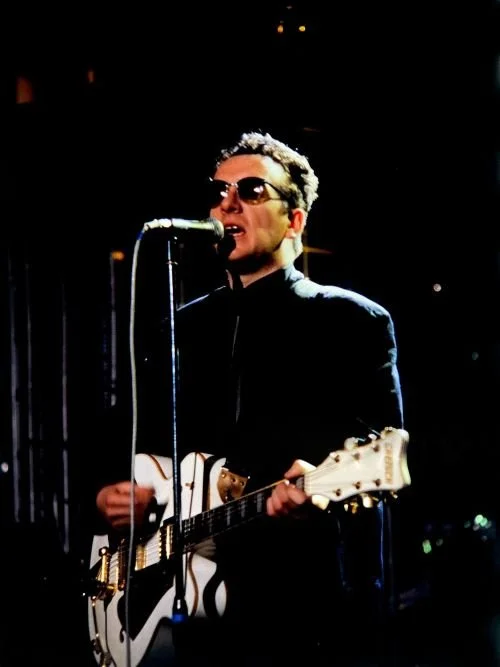
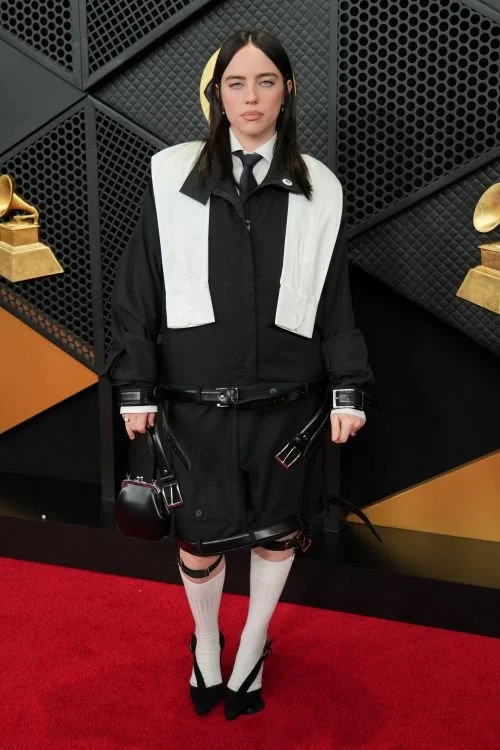
I am going to end there. Connect with I Am Boylen on social media and go and experience Voyager. This is an album from an artist that is going to play some really big stages. I say this about a lot of artists (and mean it), but you know that this is the case with I Am Boleyn. So humble and talented, you wish this wonderful artist…

ALL the success in the world!

____________

Follow I Am Boleyn