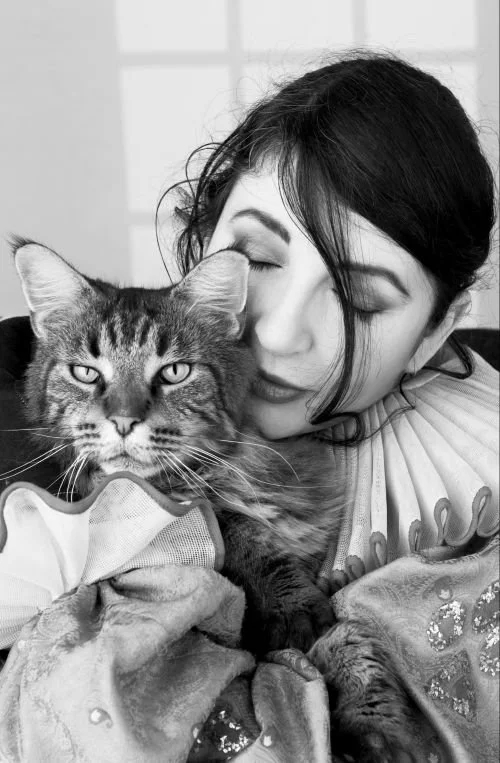
FEATURE: With No Problems… Kate Bush’s Running Up That Hill (A Deal with God) at Forty-One

FEATURE:


With No Problems…
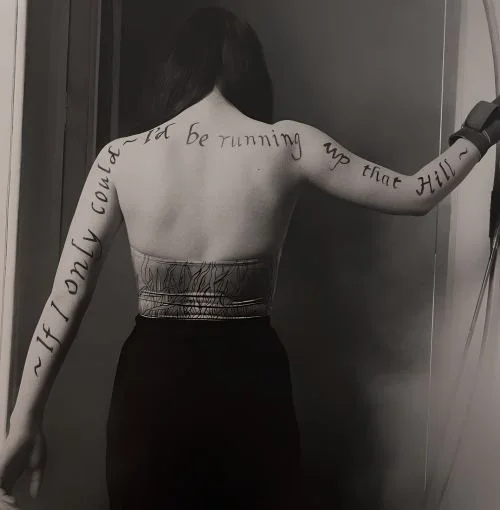
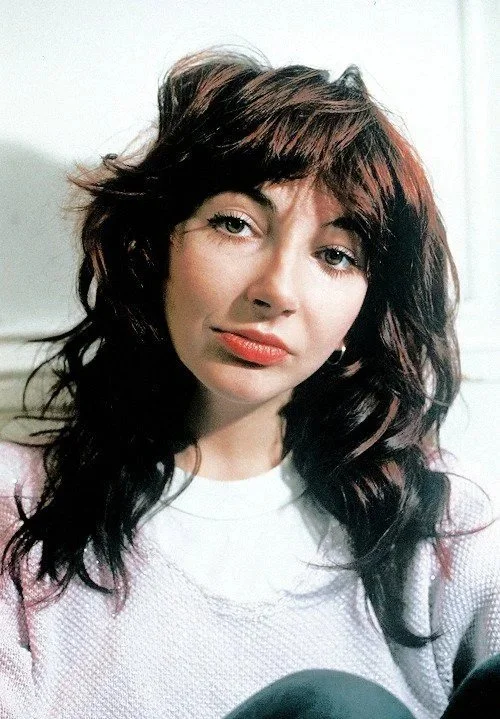
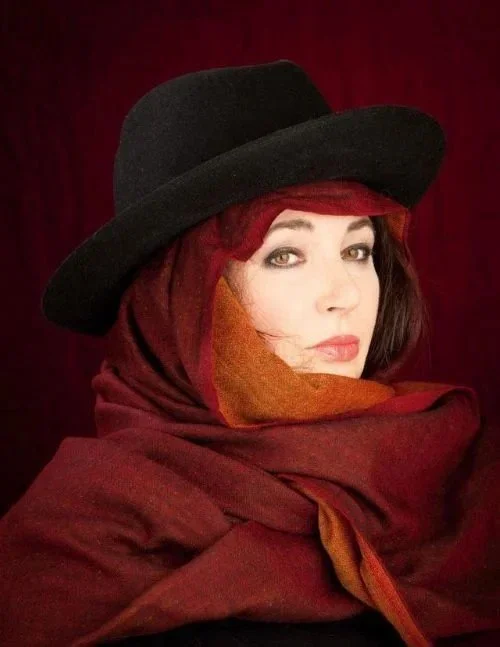
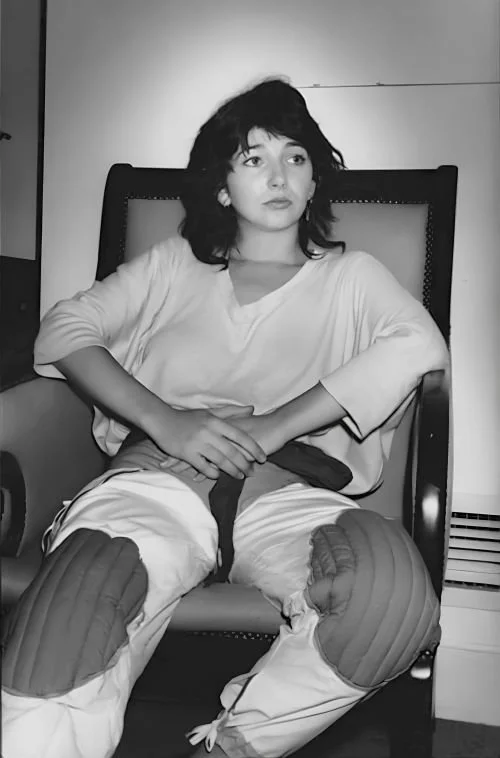
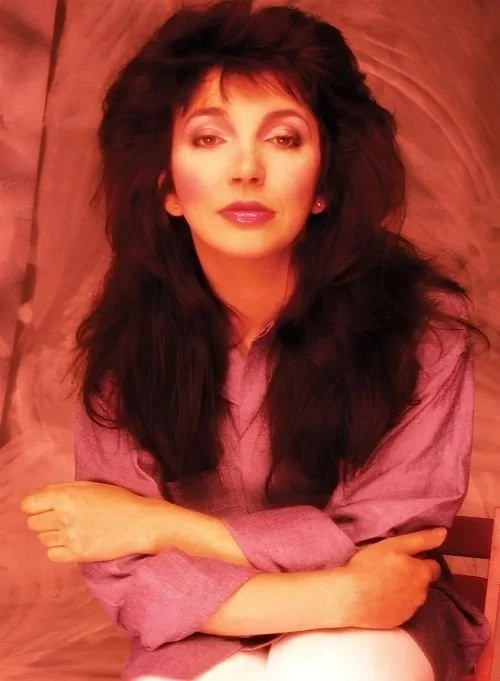
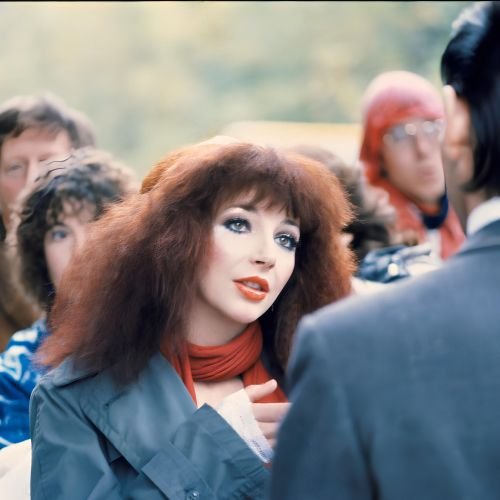
IN THIS PHOTO: Kate Bush in an outtake from the Running Up That Hill (A Deal with God) shoot in 1985/PHOTO CREDIT: John Carder Bush


Kate Bush’s Running Up That Hill (A Deal with God) at Forty-One

__________

I don’t feel I can add anything…
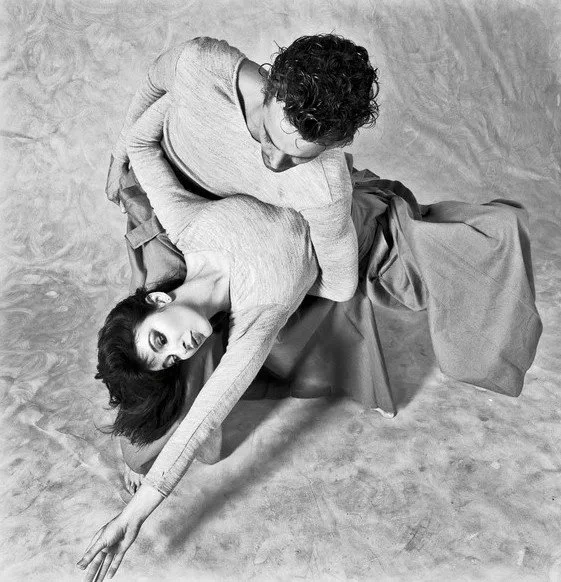
IN THIS PHOTO: Kate Bush in the video for Running Up That Hill (A Deal with God) with Michael Hervieu (now Misha Hervieu)/PHOTO CREDIT: John Carder Bush

new to features I have previously written about Kate Bush’s Running Up That Hill (A Deal with God). However, I do want to mark the song on its anniversary. Released as the first single from Hounds of Love on 5th August, 1985, this timeless song has spanned generations. From its initially released forty-one years ago through to its use in 2022 on Netflix’s Stranger Things, to now, where it is still being played widely and discovered by new people. It is a track that has been streamed nearly two billion times on Spotify. Of time of writing this (21st June, 2026), the song has been streamed 1,754,277, 628. I do think it gets talked about pretty much as the only Kate Bush song. It dominates when people think of her. Those who don’t know the rest of her catalogue do at least recognise this song. It is good that people know Running Up That Hill (A Deal with God), though I do feel that they need to dig deeper and not just stop here. Even so, I am charged with writing about Running Up That Hill (A Deal with God) forty-one years after its release. When it was released as a single after featuring in Stranger Things, it got to number one in the U.K. Only the second time Kate Bush reached number one here. The first was when her debut single, Wuthering Heights, was released in 1978. It originally reached number three. I will start with some background and interview archive from the Kate Bush Encyclopedia:

Song written by Kate Bush. The song was reportedly written in one evening in the summer of 1983. It was the first song recorded for the subsequent fifth studio album Hounds Of Love. The electronic drums, programmed by Del Palmer, and the Fairlight part were present from the first recording of the song. The lyrics speak of Bush’s impossible wish to become her lover, and he her, so that they could know what the other felt. Kate played the first versions of the songs to Paul Hardiman on 6 October 1983. He commented later: “The first time I heard ‘Running Up That Hill’ it wasn’t a demo, it was a working start. We carried on working on Kate and Del’s original. Del had programmed the Linn drum  part, the basis of which we kept. I know we spent time working on the Fairlight melody/hook but the idea was there plus guide vocals.”

The track was worked on between 4 November and 6 December, with Stuart Elliott adding drums, but closely following the programmed pattern. Alan Murphy added guitar parts whereas Paddy Bush, always providing the most ingenious instruments, played the rather better known balalaika on this track.

‘Running Up That Hill’ was intended as a fond farewell to dance, at least as far as Kate’s video appearances were concerned. The music video, directed by David Garfath, featured Bush and dancer Michael Hervieu (who won an audition after Stewart Avon-Arnold was not available due to other commitments) in a performance choreographed by Diane Grey. The pair are wearing grey Japanese hakamas. The choreography draws upon contemporary dance with a repeated gesture suggestive of drawing a bow and arrow (the gesture was made literal on the image for the single in which Bush poses with a real bow and arrow), intercut with surreal sequences of Bush and Hervieu searching through crowds of masked strangers

It is very much about the power of love, and the strength that is created between two people when they’re very much in love, but the strength can also be threatening, violent, dangerous as well as gentle, soothing, loving. And it’s saying that if these two people could swap places – if the man could become the woman and the woman the man, that perhaps they could understand the feelings of that other person in a truer way, understanding them from that gender’s point of view, and that perhaps there are very subtle differences between the sexes that can cause problems in a relationship, especially when people really do care about each other. (The Tony Myatt Interview, November 1985)

‘Running Up That Hill’ was one of the first songs that I wrote for the album. It was very nice for me that it was the first single released, I’d always hoped that would be the way. It’s very much about a relationship between a man and a woman who are deeply in love and they’re so concerned that things could go wrong – they have great insecurity, great fear of the relationship itself. It’s really saying if there’s a possibility of being able to swap places with each other that they’d understand how the other one felt, that when they were saying things that weren’t meant to hurt, that they weren’t meant sincerely, that they were just misunderstood. In some ways, I suppose the basic difference between men and women, where if we could swap places in a relationship, we’d understand each other better, but this, of course, is all theoretical anyway. (Open Interview, 1985)

It seems that the more you get to know a person, the greater the scope there is for misunderstanding. Sometimes you can hurt somebody purely accidentally or be afraid to tell them something because you think they might be hurt when really they’ll understand. So what that song is about is making a deal with God to let two people swap place so they’ll be able to see things from one another’s perspective. (Mike Nicholls, ‘The Girl Who Reached Wuthering Heights’. The London Times, 27 August 1985)”.

There is a lot to unpack when it comes to this song. Aside from one or two idiotic takes on the song – Melody Maker said Running Up That Hill (A Deal with God)She’s precocious, dated, and dull. This record is dismally uninteresting” -, it gained universal acclaim. I do feel that it is this track we will be talking about generations from now. I feel it is so powerful and relevant. That idea of switching shoes and places with someone to better understand them. If you see it about two lovers breaking that barrier or a wider sense of divided people on the same wavelength, Bush doing this deal with God. It has this almost spiritual nature. It is wonderful that Running Up That Hill (A Deal with God) had this new life and was not just resigned to the 1980s. New generations discussing and listening to this epic track. In 2022, Classic Rock told the story behind Kate Bush’s best-known song:

Yet 37 years after it initially reached number 3 in the UK (her biggest hit apart from 1978 debut Wuthering Heights), Running Up That Hill seems to have snowballed beyond that tie-in success and is encouraging many young viewers, who perhaps only knew of Kate Bush as somebody Florence Welch gassed on about in interviews, to investigate her back catalogue and embrace the worlds of albums such as 1985's Hounds Of Love (which yielded this song), The Kick Inside (1978), The Dreaming (1982), The Sensual World (1989) and The Red Shoes (1993). When Bush made her first live appearances for 35 years at a Hammersmith Apollo residency in 2014, her albums made a return to prominence, taking up lofty positions in the charts. It’s plausible that the knock-on effect of Running Up That Hill’s revival will detonate a comparable explosion of interest in all things Kate.

The Hounds Of Love album itself prompted something of a change of fortune, as its predecessor, The Dreaming, hadn’t sold too well.  Hounds Of Love, on the other hand, gained rave reviews, the number one spot in the UK, a respectable showing in the US, and passed a million sales by 1998. Bush was in love with the Fairlight CMI synth and, after recording her demos, spent over a year on overdubs, mixing and tweaking. The result was effectively two mini-albums, with Side One the “pop” side (albeit art-pop), and Side Two an unapologetic prog concept suite about a woman drifting alone at sea at night.

Running Up That Hill opens Side One, which also contains Hounds Of Love's equally dramatic title track, The Big Sky and Cloudbusting, which was EMI’s preferred choice as lead single. Kate insisted on Running Up That Hill, as she deemed it more representative of the album’s direction. Another factor which had unnerved the label was the song’s original title of A Deal With God. On that issue, Kate gave way. (She may, as a teenager, have persuaded the label to release Wuthering Heights - not their choice -  by bursting into tears, but now surrounded by a supportive family and business framework, she was savvier regarding which battles to choose). “For me, A Deal With God is the title”, she told Q in 1989, “but I was told that if I insisted, the radio stations in at least ten countries would refuse to play it – Spain, Italy, America, lots. I thought that was ridiculous. Still, especially after The Dreaming, I decided to weigh up priorities. Not to compromise creatively, but to not be so obsessive that I cut my own throat…I had to give the album a chance, I had to be grown up about this”.

The song, anyway, was about a man and a woman, with God as a secondary character. “I was trying to say that a man and woman can’t really understand each other because we are a man and a woman”, she told Richard Skinner on Radio 1. “And if we could swap our roles, be in each other’s place for a while, I think we’d be very surprised! It would lead to greater understanding. I thought the only way it could be done was, you know, a deal with the devil. And then I thought: well no, why not a deal with God? Because that’s so much more powerful…”

With its of-its-time interpretive dance video and a memorably incongruous showing on British 80s TV staple Wogan, the single took off and rebooted Bush’s career, allowing the album to loosen the reins and release its hounds. (That year, NME awarded it third best track of the year, behind two Jesus & Mary Chain toe-tappers). And while everyone from Placebo to First Aid Kit to Chromatics have subsequently concocted cover versions, none come close to the original’s rhythmic intensity - a blend of LinnDrum programming from Del Palmer and the drumming of Stuart Elliott, who’d worked with Cockney Rebel and Al Stewart and on all Bush’s albums up to that point. “He’s so easy to work with because he knows what I’m like”, Bush enthused. Kate’s brother Paddy’s balalaika is there too, subliminally shading in the arresting atmospherics. That bridge – “come on baby, come on darling…let’s exchange the experience” – remains thrilling”.

People today appreciate Running Up That Hill (A Deal with God) as being a great song. I don’t know if they understand its importance in 1985. It was not like Kate Bush was adored and quickly followed her last single with a new one. It was a difficult road. The Dreaming came out in 1982. There were singles released, though there was little chart success. Bush suffered exhaustion after the album and there was this tough period. Days before Running Up That Hill (A Deal with God) arrived, people were wondering where she was and if she was done. Rumours she was retired, a recluse, overweight, a drug addict. Misogyny as popular and prevalent in 1985 as it is now. If you are a female artist and dare to take time between albums then you are subjected to abuse and insults. In what is one of the biggest mic drops in history, Bush not only shut up moronic critics, a dubious EMI – who felt that, after producing The Dreaming solo and the album being seen as inaccessible and uncommercial by some, that it would not be wise to do it again – and anyone who doubted her, she released a track that is considered among the greatest ever. Showing that she was more than capable of producing a massive hit and staying try to herself. I guess, if she had continued along the lines of The Dreaming or released another flop, there would have been danger of being dropped or EMI stepping in. The success of the single and Hounds of Love – which came on 16th September, 1985 – meant that she was definitely back in their good books! I guess, when the song reaches two billion streams on Spotify – which may be as soon as next year -, more will be written about it. The Quietus published a feature in 2022. They asked, with regards Running Up That Hill (A Deal with God), “what does it mean and why has it connected so strongly with a younger generation?”:

In the summer of 1985, Bush re-emerged. She’d been out of the public eye for three years. Back then, in the hyperactive, costume-changing, style-shifting ’80s, it felt like a lifetime. On August 3, NME ran a Where Are They Now? feature. Two days later, a single hit the shelves; EMI’s first choice had been ‘Cloudbusting’. As with ‘Wuthering Heights’, she called the shots, and opted for ‘Running Up That Hill (A Deal With God)’, that original title safely bracketed off.

Bush stared out from the cover with steely determination, bow in hand, arrow ready to fly. Like an archer setting its sights on a target, this was no mere comeback, but in her brother John Carder Bush’s words, "an act of spiritual, mental and physical focus". (He photographed the image and the moody reverse shot, taken at East Wickham Farm in a room so smoke-machine-filled that it had to be evacuated.)

A steady rhythm took ‘Running Up That Hill’ straight onto the dancefloor. Lofty proposals met it there. A lover yearns to strike a deal with the divine, to swap genders with her partner. Theirs is, for Bush, a love "that’s almost too big for them, with the potential for misunderstanding too great". Surging with optimism as it envisions the impossible, the track strives for that "inaccessible elsewhere", that misty hilltop where differences dissolve and true understanding exists. The gulf between humans had always been Bush’s forte, (the track’s distant balalaika echoing ‘Babooshka”s marital drama), but since ‘Wuthering Heights’, so had the imperious desire to cross it, at all costs. In its own mystical way, ‘Running Up That Hill’ is driven by that very ’80s imperative: Go For It!

The Fairlight is central; that original riff galloping throughout, the reverbed atmospherics bookending the song and those deep chords that tug the heartstrings, while the beat moves the body. Bush’s vocal is combative and sensual. Backing vocals mirror the mixed emotions, yay-yo-ing ecstatically, unleashing battle cries, akin to ‘Kiai!’, the cry made in Japanese martial arts – before Bush learnt dance, she studied karate (Stevie Nicks compared her to a ninja). The imagery is at turns passionate and menacing, thunder in hearts, bullets buried deep. In the orgasmic middle eight, Bush urges her lover to swap and exchange female/male pleasure, moving from traditional sex roles to something approaching the omnisexual (many of the song’s lines could be describing two men flip-fucking). Things intensify in its wake, lightning strikes with real drums, and Murphy’s guitar, all Gilmour-esque ‘feel’ squalls, as if the almighty has responded.

Unease threatens to tilt the radio-friendly axis, voices writhe and wriggle, souls stuck in the purgatory of their lonely skin, begging to break free and merge. The storm calms and a male/female voice sing its last lines, morphed like Bush and dance partner Michael Hervieu in the accompanying video. Kate Bush was going to the disco but it was on her terms, with this maelstrom of a song, conjured from earth and ether; male/female, human/machine, spirit/flesh and light/dark locked in an endless interplay. As with all the best pop music, the immediacy was a Trojan horse carrying an army of subversive ideas.

On its flip-side, she was alone at the piano, singing ‘Under The Ivy’; one of her best-loved B-sides. Seeking refuge, "away from the party", it’s the wallflower to the A-side’s diva, amongst the green and the grey like a gothic heroine. It comes straight from her East Wickham childhood pastorale, candid yet cloaked in secrecy. Here as on the album, the piano’s "rich and resonant", a Grotrian-Steinweg Grand, captured in a live room with an ambient mic, creating an "Erik Satie, alone after the guests have left the ballroom" vibe (Bush’s favourite pianists included Satie, Chopin and Windham Hill’s George Winston).

She performed ‘RUTH’ on Wogan, bow on back, standing before a lectern, Terry visibly awed. It featured repeatedly on Smash Hits‘ singles page, entrancing reviewer Ian Cranna. It sailed to No.3 in the UK singles chart, her biggest hit since ‘Wuthering Heights’. The video, shot at Hammer Horror HQ, Bray Studios (directed by Terry Gilliam’s cameraman, David Garfield), blended modern dance – Bush and partner Michael Hervieu, clad in Japanese Hakama trouser-skirts – and surreal sci-fi”.

I am going to end with the 2022 interview between Kate Bush and Emma Barnett. Bush would speak with Barnett again in 2024. However, this 2022 interview was rare. The first time Bush had conducted an interview around her work for many years. It was exciting to hear from her and the reaction to the runaway success of Running Up That Hill (A Deal with God). As The Guardian reported, Bush had not listened back to the song a lot before it was included in Stranger Things:

Speaking to Barnett, Bush said she hadn’t listened to Running Up That Hill “for a really long time” before its return to the charts, adding: “I never listen to my old stuff.” She last performed it in 2014 for her theatrical London concert series Before the Dawn.

Bush said its original title was A Deal With God, but “I think they were just worried, the record company, that it wouldn’t get played on the radio. That people would feel it was a sensitive title.”

On the meaning of the song, she said: “I really like people to hear a song and take from it what they want. But originally it was written as the idea of a man and a woman swapping with each other. Just to feel what it was like, from the other side.”

In a previous interview in 1986, she elaborated on the song’s meaning, saying it was “about the fundamental differences between men and women, I suppose trying to remove those obstacles, being in someone else’s place; understanding how they see it, and hoping that would remove problems in the relationship.”

In her Radio 4 interview, Bush described 2022 as “an incredibly exciting time … OK, so it’s an awful time on a lot of levels for people. Very difficult. But it’s also a time when incredible things are happening. Technology is progressing at this incredible rate. That’s pretty overwhelming, really. But, you know, there’s so many advances in medicine and there are positive things – you just have to look a bit harder to find them at the moment, I think”.

Running Up That Hill (A Deal with God) turns forty-one on 5th August. I cannot blame people for talking about this song and it being their entry point into Kate Bush’s music. What I hope is that people explore her wider catalogue. The music video has been viewed more than 412 million times. Getting close to two billion streams. Widely played on radio since it was launched back into public consciousness, it is a work of genius. Few felt Kate Bush could survive or would produce anything great after The Dreaming received some mixed reviews. Singles that were not recorded to be singles and struggled to get much focus. This grand silencing bomb that arrived when she was about to be written off, forty-one years later, and we are still listening to this masterpiece. Kate Bush still very much active and relevant. A track that has a powerful message that is embraced and understood around the world. There are few songs ever released as powerful as Running Up That Hill (A Deal with God) I think. This is a song that affects me…

EVERY single time I hear it.
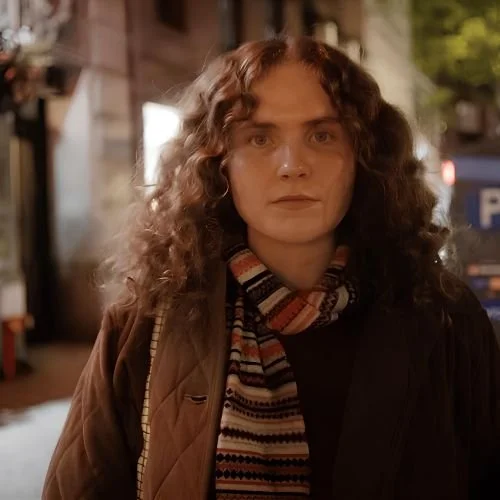
FEATURE: Spotlight: Annabelle Dinda

FEATURE:


Spotlight


Annabelle Dinda

__________

THE brilliant…

Some Things Never Leave is the latest album from Annabelle Dinda. This incredible artist hails from Pennsylvania. Some Things Never Leave is her fourth studio album. I will end with a review of it. I am starting out with some interviews. Ones to Watch spoke with Dinda to discuss her album, “how she approaches her music after going viral on TikTok, and DIY-ing her album cover”:

We are here to talk about the album, but I want to talk about “The Hand” first. What was it like for you when you posted it, and then all of a sudden it was this giant viral moment?

It was nuts, it was crazy. As much as when you’re posting you’re always going “Well who knows...” when it happens, especially at that volume, even when I was saying who knows what could happen, I really didn’t think that anyone was knowing that this was going to happen. It was crazy, it was a real mix of emotions, it was so exciting, and still is exciting in a belated sense. It’s such an incredible privilege to make anything that that amount of people are vibing with. I’m still rolling on that high, honestly.

Did “The Hand” going super viral impact your approach towards releasing music? Were you nervous to release your next thing after that?

No. If anything, I was more fueled. So far, I’ve gotten the feeling that because there is demand, I will supply, I think that’s fun. I really was excited to get more music out quickly, and I am continually excited to get more music out. Not in a way that’s crazy and not honoring the music that came before, but I love making music, and I’m so eager to do as much of it as anyone will let me do. Who knows, in five years, if I’m still lucky enough to do this, then maybe I’ll be kind of like, “I don’t know what to say to these people that are watching me,” but right now I’m like, “Listen to me! I got things to say!”

I love that. You mentioned that the title came very late in the recording process. What was it like choosing the title? Did it hit you all of a sudden?

We had been workshopping titles, and by that I mean I would come into the studio like “What about this one?” and they’d be like “Yeah…” I’m not a titler. I think some people start with a title, they start with the concept, and this was very much like “I don’t know.” But like anything that is named properly, it did come. Once I said it, I was like “Oh!” and everyone I said it to they were like “Oh!” and that’s how you know. When enough people say it in that little sassy voice.

Did “The Hand” going super viral impact your approach towards releasing music? Were you nervous to release your next thing after that?

No. If anything, I was more fueled. So far, I’ve gotten the feeling that because there is demand, I will supply, I think that’s fun. I really was excited to get more music out quickly, and I am continually excited to get more music out. Not in a way that’s crazy and not honoring the music that came before, but I love making music, and I’m so eager to do as much of it as anyone will let me do. Who knows, in five years, if I’m still lucky enough to do this, then maybe I’ll be kind of like, “I don’t know what to say to these people that are watching me,” but right now I’m like, “Listen to me! I got things to say!”

I love that. You mentioned that the title came very late in the recording process. What was it like choosing the title? Did it hit you all of a sudden?

We had been workshopping titles, and by that I mean I would come into the studio like “What about this one?” and they’d be like “Yeah…” I’m not a titler. I think some people start with a title, they start with the concept, and this was very much like “I don’t know.” But like anything that is named properly, it did come. Once I said it, I was like “Oh!” and everyone I said it to they were like “Oh!” and that’s how you know. When enough people say it in that little sassy voice.

I wanted to make sure we talk about the album cover. I had seen one of your TikToks, where it looked like you might have been physically crafting the album cover. Did you kind of arts and crafts the album cover yourself?

Yes! One of my very best friends, Lia, who does all of my pictures and visual stuff with me, we made that. We went to Prospect Park in Brooklyn and we took hundreds of photos, and we wanted to do this crowded cover. We cut out all these pictures and laid them out. I liked the idea of seeing the actual, physical pictures over the base photo. We ended up taking a lot of them out and keeping it pretty simple because, like everything, once it’s a little edited, it’s better. But yeah, we took the pictures, printed them, scanned them, it was really fun!”.

I want to bring in this interview from CLASH They spoke with Annabelle Dinda, among other things, the viral success of The Hand. It is a song that “held up a mirror to our humble humanity and supplied words for the grief we didn’t even know was fermenting within”:

Which artists planted your musical seeds?

AD: My answer to this question sucks. I’ve been asked this a couple times and it’s so bad because I want to be the cool kind of person but Frank Sinatra was what my mom played in the car. A lot of Broadway, Stevie Wonder. Wonderful artists, just not what I sound like at all musically.

There’s certainly a through-line there when it comes to being narrative-centric. When building out your songs, do you feel like you’re pulling from inward or are you being influenced externally?

AD: I write a lot and not enough happens to me to support the amount that I write. During certain periods of time in my life I’ve written a lot because I’ve been feeling a lot, but I kind of always write a lot even when I’m not feeling a lot. In those moments I’ll pull from other things, like I did a lot of prompts on TikTok where I was just like “You guys tell me what to write about,” and that’s fun.

Every album I’ve done has a song or songs about my friends, oftentimes they’re named after my friends’ names. I really like to pull from other people’s lives. What naturally kind of happens is as I’m writing about someone else, because I am a mere animal person, I end up writing about myself a little bit too because you only have your own perspective.

You mentioned that you made ‘Some Things Never Leave’ during the fall, which it very much feels like seasonally. What was your mindset when making this album?

AD: This project came together quicker than any other project I’ve ever done. Six months ago, in a period of time where I could have never imagined this happening, I made music in a vacuum. I’ve made music for such a long time and I made it just because I have always done it and I knew I always would do it. It was not this curated experience. It was like, here is a year gone by. Here are the songs that I wrote in the year. And then I would take off some that I didn’t like.

If I wrote like, 40 songs in a year, then I would pair it down to like 15. This was much more like, “Okay, now people are listening to me.” I feel like the person I was was somebody who was living to write songs. Like it was my project of the time. I naturally kind of do this thing where when I have a feeling I translate it into a song at some point or another, but I was doing it very intentionally. Like ‘Big News Day’, which is the first song on the record, I literally just had a weird Tuesday and I wrote down two lines from it. It’s a collection of common and mundane experiences. That’s why I think people don’t really want to know what they’re about, because if you boil them down to the center, they would be boring.

How does your inner child feel right now?

AD: I’m really trying to take deep breaths and focus on how much fun she would be having. When I released this album, I had a day where I was really trying to focus on that and also trying to keep very present with it because I am conscious of building something standing the test of time if I’m lucky enough, but there is not a single guarantee. There’s not a guarantee in career. There’s not a guarantee in life. And the things that I have achieved thus far, the things I’ve experienced thus far and gotten to witness are so rare and so fun that even just this has been wonderful. I’ve been having a real ball.

Child me made music and probably wanted to do this more than me a year ago did. She would be shocked that my whole thing for such a long time was “I think that I could be a songwriter but I don’t think people are going to want to hear me sing.” I had a complex because by like 12 I was listening to so much Demi Lovato that I was like, “If you can’t sing like Demi Lovato you cannot sing,” and I cannot sing like Demi Lovato.

With the album being out, what is next for you? Are you considering visuals at all?

AD: Yeah, definitely. I think it’s what I’m liking about this album. It feels kind of like a nice, slow intro. Now I’m just gonna sit here and do what I have meant to do for a while. Visuals definitely, we’re going to do a live video. I think it’s going to be ‘Everyone Likes To Be Forgiven’. I’m feeling very confident about that because I want to do an arrangement thing if I can swing it. I just really want to introduce myself in a nice broad fashion and take my time doing so. My main goal is to release a ton of music”.

Atwood Magazine spent some time with Annabelle Dinda. Some Things Never Leave is one of the best albums of the year. If you have not heard the album yet, I would thoroughly recommend that you do so. Dinda has a run of North American dates. I hope that she plays in the U.K. at some point, as it would be wonderful to see her live. I can imagine her music is at its most powerful and affecting from the stage:

Who are some of your musical north stars, and what are you most excited about the music you're making today?

Annabelle Dinda: I love Sigur Rós and Bowie and Belle and Sebastian and Rufus Wainwright. This is both a predictable and slightly unconventional combined list, but I would call them all some of my north stars in different ways. I’m excited to go more orchestral with music whenever I can, and to also lean into the rock side of things. I expect to be doing full rock operas by 40. (This is a joke but if this was my path I would be very happy, so maybe it’s not a joke.)

There’s an invigorating energy to this record – it’s sprightly, raw, emotionally charged and deeply alive! Can you share a little about the story behind this album?

Annabelle Dinda: Thank you! I think a lot of that energetic, raw sound simply emerged from the timespan we gave ourselves to record it, which was about two weeks all told. It shocked me how much detail we were able to include on the ten songs in that amount of time, but it was also so novel and great– having to make editorial choices and leave some moments open and largely unornamented, relying on the song itself to do most of the heavy lifting. The songs were written in not much more time, it’s basically a sampling of some of the songs I wrote within a three month time period, like a little snippet of life!

As a lyrically forward artist, do you have any favorite lyrics in these songs? I’d love to dive into a couple of your highlights?

Annabelle Dinda: “Everyone Likes To Be Forgiven” has some more of my favorites. “Do you hate when people love you / or do you not relate to them?” and “Do you hate when people know you / or do you know they never can?”

The other day I was listening to “Gunpoint, Headlock” again, and I had some reflective pride over the lyric: “there’s a kid killing soldiers in his video games / they build worlds on the screen, but they leave in the pain.” Sometimes I’ll write something and I won’t fully get it or like it until a month later”.

Some Things Never Leave has been billed by many as Annabelle Dinda’s debut album. It is not. She released three albums previously, so I am not sure why people are calling it a ‘debut’. In any case, many people are hearing her music for the first time. Atwood Magazine provided their review for Some Things Never Leave. You can tell that Dinda is going to be releasing music for many years to come:

The greatest songwriters always seem to have a quiet, steady resolve. A sense of inner confidence that begets presence, as if you could somehow still feel them in an otherwise silent studio. Annabelle Dinda possesses that intangible trait on her debut LP Some Things Never Leave. It’s not that she out sings her range, vies for epic crescendos, or crafts a series of stunning instrumentals. There’s just this natural energy she brings to each moment – earthy, breezy, and effortlessly catchy melodies intertwine with introspective lyricism across forty minutes of emotionally-charged folk music. It’s no-frills, but sometimes simply being yourself and owning the moment is all that’s called for.

As Annabelle Dinda’s first album unfurls, its beauty speaks for itself. ‘Big News Day’ transforms from upbeat acoustic strumming to breathtaking self-harmonizing, and all in the name of lamenting that people, as she sings repeatedly in the refrain, are boring. ‘Doesn’t Matter’ is one of the most graceful and free-flowing songs on the record, with a chorus that will have you unconsciously swaying while Annabelle sneaks little gems like “blood doesn't matter 'til you get cut open” into the verses. ‘The Hand’ is an equally whimsical and offhand track that observes the gender gap in society, but does so with relative neutrality: “this isn't rage, it's worth a mention / this is no statement, I'm complicit / this is a dream, god put me in it.” While all ten songs deliver either some sort of memorable hook, intriguing message, or emotional gut-check, ‘Satellites’ somehow pulls off all three. Elegant acoustic guitars shimmer tranquilly in the background while Dinda’s voice gradually swells toward a beautifully layered rebuke of what could be perceived as relational, political, or just general hypocrisy – “don't bark like it's high divining, don't bite and expect no bruise / don't start with the diatribing, then spite all the love you lose” – adding in, “you put me into space, then hate me when I ask for it.” It might very well be the best song of her early career.

While her bolder statements are worth highlighting, there really isn’t a single part of Some Things Never Leave that doesn’t leave some sort of lasting impression. On ‘Everyone Likes To Be Forgiven’, it’s the way Dinda’s voice alternates between passive (almost spectral) and directly powerful, culminating with the subtle drum kick when she sings “frozen like a fossil, this overflowing cup / do you hate when people move you?” On ‘To Reconcile’, it’s the ice-tinged classical pianos that lend the song its detached, wintry air. On the curtain-call ‘London Plane Trees Grow in Philly’, it’s the sheer power of her words which linger well beyond the record’s expiration. Dinda seems to find inner peace in the give-and-take of the forces of the universe: “when I start catastrophizing, I call you to stem the rising / ache of living, fear of dying / they're the same, says Fate, while sighing.” It’s moments like these that don’t feel overly important at first, but become cornerstones of the album over time.

Once again, Some Things Never Leave’s charm boils down to the artist’s unique sense of self – and the distinctive expression that comes with that. If I had to draw a direct comparison to another musician it would be Katie Crutchfield (for those who don’t know, that’s a massive compliment), but I’d rather say that Annabelle Dinda is simply the first of her. While Annabelle’s debut leaves room for her to experiment and grow, it’s about as perfect a launching pad as any artist could create for themselves. On ‘The Body Remembers’, she sings about having “no map and no tour guide” – respectfully, I don’t think she needs one at all”.

I will leave it there. A tremendous artist that is one of the most talented and distinct songwriters in the world. I do really love her music. Some Things Never Leave one of the best albums of this year for sure. I was keen to spend some time with and spotlight…

A wonderful artist.

___________

Follow Annabelle Dinda

FEATURE: The Digital Mixtape: Songs from the Best Albums of 2026

FEATURE:


The Digital Mixtape

IN THIS PHOTO: Mitski


Songs from the Best Albums of 2026

__________

I haven’t yet…


IN THIS PHOTO: Ella Langley

looked back at the year so far. We are over half-way, so I wanted to collate a mixtape featuring songs from the best albums of 2026. I think we will see some huge contenders in the coming weeks. I am writing this on 20th June, so I am thinking back at the first six-and-a-half months and the very best of the best. There have been so many contenders for album of the year released already. This mixtape is a great one and gives you an idea of the quality that has come out. Given the wonderful albums that have already arrived, I do wonder what is in store for…

THE rest of the year.

FEATURE: Spotlight: Charlotte OC

FEATURE:


Spotlight

PHOTO CREDIT: Stewart Baxter


Charlotte OC

__________

EVEN though…

I have been following her for a while now, I have been a bit remiss in not including Charlotte OC in my Spotlight series. The Blackburn artist released her latest single, Start of Summer, recently. Her latest album, Here  Comes Trouble, was released in 2021. I know there will be demand and excitement around a new album. I love everything she has put out. Even though I have heard her music on the radio, it is not played as widely as it should. She is a treasure of an artist that you should connect with. I shall get to some interviews from last year. I want to start out by sourcing some biography from Charlotte OC’s official website:

It takes a special kind of fearlessness to bare your soul in song. The Blackburn-raised singer-songwriter Charlotte OC has entered a new phase of her career, one where ruthless lyrics about mistakes made and lessons learned take precedent. Born Charlotte O’Connor to an Irish father and half-Indian, half-Malawian mother, this wild and willful artist has endured everything the industry could throw at her. Already the subject of praise in Billboard, Vogue, Fader and The Independent, she was snapped up by a major label aged 18 then, when she refused to sacrifice her integrity at the behest of faceless executives, was unceremoniously dropped. After a few tumultuous years living in London and releasing music, she returned home to Blackburn, undergoing a reset that has led her to here; to her best and most authentic work to date. 2025 sees the start of a new chapter for Charlotte OC”.

To date, Charlotte OC has released two acclaimed albums, ‘Careless People' and ‘Here Comes Trouble’ and the EP 'Oh The Ecstasy, Oh the Agony' in 2020 which garnered attention from Paper Magazine, Nylon, Clash, BBC Radio 1, BBC Radio 2 and entered the charts in Germany. Her music has over 70 million streams and she has performed on the Seth Meyers Late Late show, Radio 1 Big Weekend, Governor’s Ball, Field Day and Pitchfork Paris”.

Even though there has not been an album since 2021, Charlotte OC released the extraordinary 2025 E.P., Seriously Love, Go Home. I am going to go back a bit further than last year to start, as Fifteen Questions spoke with Charlotte OC around the release of 2021’s Here Comes Trouble. She spoke about her creative process. If you have not heard Charlotte OC until now, you really do need to check out her music:

Where does the Impulse to create something come from for you? What role do often-quoted sources of inspiration like dreams, other forms of art, personal relationships, politics etc play?

I hear melodies and lyrics more when I'm full of stress or feeling lost. Or if I've heard a beautiful piece of music. I think I've realised music becomes my mate when I feel rock bottom low which is nice isn’t it. (laughs)

I heard the most beautiful song in one of my dreams the other night and I'm still kicking myself that I didn’t wake up and record it when I woke up as it’s now vanished forever.

I'm quite an observant person so most of my lyrics come from things I've noticed from others or myself.

What do you start with? How difficult is that first line of text, the first note?

It depends. It's usually the melody for me, or both lyric and melody.

Sometimes I have the full song ready and it needs tweaking. Every song is different.

When do the lyrics enter the picture? Where do they come from? Do lyrics need to grow together with the music or can they emerge from a place of their own?

Sometimes they come together, usually when I write on my own.

I remember when I wrote "Inevitable" I wrote all the lyrics down on the tube on my the way to the session whilst crying my eyes out in front of lots of strangers.

But then sometimes lyrics can take a while - months or even a year – to feel fully happy with how you’ve said something.

There are many descriptions of the creative state. How would you describe it for you personally? Is there an element of spirituality to what you do?

Again it’s one of those unfortunate things for me, I need to be full of a certain emotion, or there needs to be an element of not giving a shit. All or nothing. My general vibe.
Once a piece is finished, how important is it for you to let it lie and evaluate it later on? How much improvement and refinement do you personally allow until you're satisfied with a piece? What does this process look like in practise?

With this album, the demos sounded like finished pieces. We left them for a month, then came back to them. Breathing space is important and we made a conscious effort to not listen back to the demos after we’d done them. Which was very hard, but it gave us a clearer idea when revisiting.
The song hits you differently and you hear it for what it is instead of making a demo and listening to it till you have no idea what it is anymore
”.

PHOTO CREDIT: Stewart Baxter

Last year, EUPHORIA. interviewed Charlotte OC around the release of her latest E.P. This is an artist I have loved for years now. I can’t imagine why I have not spotlighted her. I feel this is the most important time in her career, so I am glad I can get to her now and right a wrong:

When Charlotte OC took to the stage earlier this year, it had been years since her last performance. Even longer since she’d last released new music, but she is set to break that streak of almost four years with the release of her new EP, Seriously Love, Go Home.

Returning feels a little bit like having to find her feet all over again, Charlotte confesses when I speak with her over Zoom. “Even just like when I’m talking on stage, I’m like, what the fuck am I going to say? How do I even introduce myself? I don’t want to go on about the fact that I’ve not been around for so long. How many times can I swear? How many times can I swear? How many times can I get away with it?” She half-jokes. “It was so many things, but by the second show I was like – right. I know what I’m doing. That’s the whole process of this whole thing, you just gotta keep doing it, and you learn. But it’s petrifying, I was petrified. I’ve not felt like that for a long time.”

It didn’t help that she’d gotten really ill right before those first two shows. “I don’t think I’ve ever had a chest infection like that,” Charlotte tells me. She’s only now, two weeks later, getting at the end of it. “I hated every minute of it. Everyone else seemed to enjoy it, but I hated it. That first show was shit, I knew it was, but everyone was like – it’s your first show back, don’t worry. But that second show, I was so disappointed that I had in my mind what I wanted to happen, how I wanted it to be. I knew what worked, what didn’t work. I went into the next show with that in mind and just pushed the illness aside. And yeah, that was really good. Still not the best vocally, but performance-wise it was great.”

Charlotte’s being really humble here, as her vocals on a bad day far exceed most artists’ best vocals by a mile. It’s no surprise, then, that a lot of avid music listeners have been happy to see her back on stage. Especially after a couple of rather difficult years. She was battling with a breakup, had been forced to move back to London, and was dealing with the grief of her dad’s passing. On top of it all, she no longer had management. “It was enough for me to be like, the world is fucking shit,” she says. “I always felt like there was something always up against me. I guess that’s what makes a good song sometimes, where you feel like your world’s lost its color. However, I did a writing session the other day and I wrote this song in the headspace that I’m in now, and it’s honestly one of the saddest songs I’ve ever written and one of the best songs I’ve ever written. I’m so proud of it, and I thought – so I don’t have to be in this headspace whilst I’m writing. It doesn’t always have to be like this, where it feels like the world is ending in order for me to make great art. And now, when I held my vinyl the other day, I had this moment where I thought. It’s so weird that all of that has culminated in this. I really had to work for this one, and I feel like I didn’t have anything while I was making it. And now to have it, and to be able to hold it, it feels like I’ve done my homework for the first time. Like I’ve done my coursework and handed it in.”

In other words, she’s proud of this EP – as she should be. The songs are evocative, vulnerable, and have that signature smoky sound that gives so much depth to each track and lyric. But maybe for the first time, it also sounds like Charlotte knows exactly how to wield it like a weapon and a warm embrace; whichever the song needs. Perhaps it’s because, also for the first time, she has a different way of relating to the tracks herself as well. “I think this is the first set of music I’ve done where I feel like if someone was to tell me their reaction to a song and how much it’s helped them, that I’d actually understand. I felt like some of my older stuff, I was so young when I was doing it, or not present – I felt like it was just happening. But now, knowing what I went through making it, and then hearing that somebody else has taken something from this, I’d get it and understand their emotion much more,” she adds.

Because making this album in many ways feels like a fresh start, after having taken a break from music altogether. It was a strange alienating experience for Charlotte – going from music being your lifeline, and an embodiment of who you are, to something that you want to avoid at all costs. “I feel emotional talking about it,” she starts. “I can’t believe that I was even in that dark of a place. It’s weird to think that somebody who loves music so much, that it was literally like there’s nothing else about me. I’m obviously a sister, an auntie, a daughter, but music is so everything that I was. I think when it all started to go tits up, and you’re not feeling great about yourself, I’d always thought – no fuck it, everything’s fine. Until suddenly I was like, no, I don’t want to go near it. And I had the luxury to do so, because I took two years out. I was living with my mum, who’s been helping me. But I think they could tell that I was a real mess. It almost feels like a different person – that version of me. My dad would have been livid that I would’ve even been like that. So I’m glad that period of my life is over.”

Turning the page and stepping back into the light has come with a hard-earned sense of pride and satisfaction, and rightfully so. “I think my main focus [when making this] was just to fall in love with music again, because I didn’t even pick up the guitar for about a year, maybe two years. Whenever anybody spoke about music, I’d walk out of the room – I was not in a good place. The fact that this even happened, yeah, I’m proud of myself. And I don’t often say that, because I just didn’t think I’d get there. I didn’t think this would happen.”

She didn’t go at it alone, and mentions how she worked together with her producer Dimitri on this EP after messaging her label as a long shot. “There was a long period of time where these songs just sat on a hard drive and didn’t do anything. I was stuck in a rut for a long time. But then I got taken to the Lake District, and we had some chocolate mushrooms, and I started listening to my music again. It’s when I messaged Dimi and said, ‘These songs are great – what are we doing?’ I didn’t have a manager, I didn’t have anything, so I messaged my label honestly off my nut, being like – ‘I’ve got this idea.’ Because I felt like I was finally hearing the music for the first time. And I actually said to myself, I’m not shit. I just had this confidence of like, this is what we’re doing. And I didn’t even know if I still had a label at the time, but I just sent them the idea I had. And they luckily said, ‘Yes, we’ll help with this.’ So I ended up going to London for two weeks, and we just worked on these demos and that was it.”

Now that she’s gotten a chance to start afresh, Charlotte’s made sure that her involvement in her own team is a lot bigger. “I’m very much involved in what’s happening at the moment, and that was never the case. I was almost babied, but now I’m in every meeting and I’ve got a seat at the table. I’m being held accountable for a lot of things, and it’s refreshing. I feel like I’ve got a proper job now, I’m not a little girl anymore. It felt like that for a long time, especially when you don’t have a steady income. You don’t feel like you’re living a normal life. Now it really feels like I am holding the reins. I’m 34, and that’s genuinely a first, which is a bit mad.”

It’s why, to Charlotte, this EP very much feels like a stepping stone. “Writing these songs, listening to the music, I know it’s going to help me make whatever’s about to happen next. So I just want people to enjoy this for what it is, and know that it’s me getting my feet back on the ground.”

Because there is definitely a whole lot more coming, if it’s up to Charlotte. She’s currently working on booking more dates to perform all over the world, but is also looking forward to recording a full-length album in September. In fact, some of the first sessions have already taken place. “I’ve been writing on my own for a while, but I recently had this session with Craigie Dodds. I don’t know if you’ve heard of him?” She asks me. Dodds is a multi-instrumentalist who, just like Charlotte, has roots in Malawi. “Nobody is from Malawi, but he has a coffee shop next to his studio. And they make amazing coffee from all over the world. So he was letting me smell the different buckets to see which coffee I wanted, and he went – oh this one’s from Cuba, this one’s from Malawi. I looked at him and said, ‘That’s where I’m from.’ And he went, ‘No, that’s where I’m from!’ He’s been wanting to work with me for ages, but yeah, we didn’t realise. He was like, ‘I cannot fucking believe this.’ It turns out he knows my family in Malawi. So it was mad, but I think that enabled me to open up,” Charlotte smiles. “We started the session at 12, and I didn’t leave until 2 am. Maybe for only one hour of that I wasn’t crying. It was just really special, probably one of the best sessions I’ve ever had in my life. It made me realize how much I love collaborating, but also how much it needs to be right and you need to be able to connect, and not just go in to make a hit or anything like that.”

At the end of the day, that’s what music is about. For so many listeners out there, music is what allows them to put words to their feelings – it helps them understand themselves and others around them, as well. But you need an artist to be brave enough to bare their own soul through sound, and Charlotte OC can be proud that she’s done exactly that. She’s ready to turn the page, ready for a new creative chapter, and we can’t wait to hear it, starting with this EP”.

Atwood Magazine spent time with Charlotte OC last July to discuss her most powerful work to date. It is interesting getting her insight into the songs and the route to Seriously Love, Go Home. I would love to see her perform live. I am not sure whether she has any dates coming up. A London gig would be amazing:

Few artists deliver emotional extremes quite like Charlotte OC. The British artist (née Charlotte Mary O’Connor) has long dwelled in the space between grandeur and grit, balancing lavish arrangements with lyrical intimacy and vocal performances that smolder, soar, and scar. A two-time Atwood Editor’s Pick, she’s been praised for “owning her grief, her messiness, and the undeniable beauty of trying,” and for creating “beautiful, dramatic, and moving soundtrack[s] to the human spirit.” Across her 2017 major label debut Careless People and 2021’s masterful, independently-concocted Here Comes Trouble, O’Connor has established herself as a fearless force – a modern siren conjuring cinematic soul from the depths of human ache. Released July 11th via Embassy of Music, Seriously Love, Go Home doesn’t just continue that legacy – it crystallizes it, distilling her artistry into five gut-punching tracks that soar with heart, honesty, and heat.

The EP’s title says it all – and yet, it barely scratches the surface. “After a few things blew up in my face while I was living in London, it felt like the universe was screaming at me to go home,” O’Connor explains. “Not quietly either like, ‘Seriously mate….you’re a big mess, go home.’ So I did.”

“I was definitely in a self-destruct spiral,” she adds. “I think I moved to London to run away – officially I was supposed to be in sessions, but everything was just falling apart and I wasn’t dealing with anything.”

The road to Seriously Love, Go Home was far from straightforward. These songs began to take shape during a creatively unmoored period. A chance studio session with Grammy-nominated producer, songwriter, and multi-instrumentalist Dimitri Tikovoi (whose past credits include Charli XCX, Blondie, Purple Disco Machine, and Ghost) became the unexpected spark for her next chapter. “When I first met Dimitri, we had this really honest conversation about where I was at, what had been holding me back, and what I felt I needed to do next,” she recalls.

“We ended up making music later that day, and there wasn’t any big plan or motive. I think we both just agreed to let whatever needed to happen, happen. At the time, I felt quite lost and in desperate need of an outlet. These songs ended up being the result of that strange, uncertain period.”

“After a while, I had the tracks just sitting there. I didn’t have management, I didn’t really have a plan, and I hadn’t even listened back to them. To be honest, I’d kind of given up. The people closest to me could see I was losing purpose, so they booked a little trip to the Lake District to help shake me out of the rut I’d gotten comfortable in.”

While there wasn’t a grand vision when she began working on these songs, there was a need to exorcise her demons – and music became her way forward. “At the start, there wasn’t really a vision beyond survival,” she shares. “I needed an outlet. As I started writing, I realised I wanted this record to sound like truth. It didn’t have to be perfect or polished – it just had to be real. And somewhere along the way, I found myself again.”

PHOTO CREDIT: Stewart Baxter

That clarity, as refreshing as it is still raw, fuels every corner of this EP. These songs don’t posture or pretend – they bleed. They’re rooted in lived experience, personal growth, and artistic renewal. “It’s unlocked something in me,” O’Connor says. “I’ve been writing a lot lately, and releasing these tracks has made me realise what I’m really here for. I feel closer than ever to my purpose as an artist. This EP is the start of a new chapter and a new kind of confidence in my work. It’s made me fall back in love with music again, and I’m just so grateful for that and buzzing for what’s next!”

O’Connor beams as she calls this EP “just the beginning” – and in truth, there’s lots to love about her spiritual and creative rebirth. Seriously Love, Go Home is a compact but powerful offering, capturing the arc of a heartbreak and the journey back to self. Opener “God, We Tried” sets the tone with stunning vulnerability, lingering in the ruins of a love that was never going to last. “From the soul-shaking cries of ‘God, we tried’ to the aching acceptance of ‘we just need to bleed,’ O’Connor’s words are heavy, weighted down by emotional turmoil – dark storm clouds that have yet to clear up,” we previously wrote for an Atwood’s 117th Editor’s Picks.

It’s a personal highlight for her as well. “I loved making it,” she says of “God, We Tried.” “It fell out of me like it had always been there. The lyrics are straight to the point, not trying to be fancy, it’s just very literal and the emotion in my voice takes me back to how much of a state of I was in around that time, I’m proud that none of that got lost in the process.”

Charlotte OC’s songwriting has always balanced the visceral with the poetic, and Seriously Love, Go Home is no exception. Her favorite lyrics from the EP reflect the duality at the heart of this record: Sensuality, sorrow, surrender, and strength. “You levitate my heart until it’s in my mouth. You elevate the art of what I cannot live without,” she sings on “Strange Influence” – a line that captures the ache and intoxication of emotional entanglement. From the hot, unhinged energy of “Cider and Black” comes the searing image: “Thursday, angel, you’re facing the wall. Your whole body shakes like a Super 8 ball.”

Charlotte OC has emerged from the chaos not only intact, but reignited – her artistry sharpened, her voice clearer than ever, and her passion fully restored. This EP doesn’t just mark a return; it’s a reawakening – a bold, brave reclaiming of self through sound.

“For me, making this record helped me remember who I am. It showed me that I can still find magic in myself and in music, even after everything I thought I’d lost. And I really did feel like I’d lost it all. It’s taught me to trust myself again and also, mum is where the heart is.”

Charlotte OC has always made music that speaks to the soul, but Seriously Love, Go Home hits deeper – not because it tries to, but because it simply tells the truth. Her songs don’t just chronicle a chapter of heartache, healing, and growth; they live it. They pulse with pain, resilience, and grace, delivered through a voice that knows how to shatter and soothe in the same breath. It’s Charlotte OC at her most raw, most radiant, and most real – standing tall in the wreckage, singing her way back to life”.

I will finish with an interview from last August. I do like Bartek Music’s conversation with Charlotte OC. A snapshot of her in action. A truly wonderful artist who grows stronger with every release. I feel that her 2026 work so far signals a new phase and peak. Though Sorry Love, Go Home, lingers long in the mind:

The two albums you released in 2017 and 2021 show a consistent approach to your sound, blending acoustic elements with touches of electronica, creating a clear artistic identity. How would you describe your creative process, and do you find consistency limiting or liberating?

I just want the music to feel good to me.

In the past, I think I got a little lost and let a lot of outside noise influence me. But recently, making music has just felt joyful again. I’m constantly learning who I am and what feels truly authentic. That’s what I love most about making music. It teaches me about myself in a way nothing else can.

I find your latest EP, “Seriously Love, Go Home” to be a bit of a departure from that consistency, a sort of evolution in sound and lyrics. Was that intentional?

The main focus was to let me come through, without getting lost trying to be something I’m not.

I’ve spent years doing just that, and it got me nowhere. I’m a pretty “what you see is what you get” type of person, so for that not to be reflected in my music felt like a shame. I was in a really fragile place when I made this, and I think I had no other option but to fully dig into who I am.

Any artist (dead or alive) you’d love to collaborate with and why?

I’d love to write with CMAT. Her melodies are incredible and her lyrics are brilliant.

And I’d love for Stephan Bodzin to use one of my vocals. I think I’d actually combust if that ever happened.

Also, George Michael. I would’ve loved to write with him and just be his mate.

Back to “Seriously Love, Go Home” and my favorite track, “Cider and Black.” Shivers and strong Bond movies vibes. Is there a story behind the making of that one?

I was in a really self-destructive mindset at the time.

I wasn’t being a good person or the kind of person I was raised to be. My morals had completely flown out the window, and I was kind of reveling in that. It became my whole personality. I was just really lost, and this song is basically a snapshot of me in action during that time.

And finally, a big step back into your past. Do you remember your first music-related memory? How do you think it has shaped you as an artist?

When I was younger, I was incredibly quiet. My parents were actually worried about how silent I was. And if I did speak, it was usually about my imaginary mouse, Kenny, who I blamed everything on. So yeah, I was a bit of a strange child.

Then one day, I watched “Wayne’s World” for the first time, which also meant hearing “Bohemian Rhapsody” for the first time. I was completely transfixed and met the first love of my life, Freddie Mercury.

That evening, my parents had friends over for a dinner party. My sisters were doing a talent show, and after they finished, I whispered to my mum to put Queen on. I stepped into the center of the room and mimed the entire thing, despite only hearing it for the first time that morning”.

Go and follow the majestic and magnetic Charlotte OC. I think I first heard her music back in 2017. Since then, she has become one of our most accomplished songwriters. With a voice that gets straight into the heart and head, I am interested to see what the summer holds in store and whether she has some festivals on the cards. I would really love to see Charlotte OC perform. This is a spotlight, shout out and love letter to a brilliant queen…

WE all should know about.

___________

Follow Charlotte OC

FEATURE: Kate Bush: The Whole Story: Inside the KBC article Issue 13 (Summer 1983), Untitled

FEATURE:


Kate Bush: The Whole Story

IN THIS PHOTO: Kate Bush in 1982/PHOTO CREDIT: Pierre Terrasson


Inside the KBC article Issue 13 (Summer 1983), Untitled

__________

THIS one…

IN THIS PHOTO: Kate Bush in 1983

should be called The Summer of Love. In terms of where Kate Bush was. Starting work on construction a bespoke home studio next to her family place at East Wickham Farm. Allowing herself some time to relax, see friends and spend time with her boyfriend, Del Palmer. Her family around her, Bush was also working on songs for her masterpiece fifth studio album, Hounds of Love. I have a few more inclusions from this site that is the Complete Kate Bush Club Newsletter Writings of Kate Bush. I do love her diary entries, short stories and entries. Submissions to the fan club is important. Although she starts by saying not a lot has happened, I think the summer of 1983 was her best. In terms of personal happiness and laying the foundations, physically and musically for Hounds of Love. I did want to comment on her writing to the Kate Bush Club. Maybe a bit quiet recently, this was filing in some of the gaps. A great and insightful summer 1983 article from Kate Bush. It looks back on her 1982 and the start of 1983. She would update fans about her summer in the next edition:

It's been a long time since our last issue, and I must apologise for the long absence, but due to lack of activities, there has really been very little to tell you about.

Last year, after the album was finished, I decided to promote it as fully as possible. When you've spent nearly a year making an album, you can't let it go out into the world without helping it. In fact, the business has certainly changed in the last couple of years. Everyone has to work much harder, and with an absence of two years from the public eye, I had to show my face again, to prove I was still alive. I did lots and lots of press--I haven't done so much since the first album. It was refreshing to find that the majority of journalists actually really appreciated and understood the album, but I had to explain time and time again that the album hadn't taken two years to make! [I suppose that in 1989, when KBVI is finally released, she will have to explain time and time again that the album hadn't taken four years to make! ]

I also did some TVs in England and Europe, with two dancers: Gary, who you all know, and Dougie, a dancer I had met years ago when he was working in Lindsay Kemp's company.

We worked in Italy and Germany, and the response was wonderful. It was interesting that as we worked more and more on the routine, The Dreaming, it became tighter and tighter, and little bits were added here and there, until it was so much better than the video that I wished we had had made the video after the TVs.

There is a bit of tragedy, as one of her beloved dancing partners, Gary Hurst, would die in 1990 due to complications related to AIDS. He is remembered in The Red Shoes track, Moments of Pleasure. It was a period where Kate Bush was getting back into dance. That gruelling promotional schedule didn’t allow her much time to dance and unwind in general. She did a bit for The Dreaminmg – the 1982 album she was promoting -, and she was still promoting the album in 1983. Bits and pieces of things here and there. That album was one where she was in the studio and inside a lot. A really intense period. In 1983, there was this decision to recommit to her first love. Or one of her first! That is interesting what she says about the videos. Live exposure meant that there was this finesse and tightening. New elements that could have been incorporated into the videos. Interesting to see how a song like The Dreaming or There Goes a Tenner would look after they were performed live. It was an odd promotional roll-out, as there was not massive commercial acclaim around Europe. The Dreaming did well and there were some positive reviews, but there was as much bafflement and a lack of intense buying compared to what she was used to.

It was a very interesting trip--we went to Rome, and as Lindsay Kemp was visiting at the time, we got a chance to see Lindsay, and we had a lovely evening. He cooked us a meal, and after we were so full that we could hardly move, he got out boxes of his old photos and we fingered each one with magical memories: shots of Flowers from The Collegiate Theatre, the first time I saw Lindsay perform. Lindsay dressed as Mr. Punch, leaping for joy. I remember the theatre being full of adults rather than children, and all of us shouting "Look behind you!" and "Oh, no, you don't!" Adults transported to childhood in a matter of moments--but that's the craft of Lindsay's magic.

Fond memories spread across the floor--the passionate and dramatic, Lindsay's shows in photo form. We carefully put them all back in their boxes, a farewell dance and a big kiss goodbye.

There is a fountain in Rome where you can make a wish and throw a coin--a very magical place [the Trevi Fountains]: marble horses, pulling themselves from marble waves, being driven by a marble Neptune. They say the wishes come true. I've yet to see. And there's a hotel in Rome where we stayed, and on the night we arrived, there was a diplomatic meeting on a higher floor. The hotel was full of young soldiers--boys with guns just in case of any trouble. It was a very sad sight.

I had to rehearse my number in my room, and not having a European plug, I took the old one off and began to stick the bare wires into the plug socket, which was hidden behind the table. All the lights went out in the room, so I ran into the hall--no lights. I was half expecting to see soldiers cocking their rifles, having traced the source of the light failure. I went into my room, and a few minutes later the lights came back on. Gary and Dougie came up later, and when I told them they started laughing--apparently the whole hotel had blacked out, and the soldiers in reception had been a little on edge, to say the least. So I won't do that again, and I recommend calling reception to see if they'll help you out if you ever find yourself with two bare wires in a foreign hotel!

I do love those memories of Rome. Lindsay Kemp was so crucial to Kate Bush. In terms of opening her eyes to a world beyond traditional dance. Its theatrical possibilities. How it could mix so many emotions, genre and styles. Camp and serious together. Kemp was someone Bush learned so much from. He sadly died in 2018. It is a shame that Kate Bush didn’t chronicle her stay in Rome. No video of her. She wanted to keep it private, so we are left with our imaginations. From the romance of a beautiful fountain and a catch-up with Lindsay Kemp to the comedy and tension of Kate Bush almost getting everyone in a hotel shot! You can sort of imagine that blind panic then the relief when the lights came out. It would have been such a treat for fans to read these words in 1983. Something is lost on social media. If you got this in an Instagram post. I guess supporting photography is a benefit, but something about this physical fanzine and these words from Kate Bush!

We travelled to Milan, and then to a place near Venice, where they were holding the Venice Festival. We performed The Dreaming. The festival is held in a theatre with an audience of a few hundred, and goes out on TV at the same time, so it was a live event, but performed to pre-recorded backing tracks. The Italian audiences are absolutely wonderful, they adore anything to do with art and applaud quite spontaneously if they like something. Each time they liked a step in the routine there would be a ripple of applause, and it was quite hard to keep going without badly needing to smile because it was such a lovely feeling.

The video The Dreaming had been made in between press and radio and the trip abroad, and we were very lucky to be able to do all the shooting in one day. It was an extremely ambitious shoot, which included live birds, lasers, flying wires, people being buried completely under sand, not to mention a beautiful set which was built of polystyrene rocks, dead spikey trees and a cardboard moon and sun.

As the hours rolled on, we were sure we would have to leave at least one idea out, but with a crew who were just as eager as us to see the film complete and as it should be, we worked on into the night--past the rope made of laser light and the painted men who walked out of trees to a mouth moving in the sand (all we can see of a man deep under the sand; somehow it looks remarkably like Paddy, and it's the last shot in our video).

It is amazing how vivid and interesting a Kate Bush video shoot is! Rather than them being formulaic or simple, you get all these characters and supporting actors. Animals, birds and who knows what! I did not know that The Dreaming’s video was done so quickly. The single did not do well at all, but I do like how Bush wanted its film to be ambitious. It is unconventional in the sense there are wide shots and no close-up and quick cuts, which is more traditional for Pop videos. Though, as people were becoming aware, Bush was stepping away from traditional Pop like never before!

Within two months we had done Europe, P.A.s and two other videos. I have never made so many videos in such a short space of time, but there was too much to do, so no more time could be spent on them. A video of There Goes a Tenner was made to promote a single in this country, and a video of Suspended in Gaffa was made for the single release in the rest of the world.

As we all know, There Goes a Tenner bombed in this country, with no airplay and a handful of the worst (and funniest) reviews I've read. The video was not shown at all, but a compilation video called Kate Bush: The Single File is due out some time soon, so keep your eyes open for an official release date in the music papers. Perhaps then you could get a chance to see it, along with all the others. There Goes a Tenner was set in a derelict old room where there was a big safe. There are five of us in the gang, and you might just recognise two of the faces belonging to two of my favourite musicians in the band!

Although the single in this country did not do well, it is nice to know that in Europe, Suspended in Gaffa has been quite warmly received.

The video of Suspended in Gaffa was to be done as simply and quickly as possible; as always with very little time to complete it in, the simpler the better.

I saw it as being the return to simplicity, a light-hearted dance routine, no extras, no complicated special effects. [In fact, however, there are many very sophisticated and subtle technical effects in this video, and the production design is very impressive.] As we were all so pleased with the previous sets--put together under the supervision of a very clever man, Steve Hopkins--we asked him to build another, this time an old barn with large gaps in the walls where we could allow the light to streak through. We used a combination of natural and artificial light, and everyone was thrilled with the sense of realism that the set achieved. Steve brought in huge branches of trees that were behind the gaps in the set, and a dedicated helper called "Podge" sat up on a piece of scaffolding for six hours and enthusiastically shook a piece of tree to make the light move and dance as if motivated by a furtive wind. The video did remain uncomplicated--just a few effects and just one extra: but a very special. one. There is one section where a child's voice says, "Mother, where are the angels? I'm scared of the changes." And there was only one person that could be addressed to--my mother.

It is great that Hannah Bush, Kate’s mother, appeared in the video for Suspended in Gaffa. It seemed like the shoot was enjoyable and I think it is one that warrants an HD upgrade. It is one of her most engaging videos. There Goes a Tenner is one of her most divisive singles. A shame that it was pretty much ignored and left to drop like a stone. She seemed pretty light-hearted about the reception it got, though it must have stinged to work on the song and video and then people overlook it. Or attack it. A song about these bank robbers bungling a job and screwing up. Critics perhaps delighting in this major artist trying something different or ambitious and it not coming together! Even though the Suspended in Gaffa video was simple, there was a lot of waiting around. I guess that is the same for every video. The debuting mother Bush was the definite standout, as Kate Bush explains…


When I asked her to appear in the section, contrary to my concern about her nerves, she was more than obliging and said, "Yes." She was definitely the star of the day, and waited patiently hour after hour as we slowly moved through the bulk of the shooting to eventually reach her debut. I was amazed at her grace and stamina: as all of us began to wane and wilt, my mother continued to blossom and glow, and her only worries were getting back home in time to get dinner and hoping she would not succumb to an attack of giggles during the vital moments of being on screen.

She needn't have worried, for she is a natural professional, a real star and my favourite mum. (You can see us together in action on the back page.)

Besides all the promotional activities, because of the decision to release another single, a 'b-side' had to be written. It is always this way for me: even if things are carefully planned, things always happen at once--and in a big way. I've always loved the idea of singing in a foreign language, and I thought this b-side would be a perfect excuse for doing so.

Really the only language I know enough of to be able to work creatively with is French, so I thought of all the odd words I know, and tried to piece a story together. It's surprising how inspiring it can be to work from a slightly different tangent.

The tune came straight away, and I filled in all the lines that I had no proper words for with pseudo-French sounds. Luckily Patrick, who worked on Lionheart with us in Superbear [Studios, in France] was staying with Paddy to work on some tracks, so, between him and a friend Vivienne, we worked out the complete lyrics, and Ne T'enfuis pas was put to tape.

Ne T'enfuis pas is a great B-side and I love how Bush was fearless when it came to other languages or accents. She was so bold and unrestrained. The story of Hannah Bush being so patient on the set and trying not to giggle! I do wonder why she did not appear after that in videos. Seeing in her in the video for Hounds of Love’s The Big Sky or even The Red Shoe’s Eat the Music would have been great. Paddy Bush popped up here and there, but only the one credit for Hannah Bush.

Just one more trip abroad, to Paris and Germany to promote Suspended in Gaffa, and that was nearly the end of the promo, and the year.

I had a wonderful Christmas, very quiet--a nice end to a very busy year. This year has been very positive so far. It doesn't have the same air of doom that '81 and '82 seemed to hold--I hope it's the same for all of you.

I'd like to take this opportunity to say a big thankyou with a hug and a kiss for all of you who sent the beautiful Christmas presents and cards. I'm afraid I can't thank you all personally, but they're very much appreciated. It's incredible that so many of you should think of me when there's always so many people to think of at Christmas. Also, thank you to all of you for the feedback on the album. I've had so many letters saying that you really like it. It's wonderful that you are all so open enough to try to understand it. It means a lot to me that it's got through to the people that matter.

It was also really good to see those of you that made it to the P.A.s again. Your feedback on the album was so positive--I really needed it then, it had only just been released and it certainly helped to ease my anxiety a little.

It must have been so difficult promoting The Dreaming so heavily after the difficulties recording it. In the sense it took a lot of time in studios and there would have been all-night sessions. Getting to relax a bit at Christmas in 1982 after a pretty relentless past year. The fans sending gifts and cards. Always sweet that Kate Bush acknowledges them and gives them love. That relationship was something that has endured through her career. I do miss the days of fanzines and this unique interaction between artist and fans. Can we go back to that time, however briefly?! Bush doing personal appearances and getting to see her fans. A big artist could easily hide away or want to remain distant. Bush was keen to get that direct feedback from fans and thank them in the flesh!

Already that seems such a long time ago--last year, all over. I was really hoping to put a show together this year, but it just seems impossible yet again. Will it ever happen, I wonder? Yes, but when? I don't know.

The problem is that if I don't make an album this year, there will be at least another two-year gap before another one, and the way that business and politics are, it would be a negative situation. [We can all be grateful now that Kate resisted the "business and politics" enough to take two full years, after writing this letter, to complete Hounds of Love. ] So here I am writing away, or trying to write--determined to get a new album together. If only time would slow down a little for me, I could do it all and go away on holiday!

I seem to have hit another quiet period. I intend just to keep on writing for this first part of the year, so yet again I slip away from the eyeball of the media to my home. [Actually, Kate was busy moving to a new home outside the city during this period.]

It's almost impossible for us to put an interesting newsletter together while all my energies are channelled into the creative side of making an album, and so, if you can bear with us for a while, we will only be issuing a magazine when we have enough information and pictures to fill it, and will probably not be able to bring a quarterly issue this year, but hope that our part-colour issues will make up for this.

Thank you for being so patient.

Thanks for all the feedback.

Thanks for caring.

Thanks.

Lots of love,

Kate xx”.

That possibility of a show or shows that never materialised. As we see from the editorial additions, if Bush had engaged with politics and business, Hounds of Love might not have arrived when it did or sounded like it did. I do wonder what a live show just after Hounds of Love would have been like. Combining songs from The Dreaming and Hounds of Love. She did bring nearly all of Hounds of Love’s songs to Before the Dawn in 2014. The Big Sky and Mother Stands for Comfort did not make the cut, though the former was performed live and was a successful single; the later this loner that I feel is one of the strongest tracks on the album. Summer 1983 was to be this magical time. Moving home, spending some time writing and being with her family. A true Kate Bush Summer of Love in 1983. That was the year I was born (in May), so I like to think of me coming into the world as Kate Bush was embarking on one of the happiest and most astonishing periods in her personal and professional life. I have not yet included Issue 14. That arrived in the autumn of 1983. I might pop this in soon. Bush opens that newsletter by saying how lovely the weather has been. The summer of 1983 was very hot. She likened it to the sweltering summer of 1976. I will not quote too much, but this was right near the top: “I was dancing every day, and singing and writing all night. I used to go to London by train every day. It was the time of bomb scares, and everyone would stare uneasily at unattended bags, and the trains were full of paranoia. It was brilliant for me--I'd get back to my newly acquired roommates, Zoodle and Pye, who were only kittens, then, and I'd open all the windows and wail away all night. I only got one complaint from someone who had to get up at 4:00 a.m., and as I was creating noisily until at least that time, they were somewhat unhappy at their lack of sleep. But only that one complained”. I do love this series, as I get to source Kate Bush’s writings for the Kate Bush Club. Those treasured revelation and entries from our favourite artist. Bush updates her official website. There are not long regular posts, through she does post a Christmas message each year. Reminiscent of her writing for the Kate Bush Club and that stunning newsletter. As you can read above, Kate Bush’s 1982 and start of 1983 was…

A very happy one.

FEATURE: The Great American Songbook: Alicia Keys

FEATURE:


The Great American Songbook


Alicia Keys

__________

THE  phenomenal…

PHOTO CREDIT: Amanda Charchian

Alicia Keys was born in Hell’s Kitchen, New York in 1981. I am including her for this feature as her debut album, Songs in A Minor, turned twenty-five on 5th June. It is one of the best debut albums from the 2000s. Many people knew about her as the single, Fallin’, came out on 28th March, 2001. An incredible debut single! Songs in A Minor reached number one in the U.S. Songs in A Minor influenced R&B and albums that followed it. Albumism recently celebrated twenty-five years of Alicia Keys’s remarkable debut album:

Born and raised in Manhattan’s Hell’s Kitchen neighborhood, Keys was a prodigious, classically trained musical talent throughout her early childhood. While she has consistently cited the masters Beethoven, Chopin, and Mozart among her earliest inspirations, throughout her later adolescence and teenage years, she immersed herself in more contemporary musical forms and developed a profound reverence for soul, jazz, and hip-hop in particular.

“[Marvin Gaye’s] What's Going On and [The Notorious B.I.G.’s] Ready to Die was that whole realism, talkin' about what was really going' on right in their face,” Keys reflected during her 2001 Rolling Stone cover interview. “Biggie and Marvin told me, write what you know; you don't have to make it up, it's right there. Then I wanted to discover every type of music like that—Donny Hathaway, Curtis Mayfield, Nina Simone, Miles Davis, Jimi Hendrix, Rakim, Prince—everyone who had that thing. That true emotion. For real. Not for fun, not for money, for real. That's what I listened to, that's what I lived, that's what I fell in love with."

Even before she was named valedictorian of New York City’s Professional Performing Arts School at the age of 16 and received a full scholarship to attend Columbia University, Keys was heavily pursued by the major record labels. At the behest of her manager Jeff Robinson, Keys signed her first contract with Columbia Records. Columbia formally introduced their prized new talent by featuring her debut single “Dah Dee Dah (Sexy Thing)” on 1997’s Men in Black Soundtrack, alongside tracks by urban music heavyweights A Tribe Called Quest, De La Soul, Destiny’s Child, Nas, The Roots, Snoop Dogg, and Will Smith.

Despite the prospect of success and fame that Keys’ deal with Columbia augured, the working relationship soon soured, with early recording sessions for what was supposed to be her debut album running afoul. Columbia’s cookie-cutter roadmap for Keys’ career never jived with her own more expansive musical ambitions, which resulted in the hiring of producers that proved incompatible with the sound she aimed to develop. “It was a hard, depressing, frustrating time," Keys recalled to The Guardian in 2001. "The record label had the wrong vision for me. They didn't want me to be an individual, didn't really care. They just wanted to put me in a box.”

After two years with Columbia, with no album to show for it, the disenchanted Keys was able to terminate her contract and explore other landing spots. Enter industry luminary Clive Davis, who helped launch the careers of Aerosmith, Earth, Wind & Fire, Whitney Houston, Billy Joel, Janis Joplin, Patti Smith, and Bruce Springsteen, among many others.

Davis took Keys under his wing at Arista and soon thereafter, took her along with him to J Records, the company he founded in the wake of his ousting as head of Arista in 2000. “Did I know [Alicia] was going to sell a million records?" Davis contemplated during a discussion with Rolling Stone. "Of course not! I knew she was unique, I knew she was special. I knew she was a self-contained artist. But did I know with Janis Joplin? Did I know with Springsteen? Did I know with Patti Smith? When you sign them, you don't know, but you feel this is something special and unique, so waiting for artistry to flower and giving them the space to do it is the thing. Then, when the album is done, you take nothing for granted.”

After years of enduring a label that never offered her the creative freedom she deserved, Keys finally discovered the support system she needed to kick her career into high gear, and by her own rules.

Determined to reclaim control over the recording sessions for her debut LP, the empowered Keys wrote, arranged, and produced most of the songs that ultimately comprised Songs in A Minor. “I knew the only way it would sound like anything I would be remotely proud of is if I did it,” she confided to Rolling Stone. Evoking a maturity and poise that belie her 20 years of age at the time of the album’s release, Songs in A Minor is a masterpiece of piano-blessed soul, a grand encapsulation of Keys’ ambition, vision, and far-reaching breadth of musical influences.

The opening “Piano & I” sets the traditional-meets-contemporary tone for the rest of the album. It begins as an operatic interlude that lifts Beethoven’s “Moonlight Sonata,” but the beat drops around the 50-second mark, suggesting that this is most definitely not your standard sonata-based song suite.

Propelled by a sample of James Brown’s 1966 single “It's a Man's Man's Man's World,” the piano-tinkling, gospel-tinged “Fallin’” finds Keys examining the emotional vicissitudes of love, attempting to reconcile the inevitable give-and-take, push-and-pull dichotomy that defines most relationships. On one hand, it is unequivocally the album’s high water mark, deserving of all of the praise lavished upon it. On the other hand, its ubiquity also overshadowed, to some extent, Songs in A Minor’s many other excellent songs that warrant plenty of applause as well.

Chief among the stellar fare are four memorable compositions featured across the album’s first half, beginning with the headnod-inducing “Girlfriend,” which finds Keys expressing pangs of envy for her man’s platonic connection with an old female friend. More than any track on the album, “Girlfriend” reinforces Keys’ penchant for merging urban grime with melodic soul, largely due to Jermaine Dupri’s production and a flawlessly incorporated sample of Ol’ Dirty Bastard’s 1995 hit “Brooklyn Zoo.”

Originally included on the 2000 soundtrack to the John Singleton directed film Shaft, the romantic ode to emotional fidelity “Rock wit U” harkens back to 1970s soul, thanks to strings and flutes provided by the Isaac Hayes Orchestra. Appropriately enough, mind you, considering that Hayes was the sonic mastermind behind the original, GRAMMY-winning Shaft soundtrack released in 1971.

The Rhodes-blessed anti-chauvinism anthem and second official single “A Woman’s Worth” rivals “Fallin’” for the album’s most inspired moment, with Keys extoling the virtues of the real men who know how to treat a woman with dignity and respect. Not far behind in terms of emotional firepower is Keys’ solid cover version of Prince’s lament for a lost love “How Come You Don’t Call Me Anymore” (minus the “Anymore” here), the B-side to The Purple One’s classic 1982 single “1999.” Covering Prince is typically considered musical hubris, but Keys manages to do the original justice while asserting her own voice through her rendition. Also worthy of praise is the plaintive, subdued “Troubles,” in which Keys reassuringly suggests that “you just gotta let it go” when confronted with whatever adversities life throws your way.

The second half of Songs in A Minor admittedly fails to match the consistency of the first half, but a few standouts exist nevertheless, most notably the streamlined piano and acoustic guitar ballad “Butterflyz,” one of Keys earliest compositions. Other highlights include “Caged Bird,” a poignant nod to Maya Angelou’s celebrated autobiography I Know Why the Caged Bird Sings, and “Lovin’ U,” the hidden track that concludes the album and contains more than a few echoes of Aretha Franklin’s most soulful stylings.

A masterfully executed hybrid of classic and contemporary soul with an acute streetwise sensibility to balance its creator’s musical intelligence and passion, Songs in A Minor garnered five GRAMMY Awards for Keys at the 2002 ceremony, including Best New Artist and Best R&B Album. More importantly, Keys’ debut was the catalyst for the remarkable career she has cultivated over the past two decades. Keys has released eight superb studio albums since and each LP has showcased the grace and passion she infuses throughout her sterling songcraft”.

To celebrate Alicia Keys’s Songs in A Minor turning twenty-five, I have compiled a mixtape of her twenty best songs. Some from Songs in A Minor. It is an extraordinary debut that everyone needs to listen to. An introduction from…

A music great.

FEATURE: Kate Bush: Them Heavy People: The Extraordinary Characters in Her Songs: Crippen (Coffee Homeground)/G (Strange Phenomena)

FEATURE:


Kate Bush: Them Heavy People: The Extraordinary Characters in Her Songs

IN THIS PHOTO: Kate Bush in 1978/PHOTO CREDIT: Gered Mankowitz


Crippen (Coffee Homeground)/G (Strange Phenomena)

__________

I  am pairing songs…

IN THIS PHOTO: Kate Bush in Japan in June 1978/PHOTO CREDIT: Koh Hasebe

from Kate Bush’s first two albums, as I still have characters to explore afterwards. It would mean no album bar The Kick Inside and Hounds of Love have more than one character. I will pair them down the line. However, focusing on two songs that were included in albums that came out in 1978, you can see a real diversity and range. Very different tracks that have their own narratives. The second character might not be one at all. They are so mysterious. Referred to as ‘he’, they are known by an initial, but they arrive in a song that is deeply fascinating. I will start with a standout track from Lionheart. Coffee Homeground is one of three new songs Kate Bush wrote for her second studio album. I cannot imagine what Kate Bush was facing in the second half of 1978. The Kick Inside came out on 17th February. She was promoting it heavily and travelling around the world. It would have been enough for her to promote the rest of the year and think about a second album the following year. As The Kick Inside struck a chord and Bush was this unique artist, EMI wanted to get another album from her before the year was done. That is an insane ask of a new artist! She had to go back into the archives to get songs for a second album. I guess the aim would have been that she would have time to write from scratch. The debut album obviously was going to feature songs written before she started recording. Older tracks. She would not have been keen to look into the archives for a second album. She was forced into a corner. Even if Lionheart does surprisingly have a leap and different sound, I think that is a conscious decision. The songs selected for The Kick Inside had to have some sort of similarity and arc. A cohesiveness. Not songs that sound exactly the song, though they are not widely separate from one another. Lionheart is more eclectic and genre-hopping. The new songs that Bush wrote demonstrate this. Symphony in Blue is tis gorgeous piano-led song that discusses sex, love, passion and death. Bush associating red and blue with different emotions. Fullhouse (changed to Full House for future editions of Lionheart) is full of paranoia. The overwhelming psychological stress, paranoia, and self-doubt she experienced following her sudden, meteoric rise to fame. This was her most revealing song to date. Very open and raw.

I feel Coffee Homeground also shows this fearful and paranoid aspect. Bush wary of outside forces. People trying to poison her or create harm. Many assume Kate Bush first visited the U.S. in December 1978 when she was on SNL. Her only performance on the show. It seems she was there in May 1978. I am not sure whether this was promoting The Kick Inside. Her 1978 was exhausting. It must have been a strange trip. It is worth looking at Kate Bush’s April and May 1978. Coffee Homeground written during a trip to the U.S. She was back and forth to the country it seemed. I don’t think she ever really enjoyed it:

April 4, 1978

Wuthering Heights moves down to number 3. The Kick Inside reaches its chart peak at number 3.

Kate is off to Europe to promote single and album in the Netherlands, West Germany (a second time) and France. In The Netherlands, Kate makes a 25-minute promotional film of six tracks [Peter inexplicably writes "seven", though only six tracks were filmed] at De Efteling is in Kaatsheuvel, a gothic horror theme-park. Her visit is commemorated by a new gravestone. She performs on the Voor De Vuist Weg television programme. In Germany Kate appears on the television programmes Scene '78 and Top Pop, performing Wuthering Heights on both shows. Other guests on the former programme include Dr. Feelgood and The Boomtown Rats.

During this month Kate also makes a brief trip to the United States for promotional purposes, arriving back in the U.K. by April 21st.

Tour plans are put back to the end of the year.

May, 1978

Kate makes her first promotional trip to the U.S.A. and Canada (although she gives no performances and makes no U.S. television appearances), and then takes a short holiday. [This must be the same trip which is mentioned immediately above, for April. The U.S.-made interview album Self Portrait may have been cut during this trip.]

Wuthering Heights goes gold in the U.K. (500,000 sales). Kate presents the disk to Tony Myatt. For four years it hangs in the foyer of Capitol Radio's London base.

EMI allow Kate to have her way over the choice of the follow-up single in the U.K. It is to be The Man With the Child in His Eyes, which Kate had always wanted to be a single, as she felt it showcased her real songwriting talent. It is less of a novelty, and more of a standard. Dave Gilmour (executive producer on the track, which actually dates from the June, 1975 demo-sessions) is also pleased. In Japan, the U.S. and elsewhere the follow-up later in the year will be EMI's first choice, Them Heavy People”.

I do think that Coffee Homeground refers to some of her doubts and stresses. A hectic year where she had to record a second studio album. She mentioned Crippen. That is Dr. Hawley Crippen, who gained infamy after poisoning his wife. Is he a representation of the industry? Bush casting herself in this song and avoiding this coffee homeground. This brew that could poison her. In a café or coffee shop where anything on the menu could kill her. They have a picture of Crippen on the wall. It is sort of a mix between Sweeny Todd and the demon barber and the idea customers would be killed. One potential influence is a 1959 short story by Roald Dahl, The Landlady. In terms of its synopsis: “A young man named Billy Weaver arrives in Bath, England, and finds a cozy, seemingly innocent bed and breakfast managed by a pleasant but slightly eccentric older woman. While drinking a cup of tea she serves him, he notices it tastes faintly of bitter almonds—a classic sign of cyanide poisoning. The Twist: It is heavily implied she poisons her guests, kills them, and then stuffs their dead bodies to add to her collection of taxidermy pets”. It would have been fascinating having a video for this song. If Fullhouse is a more overt expression of the horrors and turmoil Kate Bush was experiencing being pushed and pulled, I do think that Coffee Homeground is another glimpse into her psyche.

Let’s get to some background about Coffee Homeground, so that we can learn how Dr. Crippen features. It seems like a trip the U.S. and a time when Bush was in a cab that inspired the song. It gets me thinking about a young Kate Bush in the U.S. and how she took to it. Here is where we learn where Coffee Homeground came from:

[‘Coffee Homeground’] was in fact inspired directly from a cab driver that I met who was in fact a bit nutty. And it’s just a song about someone who thinks they’re being poisoned by another person, they think that there’s Belladonna in their tea and that whenever they offer them something to eat, it’s got poison in it. And it’s just a humorous aspect of paranoia really and we sort of done it in a Brechtian style, the old sort of German [vibe] to try and bring across the humour side of it.

Lionheart Promo Cassette, EMI Canada, 1978”.

No stranger to the U.S. in 1978, it would have been an overwhelming experience. She was promoting there, in a country that she did not want to break and was not a major focus. Going to New York and traveling around, a girl from Kent who was used to London but still very much not a city dweller, it would have been head-spinning., Having this cabbie rant on or tell weird stories could have put her off the country. Instead, it influenced one of her best early songs. I still think there is something of her in there. It is interesting considering the music of the song. That Germanic influence. Nothing like it on The Kick Inside. Bush eager to add something fresh and bigger. Going beyond the piano. It does have this jaunty and comedic tone. Though I sort of feel it is a companion to Get Out of My House from The Dreaming. That is inspired by The Shining. Bush inhabiting the spirit of this hotel. This was the manifestations of Bush pushing herself to the limits producing The Dreaming. Mixing a known source to what was in her head. A feeling that she was maybe going mad or had to fight for autonomy and respect. Few people discuss the psychology in her songs. What we can detect about Bush’s mindset and psychology. Coffee Homeground is a polar opposite in terms of mood. Less percussive and more oddly romantic, there is still plenty of horror and hazard in Coffee Homeground. Bush is in this coffee house, and poison is being made in the basement. A glass of wine set aside where the poison will reside. The mantra is “And I don’t want any coffee homeground”. I shall end this section by discussing how that name had a life beyond this song. It is very Sweeny Todd-esque. Bush notes how were plumbers who went missing. A tall man and his companion. Never seen again. They no doubt were poisoned and disposed off. The line about Crippen is very vivid. I do think that the traps and tainted treats is Kate Bush singing about the lure of the music industry and how promotion and things that might seem positive are not. That they cause harm. “Well, you won’t get me with your Belladonna – in the coffee/And you won’t get me with your arsenic – in the pot of tea/And you won’t get me in a hole to rot – with your hemlock/On the rocks”. Is this her talking about interviews and now saying the wrong thing? Having to tread carefully or fear hurting her career?

Pictures of Crippen/Lipstick-smeared”. That is an odd and intriguing vision. The proprietor kissing those pictures. A murderous idol, they are following his lead. If a cabbie in the U.S. planted the seeds, no doubt the tale of Dr. Crippen was known to her early. It is worth knowing about more about Dr. Crippen and why he is so notorious. A story and horrible unfolding that would no doubt have made Kate Bush curious:

In September 1905, Dr Crippen and his wife took a lease on 39 Hilldrop Crescent in Holloway. Part of the thinking behind this move was that the pair could now have separate bedrooms. Belle had never really been a sexual person and according to what Crippen would later say, all physical relations between them ceased in 1907. Crippen, meanwhile, had fallen in love.

The object of his desire was Ethel Le Neve, a typist who worked for him. At about the same time that Crippen stopped having sex with Belle, he and Ethel became lovers. This situation continued until 1910.

On the evening of Monday, 31 January 1910, the Crippens threw a dinner party for two close friends of Belle’s: Paul and Clara Martinetti. The meal passed pleasantly enough, except for one incident. Paul Martinetti had asked to use the toilet and because Crippen didn’t escort him upstairs to show him where it was, Belle berated him. By the time the Martinettis finally left, it was around 1 a.m. on Monday, 1 February. It would be the last time that anyone saw Belle Elmore alive.

Over the next week or so people began to ask where Belle was. Crippen said that she had gone to America. As the days passed, this story was amended and now she had fallen ill. Finally, Crippen told people that his wife had passed away. There was, however, one problem with this. Ethel Le Neve had started wearing some of Belle’s jewellery and, by the end of February, she had moved in with Crippen at Hilldrop Crescent. Friends grew suspicious and in due course those suspicions were passed on to the police.

On 8 July, Chief Inspector Walter Dew called at Hilldrop Crescent where he found Ethel alone. Crippen, it seems, was at work, so Dew visited him there and the two returned together to Hilldrop Crescent where Crippen happily showed the officer around the house. He also told Dew a different story. Belle had left him for another man, almost certainly Bruce Miller, an American she had met in late 1903. Dew told Crippen that it would be better if Belle contacted him to confirm this story and Crippen said that he would place an advertisement in certain newspapers, asking for her to make contact.

Things now moved very quickly. The next day, 9 July, Crippen shaved off his distinctive moustache and with Ethel Le Neve disguised as a boy, travelled to Brussels. There they bought tickets for passage to Canada, travelled on to Antwerp and there boarded the SS Montrose, travelling as father and son.

At about the same time, Chief Inspector Dew returned to Hilldrop Crescent. He was surprised to find Crippen and Ethel missing and decided to make another routine search of the house. In the cellar he noticed some loose bricks in the floor. Officers were ordered in to make a more thorough search and beneath those bricks they found the remains of a body. The body was headless, limbless and boneless – little more than pieces of flesh, but it was female. It was time to find Crippen.

Aboard the Montrose, the father and son were watched with interest. They seemed to be unduly affectionate and were constantly holding hands. Added to that, the boy’s clothing seemed to be very ill-fitting. Captain Kendall had his suspicions and telegraphed a message to Scotland Yard. Dew, now determined to intercept the ‘father and son’, boarded a faster ship, the SS Laurentic, and the hunt was on.

On Sunday, 31 July, Dew and other officers boarded the Montrose as it sailed up the St Lawrence. The father and son were identified as Crippen and Ethel Le Neve, both were arrested and, after three weeks, were escorted back to England to face trial.

It was decided that the pair should not be tried together. Crippen would face his trial first and, once that verdict had been determined, Ethel Le Neve would take her turn in the dock, to be tried as an accessory. So it was that on 18 October, Crippen stood alone in the dock at the Old Bailey before the Lord Chief Justice of England, Lord Alverstone. The proceedings would last until 22 October.

Crippen’s defence was simple. The body found in the cellar of his home was not Belle’s. The body must have been of some poor unknown woman and been placed there before he and Belle had moved in. It was, therefore, crucial to the prosecution to prove that the body was Belle’s.

One piece of the flesh found in the shallow grave had borne a scar and medical records showed that Belle had such a scar on her lower abdomen. More conclusive was the fact that the remains had been wrapped in a pyjama jacket and a tag inside that jacket led to the manufacturers: Jones Brothers. They confirmed that this particular cloth and pattern were not issued until late 1908, proving that the body must have been placed there after that date. This, and the scar, was consistent with the body being that of Belle Elmore”.

I do think that this lipstick-smeared figure in a coffee house of poison and murder is much deeper than this being something fictional. I do read more into it. Dr. Crippen representing something bigger. It is also worth thinking about the victim, Cora Crippen, as she is under-discussed and misunderstood. Though it is not strictly relevant to Coffee Homeground. This song would become Homeground, a Kate Bush fanzine, that started in 1982 and ran until 2011. I do love how it fitted. It was a homemade fanzine, so that title is apt. Also, a Kate Bush song that not a lot of people talk about. Brilliant that it had a life beyond Lionheart. I have said before how we do need a Kate Bush fanzine today. I do love how Coffee Homeground is much more fascinating than people imagine. Dreams of Orgonon spotlighted Coffee Homeground in 2019. There are some observations that I want to highlight: “Her play at a German accent is willfully funny, one of the silliest things on Lionheart. Bush was often mocked for her gurning and high-pitched vocals (by such comedians as Faith Brown and Pamela Stephenson), and “Homeground” suggests she’s in on the joke to some extent, or least just as capable of having fun with it. On the track she engages in Sprechgesang, a kind of singing in which a singer rapidly moves back and forth between speaking and singing”. They go on to say how “The decrepit house of “Homeground” is as much a stage for the song itself as it is for Bush. In a period where she’s torn between the obligations of touring and her desire to give her songs the time they need, “Coffee Homeground” is the sort of song Kate Bush is bound to produce. Her shortcomings and her ambition clash violently, and the result is as fascinating and vexed as anything she’s ever made”.

Let’s move to the second side. From her rushed-but-brilliant second studio album, Lionheart, we go back a few months to The Kick Inside. I have covered a few songs already from The Kick Inside. I think there are three more tracks on the album I will write about. Moving, Wuthering Heights and Them Heavy People. The latter song is the final one I will include, as the title of this series takes its name from that song. The mysterious and enigmatic G is spoken about Strange Phenomena. Let’s get some background from Kate Bush about a gem from The Kick Inside:

Strange Phenomena” is about how coincidences cluster together. We can all recall instances when we have been thinking about a particular person and then have met a mutual friend who – totally unprompted – will begin talking about that person. That’s a very basic way of explaining what I mean, but these “clusters of coincidence” occur all the time. We are surrounded by strange phenomena, but very few people are aware of it. Most take it as being part of everyday life. (Music Talk, 1978)”.

I am going to reference Dreams of Orgonon again, as they are a really useful and comprehensive source when it comes to getting to the core of songs. Even if you do not think of him as a character, G is a ‘he’. “A day of coincidence with the radio/And a word that won’t go away/We know what they’re all going to say/“G” arrives–“Funny, had a feeling he was on his way!” We don’t know if G is God, or someone else whose name starts with that letter. Kate Bush never revealed the source. Maybe we imagine him as a spirit. This lifeforce that brings about these coincidences. This is a case of Kate Bush going beyond the obvious girl-meets-boy Pop. The Kick Inside is as much about human experiences, psychology and subjects that go deep. Make you think.

IN THIS PHOTO: Kate Bush in 1978/PHOTO CREDIT: Paul Fievez/ANL/REX/Shutterstock

I do wonder who this G is. I feel this is a case of Kate Bush being influenced by Steely Dan. The sort of thing they would sling into a song. Not that the themes excluded on Strange Phenomena are comparable to Steely Dan! However, they would drop a G into their songs (Daddy Gee is a character in Countdown to Ecstasy’s My Old School). It might be God. Someone or something that is like this lifeforce. A thing inside people, especially women, that is an institution. This is one of two songs on The Kick Inside that mentions mensuration. “Every girl knows about the punctual blues/But who’s to know the power behind our moods?”. The punctual blues is obviously about periods. This was not taboo in 1978, though it was definitely not common for women in music to discuss this through music. Kite starts with a line where Bush says, “Beelzebub is aching in my belly-o”. I have included this song in this feature but never associated the aching with period pain. Bush never says this is specifically what it was, but Laura Snapes reviewed The Kick Inside and this is how she interpreted the line. These cycles and coincidences. A rare case of Bush lifting women. In the sense of this positive message about their powers and strength. Bush not often seen as a feminist, you can read many of her songs as feminist. I think Strange Phenomena is one where women, these “Soul-birds of a feather”, flock together. The lines “You hear your sister calling for you/But you don’t know where from”. I never quite knew the meaning there. There is spirituality and philosophy on The Kick Inside. It is definitely present in Strange Phenomena. Bush repeats the line “Om mani padme hum”. “Om mani padme hum is the most famous and widely revered six-syllable mantra in Tibetan Buddhism. Associated with Avalokiteśvara (the Bodhisattva of Compassion), it embodies universal love, wisdom, and the ultimate transformation of the mind, body, and speech into the pure state of a Buddha”. The closest English translation is “praise to the jewel in the lotus”. In a song where God could be this G, Bush also brings in Buddhism. As we learn, “In Tibetan Buddhism, this is the most ubiquitous mantra and its recitation is a popular form of religious practice, performed by laypersons and monastics alike”.

Dreams of Orgonon looked inside Strange Phenomena. They muse that the ‘G’ could be David Gilmour. He was a mentor and a big reason why she got signed and got to where she is. He supported her work and paid for her first recordings at AIR Studios. Knowing that Bush was a very special talent, maybe this is her honouring him. Though many feel The Man with the Child in His Eyes is about Gilmour. I don’t think either song is. Bush might have been inspired by a 1972 novel. Written by English author John Berger, G is set in pre–First World War Europe. Its protagonist is named G. They are a Don Juan/Casanova-like lover of women who gradually comes to political consciousness after misadventures across the continent. It would be fascinating if this was the source. How it changes our perception of Strange Phenomena. There is mysticism and religion. There is philosophy and wonder. Beautiful twists of language. This passage from Dreams of Orgonon stood out: “In addition to her quasi-musical coinage of “the punctual blues,” she calls a period the phase “where people tune in.” To be sure, menstruating a subject people discuss in private, bringing discomfort to cisgender women and often triggering severe bouts of dysphoria in transgender men. It’s an aspect of life that unites lots of people in their unease by widespread patterns and, more importantly, rhythms of nature. Bush dignifies menstruating by making it a musical process. If there’s a central idea to The Kick Inside, it’s that everything is music”. The website is run by a transgender woman, Christine Kelley. Not just because Bush dignifies a subject that would make people uncomfortable. Even though menstruation is a key part of the menstrual cycle, it is not something many women brought into their music pre-1978. Not that it is common in modern music through, through the decades, there have been cases of women bringing the menstrual cycle and PMS into music. Princess Nokia’s Period Blood. Heavens to Betsy’s My Red Self. Perhaps Melanie Martinez’s MOON CYCLE (2022) is closest to Kate Bush’s Strange Phenomena. I guess one of the challenges for Kate Bush was how to mount this for 1979’s The Tour of Life. It was on the setlist, though it is quite hard to conceptualise. Though a lot of her songs are easy to perform live, visualising them was a bit harder. Bush’s lyrics are often quite complex and changeable in terms of subjects and themes. Threading everything together would have been a challenge.

Prior to finishing up, I do think that there are those who feel Kate Bush’s The Kick Inside is defined by this hippy-dippy vibe. That image that stayed with her. Like she was more drawn to music and attitudes of the 1960s than the time she was living in. Strange Phenomena gets lumped into similar-natured The Kick Inside songs and are written off. This review lumps a few cuts together. Thinking they are a bit hippy-like and lack depth: “In some quarters, due to songs like “Room For the Life,” a reductive paean to the “Earth Mother” archetype, and the reggae-ish “Them Heavy People,” which namechecks spiritual gurus like George Gurdjieff, Kate was dismissed as something of a starry-eyed, modern day hippie (the tabloids liked to poke fun at her use of the words “wow” and “amazing”). “Strange Phenomena” is of similar ilk, casting a glance at the “other world” with a somewhat obvious checklist of supposedly otherworldly happenings (the power of the full moon, ESP, synchronicity), though the somber chanting of “om mani padme hum” in the fade out does add a spooky touch”. Many do pass by Kate Bush’s earliest albums, as they get this idea that there is this woo-woo kind of thing. Lots of stuff about spirits, mysticism. Music that would connect with hippies of the 1960s. However, if you listen to the songs and give them your attention, there is so much more to them. It is also nothing to be seen as a negative. It is important that people listen to albums like The Kick Inside. Strange Phenomena is an amazing song. So much packed in there. Not least who G is. I still think it is God, which would take us to angles around religion and how God made his/her way into Kate Bush’s music. Bush, whilst not devout, was and is a believer. She said making an album was a mission from God. Something that was a divine calling. Not a shock that she would bring God into her music. It is nice that there is something of the unknown about this man in Strange Phenomena. Less an immortal thing or spirit, there is that personal connection. Kate Bush wanted to keep him anonymous. Though you can sort of feel and sense an image of who the man is. Lots to dig into. Each listener will have their own theories. Pairing this unknown G together with Dr. Crippen. Showing, once more, how varied Kate Bush is regarding characters and inspirations. It gives new dimensions and layers to her…

IMPRESSIVE and district catalogue.

FEATURE: A Good SPIN: Looking Back at a 1994 Kate Bush Interview and a Different Approach

FEATURE:


A Good SPIN

IN THIS PHOTO: Kate Bush on the set of her short film, The Line, the Cross and the Curve in 1993


Looking Back at a 1994 Kate Bush Interview and a Different Approach

__________

I  wanted to come back…

IN THIS PHOTO: Laura Dern shot for Elle Spain (January 1994 edition) in 1993 in Los Angeles, California/PHOTO CREDIT: Lance Staedler/Corbis Outline via Contour RA by Getty Images

to a 1994 interview that appeared in SPIN. It was a conversation between Kate Bush and Laura Dern. I recently featured it in another piece, where I discussed Kate Bush and her relationship with female interviewers. Perhaps more evident earlier in her career, there was a certain amount of hostility. Bush more comfortable being interviewed by men, or feeling like it would be easier to control the conversation and narrative. Women perhaps steelier or a bit edgy towards Bush. The dynamic maybe not something Bush was used to or felt comfortable doing. That changed later in her career. In fact, some of her best interviews ever have been with women. I feel an interview that sees Bush at her most comfortable and open is with actress Laura Dern. One of the most respected women in Hollywood, it was great that This clear Kate Bush fan had a chance to talk with her in 1994. I wanted to comment on the interview, as it leads to that idea of celebrity admiration. Kyle McLachlan and Rayvn Lenae recently chatted about Kate Bush and her magic (you can see the entire interview here). It was great to hear these very different and big names show love to Kate Bush. It is important that journalists and broadcasters interview Kate Bush. In terms of the perspective they provide. Also, they work for music publications and radios. There are not many opportunities for high-profile names to interview someone like Kate Bush. Though you would love to see Kyle MacLachlan or Rayvn Lenae chat with Kate Bush! They bring something that you would not get from other interviewers. How she impacts their works. If there is another studio album from Bush, you know there will be a long list of admirers who want to chat with her. Having an artist interview Kate Bush would be amazing. I am not sure how giving and open Kate Bush will be in terms of promotion if another album does come.

It takes me to that Laura Dern interview. I do not know how that commission came about. In terms of where she was in her career, Dern appeared in prior to that 1994 interview, she had this amazing run. Jurassic Park in 1993. In 1991, she appeared in the acclaimed Rambling Rose. In 1996, Dern would appear in Citizen Ruth. This incredible actress doing these varied and amazing projects. She might have seen something in Kate Bush that was similar to her. The way her music changed the decisions Bush made. I am sure Laura Dern was known to Bush and she watched her films. Dern was twenty-seven when she interviewed Kate Bush. Bush was thirty-five. She released The Red Shoes and The Line, the Cross and the Curve in 1993. It got its premiere then but a wider release in 1994. A reason, possibly, that they were put together. It may have seemed like a bit of a publicity stunt at the time, but this was actually two very similar-minded people enjoying a great conversation. Here is the interview. Another reason for highlighting this interview is because I feel The Line, the Cross and the Curve is a great short film that people should check out. If it is good enough for Laura Dern, then that should compel people to seek it out:

What do you say when someone has truly inspired you? How do you express to an artist how deeply their work has affected you? Well, for better or worse, I just had my opportunity.

I wanted to ask Kate Bush every obvious fan question in the book. I wanted to let her know how much her work means to me. I wanted to ask the right questions.

I have no conscious memory of our conversation, because I went into some altered state of panic. Luckily, I realized that my duty of being Lois Lane, reporter extraordinaire, would get in my way. So I just tried to chat with Kate.

With the release of her new album, The Red Shoes, Kate was in the U.S. for her first visit since 1989. She and I have both recently completed our directorial debuts on short films -- hers, a 50-minute feature, The Line, The Curve and The Cross, which links six of the new songs through a fairy tale.

How fantastic it was to speak with her! It was so unusual to hear that magical voice that I've heard singing into my inner ear (through headphones) since 1985. I remember first encountering Kate's music while filming Blue Velvet. I listened to Hounds of Love, and instantly felt I had found what I always longed for music to be: a discovery of self, a journey full of imagery and passion; and now this voice, this creator and I were having a conversation.

SPIN: Tell me about your new short film, The Line, The Curve and The Cross. I understand that Michael Powell, the director of the old classic movie The Red Shoes, is a hero of yours. Is your film adapted from his?

Kate Bush: It was something I thought of when we finished the album: to make a short film that would include some of the songs from the record but also tell a story. The only stuff I've worked on before has been short videos.

You can feel that there was this awe from Laura Dern. She was this huge actress, but quite early on her career. That link of the two of them directing short films. That Blue Velvet mention links to Kyle MacLachlan, so it would be great if he got to interview Kate Bush! The two were in different stages of their career in terms of acclaim. Laura Dern maybe still seen as a rising actress, and Jurassic Park was her biggest role. She was taking on all these interesting films. From huge-budget flicks to something smaller. Bush had enjoyed her regency and, by 1994, there was a bit of a downturn in terms of reviews and fortunes. In 1994, there was a bit of a depression that shadowed Kate Bush. She did struggle and was stepping away from the spotlight. Still promoting by the time the SPIN interview came out, I can imagine that this interview was a lot more of a pleasurable prospect than traditional ones. Bush might have had a reputation for not always clicking with female interviewers. Laura Dern, this massive fan, impossible not to love! I like how there was talk about directing:

Spin: You've directed almost all of yours for years now.

KB: But I've never done anything like this before, and it was just such an education for me. I think the most demanding thing was being in it as well as directing, and I don't think I'd do that again. I found it very difficult --just having the sheer stamina. But what a wonderful experience, and it's so different from making an album because you've got this big group of people all working together on something that has to be done quickly and the albums are almost completely opposite to that.

Spin: I've read in interviews where you talk about how exciting it's been for you in the process of mixing, and I thought to myself, "Oh my God, as a director what an exciting new world that must be for you, with all that you can do with the visual side." Were you like a kid in a candy store?

KB: To a certain extent, but we were very restricted by having no money and so little time. But some of it was so new to me -- like working with dialogue, which I found fascinating. I really enjoyed it. The film is meant to be like a modern fairy tale. We worked on it so intensely and it's not been finished for very long, so it's really difficult for me to know what people will think of it and whether they'll get a sense of story from it.

Spin: The thing I remember when I was a teenager and saw The Red Shoes was the struggle of this woman's: having to choose between being a dancer and being with her man. That the passion for love and the passion for dance couldn't coexist really affected me. I don't know what you think about that. I hope to believe -- well, I hope to believe a lot of things -- but I hope to believe that we can be consummate artists as women or revolutionaries, or whatever women want to be, and also have love, not only for ourselves but from a partner.

KB: I have to believe that too. It's just not fair to think that it's not possible. But I suppose the consuming nature of being obsessed with one's work, or one's art, is obviously something that we probably all struggle with to try to find a balance”.

Spin: In interviews, people always refer to you as this great perfectionist. Do you agree with that? Do you perceive yourself that way?

KB: Well, if perfectionist means taking a long time, then I would agree with it. But I really don't think that it's possible to make things perfect, really. In some ways, there's almost an attempt to try to achieve something that is quite imperfect. Do you know what I mean? And to be able to find a way of leaving it with certain raw edges, so that the heart doesn't go out of it. I don't think of myself as a perfectionist at all.

Spin: Critics, especially men, seem to describe women who are brilliant at what they do as perfectionists or loners or difficult to get at. I always find that so hilarious because I think someone who is connected to their work must be easier to reach than others.

KB: I think so too, it's just that maybe they're going to be a little more weary.

That last question is particularly interesting. Laura Dern must have had some difficult experiences with male interviewers. I don’t think a female interviewer would ask a question like that. Laura Dern approaching music as a creative herself. An actress’s perspective. It is an interesting dynamic. That insightful look into The Red Shoes. It must have been refreshing for Bush to get these type of questions. To discuss The Red Shoes (1948). Influencing The Red Shoes album, it was arguably the first visual album by a female artist. How many other women before Kate Bush had released a visual album? Had Janet Jackson or Madonna done that? I am curious how America took to The Line, the Cross and the Curve. The Red Shoes reached twenty-eight in the US Billboard 200. It did not get many great reviews, though the commercial impact was impressive. I do think that The Line, The Cross and the Curve has some wonderful moments.

Spin: Do you struggle to balance your desire to keep a raw, spiritual edge to your music and a need to make the music accessible? Do you feel confident enough to just express what you believe and hope the audience catches up?

KB: There's kind of a driving force involved in the whole process of putting music together, to ultimately ending up with a finished album. I think there's a lot of stuff that I don't even question until other people come in and listen to the music, and it's almost like suddenly you're listening to things through other people's ears. I suppose that's when it gets a bit difficult. Sometimes I'm aware that things were actually a little more personal than I'd realized. But I suppose I feel if, when you are actually creating something, it feels kind of honest, it feels good, then that's the point where the intenion matters, and then from that point onwards it's just a matter of being brave enough to actually let it go.

Spin: That's why I've always loved film more than theater, and film may be more closely related to making a record because you have that ability to go in and do your work and have no judgment around it, and feel honest. Then, much later, it's presented to people. But in theater, people come backstage after a performance and you're about to do the same play again the next night, and people say, "Well, I didn't really believe that emotion" or whatever. It's really hard for me, I like to be closed up and just do the work.

KB: That's a very interesting observation, I'd not actually thought of it like that, but you're quite right. Films are kept very personal for quite a long time.

Kate Bush being asked about that raw edge in her music. Arguably, The Red Shoes suffered because of its production and a less warm sound. The C.D. age where things with edgy and actually a bit tin-like and compressed. The Red Shoes arguably more commercial and less open and raw than The Sensual World (1989) and Hounds of Love (1985). It is interesting, as most major actors who have had a career for as long as Laura Dern have appeared in plays. Dern has focused on film and T.V. I can see why she would not like a play. That repetition or that critique from the audience. That reaction from the audience could impact other performances. With a film, you keep things secret until it reaches cinemas. The work is done, so you do not get the pressure and that demotivating reaction!

By the start of 1994, Bush was looking to step away from promotion. Her mother died 1992, and she really only had chance and space to grieve after the completion of The Red Shoes. Though she stepped right into The Line, the Cross and the Curve. She was still carrying a lot of that loss around. Also, there was this negative reaction to album and film. The first time in her career where she had this sort of backlash. Together with fatigue and grief, it was an impossibly hard time. She was married to Dan McIntosh and happy with him, though it was still a difficult period. She gave birth to her son Bertie in 1998:

Spin: I've always been so curious to know if there are certain of your own songs or albums that you feel most proud of, or most connected to?

KB: I suppose, like most people, I tend to feel closest to the work I've most recently done. In a lot of ways, it's like extracts from a diary: If you look back at things in your past and consider events, it's like, "Oh God, no." You tend to feel differently about things as you move through two or three years. And I suppose also, hopefully, you like to think that you are getting better at what you do, more mature in your craft. Quite soon after that, there comes a point where you just want to do something completely different from the most recent piece of work in order to shake it off.

Spin: Have you ever gone back and either thought about songs you've written, or listened to your music from years before, and learned something you hadn't recognized, or understood something that at the time you didn't understand?

KB: I'm not sure I've ever reinterpreted something, but I have definitely been able to hear things in a different way from how I did at the time. I very rarely listen to any of my old music; it's the last thing I ever want to do. But occasionally I end up in a situation where I do, and if enough time has gone by, I can actually hear how I would do things differently.

Spin: But if art is a contribution, and I certainly know that your music has been, the one thing that I'm excited about as a listener is that you've been at different places in your life and have written pieces of music where you may now think, "if I had only done it that way," but somehow the place you were at allowed you to write it that way and it affected people who were in the same place.

KB: There was a reason for it happening then.

Spin: I've always wanted to ask you if you have interests in the shadow side, in understanding the repressed self -- things we are in denial about.

KB: Creative art is an awfully positive way of channelling the shadow side, and I think it's much more healthy to explore it and have fun with it within the boundaries of art. I'm not sure that it's something terribly good to go looking for. Do you know what I mean? I think it's actually something that ends up coming to you anyway”.

It is an interesting end to the interview. Those questions around reappraisal and looking back at her work. Bush would revisit songs from The Red Shoes for 2011’s Director’s Cut. Quite spooky that Laura Dern asked the question. Not that she knew these songs would need to be reworked but, as Bush has been releasing music since 1978, she must have felt that some of her songs could be done better or she was not completely happy with them. This 1994 SPIN interview brings different sides out of Kate Bush. I wanted to bring it back to the fore. I would love if Laura Dern got the chance to speak to Kate Bush again. Or a superfan like Kyle MacLachlan. There are publications where artists can speak to other artists. Or someone well-known chats with an artist. I find journalists and broadcaster ask the same questions and they approach Bush’s music in a way that can be samey. Actors come at it from another angle. There have been some terrific Kate Bush interviews through the years, though this 1994 loving chat between two amazing women…

MIGHT be the very best.

FEATURE: Under African Skies: Paul Simon’s Graceland at Forty

FEATURE:


Under African Skies


Paul Simon’s Graceland at Forty

__________

I  am writing this…

IN THIS PHOTO: Paul Simon in 1986

quite far ahead of its fortieth anniversary. Though I am excited to write about Paul Simon’s Graceland. It was released on 25th August, 1986. This was one of the biggest leaps in terms of Simon’s career. 1983’s Hearts and Bones is not a disappointing album, though it wasn’t a big commercial success. It has gained more retrospective acclaim. Some critics at the time feeling it was not one of Paul Simon’s best. I did want to come to some features and reviews around Graceland, as its fortieth anniversary is an important one. This is one of the best albums ever released. So many Paul Simon classics. Diamonds on the Soles of Her Shoes, Graceland, The Boy in the Bubble, and You Can Call Me Al. There are some controversies around Graceland. Paul Simon faced backlash and criticism from organisations like Artists United Against Apartheid, who felt that Simon was breaking the cultural boycott on South Africa imposed for its policy of apartheid. Some felt that Simon was appropriating African culture on the album. Simon had to come out and say that Graceland was a political statement that showcased collaboration between black and white people. One that was intended to raise international awareness of apartheid. It is one of these albums that did get some criticism in 1986 and in years since there has been this reappraisal. Seen as a landmark album and one of the most important albums ever, I wonder how Graceland’s fortieth will be marked. I want to start out with The Guardian and their feature from 2012. It coincided with Paul Simon’s decision to play Graceland in London, and the release of the documentary, Under African Skies:

There had already been a batch of songs attacking the brutality of apartheid, from Stevie Wonder’s It’s Wrong to Peter Gabriels’ powerful Biko and Jerry Dammers and the Special AKA’s classic protest song, (Free) Nelson Mandela. And there were campaigns to stop musicians performing in South Africa, with the likes of Dylan, Springsteen and Bono joining Steve Van Zandt in the recording of Sun City, attacking those who performed in the South African entertainment complex in the so-called “homeland” of Bophuthatswana.

Those who did so were accused of breaking a UN-approved cultural boycott, which had been in effect since December 1980. After all, the wording of Resolution 35/206 was surely clear: “The United Nations General Assembly request all states to prevent all cultural, academic, sporting and other exchanges with South Africa. Appeals to writers, artists, musicians and other personalities to boycott South Africa. Urges all academic and cultural institutions to terminate all links with South Africa.”

The resolution was enthusiastically endorsed by the Artists Against Apartheid movement, and offending musicians including Rod Stewart and Queen, who had been attracted by generous fees to play at Sun City, all promised not to return. Simon’s reasons for working in the country were very different, but surely he had still broken the boycott?

That was the question he would inevitably be asked at the Mayfair launch, but he clearly wasn’t happy about it. He had no regrets, he told us, because he hadn’t gone there to perform – indeed, he had turned down a lucrative request to play Sun City. But after hearing Gumboots Accordion Jive Vol 2, a bootleg tape of South African musicians, he was eager that “such rich music” should be introduced to the rest of the world.

That, surely, didn’t answer the question, and so I then asked him whether he had taken any advice before making the decision to go. He replied that he had checked with the veteran civil rights campaigner Harry Belafonte, who “had mixed feelings ... it was the first time that he had dealt with someone not going to perform but to bring back the music”. It later became clear that Belafonte had told Simon to “go and talk to the ANC”, advice he clearly didn’t take.

When I pressed him further, he suddenly came out with a quite remarkable outburst, explaining his view on music and politics.

“Personally, I feel I’m with the musicians,” he said. “I’m with the artists. I didn’t ask the permission of the ANC. I didn’t ask permission of Buthelezi, or Desmond Tutu, or the Pretoria government. And to tell you the truth, I have a feeling that when there are radical transfers of power on either the left or the right, the artists always get screwed. The guys with the guns say, ‘This is important’, and the guys with guitars don’t have a chance.” I remember him looking round the hall as he added: “I haven’t said that before.”

The result, predictably enough, was that the row rapidly escalated. Dammers, then heavily involved with Artists Against Apartheid, was among those to react furiously, asking: “Who does he think he is? He’s helping maybe 30 people and he’s damaging solidarity over sanctions. He thinks he’s helping the cause of freedom, but he’s naive. He’s doing far more harm than good.”

Further twists followed in the months after Graceland was released. In early 1987, Simon announced that he had been cleared by the ANC, but Dali Tambo, the founder of Artists Against Apartheid and son of ANC president Oliver Tambo, replied by saying that no such clearance had been given.

Then the PR battle swung the other way, thanks not to the ANC, but to leading black South African musicians who had been closely associated with the anti-apartheid struggle. Hugh Masekela, exiled from South Africa because of his attacks on the apartheid regime, had known Simon since the 60s; he had appeared alongside Simon and Garfunkel at the 1967 Monterey Pop Festival. He suggested that they tour together, in a show that would include an array of black South African musicians, including the country’s finest female singer Miriam Makeba, and that songs from Graceland should be performed alongside black South African music.

It was an inspired idea, and when I went along to the rehearsals in a former warehouse near London’s Pentonville prison, it became instantly clear that this was going to be something special. In one room, Masekela was rehearsing a female chorus that included Makeba, his former wife, while in another studio, the 10-man vocal team Ladysmith Black Mambazo were practising their spine-chilling harmonies and dance steps, backed by members of another South African band, Stimela, while Simon watched and made suggestions.

Masekela, always an outspoken rebel, explained why he was co-operating with Simon and not condemning him. He was delighted that the Graceland tour was bringing black South African musicians together and giving their music global exposure. “South African music has been in limbo because of apartheid,” he told me. “Exile and the laws have parted us and caused a lack of growth. If we’d been free and together all these years, who knows what we could have done?”.

There is not a load written about Graceland. In terms of the story behind it and how it was made. You would feel there would be an extensive feature collecting interviews with those involved in making the album. There doesn’t seem to be. I did want to lead to this 1986 interview with the Los Angeles Times. He talks about Graceland. It comes out of a period of commercial downturn and personal unhappiness. Personal struggles and a studio album, Heart and Bones, that was not as acclaimed as his best:

The backbone of the 11 cuts on “Graceland” is the bright, up-tempo rhythms of the supporting South African musicians whom Simon enlisted to help shape the album.

“On a certain level this is really the evolution of an idea that began with ‘El Condor Pasa,’ ” Simon said. “It was then that I thought there was no reason why music from another culture couldn’t be popular music. ‘Condor’ was Peruvian--I don’t think there were any Peruvian hits before that--but I liked it.

“With ‘Mother and Child Reunion,’ I went to Jamaica to record; I realized that if I want to write in that genre, for it to really work I had to go to the place and work with the musicians. That’s what happened with the South African music.”

Simon was hooked a couple of years ago by a record called “Gumboots,” “which sounded to me like ‘50s rock ‘n’ roll, but a little bit odder.” Loaded with accordions, dense drums and electric guitars, the structures of the music came out of the streets of Soweto, where it is called “township jive.”

Simon, who has never been more than vague in song about his politics, made contacts in South Africa, but he was concerned that a trip there “would be making some kind of statement I didn’t want to be making. Simon & Garfunkel had been asked to play Sun City, and we refused.

“I called Quincy Jones, who is a friend, and said, ‘How does this sound to you? Do you think it’s all right?’ And he said, ‘Yeah, I think it’s all right, just make sure everybody gets paid right and that everybody likes you.’ ”

Simon found after he arrived that a black musicians’ union had voted to work with him, in part because Simon was an international outlet for cultural exchange.

“Politics inevitably inserts itself into everything in South Africa,” he said. “And by making big political statements, you could be in a position of danger from the government on the right and the radicals on the left.”

Simon kept his opinions private and stifled any urge to inject into “Graceland” any statements that might reflect on the people who worked with him. “For one thing,” he said, “I’ve no reason to assume they’d all hold the same political opinions.”

The title cut, by the way, isn’t about Elvis, “and I hadn’t been to Graceland. I don’t know why I began to write that song, but I kept singing those lyrics. Now, I’ve reached a point in my writing where, if it won’t go away, I just accept it because I just can’t get it out of my head. Sometimes I don’t really like that. But it just won’t go away, and that’s that.”

In structure, Simon crafted most of the album in reverse order, first laying down backing tracks and then writing the melodies and lyrics.

“It’s not unheard of to write this way,” said Simon, who used the same method with “Cecilia” and “Late in the Evening.”

Simon recorded in London, Louisiana and Los Angeles (where the East L.A. band Los Lobos joined Simon to cut “All Around the World”) and then went into the studio with producer Roy Halee, using digital technology and electronics “to create a larger sound.”

Whether “Graceland” hits or misses, Simon expects he’ll move on. “I find repetition doesn’t make for better work. If you have to stretch and twist yourself up a little bit, the problem becomes more interesting to solve, and anyway, you always learn something.

“There are other forms of writing I fool around with, some poetry and a play . . . but poetry on a page has to sing just as strong as the poetry in a song, and the poetry in a song has the enormous advantage of music underneath it. In songs, I try to make the right mix of conversational speech, cliches and enriched language. On a page, the language has to be more exact, more right.

“In a song, if I have to make a choice between fitting in a really good phrase and making the melody contort to hold the phrase--or losing the phrase and keeping the melody--I’ll pick the melody. I haven’t always, but that’s my thinking now.”

For all of his musical maturation and experimentation, Simon still adheres to a basic tenet that goes all the way back to “Homeward Bound” and “Sounds of Silence”: Keep it simple.

“A song is better off being easy, always easy,” Simon said, pushing back his round eyeglasses. “And when the lines that are special come out, they have to fit. If you have a really special line and it doesn’t fit, save it, because it won’t be what people remember. It’s the ease and naturalness of songs that people love”.

There are articles like this that look at a morally questionable side to Graceland. One that is ignored when we write these anniversary features. Some of the decisions Paul Simon made are not questioned or examined. Do we overlook these when we celebrate the album? It is interesting. I do want to finish off with a couple of reviews for Graceland. In 2012, Pitchfork reviewed the twenty-fifth anniversary edition of Graceland. It is an album that “gave a human face to the perception of South Africa during apartheid by synthesizing geographically disparate musical strains that turned out to be remarkably complementary”:

The stories Simon tells on Graceland wouldn't have been told without the collaboration of the mostly South African musicians he worked with on the record. Their music sparked Simon's imagination after the commercial disappointment of 1983's Hearts and Bones, and the jam sessions he recorded with them in South Africa gave rise to all but a few of these songs. Simon learned to write differently by homing in on the ways guitarist Chikapa "Ray" Phiri varied his playing from verse to verse, and by grounding his vocal melodies on the basslines of Bagithi Khumalo. Khumalo's playing has such fluency and personality that, at least on the five songs he's a part of, this is nearly as much his record as anyone else's. On the brief disc of outtakes included in this set, there's a version of "Diamonds on the Soles of Her Shoes" that's stripped down to just vocals and bass, and his line so completely frames the song (rhythmically, harmonically, and melodically) that the other elements of the album version's arrangement are barely missed.

So we get songs where the groove came first, and the lyrics long after. Simon considered writing political songs about apartheid but quickly concluded that he wasn't very good at it and owed it to the other musicians involved to stick to his strengths. Still, the album's opening song, "The Boy in the Bubble", is a thriller that ties together threads of technological progress, medicine, terrorism, surveillance, pop music, inequality, and superstition with little more than a series of sentence fragments, all tossed off in the same deadpan delivery. The song sets a monumental stage on which the small dramas and comedies of the other songs can play out, and it also establishes the record's unsettled tone-- out of all these songs, only "That Was Your Mother" is sung from a settled place, and even that one is a reminiscence about itinerant life.

To have Simon's songs mingling with mbaqanga, township jive, shangaan music, zydeco and chicano rock, all played by their real practitioners, complemented the themes of dislocation, misplaced identity, and the meeting of worlds. "You Can Call Me Al" traces Simon's own arc on his trip to South Africa, beginning in confusion and ending in ecstatic realization-- he goes from"far away, in my well-lit home" to, "He sees angels in the architecture, spinning in infinity/ He says 'amen' and 'hallelujah.'"

Graceland was the first many of Simon's fans had heard of South Africa's black music. When I saw that this set included a two-hour documentary on the album, I wondered whether it would shy away from the issue of Simon's violation of the cultural boycott on South Africa, but to its credit, it doesn't. In fact, director Joe Berlinger uses a one-on-one conversation between Simon and Dali Tambo, the founder of Artists Against Apartheid and a one-time vocal critic of Simon, as a framing device for his story.

But more than Simon's single-minded devotion to his art and Tambo's ideological politics, the experience surrounding this album is best conveyed by the musicians who made it. They were violating the boycott, too, just by participating in a dialogue with non-South African musicians, and there's a moment where Ray Phiri describes a meeting he was called to in London with African National Congress officials while touring to support the album that speaks volumes. The ANC officials told Phiri that he was violating the boycott and had to go home, and his response was that he was already a victim of apartheid, and to force him to go home would make him a victim twice. In the end, Simon's assertion that Graceland helped put an emotional, human face on black South Africans for millions of people around the world doesn't seem off the mark. This set also comes with a DVD of the concert Simon and these musicians played with South African exiles Hugh Masekela and Miriam Makeba in Harare, Zimbabwe, in 1987, and the joy visible on stage and in the audience certainly speaks to that.

It's easy to overstate what Graceland was. It wasn't the first world-music album, as some critics claim. But it was unique in its total, and totally natural, synthesis of musical strains that turned out to be not nearly as different from each other as its listeners might have expected, and the result resonated strongly around the world and across generations”.

I am going to finish with Rolling Stone and their 1997 review of Graceland.. There are a range of different approaches to Graceland. Focusing on its politics and controversy. The legacy it has now. Whilst it is a masterpiece, are there too many issues associated with Graceland that mean we cannot see it as this perfect work? It will be interesting seeing how people approach Graceland ahead of its fortieth anniversary on 25th August:

In his typically understated way, Paul Simon has been an ardent musical explorer since he went solo in 1972. His songs have incorporated almost every style of American music, including doo-wop, gospel, blues and jazz, as well as reggae, minimalism, salsa and South American folk. But because he’s never based an entire album on any one of these, Simon is probably best known for pop hits like “50 Ways to Leave Your Lover.” On Graceland, his first album in three years, Simon completes his decade-long drift away from the pop mainstream with a topical dive into South African music, politics and controversy.

Nine of the eleven songs emanate from Simon’s interest in mbaqanga, a broad category of South African pop music; much of the recording was done with South African musicians, often in Johannesburg. (The other two songs feature the romping zydeco two-step of Good Rockin’ Dopsie and the Mexican rock of Los Lobos, but these tracks play like afterthoughts.) The African contributions fuse easily with overdubs by American musicians, including the Everly Brothers and Adrian Belew. But the music is not a westernized hybrid; it’s dominated by mbaqanga, and those who aren’t interested in foreign rhythms and chants shouldn’t waste time looking for another “Sounds of Silence.”

Although Simon’s lyrics avoid the accusatory stance of Sun City or UB40’s new album, his engagement with black musicians who are ruled by apartheid is inherently political. In the liner notes, Simon explains that he was initially attracted to mbaqanga because of its similarity to Fifties R&B, and that music’s exuberance suffuses the album. In the most moving track, the a capella “Homeless,” Simon’s soft, ageless voice harmonizes with the vocal group Lady-smith Black Mambazo in a way that suggests a natural link with doo-wop. The unity of their voices expresses beauty, strength and endurance, despite the song’s grim subject. Simon’s goal is not to rouse further conflict over apartheid but to provide a hopeful tonic.

Examples of blind faith recur in these familiar, often mirthful songs. In “Gumboots,” Simon simply declares, “You don’t feel you could love me/But I feel you could,” as though the strength of his belief could change the facts. And in the brilliant “Graceland” (a peak in Simon’s career), Elvis Presley’s gaudy, impenetrable home stands as a glorious symbol of redemption. The narrator, who’s running from a broken relationship, announces he has “reason to believe” he’ll be welcomed in Graceland. The knowledge that Presley died bloated, addicted and isolated doesn’t deter the song’s giddy faith in his legend.

But even as a musical diplomat, Simon courts controversy.

Both he and his collaborators have technically violated the United Nations cultural boycott of South Africa, the same resolution behind the musical ban on playing Sun City. And although Simon has twice rejected offers to appear at that South African resort, Graceland features an appearance by Linda Ronstadt, who has unapologetically played there. Simon has already begun to respond to these issues. But politics should not color one’s appreciation of an album as lovely, daring and accomplished as this”.

I hope that I have done some justice to Graceland. In terms of its story and importance. Whilst many will go deeper and there will be more balance, I did want to highlight this incredible album. Graceland is one of my favourite albums. I think that it does have a slightly complicated legacy, though in terms of its music and production, it is this wonderful masterpiece. Graceland is widely seen as Paul Simon’s peak…

FORTY years on.

FEATURE: Kate Bush: Them Heavy People: The Extraordinary Characters in Her Songs: The Kangchenjunga Demon/Dipu Marak/The Schoolmaster of Darjeeling (Wild Man)/The New Man (The Dreaming)

FEATURE:


Kate Bush: Them Heavy People: The Extraordinary Characters in Her Songs

IN THIS PHOTO: Kate Bush in a promotional shot for 2011’s 50 Words for Snow


The Kangchenjunga Demon/Dipu Marak/The Schoolmaster of Darjeeling (Wild Man)/The New Man (The Dreaming)

__________

APART  from The Kick Inside

IN THIS PHOTO: Kate Bush in 1982

the other eight studio albums from Kate Bush (excluding 2011’s Director’s Cut) have one or two more characters to go in this series. I am ending with Them Heavy People (from The Kick Inside) which has a few, and I may pair that with Houdini. However, there are a few more at least before I get there. I am teaming 2011’s 50 Words for Snow with 1982’s The Dreaming. I have been writing a lot about Kate Bush in 1980, 1981 and 1982, so I am going to get to The Dreaming. I want to start with the final character from 50 Words for Snow. There are a few different names given to him in Wild Man. You could simply call him The Wild Man, though I think The Kangchenjunga Demon is the one that caught my eye. Also called Metoh-Kangmi. I am going to come to the Kate Bush Encyclopedia and an interview where Kate Bush explained why she wrote Wild Man:

Well, the first verse of the song is just quickly going through some of the terms that the Yeti is known by and one of those names is the Kangchenjunga Demon. He’s also known as Wild Man and Abominable Snowman. (…) I don’t refer to the Yeti as a man in the song. But it is meant to be an empathetic view of a creature of great mystery really. And I suppose it’s the idea really that mankind wants to grab hold of something [like the Yeti] and stick it in a cage or a box and make money out of it. And to go back to your question, I think we’re very arrogant in our separation from the animal kingdom and generally as a species we are enormously arrogant and aggressive. Look at the way we treat the planet and animals and it’s pretty terrible isn’t it?

John Doran, ‘A Demon In The Drift: Kate Bush Interviewed’. The Quietus, 2011”.

I want to start by picking up on that interview. I will get to the itinerary of the album and that song in particular. It is one that takes us into the wild. I have said it in other features. Bush has a curiosity for things beyond our world. Her first single, Wuthering Heights, dealt with the spectral and haunted heroine from Emily Brontë. In terms of whether we empathise with Catherine Earnshaw. Right from the start, Kate Bush was going beyond the ordinary. Not a conventional artist, she had a curiosity about the spiritual world. I do like how Bush has this curiosity. In terms of what she wrote about, those who are attacked or misunderstood. This Kangchenjunga Demon is maligned and seen as something savage. They do not exist, but Bush has said in a promotional interview that she believes in Yetis. That she feels they are out there. It makes me think about her mindset and openness. So many songwriters are limited in terms of beliefs beyond love and their own lives. They may mention God and religion. Bush was not especially religious, though religious figures have appeared through her work. The Kick Inside brought in coincidence and phases of the moon. She has talked about philosophy and witchcraft. The latter was discussed in Hounds of Love. Literary figures and influences through film and T.V. Get Out of My House from The Dreaming is about a haunted house and this evil spirit warding people off. Influenced by The Shining. There has been a consistency throughout her career. In King of the Mountain from Aerial, we are in the mountains, and Elvis Presley resides there. You can feel this inventive and unusual blend that weaves through her work. 50 Words for Snow didn’t really have a concept, other than the fact that it is seven songs set to the backdrop of falling snow. A wintery feel. Though, as I will explore, it is one where we travel far and wide. I feel it is one of her most fantastical albums. Not to say there is little reality and the personal, as Among Angels could well be Bush reacting to the death of her father (who died in 2008). But her most recent album is one where she brings in the mythical and ghostly. Snowed in at Wheeler Street, this time-hopping song of two lovers torn apart through periods of history, where we are in Ancient Rome and New York in 2001. Misty is about a snowman that the protagonist has sex with, and he melts by the morning. The title track challenges the myth that the Inuit people have fifty words for snow. Bush invented fifty words. Lake Tahoe is about a Victorian woman who died in the lake, but legend says that people have seen her rise.

Let’s consider The Kangchenjunga Demon. That is one of the more derogatory names. Though Kangchenjunga is snow-appropriate. This is a wild man that lives in a cold climb. This beautiful mountain is one that could well hold and house something not quite human, though you feel Bush was employing a bit of fantasy. Not that there is credulity on her part. Bush is open to wonder and things we cannot explain. That it is better to believe and have that approach rather than shut things down. Here is more about this stunning mountain:

Kangchenjunga is the third highest mountain in the world. It rises with an elevation of 8,586 m (28,169 ft) in a section of the Himalayas called Kangchenjunga Himal that is limited in the west by the Tamur River and in the east by the Teesta River. The Kangchenjunga Himal is located in eastern Nepal and Sikkim, India.Kangchenjunga is the highest peak in India, and the easternmost of the peaks higher than 8,000 m (26,247 ft). It is called Five Treasures of Snow after its five high peaks, and has always been worshipped by the people of Darjeeling and Sikkim”.

The names that people have for the eponymous Wild Man. Metoh-Kangmi translates as ‘man-bear snowman’. I will finish by discussing the geographical broadness of 50 Words for Snow. More commonly associated with the Himalayas, the hunt for The Yeti or Abominable Snowman has fascinated and compelled explorers for years. As we see in this article, there have been potential footprints but, as of now, no concrete proof of an elusive beast:

And so the legend of the Yeti – its Tibetan name – went global, capturing imaginations and inspiring a century, and counting, of cryptozoological studies, searches and sightings. The hairy, ape-like biped has come in all different shapes and sizes, sometimes said to be much taller than a human and sometimes small yet frightfully strong, and while most famously depicted with white hair to blend into the snow-covered landscape it can also be reddish-brown and live in the Himalayan forests around the mountains. In movies, meanwhile, the Yeti has been both the killer monster of the 1957 Hammer horror The Abominable Snowman, and the cuddly cave-dweller of Monsters, Inc. (2001).

Still, when it comes to evidence for the Yeti’s existence, the closest that anyone’s got has been footprints – although not the ones spotted by Howard-Bury and his team. During another British expedition reconnoitring routes up Everest 30 years later, in 1951, climbers Eric Shipton and Michael Ward saw bizarre tracks that ran for about a mile at an elevation of well over 15,000ft. They had signs of claw marks, too. Shipton took a number of photos, with each footprint almost twice as wide as a human’s and larger than the ice axe and boot laid next to them”.

The Loch Ness Monster also comes to mind. That is mythical, too, though people believe it. Kate Bush even travelled to Loch Ness once, and you wonder if she wanted to spot Nessie. Surprised that she has not been mentioned in a Kate Bush song. Perhaps on a future album?! I do like how there are sightings of The Kangchenjunga Demon at Lhakpa-La (a 6,849-metre col about seven kilometres northeast of Mount Everest in the Tibet Autonomous Region), Dipu Marak sees the beast at the Garo Hills (part of the Garo-Khasi range in the Meghalaya state of India). Whilst lesser characters, I did want to also mention The Schoolmaster of Darjeeling. Kate Bush might have seen this 2008 article and been inspired when writing Wild Man:

In 2003 an Indian forester claimed to have seen a Yeti three days in a row. Dipu Marak, general secretary of the Achik Tourism Society and Yeti enthusiast, followed the man’s trail and discovered strands of hair that he believed belonged to the mysterious creature. According to popular tradition, the Yeti is an ape-like animal that lives in the Himalayan forests.

After close study and DNA tests, researchers discovered that the hairs did not belong to a large unknown primate, but rather the Himalayan goral. The goral is a unique wild ungulate, which possesses characteristics of both antelopes and goats. Inhabiting high elevations, the goral confidently moves along cliff-sides and dizzying heights to escape predators such as wolves, tigers, and snow leopards”.

Kate Bush might have read Frank Smythe’s 1930 book, The Kangchenjunga Adventure. It isAn account of an unsuccessful expedition to climb Kanchenjunga, the world's third highest peak (unsuccessful)”. Talk that you/the beast “drowned near the Rongbuk Glacier (a high-altitude continental glacier located on the north slope of Mount Everest in Tingri, Tibet)”. There are other characters mentioned, though I will bring them in, but not expand. “Sherpas of Annapurna to the Rinpoche of Qinghai/Shepherds from Mount Kailash to Himachal Pradesh”. Annapurna is a mountain situated in the Annapurna mountain range of Gandaki Province. Bush could have been considering the late Humkar Dorje Rinpoche. Mount Kailash is unclimbed by humans; it serves as a central spiritual axis for Buddhists, Hindus, Jains, and followers of Bon. Himachal Pradesh is the northernmost state of India. We cover a lot of Asia through this song. Lake Tahoe is a major tourist attraction in both Nevada and California. There are a number of Wheeler Streets, though Bush could have been thinking of the one in London. I did not even mention that Andy Fairweather Low provides vocals on this song. A chance to explore collaborations on 50 Words for Snow. It is worth mentioning the brilliant percussion of Steve Gadd.

IN THIS PHOTO: Kate Bush in promotional shot for 50 Words for Snow

The Schoolmaster of Darjeeling took a trip to the Tengboche Monastery. Maybe there was a class of children walking there. Rumours that The Kangchenjunga Demon was dead and drowned. They were seen in the largest gompa in the Khumbu region of Nepal. The spiritual gateway to Everest, in broad daylight or in some remote and unclimbed mountain pass, this titular Wild Man is not an animal. Part-human and maybe part-beast, Bush takes a myth and this storied Yeti and gives it more flesh. She is not exactly sure where he may actually be, though we are taken around Nepal, so you assume that he is somewhere there. Though she did name The Schoolmaster of Darjeeling. I may have sourced this 2012 article from Telegraph India. But as Bush named a Darjeeling schoolmaster, I went searching to see why she made that connection. Then this article appeared. There may have been some rumblings and Darjeeling sightings pre-2012:  “Darjeeling, March 30: A group of young storytellers and collectors has started a campaign here to document oral histories, myths and legends on yeti or the “Abominable Snowman” that many believe lives in the Himalayas in Nepal and Tibet. The group under the banner of Acoustic Traditional started a Big Foot campaign here today to popularise the legend of yeti. The “big foot” is a symbol of the animal’s feet and size. Acoustic Traditional was formed in 1999 and the members, mostly young tribals, are working with various communities across the country to record their myths and legends. It is a voluntary organisation based in Bangalore that works to promote oral storytelling and tribal folklore, especially of the mountain and forest-based communities, according to the website of the group. The campaign that started here today will end with a Big Foot March on May 15 during which participants will walk through the town wearing specially designed slippers that resemble the yeti’s feet”. We have a small but fascinating cast of characters in Wild Man. Key among them is The Kangchenjunga Demon. That seems to paint this Yeti as something sub-human and to be attacked. Kate Bush has this sympathetic and compassionate touch. Speaking with Dig! in 2022, Kate Bush did say this about Wild Man and this Yeti legend. One that garners curiosity and discussion nearly fifteen years after Wild Man was released: “It’s about how precious that mystery is, you know? We have such little mystery in our lives, generally, because of how we live now. I mean, of course, mystery is all around us, but the way we live our lives now, we’re too busy to be bothered with it”.

Let’s move to the second side. The Dreaming’s title track does provide us with a character. Even though there are animal noises as a kangaroo deployed to tragic effect, I am using these lines: “Coming in with the golden light/Is The New Man”. The New Man seems to have negative connotations. The New Man can refer to the concept of Milenungu (the ‘new man’ or ‘purified man’) described by anthropologist Kenelm Burridge. In traditional Indigenous Lore, an initiate completes sacred rites, washing away past failings to emerge as a renewed, responsible community member. This is what Kate Bush said about the Aboriginal Australians, “who were being wiped out by man’s greed for uranium. Digging up their sacred grounds, just to get plutonium, and eventually make weapons out of it. And I just feel that it’s so wrong: this beautiful culture being destroyed just so that we can build weapons which maybe one day will destroy everything, including us”. On The Dreaming, we get these wild scenes of white vans being driven by white men. How they are charging through the land and running down kangaroos. I am going to source some of the lyrics. I also want to discuss why The Dreaming is a complicated song now, and how it was an unsuccessful single. Also, how The Dreaming could have been a land acknowledgement song but wasn’t. A land acknowledgement is a formal statement that recognises and respects Indigenous peoples as the traditional stewards of the lands where an event, meeting, or institution is located. When Kate Bush was writing songs for The Dreaming, riots were spreading through the U.K., Thatcherism was in full swing, and it was a tense and bleak time. L.G.B.T.Q.I.A.+ rights are being challenged and denied. The community has to fight for recognition and visibility. Bush was not bringing this into her songs, though I think it spurred her to become more politically or socially conscious. The Dreaming about the land rights of the Aboriginal/indigenous Australians. Pull Out the Pin takes us to the Vietnam War. It would be impossible for the division and violence in the U.K. and the rights being stripped of people here to what Bush was writing. Perhaps too risky for her to reference race riots here. She was never going to write her version of Ghost Town (the 1981 single from The Specials). However, Bush was definitely affected. That hot and tense summer of 1981. Dragging into 1982. No surprise that two songs that reference violence and destruction are set in hot and sweaty climates.

There are positive connotations around The New Man. In Aboriginal culture, it could refer to an elder passing and this new man being a torch or responsibility passed down. However, it does seem to be a white man driving through Australia looking to destroy the land and displace the indigenous people. In terms of its reading, did Bush get it right when it came to the narrative and how she cast it? That vision of The New Man in the van causing terror and destruction. This 1982 song is not history. It applies to the modern day. This 2025 article from National Geographic writes how Aboriginal Australians are still fighting for recognition:

The Stolen Generations

From 1910 to 1970, government policies tried to assimilate Aboriginal Australians. As a result, 10 to 33 percent of Aboriginal children were taken from their homes. People placed these “Stolen Generations” in adoptive families and institutions and forbade them from speaking their native languages. Their names were often changed.

Most First Nations people did not have full citizenship or voting rights until 1965. Only in 1967 did Australians vote that federal laws would also apply to Aboriginal Australians. This meant that Aboriginal Australians and Torres Strait Islanders would be counted in Australia’s population. It also meant that Australia could make laws they had to follow.

In 2008, Australian Prime Minister Kevin Rudd issued a national apology for the country’s actions toward the Stolen Generations. Since then, Australia has worked to reduce the social disparities that Aboriginal Australians face.

Aboriginal Australians’ struggle continues

Today, Indigenous Australians still work hard to keep their ancient culture and beliefs. Despite small progress such as the commission findings in Victoria, they continue to fight for national recognition and restitution from the Australian government.

In 2023, Australians overwhelmingly rejected a national referendum that would have recognized Aboriginal people in its constitution. It also aimed to create a group to advise Parliament on important issues. Although a majority of Indigenous voters said yes to the proposal, more than 60 percent of Australians voted no.

Many Aboriginal Australians saw the referendum’s failure as a blow. They proclaimed a week of silence and reflection on its wake.

But progress is still underway on other fronts. Australia is the only country in the British Commonwealth that has never made a treaty with its First Nations people. However, some Australian states are taking action on their own.

The state of Victoria has already established a framework for treaty negotiations, and is expected to broker a first-of-its-kind agreement.

The agreement aims to recognize the sovereignty of Aboriginal Australians and compensate victims of past injustices. It also aims to include findings from the Yoorrook Justice Commission truth-telling committee and make the First Peoples’ Assembly permanent within the state government.

If lawmakers pass the legislation, Victoria would become the second state to have permanent Indigenous representation in parliament. South Australia established its Indigenous representation in 2023.

A similar effort is underway in Queensland and is an attempt to “mend the very fabric of our society,” Aboriginal historian and author Jackie Huggins told the Guardian in 2022.

Still, it will take more than a treaty to heal the deep wounds of Australia’s colonial legacy. Aboriginal Australians say that whether the nation recognizes it or not, they possess sovereignty that, in the words of the national convention that called for the referendum, “has never been ceded or extinguished”.

The Dreaming was the second single from the album of the same name. Sat in Your Lap was released on 21st July, 1981. The Dreaming came out on 26th July, 1982. I wonder whether the turmoil and division that were happening in the U.K. affected their enthusiasm for the singles Bush released from The Dreaming. Sat in Your Lap was a top twenty, though The Dreaming did not get inside the top forty. Although Bush was trying to make a valid point and discuss something worthy, a combination of it being a little out of step with the political and national mood of the time and some slightly clumsy cultural appropriation means it has a complex legacy. I have said this before. The New Man could be this symbolic representation of white Australians plundering the land of Aboriginal Australians. This corruption and displacement. Is Kate Bush, a privileged white artist, the right person to tackle a subject like this? She profited from the song. I think it is less cultural appropriation and more cultural appreciation, though I can see why The Dreaming’s legacy is tarnished. It is amazing that she helped introduce the didgeridoo to Western audiences. Though it was played by the disgraced (and thankfully dead) Rolf Harris. Whether you like her Australian accent on the song or feel it is a bit distracting, there was nothing comedic or insincere about the didgeridoo. She understands its importance and how noble it is. Treating with respect. This article reveals that “Bush first discovered the instrument while visiting Australia shortly before writing The Dreaming. One could see Kate Bush’s use of the didgeridoo to be yet another cheap snatching of a revered, foreign instrument for entertainment value. However, that was far from what she was doing, in my opinion. The didgeridoo became a tool for what is, no matter how you look at it, a protest song about the illegal destruction of Aboriginal land”. As we learn here, “Commentators, including music journalists like Ann Powers, have characterised Bush as an artistic ‘pirate’ whose work constantly blends genres and world cultures. The core of the debate focuses on whether her integration of these cultures is a genuine, respectful attempt at cross-cultural exchange or a form of appropriating sacred traditions for personal and economic gain”. It is a stumbling block when you consider the Rolf Harris connection. Also, early promotional copies of The Dreaming featured the phrase "The Abo Song," an offensive racial slur. The title was swiftly recalled and changed before the official release. What could have been this great protest song is seen as a little exploitative and ill-judged. Too controversial in hindsight.

IN THIS PHOTO: Kate Bush in a promotional photo for The Dreaming in 1982/PHOTO CREDIT: Guido Harari

It is a shame. Thinking of The New Man and all that symbolised in 1982, we could use The Dreaming today and show that nothing has changed. Why are more songs not being written by mainstream Western artists to document this ill and evil?! Could we edit out Rolf Harris and some complex lines and aspects, and use this as an example of Kate Bush as a forward-thinking artist who was conscious of different cultures and issues? Going against this notion that she was this spoilt or privileged artist that lacked real depth or worldliness. The single did struggle, but the video did not help. Directed by Paul Henry, he would go on to direct a video for the next single from The Dreaming, There Goes a Tenner. The Dreaming’s video has wide shots and is more cinematic. Something Bush was keen on. That went against the more conventional and common feel of videos at the time, which favoured closer shots and more cuts. A combination of this somewhat jarring subject matter, given what was happening in the U.K., and perhaps a need for that to be addressed or something escapist to avoid the issue, and the cinematic and unconventional video made its mark. It might not be directly linked. Fiona Apple released Fetch the Bolt Cutters in 2020. She is a big Kate Bush fan and references Running Up That Hill (A Deal with God) – and maybe The Red Shoes - in the title track – “I grew up in the shoes they told me I could fill/Shoes that were not made for running up that hill/And I need to run up that hill/I need to run up that hill, I will, I will, I will, I will, I will”. Was Apple thinking of The Dreaming when she made this land acknowledgement? It was rare in 1982, but also rare in 2020 (and today). Artists, especially white artists, including a land acknowledgement on their albums. Here is a transcript from a 2020 interview where Fiona Apple was promoting Fetch the Bolt Cutters. We learn more about why she wanted to include a land acknowledgement:

AMY GOODMAN: So, Fetch the Bolt Cutters, the album, includes a land acknowledgment. You’ve described it as sort of a last song of the album. Talk about what this land acknowledgment means to you.

FIONA APPLE: Well, Eryn and I had been talking about doing land acknowledgments. She wanted to start this project, which I think is amazingly smart and would be so nutritious for Americans, is that when artists go on tour, that they acknowledge the lands, the unceded lands, that they’re performing on, and perhaps educate people — and Eryn will correct me on any of this if I’m wrong, but educate people about the tribes that lived on those territories, so that we can keep aware of where we are and what the story is.

Now, the fact that we can’t tour now until probably 2022 maybe or late 2021 means that I can’t do that on the road, so Eryn brought this up to me when the album was finished. She said, “I wonder if you would consider doing this on the album.” And I just thought, “Absolutely, of course. That makes total sense. And yes, I would love to do that.”

And I do think that putting that on my album, as opposed to just like saying something like “I support this cause,” and the act of giving songs, giving sync requests, keeps them close to me and my life, so that it’s not just like a one-time thing that I’m just saying, “Oh, I’m into this cause right now because it’s kind of interesting,” but I’m just going to flit off over there after it’s over and just be done with it. This way, I’m tied into it with something that I made, now has more meaning because it’s attached to them. So, it’s a way for me to also make a life commitment to be listening and to be able to be a friend in whatever best way I can”.

You can feel Kate Bush’s influence on Fiona Apple in more than one way on this 2020 masterpiece. Perhaps Apple was not thinking explicitly of The Dreaming, yet you can draw a line between that 1982 single and Apple exploring the issue of displacement, land acknowledgement and rights of indigenous peoples. Indigenous rights activist Eryn Wise proposed the idea that musicians should start acknowledging the unceded lands they perform on while touring. On The Dreaming, Bush sings, “Erase the race that claim the place”. She elongates the word ‘Dreamtime’. “Dreamtime (also known as The Dreaming) is the foundational cosmological framework of Indigenous Australian spirituality. It represents an "everywhen" period of creation when Ancestral Spirits shaped the land and established the laws of nature and society, existing concurrently as past, present, and future”. You can learn more here. There are a number of Aboriginal groups with notable Dreamtime interpretative variation, including the Butchulla and Pitjantjatjara. Her lyrics do compel deeper dives. In 1982, there was no Internet and no quick resource to explore lines and lyrics that compelled curiosity and questions. Now, are there too many negatives associated with the song for people to be invested?! Artists playing on lands that are being taken from indigenous people. Maybe land they should not be playing on. Or they should acknowledge it and recognise the fact. Kate Bush also name-checked Woomera. Since 1947, it has been a Defence-owned and operated facility. The village is located in the Far North region of South Australia, but is on Commonwealth-owned land and within the area designated as the Woomera Prohibited Area (WPA). She had done her research, and there was this importance. As a woman, in line with tradition, she was not allowed to play the didgeridoo, though she treated it with respect in the song. Not making it comedic or background. Though Rolf Harris’s association brings some disrepute. The Australian tang puts some people off and fuels arguments around the cultural appropriation side. Even though it was not a successful single, Bush was appreciative and sympathetic when it came to the Aboriginal people of Australia.

It is not seen as one of her best songs. In 2024, MOJO placed it fifty when ranking her fifty best songs (is that good?!) and said this: “The Dreaming combines didgeridoos, Aussie race politics and daringly daft theatricals in a flummoxing lead-off single (allegedly titled ‘The Abo Song’ on early promo vinyl – oops), where multi-Kates brew a bad-trip babble through which “See the light ram through the gaps in the land” ripples like a seam of gold. Its other meaning was clear: all bets are off”. The Guardian ranked her singles in 2018 and placed The Dreaming twenty-eighth out of twenty-nine (Rocket Man, her 1991 cover of the Elton John song, came twenty-ninth). They remarked, “Clearly struggling over what the hell to release from her fourth album – frequently brilliant, but deeply experimental and devoid of obvious singles – her label plumped for the title track, an Aussie-accented tale of the destruction of Indigenous Australians’ homelands in the search for uranium. Not a hit, for some reason”. A bit dismissive. Seen as this oddity and misjudged flop. Though thinking of its relevance now, how an artist like Fiona Apple found spaces on her greatest album ever (not in the music itself but in the liner notes: “Made on unceded Tongva, Mescalero Apache, and Suma territories”), and the ways in which artists are lacking by not tackling subjects like land displacement and acknowledgement. That character of The New Man. It should help generate a new appreciation of an album still seen as an oddity and an insufficient release. Consider these words from a 2005 review: “‘The Dreaming’ is the sound of Kate striking out. Fighting for her own artistic integrity in a sea of pop banalities”. The title track has this tricky and complex legacy. Pitchfork wrote this in their 2019 review (of the title track): “both holdovers from music hall and vaudeville’s racist “ethnic humor” tradition, a kind of distancing that suggests that settler Australians are somehow less civilized and thus more responsible for their white supremacist beliefs than the Empire that shipped them there in the first place. In telling this story in this way—without accurate depictions of people, and without credit, understanding, monetary remuneration, proper cultural context, or employment of indigenous musicians—she unfairly extracts cultural (and economic) value from Aboriginal suffering just as the characters in the song mine their land. As a rich text to meditate on colonial, racial, and sexual violence, it is actually quite useful—but not in the way Bush intended”. It is a song that is more tarnished and has aged less well (to say that it was relevant or appropriate in 1982!) than others. However, I do feel we can salvage some important lessons from the ashes. How musicians today need to recognise, as The Dreaming says, “The Pull of the Bush” – which could also be a cheeky name-check from Kate! – and go beyond their four walls and private lives. Subjects such as indigenous people’s rights, land destruction and aboriginal people’s suffering are not something documented much in modern music. Innovations like this support “Aboriginal and Torres Strait Islander secondary students studying classical music in Australia”. Five years after The Dreaming was released as a single and only reached ninety-one in Australia, Midnight Oil released Beds Are Burning (Indigenous land rights protest anthem. Released in 1987, the song demands justice for the mistreatment and forced displacement of Aboriginal Australians, specifically calling for the return of stolen ancestral lands). They reached six in their native Australia and in the U.K. It has a legacy today, as this recent article explored: “Choirs and singing groups across the country are being called on to stand together in song for National Reconciliation Week 2026. Your voice matters and time to be heard is now. The 2026 song is the iconic Australian anthem is Beds Are Burning by Midnight Oil, a timeless call to action to be All In for justice and reconciliation, and for all Australians to know our history”. Nearly forty years after the release of Beds Are Burning and ahead of the forty-fourth anniversary (on 26th July) of The Dreaming, there is an urgency for modern artists to…

SHARE their voices.

FEATURE: Never Going Back Again: Fifty Years Since the Recording of Fleetwood Mac’s Rumours

FEATURE:


Never Going Back Again


Fifty Years Since the Recording of Fleetwood Mac’s Rumours

__________

THE  album release date…

IN THIS PHOTO: Fleetwood Mac (John McVie, Christine McVie, Stevie Nicks, Mick Fleetwood and Lindsey Buckingham) in 1977/PHOTO CREDIT: ZUMA Wire/Imago Images

is 4th February, 1977, so the fiftieth anniversary of Fleetwood Mac’s Rumours happens quite soon. It makes me wonder how it will be marked. How the band’s surviving members – Stevie Nicks, Lindsey Buckingham, John McVie and Mick Fleetwood – are going to remember it. Rumours was a turbulent time for the band. Because the band completed recording of their eleventh studio album in August 1976, I am marking fifty years of the completion of the recording. I will celebrate fifty years of Rumours closer to February. I have a chance now to examine an album considered to be one of the best ever. In terms of its popularity, it is still one of the biggest-selling albums on vinyl. MOJO published a feature in February and spoke with Stevie Nicks, Lindsey Buckingham and Mick Fleetwood about Rumours. Sharing their memories of an album that was defined by heartache, madness and excess. What came from it was a masterpiece. But at what cost? The story behind Rumours is fascinating and heart-aching:

Somewhat naively, Fleetwood had rented a house for the band to live in just behind the studio. Nicks: “Chris and I managed one night there, and then said, No way. We left the boys to it and rented a place of our own.”

Nicks had her own reasons for moving: she had just told Buckingham that it was all over between them. “Lindsey and I were fast, rich, beautiful and successful,” she says. “And,” quips Buckingham, “there is nothing like success to undermine… things.”

“Stevie and I had been having problems,” he continues. “But when Chris left John you had this situation where the two women reinforced each other’s notions… It was a catalyst to speed up what would have happened to Stevie and I anyway, but might have taken longer under normal circumstances.”

The studio atmosphere was understandably charged. “I thought I was going to be making a regular album,” says Ken Caillat. “Then I heard this yelling and saw Chris throw a glass of champagne in John’s face. Then Stevie and Lindsey started having an argument over the microphone. Then Mick walked in with tears in his eyes as he’d just got off the phone to his wife. I started to think it was contagious.”

Stoking the tensions, Fleetwood insisted the band work 12-hour days. “If we finished at midnight, I tried to make sure we didn’t start the next day until noon,” says Caillat. “But Mick was obsessed. We worked 35 days straight without a day off.”

Stories from the making of Rumours have since entered rock’n’roll folklore. But Caillat insists that, despite one report, Fleetwood never removed the studio clocks to prevent the band from knowing how long they’d been working. “It was so dark in there, you never knew whether it was day or night anyway.”

Reports, too, that they spent four days tuning a piano have been exaggerated slightly. “Yes, it did drag on for four days,” Buckingham says, “but we weren’t tuning for 12 hours a day. We were trying different tuners. Though it’s quite conceivable that in those days when everyone was a little… er, wacked out, it took longer than it should have done.”

Coming off the back of a platinum album, the band indulged themselves. An electric harpsichord was shipped in for Stevie’s spooked-sounding ballad Gold Dust Woman. To achieve a certain rhythmic effect on Lindsey’s percussive Second Hand News, Buckingham ‘played’ the faux-leather seat of a studio chair. Fleetwood, meanwhile, recalls hours wasted looking for some elusive sound effect by lashing two bass drums together. “I used to sit there and read, crochet or draw while all this was going on,” says Nicks. “And I would make my little suggestions, like a wingman.”

However, getting “wacked out” was also becoming an occupational hazard. One night was lost after the band consumed a tray of cookies, not knowing they were laced with marijuana. Nicks: “We sat there for hours just staring at each other.”

There was also a communal bag of cocaine on the mixing desk.

“Rumours was the beginning of their cocaine use,” states Caillat. “At that time, they were amateurs. This bag sat there for anyone to help themselves. But of course that meant there were times when we worked till 4am and then had to take the next day off.”

Along with the workload, the cocaine helped blot out the trauma in their private lives. “You felt so bad about what was happening that you did a line to cheer yourself up,” sighs Nicks. “We honestly thought that it couldn’t harm us. That it wasn’t addictive. How wrong we were.” Later, Fleetwood informed journalists that Rumours would have carried a credit for his coke dealer – had the dealer not been murdered before the record came out.

“When it comes to these war stories about our substance abuse, I am the prime candidate,” Fleetwood concedes. “I was very open about my cocaine use. These days I try to de-romanticise all that. But it’s true. It happened. I always imagine us making Rumours was a bit like Paris in the 1920s.”

Fleetwood’s enthusiasms were infectious. “My attitude was ‘when in Rome…’” says Buckingham. “But I was never the guy buying the stuff. On Rumours, I don’t think I went for more than 36 hours straight without sleep. Though I can’t speak for the rest of the band and certainly not Mick.”

Their noses may have been numb, but their songs – heartbroken, tumultuous, addressing specifics about their writers’ lives – were anything but. “Dreams and Go Your Own Way are what I call the ‘twin songs’,” says Nicks. “They’re the same song written by two different people about the same relationship.”

Nicks remembers Dreams unfolding in Sly Stone’s velvet-draped pit. With just a cassette player and Fender Rhodes piano for company, she conjured a gentle elegy for her and Buckingham’s relationship. By contrast, Buckingham’s Go Your Own Way was an angry kiss-off.

“Lindsey took a more punk rock approach,” shrugs Nicks. “But that was his way of getting through it. I still don’t like the line in Go Your Own Way – ‘shacking up is all you wanna do’ – but unfortunately that’s how he felt about me. And I have to live with that.”
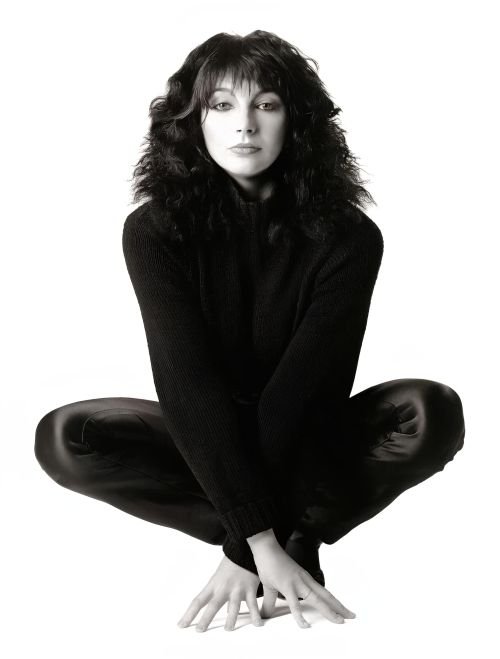
“I guess Stevie would rather have seen that song politicised,” Buckingham ripostes. “But what are you going to do? There is so much truth going on in all of those songs that there is no way you change them.”

“They were writing those songs about and to each other,” observes Mick Fleetwood, “and then singing them on the same mike. I don’t know how they did it. Warners were terrified. I had executives phoning up and asking, ‘Do we still have a band, Mick?’ And I said, Yes, because we will not stop what we are doing for anything – even if we have to crucify ourselves.”
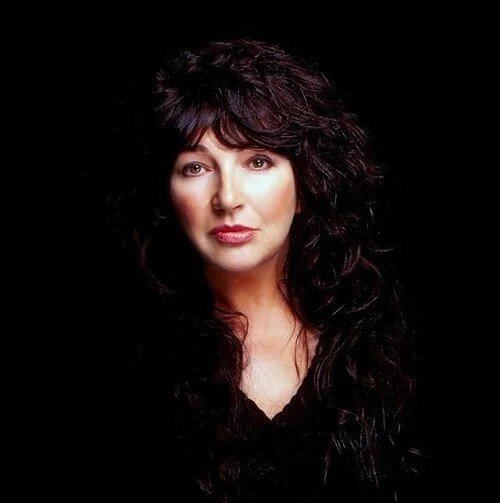
Towards the end of the group’s time at the Record Plant, Fleetwood started to believe “that we were all going insane”. The claustrophobic environment was too much: ex-couples were screaming at each other or not speaking at all; the days were blurring into nights; one studio engineer had taken to sleeping under the mixing desk as “it was the safest place to be”. Drugs and alcohol were rife.

A single incident convinced the drummer it was time to move on. “One night I turned up and I saw John McVie, on his own, trying to master a bass part. This very well-grounded Scotsman was on his hands and knees praying, with a picture of his guru and a bottle of brandy in front of him.” Fleetwood pauses, as if he still can’t believe what he saw. “And John was so not that sort of guy. I knew then that we had to get out of there.”
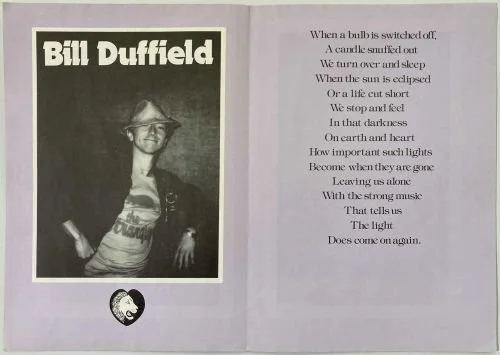
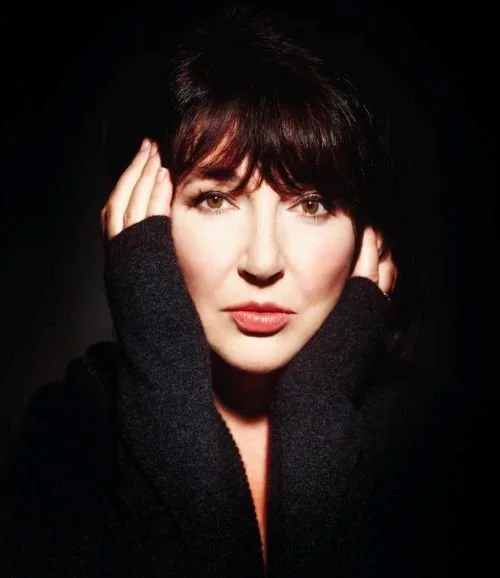
The band emerged from the Record Plant, blinking into the daylight, and headed off on another tour. In between shows, they returned to Los Angeles to finish the album. Fleetwood fielded more calls from concerned executives who now realised the band wouldn’t make the planned September release date. Rumours still wasn’t finished. They had 3,000 hours of recordings, and the master tape was now dangerously thin. During one meticulous 16-hour session, the overdubs were transferred from the deteriorating master to another first-generation tape containing the basic tracks. Caillat: “If we hadn’t done that we’d have lost everything.”

“I think we’d rented every studio in LA,” recalls Nicks. “And just spent months overdubbing and spending more money. We became self-indulgent, spoiled and excessive, but we didn’t care. That was when the cocaine really came into the picture and in a very big way.”

Warners announced in the final weeks of 1976 that Fleetwood Mac’s new album was imminent. Its working title, Yesterday’s Gone (from a lyric in Don’t Stop) had been changed, at John McVie’s suggestion, to Rumours. Only one song, The Chain, was credited to all five members. The lyric – “I can still hear you saying you would never break the chain” – described what Fleetwood calls “the realisation that the music we were making together was more powerful than any of us.”

The song had started life at the Record Plant, then in LA the group re-wrote the verses, and added a new intro, a re-working of the opening to Lola (My Love), a song from Buckingham Nicks.

Released in January ’77, Rumours would have the largest advance orders of any album in Warner Bros’ history. By March it had topped the charts in the US, Canada, Australia and the UK: a sweet victory for the three exiled Brits who’d seen Fleetwood Mac written off for dead at home. Four singles from the album would also become US Top 10 hits. At the last official count, Rumours has around 40 million copies worldwide.

Rumours casts a long shadow, 
one that a further five US Top 20 Fleetwood Mac albums have not shaken off. You sense this is a source of frustration to Buckingham, who quit the band for a time, and has made a raft of idiosyncratic, undervalued solo albums. “I actually think Fleetwood Mac is a better-recorded album than Rumours,” he ventures. “But we always knew Rumours was good, and expected a certain outcome. I don’t think anyone could have predicted the Michael Jackson world we’d find ourselves in”.

I will come to some reviews of Rumours. I have said before how the making of the album would make for a film. Documenting that time for the band. They might not want that exposed on the screen. There have been dramas like 2023’s Daisy Jones & The Six and the stage play, Stereophonic (that was first stages in 2023). They have both been compared to Rumours and that period. Similarities especially strong in Stereophonic. In February, when Rumours turns fifty, I wonder how it will be commemorated. I do want to explore this feature that also tells the story of Rumours. Worth repeating the dynamics in the studio and what was going on within Fleetwood Mac when they were recording the album. 1976 was a very tense year for them. Rumours is testament to musical brilliance born from personal chaos, transforming intimate heartbreak into one of history's most iconic albums”:

Yet if ‘Dreams’ was the more gentle and philosophical side of the record, Buckingham’s ‘Go Your Own Way’ was the angry and revengeful reply from his perspective of the relationship, featuring the lyrics: “Packin’ up, shackin’ up is all you wanna do.”

Nicks would go on to say that “every time those words would come onstage”, she wanted “to go over and kill him,” as Buckingham knew the accusation was false and was just trying to make her suffer for leaving him. Of course, Nicks had the same exact desire with her equally bitter ‘Silver Springs,’ a song that was later axed from the tracklist, creating more drama in and of itself. Due to the band’s desire for equal representation and being tied by vinyl pressings, it was replaced by ‘I Don’t Want To Know,’ an upbeat and conciliatory Buckingham-Nicks duet about the end of a relationship.

‘Silver Springs’ was eventually, and fittingly, released as a B-Side to ‘Go Your Own Way,’ the title coming from Nick’s romanticisation of the Maryland town’s name, symbolising what Buckingham could have been to her. ‘Silver Springs’ featured digs such as “The sound of my voice will haunt you”, which became the song that gave us perhaps the most iconic live Fleetwood Mac moment in their performance at Warner Bros. Studios in 1997. Nicks would sing the entire final minute hyper-fixated on Buckingham, slowly walking towards him, a fitting illustration of the pair’s timeless broken bond.

Both of these crumbling relationships, along with reports of heavy drug use due to production taking place in the centre of Sausolito’s hippie community, led to an awkward yet astounding recording process. The group rarely socialised outside of working hours, would only work when they were finally tired from nights of debauchery, and would send not-so-subliminal messages through songs that the recipients would then have to play and sing on. Yet the process worked. Rumours went number 1 on the Billboard Top 100, remaining there for 31 weeks, and would later become the 9th best-selling album of all time.

Indeed, Pitchfork has described Rumours as “a flawless record pulled from the wreckage of real lives,” an apt description of the immense, intense and emotional release that emerged from the extremities of heartbreak and betrayal each bandmate suffered. It is only fitting that the record’s most famous lyrics reflect this: “Thunder only happens when it’s raining.”

In 2013, Pitchfork reviewed the fastest-selling album of all time. It was reissued with outtakes, live recordings and alternative mixes. Rumours was and is “a cultural phenomenon and also set a template for pop with a gleaming surface that has something complicated, desperate, and dark resonating underneath”:

While Fleetwood Mac was a bit of a mash-up of existing work, Lindsey Buckingham effectively commandeered the band for Rumours, giving their sound a radio-ready facelift. He redirected John McVie and Fleetwood's playing from blues past towards the pop now. Fleetwood Mac wanted hits and gave the wheel to Buckingham, a deft craftsman with a vision for what the album had to become.

He opens the record with the libidinous "Second Hand News", inspired by the redemption Buckingham was finding in new women, post-Stevie. It was the album's first single and also perhaps the most euphoric ode to rebound chicks ever written. Buckingham's "bow-bow-bow-doot-doo-diddley-doot" is corny, but it works along with the percussion track (Buckingham played the seat of an office chair after Fleetwood was unable to properly replicate a beat a la the Bee Gees' "Jive Talkin'"). Like "Second Hand News", Buckingham's "Go Your Own Way" is upbeat but totally fuck-you. He croons "shackin' up is all you wanna do,"-- accusing an ex-lover of being a wanton slut on a song where his ex-lover harmonizes on the hook. Save for "Never Going Back Again," (a vintage Buckingham Nicks composition brought in to replace Stevie's too-long "Silver Springs") Buckingham's songs are turnabout as fairplay with lithe guitar glissando on top.

"Second Hand News" is followed by a twist-of-the-knife Stevie-showpiece, "Dreams", a gauzy ballad about what she'd had and what she'd lost with Buckingham. It was written during one of the days where Nicks wasn't needed for tracking. She wrote the song in a few minutes, recorded it onto a cassette, and returned to the studio and demanded the band listen to it. It was a simple ballad that would be finessed into the album's jewel; the quiet vamp laced with laconic Leslie-speaker vibrato and spooky warmth allow Nicks to draw an exquisite sketch of loneliness. "Dreams" would become Fleetwood Mac's only #1 hit.

Though Fleetwood Mac was always the sum of its parts, Nicks was something special both in terms of the band and in rock history. She helped establish a feminine vernacular that was (still) in league with the cock rock of the 70s but didn't present as a diametric vulnerability; it was not innocent. While Janis Joplin and Grace Slick had been rock's most iconic heroines at the tail-end of the 60s, they were very much trying to keep up with boys in their world; Nicks was creating a new space. And Fleetwood Mac was still very much an anomaly, unique in being a rock band fronted by two women who were writing their own material, with Nicks presenting as the girliest bad girl rock'n'roll had seen since Ronnie Spector. She took the stage baring a tambourine festooned with lengths of lavender ribbon; people said she was a witch.

Like her male rock'n'roll peers, Nicks sang songs about the intractable power of a woman (her first hit, "Rhiannon") and used women as a metaphor ("Gold Dust Woman"), but her approach was different. At the time of Rumours' release, she maintained that the latter song was about groupies who would scowl at her and Christine but light up when the guys appeared. She later confessed that it was about cocaine getting the best of her. In 1976, coke was the mise of the scene-- to admit you were growing weary would have been gauche. Nicks' husky voice made it sound like she'd lived and her lyrics-- of pathos, independence, and getting played-- certainly backed it up. She seemed like a real woman-- easy to identify with, but with mystery and a natural glamour worth aspiring to.

It's almost easy to miss Christine McVie for all of Nicks' mystique. McVie had been in the band for years, but never at the helm. Her songs "You Make Lovin' Fun" and "Don't Stop" are pure pep. "Songbird" starts as a plaintive ode of fealty and how total her devotion-- until the sad tell of "And I wish you all the love in the world/ But most of all I wish it from myself," (an especially heart-wrenching line given that McVie's not quite ex-husband was dragging a rebound model chick to the sessions and Christine was sneaking around with a member of the crew). She didn't hate her husband, she adored him, she wished it could work but after years of being in the Mac together, she knew better. Throughout, McVie's songwriting is pure and direct, irrepressibly sweet. "Oh Daddy", a song she wrote about Mick Fleetwood's pending divorce is melancholy but ultimately maintains its dignity. McVie, with typical British reserve, confessed she preferred to leave the bleakness and poesy to her dear friend Stevie.

As much feminine energy as Rumours wields, the album's magic is in its balance: male and female, British blues versus American rock'n'roll, lightness and dark, love and disgust, sorrow and elation, ballads and anthems, McVie's sweetness against Nicks' grit. They were a democratic band where each player raised the stakes of the whole. The addition of Buckingham and Nicks and McVie's new prominence kicked John McVie's bass playing loose from its blues mooring and forced him towards simpler, more buoyant pop. Fleetwood's playing itself is just godhead, with effortless little fills, light but thunderous, and his placement impeccable throughout. The ominous, insistent kick on the first half on "The Chain", for example, colors the song as much as the quiver of disgust in Buckingham's voice when he spits "never."

In the liner notes to the deluxe Rumours 4xCD/DVD/LP box set, Buckingham describes the album-making process as "organic." Rumours is anything but, and that is part of its genius-- it's so flawless it feels far from nature. It is more like a peak human feat of Olympic-level studio craft. It was made better by its myopia and brutal circumstances: the wounded pride of a recently dumped Buckingham, the new hit of "Rhiannon", goading Nicks to fight for inclusion of her own songs, Christine McVie attempting to salve her heart with "Songbird." That Fleetwood Mac had become the biggest record Warner Bros. had ever released while the band was making Rumours allowed for an impossibly long tether for them to dick around and correct the next album until it was immaculate.

Given the standalone nature of Rumours, it's difficult to argue that any other part of the box set is necessary. The live recordings of the Rumours tour are fine, lively even (perhaps owing to Fleetwood rationing a Heineken cap of coke to each band member to power performances). Only a handful of tracks on the two discs of the sessions outtakes lend any greater understanding of the process behind it. One is "Dreams (Take 2)", which is just Nicks voice, some burbling organ, and rough rhythm guitar gives an appreciation of her fundamental talent as well as Buckingham's ability to transform it; it makes the case for how much they needed each other. Another is "Second Hand News (Early Take)", which features Buckingham mumbling lyrics so as not to incense Nicks. The alternate mixes and takes (more phaser! Less Dobro! Take 22!), by the time you make it to disc four, just underscore the fact that Rumours did not hatch as a pristine whole. One does not need three variously funky articulations of Christine's burning "Keep Me There" to comprehend this.

Nevertheless, it is difficult not to buy into the mythology of Rumours both as an album and pop culture artifact: a flawless record pulled from the wreckage of real lives. As one of classic rock's foundational albums, it holds up better than any other commercial smash of that ilk (Hotel California, certainly). We can now use it as a kind of nostalgic benchmark-- that they don't make groups like that anymore, that there is no rock band so palatable that it could be the best-selling album in the U.S. for 31 weeks. Things work differently now. Examined from that angle, Rumours was not exactly a game changer, it was merely perfect”.

I am going to leave things there. There is not as much written about the album as you’d hope. Considering that it is one of the most successful albums ever and it was this moment that almost broke the band but they kept going and recorded for years, there is so much to dissect and explore. Ahead of the fiftieth anniversary on 4th February, I did want to mark the completion of the recording. In August 1976, Fleetwood Mac finished recording an album that almost split them. Fifty years later, Rumours is this towering masterpiece. How all this tension and heartache led to this intense creativity and brilliance. Rumours remains a…

PERFECT record.

FEATURE: Leave It Closed: The Risk of Kate Bush Not Being a Singles Artist, and Why It Makes Her So Awe-Inspiring

FEATURE:


Leave It Closed

IN THIS PHOTO: Kate Bush in 1982/PHOTO CREDIT: Pierre Terrasson


The Risk of Kate Bush Not Being a Singles Artist, and Why It Makes Her So Awe-Inspiring

__________

THERE  was a moment…

in Kate Bush’s career where she was much more immersed in the making of an album without thinking about singles. You could say she was not a singles artist. You can look at artists today who make albums, though there are songs that they clearly have in mind for singles. These great albums have clear examples of what is good as a single. It is not a bad thing, though you wish that more artists were thinking about albums as a whole, rather than deliberately writing singles and then putting them with album tracks. Perhaps that is not how it is but, as I am writing this at a time when so many incredible Pop artists are coming through and they are capturing attention because of these incredible singles, do they consciously have chart and streaming numbers in mind?! You’d wonder whether Kate Bush as a young artist would fit in today’s culture. Having one eye on Spotify and the other on radio playlists. Her debut single, Wuthering Heights, was one she fought to have released. It was her first single, so she did want to have a say what people heard. There were other times where Bush was eager for a certain single to be released, though I don’t think The Kick Inside is an album where she was thinking about singles, even though certain songs have that quality. She wanted to make a body of work. An album. That was always her goal. You could see that there were songs more commercial than others on her  first few albums. Bush was not averse to include songs that were single-worthy or commercial, though The Dreaming was the first album she produced solo. Released in 1982, it is her most ‘single-less’ album. In terms of it being this complete body of work where singles were not explicitly written. Or there were few obvious choices, though Night of the Swallow should have got a wider release. It was an Ireland-only release in 1983. It is clear Bush was pushing against the idea of being a ‘Pop’ artist who had to write singles.

Richard Cook spoke to Kate Bush for New Musical Express in 1982. It was interesting what Bush said about writing songs for an album. Not really a singles artist. It must have been frustrating for EMI. Though they signed an artist who was determined and knew what she wanted from the start. This demand for radio-friendly songs and easy singles was not going to happen. Did this decision to sort of avoid singles cause The Dreaming a bit of harm? Did Bush sort of reverse the decision a bit for 1985’s Hounds of Love? The interview does offer some insights from an artist who was distinctly not a commercial and traditional Pop artist in 1982:

Kate Bush is a small woman with a huge, protective smile. She has an even and unhurried style of conversation, but it is hard to get her to speak what might really be on her mind.

We bubbled along for twenty minutes until I took up the subject of her earliest incarnation, ruthlessly enshrined in the erotic trivia of The Kick Inside --no offense intended, ma'am--and a familiar block shutters her expression. She retreats into the rockspeak of albums and songs and images and progression without regret.

"I think I've always seen myself as someone who writes songs that go on an album. If there are any singles among them, then they can be chosen for that. But apart from Wuthering Heights, I was always an album-orientated artist. Even if my singles are more remembered."

You have no regard for those instantaneous qualities of the single? A rocket going up brilliantly for a moment?

"Each album is like a rocket. I build it up as much as I can, and see how high it goes. I'm never aware of any commercial value. I never sit down to write a single. Whenever I write, I'm challenging myself in some area. Everyone who creates something considers themself an artist in some way, don't they?"

I wonder whether you really want to do music--whether you'd rather do poetry or theatre or dance or...

"I'm doing that as well, really, aren't I? Maybe it's wrong to see me as a pop personality. You're going to keep changing-- Wuthering Heights was a story with music and dancing, but I've changed so much since then. The things that the media most remember about me are those things. Some people see that I am changing, but...oh, not as many as the people who hang onto those singles. But I am beginning to be seen as an albums artist."

What's an albums artist?

"It's not being a pop personality or whatever it was you called me. I'm not interested in making singles. Maybe I will make some 'singles' one day..."

The Dreaming is an ornate, billowing record. Its songs are peculiarly ambitious: their grand design all but drives out the spirit of lowly pop music.

The ghosts of famous men pace their dark corridors; great tunnels of sound emulate mighty and multi-levelled conceptions. Songs are sung in a multitude of voices, like a chittering, half-heard spirit-world. Bush's operatic entreaties are finally matched to music of a similar size and shape. At any one moment.

It's already a huge success. Despite the failure of the title song in single form--there are surely no singles on the record--Bush has found that her admirers have not gone away. I suggest to her some of the things it seems to be about, like the struggle between public and private faces, and the ability to disappear inside a recording; she is scarcely drawn. Not suspicious--simply not interested in the ambiguity and anatomy of music so intensely organised. <The meaning of this statement is unclear to IED.> Kate Bush is a dedicated artist.

Is she there?

"Primitive? I'm not sure about that word...Perhaps. There are traditional roots in it. Basic forms of music."

I think it's extremely sophisticated.

"Do you? Sophisticated? Well, I'd rather you say that than turdlike.

"I could explain some of it, if you want me to: Suspended in Gaffa is reasonably autobiographical, which most of my songs aren't. <Doug Alan is loving this. IED can just see him chortling with glee.> It's about seeing something that you want--on any level--and not being able to get that thing unless you work hard and in the right way towards it. When I do that I become aware of so many obstacles, and then I want the thing without the work. And then when you achieve it you enter...a different level--everything will slightly change. It's like going into a time warp which otherwise wouldn't have existed.

"Oh, yes, quite a few people have surmised that from listening to the song. But when you explain it like this it doesn't sound like anything. The idea is much more valuable within the song than it is in my telling you about it. When you analyse it, it seems silly.

" Leave It Open is the idea of human beings being like cups--like receptive vessels. We open and shut ourselves at different times. It's very easy to let your ego go " nag nag nag " when you should shut it. Or when you're very narrow-minded and you should be open. Finally you should be able to control your levels of receptivity to a productive end.

" The Dreaming is very different from my first two records. Each time I do an LP it feels like the last one was years and years before. The essence of what I'm playing has been there from the start; it's just that the expression has been changing. What I'm doing now is what I was trying to do four years ago. If I do a show, it will only be music from the last two albums.

"I wish I had a five-year plan, but I never plan too far ahead. I get into trouble because I always take longer to do things than I expect. That's why I knew I had to wait for another two albums' worth of material before doing another show”.

It is clear that there was a lot of thought given to each song. More like little stories that formed a part of a bigger whole. The tone of The Dreaming is quite dense and dark in places, though it is a lot more varied than people think. Bush was keener in terms of the sound and production. Not wanting to put in a big and catchy chorus for the sake of it, there was this sense of her being a serious artist and wanting a bit more respect. Perhaps trying to push away against her earlier sound and preconceived notions around her, there was this lack of singles from The Dreaming. Nothing that was easily digestible to an audience that might not be aware of her. I guess it was important for EMI to get radio play and have this artist record some successful singles. What was released from The Dreaming was a bit of a chart failure. Apart from the lead single, Sat in Your Lap, there was not too much to salvage when it came to the charts. Bush was looking at the bigger picture and the album itself. The Dreaming was successful and has in year since been seen as one of her best albums. I guess there was a bit of damage that needed to be corrected for the next album. EMI not keen for Bush to produce. That came back to bite them, as Hounds of Love was an enormous success and got some incredible reviews. But there was some worries what would happen after The Dreaming. Radio stations were featuring other artists. I guess some Kate Bush music was being played, but there was less exposure for The Dreaming compared even to Never for Ever. The two albums either side of The Dreaming has a few successful singles that balanced with songs that were deeper and less obvious singles. I think Bush managed to produce Hounds of Love in a way that meant it was this complex and extraordinary work but also had these songs that were played on the radio and sold well.

Kate Bush in that interview not aware of her commercial value. Was that a bit of self-sabotage? I suppose artists now really need to know about commercial value. Now, it is less about charts and radio and more about social media impact and streaming. In 1982, Bush was in a busy market and EMI would have loved for at least a couple of singles to hit the top ten. Instead, Bush was all about the sound of The Dreaming and what felt true to her. She had her fanbase remaining solid, yet I wonder whether she recruited many/any new fans with The Dreaming as it sounded, rather than something that had a couple of big singles. Hounds of Love was not a compromise. Bush was able to have a conceptual suite on the second side of Hounds of Love, so that satisfied a side to her. Having a first side that was similar to The Dreaming would have been a step back. Bush was always evolving and different. I guess there was also some press scepticism and writing off. Having followed this artist for years and seeing her as weird or eccentric, The Dreaming must have been a treat! The Dreaming was almost returned to Kate Bush. That fear of releasing it. They would have wanted a repeat of Never for Ever. A number one album with some great singles and tracks that were pretty accessible. A couple of more challenging songs, in the sense they were more epic or edgier. The Dreaming was a huge departure. Hounds of Love was a little bit of reigning in in terms of eccentricity or this album that had no obvious singles. But Bush was still led by her own instincts and would not let anyone else touch production. She was right in the end. The Dreaming now is seen as a masterpiece and one of her best albums, though you don’t hear many of the songs on the radio. Sat in Your Lap. Why do they not play more songs from it? The biggest radio stations still far too commercial and risk-averse! The Dreaming is notable as being this complete album.

A singular work, whereas I think we associate other albums with its singles. “The Dreaming’s disparate narratives frequently seem to be tropes for Bush’s quest for artistic autonomy and the anxieties that accompany it” is what The Quietus say in their fortieth anniversary feature from 2018. “The proviso Bush had for The Dreaming was that everything was to "be cinematic and experimental". Movies inform The Dreaming as much as any musical influences”. The Quietus note how The Dreaming was the last album Bush made in London. The shadow of Thatcherism and the murder of John Lennon (1980) casting a dark shadow. Th legacy of The Dreaming is clear: “For such an extreme album, its influence has been far-reaching. ABC, then in their Lexicon Of Love prime, named it as one of their favourites, as did Bjork whose similar use of electronics to convey the pantheistic seems directly descended from The Dreaming. Even The Cure’s Disintegration duplicates the track arrangement on the sleeve and the request that ‘this album was mixed to be played loud’. ‘Leave It Open’‘s vari-speed vocals even prefigure the art-damaged munchkins of The Knife vocal arsenal. Field Music/The Week That Was arrayed themselves with sonics that seem heavily indebted to Bush’s work here. Graphic novelist Neil Gaiman even had a character sing lyrics from the title track in his The Sandman series. John Balance of post-industrialists Coil confessed that the album’s songs were all ideas that he later tried to write. But Bush got there first. And The Dreaming remains a testament to the exhilarating joy of "letting the weirdness in". Even if it was not a huge-selling album like The Kick Inside (her 1978 debut) and a number one like Never for Ever, it was a natural shift more into the studio. Not wanting to promote endlessly. Like The Beatles in 1966 and 1967. With a few flop singles, it could have been disaster. Bush followed The Dreaming with Hounds of Love: a masterpiece that is seen as one of the greatest albums ever. I feel we need to acknowledge Kate Bush’s boldness and bravery on The Dreaming. She could have written some easy singles and gone down that path. Instead, she made an album true to her – even if she, in her own words, was going a bit mad – that has so many fans today. Its influence is major. Her production on The Dreaming is extraordinary. Bush’s fourth studio album was…

A huge awakening.

FEATURE: expectations: Does Olivia Rodrigo’s you seem pretty sad for a girl so in love Stand Among the Best Albums of the Century?

FEATURE:


expectations

PHOTO CREDIT: Ryan McGinley for DAZED


Does Olivia Rodrigo’s you seem pretty sad for a girl so in love Stand Among the Best Albums of the Century?

__________

WE are…

twenty-six years into this century. In terms of the best albums of the century, thee are sites who have selected their choices. Rolling Stone chose their best albums of the century last year. 250 in their feature. The Guardian produced their list in 2019. Paste published a list last year. There are some differences between them and, of course, it is subjective. However, I do think that there are some repeats. Those albums that are definitely the greatest of this century. In my list, Fiona Apple’s Fetch the Bolt Cutters will be up there with Beyoncé’s Lemonade. Perhaps Radiohead would be in there too. There has been a lot of competition the past decade. So many tremendous albums released. Not only is Olivia Rodrigo’s you seem pretty sad for a girl so in love the best album of this year. It is also strong enough to compete for the best album of this century. I shall come to some reviews of the astonishing third album from the California-born artist. I don’t think that it would be an exaggeration to say that you seem pretty sad for a girl so in love could sit alongside the very best of this century. A work that not only has stunned and blown people away now. It will endure for years to come. You do wonder just how far Olivia Rodrigo can go. All three of her studio albums have been enormously acclaimed. There is something about you seem pretty sad for a girl so in love that surpasses 2021’s SOUR and 2023’s GUTS. Those two albums are tremendous. Not only is you seem pretty sad for a girl so in love the sound of an artist at the top of her game and at her most confident. In terms of its sheer quality, Olivia Rodrigo’s third studio album is absolutely among the best albums we have heard this century. Some will argue against my assertion. Critical reaction to you seem pretty sad for a girl so in love has been phenomenal. The test of time will be if people are talking about the album years from now. I do think that we are going to be heralding the album as a masterpiece in years to come.

I want to move to a recent interview with Olivia Rodrigo. This is an artist who is highly beloved. Very grounded and an idol for so many people, there is so much rightful admiration for this incredible artist. DAZED chatted with Olivia Rodrigo. They say how she “embraces her ‘big girl’ era on her new record, an exuberant account of the promise and pitfalls of falling in love”:

Olivia Rodrigo is growing up. While she’s still the same young woman with big feelings and a penchant for babydoll dresses, the 23-year-old appears much more self-assured than the anxious adolescent of SOUR and GUTS when we meet to discuss her new album, you seem pretty sad for a girl so in love. (Ironically, she seems happier too.) She’s speaking to me from her native Los Angeles, her cherubic face beaming as she tells me about her morning: mainly interviews and signing vinyls ahead of the much-anticipated release. The record is about her first “adult relationship” – likely her romance with English actor Louis Partridge, rumoured to have ended in late 2025. She tells me she finished making the record in March. “I’m still so close to it,” she says, adding that she’s ready to put it out into the world now. “I’m excited for it to not be ‘mine’ any more.”

Are there any new experiences you’ve had since GUTS that you’ve written about on you seem pretty sad for a girl so in love?

Olivia Rodrigo: This album is about my first time being in an adult relationship; it’s me discovering what romantic love looks like in real time. I’ve been in relationships before that were really exciting and tumultuous in a teenage way, but this was my first time being in a real, “big girl” relationship. And when you’re in an intimate relationship, it holds up a mirror and shows you parts of yourself that you would never normally see. That was an endless source of inspiration – something that I’m still mining.

Was it challenging to write about love from a more joyful place?

Olivia Rodrigo: For sure. That was the initial challenge of the album. Fiona Apple once said, ‘When I’m happy, why would I want to stop what I’m doing and sit down at the piano?’ which I think is funny and very true. But all of the best love songs or poems have an element of sadness or longing or fear in them. There’s even an element of anxiety in “drop dead” – like, ‘Oh God, I hope this person likes me.’ Even in our most joyous moments, there’s always this thought in the back of your head: ‘Is this gonna last forever?’ That’s the dichotomy of life. The scale is always balancing itself out.

You seem pretty well-adjusted for a girl so famous. What do you do to stay grounded?

Olivia Rodrigo: The people you hang around with are important. My friends are really honest with me sometimes – they’ll just be like, ‘No, that’s not good, don’t do that.’ And I have really awesome parents, too. I think I lucked out on the parent lottery. They have always been a really safe, stable resource for me. I also just really love what I do. I think that, as long as it comes from a place of passion and excitement and not from a place of ‘I need to do this so people like me’, that’s the recipe for success and happiness. I try to remember that that’s what it’s really all about”.

I do want to get to a few of the reviews for you seem pretty sad for a girl so in love. You can get some perspective as to why this album has made such a huge impact. Definitely the best album of 2026, it is also equal to the best of the century. Rolling Stone UK provided their take on the new Olivia Rodrigo album. We are seeing this icon in the making. People hate the ‘icon’ word, but in terms of artists who are going to endure for decades and are growing stronger with every album, Rodrigo is a modern-day great. She has released an album I feel will resonate for so long because people can identify with it. It will not age or seem like a product of its time. The songwriting so strong that it can challenge the strongest albums we have seen in the twenty-first century:

Proust called love reciprocal torture, Bukowski said it was stranger than grass on fire, and Olivia Rodrigo admitted it was fucking embarrassing. Yet on ‘Drop Dead’, the opening cut from her new album, here she is in free fall, heart on her sleeve, ready to risk everything as hope and possibility flicker over a magical night — poets, philosophers, and past lessons be damned. The song is a pure dopamine rush, built on heart-thudding percussion and glowing synths, the thrill of romance and anticipation ramping up with each euphoric line: “Kiss me, and I might drop dead.”

This could well be the giddiest we’ve ever heard Rodrigo, who wasn’t afraid to pack her blockbuster albums Sour and Guts with punky, pissed-off energy and wildly relatable, angst-filled anthems. For her third release, it might have seemed like she was ready for a simpler, googly-eyed lover-girl era — except, come on, we all know she’s too witty, too self-aware, and just too talented a songwriter to go with rose-colored confessions about a new relationship.

The title was one clue: You Seem Pretty Sad for a Girl So in Love makes it clear that this project is a complex emotional ride, one that’ll turn platitudes and presumptions about love on their head. There were sonic Easter eggs dotting “Drop Dead,” which was also the first single, like a reference to the Cure’s “Just Like Heaven” and the hazy fuzz of guitars that she and longtime producer Dan Nigro went for, conjuring New Wave gods and the image of a lonely-hearted Robert Smith (more on him in a bit). All of it sets up something closer to real life as Rodrigo moves through the full arc of a relationship — the dreamy honeymoon phase, the first hints of conflict, the crushing goodbye — to achieve her most complete, musically adventurous album yet.

First, though, fireworks. The initial songs capture that feeling of falling in real time (Rodrigo has said the album is about her first “adult” relationship; many fans think she’s referring to actor Louis ­Partridge, whom she dated for more than a year). She’s still on a high on ‘Stupid Song’, a track that seems like a blissful ballad before saturated Eighties chords pipe in. ‘Honeybee’ is a sleepier cut that dips the energy that’s been rising, but it does serve as a tender moment that establishes the deep extent of her emotions. But then anxieties start build — and if there’s something Rodrigo does well, it’s dive into her insecurities with a mix of humour and honesty. There’s a mopey synth party on ‘Maggots 4 Brains’, a snapshot of the yearning and neediness that takes over when there’s distance from the person she loves: “Everything feels mouldy like the fruit that’s in my fridge / And everything that’s funny I wish I could tell to him.” The seams come apart a little more with each track, a testament to how perfectly she and Nigro sequenced the project, capturing the downward spiral of the relationship.

She’s blindly hopeful on ‘U + Me = <3’ and fully territorial on ‘My Way’. But the breaking point might be the stunning ‘Purple’, where she realises the love she’s found also means she’s losing herself. The balladry of ‘The Cure” and ‘Begged’ keep her turning the lens inward, though they threaten the momentum of the album. And if she needed to clarify her feelings more, help arrives on ‘What’s Wrong With Me’, when she’s joined by the Cure frontman himself. It’s a brilliant cameo; he’s been lurking everywhere on the album — nodded to constantly in the production and the lyrics — and finally he floats in, no longer an apparition but a guiding force“I think you’re what’s wrong with me,” they sing in a line that suits both their discographies.

Rodrigo has always proudly displayed her references, drawing from Nineties rock and riot grrrl bands like Hole and Babes in Toyland on past collections, but here, she’s doing more than paying homage; she’s woven a sonic tapestry that any of her icons can fit into. Fans craving more aggressive, pop-punk energy might have trouble getting into the new sound at first, but Smith’s appearance is a testament to just how well it works. The electro-funhouse twitchiness of ‘Expectations’, which feels like it sprouted from a seed planted by the B-52s, adds another layer, keeping the listener on their toes.

A major strength of the album is how much Rodrigo’s storytelling has matured. For a girl who went stratospheric belting about teenage heartbreak on ‘Drivers License’ at 17, there’s new wisdom as she comes to the brutal realisation that you can adore someone more than anything and still have to let them go. She lands so many gutting lines: “If loving me means letting go and wishing me the best, then I guess I wish, I wish, I wish you loved me less,” she sings on ‘Less’. By the last track, ‘Cigarette Smoke’, she’s found a kind of peace — if not a full resolution quite yet — as she tries to move on. “The memories turn dark,” she repeats, over and over. Maybe they eventually fade, but the songs stay with you”.

Olivia Rodrigo is one of the defining voices of her generation. That is why you seem pretty sad for a girl so in love might have been such a hard album to realise. Expectations on her shoulders after two phenomenal albums. We are seeing a modern-day legend blossoming. No doubt you seem pretty sad for a girl so in love will be nominated for GRAMMYs. It is definitely going to top the albums of the year lists. It is far bigger and more glorious than that. An album that is as astonishing as some of the very best of this century. DIY delivered a five-star review of you seem pretty sad for a girl so in love. An album that ushers Olivia Rodrigo “ into her rightful position as one of her generation’s best artists”:

Be it her response to inane internet discourse around her recent penchant for babydoll dresses (a homage to the juxtaposing cute-and-combat-boots look of ‘90s riot grrrl), or her unlikely friendship with Robert Smith (having brought him out onstage at both last year’s Glasto headline and last week’s Primavera ‘secret’ set), one thing is for sure - Olivia Rodrigo knows her references. But she also knows exactly who she is as an artist, too; that is, a supremely canny pop-rock songwriter who’s equally adept penning sad girl ballads as she is rageful, storming revenge bangers, expressing the emotional tumult of warts’n’all young womanhood with remarkable astuteness. Which makes it all the more exciting - indeed, is precisely why - that on third album ‘you seem pretty sad for a girl so in love’, she steps fully out of her former Disney star skin and into new territory so convincingly.

Thematically, admittedly, we’re hardly breaking new ground here - like predecessors ‘SOUR’ (2021) and ‘GUTS’ (2023), this latest record is still squarely centred around Olivia’s romantic encounters with the unfairer sex (namely, the world presumes, her ex-boyfriend, British actor Louis Partridge). Indeed, ‘yspsfagsil’ [catchy, we know - Ed] is made up exclusively of (anti)love songs, a 13-track narrative arc spanning the giddy beginnings of a burgeoning relationship to its bitter end. Opener ‘drop dead’ positively fizzes with the stomach-flipping thrill of early days butterflies; centrepiece ‘purple’, undercut by a skittish beat that bubbles like not-quite-boiling water, speaks of both kismet union and as-yet-unseen red flags (“Our paths intersect ‘til the two lines form a circle”; “It’s crazy, I had big dreams ‘til I tied myself to you”); and bruised break-up ballad ‘less’ lands like a modern Old Hollywood number to be played as the plane takes off from the Casablanca tarmac.

A tale as old as time, yes, but colouring in this story’s outline are referential, repertoire-widening brushstrokes that cast its painter in a whole new light. Showcasing Olivia’s knack for a swelling anthemic build (see also: ‘vampire’ and ‘traitor’), ‘stupid song’ then descends into a beat-driven bridge that begs to be screamed out loud, while ‘my way’ sees her kicking down jealousy’s door to claim possession of what’s hers via siren-esque squalls and gloriously bratty vocals that do their job of invoking queen of the babydoll, Kathleen Hanna, to make for one of the LP’s most thrilling moments. It’s a high point that is, perhaps, only surpassed by its should-be-closer ‘expectations’; the whiplash-inducing contrast between the closing bars of ‘less’ and this bolshy, Gary Numan-like paean to moving on is enough to elicit an audible whoop, while its smart structural echoes of ‘drop dead’ illustrate the benefit of hindsight better than words ever could. (Why the album doesn’t finish on this emphatic high, though, is a mystery).

Elsewhere, ‘maggots for brains’ moves the Paramore-esque pop-punk of ‘GUTS’ back a few decades, swapping anthemic chorus chants for for drum-pad stabs and twangy new wave guitars - a decidedly ‘80s palette that’s carried into ‘u + me = <3’ to imbue the doe-eyed ditty with the same jangly propulsion and youthful optimism of ‘Friday I’m In Love’. Because, of course, ‘yspsfagsil’ doesn’t just invoke the goth-rock legends in guitar tone, track title (‘the cure’), or lyric (‘drop dead’ namechecks ‘Just Like Heaven’); no, here, Olivia cements her reverence - and gives credence to it all - by having Robert Smith as her first ever on-record feature, on their spine-tingling duet ‘what’s wrong with me’.

Just as The Cure have become renowned as masters of emotional depth, marrying introspective poetry with earworm melody to create evergreen songs far greater than the sum of their parts, so Olivia Rodrigo has managed to mine the complicated, confusing, messy business of falling in and out of love to create an accessible yet hugely intelligent album that ushers her into her rightful position as one of her generation’s best artists”.

Go and get this album on vinyl. The divine and astonishing you seem pretty sad for a girl so in love is a modern masterpiece. No matter which albums you feel are the best of this century, I feel you seem pretty sad for a girl so in love can challenge them. There has been immediate impact and adulation. I don’t think it will end there. We will see you seem pretty sad for a girl so in love endure and picked up by a new generation years from now. Nobody knows what her next album will be, though you feel Olivia Rodrigo will top you seem pretty sad for a girl so in love. Signs that she is…

A world-class talent.

FEATURE: Modern-Day Queens: Bebe Rexha

FEATURE:


Modern-Day Queens

PHOTO CREDIT: Nate Guenther


Bebe Rexha

__________

AS  the sensational…

DIRTY BLONDE is one of the best Pop albums of this year, I was keen to shine a light on Bebe Rexha. It is the fourth studio album from the New York City-born artist. Arguably her best work to date. I will come to a review of DIRTY BLONDE, but I am more eager to get to some interviews with the wonderful Bebe Rexha. She is such an amazing artist I have been following for years. There is something about her music and videos that sets her apart from her peers. I will start of Forbes and their interview and spotlight of Bebe Rexha. The sound of becoming DIRTY BLONDE. An album that seems her most direct but extraordinary to date:

Dirty Blonde arrives less like a rollout and more like a transmission: part diary, part dance-floor  confession, part signal of what happens when an artist stops asking permission. It’s glossy in places, bruised in others, and carries the energy of someone who has stopped waiting for the next chorus and started writing it herself.

Bebe Rexha And The Intuition Of Pop

Bebe Rexha isn’t reintroducing herself so much as circling back to the instincts that existed before chart positions, label systems, and industry narratives ever shaped the frame around her.

That instinct, she says, stretches back to her earliest recognition as a songwriter. Even now, there’s a nostalgia in the way she recalls it: “That feels like it was yesterday.” At 15, she won the Best Teen Songwriter Award at the National Academy of Recording Arts & Sciences’ annual Grammy Day event, where she was selected from hundreds of young writers—an early milestone that now feels less like a breakthrough and more like a preview of what was already there.

She returns to what she was beginning to understand at the time: “Something that I learned about songwriting—structure,” she says, noting that melody always came naturally. “I think when I look back now, melody always came very easy for me.”

Bebe Rexha Shares The Moment The Floor Moved

There’s a version of this story that begins with charts and certifications. The more interesting one starts with a phone call that didn’t feel like business at all. What followed was the end of her long-term label partnership with Warner Records after more than a decade.

“It almost felt like a breakup,” she says. “When you first get the news, you feel like you’ve been hit by a train.” The experience wasn’t strategic or abstract—it was physical. “My whole body was aching,” she recalls. “I just couldn’t believe it because it was 12 years of trying to build with my label.”

Looking back, the moment still lands with the same force. “I remember walking into my room, and I literally couldn’t hold myself up,” she says. “I was so devastated. I fell to my knees. My dad helped me get onto the bed.”

The Sound Of Not Stopping For Bebe Rexha

What followed was not a pause, but acceleration. Bebe continued writing across cities and sessions, refusing to let the disruption interrupt her creative output. “I was like, ‘I need to not stop writing… this is what keeps me going.’”

That decision became the foundation of Dirty Blonde. Instead of rebuilding from scratch in a controlled environment, she built the album in motion—writing in Sweden, London, and Los Angeles while navigating uncertainty around structure and support. At a pivotal point, she also turned to her publishing team at BMG, who stepped in to help her continue shaping and finishing the project as it took form in real time.

What emerges isn’t a tightly packaged sonic concept, but something more instinctive. It holds together because it was made in flux, not mapped out in advance.

Bebe Rexha, photographed in sunglasses and blonde hair worn down as she stares directly into the camera with an effortless, composed expression.

Bebe Rexha In Her Own Little Galaxy

For Bebe, independence is not framed as freedom in a romantic sense. It’s described as a shift in how creative energy is organized and supported.

She contrasts it with the major-label system she left behind. In early 2026, it was announced that she had gone fully independent, entering a new partnership with powerhouse label and distributor EMPIRE. “It’s like a galaxy and they’re kind of all revolving around each other… when you’re independent, you're kind of like your own little galaxy… these wins are so much more, amazing.” The distinction is not scale, but control of orbit. Success no longer arrives through centralized validation. It arrives through direct execution”.

A couple of other interviews to get to before a review for DIRTY BLONDE. I am snipping a transcript of an NPR interview earlier this month. They were speaking with the captivating Bebe Rexha and getting some insight into the album and her sound. I have had to edit some chunks out, so I hope what is left makes sense and is not too random! We do get an idea of where Bebe Rexha is now:

SUMMERS: Earlier this year, you split with Warner Records and partnered with Empire. I wonder what that's meant for your creative process and whether there are things that you can do now with Empire that you couldn't before.

REXHA: Well, being with Empire now, I finally feel like I'm understood, I'm celebrated. And that does something too. Like, as a person, you - I finally feel understood, you know, not misunderstood. And when you have somebody that believes in you like that and such a transparent team, you feel more confident. It's been really fun just, like, all the visuals and stuff.

SUMMERS: Yeah.

REXHA: And, like, it's nice because, like, I'm working on my tour now, and, like, I just feel like I can try different things and have more fun.

SUMMERS: Can we talk about the visuals? - because "Dirty Blonde" is a visual album. What goes into that choice? What kind of aesthetic are you going for?

REXHA: My thing is, like, I felt - started feeling very inspired by, like, classic beauties, like Marilyn, the way Madonna did it. But then, like, mixing it with edge. And I was like, what would Marilyn Monroe be like if she was born in Brooklyn, like me, raised in Staten Island around all the Italian girls, was Albanian.

I always feel like I didn't fit the mold in terms of, like, both my parents are from Albania. My dad's an immigrant. Like, my dad was like - when I was growing up in New York, everybody had these nice backyards, and my dad was growing 'cause he grew up as a - with a farmer dad growing tomatoes in the backyard in New York City. And I'm like, oh, my God, we had, like, you know - it was just - so for me, I think, being able to incorporate that Albanian was really important for me.

SUMMERS: I can't talk to you without asking you about the song "Sad Girls," which you've described as an anthem for anyone who's ever been on a dance floor with a broken heart and refused to let it win.

REXHA: (Singing) And it kills me watching you taking her home. But sad girls don't leave till the last song.

SUMMERS: Very relatable, first of all. Tell us about the song. Was there an experience that sparked it?

REXHA: Yeah. A lot of these songs were about my heartbreak. It's about getting broken up with, you know? Yeah, I was never, like, a party girl. And then I started - like, to be honest with you - partying, like, in my 30s now 'cause I wanted that experience. I want to go where the people go. I want to feel the energy. I want to get sweaty. I want to get sticky. I want to hear...

SUMMERS: Yeah.

REXHA: ...What you're listening to. I want to be in the culture. And what - I think what I liked about it was I felt like I could express myself. And then I felt like I could spend 4 hours just, like, shutting my brain off, listening to music, dancing with strangers. Like, I...

SUMMERS: It's the best, it's the best.

REXHA: Like, I remember meeting a couple 'cause I like - there was a guy, and I was like, oh my God, you're so cute, and he was like, sorry, babes, I'm gay. And I was like, oh, this makes sense. Let's dance. So, like, I would make all these friends on the dance floor that I never have seen before and then never spoke to again after we were - we had the best night of our lives, you know?

And I think for "Sad Girls," it was kind of like, I was still going through my breakup internally. And going out in these places and just being in the mix, I feel like I was in the culture, and it was a - it's a very different environment. I guess "Sad Girls" is like, you don't want the night to end. You're feeling good. The music shuts your brain off. And you don't want to go back to reality, as sad as that sounds, but I think it's also very human.

SUMMERS: We've been speaking with Bebe Rexha. Her new album is "Dirty Blonde." Thank you so much.

REXHA: Thank you”.

EUPHORIA. caught Bebe Rexha when she was in Paris during a hectic period of promotion. However, she was not complaining. It is an album that a lot of people want to know about. DIRTY BLONDE among the best Pop albums of 2026 and a perfect one for the summer. Many of its more high-energy tracks beckon people to come to the dancefloor. Bringing them together:

The biggest hit from the campaign so far has been “New Religion.” Has that come as a surprise to you?

No [laughs]. When I write a song, I don’t always know if it’s going to be a hit, but I do know when something feels special. I can tell when a song has something about it that’s really special. I write a lot of songs — tons and tons of songs. Not all of them are going to be your favourite. Honestly, I don’t even love everything I write. My PR team are laughing at me right now, but it’s true. You know what I mean? Whatever your job is, you’re not going to think everything you do is perfect. I’m sure you’ve written a piece before and thought, “Ah, that could’ve been better.” It’s the same thing. But when something feels special, you know it. I can usually tell when something feels really special. I just get excited about it. I want to call everyone in my phone and play it to them over FaceTime.

All your albums take listeners on a rollercoaster of emotions, and this one is no different. Which was the most challenging song to write this time around?

I would say “The Way I Want You” was the hardest song for me. Writing it was difficult because it was based on a real story. I’d gone through a breakup, and that was tough. It was also challenging from a musical perspective. When I first started the project, it was very upbeat. It was originally a dance album because I didn’t really want to feel anything. I’d come out of a difficult period — parting ways with a major label and going through a messy breakup — so I didn’t want to write about anything too deep because it all felt like too much. Then, when I was probably more than 70% of the way through making the album, I thought, “Ah, fuck. I feel like I can write about some real stuff now.” I felt ready to be more vulnerable. That’s when we wrote “The Way I Want You,” which I really loved. But the song itself was difficult to figure out. It started off slow, then sped up, then became more dance-driven. It took forever to get the structure right because I wanted to incorporate acoustic guitars, a rhythmic drum pattern, and those big guitar moments before moving into a dance section that felt really energetic and emotional. Trying to make all those elements work together was really, really hard. But we figured it out in the end.

Does owning yourself on songs come naturally to you or is it a lot easier to be vulnerable?

Ooh, I don’t know. I think it depends on where your mental state is at. I wasn’t really feeling like writing songs like that for a long time, and then I started to feel my oats, so I just started writing. It depends. Sometimes vulnerable songs are actually easier for me because I can feel it building up inside of me — it’ll just keep bothering me, bothering me, bothering me. Then I’ll start writing things in my phone, and when I get to the studio, it just kind of pours out of me.

What song on this album are you most proud of?

I love “The Way I Want You.” It’s my favorite song. I’m obsessed with it.

In January, you announced you had parted ways with your label. How is your relationship with them today?

I mean, I’m friends with a lot of people. A lot of my friends are still on my label — they text me, we hang out. I have a pretty good relationship with a lot of my best friends.

Can fans expect a tour announcement soon?

Yeah, I’m working on that right now, so fingers crossed. But it takes a lot of work — all the logistics. I’m trying to focus on the creative side, while we figure out the logistical part. For me, the most fun part is things like: what does the show start with? What am I bringing in from the past? How am I tweaking older songs? Can I make medleys? Am I going to remake the whole production? What do I end the show with? How am I doing the new songs? It’s really fun because you get to reimagine a lot of the older songs.

Some say you have finally left the Khia Asylum. How do you feel about that?

I’m not sure whether I’m out, in, above it, underneath, in the basement. I don’t know where I am. All I know is I’m just trying to put out good music. I think it’s actually fun for people to have something to entertain them with — it’s the entertainment business. But I’m in a really lucky position. I’m in Paris right now. Look where I am. And I’m going to party with the fans tonight — we’re all going to take over the streets. I’m feeling really good, Fabio. It’s a good energy, good vibes”.

I am ending with a review of DIRTY BLONDE from Shatter the Standards. They delivered a four-star review of an album from a great artist who is enjoying this imperial phase. A real gold standard. You wonder how Bebe Rexha will follow DIRTY BLONDE. It is such a great album that instantly grabs you. I think that we need to give more respect and love to Rexha, as she is one of her generation’s most important artists:

Everything here is post-midnight. Somewhere in a club, someone’s telling the bouncer not to turn on the lights. The dark’s got work to do. As long as the morning can’t get in, the night has to wait; whatever’s on the other side gets pushed one more song back. Mostly, the tracks are what they say they are. Glossy, high-end pop pitched at a floor full of bodies. Bebe Rexha has had ten years to build hooks like these—earworms that should lodge in place and never leave. Rexha stuffs her tracks with material they were never made to contain. A prayer finds itself amid the bounce. A fear of not making it home snakes its way beneath a chorus. The hook stays intact, the confession travels on the inside of the record.

“Lord, forgive me,” Rexha asks on the open of “Hysteria,” “If I don’t make it home tonight.” Two lines later, the track’s all crowd-work—“Turn it up, make it bounce/Hysteria in the crowd/Got the world in a trance”—and the prayer is never answered or acknowledged. It lingers at the doorway as the drums shove it into “bang your head, don’t kill the vibe.” The same trick holds, with a higher lift, through “Çike Çike.” Its chanted, Albanian hook (“Çike, çike, luje belin, çike”) goes round the waiting-for-an-Uber, a phone number pressed into a hand with a 347 area code, and a bouncer brushed away; almost tossed into the side, in the bridge, is the real admission—“I just came here to clear my mind.” “Tokyo” has a one-night stand with someone who was told that she was a fan. Rexha ditched the boyfriend she came with in a single aside, “Left my boyfriend in Nantucket,” and talked herself into the assignation, “I’m out in Tokyo, so my attitude is ‘Fuck it.’”

On “$.H.I.T.” and “Nobody’s There,” she’s picked a bit and followed it to the very end. The “S.H.I.T.” bit is a pun that she will not let go of: “I’m the sugar-honey iced tea,” spelled out for anyone who hasn’t followed yet, “I’m the S-H-I-T.” If that’s the line, the verse has to fill it in with a week’s worth of personality, Monday having fun, Tuesday blowing someone off, Wednesday being loved, Thursday being single, Friday a freak, Saturday a creep, and then, “Sunday, I’m asleep like a sweet little angel.” “Nobody’s There” turns that swagger into the third person; into a “she” who’s got “fire in her eyes” and “can make the room go loud,” and wants to “dance like nobody’s watching, like nobody’s there.” That “she” is Rexha from an arm’s length away; that restless urgency is handed over to someone who she can watch over the room.

When she reaches for something bigger than a bit, the writing thins like “New Religion,” Built on interpolating Faithless’ 1995 single “Insomnia,” she wants the floor to feel like salvation and states it explicitly: “I feel the beat, I feel the beat/It’s like a new religion.” The bridge reaches for a real before and after: “I used to believe there was nothing for me/That nowhere was where I belonged,” and then the song just keeps widening that one hook. ‘Drink and a Little Love’ has a better, smaller idea, exhaustion as its own ache. “Stressin’ all day,” she sings, “I’ve been cryin’ my heart out,” and all she wants is “a drink and a little love.” ‘Life has been lifin’, she admits, and the song settles for pleasant when the words under it are tired enough to be sad.

Light acts like a switch; she keeps flipping it the wrong way. ‘Lights off, what just happened?” is how the chaos begins on ‘Hysteria.” “Don’t turn the lights on,” she pleads on “Nobody’s There,” “don’t let the morning come,” and the logic is clear. A dark room means the night can’t end, and the reckoning can’t begin. “Sad Girls,” the David Guetta collaboration, makes that bargain its whole theme. She watches someone leave with another and dances anyway, “tears dipped in glitter and Molly,” stating “I’m alright for the hundredth time,” and then, flatly, “That’s a lie.” Then she’s begging to keep the room dark: ‘I’m not ready for the lights back on.”

Two songs let the dance lift go almost entirely and are the better for it. “i like you better than me” runs on comparison and self-hatred, a hook that fixates on wanting to “fit in those size-two jeans” and a verse that fully embraces the ugly machinery: “I get off on being insecure,” “there’s something wrong with me for sure.” When a friend’s positivity makes it worse, she names that, too, “your toxic positivity... You know you’re only making it worse.” “Night Falls” takes a slower, darker turn, loneliness setting in “when the night falls,” thoughts of an ex that “makes my skin crawl,” her mind reported from the inside as “way too dark,” waiting for “a glimpse of light,” while the chorus repeats its message that ‘never gets better.” Bluntly, in her own words, the dread carries more weight than any chant about bouncing.

The best of these shifts that blame outward and become really ugly. Rexha speeds past the house of an old flame in “Time” and flat-lines her position (“I wasted all my best years on you,” “I’m fucking bitter, but I’m not a victim,”“I had to lose and let you win, to love myself again”), and you know, that’s the line, that’s the end of the story. The chorus circles round one plain statement of truth—“So many good times/But I never had a good time,” and that tells me more than all of “New Religion” does of a successful one. Similarly, “One Day” is a curse, with Rexha promising her ex he’ll be “haunted by the ghost of me.” The really great parts are quieter than all of that and, at least, less earnest. Halfway through “The Way I Want You,” having just admitted to still calling him up at 4AM, and admitting that “the pills don’t work the same anymore,” Rexha hits the joke—“I talk to my therapist like a billion times/And that bitch is overpaid.” It follows with the real reason we’re all still depressed (“my anxiety won’t go away”) and a perfect sentence for any bad relationship (“sick and tired of being sick and tired of loving you”). All that uncomplicated meanness is the greatest thing to come out of Bebe Rexha’s DIRTY BLONDE”.

I am going to leave things here. I wanted to include Bebe Rexha in this Modern-Day Queens, as she is an astonishing talent. In a music industry where women are ruling and Pop is still on top, Bebe Rexha is right up there with the very best. DIRTY BLONDE is a magnificent album that everyone should check out. Even if she is at a peak right now, you feel this New York queen…

WILL get better and better.

_____________

Follow Bebe Rexha

FEATURE: Kate Bush: Them Heavy People: The Extraordinary Characters in Her Songs: Bill Duffield... (Blow Away (For Bill)/Sweet and Gentle Sensitive Man (Pi)

FEATURE:


Kate Bush: Them Heavy People: The Extraordinary Characters in Her Songs

IN THIS PHOTO: Kate Bush in 1980/PHOTO CREDIT: Patrick Lichfield


Bill Duffield… (Blow Away (For Bill)/Sweet and Gentle Sensitive Man (Pi)

__________

THERE  are quite a few…

IN THIS PHOTO: Kate Bush in 2005/PHOTO CREDIT: Trevor Leighton

characters to cover off in this feature. So many so that I have had to put an ellipsis in the title of the feature, as Squarespace only allow two-hundred characters (letters)! The first song names a few real-life people. Well, technically, they are all departed, though they were real people. Subjects I want to connect with Blow Away (For Bill) is whether this song is the weakest on Never for Ever (1980). The ‘Bill’ of the song is Bill Duffield. His death was hugely tragic, and I think that it affected Kate Bush a lot. She names Minnie, Moony, Vicious, Bolan, Billie, Buddy Holly and Sandy Denny. That is Minnie Riperton, Keith Moon and Sid Vicious. This idea that this young man who was in the music industry and worked (briefly) on Kate Bush’s The Tour of Life – not that it was called that until after 1979 – is joining high-profile musicians in Heaven. I have always thought it random whether Bush was a fan of the artists that she named. No doubt, she would have heard The Who and Keith Moon’s drumming as a child. That would have spoken to her. People comparing her to Minnie Riperton. You can’t really hear their influence in her own music. She could have mentioned other artists who were closer in tone to her. I feel, if the song had been released on The Dreaming, she would have included John Lennon. He was murdered in December 1980, which was after Blow Away (For Bill) was released. I need to start off with words from Kate Bush about this gem of a track:

‘Blow Away’ is a comfort for the fear of dying and for those of us who believe that music is perhaps an exception to the ‘Never For Ever’ rule.

Kate Bush Club newsletter, September 1980”.

That is a brief interview snipper, but the mention of the album title is amazing! What does that quote mean? Did Bush mean music is eternal? Even though Bill Duffield and music greats like Buddy Holly have died, we can feel their spirit and their influence. Although Bush did not base the album title on this one song, you can connect the two. I guess it should be Never Forever, so putting that space leaves some mystery. Never For Ever would suggest nothing lasts and love, regret and anything negative will pass. Like a storm. Music is that exception.

I feel Bush was a lot deeper on Blow Away (For Bill) than it was given credit for. People writing it off as this silly song where she name-checks musicians and it is lightweight. I have seen people call the song banal and bad. It is not the weakest song on Never for Ever. Though it cannot compete with the best of her 1980 album – Babooshka, Delius (Song of Summer), The Wedding List, Breathing and Army Dreamers -, there is a lot to recommend. I love Kate Bush’s vocal. It is ethereal and heavenly. She provides this backing chorus. Great fretless bass from Del Palmer and spine-tingling strings from the Martin Ford Orchestra. Sid Vicious is mentioned more than once. Bush did mention Billie Holiday, whom she was a fan of. Bush has said how much she admired Billie Holiday. These artists all died quite far apart. Billie Holiday in 1959, Buddy Holly in 1959, Marc Bolan in 1977, Keith Moon in 1978, Sid Vicious in 1979, Minnie Riperton in 1979, and Sandy Denny in 1978. It is horrible to think how many great artists died between 1978 and 1979. This is a period between Kate Bush releasing her debut album, The Kick Inside, and performing on The Tour of Life. Even after that had ended, she would have heard news of another loss. Those deaths in 1959 were when she was barely a one-year-old, so they would have been tragedies for her parents. Yet, it was a bleak period that extended in 1980. Seeing peers die young would have impacted Bush. These were not older people. Bill Duffield was twenty-one when he died after the warm-up gig of The Tour of Life. Bush thinking of her own mortality. She was twenty-two when Never for Ever was released, so writing about these artists and trying to detach herself would have been helpful. As Bush explained in another interview, there was almost a positive. Rather than being scared of death, these artists are not fearful. They are prepared. We are living to die, so that is our ultimate purpose:

So I thought this thing about the death-fear. I like to think I’m coming to terms with it, and other people are too. The song was really written after someone very special died.
Although the song had been formulating before and had to be written as a comfort to those people who are afraid of dying, there was also this idea of the music, energies in us that aren’t physical: art, the love in people. It can’t die, because where does it go? It seems really that music could carry on in radio form, radio waves… There are people who swear they can pick up symphonies from Chopin, Schubert. We’re really transient, everything to do with us is transient, except for these non-physical things that we don’t even control…

Kris Needs, ‘Lassie’. Zigzag (UK), November 1985”.

Bill Duffield joins this supergroup in Heaven. These artists who nearly died but survived were “Feeling no fear of leaving their bodies here/And went to a room that was soon full of visitors”. The lines “Don’t bump me/Don’t dump me back there/Please don’t thump me”. Is that Bill Duffield asking them not to send him back to Earth? Bill Duffield was the lighting director for The Tour of Life. These lines seem to relate to him and he is lighting up Heaven: “Put out the light, then, put out the light/Vibes in the sky invite you to dine”. Those lines are actually from William Shakespeare’s Othello, in the scene just before Othello kills Desdemona. Though Bush adapted it or applied them to this much-missed lighting director.  The song was not performed during The Tour of Life, as it would have been bleak. She would have amended an older song after Duffield died in April 1979. Likely it would have been completed early in 1980, given the artists named and when they died. However, Bush debuted the song on 18th November, 1979 during a concert at the Royal Albert Hall, celebrating seventy-five  years of the London Symphony Orchestra. This was the first and only performance of the song. I think the opening lines are the most revealing and thought-provoking. “One of the band told me last night/That music is all that he’s got in his life/So where does it go?/Surely not with his soul/Will all of his licks and his R’n’B/Blow away?/Blow away/Blow away”. I like how there is conversation and it is almost like Bush was speaking with The Tour of Life’s crew about their departed colleague. Blow Away (For Bill) gets dismissed as a runt of Never for Ever’s litter. However, it does deal with life and death. Philosophical and theological arguments and possibilities. How a body can depart but music remains. Always we mourn and miss artists, that music does not blow away. It remains here with us. Bill Duffield still very much with us.

Bush recorded Blow Away (For Bill) very close to some artists dying. Recorded in September 1979, she maturely dealt with their passing. Her positive and uplifting belief in the afterlife. I often source Dreams of Orgonon for these features. I do want to bring in some thoughts from them as they ask about the afterlife and Kate Bush’s approach and attitude towards it.

The Martin Ford Orchestra’s strings gives the song space, and Bush’s piano playing often has moments of silence which let the song breathe. The actual rhythm of the song is minimal, lacking the urgency of more rock-inflected music. It’s almost New Age, but in a genuinely spiritual way.

So what does “Blow Away” think of the afterlife? Well, it clearly thinks there is one. The dead have souls in Bush’s music. Her universe is populated by spectres — “The Kick Inside” and “Hammer Horror” demonstrate that. “Blow Away” fills their slot on Never for Ever — the song for those beyond the grave. Yet “Blow Away” is more optimistic about their chances of a happy eternity. Consciousness may thrive after death, but Bush has finally liberated her deceased characters of their mortal woes. Part of this is a matter of taste: everyone knows Keith Moon is in hell, but in 1980 it wouldn’t have been politic to say it in a song. Yes, there’s reverence for these musicians in this song, but the nostalgia is alleviated by the thoughtful weirdness of the song. It’s not the most radical song on the album, but it’s assuring that Bush’s optimism for the power of artistic imagination extends beyond the grave”.

Kate Bush wanted to keep alive Bill Duffield, as the idea of someone her age dying so young and not being around would be too much to take. Though her debut single was about the ghost of Catherine Earnshaw. She often brought spirits and the dead back into the world. Though titans like Minnie Ripperton and Billie Holiday are not back on here in spirit form, they are up above the clouds hanging out.

The choice of artists in Blow Away (For Bill) is interesting. Kate Bush only knew Bill Duffield a short period of time, but he is immortalised in a song. He also comes back for Moments of Pleasure, which appeared on her 1993 album, The Red Shoes. That generosity of spirit. On 12th May, 1979, in the final days of her tour, Bush performed a memorial concert for Bill Duffield at the Hammersmith Odeon. On the bill was Peter Gabriel and Steve Harley, who had each worked with Duffield in the past. Even if he was a small part of a large crew, she loved everyone and his death really shook her. The attachment to the artists she includes might not have been as personal. Elvis Presley would have been eligible (as he died in 1977). He is named in her 2005 single, King of the Mountain (from the double album, Aerial). You can see why she spotlighted Billie Holiday. The controversy around Sid Vicious, an alleged killer, would have raised a few eyebrows. Dreams of Orgonon reacted to the inclusion of Buddy Holly. Someone immortalised in Don McLean’s American Pie:

The use of Buddy Holly as a poster child for rock tragedy harkens back to another Seventies songs featuring his death, Don McLean’s “American Pie.” That paean to the fifties which has caused many boomers to explode phallic blood vessels is more grossly nostalgic than “Blow Away.” Tom Ewing has a great write-up of Madonna’s “American Pie” cover on Popular (which you frankly should read instead of wasting time on this blog), so I won’t discuss it in too much depth here, but suffice it to say that the song is a veritable tome of song references by a songwriter who can’t get over the music of his youth (Ewing hilariously mocks McLean’s unsubstle “Eight Miles High” namedrop). Ewing describes “American Pie” as “a theological dispute between Buddy Holly and Mick Jagger.” Holly is an ideological ploy for McLean’s rockist sectarianism. Little insight is offered into the workings of Fifties music. What McLean gives the listener is a nostalgia package: memory is what he trades on. In McLean’s mind, Altamont didn’t strike the killing blow to the Sixties dream: it was dead when it started. Mick Jagger ever getting on stage was the cardinal sin for “American Pie.” McLean’s use of “The Day the Music Died” isn’t a simple metaphor for the deaths of a few rock ‘n’ roll singers. In McLean’s view, it’s the point an entire tradition is co-opted and desecrated by these Lennon-McCartney whippersnappers”.

A review of Never for Ever from Record Mirror was not that kind to Blow Away (For Bill): “'Blow Away' again meanders, it being the story of how musicians have something to look forward to in death as they can get together with "Minnie, Moony, Vicious, Vicious, Buddy Holly, Sandy Denny." Dubious my dear, dubious”. What we do get is a positivity from a young artist. Seeing peers die so young and remembering a couple of music legends who died too young, she could have been morbid. Bill Duffield’s passing no doubt impacted her whole career. Part of her decision never to tour again came from that loss. Not the only reason, it is a tragedy that no doubt is still in her mind. I will come back to Bill Duffield when I write about Moments of Pleasure. From the well-known and heavy-hitting musicians from this song, we then shift to an unnamed man from a song on Aerial that is also seen as one of the weakest.

I wanted to pair these songs, as they are seen as the weaker ones on the respective albums. Blow Away (For Bill) from Never for Ever. Pi on Aerial. This song is one where Bush recites this mathematical constant. It is quirky and whimsical and features this sweet and gentle and sensitive man. We do not know who he is. Bush having this character who recites pi romantically. This man has a complete infatuation with the calculation of pi. Bush actually sings the number to its 78th decimal place. There was an error which means she did not get it entirely right. A rare occasion of Bush slipping up. Though I like how pi is incomplete and has this mistake. In terms of a jumping off point, let’s look at what Bush said about a track not as revered as others on Aerial:

“I really like the challenge of singing numbers, as opposed to words because numbers are so unemotional as a lyric to sing and it was really fascinating singing that. Trying to sort of, put an emotional element into singing about…a seven…you know and you really care about that nine. I find numbers fascinating, the idea that nearly everything can be broken down into numbers, it is a fascinating thing; and i think also that we are completely surrounded by numbers now, in a way that we weren’t you know even 20, 30 years ago we’re all walking around with mobile phones and numbers on our foreheads almost; and it’s like you know computers…”

Ken Bruce show, BBC Radio 2, 31 October 2005

It is clear that Bush was revering those departed artists. Here, she shows passion for this man who is obsessed by pi. Even if the subject matter and lyrics appear silly or weird, Kate Bush commits. Few other artists would take this approach. There is something very special about pi. Has any other artist ever done this in a song? Bush would challenge listeners for 50 Words for Snow in 2011. Rather than reciting pi, she did give fifty words to snow. It is a myth that the Yupik people have fifty words for snow. Though Bush wanted to take on that myth and think of fifty names.

I think that Bush had a definite person in mind when she wrote Pi. The listener could imagine who it is. What I like is how she can take a potentially boring subject and area and make it magical. When speaking of the afterlife on Blow Away (For Bill), I feel that sense of whimsy and wandering adds something. A conventional and real dynamic. Like she is dreaming or trying to put her thoughts into words. With Pi, it could have been very dry. She could simply have reciting numbers, but the listener would have nodded. We get this character that has this obsession. Bush, twenty-five years after Never for Ever, in silly and fun mode. Her music marked by this sense of playfulness: “Oh he love, he love, he love/He does love his numbers/And they run, they run, they run him/In a great big circle/In a circle of infinity”. There are a lot of characters through Aerial. Some of them are personal. I do like how she mixes in the historical (Joan of Arc, Joanni), her mother (A Coral Room) and an imaginary architect (An Architect's Dream). The ordinary and extraordinary sitting alongside one another. Like Never for Ever and Blow Away (For Bill). A regular but special man alongside these great artists. Pi elevates the mathematical constant to rarefied heights. Almost like this event. I like how the man who is obsessed by Pi is sweet, gentle and sensitive. You get an essence of who he is. A disposition that is very gentle and positive. Not a lot to distinguish him, expect he has this affection for Pi. One of the standout elements of the song is Bush slips up a bit. As Far Out Magazine wrote last year, there is a small mistake: “She messes up on the 54th decimal, which I think can be forgiven given how much of a feat it is to remember that far. But then later, she skips forward a whole 22 decimals, seemingly fast forwarding to a part of the number that simply fit the song better”.

IN THIS PHOTO: Kate Bush in 2005/PHOTO CREDIT: Trevor Leighton

Using this gentle, sweet and sensitive man as a route into the song, it shows that nothing was off limits for Kate Bush. Innovative and original in 2005 as she was in 1978. Even though so many artists came after her, few were as bold and inventive when it came to subject matter. You could select a few here and there, but in terms of sheer breadth and variety, there is a book to be written! In terms of the bookshelf, film library and palette Bush has, they are as multifarious, busy and broad as any other artist in history. Bush writing about love and relationships but doing so in such an interesting way. Going beyond the cliches. I think some of her best moments are when she tackles pi and subjects that nobody else does. You could argue that some of the greats have managed to balance a certain eccentricity and unusualness with a grounded and realistic aspect. They can be human and odd at the same time. I don’t think there is anyone like Kate Bush in that respect. The cast of characters I have covered for this series so far is proof of that. But explore her albums and work and you can see just how wide her world is. This fascination with humans and beyond. From someone humble and sweet in Pi, through to great historical figures, demons, mythical beings and religious icons, there is seemingly nothing off limits for Kate Bush. It makes her music so compelling and refreshing. Bush has occasionally strayed towards something pedestrian. It is rare. People might not be that engaged with a song like Pi, but you cannot argue against its originality. I think it is a brilliant song. I do think about the man in this song and whether Bush considered bringing in a guest to recite the numbers. I don’t think they could have matched her when it comes to making a series of number this magical quest. This wonderful thing that you are arrested by!

I do think there is some of Kate Bush in Pi. In terms of this sweet, gentle, generous and sensitive person who has her own infatuation. Maybe not with numbers, for Kate Bush, there does seem to be this quest. If a series of numbers could go forever without end and people try and pin it down, music is the same. In terms of where you can go and what you can write about. Kate Bush, this musical mathematician. Or an artist always curious. Listen to the tracks on 2011’s 50 Words for Snow, and you can hear this artist still going beyond the realms of the ordinary and earthbound. So much imagination and brilliance in terms of what and who she sings about. Going back to the 2005 interview with Ken Bruce, and these words stick in my mind: “in a way is possibly something that will go on to infinity and yet people are trying to pin it down and put their mark on and make it theirs in a way I guess also I think you know you get a bit a lot of connection with mathematism and music because of patterns and shapes… in a way is possibly something that will go on to infinity and yet people are trying to pin it down and put their mark on and make it theirs in a way I guess also I think you know you get a bit a lot of connection with mathematism and music because of patterns and shapes…”. That idea of music having shapes and patterns. Maths and music not disconnected. There is a relation between them. Though there is so much emotion and soul in her music, it would not be cold to say that she has a mathematical approach. When it comes to song structures and the shape of a song. Pi has more levels than people would assume. That is why I wanted to include it here and look at the sweet and gentle and sensitive man, whomever he might be! From the gallery of sadly-departed musicians who Bill Duffield joins in Blow Away (For Bill), we then lead to a sweet man reciting pi. These are songs that are seen as among the less essential on their respective albums – Never for Ever and Aerial -, but they have this depth and layers that are not appreciated. The divine Kate Bush has…

THAT rarest of gifts.

FEATURE: Spotlight: Bellah Mae

FEATURE:


Spotlight

PHOTO CREDIT: Randy Shaffer


Bellah Mae

__________

THIS  is an artist…

that I hope to interview soon. Bellah Mae is someone that is getting a lot of love in the U.S. and U.K. She was raised in the U.K. but now resides in Nashville. An incredible artist who fuses Country and Pop, her recent E.P., Keep It Peachy, is one of the very and most strikingly finest of the year. I love the aesthetic and the colour scheme. The cover puts me in mind of something from the 1950s or '60s. In terms of those old adverts. Maybe an America print or magazine piece. There is something utterly engrossing about Bellah Mae. Watching her in her videos and she has this pull and talent that would transfer to the small or big screen. I do think that she has a possible acting career ahead. Though she will want to concentrate on music. I am not sure whether she is coming to the U.K. at some point. She is a magnificent artist that everyone should know about. Keep It Peachy a perfect six-track release where every track lands. It is a big moment where Bellah Mae has released an E.P. and there is a lot of attention coming her way. Where does she head next? I want to start with some biography about an artist that I would love to hear more on mainstream U.K. radio, as she is a wonderful songwriter:

Growing up in the UK, Bellah began writing songs at the tender age of eight, inspired by her father teaching her how to play guitar and her grandfather, a rock and roll session musician, introducing her to the rock classics and country music. Bellah also honed her skills as a vocalist, with 11 years of training as a classical soprano following shortly after. She later started traveling to and from Nashville at age 18 through mentorship by Dolly Parton's manager, feeling immediately at home in Music City.

However, the 2020 pandemic then shook up her career path, prompting Bellah to remain in London. Pouring her heart into her music, Bellah got to work writing songs, combining infectious melodies and razor-sharp songwriting with the vivid storytelling that defines country music. Fans took notice of Bellah’s unique sound and her willingness to be vulnerable about her love life, with track “Boyfriend Of The Year,” in particular, igniting a fire for the budding songstress, with her catalogue of songs quickly reaching over 100 million streams”.

There are some interviews with Bellah Mae that I want to include here. We get to learn more about a British artist making big waves in the U.S. This Entertainment Focus interview is interesting. Quite a few artists in the U.K. dream of relocating to Nashville, but sometimes it does not work out. I think fellow Brit Country-Pop artist Twinnie is based out there. It can be difficult to adapt. However, it seems that Bellah Mae has settled. Whether she has plans to put roots down and spend her life there, or whether she will move around to other parts of the U.S. Perhaps New York or L.A. will call one day. Though Nashville is perfectly set up regarding inspiration and venues that can house and showcase her:

At what point did Nashville start to become part of that dream? Because I know you first went out there around 18, and that’s quite a big leap from the UK. What sparked that connection, and what made you feel like, “This is where I need to be”?

Yeah, it’s quite a funny story because it wasn’t this calculated career move at first, it really came from something quite personal and, honestly, a bit unexpected. I was completely obsessed with Hannah Montana growing up, like, properly obsessed. That whole world of music, performance and living in Tennessee just got into my head really early, and I became convinced that was where I needed to be. It sounds almost silly now, but at the time it felt very real to me.

The actual trip happened when I was about 18, and it came about because my mum emailed Dolly Parton’s manager out of the blue. Somehow that led to us getting the opportunity to come out, and we flew to Nashville together. I remember landing and just having this immediate, almost overwhelming feeling of familiarity, like I already knew the place. It wasn’t even a question in my mind, it was just, “This is where I’m supposed to be.” And I think what struck me most was how alive everything felt creatively. Everywhere you went, there was music happening, people playing, writing, collaborating and it just felt like the kind of environment I’d always needed without quite realising it.

At that point, I didn’t move straight away, but something had definitely shifted in me. I went back home with this very clear sense of direction that I hadn’t had before. It was like, “Okay, now I know where I’m heading.” Over the next few years, I kept coming back, building relationships, learning how the songwriting culture worked and gradually figuring out how I could fit into that world. So when I eventually made the move properly, it didn’t feel like a leap anymore, it felt like the natural next step in something that had already started the moment I stepped off that plane at 18.

I’ve always wondered how British artists adapt to that environment, because culturally we’re not always the most emotionally open, whereas Nashville songwriting really thrives on that kind of vulnerability. Did you find that challenging at all, or did it actually suit you?

Yeah, I love that question because it’s so real and it’s something I became aware of almost immediately when I started spending proper time in Nashville. There’s definitely a cultural difference. As Brits, we tend to be a bit more reserved, a bit more guarded with our emotions. We don’t always say exactly what we’re feeling straight away and there’s often a layer of humour or understatement over things. Whereas in Nashville, especially in songwriting rooms, it’s the complete opposite. People are very open, very direct and very willing to go straight to the deepest, most personal parts of their lives without hesitation.

But interestingly, for me, that didn’t feel uncomfortable: it actually felt like I’d found the right environment. I’ve always been quite an emotional person, even as a kid. I used to get called ‘intense; a lot because I had all these big thoughts and feelings and didn’t really know where to put them. Songwriting became the place where I could process all of that, and then when I got to Nashville, it was like walking into rooms where that kind of emotional depth wasn’t just accepted, it was encouraged. People were like, “Yes, let’s go there, let’s talk about that properly,” and that was really freeing for me.

I do think there’s still a part of me that’s very British in how I approach things. I love our dry humour, I love that slightly stubborn, understated way we communicate, and I think that actually brings something different into the room as well. Sometimes I might phrase something in a more subtle or indirect way, and that can spark a different kind of idea creatively. So I don’t feel like I had to lose that part of myself to fit in. If anything, it’s about balancing the two: bringing that British perspective into a space that’s very emotionally open. I think that combination has actually helped shape me as a writer, because I can tap into both sides: the deep honesty that Nashville thrives on, and the slightly more nuanced, observational way that I think comes from being British.

Let’s talk about ‘Keep It Peachy.' The title feels really sunny and optimistic, but there’s also a suggestion of something deeper beneath that. What does that phrase mean to you in the context of this project?

Yeah, ‘Keep It Peachy' as a title really sums up where I am right now, both as an artist and just as a person. On the surface, it does feel very bright and optimistic: it’s colourful, it’s fun, it’s a bit playful, and that’s definitely a big part of me. I think people often see me as quite smiley, quite upbeat, quite positive. But what I love about that phrase and about the imagery of a peach itself, is that there’s more going on underneath.

A peach is sweet and soft on the outside, but at the centre there’s that stone, that core, which is a lot tougher, a bit more grounded, a bit more real. And that’s how I see myself as a songwriter. A lot of the songs on the EP might sound fun, catchy or light at first listen, but when you really sit with them, there’s usually something a bit more honest, a bit more vulnerable, or even a bit gritty underneath. So the title felt like the perfect way of capturing that duality: who I am on the surface versus what’s really going on at the core.

I also love the phrase “keep it peachy” in terms of what it represents emotionally. To me, it’s not about pretending everything is perfect or ignoring difficult things, it’s more about resilience. It’s about going through life, through relationships, through all the ups and downs, and choosing to keep moving forward with a sense of optimism. Like, things might be messy, things might hurt, but you’re still saying, “I’ve got this, I’m going to keep going.” That mindset is something I’ve really leaned into while making this project.

And I think that’s why the EP feels quite cohesive to me. Even the sadder songs or the more vulnerable moments are still presented in a way that feels accessible and, in some way, hopeful. I never want to make music that leaves people feeling stuck, I want it to feel like something you can take with you and come out the other side of whatever you’re going through. So ‘Keep It Peachy' became this kind of guiding idea for the whole project: feel everything, be honest about it, but keep your head up and keep moving forward.

Finally, in today’s industry, how do you balance being a songwriter first with the realities of social media, which has become such a huge part of breaking an artist?

Yeah, I think it depends on which side of me you’re asking, the songwriter or the artist, because I do see it slightly differently from both perspectives. If you’re asking me purely as a songwriter, then no, social media isn’t the most important thing. The most important thing will always be the song itself: how honest it is, how it makes people feel, whether it connects. That’s the foundation of everything I do and I don’t think that should ever change.

But if you’re asking me as an artist trying to build a career in today’s industry, then social media is undeniably important. It’s just part of the landscape now. I don’t really view it as this negative thing or something that takes away from the music, I see it as a tool. The reality is, the industry has always required you to find ways to get your music in front of people. Years ago, that might have meant spending 250 days a year on the road, playing small venues and gradually building an audience face-to-face. That’s still a valid and amazing way to do it but now you also have the option to reach thousands, even millions of people, in a matter of minutes through something like TikTok”.

The penultimate interview I am including is from The Honey Pop. You might be new to her music and reading this is your first exposure to her. I would encourage everyone to listen to her music and watch the videos. This is a complete artist who has made big steps since her earliest tracks. Someone who I would love to see on a major festival stage in the U.K. A spot at Glastonbury or Reading and Leeds one day? She is worthy of taking to some of the most prestigious stages in the country:

You began writing songs at eight and then picked up guitar at 11, with your dad as your first teacher—does playing still bring him to mind?

I think playing guitar will always remind me of my dad. He taught me every chord that I know how to play, and he bought me the guitar that I use the most. When I’m touring or playing live shows, I’m using my guitar he bought me. It brings me a lot of happy memories of him!

‘Kiss My Levi’s’ is such a fun subversion of the classic phrase. If we were drafting the Sisterhood of the Traveling Pants reboot, what’s your ultimate stance on the standing-on-business jean—skinny, wide-leg, or flare?

I’m just a big fan of denim in general. I love lots of different types—very unpopular opinion, I still do love a skinny jean from time to time. But I do like all jeans I don’t think there is a style of jean I’m not into—maybe culottes I don’t wear that much. But I will say my favorite at the moment is like a little bootcut—just a little, nothing too crazy. They’re tight at the top and a little bit loose at the bottom, and they’re kind of doing just everything I need them to do at the moment.

‘Love Me Less’ sits in that really vulnerable space of fearing that letting someone see the real you will make them love you less rather than more. What’s fascinating is that in the first verse, you set him up as someone who loves your no-makeup face—he wants the real version of you—and then immediately you drop a very specific bra size he’s after, which completely reframes the picture. What was behind that contrast?

So the opening verse of ‘Love Me Less’ is just very specific lyricism. It opens with, “You say that you like me no makeup / Say you love a 34b cup / But I’ve got mascara and push-up on.” So that basically means at the start of a relationship—when even if that person is trying to tell you they love you the way that you are—you actually don’t fully know. So you say that you like me without makeup on, but I still have mascara on, so it’s not actually makeup-free, and you say that you like my bra size, and I have a push-up bra on, so it’s like—do you actually love me or do you love the version I’m showing you? I don’t know whether you would love me in the ways that you say that you do because I’m not showing you myself fully. And I just love how so, so vulnerable it is straight from the get-go of the opening verse because it just sets the tone of me taking off every layer and unmasking the whole idea of letting someone know you more.

You’ve been teasing songs that aren’t even on this EP yet, including one with a lyric about microdosing—how fun is it to drop a little lyrical spoiler and watch the internet react in real time?

One thing I will never change is teasing when I’m not supposed to—there is nothing like just loving a song of yours at that exact moment in time and not waiting until it’s agreed upon to be a single and just popping it online. That’s really how I started my career: I was just writing little songs a lot of the time just in my bedroom. I would just take a little video and put them online because, realistically, that’s what I’m doing on a day-to-day basis: I’m creating a lot of  music. And so I just love to keep people involved in what I’m making at the time, even if it has no plans to come out right there and then. Also, nothing is off limits. If I were to want to put it out, we could do that. But I do love a cheeky tease! 
And yes, that’s one of my favorite lyrics I’ve written in a while, “you’re always taking little mushrooms, it opens up your mind / Maybe this time you can microdose yourself into a better guy
”.

I will end off with Fame Magazine and their conversation with Bellah Mae. This is an artist who puts so much care and attention into her work. Putting Keep It Peachy together. I mentioned the cover and how striking it is. There is this unity and thread. Maybe not a concept to the E.P., though it does have its own world and colour scheme. Will a future E.P. deal with darker reds and blacks or bright pink? A whole mood and emotional blend that matches the palette. The songs balancing sharp and sweet. Lots of humour and personality bursts through every song. Such a nuanced and enriching experiencing travelling through Keep It Peachy:

Co-written across the full project and produced by Brett Truitt, JANEVA, and Steven Solomon, the EP blends banjo, pedal steel, polished pop detail, and Mae’s dry, quick-cut lyricism without losing its emotional centre.

The Solihull-raised artist sits between UK roots, Nashville craft, pop instinct, and punk-edged character. On Keep It Peachy, that mix clicks into place, with Salt and Sugar, Kiss My Levi’s, Boring Me Baby, and Fast Lane turning real-life stories into sharp, funny, emotionally loaded country-pop.

With over 100 million career streams, a growing US presence, and her CMA Festival debut ahead, Mae is moving into a bigger frame without sanding down the personality.

Keep It Peachy opens a new chapter with Sony Nashville. What did you want this EP to show about where you are now?

I’m super settled in the music that I’m making and the sound that I have and I think it’s finally feels exactly where I want it to be. It’s fun and a little flirty but still sensitive and soft.

The title plays with sweetness and resilience. How did that contrast shape the songs?

I truly love everything about the sentiment and imagery of a peach, I love how it’s sweet and soft on the outside but gritty and a strong pit in the middle and I believe that I convey that symbolism through all the songs by writing about real emotions and stories but often dressing them up in a witty or fun way.

You move between UK roots and country storytelling. When did that mix start feeling like your own lane?

I think ever since I started writing and creating so much in Nashville I feel very much understood and at home with the songs that I’m making, I think the people I collaborate with bring the best out of me and really get who I am and what I’m trying to make.

With the US tour and CMA Festival debut ahead, what side of Bellah Mae do you want this EP to bring to the stage?

I think the EP is fun and flirty and sensitive all at the same time. I’m just excited to feel like I’m exactly where I want to be, being super myself, with music out that I love and to keep doing exactly that”.

If Keep It Peachy is the closing of one chapter, what does the rest of 2026 and 2027 hold for Bellah Mae? I guess she is going to be kept busy with gigs. She has played the CMA Fest and had the time of her life. Looking at her Instagram, and you get a sense that Bellah Mae is very happy and is loving playing and recording in the U.S. Even though she no longer lives in the U.K., I hope she pops back here and plays some dates soon, as there are so many people who would love to see her perform. The mighty Bellah Mae is an exceptional artist who will soon…

CONQUER the globe.

__________

Follow Bellah Mae

FEATURE: Only Me Skating Fast: The Incredible Evolution and Emotional Expanse Kate Bush Achieved By the Time of 1985’s Hounds of Love

FEATURE:


Only Me Skating Fast

IN THIS PHOTO: Kate Bush in 1985/PHOTO CREDIT: Guido Harari


The Incredible Evolution and Emotional Expanse Kate Bush Achieved By the Time of 1985’s Hounds of Love

__________

I was re-reading…

Leah Kardos’s 33 1/3 book on Hounds of Love. You can order a copy here. There is a lot of great background regarding Hounds of Love. There are many things about this album that marked a peak for Kate Bush. Leah Kardos notes how, “If one were to put Kate Bush’s first twenty singles in a line-up, from ‘Wuthering Heights’ all the way to ‘Cloudbusting’, one might notice the songs becoming incredibly idiosyncratic and emotive. Simon Reynolds described this evolution as being ‘almost unrivalled for sustained brilliance and escalating oddness,’ adding that he considered ‘only the Beatles, from start to finish, and Bowie, from “Space Oddity” to “Fashion”, (to) surpass it”. That is an interesting through. I do think that Kate Bush was remarkable on her first few albums. In terms of being unconventional and revealing. One cannot say that she was not personal or emotive on 1978’s The Kick Inside and Lionheart. Or 1980’s Never for Ever. She was a young artist who, for a period, was produced by someone else and did not have as much reign and control as she might have desired. Even so, there is truth in how Bush leap to new peaks on Hounds of Love. In an interview with Peter Swales for Musician in 1985, Kate Bush was joined by Del Palmer. This question stands out:

Once an album finally exists, can you enjoy it or will you have nothing more to do with it?

Kate: "I couldn't with the first two albums as they didn't turn out the way I wanted them to, so obviously when I listened to them it was quite disappointing for me because I kept thinking of all the things I'd have liked to have done. But the third and fourth albums, yes, I could listen to those and be quite critical about them and yet feel quite pleased about some of the things on them. Artistically, I was especially pleased with The Dreaming. I achieved lots more on it than on the earlier ones. But then the songs were, in a way, more accepting of that kind of emotional style because they were so intense and demanding. The new album, which is the one I'm most happy with, was a very different energy.

<center><iframe width="500" height="400" src="https://www.youtube.com/embed/pllRW9wETzw?si=Q1iopKrMqvhpuP2L" title="YouTube video player" frameborder="0" allow="accelerometer; autoplay; clipboard-write; encrypted-media; gyroscope; picture-in-picture; web-share" referrerpolicy="strict-origin-when-cross-origin" allowfullscreen></iframe>

It was summer last year and I felt I wanted to write songs that had a very positive energy rather than staying in all that intensity of emotion that was so strong with the last album. I think it's important that each album should be different, otherwise you're not going anywhere and exploring but staying in a rut. But then it takes time to carry yourself over from one energy to another because you tend to get into little riffs and phrases and so on that perhaps you've got as some kind of theme on the last album, even if that's not obvious. And it's important, I think, to start writing in a slightly new style. Now that it's all done, I can sit here and enjoy it, especially here in the studio because this is the optimal way to hear it, because this is where it was all done. As soon as it gets onto vinyl, onto disc, sounds different. And now I can just sit here and relax instead of taking notes, you know, like to remind me I've got to study that bit and so on..."

Del: "Yeah, you should see the notes! There's two files, this thick! Full of notes, you'd never believe it."

Kate: "Yes, they're little memos and scribbles and charts on takes that are good”.

There was definitely this new confidence and ambition. Maybe it is a natural evolution for a songwriter. Though you can see how quickly she had gone from The Kick Inside to Hounds of Love. Bush might have been a bit less personal and revealing for her first few albums. More characters and not putting herself centre of the picture. Hounds of Love is one where she is very bearing her soul.

The Ninth Wave, I always think, is Kate Bush in the water. Realising a nightmare of being lost at sea and how she would cope and what would happen when she is out there, not knowing if she would be rescued. The first side of Hounds of Love is always so emotive and powerful. Running Up That Hill (A Deal with God), Cloudbusting and Hounds of Love. Kate Bush at her peak as a producer and writer. At her most realised and mature. Her songs still have characters in them and there is some emotional separation. Though many of the songs find Bush pouring her heart out. People might disagree with me. What we can’t argue against is how Hounds of Love is Bush tackling with some very grown-up fears and truths. Think about what we find on this album: “images of heroines in peril, tales of terror, witches on trial, spirits in limbo, bodies trapped under ice, little lights and dark depths, mothers, fathers, life, death and rebirth. Discovering who you are, where you belong, how to love better. Finally growing up”. That is what Leah Kardos notes in her Hounds of Love book. There is an observation Kardos makes I had not thought about. Considering earrings, oddly! In promotional videos around The Kick Inside, Bush wore dove earrings. In the ‘white dress’ version of Wuthering Heights we see them. Cut from mother of pearl. The Kick Inside’s Kite has the lines “I’m like a feather on the wind/I’m not sure if I want to be up here at all”. Predicting her sudden rise to fame, Bush had no choice but to be on this wild and exhaustion ride. Those dove-shaped earrings sit well, as Kardos writes, with the kite imagery. Were these earrings a form of calm and protection? Did they symbolise something in Kate Bush? This idea of peace or someone being peaceful and passive? By 1985, her earring choice had shifted. Heavy metal, they can be seen in the final photo of the Hounds of Love cover shoot by her brother, John. She wore them on photoshoots and promotion around the album’s release. You can see Bush wearing them on Top of the Pops in 1986 when she performed Hounds of Love. “Dragons are mythic creatures linked to forces of chaos, wisdom and magic. Compared to the wide-eyed child with dangling doves, the woman with the gleaming dragons seems far more confident, knowing… and powerful”.

I think that is it, essentially: Kate Bush was where she wanted to be and had that control. Her bespoke home studio was completed by the start of 1984. Bush would produce Hounds of Love alone, against the desires of EMI. She proved them wrong when the album reached number one and gained huge critical applause. The production on Hounds of Love is miles away from her earliest work. It is, as Kardos writes, “strikingly original for its time: poised, element, ethereal”. Unique and unusual for its time, as very few female artists had access to hi-tech recording equipment. When Hounds of Love became this phenomenon, Bush had very few female peers doing it like she was. Her 48-track studio was back at her family home. I do think that is one major reason why the album seems so powerful, open and emotionally revealing. She was surrounded by family and no doubt the memories of her childhood and home infused the songs. Feeling less guarded than she would be at a studio in London and on the clock, Hounds of Love benefits from that space and freedom. Some of the album written in Ireland, the country her mother was born in.  The progress Bush made as an artist and producer in such a short time was hard-earned. It was not like it came easy. She battled exhaustion, record label doubts, critical backlash and challenges. It was her determination and faith in her own vision and path that led to Hounds of Love. I don’t think it is the first album where we truly hear what is inside of Kate Bush’s heart and mind. You can pick songs from her four albums before then. Examples on each album. All the Love from The Dreaming (1982), arguably her most revealing or personal to that point. Yet Hounds of Love is popular, partly as we connect with Kate Bush more as a person. Less guarded and hidden behind others. I do think the woman in the sea on The Ninth Wave is her. So many insights into her throughout that suite. Waking the Witch dealing with, among other subjects, sexism and misogyny. How a woman’s power is doubted and seen as evil. The Morning Fog is where she embraces life and family after being rescued. I have theorised that this moment is her struggle in the industry to prove herself and do things on her own terms. By building a studio next to her family home and having her family alongside her, she was able to achieve perfection and release a masterpiece.

Perhaps I am over-reaching, but I was flicking through Leah Kardos’s book on Hounds of Love. You can see this is her best album and her best as a producer. But I am thinking about the emotional impact of the album. Whether one of the secrets of its success is because Kate Bush is more at the centre. The cover for The Kick Inside sees her pinned to a kite and this small figure, seemingly flying high and unsure of where she would land. A degree of uncertainty and unpredictability. Lionheart is Bush in a lion costume on a toy chest. This idea of playfulness but also childhood. Never for Ever is a sketch of Bush with her skirt lifted and all these figures flying from it. Like ideas coming from her, it is busy and chaotic too. The Dreaming, where she has a key on her tongue to pass it to Houdini (depicted by Del Palmer on the cover) so he can escape a death-defying trap. All of these symbolise elements of risk, a lack of security or a semblance of disorder and wildness. Those dove earrings that might be interpreted as passive and about someone in flight. A softness. Hounds of Love brought dragon earrings and a cover where Bush was front and centre. Flanked by sleeping dogs, Bonnie and Clyde, she looks calm, happy, in control and fierce. The sign of a masterful songwriter and producer who was at her absolute peak. I feel every song says something about her. Even Mother Stands for Comfort. You get Bush expressing fears and doubts and not running away. Even on Hounds of Love’s title track, she eventually turns to face the chasing hounds. The heroine in the water who bravely battles and gets rescued. Running Up That Hill (A Deal with God) about swapping places with someone. If we could do that we could run up that hill, that road, that building…with no problems. Defiance and strength. After overcoming an exhausting process of recording The Dreaming, something was unlocked in Bush. Building her own studio and being surrounded by nature and home. Inspired to write in a different way and more comfortable putting more of herself in tracks. Thinking larger and wider. It is true that, alongside The Beatles and David Bowie, Kate Bush enjoyed this continued brilliance and oddness. Hounds of Love is undeniable one of the greatest albums…

EVER committed to tape.

FEATURE: Kate Bush: The Whole Story: A KBC Short Story, Issue 11 (Christmas 1981): ‘Tansa's Guitar’

FEATURE:


Kate Bush: The Whole Story

IN THIS PHOTO: Kate Bush in 1981/PHOTO CREDIT: Clive Arrowsmith


A KBC Short Story, Issue 11 (Christmas 1981): ‘Tansa's Guitar’

__________

THIS  may be the final time…

IN THIS PHOTO: Kate Bush with Lyn Spencer for Razzmatazz at ITV’s Tyne Tees studios in 1981

I take from this resource when it comes to guidance and inspiration for Kate Bush: The Whole Story. I am travelling back to Christmas 1981. I have spent a lot of time in 1980 and 1981 for features lately. I want to move around a bit for future ones. However, as this caught my eye, I am compelled to include it here. For the Kate Bush Club, she did contribute articles. Like diary entries. Kate Bush discussing her career and what she was up to. There were also interviews. Occasionally there would be short stories and something fictional, which gave us a new insight into Kate Bush. For a Christmas edition of the Kate Bush Club, Issue 11, she provided fans with an interesting short story. I want to comment on it, but here is her tale: Tansa’s Guitar:

Weston was going on his winter tour and needed some focal point to make the tour more complete and relevant. He had recently bought a guitar at an auction in New York. The guitar had been beautifully made in California by a small company with a reputation among the leading rock musicians.

The guitar had a strange history, and was meant to have passed through the hands of a number of guitar heroes at the end of the sixties and early seventies. There was no documentation with the instrument to indicate who had owned it over the years, but the original bill showing that it was bought from Tansa of California had come with the instrument.

Weston hoped that he could use this instrument as an extra dynamic in his act. For a moment he remembered how the auctioneer had held the guitar by its neck, looking as though he was acknowledging the roars of a crowd at the end of a concert, with the handmade gold machine-heads on the instrument suddenly reflecting the lighting of the auction rooms. Weston had known instinctively as a professional musician that his excitement at seeing the guitar was nothing to do with the external appearance of the instrument. It was something deeper, almost like seeing a beautiful girl in a crowded place and then seeing her eyes turning to meet his, and not turning away.

It makes me wonder what motivated this particular story. I guess, as it was published near Christmas, that idea of a perfect gift. Perhaps Kate Bush imagined receiving a historic instrument would be a great present. A bit of a dream. She herself was at an auction around about this time. In fact, at the end of 1981, Bush made an appearance at Sotheby’s annual rock memorabilia auction.. She picked up a Perspex sculpture of John Lennon and Yoko Ono in their Two Virgins pose. She got a shooting script for The Beatles’ Magical Mystery Tour. This auction was whilst she was finalising The Dreaming (1982). Her reason for picking up this John Lennon/The Beatles memorabilia might have been a reaction to John Lennon’s death in December 1980. Bush was a big fan of The Beatles, so I feel this story of someone buying a guitar that had this history and gravitas was loosely based on her own experience. I know Bush was engaged with auctions after 1981 but, when it came to buying stuff rather than donating to them, the late-1981 example might be unique. Perhaps she enjoyed the experience and wanted to write a short story around it:

There was a great deal of carving on the instrument, not unlike the sort of tooling and decoration that used to be found on muskets. The instrument was heavy, but Weston liked a heavy guitar, liked to feel its weight pulling down on his neck and centering in his stomach. With that sort of stability, his hands could flit around the neck and body of the instrument like white spiders.

When the rehearsals for his tour began, Weston realised that the guitar was no ordinary instrument. At first it wouldn't work at all. He felt clumsy, he felt as though he'd only been playing guitars for a couple of years, he felt as though his bones and muscles were reacting to the cold winter air like thick oil. But after a couple of hours the instrument began to sing, and by the end of the rehearsal session Weston was feeling good. When he had finished, he handed the guitar to his roadie. The roadie made it quite clear that although he thought the instrument very beautiful it was, in his terms, a "weird axe", and Weston would be better off leaving it alone. Weston laught this off--if the guitar had any sinister connections, he was going to blow them to pieces with his playing.

As he was getting ready for the first gig of the tour a message came through that Tansa of California were phoning from America, saying that Weston owed them for a guitar he had recently purchased at an auction. This puzzled Weston, as he had personally handed over the money to the auctioneer, but he had no time for these sort of problems, with only half an hour to go. As he warmed up in his dressing room the instrument responded well and Weston felt that the night was going to go in a positive direction. But when he got out under the lights in front of the audience and roars of appreciation had quietened down, he began to feel that same thick, oil-sump movement in his hands. He asked the management to put up the heating on the stage during the act. But things didn't get very much better, and by the interval he had changed his guitar and was back on one of his standard favourite instruments. When the second half ended, he pulled the place together and during his last number the audience had begun to dance at the back.

I do love how Kate Bush focused on a guitar and this sort of odd direction. Rather than someone buying it at auction and it be very positive and this dream come true, there is a twist in the tale. The drama of Weston being called by Tansa. This California thing too. In 1981, Bush had not broken into America. She loved many American artists, but there was not a huge fanbase in the U.S. for her music. It would grow but, as of the end of 1981, she was better known in the U.K. That part about asking the venue to turn the heating up on stage makes me connect dots to Kate Bush and The Tour of Life. Th dress rehearsal at The Rainbow Theatre, Finsbury Park, London. A Victorian space, there was no heating, so quite a bit of money was spent heating the stage and space up. The idea of a performer being cold on stage is not something we have much these days, though Bush experienced that. Like a bad dream, was this something Kate Bush had dreamt and is recalling? Did it have psychological relevance in terms of how she felt about performing and considering another tour? I do like how there are not many direct comparison to her own career. The guitar, an instrument she did not play herself, as the focal point.

On the second gig, a similar situation occurred. With only a few minutes left before going on stage a message came through that Tansa wanted to talk to him about payment for a guitar. And again, when he went on to the stage the same thing happened: he couldn't make the instrument function properly.

It was during one of these moments, when he was on the verge of deciding whether to try a particularly tricky solo on the instrument, that he noticed a man sitting in the front row of the audience, clearly lit up by the stage lighting. This man was looking at him with something more than just the expression of a fan lost in a dream of appreciation. He was definitely trying to catch Weston's eye, and it wasn't to indicate to him that liked what he was doing.

Again he had to change over to another guitar for the second half, and again the gig took off as soon as he'd made the switch. Afterwards in the dressing room, he was told that there was somebody at the back stage entrance demanding that he see Weston about payment for the guitar. Weston dismissed it; but as they were driving away from the gig, and as usual many faces pushed themselves against the window of the car to look at Weston, staring into the back seat through the warm glass of the window was the face he'd seen in the front of the audience. The man was shouting something at him and he appeared angry. Weston gave instructions to the driver to go faster, and they cleared the crowd without any mishap.

By now the rest of the band were quite familiar with the weird, unpredictable playing of their front-man and were trying to persuade him to leave the instrument alone. Weston, however, took it on stage on the third gig, and after the first hour of the first half, having been unable to make the instrument sing and soar, he flung it across the stage, where it smashed into a stack of amplifiers and fell to the ground, with the whole of the back-plate coming apart and tinkling on the wooden stage floor. He picked up one of his other guitars, but the anger and frustration that had caused him to sling Tansa's instrument away from him seemed to have affected his guitar playing, and the concert was not a success.

In 1981, Bush was producing her own music. She produced Never for Ever with Jon Kelly and was putting together The Dreaming solo. Maybe there is some of her own anxiety and anger in the story. Trying to get something right. That idea of perfectionism or struggling to make something as great as you’d hope. I do not know whether the Kate Bush Club reached out to her to come up with a story for that Issue 11, or whether Bush submitted it of her own accord. This was a hectic period for her. In August 1981, Bush goes into Odyssey Studios with Paul Hardiman as engineer to record the overdubs on all tracks in a four-and-a-half month session. By October, working tirelessly on The Dreaming, she is to the point of exhaustion. Forcing her to take a short break. There are other events from around that time, such as attending Abbey Road Studios to celebrate its fiftieth birthday in November 1981. She appeared on a new chat show, Friday Night Saturday Morning, on 21st November and discussed her work. It was a time of stress for sure, so I think some of the story relates to her. This notion of preserving with something against the wishes of band members. Then getting frustrated. Almost like analysing her dreams, Bush must have faced some resistance and walls that she had to break through.

This gig was in London, and by the time they'd finished and were coming down backstage, Weston could hear a strange silence through the dressing room windows, and he knew immediately that the whole of the city was encased in snow. Depressed and puzzled, he got ready to make a run for the car. As he was doing this, his guitar-roadie came in with the broken instrument, pointing out that there was no real damage and that it was nothing he couldn't sort out in a couple of hours.

Weston wanted to get back to his bed and sleep, so he went with the roadie in the crew van. As they were pulling away from the theatre down a narrow alley, a man came running out of a shop doorway, and immediately Weston recognised him as the man who'd been watching him from the audience. The roadie pointed out to him that it was the same man who'd been hanging around the stage door saying he was from Tansa and needed payment.

As they accelerated away, the man ran faster and faster, and although the vehicle was quite easily doing in excess of 40 mph on the wet and sludgy road, the man was still gaining on them. They could hear him shouting that he'd come for payment, that payment was needed and that until Weston had made the payment he would never be able to play the guitar in front of an audience. The people inside the van were beginning to panic now, as on a straight run up a deserted and quite Oxford Street they hit 55, almost 60 mph--but the man was still gaining.

The roadie suddenly kicked open the back door of the vehicle and slung the guitar out into the snow towards the running man. He slammed the door and they skidded round the corner and were away. The last Weston saw of the guitar was the man gently picking it up out of the sludge, talking to himself--or to the instrument. Then a shop window full of Christmas decorations blocked his view. Weston didn't feel angry, but still he wanted to know what the hell his roadie meant by throwing his best guitar out of the back of the van. The roadie, who was quite shaken and upset, took a piece of paper from out of his pocket.

"I found this stuck inside the back of the guitar."

It was a bill from Tansa, and written on it were the words:

"One handmade custom guitar--material and sundries: $2000.00."

"Special effects for enchanting & capturing the minds of audiences, our fee: One soul."

Kate Bush”.

There is a lot to unpack in the final stages. This dramatic chase. Snow blanketing London. There was a lot of snow in the U.K. in 1981. Often remembered as The Big Snow, December 1981 was one of the coldest and snowiest months on record, with over half of the country experiencing lying snow on Christmas Day. Demands for payment for a guitar. You think back to that auction and what happened. Weston won that item and seemingly had paid for it. Perhaps there was an issue. A cursed guitar. In terms of something darker, Bush did buy that Perspex sculpture of John Lennon and Yoko Ono. The recent death of Lennon gave that culture a slightly eerier or haunted nature. Did she consider this and transpose that to a guitar? This being Kate Bush, there was something a bit unusual and sinister. You could analyse things and think that this chase is between Kate Bush and the record labels. The demand for an album to come out and this pressure. Her trying everything and reaching a bit of a crisis point. This idea of exchanging your soul to please an audience and have this dream. I think this short story would have made a great song. Nearing the end of a busy year, she did get the chance to pen the tale. Of course, Tansa is an anagram of Santa, so this is almost like a twist on the conventional magic of Christmas. Santa getting gifts for good children. Instead, we get an example of this instrument not playing properly and there being this sort of hex. Or there being a problem with it.

Instead of this magical Christmas story, there is this dramatic and tense tale that I do feel can be linked to Kate Bush. In a September 1981 interview for Record Mirror, there was pressure on her to write a book. At the same time as putting together another album: “But yes, a book is on the cards, hopefully before the end of the year, and she says: "I'd like to write it myself. Without saying anything about the other books, which I don't want to, I feel almost pressured to speak, otherwise there's this huge misrepresented area. "In one way it's ridiculous--I feel it's much too early to write a book, I've hardly done anything yet. But I really want people to be aware of reality--subjective reality, obviously. "It'd be about what it's like being me, my feelings, my friends, the people that I rely on. I need to be represented in a positive way, and I'll have to do it myself." [This book, tentatively titled Leaving My Tracks, was shelved in 1984.] Slowly Abbey Road is beginning to wake up for another Kate Bush day that is likely to last until the early hours of the next morning, and she announces candidly: "I'm beginning to feel like shit. Ireland's catching up on me. And all the things that have to be done. It's impossible to do it all in the time...perhaps if I could stop sleeping it would help." But she doesn't really believe it, even if she does wonder if transcendental meditation does help you to relax enough to cut down on those "very wonderful" hours of sleep. No, she decides, it's work as usual. Twenty-two years old, a Tour of Life and three albums behind her...and the rest can wait. Treading devastatingly and surely between the doubters and the devotees, Kate Bush may well continue to "amaze" us all”. Tansa’s Guitar is something a lot of Kate Bush fans do not know about. I do love reading what she wrote for the Kate Bush Club. This short story at Christmas 1981 is amazing. So much going on! Although 1981 and 1982 were very stressful and hard years as Kate Bush finished The Dreaming, it would al be worth it, as it truly is…

A wonderful album.

FEATURE: Kate Bush: Them Heavy People: The Extraordinary Characters in Her Songs: Solomon/Isolde/Marion (The Song of Solomon)/Carmilla (Surrender into the Roses)

FEATURE:


Kate Bush: Them Heavy People: The Extraordinary Characters in Her Songs

IN THIS PHOTO: Kate Bush during the filming of the 1993 short film, The Line, the Cross and the Curve/PHOTO CREDIT: Guido Harari


Solomon/Isolde/Marion (The Song of Solomon)/Carmilla (Surrender into the Roses)

__________

THERE  are not many combinations…

IN THIS PHOTO: A young Cathy Bush/PHOTO CREDIT: John Carder Bush

left for this series. I am going to end by pairing Houdini from The Dreaming with Them Heavy People from The Kick Inside. I will lead off with a song from The Red Shoes. I am then going to finish by discussing a character from a Kate Bush demo. The first character is another religious figure. Solomon is, of course, part of The Song of Solomon. I will look at who Solomon was, but there are other subjects to talk about. I will not repeat what I wrote previously about The Red Shoes. I shall come to the sexual urgency and explicitness in it. Not that it is a raunchy song. It is Kate Bush being bold. It depends how you approach the lyrics. It was definitely something new. Her music has always been quite sensual and sexy. She is an artist who talks about sex and fantasies. Someone who has never been conventional when it comes to love and desire. You can trace that all the way back to her 1978 debut album, The Kick Inside. By the time of The Red Shoes being released, there was change in terms of relationships and personal lives. The Song of Solomon, I assume was written sometime around 1992. The album came out in November 1993. Perhaps we can date it as late as 1993. Kate Bush married Dan McIntosh in 1992. Is this a song about her new husband? I have focused on this song before. Many have written it off as being an offcut from The Sensual World. In some ways, it fits more onto that album. This makes me think of songs that one would imagine are more suited to other albums. I think that about Moments of Pleasure. That is on The Red Shoes. I always think that it should have been on The Sensual World. I don’t think that was a holdover or offcut. Even so, there is something about Moments of Pleasure that slots into the ethos and tone of The Sensual World.

That idea of Bush embracing sensuality or at least exploring womanhood. You could fit Moments of Pleasure right by The Sensual World’s title song. I can appreciate how The Song of Solomon is also one that could appear on The Sensual World. That 1989 album has plenty of gold on it. In terms of how people react to the song and how Solomon connects with the rest of the lyrics. This tumblr post makes some interesting observations: “It fits well enough on The Red Shoes, an album in part about picking personal mythology out of the most patriarchal of stuff; but otherwise, it's pretty clear where it goes. The Trio Bulgarka, the Bulgarian vocal ensemble of Stoyanka Boneva, Yanka Rupkina and Eva Georgieva who had some solo albums but are mainly known for Bush's work, returns here -- curiously, on none of the The Line, the Cross and the Curve choices. Bush has called The Sensual World her most "feminine" album, and this is possibly among her most explicitly feminine songs, both in the delicate instrumentation, harps and vocals and sounds like chiffon, and in the lyrics: "here's a woman singing," Bush says, drawing boundaries like curtains. Everything's beneath a thick, suggestive haze. Too many people think this song is a joke, largely because of the chorus: "Don't want your bullshit -- just want your sexuality." The fact that dismissing female sexuality is exactly the sort of bullshit Bush doesn't want is lost on everyone, and the fact that there's nothing coquettish about it. Sure, she pores over her Bible for the first time this album (though, tellingly, not the really explicit verses, which is rather a feat with the Song of Solomon in pop culture); sure, she dwells and pauses upon lines like "his left hand is under my head, and his right hand -- doth embrace me" fairly suggestively. Sure, the bridge is pretty obviously supposed to be simulating an orgasm, with lines that either read amazingly dirty or oddly submissive. But none of this explains it all. The last time she sings it, it's out of pure frustration -- don't want your bullshit! -- and sounds almost defeated, as if there's a lot of bullshit to come”.

Let’s go back to the roots. The Song of Solomon. In The Bible, Solomon was the third (and final) king of the united kingdom of Israel. He ruled a golden age of peace and prosperity. The son of King David and Bathsheba. Best known for his unparalleled wisdom, his immense wealth, and building the First Temple in Jerusalem. I do wonder what influenced Kate Bush to explore this character. However, rather than her song being about this biblical king, it connects with a lyrical poem. This article explores The Song of Solomon:

The Song of Solomon is a lyric poem written to extol the virtues of love between a husband and his wife. The poem clearly presents marriage as God’s design. A man and woman are to live together within the context of marriage, loving each other spiritually, emotionally, and physically.
This book combats two extremes: asceticism (the denial of all pleasure) and hedonism (the pursuit of only pleasure). The marriage profiled in Song of Solomon is a model of care, commitment, and delight.
Key Verses:
Song of Solomon 2:73:58:4 - “Do not arouse or awaken love until it so desires.”
Song of Solomon 5:1 - “Eat, O friends, and drink; drink your fill, O lovers.”
Song of Solomon 8:6-7 - “Place me like a seal over your heart, like a seal on your arm; for love is as strong as death, its jealousy unyielding as the grave. It burns like blazing fire, like a mighty flame. Many waters cannot quench love; rivers cannot wash it away. If one were to give all the wealth of his house for love, it would be utterly scorned.”

Brief Summary: The poetry takes the form of a dialogue between a husband (the king) and his wife (the Shulamite). We can divide the book into three sections: the courtship (1:1 - 3:5); the wedding (3:6 - 5:1); and the maturing marriage (5:2 - 8:14).

The song begins before the wedding, as the bride-to-be longs to be with her betrothed, and she looks forward to his intimate caresses. However, she advises letting love develop naturally, in its own time. The king praises the Shulamite’s beauty, overcoming her feelings of insecurity about her appearance. The Shulamite has a dream in which she loses Solomon and searches throughout the city for him. With the help of the city guards, she finds her beloved and clings to him, taking him to a safe place. Upon waking, she repeats her injunction not to force love.

On the wedding night, the husband again praises the beauty of his wife, and in highly symbolic language, the wife invites her spouse to partake of all she has to offer. They make love, and God blesses their union.

As the marriage matures, the husband and wife go through a difficult time, symbolized in another dream. In this second dream, the Shulamite rebuffs her husband, and he leaves. Overcome with guilt, she searches the city for him; but this time, instead of helping her, the guards beat her—symbolic of her pained conscience. Things end happily as the lovers reunite and are reconciled.

As the song ends, both the husband and wife are confident and secure in their love, they sing of the lasting nature of true love, and they yearn to be in each other’s presence.

Foreshadowings: Some Bible interpreters see in Song of Solomon an exact symbolic representation of Christ and His church. Christ is seen as the king, while the church is represented by the Shulamite. While we believe the book should be understood literally as a depiction of marriage, there are some elements that foreshadow the Church and her relationship with her king, the Lord Jesus. Song of Solomon 2:4 describes the experience of every believer who is sought and bought by the Lord Jesus. We are in a place of great spiritual wealth and are covered by His love. Verse 16 of chapter 2 says, “My beloved is mine, and I am his. He feeds his flock among the lilies” (NKJV). Here is a picture of not only the security of the believer in Christ (John 10:28-29), but of the Good Shepherd who knows His sheep—believers—and lays down His life for us (John 10:11). Because of Him, we are no longer stained by sin, having had our “spots” removed by His blood (Song of Solomon 4:7Ephesians 5:27)”.

While The Song of Solomon is traditionally associated with King Solomon, scholars debate whether he is the speaker, the subject, or simply a thematic inspiration. Kate Bush has referenced The Bible and figures from it before. There is debate as to whether King Solomon is the focal point for The Red ShoesThe Song of Solomon. Thought I look at the lyrics of her song and I do feel that she was thinking about King Solomon. In any case, there are a couple of avenues to explore before I finish with the lyrics. There is imagery and words from the song that could be seen as problematic today if they were in a song. Not least because they reference Israel. Even if we are talking about something very much rooted in history, there would be issues if The Song of Solomon came out in 2026. In thinking about Solomon today, we have chilling parallels between a figure from The Bible and a current Israeli regime. The fact that Song of Solomon does seem to have connections to that King of Israel gives it a tarnish. In terms of biography, here is more about Solomon: “The Bible says that Solomon consolidated his position by liquidating his opponents ruthlessly as soon as he acceded to the throne. Once rid of his foes, he established his friends in the key posts of the military, governmental, and religious institutions. Solomon also reinforced his position through military strength. In addition to infantry, he had at his disposal impressive chariotry and cavalry. The eighth chapter of 2 Chronicles recounts Solomon’s successful military operations in Syria. His aim was the control of a great overland trading route”. Rather than be haunted and scarred by what Israel is doing to Gaza and the Palestinian people now and connecting it to the time of Solomon, we can look at the poem between two lovers. You can read it as a couple who have doubts and their strength is tested, though they are resolved and connected at the end. I keep thinking about how Bush came to write her song and how it connects to Song of Solomon. Whether she was thinking about that poem and adding her take, or considering Solomon and assuming the male figure in the poem was him.

Few articles scrutinise the origins of Kate Bush’s song from The Red Shoes. Bush re-recorded it for 2011’s Director’s Cut. The vocals from the Trio Bulgarka remain, yet there were new elements. I wonder why Kate Bush reproached this song. Maybe she did not like the production. Or she wanted to strip the song down. If there is a title-link between The Song of Solomon and Song of Solomon, Bush’s reading and lyrics paint something more personal: “Don’t want your bullshit, yeah/Just want your sexuality/Don’t want excuses, yeah/Write me your poetry in motion/Write it just for me, yeah/And sing it with a kiss”. There is this blend of Bush being poetic and biblical. In terms of referencing the book and also blending in something quite lyrical and romantic: “Mmm, just take any line/“Comfort me with apples/For I am sick of love/His left hand is under my head/And his right hand/Doth embrace me”/This is the Song of Solomon/Here’s a woman singing”. Whilst I have discussed Solomon, there are two other characters that are more literal and directly references. These lines mention them: “I’ll be the Rose of Sharon for you/I’ll do it for you/I’ll be the Lily of the Valley for you/I’ll do it for you/I’ll be Isolde or Marion for you/I’ll do it for you”. The name, Rose of Sharon, first appears in Hebrew in the Tanakh. In the Shir Hashirim (Song of Songs) 2:1, the speaker (the beloved) says, "I am the rose of Sharon, a rose of the valley". Interesting to wonder where Bush got inspiration to mention the Rose of Sharon. It is her referencing Isolde and Marion. Two particular options. Isolde (Yseult) is the tragic heroine of the Arthurian romance Tristan and Isolde, known for a powerful, consuming, and fateful love.  Marion (Maid Marian) is the steadfast, loyal lover of Robin Hood, famous for her rustic charm, companionship, and devotion. Both fateful and devoted lovers. Bush casting herself back in history. To legend and lore. Fictionalised lovers to an extent. It is the spread of these characters in terms of periods of history and their depiction. Solomon potentially tying into the man/king figure in Song of Solomon. What is Bush saying with this song? She is saying that she could be anyone for this lover. She can take different forms or be a variety of things. Is this her being subservient and submissive? She is definitely confident and brash when it comes to her demands. Though there is that contrast in terms of moulding into different forms, some of them tragic and ill-fated, when it comes to pleasing her lover. A fascinating song to unpick, it sounds more potent and striking as part of Director’s Cut. I have perhaps not done full justice to The Song of Solomon. In any case, it is a song that warrants more investigation and affection.

Surrender Into the Roses is an early Kate Bush song. Although there is one character mentioned, there is also mystery in terms of their relevance. Camrilla is named in the song. Let’s look at the lyrics: “Last night you were on my balcony/You needn't try, know the whole story/Before it's too late I must get away/But both of us know you must stay/Oh, come on, Carmilla/Surrender into the roses/Go back home under the posies/Surrender into the roses/Carmilla, Carmilla, Carmilla”. There is a floral link to The Song of Solomon. Bush imagining herself as these flowers. Though there is biblical connection, we do have Rose of Sharon and Lily of the Valley. Here, there are the rose and posies. No stranger to bringing flowers and floral life into her song, many have connected Kate Bush’s Carmilla from Surrender into the Roses to a source that many might not think Kate Bush would have known about. Though, for anyone who knows about Bush (Cathy Bush, we should say, as she would have written this song before her professional career began) this is a hugely intelligent and well-read artist who grew up in a house abuzz with music, culture and words and sounds to inspire all the senses. Dreams of Orgonon wrote about Surrender into the Roses, a.k.a., Carmilla:

Felicity Toulson’s essay in the Bush-themed fanzine Homeground. Toulson makes the so-compelling-as-to-be-obviously-right argument that the song is an homage to Joseph Sheridan Le Fanu’s classic Gothic lesbian vampire novella Carmilla, and frankly makes her case right away by pointing out that the lyrics are totally vampiric—the song literally mentions covering a room in garlic flowers. It’s a horror song in its tropes and atmosphere.

It’s also a lover’s quarrel gone horribly wrong. Carmilla is largely famous for its sapphic attributes, with the relationship between the characters Laura and Carmilla being an explicitly lesbian one (this is made explicit in the Hammer horror film adaptation The Vampire Lovers—a fun connection to a song we’ll cover here soon). This sexual-romantic tension is expressed in the song too: “before it’s too late I must get away/but both of us know you must stay.” It’s a mildly startling little recording, one that foreshadows Bush’s various engagements with intertextuality and queerness (bonus: it’s one of at least two Kate Bush songs to rhyme “roses” with “posies.” In the later song she even pronounces “posies” in a way that makes the rhyme parse on record). Our time exploring the Phoenix era is ending, so we may as well go out with lesbians and vampires”.

PHOTO CREDIT: John Carder Bush

There is a lot to examine there. Although Kate Bush does not mention Laura in the song, there is every likelihood that she was thinking about this novella when writing Surrender into the Roses. I love these lines: “Tying, dying, flowers around the room/It keeps me safe, but oh! the sickly perfume/Well, it makes me long for the good times/When you were really alive”. It is a very short song, through one of Kate Bush’s most intriguing. A wonderful demo that I feel should have got a bigger life. There is that Horror connection. An early example of Bush exploring the Gothic genre. You could say that Wuthering Heights, her 1978 debut single, was a classic example. The ghost of Catherine Earnshaw trying to grab Heathcliff. Hammer Horror, the first single from her second studio album, Lionheart (1978), has those obvious connections. Throughout her career, Bush explored and expanded on Horror/Gothic ideas. Bringing the dark and macabre into her music. Though I am not sure whether she wrote anything similar to Surrender into the Roses. When she was at school, Bush wrote poetry and her writing did explore less conventional forms of romance. If 1993’s The Song of Solomon is her perhaps at her most charged and sexually confident, there is also that ambiguity and blend. Between her making this demand, but also compromising or conforming. A lot to talk about. Surrender into the Roses is more straightforward in a sense, though it is no less unconventional. Perhaps the song was considered for The Kick Inside, but seen as too odd. Bush’s poetry referenced death. There was darkness to a lot of it. In terms of poetry that was mor sexually liberated and less conservative, her brother John would have exposed her to that. No shock that she would pen a song that is a vampiric lesbian love song!

I am writing this during Pride month (June). Bush writing a song that is about intersexuality. That would have been rare in the 1970s. Was there taboo about her releasing a song like this on her debut album, or was Surrender into the Roses seen as a demo that was not substantial enough to put on an album?! Like many of Kate Bush’s songs, you can connect to films, literature and television. The Song of Solomon made me think about Song of Solomon and The Bible. Exactly where Bush was drawing inspiration from. Surrender into the Roses goes to The Vampire Lovers. I do wonder whether a young Cathy Bush was allowed to watch The Vampire Lovers! A fan of Hammer Horror flicks, perhaps she was exposed to a risqué film at a young age. Her household was quite open, though you wonder whether Bush was simply referencing a film she had heard about or if she actually saw it. In terms of its quality, it doesn’t stand up today. This review shows that there are flaws: “The Vampire Lovers runs 91 minutes, or about an hour and a half. It’s not the greatest thing in the world, but it certainly isn’t the worst. It’s a solid “B” film, with a good story, good pace, and “titties galore.” It is a Hammer Horror film after all. The Vampire Lovers also plays heavily on the “lesbian vampire” angle, much more so than the original work. The lone drawback, the one black spot, is Forbes-Robertson’s character. While Pitt is far from a good thespian, and that takes away a little, this character takes away a lot. The character isn’t in Carmilla, and never gets explained in the film. We know he’s a vampire, and dressed in an aristocratic black suit and matching top hat, but also a “zombie green” makeup all over his face. The character just appears, says nothing, doesn’t really do anything, and we don’t know his fate at the end. The Vampire Lovers stands as a good “read, then watch” companion to Carmilla, and as a standalone film”.

IMAGE CREDIT: Precast reinforced concrete heart

If there were age restriction in terms of what children could see at the cinema, the 1970 film could have been shown on the T.V. Though I feel Bush read the 1872 novella, Carmilla. The fact is the novella was written by an Irish author, Joseph Sheridan Le Fanu, and it was a foundational work of English-language vampire literature. Kate Bush’s mother was Irish, so perhaps a curiosity regarding Irish culture and literature. Though there would have been vampire films shown when Bush was growing up. A lot of them evolved from Carmilla. This amazing article explores Carmilla. I have written previous about The Gay Farewell (Queen Eddie), a song that very much explores queerness and a Queer character. In the 1970s in the U.K., there was this struggle for L.G.B.T.Q.I.A.+ representation and equality. The first Pride march took place in London in 1972. This might have compelled Bush to think about the way she represented love. Less heteronormative. Though it is also the Gothic nature of the novella which would have fascinated her:

The queer elements of this story are obvious in even a superficial reading, as are the sexually subversive and feminist undertones of Carmilla’s narrative. This is particularly true when the novella is set against the backdrop of the late Victorian era of its publication. While we often think of the Victorian age as deeply repressive of sexual desire outright, let alone homosexual desire, female platonic and even romantic love was in fact commonplace during this period (even if explicit lesbianism was not socially endorsed). You can read my other blog post on Boston Marriages to learn more about such 19th and early 20th century sapphic relationships.

Manifold interpretations of the novella’s text abound. Some focus on the intersection of feminist and lesbian themes. Elizabeth Signorotti opines in this vein that “Laura’s and Carmilla’s lesbian relationship defies the traditional structures of kinship by which men regulate the exchange of women”. She adds that Bram Stoker’s later work Dracula acts as a foil to Carmilla’s “reckless unleashing of female desire.”

Amy Leal emphasizes the “unameable desires” of Carmilla, suggesting that Carmilla’s anagram name games are perhaps a symbol of the closeted queer experience of the Victorian period. She notes, “[i]n every incarnation over the centuries, Carmilla must adopt an anagrammatical variation of her original name, each of which carries its own host of interpretations hinting at the forbidden same-sex desires in the text.”

Likewise, Marília Milhomem Moscoso Maia opines in her analysis that “Carmilla is a mysterious character and the same monstrous, who feeds on blood to the innocence of the young. It is a transgressive figure and a threat to the patriarchy of a society that lives under the aegis of the Victorian Era.”  She adds, “Sheridan Le Fanu sustains a perception of lesbianism in the book depicted in something torturant and codified in a double system of opposite binary significations such as pleasure/displeasure;  love/hatred; joy/rage and forbidden/desirable.”

Lindsey Vesperry expands on these themes of a female monster as a threat to Victorian heteronormative social hierarchy. She notes, “[t]he vampire Carmilla, who is a vehicle for the natural world, transgresses the boundaries of Victorian femininity by preying upon young women, and the male characters attempt to reestablish the patriarchal system by staking her. The ‘unnatural’ Carmilla certainly stands as a challenge against a male-dominated civilization by her mere existence.” She concludes that the novella itself represents masculine fear of “the monstrous feminine” which so boldly challenges patriarchy”.

What also could have compelled this young genius is how complex a character Carmilla is, as you can see from the article below. Carmilla is an underrepresented and underrated novella. How influential and important it is. I am sure Catherine/Kate Bush would have known about this as a child when she discovered the 1872 novella. Fascinated by so many elements, she wanted to bring this novella and its antagonist, into a song:

Carmilla” is unusual for Le Fanu primarily in that its antagonist is a beautiful, young woman with no attitude of haughtiness or entitlement (at least that she lets on). Le Fanu’s villains tend to be corrupt and corpulent aristocratic men: judges, earls, squires, lords of the manor, demon lovers, etc. If they are females (and they rarely are), they are proud noblewomen who shine with beauty but reek with corruption, as in “The Child that Went with the Fairies” – a highly influential prologue to “Carmilla,” as it so happens.

While Carmilla often repels Laura, she is not an arrogant potentate – more like a sluggish, slightly depressed loner who is desperate to possess the heart of her friend. She even exhibits the effects of a variety of mental illnesses (most prominently, borderline personality disorder, a neurosis that causes people to demand affection when it is withdrawn but reject it when it is offered).

Best known as the book that influenced Bram Stoker’s Dracula (though it was also heavily influenced by “Ultor de Lacy” and “Aungier Street” – more on that later), and as the one of the earliest uses of the lesbian vampire trope, “Carmilla” is woefully underappreciated as a Gothic powerhouse that stands among the best contributions to the genre of vampire fiction”.

I shall wrap things up here. In thinking of Surrender into the Roses, it makes me wonder whether people know about the Phoenix/Cathy Demos. You can read more about them here. In terms of what she was writing about and how she was developing as a songwriter, this Dreams of Orgonon article provides some guidance and great analysis. Perhaps I am overreaching or have got my perspectives wrong. Though I may also have not dug deeply enough. The Song of Solomon and Surrender into the Roses written years apart and are vastly different, though each traces back to some very compelling sources. Two intriguing songs of desire that are far from ordinary. The Song of Solomon was Kate Bush at arguably her most explicit. Surrender into the Roses was this curious and agile young mind exploring love in a way that was more like poetry than popular music. Each of these songs highlight that there is…

NOBODY like her!

FEATURE: Exploring John Carder Bush’s Kate: Inside the Rainbow: Crimson: Light Became the Enemy…

FEATURE:


Exploring John Carder Bush’s Kate: Inside the Rainbow

ALL PHOTOS: John Carder Bush


Crimson: Light Became the Enemy…

__________

I  am completing…

the ‘red’ section of my look at John Carder Bush’s Kate: Inside the Rainbow. This is quite a short section. The next part takes us to ‘orange’ and a few sections around that colour. It goes as far as Never for Ever and John Carder Bush photographing his sister around that 1980 album. And the music videos. Some of the brilliant shots he got from that time. Right now, we are sort of wrapping up. We are sort of looking at 1978. In his book, we learn that “In those days, both Kate and I were very much night people”. That is the magic time for composers and artists. Photographers get to enjoy the quiet and have less distraction. Writers like Kate Bush could draw inspiration from that stillness and time. John Carder Bush notes how “There is also that feeling that by not going to bed you are extending your time on the planet and living more”. Photography sessions often ran late through the note to the following morning. I can imagine Kate Bush being this night owl. When it came to recording when she started to produce, she would have sessions going late. I am not sure whether this is something that stemmed from her childhood. Wanting to stay up late and being fascinated by what that time of the day offered. In terms of its mystery and stillness. John Carder Bush observed how modern photographers can get a great shot. They have digital equipment, so there is less risk. When he was photographing Kate Bush, there was always that sense of jeopardy. Or making sure that you had a great shot before you left. “Before I would start to process the black and white shots into the early hours, I would put away all the camera equipment, take down the lights, roll up the background and dismantle the set while everyone else was packing up their things and getting ready to go home”. These are the more technical details of his process. I think it is important, as we look at these shots of Kate Bush he took in her early career and assume it was very fast.

But every part of the analogue process I used was fraught with danger. Every stage was critical – one mistake and the whole process would be ineffective, and I wouldn’t necessarily know until after the film processing stage”. One of the standout lines, which we see on page fifty-seven is “Once the film had been exposed to the massive amounts of controlled light in the studio for each photo, light became the enemy”. He curses this “demonic, indifferent destroyer that could slip through the tinniest cracks”. I don’t know if we ever think about how these timeless shots look so natural and easy but, in reality, things are different for photographers. In the 1970s, there was not the luxury of having digital equipment, being able to edit everything and doing multiple shots easily. “With colour, the rolls went off to a colour laboratory I knew I could trust. But I processed the black and white myself”. I am going to skip some of what he says – as it goes so deep with the whole process -, however, it is worth reiterating the challenges he faced. “The unknown results of the whole process, from loading the film that morning, which now seemed like a week ago, could be looked at in negative, and with the first perusal would come excitement or disappointment, even dismay”. It must have been tense for John Carder Bush to see if the shots he took would be development and look good or the expression he hoped he’d shot would be released. Getting that control and of light and chemistry right was crucial. The route from the shot being taken to us seeing it is long and often brutal. In terms of how it could all go wrong. In the end, there would be a contact sheet with a row of black and white images, which John Carder Bush likened to “postage stamps of my sister”. There was a connection between the siblings that extended to photography and an instinctive eye. John Carder Bush would know which shot worked the best and which one was right. So did his sister. We throw forward. The trails and that experimentation. Such a pain for a photographer who wanted to get the best shot but was hampered by the restrictions of the time. Images of him  experimenting “with developers and bromide papers late night after late night”, “I almost poisoned myself using toners in the tiny bathroom under the stairs in my flat that I could convert into a darkroom when it wasn’t being used for its original purpose”, and “The result of this crash course in experimentation and chemistry was the first album cover I did for my sister: The Dreaming”.

Though we are pre-Never for Ever chronologically, there is that nod to 1982. I did not know about the details of what she wanted for the cover. She wanted a black and white shot, but one that had a “toned finish and hand tinting to give the suggestion of the photography of Houdini’s time”. That would be between 1874-1926. The cover sees Bush with a key on her tongue and a man’s head (Del Palmer, her boyfriend at the time) in the shot. It was depicting Houdini being fed a key by a kiss so he could escape a trap. Bush playing his wife, Beatrice ‘Bess’ Houdini. John Carder Bush writes how he loves the skin tones on the cover. They were achieved, as he says, “in natural light against the ivy that covered an eighteenth-century wall that had once surrounded a large fruit and vegetable garden, and were lovingly coaxed out of the alchemy of developers and fixatives and the loving, thorough purification with water before being committed to the bath of selenium toner where magic happened, or didn’t”. That image was then hand-tinted by his girlfriend, Vivienne Morgan Chandler. We get to know about this very important woman, as “it has to do with living inside the rainbow”. She and John Carder Bush had a child together. She is very relevant to the book, as Chandler (who died in 2013) was a fine art photographer who became a Fellow of the Royal Society of Photographers. It was, as we find out “her own research into printing methods, developers, toners and papers” that helped John Carder Bush the results he wanted for The Dreaming and The Whole Story (1986). One of the most surprising revelations of this section of Kate: Inside the Rainbow is that those early photo sessions were unenjoyable. Many shots had been taken to give to record companies and magazines “An aura of vague, undefined projection suffused the studio”. John Carder Bush does say that there were superb shots taken. But after having to go to dance rehearsals, practise, production meetings, interviews and the likes, the last thing his sister wanted to do was to project and be this other person. When she should have been relaxing and simply being herself. I can understand that. The single and album covers were different. They had “all the fun of the Cathy book photos but with make-up artists, hair stylists, costumiers, flashlighting, backdrops and the magical Hasselblad, the icon of the medium-format cameras”.

Kate Bush and her brother working on the emotional trappings and settings for these shots. “The music industry was convinced that image alone could sell the product”. The importance of getting the shot ‘right’. We learn from the photographer about the Hasselblad. If he takes a still from a video shoot thirty years previous, it is still crisp and looks great. The VHS copy of the final video looks lifeless and blurred. Colourless. That is why I have argued that so many of her videos need an HD upgrade. The video artform is explored too. How it was essentially a series of stills strung together. How expensive it was to make a video, with no guarantee it would be shown on T.V. Now – or when the book was published – videos seem easier to make. You could do a one-take video and it would be a lot less rigorous than what directors had to endure decades before. That excitement of taking a shot that would be used on an album cover. A piece of art almost. John Carder Bush writing how he would buy albums on the strength of the artwork. Less common when it came to the C.D. era. Artwork and the importance of the image not as paramount. We are in a digital age but one where vinyl is very important. Yet, there are few standout album covers each year. Where you get that phenomenal and memorable image. John Carder Bush looks back at promo shots from the past and why some were not used. It might be, as he muses, “Perhaps it’s that during the intensity of a portrait session a mood evolves, partly on purpose and partly because of the time, the place, the season, the currents of our lives, and that when we looked through the transparencies and contact prints we were probably looking for shot that best captured the mood”. A different case for album covers. Many exquisite ones that were never used, yet “the ones we did choose still stand out as the most appropriate”. John Carder Bush reminisces how his sister was getting a “healthy distance from the madness of fame”, though that didn’t allow much permanence. He was still based in the same flat he lived at for thirty years (where he was living at the same address as his sister); she would have to move to avoid intrusion and obsessive fans. Criminals too. Never really being secure or settled anywhere.

As a stills photographer on her videos, John Carder compared himself to a thief. One that crept among the shadows to find the right shot. Trying to get a different angle or perspective that the cameraman did not, whilst also trying to stay out of the way. Walking onto a video shoot would amaze John Carder Bush. How many people were involved. A comparatively small crew for a stills shoot. As Kate Bush was discussing choreography, what she wanted from the video and was being made up and prepared, her brother would navigate a labyrinth of cables and crew to get himself positioned to take a perfect shot. Almost like a sniper in plain view. The final analogue sessions he did with his sister was for 1993’s The Red Shoes. That was using the beloved Hasselblad. In 2011, for Director’s Cut, a Canon digital camera belonging to his son, Gavin, was used. John Carder Bush does not consider himself to be a professional photographer, despite the fact he produced images for magazines and albums. He shot his sister but very few people outside of that world. He did not usually look back but, when constructing Kate: Inside the Rainbow, he had to. He remembered fondly the Cathy photos. Those he took of his sister as a girl. Even though they “probably represent just an hour or so out of her childhood, their flavour still seems to linger in these photos that scan many years of adulthood”.  I like how he says, when selecting images for the new book, he was confronted by the passing of time and the date of the images. When he took the images of his sister, “there is a very personal sort of vortexing into the ‘soul’ of the shot that bypasses the details of the date – does it do to me for a split second what those photos I kept in my desk at boarding school did for me? Does the arrow strike its target? If it does, the passing of time is irrelevant”. In the end, however stages and constructed the photos are, nothing has changed. “Just look at her eyes…”. The final words before we reach 1980 and Never for Ever. Completing ‘red’ before go into the ‘orange’ of Never for Ever and beyond, I did want to highlight the limitations John Carder Bush faced. How light could be this great gift but also an enemy. How a shot could easily be ruined and there was this sense of nervousness when it was developing. The equipment he used and his memories from this early years. I guess that take us through 1978 and maybe into 1979. How he switched from black and white to colour at one point and analogue to digital later. Though things changed and evolved, other aspects stayed the same. Chief among them, the startling potency and beauty…

OF his sister.