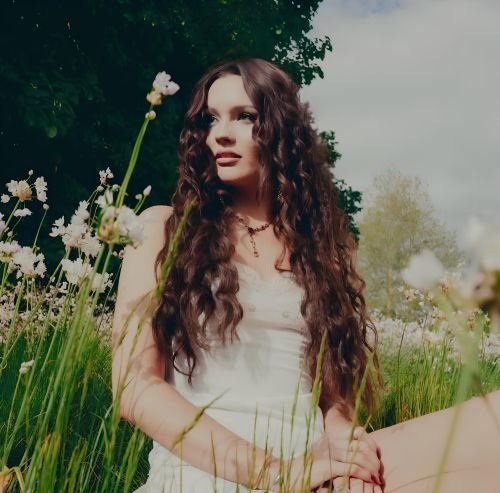
FEATURE: Spotlight: Ruby Roberts

FEATURE:


Spotlight


 Ruby Roberts

__________

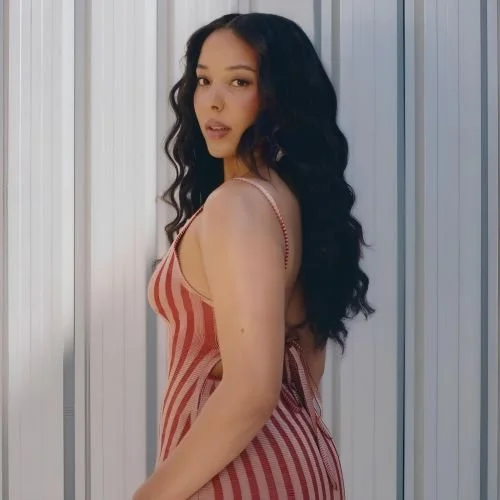
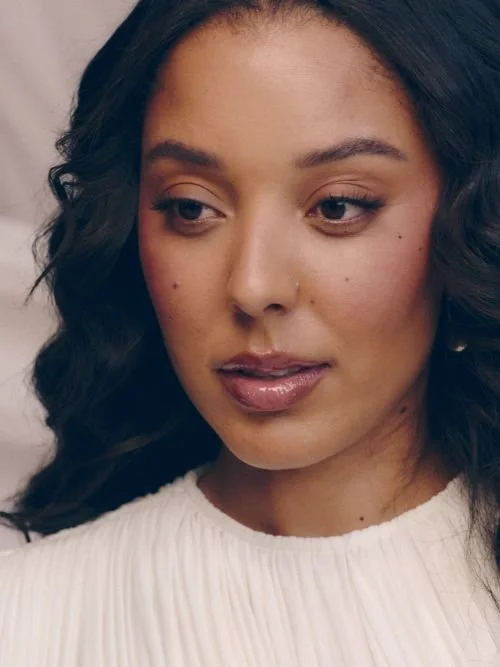
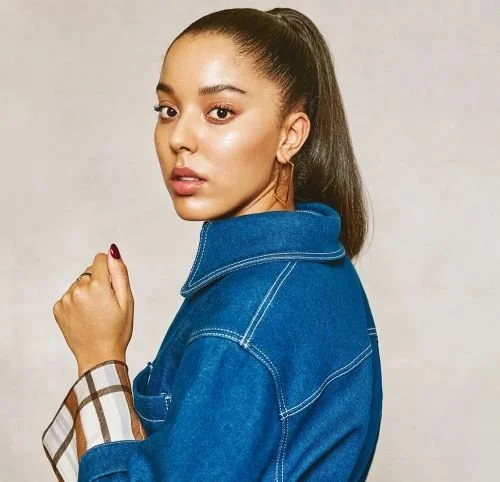
ONE of the most exciting…
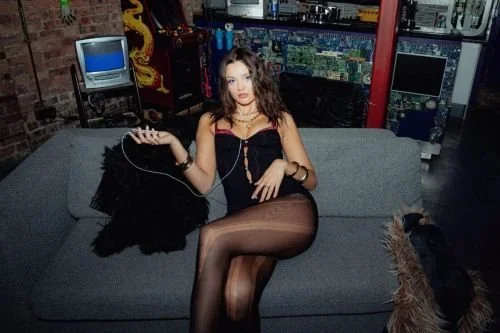
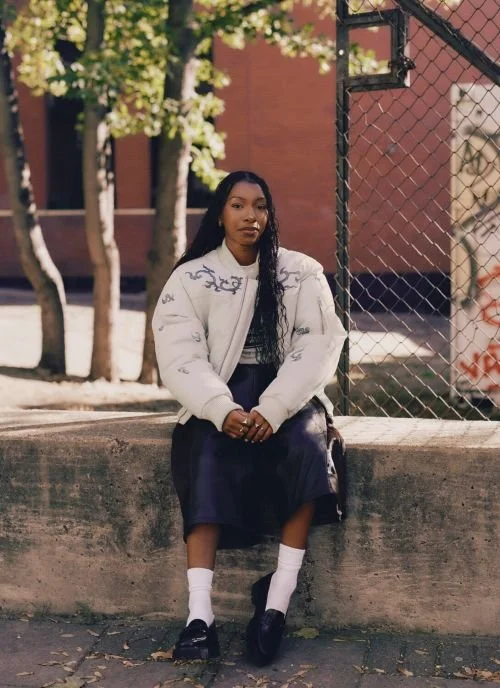
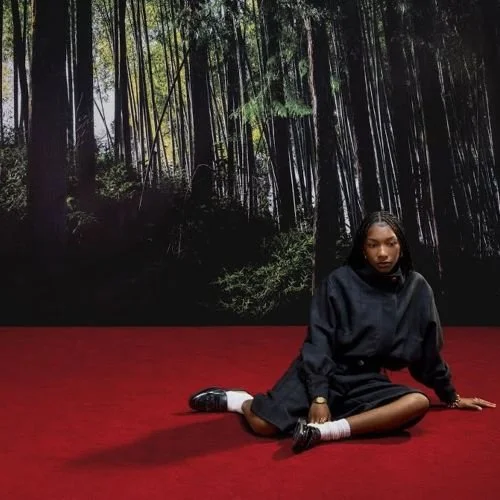
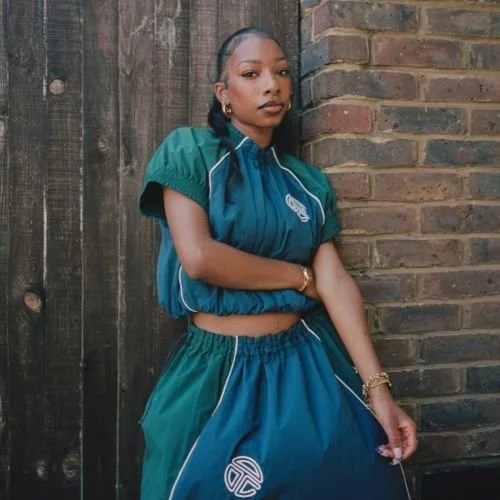
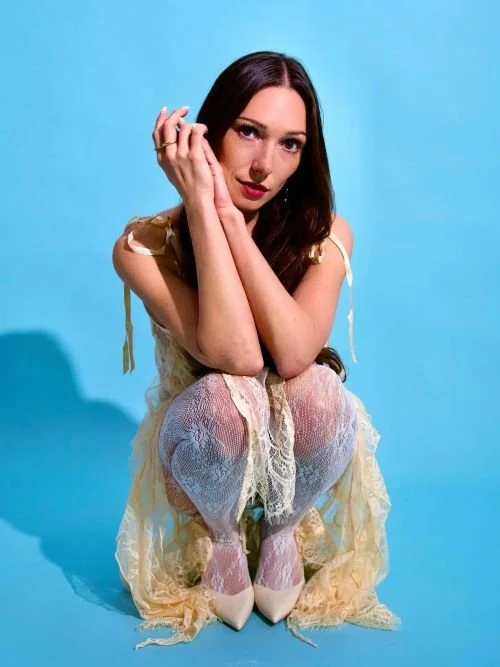
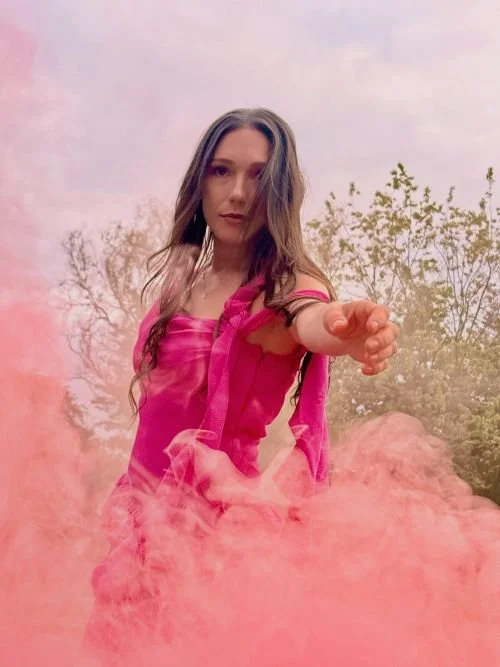
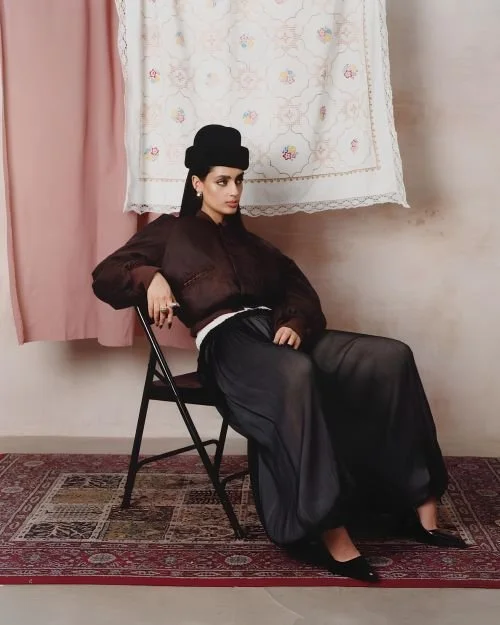
artists coming through right now is Ruby Roberts. Bad Girl July is her latest single. This year has seen incredible singles like I’d Do Anything get a lot of love. Her 2025 E.P., Somersault Queen, is such a brilliant work. I wanted to spotlight her here so that we get to know more about a truly great songwriter whose music is so distinct. Yet so many people can relate and take it to heart. I want to bring a few interviews in. COLD spent time with a British artist who has this dreamlike spontaneity. Originally from Somerset, I believe she is based down in Brighton:

For Roberts, change is a constant; music is about those moments of fluctuation. “I love freestyling… I’ll just sing whatever comes out.” That fluidity is reflected in the dynamics between her songs. When asked if the alt-pop genre was her genre, she glanced around the room searching for an answer: “When I write songs, I don’t have a specific genre in mind… all of my songs kind of reflect different genres.” Whilst her tracks can be labelled alt-pop, that ambiguity gives her room to move. “Sometimes I come in with something I’ve written on guitar… sometimes it’s a concept.” From there, the track forms, what fits is what stays.

Music starts as a moment according to Roberts – a vibe – but choosing what stays is instinctive. “I listen back to my demos to see what each one makes me feel.” Sometimes it’s a quiet moment by the beach where she can understand why a track works; other times, it’s as simple as “you just get goosebumps in the room.”

Artists like Prince, Queen, Wham! and David Bowie have long created those kinds of moments, and while their influence is present, Roberts is clear she isn’t chasing them. “Music is kind of like an accumulation of everything you’ve ever listened to… subconsciously merging it all together.”

Alongside shaping her own sound, Roberts has found as much of her personality in her artwork. Her earlier tracks’ cover art is filled with drawings that resemble something pulled from a teenager’s diary; they feel intimate and personal. Each carries a bold colour with a sharpie-style feel. The rawness comes from Roberts herself; she originally sent a drawing to her team as a reference for cover art, but they decided the original fit perfectly. Ever since, she has been making her own visuals. Blushing with a sense of pride, she describes how “Some of it looked like it was drawn by a 10-year-old… but that’s the magic of it.” She has taken it to the next step on her latest covers, moving into collage art. The covers are filled with deep reds and gold, images of her as the artwork feels more cohesive with her development as an artist. “I just wanted to still do my own artwork, but elevated.”

As she settles into life as an artist, so too come the pressures of social media. But for her it’s a blessing. “It’s such a good tool for small artists… we’re lucky to be in this era.” She spent years posting guitar covers online before releasing her own music, with TikTok becoming an early space to share her creative vision. She was heavily involved with it from the beginning: “I was posting every day… I just really enjoyed it.” It’s a refreshing take in a landscape where many artists shy away from socials, and a clear window into Ruby’s passion.

Ruby has come a long way from singing covers in her bedroom in Somerset and uploading them to TikTok. Now she is performing at Reading and Leeds Festival later this year; the stage is her new platform. “The first shows I was shaking,” she says plainly. “I was terrified of performing.” But after wrapping up her sold-out UK tour, that fear has shifted: “Now it’s one of my favourite parts.” It’s become about the fun of it, starting with small shows where only a handful of people came. “You can see everyone,” she laughs, before adding: “It’s so fun… connecting with people.”

As Ruby has found her footing on stage, she hopes her music leaves her listeners feeling “comforted”, “hopeful” and most importantly “connected to themselves.” It’s what got her to make music. “I always kind of wrote music as something I enjoyed doing for myself… almost as kind of therapy.” In her latest tracks she has moved herself forward, bringing parts of her old self with her, while stepping into something new and letting it unfold”.

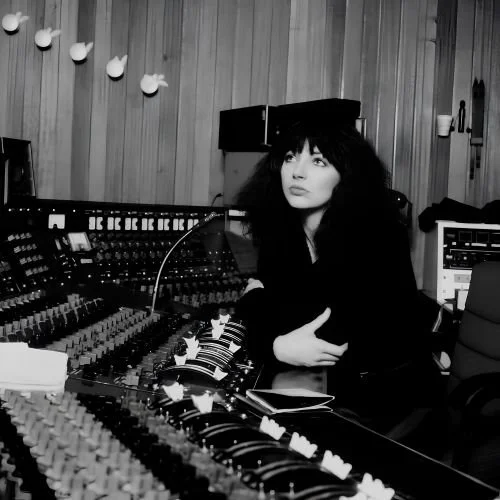
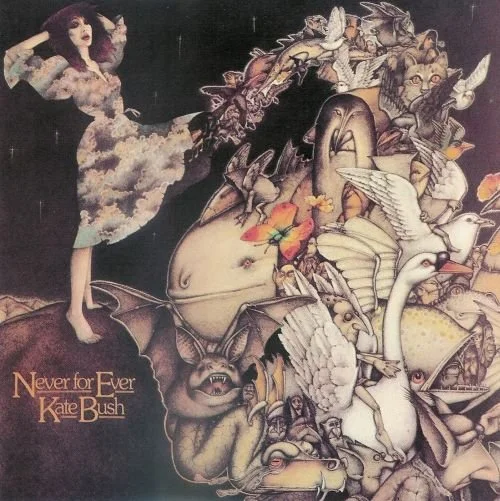
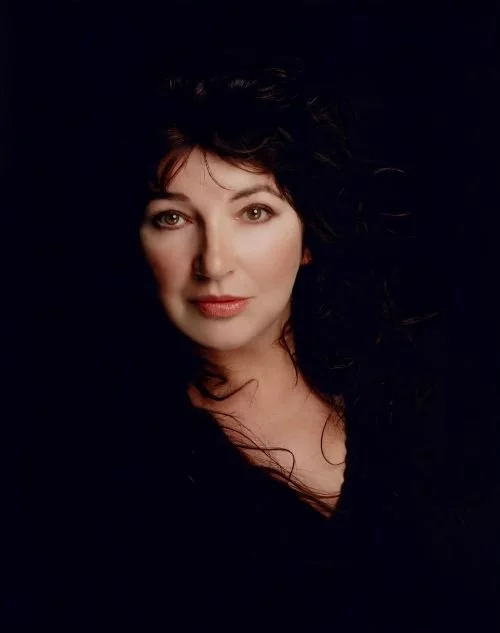
I would love to see Ruby Roberts perform live if she is ever in London. I do think that she is someone that is going to have a very long and successful career. Such a wonderful, kind-hearted and fascinating human, it is no wonder Ruby Roberts has this adoring fanbase. Like so many artists, her music deserves broader attention and approval. I wonder whether Roberts is a Kate Bush fan. Bush sees her songs like short films. Or people have noted that and she is touched, as I think that is how she approaches them. Ruby Roberts also feels her songs are short films. A cinematic thinker, Epigram spoke with her about “touring, internet virality, and the relationship between music and art”:

When asked about her relationship to making content for social media, she says that ‘I actually really enjoy taking on the challenge of marketing on social media, of figuring out what works and what doesn’t. I did music business at uni actually – I’m super interested in music marketing and music business.’ Clearly, her internet presence is working – her song ‘Trampoline’ went semi-viral seemingly overnight, with Ruby describing the experience of gaining so much rapid online attention as ‘bizarre’.

‘The songs I wrote for my first EP were more for my younger self, which I think is reflected in the music as well as the artwork.’ The coloured pencil illustrations used for the covert art, mystical imagery, and fantastical lyrics of Somersault Queen definitely reflect the sense of a home-grown and creative adolescence.

Her new music, however, is moving into a more mature landscape, both visually and sonically. ‘I think now that I’ve got [my first EP] out, I’ve felt more evolved to move on to a slightly older and more mature style.’

Another thing that’s changed lately for Ruby is the sudden and huge presence of touring. The singer talks about how her relationship to live performance has changed, explaining that ‘I did my first ever live performance a year ago to an empty room in Norwich, and I was so unbelievably nervous – I was dreading it for weeks, I had such bad stage fright. When I supported Nieve Ella in Nottingham, it was such a big step-up: again, I was really nervous for it. Now, I feel like I don’t get nervous, at least to the same physical extent – I feel like I actually really look forward to performing, and that it’s probably one of my favourite parts.’

The thing that has made live performing enjoyable for her is the sense of support and community from the crowd: ‘I feel like when you’re watching an artist perform on stage you don’t feel like they see or notice you, but at least in my experience I really do look at everyone’s faces, everyone singing along to the words, and I really lean on the support from the crowd.’

‘I was super nervous for the first show supporting Erin LeCount, but as it went on I became much more comfortable with the crowd. I also found watching Erin perform really inspiring: I love the way she moves around the stage and interacts with the crowd, and explains the meaning behind her songs. It made me genuinely excited for my headline tour.’

What can we expect from Ruby next? ‘I would love to incorporate some dance and movement into the shows. Also set design! I want to make the shows a little universe of themselves, an experience.’

With her headline tour recently finished, she is approaching playing at Reading & Leeds this summer, another significant step-up for crowd size. ‘It hasn’t hit me yet,’ she says, ‘I can’t wait to decide what I’m gonna wear, decide the choreography. I think I’m just quite used to the chaos of it – when you’re a support act, you don't have a tour bus or anything; supporting Erin [LeCount], it was just me, my day-to-day manager and my guitarist, trekking around the country via train with all of our bags.’

When asked what success at this point would mean to her, she references physical media: ‘Holding tangible forms of my music like vinyls and CDs is an amazing feeling. When I take a step back and look at all of it, it’s amazing to see how I’ve come so far in the past year. For the past few years I’ve been studying at Uni, working a hospitality job, and also balancing a music career on top of it: now I’ve been able to start solely focusing on my music, and that's a really good feeling. So I guess having music as the main thing in my life definitely feels like success to me right now.’

Ruby Roberts is someone to watch and likely won’t be hard to find this year. She has been running around the country with a guitar for the past few weeks, but during one of her precious few days off between back-to-back tours, she sat on a video call to me from her childhood bedroom, making the cover art for her upcoming single and chatting about her thoughts on making music”.

I am ending with an interview where Ruby Roberts is asked about her upcoming E.P., and a coveted spot at Reading & Leeds soon. Revamp interviewed Roberts about what comes next. Ad they write, “her music blends nostalgia with youthful chaos and self-discovery. Following the release of her latest single Crush and ahead of a packed summer that includes festival appearances, touring, and the release of her upcoming EP, Ruby Roberts is entering an exciting new chapter - one defined by vulnerability, ambition, and a refusal to be boxed into one genre”:

What kind of music did you grow up listening to, and do those influences shape the sound you’re making today?

Growing up, I didn't have a particularly musical family or background. My mum would play CDs sometimes, but my dad used to sing Frank Sinatra and Michael Bublé with me in the car and also take me down to karaoke at the pub, and I’d get up and sing Amy Winehouse and Miley Cyrus songs. I kind of figured it out for myself because I was fascinated by music. When I got my first iPod, I’d listen to everything and anything I could, and I loved making playlists on Spotify.

I was an old soul and obsessed with harmonies and musical groups like the Bee Gees, Beach Boys, Frankie Valli, The Four Seasons, musicals, The Beatles, The Dirty Dancing soundtrack, jazz music and basically stuff that wasn't considered ‘cool’ at the time but scratched my itch for learning about music.

As I got older, I went through many teen phases. One where I was obsessed with rock and grunge music, then hip hop, UK rap, pop, 60s music, then even garage and drum and bass.

Now, my musical taste is a combination of all the different phases I’ve been through, and I think having such a wide love for all kinds of music inspires me to create a variety of sounds and characters in the music I make. I don't want to put my sound in a box because the variety of musical styles is limitless, and I love them all!

You’ve got a huge run of exciting projects coming up, a tour next month, appearances at Reading & Leeds, and supporting Erin LeCount. When opportunities like these come in, how do you process them all and prepare?

I think because these things happen gradually, I process them as they come. I am so incredibly excited about all the opportunities and projects heading my way! It is definitely a lot to process and prepare for, but I love working hard and staying busy, and I have an amazing team behind me to support me.

Your EP is just around the corner, and fans will soon hear these songs live. How are you preparing for the Make It Out of Here tour, especially after your sold-out run earlier this year?

Yes! I’m so excited for the Make It Out Of Here tour and have been rehearsing with my band and practising my guitar parts at home. Also, there will be a new range of merch available, which is something else I’ve been working on, including new T-Shirts and CDs! Also preparing my outfits, hair, and makeup looks, and going to fittings to find the right dresses…

With over 15 million streams to date, how do you stay grounded while keeping up with such a fast-paced and evolving set of projects?

I think by taking each project step by step and looking after myself. I love going on super long walks with my dog, cooking, and going out with friends and family in the midst of it all”.

Everyone needs to follow the wonderful Ruby Roberts. I have so much respect for her and she is going to go very far. I think that she is among the most promising artists around. I will definitely  catch her live if she is in London later in the year. A chance to see this amazing queen…

IN the flesh.

__________

Follow Ruby Roberts
FEATURE: Modern-Day Queens: Grace Carter

FEATURE:


Modern-Day Queens


Grace Carter

__________

I have written about…

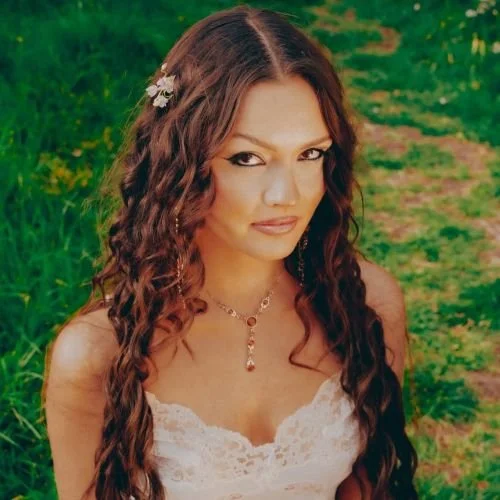
Grace Carter before. She is a brilliant London artist I have been following for years now. Someone who warrants so much more exposure and attention. I am featuring her now as her recent single. White, is extraordinary and must-hear. I think it is appropriates to include Grace Carter in this Modern-Day Queens. I will come to an article about Carter’s new single, White. I do want to come back to 2023. Three have not been too many recent interviews. However, I do feel it is important to look back and get some insight on Grace Carter. Euphoria Magazine spent time with Carter and asked her about her career and new music:

Your career has been gaining steam with every music you put out, and you’ve even gone on tours with some big names – Dua Lipa for example – how does it feel to have these things working for you?

I love making music and I’m so grateful I get to do this every single day. The opportunities I have been blessed with have been so incredible and I’m just super excited for what’s to come. It’s been a rollercoaster ride for me in a lot of ways but I wouldn’t change it for the world as everything I have experienced has made me the artist I am now.

Your music is inspired by your lived experience and from the happenings around you. Do you have to feel a certain way about something in order to write about it?

For sure, my music is completely dictated by what’s happening in my life. The reason I started writing songs wasn’t to be an artist but it was a tool for me to be able to process the things I was going through, especially as a child. People always make jokes about my music being super deep but me being a really happy person and I genuinely think that is because I am able to put my emotions into something which allows me to move forward.

I think anyone who has ever experienced racism will feel some kind of healing from your song “Riot.” You wrote the song years ago, what made you release it now?

This song was started by a collaborator of mine called Fabienne Holloway in 2014 when Eric Garner was murdered. I was sent the song in 2020 and it proved that in all of that time, nothing had changed. I’ve always started and finished every song I have released but this one was different. The fact that every single lyric still rang true 6 years later made me feel as though this record really needed to be heard. This song isn’t about me, it’s about standing up for what I believe in. As an artist, I want to be able to use my voice to talk about things that are important to me and as a woman of colour this song and the meaning behind it is very important to me.

You fought for the sound that you have now rather than let others shape your music. That’s not something most newcomers would have done, what motivated you to stand your ground?

I was raised by an incredibly strong woman who taught me to always go with my gut and not be swayed and she’s always given me the confidence to sit comfortably in myself. This industry can be crazy, we’re all so young when we come into it and have people telling us how to be. It’s very easy to lose yourself which I have definitely experienced at times but I’ve learned to always remember why I do this. It’s because I love making music and that always had to be my main focus.

Some of your songs were inspired by your childhood experiences, most notably moving from a mixed neighborhood to a mostly white one. What was adjusting to your new environment like at the time?

It was very complicated. There’s a song on the project called “Mother” that talks about this very experience. I went from living in North West London to Brighton which at the time was a very big culture shock. I am a mixed-race girl who grew up in a white family and then went from the diverse city of London to Brighton where I was one of the only non-white people in my year. Navigating that was really hard but I also really appreciate that whole chapter of my life as feeling different is what drew me to start making music.

You don’t only tell stories through your lyrics, you also complement them with the visuals. How involved are you in the making of your music videos?

I love it!! I try to be involved in everything I do, I’m not proud to say that there have been a couple of things I’ve done where I couldn’t be massively involved and you can tell! I’m a visual person so reinforcing the message behind the songs through a music video is super exciting and important for me.

You said that the video for “Pick Your Tears Up” represents being able to tackle certain challenges when you have other people that understand your pain by your side. And it’s something you say you personally connect with. How important was it for you to pass this message on?

Growing up is tough for anyone, you’re going through so many changes and it can feel very lonely. When I was in secondary school I really struggled with my identity but then I found my circle who made everything feel easier, they were like me and we all understood each other. I wanted to capture that in the video and I think Iggy who directed it did an amazing job of conveying that feeling of sisterhood.

Which artists did you love listening to as a kid?

Nina Simone, Alicia Keys, Adele, Angie Stone… Strong women!”.

I think I first wrote about Grace Carter in 2017 or 2018. I have been following her for a while now. I do hope that we get some new interviews with her. As there has been a lot happening in the past few years, Carter’s words and story should be told. CLASH talked with an artist who was realising the power of her voice:

Would you say that your relationship and approach to music has shifted across the years?

I think so, for sure. I went through a period of time in 2019, 2020 where I didn’t write any music at all and that was a very weird time for me, because music has been something that I’ve done consistently from the age of 13. I used to write songs because I needed to write about my feelings, and then it became my job. There’s a lot of pressure, alot of things that you have to do, a lot of opinions – I think I listened to that a lot. That scared me into a silent phase, where I couldn’t even be creative, and then coming out the other end of that, and having those conversations too, it was really shit and really hard. I felt really lost. But I’m now in a place where I go to the studio and I’m just existing, being there and talking about the things that I’m feeling at that moment. I’m not overthinking it and that’s a really exciting place to be in.

What was it like entering the music industry at such a young age? How would you describe that experience?

I think it’s so interesting, I speak to a lot of my friends about this. We’re all so young when people find us and we think we know everything but we truly don’t, we don’t know who we are. It was exciting when I was 17, but I think through that excitement there was a level of naivety from me. I’d written songs about my absent father and that became a really attractive story for people, they loved it. I think a lot of my life is in my music and it hasn’t always been put in the right hands. Being on stage, singing songs about trauma, coming off stage, being asked questions about trauma, being in meetings, people encouraging me to write more about my trauma, it was a lot. But I think through that I’ve definitely processed a lot of things, I’ve been forced to, but I now know what my boundaries are.

As someone who writes from a very vulnerable and personal standpoint, is there a level of uncertainty in what you share with the world?

I think after my first project, there definitely was a time where I felt like I needed to protect myself because my life didn’t feel like my life anymore. Now, I’ve realised the power of my voice. There’s so many people that don’t have that voice, they don’t have that outlet and that place to write how they feel. It’s artists like myself, and so many artists who write these things down, who give a voice to people who can’t explain how they feel. So I don’t think so, I think it’s just about understanding who I need to surround myself with.

How does the project mark a new chapter for Grace Carter? What themes are you trying to unpack on the record?

There’s lots of different themes. There’s a song on the project called ‘Mother’ which is about mine and my mum’s relationship, it’s very much focused on identity. I basically grew up in a white family, in a white town and it’s about how I navigated that. It’s about how much I love my mom, but sometimes I just don’t feel like her. There’s a song called ‘Hope’, which is about pushing myself forward and finding hope.

I think that there’s lots of different sounds happening on the project too, it feels a bit more like I’ve been experimenting and finding what sort of artist I want to be again.  I really missed putting out a body of work, I think I’m just trying not to overthink. I’ve made some songs I really love and I think for me now it’s just about doing more of the same and being on a path of putting music out. That’s what I love to do. ‘A Little Lost, A Little Found’ is the first step of that. I’m just having fun.

If you could hand one piece of advice to a young, emerging artist making their first steps in the industry for the first time, what would it be?

Be patient, trust your gut. I think for a long time, I would never trust my gut. Surround yourself with good people and just have fun. The main thing is just make music that you love because no one knows more than you. Listen sometimes, take advice, take tips, but don’t let that be your whole thing. Just try and listen to yourself and hold on to the reasons why you are where you are. It’s hard work, but it’s really rewarding.

Lastly, which three artists are currently taking over Grace Carter’s playlist?

One of my really good friends just released an album, his name is Q, he’s amazing. My friend Rachel Chinouriri – also love her, she’s the funniest person I know. And then there’s an artist from France, she’s called Yseult, she is incredible. She has a song called ‘Corps’ and I’ve been raving about the song for like three years. I don’t understand a word of it but it’s the most beautiful piece of music ever and she’s incredible”.

Let’s finish off with The Line of Best Fit and this wonderful new single. There is a lot of desire and demand for what comes next from Grace Carter. Such a immensely talented and stunning artist, I hope that this incredible songwriter keeps on releasing music:

"White" comes with a candid open letter to fans in which she describes feeling “defined by” childhood trauma during her initial rise to prominence.

In the letter, the 26-year-old reflects on entering the music industry at 17 and beginning to release music two years later. She worked independently before signing to a major label, but now says she had little sense of self outside the big emotions she was carrying. Her debut project, Why Her, Not Me, directly addressed growing up with an absent parent.

“Writing it was one of the most healing experiences of my life, but I wasn't prepared for what came afterwards,” Carter writes. “Every day, I was revisiting the hardest parts of my childhood, reliving them on stage, in interviews and in the studio. Without the emotional support I needed around me, I eventually stopped processing that sadness and instead felt like I was defined by it.”

The letter details a subsequent creative and emotional stall. Carter says she became scared to open up again, feeling that her early work had boxed her into a narrative of pain. Seeking a reset, she booked an impromptu flight to Stockholm last year. Away from label expectations and live commitments, she says she wrote freely for the first time in years: “Nobody was expecting anything from me. Nobody was putting pressure on me,” she explains. The resulting material, she adds, sounds different from her earlier output – less dark, more reflective, hopeful and optimistic.

“For years, I felt like my actual taste in music was never fully represented in what I was making,” Carter continues. “Because so much of my writing came from such emotional places, the sonics often felt secondary. With this new music, it was important that it felt like the records my girls and I genuinely love, whether that's SZA, Frank Ocean or Solange.”

"White" is the first chapter of this new phase. Written after the end of a seven-year relationship, the song addresses the pressure many young women feel to settle down before “time runs out”. Carter recorded parts of the vocal both sped up and slowed down “to mirror that feeling of being rushed through life”.

The letter frames the Stockholm sessions as an exploration of what she calls her “adult adolescence” – the messy, confusing and beautiful period in your twenties and thirties when the world no longer sees you as a child, even if part of you still feels like one”.

If you have not heard Grace Carter, then do go and seek her out. She is one of our absolute best artists. I have been a fan for years, and I do hope that she continues to release brilliant music for many years more. There is nobody out there like her. She is most definitely…

ONE of our best artists.

__________

Follow Grace Carter

FEATURE: The Modern Age: The Strokes’ Is This It at Twenty-Five

FEATURE:


The Modern Age


The Strokes’ Is This It at Twenty-Five

__________

THIS might be…

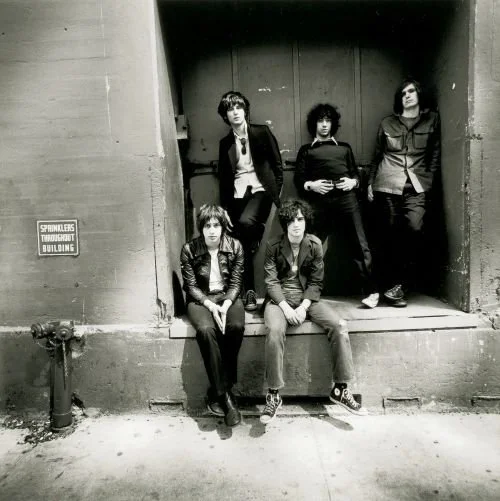
PHOTO CREDIT: Colin Lane

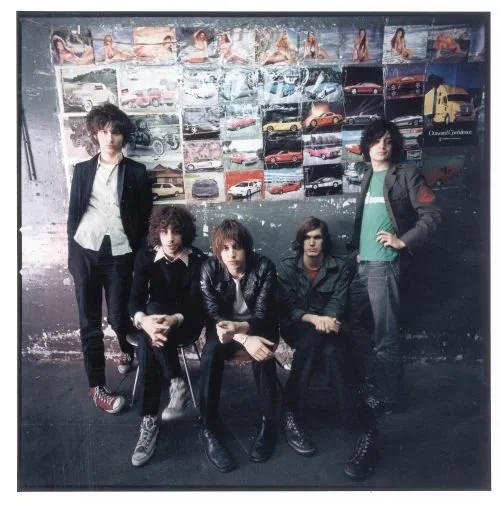
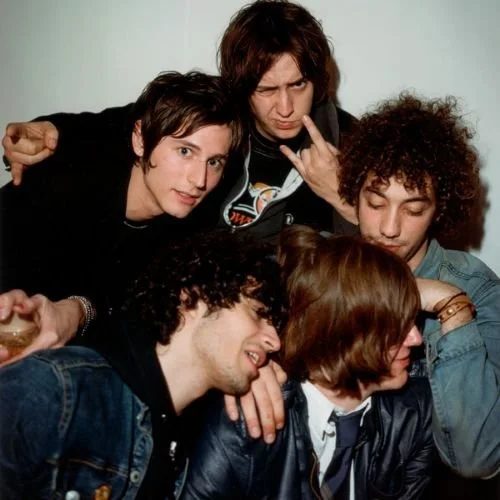
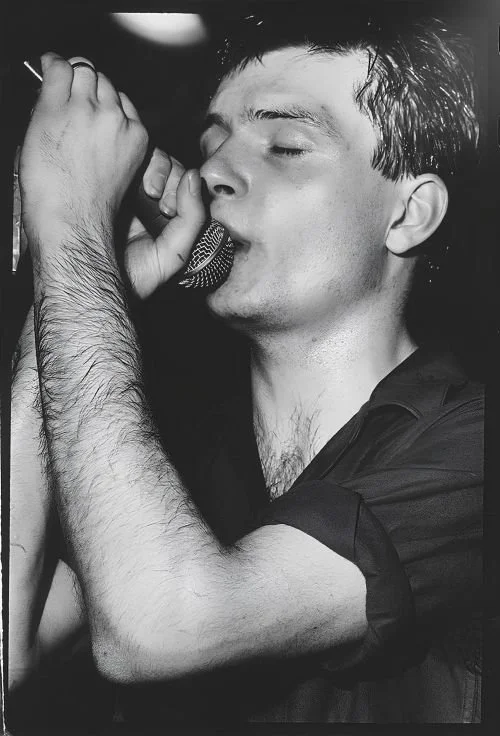
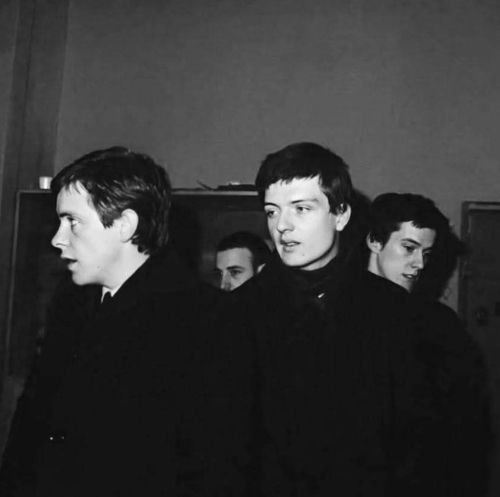
one of the most significant and impactful debut albums of this century. It arrived on 30th July, 2001. The Strokes are still recording to this day. However, the New York band released Is This It at a time when nothing like it was around. Seen as a musical watershed moment, and crucial in the reinvention of post-millennium guitar music, Is This It reached number two in the U.K. and thirty-three in their native U.S. Is This It – a statement more than a question – won absolutely immense reviews. One of the best-reviewed albums of its time. Is This It is seen to be to be one of the most influential albums of all time, and has appeared in many publications' lists of the best albums of the 2000s. I do want to go inside Is This It ahead of its twenty-fifth anniversary. I want to start off with an interview that appeared in NME in May 2001. The excitement and buzz already building around the quintet:

The first punch is throw 30 seconds into The Strokes’ first NME photo session. Their five skinny, leather-clad frames are milling about on a street corner in the heart of Manhattan’s Lower East Side, when someone yells out: “Hey motherfuckers, you’re blocking the whole sidewalk.”
Everyone turns around. There are three kids in hoods, obviously wired up on something, facing the band. A few seconds earlier, they randomly tried to attack a school bus driving down the street. Now they’re staring at us, so guitarist Nick Valensi opts for a spot of diplomacy. He flicks them his middle finger and mutters, “Fuck you, man”.

Everything happens at once. A fist swings through the air and catches him in the chest. Drummer Fabrizio Moretti and singer Julian Casablancas enter the fray immediately, quickly joined by bassist Nikolai Fraiture and guitarist Albert Hammond. There’s shoving and stray punches fly all over the place. Fabrizio catches one square between his shoulders. People strolling down the sidewalk grind to a halt and form a ring around the scuffle. Before anyone’s had time to work out what’s happening, police sirens blare out, and the NYPD hits the scene.

Then the pandemonium really breaks out. Everyone starts shouting and swearing and jabbing their fingers into each other. The police pull the two groups apart and, after quizzing a handful of passers-by, decide that The Strokes are the injured party. Do they want to press charges? Nick, rubbing his jaw, sighs, “Forget it. I just want to get some ice.” The melee breaks up, and the band head off down the street. Julian turns to NME and smiles, “Welcome to New York…”

It’s been said before, and we’re guessing it’s going to be said again: The Strokes are so New York, it hurts. They look New York (skinny ties, black leather, subway tans, that classic late-’70s punk look in full), they sound New York (The Velvet Underground, Talking Heads, Television) and they sure as hell act New York (when we ask Nick whether they get into many fights, he turns and grins: “Oh no, that was the first one… for about a week”. A few days after we leave, they start another one in Philadelphia.)

In the five months since their first EP, The Modern Age’, arrived at NME, they’ve become the most talked-about rock band since Oasis. That’s partly because the clipped, pulsating swagger of that first single marked it out as the best debut for about a million years, and partly because the last time they were in England, their gigs were a revelation. Here was a band that had everything – the look, the sound, the attitude, the whole thing. Since then, of course, everything’s gone crazy. They’ve been besieged by major record companies (eventually signing to Rough Trade in Britain and RCA in the rest of the world), they’ve recorded a magnificent debut album (“Is This It”) and it’s rumoured that Oasis want them as a support band. Now they’re on the verge of returning to the scene of their triumph.

This month sees them undertaking an already sold out 16-date tour, climaxing at London’s 1200 capacity Heaven nightclub.

“New York riqht now reminds me of how it was about eight years ago, in the early-’90s. There was that same kind of tension in the streets then as well. New York is meant to be cleaned up, but it’s getting tenser again. Lately, when I’m walking around the street, I really feel it.”.

He might be right. Eight years of strict ‘zero tolerance’ under Mayor Rudolph Giuliani might have temporarily altered the complexion of the city, but right now you can feel it swinging back to the brash and sleazy place it always was under the surface. It’s surely no coincidence that the most popular T-shirt design of the moment reads, “Fuck you, you fucking fuck”, while outrageously sick magazines like Vice (Julian: “I love that magazine. They did a feature on what people look like on drugs. My friend was in it on hash and his wife on heroin. That was pretty cool. People we know in Vice, all fucked-up and strung out.”) are becoming ever more popular. New York’s reverting to type, and The Strokes are just the most obvious outward sign of it..

Right now, though, the band are checking their watches. Tomorrow, they’re playing a gig in Boston – a five-hour drive up the East Coast. It’s 3am, so we bid them goodnight and promise to be waiting for them outside our hotel the next morning. Julian yawns, and turns back to the mixing desk..

It’s hardly surprising that The Strokes have got the New York thing so well covered when three of them were born and bred there, and a fourth, Fabrizio, moved here from Rio De Janeiro soon after his birth. Only Albert hasn’t got the city in his blood. He’s from LA and relocated here in September 1998.

At their heart of their New York state of mind, though, is frontman Julian Casablancas. He writes the songs and supplies the attitude – something he may well have inherited from his father. That’s John Casablancas, the man who founded the pre-eminent Elite Modeling Agency back in 1971 and who quit in February last year, spewing vitriol about models in general and Naomi Campbell and Heidi Klum in particular (memorably describing the latter as “talentless German sausage”). Julian doesn’t talk about him much, and you get the impression that they aren’t particularly close. When asked whether his father was responsible for getting The Strokes played on the catwalks of Europe, Julian just shrugs and says, “I doubt it.”.

Whatever their relationship, there’s no doubt that Julian enjoyed a nomadic adolescence. At the age of 13, he was packed off to L’lnstitut Le Rosey in Switzerland, a private international school whose website warns of its “clear code of discipline”. As 11 of us squeeze into The Strokes’ tiny van and prepare to crawl our way out of Manhattan, Julian recalls his time there with disgust. “It was just this snobby school. My dad had gone there and I was fucking up in school and for some reason they thought going to Switzerland would help me. It was a bad experience – even if I did meet Albert there.” What was so bad about it? “It was just terrible,” he reiterates. “I was punished all the time. I had to wake up at six in the morning to jog around the school. I’d get caught for smoking or whatever. It sucked. There were a lot of Turkish people there. They were nice, but you know… they all wore Versace jeans. It was the biggest culture shock of my life.”.

Albert was there for six months, Julian for two years. It wasn’t until he got back and started attending the Dwight School on Manhattan’s Upper West Side that his musical interests started to take shape. There, he met Nick and his friend Fabrizio, and later, Nikolai. Gradually, The Strokes drifted into existence..

They played their first gig in front of 15 girls at a party thrown by Nick’s older sister in 1996, but it wasn’t until Albert’s arrival in autumn ’98 that things started to get serious. They spent six months locked away in a rehearsal studio in the Hell’s Kitchen district of Manhattan, until September 14 1999, when they were ready to play their first public gig, at a club called Spiral. There were only six people there, but Julian, stricken with nerves, still puked just before he went onstage..

From there, their progress was steady, but not spectacular – only gaining real momentum when they started playing a downtown club called the Mercury Lounge (New York’s equivalent of London’s Camden Monarch) in the autumn of 2000. There they acquired a new manager (Ryan Gentles) who also happened to be the club’s booking agent. He began sending out their demo to record companies. That’s how Geoff Travis at Rough Trade got to hear it. He agreed to put it out. The Strokes came over to England and things just went off the scale. When they got back to America, the music industry was ready to pounce. A year ago they’d been playing to 50 people, now A&R execs were rumoured to be offering seven-figure cheques.

When we get to Boston, eight grueling hours after we left New York City, everyone piles into a bar around the corner from tonight’s venue (the evocatively named TT: The Bear’s Place), and NME asks what the reaction to their success has been like in New York.

“Our friends have all been pretty cool,” nods Julian, nursing a neat (medicinal) whisky. “And people who don’t know us? Well, it’s amazing how jealous they are. We walk into places and people say, ‘Yeah, we’ve heard of The Strokes, they’re a bunch of fucking assholes.’ They’ll say it to your face and then they’ll want to hang out with you. Two days later, they’ll be round asking to hear the album. Fucking dipshits.”

“I was sitting in a bar the other day,” adds Nick, “and some girl said to me, ‘Do people actually come to your shows or is it just people from magazines?’ That was pretty funny.”

It’s certainly true that magazines have lost their minds for The Strokes. Not just NME, but style mags, fashion mags, guitar mags, everyone.

Julian: “It’s just the way we fucking dress, man. I remember having a conversation with Nick one day soon after we started playing shows. I used to get dressed up for shows, but it didn’t feel right. So Nick said, ‘What’s your problem? Just dress every day like you’re going to play a show.’ That became my motto. I get funny looks if I’m in a weird neighbourhood, but so what?”

You’re sex symbols in Britain now, too. “Yeah,” smiles Nick, a man fully aware of his own good looks. “Well, what people don’t realise is that we’re all homosexuals.” “That’s a joke, man,” laughs Julian. “It’s funny, though, because although we really like girls, it’s almost as if we like each other better. We’ll definitely go get laid, but we won’t hang out with the qirl and be like, ‘Oh I love you’, we’ll go straight back to the band.” He pauses.

“That’s fucking ridiculous,” snaps Julian later on when we’re back at the hotel. “I’ll tell you straight up, there are a lot of much better bands than us. New bands? I’m not talking about that shit, but there’s a lot of good music out there. A lot of this hype is bullshit. I think we’re pretty good and I want us to be successful. That’s about it, though.” It’s been said that you’re the new Oasis. Julian: “That’s great, but we have to keep moving up. We have to get better songs. Just get better full stop. If we believe too much of this shit, we’re going to crash and burn so fucking fast. We need new songs. It’s a short life, man, you’ve got to pack it in.”
“As soon as you start believing what people are writing about you,” agrees Nick, “that’s when you start to suck.”

“I’m not full of shit,” rasps Julian, stabbing his finger in NMFs general direction. “If we don’t get better, I don’t want to do this any more. I don’t want to just hit some kind of fame. I just want to do something good. That’s the only way I’m going to be satisfied.”

Are you satisfied with what you’re doing at the moment? “No way,” he concludes. “Hell, no, baby. People might think it’s perfect right now, but next week, they’re going to want to hear something else. I want to provide that something else.”

He lights another cigarette and stares off into the distance. He needn’t worry. At this exact moment. The Strokes really are perfect. Without doubt the greatest band to emerge from New York for two decades. That they’re intent on getting better is a frightening prospect. By the time you read this, they’ll be back in Britain for one of the most fantastic tours you’ve seen in your life.

A band like The Strokes only comes along once in a lifetime. You should be grateful that they’ve come along in yours”.

It is no understatement to say that Is This It changed music instantly. It was released at a turbulent time in U.S. politics. I always define 2001 by the terrorist attacks of 11th September. A couple of months after Is This It was released (less in fact), The Strokes’ city was hit. It was a moment when they a city they wrote about was changed instantly. I do wonder how we will mark twenty-five years of 9/11. How it changed the world. Anyway, I want to focus on positives. In 2021, marking twenty years of Is This It, GRAMMY had an album roundtable. Impressions about one of the most significant albums of this century:

It was the beginning of a new millennium and people were ready for something new and The Strokes fit the bill. They were cool, from New York which is attractive, especially if you are stuck in suburbia, and they were different from everything else going on at the time. To top it off, they wrote great songs which, while buzzing with energy, were accessible. It was time for a reboot and The Strokes provided it and broke the door open for all the bands that followed.

Jim Merlis (former publicist for The Strokes): The band had a huge impact on New York’s culture, and it wasn’t just their music. The band really gave back to the scene by taking New York bands/artists like The Moldy Peaches, Regina Spektor, Longwave, and The Realistics on the road with them. No two of these bands sound alike, yet they all made sense opening for The Strokes.

Robert Schwartzman (film director and bandleader of Rooney): When I moved to New York and went to college there, for that first semester, The Strokes were playing shows in New York, and they were the "it" band, I guess you could say. But it wasn't all over pop radio, they were the "cool" guys showing up at parties in New York, and I started to become close with those guys because my cousin Roman [Coppola] directed their music videos early on. By proximity to knowing people in their circle, I just got to hang out and spend time with them. They were almost like big brothers, where I really looked up to them musically,

Gordon Raphael (producer of Is This It): As soon as the first songs from The Strokes were released there was a visceral and palpable change in youth culture and music culture, pretty much worldwide. An entire generation that grew up hating their older brothers’ rock and roll, suddenly went out to purchase their first leather jackets and guitars, then formed their own bands.

Marc: There was already a burgeoning scene in NYC before The Strokes came along but with their emergence, they became the focal point of something that had been bubbling under the surface for a while. It’s not like there wasn’t already an alternative/garage rock scene before The Strokes came along but they were the ones who brought it to the masses. They brought a sense of excitement, energy and danger that was missing in music at the time. Most of the alternative music pushed by the labels at the time was fairly dreary to be honest, "dad rock" as it was called at the time, and The Strokes were definitely an antidote to that.

Ian Devaney (lead vocalist of Nation of Language and member of machinegum): My parents spent their young adult years going to see bands like Talking HeadsThe Clash and Blondie. For my friends and me, [with The Strokes,] it felt like this was a chance to have our own version of that. There was a sense that, whatever magic those older bands had that could still capture young imaginations decades later, The Strokes were carrying a bit of that magic with them as well. Being a teenager in suburbia, pop-punk and emo really felt ascendant around that time, but none of that ever resonated with me. The Strokes allowed me to see something else happening in music that felt like it was worth aspiring to.

Merlis: Not only was their music great, it sounded cosmopolitan and very New York City. There hadn’t been much of a music scene in New York over the twenty years prior to them with a handful of good bands here and there. The city was desperate for something cool, especially as [Mayor] Giuliani was turning the City into a safe, Disney-themed town. The band sounded cool and looked it. It also certainly helped that most of the national media is based here.

PHOTO CREDIT: Colin Lane

Jake Faber (drummer for Sunflower Bean): The Strokes came into my life right as the band was starting. I was at a crazy point in my life where I was trying to do a semester of college at SUNY Purchase, while rehearsing almost every day of the week in Long Island with Sunflower Bean, on top of the beginning of new romance and friendship in my life in Brooklyn. As you can imagine there was a lot of driving around the New York metro area, [and] Is This It soundtracked almost every minute of it. [It] sonically brought it back home for me as it was kind of like The Velvet Underground, but rockier and so poppy. It totally filled the void that one can feel when driving around New York every day for months on end, tending to the most exciting things that have ever happened in my life (at that point) all while wondering "is this it?"

The Strokes Were Polarizing: You Either Loved Or Despised Them

Eric Ducker (writer and editor; wrote the band’s first-ever cover story in 2001): When it comes to the New York rock revival, The Strokes weren’t the best band (that would be TV on the Radio), or the best live band (that would be Yeah Yeah Yeahs), or even the first band (that would arguably be Jonathan Fire*Eater or The Mooney Suzuki), but at least initially they were the best at making it seem like being in a band with your friends was the most fun thing in the entire world. In the years that immediately preceded them, a ton of people in rock bands — from nu-metal mooks to post-Fugazi indie rockers and British gloomsters — seemed totally miserable.

Devaney: Their music just makes it so much easier to put up with everything about living in New York that is irritating and tedious. It's like a kind of urban mindfulness — reminding you that you chose to live here for a reason, and the filth and the difficulty are actually character-building and romantic.

People still move to New York from very pleasant places that are very far away specifically to place themselves inside the world that exists in these songs. Play a song from Is This It in a crowded dive bar late at night and people lose their minds — it's the apex of their notion of what New York life would be.

Ducker: Part of the reason The Strokes became a great New York band was because you either loved them or despised them. Or, you pretended to despise them but secretly loved them. For such an argumentative city where everyone thinks they know best and are always happy to tell you why you’re wrong, a band you can be super passionate about holds a lot of appeal.

The Strokes Created A Template For Bands In The Early Aughts

Schwartzman: They were a part of this new world of this cool, edgy slice of music that they had injected into the young music scene like on the alternative rock side of things that was a breath of fresh air, in a way, for that genre of music. At that time, alternative music didn't have a real identity. The whole world they built just had this great consistency: They knew what they were and they stuck with it, and people, I think, really appreciated that.

[The Strokes] were this British sensation. It was amazing. They conquered the music scene overseas, so they brought with them this amazing kind of cred from having won over that side of music fans and magazines. All those bands out of England that followed, you could hear direct influences: the vocal style and the same kind of sound and sonic approach to how they produce those records.

On the radio at that time, it was like P.O.D., Linkin Park, Puddle of Mudd—that stuff all over the radio—and then you had the strokes, paving this new road, amongst all these bands that were very, very different musically. I thought that was just so cool, to be young and aspiring in that whole alt-rock world, and see how they were kind of shaking up that whole scene. They really turned alt-radio on its head because they were this odd-band out. But they really brought in a whole new wave of influencing a lot of bands. I remember when we were out touring, you would hear all these bands, and you would be like, "This feels like a Strokes-clone band." There are indie bands that followed that were straight-up cut from the same, old cloth. They sang like Julian, all low and droney [with] those prickly guitar parts that were kind of bouncy.

Marc: It would be safe to say The Strokes broke down the doors for not just fellow NYC artists such as the Yeah, Yeah, Yeahs, LCD Soundsystem, Interpol, The Rapture and the whole "garage" revival. That fact alone helps cement The Strokes’ legacy.

Ducker: In the years after Is This It, some of the acts that would become the biggest rock bands in the world were able to replicate what The Strokes did, but with their own specific twist. To reduce it to the most basic level, Kings of Leon were the Southern Strokes, The Killers were the Las Vegas Strokes, Vampire Weekend were the "Ivy League Strokes," Phoenix became the "sophisticated French Strokes," and so on. The Strokes reformatted a template that other acts built off of, even as The Strokes themselves seemed to pretty quickly lose interest in it.

Is This It Left Lasting Impressions On Artists And Music Industry Professionals

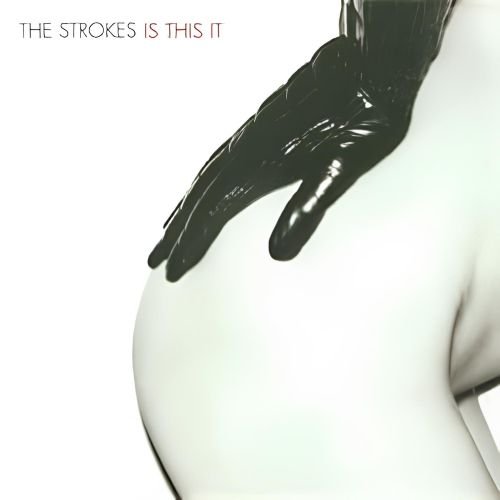
Ducker: When the promo for Is This It came in (original artwork, leather glove on naked butt), I think I had heard The Modern Age EP already, but I hadn’t gone to any of their Mercury Lounge residency shows. At that time there wasn’t social media or blogs to drive buzz for artists. For The Fader’s staff, much of that buzz came from what London-based culture publications like The Face were into, and they were already fully on-board for The Strokes. I was vaguely anticipating Is This It, but it wasn’t until I heard the advance that I quickly realized that this was a group and an album that I could, and would, love intensely. That CD didn’t get pulled from the office stereo for a long time

The ascent of The Strokes was wild. On 30th July, Vice published an oral history of Is This It. I was eighteen when the album came out. I was instantly blown away by The Strokes and Is This It. Anyone who might not have heard this album needs to right away. It is transformative:

Whether it was bloated nu metal or tuneless indie strumming, 2001’s alternative music scene felt stagnant and colourless. Enter: The Strokes. Five guys from New York with immaculately dishevelled haircuts and names like Fabrizio Moretti and Nikolai Fraiture who, in 2001, released their seminal debut album Is This It and blew everything out of the water. Its impact was cataclysmic. As Geoff Travis, the head of Rough Trade Records, put it in Lizzy Goodman’s Meet Me in the Bathroom: “The Strokes’ arrival was a bomb in the middle of a plastic pool.”

But this was not an overnight success. The band struggled to get anyone to take notice for the better part of two years. Famously, the tide changed when Travis agreed to release their scuzzy debut EP The Modern Age, after listening to it for just 15 seconds down a transatlantic telephone line.

From then on, the brakes were off – the hype breathless and frantic. This was a band who were here to save rock’n’roll, dressed in ripped jeans and Converse. They appeared on the cover of NME twice in the three months leading up to the release of Is This It, with the frenzy growing every day.

After a series of exhilaratingly wild live shows and six weeks in producer Gordon Raphael’s Transporterraum studio (which Casablancas said “sucked out my soul…”), Is This It appeared in Australia on the 30th of July, before dropping in the UK on the 27th of August.

Immediately, it was greeted as the perfect record. In fact, it was so good it had two different covers – the iconic UK version of a leather gloved hand; and the US version, depicting subatomic particles. Despite all the hype, the album only entered the UK charts at number two – but it’s no exaggeration to say it left an indelible mark on the music scene and culture in general.

Two decades later, Is This It’s 36 minutes still sound thrillingly flawless – ragged yet taut, the swagger of its question mark-less title mirrored by the cocksure 11 songs. In Meet Me In The Bathroom, which tells the story of the New York scene from 2001 to 2011, LCD Soundsystem’s James Murphy says “Is This It was my record of the decade. Whenever people pooh-pooh it, I’m like, ‘You’re saying that now, but I guarantee you, you’re going to have a barbecue in ten years, play that shit, and say, ‘I love this record.’”

20 years on from its release, I spoke to the people around the album: the producer, the record label, their UK press, journalists and the man who took that cover shot, to reflect on the hysteria around the release, how the album came together and its longstanding indie rock legacy.

HOW MUSIC SOUNDED AND LOOKED BEFORE THE STROKES

Tim Jonze (NME journalist between 2003 and 2008): The indie scene seemed quite dead. It was the turn of the millennium and there were all these acoustic bands like Turin Brakes and Starsailor making incredibly whiny, tuneless records.

Jakub Blackman (UK PR for Is This It): Let’s face it, that time was pretty lame. The bands that were big looked like they worked for IT companies, or were coming over to do some plumbing round your house.

Kim Taylor Bennett (first journalist to interview the band face-to-face in the UK): As much as I think Turin Brakes or Coldplay had some hummable songs, they weren’t sexy and exciting. They were a little grey, damp UK. Indie rock fans were bored.

Blackman: It was a pretty desperate time in British music.

Jonze: There was a band called Arnold, which tells you a lot about the lack of effort involved. A lot of these bands wore ill-fitting jeans and baggy t-shirts and generally looked like some random table from the student union bar.

Taylor Bennett: Nu-Metal was happening back then, and pop was huge. But if you weren’t super into JLo, or Britney, or Limp Bizkit, there wasn’t a lot for you.

Jonze: It’s not like there weren’t any good bands around. And You Will Know Us By The Trail Of Dead were incredible live and Godspeed! You Black Emperor felt monumental. But 13 minute instrumentals about the apocalypse aren’t the sound of frenetic youth culture. It didn’t feel like there was any unifying scene for young indie fans to call their own.

Gordon Raphael (producer for Is This It): In New York, it seemed like guitar music was on the way out. It was mostly house, jungle, drum n bass, hip hop. I remember an article in the New York Times celebrating the death of rock and roll – “the old man”. That was the feeling in town.

Blackman: When The Strokes came along, they captured everyone’s imagination; this band that were the whole package.

Taylor Bennett: They were the total opposite of safe, which was how guitar music felt at the time.

THE STROKES: THE EXTREMELY EARLY YEARS

Raphael: I went to a show at Luna Lounge in New York and there were two new bands playing. The second band that played was The Strokes. Because I had my own studio, and I was a relatively fresh producer, I had a business card and I approached them after the show. The first band, which I actually liked a little better, didn’t call me. But [Strokes guitarist] Albert [Hammond Jnr] came to look at my studio.

As they’re playing their music in the studio, I’m going, “Wait a minute, this is really good”. I didn’t get that feeling when I saw them live. But in the studio it came together. “Whoa, how does that drummer keep such a steady beat? Aren’t those chord changes interesting?” Then when Julian started singing: what a voice.

James Endeacott (A&R at Rough Trade): It ticked every single box for me about great rock’n’roll. It sounded like The Stooges, the Velvet Underground, Television, Blondie. All the great music out of New York. [Their debut EP was] called The Modern Age, yet it was somehow retro, but also sounded like the future. And they had this weird production…

Jonze: If you knew your rock history then it was familiar – Velvet Underground, Television – but it was also completely alien to what was around at the time. Bands hadn’t sounded so effortlessly cool and full of attitude since Oasis.

Raphael: They told me in very cryptic form what sound they wanted – like: “Imagine taking a trip into the future and finding a band from the past that you’ve never heard before. What would that sound like?” I drew a bit of a blank on that.

Taylor Bennett: It felt very stripped back and raw and weird. The vocals were like Julian was singing through a transistor radio.

Raphael: [When we were recording The Modern Age EP,] one of the band said: “You know what’s happening in every studio in New York right now?” “Yeah.” “Well, that’s what we don’t want to do”. That gave me a clue, because we were just in the age of Pro Tools. So instead I put a mic in front of the guitar, a couple of mics in front of the drums, and they played. When they heard that sound, they said, “That’s what we’re talking about. That sounds cool.”

Blackman: They were this New York City band that harked back to the Golden Age in the 70s, but they were largely completely blissfully unaware of most of those bands. I know they’d never heard Marquee Moon. They liked Guided By Voices and Pearl Jam. They had this thing thrust on them by the way they looked – and, I suppose, by the way they sounded, as well.

Raphael: When they left my studio with the EP done, I thought, “You know, nothing I’ve ever done has really made a mark and this is very unlikely to as well.” So I didn’t think about it. I thought – I love it, but, “Oh, man, how sad that these young people are doing this already unpopular form of music”. Just 20 years too late, you know?

INTRODUCING: ‘THE COOLEST MOTHERFUCKERS YOU’VE SEEN IN YOUR LIFE’

Endeacott: There was a guy called Matt Hickey who worked at the Mercury Lounge and who Geoff Travis was really good friends with. He said, if you come across anything to send it over. I walked into the Rough Trade offices one day, Geoff was always in early and he said, “James, listen to this.” Geoff gets very excited about music anyway, but he seemed even more effervescent than normal. He put on The Modern Age and I was literally speechless.

Raphael: When Albert told me Rough Trade were going to release these demos as an EP, my first impression was “Do you want to come back and fix them up? Shall we mix it properly?” “Oh, no, they like it this way.” Once I understood a label was going to put out the music, I realised, “Wow, something’s happening here”.

I am going to end with a feature from NME. A decade after Is This It was released, they argued how the New York City five-piece changed music for the better. Even if they may seem a little overrated – this is a guitar band still at the end of the day -, the seismic impact of their 2001 debut resonates to this day:

It’s easy to forget, ten years on, quite what an impact The Strokes had when they strutted into our collective consciousness in mid-2001. The band, now a by-word for style-over-substance generic retro-rock on the constant point of collapse, branded rock’s bare behind with an indelible mark that year and would prove to be the catalyst for a seismic shift in popular music.

Whenever we deal with The Strokes, and their debut in particular, we have to peel back the baggage they come with nowadays, hose them clean of the backlash, put ‘Juicebox’ to the back of our minds, and focus on the summer of 2001. To return to that year and reappraise ‘Is This It’, you need to close your eyes and ears to the hubbub and really relive those dark days.

Any way you slice it, music was in the doldrums after the turn of the millenium. Of course the charts were full of pop shit (Shaggy and Hear’Say had the biggest selling tracks of the year) but guitar music was at a low point too. It was the year of Alien Ant Farm, Amen and Alfie, Staind, Stereophonics and Starsailor, (three of which formed that year’s NME tour with JJ72). Music was going through its ‘Teenage Dirtbag’ phase.

We put Travis on the cover in June 2001. It wasn’t much of an accolade; Badly Drawn Boy, Limp Bizkit, Kelly Jones, Ali G, Ken Livingstone and Terris (Terris!) were all gurning out from the front page in the year leading up to that point. There was literally fuck all to get excited about. Britpop had died its last gasps, Mogwai had lost their bite, Ultrasound had broken up, no-one was emerging, and we were left with Gay Dad. Nu metal and Gay Dad.

Enter The Strokes – five impeccably dressed shaggy-haired guys who looked like they’d rolled out of bed with some model, oozing cool, doing the whole talk the talk, walk the walk thing with panache but importantly bowling in with the tunes to back it up. ‘The Modern Age EP’ started popping up in record shops round the country like manna from heaven. Ears pricked. DJs, who’d been on their knees, gasping for something decent to play for months on end, were no longer an endangered species. They lapped it up like dogs in the desert and before long a wave of likeminded bands followed while gig nights and indie clubs started popping up everywhere.

And then there was the proactively-wrapped (and banned in the US) album itself. NME’s John Robinson gave ‘Is This It’ a perfect 10/10, calling it “a truly great statement of intent, one of the all-too-infrequent calls to arms that guitar music can provide, one of the best and most characterful debut albums of the last 20 years” and likening it to ‘Definitely Maybe’. He went on to declare it “a document of a group seizing a moment and making it entirely their own. Like any indispensable invention, you’re forced to wonder how you got by without it”, essentially calling it the best thing since sliced bread.

Was it new? Not really. Their love of – and repackaging of – their NYC forefathers (Television, Ramones, New York Dolls), as well as everyone from Tom Petty to Iggy Pop, is well-documented and a reliable weapon for the anti-Strokes brigade. Sure, they took bits and pieces of other bands and musicians they liked – as all groups do – but the end result was something that sounded resolutely Strokes-esque. They made it their own.

The list of bands influenced by The Strokes is as long as it is obvious, but their legacy extends beyond copycats. By blazing a fresh (at the time) garage rock trail – and succeeding – they gave record companies, magazines, and radio playlist people confidence to seek out, invest in, and back a new wave of artists.

Are they overrated? Probably. They’re just five dudes with guitars doing their thing in a post-millenial, post-innovative decade. They’re not exactly The Beatles. While the noughties gave us innumerable bands to love, the decade has nothing on the previous five in terms of innovation. Nevertheless, it had its moments. The garage rock revival of The Strokes, the grot-punk scene that came with The Libertines, and Klaxons’ neon “new rave”. They weren’t exactly three year zeroes, but they were the closest the 00s had to any kind of musical revolutions. Love, hate, lust after or loathe The Strokes, we’re still talking about them. You don’t hear anyone eulogizing Crazy Town ten years on”.

I can imagine The Strokes will post something to Instagram to mark twenty-five years of Is This It. Did anyone in 2001 think that this band would still be going twenty-five years later?! So many of the bands from that time have split. Reality Awaits is out on 24th July. A double celebration. The band’s first album in six years comes five days before the twenty-fifth anniversary of their debut. We think about The Strokes now and the fact that they are playing at a time when other, younger bands have bigger pull and punch. Is This It cannot be forgotten. We need to remember its impact and…

HOW important it was.

FEATURE: After the Glitter Fades: Stevie Nicks’s Bella Donna at Forty-Five

FEATURE:


After the Glitter Fades


Stevie Nicks’s Bella Donna at Forty-Five

__________

THE debut…

PHOTO CREDIT: Neal Preston

album from Stevie Nicks turns forty-five on 27th July. Bella Donna was released whilst she was still part of Fleetwood Mac. Technically, she still is part of the band, though I am not sure they will ever record any material and they have ruled out touring. It was a big deal recording a debut album. By 1981, Fleetwood Mac had arguably gone past their peak. Rumours came out in 1977. Tusk in 1979. Two huge albums. Mirage would arrive in 1982. It is a great album, though Stevie Nicks contributes only a couple of songs. I think that she was perhaps feeling that there was competitiveness between Nicks and Lindsey Buckingham. Certainly when it came to the trajectory of Rumours and Tusk. Bella Donna was a massive success, so life in Fleetwood Mac must have felt different at this point. Nicks enjoying solo work more. There were strains within the band. Bella Donna was a huge commercial and critical success. Reaching number one in the U.S., Bella Donna spent nearly three years on the Billboard 200, from July 1981 to June 1984. Last year, Classic Rock looked inside Bella Donna. At a moment when Nicks was not feeling stabled, valued or great about being in Fleetwood Mac, Bella Donna was her chance to work on her own terms:

It’s September 1980. From the deck of the Pacific Palisades home that Stevie Nicks was sharing with her new boyfriend, producer Jimmy Iovine, you could hear the hypnotic push and pull of the ocean.

Inside, among the tropical plants, Persian rugs and paintings of dragons and gypsies, there was the even more alluring sound of three siren voices dovetailing in perfect harmony. Stevie and Lori Perry and Sharon Celani, her two closest friends, would spend hours around the upright piano, singing everything from old country and western covers to Stevie’s new songs.

It was here that the seeds took root for Bella Donna, the breakout solo record that forever changed both the dynamic in Fleetwood Mac and Nicks’s life as an artist. Exhausted from the previous two years of high-stakes drama around the recording and touring of Fleetwood Mac’s epic double album Tusk, the 32-year-old singer welcomed the laid-back setting and easy camaraderie with her girlfriends.

“In Fleetwood Mac there’s always a chaos,” Nicks told me in 2003. “It’s not easy for us. It never will be. It hasn’t ever been. Whenever we get back into a room together and start working, we don’t agree on a lot of stuff. And we’ve fought through every single record we have ever made.”

Part of that fight was getting songs on a record. Having three songwriters in Mac meant that after six years in the band Nicks had built up a backlog of unused top-drawer material.

“When we’d do an album, they’d hear fifteen of my songs and invariably pick the two that were my least favourite,” she complained. “Some of my favourite songs wouldn’t get used.”

Iovine agreed to work with her on a solo project with an approach that would replace the Mac’s careful deliberations with a more live sound. His previous credits included John LennonMeat Loaf and Bruce Springsteen. But it was Iovine’s records with Tom Petty & The Heartbreakers that really grabbed Nicks. She told him she wanted a “girl version” of Petty’s sound.

Outside of Fleetwood Mac, Nicks had been flirting with a few projects. She wrote a song cycle around the Welsh mythological goddess Rhiannon for a film (despite having the screenwriter for The Man Who Fell To Earth attached, it never got made). She also sang on Kenny Loggins’s Whenever I Call You Friend and Walter Egan’s Magnet And Steel, both hits. But the idea of releasing an album under her name was still somewhat scary.

“It’s a big deal the first time you do a solo record,” Benmont Tench tells Classic Rock. The Heartbreakers’ keyboard player was tapped by Iovine to act as “musical director” for Bella Donna. “And remember, back then, if somebody in a huge band made a solo record, your first thought was: ‘Wow, is the band breaking up?’ It was really unusual and risky to step away.

"But Stevie may have just gone: ‘Look, I’ve got these songs, let’s do a record without the family baggage there was around Fleetwood Mac.’ Stevie, Christine [McVie] and Lindsey [Buckingham] only got three songs per record. That’s why Silver Springs didn’t make it on to Rumours. Give the woman a fourth song, for God’s sake! [laughs]”

Tench had met Nicks briefly when the Heartbreakers backed her on a recording of Outside The Rain the year before (the track ended up on Bella Donna). But he admits he revised his first impression of her.

“I had seen Fleetwood Mac play, and with Stevie I just didn’t get it,” he says. “She could sing, oh hell yes. But I didn’t know what was going on with the top hat and the twirling and the witchy stuff. But then I bought the single to Go Your Own Way and flipped it over, and there’s Silver Springs. Good Lord, what a song. The second I heard that, I went: ‘Now I get it. That’s Stevie. She’s not faking. She’s for real. She’s not a poser in the least. She’s a creative perpetual-motion machine. This is somebody I’d really love to play music with.’”

For two months, Tench, Nicks and her girlfriends rehearsed five days a week. “We were like Joni Mitchell and Crosby, Stills And Nash, living in this great house and making music,” Nicks remembers. “It was one of those real rock’n’roll experiences that you can never forget.”

“It was song after song after great song,” Tench recalls. “I think she had enough for her first three solo albums and beyond. Lori and Sharon were so instinctive and so intuitive. They were all so tuned in to each other. At the drop of a hat they’d break into a cappella versions of old songs like Chapel Of Love. They loved each other and loved to harmonise. They stood behind me at the piano, and when I heard their three voices together it was just: ‘Wow’, goosebumps.”

With most of the songs chosen, recording sessions started in November at Studio 55 in Los Angeles. Built in the 1940s by Decca Records, it was the studio where Bing Crosby recorded White Christmas. Working from late afternoons into the small hours, Tench settled in with the all-star team that Iovine had assembled, full of what Iovine called “band guys” rather than session players: E Street Band pianist Roy Bittan, Elton John’s guitarist Davey Johnstone, and Linda Ronstadt’s drummer Russ Kunkel, bassist Lee Sklar and guitarist Waddy Wachtel.

“Jimmy pulled members from all these iconic bands to come and make music for Stevie,” Russ Kunkel tells Classic Rock. “What a genius idea. He was the first producer I ever worked with who came out on the floor with the musicians during the rehearsals, sat there with headphones, dialling in a great mix for us. That inspired us and brought us to the take quicker.

"Even during the take he stayed in the room with us, dancing around. He was part of the vibe. So there was never that pregnant pause after a take, where you wait for the producer’s voice from the other side of the glass, saying: ‘Let’s do another one,’ and you’re immediately rejected [laughs]. Jimmy was out there with us. That’s a huge thing.”

“Jimmy knew how to run sessions, and make things happen quickly,” Waddy Wachtel adds. “The luxuriant approach of taking a year to make a record like Tusk is kind of an aberration. And I think Stevie was glad to be working in a more spontaneous way. Jimmy was great at getting performances out of the band and out of Stevie. He had a really intuitive sense about songs, lots of enthusiasm and energy.”

“We recorded all the songs essentially live,” Tench says, “with the whole band cutting at the same time, and Stevie, Lori and Sharon singing with us on the floor. We captured a beautiful feel. The ambience of the studio was gorgeous, aesthetically pleasing. Stevie brought the ambience, not necessarily in items from her house, but just the spirit. The same mood that was in her house made it to the vocal booth.”

At the heart of the sessions was the flowering personal relationship between artist and producer. “Jimmy and I were totally in love,” Nicks wrote in the sleeve-notes for the Bella Donna reissue. “The record was our love story unfolding.”

The feeling and camaraderie came through on the title track’s moody, ribbon-like reverie, the top-down West Coast pop of Think About It, the Nashville twang of After The Glitter Fades, and Leather And Lace, a chart-topping tender-but-tough romantic duet with the Eagles’ Don Henley (Nicks originally wrote it for Waylon Jennings and Jessi Colter).

The two monster hits that made Bella Donna a juggernaut arrived late in the sessions. And one almost didn’t make the album. It was no secret that Nicks was a Heartbreakers fan. She’d even fantasised in the press about quitting Fleetwood Mac and joining them. Short of being in the band, Nicks convinced Petty to write her a song. He came up with Insider. But after they recorded it together, Petty liked it so much he decided he didn’t want to give it away. Nicks understood. Out of what Petty called “terrible guilt”, he played her a few cast-offs from the album he was making, Hard Promises, and she jumped at Stop Draggin’ My Heart Around.

Of the shaded meanings of the album title, Nicks wrote: “It meant beautiful woman, but also poisonous root. People use it [the belladonna plant, aka deadly nightshade] for healing, but if you take too much you can die. I thought: ‘This is the perfect double-edged sword title for the record.’ And there was another double-edged sword: would I have a successful solo career and would that make Fleetwood Mac look good, or would I have an unsuccessful solo career and would that make them look bad? Or would they be petty enough to want it to not go well so they’d know they’d always have me?”

Bella Donna was released in July 1981 on Nicks’s own imprint Modern Records, via Atlantic (set up by her manager Irving Azoff, it was a forward-thinking move), to mostly positive reviews and tons of airplay. Within three months it was a platinum-selling No.1 album. With Tench and Wachtel in her band, Nicks did a 14-date tour full of what she called “spectacular moments”, but then was yanked back into Fleetwood Mac world when they started recording Mirage in France.

“I woke up three days later, in France, with no ice, no air-conditioning, in this stupid castle, and I’m thinking: ‘What just happened? Did I dream the entirety of that record?’” Nicks wrote. “And Lindsey was not in a very good humour because I’d just made this solo record and I’ve brought my new producer boyfriend with me. They almost got in a fight. Jimmy was meant to be there for ten days but he left the next morning, he was so pissed off.”

The first of Nicks’s seven solo albums, Bella Donna remains the most influential and resonant. Its ripples can be felt in records by Lana Del Rey, Florence And The Machine and Belle Brigade. And whenever female musicians fight for creative independence – think Kelly Clarkson overruling Clive Davis to make My December, or Taylor Swift breaking out of her country box with 1989 – Nicks is there as a guiding light”.

I do want to bring in a sizeable chunk of The New Yorker and their 2016 piece around Stevie Nicks and Bella Donna. Even though the album has inspired many modern Pop artists, they argue how (Bella Donna’s ) “generous songs provide an antidote to today’s often embattled pop music”:

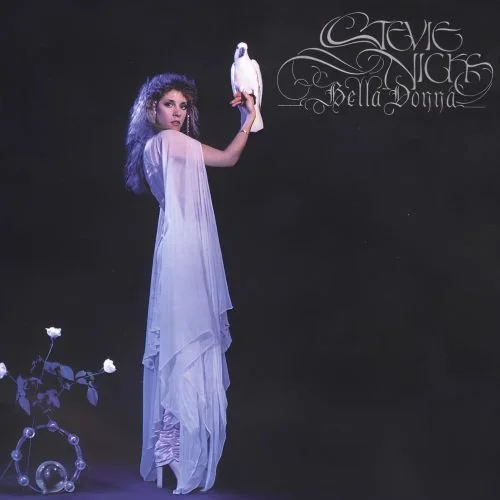
The cover of “Bella Donna,” Stevie Nicks’s first solo album, shows the artist looking slender and wide-eyed, wearing a white gown, a gold bracelet, and a pair of ruched, knee-high platform boots. One arm is bent at an improbable angle; a sizable cockatoo sits on her hand. Behind her, next to a small crystal ball, is a tambourine threaded with three long-stemmed white roses. Nicks did not invent this storefront-psychic aesthetic—it is indebted, in varying degrees, to Hans Christian Andersen’s Thumbelina, de Troyes’s Guinevere, and Cher—but, beginning in the mid-nineteen-seventies, she came to embody it. The image was girlish and delicate, yet inscrutable, as if Nicks were suggesting that the world might not know everything she’s capable of.

This intimation is newly germane: a vague but feminine mysticism is in. Lorde, Azealia Banks, FKA Twigs, CHVRCHES, Grimes, and Beyoncé have all incorporated bits of pagan-influenced iconography into their music videos and performances. Young women are now embracing benign occult representations, reclaiming the rites and ceremonies that women were once chastised (or worse) for performing. On runways, on the streets, and in thriving Etsy shops, you can find an assortment of cloaks, crescent-moon pendants, flared chiffon skirts, and the occasional jewelled headdress.

While Nicks’s sartorial choices have been widely mimicked, it’s rare to hear echoes of her magnanimity in modern pop songs, which are frequently defensive and embattled, preaching self-sufficiency at any cost. It’s difficult to imagine Nicks singing a lyric like “Middle fingers up, put them hands high / Wave it in his face, tell him, boy, bye,” as Beyoncé does in “Sorry,” a song from her newest album, “Lemonade.” Nicks’s default response to betrayal is more introspective than aggressive. Her music has long been considered a balm for certain stubborn strains of heartache; her songs are unsparing regarding the brutality of loss, yet they are buoyed by a kind of subtle optimism. It’s as if, by the time Nicks got around to singing about something, she already knew that she would survive it.

This month, “Bella Donna,” from 1981, and Nicks’s second solo album, “The Wild Heart,” from 1983, are being reissued. Nicks was thirty-three when “Bella Donna” was released. Though its cover might not suggest an excess of reason, in its songs she is a sagacious and measured presence. Her acknowledgment of the heart’s capriciousness is gentle, if not grandmotherly. There’s surely no kinder summation of love’s petulance than the chorus of “Think About It,” a jangling folk song about taking a breath before hurling yourself off a metaphorical cliff. “And the heart says, ‘Danger!’ ” Nicks sings. She pauses briefly. “And the heart says, ‘Whatever.’ ” For anyone busy self-flagellating over an error in judgment, this can feel like a rope ladder thrown from above—an invitation to scramble up and out of despair. It is generous and knowing, and offers a clear-eyed conclusion: some things can’t be helped.

In 2012, Tavi Gevinson, the young founder of Rookie, an online magazine concerned chiefly with the complexities of teen-age girlhood, ended a TEDX talk with some blunt advice: “Just be Stevie Nicks. That’s all you have to do.” What does it mean to be Stevie Nicks? To understand loss and longing as being merely the cost of doing business? To acknowledge the bottomless nature of certain aches, yet to know, in some instinctive way, that you’ll keep going? Nicks evokes Byron, in spirit and in certitude: “The heart will break, but broken live on.”

Nicks was born in 1948, in Phoenix. Her paternal grandfather, A. J. Nicks, Sr., was a struggling country musician, and he taught Nicks how to sing when she was four years old. She was given an acoustic guitar for her sixteenth birthday, and immediately wrote a song called “I’ve Loved and I’ve Lost and I’m Sad but Not Blue.” The title is a surprisingly succinct encapsulation of Nicks’s lyrical alchemy: a combination of acceptance (I am hurting) and perspective (I will not hurt forever).

In 1966, when Nicks was in her senior year of high school and living in Atherton, California—her father, an executive at a meatpacking company, had been relocated there—she met the guitarist Lindsey Buckingham at a party. He was sitting cross-legged on the floor—bearded, curly-haired, and strumming the Mamas and the Papas’ “California Dreamin’.” Uninvited, she joined him in harmony. (“How brazen!” she later said.) Buckingham asked Nicks to join his band, Fritz. By 1971, the two were romantically involved. They eventually took off for Los Angeles, where they tried to make it as a duo, called Buckingham Nicks, releasing one album, in 1973, to very little acclaim. Not long afterward, Buckingham was asked to join Fleetwood Mac, a British blues band featuring the singer and keyboard player Christine McVie, the bassist John McVie, and the drummer Mick Fleetwood; the group was being rebooted as an American soft-rock act. Buckingham insisted that Nicks be invited, too. She ended up writing two of the band’s biggest early hits, “Landslide” and “Rhiannon.”

Extraordinary success often leads to spiritual dissolution, and Fleetwood Mac had its share of psychic turmoil. In 1975, Fleetwood divorced his wife, the model Jenny Boyd, after she had an affair with one of his former bandmates. Nicks and Buckingham broke up the following year. Around the same time, John and Christine McVie’s marriage collapsed. There was an ungodly amount of brandy and cocaine on hand to help nullify the despair. Still, in 1977, Fleetwood Mac—now five wild-eyed, newly single people—released “Rumours,” a collection of yearning songs about love and devotion. The record spent thirty-one weeks at the top of the charts, and is one of the best-selling albums in American history.

“Tusk,” which the group released two years later, was a bombastic double LP that cost a million dollars to produce. The critic Stephen Holden, in his review of the album for Rolling Stone, suggested that Nicks sounded “more than ever like a West Coast Patti Smith.” Superficially, at least, Nicks and Smith aren’t obvious analogues. Nicks is hyperfeminine, intuitive, and bohemian; Smith is androgynous, cerebral, and gritty. But both are unusually perceptive chroniclers of their time and place.

If Smith is obliged to the Lower East Side of Manhattan—and the punk scene that included the Ramones, Television, and Suicide—Nicks’s debt is to Laurel Canyon, and to the sentimental, silky-voiced artists who emerged from L.A. in the late sixties and early seventies. Some of those acts—James Taylor, the Eagles—are now considered, fairly or not, irrelevant to the Zeitgeist: too mellow, too affluent, too sexless, too white. Candles and incense and macramé plant hangers; wistful thoughts about weather. Nicks’s lyrics often worry over domestic or earthly concerns—gardens, mountains, flowers, the seasons—and how they might affect the whims of her heart. “It makes no difference at all / ’Cause I wear boots all summer long,” she sings in “Nightbird.” When compared with the dissonant and provocative music coming out of downtown New York, the California sound could seem limp. But the scene in Laurel Canyon was tumultuous. Many of its artists—including, at various times, Nicks—were wrecked by drug addiction. Nicks’s voice, a strange, quivering contralto, gives her songs unexpected weight. Its tone reminds me of the gloaming—that lambent, transitional moment between night and day.

“Bella Donna” was produced by Jimmy Iovine, a Brooklyn-born audio engineer who worked on Bruce Springsteen’s “Born to Run” and produced the Patti Smith Group’s “Easter” and Tom Petty and the Heartbreakers’ “Damn the Torpedoes.” Iovine spent time in California, but his sensibility was tougher and more plainly that of the East Coast. He later became a co-founder of Interscope Records, where he helped to establish the career of the rapper Tupac Shakur, and, for a period, he oversaw the hip-hop label Death Row Records. Iovine was aware of concerns that Nicks was too coddled and immature to make a solo record as good as the records she’d made with Fleetwood Mac. Regardless, there was romantic chemistry. “This record was our love story unfolding,” she has said.

“Bella Donna” reached No. 1 on the Billboard chart, and produced four hit singles: “Stop Draggin’ My Heart Around,” a duet with Petty; “Leather and Lace,” with Don Henley; “Edge of Seventeen”; and “After the Glitter Fades.” The last, a country song about the travails of stardom—Nicks wrote it just after she and Buckingham moved to Los Angeles, long before she had a record deal, showing either hubris or prescience—contains organ, pedal steel, and reassurances. “The dream keeps coming even when you forget to feel,” she sings.

Nicks, like most artists, culls inspiration from disparate sources. She is prone to saying things like “ ‘Edge of Seventeen’ was about Tom Petty and his wife, Jane, my uncle dying, and the assassination of John Lennon.” But her personal life—a tangle of love affairs, often with her collaborators—informs her work in explicit ways. “Heartbreak of the moment isn’t endless,” she sings, in “Think About It.” This might seem like a billowy platitude, but if you are someone who does not think that every flubbed decision is fodder for personal growth, it is comforting to hear someone assert that nearly all mistakes can be neutralized, if not conquered. If “Bella Donna” contains a single directive, it’s to love freely, love fully, and hang on”.

I do wonder whether Stevie Nicks will mark forty-five years of Bella Donna. In 2021, on its fortieth anniversary, Nicks wrote about Bella Donna and how proud she is of the songs. Uncut shared the post that she made. You can sense that Bella Donna was Nicks at her most uninhibited at that point. Even though she loved Fleetwood Mac, Nicks did need to have her own voice and album. One that was very much her own work and her voice:

Posting an excerpt of her journal on Instagram, the singer-songwriter said she teamed up with backing vocalists Lori Perry-Nicks and Sharon Celani to create the record, aspiring to be the “girl version” of Crosby, Stills and Nash and to sound nothing like Fleetwood Mac.

According to Nicks, the title track was written “about my boyfriend’s mother who was involved with a man in Chile during the coup that happened there in 1973.”

“The man she loved was banished to France,” Nicks wrote.

“Banished or imprisoned, that was the choice. The love story never really ended – but she never saw him again.

“I was so touched by this story of lost love that I wrote Bella Donna – the moment the poem and then the song was finished, I knew I had the basis for my first solo record.”

Nicks said she “never doubted for a moment” this track would be the album’s title. Bella Donna went on to top the US charts and, in Nicks’ words, “open the doors of the Rock and Roll Hall of Fame”.

“It was ours – it defined how I would feel about love forever,” she continued.

“It broke my heart and gave me the strength to fight for it. It was a fine line to walk between love and hate and passion and the girls and I loved it. We never looked back.

“I could not have been more proud of those songs or the three months it took me, the girls and [producer] Jimmy Iovine to craft it. It did not break up Fleetwood Mac. If anything, it kept us together”.

Let’s end there. On 27th July, Bella Donna turns forty-five. One of the greatest albums ever, you can still feel its beauty and brilliance. It has not aged at all. I do wonder whether Stevie Nicks will release another solo album. There are so many artists who would love to collaborate with her. Someone whose voice, especially in modern America under Donald Trump, is powerful and inspiring. In any case, We need to mark forty-five years of Bella Donna. A wonderful album that…

EVERYBODY should hear.

FEATURE: If I Ruled the World: Nas’s It Was Written at Thirty

FEATURE:


If I Ruled the World


Nas’s It Was Written at Thirty

__________

MOST artists…

are fortunate if they can release one classic or masterpiece in their career. Nas is among a select group of artists who has released several. His first was 1994’s Illmatic. That was his debut album. Many would feel pressure and expectation to make a second album as strong or better. Nas released It Was Written and blew away any doubters that he was a one-album artist or was a flash in the pan. Even though he has been involved with feuds and controversies – which might be part of Hip-Hop culture but leaves black marks on any artists who participate -, the albums he has released are phenomenal. On 2nd July, 1996, It Was Written received some mixed reviews. In years since, It Was Written has grown in reputation and seen as a hugely influential Hip-Hop album. Nas is one of very few Hip-Hop artists from the 1990s still recording and putting out great albums. His latest, 2023’s Magic, is a brilliant album. He has had dips in terms of quality and form. As It Was Written turned thirty yesterday, I want to spend some time with it now. Illmatic was defined by its rawness and underground edge. It Was Written has a more polished sound. Not that this sacrifices his bite and genius. Instead, it is a more commercial album that retains a lot of the roots and core of Illmatic and opened his music up to a wider audience. Nas embraced mafioso and gangsta themes. Mafioso Rap is a hardcore Hip-Hop subgenre founded by Kool G Rap in the late 1980s. Nas helped popularise it and make it more visible in 1996. Reaching number one on the US Billboard 200 chart, It Was Written was a massive instant success.

I am going to get to some features around Nas’s It Was Written. In 2021, Mic Cheque reflected on Nas’s second studio album. One that very much established him as a Rap great. To this day, he remains so influential. Someone that many new Hip-Hop artists look up to and idolise. It Was Written is not only one of the great Hip-Hop albums of the 1990s. It is one of the best albums ever:

On July 2, 1996, Nas released his sophomore album, It Was Written, under Columbia Records. Coming off his lauded debut, it was vital that the Queensbridge emcee got his second album right. The hip hop community wouldn’t shut up about Illmatic – still to this day. The task was to match it up and have lightning strike twice. Easier said than done, of course.

To understand It Was Written, we must first set the scene. Gangsta rap was on the decline, Death Row and Bad Boy were dominating forces, and on the periphery was the assertion of alternative pioneers (OutKast, De La Soul). It was a transitional period when it came to creativity; anyone could push the margins to new widths if they were brave enough.

Enter Nas, now a New York superstar ready to take the next leap. Illmatic was critically-acclaimed, though it only peaked at number 12 on the charts and took two years to be certified Gold. Now managed by Steve Stoute, the ultimate mission became turning Nas into a commercial force. Also managed by Stoute were production duo Trackmasters (Poke & Tone), whom Stoute convinced Nas to grant dibs to produce a bulk of the album. Known for their knack with crossover records, there was belief that this team could bring Nas the sort of success that Large Professor, Pete Rock and DJ Premier couldn’t.

It was for these very tactics that the public were not receptive at first. Though most critics favoured the record, fans noticed a departure from the predecessor’s dusty, jazz production – enough to call Nas a sellout, going pop, or whatever equivalent phrase of the nature.

But commercially, the album prevailed. It Was Written debuted at number one, selling 268,000 copies first-week and remains Nas’ best-selling record to date. The first two singles not only charted fairly in the States, but made their marks worldwide, particularly across Europe.

In retrospect, the notion that It Was Written was a ‘sellout’ record was beyond a stretch. Only three of its fourteen tracks carry a crossover appeal, which all still maintain the lyrical dexterity and flair Nas became known for.

Twenty-five years later, it is common knowledge that Nas dropped back-to-back classics, and just like his debut impacted and influenced hip hop massively. From Nasty Nas to Nas Escobar, It Was Written took the Queensbridge block tales and expanded the landscape to represent a matured pro on top of the game; both the rap game and the crack game.

It Was Written was instrumental in pioneering mafioso rap, the tougher cousin of gangsta rap where the artist narrates the life of a head honcho. Organised crime and cartel fantasies were the soundtrack for this suave, polished branch that came across more articulate and sophisticated. Nas set this benchmark with It Was Written, a rapper only with a pen like his could unlock. The songs are trapped in the purgatory of Nas’ dynamics; the sound feels Hollywood, but the realities around him are still entrenched in street life. That is what It Was Written does so well, managing to find a faultless balance in the new and old, which is ultimately what brought Nas new fans while keeping the existing.

If Illmatic was like a film, It Was Written is more like a play, acting out scenes of gang violence, betrayal and retaliation, kingpin moves and environmental observations. Just like how Illmatic paints pictures of local Queensbridge life, It Was Written maps out the mobster mentalities in high definition. Which is why it can be said that Nas’ lyricism is on par or even better than on Illmatic.

Over the years, the hip hop community’s staunch stance towards It Was Written has gradually dwindled. Long misunderstood, it is now rightly recognised as Nas’ second back-to-back classic where he elevated his career while maintaining his penmanship. It Was Written now comfortably sits high up as runner-up in Nas’ album rankings, becoming far from a one-album wonder that many claim he is when reflecting on his discography. Though if you ask Lupe Fiasco, Royce da 5’9″ or Schoolboy Q, It Was Written is a better album than Illmatic.

Its role in pioneering mafioso rap can only be challenged by Raekwon’s Only Built 4 Cuban Linx or Jay-Z’s Reasonable Doubt. Rarely will you find an album from this era that did not so effortlessly merge the commercial with the ground roots and maintain artistic authenticity.

If Trackmasters were to produce the entire album, history could have etched a different legacy. What It Was Written ensures it must do is balance the spaghetti-western sounds of “Affirmative Action” and “Nas Is Coming” with your traditional boom-bap flavours. Havoc, DJ Premier, Live Squad and L.E.S. have vital contributions that bring the ‘authentic’ Nas back to our ears.

To this day, the influence of It Was Written rings in hip hop. Would Pooh Shiesty and Lil Durk’s 2020-21 hit “Back in Blood” exist without “Take It in Blood”? Or the countless personification of a gun that have been laid since “I Gave You Power”? How ahead of the curve were Nas and Dr. Dre when it came to ensuring both coasts could co-exist and thrive simultaneously?

It broke the lingering sophomore curse that was weighing on Nas’ shoulders. No longer was he the shy Queensbridge kid on the block. His confident across the album was fully warranted, and listening back only solidifies just how exceptionally gifted Nasir Jones is”.

When it comes to Hip-Hop and Rap, if an artist comes in with this raw sound or a distinct vibe and then they become more polished or commercial, they are seen as selling out. Even if It Was Written was a commercial hit, it was widely panned by critics. Many thought Nas had betrayed his roots or was going for fame rather than being authentic. Luckily, the discourse has changed through the years. It is rightly seen as a seismic album and one that took Nas to new heights. A restless young master who was not going to repeat himself.  In another twenty-fifth anniversary feature, this one from The Ringer, they looked at the critics backlash. A panned album now a classic. “But what did the discourse at the time get right—and what did it miss?”:

Rolling Stone gave the album two stars, criticizing Nas for trafficking in rap that prizes “authenticity, not articulation” and calling the lead single a “crossover con job.” However cynically you choose to read the rollout, it worked. While Illmatic hit no. 12 on the Billboard 200 and took nearly two years to be certified gold, It Was Written spent four weeks at no. 1 and was double platinum just a couple of months after its release.

Since that release 25 years ago this month, It Was Written’s reputation has been rehabilitated, though these original complaints frame the discussion, even in its most impassioned defenses. This is unavoidable: Its poppiest songs are without exception its worst, and—especially on the A side, when they appear as tracks 3, 5, and 7—they creep in like intrusive thoughts, refusing the record any of the rhythm that its better moments deserve. What scans differently today is that pulp-crime undercurrent. It can be overused (such as in the first two-thirds of “Street Dreams”), but with some remove, whatever credibility-straining maneuvers Nas pulls just make It Was Written’s songs more desperate, more claustrophobic, more immediate. It brings to mind a question Nas asks on one of the album’s best—and most undeniably menacing—songs: “Why shoot the breeze about it / When you could be about it?”

There are points on It Was Written that are as dazzlingly written and delivered as anything in Nas’s catalog. The shootout skit that ends “Street Dreams” gives way to “I Gave You Power,” the Premier-helmed track on which Nas personifies a gun. It is a serviceable concept that could easily become overwrought, but by the beginning of its madcap third verse, the song has earned a wrenching pathos: You hold your breath when Nas raps about the gun owner’s hand reaching into the hiding place where it lives; you feel that owner’s palm trembling as he grips it. On the opening song, “The Message,” Nas is as dense and virtuosic as ever: see the way Nas sets up, from the first line of the second verse, the rhyme scheme that he’ll eventually drill down on, briefly abandon, and eventually pay off with the word “Datsun,” all while telling a breathless story about brief hospital stays and unsolvable shootings.

And not all of the album’s polish is bad. It is notable that, on virtually all of the solo songs (and on its superb posse cut), the best verse comes last—evidence of a careful approach to the songwriting, and a reliable way to maintain some forward motion even when the dregs fuck up the flow. The exception is “Take It in Blood,” but this does not mean that song loses steam toward its end. Instead, like “The Message,” it’s a maze of staggering detail and pinpoint rhymes, impossible to find your way into or out of. It invites the kind of rewinds that wear grooves into your brain. Combine this subtle elegance with the album’s B-side that, one song aside, is hollowed-out and venomous—Mobb Deep’s Havoc helms “The Set Up” and “Live Nigga Rap”; “Suspect” is a dead-eyed threat—and It Was Written seems like a monster, a deeper dive into the horrors of Nas’s youth formatted for the big screen.

But you cannot simply write off that one song on the B-side: “Black Girl Lost,” which features Jodeci’s JoJo, is adult-contemporary radio’s version of ’90s R&B-rap hybrids, silky smooth but mawkish in the worst way. The track nearly derails the album just as it seems to be recovering from that stop-start sputter of an opening (and some would later openly mock Nas for having made it at all).

Those earlier pop forays are not as disastrous as “Black Girl Lost,” but they come close. Writing for the short-lived but massively influential magazine Ego Trip, Elliott Wilson described the Trackmasters’ beat for “Watch Dem Niggas” as having an “N.O. Joe–like synthesized laziness.” At first read, this scans as a mid-’90s New Yorker’s flat rejection of what was happening in the South, but to listen to “Watch Dem” is to hear, unmistakably, a photocopy of a photocopy of the style Joe turned out so reliably. And then there’s the almost comically cheesy, Dr. Dre–produced “Nas Is Coming,” a heralded union of the West and East Coasts that evokes the very worst music made on each.

What tantalizes on It Was Written are the moments of near-perfect coalescence that hint at what a consistently focused Nas over the Trackmasters’ best sheen might have unlocked in each other. All that labyrinthine writing on “The Message,” for example, is laid over that Sting sample; “If I Ruled the World (Imagine That)” marries Whodini to The Score in a crystal-clear mix for radio. The most curious example of this, though, comes in the second verse of “Watch Dem,” when Nas’s animated delivery embodies the merger while his lyrics literalize it. The song is otherwise pedestrian, but here he raps about doing 90 on the freeway, drunk, with 10 grand in cash and a gun beside him. A “death wish,” he says. But when he checks his watch—a Movado, he notes—he sees that it’s 7 o’clock, “the God hour,” the Five Percenter ideology bleeding through the way it would for a native New Yorker in this era. The implicit argument is that “Street Dreams” and “Suspect” do not come from different neighborhoods, but the same one—one that Nas had been documenting from his teenage years on. End of article”.

There have not been that many thirtieth anniversary features around It Was Written. Albumism looked back at a classic. Some people who grew up with the album maybe had a negative reaction or felt like Nas had slumped on his second albums. It has taken years to see that they were hasty, and It Was Written is a brilliant album. It deserves more love and respect than perhaps it gets:

For his sophomore effort, Nas reunited with producer Samuel Barnes who had previously gone by the name Red Hot Lover Tone and accompanied Nas and Chubb Rock as a rapper on MC Serch’s 1992 single “Back To The Grill.” Now partnered with Jean-Claude Olivier (Poke) to collectively form the production duo the Trackmasters, Poke & Tone orchestrated the majority of It Was Written’s production.

Starting with the opening song, “The Message,” Nas puts all of his contemporaries on notice by proving to have the most lethal pen in the industry, rhyming, “They let me let y'all ni**as know one thing / there's one life, one love, so there can only be one king / the highlights of living, Vegas style roll dice in linen / Antera spinning on millenniums / twenty G bets I'm winning them / threats I'm sending them, Lex with TV sets the minimum, ill sex adrenaline / party with villains, a case of Demi-Sec to chase the Henny / wet any clique, with the semi TEC who want it.”

The album’s lead single “If I Ruled The World (Imagine That)” is an example of the album’s ambition. Nas taps his Columbia Records labelmate Lauryn Hill to sing one of the most memorable choruses of the era. Still enjoying the success of the FugeesThe Score, which was released a few months earlier in February 1996, Hill helped the song chart on Billboard’s Hot 100, Hot R&B/Hip-Hop Singles & Tracks, and Hot Rap Tracks. “If I Ruled The World” also secured Nas his very first GRAMMY nomination, in the category of Best Rap Solo Performance.

It Was Written’s second single, “Street Dreams,” followed the success of “If I Ruled The World” soaring higher on Billboard’s Hot 100 (#22) and earning its own Gold certification. A great example of Nas’ lyrical depth, he expands upon the dark but lucid narratives of eyewitness accounts inside the Queensbridge Housing Projects to script his novella of a hustler’s ambition. With the lines, “With the glaze in my eye, that we find when we crave / dollars and cents, a fugitive with two attempts / Jakes had no trace of the face, now they drew a print / though I'm innocent, ‘til proven guilty / I'ma try to get filthy, purchase a club and start up realty / for real G, I'ma fulfill my dream / if I conceal my scheme, then precisely I'll build my cream,” Nas paints a picture as vivid as any chapter from a Donald Goins novel”.

I am a day late celebrating thirty years of It Was Written. It is a phenomenal Hip-Hop album and one that is always compared unfavourably to Illmatic. The same with his subsequent work. We should see It Was Written as a separate album. One that should not be compared to his debut. In its own right, It Was Written is phenomenal. Thirty years later and the album is still inspiring people. For that reason alone, we have to say that it is…

WORTHY of a thirtieth anniversary salute.

FEATURE: Spotlight: Revisited: Nia Smith

FEATURE:


Spotlight: Revisited

PHOTO CREDIUT: Hannah Cosgrove for NOTION


Nia Smith

__________

THIS feature…

finds me revisiting the absolutely wonderful and unique Nia Smith. I spotlighted her in 2024, but she has released a brilliant sophomore E.P., Payback Is a Dog. Prior to getting to some interviews, last month, news of her incredible E.P. was shared. This uDiscover Music article provides more details:

High” centers on leaving behind people, relationships, jobs, and interests that once felt defining. Smith said the song is “about outgrowing things that once made you feel on top of the world,” adding that it is “emotional and soft while also being dreamy and reflective.” The track includes the lyric “like jeans that are fading, lost and frayed, it’s nothing worth saving.”

Payback Is A Dog follows Smith’s debut EP, Give Up The Fear, which arrived last year. The new project is described as a narrative time capsule, with each song marking a make-or-break point in a relationship, whether romantic, familial, or rooted in friendship. Smith also said she recently took time away in Jamaica after releasing her first collection. “I’ve just been living life,” she said. “I think the whole break was just me living life and just gaining life experience to talk about.”

The announcement follows a run of live dates and media attention for the Brixton artist, who signed to Polydor in 2023 and later to Def Jam 0207. Smith attended the Brit School and ELAM, wrote songs as a teenager, and found an early audience on TikTok with cover songs. Smith has performed on Later… With Jools Holland and appeared at All Points East, City Splash, and Glastonbury through BBC Introducing. She was nominated for Rising Star at the Ivor Novello Awards this year and previously received coverage from Billboard, NME, and more. Smith has also performed at Mahalia Presents at the Jazz Cafe, supported Pip Millett at Somerset House, and joined Jordan Rakei and Elmiene on US, UK, and EU tour dates”.

I want to bring in some fairly recent chats with this London-based artist. Before getting to some 2026 interviews, I want to head back to last year. NOTION spent some time with Nia Smith. This “Popcaan cosign and a brief hiatus in the Caribbean, Nia Smith is back and wants to be at the front of everybody's mind. Here, she talks with effortless cool about 'Personal', being a proud Londoner, and most importantly, what's next”:

Her musical journey began, slightly unexpectantly, with a stint playing the trombone, “I learnt it in primary school. It was definitely bigger than me when I was playing it!” From there, she began to explore piano and guitar, both of which she taught herself and still occasionally “dabbles with” to aid her songwriting. Nia, like many other notable figures in London’s music scene, such as Little Simz and Raye, attended the eponymous BRIT school. She studied on their musical theatre pathway, “it isn’t something I want to pursue now,” Nia says, but it remains a formative experience for the young star. “It was amazing to be around like-minded people from such an early age. It really built that hunger within me.”

What is distinct about Nia’s music is its pronounced London-ness. “Born and bred” in Brixton, she’s a proud resident of the capital. “The area has changed over the years, but I’ve still got my hair shop and my Caribbean food. When we get a Gail’s, it’s over.”  Both her style and lyricism ooze the complex nature of the metropolis and reflect a fine mix between coldness and vibrance

Nia’s rise to stardom originated from the TikTok videos she posted during the pandemic, singing covers of ‘Ex-Factor’ by Lauryn Hill, ‘Supermodel’ by SZA and ‘Wait a Minute!’ by Willow Smith. Like others who built and then grew beyond the realms of social media (PinkPantheress being a prime example), Nia has handled her newfound popularity with grace and ease. For the previous pop generation, who were notably non-technological habituals, the backlash of heightened exposure was something many grappled with and consequently found various vices to handle. But for Gen Z, fame does not seem to be such an alien or scary concept. They seem to handle it responsibly and with intention, most likely due to growing up experiencing a degree of exposure to the wider world through social media.

Though Nia feels unburdened by celebrity, she says it can be difficult to find time for herself, “I find it hard to take breaks. You can burn out really quickly in London and in this industry. You do a show, you do a shoot, then you go to your friends, then you do the same thing, and you are just never inside. You are always giving up part of yourself.”

So, as the British summer cooled and festival season concluded, the chaos of the past year caught up with Nia. She finally found a moment to take some rest from her busy schedule and, sometimes draining, London lifestyle. “I took some time to centre myself. I flew solo to Jamaica and went to Antigua with some family.” And if Nia was only able to listen to one album whilst on the island, she’s picking CHRONIXX’s 2017 reggae album, Chronology.

During her month-long break in Jamaica, Nia withdrew from work completely. “I told people not to shout me. I went totally MIA. It was honestly so nice to just hold a bit of me, for me.”

This period away, reconnecting with her family and exploring Jamaica, clarified her vision for the next steps of her music career, “To begin with, I was just making music that sounded good and felt like a vibe at the time.” Thinking about her next project, Nia wants to portray more of the person she is in real life. “Before, I wasn’t intentional about what I wanted.”

Now, with two feet grounded back in London, Nia is determined: “I know what I want to say and how I want to say it,” and she’s realised who she wants to collaborate with to take her sound to the next level, “I’m really big on having women around. I feel my most authentic self when I am working with women.”

“I am really interested in creativity outside of music,” reveals Nia. In her spare time, the singer-songwriter has been playing with other mediums. “I started painting for a time, but I found it to be too much like music in the fact that a painting, like a song, is never finished. You can just keep adding and adding.” Her search for an outlet that is separate from her musical artistry has landed on pottery in recent times, where she regularly attends a studio in south London.

So, after a stellar debut EP and great acclaim from the music industry, what is next for Nia Smith? “I haven’t dropped any music in a year. It’s boring, boring, boring.”  And although her lips are pursed on any of the major details of a new body of work, she hints that listeners can expect a “lyrically stronger” and more vulnerable portfolio that travels through genres she has not previously incorporated in her music to such a degree, “They are genres in this body that I haven’t properly explored in my work before, not to say I have shied away from them per se. This next release has still got that reggae bassline and drums, but there’s more R&B, soul, and all that good stuff meshed together”.

In March, DIY chatted with one of south London’s most essential and notable voices. This incredible talent who deserves to be wider known, you really do need to go and follow Nia Smith. Someone who is guaranteed to be making music for many years to come. A debut album surely on her mind:

What was the first gig you ever went to? 
Dave at Brixton Academy with my friend - but also I bumped into my brother there! It was in 2019 - ‘Psychodrama’ era - and it was one of J Hus’ first gigs back, not gonna lie it was a legendary gig. ‘No Words’ and ‘Samantha’ were heaters, god, what a time!

What’s the story behind your first instrument? 
My first instrument was a trombone - I wanted to play the violin but everyone else did too, so I got the trombone. This was in primary school; I was a tiny tiny girl and it was bigger than me, I played it for about a year and I wasn’t bad to be honest.

The title of your new EP, ‘Payback is a dog’, is hugely evocative - not to mention a bit of a mantra! Do you believe in karma? Going into 2026, do you have any resolutions or boundaries you’re hoping to uphold? 
I don’t believe in karma… am I a walking contradiction? I don’t know. I believe God will do what he will do and that’s none of my business.

And that’s a good question… my 2026 mantra is ‘put yourself first and keep your nervous system calm and in check’.

What’s your ultimate road trip soundtrack? 
‘adore you’ by Fred Again.. and Obongjayar - it’s a song that means a lot to me, it’s good vibrations.

Finally, DIY is coming round for dinner - what are you making? 
Ooooh, I’ll make rasta pasta – yummmmy
”.

I do want to move to DORK and their interview with Nia Smith from last month. There was a lot of interest around Payback Is a Dog. One of the finest E.P.s of this year, I do wonder where Smith goes next. There will be some live dates soon, but I am curious what her next musical step will be. If you have not listened to Payback Is a Dog, then go and listen to it now, as it will make a big impression. I guarantee:

'Payback Is A Dog' is the sound of an artist blossoming into exactly who they want to be. The songs here are confident and emotionally direct, the product of Nia becoming more perceptive as a writer and capable of harnessing her words to capture emotions from both her own experiences and those she observes in others. "I had a lot of friends around me who were going through situations, whether it was relationship issues or just life. People who were changing cities and outgrowing things," she says of some of the stories that are told on the EP. "I wanted a project that could speak to people in that way. All of those feelings are very universal and real. I wanted a project where people could hear themselves and relate."

That relatability comes from Nia's beautifully realised observations on love, relationships and the turmoil that we can go through. "Vibey songs are always fun to make, but I think it's so much nicer with emotional songs to really dig in deep and think about how you want to paint the picture," she says. 'High' is a song where the little details and clever observations in Nia's lyricism elevate it to a new level. Her voice is immaculate and strong as it soars and swoops, but the real heart-stopping power lies in the words as she delivers a hugely evocative metaphor: a stormy relationship compared to frayed jeans that are only just hanging on. "For me, as a short person, my jeans always scrape along the floor and get frayed quite quickly," she laughs. "Sometimes it's taste, though, and you want those frayed jeans. It's evoking a picture that can be taken many ways. You can work on it and stay with the frayed jeans, or you can leave and get a new pair of jeans. Both are fine and totally OK. I wanted to give both sides of the coin with that song."

There's an emotional distinctness and depth of feeling to this EP that highlights the freedom and room to grow and develop that Nia has enjoyed as the music industry has begun to move beyond looking for instant wins and to recognise the benefits of letting immensely talented artists develop their voices and how to express their art. "I feel like I've been waiting for this time," says Nia excitedly. "It's a great time for British voices. When I first started, there was a lot of teen success like Billie Eilish, and I thought oh if I don't get that, it's not working but now I see people like Raye and Olivia Dean, and that gives me so much comfort that it's OK if it doesn't happen straight away, as your time will always come."

With over a year between her previous EP and this release, Nia has taken her time to make 'Payback Is A Dog' her most fully realised and impressive work, but is already moving on to what's next. "I'm definitely not in the same place I was when I made this project," she says intriguingly. "I'm in a totally different headspace. I'm even working on my next era now."

"I'm not afraid of using my voice," says Nia as she hints towards what comes next. "Sometimes I've shied away from using that big vocal moment. I didn't use it that much on 'Payback Is A Dog', but I am definitely doing it on the next." The belting and the vocal dynamics might be coming next, but for now, 'Payback Is A Dog' has all the emotional power and resonance needed to make it a striking step forward for one of the UK's supreme new talents”.

On an E.P. that “alchemises life’s lessons with confidence and poise”, this is a big moment for Nia Smith. NME interviewed one of our greatest young artists. I have not seen Nia Smith live, though this is something that I need to do. I have been a fan of her music for a while, so I would love to see her on the stage:

Authenticity – in relationships, songwriting, life – is a priority for Smith. However, as a highly private person, the intimacy of the songwriting process can sometimes feel a bit uncomfortable. “I don’t really like to air my life, [or] everyone’s business,” she shares. “It’s why I pivoted with ‘Tough’. I wanted to write about men opening up [because] I’m not going to write about me, I’m not going to write about my friend – I’m going to write about a more universal situation that I can also relate to and that I visually see in my life.”

“I don’t really like to air my life, [or] everyone’s business […] I’m going to write about a more universal situation that I can also relate to”

Even though Smith tries her best to err towards a somewhat mysterious ambiguity with her lyrics, as a collection, ‘Payback Is A Dog’ feels far more reflective than ‘Give Up The Fear’, and marks a new era where cycles close, and new possibilities unfurl in the space left in their wake. In the EP, she recounts impactful changes in her life, but emphasises that while the songs do speak of a friendship break-up, a relationship breakdown, and changing cities, they call more to “tying up the knots of the seven stages of grief” and “all the feelings” that come “before, after, [and] in-between”.

A sample of the Stylistics’ ‘Payback Is A Dog’ introduces the EP with rage, but, by the project’s end, Smith wants listeners to be “feeling a little bit more hopeful”. ‘Limit’, incorporating a sample of James Blake’s cover of Feist’s ‘Limit To Your Love’, captures the arc of rediscovering your individual power with a pep in your step after a time of second-guessing your emotions.

Smith is also stretching herself sonically while trying to put positive twists to challenging times. ‘Stuntin’ and ‘Hope In Us’ are bouncy and carefree, despite the palpable irritation (“Lately I’ve been feeling every kind of way since you’ve been moving mad”, she quips in the latter); meanwhile, ‘Get My Get Back’ switches the code to slow jam R&B packed with ’90s tropes and accusations of cheating.

Despite the tone, resentment is absent. “I don’t want to be in a place where I’m making really angry, negative music,” Smith says, and she’s taking measures to make sure she’s processing her emotions through other means to avoid reimmersing herself in bad feelings every time she performs. “I want to make sure that I’m pouring it out in many ways, whether it’s through therapy or through friends, so as not to make that song like ‘I hate this person’.”

Does Smith believe in what goes around comes around? She ponders the question: “I don’t know if I believe in karma. I don’t necessarily believe in, no pun intended, get my get back. I believe God will reveal all, so I don’t really need to fight the battle when he’ll do it for me.”

In the past year, among the whirlwind of activity around her, she’s grown both as an artist and as a person, and now finds herself “not in the same place I was when I made this music”.  Now, more than ever, she is finding security and a sense of home inside herself first and foremost, before the wheel starts turning again. And turn it will: “I’m going to LA after [the release of the EP] for three weeks,” she shares. “No rest for the wicked!”.

I am going to wrap things up. Make sure you follow Nia Smith and check out Payback Is a Dog. This is a truly phenomenal artist who so many more people should hear. Smith has a large fanbase, though her music is worthy or universal acclaim. She is getting there at the moment and there is this growing fanbase in the U.S. I hope that world domination is very close for Nia Smith. She well and truly is…

A music sensation.

__________

Follow Nia Smith

FEATURE: New Dawn Fades: Remembering Ian Curtis at Seventy

FEATURE:


New Dawn Fades

IN THIS PHOTO: Ian Curtis at the Moonlight Club, London in 1980/PHOTO CREDIT: Peter Anderson


Remembering Ian Curtis at Seventy

__________

ONE of the most heartbreaking…

IN THIS PHOTO: Joy Division in 1980

losses in music history was when Ian Curtis died in 1980. He was only twenty-three. The incredible lead of Joy Division, he was one of the most distinctive voices and mesmeric leads ever. An accomplished songwriter and someone who seemed to inhabit the songs and felt every word, he was this rare talent that faced so many struggles and barriers. He died by suicide after struggling with severe epilepsy and depression. It must have been such a curse and burden for someone so blessed. Wanting to perform and write music but having to live with these debilitating illnesses, I did want to remember him as his seventieth birthday is on 15th July. He should be remembered as someone who led a group who have influenced artists like U2, Bloc Party and The Cure. This year, Ian Curtis was posthumously inducted into the Rock and Roll Hall of Fame as a member of Joy Division after two previous nominations. It is a fitting acknowledgment of his legacy and importance. I want to explore that more. However, this interesting blog piece about this great has a lot of personal meaning and depth. Those who were fans of Joy Division loved Ian Curtis. He had such a devoted following. Left shattered when he died in 1980:

I did not discover the music of Joy Division until a few years after the death of their lead singer, Ian Curtis, but it was love at first sight.  Songs of doomed romance like ‘Love will tear us apart’ expressed what most troubled teenagers were feeling.  Never was the gloom and despair and solipsism of youth better conveyed.  The poster for the album Unknown Pleasures decorated the door into the bedroom of my first girlfriend, and when we split up after a year and a day, I turned to Joy Division for consolation.

Ian Curtis grew up in Macclesfield, Cheshire, where he distinguished himself at school by his poems, if not by his hard work.  He won a scholarship to secondary school but left at age of 16 and did a series of administrative jobs.  These included working as an Assistance Disablement Resettlement Officer, where he was responsible for trying to help disabled people find work, in an era which was even less open to disability employment than today.

Ian Curtis married at age 19 and became a father at age 22.  By then, he had already met Bernard Sumner and Peter Hook at a Sex Pistols gig.  The resulting band was first known as Warsaw, then as Joy Division (after a novel which described the women whom Nazis forced to prostitute themselves at the concentration camps).  The band played their first gig as Joy Division in January 1978, and were soon signed to Tony Wilson’s Factory Records.  With their spare, brooding sound, their black clothes, and Curtis’ frenzied dancing, they became a post-punk sensation, and were to inspire most of the alternative pop music which came after them.  Curtis was both singer and lyricist, his dark songs drawing on his love of writers and musicians including William Burroughs, JG Ballard and David Bowie.

The manic dancing owed something to Curtis’ experience of epilepsy.  He was diagnosed in January 1979, and his symptoms were never successfully controlled by medication.  As his disease worsened, he would sometimes have siezures on stage, possibly triggered by the strobe lighting.  In his recent memoir, Joy Division bass player Peter Hook remembers “looking at Ian wondering if, or when, it was going to happen”.  He records that Curtis’ onstage siezures left “some of the audience laughing, some scared, some cheering”.

Curtis’ song, “She’s lost control”, describes the experience of a seizure:

Confusion in her eyes that says it all
She’s lost control
And she’s clinging to the nearest passer by
She’s lost control
And she gave away the secrets of her past
And said I’ve lost control again
And of a voice that told her when and where to act
She said I’ve lost control again
And she turned around and took me by the hand and said
I’ve lost control again
And how I’ll never know just why or understand
She said I’ve lost control again
And she screamed out kicking on her side and said
I’ve lost control again
And seized up on the floor, I thought she’d died
She said I’ve lost control again, she’s lost control
Well I had to ‘phone her friend to state my case
And say she’s lost control again
And she showed up all the errors and mistakes
And said I’ve lost control again
And she expressed herself in many different ways
Until she lost control again
And walked upon the edge of no escape
And laughed I’ve lost control again
She’s lost control again, she’s lost control

Ian Curtis’ home life was increasingly difficult, particularly after he began an affair with a Belgian journalist, Annik Honoré, and left his wife and child.  His siezures were getting worse.  The band were under great pressure after the success of their first album, Unknown Pleasures.  Joy Division were due to tour America later in the year.  All of them still had “day jobs”, but were writing, recording and performing on evenings and weekends.    During an intense period of work, they recorded their second album, Closer, in April 1980.

The following month, Curtis tried to kill himself with a kitchen knife.  Neither his fellow bandmates nor his record label were seemingly able to give him the support or understanding he needed, even after a second suicide attempt by overdose.  But equally, Curtis was an introspective and secretive person who did not share his feelings easily or ask for help.  Tony Wilson said later “I think all of us made the mistake of not thinking his suicide was going to happen… We all completely underestimated the danger.  We didn’t take it seriously.  That’s how stupid we were.”   Another band member said “this sounds awful but it was only after Ian died that we sat down and listened to the lyrics.”

In the end, depressed, exhausted and under great personal strain because of the break-up of his marriage, Ian Curtis hung himself using a washing line in the kitchen of the house he had shared with his wife, on May 18, 1980.  His death helped propel him into legendary status, just as with the suicide of Kurt Cobain, or the  tragedies of Jim Morrison, Marc Bolan or Jimi Hendrix.  Perhaps the Romantic poets Keats and Shelley would be other apt comparisons for this tormented, disabled poet whose lyrics captured the ennui and angst not just of his generation, but of many since”.

In 2014, to mark Ian Curtis’s fifty-eighth birthday, Post-Punk.com transcribed a “BBC Blackburn interview, which is one of the few recordings of Ian being interviewed.  To the surprise of many, when Ian discusses shopping for records, one band that comes to mind for him happens to be Bauhaus, which he seemingly thought were from London”:

WHAT SORT OF RELATIONSHIP DO YOU HAVE WITH OTHER MANCHESTER BANDS?

We tend to be pretty isolated now really…apart from the Factory groups. We have a lot to do with the other groups on Factory. We tend to play a lot of gigs with them and … there’s other things like erm the Durutti Column LP – the sandpaper sleeve –  we stuck that on. So everyone there, with each other, and groups they got booked with, groups like the Buzzcocks, that we knew when we started really. You know when we sort of see them, we talk to them, but it’s not very often. We’d like to, you know, see a lot more of other Manchester groups. Any other groups in general.

WHAT DO YOU THINK OF THE STATE OF NEW WAVE?

Don’t know. I think it’s, a lot of it tends to have lost its edge really. There’s quite a few new groups that I’ve heard.. odd records. Record or have seen maybe such as, eh, I like, I think it’s mostly old Factory groups really, I like the groups on Factory; A Certain Ratio and Section 25. I tend not to listen, when I’m listening to records, I don’t listen to much new wave stuff, i tend to listen to the stuff I used to listen to a few years back but sort of odd singles. I know someobody who works in a record shop where I live and I’ll go in there and he’ll play me “have you heard this single?” singles by er the group called The Tights,  so an obscure thing … and a group called, I think, er Bauhaus, a london group, that’s one single. There’s no one I completely like that I can say “well I’ve got all this person’s records. i think he’s great” or “this group’s records” it’s just, again, odd things

WHAT IS YOUR SORT OF RELATIONSHIP WITH FACTORY RECORDS

It’s very good sort of friends everyone knows each other it’s all 50:50. Everything’s split.

DOESN’T IT IT SEEM A BIT INSULAR SORT OF BEING IN THE FACTORY SORT OF SET UP?

Don’t know.  I suppose to somebody looking at it from the outside i suppose it is really
I mean you’re not pressurised into having to sign … like you know get a normal record company – they’re always looking for the next group for the next big thing … you know … to bring the record sales in and for them to promote and everything…but Factory just sign who they want to, put records by who they want to out, package it how they want to, you know, how they like doing it. It’s just run like that. You might get sort of a spurt of 3 singles out – you might not see anything for the next 6 months. You know. I like the relationship.

YOU HAVE A COUPLE OF TRACKS ON THE THIRD FAST EARCOM, WAS IT? OR IS IT THE SECOND FAST EARCOM?

Yeah. It’s the second one, yeah.

HOW DID YOU GET INVOLVED WITH FAST? AN EDINBURGH COMPANY?

Yeah, it was when we started playing; we played a few dates with The RezillosBob Last was their manager at the time and he talked then about setting up a record label. And he wanted us to do a single for them. But due to Factory coming along and other things – he did things with Gang of 4 and The Human League first and got tied in in a sort of management way with The Human League – I think he manages another one – it never came about. When we were doing the album we had quite a few tracks left over; we recorded 16 in all and just cut 10 and our manager, Rob Gretton, had talked to him about certain things and we’d always sort of kept in touch. He mentioned his idea for Earcom and we just offered him the 2 tracks to put out on that. Cos we like to get everything we record out one way or another, like we’ve done the Earcom, we’re doing the Sordide Sentimental thing, which are a French limited edition magazine-cum-record thing. There are two tracks on that that will be coming out that won’t be on an album or a single. It’s just that we like getting, you know, as much stuff out as we can, really. In some form or another. You know, it’s often hard with Factory because obviously they’re limited financially. I mean you can’t just put out a record, you know, when you’ve got other things planned. So with no room on the LP, we tend to look for other outlets for them, really. See what we can do.

WHERE DO YOU SEE OR WHERE DO YOU FEEL YOU WANT JOY DIVISION TO END OR GO TO?

I just want to carry on the way we are, I think. Basically we want to play and enjoy what we like playing.­ I think when we stop doing that I think, well, that will be the time to pack it in. That’ll be the end”.

What is the legacy of Ian Curtis? In May, MOJO ran a feature on the anniversary of Ian Curtis’s death. Although his final months were tragic and marred by increased illness and torment, we cannot associate this incredible artist with darkness and tragedy. MOJO spoke with “bandmates, friends and family help to unravel the story of an artist torn apart by love, epilepsy and duty”:

Ian just seemed like one of us,” recalls Hook. “He had an Army & Navy flak jacket with ‘Hate’ written on the back. That was quite good. He was quiet and polite. Dead nice, really. He had a mate at college who painted doors on the floorboards. That’s Macclesfield for you! Then Steve joined. Did coming from Macclesfield make them outsiders? In a way. It was green hills and open spaces. They were both fuckin’ mad.”

Joy Division’s unusual sound developed during 1977 and 1978 at T.J. Davidson’s, a drab, ugly textile warehouse converted to a rehearsal space. Now demolished, it was situated on Little Peter Street, behind Deansgate Station on the fringes of Manchester city centre. In winter, it was so cold the group used to start fires with scavenged wood to keep themselves warm. The group – initially called Warsaw – practised for three hours every Saturday afternoon. All of them had day jobs.

Their originality stemmed from a punk naïveté. “None of us could play a note,” explains Bernard Sumner. “So instead we decided to use our brains and intelligence to do something original. We learned to play within our limits. What we did was simple and powerful.”

“There was none of this ‘four bars of that’ malarkey,” grins Morris. “It was like, ‘Play that riff twice and then do another riff.’ We had no musical language at all. None of us knew what a bar was. We used to argue about it, ‘Hang on, that’s your idea of a bar, not mine.’”

Tony Wilson describes Warsaw, who regularly played Manchester’s punk venues – Electric Circus, Rafters – as a “fucking cacophony with a great singer”. Famously, Hook played melodic riffs high up on the neck of his bass because his equipment was so poor it was the only way he could hear himself. Their music was edgy and intense. In From Joy Division To New Order, Mick Middles posits the theory that the group may have unwittingly been funnelling the vibrations of T.J. Davidson’s grim, industrial past.

Sumner and Hook take the psycho-architectural link even further.

“My background was working class,” says Bernard. “I lived in Alfred Road with my mother and my grandparents. It was a Coronation Street-style house. My niece and aunties lived in the same road. There was a chemical factory at the end of the street, which backed onto the River Irwell. It stank. When I was 11 we were moved into a tower block. We thought it was great. It had a bathroom and an airing cupboard. But it was also the breaking up of that community. I thought everyone in the street would move into the same tower block, but they didn’t.”

Hook: “Where Bernard and I lived it was dark, it was the ’50s and ’60s, there was still smog, rows and rows of terraced houses. It was black and claustrophobic.”

“There was something subconscious in my mind,” adds Bernard. “The displacement and sense of loss I had… Then my stepfather died. I was quite angry. Up until I was moved to a tower block, everything was really good. Afterwards it wasn’t. I think that may have affected the music in some way.”

“Joy Division were from the north side of Manchester,” the group’s producer, Martin Hannett, explained to Martin Aston in an unpublished interview from 1989. “It’s a science fiction city. Not like the south side at all. It’s all industrial archaeology, chemical plants, warehouses, canals, railways, roads that don’t take any notice of the areas they traverse. The incidence of serious diseases in north Manchester is 50 per cent higher than anywhere else in the country. Grim, eh?”

Ian was a working class bloke who had to go out and make a living. He had responsibilities and struggled hard to feed his family. I think that makes him more rock’n’roll.

Peter Hook

In April 1978, Ian Curtis handed Tony Wilson a note at a local battle-of-the-bands contest, the itinerant Stiff/Chiswick Challenge, informing him he was a “fucking cunt” for not booking the band on his Granada TV show, So It Goes. Within a year the group had recorded an album, Unknown Pleasures, for Wilson’s new independent label, Factory Records (no advances, no contracts). It was only when Martin Hannett – who based its sound on The Doors’ Strange Days – played them a test pressing that they properly heard what Curtis was singing about.

The lyrical content was blacker even than their music: death, religion, love, war. There were references to “the blood of Christ”, a girl’s uncontrollable seizures, childhood rooms filled with “bloodsport and pain”. His poetry was chilling, polished and original. Just as the group never analysed their music, no one ever asked Curtis to explain the words he sang in his rich, powerful tenor. It wasn’t as if Joy Division were consciously trying to preserve their own mystery. “Ian’s words sounded great,” says Hook. “That’s all that was important at the time.”

It’s a wet, drizzly night in December and Macclesfield isn’t in the mood to give up its secrets. MOJO is trying to find the “monstrous” grey council block behind the town station where Ian Curtis lived as a teenager. After 40 minutes trudging around the perimeter of Victoria Park, I give up. It later transpires that Park View flats were demolished 18 months ago.

Deborah, Ian’s widow – who now uses her maiden name Woodruff – has fond memories of them. “I remember Ian standing on the balcony, wearing his sister’s pink fluffy jacket and eyeliner,” she smiles. “He was tall and imposing, over six foot, a little bit frightening. This was 1973. Did he ever attract trouble? No. He could give people the stare.”

We are sitting in a pub, the Station Hotel, opposite the railway station, looking out on Macclesfield’s old industrial centre, warehouses and textile factories now converted to posh flats and heritage museums. When it was first published 10 years ago, Deborah’s memoir, Touching From A Distance, gave the first intimate and detailed picture of the singer’s life. It was an intensely moving book (and soon to be turned into the film Control).

Ian Curtis was 16 when Deborah first met him. A bright grammar school boy who’d passed seven O-Levels, he was also a pharmaceutical adventurer (solvents, Valium, barbiturates) and music nut (Lou Reed, Bowie, MC5, Iggy). His interest in drugs got him expelled from school – where Steve Morris was in the year below. Ian’s father worked as a detective in the Transport Police: it’s from him that Ian apparently inherited his love for literature and “silent moods”. Though living at 11 Park View when they began courting, Curtis had spent his early life in Hurdsfield, on the outskirts of Macclesfield.

“From what I can tell it was a fairly idyllic childhood,” says Deborah. “Wandering around fields, building dams in brooks, chasing pigs. It always puzzled me why he was so obsessed with writing about cityscapes. Maybe he felt guilty that he wasn’t trapped in one. Ian was angry,” adds Deborah. “But I was never sure why.”

Deborah found Ian charismatic and attractive. He was highly creative and original, and kept box files full of poems, lyrics and stories. He often stayed up late writing. He was desperate to make it as a rock star. Deborah recalls that he was smitten with tragic figures like James Dean and Jim Morrison; he also, she says, entertained romantic fantasies of his own early death.

He read Hesse, Sartre, Ballard, Dostoevsky, sought out cult films by Herzog and Fassbinder and, like most youths of his generation, was fascinated with Nazi Germany and military history. (Hence ‘Joy Division’, the corps of Jewish women forced to pleasure SS officers in the concentration camps.) Later, when Joy Division was taking off, Ian privately corresponded with Genesis P Orridge from Throbbing Gristle, punk’s foremost avant-garde thinker and outré performer.

“He was really clever,” she explains. “He could have done something very cerebral. He was a fantastic writer and had plans for various works. It’s a loss in that way. His lyrics are fantastic – imagine if he wrote a novel…”

Intelligent though he undoubtedly was, the man Deborah describes in her book isn’t always likeable; nor is he standard-issue rock’n’roll material. His politics were to the right. In 1975, he voted Conservative and insisted Deborah did the same. Though caring and tender, he could also be insecure, possessive and controlling. According to Deborah, she agreed to their marriage in 1975 under duress: Curtis made vague threats that he might do something to himself if she turned him down.

At their engagement party Ian violently threw his Bloody Mary over his fiancée, believing she was flirting with an uncle. Later that evening, she saw Curtis dance for the first time – the awkward, weaving shimmy the world now knows so well. She didn’t think it unusual at the time.

Once married, Deborah often found it hard to talk to her husband about his poetry and deeper thoughts. “He didn’t communicate very well,” she sighs. “You never knew what his agenda was.”

He got a job in a Manchester record store and was an early convert to punk. When he met Sumner and Hook he had the means to channel his literary ambitions and rock star dreams into something real.

Throughout 1978 and ’79, when the group was taking off, he worked hard to keep his domestic and band life together. He took his new job, at the Manpower Services Commission, seriously. He and Deborah were so strapped for cash he even cleaned the group’s rehearsal room for a few extra quid. When Tony Wilson co-opted Joy Division to glue together the sandpaper sleeves for Durutti Column’s Return Of The… LP, the rest of the group paid Ian to do theirs for them. Meanwhile, they sat and watched a porn film.

In social situations Ian was witty and good company. He was also capable of being provocative, especially after a few drinks. In her book, Deborah mentions being upset when she heard that Ian had entertained the band with an offensive story about a Pakistani family defecating into sheets of newspaper and hurling the parcels into a neighbour’s garden.

There was, it seemed, a disturbing and unfathomable side to Curtis. It was only seen occasionally, but it was, says Morris, like “someone had flicked a switch”. His first encounter with “alter-Ian” came not long after he joined the group, and they all went to see The Stranglers at the Electric Circus. “We couldn’t get in, so we went to the pub,” Morris explains. “The Stranglers’ drummer, Jet Black, was in there smoking a pipe. So Ian said, ‘Look, I’ll go over and sort us out.’ He was drunk [and] the next thing was like, Where’s Ian gone? Then I saw him necking with some bird I’d never seen before in me life! It was like, What?! I said, Do you know her? He said, ‘No.’ So Ian is wearing a black star on his lapel and goes up to [journalist] Paul Morley, who says, ‘That’s a fascist symbol’, and Ian says, ‘No, it’s not, Paul, it’s anarchy, FUCKING ANARCHY!’ Then Ian said, ‘Shall we go into the ladies bogs?’ And I was like, Ladies’ bogs? Erm, why would we want to? It was frightening. He did like to carry on with the ladies.”

“Ian did have a bit of Jekyll and Hyde thing,” agrees Sumner. “I remember he tried kicking in the door of the dressing room at [the Stiff/Chiswick Challenge] gig, when Paul Morley and Kevin Cummins were taking ages to come on-stage. He [once] got so wound up arguing with Rob Gretton he ran around shouting with a bucket on his head. I thought it funny more than anything else.”

Outside the group, Ian and Deborah enjoyed a fairly ordinary domestic life. At weekends, they would take country walks with their dog. In April 1979, the Curtises became a trio when a daughter, Natalie, was born. His existence was, in many respects, the paradigm of normality. I put it to Hooky that Curtis – and Joy Division – weren’t very rock’n’roll in comparison with The Clash and Sex Pistols, who lived in squats, stole their food from street markets, and led a bohemian, art school life. He bristles. “Ian was a working-class bloke who had to go out and earn a living,” he says. “We all were. All those other bands you mention were middle-class and had money. We had nothing, it was totally derelict where we came from in Manchester. Ian had responsibilities, he struggled hard to feed his family, even though he’d rather have played music all day.

“I think that makes him more rock’n’roll. Don’t you?”

In October 1979, with a new single, Transmission, out, the group set out on tour with the Buzzcocks. By now, Unknown Pleasures, was a permanent fixture on the indie album chart. In Sounds, Jon Savage proclaimed it to be “one of the best, white, English debut LPs of the year”.

The Buzzcocks’ Steve Diggle remembers the group as “very reserved. I don’t know if we frightened them off because we were pissed-up and full of drugs. We had a different verve and spark. It was rock’n’roll. They seemed reticent and timid.” Many claim that Joy Division’s deeply emotional, sheet-metal roar blew the ’Cocks off the stage. (Diggle, not surprisingly, dismisses such talk: “Another Factory myth. Most of the audience were still in the bar when they played. We were louder, heavier… No, quite impossible.”)

On October 16 the group journeyed on their own to Brussels Raffinerie du Plan K, an old sugar refinery converted into an arts centre. The evening culminated in a reading by beat legends Williams Burroughs and Brion Gysin from their collaboration The Third Mind. “To be honest, we all liked that kind of stuff, but we didn’t go on about it,” says Morris. “We didn’t go around in black or wearing sunglasses inside. But occasionally Ian would reveal that part of himself. I remember he went smooching over to Burroughs. We were like, ‘Great, we’ve got a crate of double-dead-strong beer, can we get another?’ He was off getting his book signed.”

Later, a drunken Ian reverted to type and pissed into the aforementioned metal ashtray. When a member of staff remonstrated with him, he sarcastically addressed her in slow, loud English, casting her in the role of stu-pid for-eign-er.

The constant touring and exhilaration of being the music press’s bright new promise was beginning to adversely affect Ian’s health. At the end of the previous year, in December 1978, he had suffered his first epileptic seizure, following Joy Division’s first ever London gig, at the Hope & Anchor in Islington. He had been prescribed medication, but the attacks were becoming ever more frequent, more violent. On a couple of occasions, Diggle recalls that the Buzzcocks were asked to extend their set, so fans wouldn’t interfere with ambulance crews trying to reach Ian backstage. The seizures usually occurred either on-stage or directly after performances.

Soon, however, there would be another stress that would send Ian’s epilepsy spiralling out of control. The last night of the tour, at the Rainbow Theatre in Finsbury Park, Steve Diggle was chatting at the bar when Ian approached him. “We were talking generally about it being a good tour, how everything had gone really well, etc,” he recalls. “Then Curtis said, ‘I’ve got this problem. I met this girl in Europe and I’m married with a kid.’ He said it in a very sensitive and troubled way. That sort of thing was happening to a lot of people around us at that time. The temptations of the road. I just said, Don’t worry, mate. You’ll get over it! Other blokes would have laughed about it, but Curtis didn’t. It seemed to be a real problem. I didn’t realise how much of a problem.”

When Joy Division sped off down Ian’s street to start their European tour on January 10, 1980, Curtis looked directly ahead and didn’t wave goodbye to Deborah. Annik Honoré, the girl he’d met at Plan K in Brussels, would be secretly accompanying him throughout the tour. None of the other band members had a wife or girlfriend in tow. Annik worked at the Belgian Embassy in London. She was, by all accounts, “glamorous and exotic”.

On the road, the usual pranks and japes prevailed. “In Cologne, I did the stupidest thing that I’ve ever done,” says Morris. “We quite liked speed at the time. We sent someone to get some, and he came back and said, ‘I’ve got you this.’ It was like this red star.”

“It was called a Belgrade Star,” clarifies Peter Hook. “Steve swallowed it. This guy was like, ‘On no! Dat is five hits of acid!’ He took the lot in one go. Steve was out of his mind for two days. We were staying in a loft space, 12 feet up. Twinny, our roadie, thought it would be amusing to take the ladder away for the night.”

Morris: “I spent the rest of the tour tripping. I kept shouting, I’m going to chop off your head with an axe!”

Having Ian’s mistress travelling with them inevitably caused tensions. “I liked her,” says Hook. “But she was very bossy and domineering. The funny one was staying in a brothel. I can’t remember where. Speakers under the bed. You hired it by the half hour. After the gig we were in the van outside, waiting to go in. Annik said, ‘Hang on, ziz is a knock-ink shop!’ Yeah, so what? She said, ‘I am not staying in an ’ouse of ill-repute.’ So we said, Look, you’re shagging a married bloke, so what the fuck are you talking about, you silly cow!”

Outwardly, Curtis didn’t seem fazed by what was clearly an awkward situation. However, once the tour had finished and he was back home with a suspicious Deborah in Macclesfield, there was a sign that he was deeply troubled. One night, he drunkenly sought out a Bible. Having studied religion at school, he knew just where to look. He gouged out chapter two of The Revelation Of St John The Divine. It concerned the wanton Jezebel: “Behold, I will cast… them that commit adultery with her into great tribulation.”

Later, it transpired that same night he’d cut himself up, too. Unbeknown to anyone, Ian’s life was entering its final phase”.

On 15th July, it will be Ian Curtis’s seventieth birthday. Rather than it being about his short life and how turbulent his life got towards the end, I wanted to use the opportunity to put in music and interviews. So many artists who have followed looked up to Ian Curtis. One of the all-tiume great songwriters. Even though Joy Dicivison released two studio albums – 1979’s Unknown Pleasures and 1980’s Closer -, they are perfect and incredible influential. Ian Curtis’s voice and songwriting talent front and centre. I do wonder whether Joy Division would still be playing if Curtis had lived. You do wonder just what he could have achieved in life. It is sad he was only twenty-three when he died, but he achieved so much and left his permanent mark on music history. We should remember fondly…

THIS much-missed great.

FEATURE: Kate Bush: The Tour of Life: The Regret of Missing the Life-Affirming Before the Dawn

FEATURE:


Kate Bush: The Tour of Life

IN THIS PHOTO: Kate Bush in a publicity shot for 2014’s Before the Dawn/PHOTO CREDIT: Trevor Leighton


The Regret of Missing the Life-Affirming Before the Dawn

__________

THERE is no telling…

IN THIS PHOTO: Florian Hynam from Bristol with her Kate Bush ticket/PHOTO CREDIT: David Levene

what the atmosphere was like on 26th August, 2014 around Hammersmith. I have written an anniversary feature about Before the Dawn. I wanted to publish a second, as it was a major event that took a lot of people by surprise. This was Kate Bush’s first extensive and big live event since 1979’s The Tour of Life. I do think that Before the Dawn is among the greatest live events in the past couple of decades. A residency that saw Bush perform twenty-two dates in the Eventim Apollo, one of my greatest regrets is not being there. I would not make that mistake again. If there was an announcement of any live outing – most probably a one-off -, I would make sure that I got a ticket. I often have these dreams that I made it to Hammersmith on that opening night in 2014. Being the first one there – as I would turn after just after lunch -, I am at the start of the queue and hanging around. Eventually, people would trickle in. Other hardcore fans who are keen to soak in as much of the day as possible. Then, just before doors open in the evening, there would be this jostling and exciting energy. A lot of fans from around the world flocked to Hammersmith. In terms of those who attended Before the Dawn, major artists like Lily Allen and Paul McCartney alongside broadcaster Lauren Laverne. Bjork and Peter Gabriel were there. Fans of her work and artists who have influenced her. I can imagine there was this sense of expectation on her shoulders. However, Bush delivered this incredible performance across the twenty-two dates. Whilst some reviewers pointed to the odd flaw here and there, the abiding takeaway was Before the Dawn as this incredibly powerful and memorable gig. As we mark twelve years since the start of the residency, I did want to write about it once more.

For this feature, I am going to look at the opening night. As I have referenced this feature from The Guardian before, I do think that it warrants repetition. We get excites about sports events and the build up to them. The action as it happens. On 26th August, 2014, there was this sort of anticipation and fever around Before thew Dawn. People did not know what to expect. Bush insisted that people did not take photos and record during the show. One of the first artists to insist on doing this. More and more artists adopting this approach. This was to be a shared experience for the ages. One where There was this incredible reaction from people inside the venue. Rather than just include reviews and repeat what I have done a lot, there are some takeaways and sections from The Guardian’s live-blog report of the opening night. Rumoured celebrities like David Bowie and Madonna (who were not there). Others in tears and completely overwhelmed by the performance.

Yes, you read the headline correctly: This here is the Guardian music Kate Bush Before The Dawn live blog. Tonight is the artist’s first show in 35 years. Her last tour took place back in 1979 and featured 17 costume changes, 6 dancers dressed as violins, 1 large egg, loads of fake blood and 24 songs packed with pure, celestial majesty. Hopefully her opening night at London’s Eventim Apollo will follow an even more elaborate set up, but unfortunately I won’t be there to witness it. Instead, will be sat in the Guardian building trying to piece together as much information as possible in order to bring this very special show straight to you at home.

As the show begins, here’s Hannah Ellis-Petersen’s report from the venue so far:

They lined up quietly and obediently in the rain, a mood of hushed anticipation hanging in the air. No-one jostled, no-one pushed in, no-one even really spoke. After all, for the hundreds of Kate Bush fans gathered outside Hammersmith Apollo for her opening show, this was simply the final moments of what has been a 35-year wait.

Returning to the same venue where she played her first and last shows in 1979, aged just 20, Bush, now 56, will perform 22 dates over the next month. Yet what the thousands of fans, many of whom have travelled from as far as the USA and Australia, can expect from the enigmatic performer remained a mystery, even as the ticket-holders began filing into the venue.

For Chad Siwek, 30, who flew over from Los Angeles, California, for the concerts and has ticket for all three of Bush’s opening nights, described standing at the venue on Tuesday night as “like a dream.”
“Kate Bush just means everything to me, she cares more about her work and pleasing her fans than the commercial value or just making money off it” he says, stopping as his voice breaks with emotion. “I’m sorry, i’m getting choked up but it’s just my whole life I’ve been a huge Kate Bush fan. I’ll cry when she comes out and I think i’ll just be in awe that it’s really her as I’ve never seen her in person. It’s going to be really special and to be here means more than any other moment of my life.”

Siwek was not the only member of the patiently-waiting crowd who had flown from Los Angeles, with Daren Taylor, drummer for band The Airborne Toxic Event, among those right at the front of the queue.

He said: “I’ve flown in from Los Angeles, California today just to see Kate Bush. It’s not easy to express what Kate Bush means to me. Her music touches me, and I’m sure everybody here, in very unique ways. I don’t think any two people will tell you the same thing that her music means to them.”

The setlist for the show has been kept completely under wraps, though the performance itself is expected by many to include similar theatrics to her 1979 show, which included 17 costume changes as well as combination of mime, flamboyant dancing and poetry. For this series of shows, the influential singer is reported to have spent three days in a flotation tank at Pinewood Studios to create the special effects.

While some many fans have speculated the show will include include The Ninth Wave, a seven-track concept piece from her bestselling 1985 album Hounds of Love about a woman drifting alone in the sea, others said they would be content even with something low key.

PHOTO CREDIT: Noble & Bright/REX Photograph

“It’s not going to be a straight up gig is it?” said Susie Martin, 28, a teacher from Barnsley and lifelong Bush fan who said she had cried when she heard that the singer was ending her 35-year moratorium on touring. “But equally I’d like to just see her up on stage, one piano, one spotlight, Moments of Please and Under the Ivy, This Woman’s work. Because I think she’s at her absolute best, she’s peerless, when it’s just her and a piano and that voice. Today is quite overwhelming.”

Asked what Bush meant to her, Martin added: “Her music is so original, so stunning, so beautiful but it’s not just the music it’s the visual aspect of it, it’s the lyrics, she puts everything into it and never compromises. Every emotion in your life, whatever you are feeling there’s a Kate Bush song for it to help you get through things or dance wildly round your bedroom.”

Tim Jonze has just fed back some information, possibly from the toilet, but I didn’t want to ask.

So far there’s been a standing ovation after every song. They are patrolling for phones in a very intense way. Some guy stood up and did wavy Kate Bush dancing and got told off.

Kate is bare foot and keeps doing a slow spinny dance. The crowd are going completely mad. She’s already played Hounds of Love and Running Up That Hill.

She thanked her lighting guys and son Bertie who is singing in the choir.

It sounds like quite a strict and yet magical affair”.

You do get a sense of all of the emotions and commotions. Fans who were taking pictures and defying that request not too. Most were completely immersed in what was happening on the stage. I cannot think of many opening nights quite like this one since. Maybe tours from Taylor Swift or Charli xcx. Nothing that brings so many high-profile names and such a wide range of fans to the same place. There was something historic about Before the Dawn’s opening date of 26th August, 2014. Rumours that David Bowie was going to join Kate Bush on stage for a number. That obviously never happened, but it was a night when nobody could be sure. All this excitement and wondering.

PHOTO CREDIT: Ken McKay/REX Photograph

Breaking Bush update: One man claims that Kate stopped the set to eject someone using a camera. Grace Jones and Bjork are also apparently in attendance. There is a very strong rumour going around my desk mainly that Harriet Gibsone has cracked open her second can of sparkling apple and blueberry juice. She is feeling optimistic and nauseous.

So far the costumes look pretty sombre. Here’s an extract from Graeme Thomson’s account of her previous tour attire:

For Them Heavy People she was a trench-coated, trilby-hatted gangster. On the heartbreaking Oh England, My Lionheart, she became a dying second world war fighter pilot, a flying jacket for a shroud and a Biggles helmet for a burial crown. Every song offered something new: she moved from Lolita, winking outrageously from behind the piano, to atop-hatted magician’s apprentice ; from a soul siren singing of her “pussy queen” to a leather-clad refugee from West Side Story. The erotically charged denouement of James and the Cold Gun depicted her as a murderous gunslinger, spraying gunfire – actually ribbons of red satin – over the stage. There was no room for improvisation. The band was drilled to within an inch of its life and Bush never spoke to the audience, refusing to come out of character. “She was faultless,” says set designer David Jackson. “I don’t remember her ever fluffing a line or hitting a bum note on the piano.”

After we last spoke to Tim Jonze, the show went from stripped back and simple to a full onslaught of theatrics. As previously speculated, Bush has performed The Ninth Wave, the conceptual suite from her 1985 classic album Hounds of Love. Here’s Tim’s account...

She created sea scenes through using bits of cloth, she was on video in a life jacket, there was one bit where a lounge was wheeled on stage, and you got to watch a conversation between her husband [Danny McIntosh] and son [Bertie] who are watching Liverpool v Chelsea on the TV. She disappears behind them as if she is haunting them. There’s a sea horse skeleton walking around the stage.

...And that’s it so far. It makes about as much sense as the half-awake ramblings of Noel Fielding.

As we slowly glide into the last part of Kate Bush’s first show, here’s a quick update of some of the well known names in attendance. Three of which are made up. If you can guess which ones are false, you can win an egg (This is a reference from earlier on in the live blog, but I wouldn’t bother scrolling down to find it, just play along in order to win an exclusive egg!).

  • Frankie Goes To Hollywood’s Holly Johnson

  • Pink Floyd’s Dave Gilmour

  • Marc Almond

  • Axl Rose

  • Frank Lampard

  • Frank Skinner

  • Michael Ball

  • Terry Christian

Everyone’s favourite Before the Dawn roving reporter Hannah Ellis-Petersen been speaking to some fans during the interval:

Ben McMullen:

“It’s been fantastic. I was quite nervous. I’ve never come to a gig feeling nervous before but I was just thinking, ‘Oh no, this is going to be a letdown because the hype was so huge.’ But actually, it really was fabulous. What was really interesting I thought was the tribute she paid to her son. In the programme there’s a passage where she talks about how he’s really pushed her to do this and how without his support she couldn’t have done it. He’s been on stage with her the whole time as a backing singer and has been involved in some of the acting as well. There’s been a helicopter flying overhead and there’s been a huge sea-buoy on stage which she climbed onto to be rescued. They’ve not held back in terms of staging. But it’s completely worth it. You kind of think, ‘I should have booked a second night’.”

Mikey Walsh:

“It’s been wonderful, theatrical. It was everything I wanted it to be. The theatrically of it has been incredible - lots of surprises but she also included the hit songs you hope she would do. Just hearing those classic songs live from her and seeing the way the audience have gone mad for her, it’s mental. What’s absolutely crazy is how respectful they are - everyone has respected that message she sent out about no camera phones, I haven’t seen one. Just seeing Kate walk out in her bare feet and say hello was the most surreal moment and her voice is fantastic, she sounds excellent, so confident and so beautiful. Water has really been a motif of the show, there are lots of sea effects and helicopters. It’s nothing like I’ve any concert ever been to, it’ more like watching a West End show. It’s phenomenal.”

As Alexis hurtles back to write his review for the Guardian, here’s a quick look at what some of the other papers are saying, starting off with The Mirror:

Bush’s long time away from the stage has evidently left her determined to add something more than song performance to the live experience. A lighting rig amplified with the sounds of helicopter rotor blades soars over the audience belching more smoke, Bush’s drowned character appears in a drawing room theatrical scene as she and actors play out mimed exchanges harking back to her earliest dramatic roots. But at the heart of the artful contrivance and outlandish effects the assertion of the simple verities of love longing, domesticity and family life were given full reign. There was undoubtedly only one artist who would have had the bloody mindedness, nerve and beautifully skewed imagination to pull it off.

And Jan Moir for the Daily Mail:

Some over-enthusiastic dancers were also told to sit down – middle class ‘rawk and roll’ at its best. After all this time, Kate Bush remains that rare thing, a performer who is truly original and fully realised. Her panoply of crazy women, all those wild-eyed kooks she used to haunt the Top Of The Pops studio with, have gone, along with her mini-kimonos or thigh-high sheepskin boots. Her music is still audacious and weird, but sometimes spellbindingly beautiful, too. Hers is a large-scale spectacle, vividly realised and unlike anything else in town”.

I don’t think we can ever recreate that sense of build and excitement that happened at the Eventim Apollo, London on 26th August, 2014. If Bush was to ever perform again and there was either a residency or a one-off gig, you can imagine that there would be similar ecstasy. Perhaps not quite on the same level, I am not sure whether Kate Bush will perform live. It makes it all the more upsetting that I was not there. I would love to have been there during that opening night. As part of this adoring crowd that were witnessing something truly special. I do want to end with a review that I don’t think I have used too often. Drowned In Sound were in attendance on the opening night and shared their thoughts:

It’s tempting to speculate on how Kate chose the six songs that make up this first act, drawn as they are from just three album eras: ‘Hounds Of Love’ and ‘Running Up That Hill (A Deal With God)’ from 1985, ‘Lily’ and ‘Top Of The City’ from 1993, ‘Joanni’ and ‘King Of The Mountain’ from 2005. ‘Lily’, a song based on an occultist protection spell, opens the show with references to the Golden Dawn and a circle of fire, providing a thematic link for what is to come in act three. Lights flash red and orange as the song passes by in a blur of mental processing… Kate freaking Bush! In real, actual life! Then, almost without pause for breath, everything is jolted into focus – “It’s in the trees, it’s coming!” – and we’re racing through one of the greatest pop songs ever written. Kate slightly over-sings it, caught up in the glorious moment, but it still feels like a fresh and staggering milestone in passion. All this on only the second song of the night. Before The Dawn is not for the fainthearted.

From there, Kate’s vocals never stray far from perfection. ‘Joanni’ and ‘Top Of The City’ confirm that the brittle purr and fierce-fragile sensuality of her youth are still very much within her reach, making the most of the bespoke surround sound system newly installed at Kate’s behest, while ‘Running Up That Hill’ loses not a fragment of its power. But perhaps the biggest highlight is ‘King Of The Mountain’, her mid-tempo comeback single from 2005, transformed brilliantly into something altogether more urgent and vital than the studio version. Wide-eyed and energised, we arrived abruptly at what could be described as the staging’s clickbait moment: “This woman sang in public for the first time in 35 years, and you’ll never guess what happened next…” To be honest, it was at this point that I stopped taking notes. I could labour over the details of how The Ninth Wave is staged, but to do so from my crow’s nest view at the back of the Apollo would be a terrible disservice to the incredible amount of work that has gone into this production. Readers, I was rapt.

What I can say for certain is that I have never seen anything like it before. Kate’s commitment to the project extended to floating in a tank at Pinewood Studios for several hours to create the astonishingly effective video backdrops that underpin the twisted tale of a woman lost at sea. The agitation in her face may have been aided by the cold that, according to her own essay in the programme, left her effing and blinding by the end of the shoot, but the acting was as note-perfect as the voice. For some of these segments, the vocals had been recorded in the tank itself – a logistical nightmare that ended the life of more than one mike – and it’s to Kate’s immense credit that she took this extra step to ensure we really believed in the story. ‘And Dream Of Sheep’ brings a lump to the throat, as Kate’s character comes to terms with her predicament and hopes for an early demise. The deliberate tremble in her voice cuts like an axe, both pathos and payoff, and resurfaces again in the chilling ‘Hello Earth’ – the story of a rescue… or is it?

Between those two songs comes a melee of action, where dark, twisted drama is leavened with a few endearing nods to Kate’s enduring love of British comedy. ‘Under Ice’ and ‘Waking The Witch’ are fearless evocations of Kate’s visual imagination, loaded with creative innovations that bring the storytelling into vivid, 21st century realness. Lasers and projections are used to extreme effect, creating all manner of light trails across the stage. Images flood into the brain; in one gorgeous moment, wild white horses can be seen running through sheets of rippling fabric, returning into waves as dramatically as they had changed. As ‘Jig Of Life’ plays out beneath her, the stranded woman on the screen starts to draw strength from her surroundings, wiggling her fingers in time to the music. She wants to live, to be saved. She has to, doesn’t she? With her little light still shining.
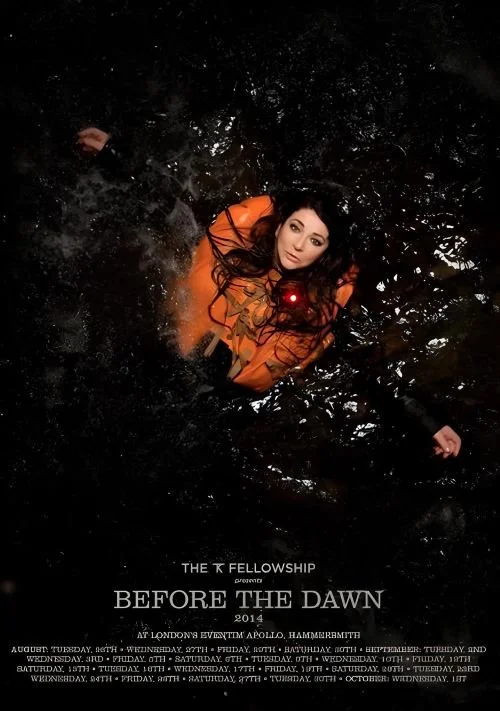
Act three is all about light, a chronicle of day as it turns into night. This act belongs to A Sky Of Honey, the nine-song suite that fills the entire second disc of Aerial with chirrups of birdsong and abstractions of domestic bliss that give way to some of Kate’s more out-there leanings. It’s true that nothing much happens in these songs, with a couple of notable exceptions (the flamenco breakdown in ‘Sunset’, the crescendo of ‘Nocturn’ that leads into the wheeling, madcap finale of ‘Aerial’), but, as with everything we’ve seen so far, it’s marvellously and inventively staged. As the light transforms, so does Kate herself as a wicked spell abounds. Perhaps the most moving element of A Sky Of Honey lies in the skilful puppetry that brings to life what may or may not represent Kate Bush’s son at the age he was when Aerial was born. It would certainly explain why Kate hugs his short wooden frame several times throughout the set, and why Bertie himself, while playing the character of The Painter, gets to tell him(self) to “Piss off!”. Keep an eye on that puppet, if you go. He’s not as hapless as he seems.

[Notes: Uproarious applause. Standing ovation after standing ovation. Oh God, it’s almost over.]

The first song of the encore visits Kate’s most recent body of work, 50 Words For Snow, in the shimmering form of ‘Among Angels’. For this, Kate sits alone at her piano, exposed and, I suspect, feeling rather triumphant. “There's someone who's loved you forever but you don't know it, you might feel it and just not show it…” – a perfect summation of what has been exchanged between this most singular of artists and her singularly patient admirers. Both sides are showing it now, as the full band returns for the thundering consummation of ‘Cloudbusting’. “On top of the world, looking over the edge…” Kate Bush has finally seen her people looking right back up at her. With 21 more shows to go, will she then retreat once more? Her face as she leaves is framed by an expression of deep gratitude, suggesting perhaps she will not”.

I did want to mark that opening night. 26th August, 2014 is a date that has gone down in music history. The unveiling of the life-changing Before the Dawn. And it did seem to be an experience that changed lives. People I knew who were there saying what an impact it made on them. I do think back and regret not being there. That said, there is the live album  - which turns ten in November -, and there are the shared memories from those who were there. What were people thinking traveling to Hammersmith to see Kate Bush? The conversations and that balance of nerves and excitement. That stunning Before the Dawn opening night is…

HARD to replicate.

FEATURE: Kate Bush: The Whole Story: Never for Ever at Forty-Six

FEATURE:


Kate Bush: The Whole Story

IN THIS PHOTO: Kate Bush at Abbey Road Studios, in Studio Two’s control room in 1980


Never for Ever at Forty-Six

__________

I am going to be combining…

a few things together in this anniversary feature. Kate Bush’s third studio album, Never for Ever, turns forty-six on 8th September. I do want to come to an article from the Kate Bush Club where Bush discussed Never for Ever. Rather than this being the entirety of the feature, I want to also bring in reviews of the album and some words around it. It went to number one in the U.K. It was the first album by a British female solo artist to top the U.K. album chart, and the first album by any female solo artist to debut straight at number one. I think what makes the album stand out is the production. Kate Bush co-producing with Jon Kelly. Melody Maker commended the production: “Any doubts that this is the best Bush album yet are finally obliterated by the inspired unorthodoxy of the production. I had to look to see if Steve Lillywhite wasn’t at the controls – it’s that clean and fresh”. I shall come to words from Kate Bush when she wrote for the Kate Bush Club. First, below is some interview archive with her. After releasing two albums in 1978 – her debut, The Kick Inside, and Lionheart – and the second album being rushed and pressured, she did not release an album in 1979. She went on tour and started work on Never for Ever. This album was one where she was able to gain more control and have the songs sound more like what was in her head:

It’s difficult to talk about the album without you actually hearing it, I suppose it’s more like the first album, The Kick Inside, though, than the second, Lionheart, in that the songs are telling stories. I like to see things with a positive direction, because it makes it so much easier to communicate with the audience of listener. When you see people actually listening to the songs and getting into them, it makes you realise how important it is that they should actually be saying something. (…)
There are a lot of different songs. There’s no specific theme, but they’re saying a lot about freedom, which is very important to me.

Deanne Pearson, The Me Inside. Smash Hits (UK), May 1980”.

In terms of progress from Lionheart, Never for Ever was a broader album. The themes addressed was more varied. There were a couple of songs that could be considered political. Bolder and bigger than anything she had released to this point, you can tell that technology such as the Fairlight CMI were starting to influence her and add something special to the music. PROG wrote a feature about Never for Ever in 2022. They discussed the themes addressed through the albums. I want to highlight the three singles that were released:

BABOOSHKA

A more bitter than sweet love story, coming from somewhere between Edmond Rostand’s Cyrano de Bergerac and Rupert Holmes’ Escape (The Pina Colada Song). Bush told Australian TV that the wife of the tale tests her husband’s loyalty by sending him “scented letters” from a young temptress, but he becomes so besotted with the fictitious creature she’s dreamed up that their relationship is ruined. (Nowadays they’d just Snapchat each other.)

The traditional English folk song Sovay, involving a woman in disguise, was another inspiration, having fascinated Kate since childhood. In the video, she played the wife, while the double bass symbolised the man (John Giblin’s fretless bass was a key element of the track). The sound of glass breaking at the end (she smashed up crockery at Abbey Road, later apologising with chocolates to the studio’s kitchen staff) was an early use of a sample made on the spanking new Fairlight CMI synth to which Peter Gabriel had introduced her. (There were only three in the UK at the time.)

The song became a UK Top Five hit, and thus her biggest since Wuthering Heights. Kate’s admitted that she didn’t realise that ‘babushka’ is the Russian word for grandmother, and many shared her misapprehension that the word signified a series of dolls of decreasing size placed one inside another. ‘Matryoshka’, the technically correct phrase for that, wouldn’t have scanned or been half as catchy.

ARMY DREAMERS

This insistent waltz decries the effects of war, centring on a mother, rattled
by guilt as she grieves for the loss of her son who was killed on military duty. She wonders if he could’ve been a rock star or a politician, if she’d been able to afford him a guitar or ‘a proper education’. Weirdly, the single was longer than the album track (which fades). Insanely, it was banned by the BBC during the 1991 Gulf War. Bush rocked camouflage gear in the video. The song’s been covered in numerous languages, from Hebrew to Finnish.

“I wanted the mother to be a very simple woman who’s obviously got a lot of work to do,” she told Flexipop! at the time. “She’s full of remorse but has to carry on, living in a dream. Most of us live in a dream.” She also told interviewers that it wasn’t “specifically” about Ireland. “I’m not slagging off the Army,” she said to ZigZag’s Kris Needs. “It’s just so sad that there are kids who have no O-levels and nothing to do but become soldiers, and it’s not really what they want. That’s what frightens me.” 

BREATHING

An eerie, thoroughly prog trip back to the womb was a curious choice as the first single and teaser for a new project (it stalled at No.16), but uncompromisingly confirmed that Bush was now taking a firmer hand in decision making. Again her telly watching played a part as she cited a documentary she’d seen on the perils of nuclear fallout (fragments of spoken word describing the flash from a nuclear bomb can be heard). It’s interwoven with fears that the mother’s smoking may also damage the foetus (as if the kid didn’t have enough to worry about, with the apocalypse and all). No wonder Kate, in the video, wants to get out of that rather low-budget plastic bubble. ‘We’re all going to die!’ cries a background voice.

Upon release, in the fan club letter, she called it “a warning and plea from a future spirit to try and save mankind and his planet from irretrievable destruction”. She told ZigZag it was “the best thing I’ve ever written, the best thing I’ve ever produced – my little symphony”, while Smash Hits elicited the quote, “We’re all innocent. None of us deserve to be blown up.”

Roy Harper had a backing vocals credit. Talking to Melody Maker’s Colin Irwin, Bush said, “When I heard Pink Floyd’s The Wall I thought there’s no point in writing songs any more because they had said it all. When something really gets you, hits your creative centre, it stops you creating… After a couple of weeks I realised that [they] hadn’t done everything […] Breathing was definitely inspired by the whole vibe I got from hearing that album, especially the third side. There’s something about Floyd that’s pretty atomic anyway”.

Prior to getting to Kate Bush and her writing for the Kate Bush Club, I want to source an article from The Quietus that I have featured before. The write how Never for Ever, whilst not Kate Bush’s most celebrated, might be her most pivotal. It was a turning point and important step for her:

Never For Ever is a starting point, not a zenith, and those miraculous opening six minutes aren’t as groundbreaking as her later innovations. But it is, I’d argue, the first of her LPs that’s genuinely experimental. Paddy’s greater involvement brought weird new instruments – zithers, kotos, musical saws – although Peter Gabriel introduced Bush to the Fairlight, the sonic equivalent of a Jedi being handed their first lightsaber; there were only three in the UK, and while she wouldn’t master it until later, her instant obsession speaks to how determined she was to bend her ornate style into bizarre new shapes. ‘All We Ever Look For’, her happy-go-lucky reflection on knotty parent-child relationships, mutates into several different forms by itself: it jumps between lurching, whistling synths, the koto’s fluttering strings, and a mishmash of Foley-style noises including chirping birds and hurried footsteps. “The whims that we’re weeping for/ Our parents would be beaten for,” sings Bush over its jaunty, oddball din, like the ringmaster at a baroque big top.

Although Never For Ever was largely well-received, a few reviews were grossly sexist, and less egregious offenders nonetheless harped on tired, gendered criticisms. Speaking to ZigZag, Bush blamed the reservations of NME’s reviewer on old hangups regarding her supposed naivety. “He saw me as this chocolate-box-sweetie little thing who had no reality in there, no meaning of life,” she said. It was a common misconception. Naysayers called her twee, but she boldly centred female desire; they dismissed her as cloying, yet The Kick Inside’s title cut wrestled with incest and suicide; they insisted she was whimsical, as if her biggest hit wasn’t about horny teenagers as much as gothic ghosts. Yes, Bush was imaginative, inventive, fantastical. But she didn’t lack substance.

That messy, human drama provides the heart and guts of Never For Ever’s stories, too, however fanciful they get. Often they’re about women deciding their own destinies in fraught, far-fetched situations, old-fashioned expectations of meekness be damned. Some are schlocky: Bush has a murderous ball on ‘The Wedding List’, inspired by 1968 French film The Bride Wore Black, as a gun-toting bride hellbent on avenging the husband killed on their wedding day. “I’ll fill your head with lead!” she crows, vamping and winking with as much gusto as a gangster’s moll. Every so often, however, the slick, romping keys and tough-talking threats die away and are replaced by wheezing, mournful harmonica, and the rampage ends with the broken, pregnant widow turning the gun on herself. Some are shocking: ‘The Infant Kiss’, based on 1961’s Henry James-indebted horror flick The Innocents, finds a governess convinced a child is possessed by her dead lover’s spirit. Bush brings out its lush creepiness with ghostly, trembling strings, more frightened of her own desires than any spectre: “I must stay and find a way/ To stop before it gets too much.”

In that sense, the LP’s final two tracks, despite being the most explicitly political Bush had ever written, aren’t quite the radical outliers they seemed back in 1980. For all their polemical grist, she saw them as personal, poignant stories just like all her others, and although most critics lauded them for reckoning with ‘real life’ in a way her older efforts didn’t, their power transcends such bogus rules of authenticity. They’re spectacular not because their subject matter is inherently weightier than yarns about paranoid Russian wives or grumpy syphilitic composers, but because Bush brings it to life with exactly the same kind of exquisite, singular imagination; they’re political songs that have been twisted and transmogrified so they can exist in her strange universe, not the other way round. If Never For Ever made her a bolder, sharper songwriter, it was still absolutely on her own terms.

And so on ‘Army Dreamers’, a misty waltz about a mother racked with grief and guilt when her son is killed on military manoeuvres, Bush resembles an otherworldly prophet rather than a common-or-garden tub-thumper. “Wave a bunch of purple flowers/ To decorate a mammy’s hero,” she sings softly, sadly, bitterly, her gentle Irish lilt mingling with its sweet, woozy mandolin and the Fairlight’s unnerving samples of cocking rifles (Bush thought the accent, combined with the thwack of bodhrán, had a poetic vulnerability her regular voice lacked – not the last time she’d invoke her Celtic roots for emotional heft). Its gauzy prettiness gives it the air of a nightmare taking place inside a snow globe, twice as crushing for her delicate touch.

Nothing, though, is as devastating as the closing ‘Breathing’, a vision of nuclear doomsday with a horrifying wrinkle, like Threads turned into a poisonous lullaby (Bush, ever prescient, actually beat the film by three years). She sings as a terrified foetus breathing in toxic fumes inside the womb, slowly being killed by the blast’s fallout because mother doesn’t stand for comfort at all in this grim new world. Every element is beautifully brutal: the brooding electronics that fill the air like dangerous smog; the chilling, fairytale-gone-wrong image of plutonium chips “twinkling in every lung”, made extra-disturbing by gorgeous, glimmering chimes; the ominous scientific lecture that builds to a billowing, mushroom-cloud explosion of ungodly noise, followed by the background singers’ dread chant of “We are all going to die!” Most harrowing of all is the strangled, throat-tearing terror in Bush’s voice. In the past she’d shrieked, yelled, whooped and wailed, but she’d never all-out screamed like she screams here, a guttural cry for help that freezes the blood: “Leave me something to breathe!” Bush was as proud of its apocalyptic nightmare as she’d been unmoved by Lionheart. “It’s my little symphony,” she boasted to ZigZag.

Whenever people told Bush they didn’t understand Never For Ever’s title, she patiently explained it encapsulated her belief that all things, good and bad, eventually passed. “We are all transient,” she declared in her fan newsletter, and it’s hard to think of a finer choice for an album that, even now, exists in a glorious state of flux. Never For Ever proved how great Bush could be when given the control and freedom she craved. More tantalisingly still, it promised the best was yet to come”.

Prior to getting to the article from Kate Bush, it is worth discussing the photo at the top of this feature. Rather than out Never for Ever’s cover there, I wanted to include one of Bush at Abbey Road Studios. The studio became very important to her. A big moment for her. A space that definitely meant a great deal to her. In terms of some story behind the photo: “Kate Bush at Abbey Road Studios, in Studio Two’s control room at the famous EMI TG12345 Mark IV recording console. Kate worked at Abbey Road Studios on the albums Never For Ever, The Dreaming, and Hounds Of Love in Studio Two, and recorded the orchestral parts for the albums The Sensual World and The Red Shoes. The console seen in the photo is legendary and is often referred to as the greatest console ever constructed. A collaboration between Abbey Road and EMI engineers, the production of every component was built to military precision. In addition to being used by Kate Bush, it was used to record several influential albums including The Beatles' Abbey Road and Pink Floyd's The Dark Side of the Moon. Kate on her experience at Abbey Road: [“Being on your own in Studio Two is a fascinating experience. I felt like there were at least ten other people there with me... I think it's a combination of all the people who have performed there over the years and their combined creativity.”]. Issue 7 of the Kate Bush Club was published in September 1980.

I do want to end with Kate Bush’s writing for Issue 8 of the Kate Bush Club. Published ion December 1980, she reflects on the release of Never for Ever and promotion. It is quite a long piece, but I think it is important to pop in. We get a real insight into how busy she was after the release of the album. The fact that she was looking forward to Christmas and getting to have a break:

For the album to have been so warmly embraced has made me very happy. It's hard for me to explain how easy it is to get anxious with your own songs once they're on disc. They can easily be up to a year old already, and so the unveiling of the album felt very like the prodigal son coming home to me. I was willing to leap into anything that would help move it along. As you all know, most artists will do promotional work--which we will call "the rounds"--to accompany their product. It was my turn for "the rounds". What makes that fun are the people that you meet and you are with--the travelling, the talking are tiring and monotous. Among the major promotional events was a radio p.a. [personal appearance] tour, which you'll hear more of in A. B.'s [Andrew Bryant?] article. This means travelling from city to city, visiting radio stations and record shops to meet people and give autographs, and to do the odd press interview. The tour was to start in Edinburgh. Hil [Hilary Walker, Kate's manager] had booked a motorail ticket for us to travel by train to Carlisle, taking the car to drive us from there onwards. The train left at five minutes to midnight, and things were packed: a flask of tea, a couple of sandwiches, some books, etc. And as the car had been put on the train an hour or so before our departure, I decided I'd visit a friend in between that time and get a taxi to the station. I was having a great chat in a nice, warm, cause environment with homemade fruit buns and a steaming cup of tea, when I realised the taxi that I had ordered had not arrived yet and it was getting late. I rang again--they said it was on its way, but we know they always say that, don't they?

Eventually, with an excited driver speeding to the station at the thought of the mentioned "big tip" if he got me there on time, I arrived at midnight: no train and lots of weridos. Another train was quickly sorted out which left an hour later, and so I bedded up in a little cabin set for Scotland. The first thing that really hit me when I got in the cabin was it was so quiet. I couldn't remember the last time I'd been anywhere so silent, and it scared me. Its silence made me feel uneasy because of me being so unused to it.

The scenery was beautiful, waking up as the sun peeped over the transient countryside and factory chimneys. We arrived in Edinburgh and the first radio station. The schedule had begun. Meeting the people in the shops is a very strange experience--whilst I sit at the back of the shop and watch them all come in, as anxious as me, some of them. All these faces feeding me, one by one; they think I'm feeding them, but they're giving me so much it's like they've all come to my party and the more the merrier. That's something that struck me, how most of the people are remarkably warm and kind and unbothered, and they're not trying to prove anything. I get a certain kind of "pride", if that's not too arrogant, thinking how lucky I am to have these people receptive to my music. It means a lot in terms of artistic reward.

A TV show in Germany meant a dance routine, choice of dancers and a trip to Munich. Babooshka and Army Dreamers had been asked to be performed. The Babooshka video, if you remember, had double bass sections, and this is what I "bassed" my routine on, using the instrument all the way through the song. The evening I was working on the choreography, Paddy, Andrew [Bryant] and Del [Palmer] were in the room. We decided to try it, as I had some ideas, and we worked the night through very enthusiastically, eventually coming up with a very dramatic and very pleasing routine. "Army Dreamers" is one of those songs that could take many different concepts as a visual choreographic piece. For Germany we decided a cleaning-woman of abstract barracks would be fine, joined by three army dreamers, one of whom is a mad sergeant-major who shouts commands at invisible troops, one who carries a gun and mandolin, and one who blinks blankly and carries a small brown teddy bear. The routine was rehearsed, army uniforms bought, Mrs. Mopp's costume improvised with an old jumble-sale dress, a pair of pink rubber gloves, a head scarf, Ma's kitchen apron, her wooden broom and a small brown teddy-bear for one of our "dreamers".

Arriving in Germany, we were met and taken straight to the TV centre, where we were to spend the day. The rehearsal went well--borrowing some toy guns from the TV people, and a broom which I'd forgotten to bring as hadn't looked like a prop standing in my hall as I left for the airport. It was time for the performance. I was Mrs. Mopp, and the three army dreamers were somewhere in the building, waiting, too, for the call. As I came down the stairs, receiving many funny looks at my dress, I saw three men in uniform standing in the doorway with black, made-up faces looking very heavy and official, and it was not until I got very close and noticed the grinning, familiar faces that I realised who they were. Everything went very well; and, joined by two MM [Melody Maker] scouts, we had a great time. The show was done, and out to dinner, incorporating an MM interview. The Germans looked after us very well, and at one point in rehearsals we had been hesitant that people around us were offended or worried by three Englishmen dressed in Army uniforms strolling around the studio with little guns, but no problem--it shows how little these people hold grudges that we were still suspicious of.

"Babooshka", again, was to be performed abroad, this time in Venice. Venice is an extremely beautiful place, and if you ever get the chance to see it, please do, it really is magical. Water is the way of everything there--even lampposts are on water. I took lots of photos, and we've included one of a canal. The hotel that we were staying at was beautiful, with an incredible view of the ocean out of my window. For this TV show Gary [Hurst] and I had rehearsed a duet which we had made up the night before. Often this has strangely good results; maybe it is due to adrenalin. Gary had hired a suit from Moss Bros. the day before, and I'd pulled out an old dress which I used to wear when I was in the KT Bush Band and we performed in pubs. This TV show was live, and as the studio was only across the road (the other side of the hotel backed onto one of the few pieces of dry land in Venice), every performer dressed and made up at the hotel and walked to the TV studio fully equipped .

Our turn came, and as we hit the street we saw silver-suited spacemen; red-, blue-, green-haired people; electric guitars; pantomime horses; one yellow submarine and two dancing bears spilling in and out of the TV centre. We squeezed past the various brightly coloured suits and smiles, did our bit and squeezed past them again on the way back to the hotel. In many ways it reminded me of Noah's Ark: two of every kind in a place on the water.

Just as we entered the hotel we met Peter Gabriel, plus band, who were also on the same show and were on their way out. We exchanged very English greetings on foreign land: "Break a leg, old chap!"; and Peter headed on his way to the bizarre circus. Meanwhile, we had heard that there was a TV room upstairs, so we rushed up to a mini-circus where all the artists that had already performed were sprayed around the floor, glued to the television, expressing kind words of comradeship in the relevant language to whomever was on the screen at that point in time; an unusual live, friendly feeling. Peter's performance was powerful and stood out amongst all the others, and the viewing-room certainly seemed to agree.

The next version of "Army Dreamers" was to be the promotional video. For a long time my vision of "Army Dreamers" on screen had been in green woods, heavy and sad, and the extent of the visual production I wanted on this occasion would only be possible where we had the time, opportunities and budget: not unlike an unknown TV studio, where you have no control over the set or lighting--you go for the simplest, easiest concept possible without spoiling the image. I drew a storyboard from which we worked. I have never had a talent for drawing [I don't agree at all. A very clever and sensitive landscape drawing by Kate, dated 5th November 1978, appeared in issue number 14 of the Newsletter. It shows great style and natural ability which Kate, unfortunately, has never developed.] and so I got a lot of laughs, as well as being able to communicate the ideas in a more concrete way. The cast had to be big--we were to represent an army unit, therefore needing a Sergeant-Major. I gathered all the people that I knew would not only look good but act the part; the choice was obvious--the band, Andrew [again last name not given] as our Sergeant-Major. Phone calls were made, and I couldn't have asked for a more positive reaction from everyone concerned, to the point of someone putting off a [recording] session. A second phone call was made immediately afterwards to find the size boot required for the uniforms. This became very Pythonesque, especially when people replied "Size 9." Everyone involved was a natural actor and performer, and a rehearsal was called. The cast were to turn up at 4 o'clock in the afternoon, Keef at 2 and Rocket and Barry (who were the two cameramen) at 3. From 2 until 3 Keef and I excitedly worked out the details, using my storyboard (which certainly got a giggle out of him) and bouncing ideas that we would get in turn. Most of my inspiration came from every war movie I have ever seen, from the original All Quiet on the Western Front to Apocalypse Now, and this was then applied to the subject matter and concept of the song. When Barry and Rocket turned up, Keef and I were bursting with anticipation of letting them in on the epic. They'd hardly got in the door before I thrust my storyboard under their noses and Keef was talking special lenses. Rocket and Barry are the two best cameramen I have worked with on a frequent basis. They soon joined in the "Ooh!"s and "Hey, what if we...?"s and "Well, we could try..."s, and we were away on a very challenging prospect, having to wait just for the confirmation of safety before we could definitely write the jerk-jacket into the script (we will talk more about this fabulous device later). 4 o'clock arrived, the band arrived, and the good weather had arrived; so we were set for an outdoors rehearsal. It went so smoothly, and all the cast were so professional, that Barry and Rocket could not hide their respect, and neither did we for them (you can see Barry being charged and Rocket being jumped over in the photos). The rehearsal broke, we sabotaged the crew as they left, and we all went our ways to prepare for the big day tomorrow.

It was a very early start, having to reach Pinewood by 8 a.m., and everyone's prayer for mild weather had been answered uncannily. The sun lit up the fern-swamped woods in a way I could never have hoped for; it was a good omen for a good day. Philip and Graham are two child actors; they both have pure white hair that, in that day's sunshine, shone and glittered, and they behaved very professionally and looked stunning on the screen. The day was long and full, and so much was achieved that apparently in film terms the amount we covered would have taken a week, which was encouraging to hear. Everything had gone as planned, all the action shots covered, and everyone looked superb. There were some magical moments created both on and off screen by the talent and humour of those people who I'd be lost without. Jay took some incredible shots during the day, which perfectly catch the moods and the lighting of those people and woods. Lisa [Bradley] took some fabulous movie-film which expressed not only the effort that was taken, but also, again, the comedy of the personalities involved. Al was blown up as beautifully as could be [this is a repetition of an aesthetic attitude which Kate expressed in an NME interview by Danny Baker in the fall of 1979: "Well, whenever I see the news, it's always the same depressing things. Wars' hostages, and people's arms hanging off with all the tendons hanging out, you know. So I tend not to watch it much. I prefer to go and see a movie or something, where it's all put much more poetically: people getting their heads blown off in slow motion, very beautifully."] of course only in terms of video fantasy land; Paddy somersaulted and fired, Stewart tripped and danced, Andrew roared and soared, Brian was flying, Preston kept his vest on, Kevin was in heaven, we all tumbled and ached and played soldiers until all was finished, bar the jerk-jacket.

We had lost our daylight by now, and as the trees echoed the screams and yells of musicians and dancers in soldier's clothing, I turned to see them leaping over the camera in the most dramatic light I have witnessed outside a studio. Two huge spotlights leaking smoky light across the clearing in the wood. It's these little moments I lock away as thrills of the theatre manmade. It was time to get into the jerk-jacket. The idea was to finish the video with myself symbolically representing my son, as well as being his mother. We wanted a very violent movement of my body, ideally being thrown off the ground. The effect we used was the jerk-jacket, which we would film and then put into slow motion at the editing stage. The jacket consists of a harness and a wire, with a man manually pulling the wire via a pulley system. The wire is connected to the back of the harness, with a hole through various layers of clothing to allow the wire to be straight when taut. As the man pulls the wire, the person wearing the harness is pulled off their feet backwards, landing on an appropriately camouflaged, padded area to soften the landing.

I was very excited at the prospect of experiencing the feeling, and with the professional help of stunt-men it was an unforgettable event--very exciting--and we got the footage we'd hoped for.

Everything over, wires being wrapped up, vans driving off, cameras tucked in for the night and us off to do the edit of that day's filming. The edit was in my opinion the most complete so far: it was like a well-made wooden jigsaw, with all the edges smoothly planed, and by two in the morning, with the excellent help of our visual engineer, Brian, we had made and edited the movie, and it was now complete and very satisfying.

It was a busy week. The next day, an Austrian interview and mixing Warm and Soothing were on the schedule, and off to Holland the next day to do Babooshka and yet another slightly different version of Army Dreamers in Holland. [See Paddy's description of the Holland performances in his Newsletter article, Memoirs of an Army Dreamer, in the same issue.] I was feeling tired when we started rehearsing the routines that evening for the next day, and by the time I had packed and finished rehearsing, it was about five in the morning; and so, as I was being picked up for the airport at 6:15, I ended up without that night's sleep.

At one point I looked at Pyewacket, my cat, and said, "Help me, Pye, I'm so tired." And she looked at me and said, "Me'ow?" It became one very long day, and my energies were going, but they survived with much help from those around me.

The show went very well, including the floor-manager being searched as part of our routine. It went out very late at night and, as it was the first one in the series and was live, everyone was very relieved when it was over. At last, a few hours' sleep before leaving early next morning for Munich and then Hamburg on a two-day radio/press tour; which was fun, meeting up with Werner from EMI-Munich. He was very good to me: earlier, he had given me the copy of Bowie's album before it was released here, and on this trip he did exactly the same with Stevie Wonder's new record. It is an incredible album [The Secret Life of Plants], and I was lucky enough to see him tour when he was here. The whole of the arena was dancing and laughing--I've never seen anything like it. And by coincidence Paddy bumped into none other than Werner while leaving. It certainly was a happy concert, and was marked with many ticks by me, alongside The Wall [Pink Floyd's concert] and others. [Kate says nothing here about the direct result of her excitement over the energy of the Stevie Wonder concert: that very night she went home and wrote/demoed the first version of Sat In Your Lap, which is arguably the most important recording she has made to date, in terms of stylistic development.]

Since my promotion has eased off, the nights are drawing in. It is colder, and I must soon draw to a close. I have spent as much time as possible on writing--and I think that shows by the length of this introduction! I'm more than happy to be concentrating on my songs at the moment.

I hope all of you are feeling happy and looking forward to Christmas as much as I am.

It's wonderful to know that December will be let out of the chimney this year--I was worried that it might get sooty. Have a very happy Christmas, and as children have the best time, why don't we be children at Christmas, too?

Love,

Kate”.

I will leave things here. Turning forty-six on 8th September, Never for Ever made history. It was the first where Kate Bush had a significant production role and could influence her music more directly. I feel that it is pretty underrated. Based largely on the success of Never for Ever, Bush was voted as the best female artist of 1980 in polls taken in Melody Maker, Sounds, The Sunday Telegraph, and Capital Radio. Her next album was 1982’s The Dreaming. Producing solo, the Fairlight CMI features more prominently. It was another big leap for her. If you have not heard Never for Ever, then you really need to check out…

THIS brilliant album.

FEATURE: Kate Bush: Them Heavy People: The Extraordinary Characters in Her Songs: The Painter (An Architect’s Dream)/George the Wipe/Douglas Fairbanks… (Moments of Pleasure)

FEATURE:


Kate Bush: Them Heavy People: The Extraordinary Characters in Her Songs

IN THIS PHOTO: Kate Bush in 2005/PHOTO CREDIT: Trevor Leighton


The Painter (An Architect’s Dream)/George the Wipe/Douglas Fairbanks… (Moments of Pleasure)

__________

I only have four more…

IN THIS PHOTO: Kate Bush in 1993/PHOTO CREDIT: John Stoddart

outings of this run of features to go. Where I pair characters in Kate Bush songs. Today, like the final edition, features a song with a lot of characters. In fact, it might rival Blow Away (For Bill) in terms of the most characters in one song. Both that song and the one I will finish with share Bill Duffield. Moments of Pleasure was included on The Red Shoes in 1993. Bill Duffield was part of Kate Bush’s crew for The Tour of Life in 1979. He died after the warm-up gig in a tragic accident. He is immortalised in two album tracks. Bush also held a benefit concert in his memory at the end of her The Tour of Life run and incredible musicians like Steve Harley and Peter Gabriel. That is when she and Gabriel started their professional association. Moments of Pleasure has so many characters in, I have had to shorten it and include two and an ellipsis! The first half is simpler, as there is only the one character on this Aerial track. I am leading into this rich stock of characters in a song that is tinged with sadness. People mentioned who are sadly no longer with us. Who passed before Bush recorded the track. Let’s start with The Artist from An Architect’s Dream. The Painter also features in The Painter’s Link. These songs featured on the second disc of Aerial, A Sky of Honey. It is set over the course of a summer’s day. I want to start out by looking at the filmic scope for this suite. I have written about it before. Bush did take A Sky of Honey to the stage for 2014’s Before the Dawn. It was realised. There was a tarnish when it comes to the original release of Aerial, as Rolf Harris featured on two tracks. He was The Painter in An Architect’s Dream and The Painter’s Link. We do not realise have that many other characters on that suite. Bush mimics birdsong and takes us to the ocean and beach. There are mentions of people, but they are not really given a name.

We sort of have this idea of Kate Bush travelling through the day in different locations. In Somewhere in Between, she is singing with Gary Brooker (Procol Harum). For the live version, Bush’s son Bertie provided the backing vocals. It was a shame that Rolf Harris appeared in the first place. I want to mention The Artist, not to spotlight Rolf Harris, but to give the song a new light and narrative. If it has troublesome and controversial connections on the oriignal issue, the reissued Aerial removes Harris and replaces him with Albert McIntosh. Her son appearing on his mother’s album. Not the first time. He featured on 2011’s Director Cut and 50 Words for Snow. He was younger when he appeared in 2011 than he was on the Aerial 2018 re-issue. That was four years after he performed as The Artist on Before the Dawn. That live album came out in 2016. A tangled timeline and history, let’s not mention Rolf Harris again. Instead, I do think that The Painter is Albert McIntoish. I discussed McIntosh when I covered Aerial’s Bertie. That paen to her then-new son. What is notable about An Architect’s Dream, is that it adds this human element. In the sense we get vague or unnamed characters in other songs. Birdsong appears. Though there is a bit of story follow Prelude and Prologue. Those two songs open the album and take us into the morning. An Architect’s Dream comes next. I do wish I was at Before the Dawn to see this song played out. You imagine an English garden and this painter setting up. The title, An Architect’s Dream, makes me think that there is a painting style that is more akin to Line Art. It focuses on clean, unbroken strokes to define shapes, contours, and intricate details without relying on heavy shading or colour gradients. This is someone focused and immersed in that they are doing: “Watching the painter painting/And all the time, the light is changing/And he keeps painting/That bit there, it was an accident/But he's so pleased/It's the best mistake, he could make/And it's my favourite piece/It's just great”. I am trying to put a genre to this style of art. Maybe Dynamic Minimalist Art. That frequently uses needle-thin lines alongside bold, calligraphic strokes to create tension and movement. That idea of mistakes being a happy accident. Kate Bush recorded a song called Be Kind to My Mistakes. That came out in 1987 and featured in the film, Castaway. It does bring to mind a multi-dimensional debate. Whether mistakes in art are beneficial or exist. Some purists (or wrong-headed commentators) say mistakes cannot exist in art. We think about fine art especially as being perfect. Everything is intentional. The same with music. Do we listen to albums and assume everything recorded was what the artist originally came up with and intended?

In music, as in art, mistakes can lead to new discoveries and possibilities. An Architect’s Dream is about this artwork having incredible lines. Something you might find in an architect’s sketch of a new building. These lyrics give us “Curving and sweeping/Rising and reaching/I could feel what he was feeling/Lines like these have got to be/An architect's dream”. I keep imagining someone is painting in a garden. Or be a stream somewhere. Later in the song, we get the suggestion that this is street art. Someone battling changing light and weather conditions. Whilst this is painting and not chalk drawings on a pavement, I do instantly think of Mary Poppins. Bert (Dick Van Dyke) drawing these scenes on the pavement and the characters jumping into them. The Artist is working on the pavement but it starts to rain. I wonder where this track was set. You could place it anywhere. Maybe somewhere in Paris. An Architect’s Dream is the first of a two-part story of The Painter. The Painter’s Link is the shorter conclusion. Lyrics quite brief. How the painting runs because of the rain. All the colours drip and form this perfect sunset. Quite psychedelic and romantic in a way. An Architect’s Dream runs at nearly five minutes. The Painter’s Link just over minute and a half. I wonder why Bush decided to set up this artist and someone who painted brilliant and precise lines, only for them to be ruined by the rain. The opening of A Sky of Honey suggests warm sunshine and calm. There is this change of light and weather for our spotlight on The Artist. The next song in the suite is Sunset. In terms of the timeline, Prologue is set in the afternoon. The lyrics mention that it is afternoon. Meaning Prelude might either be later in the morning or early in the afternoon. The Painter is mentioned during the evening before the sun sets. Perhaps taking us to 9/9:30 p.m. Aerial Tal is where Bush duets with a bird. That takes us to the next morning at the break of dawn. What I do love is how we get an idea of the places and conditions. In terms of geography, I feel we start with an English garden. It then moves somewhere else. Nocturn and Aerial seem to suggest this golden and crystal water on a beach in Spain or the Balearics. Just judging by the music and its tone. Or maybe it is an English beach. In any case, I feel that An Architect’s Dream is this curious and brilliant song where we do spotlight this artist. Though I said we would not mention Rolf Harris, Kate Bush gave us some insight into The Painter and songs like An Architect’s Dream. What she was trying to achieve. Mark Radcliffe chatted with her in 2005 for BBC Radio 2. The below exchange takes us back to that idea of mistakes in art and how as a recording artist, she had made mistakes and songs have ended differently to how she intended them. Almost casting herself as The Artist. I do now like to think more that An Architect’s Dream is about Kate Bush then Rolf Harris. That it is a reference to her process as an artist and producer:

Kate: Well, absolutely, and I suppose really that's what he sprung to mind because I needed a singing painter.

Mark: And there aren't many in the Yellow Pages

Kate: There aren't many.

Mark:  There's a track on their called "An Architect's Dream", and in that there's a line where you say, "it was the best mistake he could make". Is that a kind of key phrase that like even though you get this precise way of making the sounds in your head that sometimes it's what you might call the mistakes or the accidents that are kind of a really special moments?

Kate: Yeah, well, I think in a lot of creative processes, that's the best thing can happen to you... is to make a mistake, and it's something you would never have consciously thought of, and it just happens. And it gives you somewhere to go off to that is far more interesting than something you would've thought of”.

Let’s move to the second song, as there are a lot of characters to include. I shall mention all that feature in Moments of Pleasure. One of the standout songs from 1993’s The Red Shoes, it was a time in Kate Bush’s career where she had personal loss and heartache. She had lost friends after The Sensual World’s release in 1989. In fact, guitarist Alan Murphy died a few days after the release of The Sensual World. He died on 19th October, 1989. He is mentioned on Moments of Pleasure. I am not mentioning Bush’s mother Hannah, as she had featured before. Her mother died on 14th February, 1992. It was a very tough few years. I want to start with some interview archive. The song was released as a single in November 1993, where it reached twenty-six in the U.K. On an album with too many layers and this rather compressed sound, Moments of Pleasure stands out. Bush at the piano. More revealing and barer than other tracks on The Red Shoes. The lines, “to those we love, to those who will survive” appear in the chorus and were written for her mother, who was ill with cancer at the time of recording. She died shortly afterwards. Kate Bush Encyclopedia provide us some useful archive:

I think the problem is that during [the recording of] that album there were a lot of unhappy things going on in my life, but when the songs were written none of that had really happened yet. I think a lot of people presume that particularly that song was written after my mother had died for instance, which wasn’t so at all. There’s a line in there that mentions a phrase that she used to say, ‘every old sock meets an old shoe’, and when I recorded it and played it to her she just thought it was hilarious! She couldn’t stop laughing, she just thought it was so funny that I’d put it into this song. So I don’t see it as a sad song. I think there’s a sort of reflective quality, but I guess I think of it more as a celebration of life.

Interview with Ken Bruce, BBC Radio 2, 9 May 2011

I wasn’t really quite sure how “Moments of Pleasure” was going to come together, so I just sat down and tried to play it again– I hadn’t played it for about 20 years. I immediately wanted to get a sense of the fact that it was more of a narrative now than the original version; getting rid of the chorus sections somehow made it more of a narrative than a straightforward song.

Ryan Dombai, ‘Kate Bush: The elusive art-rock originator on her time-travelling new LP, Director’s Cut’. Pitchfork, May 16, 2011”.

I wonder why Bush reapproached Moments of Pleasure for Director’s Cut. The 1993 version seems of its time and reflected loss that was quite new. Maybe dated in 2011, I wonder whether she considered updating the lyrics to include other people. The song features in the 1993 short film, The Line, the Cross and the Curve. It was also performed for Aspel & Co on BBC on 20th June, 1993. The song has been covered a few times. I always think it is one of Kate Bush’s most personal songs, so it seems strange other singing it. Nerina Pallot among those who have covered it. I guess no song can truly belong to an artist and not be covered. You get something different when other artists tackle a track. Though Bush’s 1993 original remains the definitive version, I feel. I will mention one curious character soon. There is humour, loss and remembering friends passed. If Blow Away (For Bill) is Bush paying tribute to Bill Duffield and imagining him in Heaven with departed musicians like Billie Holiday and Minnie Riperton, Moments of Pleasure is this fantasy or dream where we see lost friends and those still alive together in this scene. “Some moments that I’ve had/Some moments of pleasure/I think about us lying/Lying on a beach somewhere/I think about us diving/Diving off a rock, into another moment”. These words open Moments of Pleasure. Giving us this romantic vibe. Many associate Moments of Pleasure as being this painful and morbid song. Bush almost shouting out the lines “Just being alive/It can really hurt”. It is definitely enforced by loss and her mother’s illness. Though there is this sense of fondly remembering people. “And I can hear my mother saying/“Every old sock meets an old shoe”/Isn’t that a great saying?”. Bush almost smiling and giving this chuckle. Humour and pathos alongside each other. George the Wipe is the first character mentioned. The moniker refers to a recording studio tape op (intern/assistant) who was working at Townhouse Studios around 1981. According to lore, he accidentally wiped a master tape recording for a track on her album, The Dreaming. It must have been stressful at the time, but I wonder what song was wiped and whether his is lore or how much truth there is.

The lines where he is mentioned suggests that it was funny or maybe this practical joke played on someone. Some say Bush and Del Palmer (her boyfriend at the time of The Dreaming being recorded) played a joke on someone to make them think that they had wiped a song. In reality nothing had been wiped: “Oh God I can’t stop laughing/This sense of humour of mine/It isn’t funny at all/Oh but we sit up all night/Talking about it”. Douglas Fairbanks is next in the roll call. Kate Bush and Del Palmer went to meet Michael Powell in New York in 1989. There was discussion or plans that she would compose music for a film of his. That the two would work together. Powell died in 1990, so there was not the opportunity for that dream to be realised. The Red Shoes is named after the 1948 film written and directed by Michael Powell and Emeric Pressburger. That film is based on an 1845 fairytale by Hans Christian Andersen. In a 1993 interview, Kate Bush was asked about Douglas Fairbanks and his inclusion on Moments of Pleasure:

Who is the Douglas Fairbanks character in 'Moments Of Pleasure '?

'Ah... In a lot of ways that song, er.. well it's going back to that thing of paying homage to people who aren't with us anymore. I was very lucky to get to meet Michael (Powell, the film-maker who directed the original The Red Shoes) in New York before he died, and he and his wife were extremely kind. I'd had few conversations with him and I'd been dying to meet him. As we came out of the lift, he was standing outside with his walking stick and he was pretending to be someone like Douglas Fairbanks. He was completely adorable and just the most beautiful spirit, and it was a very profound experience for me. It had quite an inspirational effect on a couple of the songs.

"There's a song called 'The Red Shoes'. It's not really to do with his film but rather the story from which he took his film. You have these red shoes that just want to dance and don't want to stop, and the story that I'm aware of is that there's this girl who goes to sleep in the fairy story and they can't work out why she's so tired. Every morning, she's more pale and tired, so they follow her one night and what's happening is these shoes... she's putting these shoes on at night before she goes to bed and they whisk her off to dance with the fairies”.

Douglas Fairbanks (or Douglas Fairbanks Jr. specifically) died in 2000. was a leading man during the Golden Age of Hollywood. He appeared in adventure and swashbuckling roles like in The Prisoner of Zenda (1937), Gunga Din (1939), and The Corsican Brothers (1941). He was the son of Douglas Fairbanks. What makes Moments of Pleasure such a wonderful song is Bush remembering these great people. Just near the end of the song, Bush sings “Hey there Michael/Do you really love me?”. Such sweet words, but what did she mean by it?! Some mystery as to what she was asking there and whether it relates to this brief friendship. The final lines are for Bill Duffield: “Hey there Bill/Could you turn the lights up?”. This lighting director who only was in Kate Bush’s life for a matter of days remembered in a song fifteen years after his death. It is the final verse of Moments of Pleasure where we get Bush saying ‘hi’ and interacting with these beloved people: “Hey there Maureen/Hey there Bubba/Dancing down the aisle of a plane/‘S Murph, playing his guitar refrain/Hey there Teddy/Spinning in the chair at Abbey Road”. Maureen was Kate Bush’s aunt. This deeply personal requiem is so beautiful and stirring. Her aunt died before Bush’s career took off. Bubba is Gary Hurst, one of her dancers. A dear friend who was such an important part of her career and live work, he sadly died in 1990 of complications related to AIDS in Westminster, London. You read more about here. Alan Murphy is ‘S Murph. He died in 1989, as previously mentioned. John Barrett, a sound engineer at Abbey Road Studios, is Bubba. In terms of his role in Kate Bush’s music, we get more information here: “Engineer at Abbey Road Studios. He worked on Kate’s albums Never For Ever and The Dreaming, as well as the single December Will Be Magic Again. In 1981, he found he had cancer, and while receiving treatment he occupied himself with the task of going through the vaults of the studio and seeing exactly was and was not there with regards to the Beatles’ many recording sessions. He created a ‘catalogue’ of sorts, and while finding out exact dates for recording sessions also dubbed rare takes and demos. John Barrett passed away in February 1984”.

Kate Bush combining this brilliant engineer at Abbey Road Studios together with those who worked with her earlier. Family and friends mixed together. Rather than it being down and depressing, I thin Moments of Pleasure remembers these great people and says how difficult life is. But we need to grab these moments of pleasure. The good. Although Moments of Pleasure is this wonderful song, it didn’t chart well in 1993. This was a time when bands like Suede and Blur were coming through. Grunge still a big thing in the U.S., perhaps less toom in public consciousness and the upper reaches of the charts for a piano ballad. No matter if it is by Kate Bush or not. I will finish with perception and analysis of Moments of Pleasure. How it is viewed. Herald Scotland provides some thoughts on this stirring song that was included on two studio albums, a short film and was performed on T.V. It has also been covered by other artists. Those who obviously has no relationships with the people mentioned in the song:

From the minor key melancholy of those opening piano chords and the accompanying shiver of strings to the breathy shimmer of that familiar voice, it catches me every time I hear it (and not just because I get to hear Kate Bush say my first name near the end). I loved it at the time and as the years pass it has grown to be my favourite song from her catalogue.

It's a mournful thing, a catalogue of loss replete, as her biographer Graeme Thomson says of its parent album The Red Shoes, with "all the ache of letting go". A song full of ghosts. Her Auntie Maureen, guitarist Alan Murphy, lighting engineer Bill Duffield. It was only years later that I learnt that the man in the lift in the second verse was in fact an account of her meeting with the film director Michael Powell in a snowy New York not long before he died, a tribute to a peculiarly English artist by another.

The music is lovely, a beautiful swell of sound on which her voice - which travels back and forth between breathy intimacy and high drama - settles into. But it's the words that get me every time.

I would like a place I could call my own ...

By contrast, on Regret it's the music I respond to. From the bright ringing of that first note to the way Hooky's bass appears and sits underneath the guitar line (quick question: does anyone else think this is the most melancholic bassline in pop?), the sound of Regret seems to me now - and possibly then - some kind of culmination.

Throughout the eighties NME bands, for want of a better description, had been moving towards a notion of the mainstream and subtly pulling the mainstream towards them at the same time. The Cure, Depeche Mode, Pet Shop Boys and New Order all helped rewrite what the sound of pop was in the UK. And for me this is where it peaks. I'm sure there are many who would argue that New Order's adventures on the dance floor is where you'll hear the best of them, or at least the band at their most innovative and adventurous.

But Regret for me is something better. It's the closest they ever got to that sonic chimera, the perfect pop song. Something that's both happy and sad at the same time. Something that hits you immediately every time you hear it. That doesn't need a particular mood to be listened to. Instead, it's a song that imposes itself on the listener. You have to respond to it”.

In 2018, The Guardian ranked Kate Bush’s singles. Moments of Pleasure came twelfth (out of twenty-nine). When MOJO decided on Kate Bush’s best fifty songs in 2024, they placed Moments of Pleasure eighth: “Moments… echoes life-and-death opus This Woman’s Work, down to the line “give these moments back”, but adds deluxe orchestral icing that Bush replaced on the Director’s Cut take with a hushed choir: a longer (by one minute), more solemn and shivery pleasure”. From The Painter that plays this important role in the unfolding summer’s day on Aerial’s A Sky of Honey to a song from The Red Shoes that name-checks people who were important to Kate Bush but sadly died. All really fascinating. In the next edition of this feature, I think I will narrow things so that I mention fewer characters. It was nice digging into Moments of Pleasure. You feel sad and uplifted by Moments of Pleasure – well, I did at least – and there are other emotions and reactions evoked from An Architect’s Dream. Though the songs share little ground, the characters in them are as powerful and meaningful. It highlights and spotlights…

THE brilliance of her songwriting.

FEATURE: Spotlight: Mabes

FEATURE:


Spotlight


Mabes

__________

I thought that…

I had already spotlighted Mabes. She is an Essex-born artist who I have been following since her 2019 debut album (or does she class it as an E.P. at seven tracks?), Wait & See. Maybe I had published something but I cannot find it. Anyway, Mabes is the moniker of Mabel Rogers. She is an extraordinary artist that I would love to see featured more on massive stations. BBC Radio 6 Music for one. I know it has been six years since her debut album, but she is prolific and released her latest single, Ready to Go, last month. Recent singles like Want Me Now, Death of a Hero and Sleep Tonight will be dropped in here. Although there are not many recent interviews with the amazing Mabes, I did want to source a few different chats. So we can understand why this is an extremely special artist that is worthy of so much love and praise. A truly distinct and original voice who is consistently brilliant. Growing and expanding her sound with each release. A lot of demand for a second studio album. I am going to go back five years to an interview from NOTION about her then-new single, Sugarush. Mabes was embarking on a  “new chapter bookmarked by fierce passion and a clear vision”:

Bringing the youthful vibrance of a girl from Essex with her lifelong obsession with Nashville’s authentic song writing, her music is a unique brand of pop crutched by elements of country, soul and Americana. 

Refining her brand of fearless pop that first bloomed into existence at the young age of 15, Mabes underlines upbeat, sassy soundscapes with relatable lyricism on brand new single “Sugarush,” which sees her break free from the shackles of a “nice girl,” image stepping into something bolder and more mature.

What is the inspiration/message behind Sugarush?

I was hanging out with this guy I really wanted to commit to me, but he was playing it too cool and never did. It made me feel so shit, like, what’s wrong with me? Why will he give me only some of his time, why not exclusivity? He made me feel like I wasn’t enough. So I ended that little love affair and came out the other side feeling so damn worthy of myself. He was not worthy, I realise now. Sugarush is like, ‘look what you’re missing, dude’.

What was it like working with Kate Bellm on the visuals? Did you have any creative inputs for the video?

Kate Bellm has always been an inspiration to me, I love her trippy vibrant style and so when she agreed to work with me it was a dream come true. She was incredible to work with, and totally got my 70s psychedelic vision for the video. We spent a day travelling around Deia Mallorca capturing the island in all its sunny scenic glory.

The soundscape for this single is described as hinting at the “new Mabes.” How has your sound evolved over time?

I’m super excited to share this next chapter of my creative evolution. I’ve always written on guitar, inspired by Laura Marling from an early age. I guess now I’m growing as a person as well as a writer, I’m broadening horizons and wanting to experiment a bit more.

For the future, how would you like to improve or change further?

I think it’s time for me to break out the shackles of my once ‘nice girl’ country era and head in to my next phase of womanhood, embracing myself and finally owning some self-confidence.

Your music is a mixture of several genres and influences, are there any specific genres you haven’t yet experimented with that you’re interested in?

Country will always be the bare bones of my sound, and any genre I experiment with next will always be a hybrid.

In terms of song writing, do you draw your inspiration from the world around you or are you more introspective?

I draw inspiration from anything and everything, from my own personal experiences to stories of my friends and family, to past current world events. ‘Too Young To Love’ was about personal heartbreak, ‘Caught Up’ was about my dad and his girlfriend being separated over lockdown, and ‘Danny’ is about a soldier that goes to war.

If listeners could take away one message from your music what would you want it to be and why?

I want people to hear good hooks, good melodies, interesting and clever lyrics, and honesty”.

Another rant I always have is how ever f*ckign artist is seen as ‘back’ or ‘returning’ if they spent a few months or even a couple of years before new material comes out. Artists like Mabes are not Oasis. They have not called it quits and then come back. The media puts such pressure on artists to constantly release things, or they are seen as retired or away. The truth is, for Mabes and nearly every artist that is subjected to this kind of pressure, that they have always been active and they never stopped touring and making music. In any case, skirting around TuneFountain and their ignorant and unforgivable wording, it was at least a new step and phase for Mabes. The brilliant No Regrets was Mabes’s first release for a while, but that is not to say she was done and making this giant comeback:

No Regrets’ is your first release in four years-and your first as an independent artist. How does it feel stepping back into the spotlight on your own terms?

I’m rediscovering myself as an artist, and it’s totally liberating! I’m doing it all for me this time, and putting aside the premises of anything external. And my loyal following, of course - I can’t wait to finally give them all something fresh and new.

The line “Since the day I left I’ve got no regrets” feels incredibly powerful. Was there a specific moment or turning point that inspired this lyric?

The song is about me breaking free from a toxic relationship, and having that moment of enlightenment when realising I am so much better without that person dragging me down and making me doubt my self-worth. It is both an anthemic shout from the rooftops and a sigh of relief.

This track balances a soulful pop energy with hints of your folk and country roots. How intentional was that blend, and where do you see your sound heading next?

I’ve often found my writing style aligns with my taste in music at that moment. Lyrics hold core values of folk and country, the repetitive hook sucks me into the pop world - and I’m totally okay with it! This is my next chapter, and time to organically grow and experiment with my evolving sound.

You worked with Matt Newman and Dan Holloway on the songwriting, and the late Nick Webber mixed the track. Can you tell us a bit about that creative process and what each of them brought to it?

I had the idea for the guitar riff when I was on a train to Dan’s studio - I rushed through the door and we laid it down almost immediately. Dan added a beat and some bass and the song came to life voluntarily, and the chorus flowed as Dan and I bounced off each other’s excitement. I took the short demo idea to Matt who I have worked with a lot over the years - he knew exactly the ingredients to turn it from an idea into a full-blown anthemic performance. We then sent it over to Nick who was always intuitive to my sound, and he mixed it to perfection. He added a vinyl crackle that’s happily dancing over the top of the first verse, his sprinkling of glitter that I now hold very dear.

There’s a real sense of empowerment in the lyrics. Did you write ‘No Regrets’ with a message for anyone in particular-or was it something you needed to say for yourself first?

This song is for anyone who needs a reminder that ‘you will get over them!’ The day will come when you rear your head from the heartbreak and realise that you deserve better. I’ve definitely said that to myself a few times over the years after some questionable relationship choices.

It’s been a few years since Keeping the Noise Down, which had a more introspective, acoustic tone. How do you look back on that era now in contrast to this new chapter?

My journey as an artist is ever-evolving - cliché but so true! I am ready to experiment with a bigger bolder sound to echo my new chapter. It’s still very me, and very raw emotionally vulnerable, just heavily seasoned with pop vibes

You’ve been praised for your emotional honesty and vulnerability in your songwriting. With ‘No Regrets’, how do you balance personal storytelling with creating a more radio-ready, bold sound?

That’s a great question - and it gets to the heart of what makes a song like ‘No Regrets’ resonate on multiple levels.

When artists are praised for emotional honesty and vulnerability, it’s often because they’re willing to expose the messy, unfiltered truth of what they’ve lived through. But with a track like ‘No Regrets’, the challenge becomes: how do you keep that rawness intact while packaging it in a sound that can hit hard on the radio?

The balance lies in intention and production choices. The songwriting might still come from a deeply personal place - heartbreak, growth, defiance, acceptance - but instead of a soft, acoustic delivery, you push that emotion through bold arrangements: big drums, heavy synths, or a defiant hook. The vulnerability is still there; it’s just wearing a louder jacket.

In ‘No Regrets’, that bold sound becomes part of the story. It says, “I’ve been through hell, but I’m not staying there. I’m moving forward with power.” That’s what makes the track resonate - it’s not vulnerability for vulnerability’s sake. It’s evolution”.

Bringing things to 2026. The most prolific and productive year for Mabes. I hope that media pressure and that feeling that an artist is obsolete or out of sight if they are not constantly making music did not contribute to a feeling that this year needed to be one where a lot of new music came out. I feel this year is more Mabes stepping into this busy year. One where we may get an E.P. or album. A string of great singles, Ready to Go is the sound of one of our finest artist in full flight. She spoke with Babystep Magazine about embracing change, optimism and escapism:

With her new single Ready To Go, Mabes captures the restless urge to leave the ordinary behind and chase something more meaningful — whether that means freedom, adventure, emotional growth or simply a new version of yourself. Atmospheric, uplifting and full of quiet optimism, the track marks the latest step in an exciting new chapter for the Essex-born country-pop artist, blending heartfelt storytelling with a bolder, more expansive sound.

Written during a period of personal reflection, Ready To Go leans into themes of escapism, possibility and self-belief, all wrapped up in Mabes’ warm, emotionally resonant vocal delivery.

Ready To Go captures a desire to break free from the ordinary and seek something more. What was happening in your life when you wrote the song, and what inspired its central message?

I wrote Ready To Go during a period where I felt stuck between comfort and curiosity. On paper, everything looked fine, but there was this restless feeling underneath it all – like I was craving something bigger and brighter. I think a lot of us experience those moments where we look around and wonder, "Is this really it?" and the song was born from that feeling. It's about wanting to throw open the windows, leave the mundane routine behind for a while, and chase whatever is calling you forward. Whether that's a place, a person, a dream, or even just a new version of yourself. I wanted to capture that mix of frustration, hope, excitement and possibility that comes with standing on the edge of change.

The track explores themes of escapism and hope. Do you think those feelings are particularly relevant in today's world, and how do they shape your songwriting?

Absolutely. I think we're living in a time where people are constantly balancing responsibilities, pressures and uncertainty, so it's natural to dream about somewhere else or something more. Escapism often gets a bad reputation, but I think there's something really beautiful about allowing yourself to imagine a different future. Hope has always been a huge part of my songwriting. Even when I'm writing about heartbreak or difficult experiences, I find myself searching for the light at the end of the tunnel. Ready To Go isn't really about running away from life – it's about believing that growth, adventure and new beginnings are still possible, even when you feel stuck.

There's a real sense of emotional restraint in Ready To Go, allowing the song's atmosphere and vocals to carry the weight of the story. How did you approach the recording process to achieve that balance?

It was important to me that the emotion felt honest rather than over-performed. The song lives in that space between longing and action – you're dreaming about leaving, but you haven't quite taken the leap yet. Because of that, I wanted the vocal to feel intimate and conversational, almost like someone sharing a thought they've been carrying around for a long time. In the studio, we focused on creating space rather than filling every moment. We let the production breathe and trusted the melody and lyrics to do a lot of the storytelling. The song builds intentionally throughout with the marching band snare in the second verse, and then the cinematic explosion of harmonies and vocals in the last chorus for the ultimate crescendo.

As this single marks a new chapter for you, what can listeners expect from your upcoming music, and how does Ready To Go set the tone for what's to come?

Ready To Go feels like the perfect introduction to this next chapter because it's all about movement, growth and possibility. Over the last few years, I've grown so much as a songwriter, and I think my new songs reflect that. They're still rooted in storytelling with a country twang which has always been at the heart of what I do, but they're also bolder, more confident and more willing to explore the pop-music side to my writing. I think this next chapter perfectly reflects where I am both artistically and personally. It feels like a transition from the more youthful, wide-eyed perspective of my earlier music into something stronger, more self-assured and more willing to embrace change. In many ways, these songs feel like the most honest representation of who I am right now”.

If you have not discovered this incredible Essex queen, then you need to connect with Mabes. Such brilliant singles from this year, she does warrant bigger and more consistent focus from our biggest and most influential radio stations. Someone who has such an immense talent and potential, we will be hearing music from Mabes for years or decades more. I have loved her music for so many years, so I am glad she is still putting out wonderful singles. Never stepping away from music but growing and working at her own rate, let’s drop this idea that artists need to be producing material non-stop or else they are retired. As we see with Mabes, leaving a bit of a gap means her newest work seems more focused, unhurried and stronger. Show some love to Mabes, as she is such…

A wonderful artist.

___________

Follow Mabes

FEATURE: Wave After Wave: Nodding Back to the Original… Queens of Music That Were Inspired or Affected by Kate Bush’s Hounds of Love

FEATURE:


Wave After Wave: Nodding Back to the Original…

IN THIS PHOTO: Kate Bush in 1985 in a publicity shot for Hounds of Love


Queens of Music That Were Inspired or Affected by Kate Bush’s Hounds of Love

__________

I have written…

IN THIS PHOTO: Tori Amos in San Francisco in 1992 (her 1992 debut album, Little Earthquakes, drew comparisons to Kate Bush and 1985’s Hounds of Love)/PHOTO CREDIT: Jay Blakesberg

a few features recently around Leah Kardos’s 33 1/3 book on Hounds of Love. There is a chapter called Wave After Wave. It is about how Hounds of Love has influenced artists since its release in 1985. I have discussed Kate Bush and how she has inspired so many artists. I am going to dip into that well one more time. This album is a Pop masterpiece. Visionary and ground-breaking, the album has a new life today. Perhaps heightened and buoyed by the success and new life of Running Up That Hill (A Deal with God) after it was featured in Stranger Things (in 2022), there are artists who have definitely been struck Hounds of Love. Perhaps still her most influential album, it goes beyond its sound and ambition. Leah Kardos writes how its legacy on self-producing non-male artists is huge. It cleared a path in 1985. It still does today. In terms of how these innovators and incredible artists would be free from being labelled eccentric or weird by a misogynistic music press. It still happens a bit today. Though I do hear artists today, producers or not, who have taken strength from Kate Bush and her 1985 masterpiece. Just a detour for a second. I am going pop in an interview from June when Charli xcx visited BBC Radio Music to discuss her work. Nick Grimshaw interviewed her. I do feel that she has been guided and affected by Kate Bush. She has mentioned The Kick Inside and Wuthering Heights (both 1978). Heads We’re Dancing from The Sensual World (1989). However, you can feel the influence of Hounds of Love. Songs of hers that nod to Hounds of Love. This review of Chains of Love – from this year’s “Wuthering Heights” soundtrack, which Charli xcx wrote the songs for – mentions Hounds of Love’s title track (and Kate Bush’s Wuthering Heights). This Rolling Stone review of Wuthering Heights does also mention Kate Bush: “Wuthering Heights isn’t a soundtrack or a score. It’s a fully realized album, with great songs that add a whole new musical texture to her always-changing sensibility. She didn’t really take the bait of Fennell’s horny screenplay, and instead turned in a love letter to the whole Gothic-romantic canon — from the Brontë sisters to the second side of Kate Bush’s Hounds of Love to windswept Eighties pop weepers to Nine Inch Nails. The results would make any Cure-addicted teenager or high school English teacher proud”.

I am fighting a case for other Kate Bush albums being more influential. The Dreaming and The Kick Inside are having more impact and being mentioned more. Even so, the boundary-breaking scope and brilliance of Hounds of Love is no doubt connecting with modern queens. If Hounds of Love has not specifically been name-checked by modern artists who are Kate Bush fans, you can tell its impact and legacy feeds into their own work. Olivia Rodrigo, Halsey, ROSALÍA, Hayley Williams, St. Vincent and Björk. I was watching an interview between Graham Norton and Madonna (I am writing this in June but sharing it in August). She was promoting her album, Confessions II. I do think Hounds of Love actually influenced her. She is very much her own artist, but Hounds of Love took Madonna’s Like a Virgin of the top of the U.K. album chart in 1985. I think there was something in Hounds of Love and the way Kate Bush was reshaping and reframing Pop. How she was working on her own terms. Building her own home studio, producing the album solo and kicking down the door. Even if Madonna was doing that before Hounds of Love came out, she would do so more emphatically and ambitiously after 1984’s Like a Virgin. By 1989’s Like a Prayer, you can see this very much coming to fruition and in full bloom. Phoebe Bridgers has mentioned Kate Bush in interviews like this and this. Whilst Bridgers’s music may differ to Hounds of Love, you feel that “imagistic songwriting and immersive productions” which Leah Kardos writes “stretched the boundaries of what pop music could be” have no doubt been taken to heart by incredible modern greats like Phoebe Bridgers.

Whether it is the way Hounds of Love broke ground or, in the words of writer Dorian Lynskey “Some artists open the door to a new room in the house of music; Bush is one of a handful whose imagination revealed the existence of a whole new wing”, you can feel that to this day. Tori Amos’s debut album, 1992’s Little Earthquakes, found her compared to Kate Bush. Perhaps lazy, Leah Kardos writes how there is a “quality to the big, gated production on ‘Precious Things and ‘Crucify’, with the latter song’s melismatic ‘Cha-ee-a-ee-a-ee-a-ee-ains’ recalling something of the ‘Yea-ee-yeah-ee-yeah-eee, yooo’ from ‘Cloudbusting’”. Other songs on Little Earthquakes compared to tracks on Hounds of Love. Little Earthquakes influenced Alanis Morissette’s 1995 breakthrough, Jagged Little Pill. Writer Tom Doyle noted that. He interviewed Tori Amos in 1998. Amos revealed she was blown away when she heard Kate Bush. In terms of incredible and innovative artists who have been impacted by Hounds of Love, you can name Florence + The Machine, PJ Harvey, Taylor Swift, Billie Eilish, Madison Beer, The Anchoress, Tate McRae, Sienna Spiro, Olivia Dean, Lorde, and St. Vincent. There is a whole new generation of Pop artists who have been affected by Hounds of Love (or Kate Bush in general). Many first hearing Kate Bush through Running Up That Hill (A Deal with God). Modern and young greats like Adéla have been inspired by Bush and you feel Hounds of Love has influenced their own work and production. It is that aspect of Kate Bush self-producing the album and doing it on her terms that is powerful. Few women in music could afford this luxury in 1985. Look now, and there are more and more women taking control and ensuring their vision is realised. Björk is a big fan of Kate Bush. She has cited The Dreaming as one of her favourite albums. She did shout out to Kate Bush in 2022 when Running Up That Hill (A Deal with God) was back in public consciousness. Promoting her album, Fossora, the success of Running Up That Hill (A Deal with God) was a triumphant moment. This vindication for an artist often seen as odd, a witch, and labelled all sorts of things by sexist and misogynistic people in the media.

Björk said it (2022) was a moment when matriarchal music was being accepted. The world finally ready for female-produced music. It may be an exaggeration, though the chart dominance of Running Up That Hill (A Deal with God) did change things. Björk said this to Pitchfork. How Bush was the producer and creating this environment. In a patriarchal music scene in 1985, Hounds of Love was this masterpiece that was a major commercial success. In 2022, this woman in her sixties was enjoying new accolades and acclaim. There are so many artists today that I feel are empowered and driven by Hounds of Love. Or the album has impacted them somehow. Caroline Polachek is another artist that springs to mind. I have mentioned Fiona Apple. A song on her 2020 album, Fetch the Bolt Cutters, does reference Running Up That Hill (A Deal with God). Such a timeless Kate Bush song. The title track, in fact. That entire album has similarities to Hounds of Love.  The album has impacted women behind music. Leah Kardos herself, though musical, does not see herself as a musician. Though Hounds of Love gave her strength to work on her own terms and realise her goals and visions without comprises. Following “your muse uncompromisingly”.

The success of Hounds of Love meant Bush could take time between albums. The gaps lengthening after 1985. Previously, the longest gap between albums was three years (1982’s The Dreaming to Hounds of Love). Four years until The Sensual World; a further four until The Red Shoes; twelve years after that until Aerial, and then six further years until Director’s Cut. Now, as the album is in the culture and hugely influential, its creator has not released an album in almost fifteen years. She has the power to do that now. Working on her own terms at her own pace. That has given so many other women that courage. In an industry that demands constant output unless you be seen as invisible or inconsistent, even artists who are prolific – such as Charli xcx – still are carrying the spirit and messages of Hounds of Love. Its messages of love’s triumph over isolation, darkness and pain is especially important at an incredibly violent and depressing moment in history. Something, as Leah Kardos finishes the chapter off with, we need to feel now more than ever. Artists coming through very much adopting that objective.

I am going to finish off with this feature that I have mentioned before. Reviewing Sarah Kinsley’s album, Escaper (2024), she is among Gen-Z artists like Chappell Roan, Sabrina Carpenter, Rina Sawayama and Mitski who are Kate Bush fans. Artists like Solange (who is a Millennial). Strong and accomplished artists and producers who are mixing sophistication and youthfulness. You can see that Hounds of Love has impacted them. An album that is as relevant and influential today more than ever, we will see this album continue to ignite and infuse so much of today’s best and most extraordinary Pop music:

So far, the 2020s has become one of my personal favorite decades in terms of popular music. Even if I don’t listen to them regularly, millennial pop queens who found success in the 2010s such as Charli XCX and Carly Rae Jepsen continue to release albums that appeal to mass audiences despite being creative and well-crafted. However, I’ve more so been attracted to the prominence of Gen Z women making catchy, witty, sex-positive mainstream dance-pop albums influenced by the 1970s and 80s, such as Chappell Roan’s The Rise and Fall of a Midwest Princess (2023) and Sabrina Carpenter’s Short n’ Sweet (2024). Even more appealing to me is the increase of popularity with singer-songwriters of Asian descent in this decade, including Joji, Mitski, beabadoobee, Michelle Zauner from Japanese Breakfast, and Rina Sawayama, to name a few very well-known examples. In addition, social media has caused obscure Asian musicians to become better known. One of my favorite new artists, Luna Li, became viral on social media with her jam sessions that showed off her impressive ability to skillfully play several instruments. The amazing young artist I’m about to rave about in this review, also found initial success on TikTok. Her name is Sarah Kinsley.

At the young age of twenty-four years, Sarah shows an impressive ability to write and record musical compositions that are mature and wise beyond her years, while still displaying youthful optimism at the same time. This is also apparent in how she speaks and performs on stage, in social media videos, and in interviews. She has spoken about how important it is for her to record and produce her own music in an environment that caters mainly to men, and she believes in giving recognition to other women producing music like she does, which I find encouraging in any industry. Escaper may be her debut album, but she has produced singles and EPs prior to it, and while she is fairly new to the music scene, she does not feel like she is”.

I have dropped in a Charli xcx interview, but this one is also worth watching. She talks about BRAT (2024) and female messiness. That openness and honesty. Whilst not the BRAT of its day, there is this sense of vulnerability and empowerment on Hounds of Love. Also, the singles from “Wuthering Heights” and her new album, Music, Fashion, Film, sees this generation-defining megastar and genius take Kate Bush and Hounds of Love to heart. In terms of this lack of compromise. Charli xcx always shifting and doing such interesting and bold work. She said in an interview with Fashion Neurosis how there is all this critique placed on women in music. Finding this confidence in her music. One can definitely find thematic similarities between Hounds of Love and BRAT. Beyond Charli xcx, there is a score of women in music who have been influenced by Hounds of Love, Running Up That Hill (A Deal with God). From producing on their own terms or allowing a sense of messiness and frankness to come through against potential backlash or criticism, Kate Bush definitely pathed the way. Although women in music before Kate Bush did this, I do think that many came after 1985. Women being who they are and taking control of their voice and vision, many owe a nod to…

THE pioneering Kate Bush.

FEATURE: A Beautiful Song: The Influence of Blackbirds on Kate Bush

FEATURE:


A Beautiful Song

IN THIS PHOTO: Kate Bush in 1993 in a promotional photo for The Red Shoes/PHOTO CREDIT: Anthony Crickmay


The Influence of Blackbirds on Kate Bush

__________

THIS might be something…

IN THIS PHOTO: Kate Bush shot in 1989 at Worx Studios, London/PHOTO CREDIT: Guido Harari

people associate more with Aerial. That 2005 double album features blackbirds. I shall explain how and where. You may think that the influence of blackbirds in Kate Bush’s music is small. Another features connected to Leah Kardos’s 33 1/3 Hounds of Love book, she dedicates a section to blackbirds. I do want to explore some of what she wrote. I think bird song in general is something that compels Kate Bush. If you asked her what her favourite singer is, she might not choose a human. In a 1996 radio interview, Bush said her favourite singers were the blackbird and thrush. No surprise that someone who lives in beautiful homes with wonderful gardens would revel in the wonder of nature. If you look at Kate Bush’s music, there is nature and the natural world woven through it. Perhaps more present on albums like Hounds of Love and Aerial, the latter does have that sublime second disc which is a suite called A Sky of Honey. It is the cycle of a summer’s day. You get the light coming up and birdsong. Then we go through the night and into the next day. Listen to songs like Aerial Tal and Prelude. They are resplendent with the sound of birdsong. I love Aerial Tal. Kate Bush recorded blackbirds in her garden, transcribed their birdsong, and replicated the intricate melodies with her own voice. The iconic cover of Aerial features the actual visual soundwave of a blackbird's song. Some of Kate Bush’s albums were impacted by cities and smog. The anger and rush of the city. The music perhaps reflected that claustrophobia and tension. Aerial definitely does not suffer this. Whilst you get wonderful moments on albums where Bush was recording in London, those where she was at home and had the garden and nature around her impact me hardest.

IN THIS PHOTO: Kate Bush performing during 2014’s Before the Dawn/PHOTO CREDIT: Ken McKay/Rex Features

I do love how she has this attachment to birds like the blackbird. I feel, when another studio album does arrive, the blackbird might make another appearance. It is one of the most graceful and pretty birds I feel. They are very small but have this beautiful song. To be woken by the chatter of blackbirds is a real luxury. Their influence stretches wider than Aerial. Leah Kardos notes that bird with black feathers – included are blackbirds, crows, ravens and corvids – are symbolic keepers of transitional realms in Celtic stories. The spaces between light and dark; sunset and the new dawn. Celtic legends say that if you put blackbird feathers under someone’s pillows then they will reveal their innermost thoughts and secrets. This all will be known to Bush. Someone who has always connected with things beyond the ordinary and ideas that provoke curiosity and wonder, the blackbird is this powerful bird. I do love where Leah Kardos lists where blackbirds feature in Kate Bush’s work. They did not feature until 1980 and her third studio album, Never for Ever. Among the things emanating from under her skirt – Nick Price illustrated Kate Bush and all manner of birds and animals flowing out, we can see a blackbird flying out with a trail of music notes accompanying it. Listen to Waking the Witch from Hounds of Love (1985). Featured on The Ninth Wave, we hear the line “Help this blackbird!”. The image evoked as part of this ducking trial. Leah Kardos notes how the imagery is drawn possibly drawn from The Witch of Blackbird Pond. Guido Harari did a photoshoot with Kate Bush for The Sensual World in 1989. The images were manipulated years later “to include iridescent black plumage decorating Bush’s ace and hair. Harari named these images ‘Wings’ and ‘Birdfish’, in 2016”. An early demo of Why Should I Love You?, a song that features on 1993’s The Red Shoes, included these lyrics: “If I could sing like a blackbird, just like my heart was filled with summer/Of all the people in the world, why should I love you?”. Also in 1993, there are these great photos by Anthony Crickmay where bush wears a black and red gown/dress. A blackbird is positioned on her head like a fascinator hat. Also staying in that year, in Bush’s short film, The Line, the Cross and the Curve, she encounters a trapped bird in the video for And So Is Love. She releases the blackbird, though it hits a window and dies. She picks its body up and kisses it to sleep. When Bush enters the mirror world to break the curse of the red shoes, she is dressed in the feathered gown from the Crickmay shoot. The blackbird is on her head and its wings are pointing up. Kate Bush’s favourite singer as of 1996 was the blackbird. I think she placed the thrush second. I am not sure if that order has changed and any humans have made the mix!

I forgot to mention that Sunset from Aerial also features the blackbird. On Aerial Tal, Bush mimics the blackbird song in the style of Indian Tala music. On the title-track finale, the blackbird is given an entire section of the song to sing. When speaking with MOJO in 2005, Bush said of blackbirds, “It’s almost like they’re vocalising light… And I love that it’s a language we don’t understand”. Bush said that some of blackbird song is aggressive and territorial. It is a complex sound and blend. If you listen to 2011’s 50 Words for Snow, the title track is where Bush names fifty imaginary words for snow. The fourth, Blackbird Braille, is another nod. In 2014, Bush brought her Before the Dawn residency to Hammersmith. Blackbird feature heavily. The Ninth Wave linked with A Sky of Honey. At the end of Waking the Witch, Bush can be seen dressed in black wings. At the gig’s conclusion – before the encore – when she performs Aerial, she takes flight. I think it is really great that the blackbird took on various forms through the years and weaved its way into her music. Its subtle appearance on the Never for Ever cover, though to more prominent placements on Aerial and Before the Dawn, Bush never losing her fascination with the majestic song of the blackbird. It goes beyond the purity and complexity of its song. Its symbolic meaning and connecting with Celtic stories. There has not been a lot written about Kate Bush and blackbirds. Her appreciation of birds and the natural world. Though she has a particular admiration for the blackbird. I am sure these are birds who are seen in her garden. Their glorious song greeting her as she wakes from sleep. Captured for Aerial and visually explored in photoshoots and during her residency, we may well see them appear again in the future. The blackbird has all these layers I think. In terms of their language and song. How they are depicted in Celtic stories, as we have seen. This 2017 blog piece on the blackbird makes some interesting observations: “Seeing a blackbird in meditation may mean you are on the cusp of a great change in your life. It may also mean that something that has been static or stagnant in your life for a long time will start to resolve itself, or move forwards. This could be a stale relationship, a job you feel stuck in, or perhaps a period of depression”. Above all things, the look, grace and song of the blackbird is…

UTTERLY majestic.

FEATURE: The Great American Songbook: Sheryl Crow

FEATURE:


The Great American Songbook

PHOTO CREDIT: Mark Seliger


Sheryl Crow

__________

ONE big reason…

for including Sheryl Crow in this The Great American Songbook is that her second studio album turns thirty on 24th September. Sheryl Crow one of the best albums of the 1990s in my view. I am going to finish with a mixtape of the best Crow songs. Prior to that, AllMusic provide some biography of the Missouri-born artist:

With a personalized spin on classic roots rock and songwriting that's smart, fun, and often more complex than it first lets on, Sheryl Crow has become one of the more lasting and influential presences in mainstream rock music. Both her 1993 debut Tuesday Night Music Club and self-titled 1996 follow-up were not just massive commercial successes but included signature hits like "If It Makes You Happy" and "Every Day Is a Winding Road," which established Crow as a dependable star with a knack for creating consistently high-quality material with an organic flair. Crow's platinum success carried into the 2000s and she continued to evolve musically, embracing vintage soul and R&B on 2010's 100 Miles from Memphis and country music on 2013's Feels Like Home. Throughout her career, Crow has collaborated with a wide array of high-profile musicians, a trait that culminated with Threads, a star-studded 2019 album she initially intended as a farewell. After her induction into the Rock & Roll Hall of Fame in 2023, Crow returned with Evolution, a 2024 album that played into the tuneful strengths of such '90s hits like "All I Wanna Do." In 2025, she delivered the standalone "I Know."

Sheryl Suzanne Crow was born February 11, 1962, in Kennett, Missouri. Her parents had both performed in swing orchestras, her father on trumpet and her mother as a singer; her mother was also a piano teacher, and ensured that all her daughters learned the instrument starting in grade school. Crow wrote her first song at age 13, and majored in music at the University of Missouri, where she also played keyboards in a cover band called Cashmere. After graduating, she spent a couple of years in St. Louis working as a music teacher for autistic children. She sang with another cover band, P.M., by night and recorded local advertising jingles on the side. In 1986, Crow packed up and moved to Los Angeles to try her luck in the music business. She was able to land some more jingle-singing assignments, and got her first big break when she successfully auditioned to be a backup singer on Michael Jackson's international Bad tour. In concert, she often sang the female duet part on "I Just Can't Stop Loving You." After spending two years on the road with Jackson, Crow resumed her search for a record deal, but found that record companies were only interested in making her a dance-pop singer, which was not at all to her taste.

Frustrated, Crow suffered a bout of severe depression that lasted about six months. She revived her career as a session vocalist, however, and performed with the likes of StingRod StewartStevie WonderForeignerJoe CockerSinéad O'Connor, and Don Henley, the latter of whom she toured with behind The End of the Innocence. She also developed her songwriting skills enough to have her compositions recorded by the likes of Wynonna JuddCéline Dion, and Eric Clapton. Thanks to her session work, she made a connection with producer Hugh Padgham, who got her signed to A&M. Padgham and Crow went into the studio in 1991 to record her debut album, but Padgham's pop leanings resulted in a slick, ballad-laden record that didn't reflect the sound Crow wanted. The album was shelved, and fearing that she'd let her best opportunity slip through her fingers, Crow sank into another near-crippling depression that lingered for nearly a year-and-a-half. However, thanks to boyfriend Kevin Gilbert, an engineer who'd attempted to remix her ill-fated album, Crow fell in with a loose group of industry pros that included GilbertBill BottrellDavid BaerwaldDavid RickettsBrian MacLeod, and Dan Schwartz. Dubbed the Tuesday Night Music Club, this collective met once a week at Bottrell's Pasadena recording studio to drink, jam, and work out material. In this informal, collaborative setting, Crow was able to get her creative juices flowing again, and the group agreed to make its newest member -- the only one with a recording contract -- the focal point.

Crow and the collective worked out enough material for an album, and with Bottrell serving as producer, she recorded her new official debut, titled Tuesday Night Music Club in tribute. The record was released in August 1993 and proved slow to take off. Lead single "Run Baby Run" made little impact, and while "Leaving Las Vegas" attracted some attention, it reached only the lower half of the charts. A&M took one last shot by releasing "All I Wanna Do," a song partly written by poet Wyn Cooper, as a single. With its breezy, carefree outlook, "All I Wanna Do" became one of the biggest summer singles of 1994, falling just one position short of number one. Suddenly, Tuesday Night Music Club started flying out of stores, and spawned a Top Five follow-up hit in "Strong Enough" (plus another minor single in "Can't Cry Anymore"). Crow was a big winner at the Grammys in early 1995, taking home honors for Best New Artist, Best Female Rock Vocal, and Record of the Year (the latter two for "All I Wanna Do"). Her surprising sweep pushed Tuesday Night Music Club into the realm of a genuine blockbuster: After close to a decade of dues paying, Crow was a star.

Having made her first album as part of a large collective of songwriters, Crow set out to prove her legitimacy with her second album. Bill Bottrell was originally slated to produce the record, but fell out with Crow very early on, and the singer ended up taking over production duties herself. However, she did bring in the noted team of Mitchell Froom and Tchad Blake as assistant producer and engineer, respectively. Froom and Blake were known for the strange sonic experimentation they brought to projects by roots rockers (the Latin Playboys) and singer/songwriters (Richard ThompsonSuzanne Vega), and they helped Crow craft a similarly non-traditional record. Released in the fall of 1996, Sheryl Crow definitely bore the stamp of the singer's personality and songwriting voice, especially in the idiosyncratic lyrics; plus, she was now doing most of the writing, usually with her guitarist, Jeff Trott, proving that she could cut it without her previous collaborators. The singles "If It Makes You Happy," "Everyday Is a Winding Road," and "A Change Would Do You Good" were all radio smashes, and "Home" also became a minor hit. Sheryl Crow went triple platinum, and Crow brought home Grammys for Best Rock Album and another Best Female Rock Vocal (for "If It Makes You Happy").

Crow toured with the Lilith Fair package during the summer of 1997 (the first of several tours), and subsequently wrote and performed the title theme to the James Bond film Tomorrow Never Dies. In the fall of 1998, she returned with her third album, The Globe Sessions. A more straightforward, traditionalist rock record than Sheryl CrowThe Globe Sessions didn't dominate the airwaves in quite the same fashion, but it did become her third straight platinum-selling, Top Ten LP, and it won her another Grammy for Best Rock Album. It also spawned two mid-sized hits in the Top 20: "My Favorite Mistake" and "Anything But Down." In 1999, she contributed a Grammy-winning cover of Guns N' Roses' "Sweet Child o' Mine" to the soundtrack of the Adam Sandler comedy Big Daddy. She also performed a special free concert in New York's Central Park, with an array of guest stars including Keith RichardsEric ClaptonChrissie Hyndethe Dixie ChicksStevie Nicks, and Sarah McLachlan. The show was broadcast on Fox and later released as the album Live in Central Park, just in time for the holidays. "There Goes the Neighborhood" won her another Grammy for Best Female Rock Vocal.

Hit with a case of writer's block, Crow took some time to deliver her fourth studio LP. In the meantime, she produced several tracks on Stevie Nicks' 2001 album, Trouble in Shangri-La, and also recorded a duet with Kid Rock, "Picture," for his album Cocky. Finally, in the spring of 2002, Crow released C'mon C'mon, which entered the LP charts at number two for her highest positioning yet. It quickly went platinum, and the lead single, "Soak Up the Sun," was a Top 20 hit and another ubiquitous radio smash. The follow-up, "Steve McQueen," was also a lesser hit. At the beginning of 2005 it was announced that there would be two simultaneously released new albums available by the end of the year. The project was then scaled back to the single-disc Wildflower, which saw release at the end of September. Crow was forced to take time off from her musical career in 2006 after being diagnosed with stage 1 breast cancer. After successful treatment, she returned in 2008 with her sixth studio album, Detours. The soul-inspired 100 Miles from Memphis followed in 2010 and featured guest spots from Keith RichardsJustin Timberlake, and Citizen Cope. By the end of that year, she had performed with Loretta Lynn and Miranda Lambert on the title track of a Lynn tribute album, Coal Miner's Daughter. This country-focused collaboration was an early indicator of the direction that Crow's work would eventually take in the years that followed.

A creatively quiet 2011 ended with her appearance on William Shatner's space-themed third studio album, Seeking Major Tom. Crow's delicate, piano-fueled cover of K.I.A.'s "Mrs. Major Tom" was generally received by critics as one of the highlights of the disc. Then, in summer 2012, she revealed details of another health scare. Although Crow had been diagnosed with a brain tumor at the end of 2011, it was found to be benign, and six months on she was quoted in many news reports as feeling healthy and happy. That November she issued the download-only, politically charged "Woman in the White House." It was her first self-penned material to appear in a couple of years and was her most out-and-out mainstream country track to date. March 2013 saw the release of "Easy," the first single to appear ahead of Feels Like Home, a country-steeped full-length that appeared in September of 2013. Feels Like Home debuted at seven on the Billboard Top 200 -- and number three on the country chart -- but generated no country hits, so Crow changed direction for 2017's Be Myself by reuniting with her '90s collaborators Tchad Blake and Jeff Trott. The politically charged 2018 single "Wouldn't Want to Be Like You" saw Crow pairing up with St. Vincent's Annie Clark. That track later landed on her star-studded duets album, Threads, which recruited a wide array of guest artists including Stevie NicksBonnie RaittMavis StaplesChuck DEric ClaptonKeith Richards, and Willie Nelson. Crow released Threads in September 2019, citing that while it would be her last full-length studio album she intended to continue performing and recording occasional new music. She was later the subject of the subject of director Amy Scott's feature documentary film Sheryl, which was released in May 2022. A hit-packed double album, Sheryl: Music from the Feature Documentary, accompanied the film and featured three new songs including the single "Forever."

Sheryl helped lay the groundwork for Crow's 2023 induction into the Rock & Roll Hall of Fame. Shortly after earning that honor, Crow released Evolution, a 2024 album co-produced by Mike Elizondo and John Shanks that spliced the sunniness of C'mon C'mon with the lanky roots-rock of Tuesday Night Music Club. The tender acoustic single, "I Know," appeared in May 2025, teasing another full-length”.

With such an extensive and impressive body of work, it was hard honing things down to twenty songs. I really love what she has produced, and I hope there will be more albums from Sheryl Crow sometime soon. This is one of the greatest songwriters ever. As you will hear from…

THE mixtape below.

FEATURE: The Great American Songbook: Weezer

FEATURE:


The Great American Songbook


Weezer

__________

FOR this…

part of The Great American Songbook, I wanted to focus on a band who started out in 1992. The brilliant Weezer. Their debut album, Weezer (or The Blue Album), came out in 1994. They have another eponymous album coming out in August. The Gold Album will be their twelve. To celebrate the tremendous band, I am compiling a twenty-song mix. The California band have released some incredible albums. I will get to a mixtape soon. I want to start out with this biography from AllMusic:

As one of the most popular groups to emerge in the post-grunge alternative rock aftermath, Weezer merges the heavy power pop of arena rockers like Cheap Trick and the angular guitar leads of the Pixies while injecting their melodies with doses of '70s metal gleaned from bands like Kiss. What truly sets the band apart, though, is their implied geekiness. None of the members of Weezer, especially leader Rivers Cuomo, were conventional rockers: they were kids who holed up in their garage to play along with their favorite records when they weren't studying or watching TV. As a result, their music is infused with a quirky sense of humor and an endearing awkwardness that made songs from their debut, Weezer (aka "The Blue Album"), into big modern rock hits during the mid-'90s. Weezer's early singles turned into hits with immeasurable help from clever videos, and the quickly canonized 1994 debut was followed by a more artistically than commercially motivated 1996 sophomore effort, Pinkerton, which was adored by critics and set the tone for what became the band's long and winding career. As years turned into decades, Cuomo's idiosyncratic personality seeped more and more into his songwriting, resulting in albums that ranged from the catchy nerd rock of 2009's Raditude to the enduringly tender orchestral pop songcraft of 2021's OK Human, as well as their ambitious four-part EP series SZNZ in 2022. 2026's "Shine Again" offered the first taste of Weezer's 20th album.

Raised in Massachusetts, Rivers Cuomo moved to Los Angeles to attend college in the late '80s. During high school, he had played with a number of metal bands, but upon his move out west, his interests broadened to include alternative and post-punk music. By early 1992, he had fused such interests together and formed Weezer with bassist Matt Sharp and drummer Patrick Wilson. Over the course of the next year, the group played in the competitive Los Angeles club scene, eventually landing a deal with DGC during the post-Nirvana alternative signing boom. Three days before Weezer began recording a debut album with producer Ric Ocasek, they added guitarist Brian Bell to the mix. Upon completing the record, Weezer went on hiatus; Cuomo was studying at Harvard when their eponymous debut record came out. With the support of DGC and a striking, Spike Jonze-directed video, "Undone (The Sweater Song)" became a modern rock hit in the fall of 1994, but what made Weezer a crossover success was "Buddy Holly." Jonze created an innovative video that spliced the group into old footage from the sitcom Happy Days and the single quickly became a hit, making the album a multi-platinum success as well.

By the time the album's final single, "Say It Ain't So," was released in the summer of 1995, the group had gone on hiatus once again, with Cuomo returning to Harvard. During the time off, Sharp and Wilson formed the new wave revival band the Rentals, who had a hit later that year with "Friends of P." During the hiatus, Cuomo became a recluse, disappearing at Harvard and suffering writer's block. When Weezer reconvened in the spring of 1996 to record their second album, he had written a loose concept album that featured far more introspective material than their debut. Ironically, the band sounded tighter on the resulting album, Pinkerton. Released in the fall to generally strong reviews, the record failed to become a hit, partially because Cuomo did not want the band to record another series of clever videos. Grudgingly, the remainder of the bandmembers contented themselves being a supporting group for Cuomo, largely because each member had his own solo project scheduled for release within the next year. DGC, however, had the band make one last stab at a hit with "The Good Life," but by the time the single was released, MTV and modern rock radio had withdrawn their support not only of Weezer but their style of guitar-driven punk-pop in general.

Shortly after the tour in support of Pinkerton was completed in 1997, it appeared as though Weezer had fallen off the face of the planet. Stung by the public's initial reaction to their sophomore effort (Rolling Stone even named Pinkerton the Worst Album of 1996), the band took time off to regroup and plan their next move. Unhappy with the sluggish rate of the reassessment period, Sharp left the group to concentrate more fully on the Rentals, fueling rumors that Weezer had broken up. But a funny thing happened during Weezer's self-imposed exile -- while their copycat offspring were falling by the wayside (Nerf HerderNada Surf), a whole new generation of emocore enthusiasts discovered Weezer's diamond-in-the-rough sophomore effort for the first time, and their audience grew despite not having a new album in the stores.

Once Weezer's members wrapped up work on their side projects (Bell with Space TwinsWilson with the Special Goodness), the band recruited former Juliana Hatfield bassist Mikey Welsh to take the place of Sharp and began working on new material. Before they could enter the studio to record their third release, however, Weezer tested the waters by landing a spot on the 2000 edition of the Warped Tour, where they were consistently the day's highlight. Hooking up again with the producer of their 1994 debut, Ric Ocasek, Weezer recorded what would be known as "The Green Album" (an informal title given by fans, since it was actually their second self-titled release). The album was an immediate hit, debuting at number four in May 2001 and camping out in the upper reaches of the charts for much of the spring/summer, during which such songs like "Hash Pipe" and "Island in the Sun" became radio and MTV staples, reestablishing Weezer as one of alt-rock's top dogs. During their tour that summer, Welsh fell ill and was replaced by Scott Shriner, also of the band Broken. (Welsh died in Chicago in October 2011 at the age of 40.) That fall and winter, the group busied itself with touring alongside bands like Tenacious D and recording their next album, Maladroit, which arrived a year after The Green Album's release.

Just before Maladroit's release, former bassist Matt Sharp sued Weezer, seeking compensation and songwriting credit for songs such as "Undone (The Sweater Song)," "El Scorcho," and "The Good Life." The band eventually reconciled with Sharp, though he didn't rejoin, and Weezer continued on with the lineup of CuomoBellWilson, and Shriner. The limited-edition live EP Lion and the Witch appeared in May 2002, and Maladroit's "Keep Fishin'" was released as a single. Most of 2003 was spent on side projects; Cuomo did some hired-gun songwriting, Bell's band the Space Twins put out End of Imagining, and Wilson's Special Goodness project issued Land Air Sea. Weezer returned to the studio in 2004, working with Rick Rubin on their fifth full-length album. Make Believe appeared in May 2005, prepped by the single "Beverly Hills," and eventually went platinum in multiple countries. Weezer (Red Album) followed in 2008 and featured a more collaborative approach, with several bandmembers contributing songwriting ideas and lead vocals to the tracks. One year later, the group returned with Raditude. Greeted with mixed reviews, Raditude marked Weezer's last album for Universal. They jumped to the indies in 2010, releasing Hurley on Epitaph. The new album was quickly followed by two archival releases: an expanded deluxe edition of Pinkerton and the outtakes collection Death to False Metal.

Weezer took their time returning to the studio, finally re-emerging in the autumn of 2014 with Everything Will Be Alright in the End, a record produced by Ric Ocasek and released on Republic Records. Greeted by generally good reviews, the album debuted at five on the Billboard 200 upon its October 2014 release. In the fall of 2015, the band delivered a pair of new singles -- "Thank God for Girls" and "Do You Want to Get High? -- the first fruits of their sessions with producer Jake Sinclair. One other single, "King of the World," appeared in January 2016, timed to arrive at the announcement of their tenth studio album. Another self-titled, color-coded (this time, it was white) album saw release in April. Weezer's White Album peaked on the Billboard 200 at number four and was followed by an extensive tour with Panic! At the Disco.

A year after the release of the White Album, the band returned with "Feels Like Summer," the first single from their 11th LP, Pacific Daydream. Released in October 2017, Pacific Daydream boasted a more modern sound than its predecessor and rose into the Top Four of the Billboard Alternative and Rock charts. Months later in 2018, the group placated social media fan demand by delivering a faithful cover of Toto's classic "Africa," but not before they first issued a cover of that band's "Rosanna." "Africa" became Weezer's first Hot 100 hit since 2009's "(If You're Wondering If I Want You To) I Want You To," entering the chart at number 89. Toto returned the favor by covering "Hash Pipe" in August 2018.

"Africa" turned out to be the cornerstone of the surprise January 2019 release Weezer (The Teal Album), a collection of covers. Two months after The Teal Album, Weezer finally delivered Weezer (The Black Album), a record Cuomo began teasing during the promo cycle for Weezer (The White Album). Produced by Dave Sitek of TV on the RadioThe Black Album appeared in March 2019. In 2020, the band issued the singles "Hero" and "The End of the Game," both of which were slated to appear on their forthcoming album and return to huge, Van Halen-inspired guitars, Van Weezer. After multiple setbacks related to the COVID-19 pandemic disrupted the completion of Van Weezer, the band returned to material they'd first conceptualized and started work on several years earlier. A collection of songs inspired by Harry Nilsson and the Beach Boys, complete with string parts played by a 38-piece orchestra, OK Human was released in January 2021 as Weezer's 14th full-length album, with Van Weezer pushed back for a release later that year when touring could resume. Van Weezer wound up appearing in May 2021, just prior to their summer tour.

Weezer quickly followed their twin albums of 2021 with a four-EP project called SZNZ. A mock abbreviation for "Seasons," each of the four EPs is pegged to a different season in the calendar; the intent is for the music to match its respective season. SZNZ: Spring arrived in March of 2022, followed by SZNZ: Summer in June, SZNZ: Autumn in September, and SZNZ: Winter in December. Each EP consists of seven new songs. The band toured behind the releases, then headed back out on the road in late 2024 in conjunction with a deluxe reissue of their debut album. Released in April 2026, "Shine Again" marked Weezer's first new track in four years and inaugurated a new contract with Reprise Records”.

I will leave it there. Continuing on strong over three decades since they released their debut album, I hope that we get more music from Weezer years from now. They have one of the most distinct and compelling catalogues…

IN all of music.

FEATURE: Under the Light of the Tawny Moon… Kate Bush’s Before the Dawn at Twelve

FEATURE:


Under the Light of the Tawny Moon…

PHOTO CREDIT: Trevor Leighton


Kate Bush’s Before the Dawn at Twelve

__________

I am going to mark the…

tenth anniversary of its live album in November. In 2014, Kate Bush took to the stage in her first residency. Her first major live work since 1979’s The Tour of Life. When news was announced that Before the Dawn would take place in the Eventim Apollo in Hammersmith, London, there was this rush for tickets. Extra dates were added and it was this sold-out extravaganza. I was unfortunate not to be able to get a ticket. Though I have the live album and know a few people who were there. All agreeing that it was a life-affirming and life-changing experience. I can believe that. For fans of Kate Bush who had known her for years and perhaps not seen her live, there was this emotional hit and expectation. Some had seen her in 1979 and noted how Before the Dawn even surpasses the incredible The Tour of Life. Before the Dawn ran from 26th August to 1st October, 2014. There are a couple of reviews that I want to come to. I am going to repeat things I have put in features previously, as I have discussed this stunning residency a far few times! I do want to start out with the Kate Bush Encyclopedia and their resource about Before the Dawn. The residency is significant because it pairs the suite from1985’s Hounds of Love, The Ninth Wave, with A Sky of Honey, the suite from 2005’s Aerial. Both very different but equally powerful, it is an extraordinarily visualisation. The Ninth Wave about a woman lost at sea and struggling to stay alive. A Sky of Honey is the course of a summer’s day. Separate tones and energies, they were paired and brought to life wonderfully. Before those acts, there are a few songs, including a couple from 1993’s The Red Shoes (Lily and Top of the City). The band she recorded with are phenomenal:

The band playing with Kate Bush on stage consisted of David Rhodes (guitar), Friðrik Karlsson (guitar, bouzouki, charango), John Giblin (bass guitar, double bass), Jon Carin (keyboards, guitar, vocals, programming), Kevin McAlea (keyboards, accordion, uilleann pipes). Omar Hakim (drums), Mino Cinélu (percussion). Backing vocalists were Sandra Marvin, Jacqui DuBois, Jo Servi, Bob Harms and Albert McIntosh. Some actors were involved as well: Ben Thompson played Lord of the Waves, Stuart Angell played Lord of the Waves and the painter’s apprentice, Christian Jenner played the blackbird’s spirit, Jo Servi played witchfinder and Albert McIntosh appeared as painter. Supporting actors were Sean Myatt, Richard Booth, Emily Cooper, Lane Paul Stewart and Charlotte Williams.

Attending celebrities

During the run of the show, several celebrities were spotted in the audience, while others took to social media to confirm they saw the show. Some of the names of celebrities that have seen the live show are Lily Allen, Marc Almond, Gemma Arterton, Bjork, Peter GabrielDave GilmourGuido Harari, Holly Johnson, Lauren Laverne, Annie Lennox, Paul McCartney, Caitlin Moran, Frank Skinner and Ricky Wilde.

Kate about Before The Dawn

I’d got to a point where I’d down two albums very quickly, one after the other and I didn’t want to go in and make another album. So I thought maybe I should do some live shows. (Laughs) That’s what happened. I didn’t want to do the shows without Bertie because I thought he’d be a very valuable part of the process, which he was, and it needed to fall at a time that worked around his schedule and that happened to be a good time for him.
I thought the whole idea of putting a show together would be a lot of fun. Not that being in it would be fun, that was very frightening. But putting a show together was something I thought I could do. (…)
I really liked the idea of trying to move from what seemed to be a straight rock concert into a piece of theatre. And what I thought would be fascinating – which I’d not seen done before – was moving from obvious rock show, rhythmic lighting to theatrical lighting.

Jim Irvin, ‘Waving… Not Drowning’. Mojo (UK), JaNuary 2017”.

 I ended that section with an interview quote. I want to move now to a fuller one. Speaking about the live album with The Independent in 2016, Kate Bush recalled taking to the stage. Somewhere she originally performed at in 1979. Things had changed a lot since 1979. However, her talent, ambition and brilliance was as sharp and peerless. Mounting this stunning show for adoring fans. Putting it all together was a labour of love. Inspired by her son to come to the stage at a time when she would have been doubtful, we are all so glad that Bush delivered the masterpiece that is Before the Dawn:

I’ve always loved birdsong,” says Kate, “and I suppose that was the starting point for that piece on the record, speculation about whether it’s a language. The key idea was this connection between birdsong and light, that singing seems to be triggered by the breaking of light, and in the absence of light, they stop singing.” She pauses. “Though there’s a few exceptions – nightjars, reed warblers, blackbirds. And of course, the owl!”

In that suite, an artist appreciates the changing light from sunrise through sunset into night, a progress musically evoked in green and golden tones and timbres. It’s balanced in the show by another suite, The Ninth Wave, from 1985’s Hounds of Love, which presents the drifting ruminations of a woman slowly drowning, alone in the ocean at night. The extraordinary staging for the work involved the skeleton ribs of a boat’s hull, a floating buoy, a helicopter, and a Caligari-esque room of odd angularity, while a huge back-projection of a life-jacketed, singing Kate presented her and her crew with one of the production’s more difficult challenges.

“We shot it in a deep water tank at Pinewood Studios,” she explains. “I’d never worked in water before, and we didn’t know, purely from a technical point of view, if we could find a microphone that could cope with being submerged. So a lot of research went into that. Also, lying on your back, it’s a different way to sing, and we weren’t sure we were going to achieve what we wanted, certainly from an audio point of view. What was probably most difficult, particularly on the first day, was that I was in the tank of water for so long that I actually got really cold. Hour by hour, it was becoming more realistic!”

It’s a measure of the dedication with which she approached the project, and of the degree of logistical control she exercised over proceedings.

“The big thing for me, and it has been from quite early on, is to retain creative control over what I’m doing,” says Bush. “If you have creative control, it’s personal. What I didn’t want to do was step into someone else’s show. Also, that was what was exciting for me, the idea of putting this big visual piece together. Though there was the most extraordinary team of people working on the show: there wasn’t a single person on that team that didn’t have very important input on what the show became.”

This includes people like novelist David Mitchell, who wrote the dialogue for some scenes, and her son, Albert McIntosh, who not only acts and sings in the show, but was crucial to its conception and realisation.

“Bertie’s input was absolutely huge on this show,” she says. “His input of ideas was very creative and intelligent, he was a large part, creatively, of the show. I would run all my ideas past him. For instance, I had this idea to have this helicopter flying over the audience, and he said, ‘Maybe it could be more abstract, maybe it should just be a light’, and I thought, ‘Oh yes, that’s so much better’, and from there we took the design further with the lighting designer.”

As writer, producer, star and director of the show, Kate was often required to wear different hats, figuratively; during rehearsals, she would sometimes sit out in the stalls, checking the production worked, while one of her keyboardists stood in for her on vocals.

“Sometimes it was frustrating for some of the band, but I genuinely had to spend a lot of time out in the stalls, watching it, so I could check it all works,” she says. “It was like putting a huge jigsaw puzzle together, and it took a long time to get it all put in place. It was probably about 14 months from deciding to do it, to the first night.”

She was helped, as director, by her experience making videos and short films, an interest which effectively supplanted her interest in live performance. Despite being one of pop’s more naturally gifted and inventive stage performers, Kate had not done live shows since her initial tour in 1979, a hiatus that led to her reputation as something of a recluse.

“It wasn’t designed that way, because I really enjoyed the first set of shows we did,” she says. “The plan at the time was that I was going to do another two albums’ worth of fresh material, and then do another show. But of course, by the time I got to the end of what was The Dreaming album, it had gone off on a slight tilt, because I’d become so much more involved in the recording process. And also, every time I finish an album, I go into visual projects, and even if they’re quite short pieces, they’re still a huge amount of work to put together. So I started to veer away from the thing of being a live performing artist, to one of being a recording artist with attached visuals.”

It must have been quite difficult, then, to return to live performance after such a time away from the stage?

“Yes, I was very nervous,” she says. “I wasn’t sure if I would be any good, that was my concern. I knew that I would enjoy putting the show together – in a lot of ways, I approached it as if I was making a really long video, because a lot of my visual work is quite theatrical, so this theatrical work would be quite filmic, it would be a natural progression. But I was very nervous about going onstage and performing. But the response was just beyond anything I could have wished for, every night, the audiences were so excited and so responsive.”

The initial impetus for the show, she explains, came from the balance between the two suites.

“What made it an interesting project for me was that there were these two narrative pieces, very much in opposition to each other, and that would allow me to create a piece of theatre, rather than just be a concert with added theatrics. And I felt they were so contrasting: one is full of deep, dark water, and the other one is full of golden light”.

I will finish off with a couple of reviews. Those fortunate enough to see one of the twenty-two shows. That first night on 26th August, 2014 brought celebrities and embers of the public together. It was one of the most anticipated live shows ever. I can only imagine the excitement in the air! Even though DIY acknowledge that Before the Dawn is overblown and prosperous in places, it is a unique and captivating experience:

Barefoot and dressed in elegant black, she strolls around the stage gently, occasionally twirling. It begins with ‘Lily’ as she leads a small group of backing singers that includes her son Bertie (who, she says, has given her the "courage" to return to the stage). The band that line up behind her are as tight as you would imagine. They play ‘Hounds Of Love’ and ‘Running Up That Hill’. They sound huge, they sound brilliant. If there’s one thing you notice most it’s that her voice is remarkably powerful and it’s brilliant on ‘King Of The Mountain’ which brings the opening ‘scene’ to a close, heralding a storm as a bullroarer fills the air and cannons fill the theatre with confetti.

It's now time for the drama of 'The Ninth Wave', the second half of 'Hounds of Love'. Here we see a story of resignation and resurrection played out in the most theatrical of ways. We see Bush in a lifejacket floating in water, looking up at the camera as if waiting to be rescued (she’s reported to have spent three days in a flotation tank at Pinewood Studios to create the special effects). At one point fish skeletons dance across the waves, at another a helicopter searches the crowd, before a living room (yes, a living room) floats across the stage in which a son and his father – played by Bertie and Bush's husband Danny McIntosh – talk at length about sausages.

It’s hard to comprehend exactly what’s happening but the band skilfully navigate the pastoral prog and Celtic rock. Even when the music isn’t captivating, the sheer sense of spectacle means you can’t avert your eyes for a second. As the ‘The Morning Fog’ brings the performance to a close with another standing ovation.

After a twenty minute interval – during which time the bars buzz with delirium – the third act sees her play out ‘Sky of Honey’, the entire second half of 'Aerial'. It’s so intricately detailed that you get the feeling Bush had always planned to perform these two scenes live.

‘Honey’ is a grandiose daydream moving through a summer's day. Again the scope of her vision is immense – even when the songs don’t enthral the enormous paper planes and human birds do, as we see a wooden mannequin finding himself lost and alone. Bertie plays a major part throughout dressed as a 19th-century artist – and at one point telling the mannequin to "piss off". It ends, as only it could, with Bush gaining wings and flying.

She returns to earth to perform a solo version of ‘Among Angels’ on the piano, before the band return to help close the show with a joyful ‘Cloudbusting’. "I just know that something good is going to happen", she sings as a now even more euphoric crowd jump to their feet.

Then she’s gone. You’re left with the image of a singer who has managed to retain her mystery and surprise. An enigma, the mythic artist who is intensely human. It’s overblown and preposterous and brilliant. All its startling achievements, magical highs and am dram faults – its relentless ambition and human imperfections – make it the only document you could possibly have asked for from such a unique artist. Before the Dawn is everything you would expect but couldn’t imagine”.

I am going to finish with a review from PROG and their review. It would be, as they suggest, no exaggeration to say that Before the Dawn is one of the most important music events of this century. It does make it all the more painful that I was not there! However, I am dropping in songs from the Before the Dawn live album. You can get a sense of the sense of awe and wonder at the Eventim Apollo twelve years ago:

On the opening night of the run, the applause as Bush and band walk on is deafening. Luckily our hearing returns to register that the 56-year-old, barefoot, wearing black, is singing Lily, Hounds Of Love, Joanni, Running Up That Hill, Top Of The City and King Of The Mountain. It’s a conventional – if uncommonly adept – set-up for this introductory spell, the musicians (two guitars, two keyboards, two drummers, bass, five backing vocalists) vigorous yet smooth. We acclimatise to the fact that Kate Bush is onstage, confident and potent.

Then comes the evening’s pinnacle: the ground is swept from beneath our feet and things get giddy. The Ninth Wave is performed: an epic production, almost an opera. The narrative is enacted, gliding from film of a floating-in-water Bush, singing in a life jacket, through the tale of a woman lost at sea as her life flashes before her. This includes stunning trickery (the stage becomes the sea bed, peopled by fish skeletons and other surreal creatures); visuals not witnessed since Pink Floyd’s stadium heyday (a lighting rig posing as a helicopter swoops in and out of the crowd, emitting lasers and voices); and some distinctly odd acting cameos (Kate’s son Bertie plays prominent roles).

At one point Kate appears from nowhere, Houdini-like, in a mock living room, complete with sofa, lampshade and TV. In another scene she’s rescued from beneath the ice, in a hole carved from the stage. There’s a jig, there’s a wake as the fish-people carry her away, and there’s catharsis. Everyone emerges for the intermission blinking, a bit speechless and completely overwhelmed.

Clearly, performing The Ninth Wave is something the singer’s envisaged for a long time. You have to deduce she feels it’s her masterpiece. The total absence of any early-career hits here may bother some (those who wanted Wuthering Heights or Babooshka have come to the right venue in the wrong decade), but this is a legacy-redefining appearance by pop’s Maria Callas. There can never again be any argument that she isn’t prog..

Can the second half live up to the first? Almost, if not quite. Giving us A Sky Of Honey (the second disc of Aerial) in full, it’s (relatively) a more relaxed affair. Loaded with imagery nonetheless – birds, paintings, moons, mannequins – it ripples through its course, Bush in exquisite voice, her musicians dextrous, until its extraordinary crescendo. Now the rhythms get manic, guitars squeal, and to top this chaos of multifaceted motion, Bush grows wings and soars – albeit momentarily – into the air. The audience gape.

After she thanks us profusely for our “warm response”, there’s an encore of Among Angels performed solo at the piano, followed by a euphoric full-band singalong of Cloudbusting. The crowd are still roaring five minutes after the house lights have gone up.

‘Big concept’ shows like this have hidden away since Bowie’s Glass Spider tour took a kicking. It may be that Kate Bush has brought mannerisms often reductively labelled as prog back to mainstream acceptance. Or it could just be that Britain’s most gifted female star can do anything she wants, such is the love and adoration displayed here. The young girl who once yelped ‘Wow’ is now a mature woman confirmed as the genius godmother of art rock. Thirty-five years on, the moment is hers again”.

On 26th August, it is going to be twelve years since the first date of Kate Bush’s Before the Dawn. One of the most acclaimed concerts in decades, fans got to see The Ninth Wave and A Sky of Honey brought to life. Backed by a phenomenal band and crew, Bush wowed audiences and critics alike. Before the Dawn has its flaws, though it is a masterpiece. You can see artists today who stage these incredible productions who were clearly nodding to Kate Bush in a way. By what she did in 2014. Her staggering residency is one of the greatest live events…

IN music history.

FEATURE: Spotlight: zeyne

FEATURE:


Spotlight

PHOTO CREDIT: Vicky Grout


zeyne

__________

THIS artist might not…

be on your radar, but she really should be. I am going to come to some interviews with the magnificent zeyne. I am going to start out with this feature from GRAZIA. They published it in 2024. Although it was a couple of years ago, it does provide some useful background to this amazing human. One that everyone should support, know about and show love to:

Zeyne’s musical journey blends passion, heritage, and creativity. Born in Jordan to Palestinian parents, she grew up in a home where music was always present. From a young age, Zeyne’s family encouraged her to explore her musical talents. She began learning the piano at just three years old and was performing in a dabke (traditional Palestinian dance) group by the age of five.

However, it wasn’t until the COVID-19 lockdown that Zeyne fully embraced her musical calling, marking a turning point in her life. Stranded in Jordan when the pandemic closed borders, Zeyne found herself isolated. During this time, she began posting cover songs on Instagram to build confidence, and soon the world began to take notice of her talent. Her breakthrough came with Ma Bansak, a performance on the Colors show, which pushed her into the spotlight.

Her debut single, Minni Ana, blending Arabic R&B with contemporary Western influences, gained praise worldwide. Since then, Zeyne has continued to redefine the boundaries of Arabic music, releasing tracks like Balak, Bala Wala Shi, Atoul, and Ana Wein. These songs not only showcase her extraordinary voice but also her ability to tell deeply personal stories that resonate with listeners.

The Sound of Zeyne

Zeyne’s music is a reflection of her dual cultural heritage. With roots in Palestinian and Jordanian traditions, she blends sounds of the Arabic world with Western genres like R&B and soul. Drawing inspiration from Arabic legends such as Fairouz, Zeyne combines the beauty of Arabic melodies with contemporary Western rhythms, taking influences from Lauryn Hill and H.E.R. Zeyne’s sound highlights the power of cross-cultural collaboration, gainning her a unique sound and a loyal following, not just in the Middle East, but worldwide.

Her songwriting process is deeply personal, tackling topics not often discussed in her culture, such as mental health, anxiety, and the struggles of being a young woman. In her music, she gives a voice to those who feel silenced by society, particularly women.

Zeyne believes that music must come from the heart, which is why she focuses on writing songs that reflect her own experiences. Her first single, Minni Ana, explored her relationship with herself, while Nostalgia expressed her longing for Palestine, particularly Nablus, her family’s hometown. In Atoul, Zeyne delved into the complexities of falling in love, and in Balak (featuring Saint Levant), she captured the frustrations of a long-distance relationship.

Zeyne at Bottega Veneta’s Waves Event IN DUBAI

Zeyne’s performance at Bottega Veneta’s Waves event in Dubai marked a significant milestone in her career. Held at Concrete in Alserkal Avenue, the event combined fashion, art, and music to create an immersive experience in Dubai. The venue, designed by Lebanese architect Carl Gerges, featured soft, concentric seating and sand-coloured textures that reflected the timeless beauty of the desert, creating the perfect backdrop for Zeyne’s performance.

In this unique setting, Zeyne’s performance felt like an extension of the backdrop  itself, blending contemporary style with rich cultural heritage. Her performance, alongside Palestinian-Canadian artist Nemahsis, highlighted the event’s theme of cultural resonance, a key part of Bottega Veneta’s commitment to cultural advocacy to foster music, innovative sound, and creative exchange under the direction of Matthieu Blazy.

The Future of Zeyne

Zeyne’s unique ability to blend the old with the new and the West with the Arab world, positions her on a track to become a global popstar. Her collaborations with artists from across the MENA region and beyond, combined with her growing following from international platforms like Colors, have set her as a trailblazer in the new wave of Middle Eastern music.

Zeyne’s growth signals a new chapter in the evolution of contemporary Arabic music, bridging cultural gaps and resonating with a global audience. With her powerful voice, innovative sound, and commitment to strong storytelling, Zeyne’s influence is bound to grow, not just in the Arab world, but globally”.

There is an interview from earlier this year I will come to. Most of the recent interviews are from last year. She released her astonishing album, AWDA, in October. That word translates to ‘return’ in Arabic. I am starting out with DAZED and their great interview. The spoke with an artist who is “making ‘Arabic alt-pop’ to reclaim her voice”. I am going to repeat a little bit of the background that we have read and know. But it is interesting reiterating her pat and road into music. It is fascinating:

A few years ago, singer and former Dazed 100er Zeyne graduated from the University of Sussex with the intention of pursuing a career in media and communications. Blocked from starting her new job in London thanks to the pandemic, she began posting song covers on Instagram from her home in Amman, Jordan. Eventually, she gained enough traction online that the idea of doing music full-time became a real possibility. “Keep in mind, my parents sent me off to uni. I was meant to do work in PR, research and media,” she tells me over Zoom. “I told them about music, and they looked at me and they were like ‘you know what, OK if that makes you happy do it, we are behind you’, I remember the immediate sigh of relief, and I started crying.”

In 2021, just a year into posting covers online, she released her debut single “Minni Ana”. Now Zeyne is finally ready to show her full self to the world, releasing her anticipated debut album. Entitled AWDA – meaning “return” in Arabic – the project features 12 songs which seamlessly blend Arabic anti-pop and smooth R&B.

Throughout the project, Zeyne unpacks the idea of belonging, identity and cycles of intrusive thoughts. At the start of the opening track, “Asli Ana”, there is a monologue where she recites: “I will not take off my Thobe before they take off my skin / Record that I am an Arab / And I know my origin”. From her opening speech to the final song, which features a recording of Palestinian poet Mahmoud Darwish, AWDA reminds us that culture is strengthened through connection. Below, she speaks to us about the making of her album, learning to write songs, and finding her voice.

What would you say was your earliest memory of music?

Zeyne: At three, I remember seeing my eldest sister, Lina, playing the piano. It was so funny, I was trying to copy her. I looked at my mom, pointed at my sister, and said, "I want to be just like her. I want to play the piano." I'm so grateful to my family for introducing me to music in that way.

When was the moment that you decided that you wanted to pursue music as a career?

Zeyne: I think it was around December 2020. Back then, I had my cover page for a few months. I had met my current producer. I went to his studio, and he was just like, ‘what do you want to do? Why are you here?’ I thought, what an odd question to ask, because I’m here to record a cover, what do you mean? I had never thought of [making original music]. I told him I did not know how to write music but had never tried. He looked at me and said, ‘how can you say you don’t know how to do something if you’ve never tried it?’ I went back home that same night, sat on my piano, and started rambling. I took that to the studio, and we built on that together, and that’s how I ended up coming out with my first-ever debut single.

I wanted to ask about your sonic influences. How do you hear and define your own music?

Zeyne: Before working on this album, I really was experimenting with the R&B sound in Arabic, because I felt like that was an unexplored territory in the region. Making R&B in the Arabic language with our Arabic scales and instrumentation, sonically, I thought that was a very interesting way to start, and I took that with me throughout the album. I was always so scared of going out of a certain genre, because I didn’t want people to think that I'm confusing or whatever. But then I was just like, the story itself is going to communicate the feeling overall; it does not have to stick to a certain genre. But if I were to define it, it's definitely Arabic alt-pop, R&B.

I tried to make the album sonically very inclusive of Arab cultures in general, not just Jordan and Palestinian, but even branching out to like North African sounds, especially in places like Morocco, Algeria and Tunisia, just borrowing sounds. We are cultures that borrow a lot from each other, and we support each other a lot as well, even in the Palestinian cause, our North African brothers and sisters who have stood so much by us. This is a celebration of all of our cultures merged together.

What is the message or feeling you hope people take away from this album?

Zeyne: The feeling is definitely to be empowered. I think growing up, I always lacked the feeling of empowerment. I did not have a lot of confidence in myself to share my music or my voice with the world. When it came to writing the album, I wanted people to feel empowered by love, identity, womanhood, girlhood or feeling proud enough to embrace themselves and who they are. Empowerment and reclamation of who you are, that’s definitely an undertone of this whole album; just confronting and being honest with yourself”.

I am interested to bring in Wonderland. They chatted with zeyne in October. A spectacular artist lighting the flames of resistance. Wonderland. spotlighted someone who had released “her most personal and potent project with debut album AWDA. She talks finding her voice, searching for hope, and pushing her boundaries”. If you have not listened to AWDA or are a little hesitant, I would thoroughly recommend it. It is so atmospheric and transcendent. She blends Arabic Alternative Pop, early-2000s R&B, and Ambient Soul:

You are adept at combining traditional elements from your cultural lineage with a pop-centric sound. How important is it to celebrate your roots within your music?

It’s really important to me, but it’s not something I approach in a calculated way. It’s more natural than that, like I mentioned earlier, it’s in the way I sing, the melodies I gravitate towards, the language I use. Growing up, those sounds were always around me, so they’re just part of who I am. I think celebrating my roots through music isn’t about putting tradition on display, it’s about letting it live in a way that feels current and personal. It’s my way of honouring where I come from while also pushing forward into newer spaces.

How do you transform the darkness of these current times as light within your own music?

At the moment, with Palestine, it doesn’t feel right to talk about light in the face of what’s happening. Watching a genocide unfold in front of us, I don’t think there’s a way to rationalise it or frame it as anything other than devastating. What I can do, and feels like the least I can do, is to make sure it lives in my work and in the platforms I have access to. For me, that’s not about trying to turn something so dark into light, but rather about speaking on it with honesty and responsibility. The music becomes a place to carry that grief and anger, to refuse silence, and to honour our culture and our people. If there is light in that, it’s in the act of remembering, resisting, and insisting on our presence.

What does the album mean to you? What do you hope it achieves?

For me, AWDA is a milestone, and not because its my debut album, but It’s the first time I’ve been able to put all these different parts of myself into one complete story. It feels like a home I can always return to, no matter where I go next. And I hope it achieves connection where people can listen and find pieces of themselves in the songs, or for it to spark conversation about identity and where we come from, if that’s achieved then it’s done its job. I don’t think music has to give answers, but I do hope it makes people feel seen and understood.

Aside from the project, what’s to come from you, this year and beyond?

I can’t give too much away just yet, but I will say that taking AWDA on tour is something I’m really excited about. There are a few surprises lined up and I’m excited for people to see different sides of me as an artist. For now, I’ll let the music do the talking… but stay tuned”.

There is one more 2025 interview that I want to come to. I am going to end with a review of AWDA. Hunger spent some time with zeyne. Someone who creates music from the heart, she “reflects on trusting intuition, returning to oneself and the collective responsibility to confront injustice”. I am very new to her music, but the more I learn about her and the more I hear, the deeper my affection and respect runs:

When I ask about representing Palestinian identity from the diaspora, Zeyne is equally thoughtful. “It’s my own identity, and of course, I wouldn’t have the same experience as someone living in Palestine, but what I can do is represent my own experience of living in a diaspora, living just right next door, and feeling so close yet so far from where I belong,” she shares. “It comes with great pride, but also immense responsibility, because it is a very sensitive and important cause that affects so many families, and I want to do it justice every time I talk about it.”

Zeyne’s family are from Nablus, Palestine, approximately forty kilometres as the crow flies from where she currently lives (and was born and raised) in Amman, Jordan. The short distance belies the reality of the journey, which requires visas, border crossings and checkpoints, if entry is granted at all. “I don’t know how safe it is for me to go now, especially after what I’ve put out and released as an artist,” she tells me. “In the past, I didn’t have a digital footprint or a platform where I was so vocal about Palestine and everything that goes on there.” Zeyne has visited Palestine three times — at six months old, sixteen and nineteen — and describes the experiences as “some of the best trips of my life”. “Not all Palestinians have the privilege of going to Palestine,” she observes. “I was privileged enough to be able to go, so I’ll never take that for granted.”

Her new album, Awda, is steeped in Levantine culture, spanning Dabke, a traditional Levantine folk dance, to the mijwiz, a traditional Arabic wind instrument, before culminating in the closing track ‘kollo lena’ a recording of Mahmoud Darwish reciting in Arabic, “On this land, life is worth living”. The thirteen-track album was born out of two transformative years for Zeyne, filled with highs and lows. It explores identity, empowerment, reclamation, self-love and “finding love, and falling out of it”. Reflecting on the album, she says it traces a now complete journey — from hitting rock bottom and confronting personal struggles to finding herself again within her community. “It’s a full-circle moment for sure,” she says.

PHOTO CREDIT: Vadym Yatsun

But Awda is as much for Zeyne’s audience as it is for her. The title itself, meaning ‘return’, offers listeners an open invitation. “I wanted to give listeners space to decide where they want to return,” Zeyne explains. “Is it to themselves? To their identity? To their first love, their issues, their family?” And for Zeyne, who describes herself as not particularly vocal online, the album speaks where words cannot. “I’m not very vocal online. I let the music say what I feel,” she explains. “I spoke about everything — finding love, falling out of love, discovering my mom was ill, facing my mental health issues and my identity. Things I wouldn’t normally talk about online.” Writing from personal experience, I learn, is therapeutic for Zeyne. She’s drawn to music that emerges from vulnerable, deeply personal places — a quality she admires in Lebanese icon Fairuz. “She has this ability to express vulnerability in a very contradictory way musically, and I love that kind of contradiction — what you’re saying against the type of music that’s playing with it. I find myself using that.”

Beyond Awda, 2025 has been a landmark year for Zeyne. She performed to tens
of thousands at Abu Dhabi’s OFFLIMITS Festival and, as an ambassador for EQUAL Arabia, took over a Times Square billboard, celebrating Arab and Palestinian identity and female empowerment. She became the first Levantine woman to appear on COLORS with ‘Ma Bansak’ and the first Arab artist to join YouTube’s Foundry Program 2025, joining a roster of global artists at the forefront of today’s music landscape, such as Rosalía and Dua Lipa. Zeyne is ending the year by playing with Saint Levant in Bahrain and at Sole DXB.

When I follow up with Zeyne a few weeks after the release of Awda, her gratitude is evident. “The response to Awda has been beyond anything I could have imagined,” she effuses. “Seeing people connect to the songs, not just in the region but around the world, has been really emotional and so beautiful to see.” This is especially true for the singer since, as well as sharing her culture on the album, she also filled it with her own story. “This album came from such a personal place,” she reiterates, “and to know that its stories and sounds are resonating so deeply with others makes me so grateful and so inspired to keep creating from the heart.” Zeyne’s artistry, then, lies in her courage: to speak openly, fearlessly and to turn life’s complexities into music that resonates. She stands as one of music’s most important voices today, not only for what she sings, but for the conviction with which she sings it”.

This Schön! interview is incredible. In conversation with one of the most compelling and important voices of her generation, they write how “Everything the Palestinian-Jordanian singer puts forward is done without negotiating her identity”. This is an artist who I feel we are going to hear a lot more from in the next few years:

Let’s talk about the opening monologue on the first track  ‘Asli Ana.’ It introduces these ideas very powerfully. What did starting the album that way mean for you?

The whole album starts with ‘Harrir Akla [Free Your Mind]’ and ‘Asli Ana [My Origin].’ They’re a statement at the beginning of the album to let the listener know exactly who they’re listening to. Someone who is unapologetic about their identity, about who they are, where they come from, their roots, their heritage, their lineage – everything that makes them who they are.

It feels like artists of your generation are shaping a whole new language around what it means to be an Arab singer today. What does that look like from your perspective?

As time will pass, more and more artists are going to emerge. Growing up I didn’t have that. I didn’t have a Palestinian female artist to look up to or someone that I could resonate with from my own generation. Hopefully it also inspires the younger generation to be proud of where they come from and not shy away from that. I remember when I was in university people would ask, “where are you from?” I would say “Palestine, Jordan,” [and] they would just give me a weird look. I’m pretty sure if this happened now it might evoke a different emotion which is really cool. I think the shift is not only in music, it’s the general conversation around the world about Arabs in general. I feel like everything Arab related is now becoming more popular.

What does singing in Arabic mean to you?

There’s a shift in how people look at the Arabic language. We have the most poetic and romantic language to exist. It’s so cool to see people from all around the world sending me messages saying they don’t understand Arabic but they’re starting to learn the language.  It’s very touching when I get these messages because it feels like we’re bringing people closer to who we are and not trying to bend over to kind of get to them. The Arabic language is becoming a bridge in my music.

You’ve described yourself as a dreamer. As you look ahead into the new year which dreams feel realised and which ones are still calling you?

I’m finally doing my headlining tour in the spring which I’ve wanted to do for a really long time. It’s very surreal for me. You know what I would love to do? I’d love to sit down with Fairuz. Just for lunch or breakfast or anything she wants.

PHOTO CREDIT: Vadym Yatsun

GQ Middle East shared their thoughts on zeyne’s AWDA. It is a no-skips debut. One of the very best of the past few years. She has some gigs coming up, and there is a date at KOKO on 1st September. A London crowd who will show her a lot of love:

Zeyne has built a sound that defies borders and easy labels, fusing contemporary R&B with the pulse of Arab percussion and the ache of diaspora. Honing in on her influence, her long-awaited debut album, AWDA, is a 13-track emotional map that feels both intimate and universal, and rooted yet future-forward.

“AWDA,” meaning return in Arabic, is much more than a title alone. Across its layered soundscape, Zeyne explores what it means to belong, to love, to lose, and to return to oneself after being fragmented by expectation and exile. Zeyne’s story has always been about multiplicity. With over 52 million global streams and stadium shows alongside Ed Sheeran’s Mathematics Tour, she’s become one of the Arab world’s most magnetic cultural exports – a rare artist who can shift from viral dabkeh at a Bottega Veneta show to raw conversations on mental health with ease. Her ascent hasn’t gone unnoticed. In 2025, she became the first and only Arab artist selected for YouTube’s Foundry Program, joining the ranks of alumni like Rosalía and Dua Lipa.

Produced primarily by Nasir Al Bashir with contributions from Khalil Cherradi, Ratchopper, and Sofian Grillo, AWDA blends early-2000s R&B nostalgia with Arabic instrumentation and ambient soul. There’s a rare emotional intelligence to its construction, where each track feels like a page from Zeyne’s diary. “7arrir 3aqlak (Asli Ana) opens with a reclamation of Palestinian identity through dabkeh and poetry, and “Yom wara yom (OCD)” dissects the spirals of mental illness with tenderness and precision.

She keeps features minimal – Bayou appears on “6 il Sobh,” and Saint Levant adds saxophone to “Arrib Minni” – allowing the focus to remain on her voice. In many ways, AWDA isn’t designed for playlists. It plays like a continuous story without a clear beginning or end, echoing the cyclical nature of identity and healing.

In an era where Arab artists are no longer waiting for Western validation, Zeyne stands as a voice of her generation. AWDA is her homecoming, but it’s also an invitation of self-acceptance, ancestry, and the stories that live in our bones”.

Make sure that you follow zeyne. She is such a fantastic artist who released a new single (a collaboration with Marina Satti), A’ti, earlier last month. I wonder what the rest of the year holds for her. As a new fan and someone who was instantly struck by her music, I am going to keep a close eye. It is clear that zeyne is going to be talked about…

FOR many years to come.

__________

Follow zeyne

FEATURE: Pick the Rare Flower: Fifty Years of Kate Bush’s The Phoenix Demos

FEATURE:


Pick the Rare Flower

IN THIS PHOTO: Kate Bush in 1978/PHOTO CREDIT: David Bailey


Fifty Years of Kate Bush’s The Phoenix Demos

__________

THERE are a few different phases…

of Kate Bush’s early recording career. The Cathy Demos that date back to 1973. She recorded some songs professional in 1975. The final stage was recording the remainder of her debut album, The Kick Inside, during the summer of 1977. Before that, around July 1976, Bush recorded a collection of songs later known as The Phoenix Demos. Some of them were Cathy Demos re-recorded. Songs, mostly, that did not find their way on an album. I am going to drop in a few of her demos. Making fifty years of The Phoenix Demos. To get some background and insight as to why they were called that, Dreams of Orgonon published a fascinating feature in 2018:

It remains astonishing that we have 31 of Cathy Bush’s demos. This is the happy product of some tapes changing hands several times. The first person to circulate these songs was music publicist Ricky Hopper, a friend of Cathy’s brother Jay, who was given between twenty and thirty songs to send to record companies. No luck was had attracting labels, although Bush would eventually get lucky via other avenues. None of Bush’s demos were publicly available for years until tapes made their way into the hands of DJ John Dixon, who had acquired them at EMI around the time Bush signed to the label in 1976. Six years later, he broadcast twenty-two of the songs from his Phoenix-based KSTM radio station (this was around the time Bush was putting out The Dreaming. For David Bowie fans, this would be like hearing “The Laughing Gnome” when Scary Monsters came out). Gradually, the earliest demos were released, with the Cathy demos surfacing in 1997. So there’s our point of origin.

There is no First Kate Bush song. We established off the bat that “Wuthering Heights” is not the beginning of the Kate Bush story by choosing to begin the blog with “Something Like a Song.” This is designed to give a fuller picture of her music. In its beginnings, the Bush story is tumultuous and malleable. It’s reasonably well-documented for what it is, but still trying to shape itself like any young person trying to express themselves for the first time. Recording dates are uncertain — we have a small handful of demos recorded in 1973 called the Cathy Demos, and several more dating from around 1976 dubbed the Phoenix Demos (after the aforementioned broadcast). There’s an overlap in material from the two sessions, leading to us having two demos each for some songs that were never professionally recorded. Even the titles of the songs were applied retroactively, and not by Bush herself. To navigate this labyrinth of obscure music, the Bushologist must choose a trajectory and follow it. I chose “Something Like a Song” for the first post because of its relative malleability and accessibility; there’s not a lot to unpack in it, which allowed me to sketch out the approach of the blog. With “Queen Eddie” (or “The Gay Farewell,” whatever you wish to call it), another early Cathy song from both the Cathy and Phoenix sessions, we’re free to play around a little with ideas”.

I am not sure whether all of these 1976 demos were recorded in July, at the time Bush finalised a deal with EMI. However, there is this consensus that they came together at that point. You can see the songs that form part of The Phoenix Demos here. There is a lot of uncertainty as to exactly when the demos were recorded and finished. I think it is the summer of 1976. In July 1976, Bush was taking up dance and she had finalised that deal. Perhaps extending into the middle of the summer, it is clear that these recordings were hugely important. That transition from the slightly rougher Cathy Demos to what we would hear on The Kick Inside. Record Collector published a feature in 2011 about Kate Bush demos and the dangers of revisiting earlier work:

In 1989, a batch of demos from this period surfaced, representing the first significant leak of Kate’s demo material. Initially dubbed the Phoenix collection, they went under this moniker as the recordings were originally broadcast on Phoenix radio station KSTM by former EMI employee John Dixon, who had been instrumental in plugging The Kick Inside to America. Confusingly, the broadcast seems to have taken place some seven years prior to the leak, so it seems uncertain as to why the tapes took so long to reach wider circulation. It consisted of 22 piano demos including five songs that turned up in more developed form over her first three albums: The Kick Inside and Oh To Be In Love, on The Kick Inside; Hammer Horror and Kashka From Baghdad on Lionheart; and Violin on Never For Ever. Three tracks from The Early Years tape also appeared in more refined form – Something Like A Song, The Gay Farewell and Disbelieving Angel – while the other 14 remain unique to this collection. There has been some debate over the correct titles of these tracks and they have circulated under a bewildering variety of names. Fortunately the titles were read on air during the Phoenix broadcast, presumably from the original tape box, and we present those titles here as they are, most likely, the titles as written by Kate: The Kick Inside (Brother)/Hammer Horror/It Hurts Me/Stranded At The Moonbase/Kashka From Baghdad/Surrender Into The Roses/Oh To Be In Love/ Rinfry The Gypsy/On Fire Inside A Snowball/Dali/ Where Are The Lionhearts/Violin/ The Craft Of Love/The Gay Farewell/Something Like A Song/Frightened Eyes/The Disbelieving Angel/Nevertheless You’ll Do/Come Closer To Me Babe/So Soft/The Rare Flower/While Davy Dozed. The set first appeared in
cassette form and suffered from major quality degradation: the tracks ran too slowly and the levels were muddied. However, a series of bootleg EP releases titled The Cathy Demos – issued in five 7” volumes over the following few months – had clearly been pressed from the master recordings as they had a remarkably clear sound and none of the speed issues horribly clear on the tapes. As a final surprise, the fifth volume debuted a song titled Organic Acid, a lengthy piece consisting of Kate singing and playing to accompany brother John’s reading of one of his poems. It wasn’t present on any recordings from the Phoenix broadcast
”.

There is a little mystery as to exactly when in 1976 the demos were completed. I feel they were started either in July or August. By the time they reach the U.S. and this broadcast, Kate Bush was in a very different stage of her career. I do think that there should be some recognition of The Phoenix Demos. Bush herself did not want to see them made public. They were these songs that showed a very brilliant and assured talent. Her music would become better, more experimental and assured. Though there are seeds and wonderful moments to be found. Fifty years after they were laid down at her London flat, we can only imagine what the atmosphere was like! Her neighbours hearing her play. What it was like hearing a teenage Kate Bush capture these fascinating and relatively unknown songs. Even if they are largely musically similar, you can see that she was exploring subjects and ideas that her peers were not. I do wonder how many other songs from The Phoenix Demos were considered for The Kick Inside. The titles changing does make it a little tricky to pin some of the songs, as people know them as something else. I did want to mark fifty years. Whenever the first and final demos were recorded, we do know that it was in 1976, sometime between the EMI deal being finalised in July 1976 and later that year. Obviously Kate Bush now would not want an official release. She might have dim memories of that time. Work that was in progress. These embryonic songs. Though, when we think about the road to The Kick Inside and these huge moments, you cannot ignore these demos from 1976. Their weird route to America and why it took so long. What the reaction was there. I do really love them! Listening to these recordings, however primitive you see them, it is evident that there is…

NOBDOY at all like Kate Bush.

FEATURE: Kate Bush: The Whole Story: Reacting to the Incredible KBC Article, Issue 14 (Autumn 1983)

FEATURE:


Kate Bush: The Whole Story

IN THIS PHOTO: Kate Bush photographed in 1983/PHOTO CREDIT: Brian Griffin


Reacting to the Incredible KBC Article, Issue 14 (Autumn 1983)

__________

I will move away…

IN THIS PHOTO: Kate Bush at Abbey Road Studios in 1982/PHOTO CREDIT: Steve Rapport

from this website for the next edition of Kate Bush: The Whole Story. I will come back to it. The last feature I published in this series was Kate Bush’s writing for Issue 13 of the Kate Bush Club. I wanted to come to the next one. Issue 13 was the summer one. Though it was published at the start of summer or just before, so we did not get to know what Bush’s summer was like. The year is 1983. That is where we are. This Issue 14 piece was Bush discussing summer of 1983 – one of her best and happiest. This is the issue. I am going to comment on the article she wrote and the interview in this piece. The photo I have included at the top of this feature is Kate Bush from 1983. She was shot by Brian Griffin. Replicating Depeche Mode’s A Broken Frame (1982) cover, I am not sure whether it was shot in the first or second half of 1983:

Dear Friends,

Since we last spoke, the weather has been incredible—it was the best July since 1659, they say—but for me it’s like 1976. Do you remember that year? It was a particularly special year, when things were full of adventure.

I was dancing every day, and singing and writing all night. I used to go to London by train every day. It was the time of bomb scares, and everyone would stare uneasily at unattended bags, and the trains were full of paranoia. It was brilliant for me—I’d get back to my newly acquired roommates, Zoodle and Pye, who were only kittens, then, and I’d open all the windows and wail away all night. I only got one complaint from someone who had to get up at 4:00 a.m., and as I was creating noisily until at least that time, they were somewhat unhappy at their lack of sleep. But only that one complained.

I feel in many ways that ‘76 and this year are linked together, for me. This year I’ve been seriously trying to work for an album, but found that in the first part of the year I just needed to rest, really. It’s hard to say how I was feeling after the last album, but I needed to breathe. There are always post-album blues, but this time I think I just wanted a break, just to think and to gather stimulus for a new direction. After the demanding lands that my last set of songs took me to, I had to think again about where to go—maybe somewhere a little sunnier. I can honestly say I feel so much more relaxed having had time to put my pieces back together; have some time with my family and friends, which I was really missing; and also to indulge in some books, films and records.

I do like Kate Bush’s memories of 1976. Whilst it was a scary or tense time in the U.K. and there was a sense of fear in the air, it was a very hot summer. 1983 seemingly the same. By 1983, she really needed a break after The Dreaming. It is quite a dense and smoky album. Quite smoggy and dense. There are lighter and sunnier moments, though The Dreaming has tension and edge. I can understand why Bush would want to step back a bit. 1976 was when Bush was she moved out of her childhood home of East Wickham Farm. I think she moved to 44 Wickham Road in her late teens. The property was owned by her father. She lived in the middle floor, in between her brothers Paddy and John Carder. It was during this time that she wrote the song Wuthering Heights and started performing live with the KT Bush Band. She wrote Wuthering Heights in March 1977. Different pressures in 1976 and 1983. Bush was putting her debut together in 1976. Demos were recorded. She had already recorded a couple of the tracks for The Kick Inside in 1975 (The Saxophone Song and The Man with the Child in His Eyes), and she was putting together other tracks.

After lasting three months on Chinese take-aways during the last part of the album, I realised food was a terribly important factor to a healthy mind and body. So now I make sure I cook one good meal a day, and have cut out all junk food--which is unbelievable for me. It is definitely true that convenience is not always a good thing. Cooking, especially when you're not handling carcasses and gristle, can be a delightful thing. I always find it a miracle to turn a few vegetables and some flour and margarine into a complete meal--it's a bit like the five loaves and two fish. It's times like this, when I'm doing a lot of cooking, that I realise how glad I am and how lucky I am to be a vegetarian, to be eating nothing but fruit and vegetables--all the wonderful colours and textures. Of course, the big trouble with cooking is time, but I make myself set aside the time to cook an evening meal, and I really miss it now if I'm out and not able to devour my nutritious foods, and it'll take a while yet before I'll be able to handle a Chines take-away.

I have also found a wonderful new dance teacher. Her name is Dyane Gray, and she is an incredibly beautiful dancer. Not only did I feel I needed to be fit again, but I really wanted the stimulus and inspiration that comes from true teachers.

Having found her, and since taking more care of my body, I feel recharged again. It's too easy to let bad food and no sleep catch up. I can't tell you how good and happy I feel since I've taken these few steps.

As you probably know, a trip to America and Canada was due, and was unfortunately cancelled. It was very disappointing, as I was greatly looking forward to trying to help The Dreaming along out there. But I feel I was probably meant to carry on with the album and perhaps also to have been able to enjoy the first British summer for seven years. [The papers printed stories that Kate's scheduled American trip was scratched solely because her planned mode of transportation, the Queen Elizabeth II ocean liner, was diverted from its schedule for service in the Falklands at the last minute. According to the news reports, Kate simply cancelled the America junket rather than consider flying, allegedly because of an overpowering phobia of airplanes. Although she does seem to have made such a decision, her heavy reliance on air transportation up until this time discredits the stories of air phobia.]

I have written before how Kate Bush had an unhealthy diet when recording The Dreaming. Not giving herself time to cook meals, there were a lot of takeaways. It is not only bad for physical health. It also affects mental health. An overhaul was needed. In 1983, there were not a lot of vegetarian options. Difficult for someone like Bush, who was and is a vegetarian. More choices today. Though fruit and vegetables alone would not be all she ate. Protein and other stuff. Her body and mind healthier for having this fresh produce. Not the processed food that was often cooked in fat and grease. Bush did undertake dance. You can find out more about Dyane Gray here. There is some confusion around the date of Issue 14 of the Kate Bush Club. It was published in 1983 and not 1993. The official Kate Bush Club (often referred to as KBC) ended its primary run in 1993, wrapping up twenty-four print magazines. Issue 19 was published in spring 1987, so we cannot assume issue 14 was published in autumn 1993. In any case, it is clear Kate Bush is talking about the aftermath of The Dreaming and starting work on Hounds of Love, rather than her experience after The Sensual World and preparing for The Red Shoes (1993). Bush specifically mentions The Dreaming, so I am not sure why there are some sources feel Issue 14 was printed in autumn 1993. Anyway, there are some interesting words from Bush. She does end her writing by talking about a compilation video. It was for The Single File. The Video Collection was released in the U.K. on 28th November, 1983, this video compilation features twelve of her music videos from Wuthering Heights to There Goes a Tenner.

I had a really good birthday this year. In fact, it was definitely one of the best ever. Thank you all so much for your lovely presents and wishes. It means a lot to know you're all thinking of me.

Just a word about the compilation video that was promised in April!! (you must be used to this by now.) Unfortunately, due to delayed business transactions, there is still no release date, but we really do hope it will be settled before the end of the year! (Hopefully, there will be advertisements around the time, to let you know if we can't get an official release date to you.) But as a sneak preview, here is a proof of the artwork at this stage.

Well, I'll return to my work, and wish you a very happy autumn.

Until our next letter.

Lots of love,

Kate xx

Interview

Do you watch the chart positions of your albums and singles? Do you know their positions before they are broadcast, or do you have to wait and listen to the radio?

"Yes, I suppose I do keep an eye on the charts to a certain extent, but I don't know the chart positions until the day you hear them on the radio. I usually hear via a telephone call from the record company, and they don't know them until that morning."

Have you ever sung in any foreign language other than French?

"Yes, but only once, when I was in Japan at a Japanese business conference. I sang a well known song of their country, in their language."

Who is Tamlain, mentioned in The Empty Bullring?

"Tamlain is a girl in a traditional fairy story, who is locked up in an ivory tower."

Do you actually read up and research for your songs, or is it information already in your head--especially Breathing?

"This really depends on the subject matter of the individual song; but in the case of Breathing, most of the information came from a documentary about a man who had been following up the negative results of nuclear products."

On Never For Ever and The Dreaming, you are credited as playing a CS-80. What is this?

"The CS-80 is a synthesiser made by Yamaha. It has been a particularly favourite synth. of mine, as it is one of the few that has a touch-sensitive keyboard."

I forgot that Kate Bush sang in Japanese when she visited the country in 1978. That would have been quite a challenge! I did not know about the inspiration behind Breathing I don’t think. In the sense that Bush was taking from a documentary. The questions in this interview are quite random, though we do get some insight into older songs. It was a period before Hounds of Love came out, so it was natural to nod back to her previous two albums.

Do you ever go to concerts? If so, who?

"I very rarely go to gigs, as I don't really have much free time; but it's always nice to go and see artists whose music I enjoy, especially when the shows are as spectacular as The Wall."

Who is the man on the cover of The Dreaming?

"Why, Houdini, of course!"

Were the brightly coloured trousers with zips and ties that you wore for the Virgin p.a. last year and for a number of photos specially made for you, or did you buy them?

"Quite a few people have assumed that they were specially made. However, I did buy the trousers--from a boutique called Splash."

Do you know of any records available featuring whale music?

"I think if you look around, there have been quite a few, but I understand that some, including The Song of the Humpback Whale, have been deleted, so you would probably only find them in second-hand record shops”.

Kate Bush enjoying Pink Floyd’s The Wall. That must have been an incredible gig to go to. The Wall Tour ran between 1980 and 1981. This would have been eye-opening for Bush. Perhaps absorbing some of the sound and visions into The Dreaming in 1982. Breathing is often compared to Pink Floyd. Perhaps she had them in mind when she wrote that track. I have been trying to find photos of Bush with those brightly-coloured zips and ties. I can’t seem to find any! I have said before how Kate Bush is a fashion icon. It would have been amazing seeing her in this bright and colourful outfit! A weird final question about whale music. I am surprised we did not get whale song during Hounds of Love’s The Ninth Wave. Maybe Bush could not have found any. She was recording natural sounds by that point, although getting close enough to a whale would have been quite a feat! I will reference Kate Bush’s writings for the KBC. Their amazing newsletters. We are in autumn 1983, so I will look at issues after 14. We do get a sense of what she was doing in the summer of 1983. Rebuilding and refocused, she was taking up dance again, easting healthier and spending time with friends and family. All vital and crucial when it came to the sound of Hounds of Love. A sunnier album than The Dreaming. Hounds of Love would not arrive until September 1985, though Bush was updating fans and giving them insight into happenings. Maybe an early pioneer in terms of how she communicated with fans, though I guess a few artists and bands had fanzines?! The equivalent of Instagram posts and social media?! Today, we get the odd post from Kate Bush, though I am sort of envious of fans who read her writing in the 1970s and 1980s (and into the 1990s too). What we get from Kate Bush in Issue 14 is…

SUCH a revealing treat.

FEATURE: Kate Bush: Them Heavy People: The Extraordinary Characters in Her Songs: My Mother/My Father/My Brothers (The Morning Fog)/Moving Stranger (Moving

FEATURE:


Kate Bush: Them Heavy People: The Extraordinary Characters in Her Songs

IN THIS PHOTO: Kate Bush in 1985/PHOTO CREDIT: Guido Harari


My Mother/My Father/My Brothers (The Morning Fog)/Moving Stranger (Moving)

__________

THERE are not many…

IN THIS PHOTO: Kate Bush in Italy in 1978/PHOTO CREDIT: Angelo Deligio/Mondadori via Getty Images

more edition of this series to go until I am out of characters. I have four more to go after this. Two more songs from The Kick Inside. I am ending this feature by looking at the brilliant opening song on Kate Bush’s debut album. I am starting off with the final track on Hounds of Love. Opposite ends of albums, they both are connected in a way by water. They also mention or are a tribute to very important people. The latter song wis about a sadly-departed influence on Kate Bush who very much helped shape her as a dancer and, to an extent, an artist. I am beginning with The Morning Fog from Hounds of Love. It is the final moment in the suite called The Ninth Wave. This is where Kate Bush’s heroine is in the sea and presumingly has gone overboard a ship. Trying to stay alive, we see these scenes and songs infold where she struggles and fights. Visions and hallucinations. Ghosts and dangers. Something under the ice and things below the water. I have always seen this as Kate Bush being in the water rather than a heroine, as she does mention her relatives in The Morning Fog. I am leaving out “My Loved Ones”. She does mentioned My Mother, My Father and My Brothers. Those close to her that she is so glad to see. Before exploring ideas around this song, it is worth reading some words with Kate Bush about this song. The Kate Bush Encyclopedia provide us with some useful resource:

Well, that’s really meant to be the rescue of the whole situation, where now suddenly out of all this darkness and weight comes light. You know, the weightiness is gone and here’s the morning, and it’s meant to feel very positive and bright and uplifting from the rest of dense, darkness of the previous track. And although it doesn’t say so, in my mind this was the song where they were rescued, where they get pulled out of the water. And it’s very much a song of seeing perspective, of really, you know, of being so grateful for everything that you have, that you’re never grateful of in ordinary life because you just abuse it totally. And it was also meant to be one of those kind of “thank you and goodnight” songs. You know, the little finale where everyone does a little dance and then the bow and then they leave the stage. [laughs]

Richard Skinner, ‘Classic Albums interview: Hounds Of Love. Radio 1 (UK), aired 26 January 1992”.

I do like that idea of it being this curtain call and little show. There are a number of different ways we can look at The Ninth Wave. Even if Bush says in that interview how it is about a person thankful for everything they have, there is clear personal relevance. The importance of Kate Bush’s family. I will come onto that.

I do want to stay around this idea of The Ninth Wave being this theatrical piece. Bush did perform it in its entirety in 2014 for Before the Dawn. I was not there, but from people who were at those shows, they remarked how immersive and amazing those shows were. Being in the audience when you get to see The Ninth Wave unfold. It does have this old-time sensibility. The thank you and goodnight moment, as she said. You do not really get that much from albums. Maybe a thing of the past. The Beatles had a song called Goodnight, which was the final track from their 1968 double album, The Beatles. Ringo Starr sang that number. Not that there was a concept around The Beates. But they very much used this number to wrap things up and calm things down. The final words are these: “Close your eyes and I'll close mine/Good night, sleep tight/Now the sun turns out his light/Good night, sleep tight/Dream sweet dreams for me/dream sweet dreams for you/(Whispered:) Good night, good night everybody/Everybody everywhere/Good night”. Kate Bush might have used that for inspiration. In any case, The Morning Fog is this lively and bouncing track after what has been quite a turbulent ride. When it seemed like nobody could reach the struggling woman, there is this rescue. It opens up a question as to whether Bush was rescued. She liked to think that is how The Ninth Wave ended. I am going to turn to Leah Kardos’s 33 1/3 book on Hounds of Love that was published in 2024. She attended Before the Dawn and saw The Morning Fog performed. There was an idea that The Ninth Wave would be turned into a film. Bush wanted to do that. I guess work got in the way or it wasn’t possible. For a 2005 MOJO interview, Bush saw The Ninth Wave as her first novelette. This idea of music being a journey. I have written before how The Ninth Wave would still make a great film. You could saw its ultimate interpretation and visual representation happened on stage in 2014. That is fair enough. Those who were not at the residency will never know what it was like. Also, there are limitations being on the stage. You can achieve more with a film. And Kate Bush herself has never said that there is no point to a filmed The Ninth Wave. I think I cast Saoirse Ronan as the heroine in the film idea. Maybe shifting that casting choice to someone like Margaret Qualley, I would still love that come to life. Set in New York and with a first act that sets up the tragedy and woman going overboard, we would then go into the woman falling overboard. Or she ends up in the water somehow. The idea of the songs being sung by Kate Bush and someone else playing the lead role. I feel it would still work. What you could get from a filmed The Ninth Wave is The Morning Fog being realised. That moment of relief and joy. Leah Kardos notes how, in Before the Dawn, “Bush sings about falling ‘like a stone, like a storm’, which could suggest to some tat she is being pulled down into the water’s depths one last time, or alternatively that she is falling to earth with gravity, back to safety. Her feeling of being ‘born again into the sweet morning fog’ is a transforming rebirth;  alive or not, she emerges into the light on the other side of the ordeal, understanding herself and how to love  and appreciate others in a better way”.

I never considered Hounds of Love to be a concept album. However, there is that arc of someone learning how to love. I have written before about The Morning Fog. The love that she had before for her loved ones and family stronger and better now. Appreciating them anew. Her brothers, John and Paddy, definitely in her mind. They both appear on Hounds of Love. Paddy is playing and does some backing vocals, whilst John can be heard reciting a poem during Jig of Life. Her mother and father very dear to her. Although uncredited, I think Paddy Bush does provide one of the vocals on Waking the Witch. He and John are on Cloudbusting. Paddy provided the voice of a helicopter pilot for Before the Dawn. That is during Waking the Witch. Through her life and career, her brothers hugely important. In terms of supporting their sister and enlightening her. Music, poetry and culture. Her mother and father also hugely important. It is natural that any artist would feel fondly about their family and they would mention them in a song. Though Kate Bush’s career is unlike others. How instrumental her parents were. Her brothers always so supportive. I did not mentioned the loved ones Bush sings about. Though you know they would include Del Palmer. He was her boyfriend at the time. He was an engineer on Hounds of Love. The two of them had this very close working relationship. Although there were some arguments and differences, there was immense trust. Palmer worked on her albums up to and including 50 Words for Snow in 2011. He sadly died in 2024. His role in Hounds of Love and Kate Bush’s career as a whole was massive. What you get in this track is that rebirth and realisation. The affirmation of showing love for her family. There is also that survival after an ordeal. Even if Leah Kardos suggests that things may have turned out tragically, I still think that it was a good ending. Kardos did have some words to say about the live version.

Bush said in the programme for Before the Dawn how she wanted to mix film and theatre. How the real-life events happen on a screen. They were pre-filmed. The nightmares and delirium happen on the stage. That crossfade between the two. “In another pre-filmed clip from the chilly Pinewood tank (Bush filmed the video for And Dream of Sleep in a giant water tank and caught mild hypothermia), Bush sings the verse in water brilliantly illuminated by a halo of reflected moonlight. With the words ‘I get out of my car’, she grasps the edge of the buoy while, in a dream, a gigantic buoy also appears, glowing with bright red light and floating on an ocean of reflected stars. Members of the chorus ride upon it, holding red flares aloft as they sing the mournful Georgian chorale ‘Zinzkaro’. The Lords detach Bush’s seemingly lifeless body from the buoy, slowly carrying her off the stage and down the venue’s aisle in a sombre funereal procession. Suddenly on the screen a hand reaches down, another hand grasps back, and halfway down the aisle Bush stirs. Gathering at the front of the stage, now bathed in the warm light of dawn, the whole company joins in with an acoustic rendition of ‘The Morning Fog’. Now unmasked, the lords hoist their fish heads onto the shoulders and dance gracefully with the members of the chorus. Bush walks back through the venue and on to the stager to gigantic cheers”.

I think that The Ninth Wave has influenced artists since. You can look at Taylor Swift’s most recent album, The Life of a Showgirl, and how it is similar to the back cover of Hounds of Love. That photo of Bush in the water. Shot by John Carder Bush, more than a coincidence. On The Life of a Showgirl, there is a song called The Fate of Ophelia. Although The Ninth Wave was inspired in part by a poem from Alfred Lord Tennyson, the photo on the back of Hounds of Love evokes William Shakespeare’s Ophelia. A character in Hamlet (1599–1601), Ophelia is a young noblewoman of Denmark, the daughter of Polonius, sister of Laertes and potential wife of Prince Hamlet. Due to Hamlet's actions, Ophelia ultimately becomes mad and drowns. I feel Taylor Swift was influenced by Hounds of Love more than Hamlet when it comes to that album cover. This article explores how The Ninth Wave takes its title from an Alfred Lord Tennyson poem. How The Coming of Arthur (1869) influenced Hounds of Love’s masterpiece suite:

The second part of Kate Bush’s ‘The Hounds of Love’ album takes its title from the first poem of Tennyson’s ‘The Idylls of the King’, ‘the ninth wave’.

Kate Bush uses ‘the ninth wave’, inspired by ‘The Coming of Arthur’, as well Aivazovsky's iconic 1850 painting ‘The ninth wave’ which shows a group of people shipwrecked at sea, as a metaphor for the final wave before drowning, a moment which becomes the anchor of the album and provides its framing narrative. Bush’s referencing to ‘the ninth wave’ doesn’t stop there, during her most recent tour ‘Before the Dawn’ she dropped confetti inscribed with this quotation from ‘The Coming of Arthur’ in Tennyson’s handwriting. Bush’s use of ‘The Coming of Arthur’ has gone on to influence pop generally, such as in ‘Waves’ by the Dutch singer Mr Probz, as ‘wave after wave’ became an iconic phrase.

‘Drifting away
Wave after wave, wave after wave
I'm slowly drifting (drifting away)
And it feels like I'm drowning
Pulling against the stream
Pulling against the wave’ – ‘Waves’

However, what if it’s possible to read ‘The Idylls of the King’ as having more than a passing influence on Bush’s album? The promotional photography for both the tour, ‘Before the Dawn’, and the original album ‘Hounds of Love’, both feature Bush floating amongst flowers wearing a life jacket, in what fans have noted, is a pose that self-consciously echoes that of Shakespeare’s ‘Ophelia’, but perhaps it also echoes that of Tennyson’s ‘Elaine’ in ‘Lancelot and Elaine’ from ‘The Idylls of the King’.

‘And Lancelot answered nothing, but he went,
And at the inrunning of a little brook
Sat by the river in a cove, and watched
The high reed wave, and lifted up his eyes
And saw the barge that brought her moving down,
Far-off, a blot upon the stream, and said
Low in himself, "Ah simple heart and sweet,
Ye loved me, damsel, surely with a love
Far tenderer than my Queen's. Pray for thy soul?
Ay, that will I. Farewell too--now at last--
Farewell, fair lily.’ – ‘Lancelot and Elaine’

If Bush’s songs do reference the fates of Elaine and Ophelia, both popular figures during the Tennysonian or Pre-Raphelite period, then it also sees the water that envelopes them as a feminine space, containing possibilities for power (a power on display in the song ‘Waking the Witch’, for example), and rebirth, as in ‘Morning Fog’. In ‘The Idylls of the King’ water is also a realm that is guarded by and controlled by the feminine.

And there was no gate like it under heaven.
For barefoot on the keystone, which was lined
And rippled like an ever-fleeting wave,
The Lady of the Lake stood: all her dress
Wept from her sides as water flowing away’ – ‘Gareth and Lynette’

IN THIS PHOTO: Kate Bush shot for Hounds of Love’s The Ninth Wave/PHOTO CREDIT: John Carder Bush

Bush’s command in the title track ‘Hounds of Love’ to ‘Take your shoes off and throw them in a lake!’ therefore becomes a command that links the first part of the album to the second part, a command that demands the acceptance of the power of the feminine, which both the listener and the subject must give themselves up to in the album’s second part. Throwing the accoutrements of life into a ‘lake’ is, of course, an act taken directly from the death of King Arthur, where he asks Sir Bevidere to throw his sword ‘Excalibur’ into the lake, an indication that he is letting go of his own grip on life.

‘Then quickly rose Sir Bedivere, and ran,
And, leaping down the ridges lightly, plunged
Among the bulrush beds, and clutched the sword,
And strongly wheeled and threw it. The great brand
Made lightnings in the splendour of the moon,
And flashing round and round, and whirled in an arch,
Shot like a streamer of the northern morn,
Seen where the moving isles of winter shock
By night, with noises of the Northern Sea.
So flashed and fell the brand Excalibur:
But ere he dipt the surface, rose an arm
Clothed in white samite, mystic, wonderful,
And caught him by the hilt, and brandished him
Three times, and drew him under in the mere.
And lightly went the other to the King.’ – ‘The Passing of Arthur’

That the final and twelfth track of the album, ‘Morning Fog’ references the last and twelfth poem of the ‘The Idylls of the King’, ‘The Passing of Arthur’, will therefore come as no surprise. The song’s lyrics read:

‘The light
Begin to bleed
Begin to breathe
Begin to speak
D'you know what?
I love you better now

I am falling
Like a stone
Like a storm
Being born again
Into the sweet morning fog’ – ‘Morning Fog’

The Death of Arthur is described by Tennyson:

‘Last, as by some one deathbed after wail
Of suffering, silence follows, or through death
Or deathlike swoon, thus over all that shore,
Save for some whisper of the seething seas,
A dead hush fell; but when the dolorous day
Grew drearier toward twilight falling, came
A bitter wind, clear from the North, and blew
The mist aside, and with that wind the tide
Rose, and the pale King glanced across the field
Of battle: but no man was moving there;
Nor any cry of Christian heard thereon,
Nor yet of heathen; only the wan wave
Brake in among dead faces, to and fro
Swaying the helpless hands, and up and down
Tumbling the hollow helmets of the fallen,
And shivered brands that once had fought with Rome,
And rolling far along the gloomy shores
The voice of days of old and days to be.

Then spake King Arthur to Sir Bedivere,
And whiter than the mist that all day long
Had held the field of battle was the King’ – ‘
The Passing of Arthur

The morning fog and the last ‘wan wave’ are described as arriving whilst Arthur dies, and at the end of the poem, he, like Elaine, is pushed out on a boat into the middle of the lake, and the ‘new year’ is born.

‘he saw, the speck that bare the King,
Down that long water opening on the deep
Somewhere far off, pass on and on, and go
From less to less and vanish into light.
And the new sun rose bringing the new year.’ – ‘The Passing of Arthur’
”.

Let’s move to the Moving Stranger that features in The Kick Inside’s opening track, Moving. In fact, the first two words on that opening track are “Moving stranger”. That character is not necessity inspire by anyone real. However, the song is a tribute to Lindsay Kemp. I want to come to a reliable and trusted source, Dreams of Orgonon and what they ay about Moving. If The Ninth Wave’s The Morning Fog connects to water in a different way to Moving, they are connected. Water very much a fascination and pull for Bush. If The Ninth Wave is about the brutality of the ocean and that struggle to survive, Moving presents it in a more intimate, calm and beautiful way. The first sound we hear on The Kick Inside is whale song. That ‘moving stranger’ could well be a dance instructor like Lindsay Kemp. How he impacted her. Bush was quite shy and would stand at the back of class. Kemp pulled her to the front in a sense and forced her into action. Rather than it being a cruel act, it was someone spotting her potential. The line, “You crush the lily in my soul” is about him and how this timidity and fear was squashed:

From its opening moments, “Moving” has a sense of weight and motion, commencing with a fifteen-second sample of whale song from environmentalist Roger S. Payne’s LP Songs of the Humpback Whale (“whales say everything about ‘moving’…it weighs a ton and yet it’s so light it floats”). Then Bush’s vocals and piano greet the listener with “moving stranger, does it really matter?/ as long as you’re not afraid to feel.” Bush requests a stranger’s partnership in a no-string-attached arrangement — the ability to dance together is an adequately precious union. Dance a mediator, like a precisely choreographed one-night stand.

Bush has credited multiple instructors in the development of her dancing skills, including jazz-influenced instructor Robin Kovac and American mime Adam Darius. But her most influential teacher is one of the world’s most famous mimes, Lindsay Kemp. Kemp’s legacy is enormous, boasting experience teaching and working with David Bowie, maintaining a status as a gay icon, and his extravagant theatrical performances. One of these stage shows is particularly crucial for Kate Bush. In 1975, she saw Kemp for the first time in a performance in Bloomsbury. Flowers, an adaptation of Jean Genet’s proto-Beat debut novel Our Lady of the Flowers, is an astonishing vision of decadence, material brutality, and bodily liberation

“Moving” is explicitly Bush paying her debt to Kemp, applying his lessons to her work in the same way she’s channeled the songwriting of Bowie or Ferry into her music. Bush’s anti-gnosticism in particular is inherited from Kemp, viewing dance as an art form that can be radical, liberating, and innovative. “You give me life/please don’t let me go,” says the hedonistic Bush, “you crush the lily in my soul.”

Salient in “Moving” is a use of aqueous language. From its whale sample onwards, it fixates upon water as a metaphor for dance. “Moving liquid/yes, you are just as water,” Bush realizes about her partner, as if she’s realized he has the face of a genius. She invests greatly in malleability, letting motion transform her — Bush has explained the “moving liquid” lyric by explaining it as “what the Chinese say about being the cup the water turns into” (this also touches on George Gurdijeff’s Fourth Way, in which an essence is governed by the form is takes. We’ll get there soon). For “Moving,” form is as crucial as substance”.

I want to come to that idea of the moving stranger and whether it is about romance and sex or dance. Lindsay Kemp definitely is at the heart of Moving. Kate Bush slipped a copy of The Kick Inside under his door when it was released and he saw her tribute him. He did not even know she was a singer until he heard the album! Bush explained in an interview how he “needed a song written to him. He opened up my eyes to the meanings of movement. He makes you feel so good. If you’ve got two left feet it’s ‘you dance like an angel darling.’ He fills people up, you’re an empty glass and glug, glug, glug, he’s filled you with champagne”. In 1982, Zaine Griff approached Kate Bush to sing on his song, Flowers. A tribute to his and Bush’s mentor – Bush met Griff at a dance class years earlier -, she happily obliged. The cover of the song is evocative of Kate Bush’s The Ninth Wave and that John Carder Bush-shot photo. You can read more about that collaboration here. There is no exaggerating how important Lindsay Kemp was to Kate Bush. Not just when it came to him teaching dance and bringing that love from her. His staging of Flowers impacted her career. You can feel so much of The Kick Inside nodding to that. The production features music from, another others, Pink Floyd and Billie Holiday. Kate Bush was a big fan of Holiday and obviously Pink Floyd. David Gilmour another mentor and close friend. If David Bowie’s final performance as Ziggy Stardust in 1972 affected a young Kate Bush in one way and perhaps inspired something in her music, Lindsay Kemp – he and Bowie were in a relationship at one point it is said – and Flowers opened her eyes and mind. In terms of the culture she was digesting at a young age, it was verry advanced, provocative and liberal. Consider what she would have witnessed:

Inspiration: Kemp’s extremely free interpretation of Genet’s novel “Our Lady of the Flowers”, with himself playing the central role of Divine, a transvestite transcending gender in a world of criminals, whores and angels: prisons and sexual fantasies, Genet’s verbal violence and poetry transformed into music and gesture, silence and stillness. A dreamlike journey to destruction, through seduction, shock, laughter, poetry and total emotion.

Creation: First performance in September 1970, in the ex-Edinburgh Rock factory in Edinburgh, manually converted into something resembling a theatre by Kemp and a cast of willing young acquaintances, and named The Edinburgh Combination. Further extremely experimental versions were created and evolved from 1970-72, in small Scottish theatre spaces or English universities, transmitting raw “poor theatre” energy, sex, parody and violence. In January 1974, in London, transferring from the tiny Bush Theatre to the West End, came the transformation into the show that would tour the world and open the doors to all the other Lindsay Kemp Company productions.

Ingredients (post-1974): A set built of stark high scaffolding, soaring ladders, platforms and a balcony. High impact lighting by John Spradbery, bold stylised colours, light bursting out of darkness and breathing with the music and smoke.

A potent recorded sound track with live percussion by Joji Hirota: an extreme contrasted collage of electronic effects and voices with music from Mozart to Pink Floyd via La Vie en Rose, Al Jolson, Schumann and Billie Holiday. Plus total silence.

Boldly stylised make-up, simple costumes and nudity. Prisoners, sailors, whores, transvestites, but also angels, masked furies and white bodies smeared with blood.

A closely knit cast of ten performers infused over time with Kemp’s performance technique but also inspired by his example to deeply develop their own performing personalities, backed up by 5 equally passionate technicians and assistants”.

It is clear that some of the lines are about Lindsay Kemp and what he gave to Kate Bush. “How I’m moved/How you move me/With your beauty’s potency/You give me life/Please don’t let me go”. There is that dedication and tribute to Kemp. But there are also those aspects of sex, dance and water. What Dreams of Orgonon analysed and discussed. The poetry in Bush’s Moving. The line “Yes, you are just as water”,  referring to Kemp’s fluid, graceful nature and his ability to flow past any obstacles in his path. Ultimately, the song serves as a beautiful, biographical thank you for teaching her how to let go and translate emotion into art. There is a mix of the desire and lust in some of the lines together with that tribute to Lindsay Kemp. I do love how water is elemental too. Hounds of Love, water appears at the core of The Ninth Wave. It also plays a part on Cloudbusting and The Big Sky from the first side. Thinking about the words “moving stranger”. That idea of a stranger being someone unknown and malleable. Stranger as in something odd. The first experience Kate Bush had of Lindsay Kemp was likely nerves. Although she is a fantastic dancer, it perhaps was not a quick transformation. That scene and setting might have seemed strange to her. She and Kemp becoming friends. He appeared in her 1993 short film, The Line, the Cross and the Curve. Here are examples of where Kate Bush talked about Lindsay Kemp and his impact on her:

I couldn’t believe how strongly Lindsay communicates with people without even opening his mouth. It was incredible, he had the whole audience in his control, just with his little finger. And it was amazing. I’d never seen anything like it, I really hadn’t. And I felt if it was possible to combine that strength of movement with the voice, then maybe it would work, and that’s what I’ve tried to do.

Woman’s Hour, BBC Radio 4 (UK), 21 February 1979

Once I’d left school I tried to get into a dance school full-time, but no one would accept me as I had no qualifications in ballet. I had almost given up the idea of using dance as an extension of my music, until I met Lindsay Kemp, and that really did change so many of my ideas. He was the first person to actually give me some lessons in movement. I realized there was so much potential with using movement in songs, and I wanted to get a basic technique in order to be able to express myself fully. Lindsay has his own style – it’s more like mime – and although he studied in many ballet schools and is technically qualified as a dancer, his classes and style are much more to do with letting go what’s inside and expressing that. It doesn’t matter if you haven’t perfect technique.

Electronics & Music Maker, 1982

To call him a mime artist is like calling Mozart a pianist. He was very brave, very funny and above all, astonishingly inspirational. There was no-one quite like Lindsay. I was incredibly lucky to study with him, work with him and spend time with him. I loved him very much and will miss him dearly. Thank you, dear Lindsay.

Lindsay Kemp, performer and Bowie mentor, dies at 80. BBC News, 25 August 2018”.

When Lindsay Kemp died in 2018, Kate Bush did post a tribute to him on her website: “The world has lost a truly original and great artist of the stage. To call him a mime artist is like calling Mozart a pianist. He was very brave, very funny and above all, astonishingly inspirational. There was no-one quite like Lindsay. “I was incredibly lucky to study with him, work with him and spend time with him. I loved him very much and will miss him dearly. Thank you, dear Lindsay”. You can read more about Kemp’s life, work and legacy here. What else can we take from Moving? In terms of its live performances and where this song featured, it had this wide and interesting visibility. I do love how this song enjoyed many outings:

Soon after the release of The Kick Inside, Bush performed ‘Moving’ alongside with ‘Them Heavy People’ on 25 February 1978 on the BBC TV show Saturday Night at the Mill.

On 12 May, she took part in a Dutch special TV show dedicated to the opening of the Haunted Castle, the new attraction of the amusement park Efteling. She performed six songs in six videos filmed near the castle and across the park.

In June 1978, Bush sang ‘Moving’ at Nippon Budokan during the Tokyo Music Festival. The performance was retransmitted on the Japanese television on 21 June and was followed by a 35 million audience. She won the silver prize alongside with the American R&B band The Emotions.

Kate also performed ‘Moving’ on the Japanese TV programme Sound in S.

In 1979, Bush included ‘Moving’ on her first tour, The Tour of Life. Her performance can be seen on the video Live at Hammersmith Odeon”.

I am going to finish up here. Two songs with a connection to water. Both referencing beloved and dear people as their ‘characters’. Kate Bush’s family on The Ninth Wave’s The Morning Fog. On Moving, a dear friend and mentor. We can’t forget other people who brought movement and love of dance from Kate Bush. Robin Kovac and Arlene Phillips among them. If the brilliant Lindsay Kemp crushed the lily in Kate Bush’s soul, he also helped bring her brilliance, love of dance and this curious sense of wonder…

INTO full bloom.